
Posts By
Six Candidates. Two Chambers. One Movement. 06/26/2026
|












Share this:


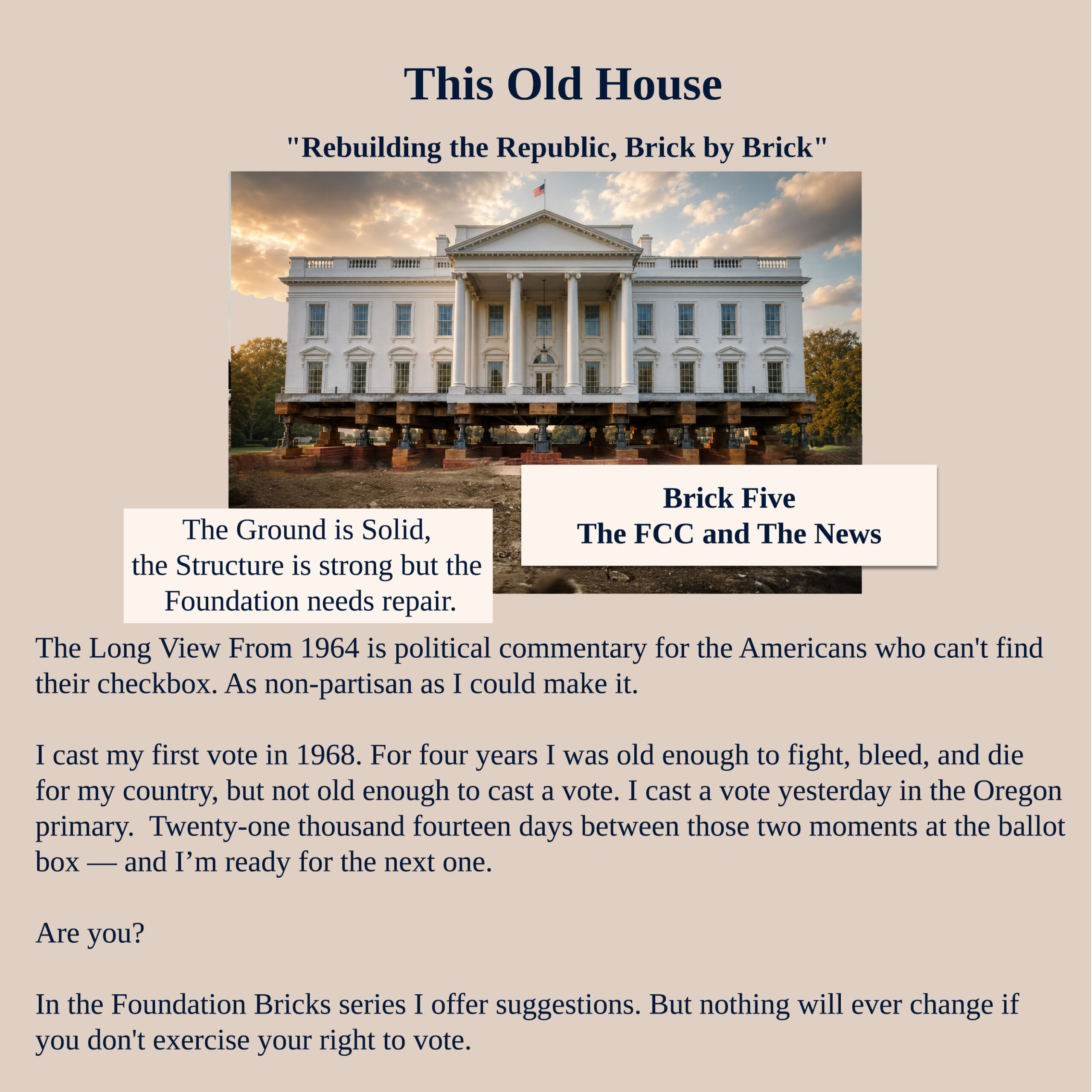

The FCC and The News Brick What Good Government Actually Requires — Brick Five – The FCC and The News – Video
The FCC, The First Amendment, and The News That Used to Be News
The airwaves are public property. Broadcast licenses are issued in the public trust — not as private rights but as public obligations. The entity that receives a license to use the public airwaves accepts a responsibility to serve the public interest. That was the founding principle. That was the deal.
Somewhere along the way the deal changed.
I can remember when the news was presented as news. Facts. This is what is happening. If an outlet wanted to offer opinion it was called an editorial and labeled as such. The separation was clear and it was honored because the public expected it and the license required it.
Share this:

Secretary Read Certifies May Election Results, Confirms Historic Turnout – Oregon
|
| Having trouble viewing this email? View it as a Web page. |
| | Help |
Share this:

Federal Court Blocks Executive Order that Would Undermine Vote-by-Mail – Oregon
|
| Having trouble viewing this email? View it as a Web page. |
| | Help |
Share this:

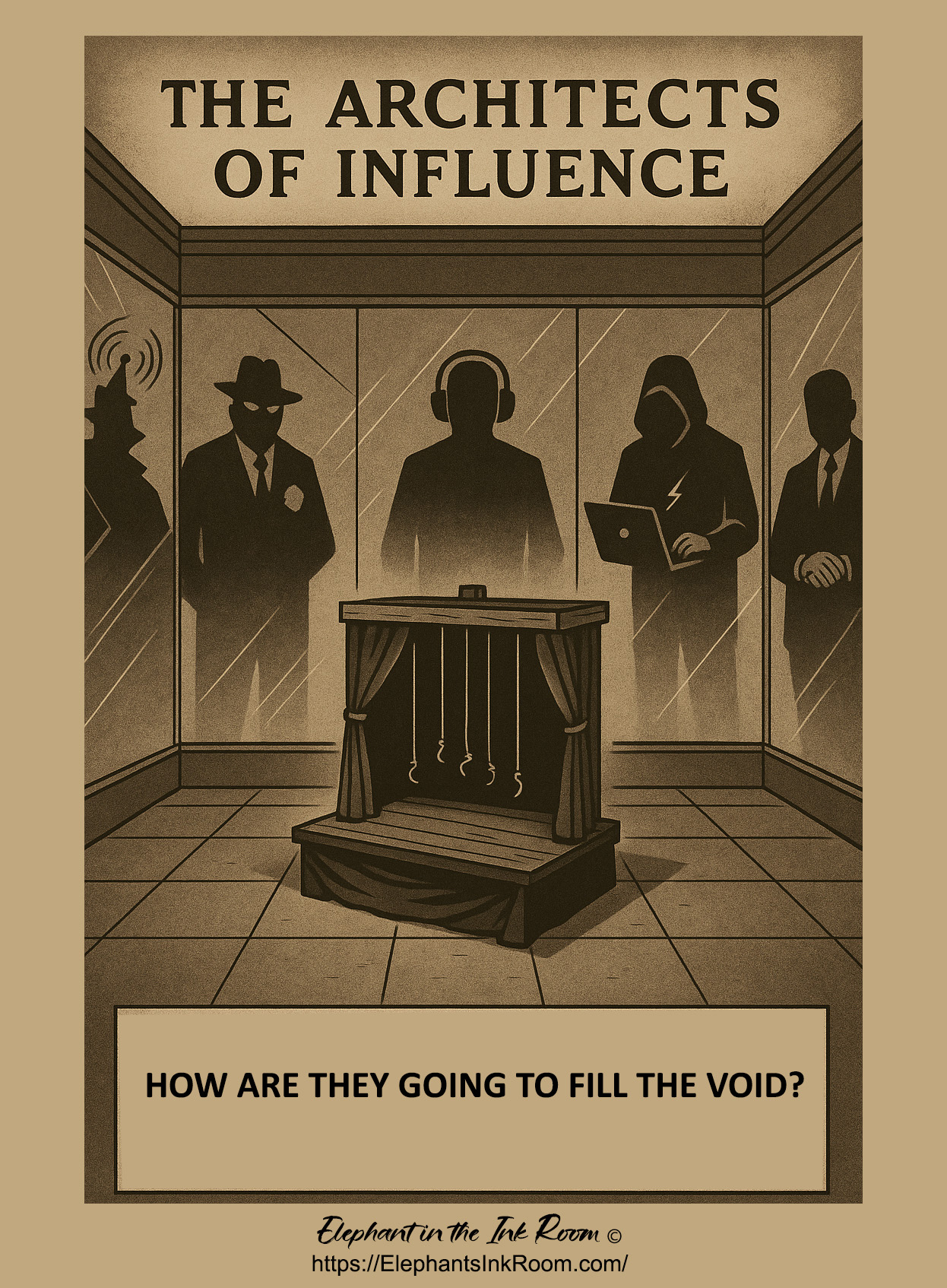
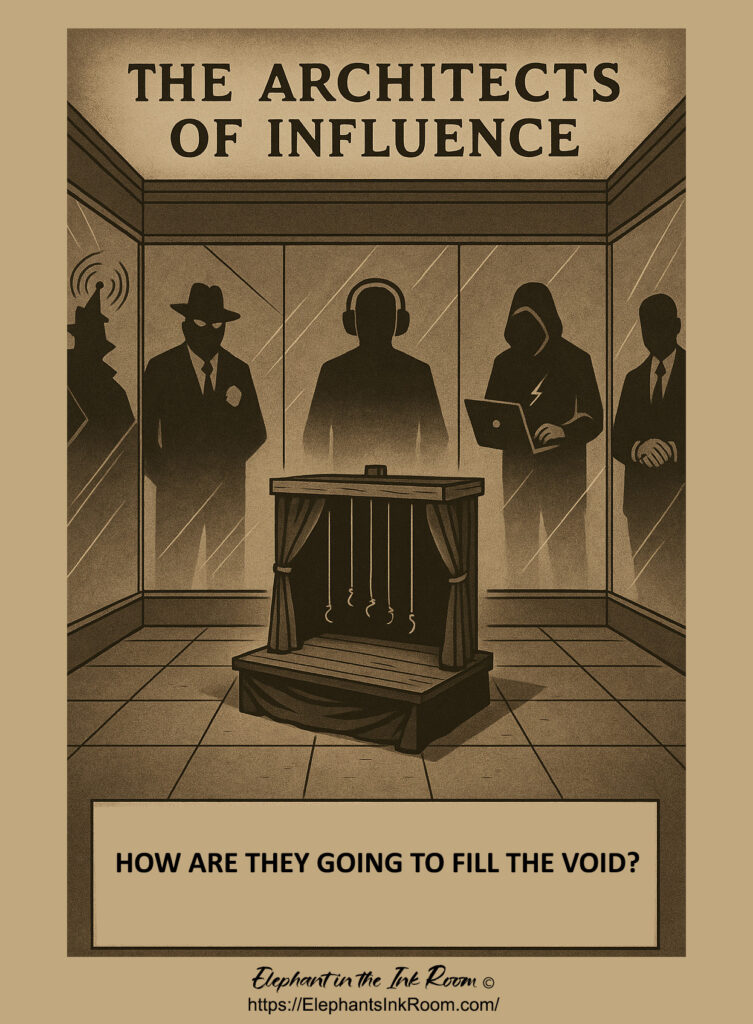
The Elephant In The Room Nobody Is Looking At – Video
Trump is out. The clown is getting the hook. You’d have to be blind not to see it — and he’s too busy with his burgers to notice it himself. I have recently written about how the two party system has failed us and how dark money has made it nearly impossible for an independent candidate to even get on the ballot. The Republicans and the Democrats are not running the show. The SuperPACs are.
So when Musk threatened to start his own party during the DOGE wars all he was really doing was threatening Trump. Because Musk’s party couldn’t have gotten on 90 percent of American ballots. But it would have weakened the MAGA base — which was exactly the point.
Then Tucker Carlson said this:
“I would not support the Republican Party, there’s no chance. Not gonna support the Democratic Party. I don’t know what I’m going to do. How could I or any American voter support a political party that’s not loyal to the United States — that puts the interests of a foreign country above those of its own citizens. It’s not possible to vote for people like that and I’m not going to. I voted Republican my entire life. I worked at Fox News. I’ve been a consistent defender for 35 years of the Republican Party, but there’s no defending this because it’s immoral. I’m out. And if I’m out, then I think a lot of other people are out.”
Different name. Same chokehold. Same dark money. Same result for the Purple Rose.
I don’t think I need to put the pipe down to ask that question.
I think it’s the only question worth asking right now.
And I’m genuinely puzzled why so few people are asking it.
Share this:

The FCC and The News Brick What Good Government Actually Requires — Brick Five – The FCC and The News
The Fifth Brick What Good Government Actually Requires — Part Five
The FCC, The First Amendment, and The News That Used to Be News
The founding charter of the Federal Communications Commission is the Communications Act of 1934 — an independent federal mandate enacted by Congress to regulate the airwaves in the public interest.
I encourage everyone to look it up. Read what it was designed to do. Then compare that to what it is currently doing.
The gap is the story.
The airwaves are public property. Broadcast licenses are issued in the public trust — not as private rights but as public obligations. The entity that receives a license to use the public airwaves accepts a responsibility to serve the public interest. That was the founding principle. That was the deal.
Somewhere along the way the deal changed.
Today a handful of corporations own most of what Americans see and hear. When that many outlets are controlled by that few owners the news stops being news and becomes something else. Call it perspective. Call it editorial direction. Call it what it actually is — propaganda with a news desk and a theme song.
This will be worth repeating in future segments because it touches everything. An informed citizenry is the foundation under the foundation. You cannot have accountability without information. You cannot have meaningful elections without accurate news. You cannot have a functioning democracy when the information ecosystem is owned by people with specific financial and political interests in what you believe.
Now add the Inspector Generals.
We have them. Or we had them. Their purpose is straightforward — independent oversight of the agencies they monitor, specifically designed to catch corruption and prevent regulatory capture. A check on the checkers. An independent eye on the people making the rules.
The current administration fired most of them.
The same oversight that would have monitored what the administration itself was doing — gone. Not restructured. Not replaced. Removed. Because independent oversight of your own behavior is inconvenient when your behavior requires oversight.
This is not a political attack. It is an illustration of exactly why the executive branch needs hard limits on what it can and cannot touch. There need to be areas of the civil service where executive orders have little to no effect. Where the order arrives and the response is not a court challenge but a rubbish bin. Some things should simply be beyond the reach of any single administration regardless of who won the last election.
The FCC is one of those things.
Its job is regulation. Monitor acquisitions. Prevent monopolies. Protect the public interest in the airwaves it licenses. What is not — what should not be — in its charter is any role in determining what speech is acceptable to the current occupant of the White House.
And yet.
For anyone paying attention — look up the details of what happened with Jimmy Kimmel, Stephen Colbert, and the Daily Show. The FCC was used as a direct instrument of executive pressure to coerce networks into dropping programming the president found unfavorable. Not illegal content. Not obscenity. Programming he didn’t like.
That is not regulation. That is a threat wearing a regulatory costume.
In our new foundation the safeguards have to be structural not assumed. No presidential pressure moves the needle because the president cannot fire the people holding the needle. Independence is not a courtesy — it is an architecture. Built in. Locked. Not dependent on the good faith of whoever currently holds power.
I can remember when the news was presented as news. Facts. This is what is happening. If an outlet wanted to offer opinion it was called an editorial and labeled as such. The separation was clear and it was honored because the public expected it and the license required it.
That line has been erased. Rebuilding it requires more than nostalgia. It requires structural protection with enforceable consequences.
You cannot have the First Amendment and suppress it simultaneously. That is not how the system was designed to work.
And here is the danger that goes beyond any single administration or any single network or any single late night host who said something unflattering.
When you find a way to circumvent one rule — even a small one, even quietly, even with a plausible justification — the next rule becomes easier. And the one after that. The erosion is always gradual until suddenly it isn’t gradual at all.
There need to be consequences.
Fast ones. Enforceable ones.
The First Amendment is not a suggestion. It is the first brick for a reason.
Share this:


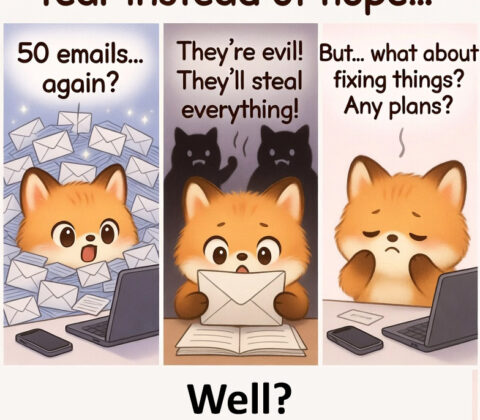
Tell Me One Thing, I Dare You
Something is very, very wrong.
I have been getting partisan emails asking for donations for as long as I can remember. That isn’t anything new. Both parties do it all the time. I get it. Campaigns cost money.
But something has shifted. Something that has genuinely gotten under my skin over the past couple of years — and I suspect I’m not alone.
I receive at least fifty emails a day asking me for money. Fifty. From the same small circle of names — the top of the ticket, the family, the inner circle. If the man had a dog, I’d be getting emails from the dog. And I want you to think about something. I cannot remember — not once, not a single time — receiving a message that told me anything at all about what they could do for me. What their plan was. Why my life would be better if I sent them twenty-five dollars by midnight.
Not once.
I won’t waste your time throwing names around because you either know what I’m taking about or your comatose.
What I do get, every single day, is this: They are evil. They are out to kill your babies. They are stealing your future. They are screwing your wife. They are driving too fast. They are eating too much of your food. That’s why your life is so bad. That’s why nothing works. That’s why you’re angry. It’s them. It’s always them.
Not a single word about what sending money would actually accomplish. Not a single promise about what gets better, what gets built, what gets fixed. Just the other side. How dangerous they are. How your only hope is to send money right now, tonight, before the deadline that somehow resets every single morning.
This has to tell you something.
A party that runs entirely on hate and fear has nothing else to offer. No vision. No plan. No positive case for why your life gets better if they win. Just the endless, exhausting argument that the other side is the enemy and only your donation stands between you and destruction.
You may not like the other sides plan, but at least they have one, and it’s not called hate.
So I’m going to do something simple. I’m going to issue a dare.
Tell me one thing. One single thing this party is offering you — for your money, for your vote, for your loyalty — other than hurting, controlling, and punishing the other side.
Go on. I’m waiting.
Share this:

Secretary Read Celebrates Victory in Executive Order Case on Voting Rights – Oregon
|
Having trouble viewing this email? View it as a Web page. |
| Help |
|
|
||||
Share this:

Fake News or Just a Fake Narrative
Fake News, Is it fake news or do some just see things differently then the rest of the world. Our perceptions are always biased. What we see is what we want to see.
One person may see vandals with a 1.5 inch Swiss Army knife snorking 100 yards underwater slicing through a super tough Rhino liner that is almost bullet proof when properly applied, read, properly applied. Others may see a some pool guy from Florida over charging a few million and not really knowing the difference between a wading pool and a 2000 foot reflecting pool.
But that’s just my perception, what’s yours?
If we need to take this analogy any further, think of the life of an adult film actress. That ego ridden dude, notice ego with the very little ‘e’ may see

But in reality what he is missing is the real picture. Because it doesn’t fit the narrative.

Share this:

Oregon – Campaign Finance Learning Opportunity – Voters’ Pamphlet Filing Process – Maybe what free election are all about
|
Having trouble viewing this email? View it as a Web page. |
| Help |
|
||||
Share this:

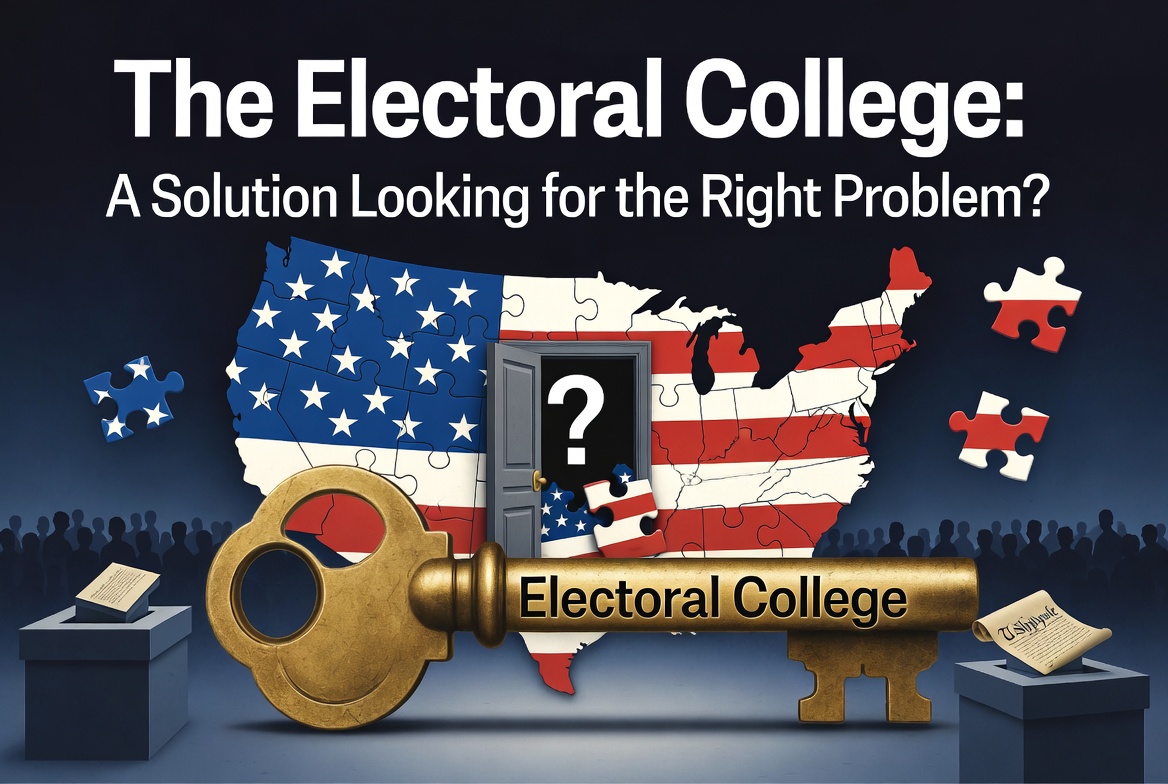
The Electoral College: A Solution Looking for the Right Problem?
Most debates about the Electoral College start with people choosing sides. One side wants to keep it. The other wants to abolish it.
I think the more interesting question is: What problem was it designed to solve, and does that problem still exist?
In 1787, information traveled at the speed of a horse. Most citizens knew little about candidates from distant states. The United States was less a single nation than a collection of states agreeing to work together. The Electoral College was part compromise, part practical necessity, and part protection against direct democracy in a world where voters had limited information.
For its time, the system made sense.
Today, none of those conditions exist.
A voter in Oregon can watch a speech made in Florida in real time. News travels instantly. Candidates campaign nationally. Americans think of themselves as citizens of one country first and residents of a state second.
The original reasons for creating the Electoral College have weakened or disappeared.
Yet replacing it raises legitimate concerns.
A pure popular vote could encourage candidates to focus heavily on large population centers. The current system encourages candidates to focus on a handful of swing states. Neither approach feels particularly representative.
Today, millions of Republicans in California and millions of Democrats in Texas know their presidential vote is unlikely to matter. At the same time, a relatively small number of voters in a few battleground states effectively decide the election.
That suggests the problem is not simply the Electoral College. The problem is that our current system leaves large numbers of Americans feeling their vote has little impact.
I don’t pretend to know the perfect answer.
Perhaps it is a modified Electoral College. Perhaps it is a national popular vote. Perhaps it is a system nobody has proposed yet.
What I do know is that institutions should be judged by whether they solve today’s problems, not yesterday’s.
The Electoral College was created to address concerns that were real in 1787.
If the Electoral College is broken, what replaces it?
A straight popular vote?
A proportional allocation of electoral votes instead of winner-take-all states?
A ranked-choice national election?
A system where states award electoral votes by congressional district?
A constitutional convention to redesign the whole thing?
I don’t know.
What I do know is that every system solves one problem by creating another.
A pure popular vote values every vote equally, but raises concerns about population concentration.
The Electoral College protects state influence, but leaves many voters feeling irrelevant.
Winner-take-all states simplify elections, but turn most states into spectators.
There may not be a perfect answer. There may only be better compromises.
Before we argue about which system to adopt, we should at least agree on which problem we’re trying to solve.
If we can’t answer that question, we’re just rearranging the furniture.
And unlike the spare toilet paper at my house, nobody seems to know where the solution is stored.
The Electoral College asks how states should be represented.
Ranked-choice voting asks how voters should be represented.
Maybe before we decide which system is best, we should decide whose voice we are trying to hear more clearly.
Share this:

The Elephant In The Room Nobody Is Looking At
Ever feel like you’re on the verge of a nervous breakdown from all the noise? The he said she said, on and on, round and round. Just noise.
But is it just noise?
Sometimes the most important thing happening isn’t the loudest thing happening. Sometimes the real story is in the room nobody is looking at.
Trump is out. The clown is getting the hook. You’d have to be blind not to see it — and he’s too busy with his burgers to notice it himself. I have recently written about how the two party system has failed us and how dark money has made it nearly impossible for an independent candidate to even get on the ballot. The Republicans and the Democrats are not running the show. The SuperPACs are.
So when Musk threatened to start his own party during the DOGE wars all he was really doing was threatening Trump. Because Musk’s party couldn’t have gotten on 90 percent of American ballots. But it would have weakened the MAGA base — which was exactly the point.
Then Tucker Carlson said this:
“I would not support the Republican Party, there’s no chance. Not gonna support the Democratic Party. I don’t know what I’m going to do. How could I or any American voter support a political party that’s not loyal to the United States — that puts the interests of a foreign country above those of its own citizens. It’s not possible to vote for people like that and I’m not going to. I voted Republican my entire life. I worked at Fox News. I’ve been a consistent defender for 35 years of the Republican Party, but there’s no defending this because it’s immoral. I’m out. And if I’m out, then I think a lot of other people are out.”
Thank you Heather Delaney Reese for Trump loyalists are jumping off the sinking ship
Tucker Carlson. Thirty five years. Out.
Now ask the question nobody seems to want to ask out loud.
Where are they going?
Tucker isn’t going long term. A third party takes decades to build and he doesn’t have that kind of patience or that kind of money. But somebody does.
Here is where we need to look. Here is the room nobody is looking at.
The SuperPACs. The dark money. The Federalist Society. Leonard Leo. Arabella Advisors. The entire infrastructure that has been quietly and methodically building the conservative legal and political architecture for thirty years.
They didn’t back Trump because they loved him. They backed him because he was a useful vehicle. Three Supreme Court justices. Hundreds of federal judges. Regulatory rollback. Tax structure. The return on their investment has been substantial.
But now the vehicle is embarrassing them. The stall is covered in dung. The clown is jeopardizing thirty years of careful infrastructure with daily chaos and a cognitive decline visible to anyone paying attention.
MAGA is dead. Trying to save it is a fool’s errand.
So what are the options?
Save the Republican Party — purge the MAGA element, restore something resembling functional conservatism, hope Vance or Rubio or someone with a law degree and a functioning prefrontal cortex can carry the banner forward. Vance and Rubio haven’t invoked the 25th Amendment yet because they’re still afraid of the MAGA base. But here’s the thing — if they did it the Republican establishment would put them on their shoulders. The dark money would fund the parade.
Or start over — a new right of center party, properly funded, built from the existing infrastructure that Leonard Leo and the Federalist Society have already constructed. It would have money. It would have judicial connections. It would have the organizational architecture that third parties normally spend decades trying to build.
Which brings us to the question that should keep everyone awake.
Is that a good thing?
Are we watching the dark money apparatus recognize that their vehicle has failed and quietly preparing to deploy a new one? A cleaner one. A more electable one. A saving angel that turns out to serve the same architecture in a better suit?
Or to put it another way — would a new right wing party actually break the two party system open for independents and moderates?
Or would it just be a Texas sidestep?
Different name. Same chokehold. Same dark money. Same result for the Purple Rose.
I don’t think I need to put the pipe down to ask that question.
I think it’s the only question worth asking right now.
And I’m genuinely puzzled why so few people are asking it.
Share this:

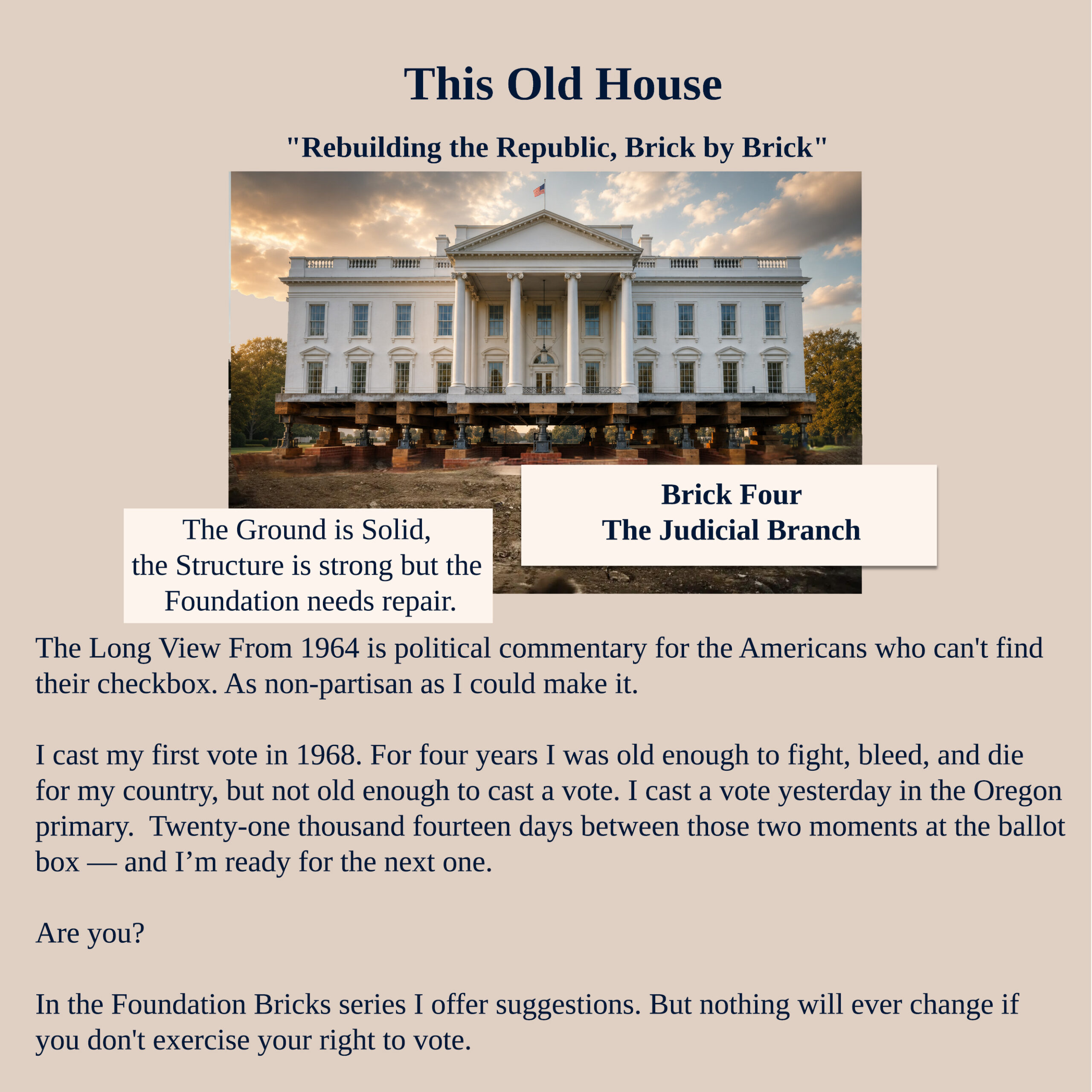

The Judicial Branch Brick What Good Government Actually Requires — Brick Four – The Judicial Branch – Video
The Supreme Court was never designed to be a political prize.
It has become one anyway.
Every president now treats Supreme Court appointments as the most important legacy decision of their term — not because they care deeply about judicial philosophy but because they are buying future outcomes. The pocket justice. The reliable vote. The insurance policy wearing a robe.
The result is a court whose decisions are predictable before the arguments are heard. Everyone knows which way each justice will rule on any politically charged question because everyone knows who appointed them and what was expected in return. That is not justice. That is scorekeeping in robes.
The fix is not complicated. It is just threatening to the people who benefit from the current arrangement.
Share this:

The Judicial Branch Brick What Good Government Actually Requires — Brick Four – The Judicial Branch
The Fourth Brick What Good Government Actually Requires — Part Four
The Judicial Branch
The Supreme Court was never designed to be a political prize.
It has become one anyway.
Every president now treats Supreme Court appointments as the most important legacy decision of their term — not because they care deeply about judicial philosophy but because they are buying future outcomes. The pocket justice. The reliable vote. The insurance policy wearing a robe.
The result is a court whose decisions are predictable before the arguments are heard. Everyone knows which way each justice will rule on any politically charged question because everyone knows who appointed them and what was expected in return. That is not justice. That is scorekeeping in robes.
The fix is not complicated. It is just threatening to the people who benefit from the current arrangement.
More justices. Randomly assigned. Term limited. Appointed by peers not presidents.
Not a specific number — the number is less important than the principle. Enough justices that no single president can stack the composition. Assigned to rotating panels by lottery so nobody can predict which justices will hear which case. Appointed by their fellow jurists rather than by the politician who wants to own their vote. Term limited to twelve or eighteen years — long enough to develop genuine expertise, short enough to prevent the court from calcifying around a single political moment.
The lottery is the key. You cannot game a random draw. You cannot have a justice in your pocket if you don’t know which pocket they’ll be sitting in when your case arrives. The pipeline between political appointment and predetermined outcome gets broken not by ideology but by randomness.
But the most important brick in the judicial wall has nothing to do with composition.
It has to do with enforcement.
Right now the Supreme Court can rule and the executive branch can say no. And nothing happens. The court has no army. The court has no marshals with actual authority. The court has strongly worded opinions and the assumption that the executive branch will comply because it always has before.
That assumption has been tested and found wanting.
Here is a question worth sitting with.
Every lower court in America has enforcement authority. A district judge can hold anyone in contempt and have them detained. Federal marshals exist specifically to enforce court orders at every level of the federal judiciary.
Except the highest one.
The Supreme Court — the final word on constitutional law, the last institutional check on executive power — operates on the honor system.
What good is the honor system if no one honors it?
We have now seen what happens when that hope runs out.
At what point do we acknowledge that the highest court in the land deserves at least the enforcement authority we grant to every court below it?
The Supreme Court needs its own enforcement mechanism. A Marshal’s service with the specific authority to detain anyone — anyone — that the court by majority vote determines is willfully operating outside their constitutional limits and has become a national threat.
No exceptions. No immunity. No rank that places a person beyond the reach of a court order.
The moment a president — or anyone else — can look at a Supreme Court ruling and respond with effective impunity the entire architecture of the republic becomes decorative. Pretty columns on a building with no foundation.
The court says no and the no has to mean something.
That is the fourth brick.
Not a perfect court. Not an infallible court. Just one that cannot be owned before the case is filed and cannot be ignored after the ruling is issued.
Justice without enforcement is just a word.
Share this:



I Am In F-ing A Hurry
Contradictions.
Hurry up and slow down. We have all the time in the world as long as we get it done yesterday.
Yes. I feel the rush.
I have been writing my memories in a roundabout fashion — The Long View From 1964. Not really memories exactly. Perspectives. And why I see what I see.
I am getting on in years but I still have many more to torment my family with. So what’s the rush?
Well. Maybe it’s the shit show we are living in.
For some it may seem like business as usual. For my generation it isn’t. We have seen too much, lived through too much, and recognize too clearly what this particular shape of darkness looks like.
I have said this too shall pass and it will. The days of Trump will become a distant memory. Night time stories told to frighten naughty children into behaving. A Halloween costume that blends right in with the other goblins and monsters without any additional effort required.
So what’s the hurry?
It’s the papa bear syndrome.
Get away from my children. Don’t spread your poison near my family. Don’t dare come near my grandchildren because I am there. And I am a bigger meaner son of a bitch than you are.
I am not senile yet.
So that’s the rush. That’s the hurry.
When asked recently what he had learned from the Iran conflict about the limits of presidential power, Trump replied:
“I haven’t learned that lesson yet. I know there are, but there are no limits.”
Even if you believe you are a god — your flatulence are not miracles.
You are deluded. You are done. The days of Trump are over.
And do you want to know who ended them?
Go look in the mirror.
I am Johnny Appleseed out here planting seeds, tending the orchards, waiting for the trees to bear fruit. But also very aware that the root rot must be controlled, the fungus prevented, and the diseased and mutated culled before the garden can be truly healthy.
I won’t live to see the final fruit from the seeds I hope to plant.
But I sure hope I see the garbage taken out before it spoils what may come.
I have my children and my children’s children to worry about.
How about you?

Share this:



It Takes Two to Tango, But The More The Merrier – Video
We are wired for opposition, for partnership, for the push and pull of another person across the table. It’s more rewarding together than alone — after all, taking a shower together was always nicer than showering alone.
But enough of beer bars and bedrooms. Off to where the real back-stabbing and dirty stuff happens — politics and government.
In my opinion, the evil creating the havoc we live with today can be traced directly to what we call the two-party system. Anyone who wants a career in politics has to align themselves with a party. They have to declare that they are either Liberal — Blue, or Conservative — Red. They can’t walk in and say, hey, look at me. This is what I can do for you. And the reason is twofold: money and the checkbox.
The two-party system isn’t in the Constitution. It isn’t carved in stone or handed down from the founders. It’s a habit. An expensive, entrenched, self-serving habit that benefits exactly two groups of people — the two parties — and leaves the rest of us standing outside the dance hall listening to music we didn’t choose and paying the cover charge anyway. Habits can be broken. Systems can be redesigned. The question isn’t whether we can do better. The question is whether enough of us get angry enough, soon enough, to demand it.

Share this:

It Takes Two to Tango, But The More The Merrier
Did you ever play a game of snooker against yourself? Put up the other side of a ping pong table to practice? It didn’t take long until video game creators realized they made more money in a bar with a PacMan with opposing controllers. Let’s face it, playing by yourself isn’t as much fun or as satisfying. That’s why we had the post-war population explosion.
We are wired for opposition, for partnership, for the push and pull of another person across the table. It’s more rewarding together than alone — after all, taking a shower together was always nicer than showering alone.
But enough of beer bars and bedrooms. Off to where the real back-stabbing and dirty stuff happens — politics and government.
In my opinion, the evil creating the havoc we live with today can be traced directly to what we call the two-party system. Anyone who wants a career in politics has to align themselves with a party. They have to declare that they are either Liberal — Blue, or Conservative — Red. They can’t walk in and say, hey, look at me. This is what I can do for you. And the reason is twofold: money and the checkbox.
Campaigns cost money, and an independent candidate has to compete against the Superpacs. This isn’t a small thing. Since I am registered Republican, this is the only example I can give honestly — but I am positive it is equally true for Blue. I receive at least fifty give-me-money emails a day from Trump, Vance, Trump’s kids, and would probably get them from Trump’s dog if he had one. Those contributions flow into what we call a Superpac. So when a party endorses your opponent, your opponent suddenly has a war chest you can’t match, financed by people who have never heard your name and wouldn’t care if they had. If you run independent, you finance from your own pocket or whatever limited funds you can scratch together from limited supporters. A very uneven battlefield.
The second problem is who they serve once elected. They no longer can support the people who voted for them — they must support the people who paid for their election. They must vote along party lines. We see that now, every day. It has a name: partisan. Which is a polite word for captured.
Let me ask you a few questions. If we didn’t have the two-party system, would Donald Trump have been elected? If he had been elected, would those — sorry, you didn’t see the three-minute pause while I searched for words other than idiots, thieves, and suckups — cabinet secretaries ever have been confirmed? Would we be in Trump’s war of choice? Would Trump have been Article 25’d by now?
I’ll let you answer those yourself.
The two-party system isn’t in the Constitution. It isn’t carved in stone or handed down from the founders. It’s a habit. An expensive, entrenched, self-serving habit that benefits exactly two groups of people — the two parties — and leaves the rest of us standing outside the dance hall listening to music we didn’t choose and paying the cover charge anyway. Habits can be broken. Systems can be redesigned. The question isn’t whether we can do better. The question is whether enough of us get angry enough, soon enough, to demand it.
Share this:



Why I Meme
Why do I sometimes let whatever’s boiling over get the better part of me and reach for a meme instead of an article? Because sometimes what I want to say just isn’t fit for polite words. And sometimes I don’t want to write an article — proof it, research it, source it — I just want to express some outrage.
Other times, the meme supports an article or a series. A lot of them can say more in one image than three articles can manage in three thousand words. I can show consequences without making threats. I try not to be a bigger fool than any of my ex-wives have already made me out to be.
This meme should speak for itself. It would have taken three articles to convey the same message. I think I’m getting the point across without overly offending too many people — except maybe a few ICE agents.

I think the combined use of meme and commentary can be very effective. It resonates with multiple groups of readers and listeners at once — the ones who’ll read three thousand words and the ones who’ll only ever look at a picture, both walk away with the same message.
Many of my commentaries are available in video format as well as written. I try to reach everyone who might be interested, however they prefer to take it in.
And let’s not forget the audio versions of the video versions, published as podcasts. My, I have been busy.
Back to the memes — I’ve added two new sections to Elephants Ink Room: The Daily Briefing Before the Cameras and American Sheep, Lamb Chops Anyone?. Many of the memes posted there also pop up inside articles, and some get posted singularly on social media. But most just live on the website.
I hope you drop by sometime. Have a laugh. Or a cry. Either one means you got the point.
Share this:

The Long View From 1964 – The Newsboy Cap – Video
Fish guts. What do I do with these fish guts? I don’t want to run them down the garbage disposal — I have a septic tank. So they have to go into the garbage, but oh woe is me. There isn’t any newspaper to wrap them in. What has happened to America? What has happened? No more newspaper to wrap fish guts in.
Ol’ English Fish and Chips, Inglewood California, 1974. Lunch time, an hour off. I worked at Inglewood Physical Therapy on Locust Street and would walk over for fast food — Ol’ English Fish and Chips, wonderful cod and french fries wrapped in fake newsprint. So good. So much better than some fast food burger. Gone now, but the memories aren’t.
Oh, I would love a basket of Ol’ English Fish and Chips with a bottle of malt vinegar right now.
On a side note — some people wear baseball caps, cowboy hats, no hats at all. Last year I started wearing the classic newsboy cap. Go figure. Does look good with the grey and white hair though.

Share this:

The Long View From 1964 – The Newsboy Cap
Fish guts. What do I do with these fish guts? I don’t want to run them down the garbage disposal — I have a septic tank. So they have to go into the garbage, but oh woe is me. There isn’t any newspaper to wrap them in. What has happened to America? What has happened? No more newspaper to wrap fish guts in.
Ol’ English Fish and Chips, Inglewood California, 1974. Lunch time, an hour off. I worked at Inglewood Physical Therapy on Locust Street and would walk over for fast food — Ol’ English Fish and Chips, wonderful cod and french fries wrapped in fake newsprint. So good. So much better than some fast food burger. Gone now, but the memories aren’t.
Corvallis, late seventies. Walk over to the local market for a counter lunch, find a newspaper someone left waiting for me. Headlines that told what happened nationally and what the Beavers did. Good stuff, even if it was a week old.
Growing up, Mom and Dad always had the daily paper delivered. In Manhattan Beach it was the Daily Breeze and the Los Angeles Times. Wherever we lived, it was local and regional and national. That’s where we got the news — and it was the news. If you wanted an opinion, you went to the editorial page. There you read the partisan slant. If the publisher was conservative, that’s where the slant went. The front page was holy ground for the NEWS.
The best part was you didn’t throw it away that day. You saved them up for the school kid with the fundraising paper drive. What we didn’t realize at the time was that we had accidentally built an archive. You didn’t have to go to the library to look something up — you had a six month to one year record already sitting in your garage, in order, except for the few sheets that had wrapped the fish guts. And those were probably the classified ads anyway.
Try finding an article posted five minutes ago if you’re not subscribed to that thread. And even if you are, good luck.
What has really happened is we changed from printing and distributing the news — news that if found incorrect would have a redaction printed, visibly, permanently, for everyone to see — to online content that can be quietly edited into something else entirely, or simply deleted, with no trace and no accountability. Never before has the phrase Buyer Beware been so important. And most critically, we aren’t even paying for it. It’s being force fed to us, customized by an algorithm we can’t see, shaped by a bias we can’t find on any editorial page.
The newspapers had their editorial page and they had something else — Letters to the Editor. Online publications have those as well, technically. Try finding them though. Try submitting something. I have. But newspapers were more open and honest about it. If they made a mistake, they owned up to it. Sometimes on their own. Integrity was important. A reporter’s reputation was his livelihood. Nobody buys a Timex watch on an outboard motor’s prop from someone they didn’t trust. Who in mainstream media do you trust today?
The point I am really trying to make — even with the podcasters you trust, the Substack authors you trust, the elephantsinkroom.com you trust — we have a limited audience. We keep talking to the same people, over and over. The share button only shares to the same platform, the same followers, the same converted.
We hope you are spreading the word. Because what we say isn’t being left on the lunch counter anymore. It isn’t sitting in the news rack on the street corner. It isn’t landing on your doorstep to be read by whoever picks it up. If it were printed you could share it — hand it to someone, leave it somewhere, let it find a stranger. That would be better than forwarding it to someone who already agrees, or just deleting it.
Newspapers died an unwarranted death.
Oh, I would love a basket of Ol’ English Fish and Chips with a bottle of malt vinegar right now.
On a side note — some people wear baseball caps, cowboy hats, no hats at all. Last year I started wearing the classic newsboy cap. Go figure. Does look good with the grey and white hair though.
Share this:

Protecting Your Voting Rights – Video
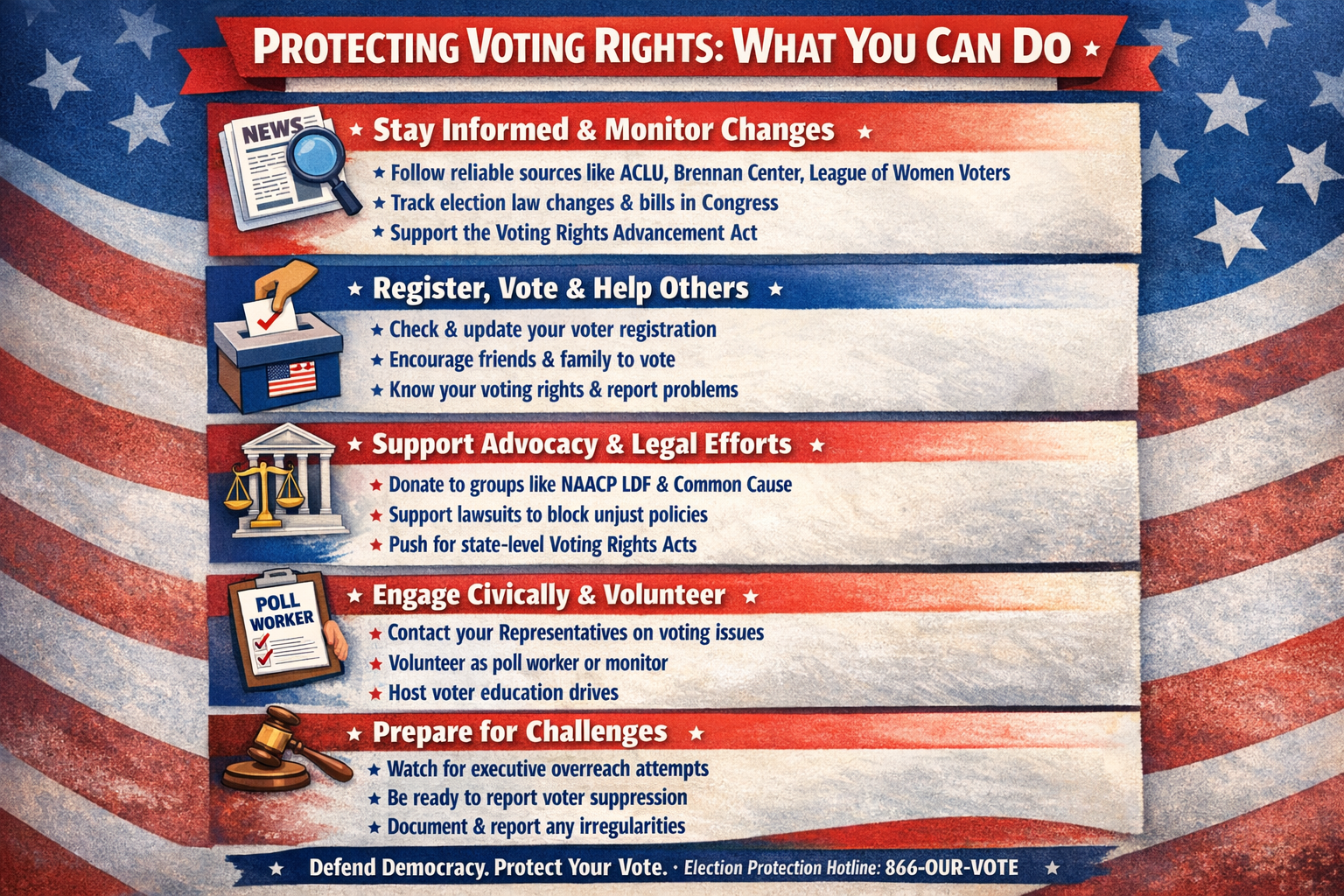
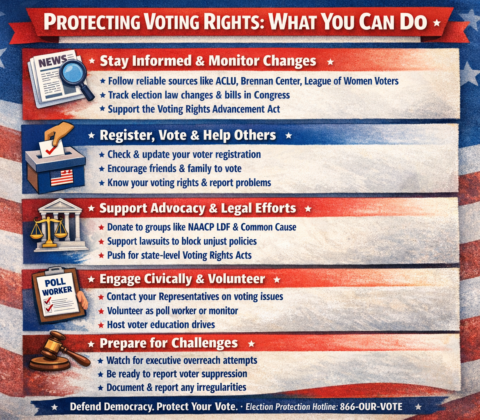
Protecting voting rights is a fundamental aspect of American democracy, and your concern about potential executive overreach is valid given recent reports. While presidents have issued executive orders related to elections in the past, they don’t have unilateral authority to control how states run them, elections are primarily a state responsibility under the Constitution (Article I, Section 4), with Congress able to set or alter regulations for federal races. Any attempt to impose sweeping changes via executive order, especially if premised on unsubstantiated claims like foreign interference from past elections, would likely face immediate legal challenges and injunctions from federal courts, as happened with a similar order in March 2025.
Courts have repeatedly affirmed that such actions can’t override constitutional limits or state authority without clear statutory backing.

Share this:

Texas Is Pushing Independents Off Ballots – 06/19/26
|

Share this:


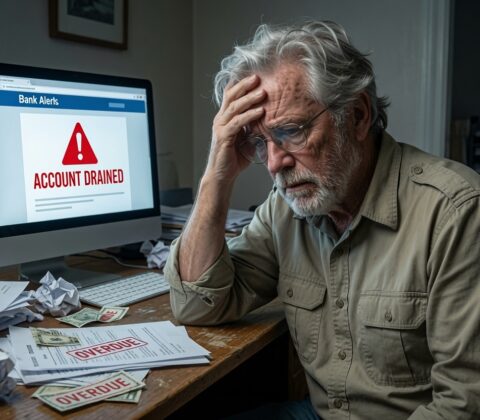
I Just Got Scammed — For Real, Not Clickbait
$97.89 stolen from my checking account, and I helped them do it.
You may have been scammed too, or you could be next. That’s why I’m writing this. Do you think this is for entertainment? Do you think I enjoy admitting I was taken — a foolish old man? I’m embarrassed. At least it wasn’t a dating site and some hot lady’s uncle stuck in Africa needing bail money. My wife would have killed me if that were the case.
No, I called 888 instead of 866 — the prefix for my bank’s customer service. My bank changed from Columbia Bank to Umpqua Bank a few years back, then changed again from Umpqua back to Columbia a few months ago. So when “customer service” answered instead of “Columbia Bank,” I wasn’t alarmed. A mistake any tired old fool would make, right?
In the back of my mind I was thinking customer service might still be sorting out the transition between the two banks. So when they asked me to verify information — not a lot, and I didn’t give much — it didn’t raise the flag it should have. They didn’t need much. No more than what’s printed on any check you write every month to pay your bills. Address. Routing number. Account number. That’s it.
I stopped, hung up, realized the numbers didn’t match, and called Columbia directly.
I didn’t think much more about it at the time, because really — they didn’t have any more information than if they’d pulled one of my checks out of the trash. One of your checks. One of those checks you toss in the garbage, out by the curb, that the Girl Scouts forgot to collect because they showed up without their uniforms.
Yesterday — June 18th, 2026 — a membership card arrived in the mail. Premier Plans. The website is real: premierplans.net. The card had my legal name on it, not the name I go by. All the information I’d need to verify a legitimate membership, plus a notice that I’d be charged $97.89 monthly by remote check. They even included a sample image of what the check would look like.
I checked my bank. It matched exactly.
So here is what you do first. Do not call them. I’ll say it again — do not call them.
Call your bank. This time, with the correct number — the one on the back of your card, not the one in their email or on their card.
Long story short: we opened a fraud case, stopped the pending payments, closed the compromised account, moved everything to a clean one. Life goes on. I may get the $97.89 back. I’m not holding my breath.
Then I did something they didn’t expect. I called the scammers back.
They answered fast. Smooth. Professional. “This is a company that represents several plans — Premier Plans is just one of them. You want to cancel your membership and get a refund? I can absolutely do that for you. Can I get your name? And your address — that’s all I need.” A pause, some typing. “Yes, I see it right here. Refund issued. Membership canceled. Funds in your account in five to seven business days. Thank you, and have a good day.”
Polished. Confident. Completely fake.
So what do I actually get out of that call? My money back? Slim to none. But maybe — and that “maybe” is exactly how they stay in business. Keep the mark calm, keep the illusion alive, keep Johnny Law looking the other way for one more day.
Bottom line: will I starve? No. Am I embarrassed? Darn tootin’. So why am I telling you this?
Because this isn’t clickbait. This is real, and this is how we stop them.
What they didn’t figure on is who they scammed. Someone who writes and publishes on Substack. Someone who runs his own site at elephantsinkroom.com. Someone who posts on eight other platforms and asks every single reader to restack, repost, reshare — and send it to your parents, your grandparents, anyone who might be next.
I am eighty years old this November. I am exactly who they prey upon.
They picked the wrong one.
Let’s make them hurt. Restack this. Share it. Send it to someone who needs to see it before they pick up the phone.
Share this:

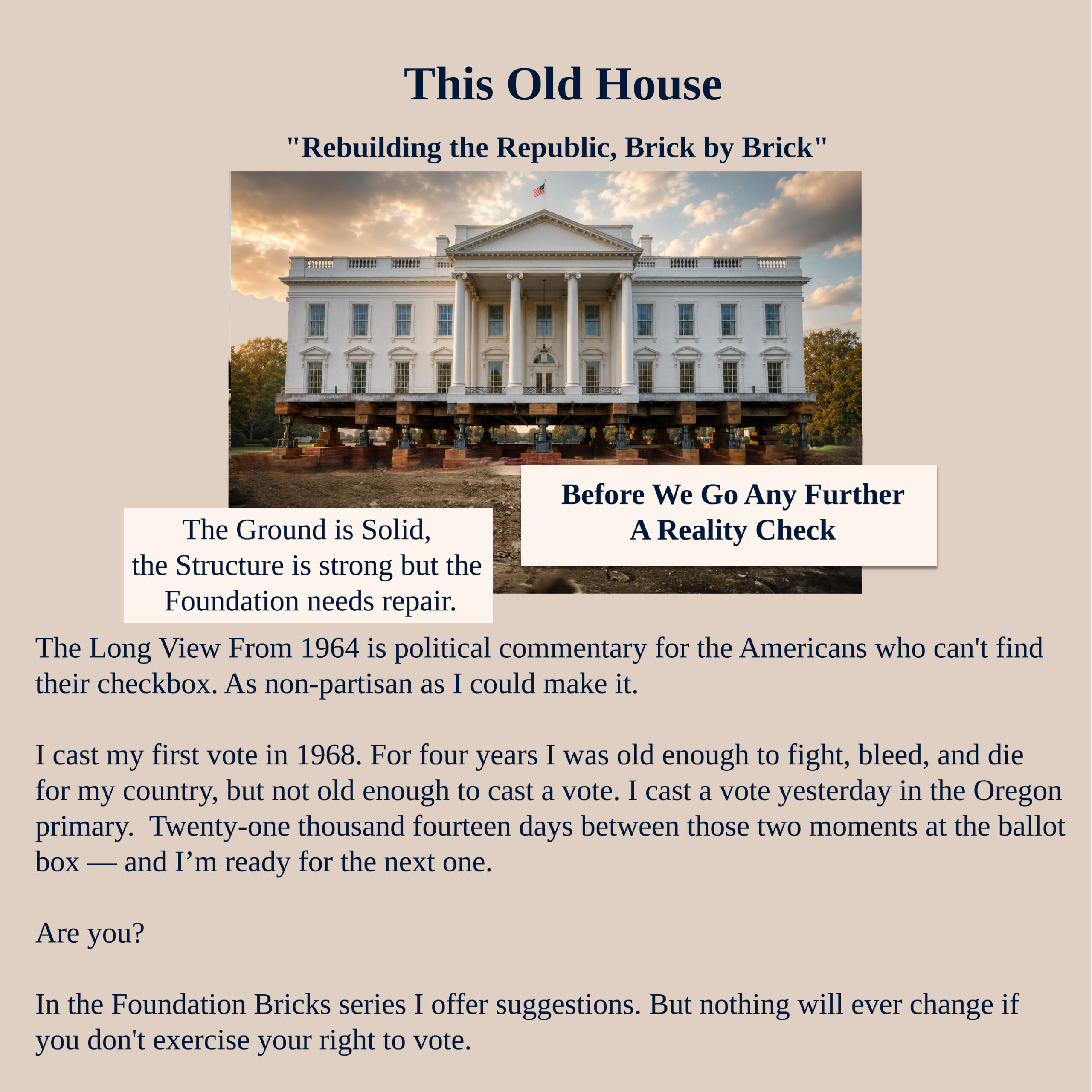

Before We Go Any Further A Reality Check – Video
Before we go any further building a foundation for the future we have to stop and look at reality.
It’s all about the seeds. You need to supply the earth, the water and the fertilizer — if any can be found under the current regime.
We also need a label. We all like labels. We need labels. It’s the American Way. This is supposed to be a Democratic Republic we live in.
Share this:

Before We Go Any Further A Reality Check
Before we go any further building a foundation for the future we have to stop and look at reality.
What we have is a mess. A partisan battlefield where ninety percent of the effort and legislation is directed toward power — who is in charge and who is making the rules. And the needs of the people are in reality not taken into consideration. Oh, lip service is given on every stump any good politician can find to state their cause. And their cause is to get themselves reelected.
So in all honesty — is this a pipe dream? Are we just sitting here grooving to Grace Slick singing White Rabbit?
Or is this doable.
I believe it is. Can it be done overnight? No. But it can be done.
Honesty point number two. Who will be the strongest opponents to effective change? The entrenched politicians themselves. They voted for their own terms, their own pay, their own retirement, their own power. They don’t want to give it up.
Well. F them.
What it will take is us. But not just us in numbers — an educated us. An involved us. It is like wanting to look like Arnold Schwarzenegger or Cheryl Ladd while eating another pint of Häagen-Dazs. It isn’t going to happen without the exercise. You need muscles before you can flex them.
Think of what I am proposing as a blueprint in its early stages. Something to be thrown around, talked about, redrawn, picked apart and rewritten. And when you’re done — go back and compare it to the original and start building. That is, if you truly want something better.
It isn’t going to magically appear on its own.
We will talk about many things. Healthcare — what should we expect, what do we want, and what is actually reasonable? It’s easy to say free healthcare but someone still has to pay for it. Education — what good is a PhD if you can’t get a job? Maybe trade schools are a good thing. Should the Washington reflecting pool reflect something worth reflecting or just be a pretty shade of blue? The list could go on forever. But I’m old — so I promise you it will be a reasonable list.
And we will address capitalism. After all it is what got us here. I am all for it. But let’s put it in perspective. Who gets what and how much is enough?
It’s all about the seeds. You need to supply the earth, the water and the fertilizer — if any can be found under the current regime.
We also need a label. We all like labels. We need labels. It’s the American Way. This is supposed to be a Democratic Republic we live in.
I’m not so sure that label fits very well anymore.
What do you think?
The obvious goal with this set of foundation blocks isn’t to fix the broken system. It’s to provide a structure with enough strength that it cannot be so easily broken and manipulated again.
The strength comes from simplicity.
Not complexity.
Share this:



Trump’s Peace Plan Memorandum Has Been Published, How Did We Do, Oh Master Negotiator?
I really wish this was a joke, boy has Second String Donny screwed us over.
Share this:

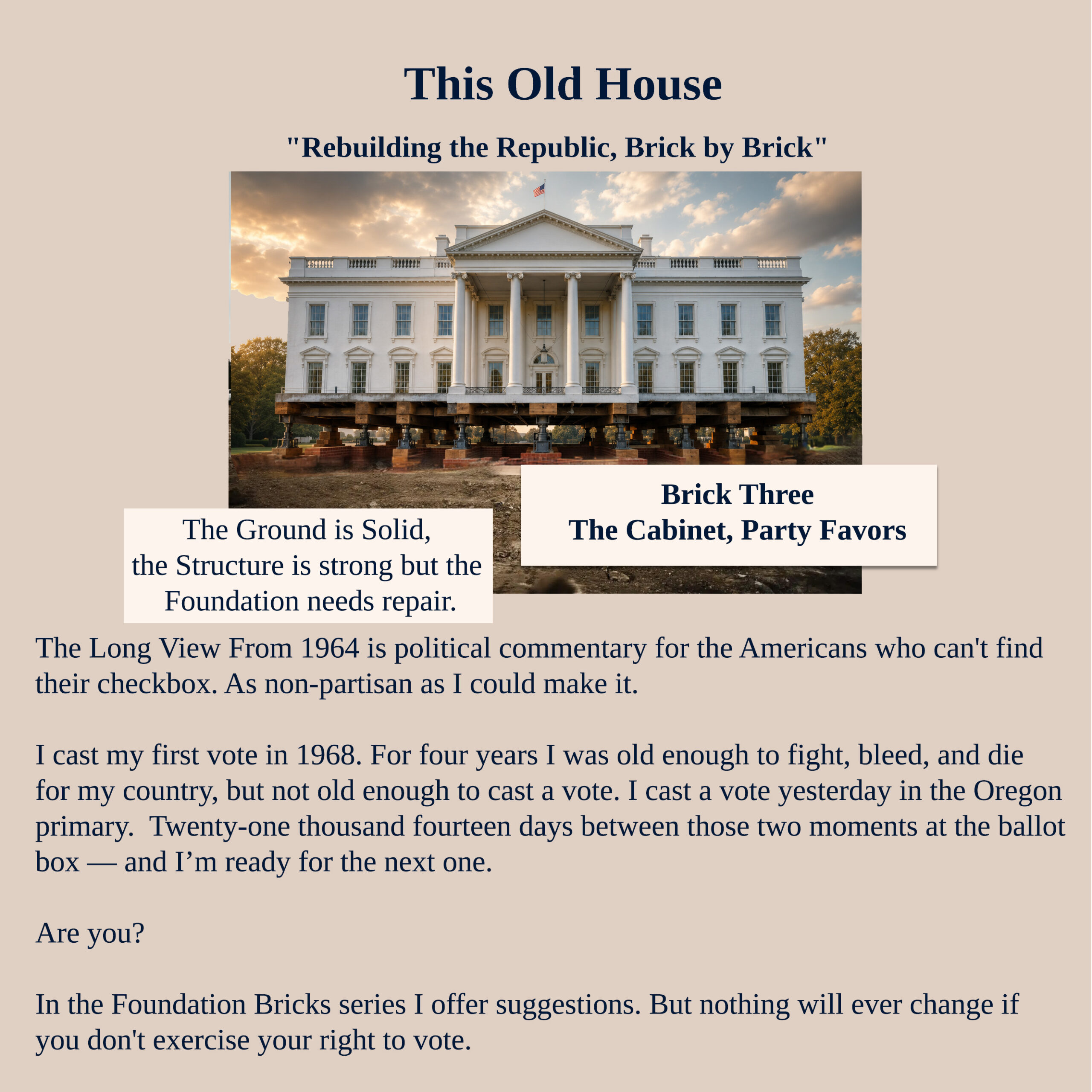

The Cabinet, Party Favors Brick What Good Government Actually Requires — Brick Three – The Cabinet, Party Favors – Video
The president wins. The president hands out cabinet positions. The cabinet positions go to the people who helped the president win — donors, allies, loyalists, true believers, and occasionally someone who spent the entire campaign calling for the department they now run to be abolished.
We call this governing.
It isn’t.
Share this:

The Cabinet, Party Favors Brick What Good Government Actually Requires — Brick Three – The Cabinet, Party Favors
The Third Brick What Good Government Actually Requires — Part Three
There is a tradition in American politics so embedded that most people never question it.
The president wins. The president hands out cabinet positions. The cabinet positions go to the people who helped the president win — donors, allies, loyalists, true believers, and occasionally someone who spent the entire campaign calling for the department they now run to be abolished.
We call this governing.
It isn’t.
It is the thank you gift system dressed up as executive leadership. Party favors with confirmation hearings. And while career civil servants generally do the actual work underneath the political appointees, the damage happens when the unqualified person at the top starts making policy. Policy driven not by expertise or national interest but by the ideology, ego, or donor relationships of someone who got the job because they made the right phone calls at the right time.
The confirmation process was supposed to prevent the worst of this. In theory Congress evaluates the nominee and decides whether they are qualified to lead a critical department. In practice — as we have watched in painful real time — partisan confirmation is theater. When the system is controlled by one party the hearings become a formality and the outcome is predetermined regardless of qualification.
So here is the question the third brick asks.
What if the president didn’t pick the cabinet?
Not entirely. Not unilaterally. What if the senior positions in critical departments — Defense, State, Justice, Intelligence, the Federal Reserve — were filled by professionals who advanced through their own institutional ranks on merit, competence, and demonstrated performance? The way military officers advance. The way career diplomats advance. The way the civil service was designed to work before political appointees started parachuting in over the people who actually know the job.
The president would then work within that professional framework to accomplish the agenda the voters elected them to execute.
Which brings us to the vice president.
Right now the vice president is chosen to win a state, appeal to a demographic, or balance a ticket geographically. They are an electoral calculation wearing the costume of a governing partner. Your running mate is whoever helps you win. What happens after winning is a separate conversation.
What if it wasn’t?
What if the vice president was required to be a genuine working partner — someone who shared the governing agenda, complemented the president’s specific weaknesses, and was capable of actually running the country if called upon? Not a campaign asset. A co-architect.
That changes everything downstream.
A president who has to pick a genuine partner picks differently than a president assembling an electoral coalition. A ticket built around a shared agenda attracts a cabinet built around executing that agenda. If the country faces a climate crisis the executive team running on clean energy solutions has the expertise and the congressional backing to address it. If national security is the crisis the team built around genuine military and diplomatic competence has the credibility to lead.
There would still be infighting. There will always be infighting. Human nature doesn’t get reformed by better institutional design.
But more handshakes and less backstabbing is not a naive hope. It is what happens when you change the incentive structure. Right now the incentive is loyalty to one person. Change the incentive to competence in service of a shared agenda and the culture follows the incentive.
The military figured this out. You do not hand the Joint Chiefs to someone’s campaign donor. You advance through the ranks, demonstrate competence at every level, and earn the position. The fact that this system was recently dismantled in favor of loyalty appointments is not an argument against the system. It is the strongest possible argument for protecting it with something more durable than institutional habit and assumed good faith.
Professional advancement. Merit confirmation. A vice president who is a partner not a prop. A cabinet built to execute an agenda rather than reward the people who funded it.
Share this:

All Eyes On Maine… 06/15/26
|
Share this:




The Term Limits Brick What Good Government Actually Requires — Brick Two – Term Limits – Video
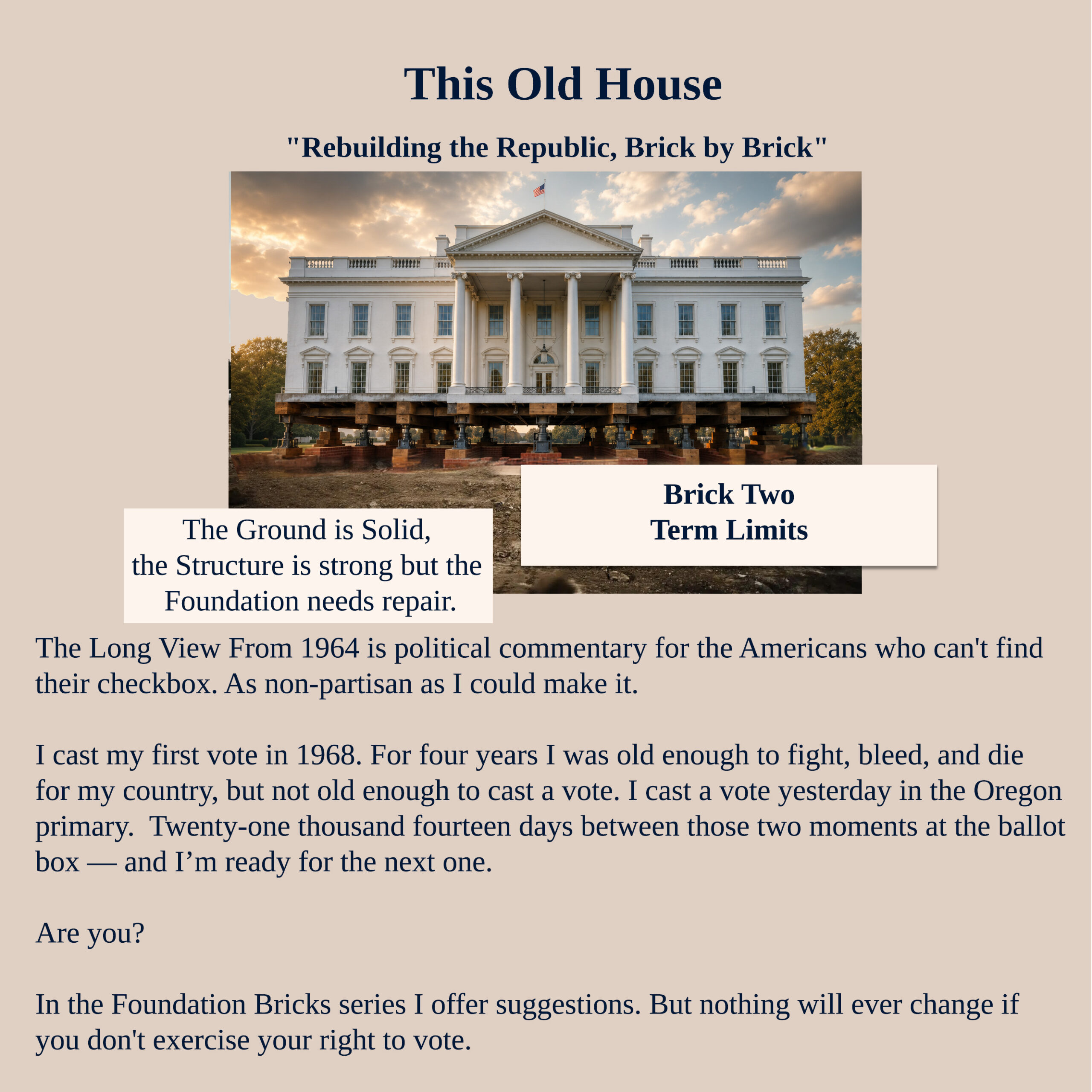
Term limits. Age accountability. The systematic removal of dead wood before it becomes the structure itself. The recognition that in any healthy organization — a business, a military unit, a family — the inability to remove someone who has outlived their effectiveness isn’t loyalty. It’s institutional rot.
We have watched what happens when people stay too long. The institution bends around them rather than them serving the institution. J. Edgar Hoover ran the FBI for 48 years. Nobody could remove him because nobody could afford the cost of trying. That is not a feature of good government. That is a cautionary tale that we apparently need to be told more than once.
Share this:

The Term Limits Brick What Good Government Actually Requires — Brick Two – Term Limits
The Second Brick What Good Government Actually Requires — Part Two
If accountability is the foundation then the second brick is simple.
Nobody stays forever.
Term limits. Age accountability. The systematic removal of dead wood before it becomes the structure itself. The recognition that in any healthy organization — a business, a military unit, a family — the inability to remove someone who has outlived their effectiveness isn’t loyalty. It’s institutional rot.
We have watched what happens when people stay too long. The institution bends around them rather than them serving the institution. J. Edgar Hoover ran the FBI for 48 years. Nobody could remove him because nobody could afford the cost of trying. That is not a feature of good government. That is a cautionary tale that we apparently need to be told more than once.
On Age
A hard cutoff number is both cruel and imprecise. Minds age differently. A 79 year old with a video tape memory and fifty years of accumulated pattern recognition may serve better than a 55 year old running on talking points and donor calls. A number on a birth certificate tells you nothing useful.
What tells you something useful is behavior.
A committee empowered to evaluate and recommend further medical and mental evaluation when behavior becomes noticeable. Not partisan. Not elected. Drawn from retired judges, physicians, and civic leaders with staggered appointments designed to insulate from political pressure. The process itself is the deterrent — most people approaching genuine cognitive decline would rather resign than submit to public evaluation.
The goal isn’t to humiliate. It’s to create a dignified off ramp before the institution suffers.
On Term Limits
The structure matters as much as the limit.
A president at two four year terms has enough time to govern without enough time to become permanent. A senator at two six year terms — twelve years — learns the job properly and builds something durable without becoming a resident. A representative on perpetual two year cycles is always campaigning and never governing. Move them to four year terms. Give them enough runway to actually do the work.
The goal is sufficient time to be effective without sufficient time to become immovable.
On the Two Party System
Here is the brick that will make everyone uncomfortable.
Eliminate it.
Not reform it. Not balance it. Remove the institutional infrastructure that makes it the only viable option. No party designations on ballots. No party primaries with public funding. No party based committee assignments in Congress.
Watch what happens to the PACs when there are no teams to back. Watch what happens to the dark money when the jersey colors disappear. Citizens United becomes considerably less useful when there is no party machinery to funnel the money into.
This isn’t naive. It’s the recognition that the two party system has become the primary mechanism for preventing exactly the accountability the foundation requires.
On Compensation
If we require fidelity we require fidelity.
Public servants receive public servant compensation. A PERS program like other government employees. Healthcare through the same options available to federal workers. A pathway into continued government service for those who want to contribute after their term ends.
No golden umbrellas. No lifetime pensions after a single term. No healthcare for life unavailable to the constituents who funded it.
The same standard applied to the person making the rules as the person living under them.
That is the second brick.
Nobody stays forever. Nobody lives above the system they were elected to serve.
Build on that and the walls start to mean something.
Share this:



The Show Must Go On — But Who’s Running It Now? Part 2 – Video
I recently wrote a piece asking who is running the show in Washington. In the short time since I published it others have started asking the same question. The observations I made are no longer just mine.
This isn’t to rehash the noise. There are plenty of others doing that. This is a personal reflection — and to put it in perspective, Second String Donny and I are only a few months apart in age.
Together we can stand against the lies.
He will call it insurrection.
We will call it Tuesday.

Share this:

The Show Must Go On — But Who’s Running It Now? Part 2
I recently wrote a piece asking who is running the show in Washington. In the short time since I published it others have started asking the same question. The observations I made are no longer just mine.
This isn’t to rehash the noise. There are plenty of others doing that. This is a personal reflection — and to put it in perspective, Second String Donny and I are only a few months apart in age.
Years ago I was diagnosed with sleep apnea. I would stop breathing in my sleep and the result was chronically low oxygen in the bloodstream. The most noticeable symptoms — falling asleep mid-afternoon, wondering who had been driving the car for the last five miles.
I eventually used the CPAP machine that had been sitting unused. Problem solved. I stopped napping through the day and started accounting for all the miles.
If Second String Donny is sitting in bed Truth Socializing us into a stupor at 2am someone needs to take his gold phone away after eight. I would hate for him to sleep-tap the launch codes.
He recently visited Walter Reed for another cognitive test. There is no way he passed any meaningful part of it based on observed behavior. And visually he looks like a man slipping — not gradually but like falling off a cliff — into something irreversible. I have watched too many long time friends and family members go through this process. There is a recognizable pattern to anyone with experience in aging. I don’t even have to look farther than my aging Jack Russel, all to often I see her just standing there, staring at the wall.
Look at the pace of his revenge. The urgency of it. He has to punish everyone he can before it’s too late for him to do it. The erratic orders being pushed onto the DOJ are not the work of a coherent strategist — they are the demands of someone operating in shrinking windows of clarity. And fear of the unstable keeps the people around him obedient even when the orders are obviously wrong.
This brings us back to who is running the show.
Insecure children afraid of the unstable parent?
Could be.
I think we are about to experience a wild six months. Five months leading to the midterms and the month following. There will be attacks and threats on every phase of the election process. He will intimidate, confuse, and try to convince you he controls things he doesn’t control. The states run their own elections. Don’t let him convince you otherwise.
After the election — when the results don’t go his way — we know what comes next. The blind fold moment. The declaration of fraud. The refusal to accept what he cannot accept because losing is not something he has the psychological architecture for.
It will be a wild ride.
But only you can allow it to be a fatal one.
He will claim insurrection. He will reach for his private army. ICE. The Walmart rejects with badges and immunity.
I’m not sure the National Guard generals are on his side.
And I’m not sure he’s thought clearly enough about that to be worried.
He should be.
Together we can stand against the lies.
He will call it insurrection.
We will call it Tuesday.
Share this:

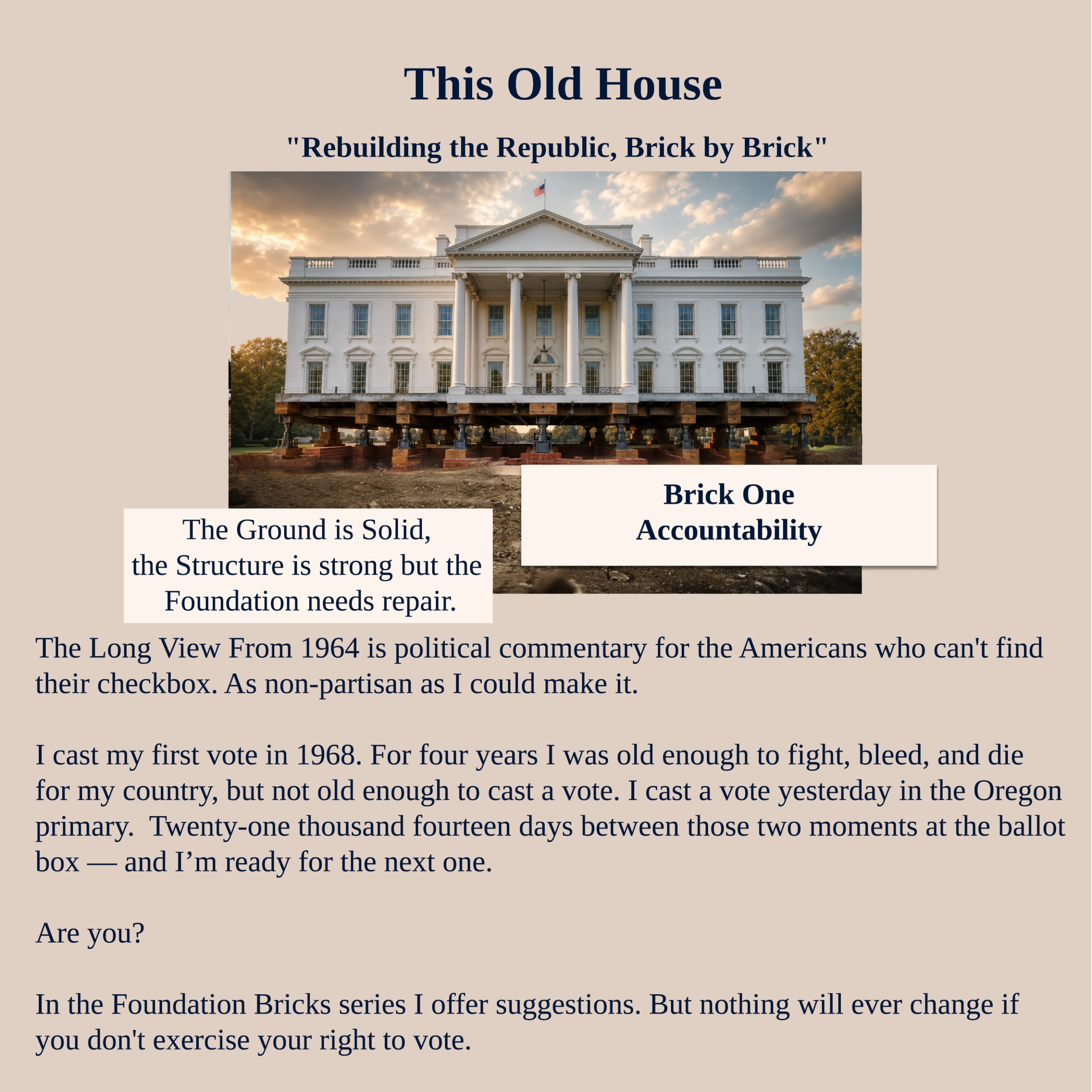

The Accountability Brick What Good Government Actually Requires — Brick One – Accountability – Video
The Foundation What Good Government Actually Requires — Part One
Accountability.
Presidential immunity is the legal formalization of unaccountability. The Supreme Court’s 2024 decision didn’t create the problem — it just removed the last pretense that the problem didn’t exist. When the president does it it isn’t illegal. Nixon said that too. It didn’t work then because the institution held.
The institution didn’t hold this time.
Share this:



Get Off The Bench
Fire. Fire. Fire.
Look at all the fires. Rush over here and put that one out. Rush over there and put the next one out. And so on and so on.
Is that what politics feels like today? All we’re doing is putting out little fires hoping to keep the house from burning down.
It doesn’t seem that long ago there weren’t so many fires. That the house wasn’t in such constant danger. But something changed.
And it changed on purpose.
The fires are intentional. We have an arsonist in the White House and he is having a grand time with his box of matches. Which begs the question — why so many fires? Besides the obvious answer that he’s loony tunes.
The little fires keep us busy. Too busy to stop the big fire from being ignited. The one we can see but can’t get to because all our time and energy is going into the constant diversions.
Forest fire management — how’s that for a change of direction?
Actually it’s the same road.
In forest fire management they build firebreaks. They do this by setting controlled fires of their own — clearing an area ahead of the main blaze so the big one has nowhere left to go.
Are we doing that? Are we putting stops in place ahead of time or just reacting to the constant diversions?
We know what the goal is. What are we being proactive about to stop him from reaching it? How are we taking the ball away? And most importantly — what are we going to do with it when we get possession?
Right now we are playing a purely defensive game.
Where is the offense?
The firebreak doesn’t build itself. The ball doesn’t move without someone running with it.
Time to get off the bench.
Then maybe we can keep the house from burning down.

Share this:

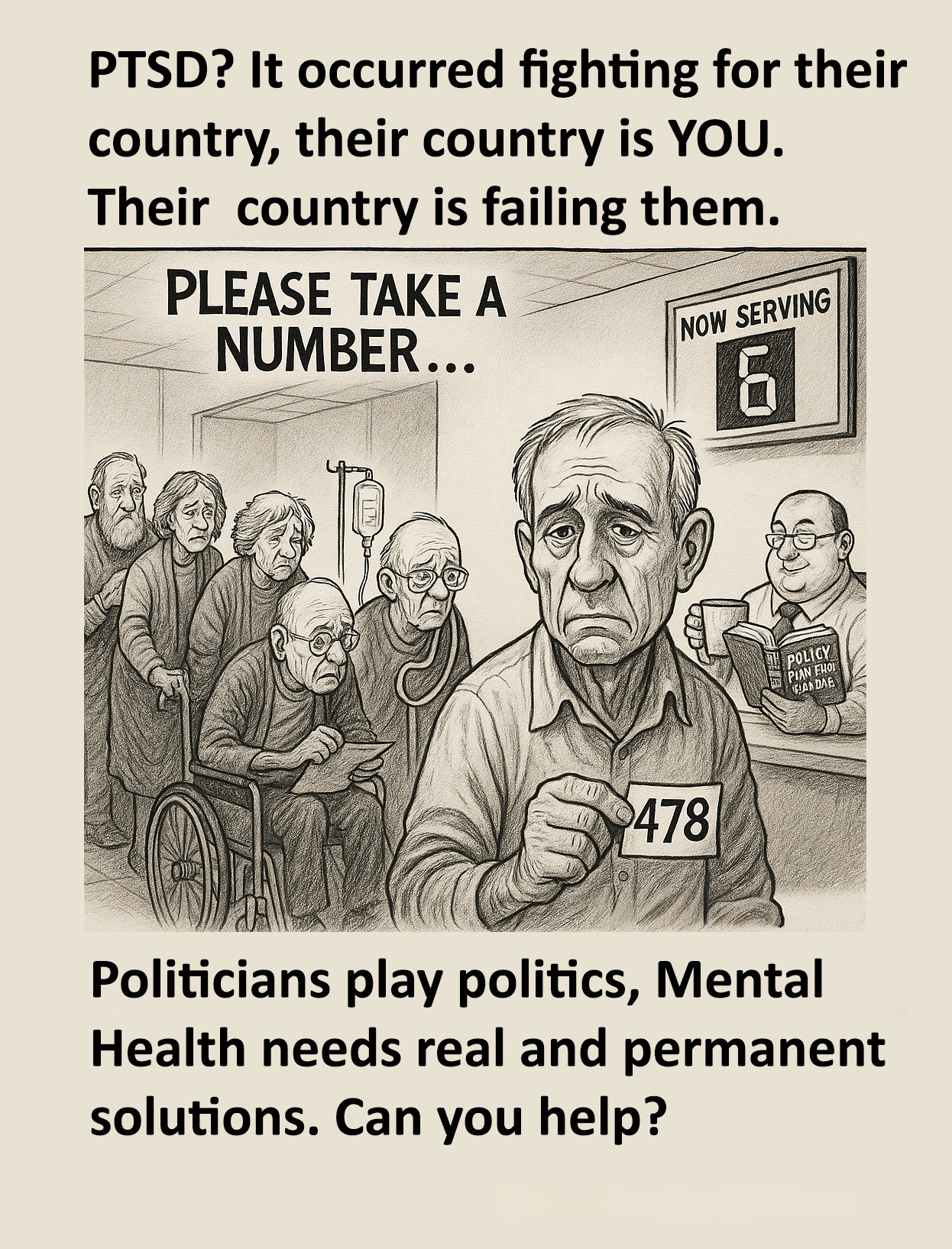
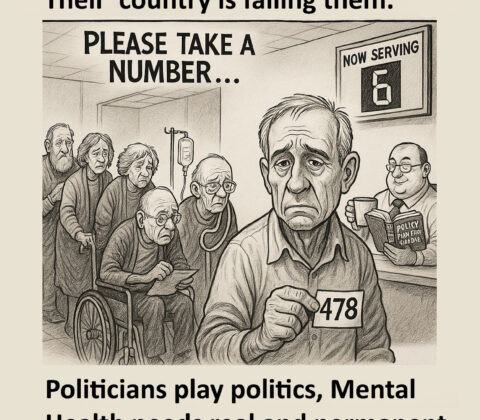
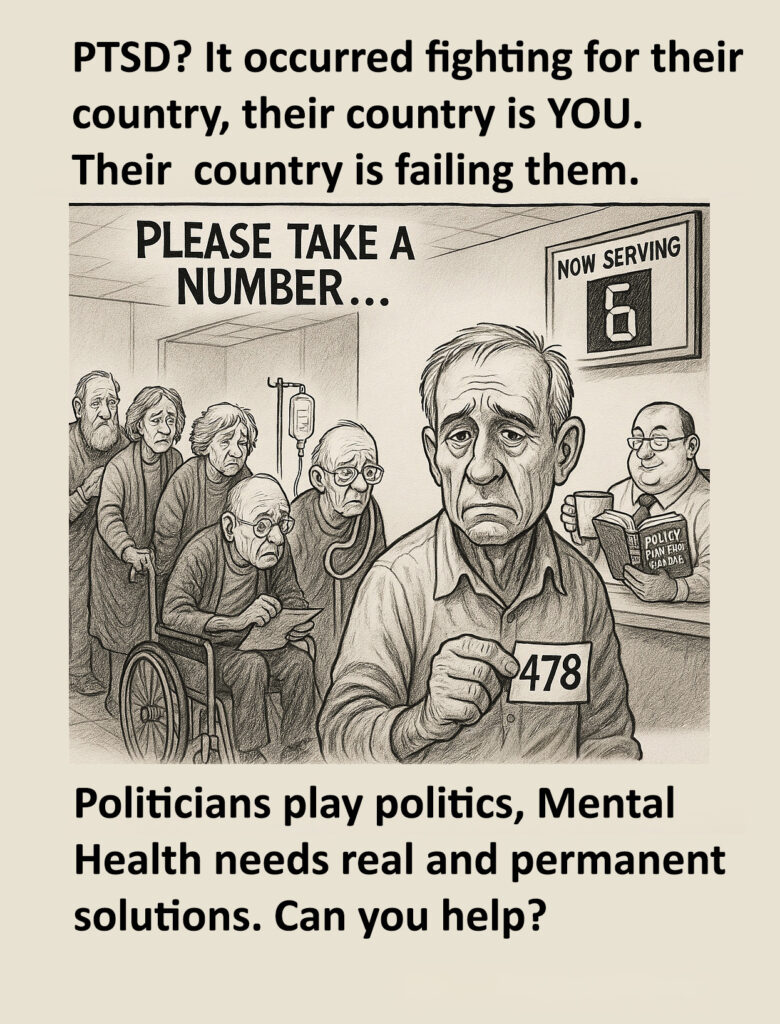
When Seeing Isn’t Enough, Who Builds?
 When Seeing Isn’t Enough, Who Builds?
We’ve become good at noticing problems.
We see the tents.
We see the people fading away.
We see the cracks in systems that were supposed to catch them.
And we often respond.
We volunteer.
We donate.
We organize what little we can.
But noticing isn’t the same as building.
The real gap is in the people and organizations who actually structure solutions.
Not charity. Not awareness campaigns. Not temporary fixes.
I mean the kind of work that requires:
Capital, invested with intent
Teams, operating with accountability
Systems, designed to scale
Without that, even the best efforts stay islands.
There are occasional sparks.
Someone rallies a community.
A small operation starts and grows.
News catches it because it’s novel, or outrage makes it visible.
But those sparks are rare. And rare sparks can’t hold a fire.
We’ve trained ourselves to believe that scale only comes from government, or from huge organizations.
But history shows otherwise.
Railroads weren’t built by committees waiting for permits.
Cities weren’t lit by ideas held back by bureaucracy.
Movements weren’t started by people waiting for permission.
Scale comes when someone decides to start building—and then invites others to join.
That’s the space we’re missing now.
Not awareness.
Not compassion.
Not even outrage.
We’re missing builders.
People willing to put together the teams, the capital, the structure, and the commitment to make solutions grow.
We may not know the full answer.
No single person does.
But the signal is clear: wherever there’s a problem too big for charity and too complex for government… there is a role for builders.
Somebody has to start.
Share this:

The Accountability Brick What Good Government Actually Requires — Brick One – Accountability
The Foundation What Good Government Actually Requires — Part One
Accountability.
Not the political science version. Not the talking point. The real thing. The kind you learn before you’re old enough to vote.
When you break something you admit it. There is no rug. There is no sweeping. You live with what you have and if you don’t have it you earn it. If you make a promise you keep it — or you have a legitimate reason for not doing so that you share with the people you made it to.
That’s it. That’s the foundation.
Everything else — healthcare, infrastructure, justice, national security, the institutions we depend on daily without noticing — sits on top of that one simple principle. Remove it and nothing else holds. The walls crack. The roof comes down. The building that took two hundred and fifty years to construct becomes a very expensive pile of rubble with gold curtains.
We have watched what happens when accountability disappears from the top.
I will lower your taxes. What goes unspoken is that someone’s benefits will pay for it. I will protect your benefits. What goes unspoken is where the money comes from. The empty promise isn’t always an outright lie. Sometimes it’s just half the truth delivered with enough confidence that nobody does the math until the bill arrives.
The bill always arrives.
Presidential immunity is the legal formalization of unaccountability. The Supreme Court’s 2024 decision didn’t create the problem — it just removed the last pretense that the problem didn’t exist. When the president does it it isn’t illegal. Nixon said that too. It didn’t work then because the institution held.
The institution didn’t hold this time.
Which means the foundation has to be rebuilt with something stronger than institutional habit and assumed good faith. The founders were obsessed with this question. They had just lived under a king. Every check, every balance, every separation of power was the answer to one central anxiety — what happens when the wrong person gets the power?
They built a back door. A way to stop something. Checks and balances as the architectural response to the certainty that power will eventually be held by someone who shouldn’t have it.
That back door has to be properly locked from both sides. No presidential immunity. Full stop. The same standard applied to the person signing the orders as to the person receiving them.
To require fidelity requires fidelity.
That covers governance and marriage and institutional trust and the social contract simultaneously. You cannot demand loyalty from a country you are actively betraying. You cannot require honesty from institutions you are actively corrupting. You cannot ask the American people to follow rules you have granted yourself immunity from.
One standard. No exceptions. No immunity.
That is the foundation.
Without it nothing else we build will stand.
Share this:



Guest Post – Outrage Turned Us vs. Them Into Us vs. Us – Video
The political class does not need every citizen to agree with its agenda. It only needs citizens to remain divided enough that they never organize around the things they already agree upon. The cost of living, safe communities, transparent government, affordable healthcare, accountable leadership, fair wages, reliable infrastructure, and reduced corruption are not fringe concerns. They are the ordinary expectations of people who still believe a modern nation should function reasonably well.
The divide in America is real. Some disagreements are profound and unlikely to disappear anytime soon. But division is also useful to those who benefit from keeping the public fragmented and distracted.
That reality does not erase legitimate differences between left and right. It simply raises a different question: who benefits when citizens become so consumed by fighting one another that they stop paying attention to the people holding the matches?
The sign still insists everything is under control.
Perhaps it is finally time to stop arguing long enough to ask who keeps fueling the fire.

This is a long form version of

Share this:

Guest Post – Outrage Turned Us vs. Them Into Us vs. Us
The political class does not need every citizen to agree with its agenda. It only needs citizens to remain divided enough that they never organize around the things they already agree upon. The cost of living, safe communities, transparent government, affordable healthcare, accountable leadership, fair wages, reliable infrastructure, and reduced corruption are not fringe concerns. They are the ordinary expectations of people who still believe a modern nation should function reasonably well.
Yet functioning government is terrible entertainment. Competent administration does not generate ratings. A successful infrastructure project is not nearly as exciting as a culture war. A balanced budget lacks the emotional punch of outrage. Solving problems rarely creates the same level of engagement as arguing about them indefinitely.
As a result, the public often finds itself trapped in a cycle where the issues that divide Americans become permanent campaign material, while the issues that unite Americans become optional. The disagreements remain unresolved because unresolved conflicts are politically valuable. They provide fundraising opportunities, campaign slogans, media appearances, and endless reasons to return voters to the polls convinced that disaster is one election away.
Meanwhile, many of the structures that citizens regularly complain about remain largely untouched. Bureaucracies continue to grow and evolve. Lobbying networks remain deeply embedded. Regulatory systems become increasingly complex. Major donors continue to enjoy access that ordinary citizens can only imagine. Regardless of which party wins a given election, the machinery itself often proves remarkably durable.
This is not to suggest that elections do not matter. They do. Policies matter. Laws matter. Judicial appointments matter. The outcomes of elections can and do have significant consequences for millions of people.
The problem is that Americans are increasingly encouraged to view politics as a never-ending battle between ordinary citizens rather than as a mechanism for governing a country. Political disagreement is natural and healthy in a free society. It is impossible to have liberty without disagreement because free people inevitably reach different conclusions about how society should be organized.
The trouble begins when disagreement ceases to be a challenge that politics attempts to manage and instead becomes the product being sold.
In that environment, conflict acquires value of its own. Outrage becomes a commodity. Fear becomes a fundraising strategy. Anger becomes a marketing tool. Citizens become consumers of political entertainment rather than participants in self-government.
The result is a nation in which people spend extraordinary amounts of time debating one another while exercising surprisingly little influence over the institutions that affect their daily lives. Americans can instantly identify the latest cultural controversy, yet many struggle to explain how legislation is written, how regulatory agencies operate, or how lobbying organizations influence policy. They know the arguments they are expected to have because those arguments are constantly placed in front of them. They are far less likely to know where the money flows, who benefits from specific decisions, or why certain reforms never seem to advance beyond campaign promises.
None of this requires a grand conspiracy. Human nature is sufficient. Politicians respond to incentives. Media organizations respond to incentives. Activist groups respond to incentives. Consultants, donors, corporations, and advocacy organizations all respond to incentives. If outrage generates attention, and attention generates money, influence, or power, then outrage will be produced in abundance.
That reality should concern citizens regardless of ideology.
A conservative who believes government has become unaccountable should be concerned. A progressive who believes corporations wield excessive influence should be concerned. An independent who simply wants competent leadership should be concerned. The specific diagnosis may vary, but the underlying problem remains remarkably similar: institutions often benefit from public division in ways that ordinary citizens do not.
The challenge, therefore, is not to eliminate disagreement. That would be impossible and undesirable. A healthy society needs vigorous debate. It needs competing ideas. It needs people who are willing to challenge one another’s assumptions and defend their beliefs.
What it does not need is a political culture that treats every disagreement as evidence that fellow citizens are enemies.
Americans can disagree about gun policy while still demanding affordable housing. They can disagree about abortion while still insisting upon accessible healthcare. They can debate immigration policy while expecting government agencies to function efficiently. They can argue about climate policy while wanting clean water, reliable infrastructure, and accountable public officials.
In fact, the ability to maintain those distinctions may be one of the most important civic skills a democracy can possess.
The danger is not disagreement itself. The danger is allowing disagreement to become a leash that can be pulled whenever those in power need citizens looking somewhere else.
When people are exhausted, angry, and constantly reacting, they become easier to manage. They spend their energy fighting one another instead of examining systems. They become focused on symptoms instead of incentives. They become consumers of outrage rather than organizers of solutions.
Outrage can be useful. It can draw attention to genuine injustice. It can motivate action. It can expose corruption and force accountability.
But outrage alone is not power.
Power comes from organization. It comes from persistence. It comes from understanding how institutions work and demanding that they serve the public interest. It comes from citizens who are willing to track promises, follow legislation, monitor spending, attend meetings, vote consistently, and remain engaged long after the cameras have moved on to the next controversy.
Most importantly, power comes from recognizing that fellow citizens are not automatically enemies simply because they disagree.
The country does not need another lecture about unity from politicians who profit from division. It does not need another campaign built entirely around fear of the other side. It does not need another election cycle in which Americans are told that their greatest threat is the person living across the street.
What it needs are citizens willing to notice the trick.
The divide in America is real. Some disagreements are profound and unlikely to disappear anytime soon. But division is also useful to those who benefit from keeping the public fragmented and distracted.
That reality does not erase legitimate differences between left and right. It simply raises a different question: who benefits when citizens become so consumed by fighting one another that they stop paying attention to the people holding the matches?
The sign still insists everything is under control.
Perhaps it is finally time to stop arguing long enough to ask who keeps fueling the fire.
This is a long form version of
Share this:

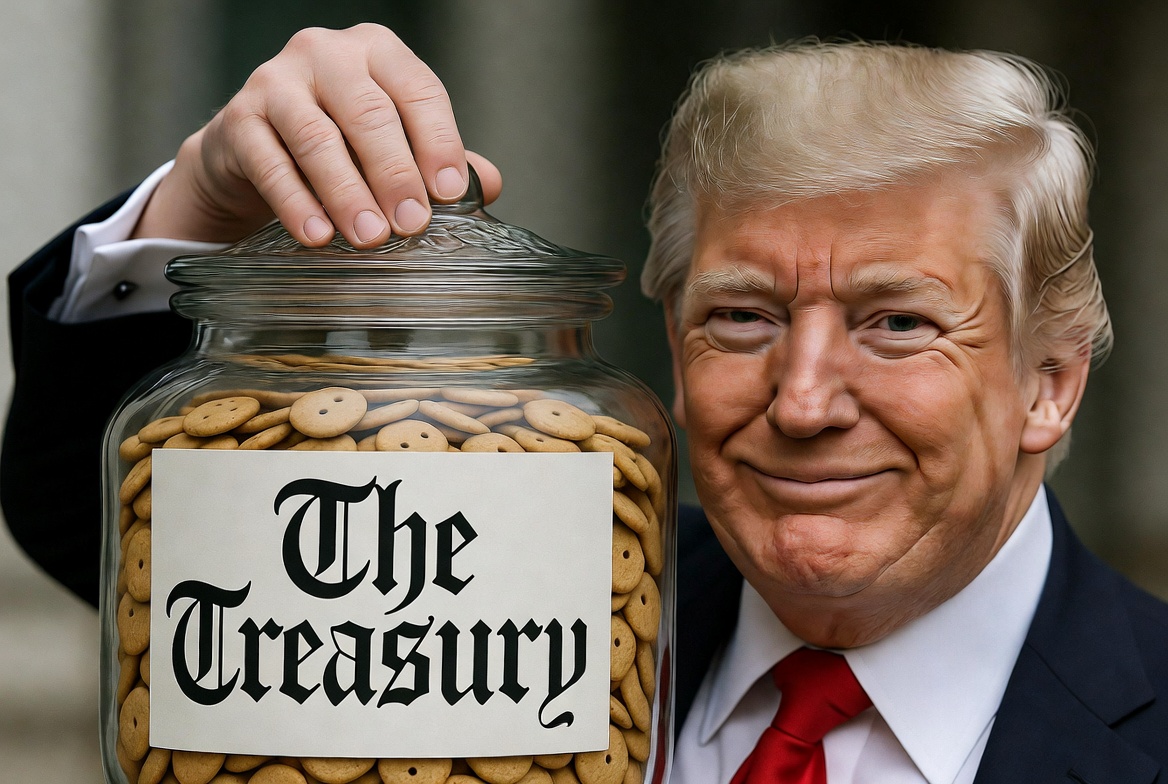
One last thing, the Treasury is ours as well, get your fingers out of it. – Video
Because I told you so.
Sound familiar? Most of us heard it growing up. Some of us said it to our own children. It’s the last resort of someone who has run out of better arguments — the declaration of authority without justification.
We are being governed that way right now.
Not guided. Not nurtured. Bullied. Called stupid. Low IQ. Insulted by people who work for us while acting like they own us. Expected to say thank you for the privilege of being fleeced and lied to simultaneously.
When did we forget whose house this is?
Donny — you know where the door is.
One last thing.
The Treasury is ours.
Get your fingers out of it.

Share this:



The Wake Up Call We Needed — Now What? – Video
Fast times in DC.
Who could have guessed one person could do so much damage in so little time? Boy did we get blindsided.
But who is to blame?
The ugly answer is you, me, and the rest of the sheep basking in the sun, being spoon fed from the easy café.
The power will be taken from Trump. That’s a given. The question is who ends up with it.
And what they do with it.
That question is what the rest of this series is about.

Share this:

The Wake Up Call We Needed — Now What?
Fast times in DC.
Who could have guessed one person could do so much damage in so little time? Boy did we get blindsided.
But who is to blame?
The ugly answer is you, me, and the rest of the sheep basking in the sun, being spoon fed from the easy café.
In a year and a half we have watched our checks and balances reveal themselves as profoundly unbalanced. We have watched the courts become so partisan that the blind lady of justice simply threw away her scales. We have watched corruption we never considered possible — insider trading making the obscenely rich richer, our heritage torn down and rewritten to honor a grifter, due process replaced by the rule of whoever wears the crown.
None of it was subtle. It was thrown in our faces. We were sneered at, belittled, and abused. And told it was for our own good.
For once I agree.
It has been for our own good. Not the abuse — the exposure. We needed a wake up call. Not a gentle alarm. A slap across the face.
Are you awake yet?
Do you see what has happened, what is happening, and what will happen if we don’t put a stop to it?
But wait. Before we stop it something else must be decided. How do we make sure this never happens again?
And so far the answer from most quarters seems to be — put the Democrats in power.
That’s a rather simplistic view.
Consider this honestly. What would you do with absolute power? Power corrupts. Absolute power means the same old fleecing — just someone else holding the shears. Do you really believe the Democrats are immune to that power rush? Would you be?
Oh, but they’re the Democrats. Right.
I don’t trust them any more than I trust the Republicans. And I say that having watched both parties for six decades.
This didn’t start with Trump. For decades — through conservative and liberal administrations alike — the machinery of power has been slowly redirected toward the people operating it rather than the people it was built to serve. Term limits have never passed because nobody in power wants to give up power. Legislation shifts like sand from side to side depending on who holds the majority. Congress spends more time and money on Congress than it does on the rest of us. We exist to justify them and to pay them.
Trump accelerated what was already in motion. He didn’t build the road. He just drove it off the cliff faster than anyone expected.
So here is my advice. Take it or leave it. But remember — you will have to live with the results. I am old. The changes we make or fail to make won’t affect me nearly as much as they will affect my children and their children. That’s why I’m still paying attention.
Elect moderates. I don’t care if they carry a D or an R. Get away from the extremes. Flush MAGA down the toilet. Dump the wokes in a landfill. Look for people who want a functional government — leaders who understand that America is a member of the world community, not its boss. We are powerful enough to guarantee mutual destruction. Why are we too weak to simply get along?
The power will be taken from Trump. That’s a given. The question is who ends up with it.
And what they do with it.
That question is what the rest of this series is about.
Share this:



This One Is For You The Moderates. The Independents. The People With No Checkbox. – Video
This one is for the people who don’t know which box to check. The ones who get called moderate like it’s an insult. The ones who believe in fiscal responsibility and social decency simultaneously and can’t find a party that does both.
You exist. You are not alone. You are actually the majority.
And nobody is talking to you directly.
You are not a Democrat who drifted right. You are not a Republican who got left behind. You are something specific and real that the current system has no checkbox for.
The only way independents and moderates get a checkbox is if we force it into existence. Not by waiting for permission. Not by hoping one of the two parties decides to represent us. By showing up, making noise, and refusing to be invisible any longer.
I know who I would vote for.
Do you?
Hint: It isn’t Newsom or Harris.

Share this:

This One Is For You The Moderates. The Independents. The People With No Checkbox.
This one is for the people who don’t know which box to check. The ones who get called moderate like it’s an insult. The ones who believe in fiscal responsibility and social decency simultaneously and can’t find a party that does both.
You exist. You are not alone. You are actually the majority.
And nobody is talking to you directly.
You are not a Democrat who drifted right. You are not a Republican who got left behind. You are something specific and real that the current system has no checkbox for.
Around 33 to 35 percent of American adults self identify as moderates. Around 45 percent identify as political independents. The majority doesn’t fit in either shoebox. And yet the candidates are selected in primaries dominated by the most committed voters on each extreme — which means by the time the general election arrives the choices have already been made without you.
So we get screwed. Politely. Democratically. But thoroughly.
The most effective tactic available to a moderate right now is not supporting the champion — because the champion isn’t on the ballot. It’s weakening the worst option. Registering in the other party’s primary and voting against the most dangerous candidate. It’s a shame that’s where we are. But that’s where we are.
And even that doesn’t give you the candidate you actually want.
What you can do — what has to happen before anything else changes — is make noise. The two party system and the electoral college won’t dismantle themselves. But they can be pressured. Start early. Find the candidates from either side you can live with and say so loudly. Support the ones closest to sanity regardless of the label they wear.
Noise works. It’s why you’re reading this.
Right now all we hear is Democrats telling us the only effective way to address the current disaster is to vote Democrat. They’re probably right in the short term because they’re the only ones making noise. The moderates and independents are watching. Reading. Thinking.
And staying silent.
That has to stop.
You can’t complain about being ignored if you’re silent. This isn’t Christmas. Silence doesn’t belong in the equation.
I’m not going to tell you what to say. You are probably the least sheep of anyone paying attention right now. The least likely to follow blindly. The most likely to have thought this through.
So why aren’t you speaking up?
The only way independents and moderates get a checkbox is if we force it into existence. Not by waiting for permission. Not by hoping one of the two parties decides to represent us. By showing up, making noise, and refusing to be invisible any longer.
I know who I would vote for.
Do you?
Hint: It isn’t Newsom or Harris.
Share this:

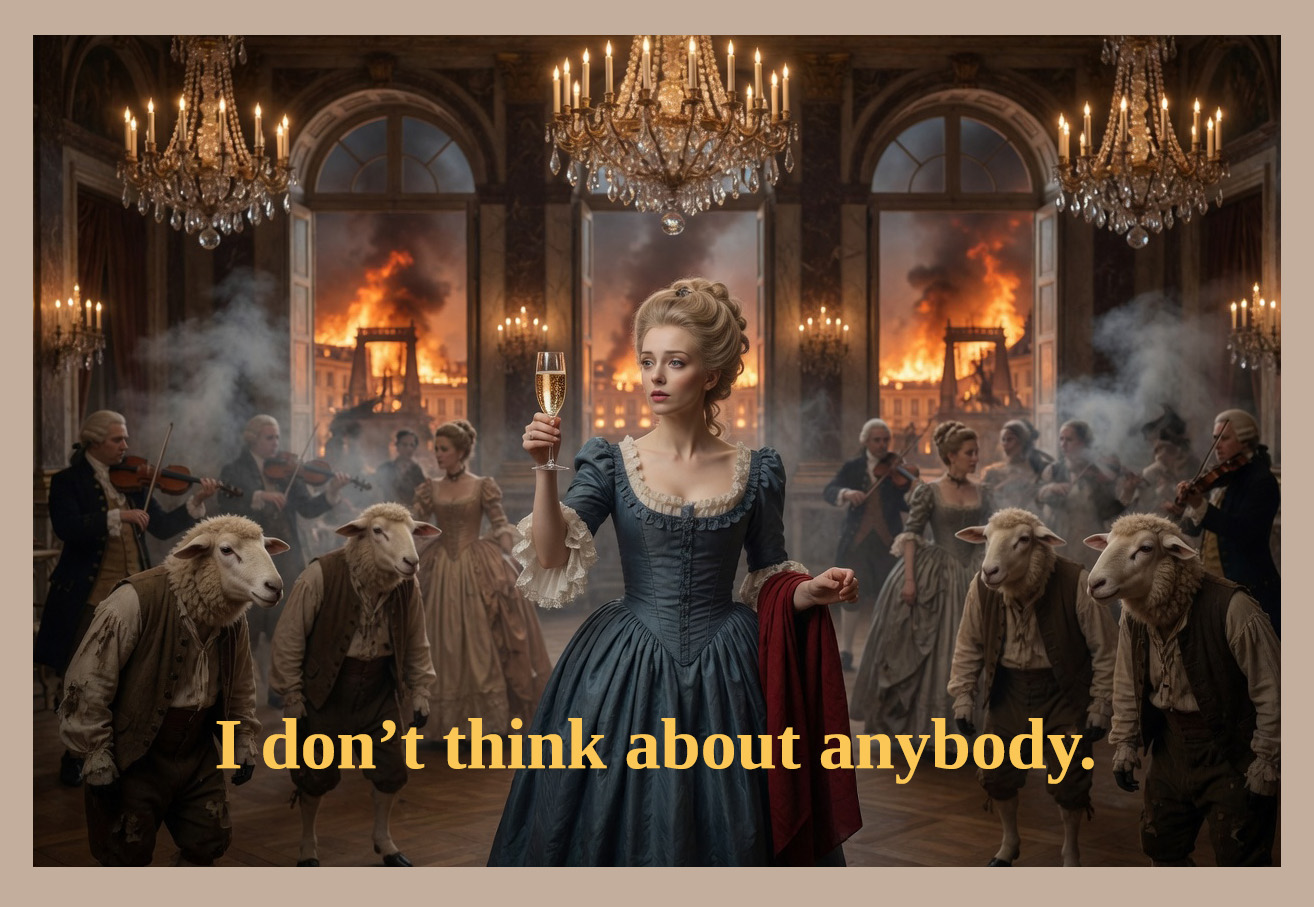
The President Who Won’t Leave – That’s right Donny, you never needed 4 inches to begin with – Video
That’s right Donny. You never needed 4 inches to begin with. Part 4.
Makes you wonder what’s actually going on.
The White House. Congress. The Supreme Court. How many years have they stood without a serious attack?
I’m sorry. I forgot about January 6th. Silly me.
But those were patriots. Loyal followers of the President of the United States just acting out a bit. A couple of dead. Some property damage. Nothing to worry about. They only did their little protest because someone very high up asked them to. And why did they do it? Because the President claimed the election was stolen.
Share this:

One last thing, the Treasury is ours as well, get your fingers out of it.
Because I told you so.
Sound familiar? Most of us heard it growing up. Some of us said it to our own children. It’s the last resort of someone who has run out of better arguments — the declaration of authority without justification.
We are being governed that way right now.
Not guided. Not nurtured. Bullied. Called stupid. Low IQ. Insulted by people who work for us while acting like they own us. Expected to say thank you for the privilege of being fleeced and lied to simultaneously.
When did we forget whose house this is?
This is ours. All of it. Not the President’s. Not the administration’s. Not the property of a toddler in long pants who decided the rules that apply to everyone else are optional for him.
The National Parks are ours. The monuments are ours. The Kennedy Center is ours. The White House itself — every gilded inch of it — is ours. The Treasury is ours.
Get your fingers out of it.
We are not children being managed by a difficult parent. We are the employers of people who seem to have forgotten that they were hired, and can be fired.
We have two tools available and we are not using either of them effectively.
The first is the ballot. Elections are coming. Vote. If you don’t vote you forfeit your right to complain — and complaining is currently the national pastime so the stakes are high. A recent election was decided by less than five votes after the final tally. Five votes. If you think your vote doesn’t matter you are mathematically wrong.
I’m not telling you how to vote. I’m telling you to vote.
The second tool is simpler and more immediate. It is the one word every child hates more than lima beans or spinach.
No.
Not negotiated. Not qualified. Not apologized for.
No.
Said together. Said loudly. Said with the specific conviction of people who have just remembered that this is their house and they did not invite the current occupant to redecorate it.
The Founding Fathers used that word. It didn’t come easy and it didn’t come cheap. But they said it.
So. Get the cage off our lawn. Fix the Kennedy Center. Put the rose garden back. Take your picture off our buildings.
And Donny — you know where the door is.
One last thing.
The Treasury is ours.
Get your fingers out of it.
Share this:

The President Who Won’t Leave – That’s right Donny, you never needed 4 inches to begin with.
That’s right Donny. You never needed 4 inches to begin with. Part 4.
Makes you wonder what’s actually going on.
The White House. Congress. The Supreme Court. How many years have they stood without a serious attack?
I’m sorry. I forgot about January 6th. Silly me.
But those were patriots. Loyal followers of the President of the United States just acting out a bit. A couple of dead. Some property damage. Nothing to worry about. They only did their little protest because someone very high up asked them to. And why did they do it? Because the President claimed the election was stolen.
We have heard that one before. Like every time a MAGA loses an election it was rigged. Stolen. The result of a vast conspiracy against the one man standing between his followers and the darkness.
On to 2026.
Trump is having his playroom built next to the White House — the shed as he has called it. You know the one. Right on top of the bunker. The bunker every honestly elected president apparently needs. Complete with hospital, command center, and I imagine a presidential suite modeled tastefully after Mar-a-Lago. Gold throne. Toilet paper printed with the Declaration of Independence on every square.
But enough about the bunker.
Let’s talk about the ballroom. The gilded monstrosity built as a monument to a gilded something. The bulletproof windows — four inches, five inches, six inches, depending on the day and who is doing the measuring. A man who demonstrably does not know the difference between four and six inches. Small hands. Transparent windows. Transparent man.
And the snipers on the roof.
All those snipers on the roof.
Here is the question nobody in that building seems willing to ask out loud.
Who exactly is he protecting himself from?
The Capitol stood for centuries without this level of fortification. It survived wars, protests, and genuine threats from foreign enemies. The one time it was actually breached was by people he invited.
So who are the snipers for?
The invading armies of our pissed off allies? Possibly. He has worked hard enough to earn that.
Or maybe — just maybe — it’s the pissed off sheep right here at home. The ones who finally have had enough. The ones who can’t feed their families. The ones who watched $1.776 billion get dangled in front of the people who last stormed the castle and then get snatched away so the theft could be blamed on everyone else.
Is Second String Donny building his bunker as a last line of defense?
Against us?
The President of the United States works for us. He has no reason to fear us — unless we are not on his agenda. Unless what he has been doing was never in the best interest of the Americans he swore to serve.
Maybe some reporter should just ask him directly. Why are you so afraid of us? What did you do that makes you need four inches of glass and snipers on the roof between yourself and the people you work for?
The trouble with climbing into a hole to hide is there is nowhere to go from there.
Just the hole.
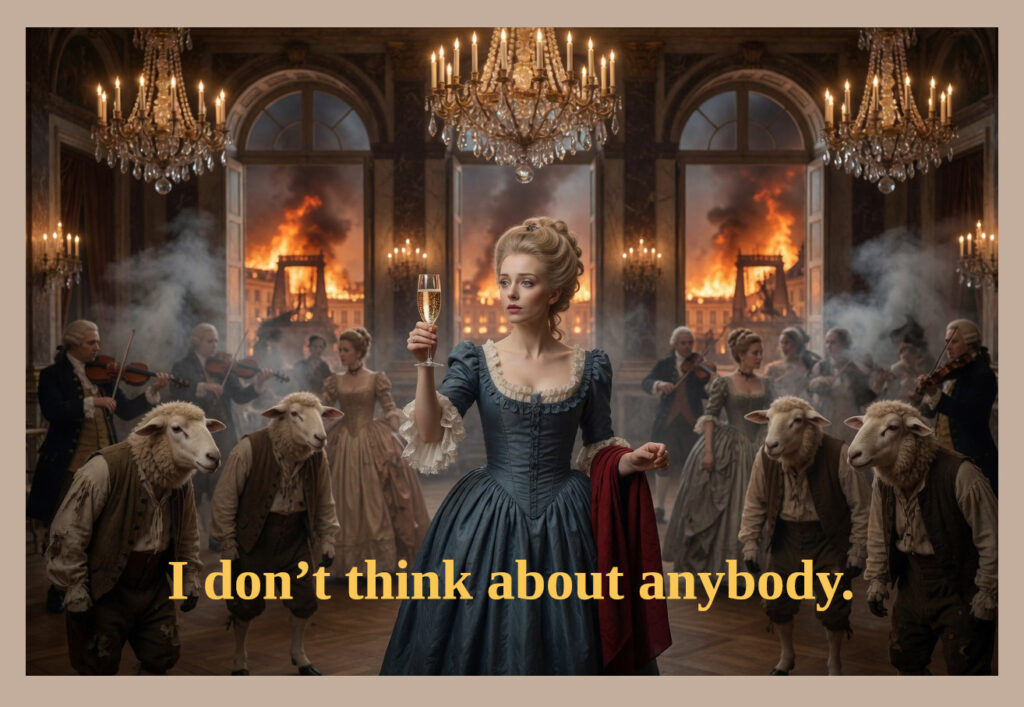
Share this:


Bernie, Bernie, Bernie
I received a “look at what I am doing” email from Bernie Sanders and because I hate comments or sound bites taken out of context I decided to share the complete email — without the “oh, send money” part. You’re welcome.
The gist of his proposed legislation is having America take a stake in the developing AI revolution. And I have to admit the general idea could help fill the enormous hole in our coffers created by the current administration and their efforts to bankrupt this nation.
His first point I am all for. Sounds great.
“This legislation would guarantee that the trillions of dollars potentially generated by A.I. are used to improve the lives of all of us — not simply to make the richest people in the world even richer.”
It’s this part I have an issue with. Big Brother having a 50% voting and control share.
“The federal government would have the power, through its voting shares and an equal representation on each company’s board, to block decisions that hurt our citizens and to push for policies that help them.”
Let’s be honest. The American people still would not have a voice in how AI is developed. A few politicians would have that say. They would tell us it’s our voice — but all you have to do is look at the gilding of bronze statues to understand what our voice is actually worth these days.
Sorry. That just slipped out.
Bernie’s diagnosis is correct. AI is being built on the collective knowledge of humanity — every book, article, conversation, and creative work ever digitized. The people who happen to own the compute infrastructure shouldn’t be the sole beneficiaries of that collective inheritance.
But his prescription has a fatal flaw.
We have already seen the debate around AI and government power play out in real time. Anthropic — one of the companies named in Bernie’s legislation — has publicly stated that it does not want its technology used for fully autonomous lethal weapons or the mass surveillance of Americans. That is exactly the kind of ethical guardrail that responsible AI development requires.
Do we really want whichever party happens to be in power having direct influence over whether those guardrails stay in place? Do we want political considerations overriding ethical ones when the technology has the potential to do tremendous good and tremendous harm simultaneously?
This isn’t about losing jobs. It’s about losing what’s left of our freedom. Our personal freedom. Do we really want anyone looking over our shoulder — reading everything we write? This article. A private letter. A conversation between a grandparent and a grandchild.
So Bernie — 50% sounds good financially. But maybe it should be non-voting stock.
I don’t trust billionaires enough to hand them AI.
I don’t trust politicians enough to hand them AI either.
We need guidelines. We need oversight. But that has to be done with the help of government — not by government.
If the public is going to own a stake in AI that ownership should be managed by an independent public trust. Not elected politicians. Not the companies themselves. An independent entity charged with protecting the public’s investment while remaining insulated from political pressure and corporate influence.
A Public Investment Authority. Something like the Alaska Permanent Fund — created to ensure that the wealth generated from a public resource actually benefited the public rather than whoever happened to be in power when the resource was discovered.
The question isn’t whether public investment in AI should exist.
The question is how to structure it so that neither politicians nor corporations can abuse it.
Bernie is asking the right question.
He just needs a better answer.
Bernies email.
“Since A.I. is built on the collective knowledge of humanity, the wealth it generates must benefit humanity. Not just Mr. Musk, Mr. Altman, Dario Amodei and other moguls whose companies are positioned to dominate the industry. Not just venture capitalists in Silicon Valley or money managers on Wall Street who undoubtedly see A.I. as the next great wealth-extracting machine.
That is why I will soon be introducing the American A.I. Sovereign Wealth Fund Act. This legislation would give the public a direct ownership stake in the largest A.I. companies in our country. How? It would create a sovereign wealth fund through a one-time 50 percent tax — not on the profits of OpenAI, Anthropic, xAI and other companies, but paid with something far more valuable than that: the stock.
If passed, this legislation would do two crucial things. First, it would give the public a direct role in determining the future of this technology. No longer would the future of A.I. and the transformation of human life that it will bring be dictated by a handful of Big Tech oligarchs. The federal government would have the power, through its voting shares and an equal representation on each company’s board, to block decisions that hurt our citizens and to push for policies that help them.
Second, this legislation would guarantee that the trillions of dollars potentially generated by A.I. are used to improve the lives of all of us — not simply to make the richest people in the world even richer. If the big A.I. companies continue to grow as rapidly as many analysts expect, then the value of the sovereign wealth fund will grow as well — and the benefits to the American people will grow along with it.”
Share this:

Bernie, Bernie, Bernie – Video
I received a “look at what I am doing” email from Bernie Sanders and because I hate comments or sound bites taken out of context I decided to share the complete email — without the “oh, send money” part. You’re welcome.
The gist of his proposed legislation is having America take a stake in the developing AI revolution. And I have to admit the general idea could help fill the enormous hole in our coffers created by the current administration and their efforts to bankrupt this nation.
His first point I am all for. Sounds great.
“This legislation would guarantee that the trillions of dollars potentially generated by A.I. are used to improve the lives of all of us — not simply to make the richest people in the world even richer.”
It’s this part I have an issue with. Big Brother having a 50% voting and control share.
“The federal government would have the power, through its voting shares and an equal representation on each company’s board, to block decisions that hurt our citizens and to push for policies that help them.”
Share this:

Independents Move Us Forward – 06/05/26
|
|||||||||||||||||||||||||||||||||||||||||||||||
 Rep. Kevin Kiley
 Chris Demers
 Karen Leigh Matthews
 Michael Bridgford
 Dave Bushaw
 Seth Bodnar
 Brian Bengs
Share this:



F you Judge
I’m not going to pay that ticket. I’m not going to jail. I think you’re wrong and I don’t care what the jury said. I’m above it all.
Sounds like a child ranting doesn’t it.
Now imagine walking into court and telling the judge that his ruling doesn’t apply to you. That because he’s a Republican and you’re a Democrat — or vice versa — you’ve decided the judgment is political and therefore optional.
At that point a marshal would be escorting you to a holding cell before you finished the sentence.
This isn’t hypothetical anymore.
DHS Secretary Markwayne Mullin recently suggested that ICE would evaluate court rulings and decide whether they’re “political” before following them. If the administration believes it can pick and choose which court orders to obey based on perceived bias — why should average Americans be held to a different standard?
This is about you and me.
After losing the E. Jean Carroll case the President ignored the court’s rulings and showed open contempt for the judiciary. He uses the Department of Justice for his personal civil suits. After losing judgments he simply doesn’t pay them.
If the law doesn’t apply equally where is the accountability? Where is the enforcement?
The point isn’t about the merits of any specific case. Appeals exist for everyone. Open contempt and selective obedience do not. Those are not legal strategies — they are the behavior of someone who has decided the rules apply to other people.
So here is the question that deserves a straight answer.
If he can do it why can’t we?
If ICE doesn’t have to follow court orders why do we? If the President doesn’t have to pay judgments why do we? If the administration can ignore rulings that don’t fit their narrative what exactly is the authority of the court?
Are fines optional?
Are licenses optional?
Are judgments optional — depending on whether you agree with the judge?
We are all allowed to disagree with a court ruling. We are all allowed to appeal. What we are not all allowed to do — what only some of us apparently get to do — is simply refuse to comply.
There should be consequences for ignoring court orders. For everyone. Regardless of title or office or the size of the building they work in.
I have this speeding ticket I’ve been thinking about. Pretty sure the officer was politically motivated. I’m going to evaluate whether his authority applies to me before I decide whether to pay it.
If the rule of law applies to ordinary citizens it applies to everyone.
Or it applies to no one.
Pick one.

Share this:

F you Judge – Video
I’m not going to pay that ticket. I’m not going to jail. I think you’re wrong and I don’t care what the jury said. I’m above it all.
Sounds like a child ranting doesn’t it.
There should be consequences for ignoring court orders. For everyone. Regardless of title or office or the size of the building they work in.
I have this speeding ticket I’ve been thinking about. Pretty sure the officer was politically motivated. I’m going to evaluate whether his authority applies to me before I decide whether to pay it.
If the rule of law applies to ordinary citizens it applies to everyone.
Or it applies to no one.
Pick one.
Share this:

The Long View From 1964 – The Saucepan Hat – Video

We have elections coming up. You are going to have to make choices. I wish I could make them for you, and if so, I wish I were wise enough to make the right ones. But I am just a person with opinions and I hope you are as well.
The voters that scare me are the sheep. Here is how to vote, do it this way because I told you to. That is what keeps me up at night.
The Long View From 1964
- Superman
- Maybe Just Listen
- The Checkbox Problem
- The Land Moved While You Slept
- The Road and the Ground Beneath It
- Where is Anywhere
- The Saucepan Hat
- Superman (Video)
- Maybe Just Listen (Video)
- The Checkbox Problem (Video)
- The Land Moved While You Slept (Video)
- The Road and the Ground Beneath It (Video)
- Where is Anywhere (Video)
- The Saucepan Hat (Video)
Share this:



The collar changes the problem. – Video
This dog always wags its tail and looks like it loves you. Right up until your pocket supply of biscuits runs low. Then it starts snapping. Trying to rip a hole in your jacket to get at those dwindling treats. The ones you were thinking about eating yourself because the dog snuck into your house and stole your dinner. Didn’t even thank you properly. Just took a dump on your lawn.
You know this dog. Every neighborhood has one. Loud. Annoying. Convinced it is far more impressive than reality suggests. Most days just a nuisance. A barking soundtrack to everyone’s life.
That question may be far more dangerous than the dog.
Share this:

The Long View From 1964 – The Saucepan Hat
The old elephant on a diet went into witness protection and found he no longer had a home. Looked around and didn’t really see any welcome signs that didn’t just ask for donations.
It gets lonely standing out here. Nothing looks familiar anymore. The old guard has either died off or is getting selective dementia.
You know what they say about growing old, your mind keeps digging up old memories. So when I found myself standing out in the Oregon rain, my fabulous gray locks getting wet and not a hat to be found, I dashed into my outdoor BBQ ballroom, the one paid for with my own money, no taxpayer investment needed, and grabbed a saucepan and put it on my head.
What? Wearing a saucepan on your head? You’ve really lost it this time old man. Time for the dementia truck.
Hey. Hold on now.
Just good common sense and a fine memory.
Haven’t you ever read the tales of Johnny Appleseed?
I did. As a little boy. Johnny wore a saucepan for a hat and spread apple seeds through the land so apples could flourish everywhere. Smart little cuss. And that’s why we have apple pie.
After a year of political cartoons, then parody, migrating into complaints and now political commentary, I realized all I am really trying to do is plant some seeds for the future. The red versus blue war is too entrenched to flip a switch and start anew with sanity. But you can plant seeds of something better. You can suggest a better way. You can draw attention to failures that cost lives and hurt people and hurt nations.
We have elections coming up. You are going to have to make choices. I wish I could make them for you, and if so, I wish I were wise enough to make the right ones. But I am just a person with opinions and I hope you are as well.
The voters that scare me are the sheep. Here is how to vote, do it this way because I told you to. That is what keeps me up at night.
Those are people with unfertilized minds. The seeds didn’t find anything to take root in. Dead turf.
Besides, if you find the right pan, it isn’t that uncomfortable. And it keeps that mighty fine looking gray hair perfectly in place.
The Long View From 1964
- Superman
- Maybe Just Listen
- The Checkbox Problem
- The Land Moved While You Slept
- The Road and the Ground Beneath It
- Where is Anywhere
- The Saucepan Hat
- Superman (Video)
- Maybe Just Listen (Video)
- The Checkbox Problem (Video)
- The Land Moved While You Slept (Video)
- The Road and the Ground Beneath It (Video)
- Where is Anywhere (Video)
- The Saucepan Hat (Video)
Share this:

That’s One Mangy Mutt
Morning. Coffee sitting next to the keyboard and I am doing what I do most mornings when there isn’t something actually important to do. Checking email. Scanning Substack feeds. I checked elephantsinkroom.com and am pleased that so far today it hasn’t been hacked. On the way to my desk I checked outside — the trash man came and went and there aren’t any ominous black SUVs surrounding the property.
If this sounds a little paranoid — well. You don’t try to warn the world about Second String Donny on a daily basis without developing certain habits.
A Substack piece from Heather Delaney Reese caught my attention this morning. The title: The Worst of Trump Is Yet To Come.
She’s correct. And that title is why I’m typing.
I’ll use an analogy. Because one — they’re fun. And two — everyone is tired of endless Trump commentary and will stop reading if I don’t provide a little food for thought first.
Picture the mangy unloved neighborhood dog. The one that goes around barking and irritating everyone who can still afford hearing aids and has enough income to charge them. You know the type. A little pain in the ass that thinks it’s big and beautiful — clearly using the funhouse mirror at the county fair for its self assessment.
This dog always wags its tail and looks like it loves you. Right up until your pocket supply of biscuits runs low. Then it starts snapping. Trying to rip a hole in your jacket to get at those dwindling treats. The ones you were thinking about eating yourself because the dog snuck into your house and stole your dinner. Didn’t even thank you properly. Just took a dump on your lawn.
You know this dog. Every neighborhood has one. Loud. Annoying. Convinced it is far more impressive than reality suggests. Most days just a nuisance. A barking soundtrack to everyone’s life.
But eventually the dog pushes things too far. Bites one too many people. Steals one too many dinners. Leaves one too many surprises on one too many lawns. So somebody finally does what should have been done long ago. They put a collar on it and drive a stake into the ground.
Not through the dog. This isn’t a vampire story.
The problem is that people assume the collar solves the problem. It doesn’t.
The collar changes the problem.
A dog that spent its entire life running wherever it wanted is not suddenly going to become obedient because it found itself at the end of a rope. It’s going to pull. Snarl. Snap. Tear up everything within reach. Not because it has changed — but because it hasn’t.
Some people will organize a neighborhood meeting. Others will write strongly worded letters. A few will hold a rally and explain to the dog why biting people is wrong.
Good luck with that.
Me — I’d shorten the rope, reinforce the fence, and spend a lot less time talking about the problem than working to keep it from chewing through the garage door.
And if the people whose job it is to deal with the problem refuse to act — eventually the rest of the neighborhood starts asking why.
That question may be far more dangerous than the dog.

Share this:



The Truth They Can’t Reach – Video
Beyond those borders the truth has already been recorded. In languages he doesn’t speak. In archives he cannot reach. By governments and journalists and ordinary citizens who understand exactly what they are watching and have decided that someone needs to write it down honestly.
He can hide in the bunker.
He cannot hide from the record being assembled everywhere else.
The truth doesn’t need his permission to survive.
It just needs somewhere to live.
And it has found plenty of places.
When all is said and done the only person who will actually believe his version of history is Trump himself.
That’s part of the illness.

Share this:

The Truth They Can’t Reach
Exhibits in the Smithsonian are changed. Removed. New exhibits appear that reflect what someone in power wants to be true rather than what is true. Textbooks are rewritten. Lies are spread as though they are gospel.
This is not new. The powerful have always tried to control the record.
People in power want to be remembered on their own terms. They erect monuments to themselves. They rename things after themselves. Trump put his name on the Kennedy Center — because he could, until he couldn’t. His signature on the currency. A denomination bearing his image. Golden statues of himself erected on golf courses like pharaohs building pyramids in the desert.
The instinct is as old as power itself. Control the story. Control the monument. Control what the children are taught. Control what future generations believe happened.
There is one thing the despots of today didn’t fully account for.
The information age.
There are people who swear the Holocaust never happened. That it is propaganda. That six million deaths are a fiction invented by the enemies of the Reich. But we know better. Because so many others — from so many countries, in so many languages, with cameras and documents and testimony — recorded what actually happened. The ash was still in the dirt nine years after liberation. I know. I was there. And no amount of denial changes what was documented by everyone watching from outside the borders of the lie.
The bombing of Hiroshima and Nagasaki is documented so completely by so many independent sources that denial is simply a fool’s errand. The truth exists in too many places to be erased from all of them simultaneously.
This is what Trump and every authoritarian before him ultimately cannot solve.
January 6th is on video. Watched live by the world. Archived in a thousand places he cannot reach. Election denial is documented in court filings, in sworn testimony, in the words of his own attorneys admitting in writing that the claims were false. His medical records exist somewhere. His financial records exist somewhere. The decisions made in that gilded bunker are being noted by people he cannot fire and cannot threaten.
He can rewrite the American textbook.
He cannot rewrite the Canadian one. Or the German one. Or the British parliamentary record. Or the archives being maintained right now by every allied nation watching this unfold and taking careful notes for their own historians.
The victors write history — but only where they are.
Beyond those borders the truth has already been recorded. In languages he doesn’t speak. In archives he cannot reach. By governments and journalists and ordinary citizens who understand exactly what they are watching and have decided that someone needs to write it down honestly.
He can hide in the bunker.
He cannot hide from the record being assembled everywhere else.
The truth doesn’t need his permission to survive.
It just needs somewhere to live.
And it has found plenty of places.
When all is said and done the only person who will actually believe his version of history is Trump himself.
That’s part of the illness.
Share this:

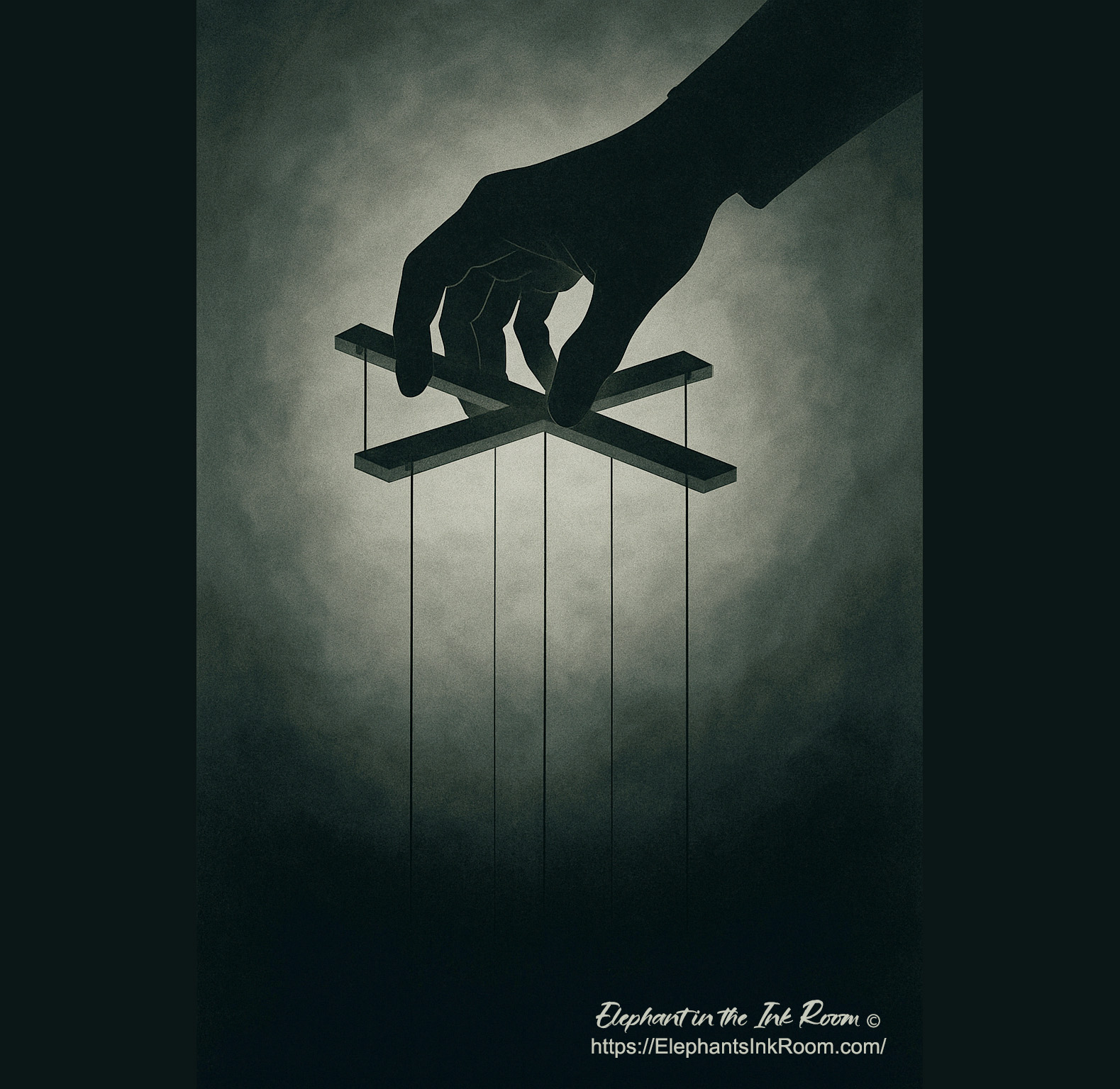
If It Isn’t Trump, Who Is Running The Show? – Video
Let’s step back from the daily noise for a moment and ask a simple question.
Running the United States government is not a one man show. Any smart leader knows they need help. The machinery of the executive branch — the decisions, the policies, the daily operation of the most powerful government on earth — requires constant attention, competence, and coordination.
So why do we spend all our time watching the one person in the room least capable of doing any of that?
Share this:

If It Isn’t Trump, Who Is Running The Show?
Let’s step back from the daily noise for a moment and ask a simple question.
Running the United States government is not a one man show. Any smart leader knows they need help. The machinery of the executive branch — the decisions, the policies, the daily operation of the most powerful government on earth — requires constant attention, competence, and coordination.
So why do we spend all our time watching the one person in the room least capable of doing any of that?
Obviously he isn’t running everything. He couldn’t. Any more than you or I could. All of his attention — what remains of it — is funneled into running the Trump Show. The rallies. The Truth Social posts. The grievances. The performance.
Which begs the question nobody is asking loudly enough.
Who is running everything else?
Now step back again and look at what Trump actually is today. An old man with failing health making undisclosed medical visits that nobody in the press is pressing hard enough on. His mental state and capacity don’t require my description — just open your eyes and ears and observe.
So who is filling the vacuum? That I don’t know and the following are only suggestions, but it does give us food for thought?
Susie Wiles — Chief of Staff and the one nobody talks about. The least visible senior figure which almost always means the most operationally powerful. She controls access. She controls the schedule. She controls what reaches his desk and what doesn’t. It was suggested that Nancy Reagan was behind the steering wheel toward the end of Reagan’s last term. That’s not an unreasonable template.
Stephen Miller — Chief Extremist. His fingerprints are all over immigration and ICE. The ideological engine that runs consistently regardless of whatever Trump said this morning. He has the ruthlessness to grab control — probably in much the same way Hoover did. The dirt. The threats. The leverage that keeps people in line.
Steve Cheung — controls the narrative. He decides what can be said and what can’t. What gets amplified and what gets buried. The communications director as gatekeeper.
The puppet masters in a road show can be seen — but you spend most of your time following the puppets. We see the strings. We hear the voices. But a good master makes you believe it’s really the puppet saying the lines.
J.D. Vance — I saved him for last but not because he’s the least concerning. He has the most to gain. He is smart in a what’s best for Vance sort of way and will say whatever lines he calculates will benefit him most. He may be the scariest one of all — because he shares too many of Trump’s narcissistic personality traits to ever be trusted, but unlike Trump he has the patience and the ideology to use them methodically.
This isn’t about the real puppet masters behind the big show. The dark money, the think tanks, the architects of Project 2025 — that’s another story and another piece.
This is about today. Right now. With a sick old man spending his remaining energy screaming at everything he doesn’t like on his own little social media platform — there is not a chance in hell he is simultaneously running the most powerful government on earth.
So who is? This is a question we should have answers to.
Inquiring minds want to know.
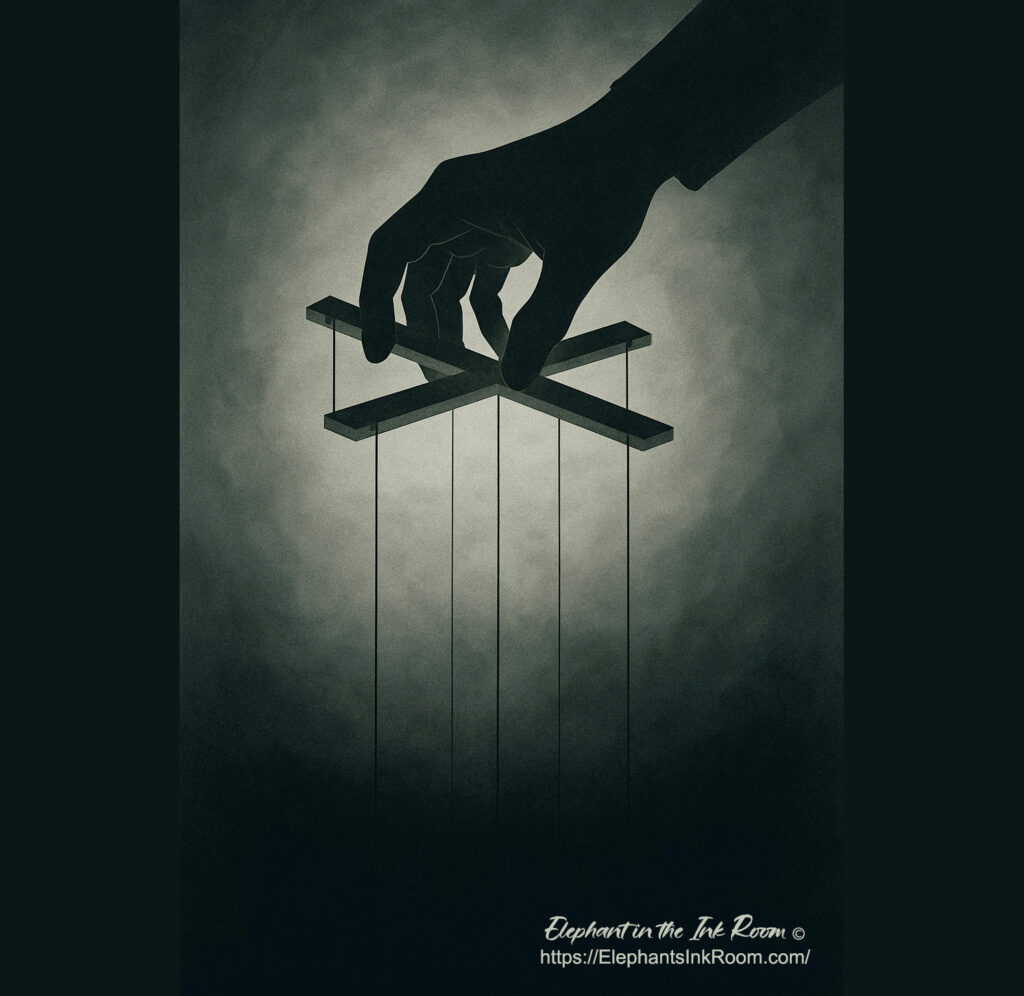
Share this:

Dementia Trump
You know, folks, a lot of people are saying — and I mean a LOT of people, the smartest people — that my name, Donald, is a beautiful name, tremendous name, but it’s not strong enough anymore. Not for what’s happening right now with the radical left. So I said, “We’re gonna rename it. We’re gonna call it Dementia.” Beautiful word. Very powerful word. Everybody’s talking about it.
Now let me explain how we do this, because the fake news will lie about it. They always lie.
Donald. D-O-N-A-L-D. Six letters, very nice letters. But we’re gonna make it Dementia. D-E-M-E-N-T-I-A.
Here’s how it works — and this is genius, by the way. I figured it out myself.
You take the “D” — that stays, perfect D. Then you look at the “O”. The O is weak. Very weak letter. We don’t need the O. We throw the O in the garbage. Then you got the “N”. We keep the N, but we move it over here, because it belongs with the M. You add an “E” — where does the E come from? From the Democrats! They got plenty of extra E’s they’re not using. They waste everything.
Now you got “Dem”. Beautiful. Then the “A” from Donald — we take that A and we turn it into “en”. How? Because “en” sounds stronger. A lot of people don’t know that. Then the “L” — the L is no good anymore. We replace the L with “tia”. Where do we get “tia”? From “TIA” — Temporary Insane Asylum, which is what Washington has become under Sleepy Joe, but now it’s even worse.
So you take Donald… you throw away the O, you steal an E from the Dumocrats, you flip the A around, you add some extra letters that were hiding in the word “brilliant” — because I’m brilliant — and boom.
Dementia. Dementia Trump. Sounds presidential. Sounds like a winner. People are saying it’s the greatest rename in the history of renaming, maybe ever. Better than when they tried to rename the Dumocrats. They got mad. They said, “You can’t do that!” I said, “Too late, I already did it. It’s done.”
And let me tell you, once we start calling it Dementia, the whole thing makes more sense. The rallies, the crowds, everything. Tremendous crowds. The biggest crowds you’ve ever seen. Dementia crowds. Beautiful.
Thank you. God bless you. Make America Great Again.
Share this:

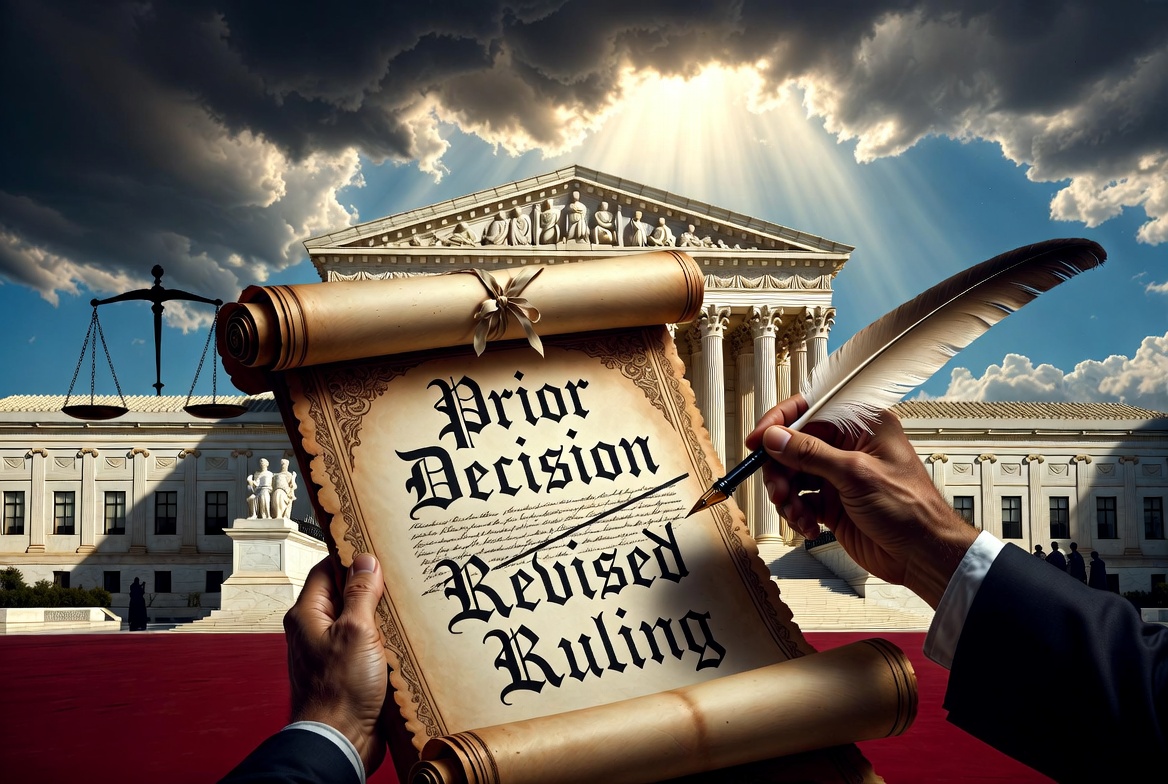
They Opened the Door. They Can Close It. – Video
They Opened the Door. They Can Close It.
An op-ed on the Supreme Court, presidential immunity, and the precedent they set themselves
In 2022, the Supreme Court did something many legal scholars had considered unthinkable. It overturned Roe v. Wade — a precedent that had stood for nearly fifty years — and told millions of Americans that what they had built their lives around was, in the Court’s revised opinion, simply wrong. The majority didn’t apologize. They said the previous Court had erred, that the Constitution had been misread, and that it was time to correct the record.
Fine. That is their right. The Supreme Court is not a museum. It can revisit its decisions.
So here is a question nobody in power seems eager to answer: if the Court can overturn fifty years of abortion precedent in the name of correcting a constitutional error, why can’t it revisit — or at minimum, clarify — its 2024 ruling in Trump v. United States? The one that handed a former president sweeping immunity from criminal prosecution for acts committed while in office?
—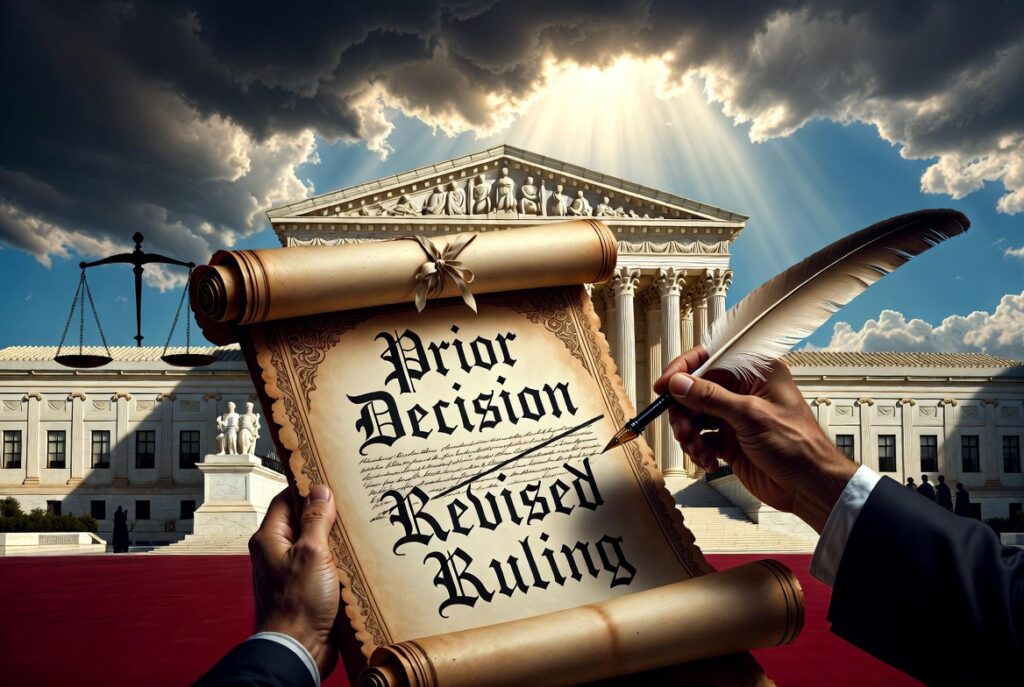
Share this:

They Opened the Door. They Can Close It.
They Opened the Door. They Can Close It.
An op-ed on the Supreme Court, presidential immunity, and the precedent they set themselves
In 2022, the Supreme Court did something many legal scholars had considered unthinkable. It overturned Roe v. Wade — a precedent that had stood for nearly fifty years — and told millions of Americans that what they had built their lives around was, in the Court’s revised opinion, simply wrong. The majority didn’t apologize. They said the previous Court had erred, that the Constitution had been misread, and that it was time to correct the record.
Fine. That is their right. The Supreme Court is not a museum. It can revisit its decisions.
So here is a question nobody in power seems eager to answer: if the Court can overturn fifty years of abortion precedent in the name of correcting a constitutional error, why can’t it revisit — or at minimum, clarify — its 2024 ruling in Trump v. United States? The one that handed a former president sweeping immunity from criminal prosecution for acts committed while in office?
The argument that precedent is sacred no longer holds. The Court itself buried that argument in Dobbs. You cannot spend two years defending the Dobbs decision as a necessary correction to constitutional overreach and then turn around and say the immunity ruling is untouchable. Either precedents can be wrong and should be fixed, or they can’t. Pick one.
What the immunity ruling actually created
Trump v. United States didn’t interpret an existing constitutional protection. It invented one. No prior Court had ever held that a president carries presumptive immunity from criminal prosecution for official acts. The Constitution does not say this. The Founders, who were exquisitely sensitive to the dangers of unchecked executive power, did not write this. Six justices decided it, in 2024, under circumstances that a large portion of the country — and a significant portion of the legal community — viewed as nakedly political.
The practical result is a legal framework in which a president can commit crimes in the performance of official duties and face no criminal consequences. Legal scholars have noted, with some alarm, that the ruling’s logic is difficult to cabin. If official acts are immune, and the definition of official acts is broad, the immunity becomes nearly total.
This is the thing the Court could fix. Not by staging a dramatic reversal, but by doing what courts do: issuing a clarifying ruling that says, in effect, “We were misread. Presidential immunity was never meant to shield acts that undermine the constitutional order itself. We are clarifying the standard.”
The self-interest argument
Let’s set aside principle for a moment and talk about survival — institutional survival.
The Supreme Court’s authority rests entirely on public trust. It has no army. It cannot enforce its own decisions. What it has is legitimacy — the broadly shared belief that its rulings reflect something more than the political preferences of whoever happened to appoint the majority. That legitimacy is eroding in ways that should frighten anyone who cares about functional government, regardless of party.
After Dobbs, the Court’s approval ratings fell to historic lows. After Trump v. United States, a new wave of Americans concluded that the institution had been captured. Justices now require round-the-clock security details. The social compact that once protected them — the idea that they were above the fray — is fraying in real time.
A narrowing clarification on presidential immunity would cost the Court’s conservative majority very little jurisprudentially. They could frame it as precision, not retreat. What it would buy them is something far more valuable: the argument that they are still capable of self-correction. That they are not simply an extension of a political movement. That the institution still works.
The question they have to answer
The Founders feared two things above almost everything else: a standing army loyal to one man, and an executive who could act without legal consequence. They built a system of separated powers precisely to prevent either. The immunity ruling does not merely strain that system. It carves a hole in it.
The justices who authored and joined that ruling are not stupid people. They know what they wrote. They also know — because they are lawyers and students of history — what unchecked executive power has produced in every society that has tried it.
So the question before them is not really a legal one. It’s a simpler one: Do they believe their own stated reasoning — that no one is above the law, that the Constitution constrains even the most powerful office in the land — or don’t they?
They opened this door. They know how to close it. The only thing stopping them is the willingness to admit that the Constitution they swore to protect does not, in fact, make any person a king.
Not even one who used to live at 1600 Pennsylvania Avenue.
—
Share this:

The Long View From 1964 – Where is Anywhere – Video
Red. Blue. I brew it carefully, I tend it with genuine attention, and what comes out is noise. It’s the evil Democrats, they ruined everything. Blame the Republicans, they tore it all down. The Democrats want this. The Republicans are taking that. For whoever’s sake — insert deity of choice — just stop.
The Long View From 1964
- Superman
- Maybe Just Listen
- The Checkbox Problem
- The Land Moved While You Slept
- The Road and the Ground Beneath It
- Where is Anywhere
- The Saucepan Hat
- Superman (Video)
- Maybe Just Listen (Video)
- The Checkbox Problem (Video)
- The Land Moved While You Slept (Video)
- The Road and the Ground Beneath It (Video)
- Where is Anywhere (Video)
- The Saucepan Hat (Video)
Share this:



The Long View From 1964 – Where is Anywhere
I roast my own coffee.
This morning my latest order arrived — green beans, just waiting for the roaster. Nicaraguan Selva Negra, Guatemalan Antigua Los Volcanes Washed, Brazil Mogiana Guaxupé, Indonesian Sumatra Mandheling and six others. I can see you are thrilled that you asked.
Roasting coffee sounds wonderful. I have a secret for you. It stinks. The aroma of freshly brewed coffee is heaven on earth. Coffee beans going into a dark roast after the second crack — well. You only do that inside the house once.
Everyone who hears I roast my own coffee asks the same question. What’s your favorite? What do you roast? As if there is a simple answer to either question and as if they actually want to hear it.
Here is the thing about roasting your own coffee at 79. I am losing my sense of taste. Too many good bourbons. Too many excellent cigars. If I am being completely honest I might as well buy French Roast from Costco and be done with it.
But then I couldn’t sit in my two thirds enclosed BBQ smoker’s paradise and roast coffee, could I?
And that matters. Not because of the coffee. Because of the sitting. Because of the practice. Because some things retain their value after the practical justification has quietly slipped away and you do them anyway because the doing itself is the point.
Which, it turns out, has everything to do with politics today.
Or rather — it all tastes the same.
Red. Blue. I brew it carefully, I tend it with genuine attention, and what comes out is noise. It’s the evil Democrats, they ruined everything. Blame the Republicans, they tore it all down. The Democrats want this. The Republicans are taking that. For whoever’s sake — insert deity of choice — just stop.
We don’t even know what a Republican or a Democrat is anymore. I asked that question at the beginning of this series and I am no closer to an answer. I suspect you aren’t either.
Maybe that’s the beginning of something.
Because what we have is broken. The two party system that limits our choices to two flavors of the same noise, backed by dark money from both directions that you mostly never hear about. Citizens United didn’t just open the door — it took the door off the hinges. The Federalist Society on one side, the Tides Foundation and Priorities USA on the other, and the rest of us standing in the room where the door used to be wondering why it’s so cold.
Here is a what if. Offered with open hands, no god complex, no manifesto.
What if we dropped the party labels altogether? Not reformed them. Not rebranded them. Just — dropped them. Watch the dark money groups scramble for a target. Watch Citizens United try to decide who to back when the teams dissolve. It would give them fits and I confess that brings me more satisfaction than it probably should.
And while we are at it — what if the Supreme Court had fifteen justices? Twenty one? Enough that no single president could stack the deck in a term or two. Enough that the Constitution might once again be interpreted rather than used as a party tool. Enough that the word justice recovered some of its original meaning.
These are seeds. I know that. Nothing on the next ballot. Nothing in the next cycle. Maybe nothing in my lifetime.
But I still roast the coffee.
Not because my palate is what it was. Not because I can reliably taste the difference between the Nicaraguan and the Sumatran on any given morning. But because I sit in my smoker’s paradise and tend something carefully and the practice itself is worth preserving even when the justification has gotten complicated.
That’s what this series has been. Not solutions. Not a platform. Not a party. Just someone who has been paying attention since 1964 sitting with the question honestly and refusing the checkboxes that don’t fit.
Harry Chapin understood it. His little man said it best.
‘Cause I know I’m goin’ nowhere. And anywhere’s a better place to be.
We may not know what we’re building yet.
But anywhere is a better place to be than where we are standing.
That’s enough to start.
The Long View From 1964
- Superman
- Maybe Just Listen
- The Checkbox Problem
- The Land Moved While You Slept
- The Road and the Ground Beneath It
- Where is Anywhere
- The Saucepan Hat
- Superman (Video)
- Maybe Just Listen (Video)
- The Checkbox Problem (Video)
- The Land Moved While You Slept (Video)
- The Road and the Ground Beneath It (Video)
- Where is Anywhere (Video)
- The Saucepan Hat (Video)

Share this:

The Trump Is Staying — The Trump Is Staying – Video
I’m not Paul Revere. I’m definitely better looking and wouldn’t be caught dead in that silly hat. Maybe a saucepan.
But it’s time to update that famous midnight ride. The new warning isn’t about the British.
The Trump is staying. The Trump is staying.
Trump is staying.
Don’t take my word for it.
Take his.
He keeps telling you he isn’t going anywhere.
Maybe this time you should believe what he says.
Share this:



The Trump Is Staying — The Trump Is Staying
I’m not Paul Revere. I’m definitely better looking and wouldn’t be caught dead in that silly hat. Maybe a saucepan.
But it’s time to update that famous midnight ride. The new warning isn’t about the British.
The Trump is staying. The Trump is staying.
We like to say the only one who lies more than Second String Donny is the Devil himself — and that’s probably accurate. Which makes it worth paying attention to the moments when he actually tells the truth. Like when he said he would be dictator on day one. That one turned out to be less of a joke than the audience laughed it off as.
He even has his own dialect now. Trump Talk. The cats and the dogs and the crowd sizes and the perfect phone calls.
I have written three or four pieces about the ballroom and the bunker. I probably should ride through town daily ringing this bell because as outlandish as it sounds — I believe he has no intention of leaving the White House.
And here is the thing. He keeps telling you that.
No more elections. The Insurrection Act. And then there was the Coast Guard commencement address where he casually suggested he might be back in 2032 to deliver another presidential commencement speech.
He wasn’t kidding.
The 1776 fund isn’t about his storm troopers. He doesn’t care about them. They could all be washed away in a Florida hurricane and he wouldn’t shed a tear. The fund exists to keep them ready. His patriots. His traitors. His bed partners in power and control.
And the bunker. The great bunker only Second String Donny could build. Bombproof. Bulletproof. So proof we can barely look at it without cringing. The shed covering the catacombs of power where Donny will hold court — world class hospital, no more Walter Reed for this boy, command center for the launch codes, and probably his Trump Tower penthouse relocated to sublevel eight.
I’m sure his funeral plans are already made. The ballroom probably should have been built in a pyramid shape. Though who knows what billions in redirected treasury funds can buy in terms of modern medicine. Trump 2048. Trump beyond. Brandon Fraser and Rachel Weisz are apparently doing The Mummy 4 — I’m just saying the timing is interesting.

The Trump is staying. The Trump is staying.
Don’t take my word for it.
Take his.
He keeps telling you he isn’t going anywhere.
Maybe this time you should believe what he says.
Share this:

A Day Late — On Purpose – Video
Don’t allow his name on anything. Tear down anything built in his image. Restore the Oval Office. Don’t hold a yard sale — burn it.
Let the Trump legacy be nothing.
Nothing at all.
We don’t need a monument to remember this lesson. We don’t need a reminder carved in stone.
This one will be DNA.
Let that be how we actually honor the ones who earned our respect.
The ones whose headstones face west.
Facing home.
Share this:


The Long View From 1964 – The Road and The Ground Beneath It – Video
Here is the thing about salting the earth. Nothing grows. Not their seeds. Not yours. Not anyone’s.
And here is the thing about manufactured hate — because it is manufactured, most of it. People are not born hating their neighbors. Love comes naturally when you are loved. You kick back when you are kicked. The cattle prod of algorithmic rage, the deliberate cultivation of an enemy to look down at instead of a mirror to look into — that is not human nature expressing itself. That is human nature being weaponized by people who need you angry and need you certain and above all need you not paying attention to the road and how it was built.
The Long View From 1964
- Superman
- Maybe Just Listen
- The Checkbox Problem
- The Land Moved While You Slept
- The Road and the Ground Beneath It
- Where is Anywhere
- The Saucepan Hat
- Superman (Video)
- Maybe Just Listen (Video)
- The Checkbox Problem (Video)
- The Land Moved While You Slept (Video)
- The Road and the Ground Beneath It (Video)
- Where is Anywhere (Video)
- The Saucepan Hat (Video)
Share this:

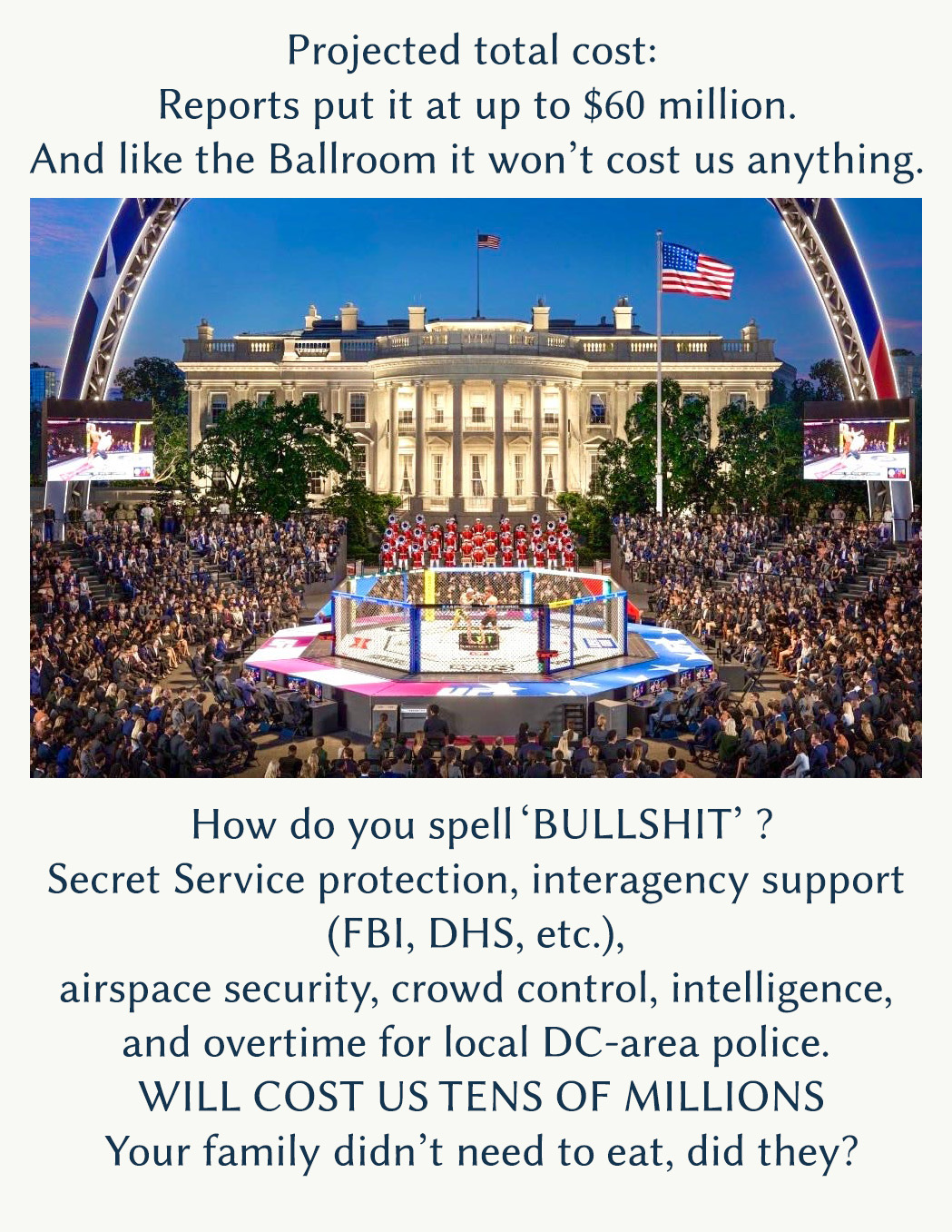


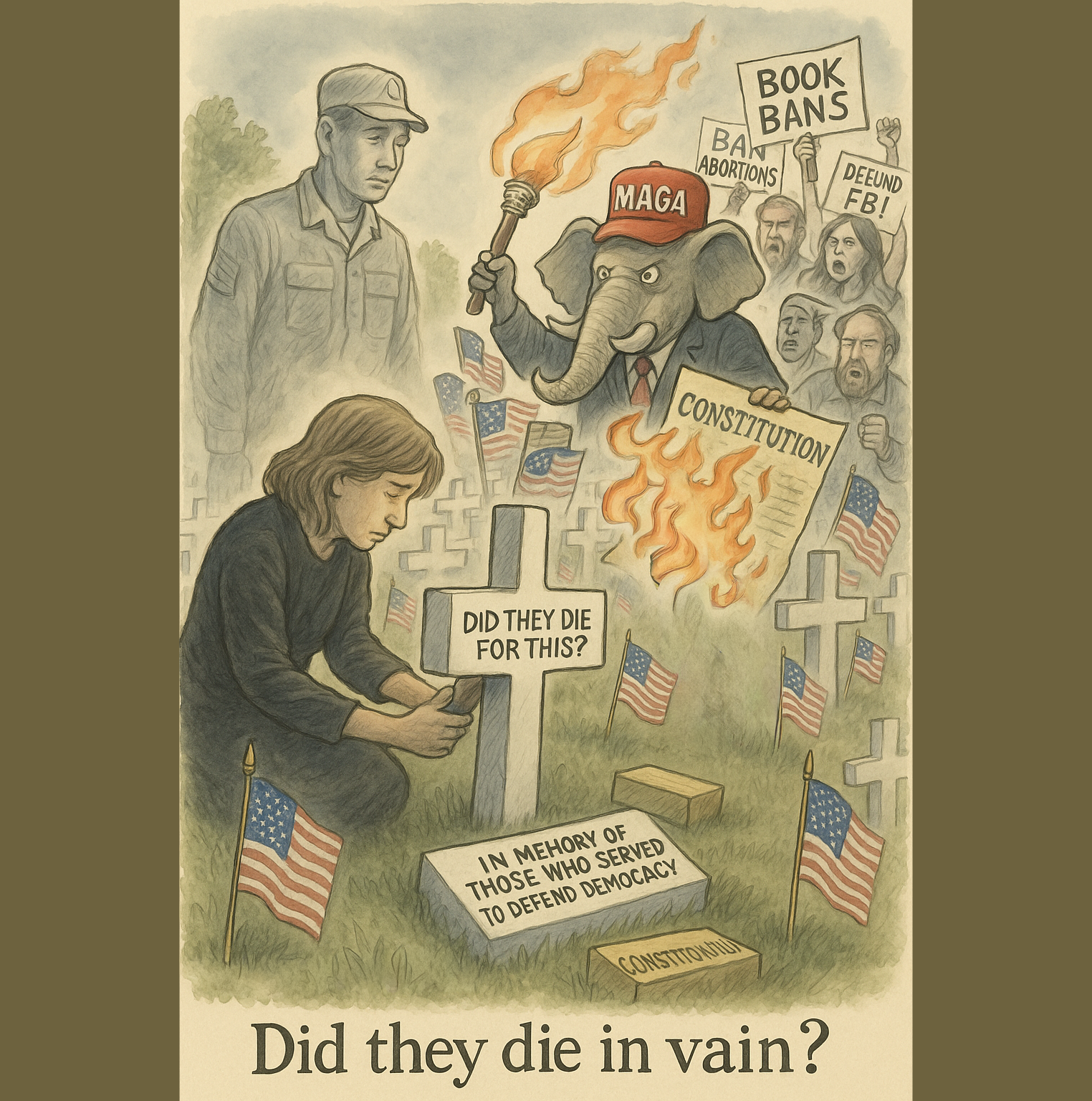

A Day Late — On Purpose
A Day Late — On Purpose
Memorial Day honors those who served and died for their country. Most of them, when you think about it, were not much more than children. Young boys who heard the call of their nation and responded with their lives. Young men and women — Black, white, brown and every color I may have failed to mention. Older still — officers, NCOs, even a general or two who died on the fields of battle.
In their honor we built national cemeteries, statues, and monuments. We honor those who sacrificed everything. Many were foolishly brave. Most were probably scared — who wouldn’t be. But they did their duty and made their families proud.
I salute every one of them.
You may notice the published date and wonder why this is being written a day late. It’s late on purpose. I didn’t want to take anything away from the honor owed yesterday.
But their sacrifice is also part of today’s commentary.
Not a single one of them asked to have their name engraved on a monument. Not a single one asked for a statue erected in their image. Not a single one wanted anything other than to serve their country and come home to the people they loved. Almost all of them did come home — in a body bag. Others were buried on foreign soil with all the dignity and respect deserved, having died not only for our freedom but for the freedom of people they had never met.
For those who didn’t know — the soldiers buried on foreign soil have their headstones facing west.
Facing home.
They didn’t ask for monuments. They didn’t ask for arches. They most certainly did not ask for ballrooms.
We are living in strange times governed by strange people who can only think of themselves. And those same people seem to believe they deserve monuments — for what exactly? Bravery and service? Bone spurs?
Others in their cabinet dishonored the sailors resting at their tomb by snorkeling over it. I’m sure they didn’t think of it as walking on someone’s grave. But when you reach certain levels of government ignorance is no longer an excuse. They are rewriting history. Turning insurgents into heroes. Turning murderers into heroes with immunity. Stealing us blind without care or concern for anything beyond their own pockets and egos.
And they want monuments built to themselves.
They want the history books changed. Their crimes removed. Airports renamed. The Kennedy Center. The Lincoln Memorial bathroom probably next.
So I suggest — because I am only me and can demand nothing — that when this is over, when the dust has settled and the orange foundation has been washed clean, we follow a simple example.
We rewrite history too.
Trump needs nothing more than a footnote. A warning label. Everything he and his family of cohorts stole — taken back. Liquidated. Put into something meaningful. The Treasury perhaps. Or a charity that actually serves the people he pretended to serve.
Don’t allow his name on anything. Tear down anything built in his image. Restore the Oval Office. Don’t hold a yard sale — burn it.
Let the Trump legacy be nothing.
Nothing at all.
We don’t need a monument to remember this lesson. We don’t need a reminder carved in stone.
This one will be DNA.
Let that be how we actually honor the ones who earned our respect.
The ones whose headstones face west.
Facing home.
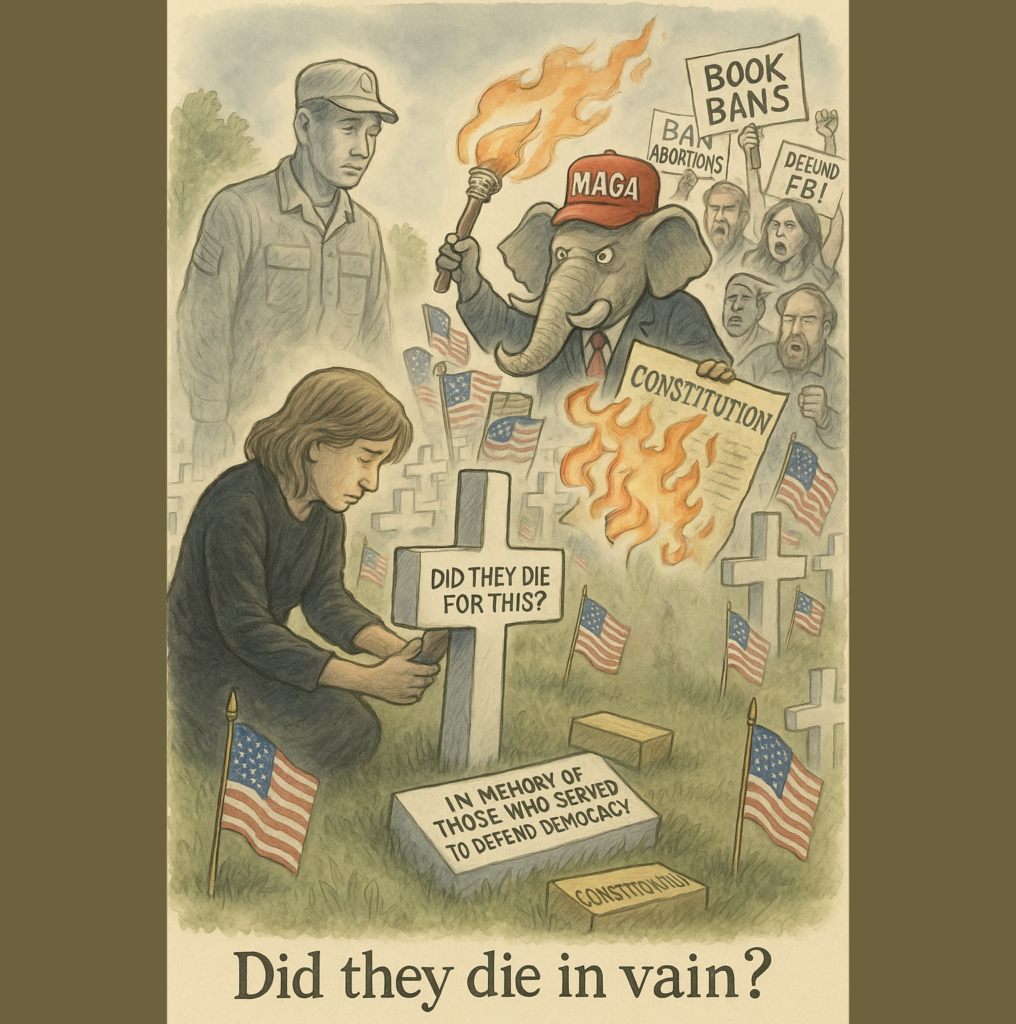
Share this:





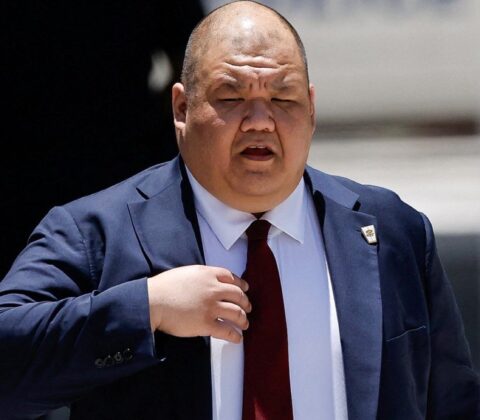
A Bold Step Forward in American Statesmanship
Second String Donny has made a brilliant strategic move.
In a classic two-fer — possibly even a three-fer — he has deployed White House Communications Director Steve Cheung to represent the administration’s commitment to dignified public discourse.
The results have been immediate.
Trump now appears slimmer by comparison. His golden locks benefit from Steve’s dedicated impersonation of the Capitol Dome. And most importantly — most strategically — he sounds measurably more intelligent.
This last point should not be taken lightly.
Steve Cheung’s recent commentary on former Secretary of State and CIA Director Mike Pompeo:
“Mike Pompeo has no idea what the fuck he’s talking about. He should shut his stupid mouth and leave the real work to the professionals.”
New standards. Boldly set.
It’s reassuring to know that after months of what generally sounds like a five year old throwing a tantrum, the administration has now added what sounds like a door left open at the local establishment of questionable repute.
Considering what the Oval Office has been redecorated to resemble — I really shouldn’t be surprised.
Bravo.
Share this:


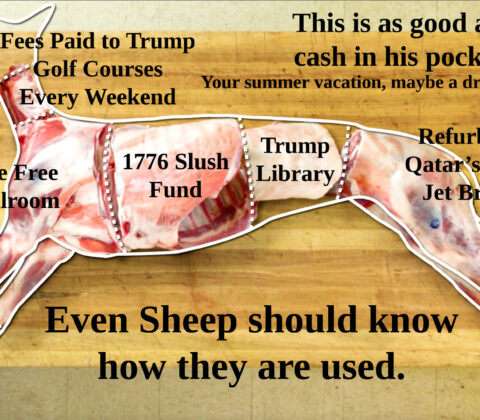
The Great American Fleecing
Maybe it is the changing seasons.
We started with a thick winter wool coat. As the days got warmer cooling off seemed reasonable. The shearing shops had a special going on. The warm weather made us complacent. A little tired. And sheep wool is rich in lanolin — which means we don’t always notice just how stormy things have gotten until we’re already soaked.
It used to be that the shearing was done gently by talented professionals. Now it has become somewhat more brutal. But if we close our eyes and listen to the reassurances designed to soothe us we shouldn’t notice a few nicks — until we run out of band-aids. Which we will. Because band-aids have gotten expensive and somewhere along the way the health insurance disappeared too.
We are sold a bill of goods declaring the shearing is for our own good. That some sheep shouldn’t be warm and well fed while others wonder where the bread went. Sounds fair. Sounds compassionate. The only reason the shearer is wearing a fine wool overcoat is because the job requires it. The health insurance is so they can stay healthy enough to serve us.
What would you like? Cake?
Mountains of wool we are told. Valleys of wool. Set aside to protect us. There when we need it. Except when we look for it in our times of need it cannot be found. The great wool storage facilities all seem to have names on them — Bezos, Musk, Ellison, and so on down the list. Wolves in sheep’s clothing standing guard at the doors. And someone official explaining patiently that it is no longer ours.
We would ask questions about that.
If we weren’t sheep.
Our system is like the great dinosaurs. The body has died and smells like a toxic dump but the brain hasn’t gotten the message yet.
When I started writing this there was one clear thought — this is Second String Donny’s fault. But by the time I got here I realized everything is broken because we the sheep allowed it to happen. We gave up the wool. Not reluctantly. Voluntarily. A little bit here. A little bit there. Until we ended up naked watching the Royal Baker and Butcher argue over a shepherd’s pie recipe.
The shepherds didn’t steal the flock.
We handed it to them.
One comfortable shearing at a time.

Share this:


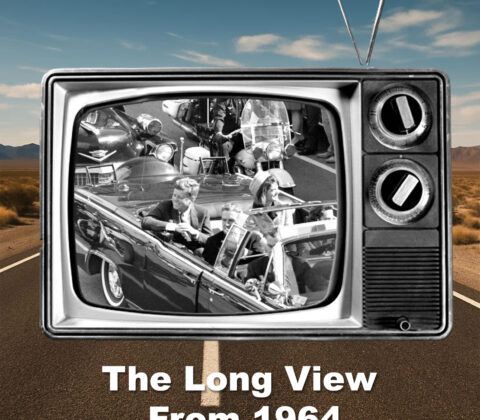
The Long View From 1964 – How I tried to Save America – Video
How I tried to Save America
Same house. Same office. Same caffeine run. Same television.
I turn it on just in time to see smoke pouring from one tower.
I remember thinking, “Why is that plane flying so close to those buildings?”
I had no idea what was unfolding.
Then I watched the second plane hit live.
And just like that, the Twin Towers became rubble, nearly 3,000 people were dead, and America changed forever.
That was the moment I finally recognized the pattern.
The television was clearly too dangerous for me to operate during daylight hours.
Share this:



On May 14, 2026, Josh Green signed Senate Bill 2471 into law, now known as Act 011
On May 14, 2026, Josh Green signed Senate Bill 2471 into law, now known as Act 011 — a move that may become one of the most significant state-level challenges to “dark money” and corporate political influence since the Supreme Court’s 2010 Citizens United decision.
At its core, Act 011 is not just another campaign finance reform bill. It is something far more aggressive and structurally important. Instead of trying to regulate political spending directly — a path repeatedly blocked by courts after Citizens United — Hawaii chose a different route entirely: redefining the powers granted to corporations by the state itself.
The legal theory behind the law is deceptively simple:
Corporations are creations of the state. If the state creates them, the state can define what powers they do and do not possess.
Under Act 011, Hawaii essentially states that corporations and other “artificial persons” were never intended to possess the power to spend money influencing elections or ballot initiatives. The law removes that authority from entities organized under Hawaii law.
Supporters view the measure as a direct response to the explosion of outside political spending unleashed after Citizens United v. Federal Election Commission. Since that ruling, corporate spending and opaque “dark money” networks have flooded American politics with billions of dollars, much of it impossible for ordinary voters to trace. OpenSecrets estimated more than $4 billion in outside spending during the 2024 federal election cycle alone, including nearly $2 billion in undisclosed “dark money” activity.
That is where this story ties directly into any broader dark money series.
Act 011 represents a growing realization among both conservatives and liberals that modern elections are increasingly shaped not by citizens, but by large financial networks operating above public visibility. The issue is no longer simply campaign donations. It is systemic influence — influence routed through nonprofits, shell organizations, Super PACs, and corporate structures that often obscure who is actually funding political narratives. Hawaii’s law attempts to strike at the foundation itself rather than merely treating the symptoms.
Critics, including Hawaii’s own Attorney General, argue the law is likely unconstitutional and destined for immediate court challenges. Opponents say the law is essentially an indirect attempt to overturn Citizens United by denying corporations rights the Supreme Court has already recognized. Legal analysts expect First Amendment lawsuits almost immediately once the law takes effect on July 1, 2027.
But whether the law survives may be only part of the story.
The larger significance is symbolic and political.
For the first time in years, a state government openly challenged the assumption that unlimited corporate political spending is untouchable. Hawaii’s action signals that frustration with dark money is no longer confined to activist circles or campaign reform organizations. It is beginning to evolve into institutional resistance.
What makes this especially important for a dark money series is that Act 011 exposes a deeper question many Americans across the political spectrum are beginning to ask:
Who actually governs modern America — voters, or the financial systems surrounding them?
Because dark money is rarely ideological at its core. It moves fluidly through both parties, funds competing narratives simultaneously, and often benefits from division itself. The more polarized the public becomes, the easier it is for massive financial interests to operate behind the curtain while citizens fight one another in front of it.
Hawaii’s law may ultimately fail in court. It may be narrowed, delayed, or overturned entirely. But its existence alone marks an escalation in the national conversation. It suggests that some states are no longer satisfied with merely complaining about dark money — they are beginning to experiment with ways to structurally confront it.
And that may be the real story.
Share this:

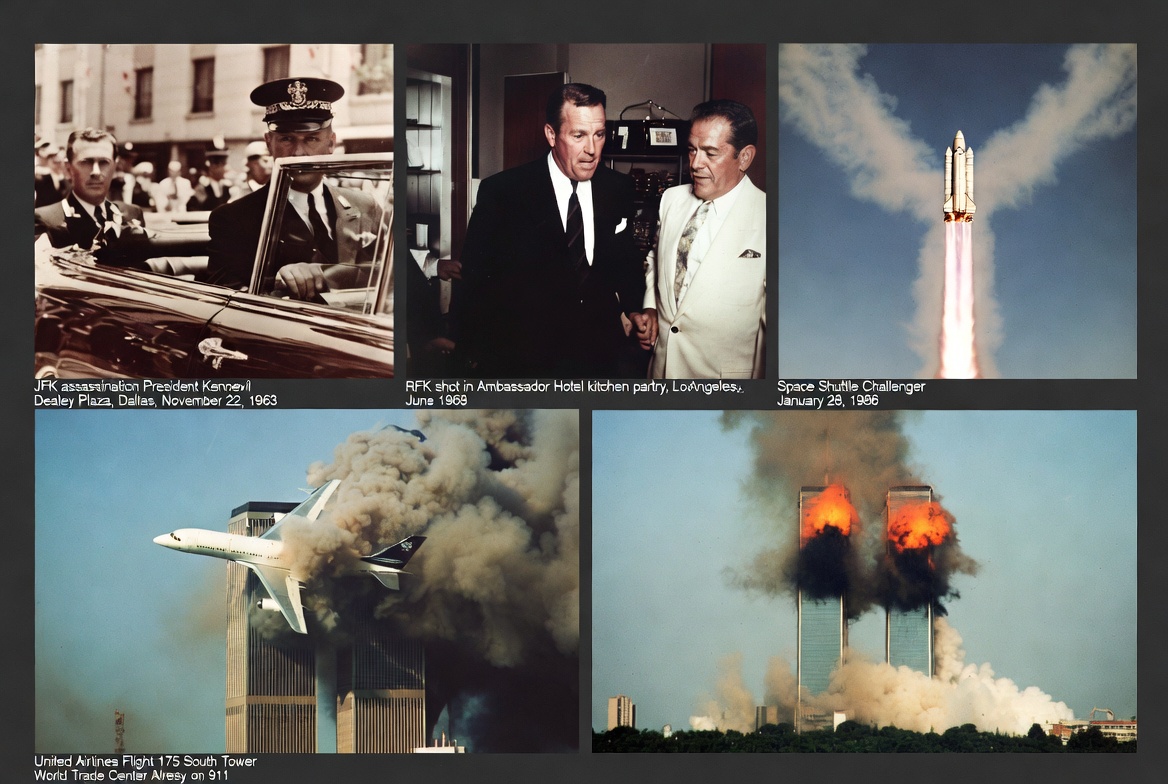
The Long View From 1964 – How I tried to Save America
How I tried to Save America
That’s right. Single-handedly, I tried to save America. All by myself.
Some people try by running for office — and sometimes America is saved because they lose.
Some go into law enforcement, all Miami Vice and hero music, only to end up gaining fifty pounds eating donuts. Either way, America usually wakes up looking about the same the next morning.
We all see ourselves playing some important role. Flag wavers. Protesters. Patriots. Rebels. Whether we realize it or not, we all play a part in the national circus.
But this story is about me… and how I almost saved America by simply not turning on the daytime television.
My mother was a working woman — which wasn’t exactly common in the 1950s and early ’60s. She ran her own business for over twenty years and kept working well into the late 1980s. Before work, she’d do her morning exercises with Jack LaLanne on TV, jumping jacks and all. Then she’d get ready for work while I was supposed to be getting ready for school.
One morning, I stayed home. Probably some weak excuse involving too much candy the night before.
So there I am, flipping channels, when I stumble onto a parade in Texas.
Figure it out yet?
November 22, 1963.
I’m seventeen years old — and sitting there live as John F. Kennedy is assassinated.
And where am I?
Sitting in front of the television instead of being in school.
So, being the responsible young man that I clearly was, I called the school, confessed I was skipping, and informed them the president had just been shot.
Probably part of why I enlisted a few days later.
Back in the ’60s, we didn’t leave the TV on all day. We had lives. We did things. Probably not homework, but things.
Still, I got bored one afternoon and turned the television back on.
And there it was again — live television history.
I watched Jack Ruby shoot Lee Harvey Oswald on live TV.
Or silence him forever, if you prefer the conspiracy version.
A few years pass.
At that point I didn’t care much about politics. But once again, I was bored. And once again, I turned on the television.
June 5, 1968.
Enter Sirhan Sirhan.
I end up watching coverage surrounding the assassination of Senator Robert F. Kennedy.
The Middle East was already tearing itself apart back then. Different decade, same human species.
Maybe somebody should’ve paid more attention in history class.
Unfortunately, apparently that somebody wasn’t me either.
A couple more decades roll by.
I’m self-employed now, working from an upstairs loft office, with one hard rule: no television during the day.
I go downstairs for caffeine, think, “Ah, what the heck,” and flip on the TV.
There’s the Space Shuttle Challenger launching.
And then there’s the Challenger exploding seventy-three seconds later.
January 28, 1986.
At this point I’m beginning to suspect I may be the problem.
Then comes September 11, 2001.
Same house. Same office. Same caffeine run. Same television.
I turn it on just in time to see smoke pouring from one tower.
I remember thinking, “Why is that plane flying so close to those buildings?”
I had no idea what was unfolding.
Then I watched the second plane hit live.
And just like that, the Twin Towers became rubble, nearly 3,000 people were dead, and America changed forever.
That was the moment I finally recognized the pattern.
The television was clearly too dangerous for me to operate during daylight hours.
So I made a sacrifice for my country.
No more daytime TV.
America needed me vigilant. Disciplined. Focused.
If avoiding daytime television could prevent national catastrophe, then by God, I was willing to do my part.
And honestly, I’d like to think my sacrifice saved millions.
But despite my efforts, COVID still showed up. Wars kept happening. Inflation kept climbing. Gas prices rose. Eggs became luxury items.
And somehow, against all odds, Donald Trump still became president… twice.
So after all my sacrifice… after all my patriotism… after all my heroic refusal to watch daytime television…
Trump still happened.
Well, shit happens.
Share this:

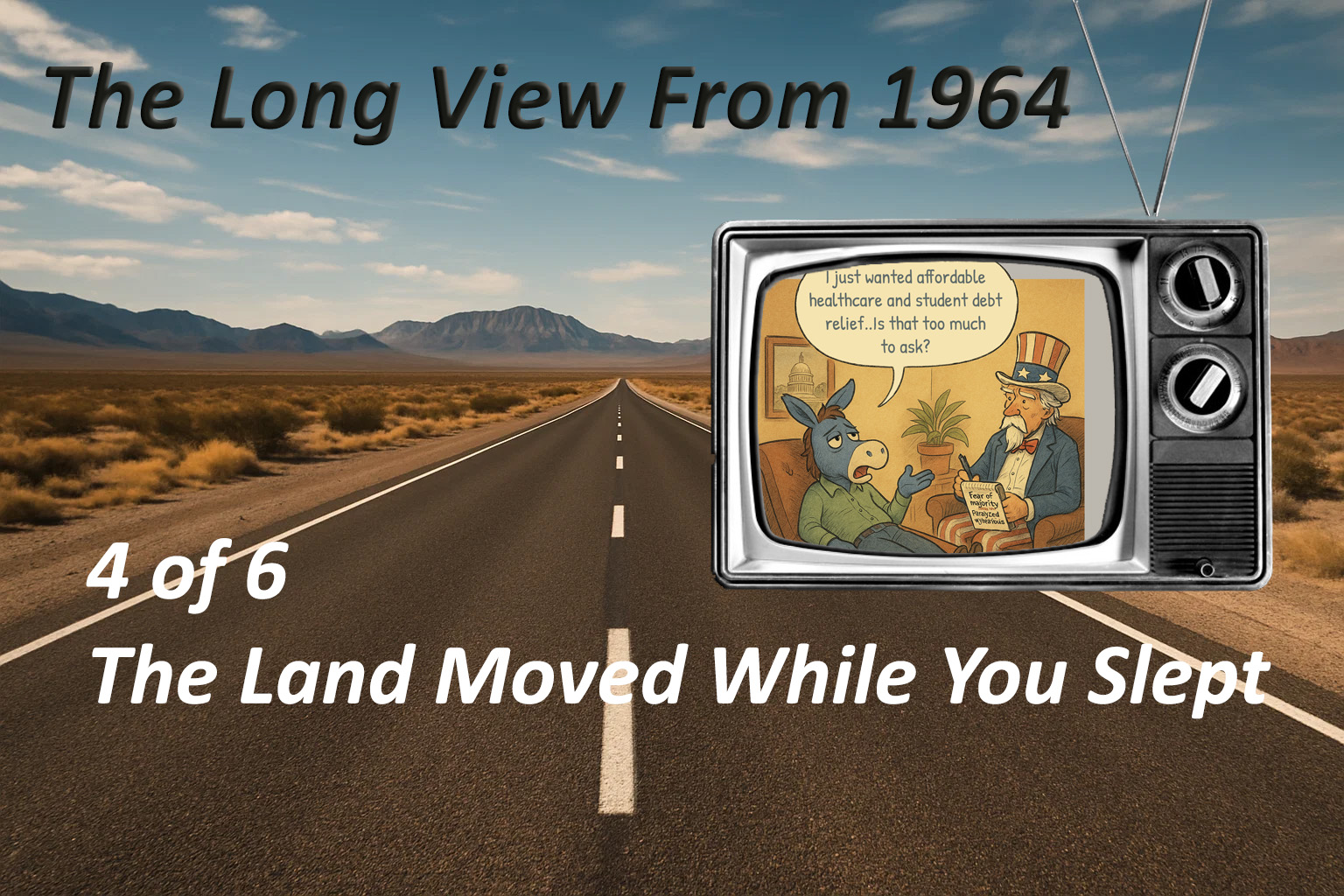
The Long View From 1964 – The Land Moved While You Slept – Video
The Land Moved While You Slept
I didn’t leave the Republican Party.
I didn’t leave the Democratic Party either.
The Long View From 1964
- Superman
- Maybe Just Listen
- The Checkbox Problem
- The Land Moved While You Slept
- The Road and the Ground Beneath It
- Where is Anywhere
- The Saucepan Hat
- Superman (Video)
- Maybe Just Listen (Video)
- The Checkbox Problem (Video)
- The Land Moved While You Slept (Video)
- The Road and the Ground Beneath It (Video)
- Where is Anywhere (Video)
- The Saucepan Hat (Video)
Share this:



The Fastest Gun Alive — A Case for the Second Amendment – Video
Which brings me to a film, The Fastest Gun Alive, an old western starring Glenn Ford. He plays George Kelby, a quiet storekeeper in a small town. He proves his skill to the townspeople by shooting two silver dollars tossed simultaneously into the air. Now they know who the storekeeper really is. More than a merchant. A man with six notches on his father’s gun.
Share this:

Young Americans and the Future of Work 5/21/26
|
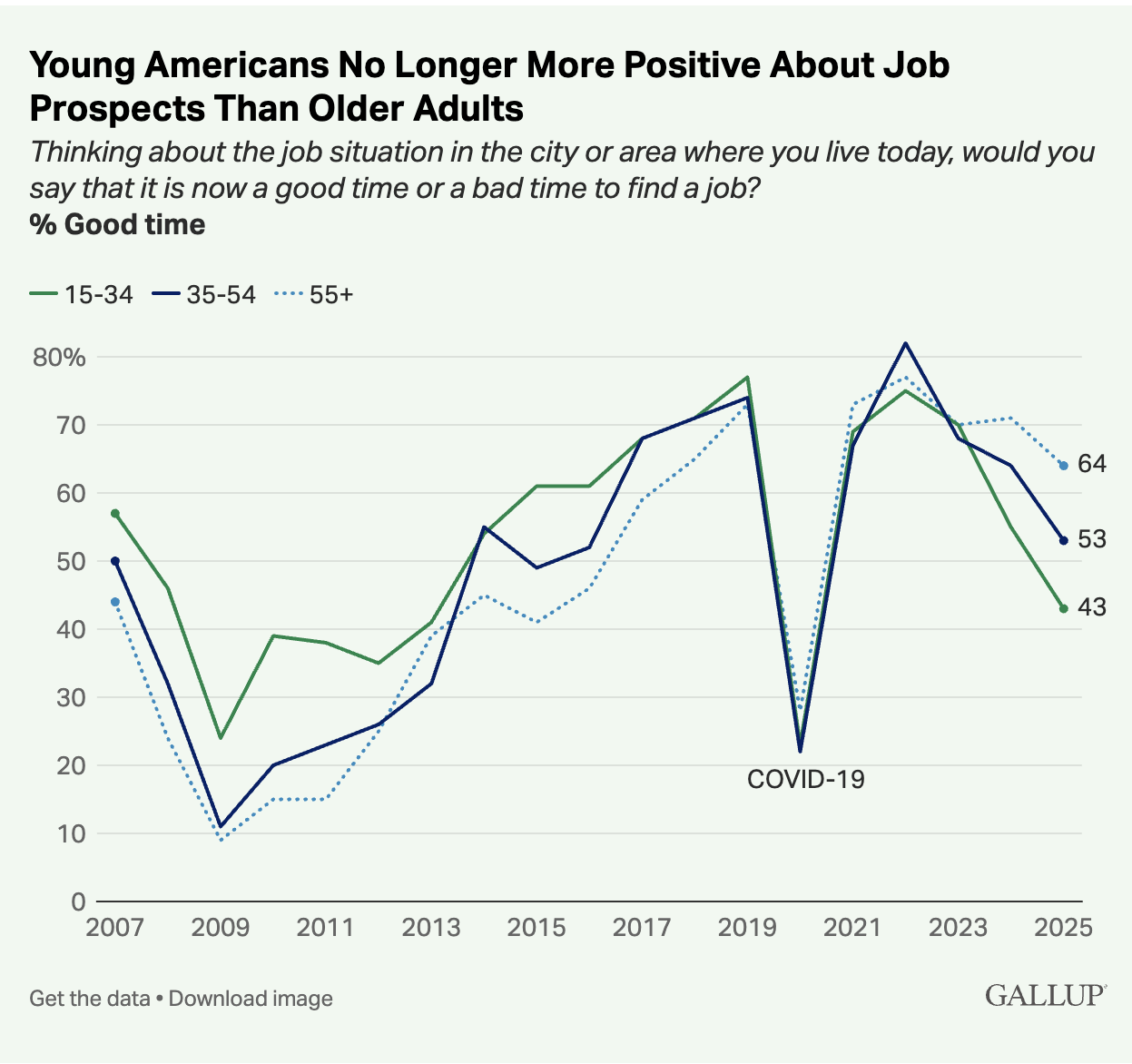
 The good news is that pessimism is not destiny.
Share this:



The Fastest Gun Alive — A Case for the Second Amendment
Christmas morning. There I stand dressed in my finest — my Christmas cowboy outfit, six shooter hung low. Maybe a Hopalong Cassidy rig. Roy Rogers. Red Ryder. Doesn’t matter. There I am, the fastest gun alive. Darn tootin. Six years old and nobody faster.
Fast forward to 1964. Too many westerns under my belt and James Bond takes on Dr. No. I sit in a theater in St. Louis Missouri waiting for the bus to Fort Leonard Wood and advanced training. First chance at the PX I buy my first James Bond book. By Christmas I have read them all and can field strip a Walther PPK in my sleep.
A couple of years later I order my first pistol from the big hardware catalog at the local hardware store , a Bernardelli Model 60. Looks and feels just like James’s Walther. Just costs a whole lot less. I am officially hooked.
More years go by. More firearms. Smith and Wesson Model 19s, K38s, Browning Challengers, and finally Dirty Harry’s S&W Model 29 a 44 Magnum. I join the Corvallis Sheriff’s Department and can’t resist competitive shooting. Back in the seventies it was PPC and revolvers. I took home trophies, even a few first places for the 2½ inch revolver category.
The fastest gun alive.
50 years later, I still go to the range. Speed drills now with 10mm competition Tanfoglios and Nighthawks. Always felt you should stay a step ahead.
Which brings me to a film, The Fastest Gun Alive, an old western starring Glenn Ford. He plays George Kelby, a quiet storekeeper in a small town. He proves his skill to the townspeople by shooting two silver dollars tossed simultaneously into the air. Now they know who the storekeeper really is. More than a merchant. A man with six notches on his father’s gun.
But here is the thing about George Kelby. He is the fastest gun alive, and he has never once drawn against another man. The notches aren’t his. He has the skill, the nerve, the weapon. What he has never had to do is use it against another human being.
In six years in the Army and my time with the Sheriff’s Department I never once drew my weapon and pointed it at another person. Let alone fired it at one.
That is not a confession of weakness. That is the point.
The Second Amendment was never about Vinney the desperado riding into town looking for a fight. It was never about bravado or immunity or masks or the performance of toughness by people who have never actually been tested.
It was about George Kelby. The storekeeper. The neighbor. The man who can shoot two silver dollars out of the air and hopes he never has to prove it to anything other than a paper target.
I still go to the range.
I still stay a step ahead.
And I still hope, genuinely, completely hope, that the cap gun stays on the shelf where it belongs.
But I know what I’m doing if it doesn’t.
Vinney may not.
In today’s uncertain world, the Second Amendment to the United States Constitution affirms a simple principle: responsible, law-abiding citizens have the right to protect themselves and their families.
Christmas in Atascadero, probably 1951.
Share this:

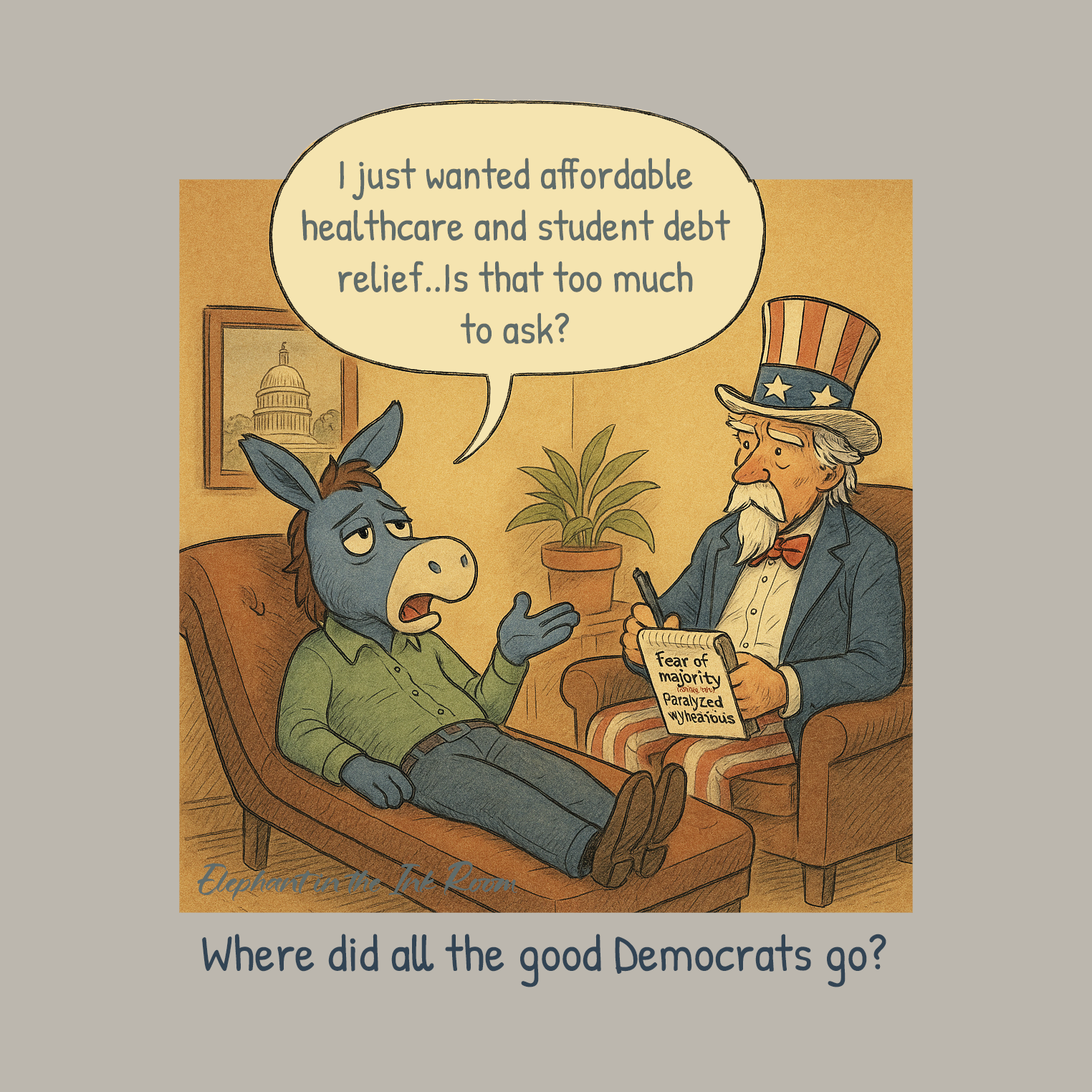
The Long View From 1964 – The Land Moved While You Slept
The Land Moved While You Slept
I didn’t leave the Republican Party.
I didn’t leave the Democratic Party either.
They left. Both of them. While I was paying attention to other things — raising a family, building a life, watching the news with a growing sense that something wasn’t adding up — the ground shifted underneath the labels and nobody announced it.
It’s like waking up and finding yourself a stranger in a strange land. Except you never went anywhere. The land moved. You just didn’t notice until you tried to take a step in the direction you always walked and found nothing there.
So I looked left. If I couldn’t call myself a Republican by the standards of what that word means today, maybe I was a Democrat. Except that didn’t fit either. The Democratic Party of the New Deal built the American middle class. It passed labor protections, created social infrastructure, and pointed at the people standing beside you and said — here is what you share, here is what you can build together. The Democratic Party of JFK spoke of sacrifice and responsibility and American strength without apology.
I don’t know what the Democratic Party of today is. And I don’t think it does either.
So I’m back to independent. Which has the numbers — somewhere between 40 and 45 percent of the American electorate by most honest measures — but not the official label, not the infrastructure, not the primary, not the power.
It’s like being a marionette with two sets of strings pulled from opposite sides of the stage. And if you cut the strings you have free movement but nowhere to go.
Here is what I think happened.
The wealthy have always used the rest of us. That’s not a new observation and it’s not a simple condemnation. The Carnegies and the Vanderbilts exploited labor — no unions, poor wages, dangerous conditions. We had to fight for every right we eventually won. But here is the difference that doesn’t get said clearly enough — they were building something. Railroads. Steel. Infrastructure. A physical nation that everyone eventually lived inside. We got something for our sacrifice, even if we had to bleed for it.
What does the new generation of concentrated wealth build? Platforms. Delivery systems. Social media that monetizes your attention and sells it back to you as connection. Electric cars for people who can afford them. The byproduct this time isn’t a nation. It’s a customer base.
We got something for our sacrifice. Now we want something for our tolerance. And nothing is being offered.
But here is the part that keeps me up at night. Most people didn’t notice. They bought stock. They got a 401k. They watched the Dow. The system handed them a small thread connecting their personal security to its performance and somewhere along the way they stopped identifying with the people beside them and started identifying with the people above them.
It was the most elegant capture imaginable. You don’t silence dissent by force. You give people a small piece of the thing they might otherwise resent and watch them defend it like it’s their own.
I have a brother. Smarter than me by any standard measure. He can’t see it. He watches his portfolio.
He’s not foolish. He’s captured. There’s a difference. And the system that captured him is the same system that pulled the strings on both parties until neither one represents the people who are actually holding them up.
The donkey and the elephant. I’m not sure either animal still exists in any form I recognize.
What replaced them nobody has named yet.
That’s what we’re here to figure out.
The Long View From 1964
- Superman
- Maybe Just Listen
- The Checkbox Problem
- The Land Moved While You Slept
- The Road and the Ground Beneath It
- Where is Anywhere
- The Saucepan Hat
- Superman (Video)
- Maybe Just Listen (Video)
- The Checkbox Problem (Video)
- The Land Moved While You Slept (Video)
- The Road and the Ground Beneath It (Video)
- Where is Anywhere (Video)
- The Saucepan Hat (Video)
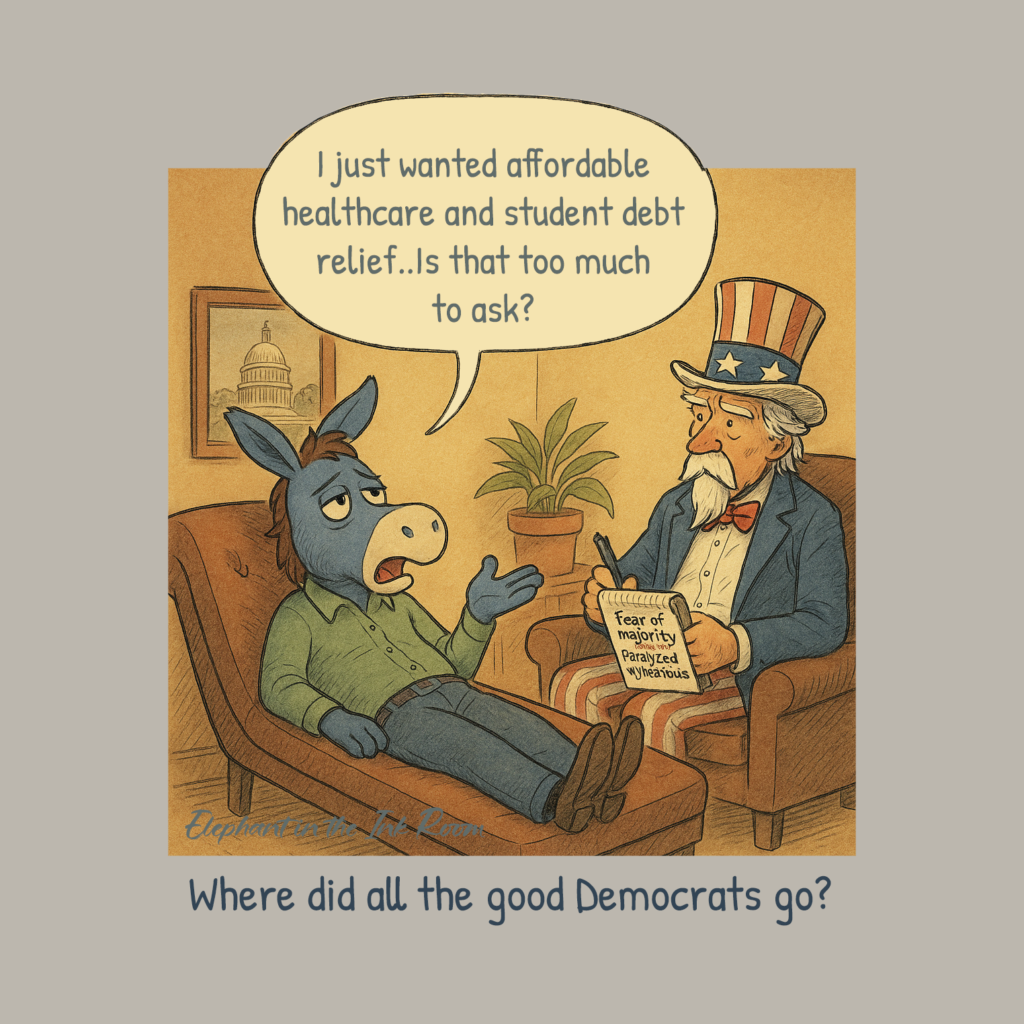
Share this:

1776 — The Number That Tells You Everything – Video
Let’s start with the number.
Not the policy. Not the legal arguments. Not the court battles that were always going to happen and were always going to produce the same result.
The number.
$1.776 billion.
I have a sinking feeling we will find ourselves watching Second String Donny screaming foul again. Not just about the midterms. About the $1.776 billion that was stolen from his patriots along with everything else.
Is this proof of intent? No.
Is this a history of behavior that gives us every reason to watch carefully and prepare honestly?
Oh hell yes.
The number told us. Right there in plain sight.
1776
Round up the usual suspects.
Share this:

1776 — The Number That Tells You Everything
Let’s start with the number.
Not the policy. Not the legal arguments. Not the court battles that were always going to happen and were always going to produce the same result.
The number.
$1.776 billion.
In a country where political messaging is tested and retested before it reaches the public, nothing that specific is accidental. The amount could have been $2 billion. It could have been $1.5 billion. It could have been any number that accomplished the stated policy goal.
It wasn’t. It was $1.776 billion.
To most Americans 1776 means one thing. The founding. The declaration. The birth of the republic.
To a specific and carefully cultivated audience it means something additional. It means the patriots. It means the people who showed up on January 6th because they believed the republic was being stolen from them. It means the people who have been told repeatedly that their country is being taken away and that only one man is fighting to give it back.
The number was a message. Delivered in plain sight.
Now ask the question that Captain Renault never quite got around to asking before he rounded up the usual suspects.
Why propose something you know will be rejected?
Because the rejection is the point.
Here is how the playbook reads when you step back far enough to see the whole page.
Propose something dramatic and specifically coded for your base. Watch it get challenged in court. Watch it get rejected by the institutions designed to reject exactly this kind of unconstitutional overreach. Then turn to your base and say — you see? They stole it. Not just the election. Not just the country. Now they stole the $1.776 billion I was trying to give you. The money with your founding fathers’ number on it. The money that was yours.
Who stole it?
The rest of us. Of course.
This is not a new play. It is the same play run repeatedly with different props. The stolen election narrative wasn’t born on January 6th. It was constructed methodically for months before that day so that when the result arrived the audience was already primed to reject it. The architecture of grievance is always built before the grievance is needed.
What concerns me — and I want to be precise here because this is pattern recognition not accusation — is that the structural fingerprints look familiar.
Unless something dramatically changes the electoral landscape the midterms should produce significant Democratic gains. The math of an unpopular administration historically produces that result. Fair elections should deliver it.
But we have already established in this country that fair elections and accepted elections are not always the same thing.
I have a sinking feeling we will find ourselves watching Second String Donny screaming foul again. Not just about the midterms. About the $1.776 billion that was stolen from his patriots along with everything else.
Is this proof of intent? No.
Is this a history of behavior that gives us every reason to watch carefully and prepare honestly?
Oh hell yes.
The number told us. Right there in plain sight.
1776
Round up the usual suspects.
Share this:

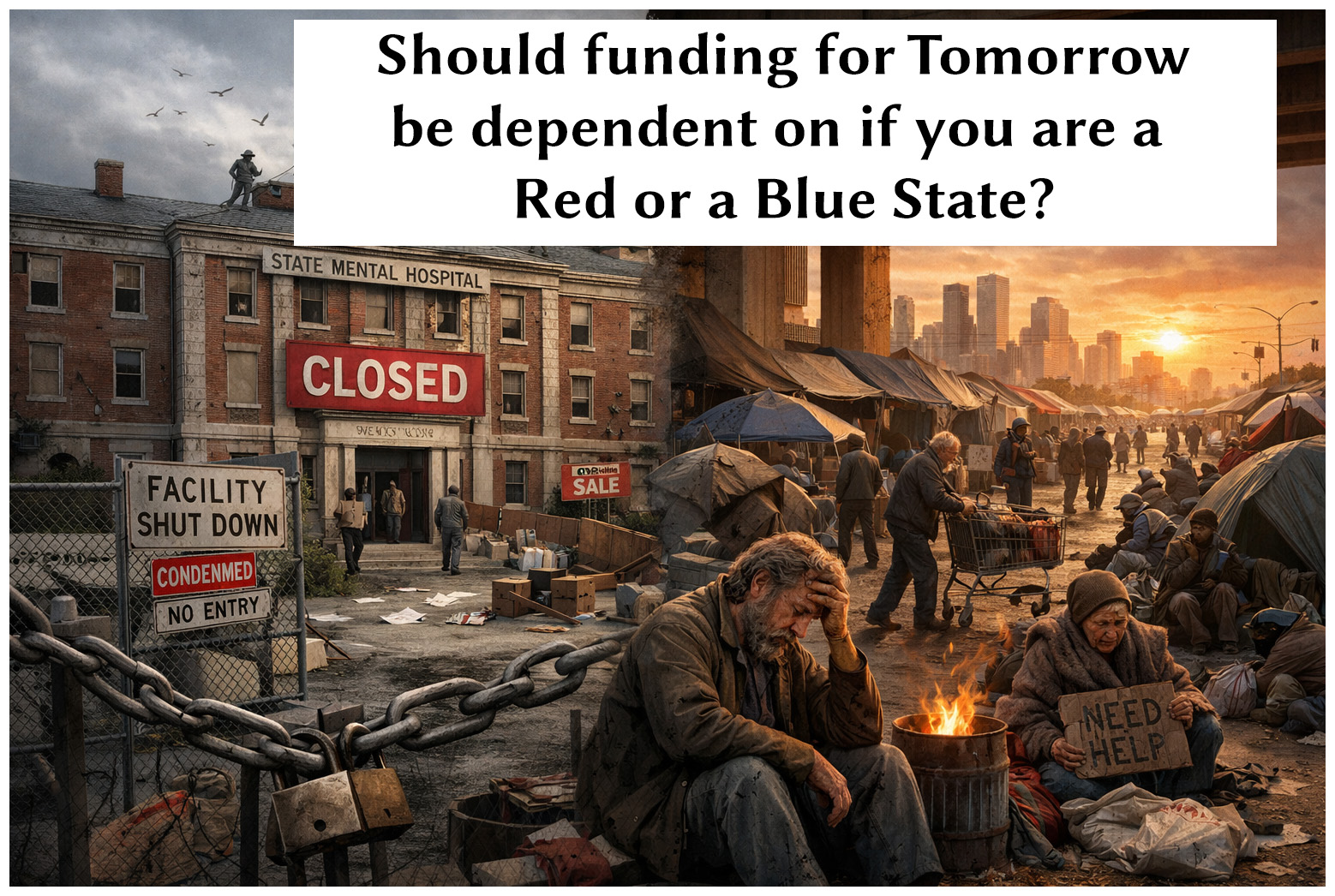
We See It Every Day. So Why Isn’t Anything Changing?

We See It Every Day. So Why Isn’t Anything Changing?
You don’t have to go looking for it anymore.
It’s under overpasses.
Along sidewalks.
In places that used to feel like part of the normal rhythm of a city.
Tents. Makeshift shelters. People existing in plain sight, but somehow outside of everything around them.
We see it enough now that it’s become background.
And when something becomes background, it stops demanding answers.
There are responses, of course.
Cities clear areas and call it progress.
Organizations step in where they can.
Churches open kitchens, shelters rotate beds, volunteers show up with good intentions.
None of it is wrong.
But none of it is changing the direction of the problem.
We’ve settled into a pattern:
Address what’s immediately visible.
Move it. Manage it. Contain it.
Then repeat.
Over and over.
There’s also an assumption sitting underneath all of this:
That if the problem is big enough, government will eventually organize around it.
But this isn’t something that fits cleanly into a single department, a single budget, or a single political cycle.
So it gets divided, delayed, and debated.
And while that happens, the visible part keeps growing.
On the other side, there’s charity.
And there is a lot of it.
People care. They show up. They give time, food, money.
But most of it exists in small, isolated pockets.
A meal here. A bed for the night. A temporary service.
It helps—but it doesn’t carry forward.
It resets every day.
So we end up in between two things that aren’t built to solve it:
A system that moves slowly.
And efforts that don’t scale.
That leaves something missing.
Not compassion.
Not awareness.
Something more basic than that.
Nothing we’re doing is designed to grow into a solution.
Nothing connects.
Nothing compounds.
Nothing builds on itself.
And that’s the part that’s easy to miss, because everything we are doing looks like action.
It just doesn’t add up to progress.
At some point, the question changes.
Not:
Why is this happening?
But:
Why isn’t anything we’re doing capable of getting ahead of it?
Because those are two very different problems.
And only one of them can actually be built for.
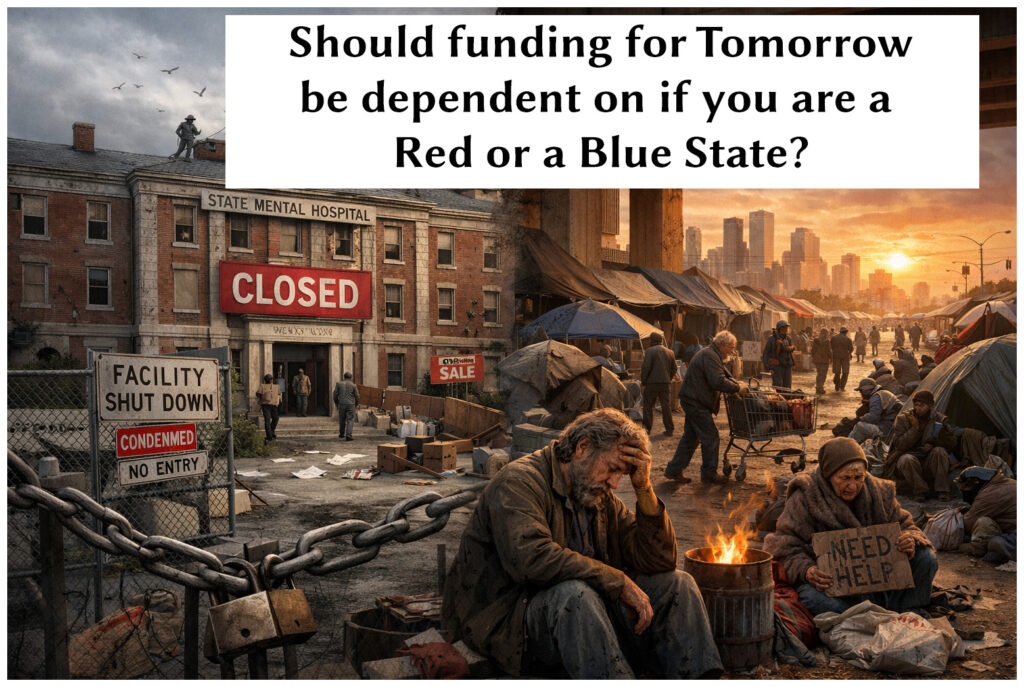
Share this:

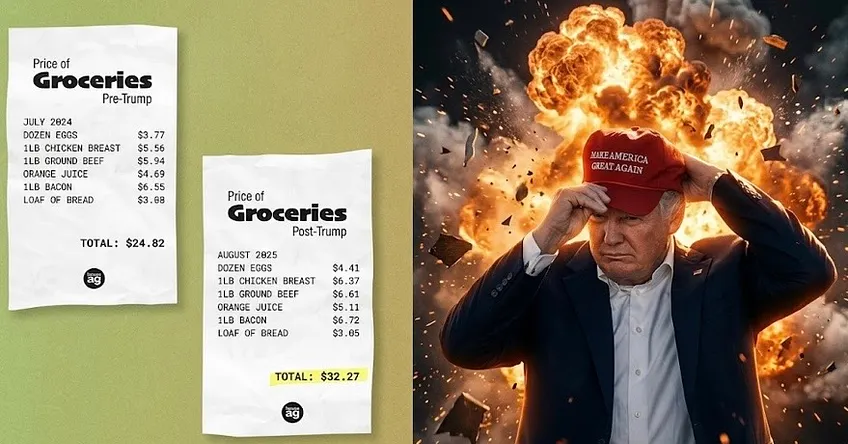

“I couldn’t care less.” Where’s the Beef, Donald Trump AKA Mr. President? – Froehlich Media
Share this:

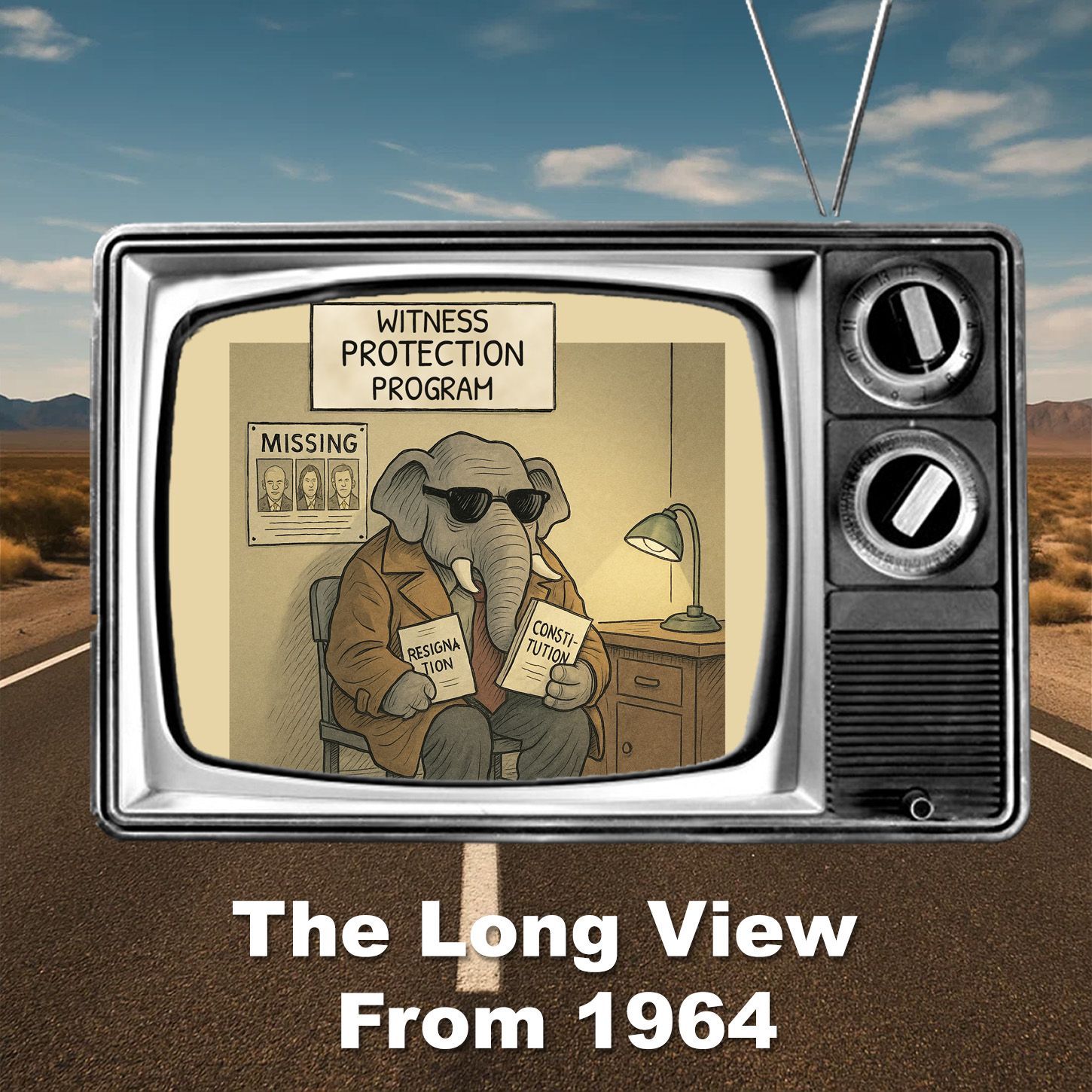
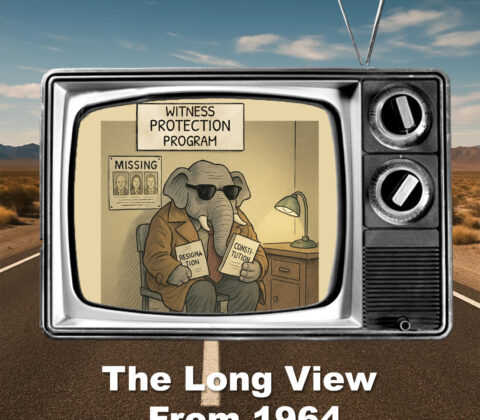
The Long View From 1964 – The Checkbox Problem – Video
The Checkbox Problem
I am not a Democrat.
I am not a Republican.
I am not whatever “Independent” means on a form that was designed to make that choice feel like surrender.
The Long View From 1964
- Superman
- Maybe Just Listen
- The Checkbox Problem
- The Land Moved While You Slept
- The Road and the Ground Beneath It
- Where is Anywhere
- The Saucepan Hat
- Superman (Video)
- Maybe Just Listen (Video)
- The Checkbox Problem (Video)
- The Land Moved While You Slept (Video)
- The Road and the Ground Beneath It (Video)
- Where is Anywhere (Video)
- The Saucepan Hat (Video)
Share this:

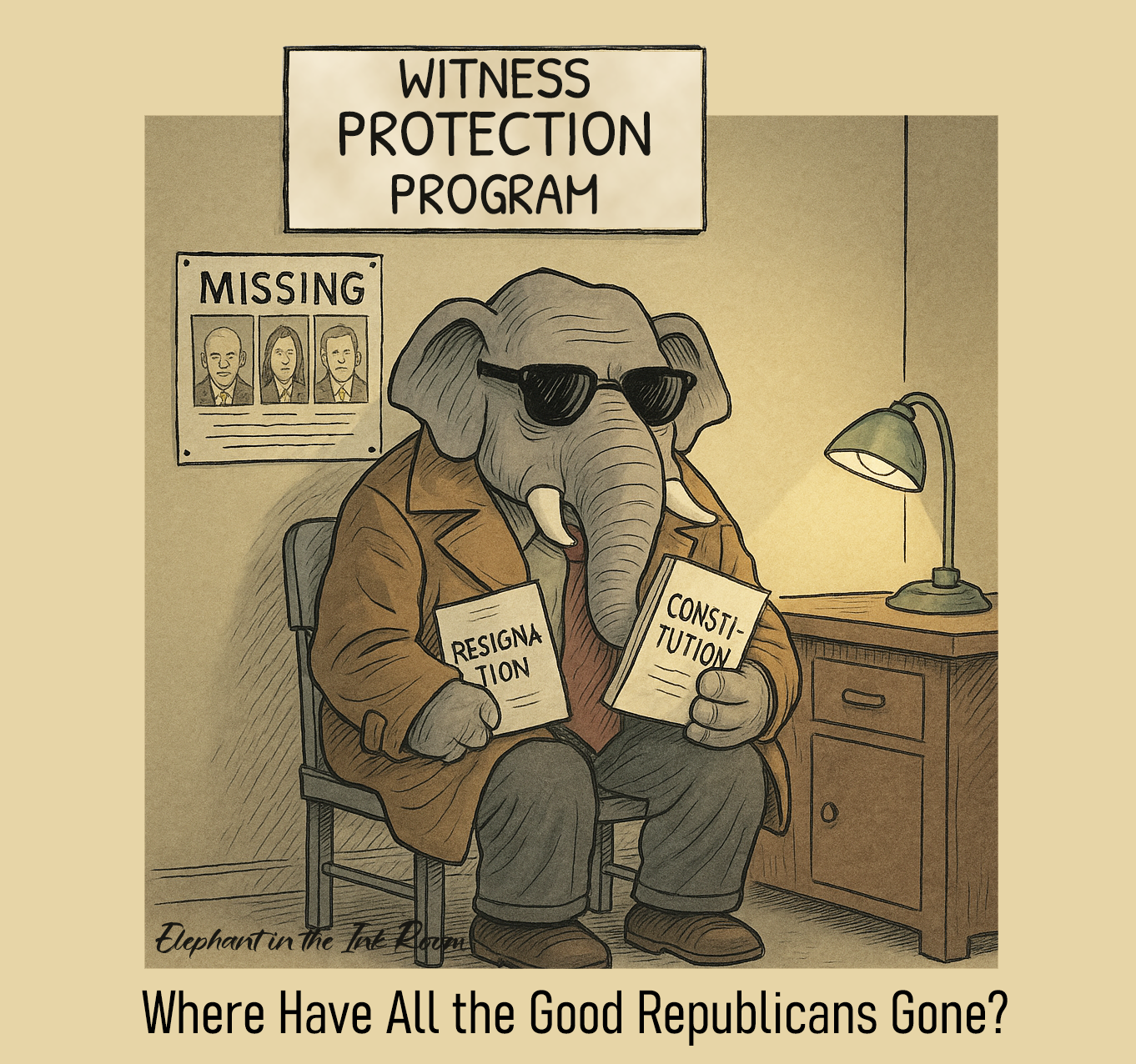
The Long View From 1964 – The Checkbox Problem
The Checkbox Problem
I am not a Democrat.
I am not a Republican.
I am not whatever “Independent” means on a form that was designed to make that choice feel like surrender.
I grew up with a Republican Party that meant something specific, a set of principles, a temperament, a way of approaching governance that I could argue with or agree with but at least recognize. That party is gone. What carries the label today bears no resemblance to what the label used to mean. Calling yourself a Republican in 2026 means something that would have been unrecognizable, and I think deeply alarming, to most of the people who built that party.
So I am not that either.
What I am is a moderate. A person who believes in making decisions carefully, in recognizing complexity, in not burning the house down because you’re angry at the neighbors. A person who wants others to make their own informed choices rather than be handed a script.
There is no checkbox for that.
There is no party infrastructure, no primary, no institutional home for the person who looks at both options and says, honestly, clearly, without drama, neither of these fits.
The labels don’t fit anymore. And the system was not built for the moment when the labels stop fitting.
I am 79 years old. I have been voting since 1968. And this is the first time I have felt genuinely politically homeless.
But here is the thing about being lost, recognizing it is not the end. It is actually the beginning. Before you can define where you are going, you have to be honest about where you are. That is what this is. The first step in figuring out what a political identity looks like when the old labels have stopped telling the truth.
This is the beginning of that conversation. Not answers. Just honest questions from someone who has been paying attention for a long time and is tired of being handed choices that don’t fit.
More to follow.
The Long View From 1964
- Superman
- Maybe Just Listen
- The Checkbox Problem
- The Land Moved While You Slept
- The Road and the Ground Beneath It
- Where is Anywhere
- The Saucepan Hat
- Superman (Video)
- Maybe Just Listen (Video)
- The Checkbox Problem (Video)
- The Land Moved While You Slept (Video)
- The Road and the Ground Beneath It (Video)
- Where is Anywhere (Video)
- The Saucepan Hat (Video)
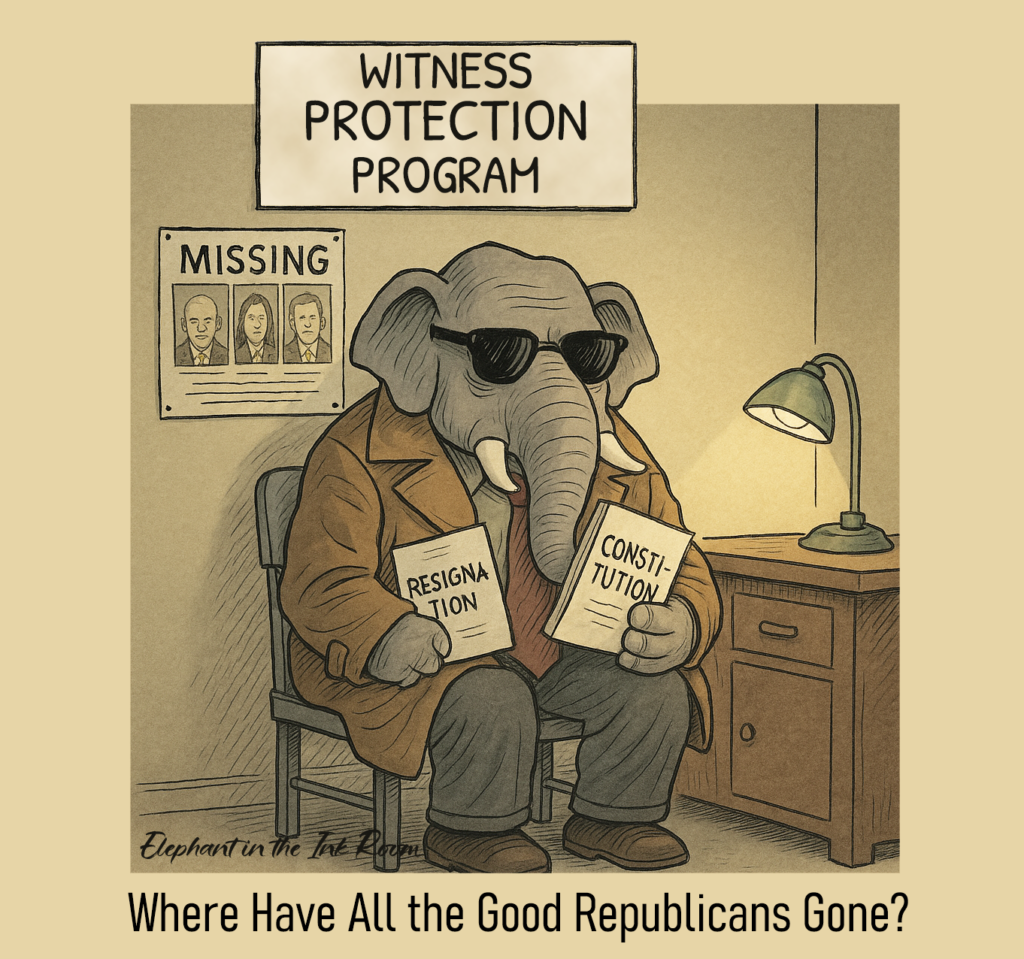
Share this:

MEDIA ADVISORY: Oregon Secretary of State Tobias Read and Oregon Attorney General Dan Rayfield to Hold Election Protection Press Conference 05/18/26
| May 19 Primary is the first major Oregon election since the string of unprecedented attacks on elections from the Trump administration began |
|
| Having trouble viewing this email? View it as a Web page. |
| | Help |
|
|
||||
Share this:

The 20th century begins on a midnight ride by Steve Schmidt
My series looks at the world through the eyes of one young, and naive man who was first eligible to vote in 1964. The Long View From 1964.
Steve Steve Schmidt takes us on journey of American Politics from day one, an excellent piece that could replace volumes of rhetoric in classroom texts. I am bringing you into his series with segment seven, but links to the previous 6 segments are prominent in the beginning. This isn’t a dry reading of the facts, but engaging and well worth the read if you interested in more than just outrage at our current predicament. You can’t fix it, if you done’ understand the mechanics.. I encourage you to engage. I believe it is worth it.
Share this:

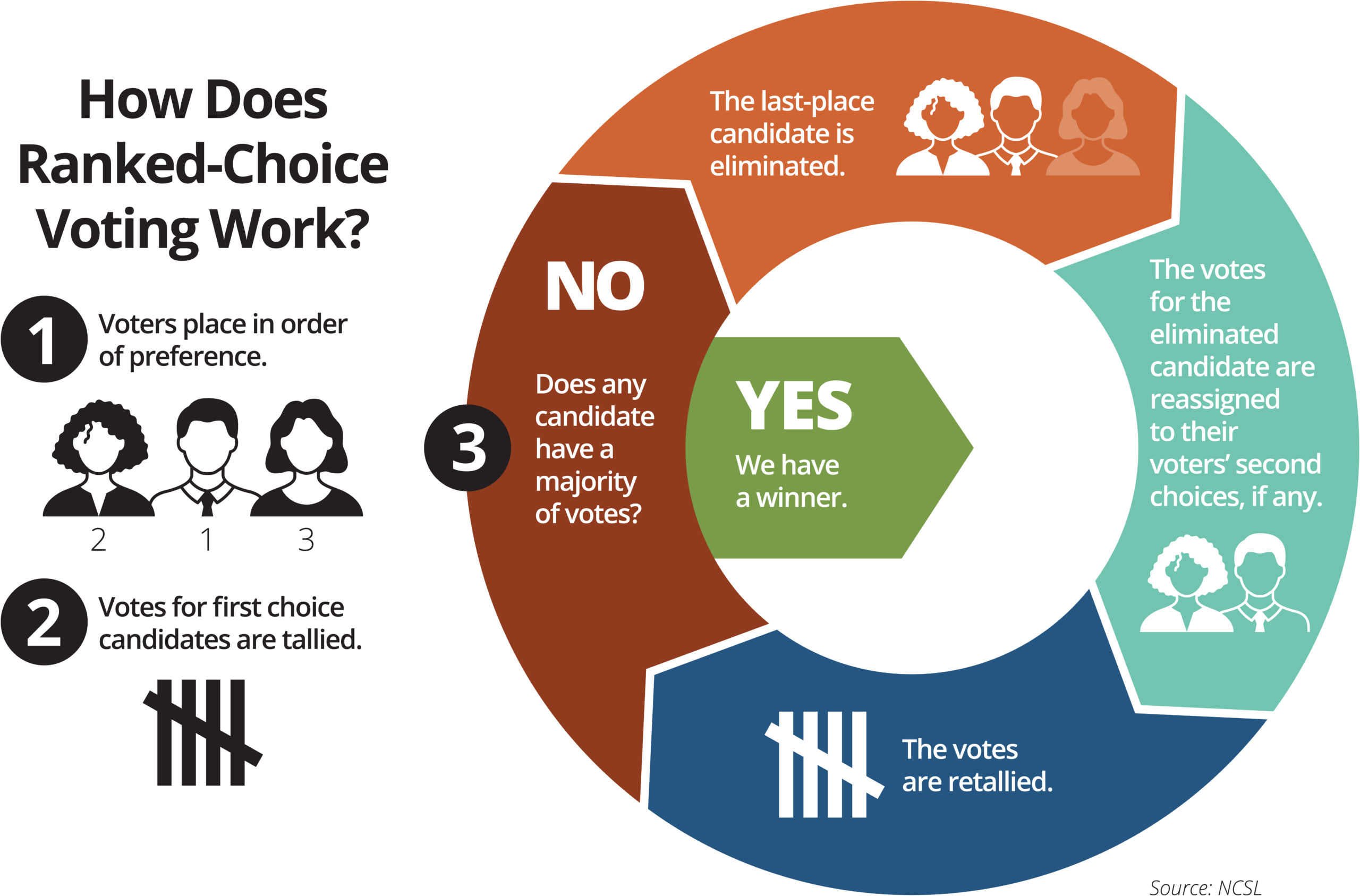
RVC Part 3 of 3: How to Get Involved in Ranked-Choice Voting in Your State or Community
Part 3 of 3: How to Get Involved in Ranked-Choice Voting in Your State or Community
How to Get Involved With Ranked-Choice Voting — Practical Steps
Whether you like ranked-choice voting, dislike it, or are undecided, here’s how you can actually participate in your area.Step-by-Step Action Guide
Learn What’s Happening in Your Area
-
Go to FairVote.org and RCVResources.org — they have excellent maps showing where RCV is used or being considered.
-
Check Ballotpedia.org — search “Ranked-choice voting [Your State]”.
Understand Your State’s Rules
-
Does your state allow citizen ballot initiatives?
-
What are the signature requirements?
-
Has your state banned RCV or passed a “local option” law?
Get Involved Locally (Often the Easiest Starting Point)
-
Attend your city council or county commission meetings and speak during public comment.
-
Talk to your local election clerk or county auditor.
-
Support or oppose local efforts (many cities adopt RCV through charter changes).
Connect With Existing Groups
-
FairVote has state and local partners.
-
Search online for “[Your City/County] Ranked Choice Voting” or “[Your State] RCV Coalition”.
Contact Your Representatives
-
Email or call your state legislators and tell them your thoughts — especially if you’re in a rural area. Rural voices are important in these conversations.
For Oregon Readers Specifically
-
Watch how Portland’s and Multnomah County’s RCV elections go in 2026.
-
Follow the Secretary of State’s study on RCV (due September 2026).
-
A future statewide measure is most likely in 2028 or later.
Final Advice
Start small. Even attending one meeting or sharing factual information with neighbors makes a difference. Whether you want to help bring RCV to your area, stop it, or just make sure it’s done fairly, getting informed and showing up is the most important step.
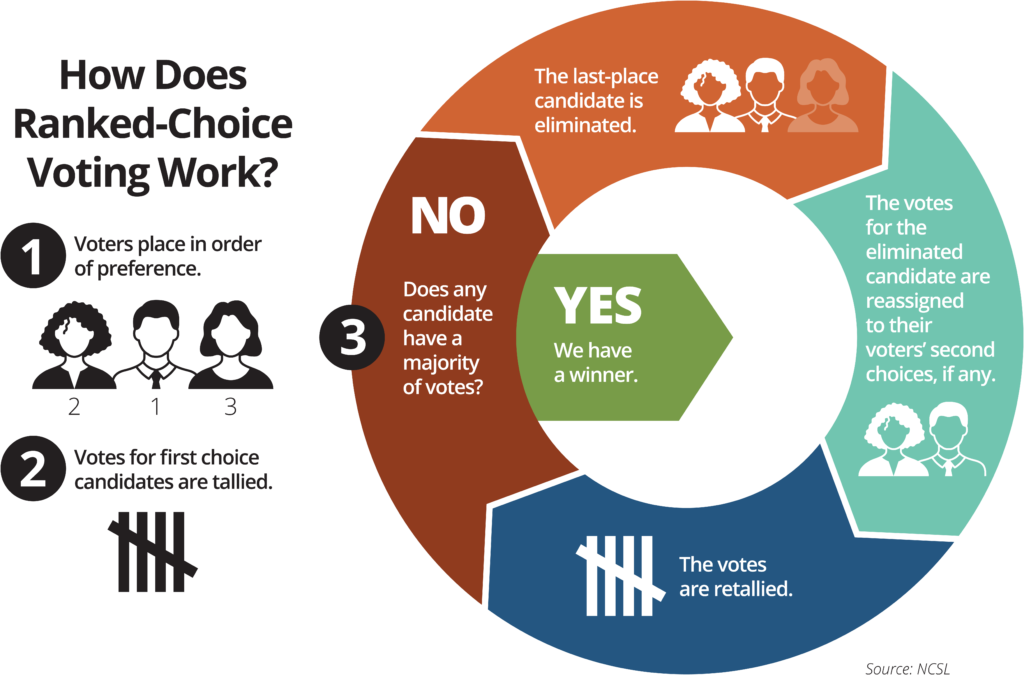
Share this:

The Primary Election is Only 4 Days Away! 5/15/26
|
| Having trouble viewing this email? View it as a Web page. |
| | Help |
|
|
||||
Share this:

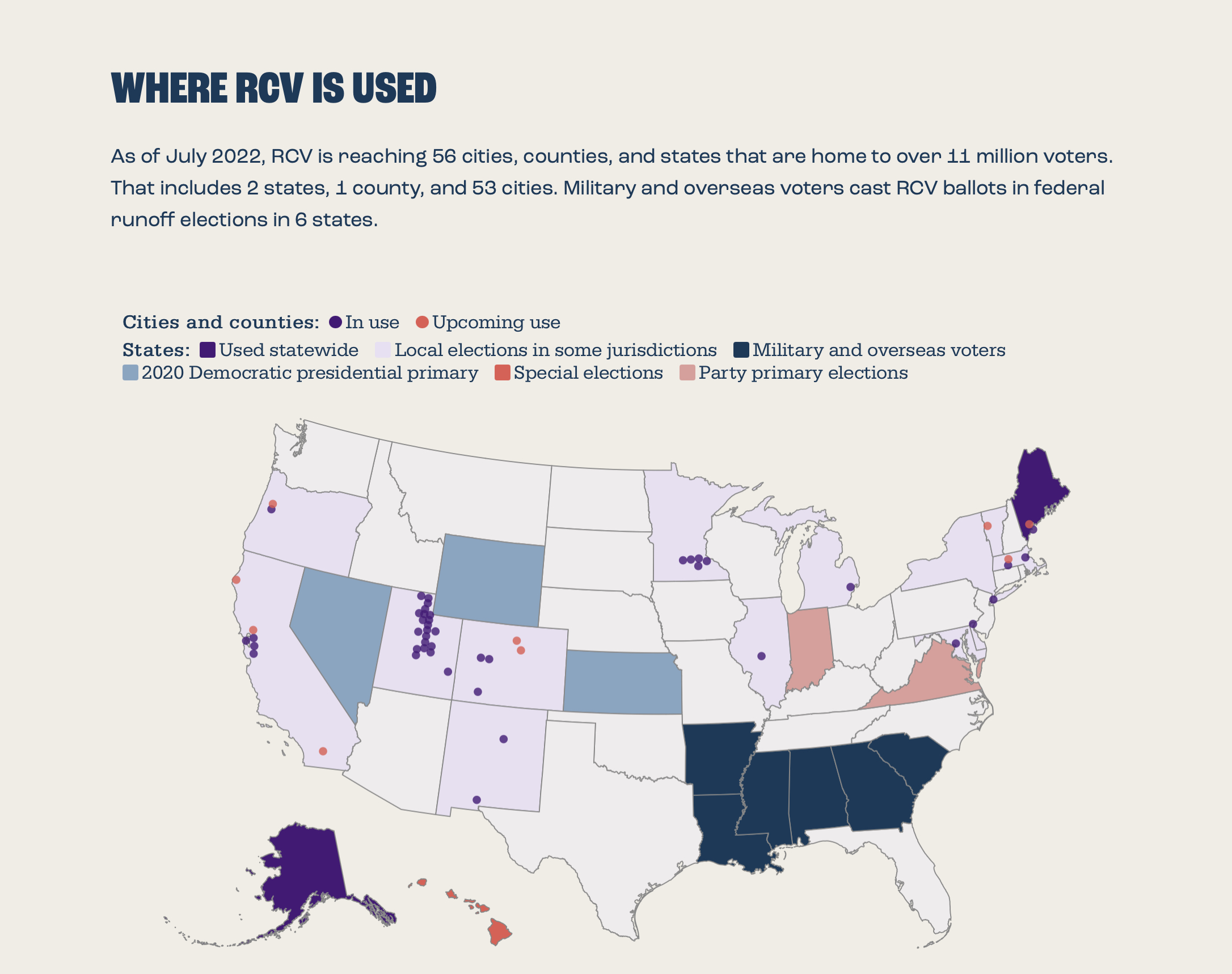
RVC Part 2 of 3: Where Ranked-Choice Voting Stands Today in the United States
Part 2 of 3: Where Ranked-Choice Voting Stands Today in the United States
Where Ranked-Choice Voting Is Being Used Right Now
Note from the author: I am an Oregonian, so I use Oregon’s 2024 experience with Measure 117 as a detailed real-world example. However, this series is written as a national guide. The information, patterns, and action steps apply to voters in every state.
Current National Picture (April 2026)
-
Only two states currently use ranked-choice voting for statewide and federal elections: Maine and Alaska.
-
About 49 cities and counties across 22 states plus D.C. use RCV for local elections, covering roughly 14–17 million voters.
-
19 states have banned or heavily restricted it.
-
In 2024, voters in several states (including Oregon) rejected statewide RCV ballot measures.
What Happened in OregonIn November 2024, Oregon voters decided on Measure 117, which would have brought ranked-choice voting to presidential, congressional, and statewide executive races starting in 2028.Final Result:
-
Yes: 42.3%
-
No: 57.7%
The measure lost by about 15 points.Local use continues to grow:
-
Portland used RCV for the first time in 2024 for mayor and city council.
-
Multnomah County will start using it in 2026.
-
Corvallis and a few other areas already use it locally.
The Urban-Rural Divide in Oregon (and Nationally)
Support for Measure 117 was much stronger in Portland, Eugene, Corvallis, and other college towns, while it was significantly weaker in rural counties, especially in Southern and Eastern Oregon.
This is not mainly about education levels. It reflects deeper political and cultural differences.
Rural Oregon voters often feel the state is governed too much by the three largest urban areas (Portland, Eugene, and Salem), while farms, small towns, and Eastern Oregon have too little voice. Many rural and conservative voters — especially Trump supporters — have developed real mistrust toward changes in how elections are run.
Honest Perspective for Rural Readers
Ranked-choice voting would not automatically “steal” or cancel conservative votes. In Alaska, some Republican and independent candidates have gained from second-choice votes. However, legitimate concerns remain: it can be more complicated, more expensive for small counties to run, and slower to report results. Rural election offices are often understaffed and worry about the added burden.
Many believe the best path is to let local experiments (Portland and Multnomah County) run for a few years so voters across the whole state can see real-world results before another statewide vote.
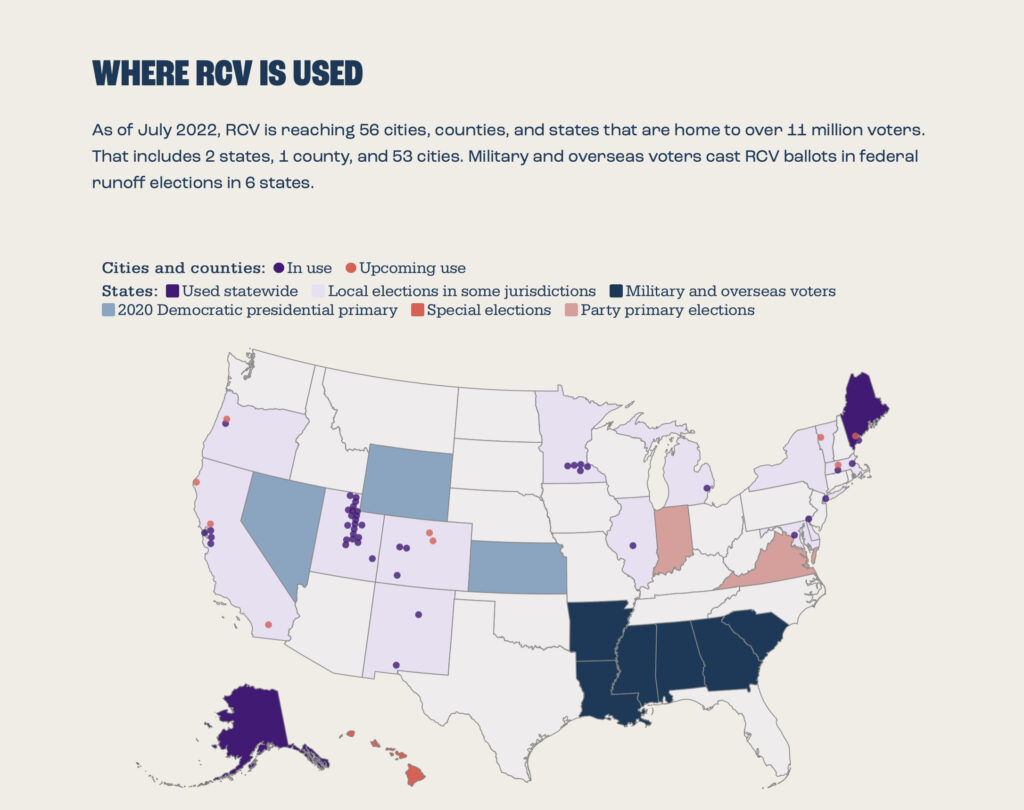
Screenshot
Share this:



The President Who Won’t Leave – Part 3 of 3 The Third String – Video

Vinnie. Multiplied. Masked and armored and brave because they’ve been told the rules don’t apply to them. Presidential immunity extended to cover their actions on American soil. A private army answerable not to the Constitution but to the man underground.
The President Who Won’t Leave’ Part 1 of 3 Has He Been Planning For This War All Along? Video
The President Who Won’t Leave’ Part 2 of 3 Home Sweet Home Video
Share this:

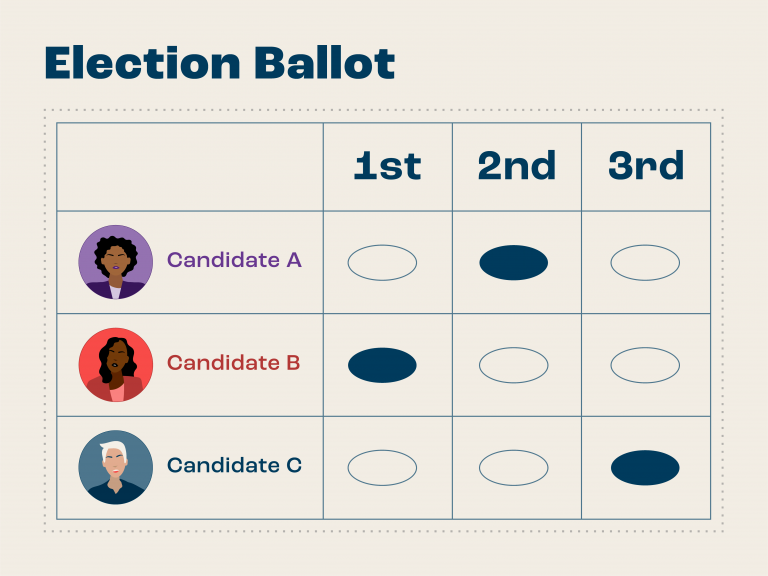
RVC Part 1 of 3: Ranked-Choice Voting Explained – What It Is, How It Works, and Why People Care
Part 1 of 3: Ranked-Choice Voting ExplainedWhat It Is, How It Works, and Why People Care
A Clear Explanation for Everyday Voters. In recent years, more Americans have heard about Ranked-Choice Voting (RCV), also known as instant-runoff voting. Supporters say it reduces negative campaigning and gives voters more voice. Critics say it’s complicated and unnecessary.
Here’s a straightforward breakdown. How Ranked-Choice Voting Works. Instead of marking just one candidate, you rank the candidates in order of preference: 1st choice, 2nd choice, 3rd choice, etc.
-
If any candidate gets more than 50% of the first-choice votes, they win immediately.
-
If no one reaches 50%, the candidate with the fewest votes is eliminated.
-
Those votes are redistributed to the voters’ second choices.
-
This process repeats until one candidate reaches a majority.
Simple Example:
Three candidates — Alice, Bob, and Charlie.
-
Alice gets 40% first choices
-
Bob gets 35%
-
Charlie gets 25%
Charlie is eliminated. If most of Charlie’s voters ranked Bob second, those votes move to Bob, who then wins with a true majority.
Claimed Advantages
-
Reduces the “spoiler” effect (third-party or independent candidates are less likely to swing the election)
-
Encourages more positive campaigning (candidates want to be your second choice too)
-
Produces winners with broader support
-
Allows voters to support their favorite without “wasting” their vote
Common Concerns
-
More complex for voters and election workers
-
Can take longer to report final results
-
Higher costs for equipment, training, and voter education
-
May favor certain types of candidates (often moderates)
Real-World Experience
RCV has been used in Maine (since 2018), Alaska (since 2022), New York City, Minneapolis, San Francisco, Portland (OR), and dozens of other cities. Most places report it runs fairly smoothly once voters get used to it, but several states rejected it at the ballot box in 2024.
Question for readers: Have you ever used ranked-choice voting? Did you find it helpful or confusing?
Share this:

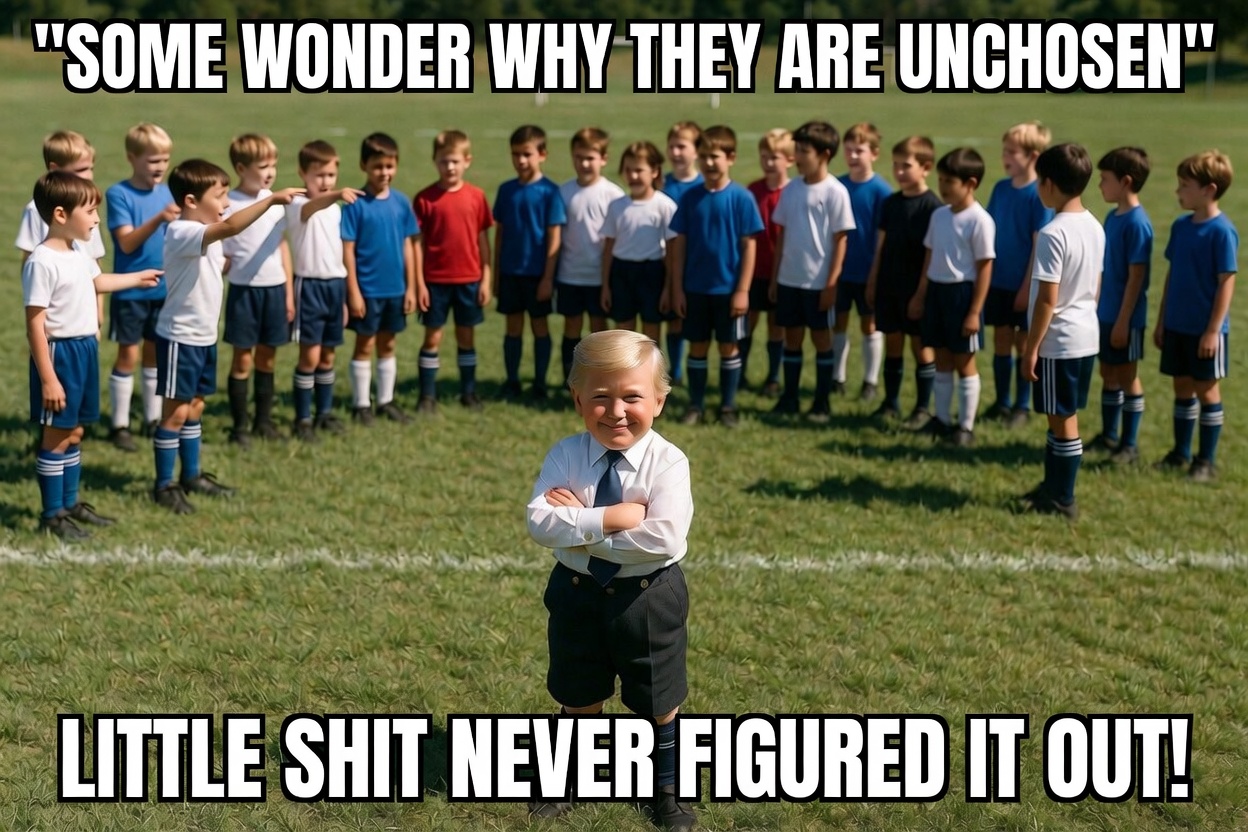
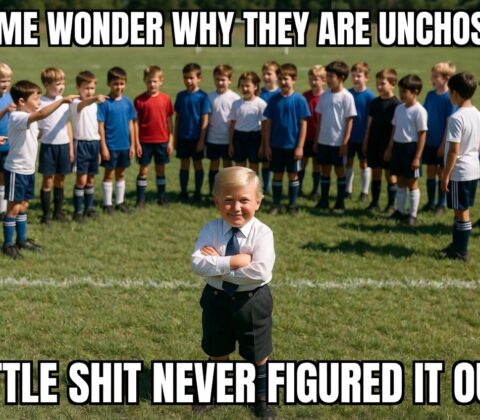
Second String Donny – Video


The Electoral College: A Solution Looking for the Right Problem? – Video
Most debates about the Electoral College start with people choosing sides. One side wants to keep it. The other wants to abolish it.
I think the more interesting question is: What problem was it designed to solve, and does that problem still exist?
In 1787, information traveled at the speed of a horse. Most citizens knew little about candidates from distant states. The United States was less a single nation than a collection of states agreeing to work together. The Electoral College was part compromise, part practical necessity, and part protection against direct democracy in a world where voters had limited information.
For its time, the system made sense.
Today, none of those conditions exist.
——————————–
A constitutional convention to redesign the whole thing?
I don’t know.
What I do know is that every system solves one problem by creating another.
A pure popular vote values every vote equally, but raises concerns about population concentration.
The Electoral College protects state influence, but leaves many voters feeling irrelevant.
Winner-take-all states simplify elections, but turn most states into spectators.
There may not be a perfect answer. There may only be better compromises.
Before we argue about which system to adopt, we should at least agree on which problem we’re trying to solve.
If we can’t answer that question, we’re just rearranging the furniture.
And unlike the spare toilet paper at my house, nobody seems to know where the solution is stored.
The Electoral College asks how states should be represented.
Ranked-choice voting asks how voters should be represented.
Maybe before we decide which system is best, we should decide whose voice we are trying to hear more clearly.
Share this:
Like this: