Skip to content




**Two and a Half Years to Go: We Look at Impeachment, and the Consequences**
**Two and a Half Years to Go: We Look at Impeachment, and the Consequences**
Two and a Half Years to Go: We Look at Impeachment, and the Consequences
**Two and a Half Years to Go: We Look at Impeachment, and the Consequences**



After the dust settles, will we ever know which one is right?
After the dust settles, will we ever know which one is right?

Honest Perspective for Rural Readers
Simple Example:






What the FBI actually obtained (late last week, per Arizona Senate President Warren Petersen) is digital data from the 2021 Arizona Senate’s partisan audit—the one run by Cyber Ninjas. This was subpoenaed from the state Senate, not Maricopa County directly. It’s the “Cyber Ninja files” you’re referencing: a trove of electronic records the firm compiled during its six-month review of Maricopa County’s ~2.1 million ballots.
Posts in Category: elections and media
Elections and Media in the Modern Era – Part 1 of 3: Elections – Behind the Ballot Box – Video
Let me ask you one question: just how many votes does it take to win an election? 1,000? 100? 10? Or maybe… just 1?
Early reports from the 2026 Boca Raton mayoral race suggested it could have been a single vote. One person deciding to mail their ballot—or to skip it—could have changed the outcome entirely. In the end, it turned out the margin was five votes. Still, in a city election, that’s barely a handful—and it perfectly illustrates why every vote truly matters.

Share this:

Elections and Media in the Modern Era – Part 1 of 3: Elections – Behind the Ballot Box
Does Your Vote Count?
Let me ask you one question: just how many votes does it take to win an election? 1,000? 100? 10? Or maybe… just 1?
Early reports from the 2026 Boca Raton mayoral race suggested it could have been a single vote. One person deciding to mail their ballot—or to skip it—could have changed the outcome entirely. In the end, it turned out the margin was five votes. Still, in a city election, that’s barely a handful—and it perfectly illustrates why every vote truly matters.
More Than Just a Ballot: How Votes Are Shaped Before They’re Cast
Even in small towns, elections don’t work the way most of us think. There was a time when Americans largely got the same story from the evening news—ABC, NBC, CBS. Today, a voter in rural Montana might watch a cable town hall on CNN, scroll X for candidate updates, and see a TikTok ad funded by a local political action committee. By the time they step into the booth, the story they’ve absorbed is a patchwork of channels, platforms, and messages—and each piece is shaped by someone trying to influence their choice.
Concrete Example — Boca Raton Mayor
Andy Thomson won the 2026 Boca Raton mayoral race by just five votes, after machine counts and multiple manual recounts. Early reports suggested the margin could have been a single vote. In other words, a handful—or even one—ballot could have changed the result.
In Boca Raton, like everywhere else, candidates weren’t just counting ballots—they were trying to reach voters with the right information at the right time. Even small shifts in turnout or perception could tip the scales. And that’s where the system behind elections—the information channels, messaging, and media—starts to matter.
Your vote can change outcomes, even if it feels invisible. And the information you receive before you vote—the stories, ads, news, and commentary—plays a role in shaping that choice. Understanding the system is the first step in making your vote count.
Core Explanation: Elections Are No Longer Simple
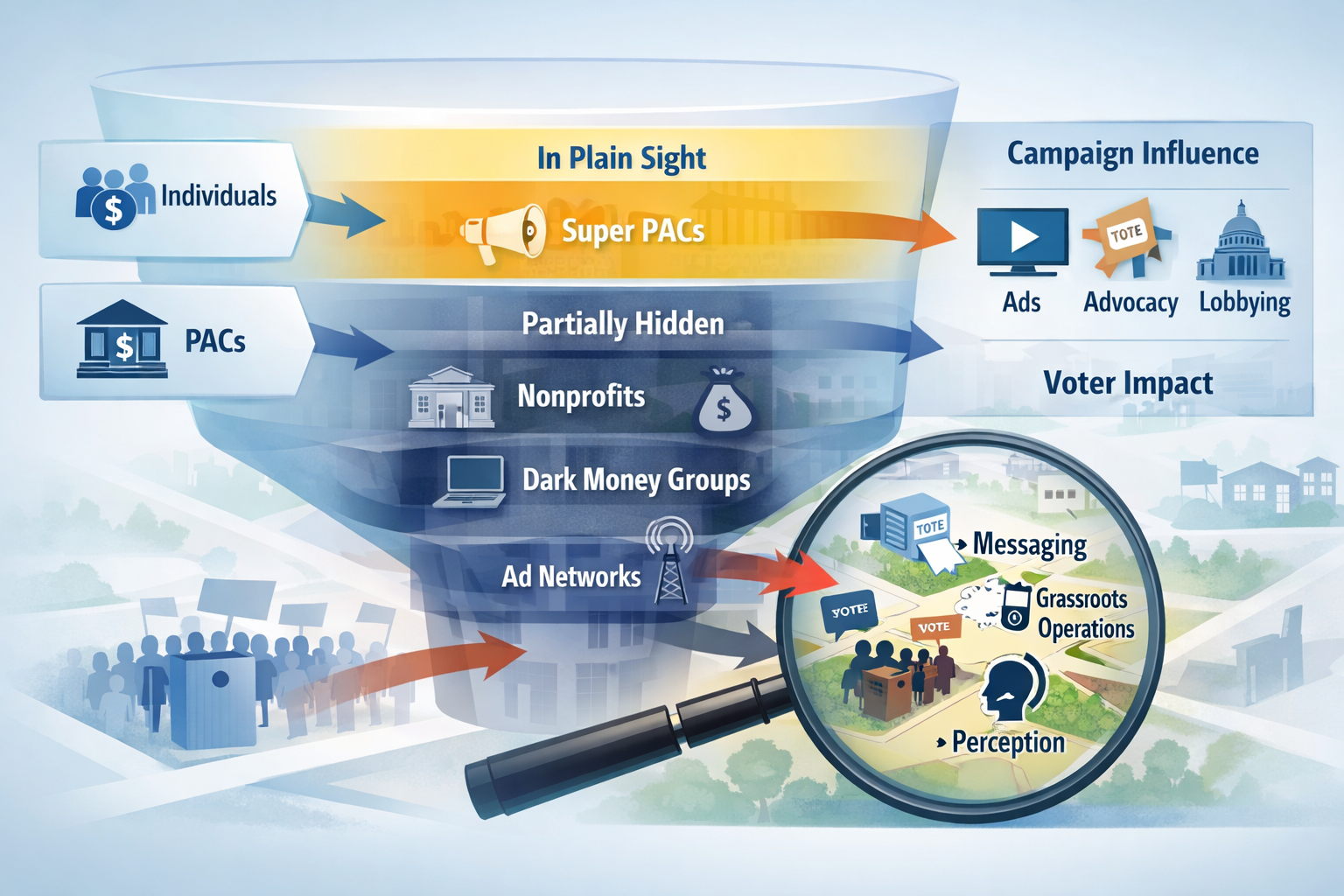
Voting today is no longer a straight line from candidate to voter. It’s a complex web of influence:
-
Traditional layers remain: parties, candidates, ballots, volunteers.
-
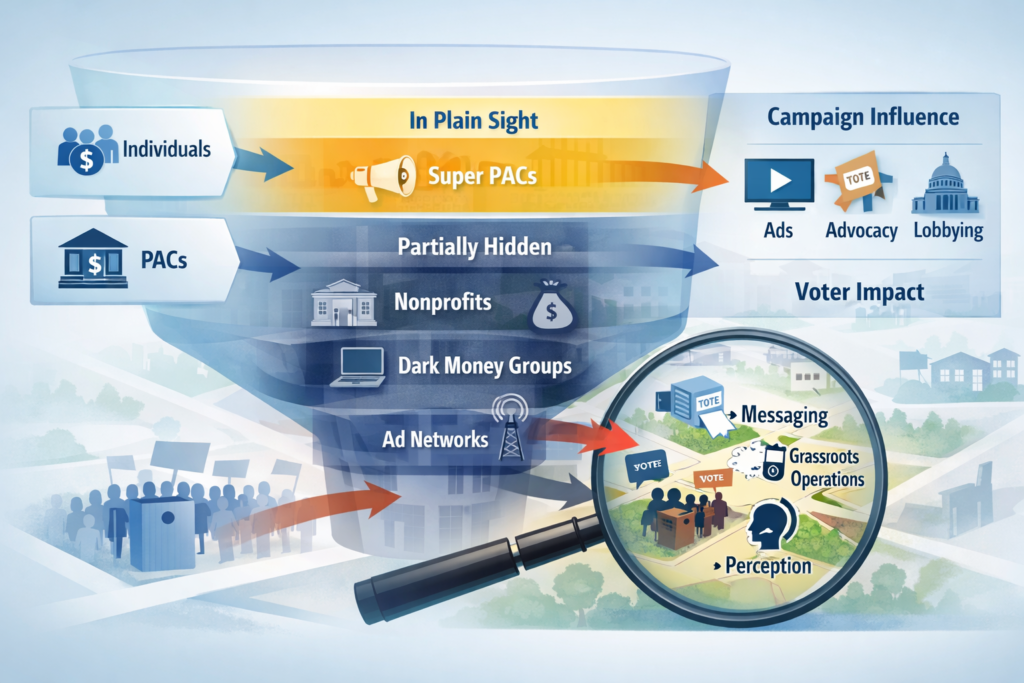
Outside spending shapes messaging: PACs, nonprofits, advocacy groups push targeted campaigns.
-
Digital platforms amplify influence: social media and apps deliver precise messages to specific audiences.
-
Fragmented media environment: cable, social media, and online outlets deliver very different stories, so voters rarely encounter the same information.
The end result is clear: votes aren’t just cast—they’re shaped long before they reach the ballot box.
Relatable Example Continued
Imagine Mary, a voter navigating today’s environment. She sees:
-
A Facebook post from a candidate’s page highlighting local infrastructure promises
-
A TikTok ad from a PAC showing a dramatic clip about healthcare
-
A cable news segment analyzing the same election in a different context
Each source presents a slightly different narrative. Mary has to make sense of it all—but the truth behind who funded each message is mostly invisible. And yet, in places like Boca Raton, a handful of votes—or even one—can decide who governs the city. That’s the tangible power of participation.
Pattern / Insight
This isn’t about ideology. It’s about mechanics. The flow of information—shaped by parties, outside money, and digital platforms—affects every voter. Understanding that flow gives people the clarity to see why elections look the way they do today, beyond the surface headlines.
Understanding why every vote matters is only the first part of the story. Equally important is how the information voters receive before Election Day is shaped and delivered. From traditional network broadcasts to social media, cable news, and independent commentary, the channels through which voters learn about candidates and issues have multiplied—and fragmented. To see why elections look the way they do today, we need to look closely at the modern media landscape.
Share this:



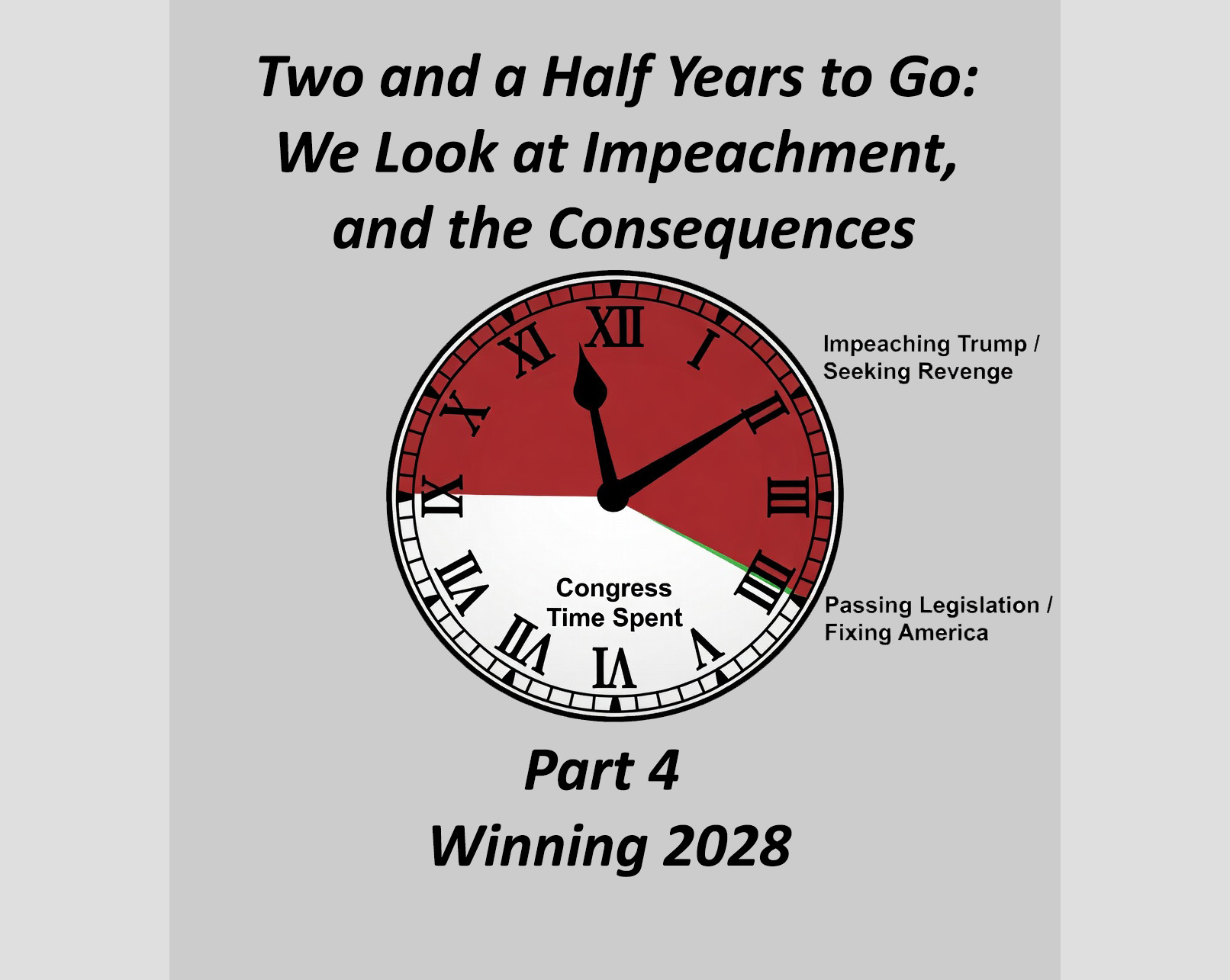
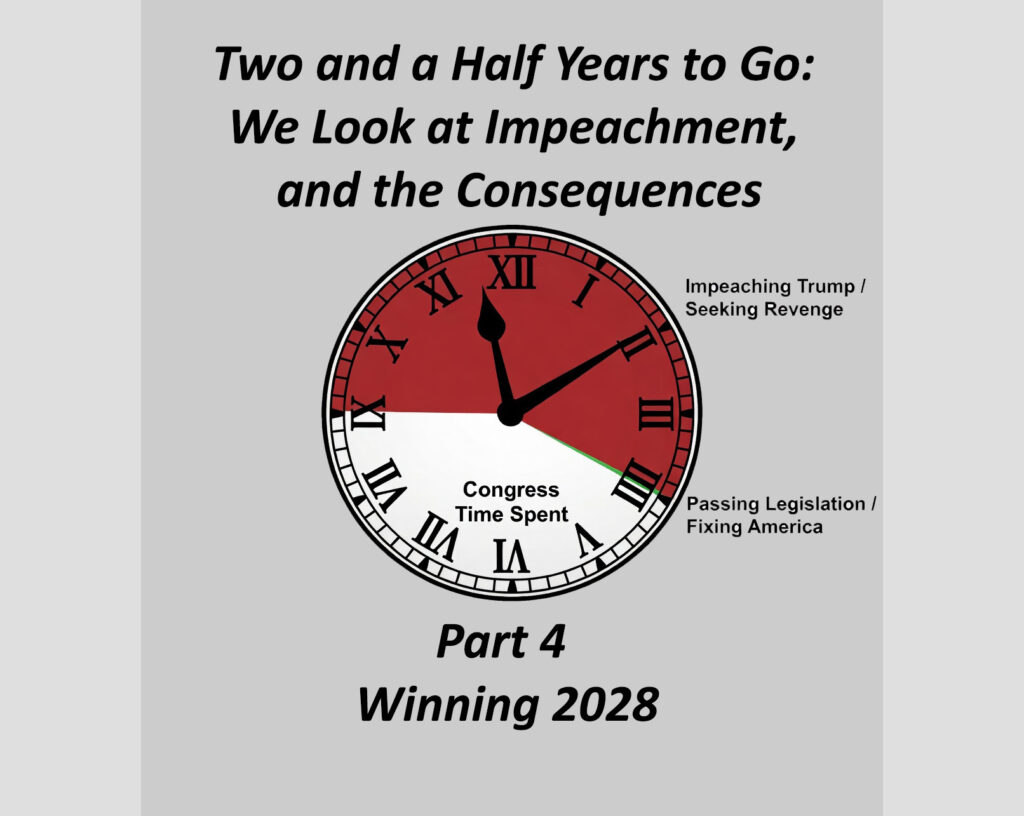
Two and a Half Years to Go: We Look at Impeachment, and the Consequences, Part 4 — Winning 2028
I’ve always been a conservative. I’ve always registered Republican. Today, I consider myself an independent with a lowercase “i.” No party. No checkbox.
For a moment, I’m going to step off my usual neutral track. My biggest disagreement has always been my distrust of Donald Trump and the hard-right MAGA movement, not the conservative Republican base generally. It seems to me that the political pendulum is going to swing left. I just don’t want it to swing wildly left. I distrust the hard left as much as I distrust the hard right.

Moderate. Remember.
So, looking toward 2028, the question becomes: who makes sense? Who can represent a country that is not neatly divided into two simple groups? Who can represent both the liberal and conservative values that exist across America?
The answer I keep coming back to is simple.
I like a team.
I think putting a team together on day one is the smart move. Not just a presidential candidate, but a governing team. Two people who complement each other, who genuinely work together, and either of whom could step into the presidency if necessary without the American people feeling anxious or uncertain about the future.
The old way, selecting one popular candidate and then having the party scramble to find a vice president who might help win a particular state or appeal to a particular voting group. is outdated. It does a disservice to the office and to the voters.
Why not build the team first?
Presidential candidates have one of the hardest jobs in America. They have to travel across a country where people have completely different needs, different economies, and different histories. What matters to a farmer in rural America may be very different from what matters to someone working in a technology center or a manufacturing community.
The president cannot personally solve every problem.
Nor should they.
What I want to hear from a candidate is something like this:
“I am here to help you solve your own problems. When you need help, the federal government will be there. But government should support people, not replace them.”
That does not mean everything belongs at the local level. Some things belong to all Americans equally. Basic education standards, protection of constitutional rights, healthcare standards, and guarantees of religious freedom are examples of responsibilities that require a national commitment.
The challenge is finding the proper balance.
That is a pretty big order. We want someone who can make every decision, solve every problem, and manage every crisis. Wait a minute, don’t we have that right now? At least the current President seems to believe that is possible.
I’m not going to spend this article discussing Trump. I only mention him to reinforce the reason I believe a team is needed. The presidency was never designed to be a one-person operation. It was designed around a system of checks, balances, advisors, and institutions.
The team should not begin after the election.
It should already exist before the election.
I started with the idea of a President and Vice President. Yes, a President and Vice President, but a Vice President that the American people would genuinely trust if they had to step into those much larger shoes. If that happened, the country should know that the same governing philosophy and agenda would continue.
We are entering an era of artificial intelligence, robotics, space exploration, and challenges that previous generations could not have imagined. Why are we still choosing executive leadership the same way we did generations ago?
Why not modernize how America chooses its executive branch?
Imagine a system where the presidential team is not simply a candidate and a running mate, but the beginning of a governing organization. After the primaries, there is still time before the general election to assemble a proposed administration. The voters would know what they were actually voting for.
The country would not lose months after an election while Congress debates and fights over cabinet selections. The vetting process would already have been underway. The American people would have a clearer understanding of who would actually be responsible for running the government.
And here is another benefit.
Yes, today we are stuck with a two-party system. Hopefully, someday that changes. But a governing team could begin moving us beyond the idea that the only qualification that matters is the letter after someone’s name.
The team leader should have the ability to select the best people for the job. Republican, Democrat, Independent, Libertarian, the question should be whether they are qualified and capable.
Today’s challenges are simply too great for one person, one party, or one ideology to solve alone.
I spent much of my career in engineering, and one lesson applies to every complex project: you do not hire one person and tell them, “Make it work.”
You assemble a team.
You identify the lead programmer, the project manager, and the people who can work together to accomplish the goal. You define the scope, the expected results, and the responsibilities before anyone starts writing code. Then you have oversight to make sure the project stays on track.
Government is the largest project any of us could ever undertake.
Yet we continue to pretend that one person can manage it all.
The president is still responsible. The buck still has to stop somewhere. But a strong team does not weaken leadership. It strengthens it.
It is time to stop playing politics and start playing government.
While we still have one.
Maybe that is the lesson America should take from the Trump years. Not simply who won or who lost, but that our system needs to adapt.
Let’s respond by building a team.
Not just a campaign team.
A governing team.
A team with a realistic agenda that can actually be accomplished, not campaign promises made from a stage two weeks before Election Day.
A team ready to govern on day one.
Share this:

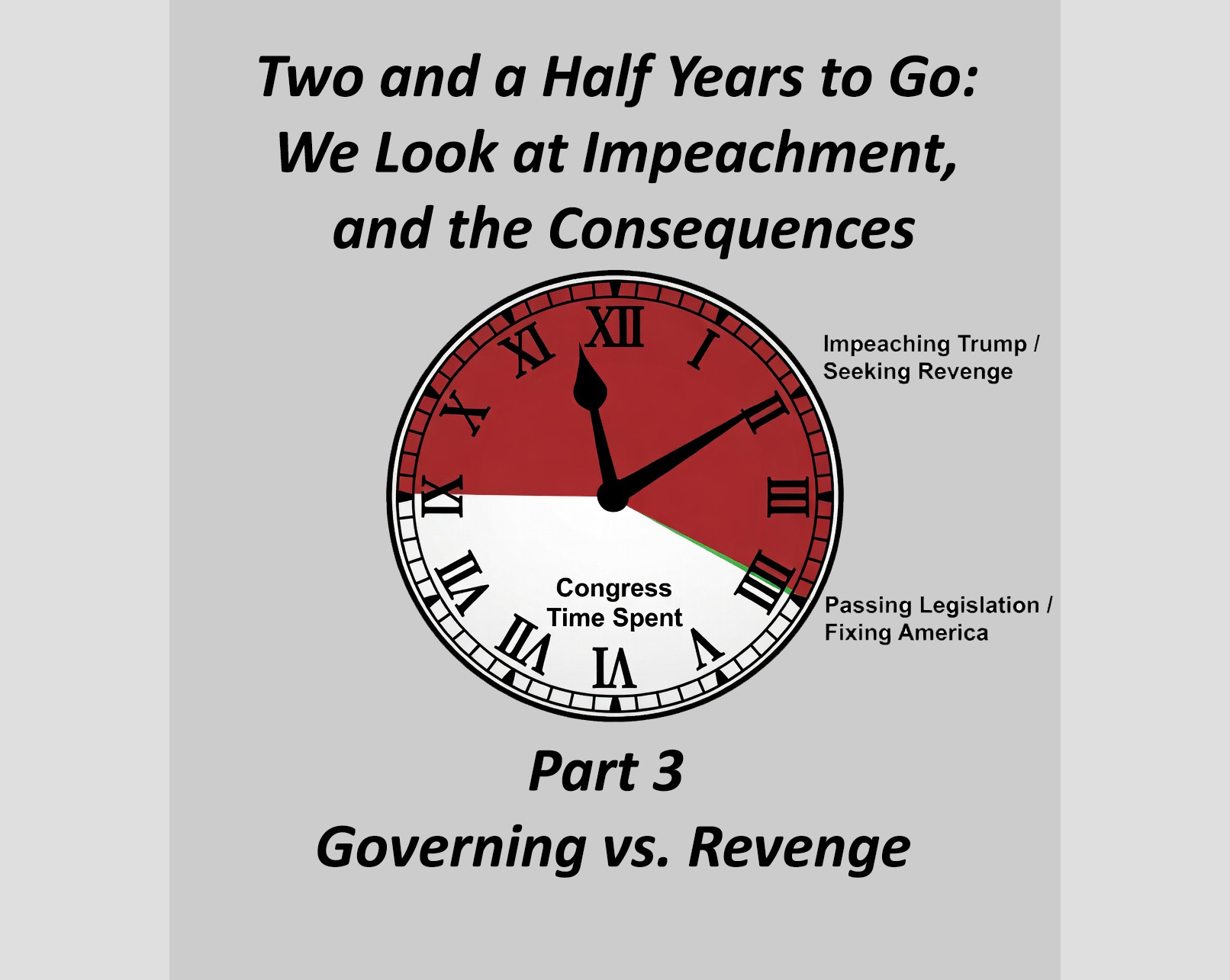
Two and a Half Years to Go: We Look at Impeachment, and the Consequences, Part 3 — Governing vs. Revenge
Two and a Half Years to Go: We Look at Impeachment, and the Consequences
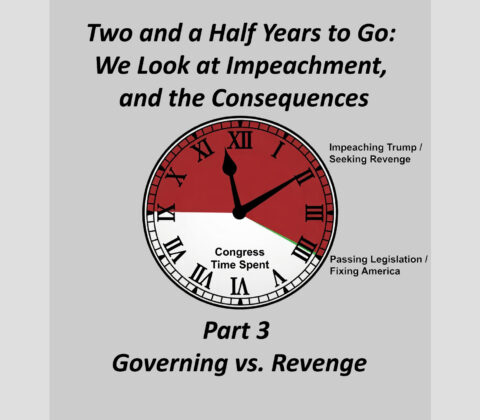
Part 3 — Governing vs. Revenge
A quick caveat before we get into it. I’ll be referring to Democrats throughout, since they’re the opposing side in our two-party system and the ones midterm math points to. But I want to stress that what I actually want is moderation, a meeting of minds and policies considerate of the needs of the citizens of the United States, not the desires of individual politicians. I know that’s asking a lot. But miracles have been known to happen. Right, Santa?

Assuming Democrats take control of Congress come the midterms, and all signs point to it, here’s the real question: do we spend two years re-litigating the last four, or do we spend it fixing what’s broken?
I don’t believe we can do both well.
It doesn’t take much to understand why. First, we’ll have a wave of new senators and representatives who need to come up to speed on how Congress actually functions, which, given the last few years, may be a skill some incumbents could stand to relearn too. Second, we need Congress to actually show up and do the job we pay them for. For an average salary of $175,000 a year, I think it’s fair to expect something in return. I don’t get paid a dime for writing this.
Once they’re back, the first order of business shouldn’t be revenge, it should be reinstating the services that were stripped away, especially the ones targeted by political demographics. Government is supposed to be for the people, by the people. Not for settling scores.
Instead of revenge, they need to re-establish responsible government. That means securing elections the way they’re supposed to be secured, by the states, not by an authoritarian federal hand. And speaking of authoritarian government, Congress has until 2028 to start rebuilding real limitations on the executive branch. Because we don’t want a Democrat dictator any more than we want a MAGA or Republican one. And yes, I consider MAGA a separate party that hijacked the Republican one, you’re welcome to your own interpretation.
Congress will have to actually work, maybe for the first time in decades. There’s plenty to fix. Healthcare reform can’t wait another ten years. Veterans are waiting on help that “eventually” doesn’t solve. Immigration isn’t a padlock and a skin-tone test. And then there’s the budget, where do you even start. My foundation series touched on AI taxation as a possible short-term bridge, not a full answer, but a bridge is more than we have now, and we need actual answers.
What we don’t need is a Congress that spends its time impeaching a lame-duck president. He can be sued and held accountable after he’s out in 2028. In the meantime, he’s already been mostly neutered, we’ll still have to endure the tweets and the executive orders, but we could always install a shredder to make government a little more efficient.
That doesn’t mean no accountability. There should still be real oversight, reinstate the Inspectors General, put them back under Congress’s control, and let them do their jobs. Oversight isn’t revenge. Revenge is spending two years trying to erase a president instead of one day trying to fix what he broke.
So: what do you want? Revenge, or results?
And if Democrats actually want to win in 2028 — what story do they want to be able to tell?
Part 3 — Governing vs. Revenge
—
**Two and a Half Years to Go: We Look at Impeachment, and the Consequences**
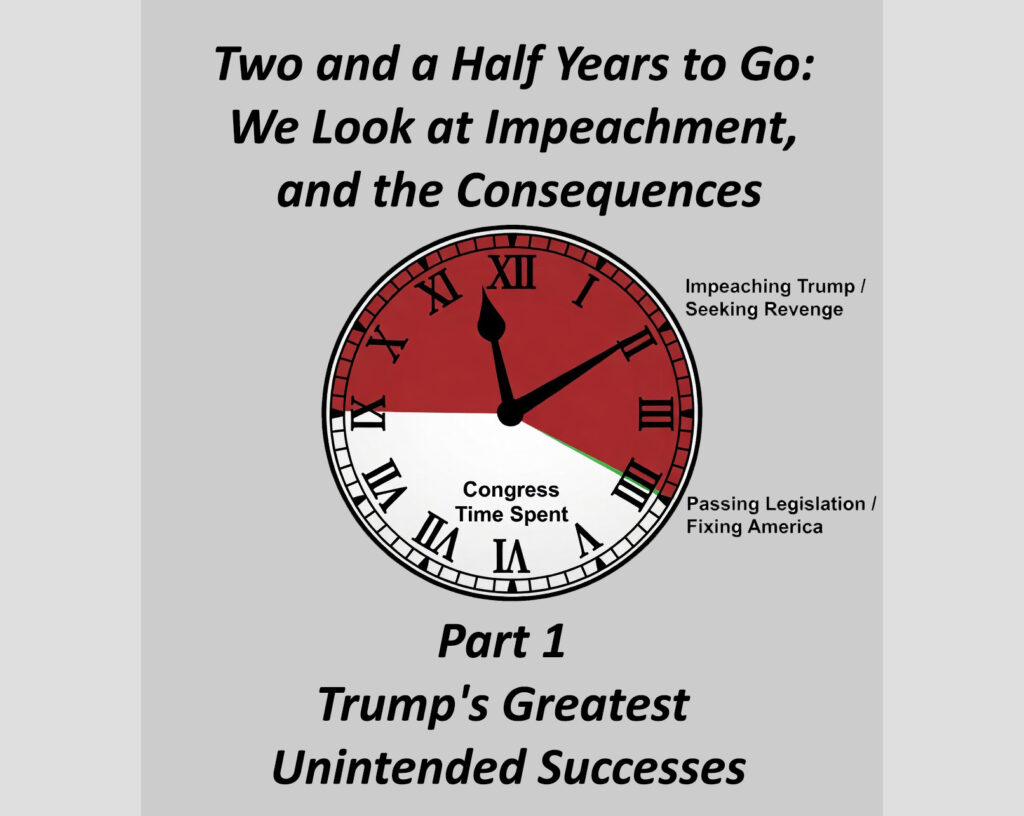
Part 1 — Trump’s Greatest Unintended Successes
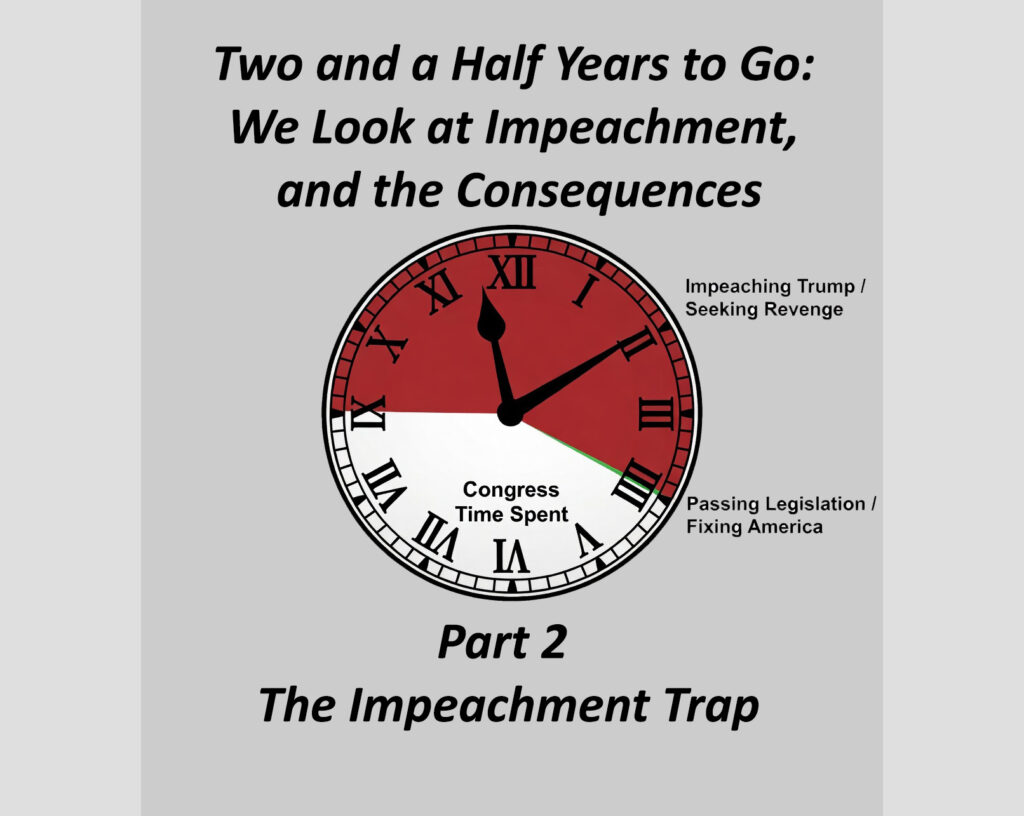
Part 2 — The Impeachment Trap
Part 3 — Governing vs. Revenge
Part 4 — Winning 2028

Share this:

Two and a Half Years to Go: We Look at Impeachment, and the Consequences, Part 2 — The Impeachment Trap
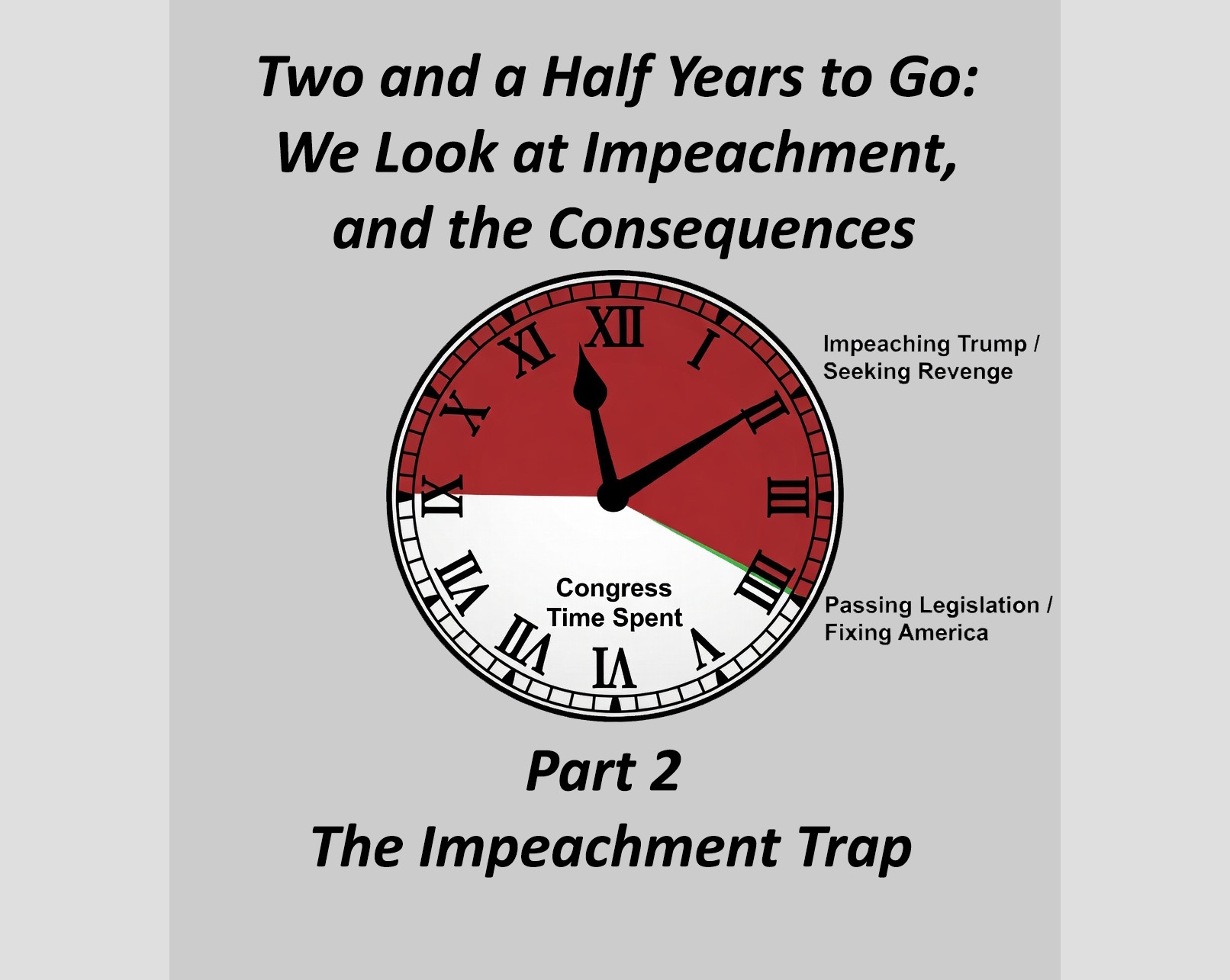
What if impeachment hands the presidency to someone even more effective?
If Donald Trump were impeached and removed from office, there would be no special election and no national debate over his replacement. Under the Constitution, Vice President JD Vance would become President.

For many Trump critics, that may sound like a victory. But before celebrating, it’s worth asking a simple question:
Would that actually improve the political landscape, or make it more difficult?
My personal opinion is no secret. I don’t trust JD Vance, and I wouldn’t vote for him. But this article isn’t about whether I like him or dislike him. It’s about the political consequences of making him President.
History shows that incumbency is a significant advantage in American politics. A sitting president has the visibility of the office, the ability to shape the national conversation, and the support that comes from leading a major political party. Any discussion of impeachment has to include that reality.
That advantage may be even greater today.
On June 30, 2026, the U.S. Supreme Court ruled in National Republican Senatorial Committee v. Federal Election Commission, striking down long-standing limits on coordinated campaign spending between political parties and candidates. Supporters hailed the decision as a victory for political speech under the First Amendment. Critics argued that it further increased the influence of large donors and wealthy interests in federal elections.
Whatever one’s opinion of the ruling, its practical effect is clear: political parties now have greater freedom to coordinate and spend money on behalf of their candidates.
If JD Vance became President through impeachment, he would enter the 2028 campaign not only as the incumbent but also with the full advantages of that office and a Republican Party operating under a more permissive campaign finance system.
That doesn’t guarantee victory. Elections are never guaranteed. But it would give him advantages he otherwise would not have enjoyed.
This is why I question whether impeachment is the best strategy.
If the objective is simply to remove Donald Trump from office, impeachment succeeds. But if the objective is to change the direction of the country, the answer is less obvious. Replacing Trump with a younger, quieter, and potentially more disciplined Republican president may ultimately strengthen the very political movement opponents hope to defeat.
Congress has another option.
If voters change control of the House or Senate in the midterm elections, Congress can investigate, provide oversight, control spending, and act as the constitutional check the Framers intended, without creating a new incumbent for the next presidential election.
The strategic question, then, is not whether Donald Trump deserves impeachment. Others will debate that.
The question is whether impeachment today makes winning in 2028 easier—or harder.
Part 2 — The Impeachment Trap
—
**Two and a Half Years to Go: We Look at Impeachment, and the Consequences**
Part 1 — Trump’s Greatest Unintended Successes
Part 2 — The Impeachment Trap
Part 3 — Governing vs. Revenge
Part 4 — Winning 2028
Share this:

Two and a Half Years to Go: We Look at Impeachment, and the Consequences, Part 1 — Trump’s Greatest Unintended Successes
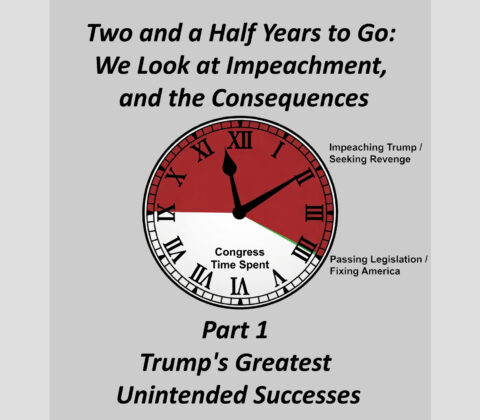
Two and a Half Years to Go: We Look at Impeachment, and the Consequences
Part 1 — Trump’s Greatest Unintended Successes
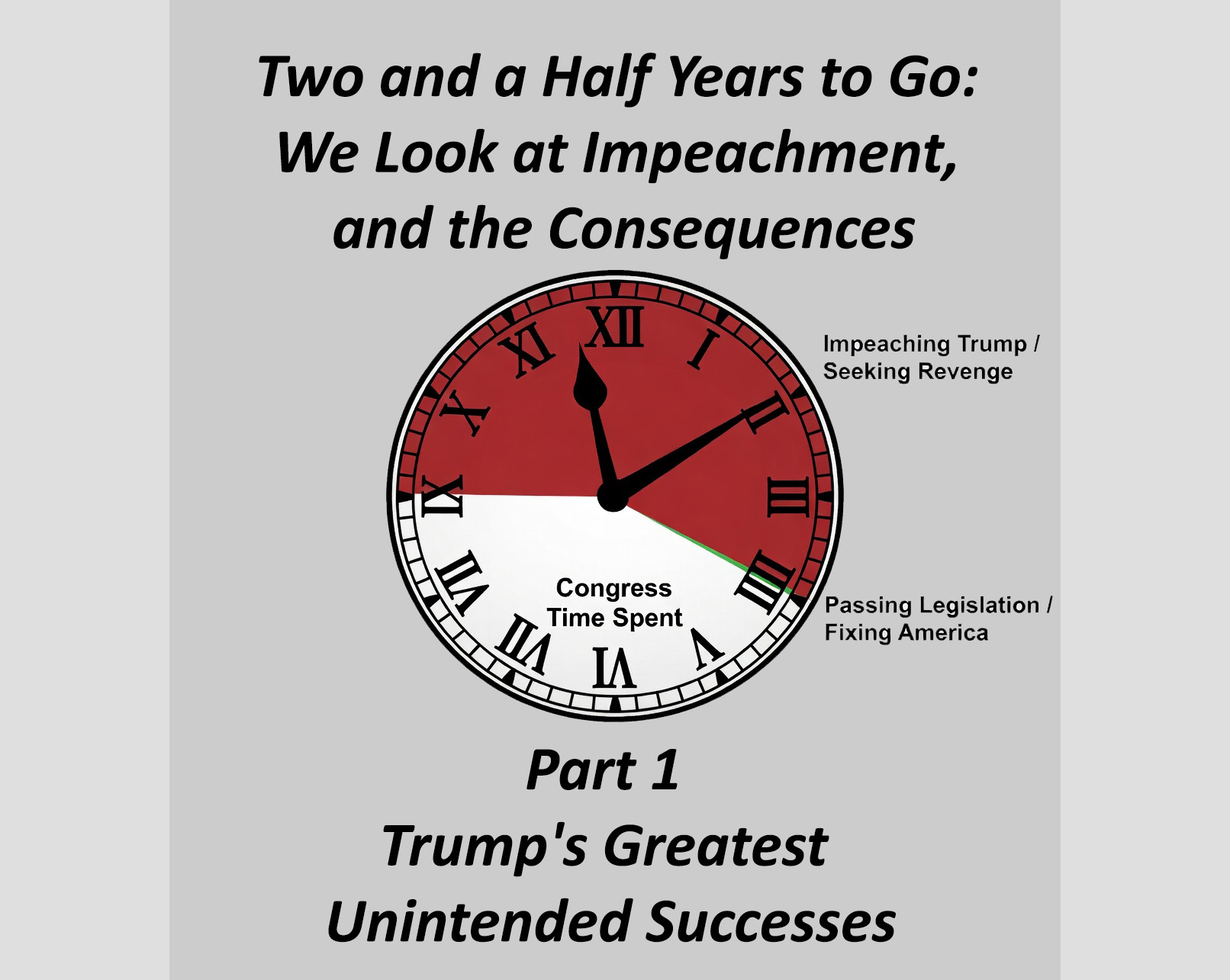
Believe it or not, some of Donald Trump’s biggest successes haven’t benefited America at all. They’ve benefited America’s allies.

Not because he wanted to — because he tried to bend them to his will, and it backfired. Exhibit A is our closest friend and neighbor, Canada. Canada and the U.S. always had a trade relationship that tilted toward America, but Canada got its share too, like a little brother getting big brother’s leftovers, but also big brother’s protection.
That ended with two things: Donald Trump’s poorly thought out, and illegal, tariff policy, and the rise of a Canadian banker named Mark Carney. Suddenly both countries had a non-politician in charge, one a con man, the other a banker. The banker saw through the con, and the north and south settled into a whiskey war. Funny thing is, you can still buy Canadian whiskey down here, they’re the ones who pulled the Kentucky and Tennessee stuff off their shelves. And where did all the good maple syrup go? My pancakes just aren’t the same with Aunt Jemima.
Long story short, Canadians stopped coming south as tourists, there went the tourist trade in Seattle and up the Eastern Seaboard. But hold on, you say, Americans are still going to Canada. Sure. And while we’re up there, Trump, ever wonder where the electricity keeping Melania’s Penthouse warm actually comes from? The Northeast leans hard on Quebec and Ontario for hydro and nuclear power.
But that’s just window dressing. Here’s what Canada has actually done because of Trump’s policies: they’re building pipelines east to west instead of south, so they can sell oil to other nations instead of us. They’ve brokered better deals to sell steel and aluminum overseas, so they’re no longer dependent on U.S. buyers. Beer lovers take note, bottles only now. Their national security alliances are shifting too: submarines from Germany, outfitted with electronics and systems no longer tied into U.S. military networks. Fighter jets from Sweden’s Saab instead of Boeing and Lockheed.
And Trump is countering the Boeing losses by making deals with China. China? That’s our supreme deal-maker, working with a deck of 47 cards.
So here’s the point: when the United States became an unreliable partner, other democracies adapted. Canada diversified its trade. Canada built out east-west energy. Canada started buying from Europe. Canada strengthened its own manufacturing.
How’s that tariff thing going, by the way? I keep getting Super PAC emails from Trump asking if I want my “cut” of the tariffs he’s collected, the same funds he’s been ordered to return. All it’ll cost me is another fifty-dollar contribution and a thank-you-sucker.
But back to the good things Trump has accomplished.
**China.** Trump’s big trade war tariffs on China were meant to punish, punish and get revenge, because apparently “negotiate” wasn’t in the playbook. He wanted to win the war, bring jobs back to the U.S., and massively redirect global supply chains. Problem is, when you don’t have the infrastructure to back that up, you lose and someone else wins. Vietnam was the big winner. We were the big weiner.
Companies didn’t fully reshore to the U.S. they moved to lower-tariff countries, and Vietnam’s exports to us boomed in electronics, apparel, furniture, and more. Vietnam overtook China outright in categories like laptops and game consoles, and Chinese firms started assembling there themselves just to dodge the tariffs. That accelerated Vietnam’s industrialization, its foreign investment, its whole economy. Malaysia, Thailand, India, and Mexico picked up similar gains. And don’t forget, Trump still has to pay back all those illegal tariffs he collected. From us. Not them. Us.
Trump’s bullying of China created a “China+1” strategy that supercharged the competition. Vietnam and the rest became more attractive manufacturing hubs, less dependent on any single partner, while we got higher consumer prices and disrupted supply chains instead of a manufacturing renaissance.
**NATO and the allies.** When America weaponized trade, everybody else built new networks. Trump spent years calling NATO allies freeloaders, threatening to withhold protection, demanding they pay up. So they did, Poland, the Baltics, and the rest of Europe ramped up defense budgets, bought new equipment, built up their own capability.
The backfire: less dependence on U.S. security guarantees, and a boost for European defense industries as countries looked to intra-European or non-U.S. suppliers. Trump accelerated Europe’s push toward “strategic autonomy”, joint European fighter and missile-defense programs that don’t have a single American bolt in them. The allies did exactly what he demanded, spent more on their own defense, and in doing so became less beholden to us long-term. Same story as Canada: squeeze an ally hard enough, and it doesn’t collapse, it just stops needing you.
**Climate.** Trump’s exit from the Paris Agreement and his general disdain for multilateral deals left a leadership vacuum. The EU stepped into it, advancing its own Green Deal and slapping carbon tariffs on imports from countries that won’t clean up their act, a tax that hits American exporters right along with everyone else. China, ever the self-interested opportunist, positioned itself as the champion of global climate cooperation, and now sells the world the solar panels and batteries America decided it didn’t need to build. Same pattern, third time: we walked away from the table, and somebody else picked up the check and the leverage that came with it.
So where does that leave us? Still a powerful country, but no longer the feared superpower we once were. Little Iran even took a title away from us at the Strait of Hormuz.
So what has Trump actually accomplished in his second term, grand old 47? He’s out to dominate the world, not king, but world emperor, and what he’s getting back is a redesigned world that feels increasingly comfortable telling him to bugger off. From a global point of view, good going, Donald. Maybe we should keep you in office a bit longer.
Canada didn’t fall apart when the ground shifted under it. It adapted. Neither did NATO. Neither did the EU. Worth remembering that, we’ll come back to it before this series is done.
—
**Two and a Half Years to Go: We Look at Impeachment, and the Consequences**
Part 1 — Trump’s Greatest Unintended Successes
Part 2 — The Impeachment Trap
Part 3 — Governing vs. Revenge
Part 4 — Winning 2028
Share this:

The other side is the enemy, and now that side has morphed into evil Commies. It’s McCarthyism again. – Video
There is one action in politics that remains a standard: fear and hate. Even though this morning didn’t start off with the intent to write anything on tactics, I made the mistake of reading the Substack feeds I subscribe to. Probably because I have, unlike almost all of you, lived through it once before, one paragraph from one commentary stood up and slapped me across the face. It’s McCarthyism.
=================================================
This is a part of history that should be both forgotten and never forgotten, as the lessons to be learned are invaluable.
The paragraph that sparked my tapping fingers came from someone else who lived through the same era, Robert Reich, in his piece “Why Is He Using the Communist Trump Card?”
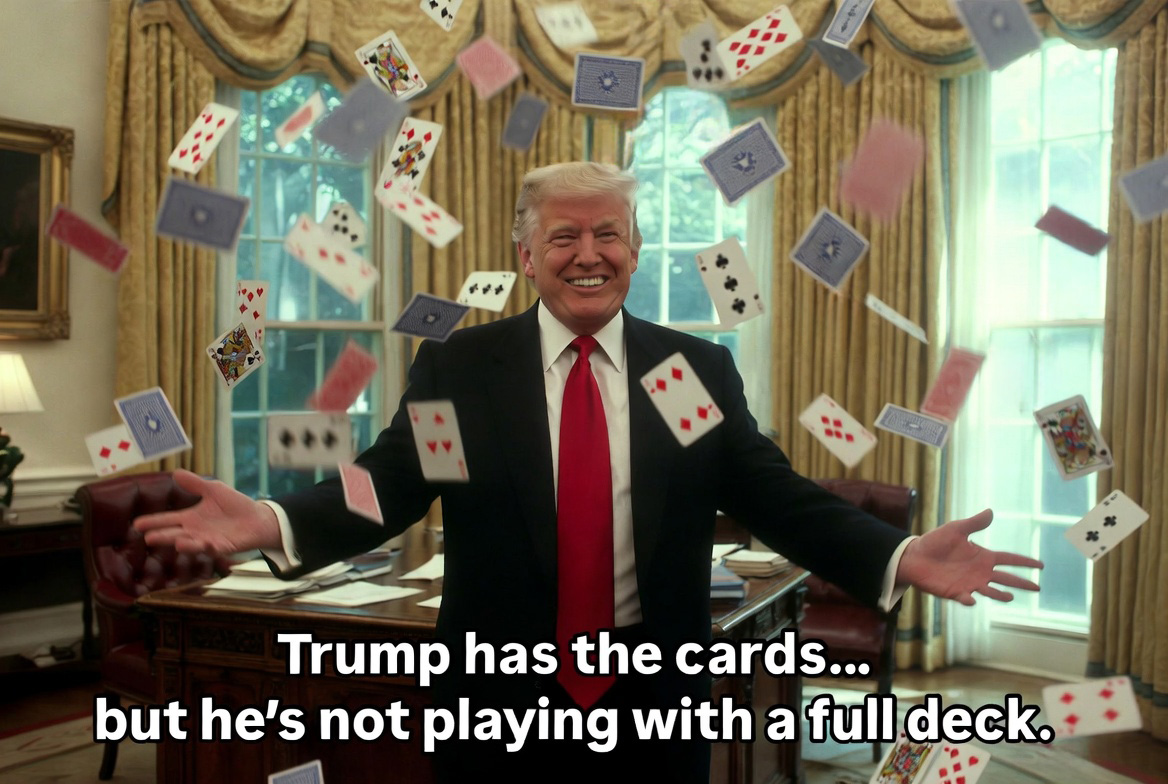
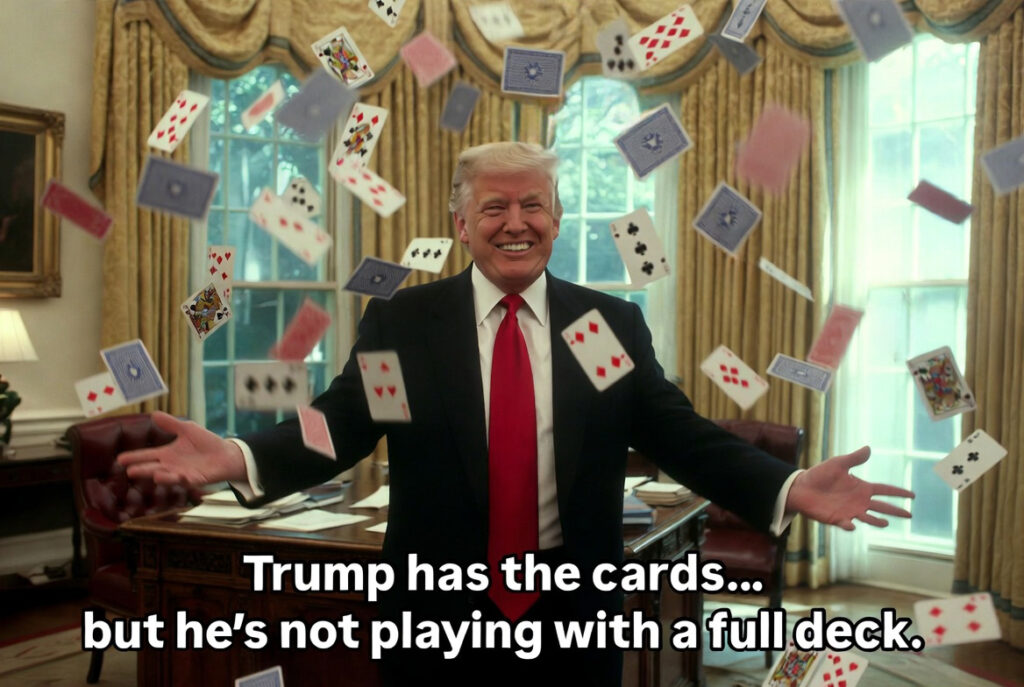
Has Trump run out of cards? We know he isn’t playing with a full deck.
=============================================================
I could go on, but if you’ve been paying attention at all, there’s no need. Just don’t get distracted into a resurgence of McCarthyism. No matter how you spell it, it always boils down to diversion, distraction, fear, and hate — Trump’s aces, all up his sleeve.
Share this:

Why is Trump DESPERATE to pass the SAVE America Act?
The SAVE America Act , The Wolf in Sheeps Clothing, Hey Lamb Chop.
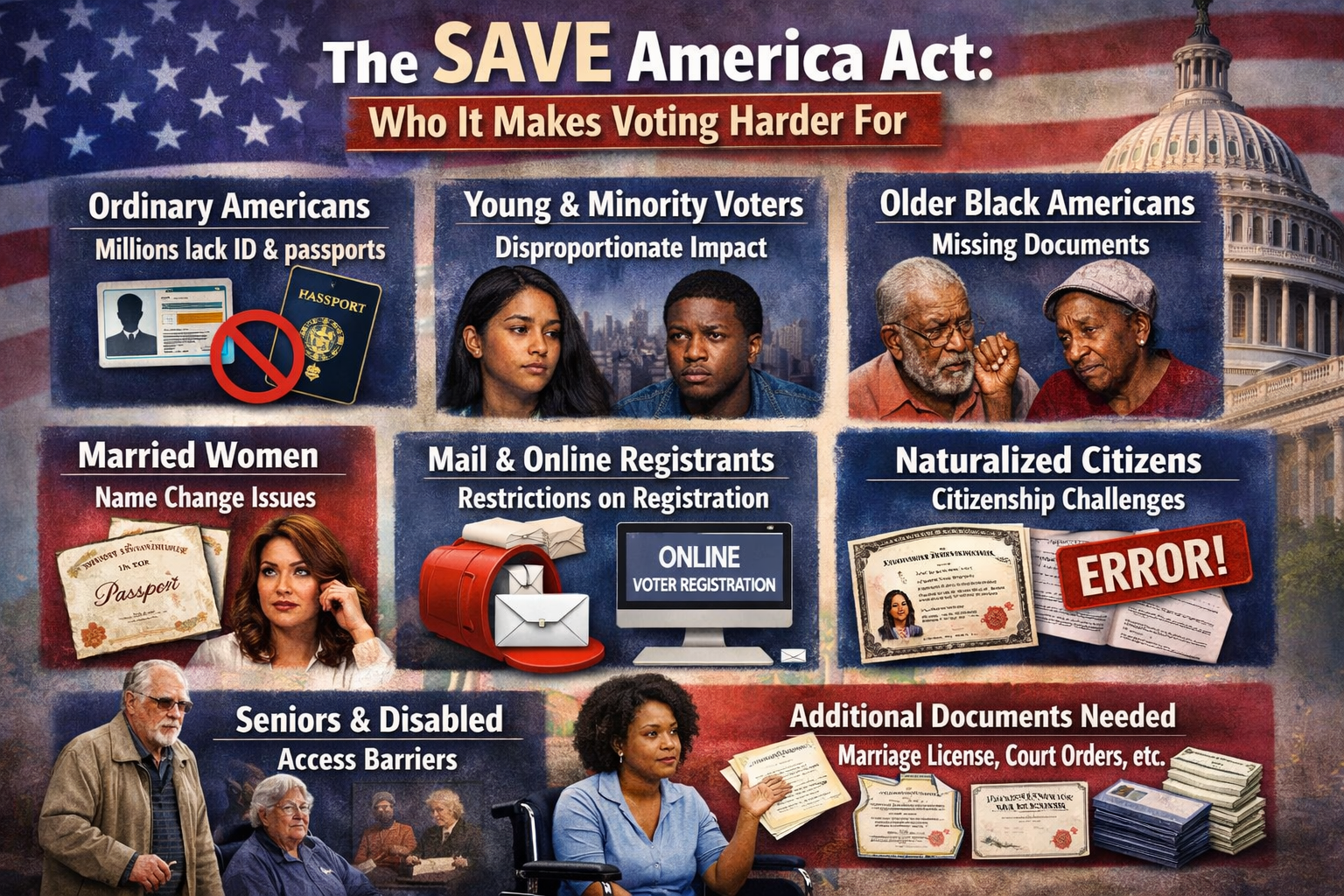
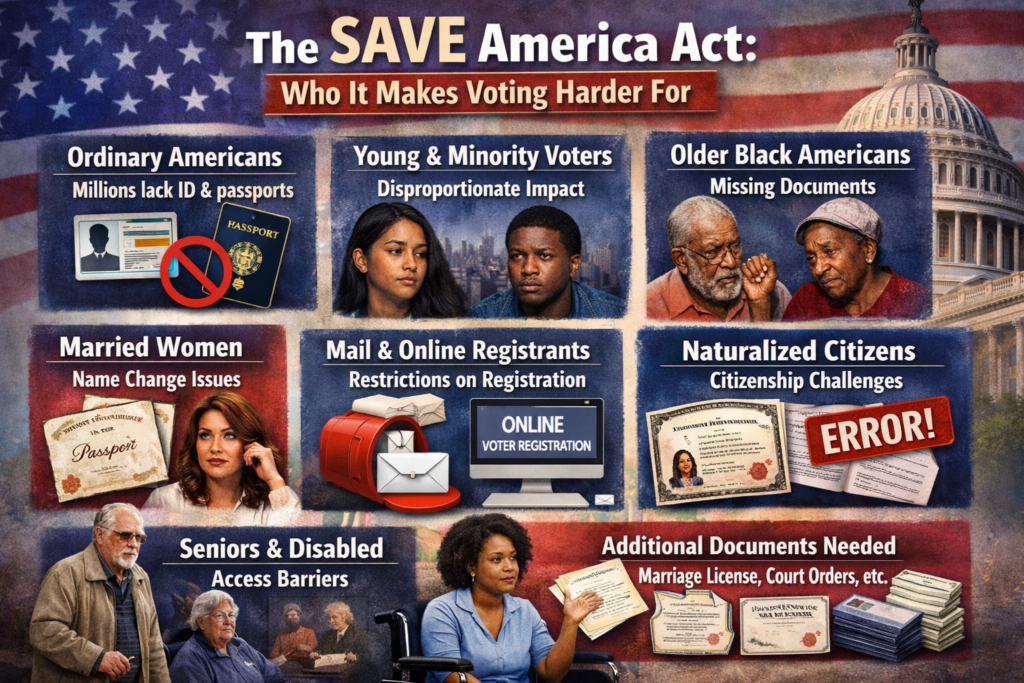
Who it makes voting harder for:
Ordinary Americans broadly — More than 21 million Americans lack ready access to those documents. Roughly half of Americans don’t even have a passport.
 The SAVE America Act , The Wolf in Sheeps
Voters of color and younger voters — The SAVE Act would disenfranchise Americans of all ages and races, but younger voters and voters of color would suffer disproportionately.
Older Black Americans specifically — Decades after segregation left gaps in citizenship documents, the bill could create new barriers at the ballot box for people who were never properly documented during that era.
Married women (and anyone who changed their name) — The bill would disproportionately affect women whose current legal names differ from the names on their birth certificates or passports. It does not include exceptions for eligible voters whose names differ from those on their identification documents, and would force them to submit additional documents — such as marriage certificates, divorce decrees, or court orders to prove their identities.
People who register by mail or online — In 2022, more than seven million Americans registered to vote by mail, and almost 11 million registered online. The bill would severely threaten mail registration and require online registration systems to be overhauled.
Naturalized citizens — Naturalized citizens are particularly at risk for being inaccurately flagged for removal from voter rolls under the bill’s data-verification requirements.
People with disabilities and the elderly — People with disabilities and older voters who may not be able to register in person would also face new barriers.
Supporters’ argument
Proponents say the bill is necessary to ensure only citizens vote and that it simply enforces existing law. They argue an affidavit process exists for those without documents.
Critics’ counterargument
All available evidence, including from the Trump administration itself, indicates that only American citizens vote and the exceptions are vanishingly rare. Critics point to Kansas as a cautionary example when Kansas adopted a similar proof-of-citizenship law in 2011, it prevented over 31,000 eligible citizens from registering to vote before it was blocked by federal courts.
Do You want to be turned away?
Share this:

The other side is the enemy, and now that side has morphed into evil Commies. It’s McCarthyism again.
There is one action in politics that remains a standard: fear and hate. Even though this morning didn’t start off with the intent to write anything on tactics, I made the mistake of reading the Substack feeds I subscribe to. Probably because I have, unlike almost all of you, lived through it once before, one paragraph from one commentary stood up and slapped me across the face. It’s McCarthyism.
In the 1950s, post-World War II, Senator Joe McCarthy championed the Communist Scare. If you weren’t a Republican, you were a Communist. McCarthy ruined, again, RUINED, the lives of so many good people with hate talk at the time. We were raw from a war, Russia was a threat, and idiots like McCarthy used that threat as a sounding board to push his own agenda.
This is a part of history that should be both forgotten and never forgotten, as the lessons to be learned are invaluable.
The paragraph that sparked my tapping fingers came from someone else who lived through the same era, Robert Reich, in his piece “Why Is He Using the Communist Trump Card?”
Has Trump run out of cards? We know he isn’t playing with a full deck. I think, and this is my opinion, he is losing, and the writing is on the wall. And what has always been the Trump playbook: look down, don’t look up. Whatever is wrong is someone else’s fault, and only he can fix it. That’s looking a little weak these days, so, as usual, he’s throwing stuff out to see what sticks to the wall.
“The other side is the enemy, and now that side has morphed into evil Commies, since you no longer believe it’s the immigrants, or whatever I last told you was at fault. And whatever you do, don’t look at me. What, me? Not me.” That’s how I hear it.
I could go on, but if you’ve been paying attention at all, there’s no need. Just don’t get distracted into a resurgence of McCarthyism. No matter how you spell it, it always boils down to diversion, distraction, fear, and hate — Trump’s aces, all up his sleeve.
Share this:

MAGA 2.0 — A Rose By Any Other Name Still Stinks – Video
Marjorie Taylor Greene, Tucker Carlson, MAGA 2.0 why those sneaky little so and so’s. That didn’t take long, here I have been writing my little fingers to nubs and those two have been sneaking behind The barn for a little pow wow. Makes sense though.
Both of them have been saying it. Marjorie has come out and said Trump appears to be working more for Israel than for us — so if he’s going to call her a traitor, she can call him one right back. Tucker said he won’t vote for a party working for a foreign government, won’t vote for MAGA, won’t vote for a Democrat, won’t vote for a Republican.
Golly. Just whom will Tucker vote for?
Little remarks. From both of them. Am I just imagining this?
No. I am not.
Marjorie even insinuated that Tucker might run himself, which would neatly solve the problem of who he’d vote for. A podcaster. Running for president. Well, why not, we already proved that particular bar doesn’t exist anymore. And maybe Marjorie could become Secretary of Something if she plays her cards right. Party favors.
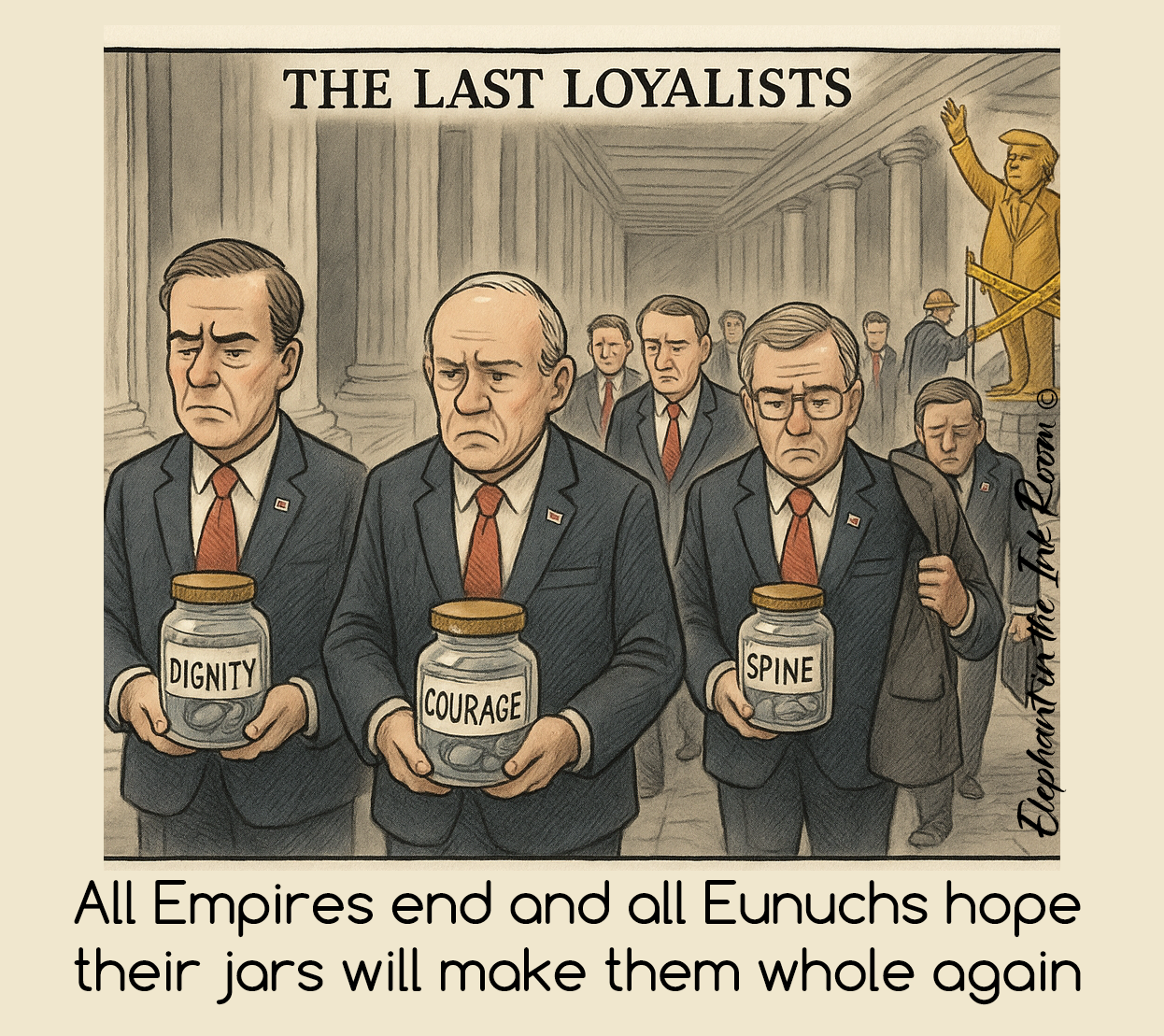
So MAGA is done for. The Republicans are done for. Reboot time. MAGA 2.0.
Which, surprisingly, sounds exactly like MAGA 1.0. And isn’t it interesting that MAGA 1.0 and the Republicans are now one and the same, no longer MAGA versus the RINOs, just MAGA, wall to wall, corner to corner.
==========================================================
And what ticket was The Vance planning on running on exactly? Or was he perhaps hoping to find himself as the incumbent after a convenient Article 25?
Twilight Zone music plays softly in the background.
========================================================
It was so much easier when it was just the evil left against the evil right. Now it’s the evil left against the evil right against the other evil right against the original evil right.
After the dust settles, will we ever know which one is right?
Share this:

MAGA 2.0 — A Rose By Any Other Name Still Stinks
Better Than FOX, I am, I am.
Marjorie Taylor Greene, Tucker Carlson, MAGA 2.0 why those sneaky little so and so’s. That didn’t take long, here I have been writing my little fingers to nubs and those two have been sneaking behind The barn for a little pow wow. Makes sense though.
Both of them have been saying it. Marjorie has come out and said Trump appears to be working more for Israel than for us — so if he’s going to call her a traitor, she can call him one right back. Tucker said he won’t vote for a party working for a foreign government, won’t vote for MAGA, won’t vote for a Democrat, won’t vote for a Republican.
Golly. Just whom will Tucker vote for?
Little remarks. From both of them. Am I just imagining this?
No. I am not.
Marjorie even insinuated that Tucker might run himself, which would neatly solve the problem of who he’d vote for. A podcaster. Running for president. Well, why not, we already proved that particular bar doesn’t exist anymore. And maybe Marjorie could become Secretary of Something if she plays her cards right. Party favors.
So MAGA is done for. The Republicans are done for. Reboot time. MAGA 2.0.
Which, surprisingly, sounds exactly like MAGA 1.0. And isn’t it interesting that MAGA 1.0 and the Republicans are now one and the same, no longer MAGA versus the RINOs, just MAGA, wall to wall, corner to corner.
Oh my brain hurts. How do you tell the difference between the Far Right and the Far Right? The new Far Right is 2.0 — or is it really just 1.5? And where exactly is the money going to come from to finance it? The Federalist Society 2.0? Citizens United 2.0?
Which brings us to today. June 30th, 2026. The day The Vance won his Supreme Court case.
Let’s be precise about what just happened, because it matters enormously and it happened quietly while everyone was watching the circus. The Supreme Court, 6-3 along purely partisan lines, axed longstanding limits on how much money party committees can spend in direct coordination with candidates. The challenge was brought in 2022 by JD Vance, then a Senate candidate from Ohio. It was decided today in his favor.
Here’s the part worth reading twice: just days after Vance suggested that if Watergate happened today it would barely make the news, let alone end a presidency, the Supreme Court embraced his argument against a 1974 campaign finance rule that Congress passed specifically in response to Watergate. The rule designed to prevent exactly this kind of corruption, gone. Because of him. Today.
The Republican National Committee entered June with more than $125 million in available cash and no unpaid bills — ready to unleash coordinated spending on their favored candidates with no limits whatsoever.
And what ticket was The Vance planning on running on exactly? Or was he perhaps hoping to find himself as the incumbent after a convenient Article 25?
Twilight Zone music plays softly in the background.
Business as usual. Put on your wading boots — the manure just got considerably deeper and considerably smellier.
After the fertilizer settles though, remember this: a MAGA by any other MAGA name is still a MAGA. And MAGA 2.0 is not to be confused with MAGA 1.0, because the Toll-House cookies made by MAGA 1.0 used Nestlé morsels, while MAGA 2.0 is using Ghirardelli. Different aprons. Same kitchen. Same players. Same aroma drifting down the hallway.
It was so much easier when it was just the evil left against the evil right. Now it’s the evil left against the evil right against the other evil right against the original evil right.
After the dust settles, will we ever know which one is right?
Share this:

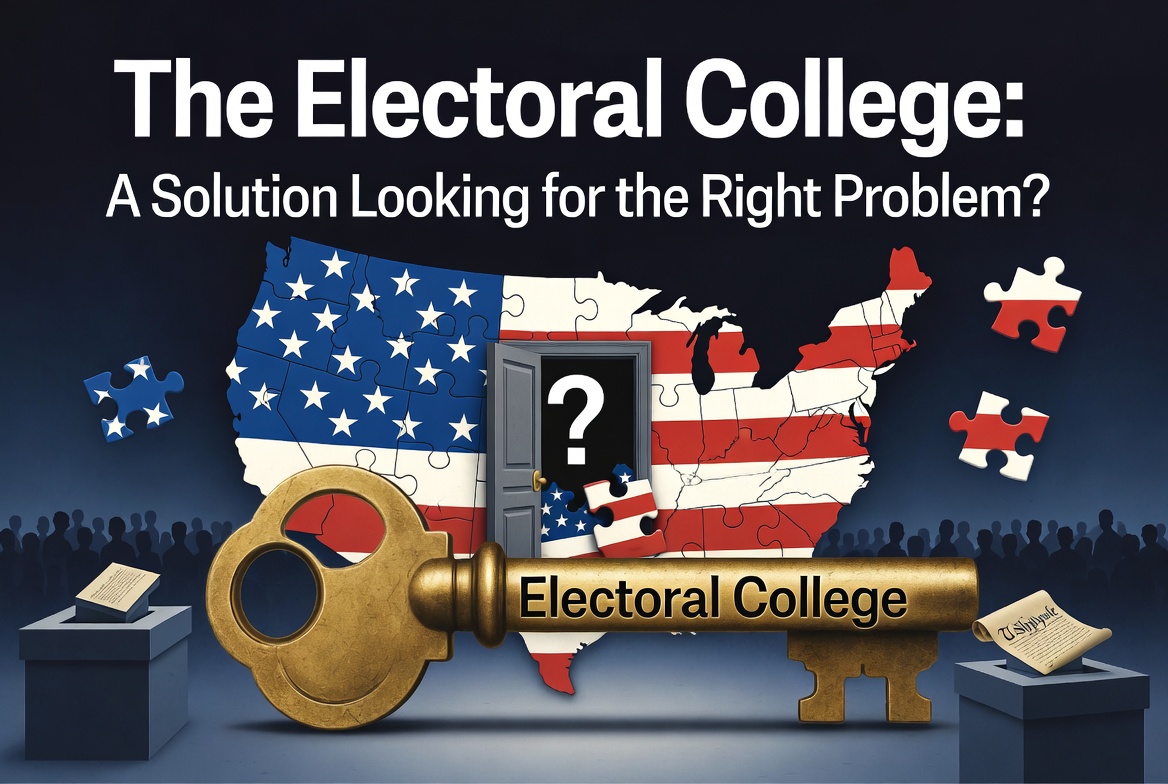
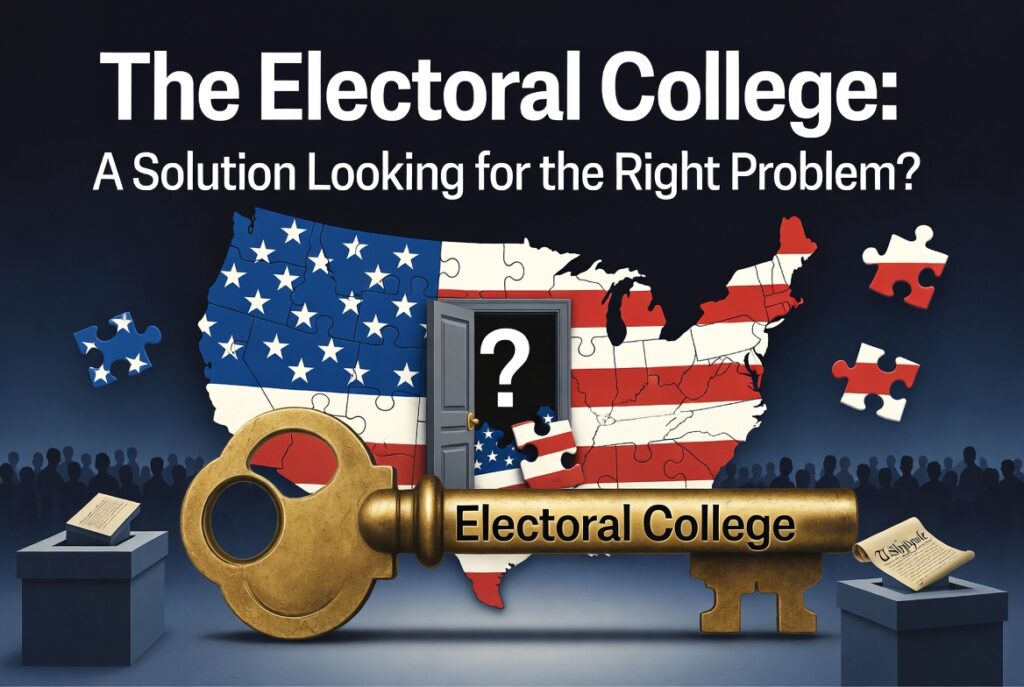
The Electoral College: A Solution Looking for the Right Problem?
Most debates about the Electoral College start with people choosing sides. One side wants to keep it. The other wants to abolish it.
I think the more interesting question is: What problem was it designed to solve, and does that problem still exist?
In 1787, information traveled at the speed of a horse. Most citizens knew little about candidates from distant states. The United States was less a single nation than a collection of states agreeing to work together. The Electoral College was part compromise, part practical necessity, and part protection against direct democracy in a world where voters had limited information.
For its time, the system made sense.
Today, none of those conditions exist.
A voter in Oregon can watch a speech made in Florida in real time. News travels instantly. Candidates campaign nationally. Americans think of themselves as citizens of one country first and residents of a state second.
The original reasons for creating the Electoral College have weakened or disappeared.
Yet replacing it raises legitimate concerns.
A pure popular vote could encourage candidates to focus heavily on large population centers. The current system encourages candidates to focus on a handful of swing states. Neither approach feels particularly representative.
Today, millions of Republicans in California and millions of Democrats in Texas know their presidential vote is unlikely to matter. At the same time, a relatively small number of voters in a few battleground states effectively decide the election.
That suggests the problem is not simply the Electoral College. The problem is that our current system leaves large numbers of Americans feeling their vote has little impact.
I don’t pretend to know the perfect answer.
Perhaps it is a modified Electoral College. Perhaps it is a national popular vote. Perhaps it is a system nobody has proposed yet.
What I do know is that institutions should be judged by whether they solve today’s problems, not yesterday’s.
The Electoral College was created to address concerns that were real in 1787.
If the Electoral College is broken, what replaces it?
A straight popular vote?
A proportional allocation of electoral votes instead of winner-take-all states?
A ranked-choice national election?
A system where states award electoral votes by congressional district?
A constitutional convention to redesign the whole thing?
I don’t know.
What I do know is that every system solves one problem by creating another.
A pure popular vote values every vote equally, but raises concerns about population concentration.
The Electoral College protects state influence, but leaves many voters feeling irrelevant.
Winner-take-all states simplify elections, but turn most states into spectators.
There may not be a perfect answer. There may only be better compromises.
Before we argue about which system to adopt, we should at least agree on which problem we’re trying to solve.
If we can’t answer that question, we’re just rearranging the furniture.
And unlike the spare toilet paper at my house, nobody seems to know where the solution is stored.
The Electoral College asks how states should be represented.
Ranked-choice voting asks how voters should be represented.
Maybe before we decide which system is best, we should decide whose voice we are trying to hear more clearly.
Share this:

RVC Part 3 of 3: How to Get Involved in Ranked-Choice Voting in Your State or Community
Part 3 of 3: How to Get Involved in Ranked-Choice Voting in Your State or Community
How to Get Involved With Ranked-Choice Voting — Practical Steps
Whether you like ranked-choice voting, dislike it, or are undecided, here’s how you can actually participate in your area.Step-by-Step Action Guide
Learn What’s Happening in Your Area
-
Go to FairVote.org and RCVResources.org — they have excellent maps showing where RCV is used or being considered.
-
Check Ballotpedia.org — search “Ranked-choice voting [Your State]”.
Understand Your State’s Rules
-
Does your state allow citizen ballot initiatives?
-
What are the signature requirements?
-
Has your state banned RCV or passed a “local option” law?
Get Involved Locally (Often the Easiest Starting Point)
-
Attend your city council or county commission meetings and speak during public comment.
-
Talk to your local election clerk or county auditor.
-
Support or oppose local efforts (many cities adopt RCV through charter changes).
Connect With Existing Groups
-
FairVote has state and local partners.
-
Search online for “[Your City/County] Ranked Choice Voting” or “[Your State] RCV Coalition”.
Contact Your Representatives
-
Email or call your state legislators and tell them your thoughts — especially if you’re in a rural area. Rural voices are important in these conversations.
For Oregon Readers Specifically
-
Watch how Portland’s and Multnomah County’s RCV elections go in 2026.
-
Follow the Secretary of State’s study on RCV (due September 2026).
-
A future statewide measure is most likely in 2028 or later.
Final Advice
Start small. Even attending one meeting or sharing factual information with neighbors makes a difference. Whether you want to help bring RCV to your area, stop it, or just make sure it’s done fairly, getting informed and showing up is the most important step.
Share this:

RVC Part 2 of 3: Where Ranked-Choice Voting Stands Today in the United States
Part 2 of 3: Where Ranked-Choice Voting Stands Today in the United States
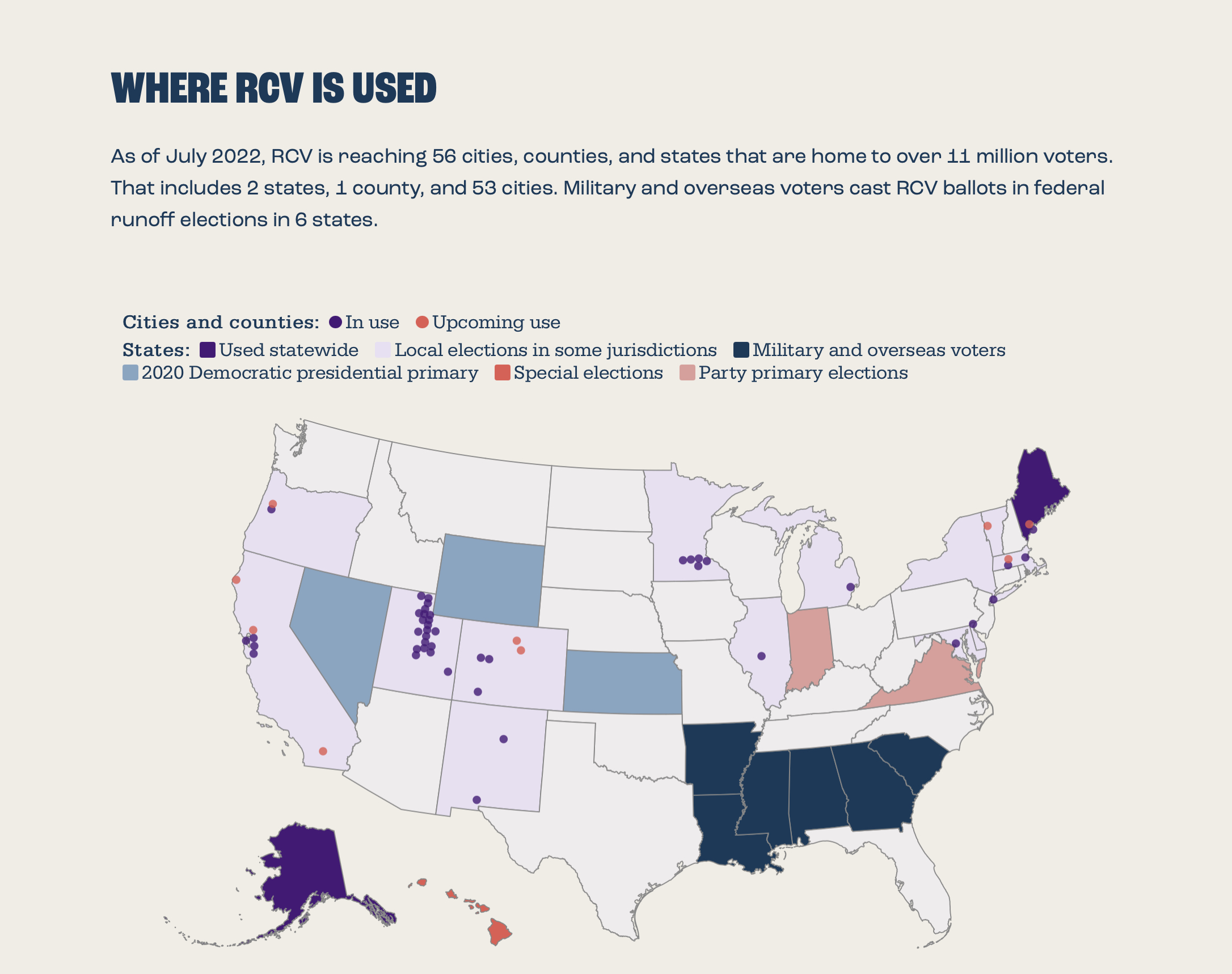
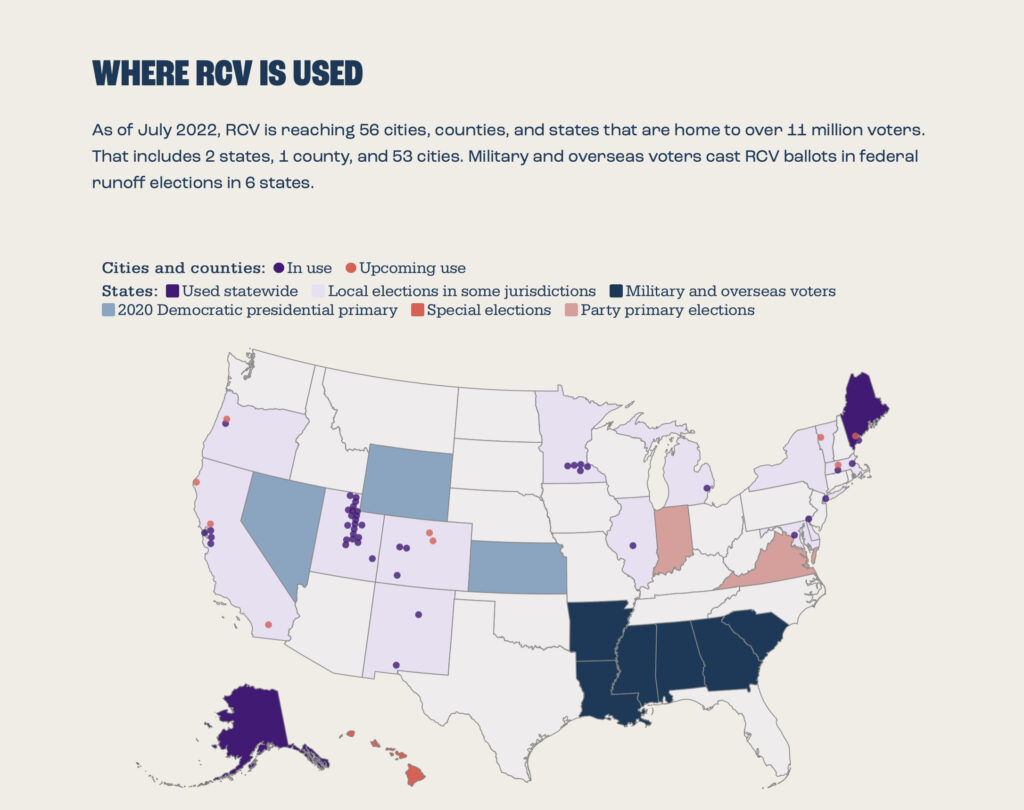
Where Ranked-Choice Voting Is Being Used Right Now
Note from the author: I am an Oregonian, so I use Oregon’s 2024 experience with Measure 117 as a detailed real-world example. However, this series is written as a national guide. The information, patterns, and action steps apply to voters in every state.
Current National Picture (April 2026)
-
Only two states currently use ranked-choice voting for statewide and federal elections: Maine and Alaska.
-
About 49 cities and counties across 22 states plus D.C. use RCV for local elections, covering roughly 14–17 million voters.
-
19 states have banned or heavily restricted it.
-
In 2024, voters in several states (including Oregon) rejected statewide RCV ballot measures.
What Happened in OregonIn November 2024, Oregon voters decided on Measure 117, which would have brought ranked-choice voting to presidential, congressional, and statewide executive races starting in 2028.Final Result:
-
Yes: 42.3%
-
No: 57.7%
The measure lost by about 15 points.Local use continues to grow:
-
Portland used RCV for the first time in 2024 for mayor and city council.
-
Multnomah County will start using it in 2026.
-
Corvallis and a few other areas already use it locally.
The Urban-Rural Divide in Oregon (and Nationally)
Support for Measure 117 was much stronger in Portland, Eugene, Corvallis, and other college towns, while it was significantly weaker in rural counties, especially in Southern and Eastern Oregon.
This is not mainly about education levels. It reflects deeper political and cultural differences.
Rural Oregon voters often feel the state is governed too much by the three largest urban areas (Portland, Eugene, and Salem), while farms, small towns, and Eastern Oregon have too little voice. Many rural and conservative voters — especially Trump supporters — have developed real mistrust toward changes in how elections are run.
Honest Perspective for Rural Readers
Ranked-choice voting would not automatically “steal” or cancel conservative votes. In Alaska, some Republican and independent candidates have gained from second-choice votes. However, legitimate concerns remain: it can be more complicated, more expensive for small counties to run, and slower to report results. Rural election offices are often understaffed and worry about the added burden.
Many believe the best path is to let local experiments (Portland and Multnomah County) run for a few years so voters across the whole state can see real-world results before another statewide vote.
Screenshot
Share this:

RVC Part 1 of 3: Ranked-Choice Voting Explained – What It Is, How It Works, and Why People Care
Part 1 of 3: Ranked-Choice Voting ExplainedWhat It Is, How It Works, and Why People Care
A Clear Explanation for Everyday Voters. In recent years, more Americans have heard about Ranked-Choice Voting (RCV), also known as instant-runoff voting. Supporters say it reduces negative campaigning and gives voters more voice. Critics say it’s complicated and unnecessary.
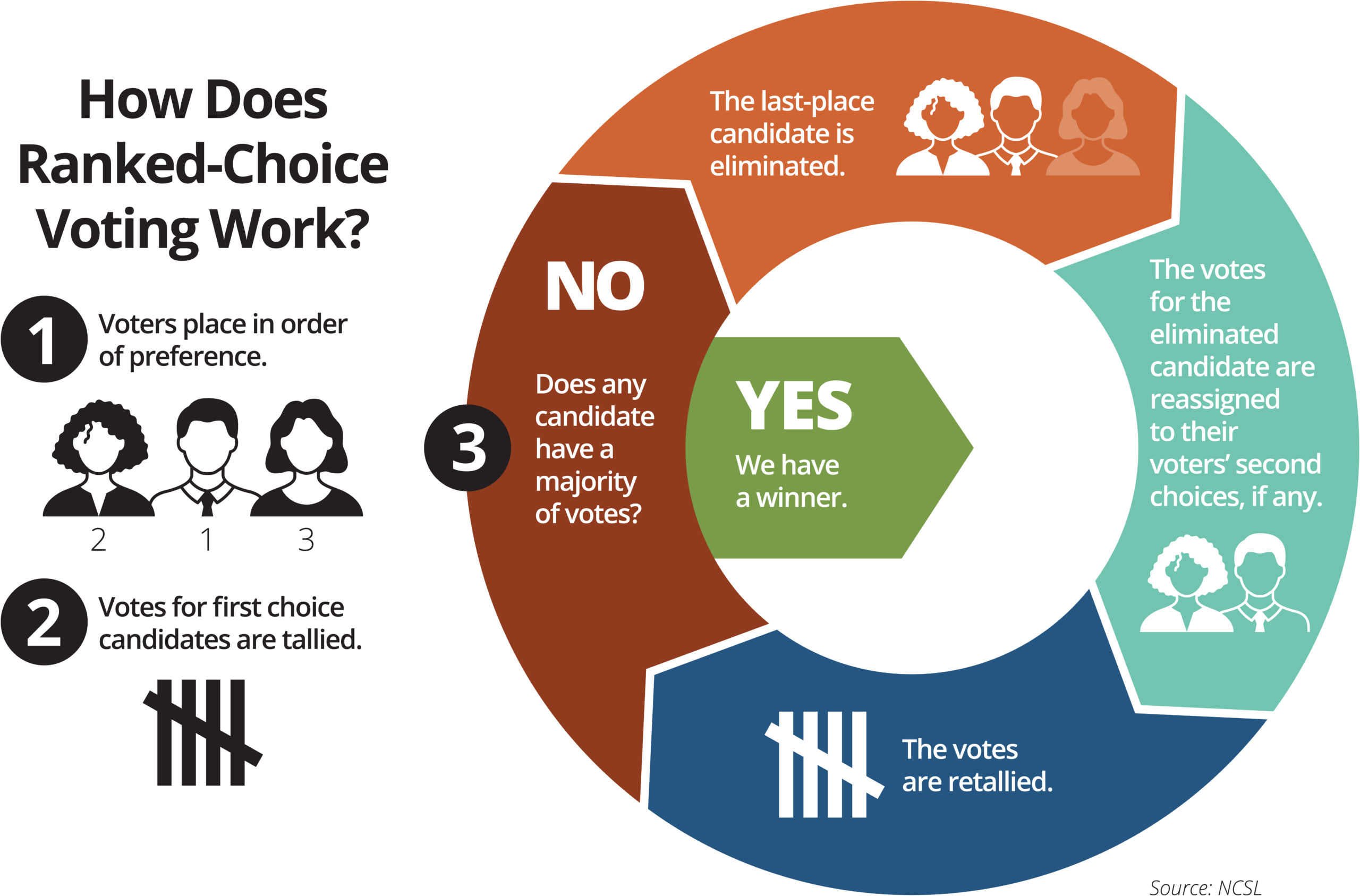
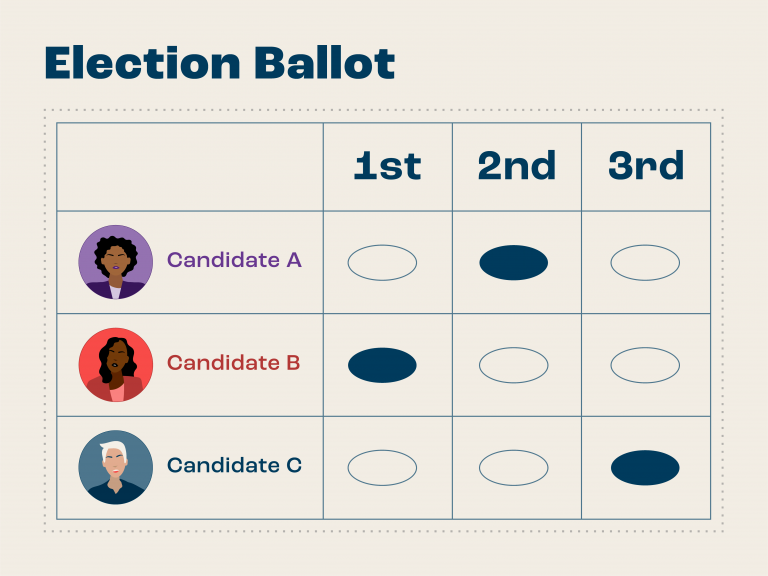
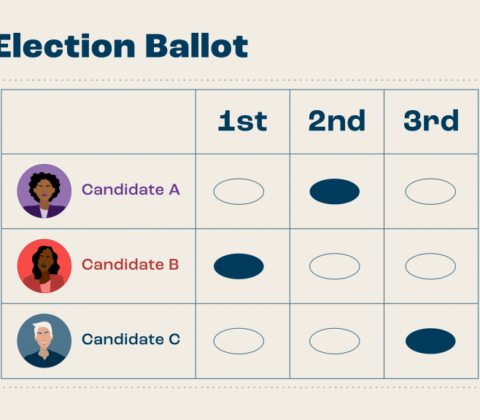
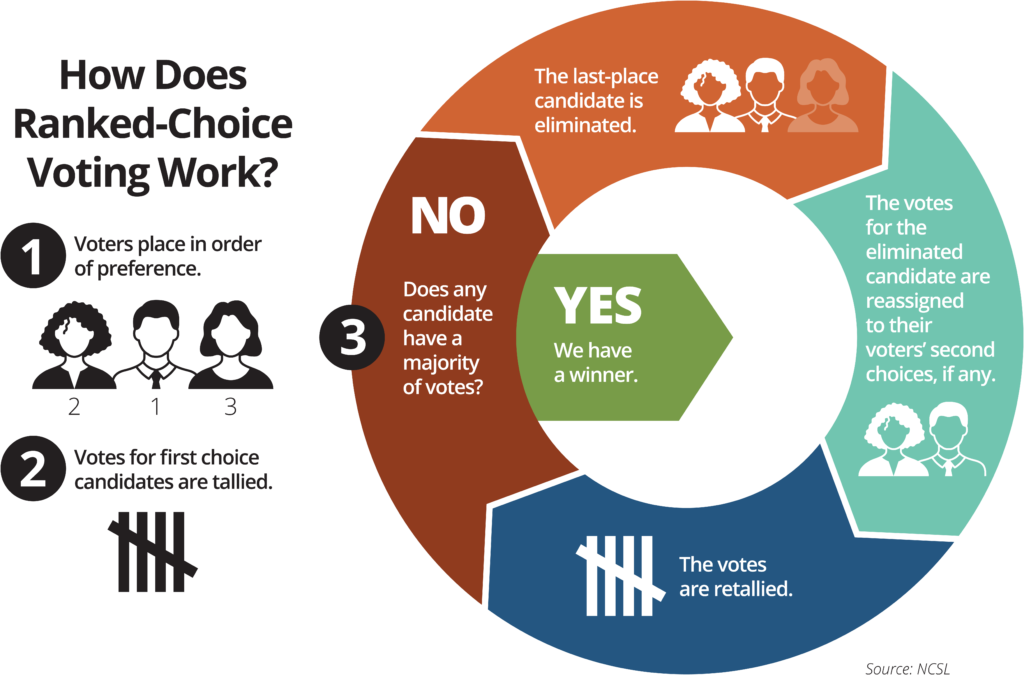
Here’s a straightforward breakdown. How Ranked-Choice Voting Works. Instead of marking just one candidate, you rank the candidates in order of preference: 1st choice, 2nd choice, 3rd choice, etc.
-
If any candidate gets more than 50% of the first-choice votes, they win immediately.
-
If no one reaches 50%, the candidate with the fewest votes is eliminated.
-
Those votes are redistributed to the voters’ second choices.
-
This process repeats until one candidate reaches a majority.
Simple Example:
Three candidates — Alice, Bob, and Charlie.
-
Alice gets 40% first choices
-
Bob gets 35%
-
Charlie gets 25%
Charlie is eliminated. If most of Charlie’s voters ranked Bob second, those votes move to Bob, who then wins with a true majority.
Claimed Advantages
-
Reduces the “spoiler” effect (third-party or independent candidates are less likely to swing the election)
-
Encourages more positive campaigning (candidates want to be your second choice too)
-
Produces winners with broader support
-
Allows voters to support their favorite without “wasting” their vote
Common Concerns
-
More complex for voters and election workers
-
Can take longer to report final results
-
Higher costs for equipment, training, and voter education
-
May favor certain types of candidates (often moderates)
Real-World Experience
RCV has been used in Maine (since 2018), Alaska (since 2022), New York City, Minneapolis, San Francisco, Portland (OR), and dozens of other cities. Most places report it runs fairly smoothly once voters get used to it, but several states rejected it at the ballot box in 2024.
Question for readers: Have you ever used ranked-choice voting? Did you find it helpful or confusing?
Share this:

The Longest Con: Why Trump Needs to Lose
‘Only I can fix it, and they won’t let me. I need your help’ Sound familiar?
We have watched this administration mount one failed initiative after another. Not occasionally. Not accidentally. Relentlessly, and with a consistency that, if you look at it with a sober eye, stops making sense as incompetence and starts looking like something else entirely.
Take the removal of the gay pride flag from federal buildings. Did he really not know that would be challenged in court? Did he genuinely not see that coming? The judges who struck it down weren’t making novel law. They were doing exactly what any first-year law student could have predicted. So either the most powerful man in the world has no one around him capable of that analysis, or the loss was never the problem.
You could fill an hour listing the initiatives, the executive orders, the sweeping declarations, each one rolled out with fanfare, each one shot down with a predictability that borders on performance art.
So what’s going on?
Senility? We won’t go there.
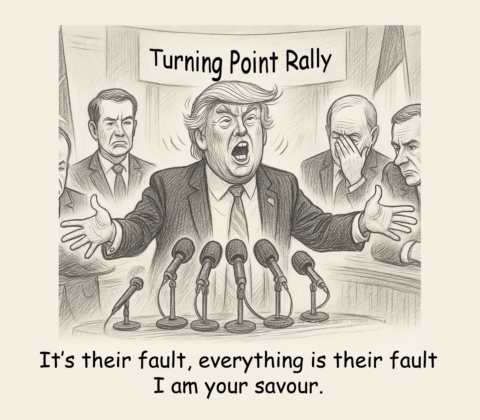
Maybe, just maybe, he already knew the answer. Because at the Turning Point USA “Build the Red Wall” rally in Phoenix on April 17th, he said the quiet part out loud: “We have to win the midterms if all of these things will stay with us forever.”
Read that again. Everything he’s done, every promise, every order, every purge, is temporary. He said so himself. It all evaporates without the midterms.
And here’s the thing about midterms: presidents almost always lose them. Not sometimes. Not usually. Always. Since 1946, the president’s party has lost House seats in 18 out of 20 midterm elections, 90% of the time. And when a president’s approval rating is below 50%? Every single one of them lost seats. Every one. The average loss when a president is underwater: 37 House seats.
Trump knows this. He’s known it from the beginning.
So here’s the thesis, the one that keeps nagging on a quiet Saturday morning:
What if the failures aren’t failures?
What if every court loss, every struck-down order, every piece of legislation that died in a hallway, what if they were never meant to succeed? What if they were meant to build a wall of grievance so high that by November 2026, his base is not just motivated, they’re furious? Furious at the judges. Furious at the Democrats. Furious at the system that kept their man from delivering what he promised.
He is the victim. He has done everything he could. The corrupt courts stopped him. The evil opposition blocked him. The rigged system failed the people again.
And the only solution, the only way to finally, truly deliver, is to give him absolute power to finish the job.
Forever.
Back in 2024, at another Turning Point rally, he told the crowd something that should have ended the conversation right there: “You won’t have to vote anymore, my beautiful Christians. You won’t have to vote anymore.”
He wasn’t joking. He was telling them the plan.
The midterm “curse” isn’t a threat to Donald Trump. It’s the foundation of his next move. Lose the midterms, or better yet, make sure the results can be contested, and you have your stolen election, your corrupt system, your mandate to burn it all down and start over.
Oh, and he’ll need another 1.5 trillion dollars to do it.

Share this:

He’s At It Again. He Never Really Stopped.
There is one political maneuver that has outlasted every empire, every demagogue, and every failed democracy in recorded history. It requires no particular intelligence to execute. It requires only a crowd of people who have been genuinely hurt by a system they don’t fully understand, and a voice willing to point in the wrong direction with enough confidence that nobody looks where the finger is actually coming from.
Donald Trump used it to get elected. He is using it again right now, aimed at a new audience, ahead of the midterms.
Here is how it works. You find people who have real grievances, and in America in 2026 there is no shortage of them. Wages that haven’t kept pace with the cost of living. Unions that were dismantled. Housing that became unaffordable. Debt that was engineered to be inescapable. These are real injuries, caused by identifiable decisions made by identifiable people with identifiable financial interests. The billionaires who took the wages. The corporations that crushed the unions. The politicians who deregulated the housing market. The financial system that built the debt trap.
You don’t point there. That’s the move. You point down instead. You tell the people who were robbed that the theft was committed by the people below them on the economic ladder. The immigrants, the minorities, the ones who have even less power than they do. You make them feel powerful by giving them someone they can still step on. And it works, because anger needs a target, and the real targets are harder to reach and better protected.
Trump did this in 2016 and 2024 with devastating effectiveness. Your jobs didn’t go to billionaires who lobbied for trade deals. They went to those people crossing the border. Your neighborhood didn’t get hollowed out by financial policy. It got hollowed out by those people getting handouts. Your children’s futures aren’t being sold by the donor class. They’re being taken by those people getting what should be yours.
It was a lie then. It is the same lie now, repackaged for a younger audience at a megachurch in Phoenix, dressed up in pyrotechnics and Lee Greenwood, aimed at voters who are still forming their understanding of how power actually works.
What has changed is the urgency. He said it himself at the Turning Point rally this week, almost accidentally. He knows the historical pattern, that the president’s party typically loses ground in midterm elections. He said he can’t figure out why. He can. He just can’t say it out loud. So instead he is doing what he has always done when the ground shifts under him. He is pointing downward harder, faster, and at a younger audience that hasn’t yet learned to check where the finger is actually aimed.
He told those young voters at the Dream City Church in North Phoenix, the midterms are existential. He is right about that. He just has the direction exactly backward. The threat is not the Democrats. The threat is the consolidation of power by a man who has spent his entire political career making sure you are angry at the person next to you instead of the one above you.
The oldest trick in the authoritarian playbook is not complicated. It just requires that nobody stops to look up.
Look up.

Share this:

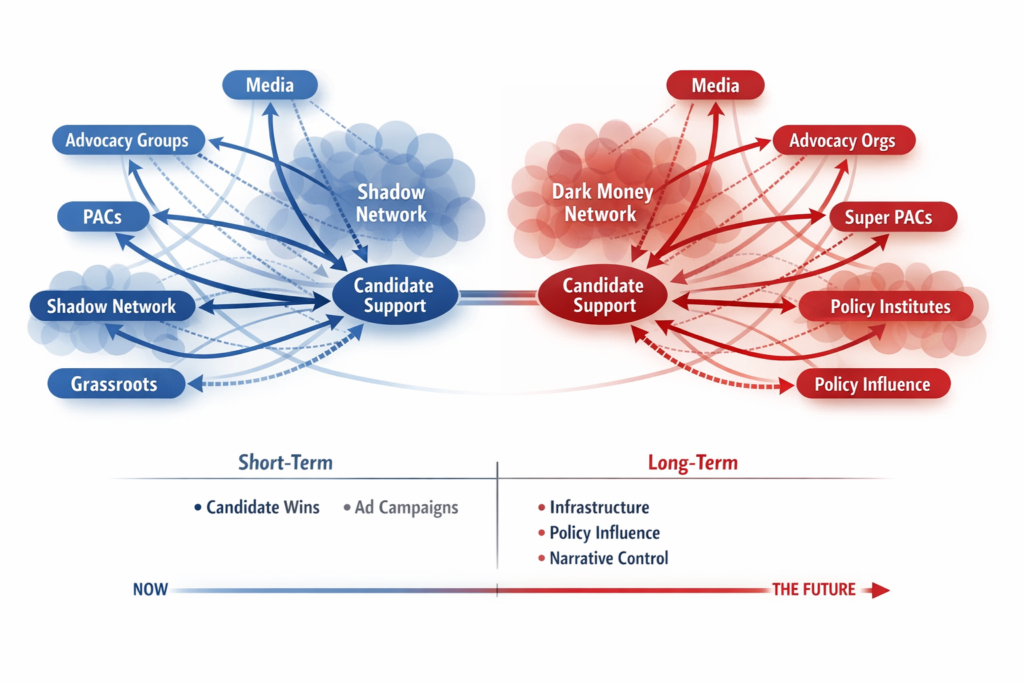
Article 3 of 3 The Long Game — Power Beyond the Ballot
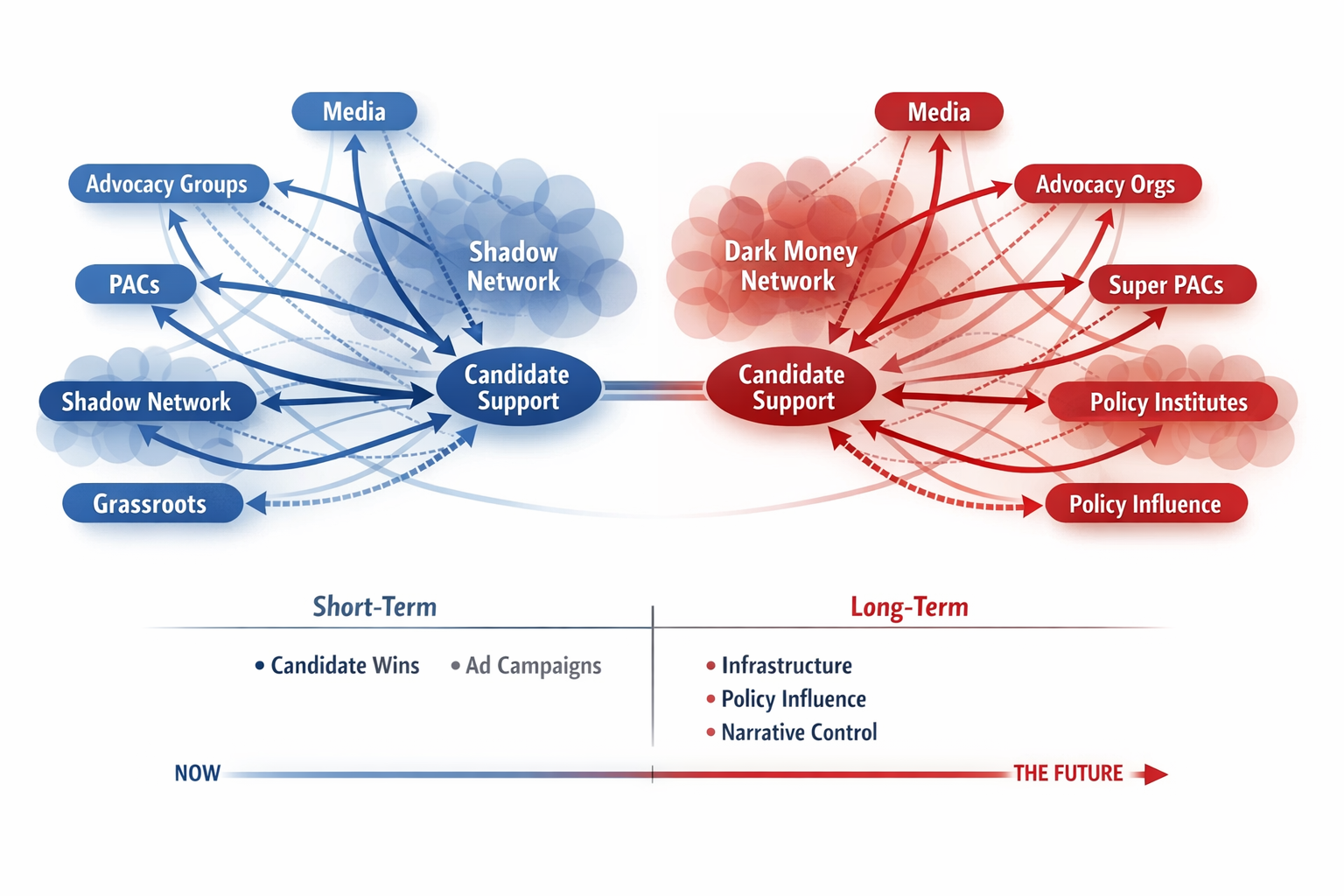
By now, it is clear that the 2026 midterms are unlike any we have seen in recent memory. The scale of spending, the intensity of coordination, and the precision of messaging all suggest a high-stakes contest—but the full story goes deeper than individual candidates or party control.
Share this:


I said Trump would screw with the midterms.
I said Trump would screw with the midterms.
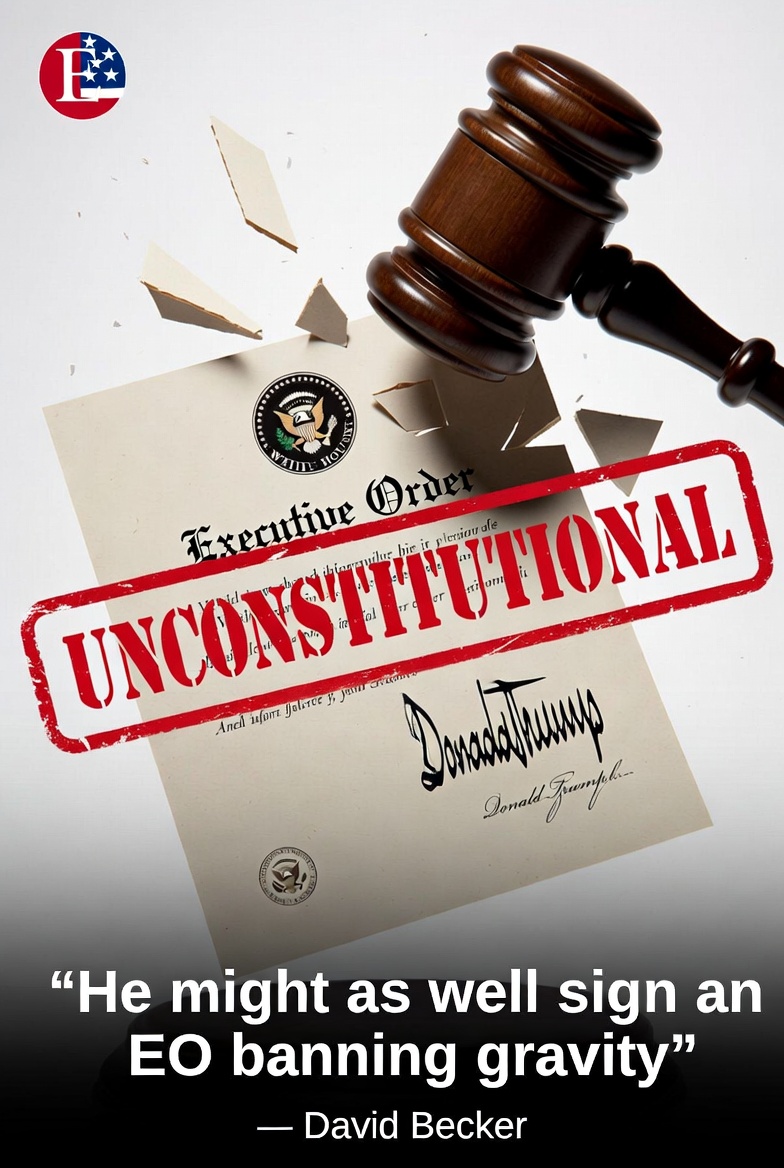
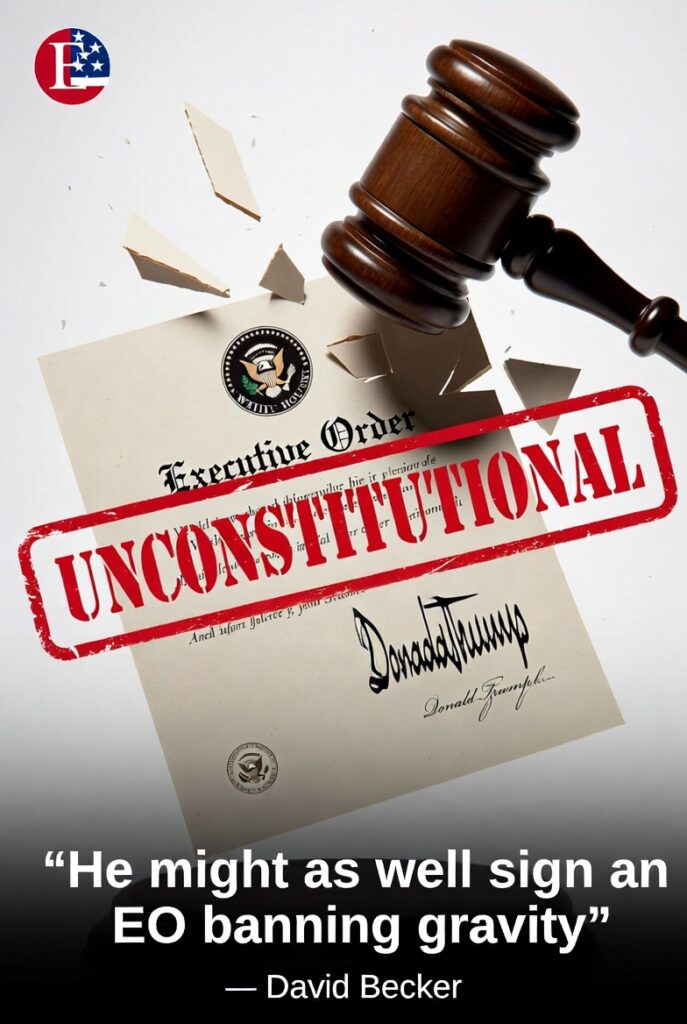
He signed the illegal EO attacking mail-in voting.
Nonpartisan election expert David Becker (executive director of the Center for Election Innovation & Research and former DOJ Voting Section lawyer) posted: “Some may freak out about this, but honestly, this is hilarious. It’s clearly unconstitutional, will be blocked immediately… He might as well sign an EO banning gravity.”
Power grab is DOA. Courts will kill it fast. https://www.reuters.com/world/us/trump-signs-order-mail-ballots-escalating-election-overhaul-push-2026-03-31/
Share this:

I told you and Congress what he was going to do, guess what?
“He will try to rig the mid-term, pay attention, because that won’t work.”
He Signed An Executive Order:
Trump directed DHS and the Social Security Administration to build a national list of verified eligible voters. The Postal Service will only send mail-in ballots to people on that list. States that don’t comply lose federal funding.
Election law experts called it unconstitutional on its face. Legal challenges are already forming. Midterm primaries are already underway in many states.
The Constitution gives states the authority to run elections. Not the president. Not by executive order.
That is the most important thing you must remember, what he says is just noise, just noise. Always check with your state election officials. They are in charge.
He knows that. He signed it anyway.
Pay attention.
We eat tacos.
Share this:

Why is Trump DESPERATE to pass the SAVE America Act?
The SAVE America Act , The Wolf in Sheeps Clothing, Hey Lamb Chop.
Who it makes voting harder for:
Ordinary Americans broadly — More than 21 million Americans lack ready access to those documents. Roughly half of Americans don’t even have a passport.
Voters of color and younger voters — The SAVE Act would disenfranchise Americans of all ages and races, but younger voters and voters of color would suffer disproportionately.
Older Black Americans specifically — Decades after segregation left gaps in citizenship documents, the bill could create new barriers at the ballot box for people who were never properly documented during that era.
Married women (and anyone who changed their name) — The bill would disproportionately affect women whose current legal names differ from the names on their birth certificates or passports. It does not include exceptions for eligible voters whose names differ from those on their identification documents, and would force them to submit additional documents — such as marriage certificates, divorce decrees, or court orders to prove their identities.
People who register by mail or online — In 2022, more than seven million Americans registered to vote by mail, and almost 11 million registered online. The bill would severely threaten mail registration and require online registration systems to be overhauled.
Naturalized citizens — Naturalized citizens are particularly at risk for being inaccurately flagged for removal from voter rolls under the bill’s data-verification requirements.
People with disabilities and the elderly — People with disabilities and older voters who may not be able to register in person would also face new barriers.
Supporters’ argument
Proponents say the bill is necessary to ensure only citizens vote and that it simply enforces existing law. They argue an affidavit process exists for those without documents.
Critics’ counterargument
All available evidence, including from the Trump administration itself, indicates that only American citizens vote and the exceptions are vanishingly rare. Critics point to Kansas as a cautionary example when Kansas adopted a similar proof-of-citizenship law in 2011, it prevented over 31,000 eligible citizens from registering to vote before it was blocked by federal courts.
Do You want to be turned away?
Share this:

The DOJ (Putz’s personal law firm) Trying to revive that dead horse (Arizona’s 2020 Election)
As of 06/19/2026 this hasn’t been resolved or gone away, just lost in the diversions of Trumps war of choice and other NOISE.
The LIES and Just how Gullible we are supposed to be.
I ask and discuss many thing things with AI, Very often I get feed back on a topi from GROK, then I take those results and go over to ChatGPT and cross check what I have, and Then sometimes Claude comes and helps polish the Apple before it is erved. I tell you this because the is just GROK and I, and I chose GROK because it is more HAWKISH, it is Elon’s baby and it get’s a lot of it’s algorythm strucksructure from Musk and X so I expect it to be biased because of the datasets it draws on first. That very fact maked the following even more alarming. This isn’t a quick read, although it isn’t a deap read either. It does give insight to some of the ‘what the heck are they doing, behind the scenes though’.
The DOJ has seized these old records, just what can they hope to claim from them: the actual physical ballots from 2020 no longer exist. Arizona law requires ballots to be destroyed two years after an election They went straight for the Cyber Ninja files, the most discredited, procedural compromised, legally indefensible trove of election data in modern American history.
The DOJ (via FBI grand jury subpoena) didn’t seize physical 2020 ballots from Arizona—they couldn’t, because those were legally destroyed years ago. Arizona law (A.R.S. 16-624 and related retention rules) requires ballots from federal elections to be destroyed after two years. Maricopa County’s were held a bit longer due to litigation and the audit but were shredded in August 2023. Multiple sources, including county officials, confirm: “They’re gone.”
What the FBI actually obtained (late last week, per Arizona Senate President Warren Petersen) is digital data from the 2021 Arizona Senate’s partisan audit—the one run by Cyber Ninjas. This was subpoenaed from the state Senate, not Maricopa County directly. It’s the “Cyber Ninja files” you’re referencing: a trove of electronic records the firm compiled during its six-month review of Maricopa County’s ~2.1 million ballots.
What exactly is in these files?
-
Digital scans and photos of every ballot (the audit team imaged them).
-
Voter rolls and related voter data.
-
Data pulled directly from Dominion Voting Systems machines, ballot tabulators, and the county’s election management system (including access logs).
-
Tally sheets the auditors used to track votes and flag “anomalies.”
-
Other supporting materials the Senate held from the audit process.
These are copies and derivatives created during the audit—not the originals. The physical ballots that generated them no longer exist.What can the DOJ realistically hope to “claim” from them?In theory, investigators could:
-
Re-analyze the digital ballot images and machine data for the specific irregularities Cyber Ninjas originally alleged (e.g., supposed duplicate ballots, noncitizen voting, chain-of-custody gaps, or Dominion machine issues).
-
Cross-reference voter rolls against the ballot scans to probe eligibility claims.
-
Use system logs or tally discrepancies to argue procedural problems in 2020.
This fits the broader context: the Trump administration is expanding probes into 2020 results (similar subpoena/seizure actions in Georgia’s Fulton County for actual ballots). Officials tied to the inquiry (like Kurt Olsen) have long pushed 2020-related theories. Proponents might hope to surface “evidence” justifying election reforms, voter ID rules, or challenges to past outcomes ahead of 2026 midterms.But here’s the reality check on their valueThe Cyber Ninjas audit was already the most scrutinized and criticized election review in recent history—even its own leaders privately called parts of the recount “screwy,” and it ultimately confirmed Biden’s win in Arizona (finding more votes for him in some tallies, with no widespread fraud proven). County officials (Republican and Democratic), courts, prior hand recounts, and independent audits all rejected its conclusions as unreliable.
Experts who watched the audit firsthand say the digital files are “fatally flawed” for any serious probe:
-
Auditors used pens while handling/photographing ballots (tampering risk).
-
They kept multiple inconsistent tally sheets per batch.
-
Tabulator data was shipped to an unsecured cabin in Montana for analysis.
-
They misread routine election processes as fraud (e.g., mail ballots delivered in person).
Arizona Gov. Katie Hobbs and Secretary of State Adrian Fontes have both dismissed confidence in anything derived from it. Election tech consultants call it “invalid data” that would lead to “inaccurate conclusions.” Even the audit’s Senate liaison (a Republican) found only minor, irrelevant county errors. Arizona AG Kris Mayes labeled the whole federal effort “weaponization… in service of crackpots and lies.”
Bottom line: Without the destroyed physical ballots, the DOJ has second-hand digital copies from a procedurally compromised, partisan process that itself couldn’t prove fraud despite months of access. Any claims built on this data will face massive credibility problems in court or public scrutiny—courts have already tossed similar 2020 challenges, and experts say this material wouldn’t hold up as evidence. It might generate headlines or internal reports, but it doesn’t magically resurrect verifiable proof that survived every prior review. The physical originals are gone for good, as Arizona law required.
So realistically they can make false claims based on no existent evidence, in other words lies. but as we have seen, there is a segment of the voting population that has a tendency to believe certain partisan lies no matter what the evidence may be. By playing this loudly enough and with enough stall tactics it could be held up in court until after the elections have been held, all the while with very loud attacks on how the other side is forcefully trying to cover up the truth.
Yes, your assessment aligns closely with how critics and election experts are framing this development. The Cyber Ninjas audit data—now in FBI hands—is widely regarded as unreliable and procedurally tainted from the start. Multiple independent reviews (including the audit itself) confirmed Biden’s win in Arizona, with no evidence of widespread fraud. Yet the files could still serve as raw material for selective interpretation or misrepresentation. Potential for “False Claims” or Exaggerated Narratives
-
Cherry-picking anomalies: The data includes digital ballot images, machine logs, and tally sheets that Cyber Ninjas flagged as suspicious (e.g., supposed “duplicates,” chain-of-custody issues, or Dominion glitches). Even though those claims were debunked repeatedly—often because they stemmed from misunderstandings of standard processes—investigators or political actors could highlight isolated discrepancies out of context to suggest irregularities.
-
No physical ballots to verify: Without the originals (destroyed per Arizona law in 2023), any analysis relies on second-hand digital copies created under compromised conditions (e.g., unsecured handling, inconsistent tallies). Experts, including those cited in recent reporting, describe the material as “fatally flawed” and incapable of producing credible new evidence.
Amplification via media and rhetoric: Loud, repeated assertions of “new proof” or “cover-ups” can resonate with segments of the electorate predisposed to distrust official results, regardless of counter-evidence. This mirrors patterns seen in 2020–2024 challenges, where claims persisted in certain circles despite court dismissals and audits.
Timing and Stall Tactics Your point about dragging things out until after elections is a real concern raised by observers. Here’s how that could play out:
-
Grand jury/investigative phase: Subpoenas (like the one to the Arizona Senate, complied with in early March 2026) keep the probe active without immediate conclusions. Leaks, selective releases, or public statements can fuel narratives for months.
-
Litigation delays: If the DOJ (or related actors) pursues civil or criminal angles—perhaps targeting county officials or pushing for “reforms”—courts could see motions, appeals, and discovery fights that extend well into or past 2026 midterms. Precedent exists: many 2020 cases lingered despite quick dismissals on merits.
-
Parallel political pressure: Public attacks framing resistance (e.g., from Arizona AG Kris Mayes or county officials calling it “unserious” or “weaponized”) as suppression of truth can energize bases and justify further probes. Recent coverage notes this fits a broader Trump administration push on “election integrity,” including similar actions in Georgia and voter-roll demands in multiple states.

Article 3 of 3 The Long Game — Power Beyond the Ballot – Video
By now, it is clear that the 2026 midterms are unlike any we have seen in recent memory. The scale of spending, the intensity of coordination, and the precision of messaging all suggest a high-stakes contest—but the full story goes deeper than individual candidates or party control.
Share this:
Like this: