When good things happen for the wrong reasons, and the wrong things happen anyway
On Saturday, April 18, 2026, President Trump signed an executive order directing the FDA to fast-track its review of psychedelic drugs including ibogaine, psilocybin, and MDMA for the treatment of PTSD, depression, and traumatic brain injuries in military veterans. He stood in the Oval Office flanked by RFK Jr., Dr. Oz, podcaster Joe Rogan, and Marcus Luttrell, the decorated Navy SEAL whose story became the film Lone Survivor. It was, by any measure, a striking scene.
And here is the uncomfortable truth: the science behind this decision has genuine merit. A 2024 Stanford study found that veterans treated with ibogaine showed an 80 to 90 percent reduction in symptoms of depression and anxiety within a single month. For over twenty years, more than 6,000 veterans per year have died by suicide, a rate more than twice that of the civilian population. When people are dying at that scale, the calculus around acceptable risk changes. Sometimes you take the risk. Sometimes you throw the dice.
So credit where it is due: if this research is conducted properly, it could save lives. That matters. That is real.
“Sounds great. Do you want FDA approval? Let’s do it.” — President Trump, responding to a text from Joe Rogan
Policy by Text Message
But here is where the story gets complicated, and where the parallels to my ongoing series on Robert F. Kennedy Jr. become impossible to ignore.
This executive order, according to officials present, was written in less than a week. Its genesis was not a briefing from the VA, or a report from the National Institutes of Health, or years of advocacy from veterans’ organizations, though those voices exist and have been pushing for this research for years. Its genesis was a text message from Joe Rogan. Trump’s reply, as Rogan told it from the Oval Office: “Sounds great. Do you want FDA approval? Let’s do it.”
This is the same governing philosophy we see throughout this administration’s approach to public health. RFK Jr. didn’t dismantle vaccine confidence programs because of rigorous scientific review. He did it because of ideology, grievance, and the gravitational pull of a particular media universe. Trump didn’t fast-track psychedelic research because of a systematic review of veteran health outcomes. He did it because a podcaster texted him and it sounded good.
The mechanism is identical. The outcomes just happen to point in opposite directions.
The Hypocrisy the Headlines Won’t Tell You
While this announcement was being celebrated and it deserves some celebration the Department of Veterans Affairs has been quietly hemorrhaging the people who actually serve veterans every single day. Thousands of VA employees have been cut or are under threat as part of the administration’s broader federal workforce reductions. These are the people who answer phones, process disability claims, run mental health clinics, and sit across from veterans in crisis.
Ibogaine, even under an optimistic timeline, will not be widely available to veterans for years. The research still needs to be done properly. The cardiac risks, ibogaine has been linked to fatal heart arrhythmias and is connected to over thirty deaths in the medical literature — need to be understood and managed. The FDA approval process, even a fast-tracked one, takes time.
So what happens to the veteran who calls the VA crisis line next Tuesday and nobody answers? What happens to the veteran waiting eighteen months for a disability claim decision while staff positions sit empty? They don’t have Joe Rogan’s number. They don’t have a Lone Survivor story to tell in the Oval Office. They have a phone number and a waiting list.
This administration has demonstrated, repeatedly, that access to presidential attention and federal resources is mediated not by need, but by platform. By visibility. By whether you are useful to the political performance of the moment. Veterans, as a group, are enormously useful as symbols. As a bureaucratic constituency with daily, grinding needs they are less convenient.
The Thalidomide Shadow
Those of us old enough to remember thalidomide understand the cost of moving too fast. That drug approved in Europe, thankfully blocked in the US by one courageous FDA reviewer caused severe birth defects in thousands of children. The FDA’s deliberate pace exists for a reason. It was written in tragedy.
Ibogaine is not thalidomide. But it carries real risks, and the pressure now being applied to the FDA approve this in “weeks, not years” as the FDA commissioner suggested should make anyone who remembers that history uneasy. Speed driven by political momentum is not the same as speed driven by scientific confidence.
The research should proceed. The clinical trials should be funded. The veterans who have traveled to Mexico to access ibogaine treatments because they had no legal option at home deserve a legitimate pathway. All of that is true.
But “do you want FDA approval? Let’s do it” is not a drug approval process. It is a vibe. And we have seen, in this administration’s approach to public health writ large, what governing by vibe costs us.
Hold Both Truths
The hardest intellectual task in political commentary right now is holding two truths simultaneously when one of them gives comfort to people you disagree with. So let me be clear one final time: this research, done properly, could save veteran lives. That is good. That is worth fighting for regardless of who signs the order.
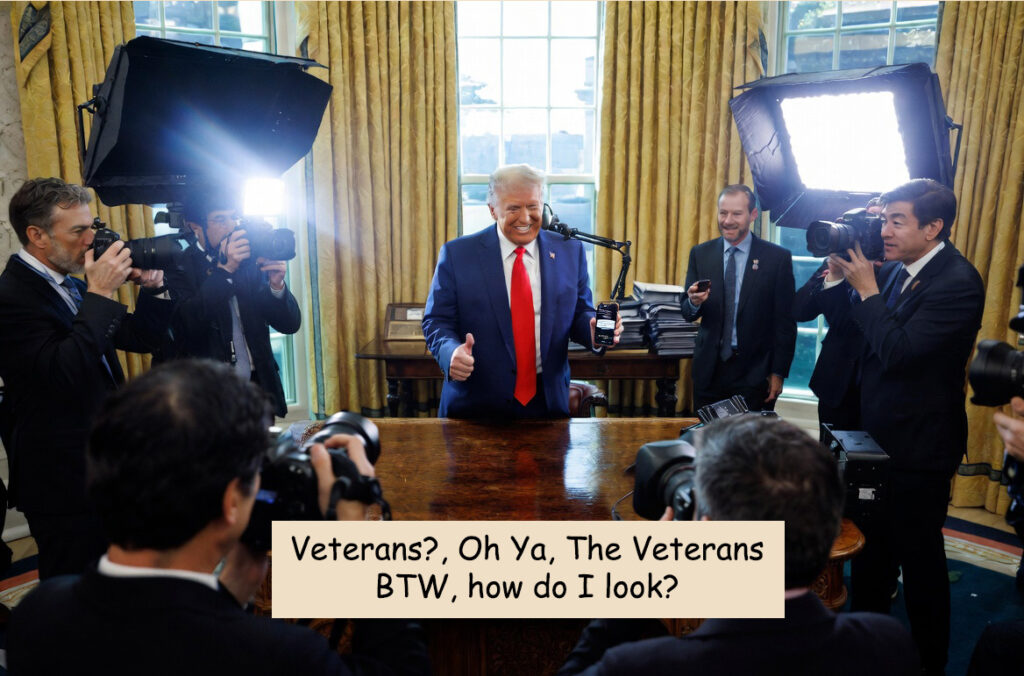
But the way it was done, by text message, in a week, surrounded by cameras and celebrities, while the VA workforce is being dismantled behind the scenes, is not a veterans policy. It is a veterans performance. And the veterans who will be waiting for ibogaine to navigate clinical trials and FDA approval while their local VA mental health clinic loses half its staff deserve to know the difference.
Good outcomes for bad reasons are still good outcomes. But they do not absolve the bad reasons. And they do not fill the staff positions that were cut last month.
This is a companion piece to the ongoing series Making America Sick: Robert F. Kennedy Jr., examining the Trump administration’s approach to public health, science, and the machinery of medical governance.
A Text Message and FDA Approval – A COMPANION PIECE TO THE SERIES: MAKING AMERICA SICK — ROBERT F. KENNEDY JR.
When good things happen for the wrong reasons, and the wrong things happen anyway
On Saturday, April 18, 2026, President Trump signed an executive order directing the FDA to fast-track its review of psychedelic drugs including ibogaine, psilocybin, and MDMA for the treatment of PTSD, depression, and traumatic brain injuries in military veterans. He stood in the Oval Office flanked by RFK Jr., Dr. Oz, podcaster Joe Rogan, and Marcus Luttrell, the decorated Navy SEAL whose story became the film Lone Survivor. It was, by any measure, a striking scene.
And here is the uncomfortable truth: the science behind this decision has genuine merit. A 2024 Stanford study found that veterans treated with ibogaine showed an 80 to 90 percent reduction in symptoms of depression and anxiety within a single month. For over twenty years, more than 6,000 veterans per year have died by suicide, a rate more than twice that of the civilian population. When people are dying at that scale, the calculus around acceptable risk changes. Sometimes you take the risk. Sometimes you throw the dice.
So credit where it is due: if this research is conducted properly, it could save lives. That matters. That is real.
“Sounds great. Do you want FDA approval? Let’s do it.” — President Trump, responding to a text from Joe Rogan
Policy by Text Message
But here is where the story gets complicated, and where the parallels to my ongoing series on Robert F. Kennedy Jr. become impossible to ignore.
This executive order, according to officials present, was written in less than a week. Its genesis was not a briefing from the VA, or a report from the National Institutes of Health, or years of advocacy from veterans’ organizations, though those voices exist and have been pushing for this research for years. Its genesis was a text message from Joe Rogan. Trump’s reply, as Rogan told it from the Oval Office: “Sounds great. Do you want FDA approval? Let’s do it.”
This is the same governing philosophy we see throughout this administration’s approach to public health. RFK Jr. didn’t dismantle vaccine confidence programs because of rigorous scientific review. He did it because of ideology, grievance, and the gravitational pull of a particular media universe. Trump didn’t fast-track psychedelic research because of a systematic review of veteran health outcomes. He did it because a podcaster texted him and it sounded good.
The mechanism is identical. The outcomes just happen to point in opposite directions.
The Hypocrisy the Headlines Won’t Tell You
While this announcement was being celebrated and it deserves some celebration the Department of Veterans Affairs has been quietly hemorrhaging the people who actually serve veterans every single day. Thousands of VA employees have been cut or are under threat as part of the administration’s broader federal workforce reductions. These are the people who answer phones, process disability claims, run mental health clinics, and sit across from veterans in crisis.
Ibogaine, even under an optimistic timeline, will not be widely available to veterans for years. The research still needs to be done properly. The cardiac risks, ibogaine has been linked to fatal heart arrhythmias and is connected to over thirty deaths in the medical literature — need to be understood and managed. The FDA approval process, even a fast-tracked one, takes time.
So what happens to the veteran who calls the VA crisis line next Tuesday and nobody answers? What happens to the veteran waiting eighteen months for a disability claim decision while staff positions sit empty? They don’t have Joe Rogan’s number. They don’t have a Lone Survivor story to tell in the Oval Office. They have a phone number and a waiting list.
This administration has demonstrated, repeatedly, that access to presidential attention and federal resources is mediated not by need, but by platform. By visibility. By whether you are useful to the political performance of the moment. Veterans, as a group, are enormously useful as symbols. As a bureaucratic constituency with daily, grinding needs they are less convenient.
The Thalidomide Shadow
Those of us old enough to remember thalidomide understand the cost of moving too fast. That drug approved in Europe, thankfully blocked in the US by one courageous FDA reviewer caused severe birth defects in thousands of children. The FDA’s deliberate pace exists for a reason. It was written in tragedy.
Ibogaine is not thalidomide. But it carries real risks, and the pressure now being applied to the FDA approve this in “weeks, not years” as the FDA commissioner suggested should make anyone who remembers that history uneasy. Speed driven by political momentum is not the same as speed driven by scientific confidence.
The research should proceed. The clinical trials should be funded. The veterans who have traveled to Mexico to access ibogaine treatments because they had no legal option at home deserve a legitimate pathway. All of that is true.
But “do you want FDA approval? Let’s do it” is not a drug approval process. It is a vibe. And we have seen, in this administration’s approach to public health writ large, what governing by vibe costs us.
Hold Both Truths
The hardest intellectual task in political commentary right now is holding two truths simultaneously when one of them gives comfort to people you disagree with. So let me be clear one final time: this research, done properly, could save veteran lives. That is good. That is worth fighting for regardless of who signs the order.
But the way it was done, by text message, in a week, surrounded by cameras and celebrities, while the VA workforce is being dismantled behind the scenes, is not a veterans policy. It is a veterans performance. And the veterans who will be waiting for ibogaine to navigate clinical trials and FDA approval while their local VA mental health clinic loses half its staff deserve to know the difference.
Good outcomes for bad reasons are still good outcomes. But they do not absolve the bad reasons. And they do not fill the staff positions that were cut last month.
This is a companion piece to the ongoing series Making America Sick: Robert F. Kennedy Jr., examining the Trump administration’s approach to public health, science, and the machinery of medical governance.
Published April 2026
Share this:
Like this: