Americans are anxious about the economy. People feel it every time they buy groceries, fill up their gas tank, pay rent, or open a credit card bill. Across the country, families are asking the same question: why does it feel harder and harder to get ahead, even when they are working harder than ever?
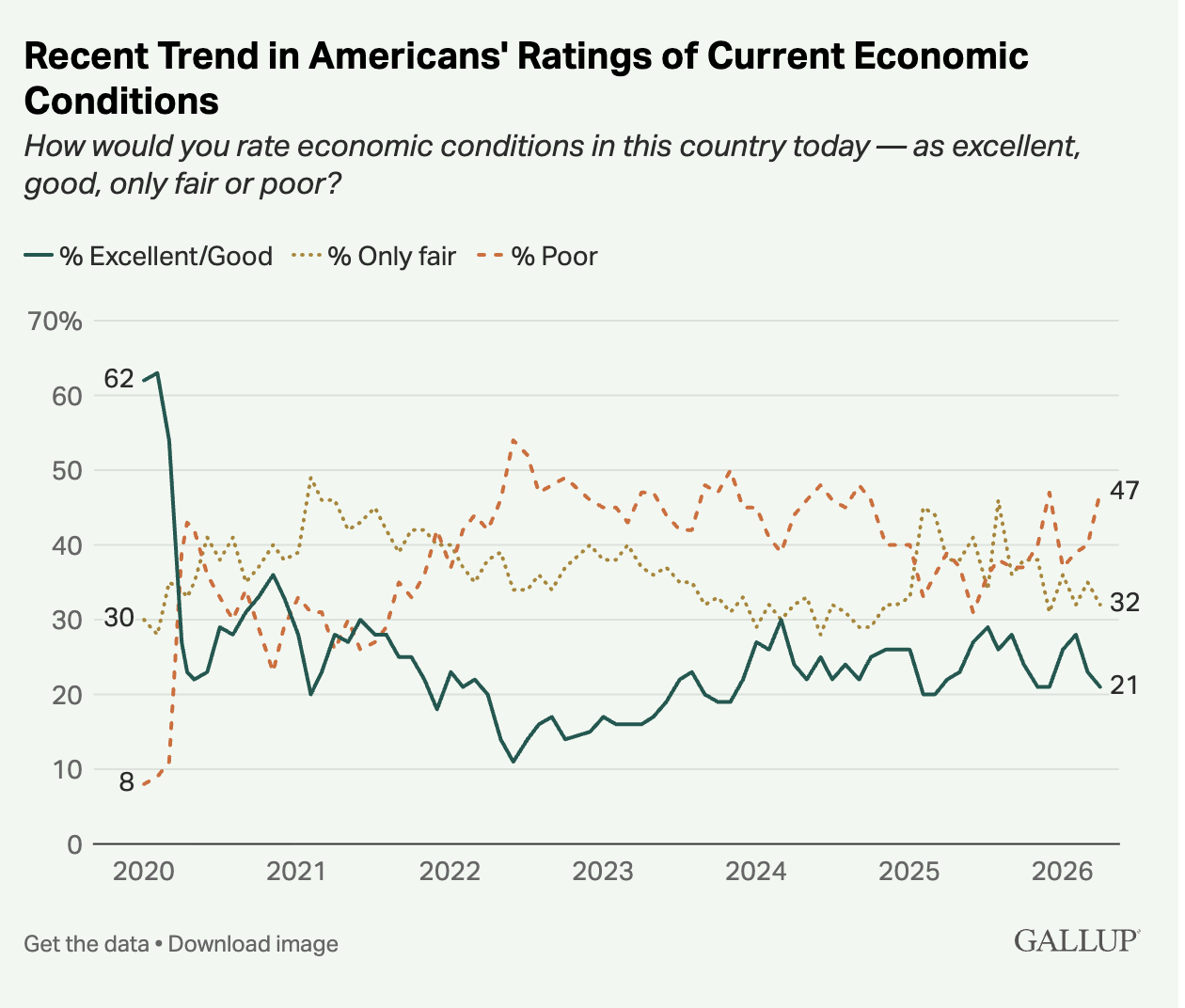
New polling from Gallup shows affordability now dominates Americans’ financial worries. Inflation and high prices remain the top concern for families, while a record 55% of Americans say their financial situation is getting worse. Energy costs, housing costs, healthcare expenses, transportation, and childcare are all rising faster than many household budgets can keep up with.
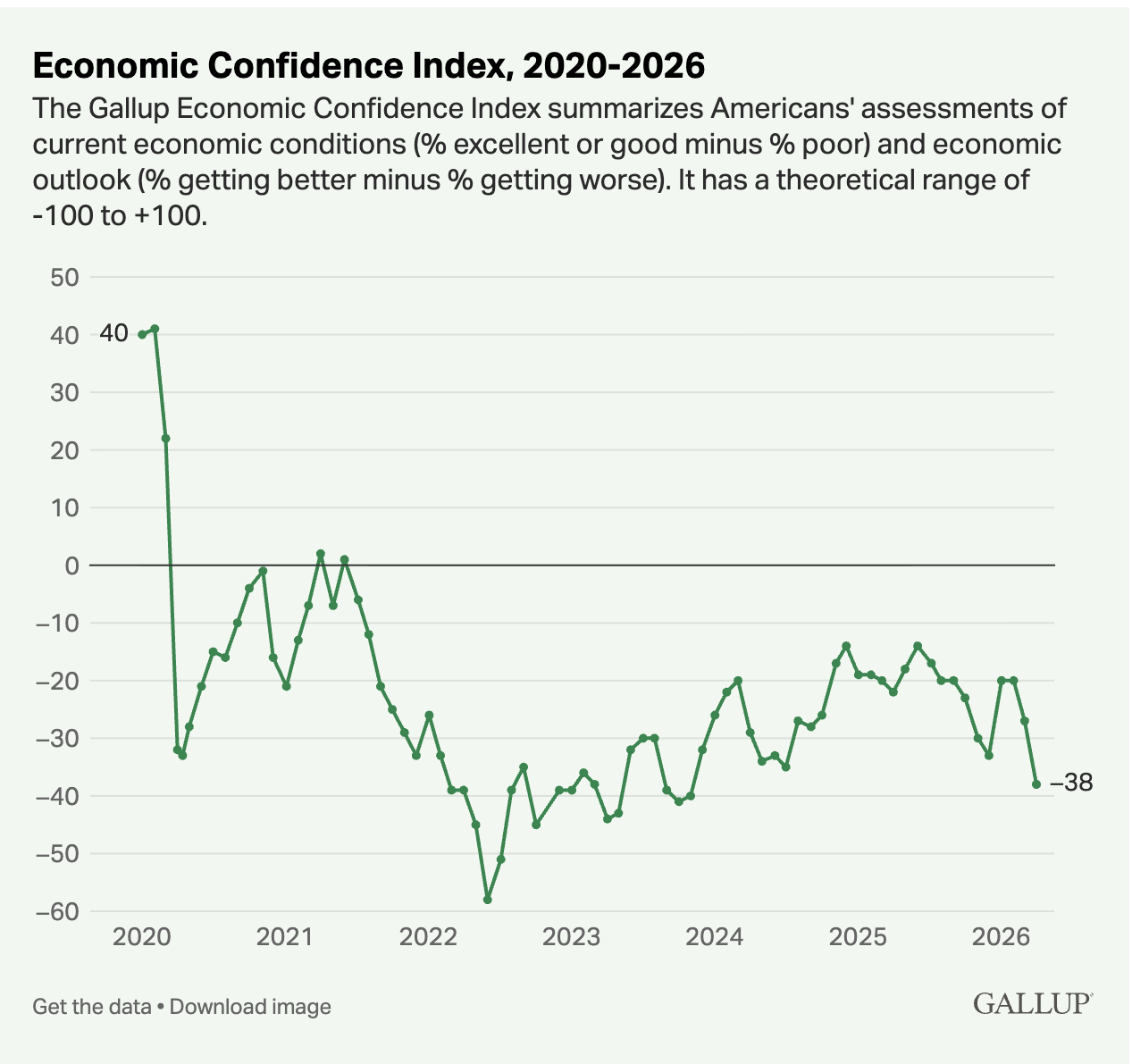
At the same time, confidence in the broader economy is falling sharply. Gallup’s Economic Confidence Index dropped to -38 in April, one of the lowest readings in recent years and a sign that Americans are increasingly pessimistic about both current conditions and where the economy is heading. Even among people who are still employed and financially stable, anxiety about the future is growing. Americans are worried about layoffs, AI, inflation, debt, and whether the next generation will have the same opportunities they had.
There are warning signs at the national level as well. This week, America’s debt burden surpassed the country’s annual economic output for the first time since World War II, with public debt reaching more than $31 trillion. Economists across the political spectrum increasingly warn that long-term fiscal dysfunction in Washington is making it harder to invest in the future while also increasing pressure on interest rates and the cost of living.
And yet, despite these very real concerns, too much of our political system remains trapped in partisan theater instead of focused on practical solutions. Americans are looking for leadership willing to address affordability, energy costs, housing supply, workforce development, healthcare expenses, and the national debt with seriousness and honesty. Instead, many see constant political warfare, performative outrage, and a system designed more around scoring points than solving problems.
This is where Forward’s values matter.
The Forward Party was built around the belief that Americans are exhausted by a politics that rewards division and punishes problem solving. Most voters are not asking for ideological purity. They are asking for leaders who will listen, work together, use facts and data, and focus on outcomes that improve everyday life.
Forward believes affordability should not be a partisan issue. Making it easier to build housing, supporting energy innovation, investing in workforce training for a changing economy, modernizing infrastructure, and bringing down healthcare costs are not red or blue ideas. They are practical challenges that require serious leadership.
Forward also believes the country cannot solve long-term economic problems if elected officials are more focused on protecting political power than building public trust. Gerrymandered districts, hyper-partisan primaries, and a political culture driven by outrage make compromise politically risky even when compromise is what the country needs most.
But there is reason for optimism.
Across the country, more independent and solutions-focused leaders are stepping forward to run for office, build coalitions, and challenge the idea that Americans are permanently stuck choosing between dysfunction and extremism. Voters are increasingly open to candidates who prioritize collaboration, accountability, and results over partisan loyalty.
The economic challenges facing the country are real. Americans feel them every day. But this moment also creates an opportunity to rethink how we govern and what we reward in politics.
The future does not have to be defined by gridlock, economic anxiety, and political exhaustion. With better leadership, more accountability, and a political system that rewards solving problems instead of escalating conflict, the country can build an economy that is more affordable, more resilient, and more hopeful for the next generation.
Please forward this to your friends, family, and coworkers. It helps us introduce them to Forward and to what we are building. Also consider inviting them to one of our upcoming events listed below. We’d love to meet them. |









Comments are Disabled