Skip to content

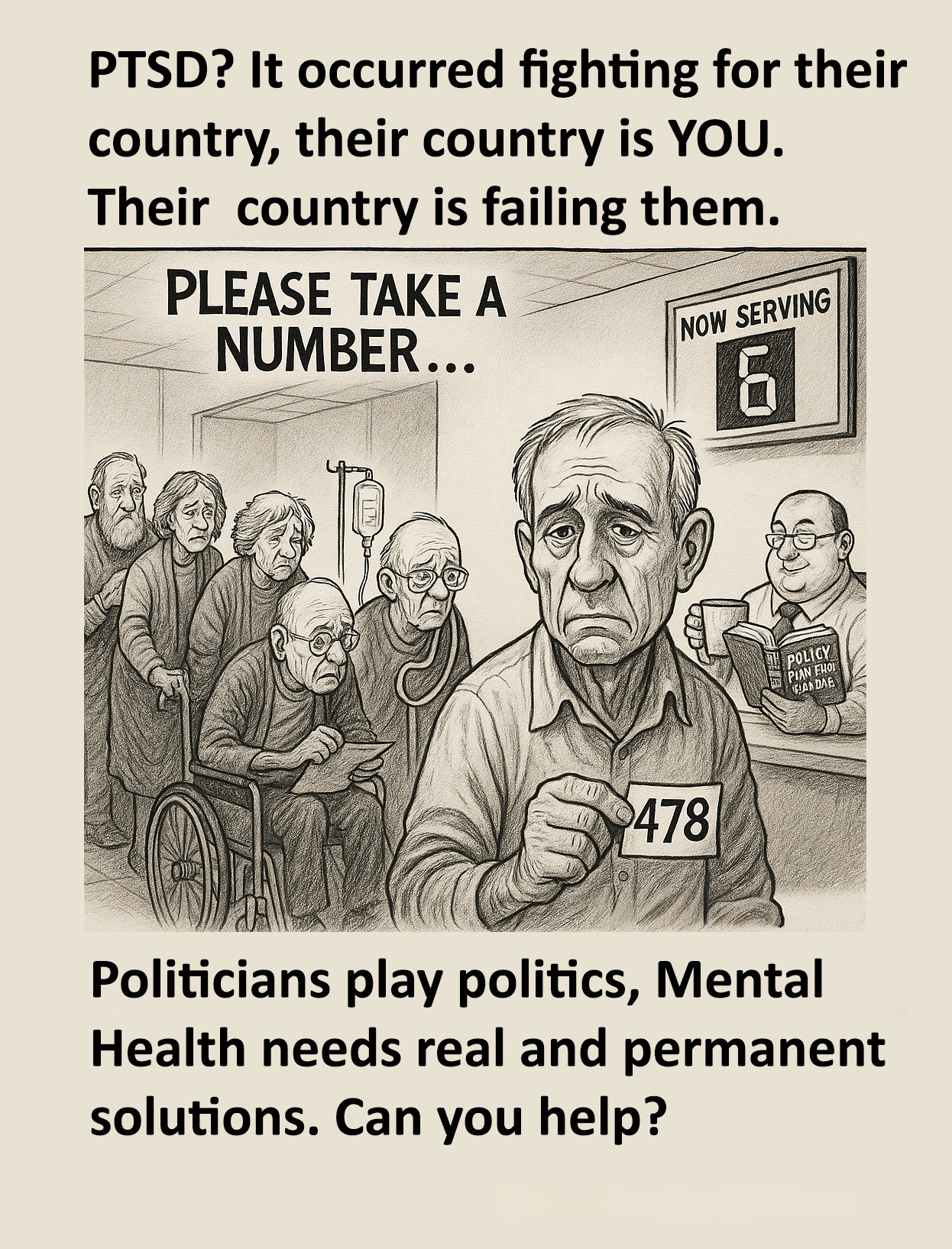
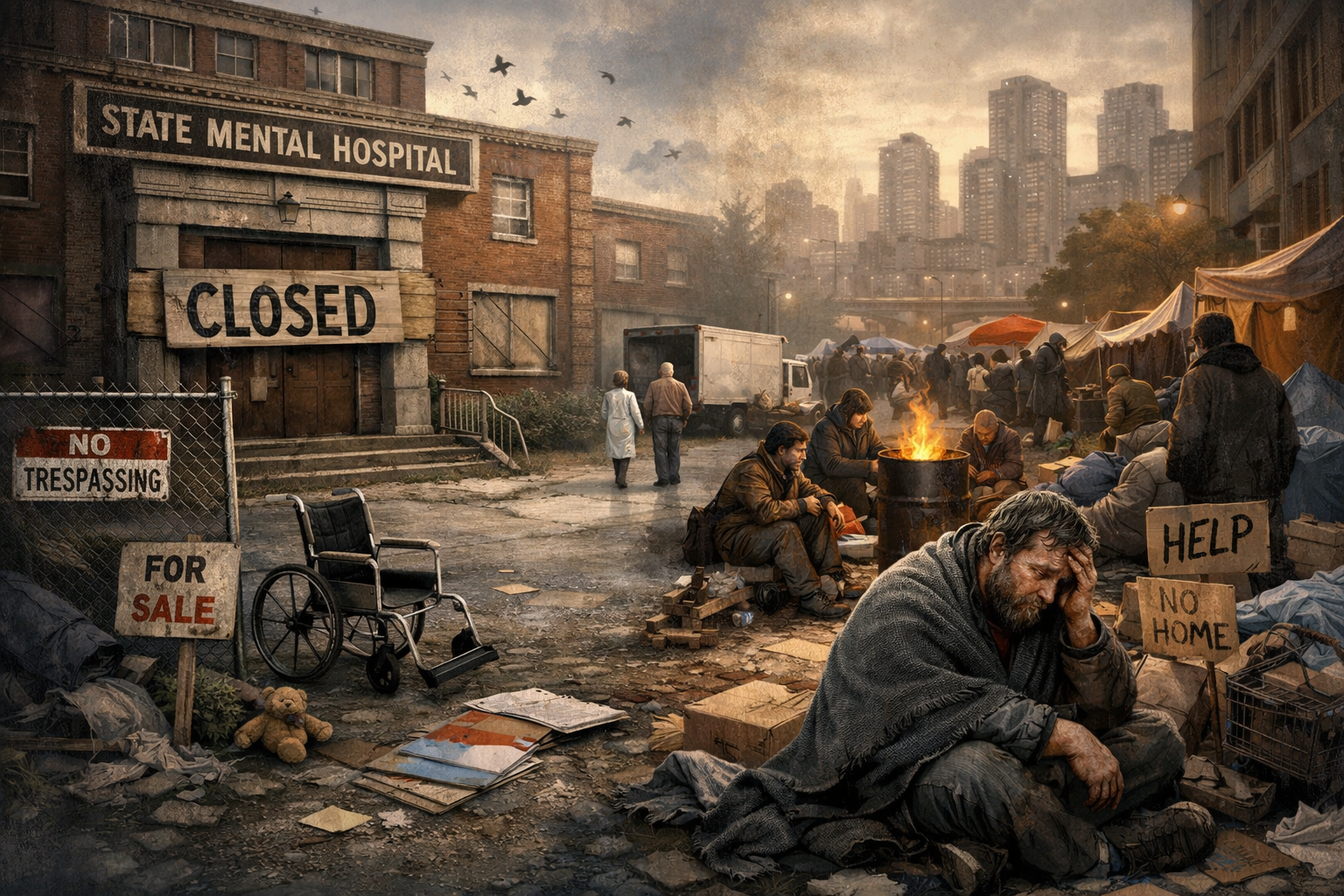
We see the tents.
We volunteer.
Not charity. Not awareness campaigns. Not temporary fixes.
Capital, invested with intent
Someone rallies a community.
Railroads weren’t built by committees waiting for permits.
Not awareness.
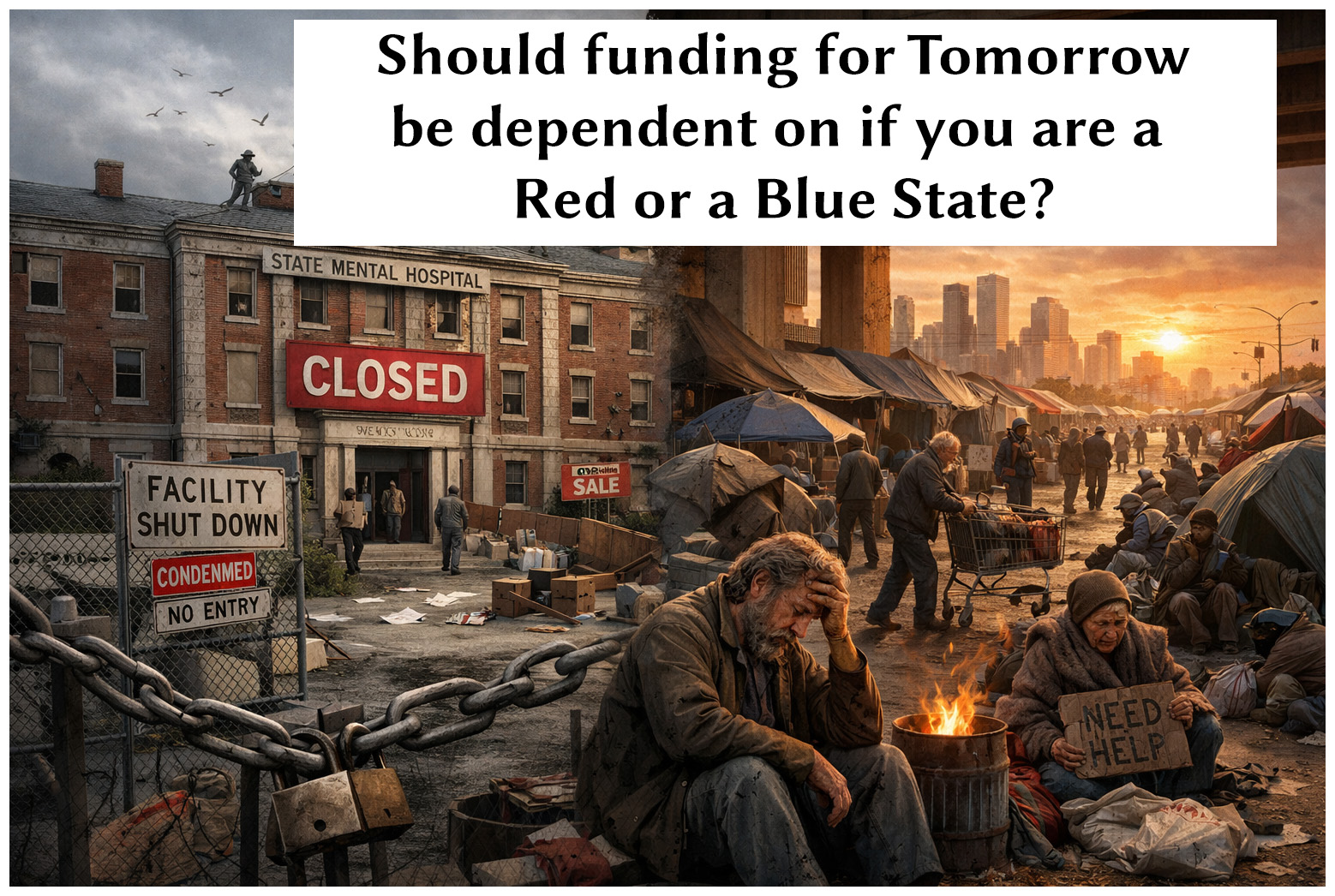
It’s under overpasses.
Cities clear areas and call it progress.
Address what’s immediately visible.
A system that moves slowly.
Not compassion.
Nothing connects.
Not:
But:


In apartments.
Homelessness over here.
Pieces that exist.
Less visible.
If the pieces are already there…




Posts in Category: Private Funding


When Seeing Isn’t Enough, Who Builds?
 When Seeing Isn’t Enough, Who Builds?
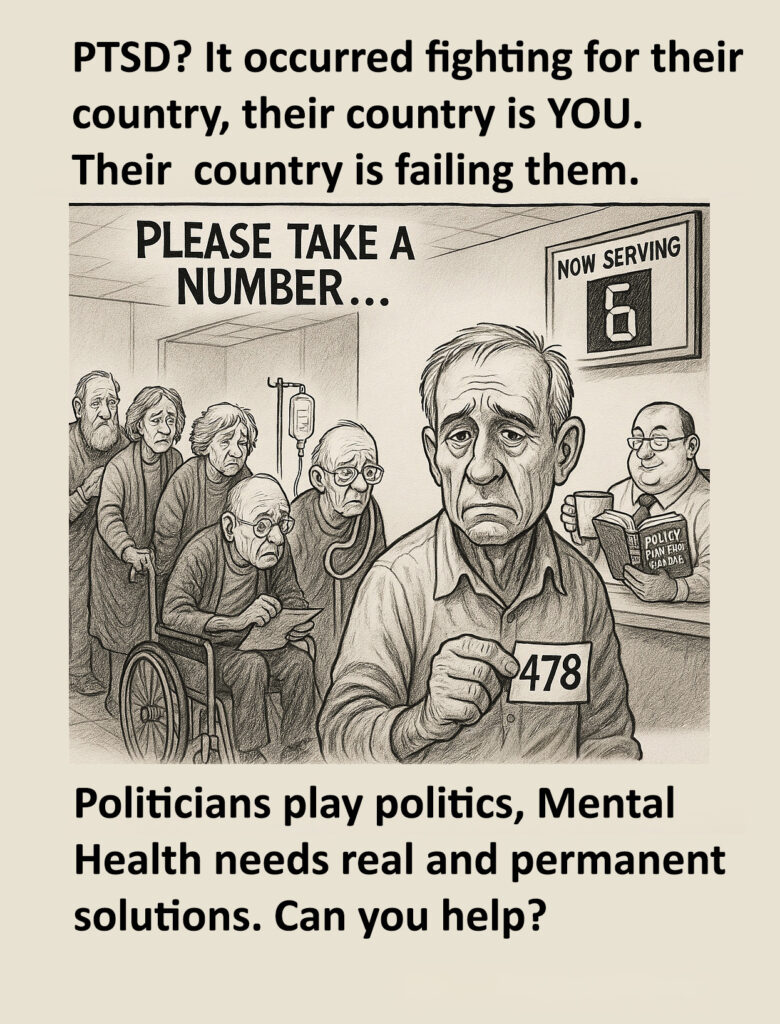
We’ve become good at noticing problems.
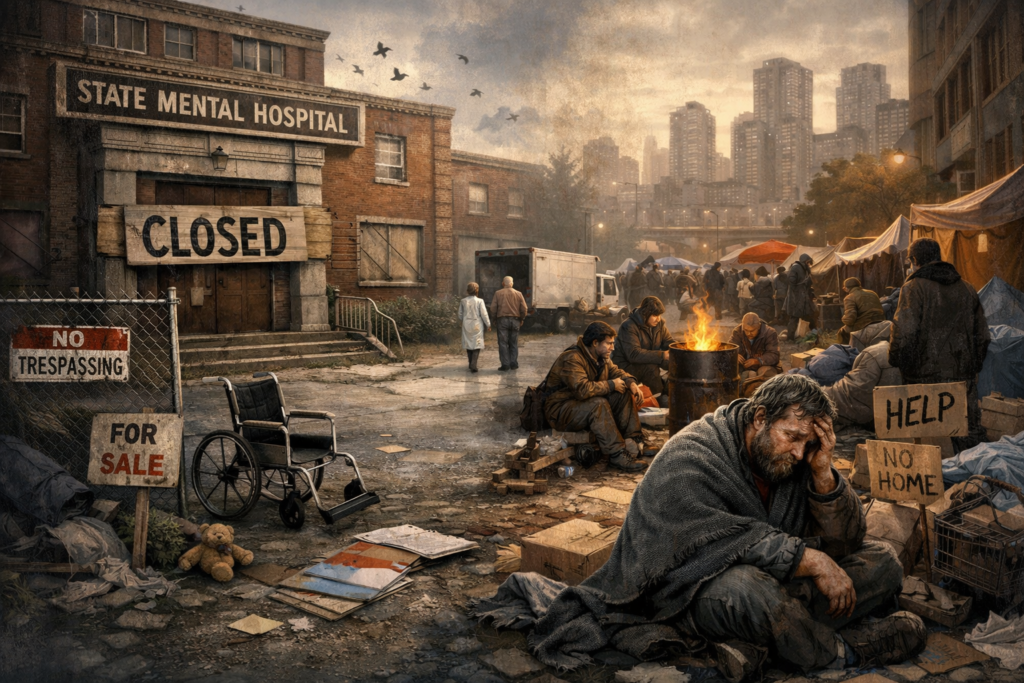
We see the tents.
We see the people fading away.
We see the cracks in systems that were supposed to catch them.
And we often respond.
We volunteer.
We donate.
We organize what little we can.
But noticing isn’t the same as building.
The real gap is in the people and organizations who actually structure solutions.
Not charity. Not awareness campaigns. Not temporary fixes.
I mean the kind of work that requires:
Capital, invested with intent
Teams, operating with accountability
Systems, designed to scale
Without that, even the best efforts stay islands.
There are occasional sparks.
Someone rallies a community.
A small operation starts and grows.
News catches it because it’s novel, or outrage makes it visible.
But those sparks are rare. And rare sparks can’t hold a fire.
We’ve trained ourselves to believe that scale only comes from government, or from huge organizations.
But history shows otherwise.
Railroads weren’t built by committees waiting for permits.
Cities weren’t lit by ideas held back by bureaucracy.
Movements weren’t started by people waiting for permission.
Scale comes when someone decides to start building—and then invites others to join.
That’s the space we’re missing now.
Not awareness.
Not compassion.
Not even outrage.
We’re missing builders.
People willing to put together the teams, the capital, the structure, and the commitment to make solutions grow.
We may not know the full answer.
No single person does.
But the signal is clear: wherever there’s a problem too big for charity and too complex for government… there is a role for builders.
Somebody has to start.
Share this:

We See It Every Day. So Why Isn’t Anything Changing?

We See It Every Day. So Why Isn’t Anything Changing?
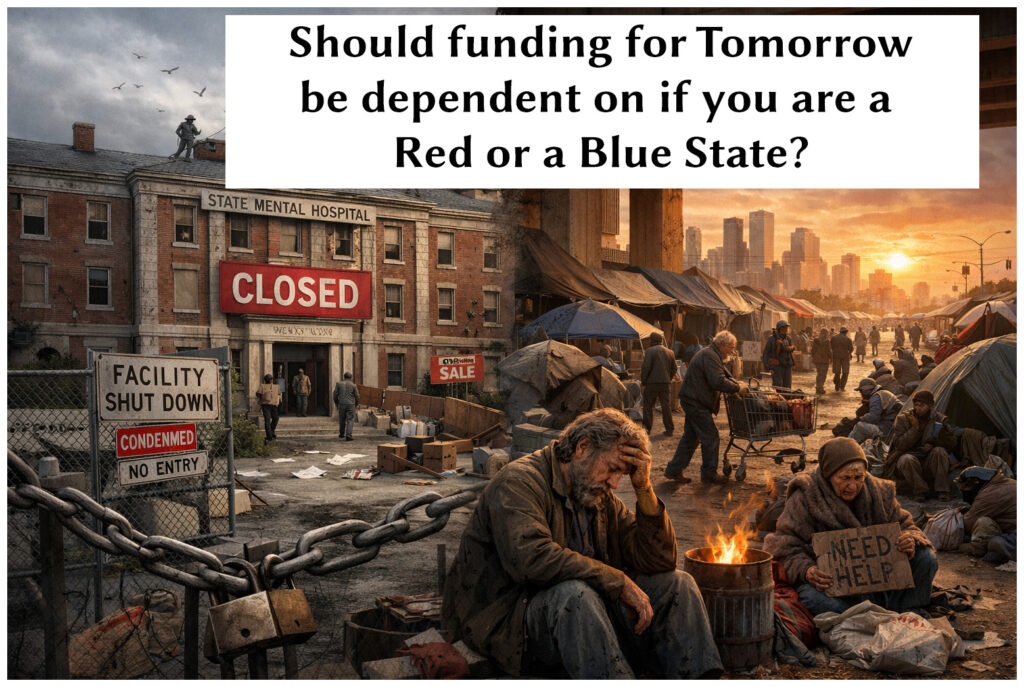
You don’t have to go looking for it anymore.
It’s under overpasses.
Along sidewalks.
In places that used to feel like part of the normal rhythm of a city.
Tents. Makeshift shelters. People existing in plain sight, but somehow outside of everything around them.
We see it enough now that it’s become background.
And when something becomes background, it stops demanding answers.
There are responses, of course.
Cities clear areas and call it progress.
Organizations step in where they can.
Churches open kitchens, shelters rotate beds, volunteers show up with good intentions.
None of it is wrong.
But none of it is changing the direction of the problem.
We’ve settled into a pattern:
Address what’s immediately visible.
Move it. Manage it. Contain it.
Then repeat.
Over and over.
There’s also an assumption sitting underneath all of this:
That if the problem is big enough, government will eventually organize around it.
But this isn’t something that fits cleanly into a single department, a single budget, or a single political cycle.
So it gets divided, delayed, and debated.
And while that happens, the visible part keeps growing.
On the other side, there’s charity.
And there is a lot of it.
People care. They show up. They give time, food, money.
But most of it exists in small, isolated pockets.
A meal here. A bed for the night. A temporary service.
It helps—but it doesn’t carry forward.
It resets every day.
So we end up in between two things that aren’t built to solve it:
A system that moves slowly.
And efforts that don’t scale.
That leaves something missing.
Not compassion.
Not awareness.
Something more basic than that.
Nothing we’re doing is designed to grow into a solution.
Nothing connects.
Nothing compounds.
Nothing builds on itself.
And that’s the part that’s easy to miss, because everything we are doing looks like action.
It just doesn’t add up to progress.
At some point, the question changes.
Not:
Why is this happening?
But:
Why isn’t anything we’re doing capable of getting ahead of it?
Because those are two very different problems.
And only one of them can actually be built for.
Share this:

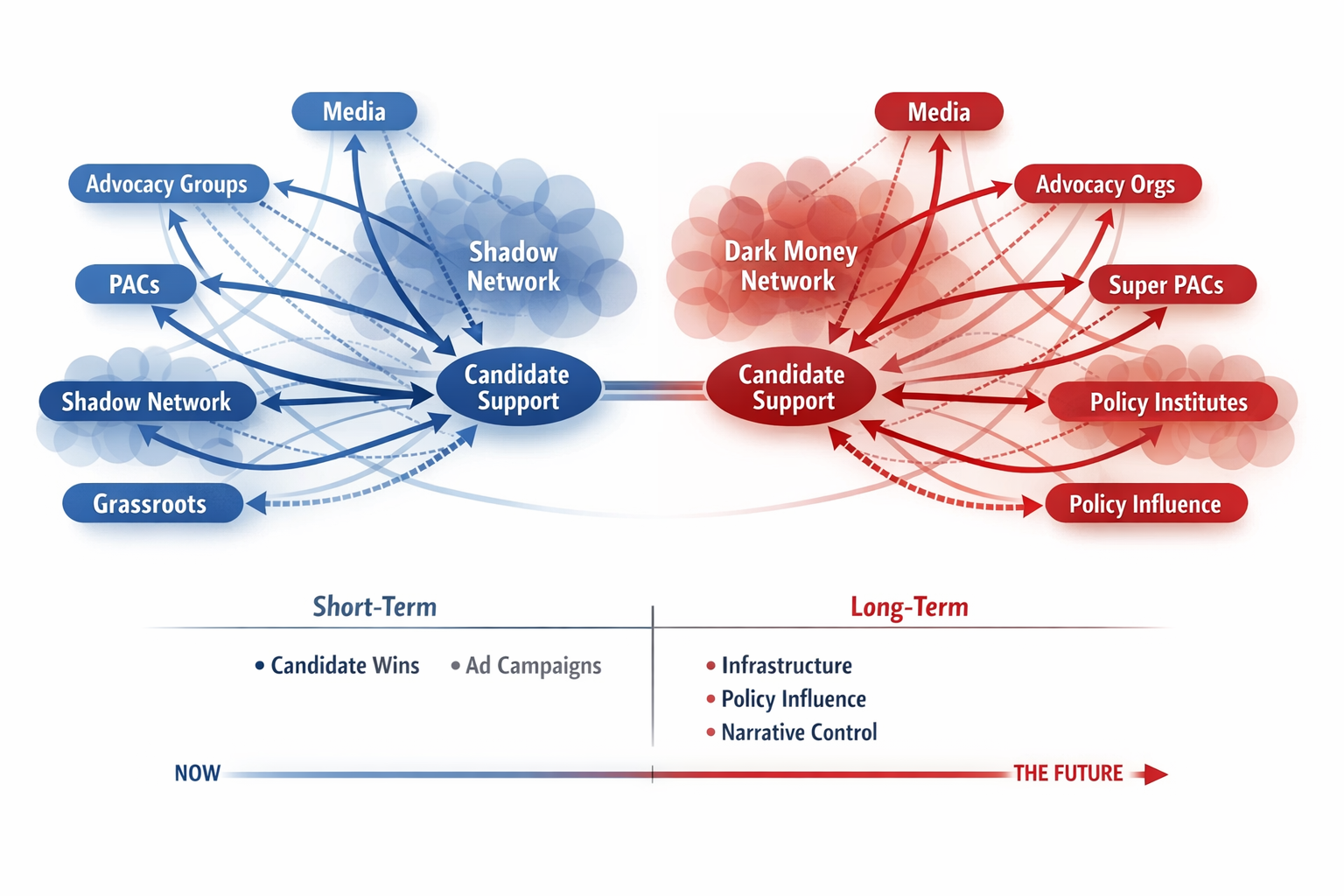
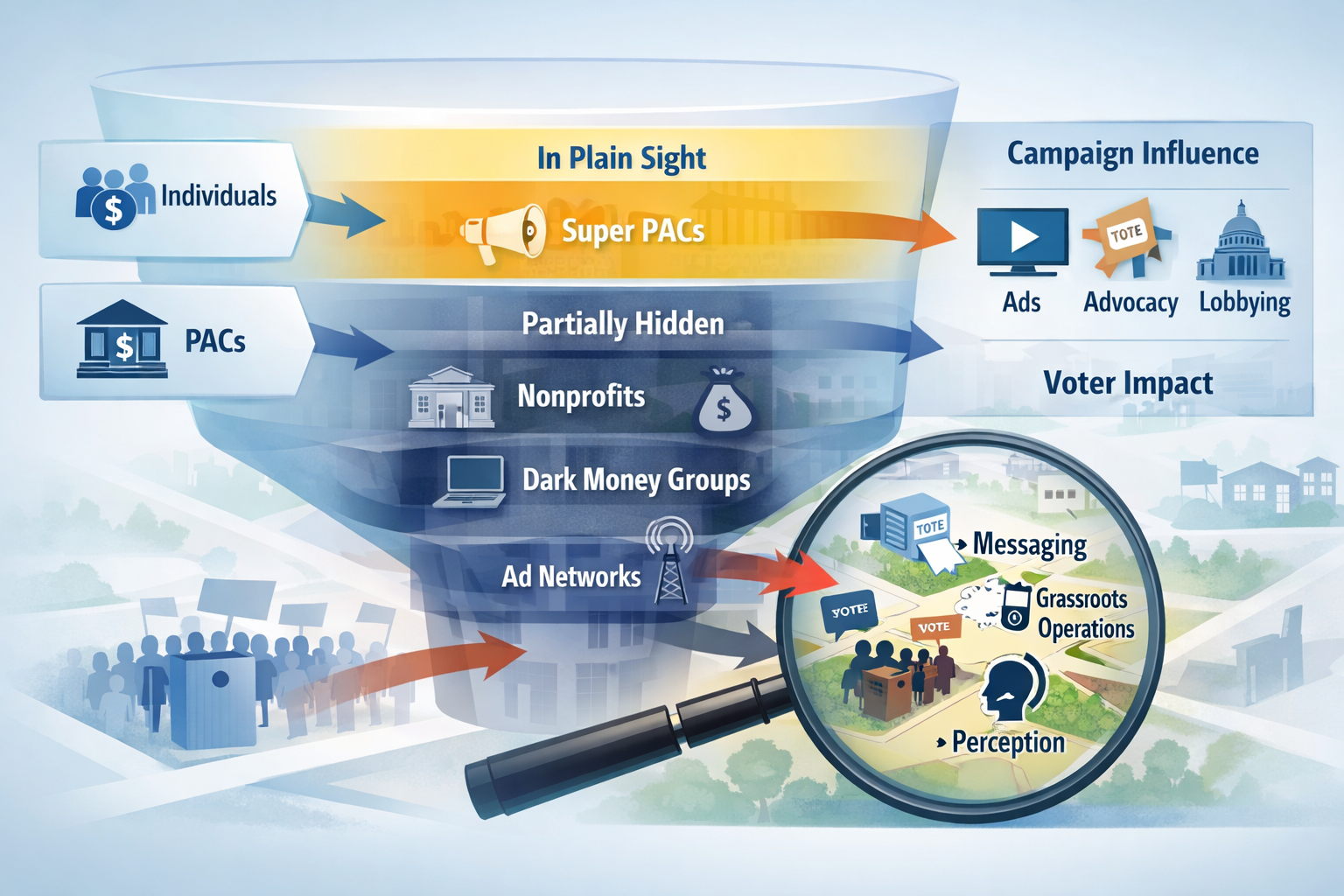
Article 3 of 3 The Long Game — Power Beyond the Ballot
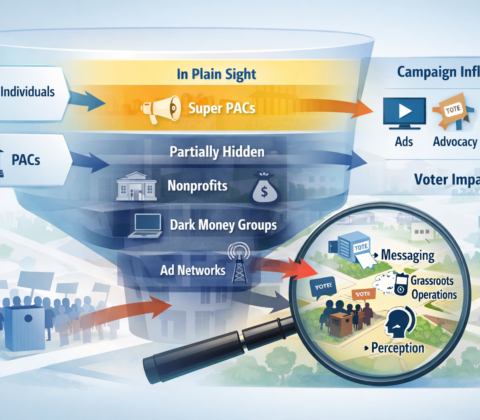
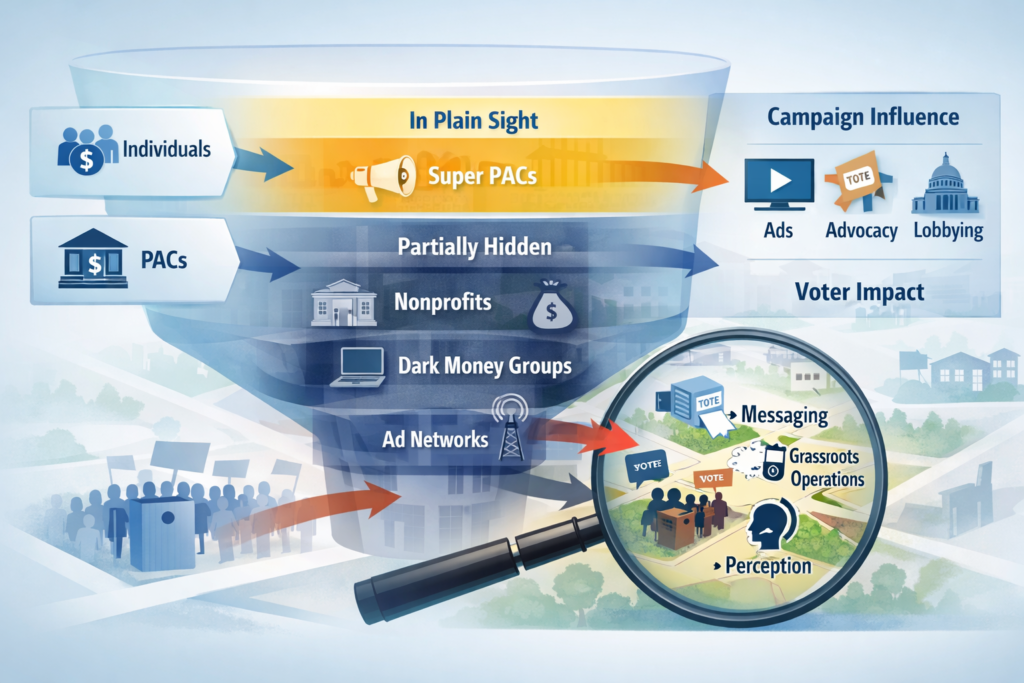
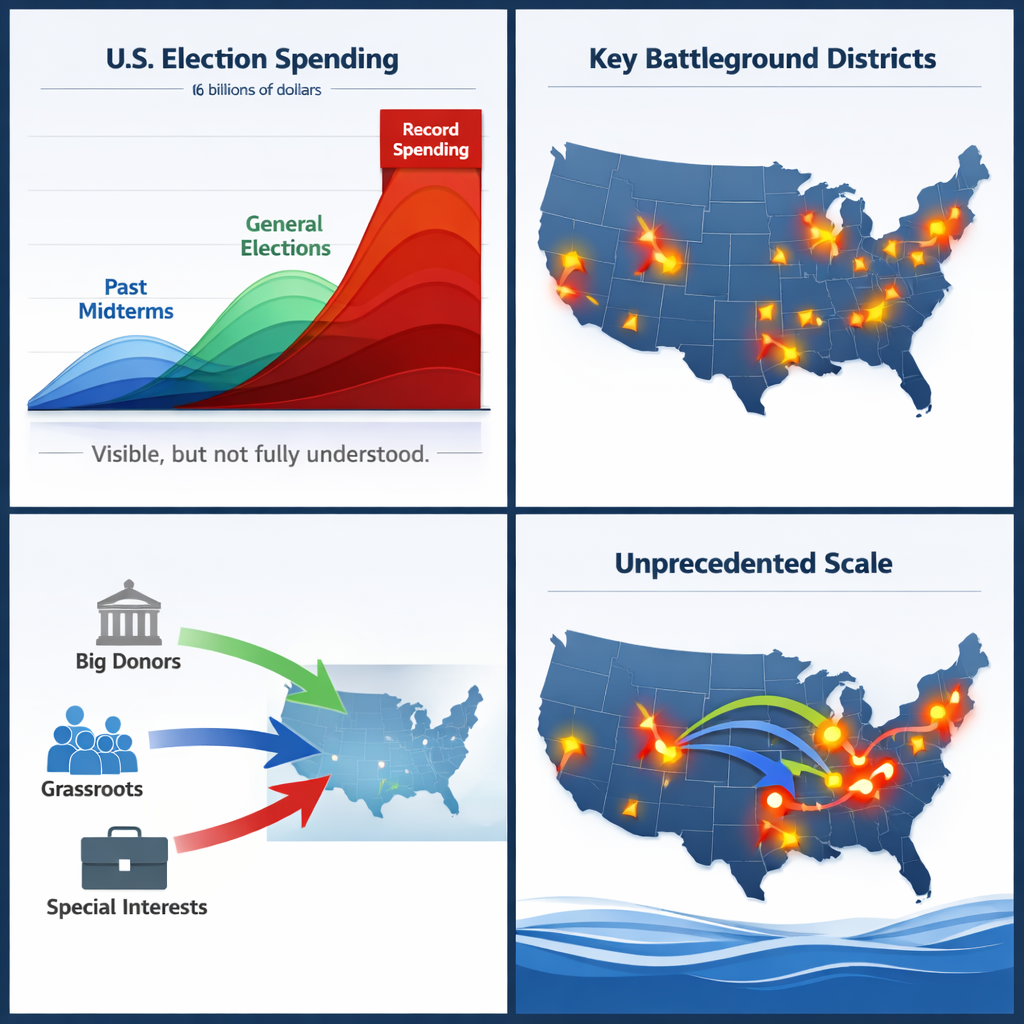
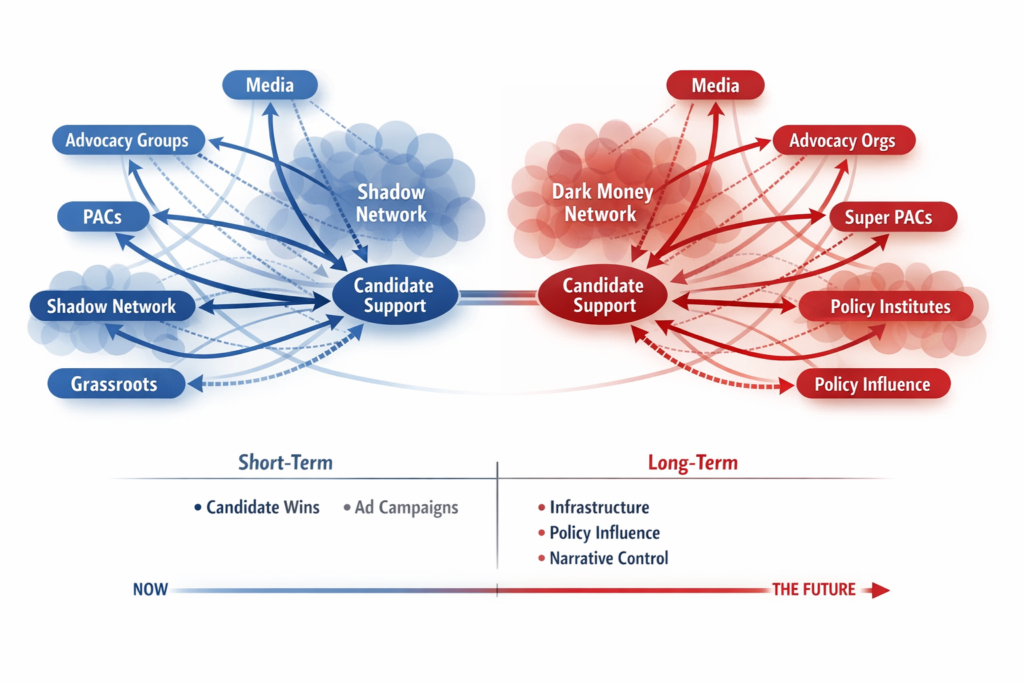
By now, it is clear that the 2026 midterms are unlike any we have seen in recent memory. The scale of spending, the intensity of coordination, and the precision of messaging all suggest a high-stakes contest—but the full story goes deeper than individual candidates or party control.
Share this:


Ballrooms and BombShelters Part 4 The Bill Always Comes To The Same Table
 So let’s add this up. Not politically. Mathematically.
$1.5 trillion for defense. A secret command center with no price tag. A ballroom funded by the same defense contractors cashing the defense checks. An entire generation of experienced military leadership replaced by people who know how to applaud on cue.
And on the other side of that ledger?
-
Daycare — gone. Your state’s problem now.
-
Medicaid — being gutted. Your state’s problem now.
-
Medicare — on the table. Your state’s problem now.
Your state, by the way, is already broke. But details.
The people making these decisions will never need daycare. They have people for that. They will never worry about Medicare. They have coverage you’ll never see. Their kids aren’t going to be sent to whatever comes next after Iran.
But you’ll pay for the bunker. You’ll pay for the bombs. You’ll pay for the generals who got replaced by yes-men to then have to be replaced again when the yes-men prove they don’t actually know how to fight a war.
You’ll pay for all of it. You always do.
And when it goes sideways — and history suggests it will — the same people who built this house of cards will stand in front of a camera and explain why it’s somebody else’s fault. The generals who got fired. The previous administration. The media. The lawsuit that made the secret unsecret.
Anybody but the man under the ballroom.
Here’s what nobody’s saying out loud: this isn’t about protecting America. A country that can’t afford to feed its grandmothers or mind its children isn’t being protected. It’s being harvested.
The bill always comes to the same table.
Yours.

Share this:

Not Every Collapse Happens in Public
 Not Every Collapse Happens in Public
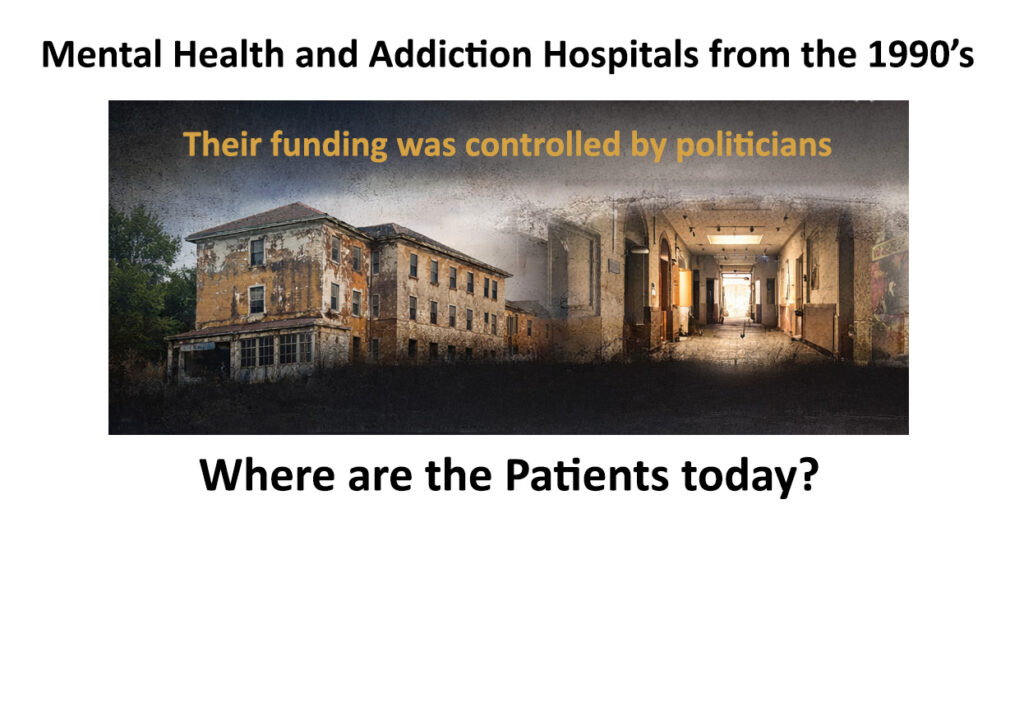
Not every failure looks like a tent on a sidewalk.
Some of it happens quietly.
In apartments.
In classrooms.
In lives that, from the outside, still look like they’re moving forward.
There’s a tendency to separate things.
Homelessness over here.
Mental health over there.
Addiction somewhere else.
As if they’re different problems.
But they’re often just different points along the same path.
And not everyone reaches the visible end of it.
Some people fall apart long before that.
Without ever becoming part of the public conversation.
Even when there are signs, they’re easy to miss.
Or easy to misread.
Or easy to put off dealing with until later.
Because most people aren’t trained to recognize what they’re looking at.
And even if they are, they often don’t know what to do next.
So moments pass.
Windows close.
And what could have been interrupted… isn’t.
Afterward, there’s reflection.
Looking back. Connecting dots. Seeing things more clearly than they were at the time.
That happens more often than people talk about.
But even that awareness doesn’t automatically translate into something usable.
It doesn’t create a system.
It doesn’t create a path others can follow.
It just becomes another isolated experience.
That’s the pattern again.
Pieces that exist.
But don’t connect.
We tend to think of intervention as something formal.
Something that belongs to institutions, professionals, or systems.
But those systems are often hard to access, hard to navigate, or already overwhelmed.
So people are left in a kind of in-between space.
They can see something isn’t right.
But they don’t have a clear way to act on it.
And just like with the visible side of the problem, that space doesn’t stay empty.
It fills with delay.
With uncertainty.
With missed chances.
Not because people don’t care.
But because nothing around them is structured in a way that helps them act in time.
That’s a different kind of gap.
Less visible.
But just as real.
And just like the one we can see every day, it raises a similar question:
If the pieces are already there…
why don’t they come together in a way that actually works?
Share this:

Ballrooms and BombShelters Part 3 Clap Loud Enough and You Get A Star
 So we’ve got a $1.5 trillion defense budget and a secret command center under a ballroom. Naturally the next question is — who’s running this operation?
Not the generals who spent thirty years earning the right to have an opinion. They’re gone.
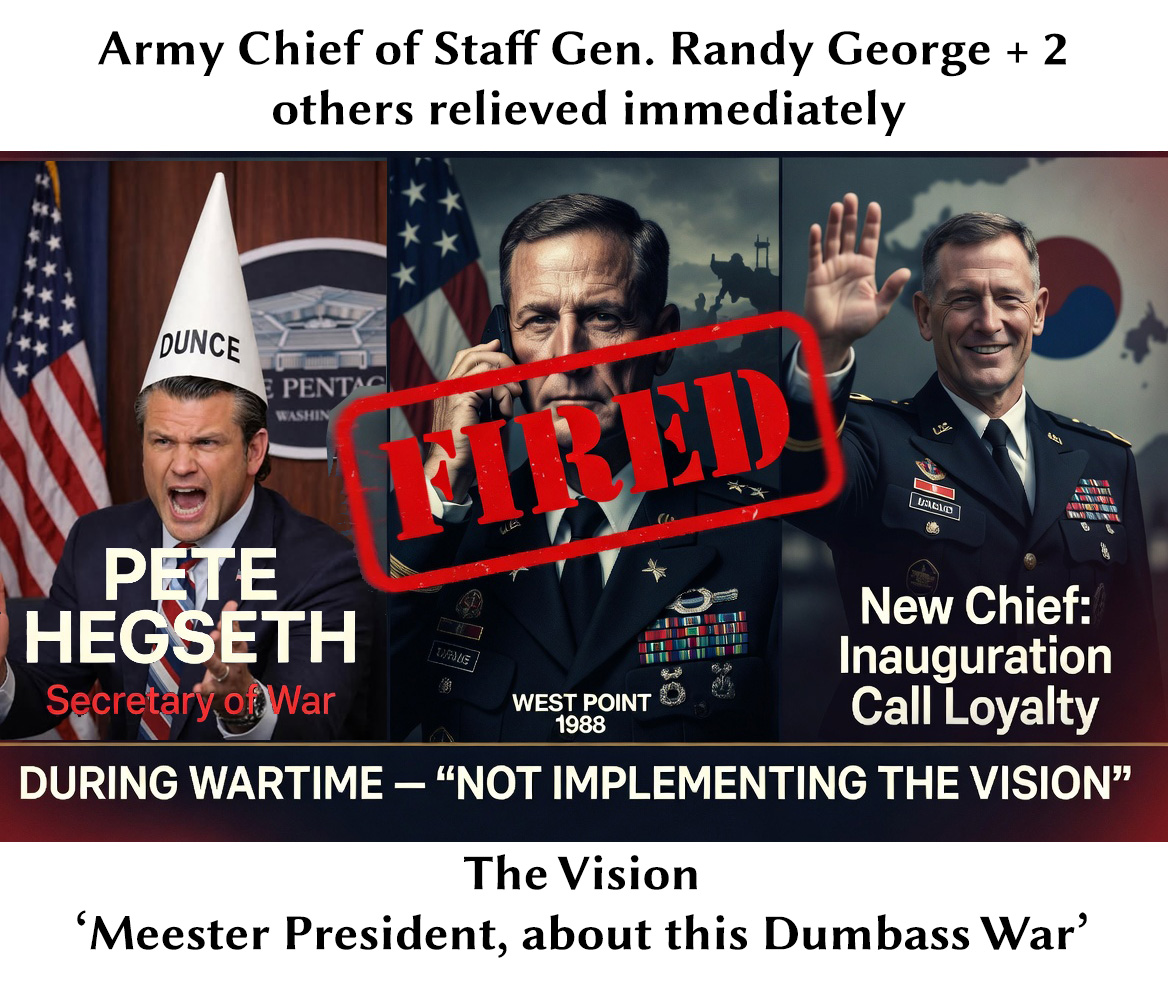
Pete Hegseth — former Fox News host, current Secretary of what he now proudly calls the “Department of War” — just fired the Army Chief of Staff. During wartime. Nearly without precedent in American history. General Randy George. West Point 1988. Desert Storm. Iraq. Afghanistan. Purple Heart recipient. Decades of actual warfare.
Gone. Phone call on a Thursday. Effective immediately.
Two others went with him. The head of Army Training and Transformation. And the Chief of Army Chaplains — apparently even the guy responsible for soldiers’ spiritual welfare had to go.
The official reason? There wasn’t one. “We are grateful for his service.” Door’s that way.
The real reason? He wasn’t implementing “the vision.” That’s the actual word they used. The vision.
So who gets the job? The guy who called into Trump’s inauguration ball from South Korea to personally congratulate him on television. That’s the new qualification. Not combat experience. Not strategic expertise. Enthusiasm. Visible, documented, on-camera enthusiasm.
Hegseth has now cleared out nearly the entire Joint Chiefs. The people left standing are the ones who’ve figured out that the shoe-licking is load bearing.
So let’s recap. $1.5 trillion budget. Secret bunker. Fired generals replaced by loyalists. Defense contractors funding the ballroom writing the checks.
This isn’t a military. It’s a casting call.
And somewhere under that ballroom, someone’s planning the next act.
Part 4 coming — who’s paying for all of this, and no, the answer is not going to make you feel better.
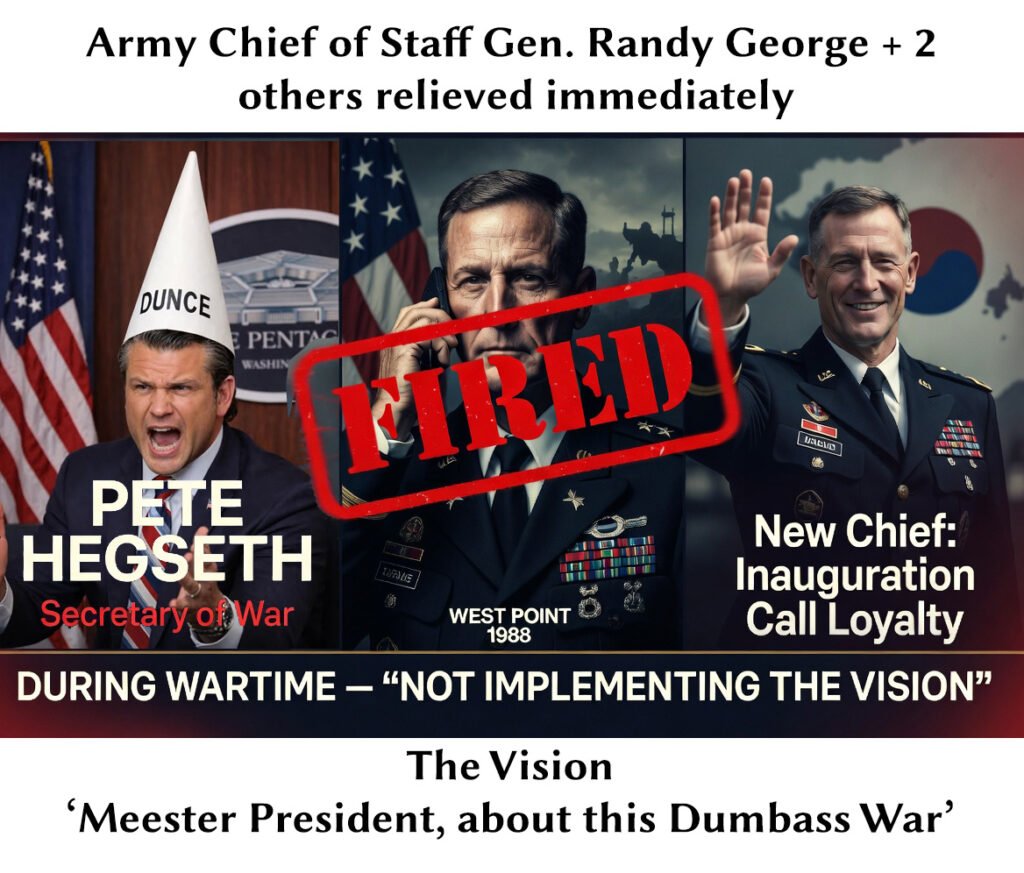
sorry, I just couldn’t help myself.
Share this:

Ballrooms and BombShelters Part 2 The Most Expensive Shed In History
 Part 2: The Most Expensive Shed In History
So we left off asking who exactly we’re planning to bomb with that $1.5 trillion defense budget.
Turns out there’s a clue buried under a ballroom.
Trump’s building a $400 million ballroom at the White House. Don’t worry — defense contractors like Lockheed Martin and Palantir picked up the tab. You know, the same companies that just got a very nice $1.5 trillion Christmas present called the defense budget. Funny how that works.
But here’s where it gets interesting. Trump called the ballroom — and I’m quoting him directly here — “a shed for what’s being built underneath.”
Underneath is a massive military command center. Bulletproof glass. Drone-proof ceilings. Hospital. Communications. Everything a man needs to run his wars. Personally. From underneath a ballroom.
It was supposed to be secret. He said that too. Then spent ten minutes describing it on Air Force One because a lawsuit made him cranky.
So let’s connect the dots your calculator already figured out.
We can’t afford daycare. Can’t afford Medicaid. States are on their own. But somewhere under the most expensive dance floor in American history, we’re building a personal war room for a man who just fired every general who might have told him no.
And the underground portion? Nobody knows what that costs. Experts have literally said we’ll “never get the line of sight on that number.”
So the next time someone asks where the money went — it went into a hole in the ground under a ballroom that a defense contractor paid for, in a city that can’t get a straight answer about any of it.
That’s not a conspiracy theory. That’s just Tuesday.
Part 3 coming — who got fired for knowing too much, and who got hired for clapping loud enough.

Share this:

Ballrooms and BombShelters Part 1 Who The Hell Does He Plan On Bombing Next?
Who The Hell Does He Plan On Bombing Next?
Trump says we can’t afford daycare. Can’t afford Medicaid. Can’t afford Medicare. States can handle it. He’s got one priority: “military protection.”
$1.5 trillion for defense in FY2027. Let that sink in. That’s a 40% jump from last year, which was already over a trillion. One of the largest single year military budget increases in American history.
So the question isn’t political. It’s mathematical. You don’t spend $1.5 trillion on defense to sit in a lawn chair. That’s not a defense budget, that’s a shopping list.
Meanwhile grandma can’t afford her medication, your kid can’t get into daycare, and your state — which last time you checked is already broke — is supposed to pick up the slack.
And the kicker? He’s “rebuilding a depleted military.” The same military that was just fine before he started playing with it.
So yeah. Who exactly are we planning to bomb? Because somebody’s got a very expensive answer to a question nobody asked.
Iran’s already on the list apparently. Who’s next, and more importantly — who’s paying for it?
Spoiler: You are. Just not your kids’ daycare. That’s on you.

Share this:

Addressing Mental Health – “A Practical Approach:”
A Practical Approach: When Something Obvious Isn’t Being Done
There’s a lot of noise right now.
Wars. Elections. Markets. Politics layered on top of politics. Everyone talking, few people listening. Most of it feels unstable. Most of it feels out of reach.
And maybe that’s part of the problem.
Because while we’re all focused on the big, complicated, unsolvable things… there are problems sitting right in front of us that aren’t complicated at all.
They’re just not being picked up.
Addiction treatment is one of them.
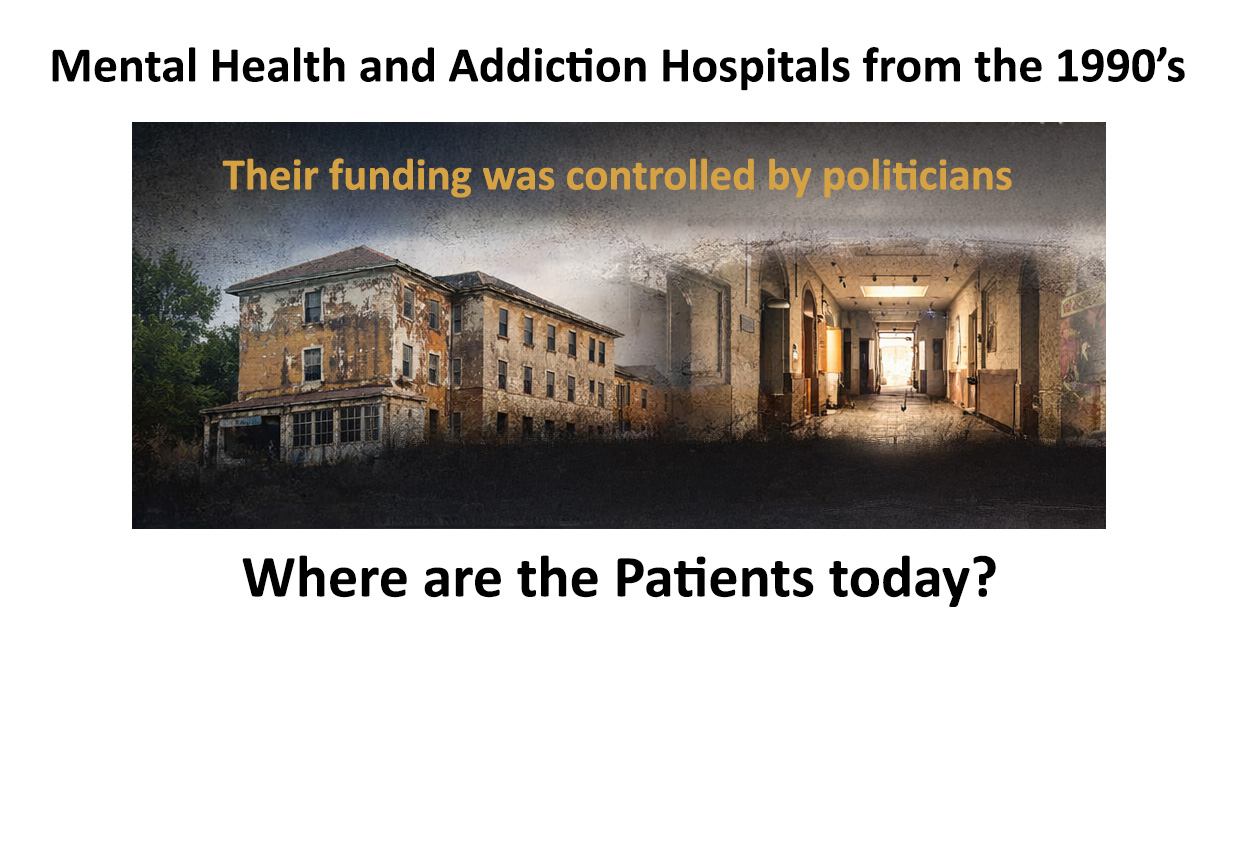
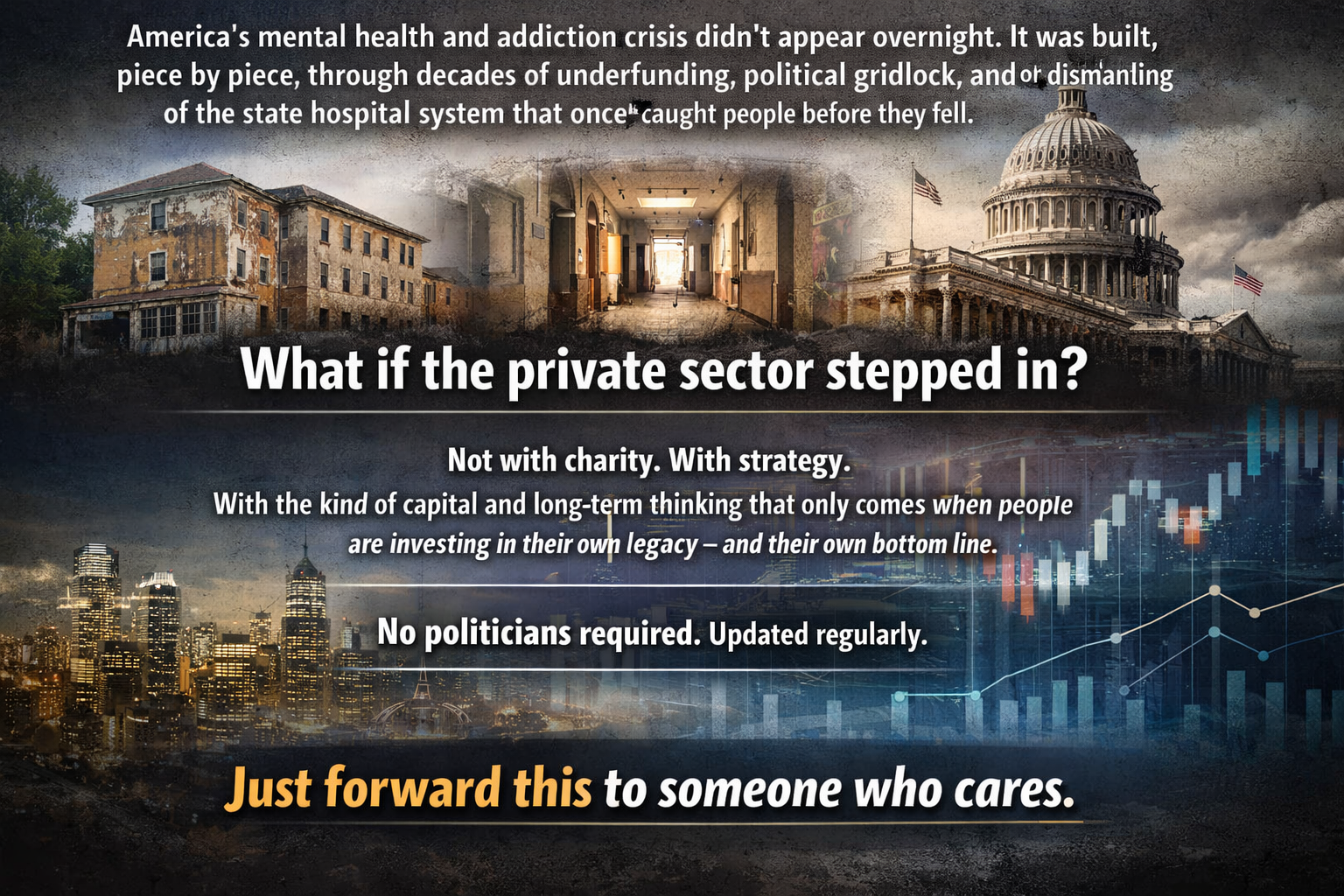
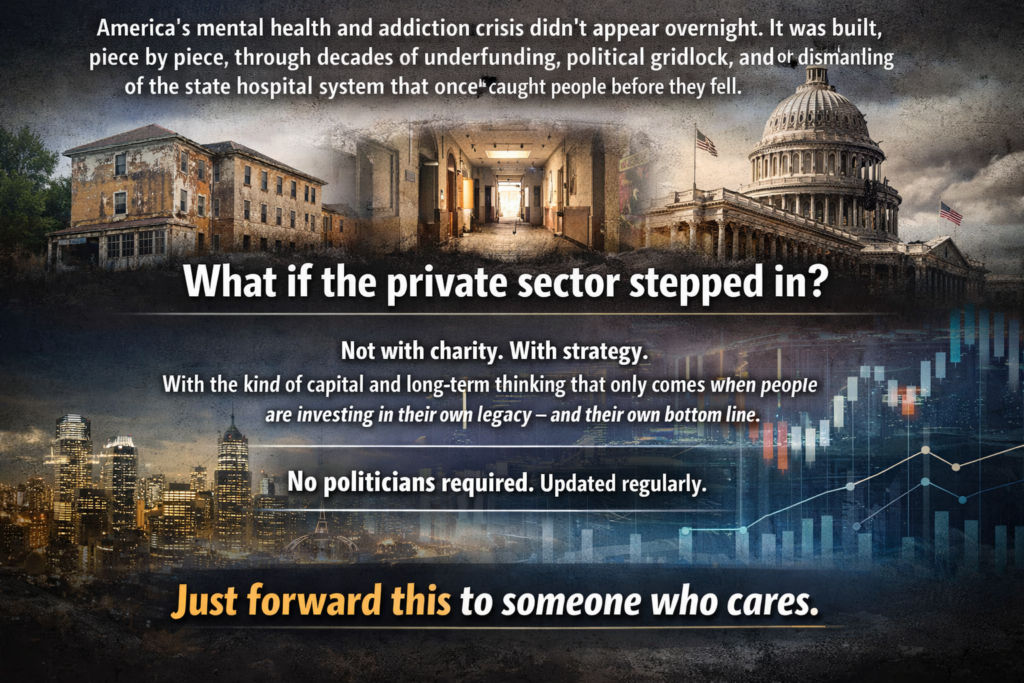
Not addiction in isolation—because addiction is often the visible problem. The root often lies in untreated or poorly managed mental health challenges. But addiction is treatable. It’s measurable. Interventions can work. And it’s where we can actually make a difference.
We see it everywhere. In cities, small towns, emergency rooms, police calls, families trying to hold together. People falling through the cracks of systems that were supposed to catch them.
We’ve known this for years. Studied it. Funded it. Debated it. Reframed it. Turned it into policy arguments, budget fights, election talking points.
And still—it sits there.
Not solved. Not improving in any meaningful, consistent way.
Just… managed.
Part of the reason is that we’ve treated it like a political problem. Something to be argued over. Something funded or defunded depending on who’s in charge. Something that shifts direction every few years without building real continuity.
But addiction doesn’t wait for elections. It doesn’t follow politics. And this doesn’t feel like a political problem anymore.
It feels like a systems problem.
Systems problems—when they’re clear enough—can be built differently.
This isn’t about overhauling healthcare. It’s not about rewriting insurance laws or building another layer of bureaucracy.
It’s simpler than that.
It’s about creating places where people can go when they’re not okay—and actually get help for the things we can treat.
Structured help. Humane help. Recovery-focused help.
Places designed from the beginning to focus on outcomes, not billing cycles. Where addiction is addressed alongside the underlying mental health context. Where accountability is measured by whether people stabilize, recover, and return to life with some form of independence.
Right now, we spend an extraordinary amount of time and energy reacting to crises after they’ve already spilled out.
Emergency response. Law enforcement. Crisis management.
All necessary. None designed to fix the root.
The quieter question is whether we’re willing to build something that works before people reach that point.
This isn’t impossible.
It’s neglected.
And sometimes the difference between the two is simply whether someone decides to pick it up.
Share this:

A Pivot Opportunity on America’s Mental Health Crisis – Redirecting Priorities from Endless War
Elon,You’ve already highlighted failures in mental health policy—deinstitutionalization left untreated severe cases on the streets, fueling homelessness, addiction, crime, and chaos (your “Make Asylums Great Again” posts in Feb 2026 nailed the critique of that 20th-century cost-cutting disaster). You’ve been open about personal struggles too (prescription ketamine for dark states, calling out “mental rabies” in violent offenders who need containment/treatment, not release).
The current hypocrisy is glaring and worsening: The Iran war (started late Feb 2026) is burning ~$1 billion/day (Pentagon briefed Congress on $11.3B+ in first 6 days; estimates now push $12–18B+ cumulative by mid-March, per CSIS/Reuters/NYT). That’s endless foreign escalation with no clear end, spiking gas prices and hurting Americans at home—while behavioral health funding gets squeezed (billions cut/reversed in SAMHSA grants under recent efficiencies).
A subtle distance from the current admin’s trajectory (less close proximity to avoid shrapnel from backlash) could open huge ground for you to lead on this domestically. Champion modern psychiatric treatment centers/recovery campuses (avoid “asylums” stigma—frame as humane, evidence-based facilities with safeguards, voluntary where possible, mandatory for severe threats). Tie it to protecting families/communities from exploitation, trauma, addiction cycles—subtly “shines” your image amid any lingering noise (e.g., old Epstein file smears).
Bring in Bezos, Zuckerberg, Ellison (Oracle) for a consortium: Announce an initial $19.5B fund (roughly 2–3 weeks of current war burn—people can do the math). Position it as:
-
Not replacing DEA street-level enforcement (that’s federal law job).
-
Funding treatment infrastructure: beds, crisis units, integrated SUD/mental health care, recovery housing, peer programs.
-
“Giving back”—this money originated from American taxpayers; redirecting a fraction to heal at home instead of endless abroad conflicts.
You have the platform (X), cash, and disruption cred to make this viral and bipartisan—addressing blue-city street crises and rural opioid/mental health gaps without heavy ideology. It aligns with your existing views, scales like your big missions, and could force national conversation/pressure for reallocations.
Worth considering? The timing (lame-duck dynamics, midterm/economic pain building) might be right.
No pressure—just an idea from a purple independent who’s tired of misplaced priorities.
@elonmusk – worth considering?

Article 3 of 3 The Long Game — Power Beyond the Ballot – Video
By now, it is clear that the 2026 midterms are unlike any we have seen in recent memory. The scale of spending, the intensity of coordination, and the precision of messaging all suggest a high-stakes contest—but the full story goes deeper than individual candidates or party control.
Share this:
Like this: