Posts in Category: Politics

The FCC and The News Brick What Good Government Actually Requires — Brick Five – The FCC and The News – Video

The FCC, The First Amendment, and The News That Used to Be News

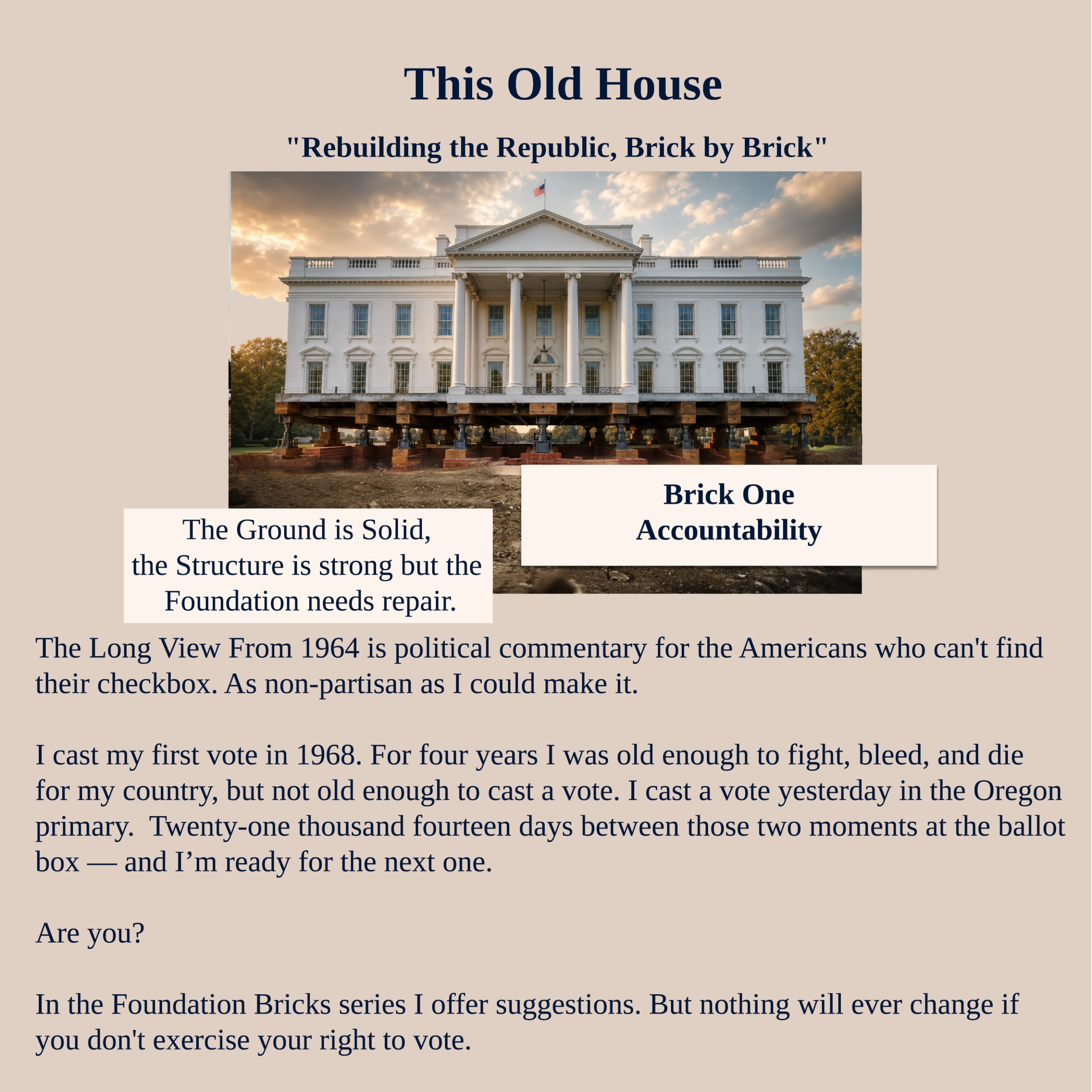
The airwaves are public property. Broadcast licenses are issued in the public trust — not as private rights but as public obligations. The entity that receives a license to use the public airwaves accepts a responsibility to serve the public interest. That was the founding principle. That was the deal.

Somewhere along the way the deal changed.

I can remember when the news was presented as news. Facts. This is what is happening. If an outlet wanted to offer opinion it was called an editorial and labeled as such. The separation was clear and it was honored because the public expected it and the license required it.

Secretary Read Certifies May Election Results, Confirms Historic Turnout – Oregon

PRESS RELEASE

Date: June 25, 2026
Contact: Connor Radnovich | connor.radnovich@sos.oregon.gov

Video Statement from Secretary Read

Secretary Read Certifies May Election Results, Confirms Historic Turnout

Oregon records the highest midterm primary voter turnout in state history

SALEM, OR — Today, Oregon Secretary of State Tobias Read certified the results of the 2026 May statewide election.

In total, more than 1.28 million eligible Oregonians voted, the most in a midterm primary election in state history. The official turnout rate was 41.87%, the second highest for a midterm primary since 1998, when Oregon became an exclusively vote-by-mail state.

ā€œVoting is one of the most meaningful acts a citizen can take to participate in our democracy. Voting is how we hold politicians accountable, decide the direction of our state, and elect representatives to advocate for our communities,ā€ Oregon Secretary of State Tobias Read said. ā€œI’m proud that so many Oregonians made their voices heard in this election. Our state is stronger when Oregonians hold their government accountable. Let’s set another record in November.ā€

Certification is the final step in the post-election day process to ensure the security, accuracy, and fairness of Oregon’s elections. As part of this process, elections officials take a variety of steps, including:

  • Resolving outstanding ballot issues, such as curing ballot signatures.

  • Publicly testing the accuracy of vote tallying machines.

  • Performing audits and hand counts to verify the results.

The Secretary of State’s office will release detailed election turnout data in the coming weeks.

###


Ā Having trouble viewing this email? View it as a Web page.
Ā |Ā  Help

Federal Court Blocks Executive Order that Would Undermine Vote-by-Mail – Oregon

PRESS RELEASE

Date: June 25, 2026
Contact: Connor Radnovich | connor.radnovich@sos.oregon.gov

Federal Court Blocks Executive Order that Would Undermine Vote-by-Mail

The executive order would have allowed the U.S. Postal Service to deny ballots to voters not on the federal government’s list

SALEM, OR — Today, in yet another a win for Oregon voters, a federal court blocked President Trump’s March 2026 executive order restricting mail-in voting and infringing upon states’ authority to administer elections.

Oregon joined 22 other states and the District of Columbia in this lawsuit, one of many steps Oregon elected leaders have taken to defend Oregonians’ right to vote.

ā€œThe President wants to pick and choose who gets to vote, but, in America, we don’t let Presidents interfere in elections,ā€ Oregon Secretary of State Tobias Read said. ā€œThe Constitution protects our right to run free, fair elections, and we will defend it. Oregonians decided many years ago that vote-by-mail was our preferred way of voting, and it remains the gold standard for integrity and access nationwide.ā€

The March 2026 executive order required states to provide sensitive voter information to the federal government, which would use that data to create a nationwide list of approved voters.

As part of his work to implement the executive order, the U.S. Postal Service postmaster recently said that states that did not provide voter information would not have mail ballots delivered at all, effectively denying the right to vote to all eligible Oregonians. Today’s ruling protects Oregon’s elections from federal interference.

Oregon pioneered vote-by-mail nearly 30 years ago and several states have joined Oregon with exclusively vote-by-mail elections.

Due to cuts at USPS, for the upcoming November general election the Secretary of State’s office recommends returning ballots via official ballot drop boxes or by mailing at least 1 week before election day.

###


Ā Having trouble viewing this email? View it as a Web page.
Ā |Ā  Help

The Electoral College: A Solution Looking for the Right Problem? – Video

Most debates about the Electoral College start with people choosing sides. One side wants to keep it. The other wants to abolish it.

I think the more interesting question is: What problem was it designed to solve, and does that problem still exist?

In 1787, information traveled at the speed of a horse. Most citizens knew little about candidates from distant states. The United States was less a single nation than a collection of states agreeing to work together. The Electoral College was part compromise, part practical necessity, and part protection against direct democracy in a world where voters had limited information.

For its time, the system made sense.

Today, none of those conditions exist.

——————————–

A constitutional convention to redesign the whole thing?

I don’t know.

What I do know is that every system solves one problem by creating another.

A pure popular vote values every vote equally, but raises concerns about population concentration.

The Electoral College protects state influence, but leaves many voters feeling irrelevant.

Winner-take-all states simplify elections, but turn most states into spectators.

There may not be a perfect answer. There may only be better compromises.

Before we argue about which system to adopt, we should at least agree on which problem we’re trying to solve.

If we can’t answer that question, we’re just rearranging the furniture.

And unlike the spare toilet paper at my house, nobody seems to know where the solution is stored.

The Electoral College asks how states should be represented.

Ranked-choice voting asks how voters should be represented.

Maybe before we decide which system is best, we should decide whose voice we are trying to hear more clearly.

The Elephant In The Room Nobody Is Looking At – Video

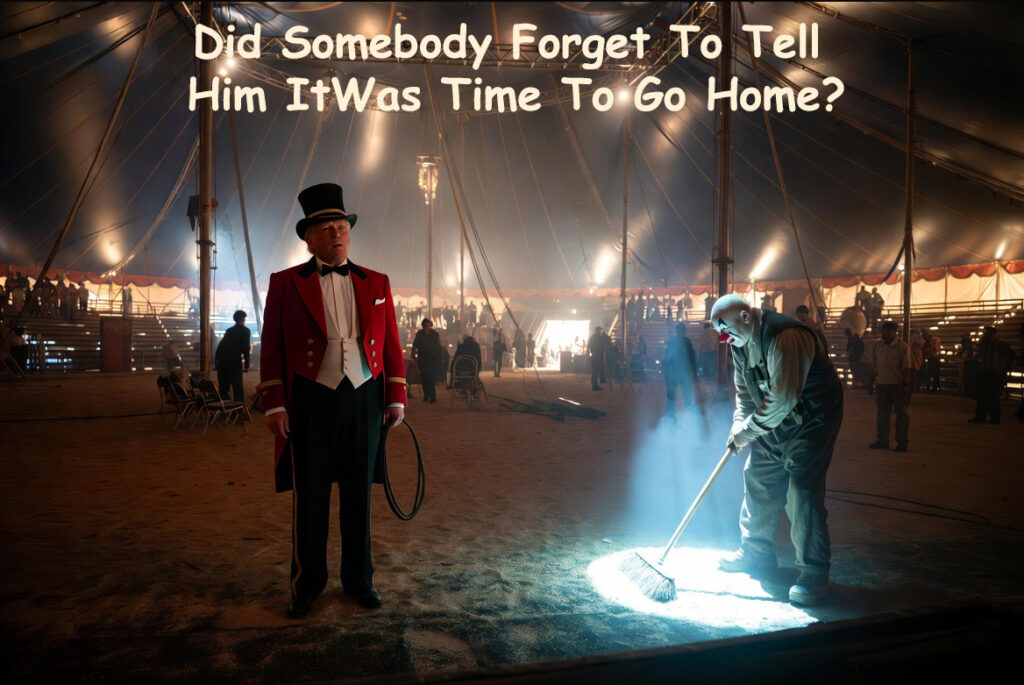
Trump is out. The clown is getting the hook. You’d have to be blind not to see it — and he’s too busy with his burgers to notice it himself. I have recently written about how the two party system has failed us and how dark money has made it nearly impossible for an independent candidate to even get on the ballot. The Republicans and the Democrats are not running the show. The SuperPACs are.

So when Musk threatened to start his own party during the DOGE wars all he was really doing was threatening Trump. Because Musk’s party couldn’t have gotten on 90 percent of American ballots. But it would have weakened the MAGA base — which was exactly the point.

Then Tucker Carlson said this:

“I would not support the Republican Party, there’s no chance. Not gonna support the Democratic Party. I don’t know what I’m going to do. How could I or any American voter support a political party that’s not loyal to the United States — that puts the interests of a foreign country above those of its own citizens. It’s not possible to vote for people like that and I’m not going to. I voted Republican my entire life. I worked at Fox News. I’ve been a consistent defender for 35 years of the Republican Party, but there’s no defending this because it’s immoral. I’m out. And if I’m out, then I think a lot of other people are out.”

Different name. Same chokehold. Same dark money. Same result for the Purple Rose.

I don’t think I need to put the pipe down to ask that question.

I think it’s the only question worth asking right now.

And I’m genuinely puzzled why so few people are asking it.

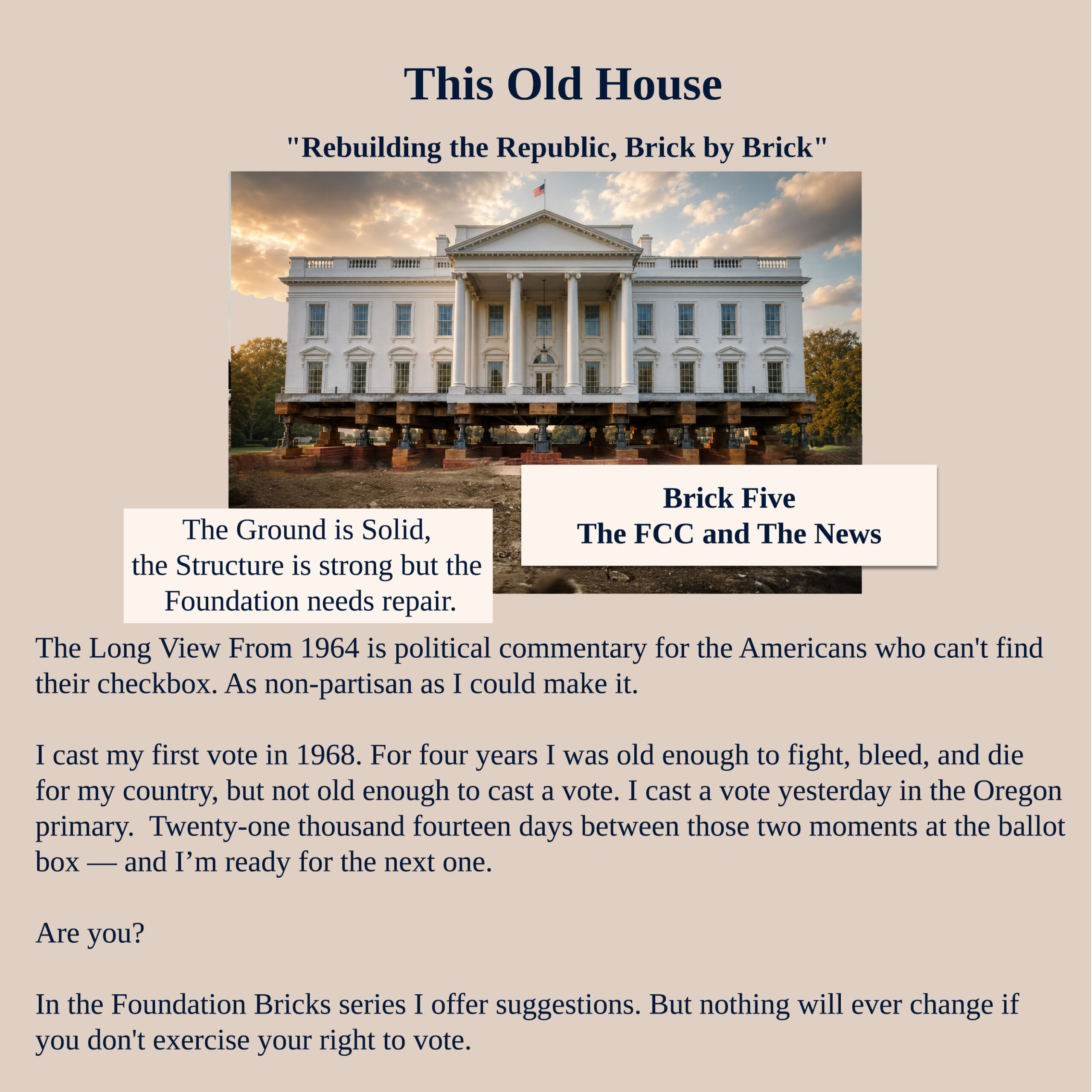
The FCC and The News Brick What Good Government Actually Requires — Brick Five – The FCC and The News

The Fifth Brick What Good Government Actually Requires — Part Five

The FCC, The First Amendment, and The News That Used to Be News

The founding charter of the Federal Communications Commission is the Communications Act of 1934 — an independent federal mandate enacted by Congress to regulate the airwaves in the public interest.

I encourage everyone to look it up. Read what it was designed to do. Then compare that to what it is currently doing.

The gap is the story.

The airwaves are public property. Broadcast licenses are issued in the public trust — not as private rights but as public obligations. The entity that receives a license to use the public airwaves accepts a responsibility to serve the public interest. That was the founding principle. That was the deal.

Somewhere along the way the deal changed.

Today a handful of corporations own most of what Americans see and hear. When that many outlets are controlled by that few owners the news stops being news and becomes something else. Call it perspective. Call it editorial direction. Call it what it actually is — propaganda with a news desk and a theme song.

This will be worth repeating in future segments because it touches everything. An informed citizenry is the foundation under the foundation. You cannot have accountability without information. You cannot have meaningful elections without accurate news. You cannot have a functioning democracy when the information ecosystem is owned by people with specific financial and political interests in what you believe.

Now add the Inspector Generals.

We have them. Or we had them. Their purpose is straightforward — independent oversight of the agencies they monitor, specifically designed to catch corruption and prevent regulatory capture. A check on the checkers. An independent eye on the people making the rules.

The current administration fired most of them.

The same oversight that would have monitored what the administration itself was doing — gone. Not restructured. Not replaced. Removed. Because independent oversight of your own behavior is inconvenient when your behavior requires oversight.

This is not a political attack. It is an illustration of exactly why the executive branch needs hard limits on what it can and cannot touch. There need to be areas of the civil service where executive orders have little to no effect. Where the order arrives and the response is not a court challenge but a rubbish bin. Some things should simply be beyond the reach of any single administration regardless of who won the last election.

The FCC is one of those things.

Its job is regulation. Monitor acquisitions. Prevent monopolies. Protect the public interest in the airwaves it licenses. What is not — what should not be — in its charter is any role in determining what speech is acceptable to the current occupant of the White House.

And yet.

For anyone paying attention — look up the details of what happened with Jimmy Kimmel, Stephen Colbert, and the Daily Show. The FCC was used as a direct instrument of executive pressure to coerce networks into dropping programming the president found unfavorable. Not illegal content. Not obscenity. Programming he didn’t like.

That is not regulation. That is a threat wearing a regulatory costume.

In our new foundation the safeguards have to be structural not assumed. No presidential pressure moves the needle because the president cannot fire the people holding the needle. Independence is not a courtesy — it is an architecture. Built in. Locked. Not dependent on the good faith of whoever currently holds power.

I can remember when the news was presented as news. Facts. This is what is happening. If an outlet wanted to offer opinion it was called an editorial and labeled as such. The separation was clear and it was honored because the public expected it and the license required it.

That line has been erased. Rebuilding it requires more than nostalgia. It requires structural protection with enforceable consequences.

You cannot have the First Amendment and suppress it simultaneously. That is not how the system was designed to work.

And here is the danger that goes beyond any single administration or any single network or any single late night host who said something unflattering.

When you find a way to circumvent one rule — even a small one, even quietly, even with a plausible justification — the next rule becomes easier. And the one after that. The erosion is always gradual until suddenly it isn’t gradual at all.

There need to be consequences.

Fast ones. Enforceable ones.

The First Amendment is not a suggestion. It is the first brick for a reason.

Secretary Read Celebrates Victory in Executive Order Case on Voting Rights – Oregon

PRESS RELEASE

Date: June 24, 2026
Contact: Connor Radnovich | connor.radnovich@sos.oregon.gov

Secretary Read CelebratesĀ Victory inĀ Executive Order Case on Voting Rights

A federal judge permanently blocked key parts of an executive order thatĀ would have made voting more difficult for eligibleĀ citizensĀ Ā 

SALEM, OR — Today, in a victory for the rights of people to hold politicians accountable through elections, a federal judge permanently blocked key parts of President Trump’s March 2025 executive order that would have made it harder for eligible citizens to vote.

Oregon Secretary of State Tobias Read is releasing the following statement:

ā€œAs I’ve been saying for months and a judge agreed today, the president does not have any power over how states run elections. The Constitution is clear: states and Congress set the rules for elections, not one man in the Oval Office. Instead of trying to make voting more difficult, the president should instead focus on strengthening election security, supporting local election officials, and protecting every eligible American’s freedom to vote.ā€

This ruling was in response to a lawsuit brought by 19 states that sued to block President Trump’s executive order from March 2025. The order had previously been partially blocked by the same court under a preliminary injunction.

Other federal courts have also granted injunctions against this executive order, including the U.S. District Court for the Western District of Washington in response to Oregon and Washington’s lawsuit.

###

Ā Having trouble viewing this email? View it as a Web page.

Ā |Ā  Help

Oregon – Campaign Finance Learning Opportunity – Voters’ Pamphlet Filing Process – Maybe what free election are all about

sos.oregon.gov/ORESTAR | 503-986-1518 | orestar-support.sos@sos.oregon.gov

Campaign Finance Learning Opportunity

Voters’ Pamphlet Filing Process

The first day to file a voters’ pamphlet statement by fee is around the corner!

Did you know that if you pay for your statement now you can make changes all the way up until the deadline to file? This gives you flexibility to make changes as the landscape changes and while you seek endorsements. Speaking of endorsements, did you know endorsers are required to fill out a form giving you permission to use their name?

Whether you’re a first-time candidate or whether you’re looking for a refresher, the Elections Division invites you to join us for a comprehensive overview of the voters’ pamphlet filing process.

Date/Time: July 1, 2026, 12:00 PM – 1:00 PM

Location: Microsoft Teams

Register here!

Ā Having trouble viewing this email? View it as a Web page.

Ā |Ā  Help

This email was sent to ——– using GovDelivery Communications Cloud on behalf of: Oregon Secretary of State Ā· 900 Court Street NE Ā· Capitol Room 136 Ā· Salem OR 97310-0722

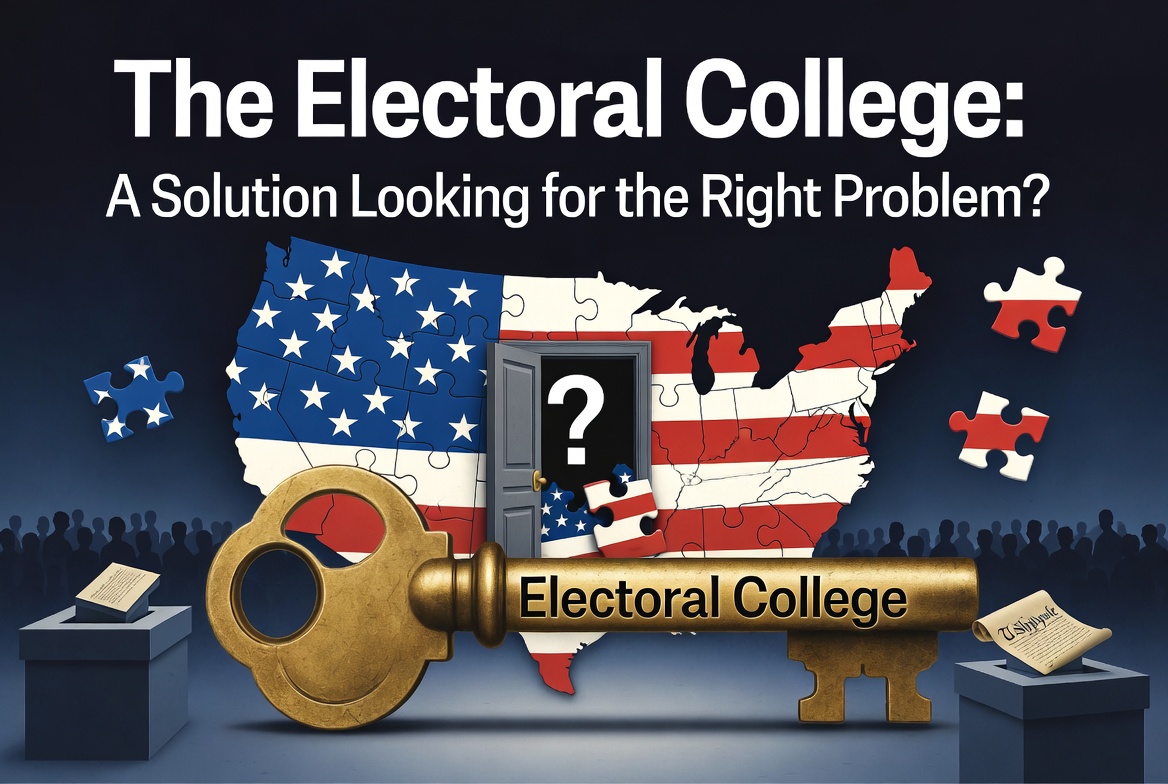
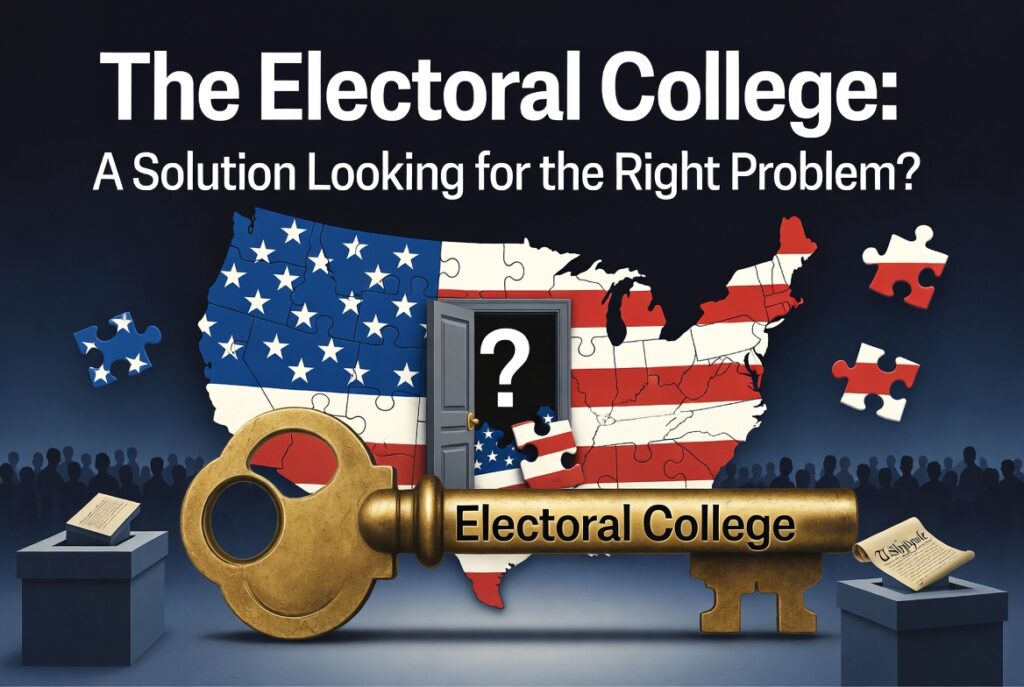
The Electoral College: A Solution Looking for the Right Problem?

Most debates about the Electoral College start with people choosing sides. One side wants to keep it. The other wants to abolish it.

I think the more interesting question is: What problem was it designed to solve, and does that problem still exist?

In 1787, information traveled at the speed of a horse. Most citizens knew little about candidates from distant states. The United States was less a single nation than a collection of states agreeing to work together. The Electoral College was part compromise, part practical necessity, and part protection against direct democracy in a world where voters had limited information.

For its time, the system made sense.

Today, none of those conditions exist.

A voter in Oregon can watch a speech made in Florida in real time. News travels instantly. Candidates campaign nationally. Americans think of themselves as citizens of one country first and residents of a state second.

The original reasons for creating the Electoral College have weakened or disappeared.

Yet replacing it raises legitimate concerns.

A pure popular vote could encourage candidates to focus heavily on large population centers. The current system encourages candidates to focus on a handful of swing states. Neither approach feels particularly representative.

Today, millions of Republicans in California and millions of Democrats in Texas know their presidential vote is unlikely to matter. At the same time, a relatively small number of voters in a few battleground states effectively decide the election.

That suggests the problem is not simply the Electoral College. The problem is that our current system leaves large numbers of Americans feeling their vote has little impact.

I don’t pretend to know the perfect answer.

Perhaps it is a modified Electoral College. Perhaps it is a national popular vote. Perhaps it is a system nobody has proposed yet.

What I do know is that institutions should be judged by whether they solve today’s problems, not yesterday’s.

The Electoral College was created to address concerns that were real in 1787.

If the Electoral College is broken, what replaces it?

A straight popular vote?

A proportional allocation of electoral votes instead of winner-take-all states?

A ranked-choice national election?

A system where states award electoral votes by congressional district?

A constitutional convention to redesign the whole thing?

I don’t know.

What I do know is that every system solves one problem by creating another.

A pure popular vote values every vote equally, but raises concerns about population concentration.

The Electoral College protects state influence, but leaves many voters feeling irrelevant.

Winner-take-all states simplify elections, but turn most states into spectators.

There may not be a perfect answer. There may only be better compromises.

Before we argue about which system to adopt, we should at least agree on which problem we’re trying to solve.

If we can’t answer that question, we’re just rearranging the furniture.

And unlike the spare toilet paper at my house, nobody seems to know where the solution is stored.

The Electoral College asks how states should be represented.

Ranked-choice voting asks how voters should be represented.

Maybe before we decide which system is best, we should decide whose voice we are trying to hear more clearly.

The Elephant In The Room Nobody Is Looking At

Ever feel like you’re on the verge of a nervous breakdown from all the noise? The he said she said, on and on, round and round. Just noise.

But is it just noise?

Sometimes the most important thing happening isn’t the loudest thing happening. Sometimes the real story is in the room nobody is looking at.

Trump is out. The clown is getting the hook. You’d have to be blind not to see it — and he’s too busy with his burgers to notice it himself. I have recently written about how the two party system has failed us and how dark money has made it nearly impossible for an independent candidate to even get on the ballot. The Republicans and the Democrats are not running the show. The SuperPACs are.

So when Musk threatened to start his own party during the DOGE wars all he was really doing was threatening Trump. Because Musk’s party couldn’t have gotten on 90 percent of American ballots. But it would have weakened the MAGA base — which was exactly the point.

Then Tucker Carlson said this:

“I would not support the Republican Party, there’s no chance. Not gonna support the Democratic Party. I don’t know what I’m going to do. How could I or any American voter support a political party that’s not loyal to the United States — that puts the interests of a foreign country above those of its own citizens. It’s not possible to vote for people like that and I’m not going to. I voted Republican my entire life. I worked at Fox News. I’ve been a consistent defender for 35 years of the Republican Party, but there’s no defending this because it’s immoral. I’m out. And if I’m out, then I think a lot of other people are out.”

Thank you Heather Delaney Reese forĀ Trump loyalists are jumping off the sinking ship

Tucker Carlson. Thirty five years. Out.

Now ask the question nobody seems to want to ask out loud.

Where are they going?

Tucker isn’t going long term. A third party takes decades to build and he doesn’t have that kind of patience or that kind of money. But somebody does.

Here is where we need to look. Here is the room nobody is looking at.

The SuperPACs. The dark money. The Federalist Society. Leonard Leo. Arabella Advisors. The entire infrastructure that has been quietly and methodically building the conservative legal and political architecture for thirty years.

They didn’t back Trump because they loved him. They backed him because he was a useful vehicle. Three Supreme Court justices. Hundreds of federal judges. Regulatory rollback. Tax structure. The return on their investment has been substantial.

But now the vehicle is embarrassing them. The stall is covered in dung. The clown is jeopardizing thirty years of careful infrastructure with daily chaos and a cognitive decline visible to anyone paying attention.

MAGA is dead. Trying to save it is a fool’s errand.

So what are the options?

Save the Republican Party — purge the MAGA element, restore something resembling functional conservatism, hope Vance or Rubio or someone with a law degree and a functioning prefrontal cortex can carry the banner forward. Vance and Rubio haven’t invoked the 25th Amendment yet because they’re still afraid of the MAGA base. But here’s the thing — if they did it the Republican establishment would put them on their shoulders. The dark money would fund the parade.

Or start over — a new right of center party, properly funded, built from the existing infrastructure that Leonard Leo and the Federalist Society have already constructed. It would have money. It would have judicial connections. It would have the organizational architecture that third parties normally spend decades trying to build.

Which brings us to the question that should keep everyone awake.

Is that a good thing?

Are we watching the dark money apparatus recognize that their vehicle has failed and quietly preparing to deploy a new one? A cleaner one. A more electable one. A saving angel that turns out to serve the same architecture in a better suit?

Or to put it another way — would a new right wing party actually break the two party system open for independents and moderates?

Or would it just be a Texas sidestep?

Different name. Same chokehold. Same dark money. Same result for the Purple Rose.

I don’t think I need to put the pipe down to ask that question.

I think it’s the only question worth asking right now.

And I’m genuinely puzzled why so few people are asking it.

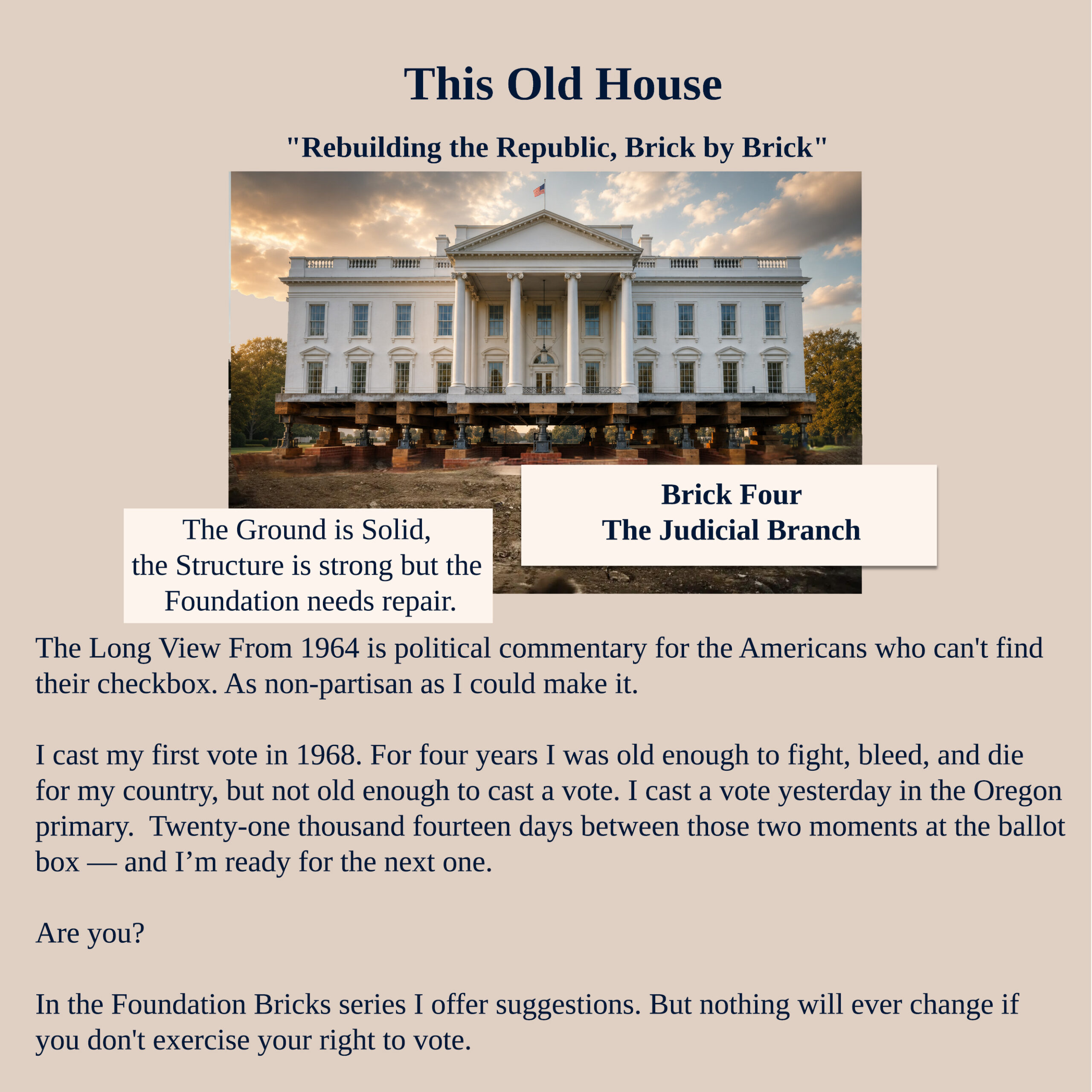
The Judicial Branch Brick What Good Government Actually Requires — Brick Four – The Judicial Branch – Video

The Supreme Court was never designed to be a political prize.

It has become one anyway.

Every president now treats Supreme Court appointments as the most important legacy decision of their term — not because they care deeply about judicial philosophy but because they are buying future outcomes. The pocket justice. The reliable vote. The insurance policy wearing a robe.

The result is a court whose decisions are predictable before the arguments are heard. Everyone knows which way each justice will rule on any politically charged question because everyone knows who appointed them and what was expected in return. That is not justice. That is scorekeeping in robes.

The fix is not complicated. It is just threatening to the people who benefit from the current arrangement.

The Judicial Branch Brick What Good Government Actually Requires — Brick Four – The Judicial Branch

The Fourth Brick What Good Government Actually Requires — Part Four

The Judicial Branch

The Supreme Court was never designed to be a political prize.

It has become one anyway.

Every president now treats Supreme Court appointments as the most important legacy decision of their term — not because they care deeply about judicial philosophy but because they are buying future outcomes. The pocket justice. The reliable vote. The insurance policy wearing a robe.

The result is a court whose decisions are predictable before the arguments are heard. Everyone knows which way each justice will rule on any politically charged question because everyone knows who appointed them and what was expected in return. That is not justice. That is scorekeeping in robes.

The fix is not complicated. It is just threatening to the people who benefit from the current arrangement.

More justices. Randomly assigned. Term limited. Appointed by peers not presidents.

Not a specific number — the number is less important than the principle. Enough justices that no single president can stack the composition. Assigned to rotating panels by lottery so nobody can predict which justices will hear which case. Appointed by their fellow jurists rather than by the politician who wants to own their vote. Term limited to twelve or eighteen years — long enough to develop genuine expertise, short enough to prevent the court from calcifying around a single political moment.

The lottery is the key. You cannot game a random draw. You cannot have a justice in your pocket if you don’t know which pocket they’ll be sitting in when your case arrives. The pipeline between political appointment and predetermined outcome gets broken not by ideology but by randomness.

But the most important brick in the judicial wall has nothing to do with composition.

It has to do with enforcement.

Right now the Supreme Court can rule and the executive branch can say no. And nothing happens. The court has no army. The court has no marshals with actual authority. The court has strongly worded opinions and the assumption that the executive branch will comply because it always has before.

That assumption has been tested and found wanting.

Here is a question worth sitting with.

Every lower court in America has enforcement authority. A district judge can hold anyone in contempt and have them detained. Federal marshals exist specifically to enforce court orders at every level of the federal judiciary.

Except the highest one.

The Supreme Court — the final word on constitutional law, the last institutional check on executive power — operates on the honor system.

What good is the honor system if no one honors it?

We have now seen what happens when that hope runs out.

At what point do we acknowledge that the highest court in the land deserves at least the enforcement authority we grant to every court below it?

The Supreme Court needs its own enforcement mechanism. A Marshal’s service with the specific authority to detain anyone — anyone — that the court by majority vote determines is willfully operating outside their constitutional limits and has become a national threat.

No exceptions. No immunity. No rank that places a person beyond the reach of a court order.

The moment a president — or anyone else — can look at a Supreme Court ruling and respond with effective impunity the entire architecture of the republic becomes decorative. Pretty columns on a building with no foundation.

The court says no and the no has to mean something.

That is the fourth brick.

Not a perfect court. Not an infallible court. Just one that cannot be owned before the case is filed and cannot be ignored after the ruling is issued.

Justice without enforcement is just a word.

It Takes Two to Tango, But The More The Merrier – Video

We are wired for opposition, for partnership, for the push and pull of another person across the table. It’s more rewarding together than alone — after all, taking a shower together was always nicer than showering alone.

But enough of beer bars and bedrooms. Off to where the real back-stabbing and dirty stuff happens — politics and government.

In my opinion, the evil creating the havoc we live with today can be traced directly to what we call the two-party system. Anyone who wants a career in politics has to align themselves with a party. They have to declare that they are either Liberal — Blue, or Conservative — Red. They can’t walk in and say, hey, look at me. This is what I can do for you. And the reason is twofold: money and the checkbox.

The two-party system isn’t in the Constitution. It isn’t carved in stone or handed down from the founders. It’s a habit. An expensive, entrenched, self-serving habit that benefits exactly two groups of people — the two parties — and leaves the rest of us standing outside the dance hall listening to music we didn’t choose and paying the cover charge anyway. Habits can be broken. Systems can be redesigned. The question isn’t whether we can do better. The question is whether enough of us get angry enough, soon enough, to demand it.

It Takes Two to Tango, But The More The Merrier

Did you ever play a game of snooker against yourself? Put up the other side of a ping pong table to practice? It didn’t take long until video game creators realized they made more money in a bar with a PacMan with opposing controllers. Let’s face it, playing by yourself isn’t as much fun or as satisfying. That’s why we had the post-war population explosion.

We are wired for opposition, for partnership, for the push and pull of another person across the table. It’s more rewarding together than alone — after all, taking a shower together was always nicer than showering alone.

But enough of beer bars and bedrooms. Off to where the real back-stabbing and dirty stuff happens — politics and government.

In my opinion, the evil creating the havoc we live with today can be traced directly to what we call the two-party system. Anyone who wants a career in politics has to align themselves with a party. They have to declare that they are either Liberal — Blue, or Conservative — Red. They can’t walk in and say, hey, look at me. This is what I can do for you. And the reason is twofold: money and the checkbox.

Campaigns cost money, and an independent candidate has to compete against the Superpacs. This isn’t a small thing. Since I am registered Republican, this is the only example I can give honestly — but I am positive it is equally true for Blue. I receive at least fifty give-me-money emails a day from Trump, Vance, Trump’s kids, and would probably get them from Trump’s dog if he had one. Those contributions flow into what we call a Superpac. So when a party endorses your opponent, your opponent suddenly has a war chest you can’t match, financed by people who have never heard your name and wouldn’t care if they had. If you run independent, you finance from your own pocket or whatever limited funds you can scratch together from limited supporters. A very uneven battlefield.

The second problem is who they serve once elected. They no longer can support the people who voted for them — they must support the people who paid for their election. They must vote along party lines. We see that now, every day. It has a name: partisan. Which is a polite word for captured.

Let me ask you a few questions. If we didn’t have the two-party system, would Donald Trump have been elected? If he had been elected, would those — sorry, you didn’t see the three-minute pause while I searched for words other than idiots, thieves, and suckups — cabinet secretaries ever have been confirmed? Would we be in Trump’s war of choice? Would Trump have been Article 25’d by now?

I’ll let you answer those yourself.

The two-party system isn’t in the Constitution. It isn’t carved in stone or handed down from the founders. It’s a habit. An expensive, entrenched, self-serving habit that benefits exactly two groups of people — the two parties — and leaves the rest of us standing outside the dance hall listening to music we didn’t choose and paying the cover charge anyway. Habits can be broken. Systems can be redesigned. The question isn’t whether we can do better. The question is whether enough of us get angry enough, soon enough, to demand it.

The Long View From 1964 – The Newsboy Cap – Video

Fish guts. What do I do with these fish guts? I don’t want to run them down the garbage disposal — I have a septic tank. So they have to go into the garbage, but oh woe is me. There isn’t any newspaper to wrap them in. What has happened to America? What has happened? No more newspaper to wrap fish guts in.

Ol’ English Fish and Chips, Inglewood California, 1974. Lunch time, an hour off. I worked at Inglewood Physical Therapy on Locust Street and would walk over for fast food — Ol’ English Fish and Chips, wonderful cod and french fries wrapped in fake newsprint. So good. So much better than some fast food burger. Gone now, but the memories aren’t.

Oh, I would love a basket of Ol’ English Fish and Chips with a bottle of malt vinegar right now.

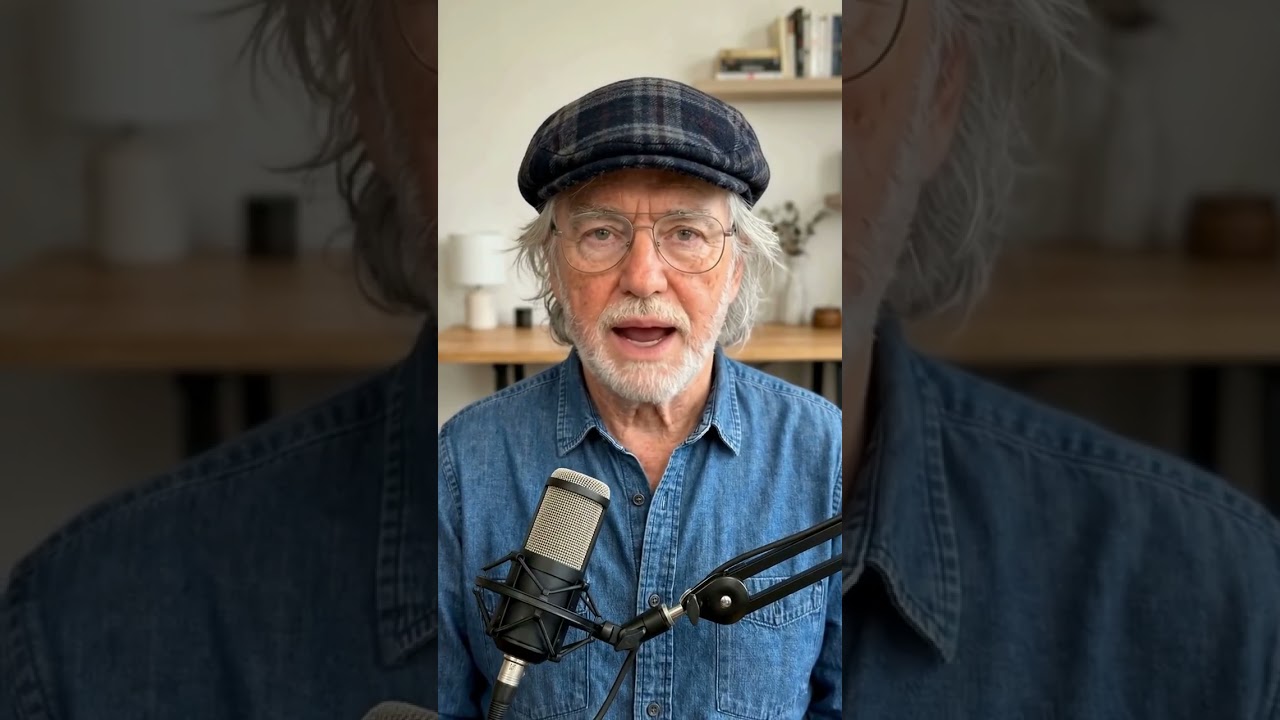
On a side note — some people wear baseball caps, cowboy hats, no hats at all. Last year I started wearing the classic newsboy cap. Go figure. Does look good with the grey and white hair though.

Written Video
The Long View from 1964: Superman The Long View from 1964: Superman
The Long View from 1964: Maybe Just Listen The Long View from 1964: Maybe Just Listen
The Long View from 1964: The Checkbox Problem The Long View from 1964: The Checkbox Problem
The Long View from 1964: The Land Moved While You Slept The Long View from 1964: The Land Moved While You Slept
The Long View from 1964: The Road and the Ground Beneath It The Long View from 1964: The Road and the Ground Beneath It
The Long View from 1964: Where is Anywhere? The Long View from 1964: Where is Anywhere?
The Long View from 1964: The Saucepan Hat The Long View from 1964: The Saucepan Hat

The Long View From 1964 – The Newsboy Cap

Fish guts. What do I do with these fish guts? I don’t want to run them down the garbage disposal — I have a septic tank. So they have to go into the garbage, but oh woe is me. There isn’t any newspaper to wrap them in. What has happened to America? What has happened? No more newspaper to wrap fish guts in.

Ol’ English Fish and Chips, Inglewood California, 1974. Lunch time, an hour off. I worked at Inglewood Physical Therapy on Locust Street and would walk over for fast food — Ol’ English Fish and Chips, wonderful cod and french fries wrapped in fake newsprint. So good. So much better than some fast food burger. Gone now, but the memories aren’t.

Corvallis, late seventies. Walk over to the local market for a counter lunch, find a newspaper someone left waiting for me. Headlines that told what happened nationally and what the Beavers did. Good stuff, even if it was a week old.

Growing up, Mom and Dad always had the daily paper delivered. In Manhattan Beach it was the Daily Breeze and the Los Angeles Times. Wherever we lived, it was local and regional and national. That’s where we got the news — and it was the news. If you wanted an opinion, you went to the editorial page. There you read the partisan slant. If the publisher was conservative, that’s where the slant went. The front page was holy ground for the NEWS.

The best part was you didn’t throw it away that day. You saved them up for the school kid with the fundraising paper drive. What we didn’t realize at the time was that we had accidentally built an archive. You didn’t have to go to the library to look something up — you had a six month to one year record already sitting in your garage, in order, except for the few sheets that had wrapped the fish guts. And those were probably the classified ads anyway.

Try finding an article posted five minutes ago if you’re not subscribed to that thread. And even if you are, good luck.

What has really happened is we changed from printing and distributing the news — news that if found incorrect would have a redaction printed, visibly, permanently, for everyone to see — to online content that can be quietly edited into something else entirely, or simply deleted, with no trace and no accountability. Never before has the phrase Buyer Beware been so important. And most critically, we aren’t even paying for it. It’s being force fed to us, customized by an algorithm we can’t see, shaped by a bias we can’t find on any editorial page.

The newspapers had their editorial page and they had something else — Letters to the Editor. Online publications have those as well, technically. Try finding them though. Try submitting something. I have. But newspapers were more open and honest about it. If they made a mistake, they owned up to it. Sometimes on their own. Integrity was important. A reporter’s reputation was his livelihood. Nobody buys a Timex watch on an outboard motor’s prop from someone they didn’t trust. Who in mainstream media do you trust today?

The point I am really trying to make — even with the podcasters you trust, the Substack authors you trust, the elephantsinkroom.com you trust — we have a limited audience. We keep talking to the same people, over and over. The share button only shares to the same platform, the same followers, the same converted.

We hope you are spreading the word. Because what we say isn’t being left on the lunch counter anymore. It isn’t sitting in the news rack on the street corner. It isn’t landing on your doorstep to be read by whoever picks it up. If it were printed you could share it — hand it to someone, leave it somewhere, let it find a stranger. That would be better than forwarding it to someone who already agrees, or just deleting it.

Newspapers died an unwarranted death.

Oh, I would love a basket of Ol’ English Fish and Chips with a bottle of malt vinegar right now.

On a side note — some people wear baseball caps, cowboy hats, no hats at all. Last year I started wearing the classic newsboy cap. Go figure. Does look good with the grey and white hair though.

Written Video
The Long View from 1964: Superman The Long View from 1964: Superman
The Long View from 1964: Maybe Just Listen The Long View from 1964: Maybe Just Listen
The Long View from 1964: The Checkbox Problem The Long View from 1964: The Checkbox Problem
The Long View from 1964: The Land Moved While You Slept The Long View from 1964: The Land Moved While You Slept
The Long View from 1964: The Road and the Ground Beneath It The Long View from 1964: The Road and the Ground Beneath It
The Long View from 1964: Where is Anywhere? The Long View from 1964: Where is Anywhere?
The Long View from 1964: The Saucepan Hat The Long View from 1964: The Saucepan Hat

Protecting Your Voting Rights – Video

Protecting voting rights is a fundamental aspect of American democracy, and your concern about potential executive overreach is valid given recent reports. While presidents have issued executive orders related to elections in the past, they don’t have unilateral authority to control how states run them, elections are primarily a state responsibility under the Constitution (Article I, Section 4), with Congress able to set or alter regulations for federal races. Any attempt to impose sweeping changes via executive order, especially if premised on unsubstantiated claims like foreign interference from past elections, would likely face immediate legal challenges and injunctions from federal courts, as happened with a similar order in March 2025.

Courts have repeatedly affirmed that such actions can’t override constitutional limits or state authority without clear statutory backing.

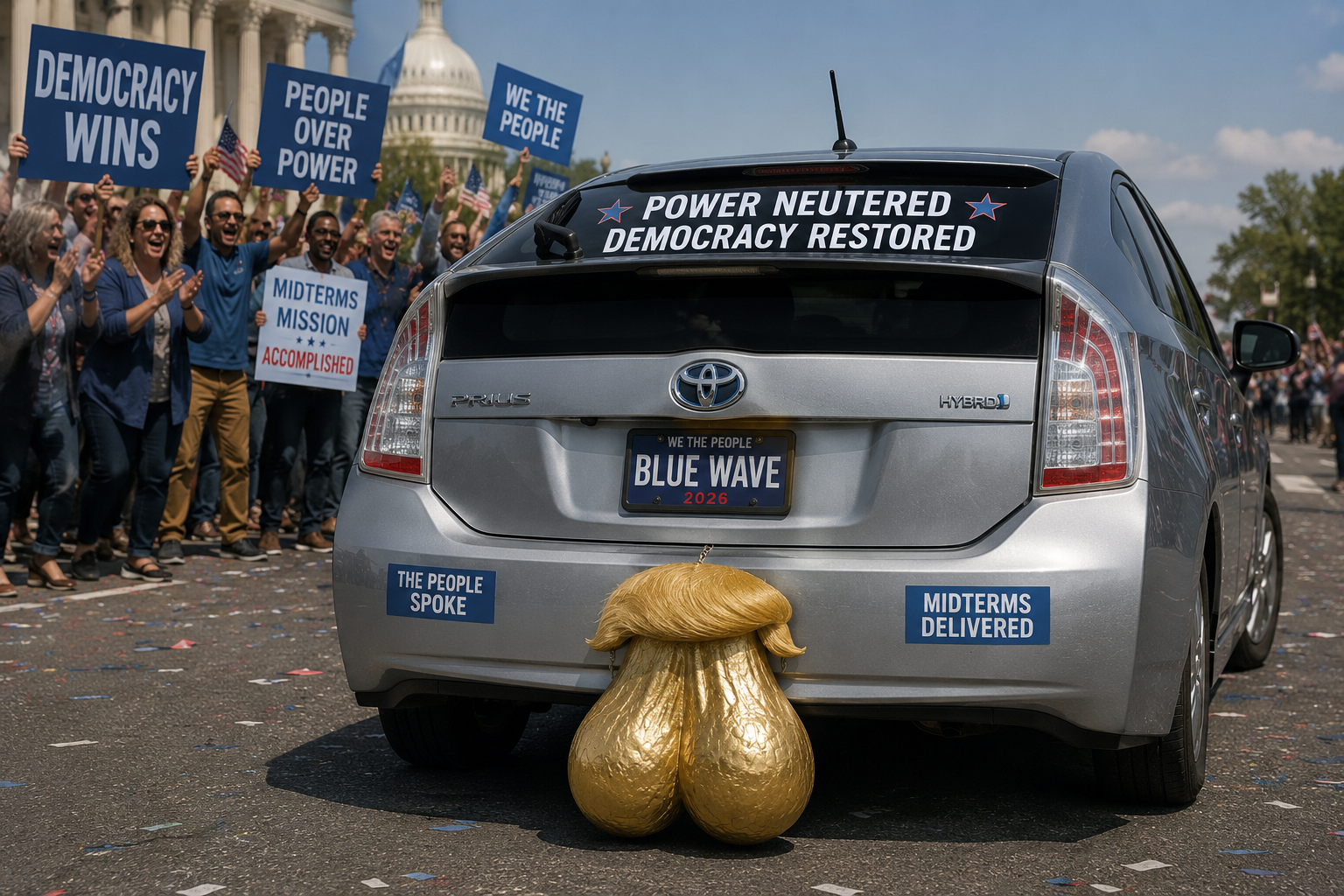
20260227 1538 Image Generation simple compose 01kjgqdwssfdtrr9cs1f1w4ghs

Texas Is Pushing Independents Off Ballots – 06/19/26

In recent weeks, we have shared news about the candidates running, the signatures gathered, and forward momentum for independents this cycle. This week, we’re focusing on the fight to make sure independent candidates can even get that far. The Forward Party announced support for a lawsuit against the State of Texas this week, and we want you to understand why.

81,030 is the key number here. That is the number of valid voter signatures Texas requires an independent statewide candidate to collect, with only 30 days to do it.

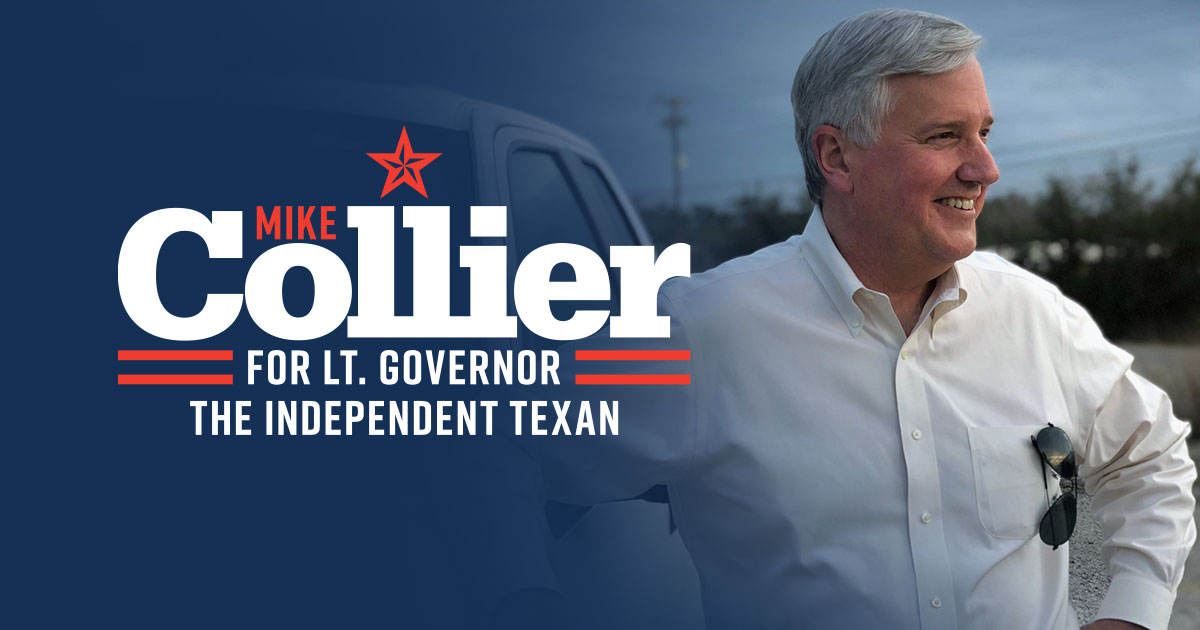
The Forward Party is officially supporting Texas independent candidate for Lieutenant Governor Mike Collier who filed a lawsuit challenging the state’s ballot access requirements for independent statewide candidates. It was filed in cooperation with the Center for Competitive Democracy.

Here’s what Texas law actually requires: an independent candidate for statewide office must collect more than 81,030 valid voter signatures. That alone would be a serious challenge for any campaign, but Texas adds another twist. Independent candidates are legally prohibited from beginning that signature collection process until after the partisan primary runoff elections have concluded.

This year, that meant the clock didn’t start until May 26th, when Texas’s primary runoffs wrapped up. Independent petitions are due June 25th. That leaves independent candidates just 30 days to collect more signatures than most statewide campaigns gather in six months.

It gets more restrictive. Texas law also sharply limits who is allowed to sign an independent candidate’s petition. Any voter who participated in a party primary or runoff election is disqualified from signing an independent candidate’s petition.

Combine a pressed 30-day timeline with a shrunken pool of eligible signers, and you get a system that is not only expensive but also logistically difficult to navigate. That is by design.

As the lawsuit argues, these barriers serve no public purpose other than locking independent candidates, and the voters who want to support them, out of the democratic process entirely.

Whether it’s gerrymandered districts that reduce competition or ballot access laws that keep independent candidates off the ballot entirely, the result is the same: fewer meaningful choices for voters, and a political system built to protect incumbents and party insiders rather than the people they’re supposed to serve.

Please forward this to your friends, family, and coworkers. It helps us introduce them to Forward and to what we are building. Also consider inviting them to one of our upcoming events listed below. We’d love to meet them.

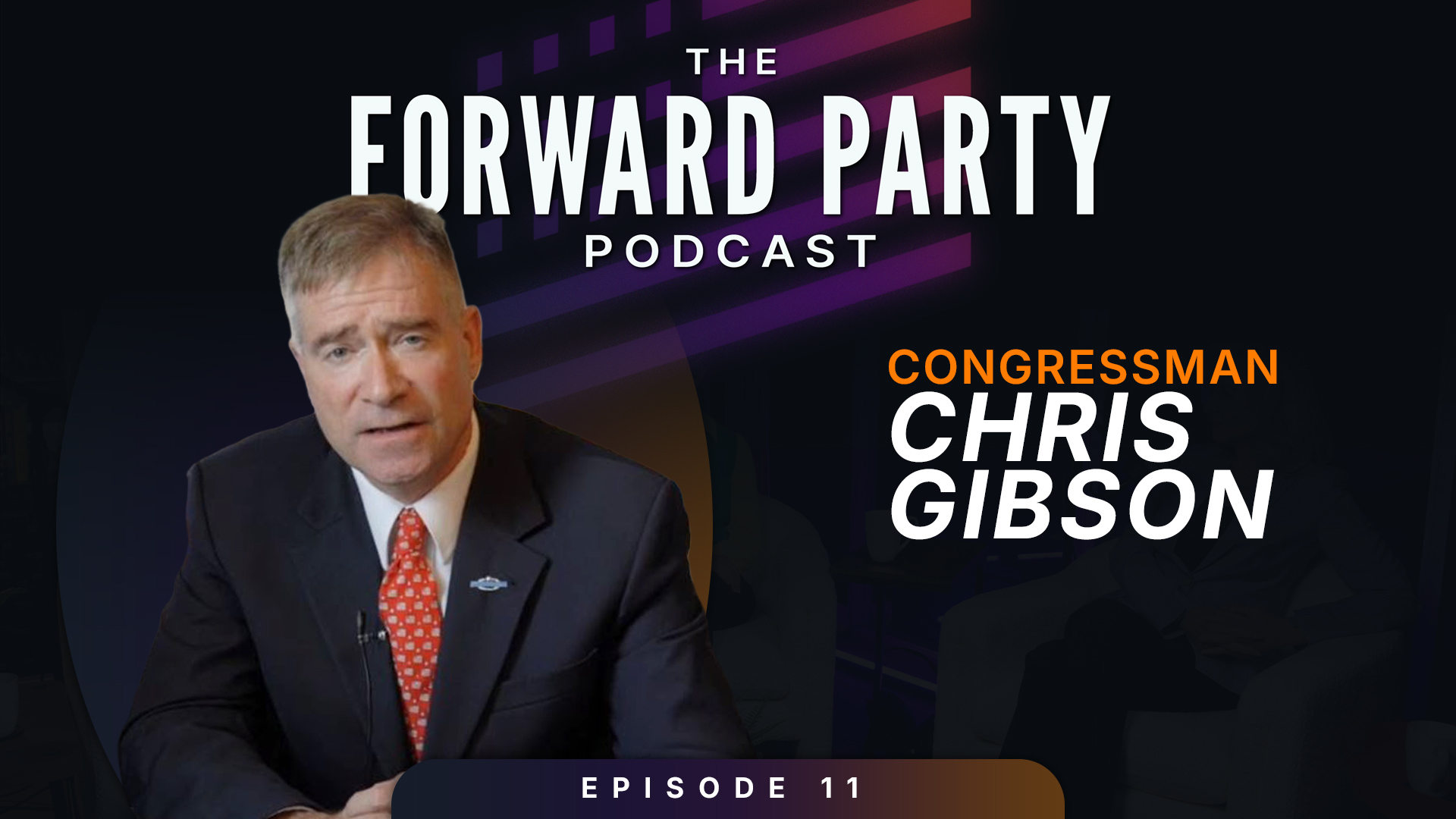
The Forward Party Podcast

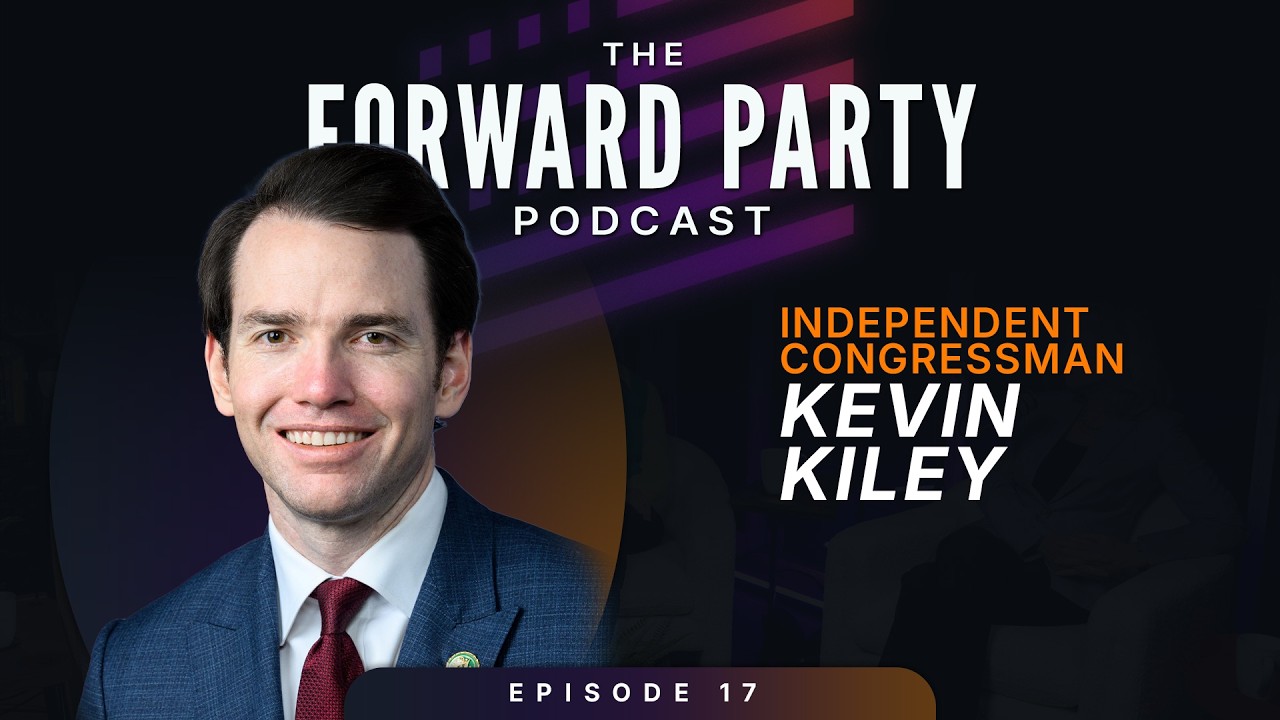
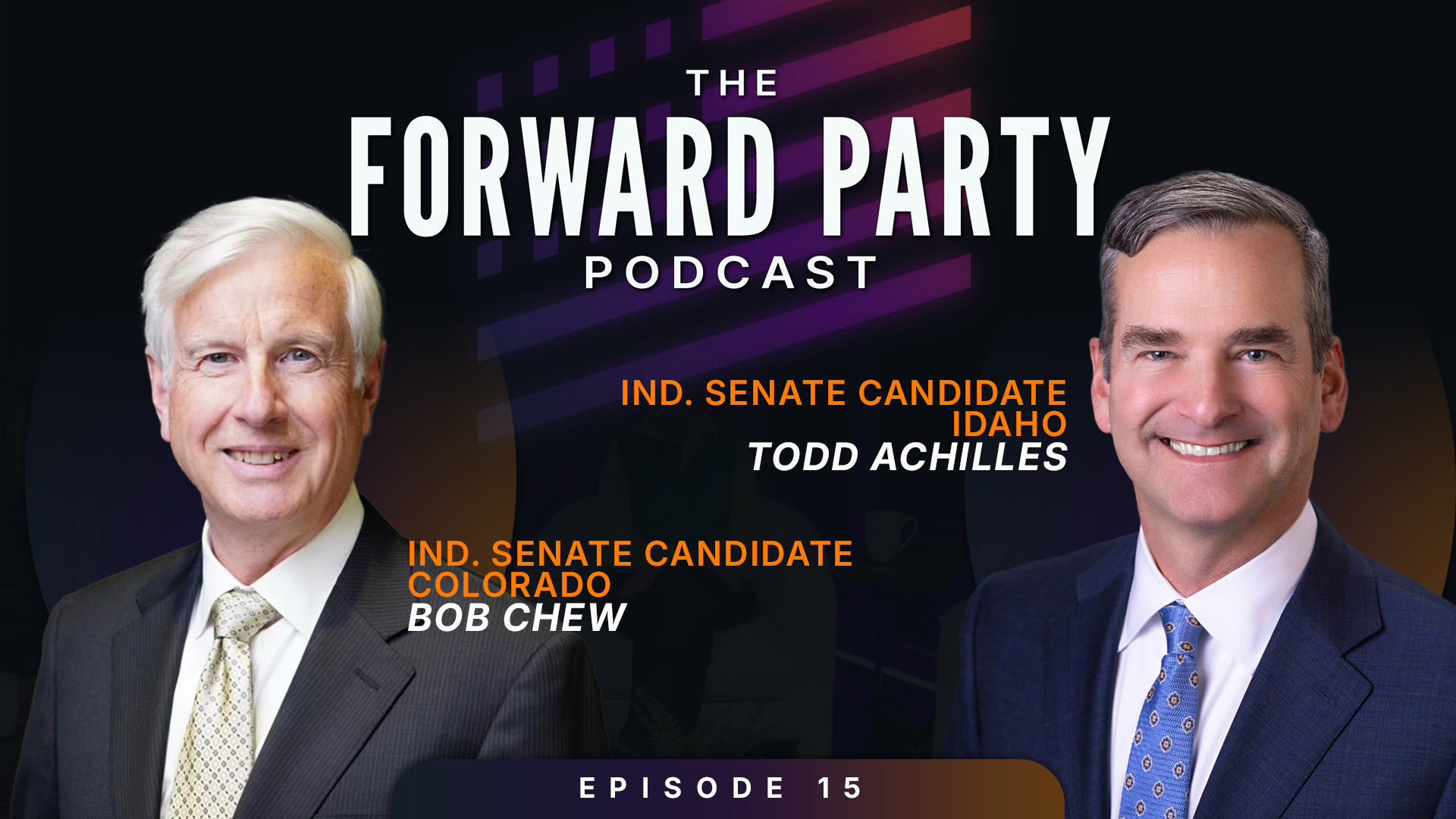
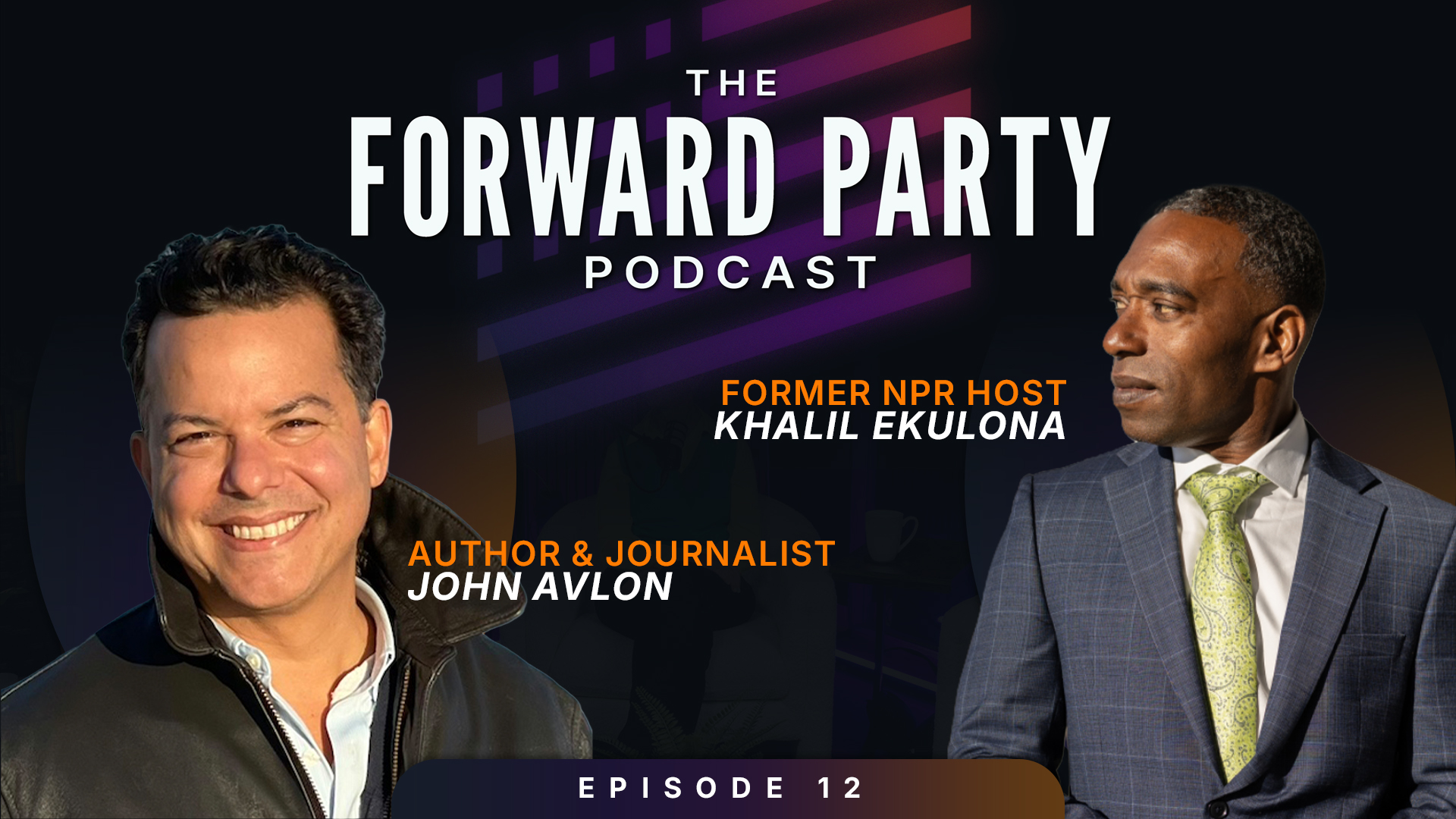
Brand new this week on The Forward Party Podcast, is John Avlon, journalist, political analyst, and host of “How to Fix It” and special guest Khalil Ekulona, former NPR host and community storyteller. Together, the hosts and Khalil explore how media has changed over the last two decades and what those changes mean for democracy.

Click the image below to watch.TFPP E09 Thumbnail

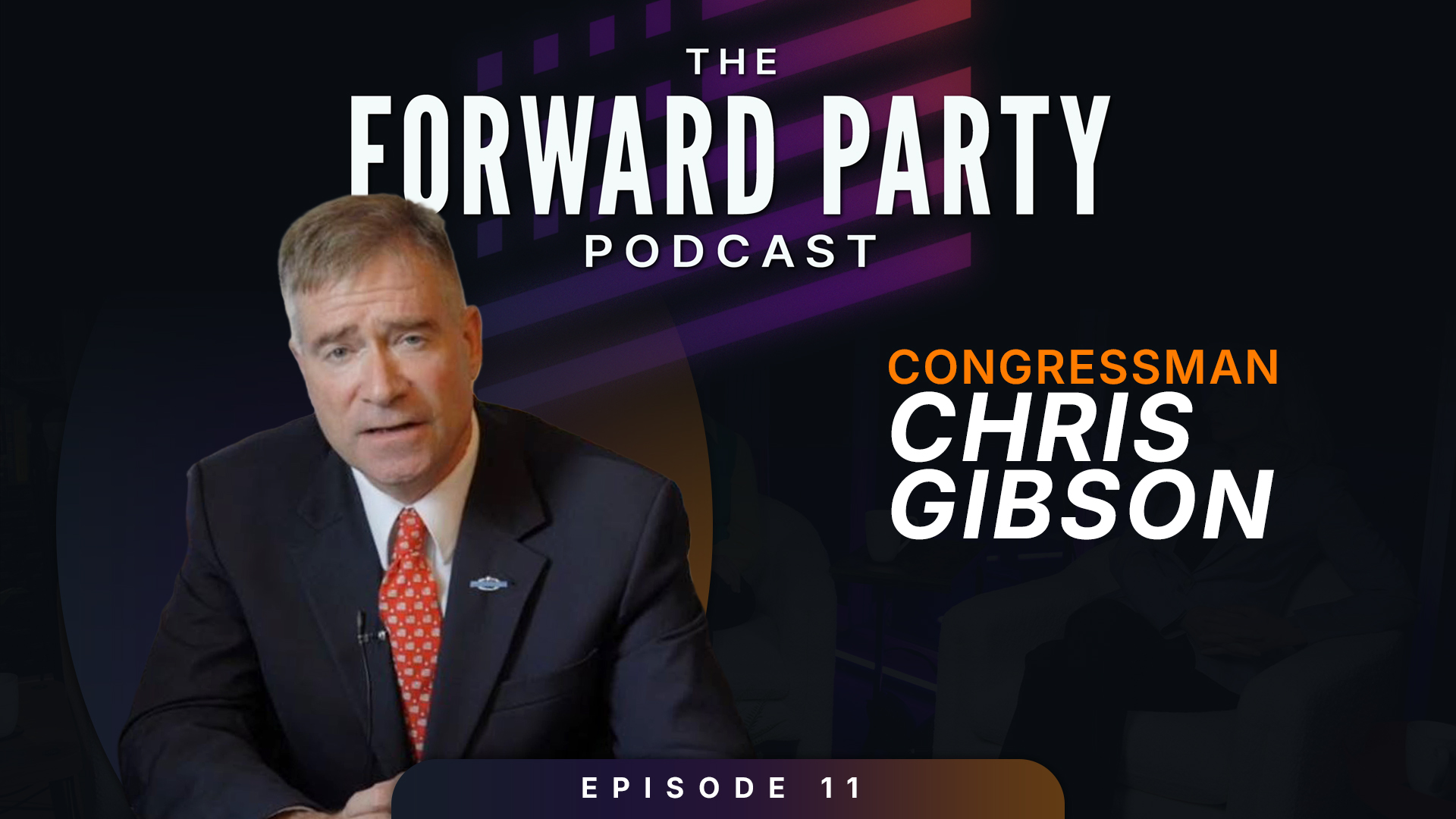
ICYMI: The Forward Party Podcast – Episode 11

Get Involved

June 28th – Young Forwardists High School Introduction

Are you a Highschooler who wants to get involved?Ā  Do you have a Highschooler in your life who is politically engaged and wants to make real change in the world? The Young Forwardists are always looking for the next generation of leaders and they’re ready to welcome new members.

June 29th – Welcome Team Training

Learn how our state teams welcome brand new members to their party.Ā  We’ll work on phone scripts and email templates to get the most out of your new interested members.

July 1st – Town Hall Training

Ā Join us for a practical, energizing training on how to plan and run town halls that actually bring people together. You’ll learn how to choose the right venue, confirm speakers, promote the event effectively, and handle day of details with confidence.


If you’re tired of waiting for the system to fix itself — this is your moment.
šŸ‘„ Volunteer | šŸ—³ļø Run for Office | šŸ’ø Donate | 🌐 forwardparty.com

What we're reading

Contrary to what our detractors on social media say, YES, we read!

Rick Bennett To Face Off Against Bobby Charles and Hannah Pingree in Maine

Maine’s RCV primary has finished and we now know who Rick Bennett (I) will be facing for the Governor’s seat – Bobby Charles (R) and Hannah Pingree (D).

Sen. John Curtis To Walk 250 Miles For 250 Years Of America

Utah Senator John Curtis is walking 250 miles to commemorate the 250th anniversary of the declaration of independence. He’s walking from the northernmost point of Utah to his hometown of Provo.

Georgia Republicans Scrap Current Plans to Redistrict Ahead of 2028

Changing districts on your voters to cheat your way to more seats in Washington is a bad political move… who knew?Ā  We did – and so did all of you.Ā  Some politicians are starting to realize it, too.

X / Twitter Bluesky Instagram LinkedIn Facebook YouTube

Copyright Ā© 2026 Forward Party, all rights reserved.

Our mailing address is:
1701 Rhode Island Ave NW, Washington, DC 20036, United States

Paid for by Forward Party and not authorized by any candidate or candidate’s committee.
ForwardParty.com

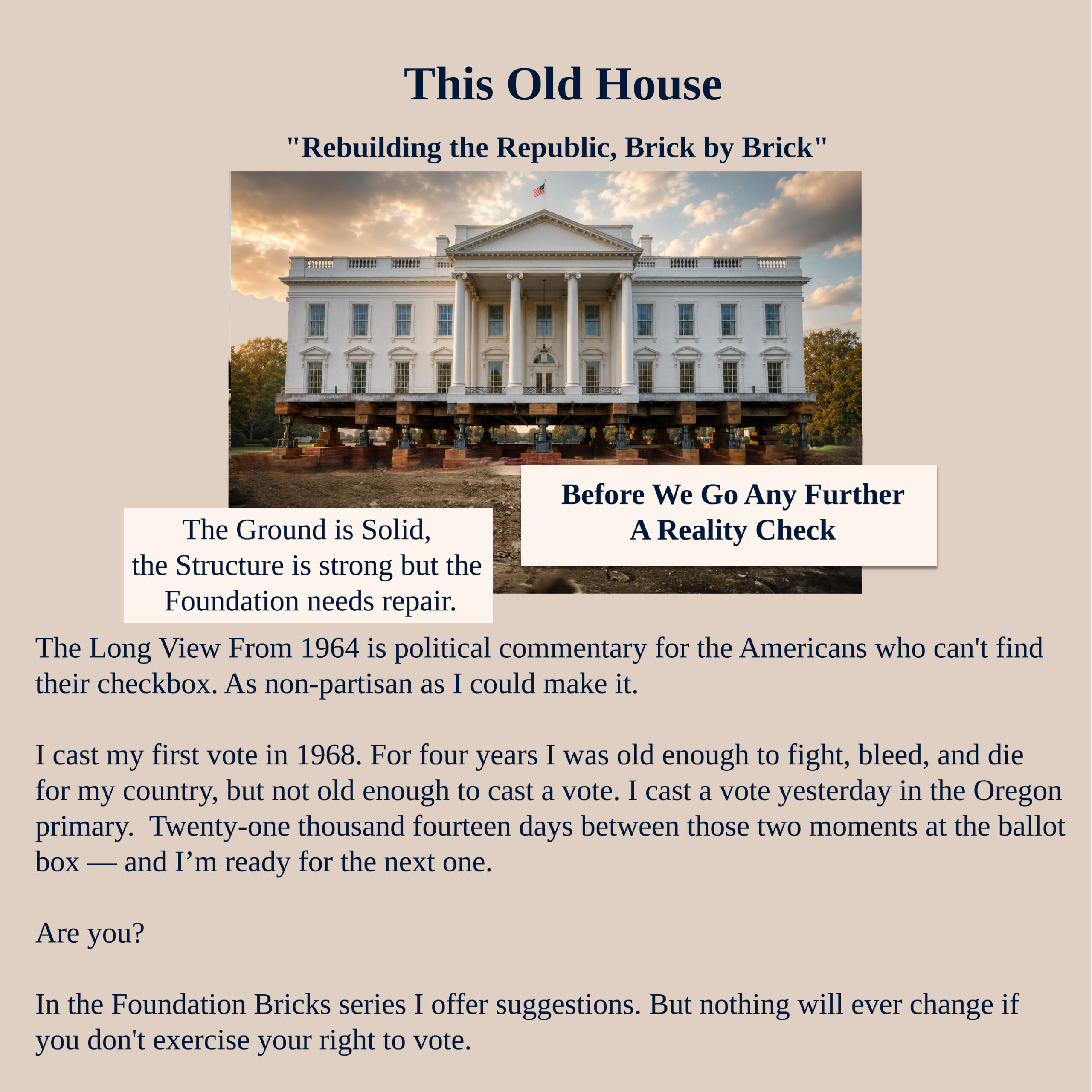
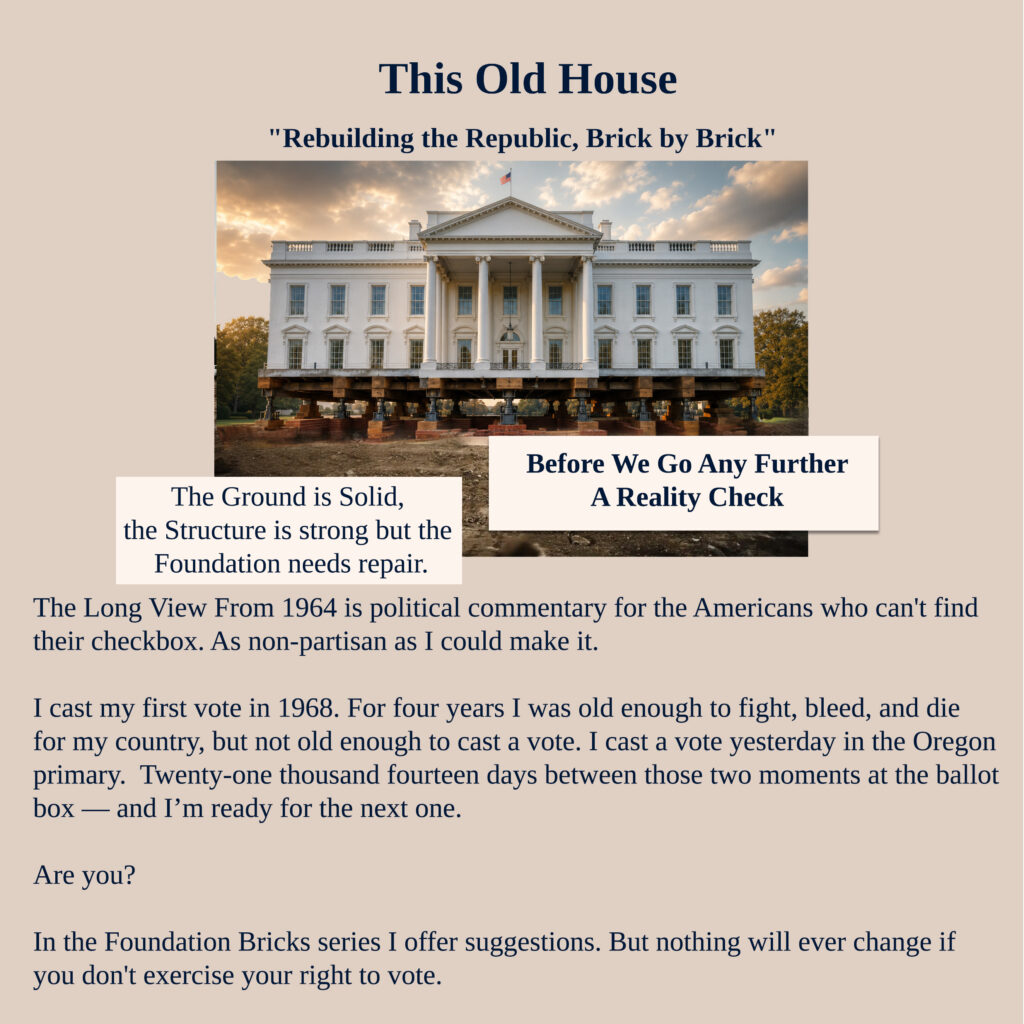
Before We Go Any Further A Reality Check – Video

Before we go any further building a foundation for the future we have to stop and look at reality.

It’s all about the seeds. You need to supply the earth, the water and the fertilizer — if any can be found under the current regime.

We also need a label. We all like labels. We need labels. It’s the American Way. This is supposed to be a Democratic Republic we live in.

Before We Go Any Further A Reality Check

Before we go any further building a foundation for the future we have to stop and look at reality.

What we have is a mess. A partisan battlefield where ninety percent of the effort and legislation is directed toward power — who is in charge and who is making the rules. And the needs of the people are in reality not taken into consideration. Oh, lip service is given on every stump any good politician can find to state their cause. And their cause is to get themselves reelected.

So in all honesty — is this a pipe dream? Are we just sitting here grooving to Grace Slick singing White Rabbit?

Or is this doable.

I believe it is. Can it be done overnight? No. But it can be done.

Honesty point number two. Who will be the strongest opponents to effective change? The entrenched politicians themselves. They voted for their own terms, their own pay, their own retirement, their own power. They don’t want to give it up.

Well. F them.

What it will take is us. But not just us in numbers — an educated us. An involved us. It is like wanting to look like Arnold Schwarzenegger or Cheryl Ladd while eating another pint of HƤagen-Dazs. It isn’t going to happen without the exercise. You need muscles before you can flex them.

Think of what I am proposing as a blueprint in its early stages. Something to be thrown around, talked about, redrawn, picked apart and rewritten. And when you’re done — go back and compare it to the original and start building. That is, if you truly want something better.

It isn’t going to magically appear on its own.

We will talk about many things. Healthcare — what should we expect, what do we want, and what is actually reasonable? It’s easy to say free healthcare but someone still has to pay for it. Education — what good is a PhD if you can’t get a job? Maybe trade schools are a good thing. Should the Washington reflecting pool reflect something worth reflecting or just be a pretty shade of blue? The list could go on forever. But I’m old — so I promise you it will be a reasonable list.

And we will address capitalism. After all it is what got us here. I am all for it. But let’s put it in perspective. Who gets what and how much is enough?

It’s all about the seeds. You need to supply the earth, the water and the fertilizer — if any can be found under the current regime.

We also need a label. We all like labels. We need labels. It’s the American Way. This is supposed to be a Democratic Republic we live in.

I’m not so sure that label fits very well anymore.

What do you think?

The obvious goal with this set of foundation blocks isn’t to fix the broken system. It’s to provide a structure with enough strength that it cannot be so easily broken and manipulated again.

The strength comes from simplicity.

Not complexity.

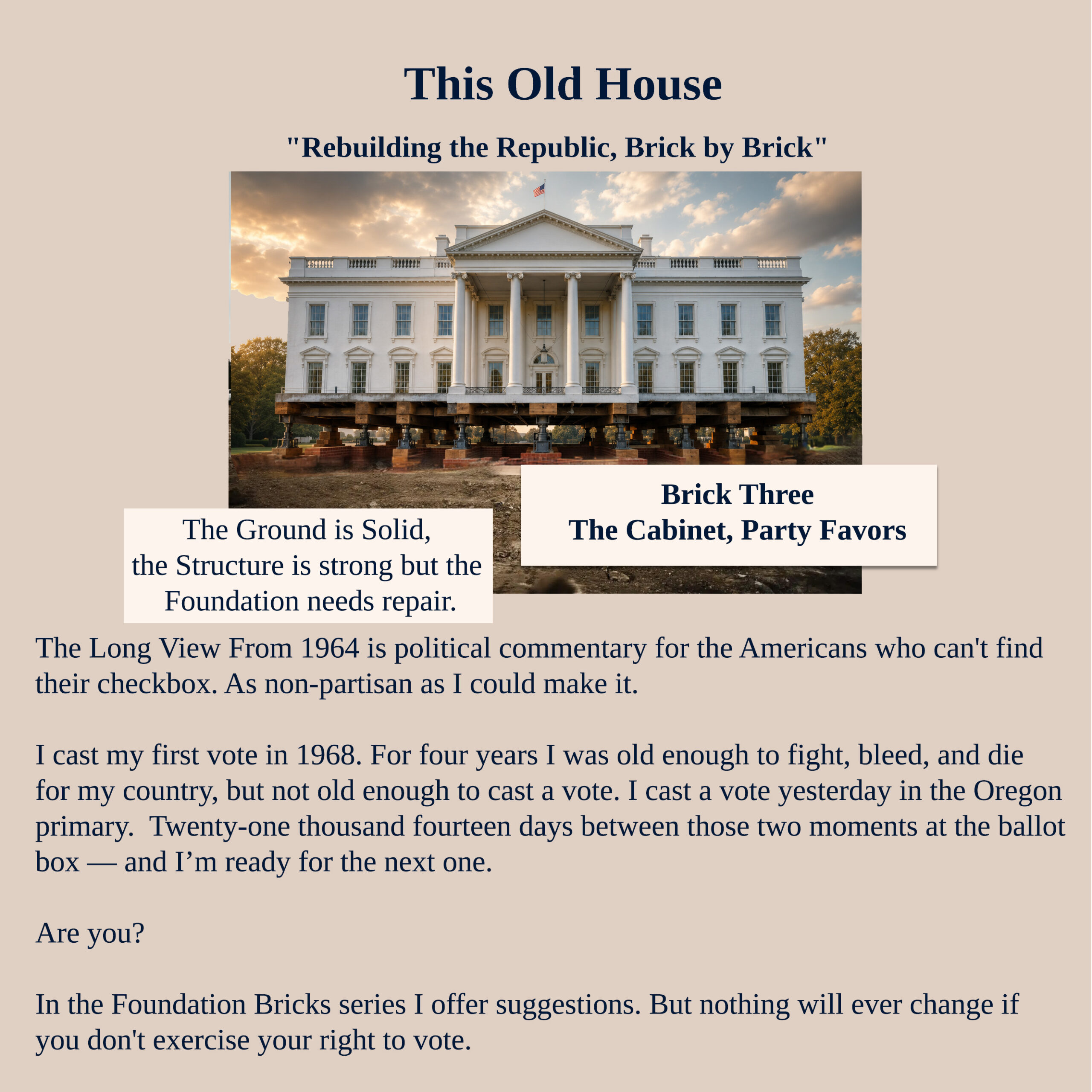
The Cabinet, Party Favors Brick What Good Government Actually Requires — Brick Three – The Cabinet, Party Favors – Video

The president wins. The president hands out cabinet positions. The cabinet positions go to the people who helped the president win — donors, allies, loyalists, true believers, and occasionally someone who spent the entire campaign calling for the department they now run to be abolished.

We call this governing.

It isn’t.

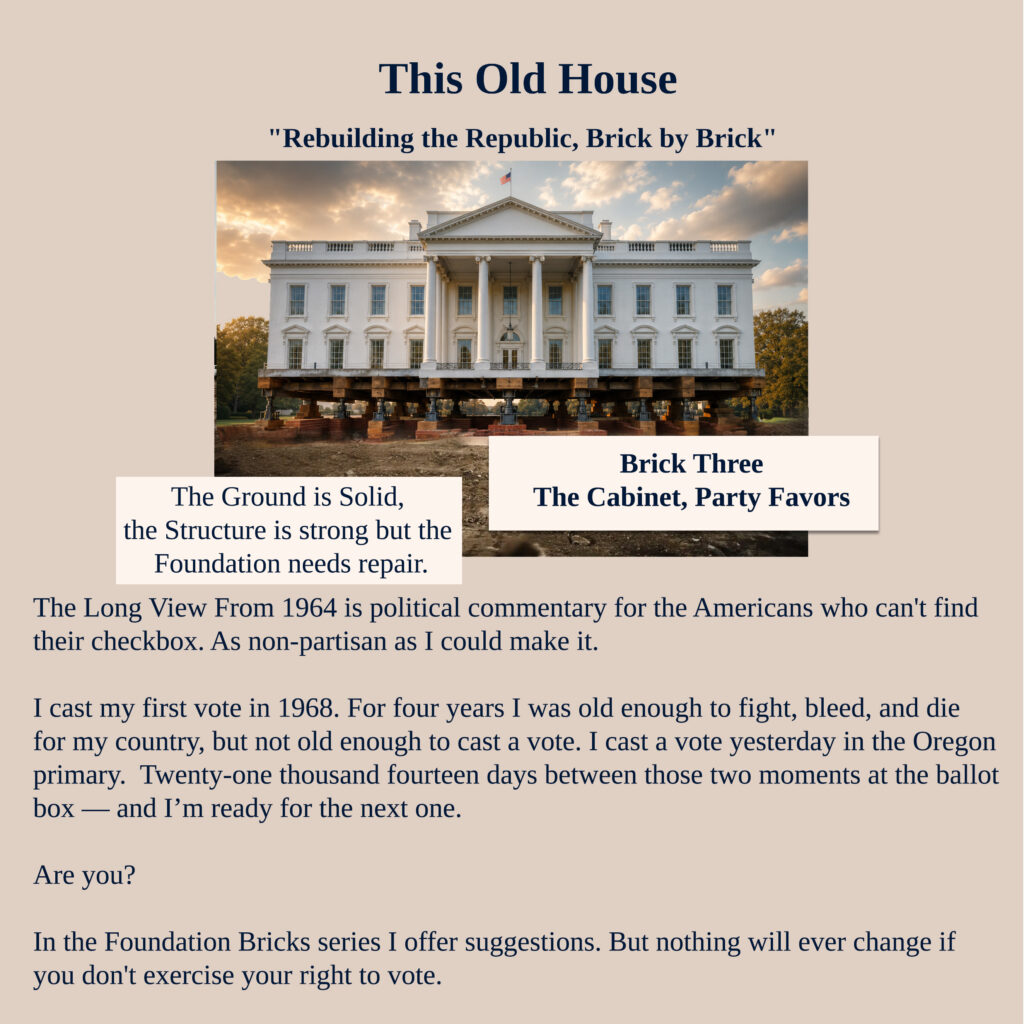
The Cabinet, Party Favors Brick What Good Government Actually Requires — Brick Three – The Cabinet, Party Favors

The Third Brick What Good Government Actually Requires — Part Three

There is a tradition in American politics so embedded that most people never question it.

The president wins. The president hands out cabinet positions. The cabinet positions go to the people who helped the president win — donors, allies, loyalists, true believers, and occasionally someone who spent the entire campaign calling for the department they now run to be abolished.

We call this governing.

It isn’t.

It is the thank you gift system dressed up as executive leadership. Party favors with confirmation hearings. And while career civil servants generally do the actual work underneath the political appointees, the damage happens when the unqualified person at the top starts making policy. Policy driven not by expertise or national interest but by the ideology, ego, or donor relationships of someone who got the job because they made the right phone calls at the right time.

The confirmation process was supposed to prevent the worst of this. In theory Congress evaluates the nominee and decides whether they are qualified to lead a critical department. In practice — as we have watched in painful real time — partisan confirmation is theater. When the system is controlled by one party the hearings become a formality and the outcome is predetermined regardless of qualification.

So here is the question the third brick asks.

What if the president didn’t pick the cabinet?

Not entirely. Not unilaterally. What if the senior positions in critical departments — Defense, State, Justice, Intelligence, the Federal Reserve — were filled by professionals who advanced through their own institutional ranks on merit, competence, and demonstrated performance? The way military officers advance. The way career diplomats advance. The way the civil service was designed to work before political appointees started parachuting in over the people who actually know the job.

The president would then work within that professional framework to accomplish the agenda the voters elected them to execute.

Which brings us to the vice president.

Right now the vice president is chosen to win a state, appeal to a demographic, or balance a ticket geographically. They are an electoral calculation wearing the costume of a governing partner. Your running mate is whoever helps you win. What happens after winning is a separate conversation.

What if it wasn’t?

What if the vice president was required to be a genuine working partner — someone who shared the governing agenda, complemented the president’s specific weaknesses, and was capable of actually running the country if called upon? Not a campaign asset. A co-architect.

That changes everything downstream.

A president who has to pick a genuine partner picks differently than a president assembling an electoral coalition. A ticket built around a shared agenda attracts a cabinet built around executing that agenda. If the country faces a climate crisis the executive team running on clean energy solutions has the expertise and the congressional backing to address it. If national security is the crisis the team built around genuine military and diplomatic competence has the credibility to lead.

There would still be infighting. There will always be infighting. Human nature doesn’t get reformed by better institutional design.

But more handshakes and less backstabbing is not a naive hope. It is what happens when you change the incentive structure. Right now the incentive is loyalty to one person. Change the incentive to competence in service of a shared agenda and the culture follows the incentive.

The military figured this out. You do not hand the Joint Chiefs to someone’s campaign donor. You advance through the ranks, demonstrate competence at every level, and earn the position. The fact that this system was recently dismantled in favor of loyalty appointments is not an argument against the system. It is the strongest possible argument for protecting it with something more durable than institutional habit and assumed good faith.

Professional advancement. Merit confirmation. A vice president who is a partner not a prop. A cabinet built to execute an agenda rather than reward the people who funded it.

Brick Three The Cabinet, Party Favors

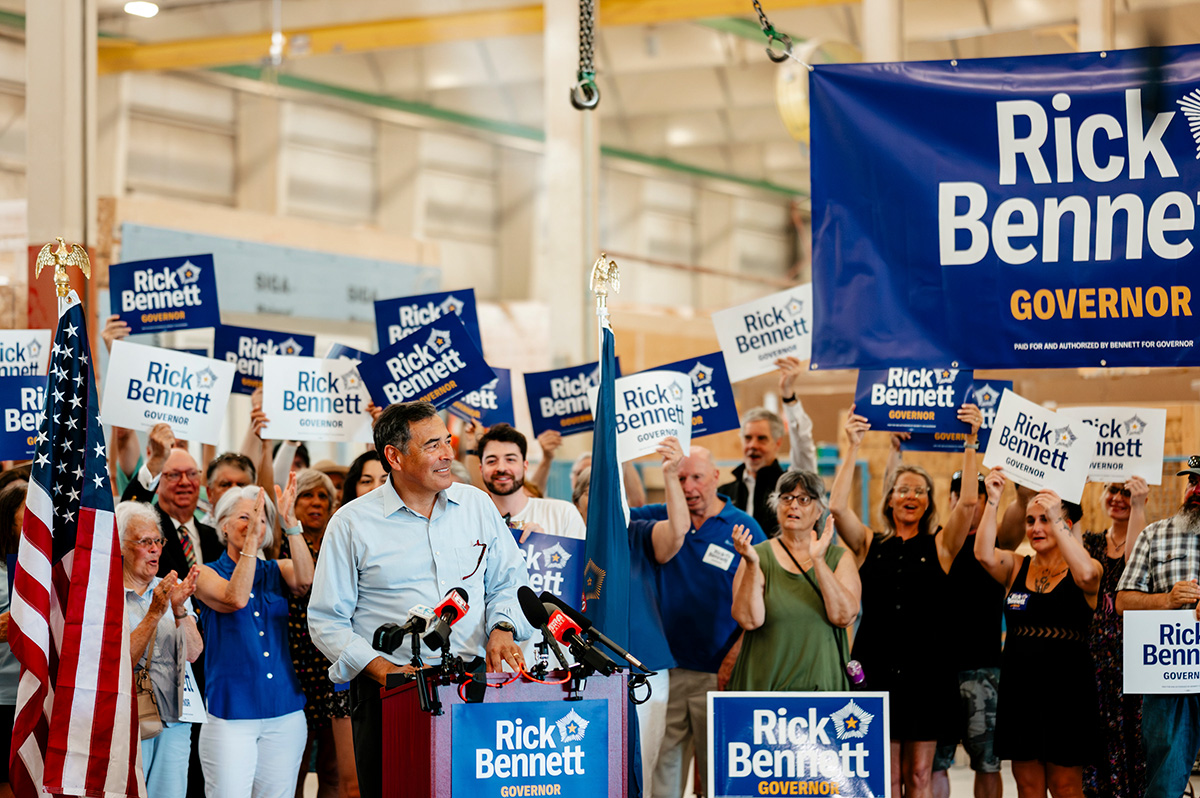
All Eyes On Maine… 06/15/26

This week, we’re going to Maine, where something historic just happened quietly and deserves to be said loudly.

While Maine’s U.S Senate primary has been a focal point recently with party candidates Graham Platner and Susan Collins occupying headlines, the Governor’s race has brought voters’ optimism back to their state.

We’re featuring Rick Bennett this week – Bennett is a Harvard-educated businessman, a former President of the Maine State Senate, and a lifelong Republican who spent decades building his party — then walked away from it. On June 24, 2025, he announced he would run for governor as an independent, ending a party affiliation he’d held his entire political life.

Just a couple weeks ago, he qualified for the November gubernatorial ballot — the only independent to do so.

Here is the argument most independent candidates have to make: I’ll find a way to work with everyone once I get there. Rick Bennett doesn’t have to try to make that argument – he already has the record proving that he can. He has spent 18 years in the Maine Legislature doing exactly what he is now asking Maine voters to elect him do in the Blaine House. He has built coalitions, negotiated with Democrats and Republicans, moved legislation through a divided chamber, and delivered results on the issues Maine families actually talk about at the kitchen table.

This is not a candidate learning on the job. This is a candidate who has already done the job, at every level of the legislative process, and who is now asking for the chance to do it from the top.

___

The Maine governor’s race has gone to a ranked-choice runoff, with results expected before June 19th. On the GOP side, with 43% of votes counted Tuesday night, Bobby Charles — an attorney who ran a Trump-style campaign largely relying on social media — led with more than 38%. No candidate crossed the 50% threshold, sending the Republican primary to a ranked-choice runoff that will conclude before June 19th. Ben Midgley and Jonathan Bush were neck-and-neck for second place.

The Democratic field is even less clear, with Nirav Shah, Hannah Pingree, Troy Jackson, and Shenna Bellows all within 6% of each other.Ā  Who comes out of that field is anyone’s guess.Ā  But one thing is clear – Rick is the only candidate who is ready to win in November.

Maine loves its independents, having elected two independent governors in its modern history: James Longley, who served from 1975 to 1979, and U.S. Sen. Angus King, who served as governor from 1995 to 2003 before being elected to the Senate.

Rick was the first candidate that the Forward Party endorsed for the 2026 cycle in December of 2025. He’s the right leader for Maine, and we’re proud to support his campaign.

To learn more about Rick, check out his website here!

Please forward this to your friends, family, and coworkers. It helps us introduce them to Forward and to what we are building. Also consider inviting them to one of our upcoming events listed below. We’d love to meet them.

The Forward Party Podcast

If you haven’t caught the newest episode of The Forward Party Podcast that dropped most recently, be sure to give it a watch!

Click the image below to watch.TFPP E09 Thumbnail

ICYMI: The Forward Party Podcast – Episode 10

Get Involved

June 15th – Recruitment Training: How To Talk About Forward

Join Head of Volunteer Programs Carrie Anne Templeton and Forward National to learn how to grow the Forward Party in your home state. Dozens of Forwardists just like you attend this training every month and learn how to be a changemaker in their community – join the party!

June 17th A Conversation With Lindsey Williams Drath, Forward Party CEO

Join Forward CEO Lindsey Williams Drath for a fireside chat hosted by the Forward Women’s Committee!Ā  Get the inside scoop on all things FWD.

June 18th – Ballot Access Laws: New Mexico, Texas & Arizona with FIVE & Open Primaries

This virtual town hall hosted by the Foundation for Independent Voter Education and Open Primaries, examines ballot access and what’s at stake across Texas, New Mexico, and Arizona. This is the policy conversation behind the headlines.

Featured Guests:

Jeremy Gruber — Open Primaries

Oliver Hall — Center for Competitive Democracy

Moderated by Sarah Lenti. The conversation covers state-specific ballot access barriers, real-world candidate and voter experiences, structural obstacles facing independents, and practical pathways for reform. Whether you’re a candidate, a voter, or just someone who believes the rules should be fair,Ā  this one couldn’t be more timely.


If you’re tired of waiting for the system to fix itself — this is your moment.
šŸ‘„ Volunteer | šŸ—³ļø Run for Office | šŸ’ø Donate | 🌐 forwardparty.com

What we're reading

Contrary to what our detractors on social media say, YES, we read!

With Charles In Lead, Republican Gubernatorial Race Headed To Ranked Choice Run-Off

With the Republican Primary set to move a very Trump oriented Republican through the nomination, others in the party, including candidates who seem poised to lose the primary, are considering Rick Bennett instead.

Kevin Kiley, Richard Pan Advance In Race For Newly Redrawn California House District

Kevin Kiley, currently the only independent serving in the House of Representatives won the primary in CA-06 this year, with Democrat Richard Pan earning the second spot and moving on to November as well.Ā  Kiley is poised to retake his seat even after mid decade redistricting tried to push him out of Washington.

State Rep. Jermaine Johnson Is Projected Winner Of 2026 Democratic Primary For South Carolina Governor

Forward endorsed Democrat and former U.S. Congressman Jermaine Johnson looks likely to receive the Democratic nomination for the Governor’s seat in South Carolina.

The Term Limits Brick What Good Government Actually Requires — Brick Two – Term Limits – Video

Term limits. Age accountability. The systematic removal of dead wood before it becomes the structure itself. The recognition that in any healthy organization — a business, a military unit, a family — the inability to remove someone who has outlived their effectiveness isn’t loyalty. It’s institutional rot.

We have watched what happens when people stay too long. The institution bends around them rather than them serving the institution. J. Edgar Hoover ran the FBI for 48 years. Nobody could remove him because nobody could afford the cost of trying. That is not a feature of good government. That is a cautionary tale that we apparently need to be told more than once.

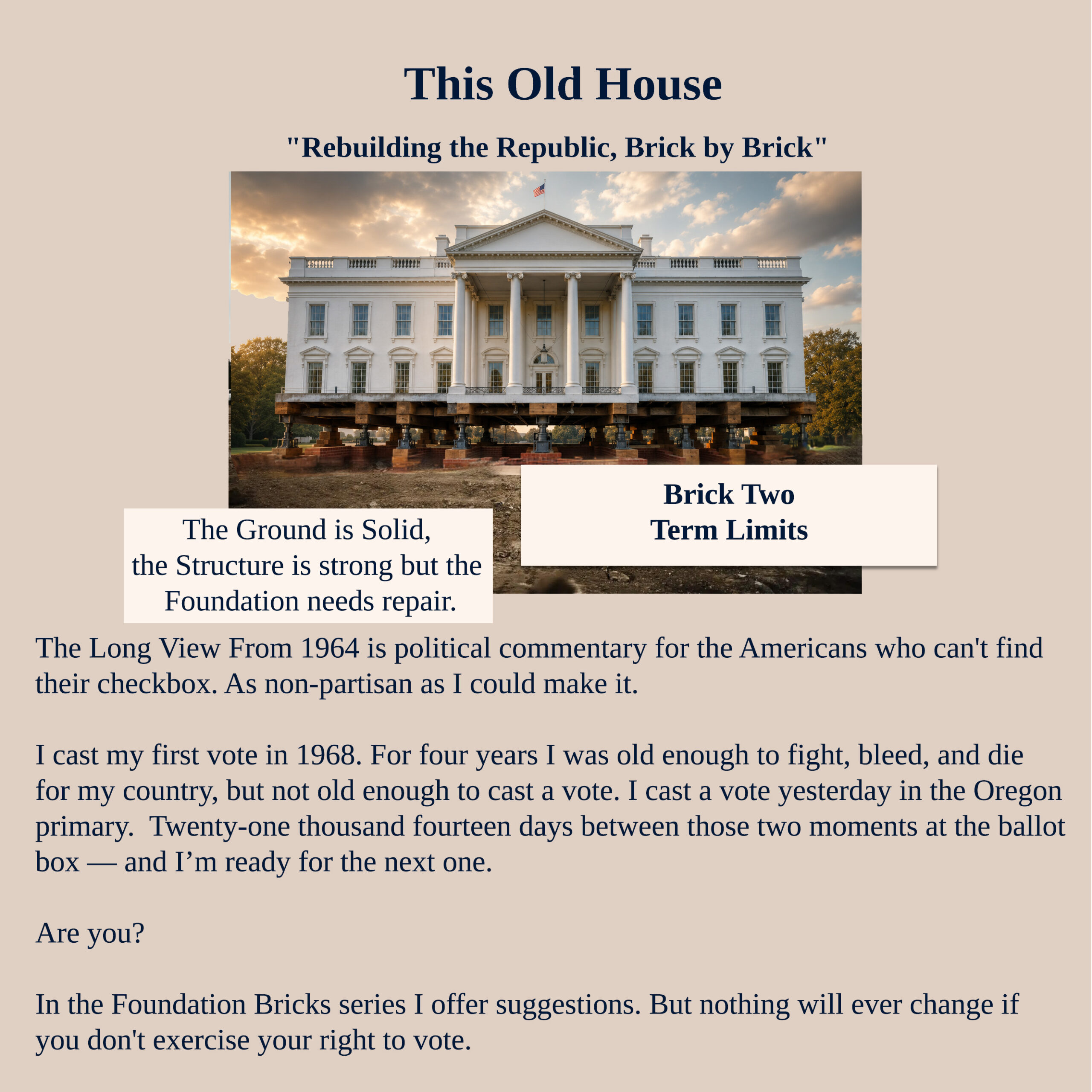
The Term Limits Brick What Good Government Actually Requires — Brick Two – Term Limits

The Second Brick What Good Government Actually Requires — Part Two

If accountability is the foundation then the second brick is simple.

Nobody stays forever.

Term limits. Age accountability. The systematic removal of dead wood before it becomes the structure itself. The recognition that in any healthy organization — a business, a military unit, a family — the inability to remove someone who has outlived their effectiveness isn’t loyalty. It’s institutional rot.

We have watched what happens when people stay too long. The institution bends around them rather than them serving the institution. J. Edgar Hoover ran the FBI for 48 years. Nobody could remove him because nobody could afford the cost of trying. That is not a feature of good government. That is a cautionary tale that we apparently need to be told more than once.

On Age

A hard cutoff number is both cruel and imprecise. Minds age differently. A 79 year old with a video tape memory and fifty years of accumulated pattern recognition may serve better than a 55 year old running on talking points and donor calls. A number on a birth certificate tells you nothing useful.

What tells you something useful is behavior.

A committee empowered to evaluate and recommend further medical and mental evaluation when behavior becomes noticeable. Not partisan. Not elected. Drawn from retired judges, physicians, and civic leaders with staggered appointments designed to insulate from political pressure. The process itself is the deterrent — most people approaching genuine cognitive decline would rather resign than submit to public evaluation.

The goal isn’t to humiliate. It’s to create a dignified off ramp before the institution suffers.

On Term Limits

The structure matters as much as the limit.

A president at two four year terms has enough time to govern without enough time to become permanent. A senator at two six year terms — twelve years — learns the job properly and builds something durable without becoming a resident. A representative on perpetual two year cycles is always campaigning and never governing. Move them to four year terms. Give them enough runway to actually do the work.

The goal is sufficient time to be effective without sufficient time to become immovable.

On the Two Party System

Here is the brick that will make everyone uncomfortable.

Eliminate it.

Not reform it. Not balance it. Remove the institutional infrastructure that makes it the only viable option. No party designations on ballots. No party primaries with public funding. No party based committee assignments in Congress.

Watch what happens to the PACs when there are no teams to back. Watch what happens to the dark money when the jersey colors disappear. Citizens United becomes considerably less useful when there is no party machinery to funnel the money into.

This isn’t naive. It’s the recognition that the two party system has become the primary mechanism for preventing exactly the accountability the foundation requires.

On Compensation

If we require fidelity we require fidelity.

Public servants receive public servant compensation. A PERS program like other government employees. Healthcare through the same options available to federal workers. A pathway into continued government service for those who want to contribute after their term ends.

No golden umbrellas. No lifetime pensions after a single term. No healthcare for life unavailable to the constituents who funded it.

The same standard applied to the person making the rules as the person living under them.

That is the second brick.

Nobody stays forever. Nobody lives above the system they were elected to serve.

Build on that and the walls start to mean something.

The Show Must Go On — But Who’s Running It Now? Part 2 – Video

I recently wrote a piece asking who is running the show in Washington. In the short time since I published it others have started asking the same question. The observations I made are no longer just mine.

This isn’t to rehash the noise. There are plenty of others doing that. This is a personal reflection — and to put it in perspective, Second String Donny and I are only a few months apart in age.

Together we can stand against the lies.

He will call it insurrection.

We will call it Tuesday.

Dementia

The Show Must Go On — But Who’s Running It Now? Part 2

I recently wrote a piece asking who is running the show in Washington. In the short time since I published it others have started asking the same question. The observations I made are no longer just mine.

This isn’t to rehash the noise. There are plenty of others doing that. This is a personal reflection — and to put it in perspective, Second String Donny and I are only a few months apart in age.

Years ago I was diagnosed with sleep apnea. I would stop breathing in my sleep and the result was chronically low oxygen in the bloodstream. The most noticeable symptoms — falling asleep mid-afternoon, wondering who had been driving the car for the last five miles.

I eventually used the CPAP machine that had been sitting unused. Problem solved. I stopped napping through the day and started accounting for all the miles.

If Second String Donny is sitting in bed Truth Socializing us into a stupor at 2am someone needs to take his gold phone away after eight. I would hate for him to sleep-tap the launch codes.

He recently visited Walter Reed for another cognitive test. There is no way he passed any meaningful part of it based on observed behavior. And visually he looks like a man slipping — not gradually but like falling off a cliff — into something irreversible. I have watched too many long time friends and family members go through this process. There is a recognizable pattern to anyone with experience in aging. I don’t even have to look farther than my aging Jack Russel, all to often I see her just standing there, staring at the wall.

Look at the pace of his revenge. The urgency of it. He has to punish everyone he can before it’s too late for him to do it. The erratic orders being pushed onto the DOJ are not the work of a coherent strategist — they are the demands of someone operating in shrinking windows of clarity. And fear of the unstable keeps the people around him obedient even when the orders are obviously wrong.

This brings us back to who is running the show.

Insecure children afraid of the unstable parent?

Could be.

I think we are about to experience a wild six months. Five months leading to the midterms and the month following. There will be attacks and threats on every phase of the election process. He will intimidate, confuse, and try to convince you he controls things he doesn’t control. The states run their own elections. Don’t let him convince you otherwise.

After the election — when the results don’t go his way — we know what comes next. The blind fold moment. The declaration of fraud. The refusal to accept what he cannot accept because losing is not something he has the psychological architecture for.

It will be a wild ride.

But only you can allow it to be a fatal one.

He will claim insurrection. He will reach for his private army. ICE. The Walmart rejects with badges and immunity.

I’m not sure the National Guard generals are on his side.

And I’m not sure he’s thought clearly enough about that to be worried.

He should be.

Together we can stand against the lies.

He will call it insurrection.

We will call it Tuesday.

Dementia

The Accountability Brick What Good Government Actually Requires — Brick One – Accountability – Video

The Foundation What Good Government Actually Requires — Part One

Accountability.

Presidential immunity is the legal formalization of unaccountability. The Supreme Court’s 2024 decision didn’t create the problem — it just removed the last pretense that the problem didn’t exist. When the president does it it isn’t illegal. Nixon said that too. It didn’t work then because the institution held.

The institution didn’t hold this time.

The Accountability Brick What Good Government Actually Requires — Brick One – Accountability

The Foundation What Good Government Actually Requires — Part One

Accountability.

Not the political science version. Not the talking point. The real thing. The kind you learn before you’re old enough to vote.

When you break something you admit it. There is no rug. There is no sweeping. You live with what you have and if you don’t have it you earn it. If you make a promise you keep it — or you have a legitimate reason for not doing so that you share with the people you made it to.

That’s it. That’s the foundation.

Everything else — healthcare, infrastructure, justice, national security, the institutions we depend on daily without noticing — sits on top of that one simple principle. Remove it and nothing else holds. The walls crack. The roof comes down. The building that took two hundred and fifty years to construct becomes a very expensive pile of rubble with gold curtains.

We have watched what happens when accountability disappears from the top.

I will lower your taxes. What goes unspoken is that someone’s benefits will pay for it. I will protect your benefits. What goes unspoken is where the money comes from. The empty promise isn’t always an outright lie. Sometimes it’s just half the truth delivered with enough confidence that nobody does the math until the bill arrives.

The bill always arrives.

Presidential immunity is the legal formalization of unaccountability. The Supreme Court’s 2024 decision didn’t create the problem — it just removed the last pretense that the problem didn’t exist. When the president does it it isn’t illegal. Nixon said that too. It didn’t work then because the institution held.

The institution didn’t hold this time.

Which means the foundation has to be rebuilt with something stronger than institutional habit and assumed good faith. The founders were obsessed with this question. They had just lived under a king. Every check, every balance, every separation of power was the answer to one central anxiety — what happens when the wrong person gets the power?

They built a back door. A way to stop something. Checks and balances as the architectural response to the certainty that power will eventually be held by someone who shouldn’t have it.

That back door has to be properly locked from both sides. No presidential immunity. Full stop. The same standard applied to the person signing the orders as to the person receiving them.

To require fidelity requires fidelity.

That covers governance and marriage and institutional trust and the social contract simultaneously. You cannot demand loyalty from a country you are actively betraying. You cannot require honesty from institutions you are actively corrupting. You cannot ask the American people to follow rules you have granted yourself immunity from.

One standard. No exceptions. No immunity.

That is the foundation.

Without it nothing else we build will stand.


Guest Post – Outrage Turned Us vs. Them Into Us vs. Us – Video

The political class does not need every citizen to agree with its agenda. It only needs citizens to remain divided enough that they never organize around the things they already agree upon. The cost of living, safe communities, transparent government, affordable healthcare, accountable leadership, fair wages, reliable infrastructure, and reduced corruption are not fringe concerns. They are the ordinary expectations of people who still believe a modern nation should function reasonably well.

The divide in America is real. Some disagreements are profound and unlikely to disappear anytime soon. But division is also useful to those who benefit from keeping the public fragmented and distracted.

That reality does not erase legitimate differences between left and right. It simply raises a different question: who benefits when citizens become so consumed by fighting one another that they stop paying attention to the people holding the matches?

The sign still insists everything is under control.

Perhaps it is finally time to stop arguing long enough to ask who keeps fueling the fire.

This is a long form version ofĀ Ā 

Rory Kelly

Guest Post – Outrage Turned Us vs. Them Into Us vs. Us

The political class does not need every citizen to agree with its agenda. It only needs citizens to remain divided enough that they never organize around the things they already agree upon. The cost of living, safe communities, transparent government, affordable healthcare, accountable leadership, fair wages, reliable infrastructure, and reduced corruption are not fringe concerns. They are the ordinary expectations of people who still believe a modern nation should function reasonably well.

Yet functioning government is terrible entertainment. Competent administration does not generate ratings. A successful infrastructure project is not nearly as exciting as a culture war. A balanced budget lacks the emotional punch of outrage. Solving problems rarely creates the same level of engagement as arguing about them indefinitely.

As a result, the public often finds itself trapped in a cycle where the issues that divide Americans become permanent campaign material, while the issues that unite Americans become optional. The disagreements remain unresolved because unresolved conflicts are politically valuable. They provide fundraising opportunities, campaign slogans, media appearances, and endless reasons to return voters to the polls convinced that disaster is one election away.

Meanwhile, many of the structures that citizens regularly complain about remain largely untouched. Bureaucracies continue to grow and evolve. Lobbying networks remain deeply embedded. Regulatory systems become increasingly complex. Major donors continue to enjoy access that ordinary citizens can only imagine. Regardless of which party wins a given election, the machinery itself often proves remarkably durable.

This is not to suggest that elections do not matter. They do. Policies matter. Laws matter. Judicial appointments matter. The outcomes of elections can and do have significant consequences for millions of people.

The problem is that Americans are increasingly encouraged to view politics as a never-ending battle between ordinary citizens rather than as a mechanism for governing a country. Political disagreement is natural and healthy in a free society. It is impossible to have liberty without disagreement because free people inevitably reach different conclusions about how society should be organized.

The trouble begins when disagreement ceases to be a challenge that politics attempts to manage and instead becomes the product being sold.

In that environment, conflict acquires value of its own. Outrage becomes a commodity. Fear becomes a fundraising strategy. Anger becomes a marketing tool. Citizens become consumers of political entertainment rather than participants in self-government.

The result is a nation in which people spend extraordinary amounts of time debating one another while exercising surprisingly little influence over the institutions that affect their daily lives. Americans can instantly identify the latest cultural controversy, yet many struggle to explain how legislation is written, how regulatory agencies operate, or how lobbying organizations influence policy. They know the arguments they are expected to have because those arguments are constantly placed in front of them. They are far less likely to know where the money flows, who benefits from specific decisions, or why certain reforms never seem to advance beyond campaign promises.

None of this requires a grand conspiracy. Human nature is sufficient. Politicians respond to incentives. Media organizations respond to incentives. Activist groups respond to incentives. Consultants, donors, corporations, and advocacy organizations all respond to incentives. If outrage generates attention, and attention generates money, influence, or power, then outrage will be produced in abundance.

That reality should concern citizens regardless of ideology.

A conservative who believes government has become unaccountable should be concerned. A progressive who believes corporations wield excessive influence should be concerned. An independent who simply wants competent leadership should be concerned. The specific diagnosis may vary, but the underlying problem remains remarkably similar: institutions often benefit from public division in ways that ordinary citizens do not.

The challenge, therefore, is not to eliminate disagreement. That would be impossible and undesirable. A healthy society needs vigorous debate. It needs competing ideas. It needs people who are willing to challenge one another’s assumptions and defend their beliefs.

What it does not need is a political culture that treats every disagreement as evidence that fellow citizens are enemies.

Americans can disagree about gun policy while still demanding affordable housing. They can disagree about abortion while still insisting upon accessible healthcare. They can debate immigration policy while expecting government agencies to function efficiently. They can argue about climate policy while wanting clean water, reliable infrastructure, and accountable public officials.

In fact, the ability to maintain those distinctions may be one of the most important civic skills a democracy can possess.

The danger is not disagreement itself. The danger is allowing disagreement to become a leash that can be pulled whenever those in power need citizens looking somewhere else.

When people are exhausted, angry, and constantly reacting, they become easier to manage. They spend their energy fighting one another instead of examining systems. They become focused on symptoms instead of incentives. They become consumers of outrage rather than organizers of solutions.

Outrage can be useful. It can draw attention to genuine injustice. It can motivate action. It can expose corruption and force accountability.

But outrage alone is not power.

Power comes from organization. It comes from persistence. It comes from understanding how institutions work and demanding that they serve the public interest. It comes from citizens who are willing to track promises, follow legislation, monitor spending, attend meetings, vote consistently, and remain engaged long after the cameras have moved on to the next controversy.

Most importantly, power comes from recognizing that fellow citizens are not automatically enemies simply because they disagree.

The country does not need another lecture about unity from politicians who profit from division. It does not need another campaign built entirely around fear of the other side. It does not need another election cycle in which Americans are told that their greatest threat is the person living across the street.

What it needs are citizens willing to notice the trick.

The divide in America is real. Some disagreements are profound and unlikely to disappear anytime soon. But division is also useful to those who benefit from keeping the public fragmented and distracted.

That reality does not erase legitimate differences between left and right. It simply raises a different question: who benefits when citizens become so consumed by fighting one another that they stop paying attention to the people holding the matches?

The sign still insists everything is under control.

Perhaps it is finally time to stop arguing long enough to ask who keeps fueling the fire.

This is a long form version ofĀ Ā 

Rory Kelly

Independents Move Us Forward – 06/05/26

Bill —

The independent wave is building. This week, six key states held primaries that demonstrated, across the board, a growing tide of voters wanting more choice in their representatives.


Tuesday’s Independent Candidates

Forward has been fighting the conventional wisdom in American politics: ā€œIf you want to win, you have to pick a team.ā€

Well, voters are done with being handed two choices that no longer work for them. We are increasingly seeing candidates respond to that frustration by doing something the system has deliberately made difficult – running without a party label.

This cycle, independent candidates are qualifying for November ballots from Montana to South Dakota, to Iowa, and more. They come from different backgrounds, different ideologies, and different regions. What they share is a conviction that the people of their districts deserve a representative who answers to them, not a party.

Even more – in CA-06, the Democrats gerrymandered mid-cycle to try and gain more seats in Washington.Ā  Instead, voters are clear that they’ve had enough and an Independent is poised to win the top two primary.


California

California’s uses a nonpartisan Top Two primary system which allows every candidate — Democrat, Republican, independent — appears on the same ballot. The top two finishers, regardless of party, advance to November. Under this system, there is no “spoiler.” Top Two is one of the many reforms that Forward fights for nation-wide because they make our democracy better than it is today.

California’s June 2 primary was a strong test for independents (especially in a state with 30% ā€œno party preferenceā€ voter registration). Under a partisan primary system, independent candidates have to wait until November. California’s Top Two system is different. It is, as Forward has long argued, what every state’s system should be: a fair fight, on one ballot, where voters choose who moves forward. Here’s how our candidates fared.

Rep. Kevin KileyRep. Kevin Kiley

California — CA-06

Rep. Kevin Kiley did something remarkable this spring: he walked away from the Republican Party, choosing principle over party. After California’s Proposition 50 redrew his district into solidly Democratic territory, Kiley could have retired, switched parties, or found a safe Republican-leaning seat. Instead, he filed as “No Party Preference,” took the gerrymandering issue head-on, and made his case directly to voters.
With 53% of the district reporting Tuesday night, Kiley is leading all candidates in the Top Two primary with 26.8% of the vote. Final results are expected early next week.

These results are showing Kiley advancing to the November general election, making him the first sitting independent member of the House of Representatives to survive a primary in 2026.


Chris DemersChris Demers

California — CA-18

Chris Demers entered the race as a No Party Preference candidate in a field that included both a major-party incumbent and challengers. Like many of our candidates, he isn’t a career politician. He embodies Forward’s values by wanting to provide something better for his community.
With 54.8% of the district reporting, the race has been called for Rep. Zoe Lofgren and Republican Shane Lewis.

Demers did not advance to November. But CA-18 is among the deepest Democratic districts in California – a seat that has never been seriously contested since Lofgren first won it. The fact that Chris Demers stood up, refused PAC money, and made the case for independent representation in one of the hardest possible environments is a step we are proud to see happen.

Every independent candidate that runs in a district like this makes the next one easier. We’re thankful for Chris Demers, and we hope he stays in the fight.


Karen Leigh MatthewsKaren Leigh Matthews

California — CA-23

Dr. Karen Leigh Matthews is a Navy veteran, physician, radiologist, and small business owner who spent more than 20 years serving in the military. She ran for Congress as an independent because she was tired of being “caught between a party that wants government to fail and a party that wants government to do everything.” That thinking, along with her resume, is something rare.
In CA-23, Karen outraised every Democratic challenger in the field. With Democratic support solidifying in the final days, the math narrowed her path to November and she fell short of advancing.

With 61.3% of the district reporting, the race was called for incumbent Rep. Jay Obernolte (R).

We are proud of Dr. Matthews and deeply grateful for her campaign. She showed what an independent candidate can look like when they’re built for the job, not the party. Her district missed out on an exceptional public servant. We hope she runs again.


Before an independent candidate can even compete, they have to fight just to get their name on the ballot. Here’s how Forward candidates made that happen in this cycle.


Iowa

Michael BridgfordMichael Bridgford

Iowa — IA-01

Michael Bridgford is running in a district where roughly one-third of voters aren’t registered with either major party. He officially filed his nomination petitions on June 1st, the day before the primary. He expects to pass the mark handily and qualify on to the ballot for November, we just need to wait for the Secretary of State to make it official.
The general election matchup: Incumbent Rep. Mariannette Miller-Meeks (R) won her primary with 71.6% of the vote, while Christina Bohannon (D) won her primary with 81.5%. This will mark the third consecutive election in which these two candidates will face each other in the general. Iowa’s 1st District voters know both options. Bridgford offers a third — one that doesn’t arrive with three cycles of partisan theatrics.


Dave BushawDave Bushaw

Iowa — IA-02

Dave Bushaw is going to qualify for November’s ballot even though Iowa’s legislature “moved the goalposts in the middle of the night,” according to Dave, by raising the signature threshold mid-cycle. His campaign knocked on more than 7,000 doors and found that 88% of the people they spoke with wanted to sign. On June 2nd, Bushaw officially filed his nomination petitions. His campaign achieved 200% of the required signatures in every single county in IA-02.
We are continuing to monitor official approval, as signature challenges can be filed through next week, but Dave should sail through to November.

The general election matchup: Democrat Lindsay James, Dubuque state representative and Presbyterian minister, won with just under 60%, and will face Trump-backed Republican Joe Mitchell, who won with 61.5%. Notably, Democratic primary turnout in IA-02 outpaced Republican turnout: roughly 47,900 Democratic votes to roughly 39,700 Republican votes. Cook Political Report rates the seat Likely Republican, R+4 PVI, but calls it “increasingly competitive.”


Montana

Seth BodnarSeth Bodnar

Montana

Seth Bodnar needed 13,327 verified signatures from registered voters statewide to qualify for the November general election ballot as an independent in Montana. He didn’t just meet the mark; he submitted nearly 30,000 signatures from 52 of Montana’s 56 counties, collecting nearly twice the required threshold through a volunteer-driven grassroots petition effort. His campaign has also outraised every Democrat and Republican in the race, demonstrating that independent candidacy paired with serious organization is no longer a longshot strategy.
Bodnar officially filed his signatures in late May. As of May 29th, counties have accepted enough verified signatures to put Bodnar on the ballot.

The general election matchup: Kurt Alme (R) won his primary with 76.2% of the vote, while Alani Bankhead (D) won her primary with 43.8% of the vote.Ā 


South Dakota


Brian BengsBrian Bengs

South Dakota — U.S. Senate

Brian Bengs is running for U.S. Senate in South Dakota with a grassroots campaign built on small-dollar donors. To qualify for the ballot as an independent in South Dakota, Bengs needed 3,502 valid signatures. He submitted more than 4,500 — and his petition was certified by the Secretary of State with a 93.85% validity rate, the highest of any statewide candidate in South Dakota this election season. That’s better than both the Republican and Democratic candidates. The campaign called it “a testament to the strength of this movement.” We agree.
He submitted his signatures in April and is officially on the November 3rd general election ballot, certified by the South Dakota Secretary of State.

The general election matchup: Incumbent Mike Rounds (R) won his primary with 75.8% of the vote, while Julian Beaudion (D) advanced unchallenged.


These aren’t isolated data points. They are a trajectory. The independent political infrastructure – from the fundraising networks to the organizing capacity to the legal teams who know how to fight ballot challenges – is being built right now by the candidates and movements that keep showing up. Every campaign that plants a flag makes the next one possible.

Forward ProgressĀ 

It would be easy to look at Tuesday’s results and just count votes. However, the snapshot is bigger than any individual race. It is about a country that is waking up to the fact that the two-party system is not delivering for the people it’s supposed to serve.

We don’t just believe America can do better, we are actively building the infrastructure, recruiting the candidates, and making the case that voters deserve more than two choices handed to them by institutions that have long since stopped listening. Iowa, South Dakota, Montana, California, Washington, Minnesota, Maine, Tennessee, Rhode Island, and Nebraska are all seeing independent candidates qualify for ballots and create excitement. The movement is growing.

November is five months away. The work continues. And so does our question, How can we build a just and fair government that truly represents Americans?

One primary at a time. One candidate at a time. One voter at a time.

Please forward this to your friends, family, and coworkers. It helps us introduce them to Forward and to what we are building. Also consider inviting them to one of our upcoming events listed below. We’d love to meet them.

The Forward Party Podcast
The next episode of The Forward Party Podcast is live!

In this thought-provoking episode of The Forward Party Podcast, hosts Lindsey Williams Drath, Governor Christine Todd Whitman, and Lieutenant Governor Kerry Healey sit down with former U.S. Congressman, Army veteran, and author Chris Gibson to explore one of the most important questions facing America today: What did the Founders get right, and what have we forgotten?

Click the image below to watch.TFPP E11 Thumbnail

ICYMI: The Forward Party Podcast – Behind the Scenes reel

Get Involved

We’re Hosting Events All Over The Country

Find one near you, sign up, and help build a better future for America.


If you’re tired of waiting for the system to fix itself — this is your moment.
šŸ‘„ Volunteer | šŸ—³ļø Run for Office | šŸ’ø Donate | 🌐 forwardparty.com

What we're reading
Or this week, what we’re watching!

Lindsey Drath Talks Gerrymandering on FOX 5

Forward CEO Lindsey Drath talks midterms, gerrymandering, and independents as a fulcrum for change on FOX5.

X / Twitter Bluesky Instagram LinkedIn Facebook YouTube

Copyright Ā© 2026 Forward Party, all rights reserved.

Our mailing address is:
1701 Rhode Island Ave NW, Washington, DC 20036, United States

Paid for by Forward Party and not authorized by any candidate or candidate’s committee.
ForwardParty.com


The Long View From 1964 – The Saucepan Hat – Video

YouTube player

We have elections coming up. You are going to have to make choices. I wish I could make them for you, and if so, I wish I were wise enough to make the right ones. But I am just a person with opinions and I hope you are as well.

The voters that scare me are the sheep. Here is how to vote, do it this way because I told you to. That is what keeps me up at night.

The Long View From 1964

The Long View From 1964 – The Saucepan Hat

The old elephant on a diet went into witness protection and found he no longer had a home. Looked around and didn’t really see any welcome signs that didn’t just ask for donations.

It gets lonely standing out here. Nothing looks familiar anymore. The old guard has either died off or is getting selective dementia.

You know what they say about growing old,Ā  your mind keeps digging up old memories. So when I found myself standing out in the Oregon rain, my fabulous gray locks getting wet and not a hat to be found, I dashed into my outdoor BBQ ballroom, the one paid for with my own money, no taxpayer investment needed, and grabbed a saucepan and put it on my head.

What? Wearing a saucepan on your head? You’ve really lost it this time old man. Time for the dementia truck.

Hey. Hold on now.

Just good common sense and a fine memory.

Haven’t you ever read the tales of Johnny Appleseed?

I did. As a little boy. Johnny wore a saucepan for a hat and spread apple seeds through the land so apples could flourish everywhere. Smart little cuss. And that’s why we have apple pie.

After a year of political cartoons, then parody, migrating into complaints and now political commentary, I realized all I am really trying to do is plant some seeds for the future. The red versus blue war is too entrenched to flip a switch and start anew with sanity. But you can plant seeds of something better. You can suggest a better way. You can draw attention to failures that cost lives and hurt people and hurt nations.

We have elections coming up. You are going to have to make choices. I wish I could make them for you, and if so, I wish I were wise enough to make the right ones. But I am just a person with opinions and I hope you are as well.

The voters that scare me are the sheep. Here is how to vote, do it this way because I told you to. That is what keeps me up at night.

Those are people with unfertilized minds. The seeds didn’t find anything to take root in. Dead turf.

Besides, if you find the right pan, it isn’t that uncomfortable. And it keeps that mighty fine looking gray hair perfectly in place.

Appleseed

The Long View From 1964

If It Isn’t Trump, Who Is Running The Show? – Video

Let’s step back from the daily noise for a moment and ask a simple question.

Running the United States government is not a one man show. Any smart leader knows they need help. The machinery of the executive branch — the decisions, the policies, the daily operation of the most powerful government on earth — requires constant attention, competence, and coordination.

So why do we spend all our time watching the one person in the room least capable of doing any of that?

If It Isn’t Trump, Who Is Running The Show?

Let’s step back from the daily noise for a moment and ask a simple question.

Running the United States government is not a one man show. Any smart leader knows they need help. The machinery of the executive branch — the decisions, the policies, the daily operation of the most powerful government on earth — requires constant attention, competence, and coordination.

So why do we spend all our time watching the one person in the room least capable of doing any of that?

Obviously he isn’t running everything. He couldn’t. Any more than you or I could. All of his attention — what remains of it — is funneled into running the Trump Show. The rallies. The Truth Social posts. The grievances. The performance.

Which begs the question nobody is asking loudly enough.

Who is running everything else?

Now step back again and look at what Trump actually is today. An old man with failing health making undisclosed medical visits that nobody in the press is pressing hard enough on. His mental state and capacity don’t require my description — just open your eyes and ears and observe.

So who is filling the vacuum? That I don’t know and the following are only suggestions, but it does give us food for thought?

Susie Wiles — Chief of Staff and the one nobody talks about. The least visible senior figure which almost always means the most operationally powerful. She controls access. She controls the schedule. She controls what reaches his desk and what doesn’t. It was suggested that Nancy Reagan was behind the steering wheel toward the end of Reagan’s last term. That’s not an unreasonable template.

Stephen Miller — Chief Extremist. His fingerprints are all over immigration and ICE. The ideological engine that runs consistently regardless of whatever Trump said this morning. He has the ruthlessness to grab control — probably in much the same way Hoover did. The dirt. The threats. The leverage that keeps people in line.

Steve Cheung — controls the narrative. He decides what can be said and what can’t. What gets amplified and what gets buried. The communications director as gatekeeper.

The puppet masters in a road show can be seen — but you spend most of your time following the puppets. We see the strings. We hear the voices. But a good master makes you believe it’s really the puppet saying the lines.

J.D. Vance — I saved him for last but not because he’s the least concerning. He has the most to gain. He is smart in a what’s best for Vance sort of way and will say whatever lines he calculates will benefit him most. He may be the scariest one of all — because he shares too many of Trump’s narcissistic personality traits to ever be trusted, but unlike Trump he has the patience and the ideology to use them methodically.

This isn’t about the real puppet masters behind the big show. The dark money, the think tanks, the architects of Project 2025 — that’s another story and another piece.

This is about today. Right now. With a sick old man spending his remaining energy screaming at everything he doesn’t like on his own little social media platform — there is not a chance in hell he is simultaneously running the most powerful government on earth.

So who is?Ā  This is a question we should have answers to.

Inquiring minds want to know.

Puppets

They Opened the Door. They Can Close It. – Video

They Opened the Door. They Can Close It.

An op-ed on the Supreme Court, presidential immunity, and the precedent they set themselves

In 2022, the Supreme Court did something many legal scholars had considered unthinkable. It overturned Roe v. Wade — a precedent that had stood for nearly fifty years — and told millions of Americans that what they had built their lives around was, in the Court’s revised opinion, simply wrong. The majority didn’t apologize. They said the previous Court had erred, that the Constitution had been misread, and that it was time to correct the record.

Fine. That is their right. The Supreme Court is not a museum. It can revisit its decisions.

So here is a question nobody in power seems eager to answer: if the Court can overturn fifty years of abortion precedent in the name of correcting a constitutional error, why can’t it revisit — or at minimum, clarify — its 2024 ruling in Trump v. United States? The one that handed a former president sweeping immunity from criminal prosecution for acts committed while in office?

—Changed ruling

They Opened the Door. They Can Close It.

They Opened the Door. They Can Close It.

An op-ed on the Supreme Court, presidential immunity, and the precedent they set themselves

In 2022, the Supreme Court did something many legal scholars had considered unthinkable. It overturned Roe v. Wade — a precedent that had stood for nearly fifty years — and told millions of Americans that what they had built their lives around was, in the Court’s revised opinion, simply wrong. The majority didn’t apologize. They said the previous Court had erred, that the Constitution had been misread, and that it was time to correct the record.

Fine. That is their right. The Supreme Court is not a museum. It can revisit its decisions.

So here is a question nobody in power seems eager to answer: if the Court can overturn fifty years of abortion precedent in the name of correcting a constitutional error, why can’t it revisit — or at minimum, clarify — its 2024 ruling in Trump v. United States? The one that handed a former president sweeping immunity from criminal prosecution for acts committed while in office?

The argument that precedent is sacred no longer holds. The Court itself buried that argument in Dobbs. You cannot spend two years defending the Dobbs decision as a necessary correction to constitutional overreach and then turn around and say the immunity ruling is untouchable. Either precedents can be wrong and should be fixed, or they can’t. Pick one.

What the immunity ruling actually created

Trump v. United States didn’t interpret an existing constitutional protection. It invented one. No prior Court had ever held that a president carries presumptive immunity from criminal prosecution for official acts. The Constitution does not say this. The Founders, who were exquisitely sensitive to the dangers of unchecked executive power, did not write this. Six justices decided it, in 2024, under circumstances that a large portion of the country — and a significant portion of the legal community — viewed as nakedly political.

The practical result is a legal framework in which a president can commit crimes in the performance of official duties and face no criminal consequences. Legal scholars have noted, with some alarm, that the ruling’s logic is difficult to cabin. If official acts are immune, and the definition of official acts is broad, the immunity becomes nearly total.

This is the thing the Court could fix. Not by staging a dramatic reversal, but by doing what courts do: issuing a clarifying ruling that says, in effect, ā€œWe were misread. Presidential immunity was never meant to shield acts that undermine the constitutional order itself. We are clarifying the standard.ā€

The self-interest argument

Let’s set aside principle for a moment and talk about survival — institutional survival.

The Supreme Court’s authority rests entirely on public trust. It has no army. It cannot enforce its own decisions. What it has is legitimacy — the broadly shared belief that its rulings reflect something more than the political preferences of whoever happened to appoint the majority. That legitimacy is eroding in ways that should frighten anyone who cares about functional government, regardless of party.

After Dobbs, the Court’s approval ratings fell to historic lows. After Trump v. United States, a new wave of Americans concluded that the institution had been captured. Justices now require round-the-clock security details. The social compact that once protected them — the idea that they were above the fray — is fraying in real time.

A narrowing clarification on presidential immunity would cost the Court’s conservative majority very little jurisprudentially. They could frame it as precision, not retreat. What it would buy them is something far more valuable: the argument that they are still capable of self-correction. That they are not simply an extension of a political movement. That the institution still works.

The question they have to answer

The Founders feared two things above almost everything else: a standing army loyal to one man, and an executive who could act without legal consequence. They built a system of separated powers precisely to prevent either. The immunity ruling does not merely strain that system. It carves a hole in it.

The justices who authored and joined that ruling are not stupid people. They know what they wrote. They also know — because they are lawyers and students of history — what unchecked executive power has produced in every society that has tried it.

So the question before them is not really a legal one. It’s a simpler one: Do they believe their own stated reasoning — that no one is above the law, that the Constitution constrains even the most powerful office in the land — or don’t they?

They opened this door. They know how to close it. The only thing stopping them is the willingness to admit that the Constitution they swore to protect does not, in fact, make any person a king.

Not even one who used to live at 1600 Pennsylvania Avenue.

—Changed ruling

The Long View From 1964 – Where is Anywhere – Video

The Long View From 1964 – Where is Anywhere

I roast my own coffee.

This morning my latest order arrived — green beans, just waiting for the roaster. Nicaraguan Selva Negra, Guatemalan Antigua Los Volcanes Washed, Brazil Mogiana GuaxupĆ©, Indonesian Sumatra Mandheling and six others. I can see you are thrilled that you asked.

Roasting coffee sounds wonderful. I have a secret for you. It stinks. The aroma of freshly brewed coffee is heaven on earth. Coffee beans going into a dark roast after the second crack — well. You only do that inside the house once.

Everyone who hears I roast my own coffee asks the same question. What’s your favorite? What do you roast? As if there is a simple answer to either question and as if they actually want to hear it.

Here is the thing about roasting your own coffee at 79. I am losing my sense of taste. Too many good bourbons. Too many excellent cigars. If I am being completely honest I might as well buy French Roast from Costco and be done with it.

But then I couldn’t sit in my two thirds enclosed BBQ smoker’s paradise and roast coffee, could I?

And that matters. Not because of the coffee. Because of the sitting. Because of the practice. Because some things retain their value after the practical justification has quietly slipped away and you do them anyway because the doing itself is the point.

Which, it turns out, has everything to do with politics today.

Or rather — it all tastes the same.

Red. Blue. I brew it carefully, I tend it with genuine attention, and what comes out is noise. It’s the evil Democrats, they ruined everything. Blame the Republicans, they tore it all down. The Democrats want this. The Republicans are taking that. For whoever’s sake — insert deity of choice — just stop.

We don’t even know what a Republican or a Democrat is anymore. I asked that question at the beginning of this series and I am no closer to an answer. I suspect you aren’t either.

Maybe that’s the beginning of something.

Because what we have is broken. The two party system that limits our choices to two flavors of the same noise, backed by dark money from both directions that you mostly never hear about. Citizens United didn’t just open the door — it took the door off the hinges. The Federalist Society on one side, the Tides Foundation and Priorities USA on the other, and the rest of us standing in the room where the door used to be wondering why it’s so cold.

Here is a what if. Offered with open hands, no god complex, no manifesto.

What if we dropped the party labels altogether? Not reformed them. Not rebranded them. Just — dropped them. Watch the dark money groups scramble for a target. Watch Citizens United try to decide who to back when the teams dissolve. It would give them fits and I confess that brings me more satisfaction than it probably should.

And while we are at it — what if the Supreme Court had fifteen justices? Twenty one? Enough that no single president could stack the deck in a term or two. Enough that the Constitution might once again be interpreted rather than used as a party tool. Enough that the word justice recovered some of its original meaning.

These are seeds. I know that. Nothing on the next ballot. Nothing in the next cycle. Maybe nothing in my lifetime.

But I still roast the coffee.

Not because my palate is what it was. Not because I can reliably taste the difference between the Nicaraguan and the Sumatran on any given morning. But because I sit in my smoker’s paradise and tend something carefully and the practice itself is worth preserving even when the justification has gotten complicated.

That’s what this series has been. Not solutions. Not a platform. Not a party. Just someone who has been paying attention since 1964 sitting with the question honestly and refusing the checkboxes that don’t fit.

Harry Chapin understood it. His little man said it best.

‘Cause I know I’m goin’ nowhere. And anywhere’s a better place to be.

We may not know what we’re building yet.

But anywhere is a better place to be than where we are standing.

That’s enough to start.

The Long View From 1964

ChatGPT Image Apr 26, 2026, 10 43 23 AM

The Long View From 1964 – The Road and The Ground Beneath It – Video

Here is the thing about salting the earth. Nothing grows. Not their seeds. Not yours. Not anyone’s.

And here is the thing about manufactured hate — because it is manufactured, most of it. People are not born hating their neighbors. Love comes naturally when you are loved. You kick back when you are kicked. The cattle prod of algorithmic rage, the deliberate cultivation of an enemy to look down at instead of a mirror to look into — that is not human nature expressing itself. That is human nature being weaponized by people who need you angry and need you certain and above all need you not paying attention to the road and how it was built.

The Long View From 1964

Rivera Diego finished mural in Mexico City to show details and color

The Long View From 1964 – The Road and The Ground Beneath It

The Road and The Ground Beneath It

We didn’t just appear here.

That sounds obvious until you watch a government systematically dismantle the evidence of how we arrived. Then it becomes the most urgent thing anyone could say.

You cannot navigate a broken road if you don’t understand how the road was built. Not the mythology of it. Not the sanitized version that fits a current political narrative. The actual road — the compromises, the failures, the corrections, the moments we got it wrong and the generations it took to get it less wrong. That’s not weakness. That’s the only honest map we have.

America’s history is short. Embarrassingly short by the standards of civilization. Europe measures itself in centuries stacked on centuries. Asia and the Middle East reach back to the beginning of recorded human organization. We are a snap of the fingers by comparison.

And yet.

In that brief moment we accomplished things that took the rest of human history combined to make possible. Not because we were exceptional in the way the mythology claims — chosen, destined, superior. But because we inherited every road every previous civilization had built and had the specific historical moment to run further down it than anyone before us. Science. Medicine. Communication. The accumulated knowledge of every civilization that preserved its history honestly enough to pass it forward.

We built on what was kept.

The Europeans understood something we never quite learned. You preserve the castle not because you miss the king but because the castle tells you what you were capable of — the beauty and the brutality equally. Auschwitz stands deliberately. The Tower of London gives tours. The Bastille is gone but its memory is written into French identity so deeply that a nation still organizes itself around it. This is where we came from. This is what we were. We keep it so we never mistake ourselves for something we aren’t.

America tears things down when they become inconvenient.

The Rivera mural at Rockefeller Center. Commissioned by the capitalist establishment, destroyed by the capitalist establishment the moment it included Lenin. The artist recreated it in Mexico where it still stands. The original is rubble. That was 1933 and we apparently learned nothing from it because here we are watching exhibits get quietly edited at the Smithsonian to fit a political narrative that will be irrelevant in a decade and dead in a generation.

Rivera Diego finished mural in Mexico City to show details and color

The WPA murals in federal buildings — painted by artists who lived the Depression, who rendered the New Deal in pigment on plaster as primary sources of a specific American moment — are being treated as inconvenient decoration. You cannot tear them off the walls. They are the walls. But the impulse to try tells you everything about what this administration understands about history. Which is nothing. Or worse — enough to know that an honest history is dangerous to a dishonest present.

Service pnp highsm 24800 24811v

The Wealth of the Nation Seymour Fogel

Service pnp highsm 24800 24817v

Here is the thing about salting the earth. Nothing grows. Not their seeds. Not yours. Not anyone’s.

And here is the thing about manufactured hate — because it is manufactured, most of it. People are not born hating their neighbors. Love comes naturally when you are loved. You kick back when you are kicked. The cattle prod of algorithmic rage, the deliberate cultivation of an enemy to look down at instead of a mirror to look into — that is not human nature expressing itself. That is human nature being weaponized by people who need you angry and need you certain and above all need you not paying attention to the road and how it was built.

We have a short history. Painfully, precariously short.

And we are letting it be rewritten to fit a narrative that is popular today and will be dust tomorrow.

What will we have left to learn from.

That is not a rhetorical question. It is the most practical question anyone can ask right now.

Seeds need ground. Ground needs memory. Memory needs honesty.

We are running out of all three.

The Long View From 1964

On May 14, 2026, Josh Green signed Senate Bill 2471 into law, now known as Act 011

On May 14, 2026, Josh Green signed Senate Bill 2471 into law, now known as Act 011 — a move that may become one of the most significant state-level challenges to ā€œdark moneyā€ and corporate political influence since the Supreme Court’s 2010 Citizens United decision.

At its core, Act 011 is not just another campaign finance reform bill. It is something far more aggressive and structurally important. Instead of trying to regulate political spending directly — a path repeatedly blocked by courts after Citizens United — Hawaii chose a different route entirely: redefining the powers granted to corporations by the state itself.

The legal theory behind the law is deceptively simple:

Corporations are creations of the state. If the state creates them, the state can define what powers they do and do not possess.

Under Act 011, Hawaii essentially states that corporations and other ā€œartificial personsā€ were never intended to possess the power to spend money influencing elections or ballot initiatives. The law removes that authority from entities organized under Hawaii law.

Supporters view the measure as a direct response to the explosion of outside political spending unleashed after Citizens United v. Federal Election Commission. Since that ruling, corporate spending and opaque ā€œdark moneyā€ networks have flooded American politics with billions of dollars, much of it impossible for ordinary voters to trace. OpenSecrets estimated more than $4 billion in outside spending during the 2024 federal election cycle alone, including nearly $2 billion in undisclosed ā€œdark moneyā€ activity.

That is where this story ties directly into any broader dark money series.

Act 011 represents a growing realization among both conservatives and liberals that modern elections are increasingly shaped not by citizens, but by large financial networks operating above public visibility. The issue is no longer simply campaign donations. It is systemic influence — influence routed through nonprofits, shell organizations, Super PACs, and corporate structures that often obscure who is actually funding political narratives. Hawaii’s law attempts to strike at the foundation itself rather than merely treating the symptoms.

Critics, including Hawaii’s own Attorney General, argue the law is likely unconstitutional and destined for immediate court challenges. Opponents say the law is essentially an indirect attempt to overturn Citizens United by denying corporations rights the Supreme Court has already recognized. Legal analysts expect First Amendment lawsuits almost immediately once the law takes effect on July 1, 2027.

But whether the law survives may be only part of the story.

The larger significance is symbolic and political.

For the first time in years, a state government openly challenged the assumption that unlimited corporate political spending is untouchable. Hawaii’s action signals that frustration with dark money is no longer confined to activist circles or campaign reform organizations. It is beginning to evolve into institutional resistance.

What makes this especially important for a dark money series is that Act 011 exposes a deeper question many Americans across the political spectrum are beginning to ask:

Who actually governs modern America — voters, or the financial systems surrounding them?

Because dark money is rarely ideological at its core. It moves fluidly through both parties, funds competing narratives simultaneously, and often benefits from division itself. The more polarized the public becomes, the easier it is for massive financial interests to operate behind the curtain while citizens fight one another in front of it.

Hawaii’s law may ultimately fail in court. It may be narrowed, delayed, or overturned entirely. But its existence alone marks an escalation in the national conversation. It suggests that some states are no longer satisfied with merely complaining about dark money — they are beginning to experiment with ways to structurally confront it.

And that may be the real story.Dark money (1)

The Long View From 1964 – The Land Moved While You Slept – Video

Young Americans and the Future of Work 5/21/26

Young Americans have always believed the future would offer more opportunity than the past. That optimism has long been one of the country’s defining strengths. But new polling suggests that confidence is starting to crack and policymakers should pay attention.

A recent Gallup survey found that just 43% of Americans ages 15 to 34 believe now is a good time to find a job where they live, a stunning reversal from historic trends.

It’s not surprising. They are entering adulthood during a period of economic whiplash: pandemic disruption, inflation, housing costs that feel permanently out of reach, rising student debt, and growing uncertainty around artificial intelligence and the future of white-collar work. Axios recently reported that unemployment among recent college graduates has climbed above the national average and underemployment remains high.

Many did what society told them to do: work hard, get educated, build skills, and prepare for the future. Now,Ā  too many feel like they are walking into a system that no longer guarantees stability, affordability, or even a clear path forward. That frustration is real. But it is also a warning sign for a country that depends on innovation, entrepreneurship, and upward mobility to thrive.

The answer cannot simply be nostalgia for an older economy that is not coming back. AI is real. Automation is real. Global competition is real. The world is changing quickly, whether our political system is prepared for it or not.

That is where the Forward Party believes a different kind of politics matters.

Forward’s approach starts with a simple idea: government should focus less on ideological warfare and more on helping people successfully navigate a changing future. That means investing in workforce development, apprenticeships, modern career training, entrepreneurship, technical education, and AI literacy. It means preparing students not just for the jobs that existed 20 years ago, but for the industries and technologies that will define the next 20. It also means recognizing that dignity and purpose matter just as much as economic statistics.

The good news is that pessimism is not destiny.

The same generation expressing anxiety about the job market is also the most adaptive, technologically fluent, and entrepreneurial generation in modern history. Young Americans are already building businesses online, creating entirely new industries, using AI tools creatively, and reshaping what work looks like in real time. Even leaders in the AI sector argue this technological transformation can create enormous opportunity if the country embraces it thoughtfully and prepares people for it.

America has reinvented its economy before. We can do it again. But it will require leaders willing to stop treating every issue as a partisan fight and start treating it as a practical challenge to solve together.

Young Americans do not need empty promises. They need leaders willing to level with them about change, invest in their future, and build an economy where hard work still creates opportunity.

That is the kind of future Forward believes is still possible.

Please forward this to your friends, family, and coworkers. It helps us introduce them to Forward and to what we are building. Also consider inviting them to one of our upcoming events listed below. We’d love to meet them.

The Forward Party Podcast
The next episode of The Forward Party Podcast is live!

In Episode 10 of The Forward Party Podcast, the conversation turns toward one of the biggest questions in American politics right now: Can independent leaders actually reshape Congress from the inside? Hosts Lindsey Williams Drath, Governor Christine Todd Whitman, and Lieutenant Governor Kerry Healey sit down with former Republican National Committee Chairman Michael Steele for a candid discussion about party loyalty, election reform, voter frustration, and the growing demand for independent leadership across the country.

We hope you enjoy! Don’t forget to let us know what you think.

Click the image below to watch.TFPP E09 Thumbnail

ICYMI: The Forward Party Podcast – Behind the Scenes reel

Get Involved

NY Monthly Virtual Town Hall

Each month, NY Forwardists across the state meet on Google Meets to hear from a partner organization or potential endorsed candidate or to discuss a relevant topic. Open discussion follows. Email maverick@gmail.com to join!

Michigan Forward – May State Meeting

Come join us at our May state meeting for a quick discussion about what our plans for Michigan Forward are and what we can work on this summer.

Georgia Virtual May Meeting

We are excited to welcome Jerry Ramos, who is running for Sheriff in Hall County in the 2028 election. Jerry has a truly unique perspective shaped by his time in the Army, his work in security and law enforcement, and his experience raising 8 kids (!!). After seeing opportunities for improvement in the system, he decided to step up and run for office himself.


If you’re tired of waiting for the system to fix itself — this is your moment.
šŸ‘„ Volunteer | šŸ—³ļø Run for Office | šŸ’ø Donate | 🌐 forwardparty.com

What we're reading
Contrary to what our detractors on social media say, YES, we read!

NYC shuts out half its voters. The Forward Party supports a new bill to change that

The polarization we see in our politics is not a mystery. It is the predictable output of a system designed to produce it. Nothing meaningful can change until we fix the structure that keeps producing these outcomes.

New Mexico Forward Party officially approved as minor party

New Mexico’s Forward Party was officially approved as a minor party that can field candidates in elections. The party on Monday released the names of five candidates who plan to run in the November general election.

Independent Rick Bennett qualifies for November election for governor

Independent gubernatorial candidate Rick Bennett submitted more than 5,000 signatures to the Maine Secretary of State’s Office Wednesday in his bid to appear on the November ballot alongside Republican and Democratic party nominees.

X / Twitter Bluesky Instagram LinkedIn Facebook YouTube

Copyright Ā© 2026 Forward Party, all rights reserved.

Our mailing address is:
1701 Rhode Island Ave NW, Washington, DC 20036, United States

Paid for by Forward Party and not authorized by any candidate or candidate’s committee.
ForwardParty.com


The Fastest Gun Alive — A Case for the Second Amendment

Christmas morning. There I stand dressed in my finest — my Christmas cowboy outfit, six shooter hung low. Maybe a Hopalong Cassidy rig. Roy Rogers. Red Ryder. Doesn’t matter. There I am, the fastest gun alive. Darn tootin. Six years old and nobody faster.

Fast forward to 1964. Too many westerns under my belt and James Bond takes on Dr. No. I sit in a theater in St. Louis Missouri waiting for the bus to Fort Leonard Wood and advanced training. First chance at the PX I buy my first James Bond book. By Christmas I have read them all and can field strip a Walther PPK in my sleep.

A couple of years later I order my first pistol from the big hardware catalog at the local hardware store , a Bernardelli Model 60. Looks and feels just like James’s Walther. Just costs a whole lot less. I am officially hooked.

More years go by. More firearms. Smith and Wesson Model 19s, K38s, Browning Challengers, and finally Dirty Harry’s S&W Model 29 a 44 Magnum. I join the Corvallis Sheriff’s Department and can’t resist competitive shooting. Back in the seventies it was PPC and revolvers. I took home trophies, even a few first places for the 2½ inch revolver category.

The fastest gun alive.

50 years later, I still go to the range. Speed drills now with 10mm competition Tanfoglios and Nighthawks. Always felt you should stay a step ahead.

Which brings me to a film, The Fastest Gun Alive, an old western starring Glenn Ford. He plays George Kelby, a quiet storekeeper in a small town. He proves his skill to the townspeople by shooting two silver dollars tossed simultaneously into the air. Now they know who the storekeeper really is. More than a merchant. A man with six notches on his father’s gun.

But here is the thing about George Kelby. He is the fastest gun alive, and he has never once drawn against another man. The notches aren’t his. He has the skill, the nerve, the weapon. What he has never had to do is use it against another human being.

In six years in the Army and my time with the Sheriff’s Department I never once drew my weapon and pointed it at another person. Let alone fired it at one.

That is not a confession of weakness. That is the point.

The Second Amendment was never about Vinney the desperado riding into town looking for a fight. It was never about bravado or immunity or masks or the performance of toughness by people who have never actually been tested.

It was about George Kelby. The storekeeper. The neighbor. The man who can shoot two silver dollars out of the air and hopes he never has to prove it to anything other than a paper target.

I still go to the range.

I still stay a step ahead.

And I still hope, genuinely, completely hope, that the cap gun stays on the shelf where it belongs.

But I know what I’m doing if it doesn’t.

Vinney may not.

In today’s uncertain world, the Second Amendment to the United States Constitution affirms a simple principle: responsible, law-abiding citizens have the right to protect themselves and their families.

Christmas in Atascadero, probably 1951.

Christmas in Atascadero, probably 1951.

The Long View From 1964 – The Land Moved While You Slept

The Land Moved While You Slept

I didn’t leave the Republican Party.

I didn’t leave the Democratic Party either.

They left. Both of them. While I was paying attention to other things — raising a family, building a life, watching the news with a growing sense that something wasn’t adding up — the ground shifted underneath the labels and nobody announced it.

It’s like waking up and finding yourself a stranger in a strange land. Except you never went anywhere. The land moved. You just didn’t notice until you tried to take a step in the direction you always walked and found nothing there.

So I looked left. If I couldn’t call myself a Republican by the standards of what that word means today, maybe I was a Democrat. Except that didn’t fit either. The Democratic Party of the New Deal built the American middle class. It passed labor protections, created social infrastructure, and pointed at the people standing beside you and said — here is what you share, here is what you can build together. The Democratic Party of JFK spoke of sacrifice and responsibility and American strength without apology.

I don’t know what the Democratic Party of today is. And I don’t think it does either.

So I’m back to independent. Which has the numbers — somewhere between 40 and 45 percent of the American electorate by most honest measures — but not the official label, not the infrastructure, not the primary, not the power.

It’s like being a marionette with two sets of strings pulled from opposite sides of the stage. And if you cut the strings you have free movement but nowhere to go.

Here is what I think happened.

The wealthy have always used the rest of us. That’s not a new observation and it’s not a simple condemnation. The Carnegies and the Vanderbilts exploited labor — no unions, poor wages, dangerous conditions. We had to fight for every right we eventually won. But here is the difference that doesn’t get said clearly enough — they were building something. Railroads. Steel. Infrastructure. A physical nation that everyone eventually lived inside. We got something for our sacrifice, even if we had to bleed for it.

What does the new generation of concentrated wealth build? Platforms. Delivery systems. Social media that monetizes your attention and sells it back to you as connection. Electric cars for people who can afford them. The byproduct this time isn’t a nation. It’s a customer base.

We got something for our sacrifice. Now we want something for our tolerance. And nothing is being offered.

But here is the part that keeps me up at night. Most people didn’t notice. They bought stock. They got a 401k. They watched the Dow. The system handed them a small thread connecting their personal security to its performance and somewhere along the way they stopped identifying with the people beside them and started identifying with the people above them.

It was the most elegant capture imaginable. You don’t silence dissent by force. You give people a small piece of the thing they might otherwise resent and watch them defend it like it’s their own.

I have a brother. Smarter than me by any standard measure. He can’t see it. He watches his portfolio.

He’s not foolish. He’s captured. There’s a difference. And the system that captured him is the same system that pulled the strings on both parties until neither one represents the people who are actually holding them up.

The donkey and the elephant. I’m not sure either animal still exists in any form I recognize.

What replaced them nobody has named yet.

That’s what we’re here to figure out.

The Long View From 1964

Democratsgone

1776 — The Number That Tells You Everything – Video

Let’s start with the number.

Not the policy. Not the legal arguments. Not the court battles that were always going to happen and were always going to produce the same result.

The number.

$1.776 billion.

I have a sinking feeling we will find ourselves watching Second String Donny screaming foul again. Not just about the midterms. About the $1.776 billion that was stolen from his patriots along with everything else.

Is this proof of intent? No.

Is this a history of behavior that gives us every reason to watch carefully and prepare honestly?

Oh hell yes.

The number told us. Right there in plain sight.

1776

Round up the usual suspects.

1776 — The Number That Tells You Everything

Let’s start with the number.

Not the policy. Not the legal arguments. Not the court battles that were always going to happen and were always going to produce the same result.

The number.

$1.776 billion.

In a country where political messaging is tested and retested before it reaches the public, nothing that specific is accidental. The amount could have been $2 billion. It could have been $1.5 billion. It could have been any number that accomplished the stated policy goal.

It wasn’t. It was $1.776 billion.

To most Americans 1776 means one thing. The founding. The declaration. The birth of the republic.

To a specific and carefully cultivated audience it means something additional. It means the patriots. It means the people who showed up on January 6th because they believed the republic was being stolen from them. It means the people who have been told repeatedly that their country is being taken away and that only one man is fighting to give it back.

The number was a message. Delivered in plain sight.

Now ask the question that Captain Renault never quite got around to asking before he rounded up the usual suspects.

Why propose something you know will be rejected?

Because the rejection is the point.

Here is how the playbook reads when you step back far enough to see the whole page.

Propose something dramatic and specifically coded for your base. Watch it get challenged in court. Watch it get rejected by the institutions designed to reject exactly this kind of unconstitutional overreach. Then turn to your base and say — you see? They stole it. Not just the election. Not just the country. Now they stole the $1.776 billion I was trying to give you. The money with your founding fathers’ number on it. The money that was yours.

Who stole it?

The rest of us. Of course.

This is not a new play. It is the same play run repeatedly with different props. The stolen election narrative wasn’t born on January 6th. It was constructed methodically for months before that day so that when the result arrived the audience was already primed to reject it. The architecture of grievance is always built before the grievance is needed.

What concerns me — and I want to be precise here because this is pattern recognition not accusation — is that the structural fingerprints look familiar.

Unless something dramatically changes the electoral landscape the midterms should produce significant Democratic gains. The math of an unpopular administration historically produces that result. Fair elections should deliver it.

But we have already established in this country that fair elections and accepted elections are not always the same thing.

I have a sinking feeling we will find ourselves watching Second String Donny screaming foul again. Not just about the midterms. About the $1.776 billion that was stolen from his patriots along with everything else.

Is this proof of intent? No.

Is this a history of behavior that gives us every reason to watch carefully and prepare honestly?

Oh hell yes.

The number told us. Right there in plain sight.

1776

Round up the usual suspects.

Usual suspects=l

The Long View From 1964 – The Checkbox Problem – Video

The Long View From 1964 – The Checkbox Problem

The Checkbox Problem

I am not a Democrat.

I am not a Republican.

I am not whatever “Independent” means on a form that was designed to make that choice feel like surrender.

I grew up with a Republican Party that meant something specific, a set of principles, a temperament, a way of approaching governance that I could argue with or agree with but at least recognize. That party is gone. What carries the label today bears no resemblance to what the label used to mean. Calling yourself a Republican in 2026 means something that would have been unrecognizable,Ā  and I think deeply alarming,Ā  to most of the people who built that party.

So I am not that either.

What I am is a moderate. A person who believes in making decisions carefully, in recognizing complexity, in not burning the house down because you’re angry at the neighbors. A person who wants others to make their own informed choices rather than be handed a script.

There is no checkbox for that.

There is no party infrastructure, no primary, no institutional home for the person who looks at both options and says,Ā  honestly, clearly, without drama, neither of these fits.

The labels don’t fit anymore. And the system was not built for the moment when the labels stop fitting.

I am 79 years old. I have been voting since 1968. And this is the first time I have felt genuinely politically homeless.

But here is the thing about being lost, recognizing it is not the end. It is actually the beginning. Before you can define where you are going, you have to be honest about where you are. That is what this is. The first step in figuring out what a political identity looks like when the old labels have stopped telling the truth.

This is the beginning of that conversation. Not answers. Just honest questions from someone who has been paying attention for a long time and is tired of being handed choices that don’t fit.

More to follow.

The Long View From 1964

Republicansgone

MEDIA ADVISORY: Oregon Secretary of State Tobias Read and Oregon Attorney General Dan Rayfield to Hold Election Protection Press Conference 05/18/26

May 19 Primary is the first major Oregon election since the string of unprecedented attacks on elections from the Trump administration began
MEDIA ADVISORY
Date: May 18, 2026
Oregon Secretary of State Contact: Connor Radnovich | connor.radnovich@sos.oregon.gov

Oregon Department of Justice Contact: Jenny Hansson | jenny.hansson@doj.oregon.gov

Oregon Secretary of State Tobias Read and Oregon Attorney General Dan Rayfield to Hold Election Protection Press Conference

May 19 Primary is the first major Oregon election since the string of unprecedented attacks on elections from the Trump administration began

SALEM, OR — Tomorrow, Oregon Secretary of State Tobias Read and Oregon Attorney General Dan Rayfield will hold a press conference to brief Oregon voters on the steps being taken to keep Oregon elections secure, fair, and accurate.

Secretary Read will detail the physical security measures and processes in place to ensure every legal ballot is counted and protect elections infrastructure. Attorney General Rayfield will provide an overview of the state’s election-related legal battles and response plan should the federal government continue to escalate its attempts to interfere with Oregonians’ right to vote.

EVENT INFORMATION

WHO: Oregon Secretary of State Tobias Read, Oregon Attorney General Dan Rayfield

WHAT: Election Protection Press Conference

WHERE: Oregon State Capitol Building Press Conference Room, 900 Court St NE, Salem | Livestream link available via RSVP

WHEN: Tuesday, May 19, 2026, at 12:30 PM

RSVP: To reserve your spot in the press conference room or receive a link to the livestream, email connor.radnovich@sos.oregon.gov.

###

Ā Having trouble viewing this email? View it as a Web page.
Ā  |Ā  Help

The 20th century begins on a midnight ride by Steve Schmidt

My series looks at the world through the eyes of one young, and naive man who was first eligible to vote in 1964. The Long View From 1964.

Steve Steve Schmidt takes us on journey of American Politics from day one, an excellent piece that could replace volumes of rhetoric in classroom texts. I am bringing you into his series with segment seven, but links to the previous 6 segments are prominent in the beginning. This isn’t a dry reading of the facts, but engaging and well worth the read if you interested in more than just outrage at our current predicament. You can’t fix it, if you done’ understand the mechanics.. I encourage you to engage. I believe it is worth it.

The 20th century begins on a midnight ride by Steve Schmidt

PLUS: Watch “Bad Faith” as counter-programming to Trump’s “National Jubilee of Prayer” from 4 – 6 pm ET TODAY

Read on Substack

The Primary Election is Only 4 Days Away! 5/15/26

Date: May 15, 2026

Follow for elections updates:Ā Facebook,Ā Instagram,Ā X,Ā Bluesky, andĀ Youtube

Ā 

Oregonians,

The big Primary Election is right around the corner: Tuesday, May 19.

Make sure to fill out your ballot, sign it, and return it, if you have not already.

With the election just four days away, your best option is to return your ballot to an official ballot drop box – there are 321 official drop boxes across the state.

All ballots returned to these boxes are collected directly by your county’s elections officials. No mailing delays. No worrying about your vote not getting counted. Just make sure to drop it in a box by 8 p.m. on Election Day.

I dropped mine off this week, and it was great to see some fellow voters there with me!

With recent service changes at USPS, mailing your ballot this close to Election Day is not recommended. Ballots now have to go all the way to Portland before they are postmarked; so, if you live more than 50 miles away from Portland, your ballot may not be postmarked or delivered on time.

So please, use an official ballot drop box!Ā You can find the closest one to you by going to oregonvotes.gov/dropbox.

If you’re an eligible voter and have not received your ballot, call your county elections office as soon as possible. It’s not too late.

Now, I want to leave you all with one very important message:

No one, and I mean no one, can intimidate, pressure, or interfere with your right to vote.

In Oregon, the law protects you from harassment, threats, misleading statements, and any attempt to block or obstruct your vote, at every step of the process. You can learn more about your rights as an Oregon voter on our website or in the video linked down below.

Sincerely,

Tobias Read
Oregon Secretary of State

Make sure your ballot is returned on time.

Use an official ballot drop box near you!

Do you know your rights as an Oregon voter?

Learn what intimidation can look like and what you can do if you believe your rights have been violated in this video.

Calling all Oregon photographers!

Your photo could be selected to be on the front or back cover of the next Oregon Blue Book, the state’s official almanac and factbook!

To learn more about the Oregon Blue Book, read the contest guidelines, and submit your images, click the button below! Entries welcome until Sunday, October 31 at 11:59 p.m.

Click Here to Learn More
Ā Having trouble viewing this email? View it as a Web page.
Ā  |Ā  Help

Second String Donny – Video

YouTube player

Competent people require a competent environment. They need their judgment respected, their expertise valued, their honest assessments welcomed rather than punished. The moment a genuinely capable person walks into a room and realizes the man at the top is threatened by competence rather than energized by it — they leave. Or they get fired for exactly that reason.

Which brings us to a new name. Not a nickname born of malice. A descriptor earned by rƩsumƩ.

Second String Donny.

‘Second String Donny’ Feel free to use it. Johnny Appleseed didn’t trademark the seeds.

The Long View From 1964 – Maybe Just Listen – Video

It’s time to mail back your ballot! The May 19th election is 1 week away. 6/12/26

Oregon Secretary of State color logo

Date: May 12, 2026

Follow for elections updates:Ā Facebook,Ā Instagram,Ā X,Ā Bluesky, andĀ YoutubeĀ 

Three ways to return your ballot: drop it off, mail it, return it to your county elections office

Oregonians,

The May 19th election is one week away!

If you are planning to return your ballot by mail, make sure to put it in the mailĀ today.Ā 

Due to service changes at the United States Postal Service (USPS), it will likely take more time for your ballot to be postmarked and received by your county elections office — most ballots have to go all the way to Portland before they are postmarked and delivered back to your local elections official.

For your vote to be counted, your ballot must be postmarked by Election Day and received by your county elections office within seven days of the Election.

So please, don’t wait until the last minute: Mail your ballot today!Ā 

If you can’t mail your ballot today, don’t worry. You have options:

Your best option to return your ballot to any official county ballot drop box before 8:00 p.m. on May 19th. Ballots returned to these boxes are collected directly by county elections officials, so there’s no need to worry about the mail.

If you still want to use the mail, go to the post office nearest you, walk up to the counter, and ask for a manual postmark — free of charge.

You can also take your ballot directly to your county elections office and return it in a drop box there. Every county elections office has a drop box on site, so you can feel confident your ballot will be received on time.

Remember: your voice matters, and voting early makes sure it’s heard.

Sincerely,

Tobias Read signatureTobias Read
Oregon Secretary of State

GovDelivery logo

Second String Donny

Here is the simplest explanation for everything you have been watching.

The first string doesn’t work for second string management. Never has. Never will.

Competent people require a competent environment. They need their judgment respected, their expertise valued, their honest assessments welcomed rather than punished. The moment a genuinely capable person walks into a room and realizes the man at the top is threatened by competence rather than energized by it — they leave. Or they get fired for exactly that reason.

So you get what you get.

Hegseth plagiarizing Tarantino movies for spiritual guidance. Loyalists whose primary qualification is willingness to pour the coffee and butter the bagel without asking uncomfortable questions. ICE with presidential immunity instead of military professionals with a conscience and a code. A chain of command built entirely on loyalty to one man rather than to the Constitution those officers swore to defend.

The entire administration is a mirror of the man at the top.

Which brings us to a new name. Not a nickname born of malice. A descriptor earned by rƩsumƩ.

Second String Donny.

The man who fired the first string because the first string made him look exactly like what he is.

There is only one problem with that explanation.

To be second string you have to have been picked for a team at some point.

I am not sure that ever happened.

The obvious question is,

If he’s second string, how did he get elected twice?

Because there is one thing Second String Donny is genuinely first string at. The con. Identifying what frightened and ignored people want to hear and saying it without hesitation or conscience. That’s not leadership. That’s salesmanship.

P.T. Barnum was first string at the circus too.

You still wouldn’t hand him the Pentagon.

‘Second String Donny’ Feel free to use it. Johnny Appleseed didn’t trademark the seeds.

Image (23)

The Long View From 1964 – Maybe Just Listen

So often we sit there and tune him out.

Not another war story. I have heard it before. I know, I know. Dad, Reagan isn’t President anymore and I don’t know who he is anyway except some cowboy on TV.

Everything is moving so fast today. We have AI. We have instant everything. And somewhere in that acceleration we forgot that Dad — and Mom, I’m just shortening the typing process — are the ones who actually built the infrastructure we are all living inside.

Our children forget that Dads started Intel. Built Tektronix. Worked at Texas Instruments. That the company that became Texas Instruments was created by GSI — Geophysical Services Incorporated — because analog computing wasn’t getting the job done. That Dads spent years in Southern California discovering the oil that Standard Oil and Chevron pumped out of the LA Basin and the Santa Barbara Channel. That these things did not build themselves.

The grandchildren watch Saving Private Ryan. But they forget that Great Grandpa was the one bleeding in Europe and the Philippines. They just see old people without opinions worth hearing.

Maybe we rant because nobody will listen.

But here is what I think the real problem is. They can’t see what politics is anymore. All they see is TikTok. All they see is YouTube. All they see is one outlet calling another outlet fake news while being called fake news in return. And then they watch it all falling down and they can’t even find the question to ask, let alone the answer.

Maybe if Grandpa and Dad had stopped ranting and started explaining. And maybe if Johnny and Jane had stopped scrolling and started listening. Maybe some of this could have been avoided.

Maybe. Just maybe.

I don’t have all the answers. I want to be clear about that. This entire series has been questions more than answers and that is entirely intentional. But there is one truth I know from experience — and I have the scars on my shoulder and chest to prove it is experience and not theory.

When you pull a boiling coffee pot off the stove and it comes down on you, you get burned. You don’t do it a second time. You learned something real in a way that no amount of telling could have taught you.

So yes. You have to make mistakes to learn. You have to touch something hot to understand burns. You have to get things wrong before you understand what right costs.

But the secret — the thing the scars actually teach you if you pay attention — is to get a small burn and learn your lesson. Not go down in the flames.

And right now it looks very much like we are headed for the flames.

Grandpa is not ranting.

Grandpa is pointing at the stove.

The Long View From 1964

ChatGPT Image Apr 26, 2026, 01 59 02 PM

TODAY: Virtual Town Hall on Elections & Voting with Oregon Secretary of State Tobias Read, U.S. Senator Jeff Merkley, OACC President Dag Robinson 5/11/26

Town hall will be moderated by Sandy Chung, Executive Director of ACLU of Oregon

Oregon Secretary of State color logo

GovDelivery logo

Fifty Ways to Lose Your Congressman

This isn’t about the Democrats winning.

This isn’t about a party label.

This is about healthcare. This is about the price of gasoline, and diesel. I bought my 1999 Dodge Ram with a Cummins because diesel was cheaper than regular. I’m glad I’m back to gasoline now. This is about the price of hot dogs and three dollar candy bars.

Coffee, well. I have years worth of green unroasted beans stocked up. But most people don’t.

Here is my very partisan advice. Something I try very hard not to give.

If you are from a district where your congressional representative votes for everything the current administration puts in front of them, go to their town hall meetings. If they are still brave enough to hold them. Write letters. Make calls. Send emails. Be polite. Vulgarity and profanity is the fast lane to the trash, physical and digital alike.

Don’t bother asking them to change their tune.

Just tell them to go home. Have a cigar. Get a drink. And start looking for another job.

Because they are done. Fired. Relieved of duty. No longer trusted. No longer wanted.

There are fifty ways to leave your lover. Pick one.

If you are a Republican who wants a Republican, fine. Find a conservative who doesn’t bow. Find someone honest enough to represent you rather than perform for an audience of one in Washington. Find someone who remembers that their job is the kitchen table not the gold curtains.

Maybe they wear an Independent label. Maybe they sound a little more middle of the road. Maybe they look a little more purple.

Midterms are coming.

The only message that matters between now and then is simple.

You work for us. And you’re fired.

Maga regret

Do Not Get Into Political Arguments. It’s Not Worth It. – Video

YouTube player

In the film WarGames, the computer WOPR — also known as Joshua — was asked to play tic-tac-toe after nearly launching a nuclear war. Running through every possible scenario it reached the only honest conclusion available.

WINNER: NONE.

Americans Are Feeling the Squeeze. Washington Must Do Better. 05/08/2026

Americans are anxious about the economy.Ā  People feel it every time they buy groceries, fill up their gas tank, pay rent, or open a credit card bill. Across the country, families are asking the same question: why does it feel harder and harder to get ahead, even when they are working harder than ever?

New polling from Gallup shows affordability now dominates Americans’ financial worries. Inflation and high prices remain the top concern for families, while a record 55% of Americans say their financial situation is getting worse. Energy costs, housing costs, healthcare expenses, transportation, and childcare are all rising faster than many household budgets can keep up with.

At the same time, confidence in the broader economy is falling sharply. Gallup’s Economic Confidence Index dropped to -38 in April, one of the lowest readings in recent years and a sign that Americans are increasingly pessimistic about both current conditions and where the economy is heading. Even among people who are still employed and financially stable, anxiety about the future is growing. Americans are worried about layoffs, AI, inflation, debt, and whether the next generation will have the same opportunities they had.

There are warning signs at the national level as well. This week, America’s debt burden surpassed the country’s annual economic output for the first time since World War II, with public debt reaching more than $31 trillion. Economists across the political spectrum increasingly warn that long-term fiscal dysfunction in Washington is making it harder to invest in the future while also increasing pressure on interest rates and the cost of living.

And yet, despite these very real concerns, too much of our political system remains trapped in partisan theater instead of focused on practical solutions. Americans are looking for leadership willing to address affordability, energy costs, housing supply, workforce development, healthcare expenses, and the national debt with seriousness and honesty. Instead, many see constant political warfare, performative outrage, and a system designed more around scoring points than solving problems.

This is where Forward’s values matter.

The Forward Party was built around the belief that Americans are exhausted by a politics that rewards division and punishes problem solving. Most voters are not asking for ideological purity. They are asking for leaders who will listen, work together, use facts and data, and focus on outcomes that improve everyday life.

Forward believes affordability should not be a partisan issue. Making it easier to build housing, supporting energy innovation, investing in workforce training for a changing economy, modernizing infrastructure, and bringing down healthcare costs are not red or blue ideas. They are practical challenges that require serious leadership.

Forward also believes the country cannot solve long-term economic problems if elected officials are more focused on protecting political power than building public trust. Gerrymandered districts, hyper-partisan primaries, and a political culture driven by outrage make compromise politically risky even when compromise is what the country needs most.

But there is reason for optimism.

Across the country, more independent and solutions-focused leaders are stepping forward to run for office, build coalitions, and challenge the idea that Americans are permanently stuck choosing between dysfunction and extremism. Voters are increasingly open to candidates who prioritize collaboration, accountability, and results over partisan loyalty.

The economic challenges facing the country are real. Americans feel them every day. But this moment also creates an opportunity to rethink how we govern and what we reward in politics.

The future does not have to be defined by gridlock, economic anxiety, and political exhaustion. With better leadership, more accountability, and a political system that rewards solving problems instead of escalating conflict, the country can build an economy that is more affordable, more resilient, and more hopeful for the next generation.

Please forward this to your friends, family, and coworkers. It helps us introduce them to Forward and to what we are building. Also consider inviting them to one of our upcoming events listed below. We’d love to meet them.

The Forward Party Podcast
REMINDER: The next episode of The Forward Party Podcast is live!

Episode 9Ā  – Lindsey Drath, Lieutenant Governor Kerry Healey, and Governor Whitman hold a grounded and timely conversation about the future of American politics. At the center of the discussion is a pressing question: Can the system be recalibrated without starting from scratch?

We hope you enjoy! Don’t forget to let us know what you think.

Click the image below to watch.TFPP E09 Thumbnail

ICYMI: The Forward Party Podcast – Behind the Scenes reel

Get Involved

May 14 – Women’s Committee Event – Commanding Change: From the Marine Corps to the Movement

Join the Forward Party Women’s Committee in a frank discussion about the current situation of women in the military with Forward Woman Sarah Czech, who co-chairs the Veterans & Military Families Committee.Ā  For more information and to RSVP, click here.Ā 

May 20 – AAPI Committee Launch

May is AAPI Heritage Month

Join us as we officially launch the AAPI Committee on May 20th.We will be joined by Andrew Yang and other special guestsĀ  For more information and to RSVP, click here.


If you’re tired of waiting for the system to fix itself — this is your moment.
šŸ‘„ Volunteer | šŸ—³ļø Run for Office | šŸ’ø Donate | 🌐 forwardparty.com

What we're reading
Contrary to what our detractors on social media say, YES, we read!

Virginia’s high court strikes down voter-passed House map favoring Democrats

The finding is a major setback for Democrats in their effort to counter GOP-led redistricting in other states. The measure approved April 21 gave Democrats an edge in four districts.

U.S. debt exceeds 100 percent of GDP

The U.S. national debt crossed 100 percent of gross domestic product (GDP) at the end of March, with signs that it might cross the record of 106 percent of GDP reached immediately after World War II.


X / Twitter Bluesky Instagram LinkedIn Facebook YouTube

Copyright Ā© 2026 Forward Party, all rights reserved.

Our mailing address is:
1701 Rhode Island Ave NW, Washington, DC 20036, United States

Paid for by Forward Party and not authorized by any candidate or candidate’s committee.
ForwardParty.com


Do Not Get Into Political Arguments. It’s Not Worth It.

Do Not Get Into Political Arguments. It’s Not Worth It.

Yes, that is easy to say. And no, I am not saying that having an opinion is wrong or that sharing it is off limits.

But there is always someone who will argue with you. And the sad truth is that no matter how wrong they may be, there will be a ten percent truth buried in their argument that they will throw out as an anchor. And that will get you every time.

This is a lose lose situation.

Learn from MAGA. No matter what argument you make — and yes, that is an absolute — they always come back with “Well, Biden.” And somewhere in that response there is that ten percent truth.

If you counter it they have their one fact and you lose. If you throw your hands up you lose. If you say something considerably less polite you lose.

In the film WarGames, the computer WOPR — also known as Joshua — was asked to play tic-tac-toe after nearly launching a nuclear war. Running through every possible scenario it reached the only honest conclusion available.

WINNER: NONE.

That is the conclusion you should reach before ever getting into a political argument.

The game was designed so that nobody wins.

Stop playing.

F44f0f2e96b33233c8a9615cb0f3ce6c

The Dirt On Everybody

Everyone knows what is happening in Washington right now.

And no one will do anything about it.

A generation ago there was one individual nobody messed with. His name was J. Edgar Hoover. We even named a Federal Building after him. He was the first director and founder of what became the FBI. The reason nobody touched him was simple and widely understood — he had the dirt on everybody. Republican. Democrat. It didn’t matter. You didn’t cross Hoover because Hoover knew things about you that you preferred stayed quiet.

I am starting to think history has a familiar shape right now.

The Democrats are a minority — that’s real. But all they are doing is making noise when they could be doing more. The Republicans are something else entirely. Not a lost cause in the traditional sense. Something quieter and more troubling than that. They are covering themselves. Carefully. Deliberately. One vote at a time.

Ask yourself a simple question.

Why hasn’t Congress invoked the War Powers Act?

Not because they don’t know how. Not because they lack the constitutional authority. Because a vote on the record is a vote that lives forever. And the Republicans in Congress do not want their names attached to anything visible before midterms — as if they still believe they’ll have jobs when the smoke clears.

That’s not principle. That’s not governance.

That’s a room full of people who know exactly where the dirt is kept.

Hoover

EVENT ALERT: Portland Election Info Town Hall with Congresswoman Dexter, Representatives Nosse & Chotzen

RSVP today!

Oregon Secretary of State color logo

GovDelivery logo

Fill Out Your Ballot with Confidence this Primary Election – Oregon

Oregon Secretary of State color logo

Date: May 5, 2026


Follow for elections updates: Facebook, Instagram, X, Bluesky, and Youtube

How to fill out your ballot in six easy steps #trustedinfoOregonians,

The big May Primary Election is exactly two weeks away (Tuesday, May 19).

County clerks started sending out ballots last week, so you should be getting yours soon – if you haven’t already.

If you need to update your address, it’s not too late to make that change. You can do so online at OregonVotes.gov/myvote. If you need to update your name or signature, you can still do that to by submitting a paper registration form. If you have any questions or concerns, don’t hesitate to give your county elections office a call.

The best part about our vote-by-mail system is that you have time. Time to make a plan. Time to talk with your friends, family, and neighbors. Time to do your research before making your selections.

You should have received your Voters’ Pamphlet in the mail to help you start your research too, which you can also access online.

When you’re ready to fill out your ballot, reference our six-step guide below. It has all the information you need to fill out your ballot clearly, correctly, and confidently.

Sincerely,

Tobias Read signatureTobias Read
Oregon Secretary of State

GovDelivery logo

The Long View From 1964 – Superman – Video

The Long View From 1964 – Superman

I grew up watching a small black and white television in the living room. Not the family room, because we didn’t have family rooms in 1,300 square foot ranches in 1955. My older brother and I would watch the Mickey Mouse Club, heart throbbing as Annette would grace the screen — all 1.5 inches of grainy image of her. That was high tech back then.

Lassie would dash back into the one room farmhouse and announce that Timmy had fallen in the well again, and Superman would boldly declare that he stood for Truth, Justice and the American Way. Oh, the patriotic pride we would feel — young army brats, freshly back from Germany where our father had been stationed for three years. But that’s another story of concentration camps and sausage restaurants on the Danube.

Back to Superman, because that’s what this is all about. Truth, Justice and the American Way. Straight from the 1940’s comic books — not graphic novels. They were comic books. A graphic novel was Classics Illustrated doing The Last of the Mohicans.

Truth was the TRUTH. It was telling the truth. Real truth. What do we have today? We have Truth Social, and we are told to believe it. But what is it? It is whatever Donald Trump and the MAGA movement wants you to believe. I’m not saying it’s all lies, because everything has to have an element of truth to stand. But believe at your own peril.

How about X.com? Look at the bots. Look at how many times posts have been reposted — not 5 or 6 times, but hundreds. That’s a machine. Posted by Betsy, a housewife from Atlanta. Check her profile — courtesy of Elon, finally — and you find that Betsy has changed her name 83 times and is posting from Asia or Eastern Europe.

Get a clue.

Justice. That’s a good one. Look at what our courts have become. We have so much partisan influence that the very word has little meaning anymore. I learned the hard way fifty years ago that all you can reasonably expect is a decision. But fifty years ago it was a mostly unbiased and impartial one.

Today at the federal level that’s an ongoing war. A war because we do still have honorable people in power — but they are outnumbered and outfunded, all the way to the very top. It’s a stacked deck.

And lastly, perhaps the most ambiguous but most important — The American Way.

When you’re ten years old watching the Mickey Mouse Club, Superman, Zorro, Father Knows Best and the rest, the American Way seems perfectly clear. We were strong. We were proud. We had clear cut enemies. At school we were told to stand and recite the Pledge of Allegiance with pride, and when the air raid sirens went off we got under our desks — as if that would actually do any good. But it made us feel safe.

We had presidents who built America. Eisenhower chose highways over rail because he saw how disabling rail lines stopped troop movements. He should have prioritized both. JFK, with all his faults, still told us that our strength was to stand together and build a great nation. Not a monument.

Sometime after that I took a break. I married, I divorced, I had children — not necessarily in that order. I raised families. I now have grandchildren. I learned how to build businesses and was part of the great technological revolution — time spent at gin joints like Tektronix, Intel, my own consulting and more.

And when I stopped and took a breath, I looked around and saw an America that had become super wealthy and gone to hell at the same time.

So I ask you — by today’s standards, what is the American Way?

The Long View From 1964

Adventures of superman

Your Grandchildren Will Search Your Name – Video

A plea to those who still have a choice

The gold can be removed from the walls. The statesman’s office can be restored. Exhibits can be returned. Murals can be uncovered if they are not first destroyed.

But only if someone in the room decides that their own legacy matters more than their current proximity to his.

You know who you are.


Are Our Leaders Focused on What Actually Matters? 05/01/2026

If you ask most Americans what is on their mind right now, the answer is simple: affordability. The cost of everyday life, from groceries and gas to housing and healthcare, has become the defining issue for families across the country. Inflation may have cooled from its peak, but prices are still significantly higher than they were just a few years ago. Home prices remain near record highs, putting ownership out of reach for many, while rent continues to strain household budgets. According to Gallup, inflation and the cost of living consistently rank among the top concerns for Americans, with a majority saying they are worried about their personal financial situation. Data from Pew Research Center shows similar trends, with many Americans saying their incomes are not keeping up with rising costs.

At the same time, confidence in leadership is near historic lows. Congressional approval is around 10 percent in recent Gallup tracking, President Trump’s approval rating has dropped to 34 percent, and trust in government more broadly remains deeply eroded. Yet despite that dissatisfaction, incumbents continue to win reelection at rates exceeding 90 percent. That disconnect tells you something important. The system is not responding to what people are actually experiencing. While affordability tops the list of concerns, Washington often appears focused elsewhere. That includes partisan maneuvering like gerrymandering, political investigations and prosecutions, and internal power struggles that have little to do with lowering costs or improving economic opportunity.

The results speak for themselves. Congress has passed relatively few major pieces of legislation that directly address the core drivers of affordability. Conversations about long term economic challenges, like preparing workers for technological change, strengthening local economies, and expanding access to good paying jobs, are not getting the attention they deserve. Meanwhile, approval ratings for both Congress and national leadership remain deeply underwater, reinforcing the sense that the system is not delivering.

This is exactly why the Forward Party is focused on building something different. We are recruiting and supporting candidates who are solutions focused, grounded in their communities, and committed to listening to what voters are actually saying. That means using data, evidence, and real world experience to shape policy, not ideology or party talking points. It means prioritizing affordability, economic opportunity, and long term stability over short term political wins.

There is a better path forward, and more Americans are starting to see it. Across the country, people are stepping up to run for office, engage in their communities, and demand a system that actually reflects their lives and priorities. Change will not happen overnight, but it is already beginning. With leaders who are willing to listen, focus on real problems, and work toward practical solutions, we can build a system that delivers again. One that makes life more affordable, expands opportunity, and gives people confidence in their future.

Please forward this to your friends, family, and coworkers. It helps us introduce them to Forward and to what we are building. Also consider inviting them to one of our upcoming events listed below. We’d love to meet them.

The Forward Party Podcast
REMINDER: The next episode of The Forward Party Podcast is live!

Episode 8Ā  – Lindsey Drath and Lieutenant Governor Kerry Healey are joined by Forward National Communications Director John Goodwin for a thoughtful conversation on the growing momentum behind independent voters and what it really takes to challenge America’s entrenched two-party system. What starts as a discussion on political identity quickly expands into a deeper look at structural barriers, voter frustration, and the untapped potential sitting in plain sight across the country. At the center of the conversation is a striking reality: nearly half of Americans now identify as independents, yet the system itself makes it incredibly difficult for those voices to translate into representation. From closed primaries to limited ballot access, the episode breaks down how the current structure favors party insiders while leaving everyday voters on the outside.

We hope you enjoy! Don’t forget to let us know what you think.

Click the image below to watch.

ICYMI: The Forward Party Podcast – Behind the Scenes reel

Get Involved

May 20 – AAPI Committee Launch

May is AAPI Heritage Month

Join us as we officially launch the AAPI Committee on May 20th.We will be joined by Andrew Yang and other special guestsĀ  For more information and to RSVP, click here.


If you’re tired of waiting for the system to fix itself — this is your moment.
šŸ‘„ Volunteer | šŸ—³ļø Run for Office | šŸ’ø Donate | 🌐 forwardparty.com

What we're reading
Contrary to what our detractors on social media say, YES, we read!

Supreme Court decision sets off gerrymandering scrambleĀ 

A day after the Supreme CourtĀ further gutted the Voting Rights Act, Republican-led states are eying changes to boost the GOP’s gerrymandering effort at the expense of voters of color, while voting rights groups are trying to limit the impact of the ruling on this year’s midterms.

U.S. debt exceeds 100 percent of GDP

The U.S. national debt crossed 100 percent of gross domestic product (GDP) at the end of March, with signs that it might cross the record of 106 percent of GDP reached immediately after World War II.

X / Twitter Bluesky Instagram LinkedIn Facebook YouTube

Copyright Ā© 2026 Forward Party, all rights reserved.

Our mailing address is:
1701 Rhode Island Ave NW, Washington, DC 20036, United States

Paid for by Forward Party and not authorized by any candidate or candidate’s committee.
ForwardParty.com

A War Being Run By the Second String

I was in the Army Corps of Engineers for six years. Sounds impressive. I must know my stuff.

Let me tell you war stories. Let me show you my tattoos. Let me regale you with heroics that will make you swoon. I will lead into battle and command troops like no other. Just look at me — a true American hero. All you have to do is be stupid enough to believe me.

Now for the truth.

Yes, I was in the Army for six years. Yes, I was trained as a Pioneer Combat Engineer. Yes, I was taught to clear minefields with a bayonet, build bridges between our infantry and theirs, and duck when the bullets screamed by.

But what wasn’t said — what never gets said by people like me — is that I enlisted right after my 17th birthday, still in high school, in the California National Guard. November 1963. Monthly Guard meetings until graduation, then off to basic training at Fort Ord.

For anyone who went through basic training, you know the first thing they try to do is intimidate, confuse, and disorient you. That’s a pretty hard thing to accomplish when you and your brother had the run of the base because your father had been the East Garrison Commander — but that’s another story.

Basic done. Off to Fort Leonard Wood for advanced training. Back by Christmas. Monthly meetings. First summer camp and we had the Watts Riots — not nice, but afterwards a walk in the park.

Why? Because I did the worst thing you can do in the military. I volunteered.

During monthly meetings there isn’t much to do except clean things. So when they needed a cook I raised my hand. I like to cook. Every summer camp afterward, instead of going to the desert and sleeping in the dirt, I went to Camp San Luis Obispo and cooked for the California Military Academy. Didn’t ride in a deuce and a half for 200 miles — I drove my ’48 MG TC and later my ’68 Plymouth GTX. Rough six years. Great war stories — catching flies and drag racing up the main entrance.

I tell you all of this for one reason.

The people who tell you heroic war stories are liars. The people who actually saw the horrors of war keep it to themselves. My father served in the Pacific, was stationed in Japan, served in Korea, was stationed in Germany. My brother’s National Guard unit was one of the very few activated and sent to Vietnam. I had close friends drafted who went. None of them ever told me war stories. And I never asked.

I also tell you this because I know what I am talking about. I am an Army brat — born and bred. And I know BS when I smell it.

You don’t have to be Rambo. You just have to be honest with and about yourself.

Which is why I am bothered — genuinely, deeply bothered — when a Fox News broadcaster covered in tattoos has the unmitigated gall to believe he has the experience and wisdom to lead our fine service personnel into battle.

He is such a leader that his spiritual pep talks are plagiarized from Tarantino movies.

Perhaps that explains why Major General William Green Jr., Army Chief of Chaplains, was fired in April 2026. He may have thought the Bible was a better source for scripture than Pulp Fiction.

He wasn’t alone. Here is what the first string looks like after the second string finished with it:

General Randy George, Army Chief of Staff — removed and asked to retire, April 2026, following disputes with Hegseth. Major General William Green Jr., Army Chief of Chaplains — fired — the first time in history this role was terminated by the Secretary of Defense. General David Hodne — removed from command of the Transformation and Training Command. General C.Q. Brown, Chairman of the Joint Chiefs — fired. General James Slife, Air Force Vice Chief of Staff — removed. Admiral Lisa Franchetti, Chief of Naval Operations — fired. Lieutenant General Jeffrey Kruse, Defense Intelligence Agency — fired.

The first string was either fired or asked to resign. What we have left is the second string. At best.

And at the very top — bone spurs and all — a man now talking about bringing back firing squads because he finds other people’s free speech inconvenient. Only his own has value.

Pete’s Crusader Cross tattoo is going to look real interesting sagging off an eighty year old man’s bitch tits in about twenty years. But that’s the least of our problems right now.

We have the second string running the show.

Makes you proud to be an American, doesn’t it?

A clarification worth making. Every incoming president replaces cabinet members. That is normal, expected, and appropriate. The president’s political appointees serve at the president’s pleasure and a new administration brings new priorities.

What is not normal — what career military officers and national security experts have described as unprecedented — is the systematic purge of decorated senior military leadership based on personal loyalty rather than performance or strategic need. Previous presidents fired specific generals for specific cause. Truman fired MacArthur for public insubordination. Bush replaced commanders in Iraq as part of a documented strategic shift.

Firing more than a dozen four star generals and admirals — including the first woman to lead the Navy, the second Black chairman of the Joint Chiefs, and the head of the Defense Intelligence Agency days after his agency contradicted the president’s claims — is a different thing entirely.

That is not transition. That is the second string replacing the first string because the first string wouldn’t salute the right person.

Signal

The Spade that Killed

Secretary Read Responds to Supreme Court Voting Rights: ‘Another Loophole Politicians Will Use to Rig the System Against the American People’

PRESS RELEASE
Date: April 29, 2026
Contact: Tess Seger | tess.seger@sos.oregon.gov

Secretary Read Responds to Supreme Court Voting Rights Act Decision: ‘Another Loophole Politicians Will Use to Rig the System Against the American People’

SALEM, OR — Today, in response to the Supreme Court’s decision in Louisiana v. Callais, which guts a key provision of the Voting Rights Act, Oregon Secretary of State Tobias Read issued the following statement:

ā€œThe whole point of the Voting Rights Act was to make our democracy better reflect the will of the people. Any attempt to undermine the VRA is an attempt to make the powerful less accountable to the public. The decision out of the Supreme Court today creates yet another loophole that politicians will use to rig the system against the American people.

ā€œI will continue to do everything I can to keep Oregon a place where every eligible citizen can vote and those votes matter.ā€

###

Today’s Your Last Day to Register to Vote for the Big Primary Election!

Date: April 28, 2026

Follow for elections updates:Ā Facebook,Ā Instagram,Ā X,Ā Bluesky, andĀ YoutubeĀ 

Dear Oregonians,

It’s not too late to register to vote in the big May Primary Election!

You have until 11:59 p.m. TONIGHT to register or make any changes to your registration.

Here in Oregon, we make it quick and convenient for eligible citizens. You can register online, and it takes less than five minutes,Ā just visit OregonVotes.gov/register.

If you’ve moved recently or can’t remember the last time you checked your voter registration information, you’ll want to make sure everything is up to date to avoid delays in getting your ballot.

You can check or make a change to your registration on OregonVotes.gov/myvote.

There are some key candidate races and measures on this ballot, so you won’t want to miss out!

I do want to remind you that we have closed primary elections in Oregon.Ā 

Major political parties nominate their party candidates during the Primary Election, and because we have closed primaries, only voters registered with a party can vote for that party’s candidates.

That means if you’re not registered as a Republican or Democrat, your ballot won’t list the candidate races for those parties.

If you’re not affiliated with any party, don’t worry: you’ll still get a ballot for the May primary, but it will only list nonpartisan races, like those for our state’s judges or state measures.

If you’d like to affiliate with a party, you can also make that change on OregonVotes.gov/myvote, just make sure you do it before 11:59 p.m. tonight to get the correct ballot!

Your vote is your voice, and registering to vote is the first step to making it heard.Ā 

Sincerely,

Tobias Read
Oregon Secretary of State

Click to Register Online

To download this guide visitĀ OregonVotes.gov/toolkit.

DID YOU KNOW…

Oregon’s 36 county elections offices are responsible for maintaining our voter rolls and mailing ballots and registering voters.

If you have questions, comments, or concerns regarding your registration or your ballot please contact your county elections office as soon as possible!

Click here to find the contact information for your local county elections office.

Questions about voting in Oregon?

FIND A TOWN HALL WITH SECRETARY READ NEAR YOU!

Join Secretary Read and get answers to your questions at upcoming town halls in Corvallis, Portland, and Lincoln City! More town halls to be announced soon.Ā 

Join Secretary Read in Corvallis on May 6 at 6:00 p.m. with Senator Gelser Blouin and Rep. Finger Mcdonald; in Portland on May 8 at 6:00 p.m. with Rep. Nosse and Rep. Chotzen; in Lincoln City on May 9 at 9:30 a.m. with Rep. Gomberg.

| CORVALLIS RSVP |Ā PORTLAND RSVP | LINCOLN CITY RSVP |

Ā Having trouble viewing this email? View it as a Web page.
|Ā  Help

The Ash Didn’t Disappear

I was seven years old, an American officer’s son, when I walked through Dachau.

I remember the ovens. I remember the showers. I remember the stains still on the walls. I remember the ash piles,Ā  this was 1954, nine years after liberation, and the ash still hadn’t disappeared. It had not yet soaked completely into the dirt.

If you think seven years old is too young to remember something like that, you don’t know a child whose memory is a video recorder without an erase feature.

As I grew older I could never understand how the German people had allowed it to happen. How ordinary men and women watched it unfold and did nothing. How a civilization that produced Beethoven and Goethe looked away while the ovens ran.

I am getting a better understanding these days.

Ignorance and apathy go a long way. Distance from history plays a large role as well. And the road has to stretch far enough that the people who remember are gone before the circle closes.

But not all of us are gone.

My father was stationed in postwar Germany, Army Corps of Engineers officially. When you read through his documents as an adult he appears to have played larger roles — why else would his pancreatic cancer have been attributed to White Sands testing? He was 6’2″, quiet, decorated. Purple Hearts. Bronze Star. Never talked about any of it.

Dachau was probably a Saturday or Sunday outing. Dad, Mom, my brother and I. Before the monuments, before the cleanup, before the ash was removed or fully absorbed. Just the ovens and the showers and the stains and the silence of a place where the horror was still present enough to touch.

We went home afterward. I honestly don’t remember if we were still driving the 1951 red Ford convertible my mother had bought when my father turned his back and left for Germany, or the new 1955 Austin Healey,Ā  all red, red leather, red top. Either way there were four of us, none of us small, a full sized long haired dachshund, and a very little car touring a lot of postwar Germany. One of us boys on the padded hump, the other between Mom’s legs, the dog on the floorboard. I don’t remember any of us complaining much.

But I am drifting from what brought me here.

A brief history is in order.

On February 27, 1933, the German Reichstag building burned. Within hours Hitler’s government blamed the Communists. The following day the Reichstag Fire Decree suspended civil liberties across Germany. Within weeks political opponents were being arrested for using their voices to warn about the man in power.

Whether the fire was set by the Nazis themselves remains disputed. What is not disputed is what they did with it. The crisis,Ā  real or manufactured,Ā  became the mechanism. The emergency became the justification. And by the time people understood what was happening the machinery was already running.

We don’t need to know who fired the shots at the White House Correspondents Dinner. What matters is what came immediately after.

The White House Press Secretary,Ā  who by any reasonable standard should have been on maternity leave,Ā  delivered remarks that directly attacked the First Amendment. What we say going forward will not be treated as political commentary. It will be treated as slander. As sedition.

This was delivered shortly after the Department of Justice had been instructed to explore reinstating firing squads as a form of capital punishment.

I am not speculating about the shooting. I am not attributing motive. I am simply observing the sequence. Crisis. Immediate response. Threats against speech. Escalating consequences for dissent.

I have seen this sequence before.

Not in a textbook. In the dirt. In the ash that hadn’t yet disappeared nine years after the fact.

We look at history as a linear line. We open the textbook at the beginning and work forward to where we are standing. But I cannot help feeling, standing on this hill in time and looking at that line from the side, that it has taken a detour and made a circle back onto itself.

The problem is that the road stretched far enough that most of the people who would recognize the circle have died.

But not all of us.

I walked through Dachau at eight years old. The ash was still there.

I am still here too.

And I remember everything.

Image (18)

Is This the End of the Road for the Heritage Foundation? by A. Eevie Bateman

I found this interesting, but I want to make one thing clear. I have not vetted any of it. Read it, draw your own concusions, better yet, vet it. As always, Think For Yourself.

Is This the End of the Road for the Heritage Foundation? by A. Eevie Bateman

PƩter Magyar Has the Receipts. Russian Oil. Hungarian Taxpayers. American Policy. Follow the Money.

Read on Substack

Your Grandchildren Will Search Your Name

A plea to those who still have a choice

I want to be honest with you about something.

When I watch the bulldozer move through what took three hundred years to build, my first response is physical. Not political. Physical. The kind of nausea that arrives when you watch something irreplaceable disappear and understand with complete clarity that it is not coming back.

I am not writing this to attack you. I am writing this because I think you may not have fully considered what you are standing in the middle of.

The Oval Office is not his. The Smithsonian is not his. The murals on the walls of federal buildings painted by artists who lived through the Depression and rendered that American moment in pigment on plaster — not his. He is a temporary tenant. You are helping him renovate a historic property he does not own and cannot replace.

Ask yourself a simple question. What has he actually built?

Hotels. Golf courses. And a long list of ventures driven into bankruptcy. Contractors unpaid. Partners abandoned. Institutions that trusted him left holding the debt while he moved to the next project.

We are the next project.

But here is what I really want you to consider this morning over your coffee.

It is not only our heritage being dismantled. It is yours. Your children’s. Your grandchildren’s. The America being hollowed out and redecorated as a monument to a man who has never successfully monumentalized anything — that is the America your family lives in too. The portfolio may grow. But you will not be able to spend it in the country that remains when this is finished.

And look to your right. Not politics — direction.

Look at Bondi. Look at what she has become. Look at Patel. Look at Hegseth — a man who had every opportunity to be taken seriously and is now a cautionary footnote. Look at what proximity to this man does to the people who believed they were using him and discovered the arrangement only works one direction.

Do you believe you are different? Do you believe you are smarter than they were? More careful? Better positioned to emerge intact?

History is not waiting to render its verdict. It is writing right now. Your name is going into it in real time. Your grandchildren will search for you and find exactly what you are doing today preserved perfectly and permanently.

No bankruptcy protection covers that.

Here is the thing about three hundred years of American political heritage. It is embarrassingly short by the standards of human civilization. Europe has a thousand years of preserved darkness and beauty both — they kept it not because it was comfortable but because they understood you cannot know where you are going without knowing where you came from. We have a fraction of that. A snap of the fingers. And in that brief moment we built something that the world used as a model even when it disagreed with us.

That is what is being bulldozed.

Not to build something better. To build a monument to a man whose monuments have a consistent history of ending in court.

You are in the room. You still have a choice that most of us don’t have. We can vote, we can write, we can refuse the checkbox that no longer fits — and we will. But you can do something more immediate.

You can slow the bulldozer.

Not for us. For yourself. For the verdict already being written. For the grandchildren who will search your name and find today staring back at them.

Is the portfolio worth that?

I am asking honestly. Not as your enemy. As someone who has been paying attention for a very long time and has watched enough history to know how these particular stories end.

The gold can be removed from the walls. The statesman’s office can be restored. Exhibits can be returned. Murals can be uncovered if they are not first destroyed.

But only if someone in the room decides that their own legacy matters more than their current proximity to his.

You know who you are.

Assholegrandpa

The Longest Con: Why Trump Needs to Lose

‘Only I can fix it, and they won’t let me. I need your help’ Sound familiar?

We have watched this administration mount one failed initiative after another. Not occasionally. Not accidentally. Relentlessly, and with a consistency that, if you look at it with a sober eye, stops making sense as incompetence and starts looking like something else entirely.

Take the removal of the gay pride flag from federal buildings. Did he really not know that would be challenged in court? Did he genuinely not see that coming? The judges who struck it down weren’t making novel law. They were doing exactly what any first-year law student could have predicted. So either the most powerful man in the world has no one around him capable of that analysis, or the loss was never the problem.

You could fill an hour listing the initiatives, the executive orders, the sweeping declarations, each one rolled out with fanfare, each one shot down with a predictability that borders on performance art.

So what’s going on?

Senility? We won’t go there.

Maybe, just maybe, he already knew the answer. Because at the Turning Point USA “Build the Red Wall” rally in Phoenix on April 17th, he said the quiet part out loud: “We have to win the midterms if all of these things will stay with us forever.”

Read that again. Everything he’s done, every promise, every order, every purge, is temporary. He said so himself. It all evaporates without the midterms.

And here’s the thing about midterms: presidents almost always lose them. Not sometimes. Not usually. Always. Since 1946, the president’s party has lost House seats in 18 out of 20 midterm elections, 90% of the time. And when a president’s approval rating is below 50%? Every single one of them lost seats. Every one. The average loss when a president is underwater: 37 House seats.

Trump knows this. He’s known it from the beginning.

So here’s the thesis, the one that keeps nagging on a quiet Saturday morning:

What if the failures aren’t failures?

What if every court loss, every struck-down order, every piece of legislation that died in a hallway, what if they were never meant to succeed? What if they were meant to build a wall of grievance so high that by November 2026, his base is not just motivated, they’re furious? Furious at the judges. Furious at the Democrats. Furious at the system that kept their man from delivering what he promised.

He is the victim. He has done everything he could. The corrupt courts stopped him. The evil opposition blocked him. The rigged system failed the people again.

And the only solution, the only way to finally, truly deliver, is to give him absolute power to finish the job.

Forever.

Back in 2024, at another Turning Point rally, he told the crowd something that should have ended the conversation right there: “You won’t have to vote anymore, my beautiful Christians. You won’t have to vote anymore.”

He wasn’t joking. He was telling them the plan.

The midterm “curse” isn’t a threat to Donald Trump. It’s the foundation of his next move. Lose the midterms, or better yet, make sure the results can be contested, and you have your stolen election, your corrupt system, your mandate to burn it all down and start over.

Oh, and he’ll need another 1.5 trillion dollars to do it.

ChatGPT Image Apr 25, 2026, 10 00 32 AM

Fast Forward 04/24/2026

Bill —

Just a few years ago, Virginia voters took an important step toward fairer elections. In 2020, they approved a redistricting reform that created a bipartisan citizen-legislator commission to draw political maps, with the goal of reducing partisan influence and increasing transparency.

Tuesday’s election results show how fragile that progress can be.

Voters approved a new measure that will once again change how congressional maps are drawn in Virginia ahead of the 2026 election. That opens the door for lawmakers to redraw district lines in ways that could significantly reshape the state’s congressional delegation. Some projections suggest the current 6–5 split could shift dramatically, with Democrats potentially holding as many as 10 of Virginia’s 11 seats.

Those kinds of outcomes are driven by how the lines are drawn. In some scenarios, densely populated urban and suburban areas in Northern Virginia could be combined with more rural regions in western and southwestern parts of the state, diluting competitive districts and making results more predictable.

We have seen this pattern before. In states like Texas, Republicans have drawn maps that strongly favor their party, locking in advantages for years at a time. Moves like this have led Democrats in other states to respond in kind, creating a cycle where each side redraws maps to counter the other rather than competing for voters.

At Forward, we oppose that, no matter who is doing it.

At the same time, it is important to acknowledge that not all of these situations are identical. In states like Virginia and California, voters were consulted and approved these changes. While we respectfully disagree with the outcome, we recognize that this approach is meaningfully different from situations in states like Texas, where maps have been imposed without that same level of voter input.

The real problem is not one party. It is the system itself. What is happening in Virginia reflects a broader cycle where redistricting is used to protect incumbents and lock in advantage. The result is a system with far too little competition. In recent election cycles, only about 30 to 40 out of 435 U.S. House races are considered truly competitive. Most districts are effectively safe seats where one party is overwhelmingly favored, and incumbents rarely lose, with reelection rates typically above 90 percent.

When elections are not competitive, accountability breaks down. And voters are noticing. According to the latest Gallup poll released this week, just 10 percent of Americans approve of Congress, while 86 percent disapprove, the lowest approval rating Gallup has ever recorded.

This is not a coincidence. When politicians pick their voters, general elections become predictable, independent voices struggle to compete, and incentives shift toward appealing to a narrow base instead of the broader public. That is not a healthy democracy. It is a closed system.

Forward has been clear from the beginning. We oppose partisan gerrymandering by anyone, anywhere. It does not matter whether it benefits Democrats in Virginia or Republicans in another state. The outcome is the same. Voters are left with fewer choices and a system that becomes less representative over time. That is why we support independent redistricting commissions that put voters first.

A better system would create more competitive districts, encourage candidates to speak to a broader range of voters, and reward problem solving instead of partisanship.

Virginia’s result is a reminder of what is at stake. Voters should choose their representatives. Elections should be competitive. Politicians should have to earn support, not engineer it.

Please forward this to your friends, family, and coworkers. It helps us introduce them to Forward and to what we are building. Also consider inviting them to one of our upcoming events listed below. We’d love to meet them.

The Forward Party Podcast

REMINDER: The next episode of The Forward Party Podcast is live!

Episode 8Ā  – Lindsey Drath and Lieutenant Governor Kerry Healey are joined by Forward National Communications Director John Goodwin for a thoughtful conversation on the growing momentum behind independent voters and what it really takes to challenge America’s entrenched two-party system. What starts as a discussion on political identity quickly expands into a deeper look at structural barriers, voter frustration, and the untapped potential sitting in plain sight across the country. At the center of the conversation is a striking reality: nearly half of Americans now identify as independents, yet the system itself makes it incredibly difficult for those voices to translate into representation. From closed primaries to limited ballot access, the episode breaks down how the current structure favors party insiders while leaving everyday voters on the outside.

We hope you enjoy! Don’t forget to let us know what you think.

Click the image below to watch.

ICYMI: The Forward Party Podcast – Behind the Scenes reel

Get Involved

May 20 – AAPI Committee Launch

May is AAPI Heritage Month

Join us as we officially launch the AAPI Committee on May 20th.We will be joined by Andrew Yang and other special guestsĀ  For more information and to RSVP, click here.


If you’re tired of waiting for the system to fix itself — this is your moment.
šŸ‘„ Volunteer | šŸ—³ļø Run for Office | šŸ’ø Donate | 🌐 forwardparty.com

What we're reading

Contrary to what our detractors on social media say, YES, we read!

As political divides deepen, a new party eyes local change in Horry County

As political divisions deepen across the United States, more Americans than ever are looking for an alternative to the traditional two-party system. One group prioritizing local races and running candidates in the Grand Strand believes it has the answer. Nationally organized in 2021 by Democratic former presidential candidate Andrew Yang and Republican former New Jersey Governor and EPA Administrator Christine Todd Whitman, the Forward Party is recognized on ballots in six states, including South Carolina.

Op-Ed: In Arizona, Democrats and Republicans are banding together for one reason (possible paywall)

In Arizona, the two legacy political parties are in a panic. From the intensity of their response, you would think the recently renamedĀ Arizona Independent PartyĀ (AIP), with a modest footprint and a broad vision, represents an existential threat. The reaction was so strong that Democrats and Republicans banded together to prevent the AIP’s name change from the No Labels Party of Arizona.

X / Twitter Bluesky Instagram LinkedIn Facebook YouTube

Copyright Ā© 2026 Forward Party, all rights reserved.

Our mailing address is:
1701 Rhode Island Ave NW, Washington, DC 20036, United States

Paid for by Forward Party and not authorized by any candidate or candidate’s committee.
ForwardParty.com

The Chaos Candidate Part 2 of 2

The Chaos Candidate

Part Two: Nobody Gets to Succeed Him

The Heir Problem

Every president, even those who serve two full terms, eventually hands power to someone. The American system is built on this assumption. Parties groom successors. Vice presidents position themselves. Cabinets members quietly build their own profiles. This is normal. This is healthy. This is how democracies renew themselves.

Look at what is happening to JD Vance. He was selected as the heir apparent, young, ideologically aligned, capable of carrying the movement forward. Watch how that has evolved. Watch how often he is sent to deliver messages that put him in impossible positions. Watch how the credit for anything successful flows upward while the exposure for anything uncomfortable flows toward him. This is not accidental staff management. This is deliberate political neutering.

Marco Rubio came into this administration with more foreign policy credibility than almost anyone in the Republican Party. He is a serious man who knows the world. Watch what has happened to his role. Watch the negotiations he is sent to conduct with insufficient authority to deliver results. Watch the sidelines he increasingly occupies on decisions that should be his by portfolio. The diminishment is quiet but it is consistent.

The pattern is not hard to see once you are looking for it. Nobody around this president is allowed to accumulate enough independent political gravity to pose a succession question. Not because he is term-limited out in 2028 and succession is therefore theoretical. Because the movement itself cannot have a face other than his face. The chaos requires a singular author.

Nobody around this president is allowed to accumulate enough independent political gravity to pose a succession question. The chaos requires a singular author.

The Trap Voters Built

Here is the part that requires the most intellectual honesty, because it does not flatter anyone, including people who consider themselves politically sophisticated.

The trap was not set by Donald Trump. It was set by voters, over many election cycles, as American political culture made a series of choices that seemed reasonable one at a time and catastrophic in aggregate.

We chose entertainment over information. Not all at once. Gradually, across decades, as the media ecosystem fractured and attention became the currency that determined what survived. A political system fed by attention gradually selects for performers over governors.

We chose emotion over policy. Again, not all at once. But somewhere along the way, the question voters asked shifted from ā€œwhat will this person actually doā€ to ā€œhow does this person make me feel.ā€ Feeling is immediate. Policy is slow. In a media environment built for immediacy, feeling wins every time.

We chose personality over institution. Parties became vehicles for individuals rather than individuals being accountable to parties. Checks and balances depend on people being more loyal to the institution than to the person, and that loyalty has been systematically eroded, on both sides, for thirty years.

The result is a political environment where chaos is not just tolerated but rewarded. Where accountability mechanisms, elections, oversight, the press, the courts, have all been either captured, discredited, or simply overwhelmed by the volume of events requiring response. You cannot hold anyone accountable for yesterday’s crisis when today’s crisis has already replaced it in the news cycle.

The Exit Is Slow

I want to be honest about what I am not saying. I am not saying this is hopeless. I am not saying the system is broken beyond repair. I have lived through enough political cycles, in California, in Oregon, across fifty years of paying close attention, to know that pendulums move. They move slowly. They move unevenly. But they move.

Oregon hasn’t elected a Republican governor since the 1980s. That may change in 2026, not because the state has transformed overnight but because enough voters have grown tired of one-party governance and its particular flavor of unresponsiveness to the full breadth of the state’s needs. That is the pendulum moving. Slow, grinding, real.

The exit from the national trap is the same kind of movement. It does not come from a single election or a single candidate or a single revelation. It comes from voters, gradually, reclaiming the habit of asking what a person will actually do instead of how they make us feel. It comes from demanding resolution instead of rewarding perpetual crisis. It comes from accepting that stability, while less dramatic than chaos, is what governance is actually for.

The chaos candidate understood something about this moment that his opponents repeatedly failed to grasp: that a significant portion of the electorate had become so accustomed to dysfunction that they stopped expecting anything else. He did not create that condition. He simply recognized it and made it work for him.

Understanding that is not defeatism. It is the beginning of the only kind of response that actually works, patient, structural, generational, and stubbornly focused on the long game rather than the next news cycle.

The pendulum is heavy. But it moves.

Trumptheone

2026 Elections Toolkit & Voter Registration Deadline- Oregon

Oregon Secretary of State color logo

Date: April 21, 2026

Follow for elections updates: Facebook, Instagram, X, Bluesky, and Youtube

Dear Oregonians,

The next big statewide election is coming up quick: Tuesday, May 19th! That’s less than one month away.

Our office just released the official 2026 Elections Toolkit, a collection of nonpartisan voter education materials designed to help you, your friends, neighbors, and every eligible voter vote with confidence in this year’s elections.

Visit OregonVotes.gov/toolkit to find everything you need to know about…

  • Registering to vote
  • Filling out your ballot
  • Making a plan to vote
  • Signing your ballot
  • Knowing your rights as an Oregon voter

…all in one place.

Take a look and share these toolkits with your community, and do it soon because there are important dates coming up!

Tuesday, April 28th is the deadline to register to vote in the big May election.

Need to register, check, or make a change to your registration? Visit OregonVotes.gov/myvote.

Registering to vote is quick and convenient. To learn where you can register, what documents you’ll need to register, and when you need to register by to take part in this year’s elections, I encourage you to check out our guide below.

Your vote is your voice, and registering to vote is the first step to making it heard.Ā 

Sincerely,

Tobias Read signature


This email was sent to ***** using GovDelivery Communications Cloud on behalf of: Oregon Secretary of State Ā· 900 Court Street NE Ā· Capitol Room 136 Ā· Salem OR 97310-0722 GovDelivery logo

The Chaos Candidate Part 1 of 2

The Chaos Candidate

How disorder became the product, succession became the threat, and voters built the trap themselves

I want to start with something simple, something you can observe without any particular political leaning, and see if you end up where I did.

Venezuela got loud, then it quieted down. Iran got loud. Now Cuba is warming up. At some point, one of these will quiet down too, and something else will heat up. There is always something heating up. There is never a moment where the temperature drops across the board and stays down. If you step back far enough to see the whole map at once, a pattern emerges that is difficult to explain as coincidence, incompetence, or even ideology.

What if the chaos isn’t the failure? What if the chaos is the point?

I am not a conspiracy theorist. I am a man who has been watching American politics since Eisenhower, who moved from California to Oregon in 1975 and watched two states make similar mistakes on slightly different timelines, and who spent a sleepless night recently, courtesy of bad scallops and an overactive mind, turning this question over until it had an answer I could not easily dismiss.

This piece has two movements. The first is about chaos as a governing strategy. The second is about why that strategy is self-sealing, and who pays the price when it is.

What if the chaos isn’t the failure? What if the chaos is the point?

Part One: The Chaos Is the Product

What Normal Turbulence Looks Like

Every presidency generates turbulence. Foreign policy crises flare and subside. Domestic controversies rise and fall. This is the normal metabolism of governing a large, complicated country in a complicated world. Nobody reasonable expects calm.

But normal turbulence has a rhythm. Problems are identified, addressed, resolved or managed, and attention moves on. The temperature rises and falls. There is a discernible arc: crisis, response, resolution, or at minimum, honest failure followed by correction.

What we are watching now has a different rhythm entirely. The temperature does not fall. The resolution never quite arrives. Each crisis is replaced not by calm but by the next crisis, on a rotation that feels less like the unpredictable nature of world events and more like a programming schedule.

The Rotation

Venezuela became the focus. Military posturing, deportation flights, diplomatic brinksmanship. Then it subsided, not resolved, just deprioritized. Iran filled the space almost immediately. The language escalated. Negotiations were announced with negotiators who, by any serious diplomatic assessment, were not equipped to deliver results. The war drums are audible but the path to resolution is deliberately obscured.

Cuba is next. The signals are already there for anyone paying attention.

Now ask yourself a straightforward question: what does a president gain from resolution? A resolved crisis is yesterday’s news. A resolved crisis means the cameras move on. A resolved crisis means the public starts paying attention to other things, grocery prices, healthcare costs, whether their VA claim has been processed.

A ongoing crisis, on the other hand, is a spotlight. And the spotlight, in this administration, is not a tool of governance. It is the objective of governance.

A resolved crisis is yesterday’s news. An ongoing crisis is a spotlight. And the spotlight is not a tool of governance. It is the objective.

More Than Narcissism

The easy diagnosis is narcissism, and it is not wrong as far as it goes. But narcissism alone does not fully explain the pattern, because narcissism is ultimately reactive. It seeks approval, validation, the crowd’s energy. What we are observing has a more active quality. It is not just craving the spotlight. It is engineering the conditions that make the spotlight permanent.

Some political psychologists have reached for the term malignant narcissism, a combination of narcissistic personality, antisocial behavior, paranoia, and a willingness to cause harm without remorse. Others simply describe an autocratic personality type. Neither quite captures it.

What I keep coming back to is this: chaos is this man’s life support system. Not metaphorically. Functionally. Remove the crisis and you remove the reason for the rally, the reason for the emergency declaration, the reason the cameras are in the room. Stability is not just boring to him. Stability is existentially threatening.

That is not a medical diagnosis. It is a political observation. And it matters, because it changes how you evaluate everything that follows.

Image (2)

When it’s all about me

Ungrateful Bastards

I call them names, I belittle them, I tariff them till they bleed, I steal from them, I refuse them aid, I mock their leaders as weak and two-faced, I slap steel and aluminum tariffs on their trade, I demand they pay up for NATO or else I walk away, I trash the Paris Accord and pull out of the Iran deal they made, I threaten to buy Greenland or tariff Denmark into submission, I call Trudeau “Governor” of the 51st state, I insult Macron as “very nasty” and Merkel as done, I berate them for not spending enough while our troops guard their run, I pull troops from Germany and Syria without a word, I cozy up to adversaries while calling allies absurd,

Trumpy (2)

I hit the EU and Canada with surprise trade blows, I complain they freeload on our defense while reaping what we sow, I demand they buy our LNG and farm goods or face the pain, I publicly humiliate them at summits again and again, I freeze or slow aid when it suits my grudge or mood, I lecture them on borders while building walls of attitude… And then I ask them for one little favor, and they refuse, ungrateful bastards.

He’s At It Again. He Never Really Stopped.

There is one political maneuver that has outlasted every empire, every demagogue, and every failed democracy in recorded history. It requires no particular intelligence to execute. It requires only a crowd of people who have been genuinely hurt by a system they don’t fully understand, and a voice willing to point in the wrong direction with enough confidence that nobody looks where the finger is actually coming from.

Donald Trump used it to get elected. He is using it again right now, aimed at a new audience, ahead of the midterms.

Here is how it works. You find people who have real grievances, and in America in 2026 there is no shortage of them. Wages that haven’t kept pace with the cost of living. Unions that were dismantled. Housing that became unaffordable. Debt that was engineered to be inescapable. These are real injuries, caused by identifiable decisions made by identifiable people with identifiable financial interests. The billionaires who took the wages. The corporations that crushed the unions. The politicians who deregulated the housing market. The financial system that built the debt trap.

You don’t point there. That’s the move. You point down instead. You tell the people who were robbed that the theft was committed by the people below them on the economic ladder. The immigrants, the minorities, the ones who have even less power than they do. You make them feel powerful by giving them someone they can still step on. And it works, because anger needs a target, and the real targets are harder to reach and better protected.

Trump did this in 2016 and 2024 with devastating effectiveness. Your jobs didn’t go to billionaires who lobbied for trade deals. They went to those people crossing the border. Your neighborhood didn’t get hollowed out by financial policy. It got hollowed out by those people getting handouts. Your children’s futures aren’t being sold by the donor class. They’re being taken by those people getting what should be yours.

It was a lie then. It is the same lie now, repackaged for a younger audience at a megachurch in Phoenix, dressed up in pyrotechnics and Lee Greenwood, aimed at voters who are still forming their understanding of how power actually works.

What has changed is the urgency. He said it himself at the Turning Point rally this week, almost accidentally. He knows the historical pattern, that the president’s party typically loses ground in midterm elections. He said he can’t figure out why. He can. He just can’t say it out loud. So instead he is doing what he has always done when the ground shifts under him. He is pointing downward harder, faster, and at a younger audience that hasn’t yet learned to check where the finger is actually aimed.

He told those young voters at the Dream City Church in North Phoenix, the midterms are existential. He is right about that. He just has the direction exactly backward. The threat is not the Democrats. The threat is the consolidation of power by a man who has spent his entire political career making sure you are angry at the person next to you instead of the one above you.

The oldest trick in the authoritarian playbook is not complicated. It just requires that nobody stops to look up.

Look up.

Savour

Fast Forward 04/17/2026

Bill —

Viktor OrbĆ”n, long a symbol of democratic backsliding and the self-proclaimed creator of “illiberal democracy,” was defeated by the very force he worked so hard to bend: the will of the voters. In Hungary, citizens were given a chance to speak clearly, and they did. Their message was bigger than one man. It was a reminder that even leaders who spend years weakening institutions, centralizing power, and putting themselves above the public are still vulnerable when people decide enough is enough.

This was not only a vote about ideology. It was also a vote about accountability. OrbĆ”n’s defeat reflected something basic but powerful: people expect leaders to serve the public, not themselves. When governments become arrogant, insulated, corrupt, or indifferent to the daily struggles of ordinary families, voters notice. And when democracy is still strong enough to give them a voice, they can use it to demand something better.

That is why Hungary’s election matters far beyond Hungary. It stands as a warning to leaders everywhere, including here in the United States, that public office is not personal property. It is a temporary trust. Leaders are sent to their capitals to solve problems, uphold democratic norms, and improve people’s lives. When they fail in that responsibility, voters not only can replace them; they should replace them.

At Forward, we believe politics should be rooted in service, responsibility, and results. We are working to support leaders who understand that holding office means stewardship, not self-preservation. Hungary may be the latest example of voters insisting on that standard, but it cannot be the last. In this election year, we will keep fighting to make sure more leaders are chosen not for their ambition but for their willingness to serve.

Please forward this to your friends, family, and coworkers. It helps us introduce them to Forward and to what we are building. Also consider inviting them to one of our upcoming events listed below. We’d love to meet them.

The Forward Party Podcast

REMINDER: The next episode of The Forward Party Podcast is live!

Episode 7 brings the conversation back to where politics has the most immediate impact: local leadership. While national headlines tend to dominate attention, this discussion highlights how mayors and community leaders are quietly solving real problems every day without the noise of partisan division. Featuring Deke Copenhaver, former mayor of Augusta, Georgia, Brian Vincent, current mayor of Farmville, Virginia, and Clint Eisenhauer, South Carolina Forward Party Chair, the episode explores what it looks like to lead with service, accountability, and community-first thinking. These leaders share firsthand experiences navigating political pressure, earning trust at the grassroots level, and making decisions that directly shape the lives of their constituents.

We hope you enjoy! Don’t forget to let us know what you think.

Click the image below to watch.

ICYMI: The Forward Party Podcast – Behind the Scenes reel

Get Involved

April 22 – Candidate Outreach Training

With such an impactful election year upon us, it’s important we find the right candidates to support! Join Carrie Anne and Jake Mellen, National Forward staff members, to learn what to look for in candidates and race in your area and best practices for outreach.


If you’re tired of waiting for the system to fix itself — this is your moment.
šŸ‘„ Volunteer | šŸ—³ļø Run for Office | šŸ’ø Donate | 🌐 forwardparty.com

What we're reading

Contrary to what our detractors on social media say, YES, we read!

Forward Party Announces First Round of 2026 Congressional Endorsements

The Forward Party has announced its first round of congressional endorsements for the 2026 election cycle, backing a slate of six candidates across multiple states. Additional endorsements are expected in the coming months.

New Mexico Forward Party aims for recognition as Andrew Yang visits Santa Fe

Andrew Yang at a podium speaking in NMA former presidential candidate came to the New Mexico state Capitol on Friday to announce a new home for voters who are tired of the strife between Republicans and Democrats.Ā ā€œPolitics in the state will never be the same,ā€ Andrew Yang proclaimed to about two dozen people at a news conference where he announced the arrival of the Forward Party.

Andrew Yang Urges Action at Forward Party Utah Convention

If you’ve spent any time watching the American political landscape lately, you know the feeling of staring at a ballot and feeling like you’re being asked to choose between two versions of the same headache. For a lot of voters in the Beehive State, that frustration has moved past a quiet grumble and into a full-blown movement. We’re seeing it play out in Utah, where the Forward Party isn’t just knocking on doors—they’re attempting to rewrite the rules of engagement in a state traditionally known as a Republican stronghold.

X / Twitter Bluesky Instagram LinkedIn Facebook YouTube

Copyright Ā© 2026 Forward Party, all rights reserved.

Our mailing address is:
1701 Rhode Island Ave NW, Washington, DC 20036, United States

Paid for by Forward Party and not authorized by any candidate or candidate’s committee.
ForwardParty.com

If There Are No Records, There Is No Legacy

There is a quiet contradiction taking shape—one that deserves more attention than it’s getting.

In recent statements and reporting, Donald Trump has suggested, directly or indirectly, that presidential records are his to control—perhaps even to destroy. Whether that claim holds up legally is almost beside the point.

Because if it’s true in spirit, it collapses something much bigger.

Under the Presidential Records Act, presidential records are not personal belongings. They are the property of the American people. They exist not for vanity, but for accountability—for historians, for oversight, for future generations trying to understand what was done in their name.

That is the entire reason presidential libraries exist.

They are not monuments to ego. They are archives of record.

They are entrusted to the National Archives and Records Administration because history, in this country, is not supposed to be curated by the people who made it.

So here is the simple question:

If the records are disposable… what exactly are we preserving?

If a president can treat official documents as personal property—something to be kept, hidden, or destroyed at will—then the very foundation of a presidential library disappears. You cannot build a monument to history while simultaneously erasing the evidence of it.

And if that is the posture being taken, then the conclusion is unavoidable:

There is no justification for a presidential library.

No justification for public land transfers.
No justification for taxpayer-supported infrastructure.
No justification for the quiet reshaping of public resources into private legacy projects.

If the records have no enduring value, then neither does the archive meant to hold them.

Return the land.
Cancel the project.
Call it what it is.

Because a library without records is not a library at all.

It is a stage set.

And the American people deserve more than a carefully constructed empty room where history used to be.

Trumpslibrary

Fast Forward 04/09/2026

Bill —

We’ve officially kicked off our 2026 congressional endorsements, and this first slate says a lot about where this movement is headed. These are not typical candidates. They are leaders who have built careers solving real problems, working in their communities, and stepping up because they believe the system should work better than it does today. They come from different backgrounds and different regions, but they share a commitment to practical leadership, accountability, and getting things done.

Looking across this first group of endorsed congressional candidates, a few things stand out. These are problem solvers first. They have spent their careers in service, whether in business, public service, or their local communities, focused on outcomes instead of ideology. They are also stepping forward at a moment when most Americans feel like the system is not listening. Nearly half the country identifies as independent, yet the system still forces binary choices between the legacy parties. Just as important, they are willing to run anyway. One of the biggest challenges in our politics today is not just who wins, but who never runs in the first place. Too many capable leaders look at the current system and opt out. These candidates are choosing to step up.

Click the image for more information on each of our 2026 endorsed candidates so far.Ā 

This election is bigger than any single race. We are operating in a system where trust in government is low, competition is limited, and outcomes are too often driven by small, partisan primaries instead of the broader public. That combination produces exactly what voters are tired of: more division, less problem solving, and fewer real choices. At the same time, there is a clear opportunity. Most Americans are not asking for more extremes. They are asking for leaders who can work across differences, focus on solutions, and represent the full community, not just one side of it.

This first slate also reflects something bigger about how change can actually happen. It does not take a majority to shift how Congress works. A small group of independent minded leaders who are focused on solutions instead of party can become a deciding force and help bridge divides. That is how incentives begin to shift toward cooperation instead of conflict and negotiation instead of gridlock.

This is just the beginning. This first group of congressional endorsements is one step in a much broader effort, with many more endorsements to come across federal, statewide, and local elections. The goal is to build a durable pipeline of leaders who reflect the country as it actually is and give voters more credible choices at every level.

That work is already underway. Earlier in the cycle, we made our first endorsement of the year with gubernatorial candidate Rick Bennett in Maine, a leader who has consistently demonstrated what it looks like to put voters ahead of party and govern with integrity. That endorsement helped set the tone for what we are building, and this first congressional slate continues that momentum.

At its core, this effort is about something simple. American politics should reflect the American people. Right now, it does not, but it can. By supporting candidates like these, leaders who are independent minded, solutions oriented, and accountable, we are helping create a system where voters have real choices again. This is an important step forward, and there is much more to come.

Please forward this to your friends, family, and coworkers. It helps us introduce them to Forward and to what we are building. Also consider inviting them to one of our upcoming events listed below. We’d love to meet them.

The Forward Party Podcast
The next episode of The Forward Party Podcast is now live!

Episode 7 brings the conversation back to where politics has the most immediate impact: local leadership. While national headlines tend to dominate attention, this discussion highlights how mayors and community leaders are quietly solving real problems every day without the noise of partisan division. Featuring Deke Copenhaver, former mayor of Augusta, Georgia, Brian Vincent, current mayor of Farmville, Virginia, and Clint Eisenhauer, South Carolina Forward Party Chair, the episode explores what it looks like to lead with service, accountability, and community-first thinking. These leaders share firsthand experiences navigating political pressure, earning trust at the grassroots level, and making decisions that directly shape the lives of their constituents.

We hope you enjoy! Don’t forget to let us know what you think.

Click the image below to watch.

ICYMI: The Forward Party Podcast – Behind the Scenes reel

Get Involved
 

April 10 – New Mexico Press Event with Andrew Yang

Andrew Yang has a big announcement for New Mexico! Meet us on the steps of the Capitol in Santa Fe to hear from Forward Party co-founder, Andrew Yang. Then, join us for a special evening celebration event in Downtown Albuquerque to meet Andrew in-person for a live Q&A, connect with New Mexico Forward leadership, mingle and meet fellow reform-minded New Mexicans, and learn how to get involved to help grow ballot access and voter choice statewide.Ā Click here for more information and to RSVP.

April 11 – Texas Inaugural State Convention

Join a coalition of independent thinkers for the Texas Forward Party’s Inaugural State Convention—a historic weekend of action, training, and connection in Austin. We are bringing together community leaders from across the state to lower the temperature, break the gridlock, and put power back in the hands of voters.

April 11 – Colorado Forward Party Nominating Convention

On April 11th, the Colorado Forward PartyĀ is holding a virtual assembly to nominate candidates for the November ballot and conduct other party business.

April 11 – Forward Party of Utah State Convention

Join Forwardists from across the stateĀ and Forward Party Cofounder Andrew YangĀ for the Forward Party of Utah’s annual State Convention—our biggest gathering of the year. At the convention, attendees will meet and nominate Forward candidates, vote on party priorities, and help shape the direction of theĀ Forward Party of UtahĀ for the year ahead. The program will feature a strong lineup of speakers, thoughtful discussion, and meaningful opportunities for members and supporters to share ideas and perspectives on Utah’s political future.


If you’re tired of waiting for the system to fix itself — this is your moment.
šŸ‘„ Volunteer | šŸ—³ļø Run for Office | šŸ’ø Donate | 🌐 forwardparty.com

What we're reading
Contrary to what our detractors on social media say, YES, we read!

Gavin Newsom, Ben Shapiro, and Donald Trump Finally Agree on a Major Voting rights Issue

When the conversation came to gerrymandering, both Newsom and Shapiro agreed that allowing political parties to diminish the voting power of voters who don’t join their party is an acceptable thing to do.

X / Twitter Bluesky Instagram LinkedIn Facebook YouTube

Copyright Ā© 2026 Forward Party, all rights reserved.

Our mailing address is:
1701 Rhode Island Ave NW, Washington, DC 20036, United States

Paid for by Forward Party and not authorized by any candidate or candidate’s committee.
ForwardParty.com

Perp Walk Anyone?

Time to Become a Non-Believer

YouTube player
Not in faith. In blind political trust.

Politics is 10% feel-good, 10% token bones thrown your way, and 80% whatever lie makes you open your wallet or pull their lever. “I’ll lower your taxes.” “I’ll fix it all.” Give me a topic — I’ll craft a gullible lie that feels like hope, and you’ll vote for me. That’s not cynicism, that’s the playbook.

And the people around power? I just read how many of Trump’s own inner circle called him a con artist, a loser — now watch them lick his shoes at cabinet meetings. You think those same people have your back? That’s like trusting a vampire who swears he’s switched to milk.

Meanwhile, we’re paying more for gas, skipping meals because groceries are out of reach, and somehow in a war nobody voted for and Congress never approved. The Kennedy Center is next on the demolition list if nobody stands up.

How did we get here? We believed what we were told instead of what we could see with our own eyes.

So keep your party label if you want — I don’t care. But in your heart, become independent. Not the party. The mindset. Someone who finds their own answers instead of being handed them.

Don’t even trust me. That’s exactly the point.

ChatGPT Image Apr 1, 2026, 03 58 42 PM

They Are Soldiers

YouTube player

What If?

There’s always a ā€œwhat if.ā€
That’s what keeps us looking up… or looking out.

Lately though, it feels like we go to bed wondering which version of reality we’ll wake up to.
War. Threats. Promises to end civilizations like it’s a negotiating tactic.

And somehow… it starts to feel normal.

Better that, I guess, than the usual noise—imaginary invasions, cartoon villains rigging elections.
Absurdity has become a kind of background hum.

But then the tone shifts.

Real consequences creep in.
You start thinking about things we haven’t thought about in decades.
And suddenly you realize—our old instincts don’t even apply anymore.

And just when it feels like the edge is coming…
it stops.

Silence.

No victory speech that makes sense.
No outcome that quite lines up.
Just… quiet.

And in that quiet, if you listen closely, something else comes through.

Not the noise. Not the bluster.

Something steadier.

The outline of people who didn’t bend.
Who didn’t follow the script.
Who understood the difference between power and responsibility.

And maybe—just maybe—
what you’re hearing in that silence is the sound of a line being held.

Not by politicians.

By professionals.

By people who understood that some orders aren’t just commands…
they’re choices with consequences that don’t come back.

People who knew where the line was—
and what it meant if it disappeared.

And when it mattered…
they said no.

Not because it was easy.
Not because it was safe.

Because it was right.

They were soldiers.

Not pawns.

At least, I hope so.

Image (7)

Ballrooms and BombShelters Part 4 The Bill Always Comes To The Same Table

YouTube player
So let’s add this up. Not politically. Mathematically.

$1.5 trillion for defense. A secret command center with no price tag. A ballroom funded by the same defense contractors cashing the defense checks. An entire generation of experienced military leadership replaced by people who know how to applaud on cue.

And on the other side of that ledger?

  • Daycare — gone. Your state’s problem now.

  • Medicaid — being gutted. Your state’s problem now.

  • Medicare — on the table. Your state’s problem now.

Your state, by the way, is already broke. But details.

The people making these decisions will never need daycare. They have people for that. They will never worry about Medicare. They have coverage you’ll never see. Their kids aren’t going to be sent to whatever comes next after Iran.

But you’ll pay for the bunker. You’ll pay for the bombs. You’ll pay for the generals who got replaced by yes-men to then have to be replaced again when the yes-men prove they don’t actually know how to fight a war.

You’ll pay for all of it. You always do.

And when it goes sideways — and history suggests it will — the same people who built this house of cards will stand in front of a camera and explain why it’s somebody else’s fault. The generals who got fired. The previous administration. The media. The lawsuit that made the secret unsecret.

Anybody but the man under the ballroom.

Here’s what nobody’s saying out loud: this isn’t about protecting America. A country that can’t afford to feed its grandmothers or mind its children isn’t being protected. It’s being harvested.

The bill always comes to the same table.

Yours.

Bomb

The Illusion of Control: From Vietnam to Iran

1963.

At the time, Vietnam wasn’t ā€œthe warā€ā€”not yet. It was something smaller, something contained. Advisors. Strategy. A situation we believed we understood.

Looking back, that belief may have been the most dangerous part.

Because by 1963, the United States was already working from a playbook it had used before—most notably in Iran just ten years earlier.

In 1953, the U.S., alongside Britain, helped remove Iran’s democratically elected leader,
Mohammad Mossadegh, after he nationalized the country’s oil industry. In his place, we reinforced the rule of
Mohammad Reza Pahlavi—a leader more aligned with Western interests.

At the time, it looked like a clean success.

No drawn-out conflict. No troop buildup. Just decisive action in the name of stability and Cold War necessity.

But what we couldn’t see—or perhaps didn’t want to see—was what we had set in motion.

Vietnam unfolded differently, but the thinking behind it felt familiar.

We didn’t begin with war. We began with confidence.

Confidence that we understood the threat.
Confidence that we could shape the outcome.
Confidence that backing the ā€œrightā€ leadership would bring stability.

So we supported governments in South Vietnam, including leaders like
Ngo Dinh Diem, even as their footing at home became more uncertain.

We believed we were preventing something—communism spreading across Southeast Asia.

What we didn’t fully recognize was what we were creating in the process: instability, resistance, and a conflict that could not be managed from the outside.

Iran and Vietnam were not the same.

But the pattern was.

In both cases, American policy was driven by a mix of real strategic concern and a powerful assumption—that we could influence events inside countries we did not fully understand.

In Iran, that assumption produced short-term stability and long-term resentment, culminating in the
Iranian Revolution.

In Vietnam, it led to gradual escalation, a prolonged war, and a divided country at home.

Different circumstances. Same blind spot.

The illusion wasn’t that we acted without reason.

The illusion was that we were in control.

That belief—that with enough planning, pressure, or precision we could shape another nation’s future—has echoed through decades of American foreign policy.

Sometimes quietly. Sometimes with consequences that take years to fully reveal themselves.

Today, the names and places have changed, but the instincts can feel familiar.

We still face moments where distant conflicts are framed in simple terms. Where intervention is presented as measured, necessary, and under control. Where the complexities on the ground are compressed into something easier to act on—and easier to explain.

And once again, the question isn’t whether the concerns are real.

It’s whether our confidence matches our understanding.

For those of us who remember Vietnam, this isn’t abstract history.

It’s personal.

It’s the distance between what we were told and what we later came to understand.

And it leaves us with a question that still matters:

Have we learned to recognize that pattern when it appears?

Or do we still mistake influence for understanding—and action for control?

History doesn’t repeat itself exactly.

But it does repeat its assumptions.

And if there’s one lesson that connects Iran in 1953 and Vietnam in 1963, it’s this:

We are far better at shaping events in the moment
than we are at living with what follows.

Who Is JD Vance?

So here we are, one crisis bleeding into the next. Donald Trump is so far off the rails that even Republicans are quietly mouthing the words “impeachment” and “25th Amendment.”

Fine. Let’s say it happens. We get him out. Then what?

Nothing. And I mean nothing — because it sure doesn’t look like there’s anyone waiting in the wings ready to take the helm and set things right.

Vance? Did someone say Vance? The Vice President? Really? Because you’d be forgiven for forgetting we had one. He has been so absent, so invisible, so perfectly silent during one of the most dangerous moments in modern American history that his own title feels like a rumor.

A Vice President is supposed to be a leader. A backstop. The person the Constitution trusts to step up when things go sideways. Instead we have a man who appears to be doing one of two things — either loyally holding his tongue for a president he knows has lost the plot, or quietly waiting for the dust to settle so he can pop up and say “surprise, I’m the reasonable one.”

Either way, that’s not leadership. That’s cowardice with a title.

Come on Mr. Vice President — whoever you are — now would be the time. Before all that’s left to govern is a hidden bunker underneath an unwanted ballroom.

Tellthetruth

Ballrooms and BombShelters Part 3 Clap Loud Enough and You Get A Star

YouTube player
So we’ve got a $1.5 trillion defense budget and a secret command center under a ballroom. Naturally the next question is — who’s running this operation?

Not the generals who spent thirty years earning the right to have an opinion. They’re gone.

Pete Hegseth — former Fox News host, current Secretary of what he now proudly calls the “Department of War” — just fired the Army Chief of Staff. During wartime. Nearly without precedent in American history. General Randy George. West Point 1988. Desert Storm. Iraq. Afghanistan. Purple Heart recipient. Decades of actual warfare.

Gone. Phone call on a Thursday. Effective immediately.

Two others went with him. The head of Army Training and Transformation. And the Chief of Army Chaplains — apparently even the guy responsible for soldiers’ spiritual welfare had to go.

The official reason? There wasn’t one. “We are grateful for his service.” Door’s that way.

The real reason? He wasn’t implementing “the vision.” That’s the actual word they used. The vision.

So who gets the job? The guy who called into Trump’s inauguration ball from South Korea to personally congratulate him on television. That’s the new qualification. Not combat experience. Not strategic expertise. Enthusiasm. Visible, documented, on-camera enthusiasm.

Hegseth has now cleared out nearly the entire Joint Chiefs. The people left standing are the ones who’ve figured out that the shoe-licking is load bearing.

So let’s recap. $1.5 trillion budget. Secret bunker. Fired generals replaced by loyalists. Defense contractors funding the ballroom writing the checks.

This isn’t a military. It’s a casting call.

And somewhere under that ballroom, someone’s planning the next act.

Part 4 coming — who’s paying for all of this, and no, the answer is not going to make you feel better.

Dumbass

sorry, I just couldn’t help myself.

Who’s Calling the Shots — and Whose Finger is on the Button?

Who’s Calling the Shots — and Whose Finger is on the Button?

Trump hasn’t been in the spotlight for a couple of days, and given his usual need to dominate every news cycle, the silence is more unnerving than reassuring. Like putting a toddler down for a nap — peaceful on the surface, but the trouble hasn’t gone anywhere. In fact, the hostilities continue to escalate.

During Trump’s downtime, some deeply troubling posts have been emerging from Truth Social. The tone and content raise a serious question: is he writing them, or has someone else picked up the keyboard? Hegseth and Miller come to mind. Both men carry a zealot’s conviction, and the rhetoric coming out has begun to take on a distinctly religious edge — the kind of language that doesn’t just target Iran’s theocratic regime or the specific threat of Shi’a militant networks, but paints with a much broader brush.

That distinction matters enormously. There is a significant difference between opposing Shi’a extremism and declaring a posture that reads as a war against Islam itself. The former is a defensible strategic position. The latter alienates the Sunni allies, the moderate Muslim states, and the ordinary Muslim populations around the world that any coherent foreign policy depends on. It hands recruitment propaganda to the very extremists we’re trying to isolate.

Trump’s turbulence has always carried a certain recklessness we’ve learned to weather — disruptive, exhausting, but readable. True ideological fanatics operating from the shadows are a different problem entirely. A zealot who frames geopolitical conflict as a holy war doesn’t leave much room for the diplomacy, alliances, or off-ramps that prevent things from spiraling beyond anyone’s control.

Hegseth has been methodically purging military leadership that dares to push back. Miller, arguably unsettled by recent departures, may be digging his ideological heels in deeper rather than pulling back. And somewhere in the middle of all this, Trump appears either unaware or unconcerned about what is being done in his name.

So the question stands: is anyone actually minding the store, or have they all been promised a bunk in the new Ballroom Command Center?

Show time (2)

Ballrooms and BombShelters Part 2 The Most Expensive Shed In History

YouTube player
Part 2: The Most Expensive Shed In History

So we left off asking who exactly we’re planning to bomb with that $1.5 trillion defense budget.

Turns out there’s a clue buried under a ballroom.

Trump’s building a $400 million ballroom at the White House. Don’t worry — defense contractors like Lockheed Martin and Palantir picked up the tab. You know, the same companies that just got a very nice $1.5 trillion Christmas present called the defense budget. Funny how that works.

But here’s where it gets interesting. Trump called the ballroom — and I’m quoting him directly here — “a shed for what’s being built underneath.”

Underneath is a massive military command center. Bulletproof glass. Drone-proof ceilings. Hospital. Communications. Everything a man needs to run his wars. Personally. From underneath a ballroom.

It was supposed to be secret. He said that too. Then spent ten minutes describing it on Air Force One because a lawsuit made him cranky.

So let’s connect the dots your calculator already figured out.

We can’t afford daycare. Can’t afford Medicaid. States are on their own. But somewhere under the most expensive dance floor in American history, we’re building a personal war room for a man who just fired every general who might have told him no.

And the underground portion? Nobody knows what that costs. Experts have literally said we’ll “never get the line of sight on that number.”

So the next time someone asks where the money went — it went into a hole in the ground under a ballroom that a defense contractor paid for, in a city that can’t get a straight answer about any of it.

That’s not a conspiracy theory. That’s just Tuesday.

Part 3 coming — who got fired for knowing too much, and who got hired for clapping loud enough.

20251026 1104 Opulent Ballroom Absurdity simple compose 01k8gtywjke0mr692agrafsjvr

Ballrooms and BombShelters Part 1 Who The Hell Does He Plan On Bombing Next?

Who The Hell Does He Plan On Bombing Next?

Trump says we can’t afford daycare. Can’t afford Medicaid. Can’t afford Medicare. States can handle it. He’s got one priority: “military protection.”

$1.5 trillion for defense in FY2027. Let that sink in. That’s a 40% jump from last year, which was already over a trillion. One of the largest single year military budget increases in American history.

So the question isn’t political. It’s mathematical. You don’t spend $1.5 trillion on defense to sit in a lawn chair. That’s not a defense budget, that’s a shopping list.

Meanwhile grandma can’t afford her medication, your kid can’t get into daycare, and your state — which last time you checked is already broke — is supposed to pick up the slack.

And the kicker? He’s “rebuilding a depleted military.” The same military that was just fine before he started playing with it.

So yeah. Who exactly are we planning to bomb? Because somebody’s got a very expensive answer to a question nobody asked.

Iran’s already on the list apparently. Who’s next, and more importantly — who’s paying for it?

Spoiler: You are. Just not your kids’ daycare. That’s on you.

Dead

Fast Forward 04/02/2026

Bill —

Americans want elections that are secure and easy to participate in. Mail-in voting is one of the ways we make that possible.

It’s back in the spotlight right now because of a new executive order from President Trump that would limit how states use mail-in voting and add new federal requirements around who can receive a ballot. That kind of top-down change raises real questions, both legal and practical, for states that are responsible for running elections and for voters who rely on these systems.

Before getting lost in the politics of the moment, it’s worth stepping back and looking at how mail-in works, and why so many Americans use it.

Mail-in voting is not new. Americans have been voting by mail for generations, starting with military members serving overseas and expanding over time to include seniors, rural voters, and anyone who needs more flexibility. Today, it is a part of how elections are run across the country. In states like Colorado, Oregon, Washington, Utah, and Hawaii, elections are conducted almost entirely by mail. Across the country, millions of voters use it every cycle, regardless of party.

In fact, about one in three Americans has voted by mail in recent national elections – including the President himself. That alone tells you something important: this is not a niche system. It is a normal, widely used way Americans participate in democracy.

Security is often where the conversation turns around mail-in ballots. A system only works if people trust it. Mail-in voting includes multiple layers of protection. Ballots are tied to registered voters, signatures are verified, and many states use tracking systems so voters can see when their ballot is sent, received, and counted. Like any system, it is not perfect, but there is no evidence of widespread fraud. What there is, instead, is a system that has been tested at scale and continues to work.

For many people, mail-in voting is not about convenience. It is about access. It allows a parent working two jobs, a senior who cannot stand in line, or a voter living miles from the nearest polling place to still have a voice. For military families and Americans overseas, it is often the only realistic option.

That is why sudden, nationwide changes to the system could cause confusion, disenfranchisement, and barriers to voting. The current proposal would require states to adjust how they administer mail-in voting and who qualifies for it. Even setting aside the legal questions about whether a president can direct those changes, the practical impact could be significant. States would need to rework systems quickly. Voters could face confusion about eligibility. Ballots could be delayed or rejected under new rules.

That is not how you build confidence in elections. It is how you create uncertainty.

At Forward, we believe this should not be an either-or debate. Americans want elections that are both secure and accessible. Those goals are not in conflict. In fact, the best systems do both well. The answer is not to restrict access or to ignore concerns about integrity. It is to improve the system in ways that are transparent, consistent, and based on what actually works.

The bigger issue here is not just mail-in voting. It is whether our political system is focused on serving voters or fighting over the rules of the game. Too often, the conversation is about control instead of outcomes, about process instead of people.

Americans are looking for something different. They want a system that works. They want to know their vote counts and that they have a real voice in the outcome.

That means making it easier for eligible voters to participate while strengthening trust in how elections are run. It means working with states, not around them. And it means focusing on solutions that bring people in, not push them out.

That is how we move forward.

Please forward this to your friends, family, and coworkers. It helps us introduce them to Forward and to what we are building. Also consider inviting them to one of our upcoming events listed below. We’d love to meet them.

The Forward Party Podcast
The next episode of The Forward Party Podcast is now live! In Episode 6, the conversation moves beyond national headlines and into the places where real political change is quietly taking shape. State and local communities are becoming the proving ground for new ideas, fresh leadership, and a growing demand for alternatives to the traditional two-party system. The episode features three voices working at the front lines of that shift: Michelle Quist in Utah, Kayla Sullivan in South Carolina, and Rick KennedyĀ in Texas. Each brings a different perspective, but together they paint a clear picture of what modern political reform looks like when it starts from the ground up.

We hope you enjoy! Don’t forget to let us know what you think.

Click the image below to watch.

ICYMI: The Forward Party Podcast – Behind the Scenes reel

Get Involved

April 8 – Recruiting New Forwardists

The midterm year is upon us and we need as many voters and volunteers as possible to support the incredible candidates we endorse this year! Join Carrie Anne our Head of Volunteer Programs to learn how to help us recruit more supporters. We will go over how to talk about Forward with your friends and family, and how to share your recruitment link so you can earn points that are redeemable for items in our merch shop! Click here for more information and to RSVP.

April 10 – New Mexico Press Event with Andrew Yang

Andrew Yang has a big announcement for New Mexico! Meet us on the steps of the Capitol in Santa Fe to hear from Forward Party co-founder, Andrew Yang. Then, join us for a special evening celebration event in Downtown Albuquerque to meet Andrew in-person for a live Q&A, connect with New Mexico Forward leadership, mingle and meet fellow reform-minded New Mexicans, and learn how to get involved to help grow ballot access and voter choice statewide.Ā Click here for more information and to RSVP.

April 11 – Texas Inaugural State Convention

Join a coalition of independent thinkers for the Texas Forward Party’s Inaugural State Convention—a historic weekend of action, training, and connection in Austin. We are bringing together community leaders from across the state to lower the temperature, break the gridlock, and put power back in the hands of voters.

April 11 – Colorado Forward Party Nominating Convention

On April 11th, the Colorado Forward PartyĀ is holding a virtual assembly to nominate candidates for the November ballot and conduct other party business.

April 11 – Forward Party of Utah State Convention

Join Forwardists from across the stateĀ and Forward Party Cofounder Andrew YangĀ for the Forward Party of Utah’s annual State Convention—our biggest gathering of the year. At the convention, attendees will meet and nominate Forward candidates, vote on party priorities, and help shape the direction of theĀ Forward Party of UtahĀ for the year ahead. The program will feature a strong lineup of speakers, thoughtful discussion, and meaningful opportunities for members and supporters to share ideas and perspectives on Utah’s political future.


If you’re tired of waiting for the system to fix itself — this is your moment.
šŸ‘„ Volunteer | šŸ—³ļø Run for Office | šŸ’ø Donate | 🌐 forwardparty.com

What we're reading
Contrary to what our detractors on social media say, YES, we read!

Kevin Kiley Leaves GOP, Bets on Independent Voters in California’s 6th District

Kevin Kiley spent nine years in California politics as a Republican. He won an election to the State Assembly as a Republican. He ran in the Gavin Newsom recall as a Republican. He won a coveted congressional seat as a Republican and won it again two years later.

But on March 9, 2026, he held a press conference and announced he was breaking up with the GOP.

Bringing Power Back to the American Voter

The American political landscape is often described as a choice between two sides, but our guest today argues it is actually a closed loop. It is a duopoly designed to protect itself, reward office retention, and keep new ideas off the ballot through complex legal hurdles and massive financial barriers. In this episode, Kevin and John sit down with John Goodwin, Communications Director for the Forward Party. third option than they are of each other.

Colorado’s growing share of unaffiliated voters is making it harder for candidates to get on the ballot

Democratic and Republican candidates collecting signatures to make their party’s primary ballot can only collect signatures from voters in their party. With unaffiliated voters now making up half of the statewide electorate, partisans are harder to find.

X / Twitter Bluesky Instagram LinkedIn Facebook YouTube

Copyright Ā© 2026 Forward Party, all rights reserved.

Our mailing address is:
1701 Rhode Island Ave NW, Washington, DC 20036, United States

Paid for by Forward Party and not authorized by any candidate or candidate’s committee.
ForwardParty.com

Fast Forward 03/27/2026

Bill —

Right now, people across the country are watching the same thing play out again in Washington, and a lot of them are asking a simple question: why does it always have to be like this?

A fight over funding for the Department of Homeland Security has turned into another standoff. Tens of thousands of workers are not getting paid. Travelers are stuck in long airport lines. Things that should just work are not working. This is not complicated. It is a breakdown, and people can see it clearly in their daily lives. But it is also a reminder that we can do better.

The DHS shutdown started in mid-February and is still going because lawmakers cannot agree on a funding deal. The impact is not abstract. More than 50,000 TSA workers are working without pay. Hundreds of officers have already quit, and more are calling out. At airports across the country, people are waiting hours just to get through security, and some airports are warning they may have to shut down parts of their operations if this continues.

Airport leaders are warning Congress that the situation is getting worse and could have lasting effects. Behind all of this are real people trying to get by. Some TSA workers are sleeping in their cars. Some are picking up second jobs. Some are donating plasma just to make it through. Families are missing flights, and workers are missing paychecks. This is what a broken system looks like.

This did not have to happen. This is not some unavoidable crisis. It is a political fight. Lawmakers are arguing over immigration policy and trying to attach other demands to a basic funding bill. Talks have stalled, and each side is blaming the other. On top of that, the White House has pushed to tie this funding fight to the SAVE Act, a controversial voting bill. As a result, funding for airport security and paychecks for workers has been pulled into a much larger political battle.

The frustrating part is that this is not what most Americans are asking for. People are not looking for political wins. They are looking for things to work. They want leaders who solve problems, work with others, and get things done. A majority of Americans now say they are independent, not strongly tied to either party, yet our system keeps producing the same kind of gridlock.

It does not have to be this way. If there were more independent minded members in Congress, you would likely see deals happen sooner, more focus on real people, and a clearer path out of standoffs like this. Even a small group can make a difference in close votes and help move both sides toward a solution.

That is exactly why the Forward Party is recruiting and running candidates for Congress across the country. The goal is not to add more noise, but to change how things work. We are supporting leaders who care more about solving problems than picking sides, leaders who reflect their communities and are willing to work with anyone to get results. Even a handful of leaders like this can break up political standoffs, push for real debate, and represent the millions of Americans who feel stuck between the two parties.

This shutdown will end. Funding will get passed, and people will get paid. But the bigger question is what happens next. Do we keep going through this over and over again, or do we send people to Washington who will do things differently?

More Americans are ready for that change than ever before, and Forward is working to make it happen.

Please forward this to your friends, family, and coworkers. It helps us introduce them to Forward and to what we are building. Also consider inviting them to one of our upcoming events listed below. We’d love to meet them.

The Forward Party Podcast
The next episode of The Forward Party Podcast is now live! In Episode 6, the conversation moves beyond national headlines and into the places where real political change is quietly taking shape. State and local communities are becoming the proving ground for new ideas, fresh leadership, and a growing demand for alternatives to the traditional two-party system. The episode features three voices working at the front lines of that shift: Michelle Quist in Utah, Kayla Sullivan in South Carolina, and Rick KennedyĀ in Texas. Each brings a different perspective, but together they paint a clear picture of what modern political reform looks like when it starts from the ground up.

We hope you enjoy! Don’t forget to let us know what you think.

Click the image below to watch.

ICYMI: The Forward Party Podcast – Behind the Scenes reel

Get Involved

April 8 – Recruiting New Forwardists

The midterm year is upon us and we need as many voters and volunteers as possible to support the incredible candidates we endorse this year! Join Carrie Anne, our Head of Volunteer Programs, to learn how to help us recruit more supporters. Click here for more information and to RSVP.

April 11 – Texas Inaugural State Convention

Join a coalition of independent thinkers for the Texas Forward Party’s Inaugural State Convention—a historic weekend of action, training, and connection in Austin. We are bringing together community leaders from across the state to lower the temperature, break the gridlock, and put power back in the hands of voters.


If you’re tired of waiting for the system to fix itself — this is your moment.
šŸ‘„ Volunteer | šŸ—³ļø Run for Office | šŸ’ø Donate | 🌐 forwardparty.com

What we're reading
Contrary to what our detractors on social media say, YES, we read!

A Home for independents: Why I Joined the forward Party

Today, more Americans identify as independent than either political party. Voters are exhausted by division and hungry for practical solutions. And yet, the structure of our system still limits competition, filters out capable leaders, and rewards ideological extremes.

We are producing outcomes that don’t reflect how most Americans actually think.

For a long time, I believed we could fix that from the outside.

I no longer believe that’s enough.

Independent candidate for Maine governor Rick Bennet offers healthcare affordability planĀ 

State Senator Rick BennettĀ proposed a broad health care affordability planĀ on Monday, intended to lower costs and help Mainers get healthier.

Speaking at the Skowhegan Free Public Library, Bennett espoused a “prevention first” approach, with greater access to primary and behavioral care that too many Mainers lack.

The national Forward Party, which backs independent candidates,Ā has endorsed Bennett’s campaign.


X / Twitter Bluesky Instagram LinkedIn Facebook YouTube

Copyright Ā© 2026 Forward Party, all rights reserved.

Our mailing address is:
1701 Rhode Island Ave NW, Washington, DC 20036, United States

Paid for by Forward Party and not authorized by any candidate or candidate’s committee.
ForwardParty.com