






















|
Posts in Category: Voting Rights
U.S. Department of Justice Will Deploy Election Monitors to Multnomah County – Ominous Music Plays here
|
| Having trouble viewing this email? View it as a Web page. |
| Manage Subscriptions | Help |
|
||||
Share this:
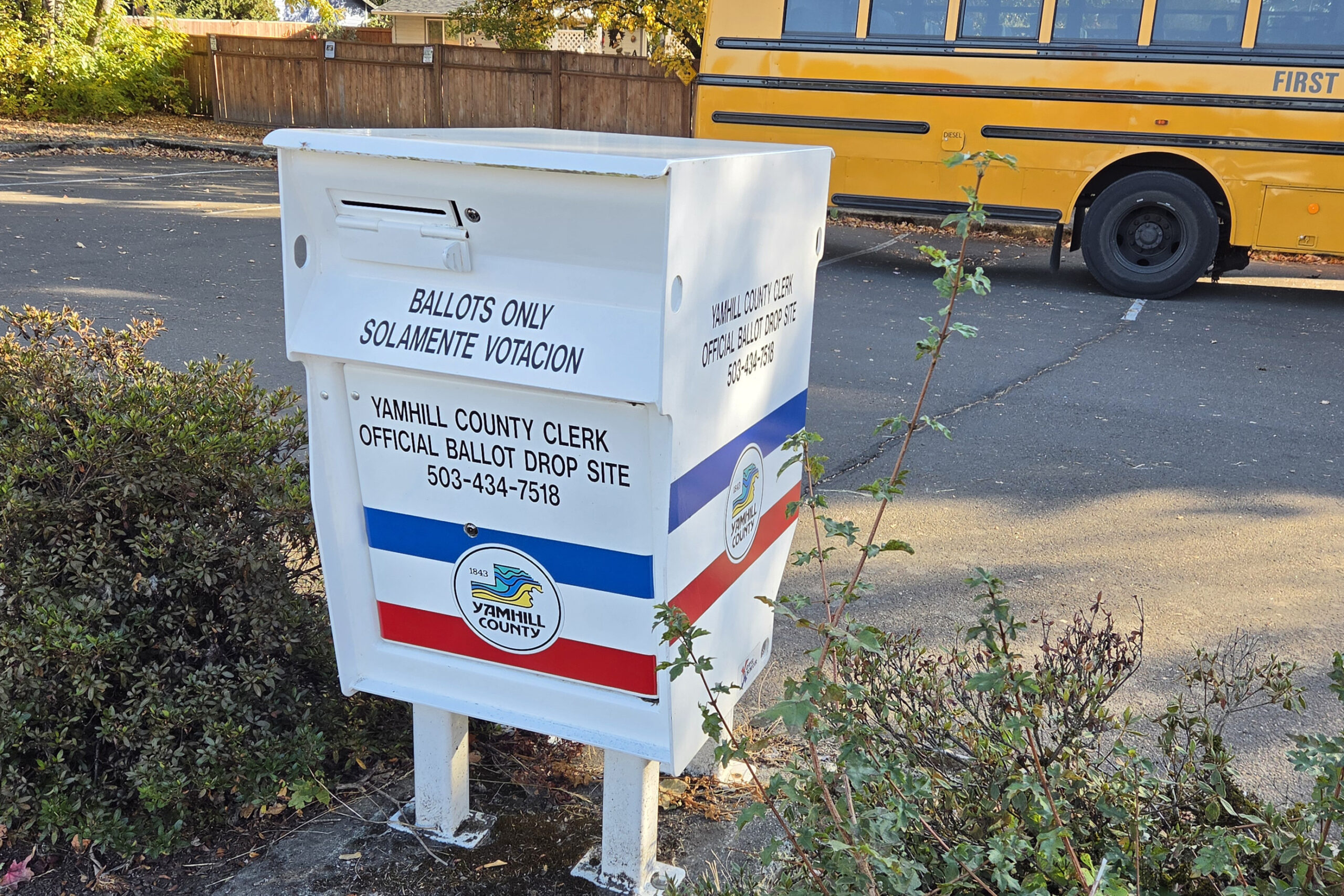
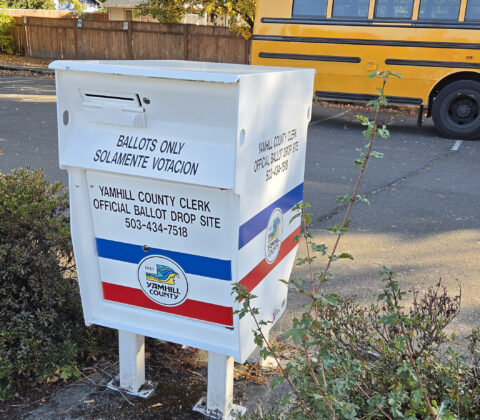
Trump has started to interfere, get ahead of the curve.
This is my wifes and my ballots that just came in the mail this past week.
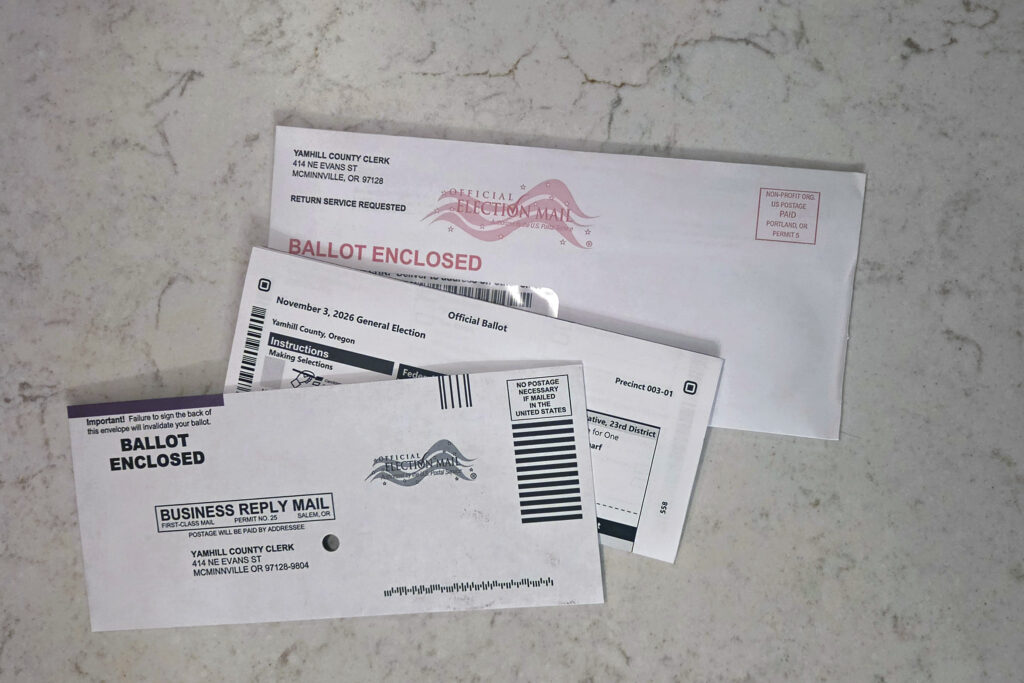
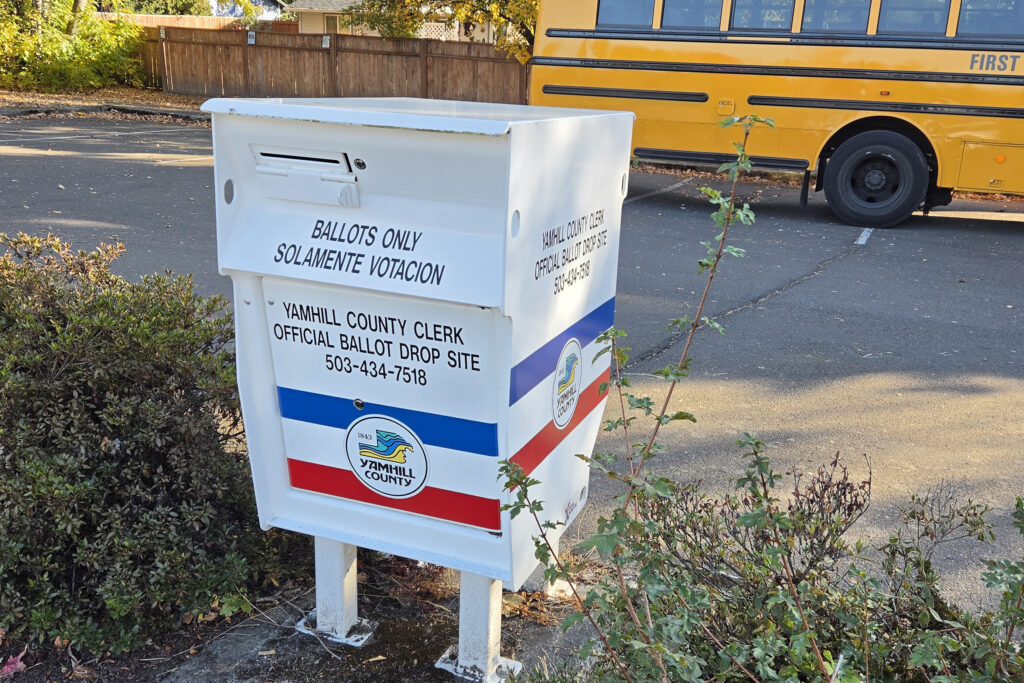
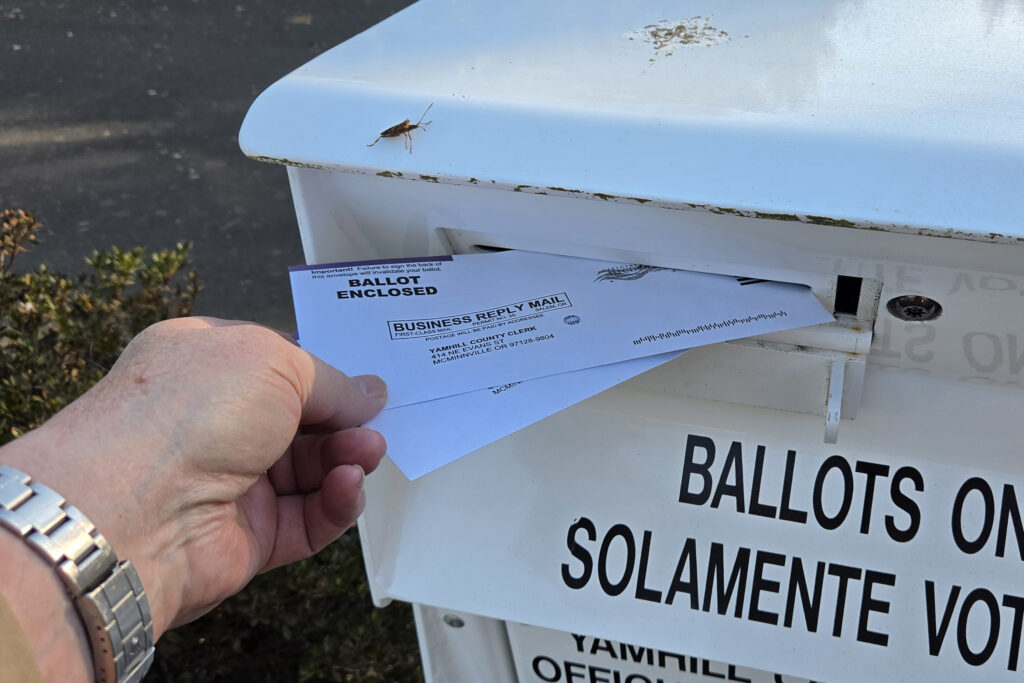
Interfere with that!
Share this:
Matthew McConaughey Said It Out Loud
|
Share this:
Ballot Tracking Alerts Now Available for All Oregon Voters
| Sign-up at OregonVotes.gov/Track |
|
| Having trouble viewing this email? View it as a Web page. |
| Manage Subscriptions | Help |
|
||||
Share this:
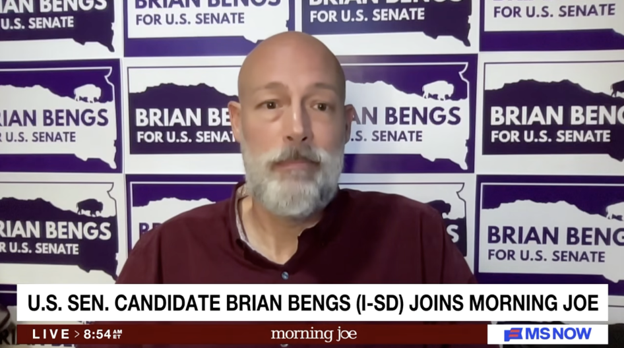
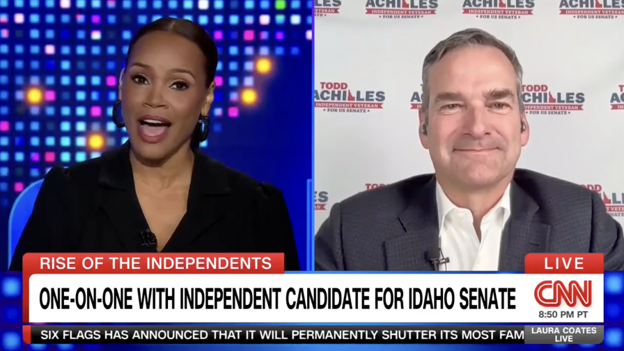
Independent Movement in South Dakota and Idaho Gaining Real Traction
|
Share this:
Ballot tracking now available statewide!
|
| Having trouble viewing this email? View it as a Web page. |
| Manage Subscriptions | Help |
|
||||
Share this:
Secretary Read: ‘It’s Time to Get Ready to Vote’ – Ballots In The Mail
|
Having trouble viewing this email? View it as a Web page. |
| Manage Subscriptions | Help |
|
||||
Share this:
Oregon Governor – I am going to Gamble – Video
I am not a gambler. I learned very early about the house.
When I turned 21, I took my paycheck, probably a little over $100, and took the train from Los Angeles to Las Vegas. I lost my paycheck at the Dollar Wheel outside Caesars Palace before I even stepped inside the casino. They offered me a free meal.
I hitchhiked back to Manhattan Beach.
This was 1967.
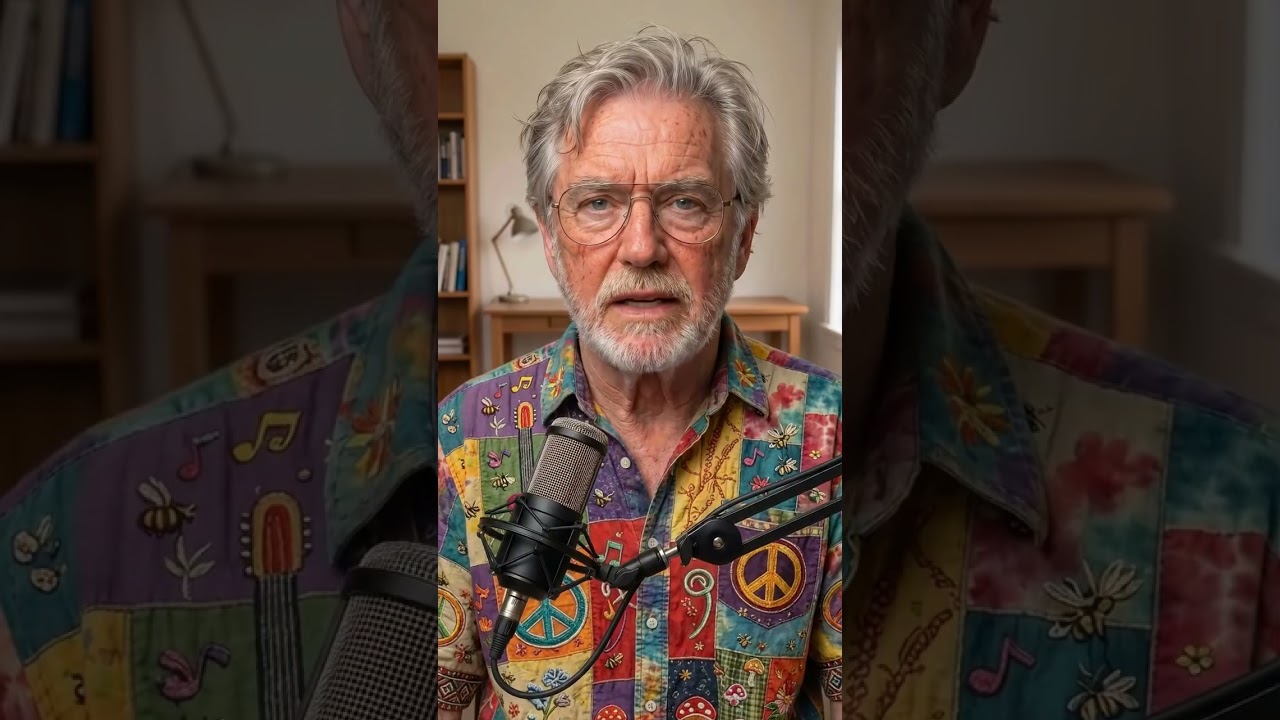
So now I am going to gamble.
See, I now live in Oregon, a blue state. But I don’t like the way things have gone for the past decade or so, and I blame a lot of things on a lot of things. But right now I blame our current governor, Tina Kotek.
I am just not impressed.
I won’t go into all the details. This is just where I stand today.
The second position I take is that I see our state being run as if two universities and one city set the agenda, while a capital doesn’t always seem to know what the rest of the state is doing.
You see, Oregon is home to some of the finest universities in the nation and some pretty remarkable technology. Ever hear of Intel? Tektronix?
Oregon has a technology history that helped create what we now call the Silicon Forest. Intel’s Oregon operation became a major center for semiconductor manufacturing and research, while Tektronix helped establish the high-tech industry here in the first place.
But nobody remembers that we are also a timber state, a farming state, a fishing state. Nobody seems to pay enough attention to what this state is actually about.
It sometimes seems that everything is about Portland and the homeless.
So here I am.
I want MAGA gone. I hate Trump’s authoritarian policies.
And now comes the gamble.
Kotek, a Democrat I don’t want because I think she has failed us, or Drazan, a Republican, while I am actively campaigning against the Trump regime?
Christine Renee Drazan is an Oregon Republican who currently serves in the Oregon Senate and is running for governor. She was born in Klamath Falls, grew up in Eagle Point, graduated from Eagle Point High School and attended George Fox University in Newberg.
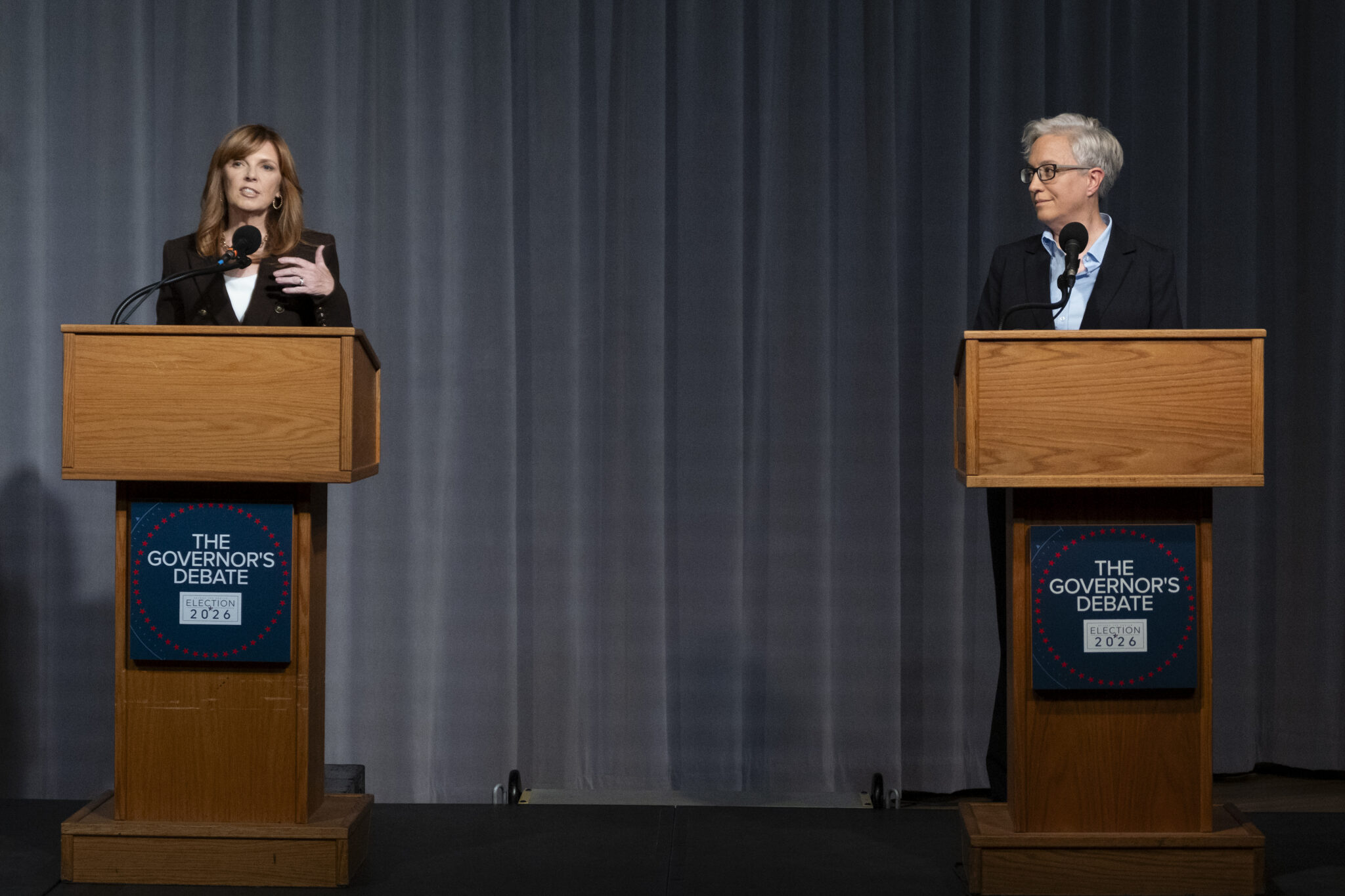
My wife and I watched the Kotek-Drazan debate. Debate, argument, cat fight, cage fight, call it what you want. It was politics.
Drazan to Kotek: You failed.
Kotek to Drazan: You’re a Republican like Trump.
And that is where this gets interesting for me.
I have to admit that Drazan is more conservative than my taste. But when I started looking at some of Kotek’s accusations about Drazan’s record, I found that some of the details were more complicated than the campaign rhetoric suggested. Drazan has opposed tax and revenue measures, but the individual votes and what those bills actually did matter.
That distinction is important to me.
So does this: Drazan is an Oregonian. Born in Klamath Falls. Raised in Eagle Point. Educated at George Fox University in Newberg.
She has country roots.
The gamble is this:
I believe Trump’s MAGA movement is going to take a big hit in November. If it takes the hit I believe it is going to take, then I feel more comfortable voting for a Republican governor in Oregon.
Governor.
Not senator.
That distinction matters to me.
I am not suddenly becoming a Republican. I am not voting for Trump. I am not endorsing MAGA.
I am making a decision about who I think should run Oregon.
And yes, it is a gamble.
If I lose the gamble, well, I still think Kotek is taking us in the wrong direction.
And I guess that is what politics are all about.
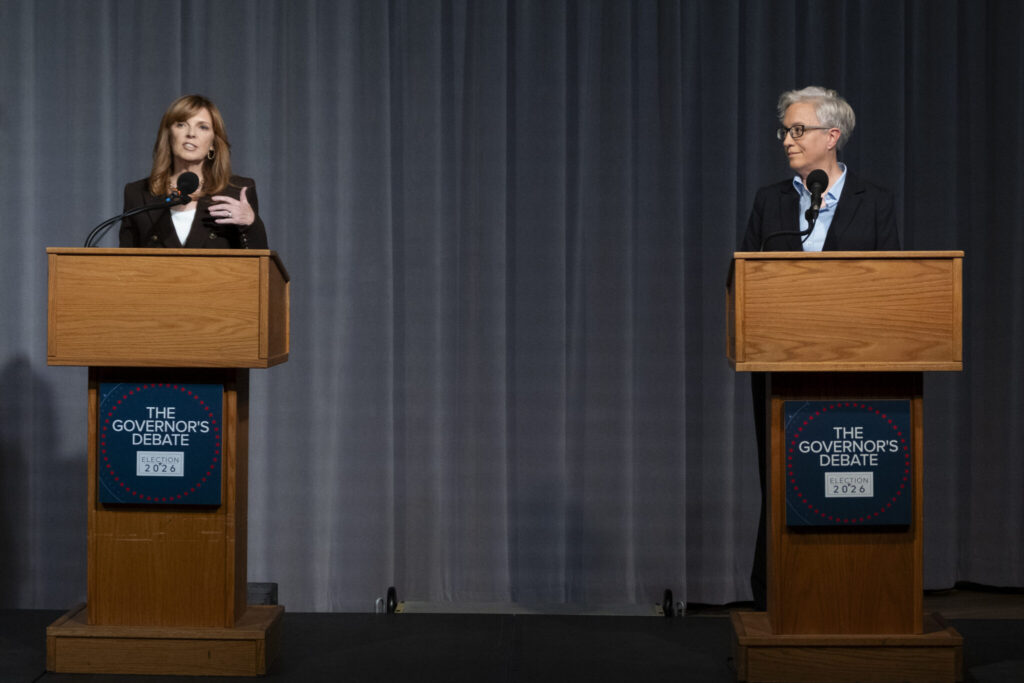
At the gubernatorial debate on the University of Oregon campus on Thursday, October 1, 2026 between incumbent Gov. Tina Kotek(D), right, and state Sen. Christine Drazan(R). (Photo by: Will Yurman / Lookout Eugene-Springfield / Pool)
Share this:
MEDIA ADVISORY: Secretary Read to Hold Press Conference as Counties Prepare to Mail Ballots
|
| Having trouble viewing this email? View it as a Web page. |
| Manage Subscriptions | Help |
|
||||
Share this:
Oregon Governor – I am going to Gamble
I am not a gambler. I learned very early about the house.
When I turned 21, I took my paycheck, probably a little over $100, and took the train from Los Angeles to Las Vegas. I lost my paycheck at the Dollar Wheel outside Caesars Palace before I even stepped inside the casino. They offered me a free meal.
I hitchhiked back to Manhattan Beach.
This was 1967.
So now I am going to gamble.
See, I now live in Oregon, a blue state. But I don’t like the way things have gone for the past decade or so, and I blame a lot of things on a lot of things. But right now I blame our current governor, Tina Kotek.
I am just not impressed.
I won’t go into all the details. This is just where I stand today.
The second position I take is that I see our state being run as if two universities and one city set the agenda, while a capital doesn’t always seem to know what the rest of the state is doing.
You see, Oregon is home to some of the finest universities in the nation and some pretty remarkable technology. Ever hear of Intel? Tektronix?
Oregon has a technology history that helped create what we now call the Silicon Forest. Intel’s Oregon operation became a major center for semiconductor manufacturing and research, while Tektronix helped establish the high-tech industry here in the first place.
But nobody remembers that we are also a timber state, a farming state, a fishing state. Nobody seems to pay enough attention to what this state is actually about.
It sometimes seems that everything is about Portland and the homeless.
So here I am.
I want MAGA gone. I hate Trump’s authoritarian policies.
And now comes the gamble.
Kotek, a Democrat I don’t want because I think she has failed us, or Drazan, a Republican, while I am actively campaigning against the Trump regime?
Christine Renee Drazan is an Oregon Republican who currently serves in the Oregon Senate and is running for governor. She was born in Klamath Falls, grew up in Eagle Point, graduated from Eagle Point High School and attended George Fox University in Newberg.
My wife and I watched the Kotek-Drazan debate. Debate, argument, cat fight, cage fight, call it what you want. It was politics.
Drazan to Kotek: You failed.
Kotek to Drazan: You’re a Republican like Trump.
And that is where this gets interesting for me.
I have to admit that Drazan is more conservative than my taste. But when I started looking at some of Kotek’s accusations about Drazan’s record, I found that some of the details were more complicated than the campaign rhetoric suggested. Drazan has opposed tax and revenue measures, but the individual votes and what those bills actually did matter.
That distinction is important to me.
So does this: Drazan is an Oregonian. Born in Klamath Falls. Raised in Eagle Point. Educated at George Fox University in Newberg.
She has country roots.
The gamble is this:
I believe Trump’s MAGA movement is going to take a big hit in November. If it takes the hit I believe it is going to take, then I feel more comfortable voting for a Republican governor in Oregon.
Governor.
Not senator.
That distinction matters to me.
I am not suddenly becoming a Republican. I am not voting for Trump. I am not endorsing MAGA.
I am making a decision about who I think should run Oregon.
And yes, it is a gamble.
If I lose the gamble, well, I still think Kotek is taking us in the wrong direction.
And I guess that is what politics are all about.
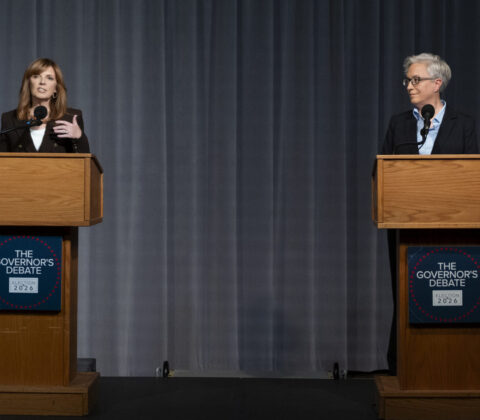
At the gubernatorial debate on the University of Oregon campus on Thursday, October 1, 2026 between incumbent Gov. Tina Kotek(D), right, and state Sen. Christine Drazan(R). (Photo by: Will Yurman / Lookout Eugene-Springfield / Pool)
Share this:
Ballot Drop Off Boxes
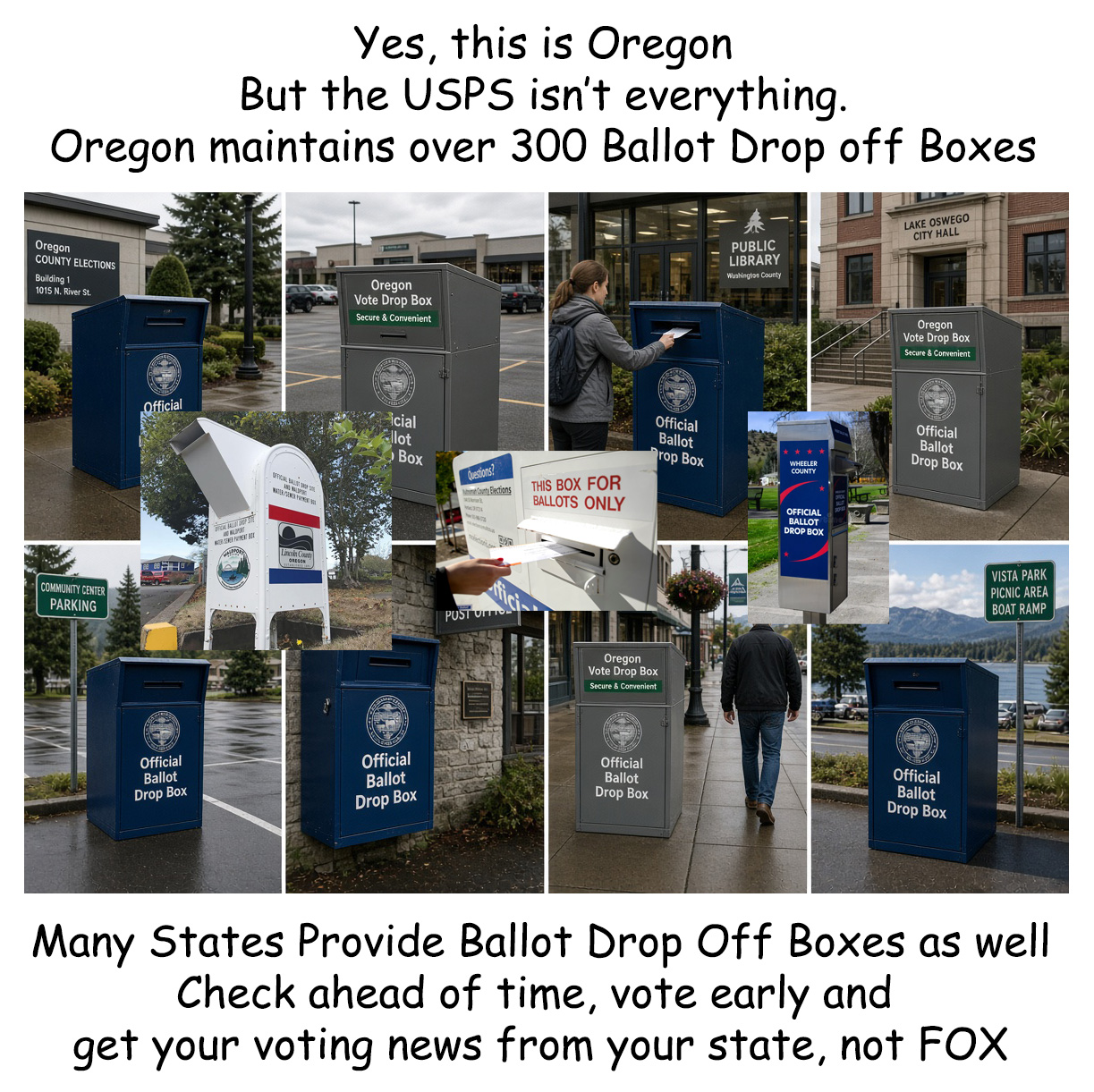
In May 2026 (around the primary election), officials noted that Oregon has 321 official drop boxes (also called drop sites). These are available until 8 p.m. on Election Day, are monitored, and include fire-suppression features.
newsfromthestates.com
The state does not maintain a single permanent public “total” page that is always updated outside election periods. Instead:
-
The Oregon Secretary of State provides an Oregon Drop Box Locator tool (sos.oregon.gov) that lists locations statewide. It becomes available about 21 days before a statewide election.
sos.oregon.gov -
Individual counties publish their own lists and counts (e.g., Clackamas County has listed 26 sites; Multnomah County has listed around 30).
Oregon is an all-mail voting state, so every registered voter gets a ballot by mail and can return it by mail (postmarked by Election Day) or at any official drop box/site in the state. The number of boxes can vary slightly by election as counties adjust locations. For the most current count or map during an election window, check the Secretary of State’s Drop Box Locator or your county elections office.
Share this:
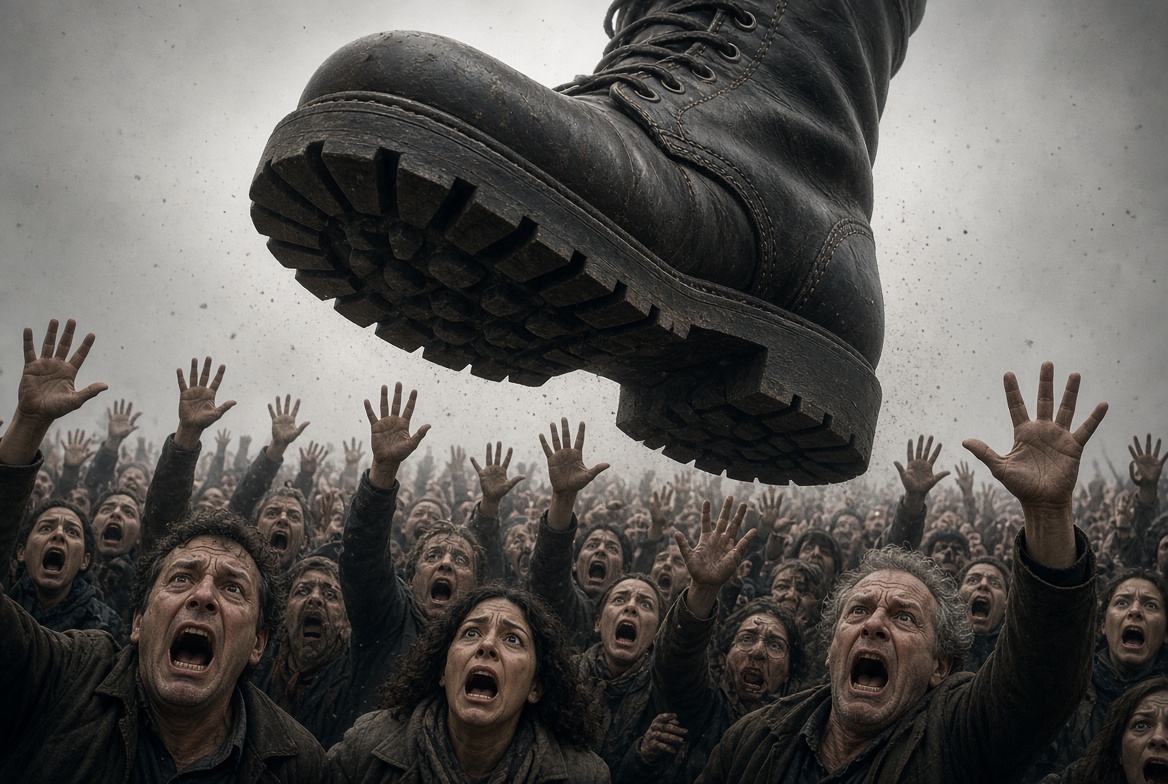
OH My God We Are In Power! – Video

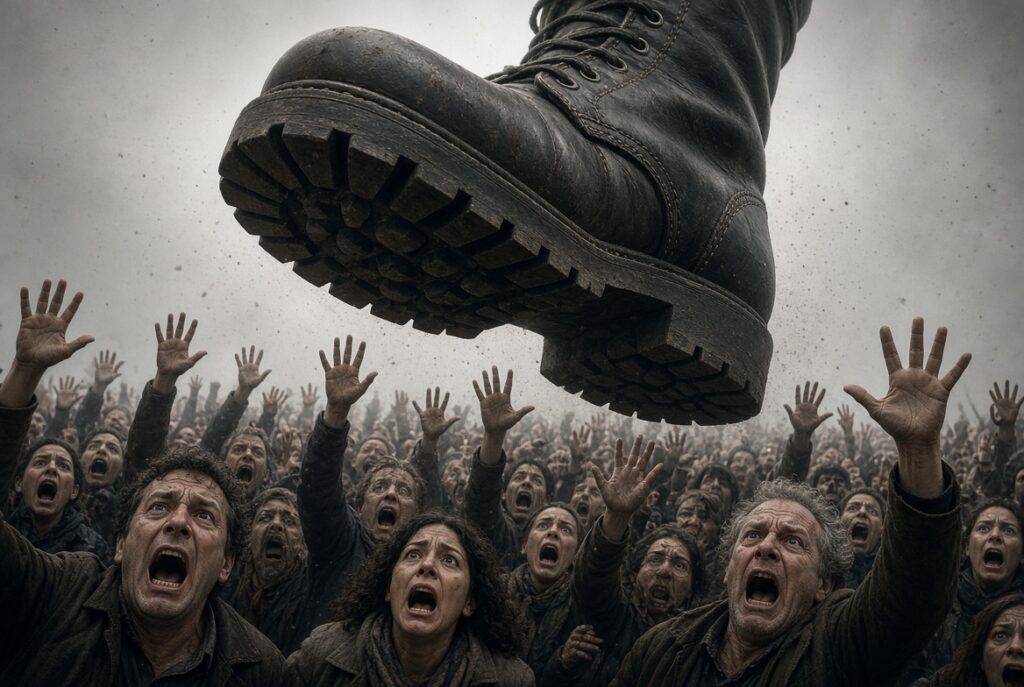
Yah, so we have been going on and on about the Democrats getting into power, taking control of the House, well, that’s a given and maybe even the Senate. That’s not a given, but there’s a good chance.
But okay. They do it.
So what?
What do you expect? Massive change? Impeach Trump, throw the administration behind bars where they belong? Oh, still my beating heart. If only it could happen that easily.
Reality is raising its ugly head. What’s going to happen? Well, I’ll tell you what’s going to happen.
A lot of INVESTIGATIONS.
==============================================
Who are we going to let call the shots?
A bunch of rich dudes who only want to get richer?
Or…
Maybe that’s the question we should be asking before we decide that simply changing who holds the gavels means we have changed the system.
Because making that decision tomorrow may be too late.
Share this:
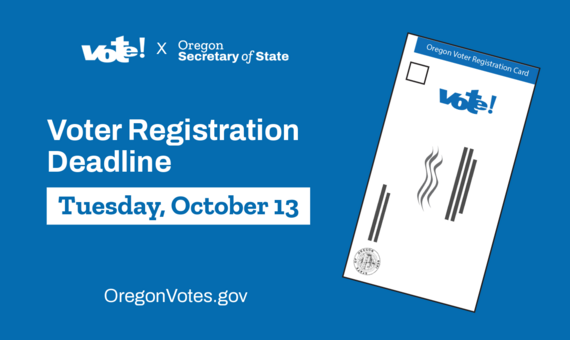
One Week Left to Register to Vote – Oregon, but probably most States
|
| Having trouble viewing this email? View it as a Web page. |
| Manage Subscriptions | Help |
|
||||
Share this:


Elections and Media in the Modern Era – Part 3 of 3 Dark Money Influence: Who Shapes What You See? – Video
1. Dark money: Political Spending
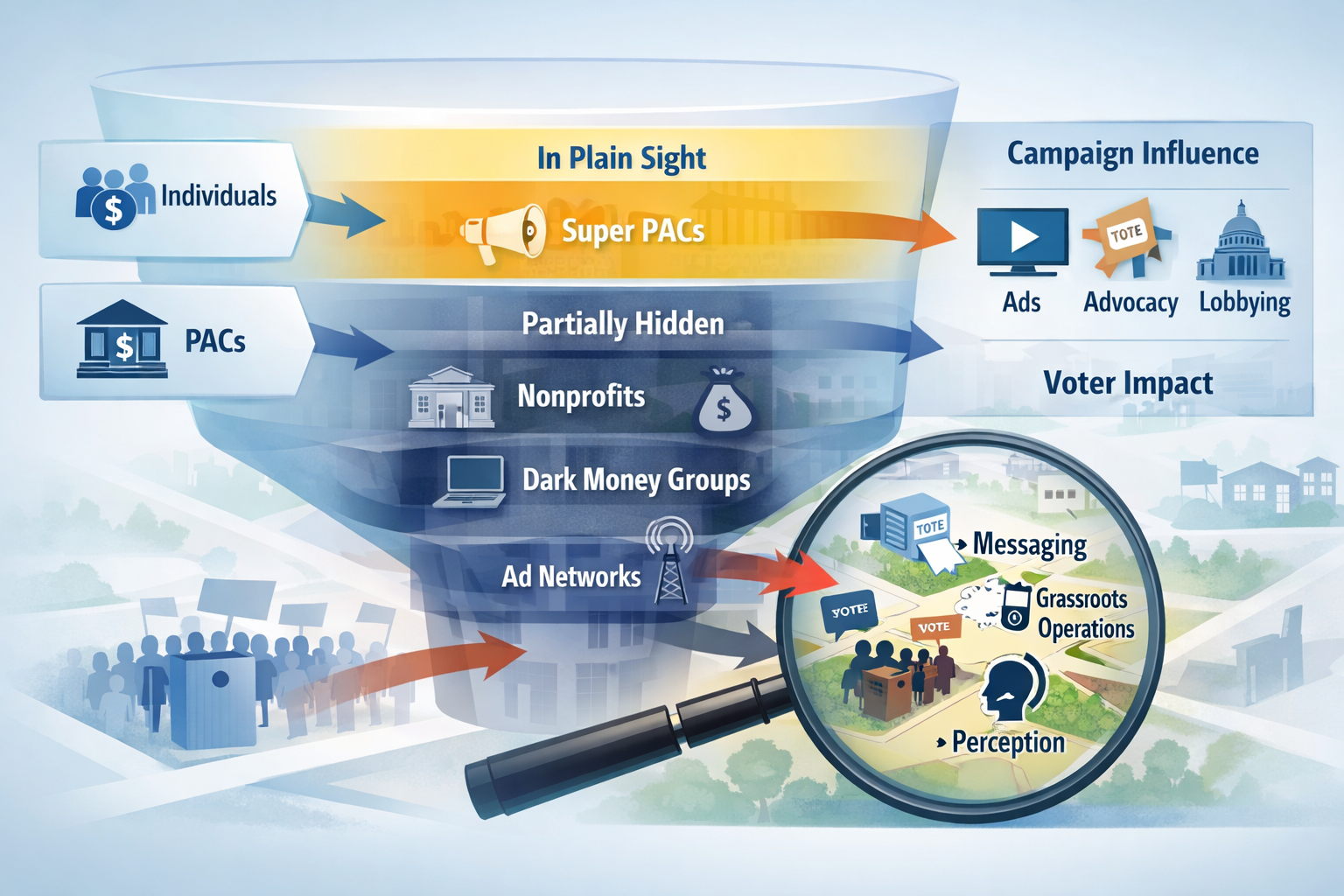
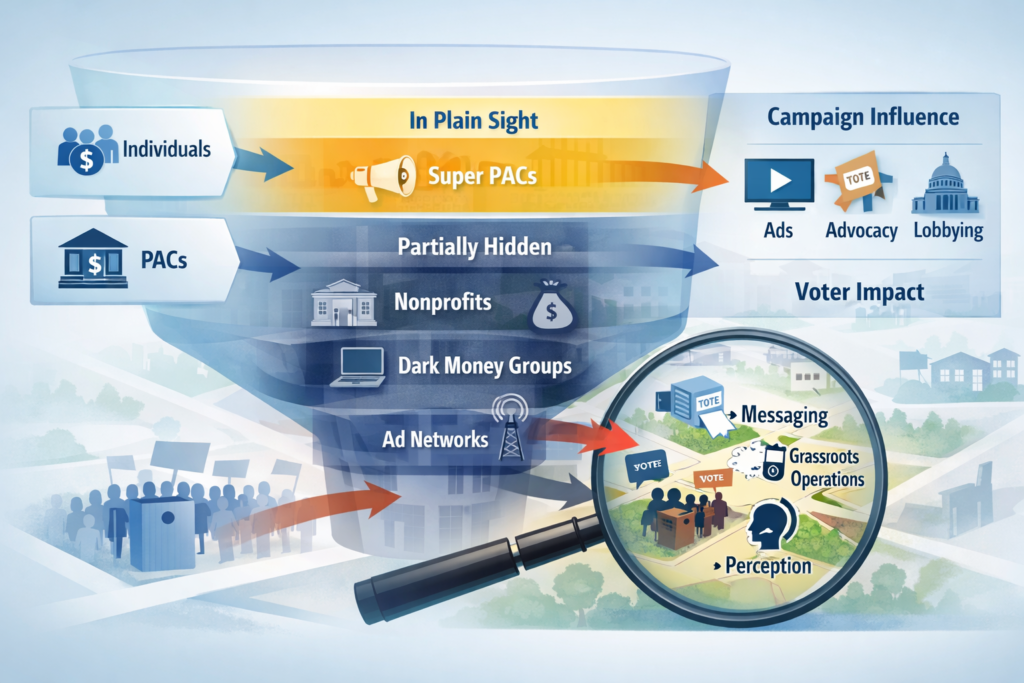
“Dark money” refers to political spending by organizations that aren’t required to disclose their donors. These can include:
-
501(c)(4) nonprofits labeled as “social welfare” organizations
-
501(c)(6) trade associations
-
Super PACs funded through donor networks
-

Share this:


Elections and Media in the Modern Era – Part 3 of 3 Dark Money Influence: Who Shapes What You See?
1. Dark money: Political Spending
“Dark money” refers to political spending by organizations that aren’t required to disclose their donors. These can include:
-
501(c)(4) nonprofits labeled as “social welfare” organizations
-
501(c)(6) trade associations
-
Super PACs funded through donor networks
The result? Huge sums of money can influence elections without voters knowing the source.
-
A TV ad promoting a candidate may look like a neutral “issue ad”
-
The funding might come from a network of nonprofits or PACs with a partisan agenda
-
Voters see the message, but not the money behind it
2. Why It Matters: The Voter Experience
Consider Mary again, our hypothetical voter. By the time she sees a TikTok clip, a Facebook ad, or a cable news segment:
-
Some of those messages were funded by independent PACs or nonprofits
-
The messaging was crafted to influence perception subtly
-
She doesn’t see the donors, just the content
Even in small towns, the flow of money affects which messages are amplified, which reach her first, and which seem urgent or newsworthy.
3. Concrete Example — Montana’s Legislative Races
Montana has become a classic case study for understanding dark money in local politics:
-
In a recent state legislative election, outside organizations poured millions into TV ads, mailers, and social media campaigns
-
Much of this funding came from national PACs and nonprofits whose donors remained anonymous
-
The message: localized issues framed to influence voter perception, even in districts where the voters might never have heard of the donors
The result? Candidates and voters were reacting more to well-funded messaging than to local debates or candidate visits.
This mirrors what happens in national elections—just scaled up. Whether it’s a mayoral race in Boca Raton or a Senate race in Montana, the mechanics are the same: money flows first, messages follow, and voters absorb the outcome.
4. Money + Media + Voters
Here’s the chain we’ve been building across the series:
-
Money funds messaging: PACs, nonprofits, and advocacy groups choose the narratives to highlight
-
Media amplifies it: cable, social media, and independent channels deliver the messages, often emphasizing what engages audiences most
-
Voters receive it: individuals like Mary see a mix of ads, posts, and commentary shaped by ideology, attention, and funding
-
Elections reflect influence: outcomes are affected not just by ballots but by how voters were informed—or persuaded—before reaching the booth
5. A Key Insight
Dark money isn’t inherently bad or partisan. Its existence shows a system that prioritizes influence without transparency. Whether an election leans left or right, the structure remains the same: funding networks drive the narrative, independent media amplifies it, and voters navigate the resulting patchwork of messages.
Understanding this flow is critical for anyone trying to make sense of modern elections. It’s not about ideology—it’s about mechanics. And recognizing the mechanics helps explain why elections, even local ones, can swing on a handful of votes—or even just one.
Navigating the Modern Election Landscape
Modern elections are complex—but they are navigable. Across this series, we’ve explored three critical layers of influence:
-
Your Vote Matters: Even a single ballot can tip the balance, as local races like Boca Raton’s mayoral election demonstrate. Participation is powerful, and every voter counts.
-
Information Shapes Perception: Voters no longer rely on a single evening news broadcast. Messages come from cable, social media, podcasts, and online channels, often telling different versions of the same story. Understanding the sources and flow of information is crucial.
-
Money Fuels the Messages: Funding networks—candidates, PACs, nonprofits, and media platforms—determine which messages are amplified and which reach the voter. Some sources are transparent, others operate in relative opacity.
“Interestingly, transparency in elections and messaging is often a matter of perspective. Some organizations proclaim openness, yet much of the real influence—funding, targeting, amplification—remains hidden. Others may quietly operate with clarity and accountability. For voters, the key is not trusting claims of transparency, but understanding the system itself: who shapes the messages, how they reach you, and why your vote still matters.”
Practical Insights for Voters
-
Be aware of sources and funding: Consider who might benefit from the message you’re seeing, whether it’s an ad, a social media post, or a podcast.
-
Cross-check information: Exposure to multiple perspectives can reveal biases or gaps in a single channel’s narrative.
-
Engage locally: Local elections often swing on very few votes. Grassroots attention can outweigh national influence.
-
Vote informed: Understanding the mechanics of elections, media, and money equips you to navigate the system intelligently.
Final Thought
Elections are no longer a simple choice between candidates. They are shaped by networks of funding, media channels, and targeted messaging. Awareness of how information flows—and who is paying to shape it—helps voters make decisions that reflect their intent, not just the loudest or best-funded message.
In the end, the power still lies with the voter. Every vote counts, every informed decision matters, and understanding the system is the best way to ensure your voice is heard.
Share this:
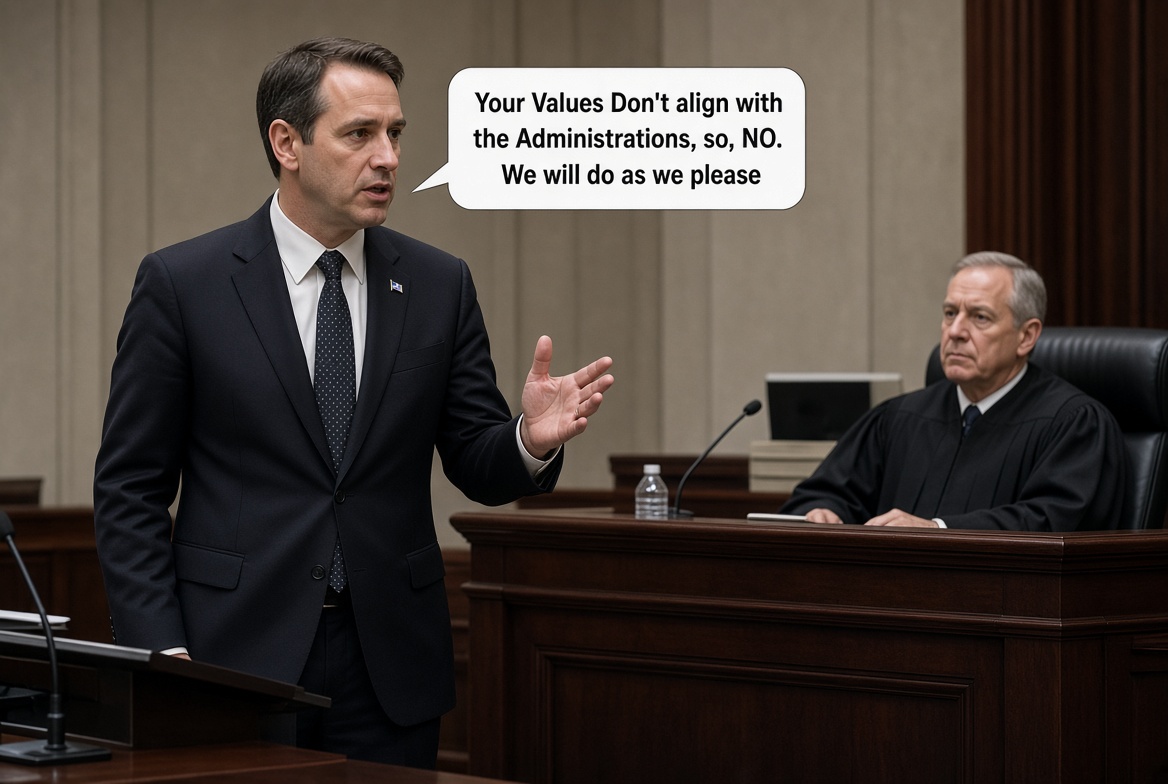
Is There Still a Rule of Law? – Video
Everyone is still dancing around it.
Everyone is still taking everyone to court. Everyone is still winning cases. And yet, it sometimes feels like nobody is actually enforcing anything.
So why are we still dancing?
What is going on?
I’m not asking whether Trump is crazy, asleep, or anything else. I don’t know, and frankly, I don’t need to know.
I’m asking a much simpler question:
How far can you push the system before somebody actually stops you?
Look at the ICE shootings earlier this year. An American woman was shot through the window of her vehicle in Minneapolis. Another man was shot during an ICE operation there.
And before someone jumps in with, “Well, we have an immigration problem,” I’m not talking about immigration.
I’m talking about what happens when an American citizen is shot by the government.
============================================
Are we paying attention?
Because the law may be on our side.
But only if somebody enforces it.
And if we wait until we finally realize it matters, it may already be too late.
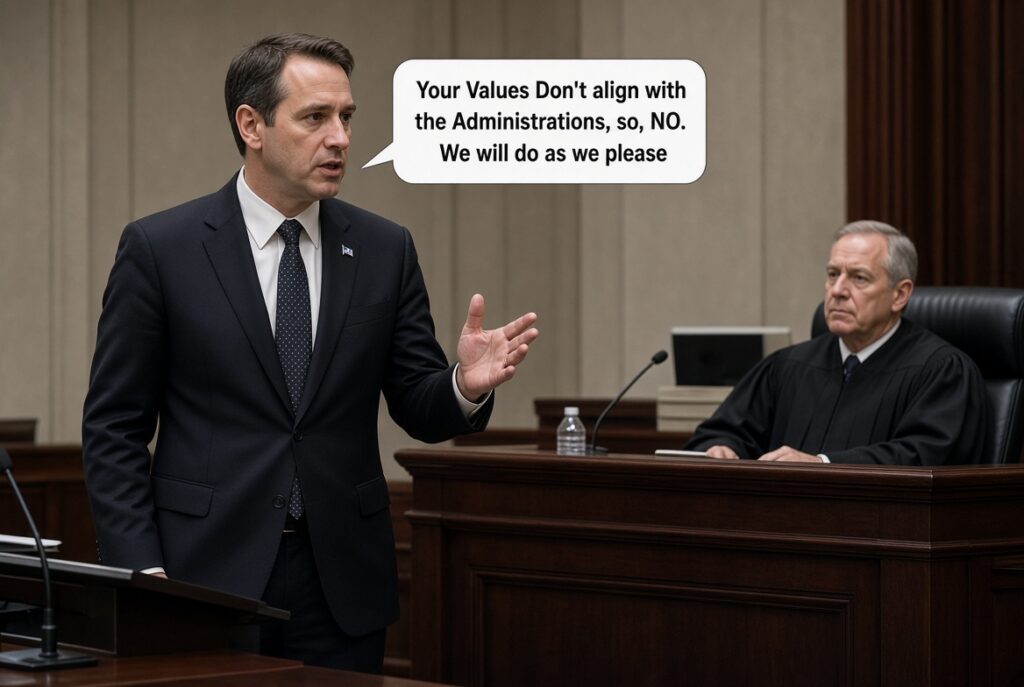
Share this:
Is There Still a Rule of Law?
Everyone is still dancing around it.
Everyone is still taking everyone to court. Everyone is still winning cases. And yet, it sometimes feels like nobody is actually enforcing anything.
So why are we still dancing?
What is going on?
I’m not asking whether Trump is crazy, asleep, or anything else. I don’t know, and frankly, I don’t need to know.
I’m asking a much simpler question:
How far can you push the system before somebody actually stops you?
Look at the ICE shootings earlier this year. An American woman was shot through the window of her vehicle in Minneapolis. Another man was shot during an ICE operation there.
And before someone jumps in with, “Well, we have an immigration problem,” I’m not talking about immigration.
I’m talking about what happens when an American citizen is shot by the government.
Then this week we have an ICE detainee who reportedly complained repeatedly about not receiving his insulin before he died in custody. ICE says he received appropriate medical care. The circumstances and cause of death are still being investigated.
So we have courts issuing orders, lawyers filing challenges, investigations taking place, and government agencies continuing to do what they are doing while all of this winds its way through the system.
And that’s where I keep getting stuck.
What good is the Rule of Law if the law isn’t enforced?
Take the Blanche and Epstein mess.
A federal judge ordered the Justice Department to begin reviewing and producing foreign-language documents covered by the law. The Justice Department argued that doing that wasn’t practical for its initial reviewers. The judge rejected that explanation and warned that contempt could become appropriate if the order wasn’t followed.
Okay.
So what happens next?
Another hearing?
Another order?
Another appeal?
Another few months?
At some point, winning in court isn’t the same thing as enforcing the law.
And that should concern all of us.
I don’t know if any of this is some grand plan to see how far the government can push the boundaries.
But I do know that if you repeatedly test the boundaries and discover that the consequences are slow, uncertain, or nonexistent, eventually someone is going to test them again.
Maybe that’s the plan.
Maybe it isn’t.
But shouldn’t we at least be asking the question?
Because the Rule of Law isn’t simply having laws.
It isn’t simply having judges.
It isn’t simply winning cases.
The Rule of Law means that when a court makes a lawful decision, somebody has the authority — and the willingness — to make sure that decision actually means something.
And here’s the part that bothers me most:
A lot of Americans don’t even know this is happening.
I found that out in a store a couple of days ago. I mentioned the ICE shootings and got the immediate response:
“Well, we have an immigration problem.”
I said, “I’m not talking about immigrants. I’m talking about American citizens who were shot.”
He looked at me like I had just landed from Mars.
He wasn’t angry. He wasn’t MAGA. He wasn’t defending anybody.
He simply didn’t know.
And maybe that’s the biggest problem of all.
Because while we’re busy arguing about Republicans and Democrats, red and blue, left and right, the machinery of government keeps moving.
So I’m asking a very simple question:
Are we paying attention?
Because the law may be on our side.
But only if somebody enforces it.
And if we wait until we finally realize it matters, it may already be too late.
Share this:
The Forward Party Message is Catching 🔥🔥🔥
|
Share this:
One month to go! What is Forward doing, and how can you help?

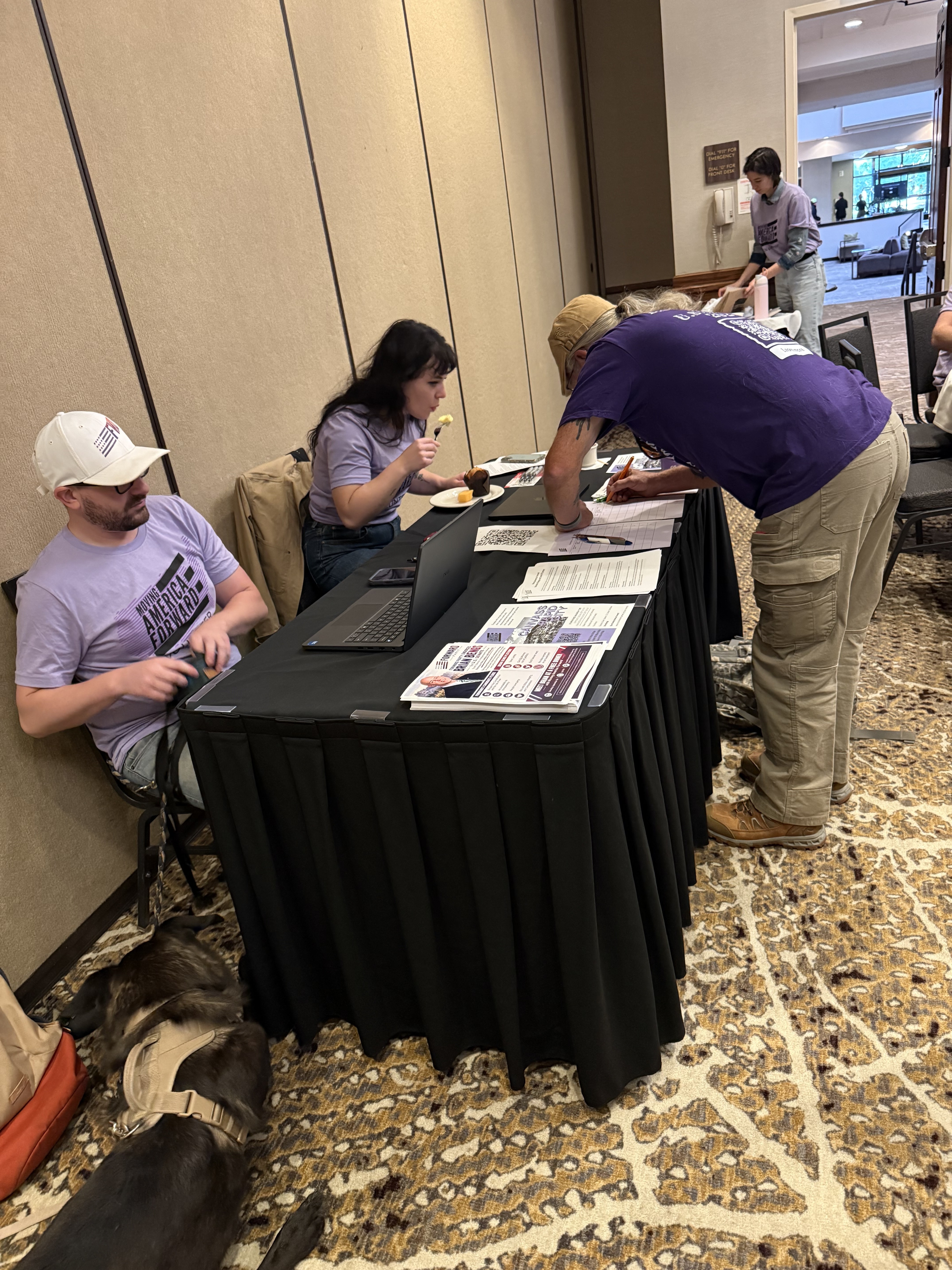
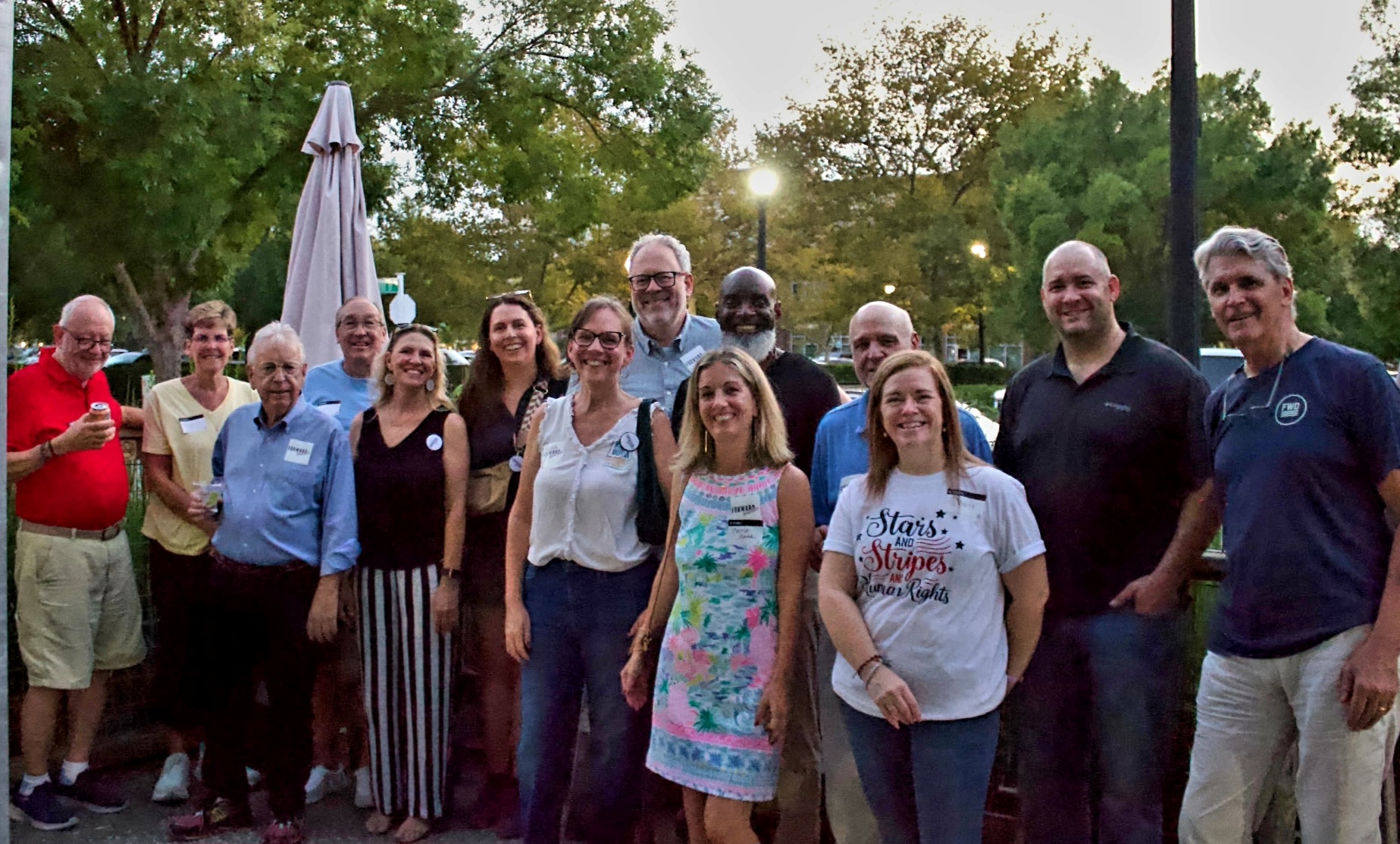
Share this:



Elections and Media in the Modern Era – Part 2 of 3 Media: Gatekeepers No More – Video
Today, a voter might get political information from cable news, a Facebook post, a short video clip on TikTok, or a direct message from a candidate on X (Twitter). Others follow political updates through niche platforms like Truth Social. Instead of one national conversation, we now have thousands of overlapping conversations happening at once

Share this:

Get Ready to Vote
|




| Having trouble viewing this email? View it as a Web page. |
| Manage Subscriptions | Help |
|
||||
Share this:

California Endorsement and a Warm Embrace of Independence 09/29/2026
|

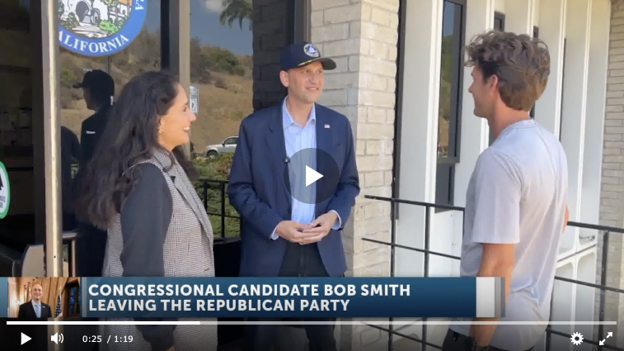
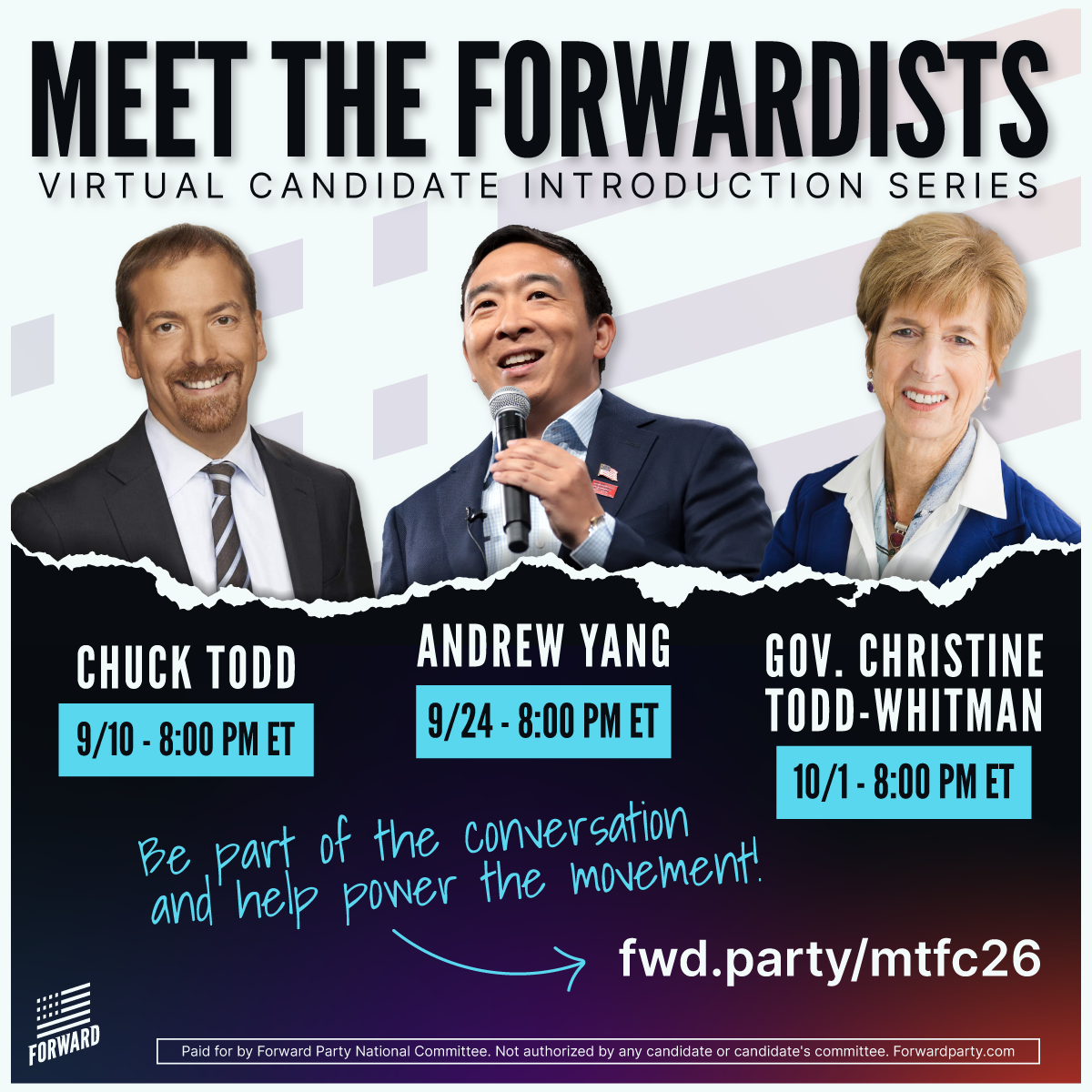
Share this:



Elections and Media in the Modern Era – Part 2 of 3 Media: Gatekeepers No More
There was a time when most Americans got their news from the same three places: the evening broadcasts of ABC, NBC, and CBS. At six o’clock or ten o’clock, millions of households watched the same headlines. Whether you agreed with the coverage or not, the country largely started from the same set of facts.
That world is gone.
Today, a voter might get political information from cable news, a Facebook post, a short video clip on TikTok, or a direct message from a candidate on X (Twitter). Others follow political updates through niche platforms like Truth Social. Instead of one national conversation, we now have thousands of overlapping conversations happening at once.
When Old Rules Meet New Media
A recent late-night television moment quietly demonstrated how the old media rules collide with the modern media environment.
When host Stephen Colbert attempted to interview Texas legislator James Talarico on The Late Show with Stephen Colbert, the segment reportedly ran into concerns related to broadcast “equal time” rules—regulations historically overseen by the Federal Communications Commission that were designed to ensure fairness when political candidates appear on broadcast television.
Instead of airing the interview during the television broadcast, the conversation was recorded after the official taping and released online through YouTube. The same interview that could not appear on traditional television could still reach millions of viewers online.
This moment illustrated an important truth about modern political communication: the old broadcast gatekeepers and rules still exist, but they no longer control the flow of information.
Rise of Independent Commentary
Alongside the fractured media landscape, a new class of voices has emerged: independent commentators, legal analysts, and podcasters. Channels run by attorneys, journalists, and civic-minded creators—such as Michael Popok or personalities connected to MeidasTouch Network—offer detailed coverage of lawsuits, filings, and policy disputes.
Many of these creators provide useful expertise, but they operate within a digital attention economy. Platforms like YouTube and TikTok reward content that keeps people watching, clicking, and sharing. Calm, careful explanations may get modest engagement, while dramatic headlines or urgent tones spread rapidly. As a result, much of today’s political news is shaped not only by journalists and editors but also by the mechanisms of digital media itself.
Ideology in the Attention Economy
It’s important to remember that independent commentary often comes with a perspective. Channels like MeidasTouch or individual analysts may lean left, just as other voices lean right. The system doesn’t automatically provide balance—it rewards attention. As a result, the information voters receive reflects both ideology and engagement, and the ecosystem is likely to shift depending on which side captures audience focus.
This also plays directly into how money influences the media landscape. Independent channels that attract audiences are often supported or amplified by funding networks, PACs, or advocacy organizations aligned with their perspective. Understanding these dynamics helps explain why the information voters consume is shaped well before they enter the voting booth—a perfect segue into examining the role of dark money.
Setting Up the Next Step
The result is clear: voters now navigate a complex, fragmented media environment long before they step into a booth. Traditional gatekeepers no longer hold a monopoly on political information. And that leads directly to the next part of the story—who funds the messages that flow through these channels, and how outside money shapes the narrative before it even reaches voters.
Share this:

Notice of Temporary Administrative Order OAR 165-007-0550
|

| Having trouble viewing this email? View it as a Web page. |
| Manage Subscriptions | Help |
|
||||
Share this:

Secretary Read: Supreme Court Ruling Will Have No Impact on Oregon’s Election
|
| Having trouble viewing this email? View it as a Web page. |
| Manage Subscriptions | Help |
|
||||
Share this:

OH My God We Are In Power!
Yah, so we have been going on and on about the Democrats getting into power, taking control of the House, well, that’s a given and maybe even the Senate. That’s not a given, but there’s a good chance.
But okay. They do it.
So what?
What do you expect? Massive change? Impeach Trump, throw the administration behind bars where they belong? Oh, still my beating heart. If only it could happen that easily.
Reality is raising its ugly head. What’s going to happen? Well, I’ll tell you what’s going to happen.
A lot of INVESTIGATIONS.
A lot of ARM WAVING.
A lot of NAME CALLING.
A lot of NOTHING.
Why?
Because the Democrats have their own dirty laundry.
Because both parties depend on wealthy donors, corporations, interest groups and the mountains of money that now flow through our political system. Because the same basic system of campaign contributions, lobbying and dark money that Republicans complain about when Democrats benefit from it is the same system Democrats complain about when Republicans benefit from it.
The names are different.
The excuses are different.
The money is still money.
Don’t get me wrong. We will see change. We may see Trump and his political machine dismantled. We may see investigations that uncover things that actually deserve to be uncovered. We may see parts of the Trump political operation disappear.
But will the underlying system change?
That’s the question.
Because if you simply replace one political machine with another, what have you really fixed?
We aren’t going to see fundamental change until we start dealing with the two-party system itself, until Citizens United is addressed, and until the super-rich lose some of their influence over our government.
They will never lose all of it.
Because money is power, and that’s just the way it is.
This is a late-in-the-evening post.
I am reminded of Chuck Keller’s recent post where he brought up alcohol, and I made a comment about how every now and again I guess we all, including Hemingway, must stand there sober occasionally.
Well, today isn’t that day.
I cleaned my smoker. I scraped the grease from the BBQ. I showered twice. I even did a paying job.
And now I’m sitting here with a glass of bourbon, my poison of choice, which apparently makes me willing to admit that I can appreciate the Chinese game plan:
Don’t think about tomorrow. Think about the next 100 years.
So, looking forward:
Who are we going to let call the shots?
A bunch of rich dudes who only want to get richer?
Or…
Maybe that’s the question we should be asking before we decide that simply changing who holds the gavels means we have changed the system.
Because making that decision tomorrow may be too late.
Share this:

Forward Party Endorses Diana DiZoglio + Friends at MAF in South Dakota!
|

Share this:

Elections and Media in the Modern Era – Part 1 of 3: Elections – Behind the Ballot Box – Video
Let me ask you one question: just how many votes does it take to win an election? 1,000? 100? 10? Or maybe… just 1?
Early reports from the 2026 Boca Raton mayoral race suggested it could have been a single vote. One person deciding to mail their ballot—or to skip it—could have changed the outcome entirely. In the end, it turned out the margin was five votes. Still, in a city election, that’s barely a handful—and it perfectly illustrates why every vote truly matters.

Share this:

Oregon Ballot Drop Off Boxes
In May 2026 (around the primary election), officials noted that Oregon has 321 official drop boxes (also called drop sites). These are available until 8 p.m. on Election Day, are monitored, and include fire-suppression features.
newsfromthestates.com
The state does not maintain a single permanent public “total” page that is always updated outside election periods. Instead:
-
The Oregon Secretary of State provides an Oregon Drop Box Locator tool (sos.oregon.gov) that lists locations statewide. It becomes available about 21 days before a statewide election.
sos.oregon.gov -
Individual counties publish their own lists and counts (e.g., Clackamas County has listed 26 sites; Multnomah County has listed around 30).
Oregon is an all-mail voting state, so every registered voter gets a ballot by mail and can return it by mail (postmarked by Election Day) or at any official drop box/site in the state. The number of boxes can vary slightly by election as counties adjust locations. For the most current count or map during an election window, check the Secretary of State’s Drop Box Locator or your county elections office.
Share this:


Elections and Media in the Modern Era – Part 1 of 3: Elections – Behind the Ballot Box
Does Your Vote Count?
Let me ask you one question: just how many votes does it take to win an election? 1,000? 100? 10? Or maybe… just 1?
Early reports from the 2026 Boca Raton mayoral race suggested it could have been a single vote. One person deciding to mail their ballot—or to skip it—could have changed the outcome entirely. In the end, it turned out the margin was five votes. Still, in a city election, that’s barely a handful—and it perfectly illustrates why every vote truly matters.
More Than Just a Ballot: How Votes Are Shaped Before They’re Cast
Even in small towns, elections don’t work the way most of us think. There was a time when Americans largely got the same story from the evening news—ABC, NBC, CBS. Today, a voter in rural Montana might watch a cable town hall on CNN, scroll X for candidate updates, and see a TikTok ad funded by a local political action committee. By the time they step into the booth, the story they’ve absorbed is a patchwork of channels, platforms, and messages—and each piece is shaped by someone trying to influence their choice.
Concrete Example — Boca Raton Mayor
Andy Thomson won the 2026 Boca Raton mayoral race by just five votes, after machine counts and multiple manual recounts. Early reports suggested the margin could have been a single vote. In other words, a handful—or even one—ballot could have changed the result.
In Boca Raton, like everywhere else, candidates weren’t just counting ballots—they were trying to reach voters with the right information at the right time. Even small shifts in turnout or perception could tip the scales. And that’s where the system behind elections—the information channels, messaging, and media—starts to matter.
Your vote can change outcomes, even if it feels invisible. And the information you receive before you vote—the stories, ads, news, and commentary—plays a role in shaping that choice. Understanding the system is the first step in making your vote count.
Core Explanation: Elections Are No Longer Simple
Voting today is no longer a straight line from candidate to voter. It’s a complex web of influence:
-
Traditional layers remain: parties, candidates, ballots, volunteers.
-
Outside spending shapes messaging: PACs, nonprofits, advocacy groups push targeted campaigns.
-
Digital platforms amplify influence: social media and apps deliver precise messages to specific audiences.
-
Fragmented media environment: cable, social media, and online outlets deliver very different stories, so voters rarely encounter the same information.
The end result is clear: votes aren’t just cast—they’re shaped long before they reach the ballot box.
Relatable Example Continued
Imagine Mary, a voter navigating today’s environment. She sees:
-
A Facebook post from a candidate’s page highlighting local infrastructure promises
-
A TikTok ad from a PAC showing a dramatic clip about healthcare
-
A cable news segment analyzing the same election in a different context
Each source presents a slightly different narrative. Mary has to make sense of it all—but the truth behind who funded each message is mostly invisible. And yet, in places like Boca Raton, a handful of votes—or even one—can decide who governs the city. That’s the tangible power of participation.
Pattern / Insight
This isn’t about ideology. It’s about mechanics. The flow of information—shaped by parties, outside money, and digital platforms—affects every voter. Understanding that flow gives people the clarity to see why elections look the way they do today, beyond the surface headlines.
Understanding why every vote matters is only the first part of the story. Equally important is how the information voters receive before Election Day is shaped and delivered. From traditional network broadcasts to social media, cable news, and independent commentary, the channels through which voters learn about candidates and issues have multiplied—and fragmented. To see why elections look the way they do today, we need to look closely at the modern media landscape.
Share this:

Voting Guidance TV PSA Launched by Oregon Secretary of State
|
| Having trouble viewing this email? View it as a Web page. |
| Manage Subscriptions | Help |
|
||||
Share this:

Is it Official Election Mail? A PSA from Secretary of State Tobias Read
|
| Having trouble viewing this email? View it as a Web page. |
| Manage Subscriptions | Help |
|
||||
Share this:

Forward Party CEO Weighs in After US Supreme Court Denial 09/17/2026
I generally don’t weight in on Shared Posts, but if you think it’s time to weaken the 2 party stranglehold on today’s politics and Superpac money that controls the candidates and the elections, then you need to read this, and then make your voice heard.
|
Share this:

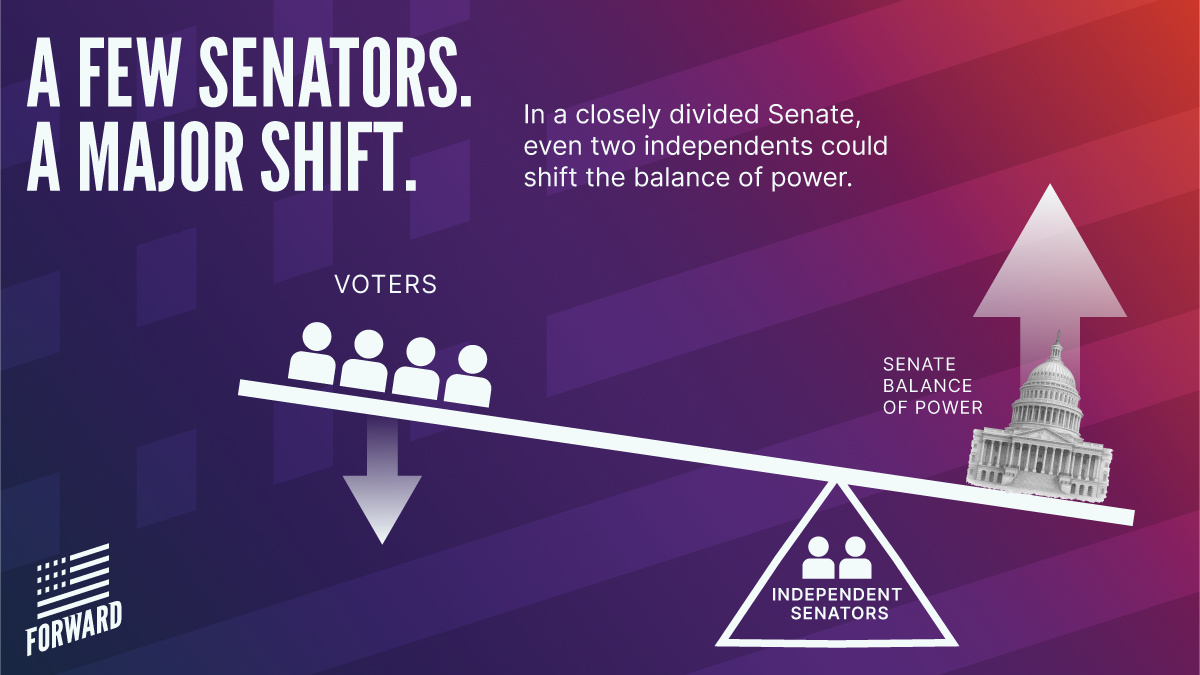
The Moment We’ve Been Building Toward
|
Share this:

Less than 50 days left to help Forward Party win! 09/15/2026
|

Share this:

Supreme Court Decision: Oregon Will Vote-By-Mail in Upcoming Election
|
| Having trouble viewing this email? View it as a Web page. |
| | Help |
|
||||
Share this:

Forward Party CEO Agrees with New Mexico Attorney General
|
Share this:



Registered Republican found the Vaccine – Video
Gosh, I almost feel sorry for them.
Have you ever played a game of checkers where all you did was run around the board — no move was a good move? Played a game of chess against some player so inept that he beat the pants off you because you just didn’t take him seriously?
=================================================
Republicans and Democrats should be partners, not adversaries. Some states should lean blue, some red — and honestly, carry that down to the county level if we ever get the chance. Different values for different environments. That’s not weakness. That’s actually how it’s supposed to work.
And if we can ever get free of the two-party stranglehold, we limit the influence of outside money. Wouldn’t that be something.
For now — time to get rid of the stink.
Start asking hard questions. The first person you need to ask them of is yourself. You might be surprised at the answers.
There is a vaccine for authoritarianism. It’s called the vote, and it’s delivered by the ballot box.

Share this:

Registered Republican found the Vaccine
Gosh, I almost feel sorry for them.
Have you ever played a game of checkers where all you did was run around the board — no move was a good move? Played a game of chess against some player so inept that he beat the pants off you because you just didn’t take him seriously?
That’s what it feels like to be a Republican right now. Just out and out F^%%% ked. Yes, too many characters on purpose — because you let it drag out way too long.
MAGA to the rescue? How about just the opposite. The original RINO taking you to the cleaners, and you’re so squeaky clean by now you can’t even find a quarter to do your own dirty laundry.
What happened?
Make America Gullible Again. And it worked. Oh, you thought it meant something else? Sucker.
Well, we are screwed now. Yes — we. You see, I am a registered Republican as well. But unlike a lot of you, Jan 6th opened my eyes. I saw through the bullshit at that point.
I slept on this last night. And then my phone buzzed.
A text from my MAGA friend — yes, I still have friends who don’t believe the way I do. The headline: “More Americans are identifying as Democrats.” What? Well, probably yes. And that’s a shame.
There isn’t anything wrong with conservative values. We just let Bozo with his orange makeup distort them. The first RINO did what he does best. He called you what he is.
He called Biden a crook. Who’s the thief? Who is the fox in the hen house?
Here’s how the con works: 10% of what he said was true. That’s how you sell the bullshit. That 10% — the part that could have some fact behind it — makes it feel legit. Forget the 90%. That 10% covered the stink.
But nothing covers the stink anymore.
Even he admits it now. If you don’t vote for the candidate he endorses, you are voting against Donald Trump. It’s all about him. My God — just how did Graham’s sister get the nomination? Wake up, Republicans. Donald Trump is no more a Republican than the moon is made of green cheese.
The skunk odor of MAGA will go away eventually. It always does. But it takes time and it takes work.
Here’s what that work looks like: you might lose some elections while you sort this out. That’s the price. It’s cheaper than the alternative — which is either giving up entirely or staying on the same path that got you here.
There is another way.
Start voting for yourself. Not for him. Not for the party. Not for the noise. For yourself — for what you actually believe when the television is off and nobody is watching. And when you drop it in the box, knowing what you voted for and why, you might be surprised how good that feels.
Pay attention to your local politics more than the national hoopla. What works in New York isn’t what works in Mayberry, and decent national leadership will support that difference instead of forcing everyone to bend the knee.
Republicans and Democrats should be partners, not adversaries. Some states should lean blue, some red — and honestly, carry that down to the county level if we ever get the chance. Different values for different environments. That’s not weakness. That’s actually how it’s supposed to work.
And if we can ever get free of the two-party stranglehold, we limit the influence of outside money. Wouldn’t that be something.
For now — time to get rid of the stink.
Start asking hard questions. The first person you need to ask them of is yourself. You might be surprised at the answers.
There is a vaccine for authoritarianism. It’s called the vote, and it’s delivered by the ballot box.
Share this:

Legislature Passes Emergency Funding for Drop Boxes, Improved Ballot Tracking for Voters
|
Having trouble viewing this email? View it as a Web page. |
| Help |
|
||||
Share this:



Would I Lie To You?
Would I Lie To You?
Greatest party of all time, look at the attendance, we had to turn people away, they said when we filled the camera’s field of view, that was enough. It was for your safety. Really it was for you. My loyalists, that’s why we kept 2 out of 3 seats empty. For you, for your safety, we didn’t want anyone crushed trying to leave in a hurry.
Here we are, the largest party of all for ME, and well for the candidates running for office during the mid-terms. Well, really for ME.
Speaking of me, because that’s why we are all here anyway, they say those other people, you know who I’m talking about, the ones that — choke — don’t like me, if you can believe anyone doesn’t like me, may actually stand a chance of winning in the upcoming elections. I know, I know. I have done all I can to protect us.
I have tried to stop the elections, I have tried to prevent mail-in voting — older people who vote against me can’t get out to the voting stations — I have tried to have voting stations removed from those blue counties, yes, right here in Great Old Red Star, oops, I mean Lone Star Texas.
But even the courts, even the Supreme Courts, Supreme my orange ass, has traitors, commie traitors, why they even don’t want me giving Jan 6th Rioters a Billion Dollars for their insurrection, no, wait, their patriotism. Yes, that’s right. Patriotism.
But I have a grand plan, one they didn’t see coming, they didn’t see coming because I’m so smart, I’m a genius, a genius among geniuses. You could check my school records of course, except they have been threatened with lawsuits if they disclose any of that information, information, what a big word, like affordability.
Speaking of affordability, here is what I’m going to do, but it only works if I stay in POWER, wait, in Office.
I’m going to give every adult $5,000.00 if I stay in POWER, oops, there it went again, in office. Yes, $5,000.00.
Just don’t think about the issues, don’t think about wars, don’t think about healthcare, don’t think about schools, don’t think about SNAP. Don’t think about anything but your own greed, yes, think like me. Just look at the ballot and if the choice says Republican make that disappear and see a glorious MAGA and TRUMP there instead.
Fine Print:
Congress needs to approve this.
Congress needs to be MAGA Cronies on the take.
Money will come from D.O.G.E. non-existent funds.
Money will come from Illegal Tariffs that the traitor courts have already demanded be returned (of course you still didn’t get any of the actual cash).
I will drag this lie out until you give up so the 1.6 Trillion Dollars will never be added to the deficit anyway, sucker.

Share this:

Oregon Leaders Stand United in Protecting Vote-By-Mail Elections
|
Having trouble viewing this email? View it as a Web page. |
| Help |
|
||||
Share this:

Secretary Read Requests Emergency Funding for Election Security
|
09/08/26 Oregon – Your State Update – Is YOUR State making sure you have a fair election?? That’s a huge question and it doesn’t matter if it’s a Blue or a Red State, Our Elections are Sacred to our Freedom and our Democracy. What matters isn’t the winner as long as it is the person that we voted for. I sincerely hope you are following your State and DEMANDING they are providing you a fair election. It is your RIGHT, not a privileged. There is a great deal about Oregon’s leadership I personally disagree with but I am proud as hell of their Election Division.
Having trouble viewing this email? View it as a Web page. |
| Help |
|
||||
Share this:

MEDIA ADVISORY: Vote-by-Mail Press Conference with Oregon Secretary of State Tobias Read, U.S. Senators Ron Wyden and Jeff Merkley
|
Having trouble viewing this email? View it as a Web page. |
| Help |
|
|
||||
Share this:

Secretary Read: Ruling Reaffirms Oregon’s Vote-by-Mail Elections Will Proceed As Planned
|
Having trouble viewing this email? View it as a Web page. |
| Help |
|
|
||||
Share this:

Oregon Ballot Drop Off Boxes
In May 2026 (around the primary election), officials noted that Oregon has 321 official drop boxes (also called drop sites). These are available until 8 p.m. on Election Day, are monitored, and include fire-suppression features.
newsfromthestates.com
The state does not maintain a single permanent public “total” page that is always updated outside election periods. Instead:
-
The Oregon Secretary of State provides an Oregon Drop Box Locator tool (sos.oregon.gov) that lists locations statewide. It becomes available about 21 days before a statewide election.
sos.oregon.gov -
Individual counties publish their own lists and counts (e.g., Clackamas County has listed 26 sites; Multnomah County has listed around 30).
Oregon is an all-mail voting state, so every registered voter gets a ballot by mail and can return it by mail (postmarked by Election Day) or at any official drop box/site in the state. The number of boxes can vary slightly by election as counties adjust locations. For the most current count or map during an election window, check the Secretary of State’s Drop Box Locator or your county elections office.
Share this:

This Week’s Endorsements 09/03/2026
|




Share this:

Does you vote count, Damn Right it Does #2
🚨NEWS: Democrat Andy Thomson has won the Boca Raton mayoral race by just ONE vote.
🔵 Thomson — 7,568
🔴 Liebelson — 7,567
With 100% of votes in, Thomson becomes the first Democratic mayor of Boca Raton in over 30 years.
One vote decided the election.

Update, after a slow recount, Thomson won by 5 votes, that doesn’t change the fact that we can’t sit by and assume our vote will not matter.
Share this:

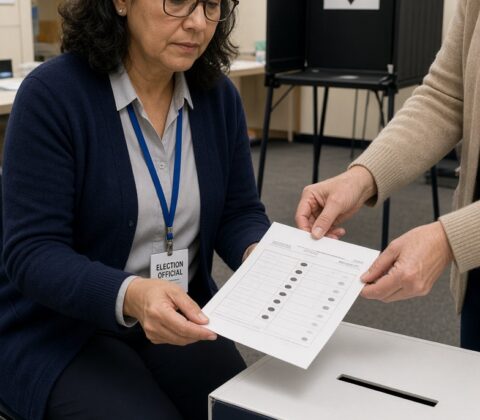
The Lone Star or the Red Star?
The Lone Star or the Red Star?
A Republican-controlled Texas county that has been trending Democratic is eliminating 92 Election Day polling places. Republicans say they’re eliminating underused locations and improving efficiency; Democrats say reducing convenient polling places suppresses turnout. The facts establish the reduction. They do not, by themselves, establish the motive.
Tarrant County, Texas, is cutting 92 Election Day polling locations for the 2026 midterms. The county had 316 locations in 2022; the new plan leaves 224 locations for roughly 1.3 million registered voters.
The Republican-controlled county commissioners approved the reduction 3–2 along party lines. Republicans say they’re eliminating poorly used locations, saving money and concentrating resources where they’re needed. They also point out that the county has adopted countywide voting, meaning voters can use any polling location rather than being restricted to one assigned site.
Democrats and voting-rights groups argue that fewer polling places means less convenient access to voting, particularly in Black, Hispanic and college communities. They call it voter suppression. Tarrant County is also politically important: it has been gradually moving toward Democrats and is a major battleground in the 2026 Senate race.
Can reducing polling locations affect turnout?
Absolutely. The argument isn’t really that “you can’t vote.” It’s that making voting less convenient can cause some people not to vote at all.
And that’s where the political controversy comes from.
The interesting wrinkle is that Tarrant County really has been moving toward the Democrats, so the timing naturally raises suspicion. But correlation isn’t proof that the polling-place cuts were designed to hurt Democrats. The Republicans have a plausible administrative explanation: fewer, better-used locations and fewer poll workers needed.
So here we are less than two months from mid-terms, the Administration is against the wall, And we know which wall that is and now lets start playing with the where we can cast a vote, was Gerrymandering bad enough?
What’s next. A proctor checking your ballot before submission, oh, crap. Don’t want to give them any ideas.
Share this:

A Tale of Two States
Surprising, two red states, Republican governors and candidates with different values. Take Wyoming and Maine. Opposite sides of the country, Wyoming, the strongest Trump supporter in the 2024 Election in the nation, They voted Trump 72.3% and Harris 26.1%
Maine, Harris won, 52.4 % to Trump’s 45.5% yet when we look at what is coming up for the midterms. Something strange happened.
Earlier, Trump administration officials have stated that they intend to send up to 1,000 election monitors to the polls this fall. In Fact 2 election monitors were sent as part of a “monitoring initiative aimed at promoting transparency,” to Wyoming for the States August 18 primary elections.
And…. their behavior managed to upset even Republican Gov. Mark Gordon of Wyoming.
Gordon said “I feel very strongly about the federal government coming in and taking our guns. I don’t like that. I don’t like the federal government coming in and taking our votes, either,” Gordon said they were not made aware the monitors would be present and did not present credentials until requested to do so.
They then proceeded to ask questions “outside the scope of federal voting rights laws …about the nature, length, and timing of poll worker training. Monitors requested training guides, asked how our new election equipment was acquired, and wanted to examine our tabulators.”
Governor Gordon has asked the State AG to look into the matter.
Maine on the other hand., or at least Maine Republican gubernatorial nominee Bobby Charles told members of a Young Republican Club earlier that he intends to call his “friend” Tom Homan, Trump’s deportation czar, to ask for ICE presence at the polls.
Way to go Wyoming.
Share this:

Finally! Meet the Forward candidates & text banking is LIVE 09/01/2026
|
Share this:

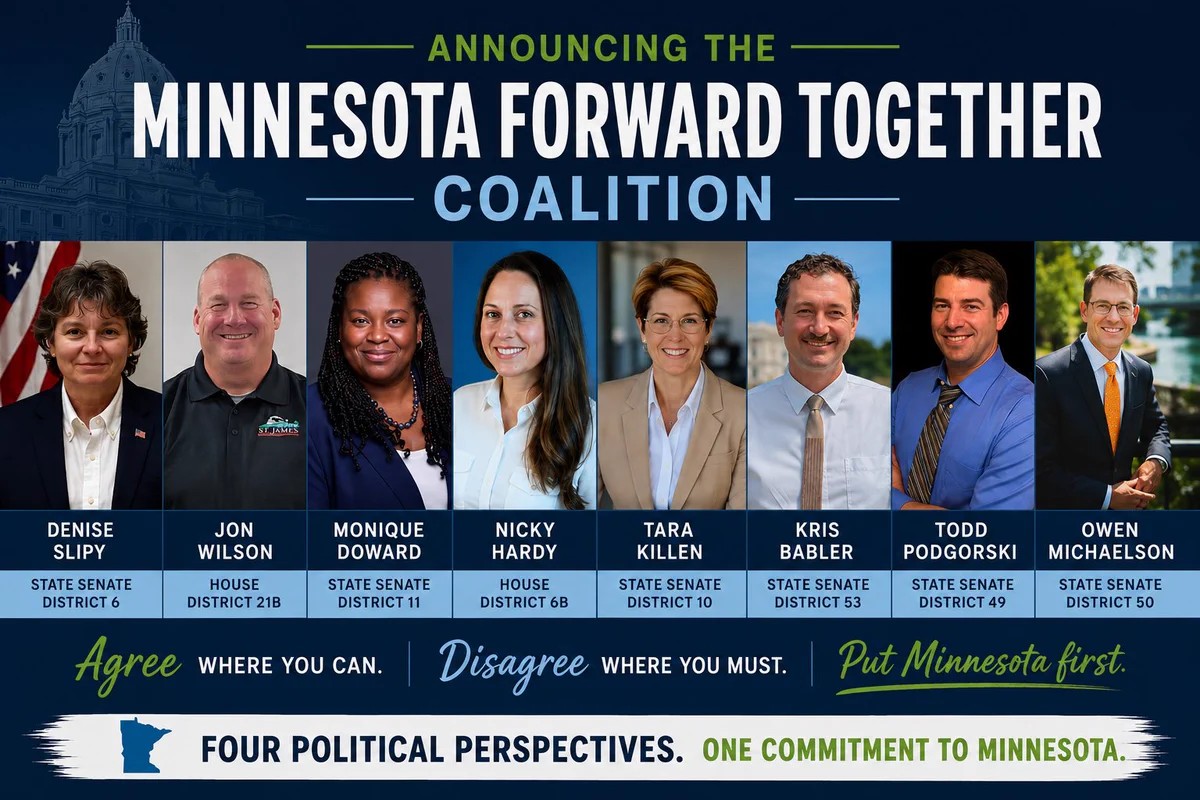
Agree Where You Can 08/29/2026
|
Share this:

Judge’s Ruling Halts USPS Rule Restricting Mail–in Voting
|
| Having trouble viewing this email? View it as a Web page. |
| | Help |
|
|
||||
Share this:

New Voter Registration PSA Launched by Oregon Secretary of State
|
| Having trouble viewing this email? View it as a Web page. |
| | Help |
|
|
||||
Share this:


Secretary Read: Lawsuit to Block USPS Rule on Mail-In Ballots Will Protect Ongoing Election
|
| Having trouble viewing this email? View it as a Web page. |
| | Help |
|
|
||||
Share this:

New Directive Issued by Secretary Read Confirms Oregon Vote-by-Mail Elections Will Proceed as Planned
| Recording of Secretary Read’s press conference about the directive available now |
|
| Having trouble viewing this email? View it as a Web page. |
| Manage Subscriptions | Help |
|
|
||||
Share this:


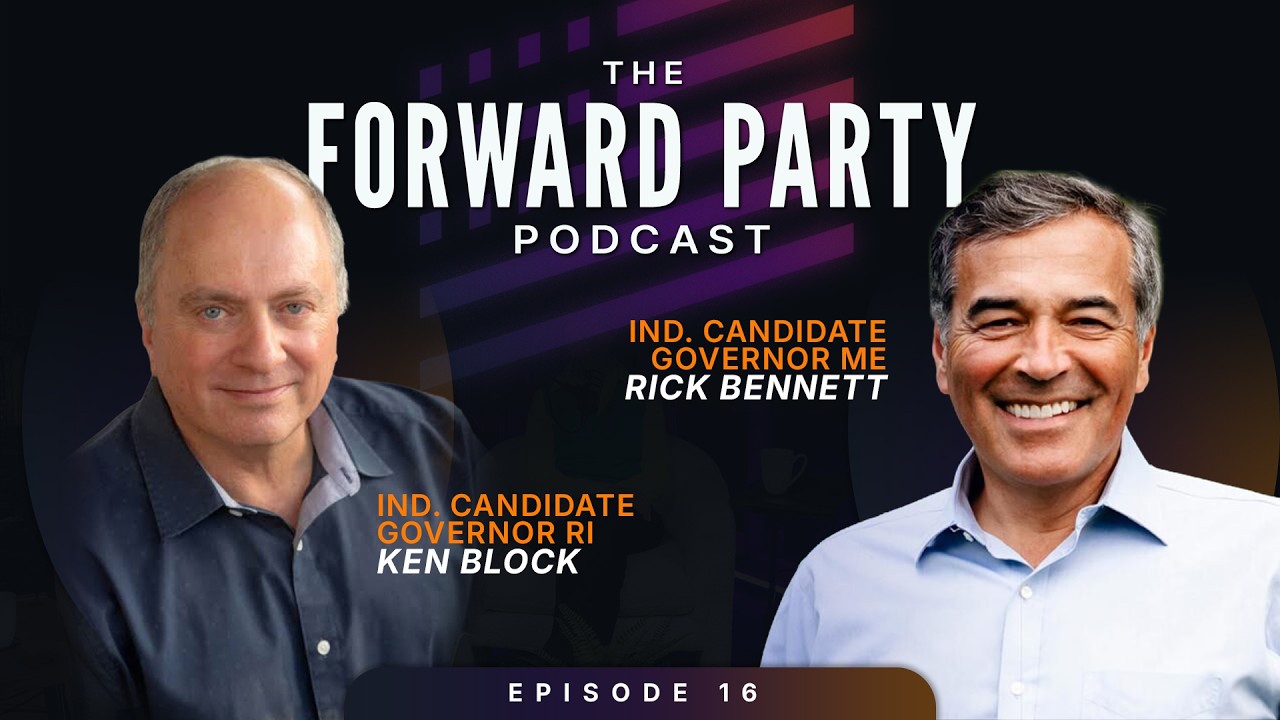
Forward Party is Everywhere 08/21/2026
|



Share this:

Secretary Read Launches Campus Challenge to Boost Student Voter Turnout
|
Having trouble viewing this email? View it as a Web page. |
| Help |
|
|
||||
Share this:

Don’t Vote
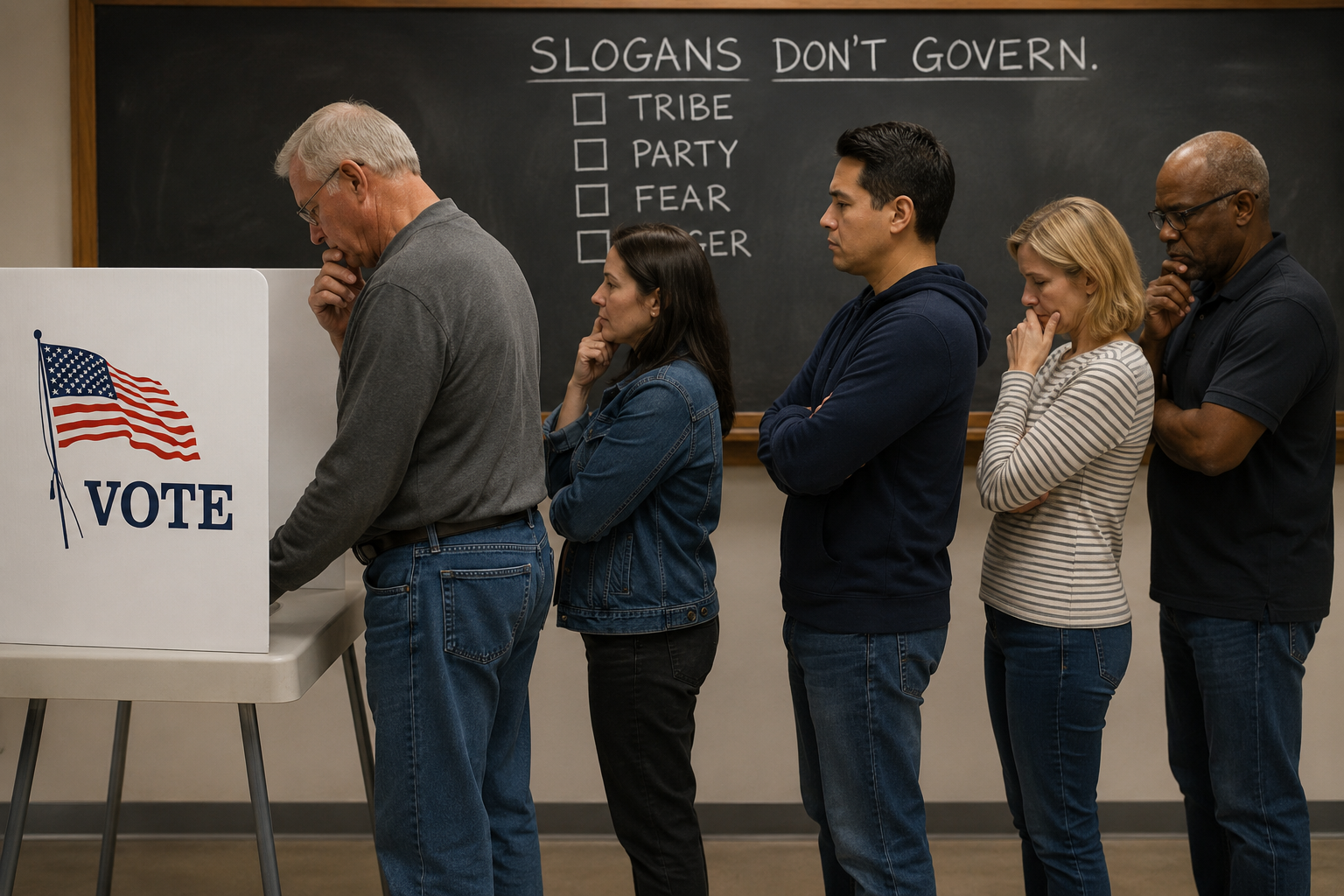
As with a lot of what I write this started off in my head at 3:34am trying not to stub my toe on the bed frame. I was thinking of the reasons why someone shouldn’t vote, you know the devils advocate, that sneaky little demon that muddies the waters.
So when I sat down to tell all of you to just stay home I stumbled across an old youtube video of some jerk doing just that, and he pissed me off, how dare you tell people that it isn’t their civic and moral obligation, wait, isn’t that what I…
Except it wasn’t, not really. His argument was that your one voice doesn’t matter, so why bother. Mine was never that. Mine was don’t bother if you’re just punching holes without caring which holes. Two different kinds of not-voting, and only one of them is actually about not voting at all.
So I said to, no, not myself, but to my dog, and he in his wisdom just looked at my with his big eyes and said nothing.
Ha, you thought I was going to say woof. Gotcha.
So here is where our real duty is, we have a responsibility to participate in the process of our government, it’s an obligation, but we must be informed of the issues to do so effectively. We must broaden our horizons and actually be interested in something more than what a bobbing head on FOX or CNN tells us to think. It’s not hard, all it takes is to widen our field of view a bit.
I grew up in a Republican, not spelled RINO, household and if my Father was Republican then I must be a Republican. And for years that is how I voted. And for years I voted wrong. Not because it was Republican, but because I voted for the tribe without understanding the tribe or the other tribes. And to be fair. This paragraph could just as easily be the same with Democrat switched for Republican, wouldn’t matter.
So we have two type of voting, responsible and irresponsible.
-
Responsible voting: You look at the races you actually understand, form your own imperfect judgment, and mark those boxes.
-
Irresponsible “voting”: You check every box under one party because that’s the team, or because the hat looks good, or because “that’s what we do in this family.”
If it is mine to give, I give you permission to leave the boxes unchecked. If you don’t know who those judges are, why are you checking a box, if you don’t know how that measure will impact the community, why are you checking the box.
I also give you permission to maybe learn about that measure, a little more than what the voter pamphlet says, The pros and cons, both are slanted. Your neighbors, friends, may have an opinion.
Goodness gracious, think of what this world would be like if we actually knew what those boxes represented before we checked them.
So, it is your responsibility. Yes it matters, yes that one vote is only one, but the number 1,000 consists of one thousand ones.
And what matters most is that you understand what that box you just checked represents. That is the challenge, that is your duty
Share this:

Notice of Temporary Administrative Order OAR 165-010-9901
|
Having trouble viewing this email? View it as a Web page. |
| Help |
|
|
||||
Share this:

In it for the Long Haul – 08/15/2026
|

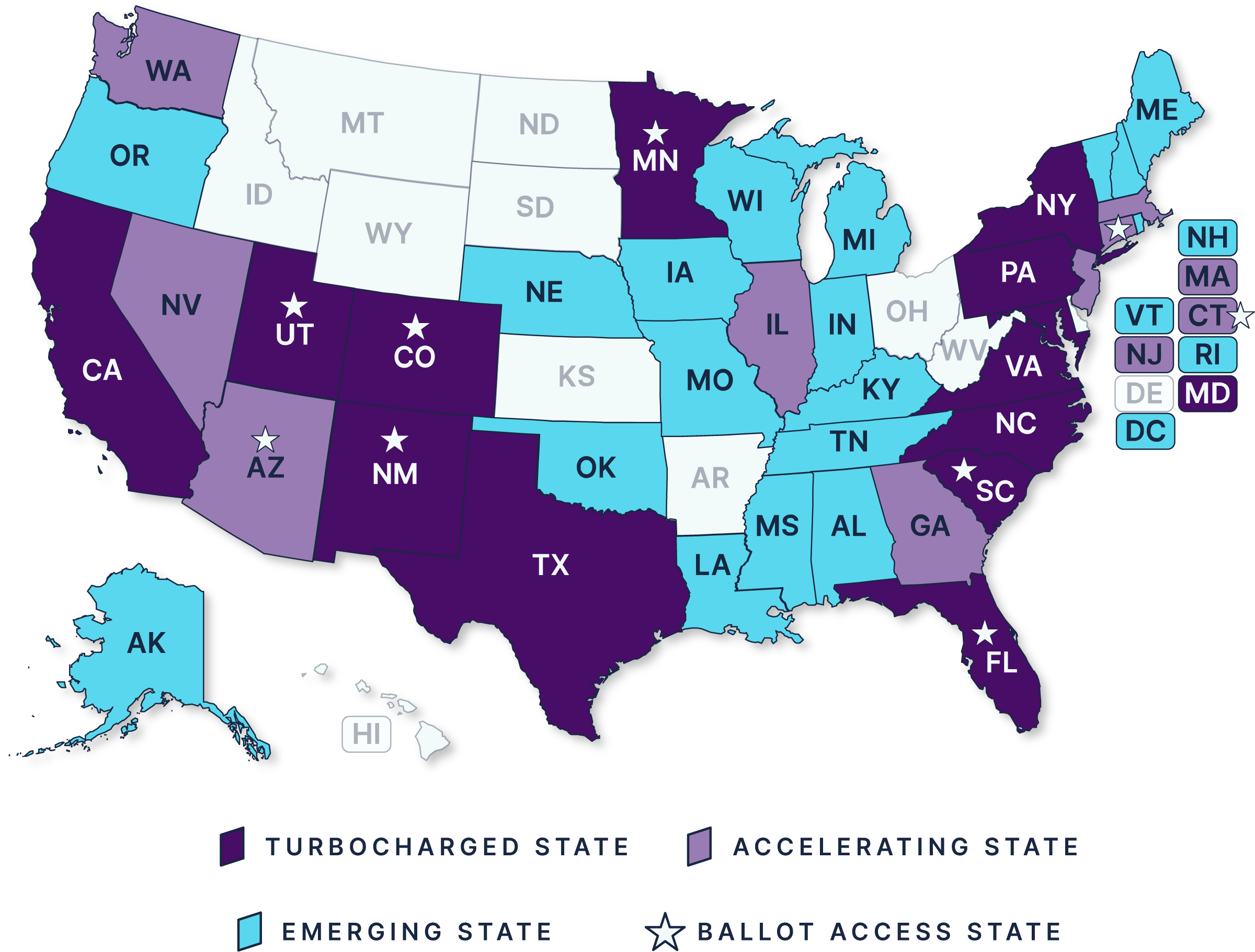
Share this:

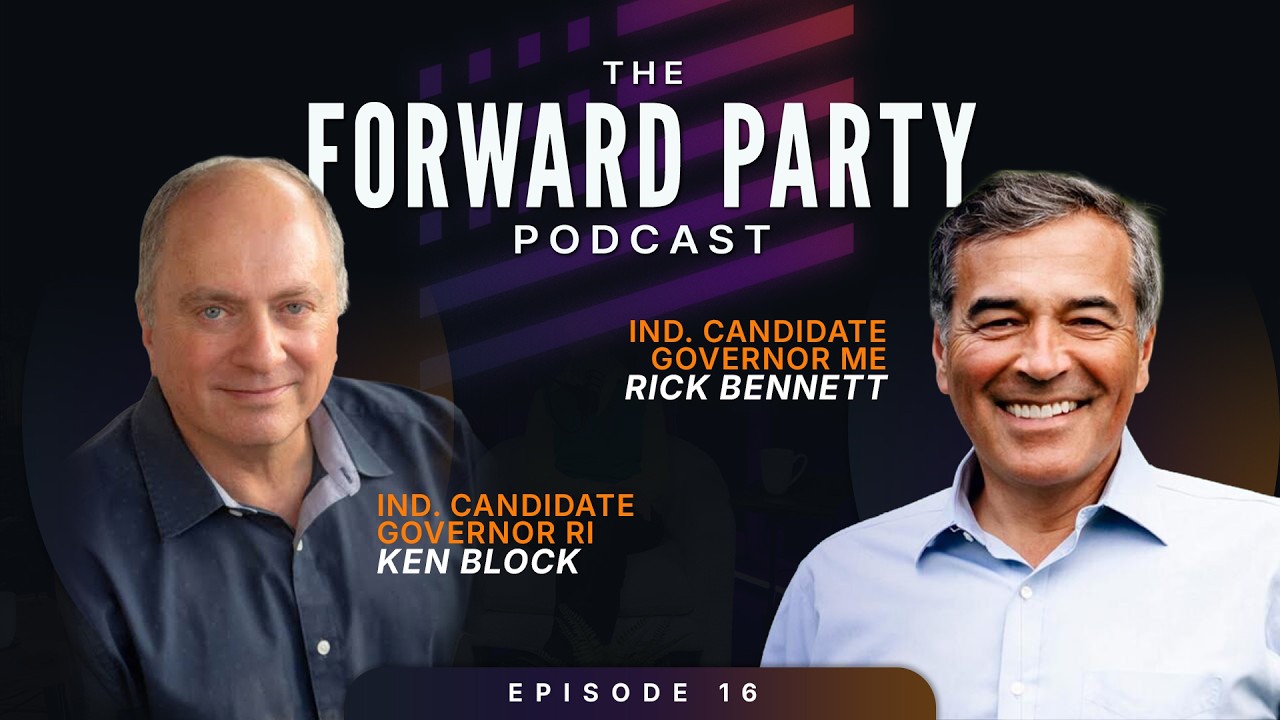
South Dakota is the Latest Domino to Fall 08/07/2026
|


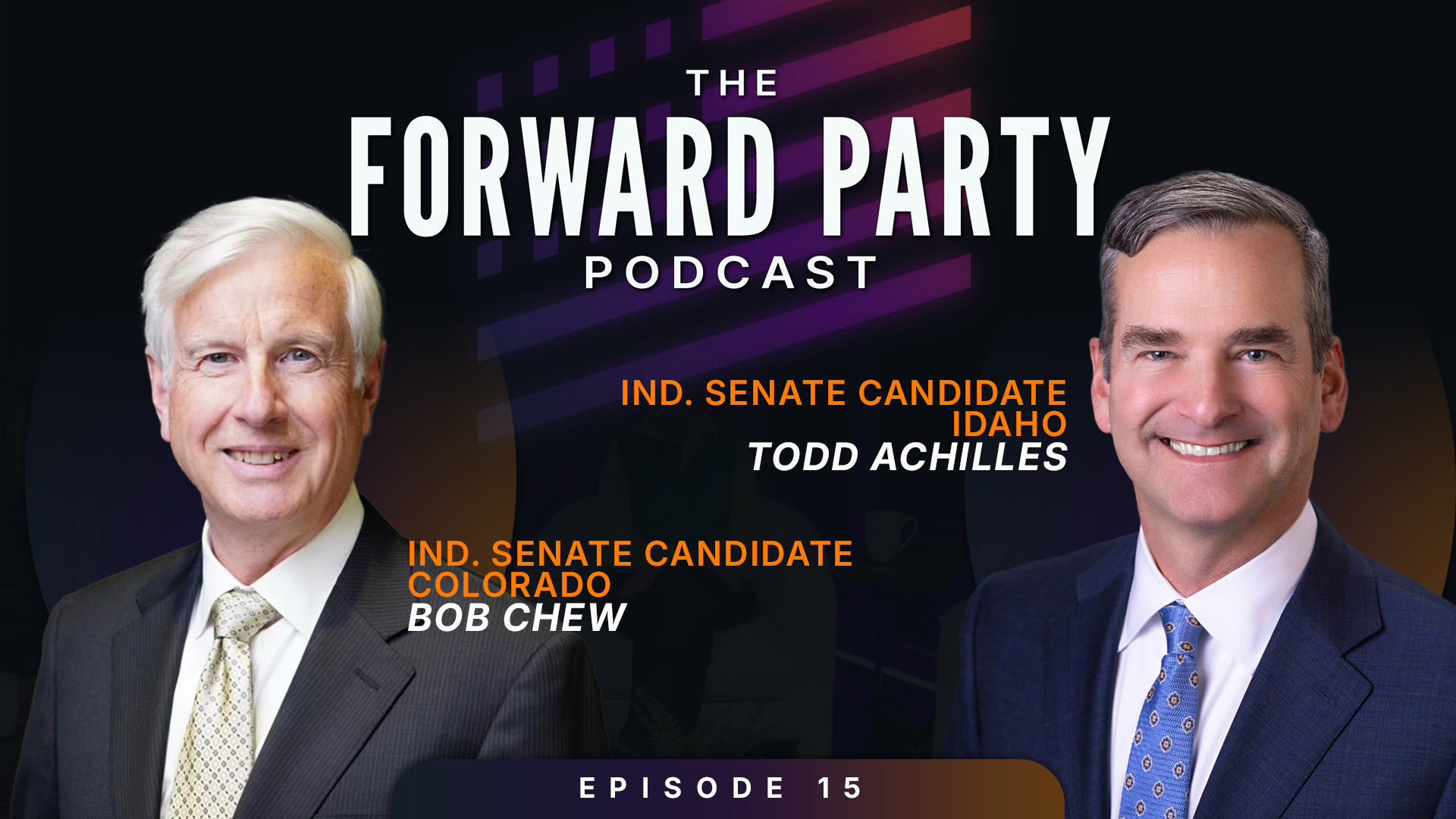
Share this:

Oregon Minor Party Status Reviewed, Two Parties Fail to Meet Qualifications
|
Having trouble viewing this email? View it as a Web page. |
| Help |
|
|
||||
Share this:

BBQs, Candidates, and Grassroots support! 08/07/2026
|
Share this:



I would be Dead
Is anyone paying attention to anything at all? Really, is anyone thinking about anything other than the Grand Putz and his minions and their daily diversions?
Let’s look at real life. I’m past retirement age, and my Social Security won’t cover my house payment. Nobody cares, because I’m one of the “chosen few” who actually owns a home. I still pay taxes, because I still work, because Medicare fixed my body, not because my country failed me. They didn’t fail me. I failed me. But without Social Security and Medicare, I wouldn’t be up shit creek. I would be dead. Medicare paid for the Tavor valve that’s keeping my heart working right now. That’s not a metaphor. That’s not hyperbole. That’s a valve, in my chest, paid for by a program he jokes about gutting.
On August 14, 1935, this government passed the Social Security Act, because older people had no money left once they could no longer work. In November 1936, the first Social Security cards were issued. In January 1937, payroll taxes were collected for the first time, and the first one-time lump-sum payments went out. In January 1940, Ida May Fuller received the first-ever monthly retirement check.
Your President Donald J. Trump wants to deport all the communists who did this terrible thing to us.
In 1965, President Lyndon B. Johnson signed the Social Security Act Amendments into law, though actual health coverage and benefits officially began on July 1, 1966. This is known as Medicare.
July 30, 1965: the legislation creating Medicare Part A and Part B was signed in Independence, Missouri. Former President Harry S. Truman and his wife, Bess, received the first two Medicare cards.
July 1, 1966: the program officially went into effect, providing medical coverage to more than 19 million Americans age 65 and older.
Your President Donald J. Trump wants to deport all the communists who did this terrible thing to us.
SNAP benefits trace back to two key periods: the original Food Stamp Program, launched May 16, 1939, and the modern, permanent program established by the Food Stamp Act of 1964, under President Lyndon B. Johnson. The name officially changed to the Supplemental Nutrition Assistance Program, SNAP, in 2008.
Early Program (1939–1943): On May 16, 1939, the first food stamp plan started in Rochester, New York, to help low-income families buy surplus farm goods during the Great Depression. It ended in 1943, as employment and food demand shifted during World War II.
Modern Program (1961–Present): On May 29, 1961, President John F. Kennedy revived the initiative through pilot projects. On August 31, 1964, President Lyndon B. Johnson signed the permanent Food Stamp Act into law. By July 1, 1974, the system had expanded nationwide across all states. In 2008, it was officially renamed SNAP under the Food, Conservation, and Energy Act.
Your President Donald J. Trump wants to deport all the communists who did this terrible thing to us.
Is this progress, or a step backward into the darkness? President Trump is also threatening, promising, and begging anyone and everyone to kill the Senate filibuster so he can FORCE through his SAVE America Act. Key word: FORCE. This is about elections, and apparently you need to force your way through one to protect it.
This president is trying to stay in power. That is his entire agenda. Not you. Not me. Just his bank accounts, his ego, and his power. He must not lose power, and he does not care who pays the price for that, or what it costs them.
Right now, you, the American people, are still in charge. I’m just not sure for how much longer that stays true.
What comes next isn’t up to the Democrats. It isn’t up to Trump. It isn’t up to me, either, bummer. It’s up to you.
Choose wisely.

Share this:



Reclaim the Name — Or Get a New One, Or let’s get Horny – Video

Let me ask you a question. Do you want this to be a one party government?
Think hard before you answer. Because if we stay the course we’re on, that’s exactly where we’ll end up. And if we kick the current fools out and hand everything to the Democrats, that’s where we’ll end up too. Just with different furniture in the same room.
MAGA has put a stink on the Republican Party that no skunk could ever equal. It’s going to take decades to wash it off. So what do we do?
============================================
And you want to know something almost funny? Donny used to be a Democrat. Yes. A card carrying member of the party he now calls COMMIE. They dodged his bullet somehow. You got crapped on instead.

So where does that leave us?
Dark Money, the big PAC money, Citizens United, the Federalist Society machinery, has heavily invested in the two party system and isn’t going anywhere regardless of what happens to MAGA. They’ll pull something out of their hat or somewhere close to their back pockets. Far right groups, far left groups, same game different jerseys. Maybe they’ll call it MAGA 2.0. It will still smell the same.
===================================================
Reclaim the name. Or get a new one.
The RINO label was meant to shame you into silence or compliance. It did neither permanently. You’re still here. The party you believed in is still worth believing in, fiscal responsibility, limited government, fair elections, reasonable conservatism that doesn’t require burning anything down.
If the Republican name is too stained to salvage, get a new one. And if you want a suggestion, keep the RINO. Just put an H in it. A Rhino is a thick skinned, large horned animal that doesn’t move for anything and has been around for fifty million years.
That’s a considerably fiercer mascot than whatever crawled out of Mar-a-Lago.
Get a little Horny in the process/
Share this:



So What? – Video

So What?
The Losing Strategy as the Game Plan
Oh, so what, so what! What difference does it make, like really, does it matter?
For months now, over a year, I have tuned in and followed Michael Popok, Ben Meiselas, Jack Cocchiarella, and Glenn Kirschner, just to name a few you may have watched or followed. Great to hear about the case files against the Trump administration and how Trump and his team keep losing.
It just warms the cockles of my heart to see Trump take a beating in court, one federal judge after another saying no to little Donny.
=======================================
“Hey, boss man, we’re trying, but they keep using the law against us.” The LAW
The other tactic, and this one is truly scary, because it’s starting to work on me, is fatigue. I’m tired. You’re tired. Everybody’s tired, burned out from all the BS. And “so what” is exactly where fatigue leads you. The moment you get there, they’ve already won. Not because they beat you in court. Because you stopped watching the scoreboard.
You Stopped Caring.
So while I’m still watching, I’ve got two requests for Donny.
Request one: take that damn tarp down from the Kennedy Center. It’s time to grow up.
Request two: where the hell are the Epstein/Trump files?
Share this:

I would be Dead – Video

Is anyone paying attention to anything at all? Really, is anyone thinking about anything other than the Grand Putz and his minions and their daily diversions?
Let’s look at real life. I’m past retirement age, and my Social Security won’t cover my house payment. Nobody cares, because I’m one of the “chosen few” who actually owns a home. I still pay taxes, because I still work, because Medicare fixed my body, not because my country failed me. They didn’t fail me. I failed me. But without Social Security and Medicare, I wouldn’t be up shit creek. I would be dead. Medicare paid for the Tavor valve that’s keeping my heart working right now. That’s not a metaphor. That’s not hyperbole. That’s a valve, in my chest, paid for by a program he jokes about gutting.
On August 14, 1935, this government passed the Social Security Act, because older people had no money left once they could no longer work. In November 1936, the first Social Security cards were issued. In January 1937, payroll taxes were collected for the first time, and the first one-time lump-sum payments went out. In January 1940, Ida May Fuller received the first-ever monthly retirement check.
===================================
Your President Donald J. Trump wants to deport all the communists who did this terrible thing to us.
Is this progress, or a step backward into the darkness? President Trump is also threatening, promising, and begging anyone and everyone to kill the Senate filibuster so he can FORCE through his SAVE America Act. Key word: FORCE. This is about elections, and apparently you need to force your way through one to protect it.
This president is trying to stay in power. That is his entire agenda. Not you. Not me. Just his bank accounts, his ego, and his power. He must not lose power, and he does not care who pays the price for that, or what it costs them.
Right now, you, the American people, are still in charge. I’m just not sure for how much longer that stays true.
What comes next isn’t up to the Democrats. It isn’t up to Trump. It isn’t up to me, either, bummer. It’s up to you.
Choose wisely.
Share this:



Reclaim the Name — Or Get a New One, Or let’s get Horny
Let me ask you a question. Do you want this to be a one party government?
Think hard before you answer. Because if we stay the course we’re on, that’s exactly where we’ll end up. And if we kick the current fools out and hand everything to the Democrats, that’s where we’ll end up too. Just with different furniture in the same room.
MAGA has put a stink on the Republican Party that no skunk could ever equal. It’s going to take decades to wash it off. So what do we do?
Here’s something worth remembering. The RINOs, Republicans in Name Only, as Second String Donny so helpfully labeled them, were never really MAGA to begin with. They got saddled with the yoke through lies and promises and a very effective campaign of misinformation. They saw through the BS pretty quickly. The trouble is, as I said, what about the smell now? It clings whether you earned it or not.
“Republican In Name Only” was one of the most effective political hijackings in modern history. Trump took an entire established political party, rebranded everyone who disagreed with him as frauds and traitors, and walked off with the deed to the building. The real Republicans, the ones who believed in fiscal responsibility, limited government, and fair play, suddenly found themselves homeless in their own house.
And you want to know something almost funny? Donny used to be a Democrat. Yes. A card carrying member of the party he now calls COMMIE. They dodged his bullet somehow. You got crapped on instead.
So where does that leave us?
Dark Money, the big PAC money, Citizens United, the Federalist Society machinery, has heavily invested in the two party system and isn’t going anywhere regardless of what happens to MAGA. They’ll pull something out of their hat or somewhere close to their back pockets. Far right groups, far left groups, same game different jerseys. Maybe they’ll call it MAGA 2.0. It will still smell the same.
Which means the real Republicans, the ones who got bamboozled and are now standing in the wreckage wondering what happened to the party they grew up with, have a decision to make.
Here’s what I think needs to happen. Not all at once. Not easily. But it needs to start now.
First, state election laws need to change. Not the way Trump’s Save America Steal the Election Act wants to change them. The other direction. Did you know Texas only gives a third party candidate thirty days after the primary to gather signatures to get on the ballot? Thirty days. That’s not a level playing field. That’s a locked door with a sign that says use other entrance. And Texas is not the only state doing it. Not by a long shot.
Second, look up Ranked Choice Voting. Read about it. Don’t take my word for it. Don’t take anyone else’s word against it either. RBV lets voters rank candidates in order of preference so your vote isn’t wasted if your first choice doesn’t make the cut. It can help address the Electoral College problem, reduce the stranglehold of the two party system, and give third party candidates a fighting chance without the spoiler effect. It won’t fix everything. But it fixes some important things.
Third, and this one’s for the real Republicans specifically.
Reclaim the name. Or get a new one.
The RINO label was meant to shame you into silence or compliance. It did neither permanently. You’re still here. The party you believed in is still worth believing in, fiscal responsibility, limited government, fair elections, reasonable conservatism that doesn’t require burning anything down.
If the Republican name is too stained to salvage, get a new one. And if you want a suggestion, keep the RINO. Just put an H in it. A Rhino is a thick skinned, large horned animal that doesn’t move for anything and has been around for fifty million years.
That’s a considerably fiercer mascot than whatever crawled out of Mar-a-Lago.
Get a little Horny in the process/

Share this:

So What?
So What?
The Losing Strategy as the Game Plan
Oh, so what, so what! What difference does it make, like really, does it matter?
For months now, over a year, I have tuned in and followed Michael Popok, Ben Meiselas, Jack Cocchiarella, and Glenn Kirschner, just to name a few you may have watched or followed. Great to hear about the case files against the Trump administration and how Trump and his team keep losing.
It just warms the cockles of my heart to see Trump take a beating in court, one federal judge after another saying no to little Donny.
This has been going on since Trump signed his first executive order, probably to swap out the bidets in the ladies’ lounge for gilded urinals, or something else along those lines.
He tries something. A suit is filed against him or “the thing.” And odds are, he or “it” loses. Forget the waste of time and taxpayer money, it isn’t coming out of his pocket, and if it was, he’d just file another appeal, Trump fashion.
But something has become a pattern that everybody’s saying without really saying it. Bizarre, really. He keeps losing. Bizarre. Wasn’t there a comic rag with a name like that? Mad Magazine, maybe. Must be showing my age again. But it is kind of bizarre if you think about it. Bizarro, that was it.
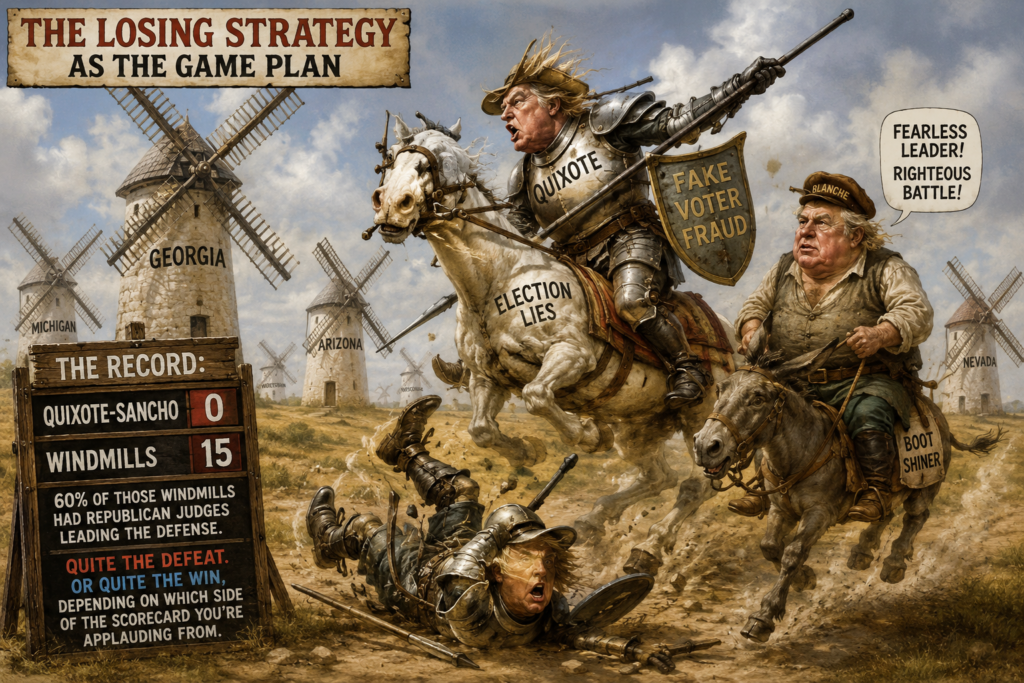
Let’s take a look at his latest Don Quixote charge, faithful Sancho (Blanche) at his side, attacking those wild and dangerous state elections that must look to him a lot like windmills, or something else very sinister. He keeps getting thrown from his steed, but Sancho keeps his fearless leader in the righteous battle, as any good bootshiner should.Copy to a new draft
So let’s look at the record. So far: Quixote-Sancho, 0. Windmills, 15. And 60 percent of those windmills had Republican judges leading the defense. Quite the defeat. Or quite the win, depending on which side of the scorecard you’re applauding from.
So circling back to our attorneys, analyzing and dissecting and passing judgment, all happy-faced about Trump’s losses, I have to ask myself: so what? That’s what I asked myself. SO WHAT? And why aren’t these experts in law asking that question too? So what. What has changed? Not a damn thing.
If the DOJ keeps losing, why does losing not matter anymore? Hey readers, that is a really, really big question. Has losing become a deliberate strategy? “Hey, look, we’re trying, but those left-wing commies are blocking us.”
Don’t forget Trump’s latest move into McCarthyism, look it up, 1950s America, almost as ugly as the 1970s race wars. Say it often enough, and some idiot will believe it.
But back to losing as a strategy. Why lose on purpose? At the very least, the minions can say, “Hey, boss man, we’re trying, but they keep using the law against us.” That line is worth repeating because of the shear irony in it.
“Hey, boss man, we’re trying, but they keep using the law against us.” The LAW
The other tactic, and this one is truly scary, because it’s starting to work on me, is fatigue. I’m tired. You’re tired. Everybody’s tired, burned out from all the BS. And “so what” is exactly where fatigue leads you. The moment you get there, they’ve already won. Not because they beat you in court. Because you stopped watching the scoreboard.
You Stopped Caring.
So while I’m still watching, I’ve got two requests for Donny.
Request one: take that damn tarp down from the Kennedy Center. It’s time to grow up.
Request two: where the hell are the Epstein/Trump files?
Share this:

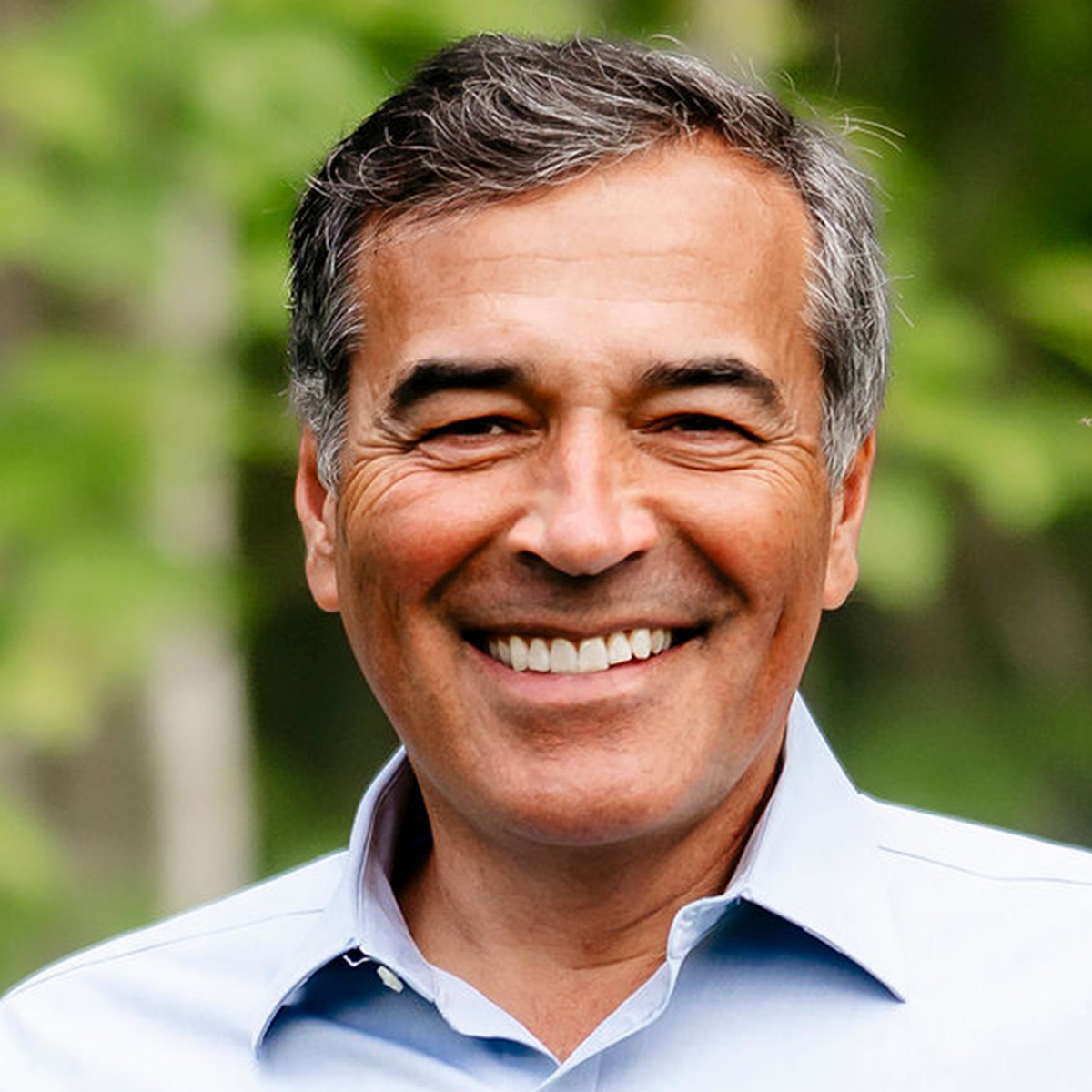
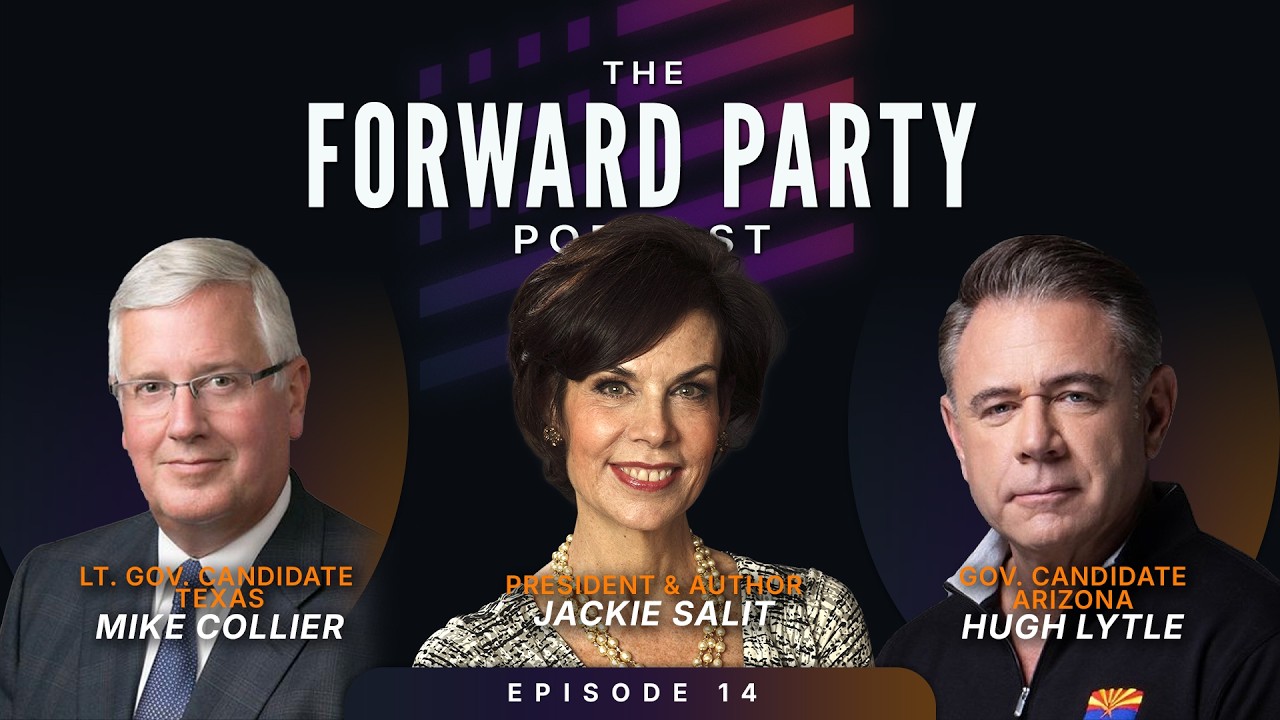
Three Independent Governor Candidates – 06/20/2026
|


Share this:

MEDIA ADVISORY: Oregon Secretary of State Tobias Read to Hold Election Security Press Conference
|
Having trouble viewing this email? View it as a Web page. |
Manage Subscriptions | Help |
|
||||
Share this:

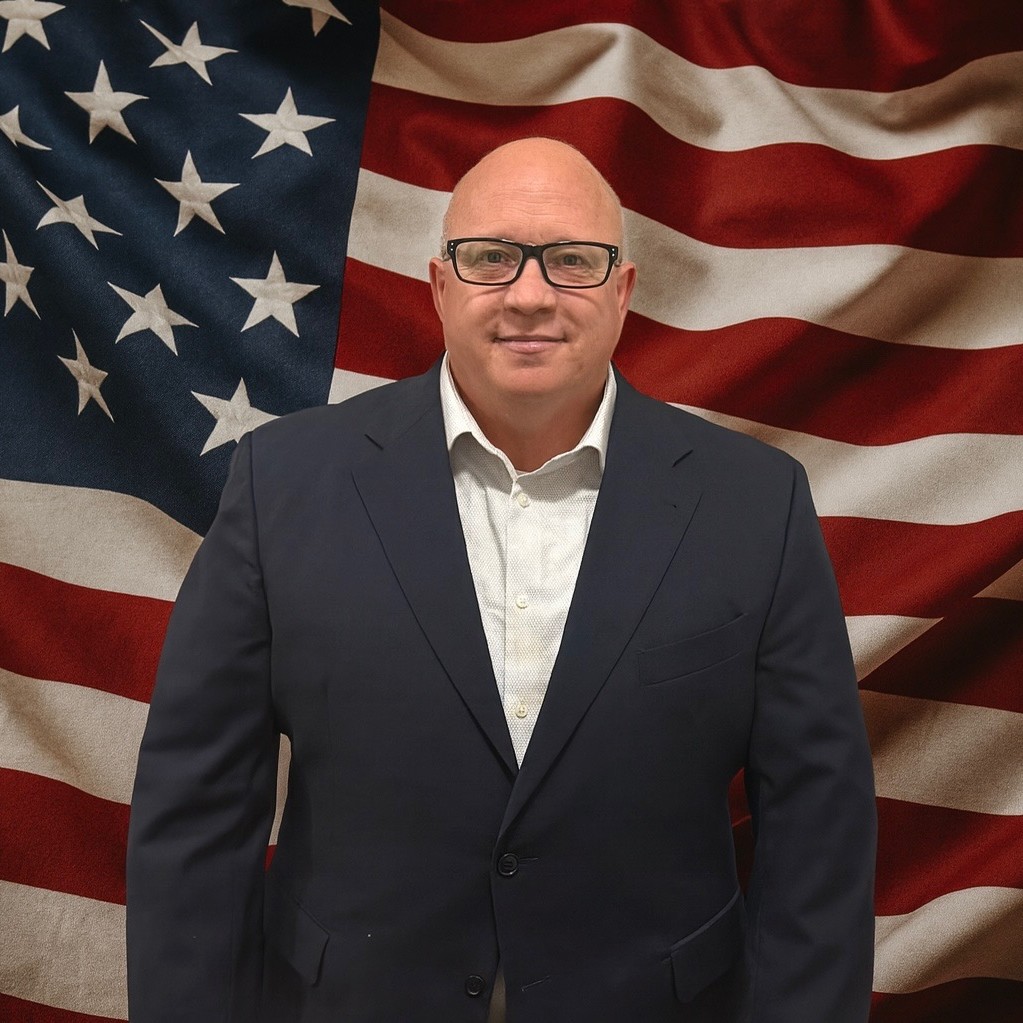
Ballot Access is Just the Beginning 07/18/2026
|

Share this:


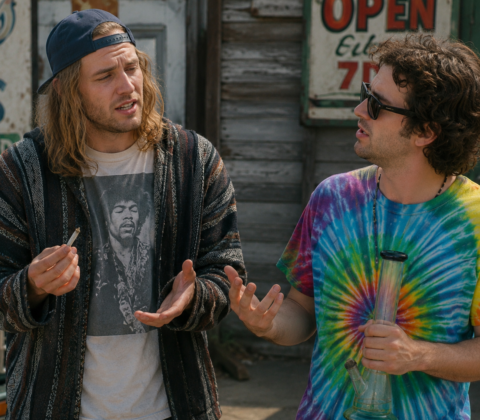
Did I Lose You? Let Me Try Again. – Video
A follow-up for anyone who missed the point the first time
So I wrote this cool and informative piece — Why is Trump Desperate to Pass the SAVE America Act? — and I listed all the reasons the Wolf wants to eat the sheep. Really pretty comprehensive, if I do say so myself.
Then, a few days later, word starts drifting back through the grapevine. People asking, “well, so what?” What does any of that have to do with anything? Old people shouldn’t have franchises anyway.
W — T — Fudge.
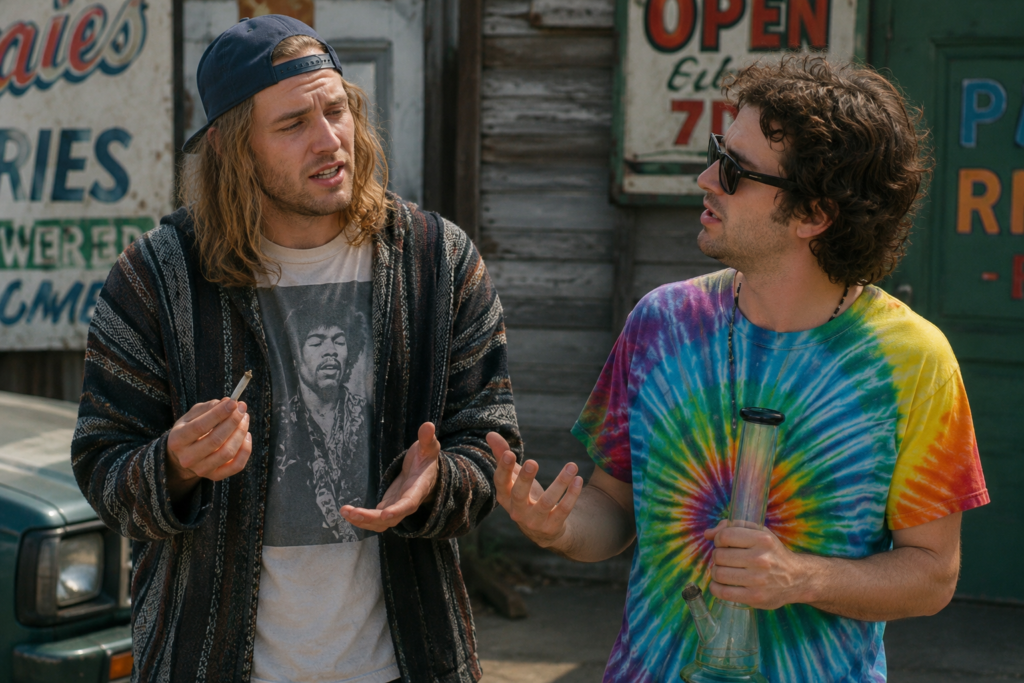
It appears something may have flown a little too high, or maybe some readers were a little too high. After all, it was only ten days after the 4th, and after watching Trump stumping in his own honor in the July heat, I probably should have still been a little elevated myself.
So. Doobie out. Paying attention? Let’s go over the cryptic points one more time.
=======================================
And no. You are definitely not invited to the Ballroom Gala.
Share this:

Secretary Read Pushes Back on DHS Secretary Mullin’s Newest Threats Against Election Workers
|
Having trouble viewing this email? View it as a Web page. |
| Help |
|
||||
Share this:

‘Elections are Decided by Voters, Not by the President’: Secretary Read Responds to President Trump’s Prime-Time Address on Elections
|
Having trouble viewing this email? View it as a Web page. |
| Help |
|
||||
Share this:

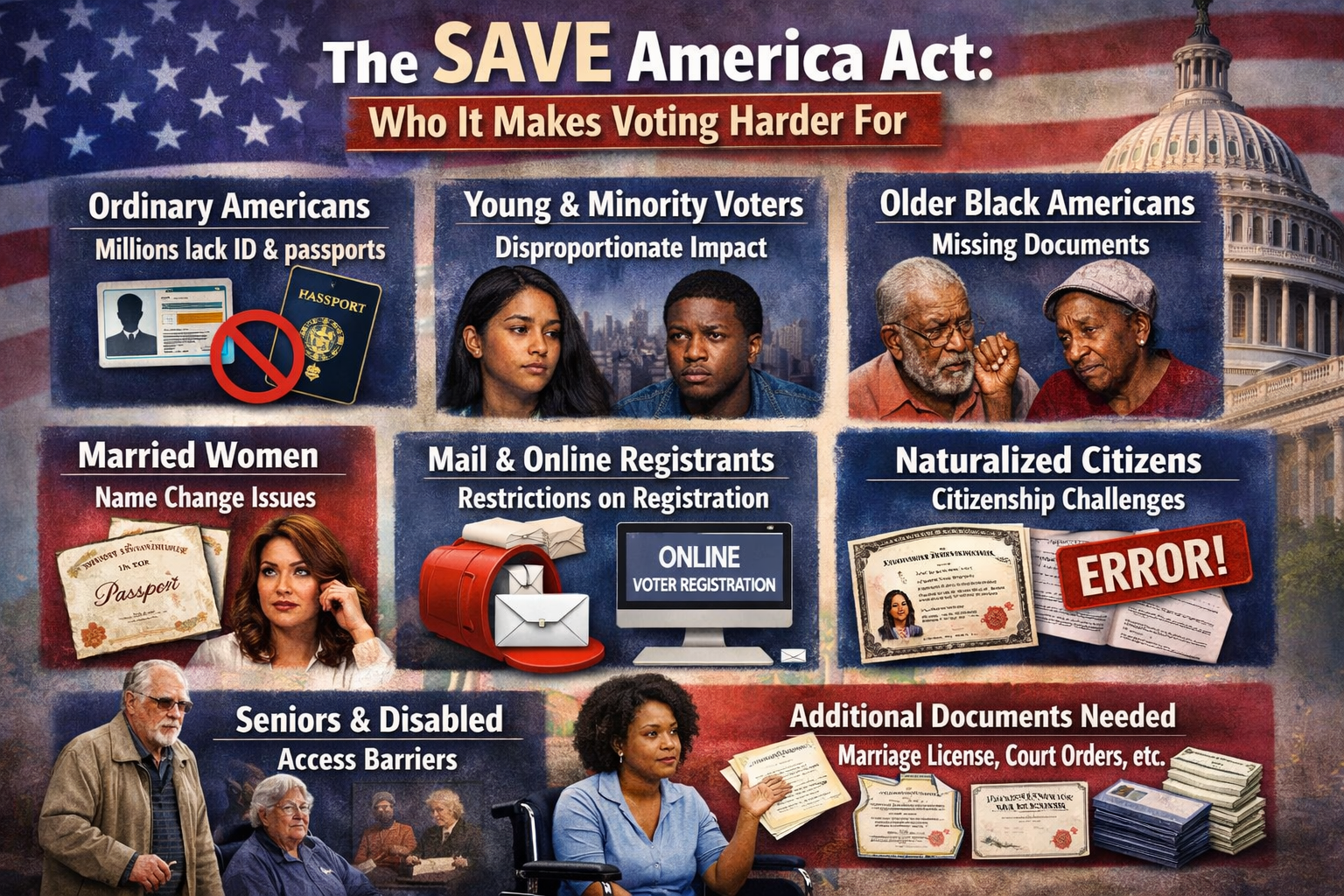
Why is Trump DESPERATE to pass the SAVE America Act?
The SAVE America Act , The Wolf in Sheeps Clothing, Hey Lamb Chop.
Who it makes voting harder for:
Ordinary Americans broadly — More than 21 million Americans lack ready access to those documents. Roughly half of Americans don’t even have a passport.
 The SAVE America Act , The Wolf in Sheeps
Voters of color and younger voters — The SAVE Act would disenfranchise Americans of all ages and races, but younger voters and voters of color would suffer disproportionately.
Older Black Americans specifically — Decades after segregation left gaps in citizenship documents, the bill could create new barriers at the ballot box for people who were never properly documented during that era.
Married women (and anyone who changed their name) — The bill would disproportionately affect women whose current legal names differ from the names on their birth certificates or passports. It does not include exceptions for eligible voters whose names differ from those on their identification documents, and would force them to submit additional documents — such as marriage certificates, divorce decrees, or court orders to prove their identities.
People who register by mail or online — In 2022, more than seven million Americans registered to vote by mail, and almost 11 million registered online. The bill would severely threaten mail registration and require online registration systems to be overhauled.
Naturalized citizens — Naturalized citizens are particularly at risk for being inaccurately flagged for removal from voter rolls under the bill’s data-verification requirements.
People with disabilities and the elderly — People with disabilities and older voters who may not be able to register in person would also face new barriers.
Supporters’ argument
Proponents say the bill is necessary to ensure only citizens vote and that it simply enforces existing law. They argue an affidavit process exists for those without documents.
Critics’ counterargument
All available evidence, including from the Trump administration itself, indicates that only American citizens vote and the exceptions are vanishingly rare. Critics point to Kansas as a cautionary example when Kansas adopted a similar proof-of-citizenship law in 2011, it prevented over 31,000 eligible citizens from registering to vote before it was blocked by federal courts.
Do You want to be turned away?
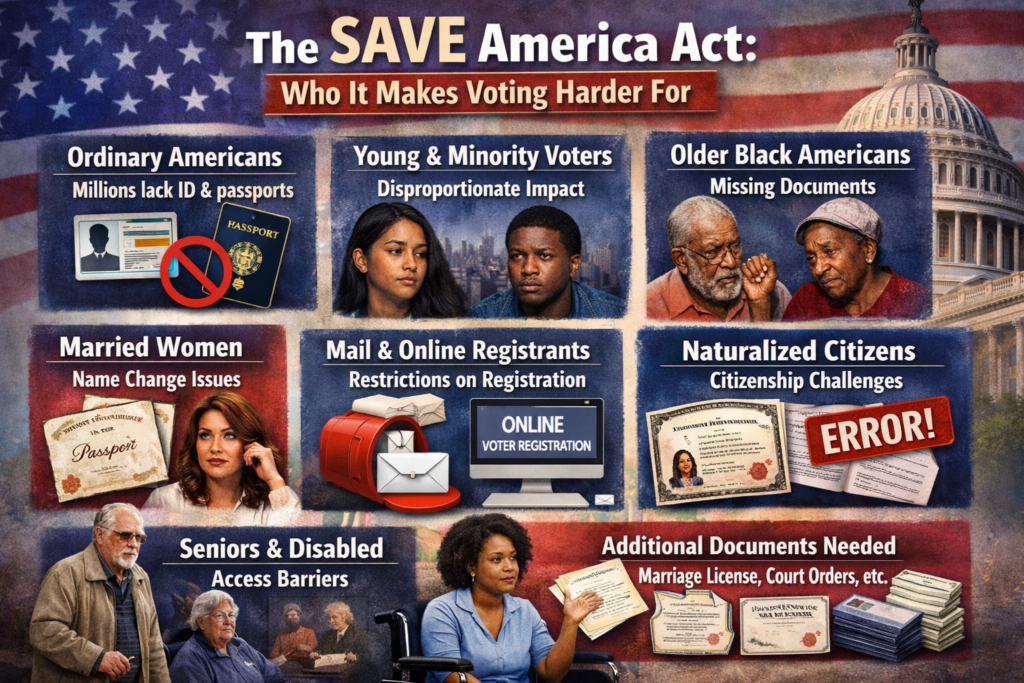
Share this:

Removal of Elections Commissioners an Attempt to Disrupt Election
|
Share this:

Calls for Explanation from USPS, Secretary Read Commends Benton County Elections,
|
|
|
||||
Share this:

Thank You Oregon, Highest Voter Turnout in this year’s Primary Election
|
Having trouble viewing this email? View it as a Web page. |
| Help |
|
|
||||
Share this:

Trump Administration Renews Attempts to Intimidate Election Administrators, Undermine Elections – Oregon
|
Having trouble viewing this email? View it as a Web page. |
| Help |
|
|
||||
Share this:

The Declaration Of Independents – Forward – 07/04/2026
|




Share this:

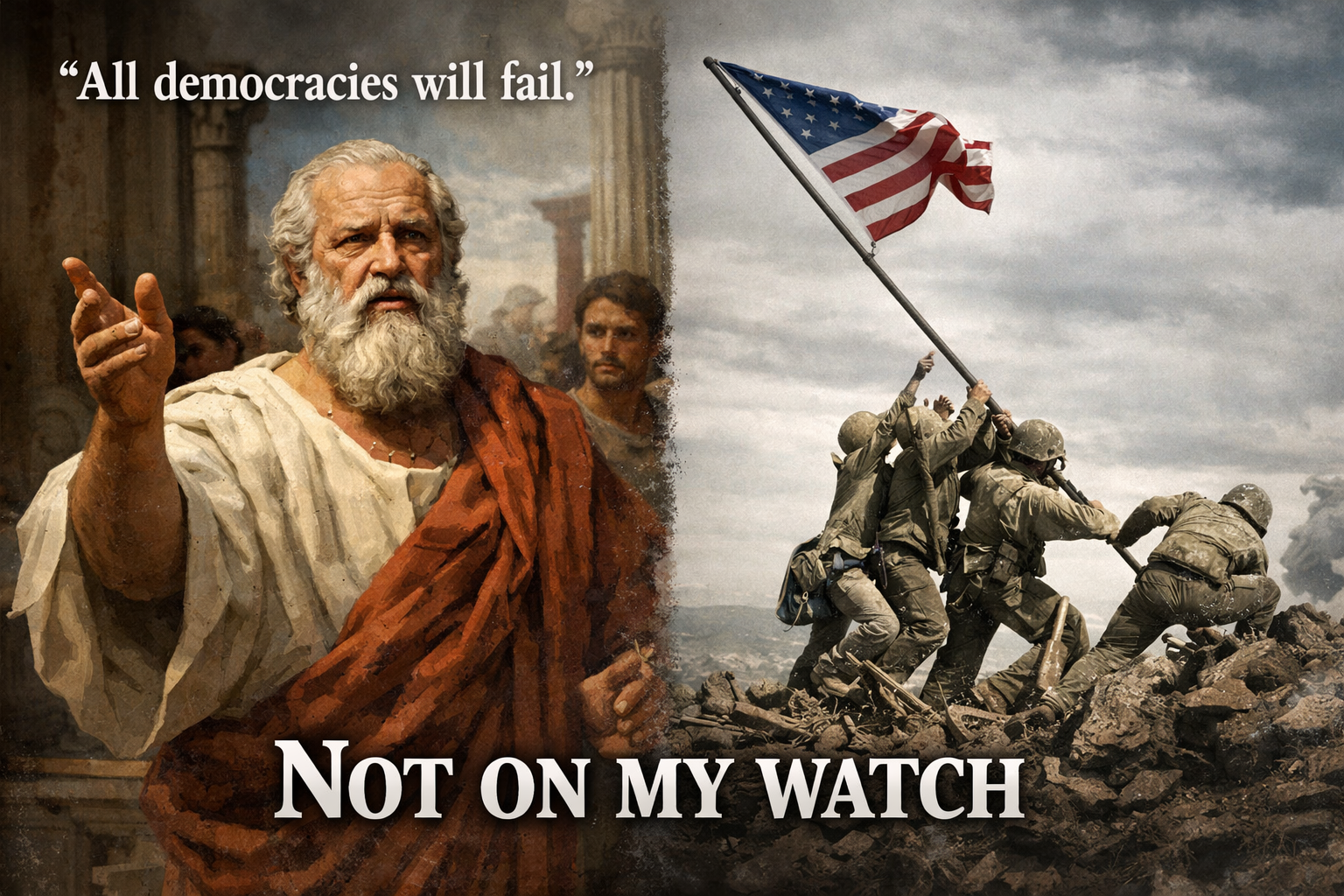
Not On My Watch – Video
Plato may be right. All democracies will fail. But I don’t think now’s the time.
When looked at from a distance, we can see the arc of almost anything. Civilizations, movements, ideas. The beginning and the end become visible, like a landscape from altitude. But the closer we get, the more the timeline shifts and blurs. The ending moves around. Why would that be? Maybe because philosophies and people don’t always work hand in hand.
Ideas are clean. People are not.
I have been around long enough to have stood in a few crowds, carried a few convictions, and watched more than one cause rise and fade. Through all of it, every march, every movement, every upheaval, there has always been a placard somewhere in the crowd that read some version of the same thing: Power to the people.
==============================================
That truth is this. The closest thing to actual power most of us will ever hold is a vote and a voice. That’s it. That’s the whole arsenal. It isn’t much, until enough people pick it up at the same time.
But neither of those things work if we stop using them. And they stop working in a different way when we use them without thinking. When we vote the way we’re told to vote, believe what we’re told to believe, and accept what we’re told to accept.
==========================================================
The question is whether you’re willing to stop accepting the illusion in place of the real thing, and what you’re prepared to do about it.
That’s always been the question. It just hasn’t always been this urgent.
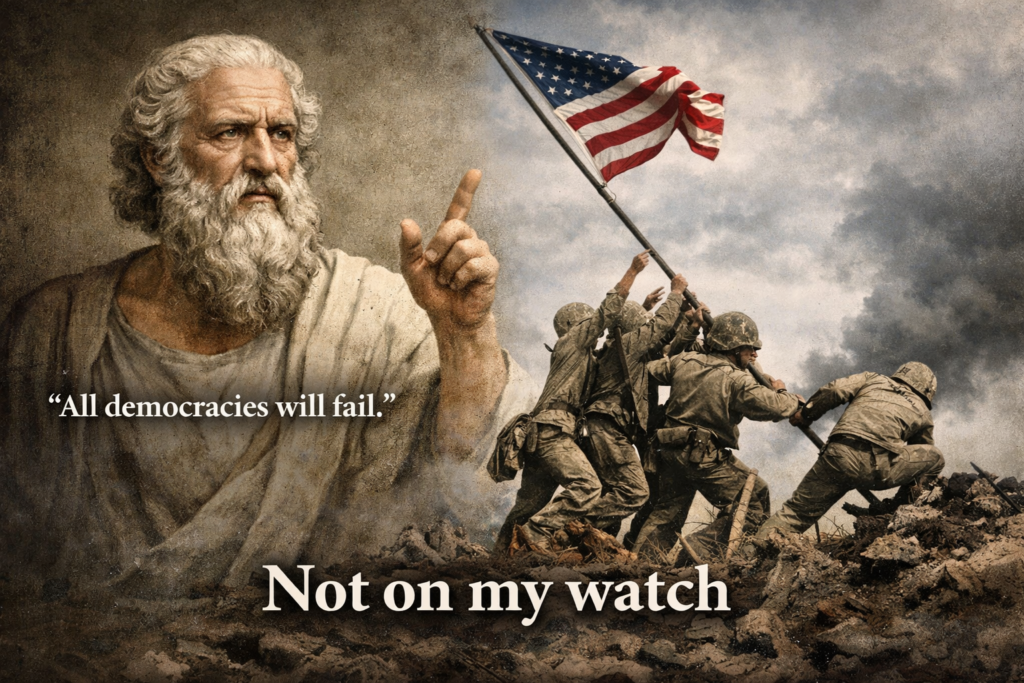
Share this:

Not On My Watch
Plato may be right. All democracies will fail. But I don’t think now’s the time.
When looked at from a distance, we can see the arc of almost anything. Civilizations, movements, ideas. The beginning and the end become visible, like a landscape from altitude. But the closer we get, the more the timeline shifts and blurs. The ending moves around. Why would that be? Maybe because philosophies and people don’t always work hand in hand.
Ideas are clean. People are not.
I have been around long enough to have stood in a few crowds, carried a few convictions, and watched more than one cause rise and fade. Through all of it, every march, every movement, every upheaval, there has always been a placard somewhere in the crowd that read some version of the same thing: Power to the people.
We both know that’s a catch phrase. It always has been. But here’s the thing about catch phrases. The good ones survive because they point at something real, even when nobody’s delivering it. The illusion has to be maintained because somewhere underneath it is a truth people can feel even when they can’t see it.
That truth is this. The closest thing to actual power most of us will ever hold is a vote and a voice. That’s it. That’s the whole arsenal. It isn’t much, until enough people pick it up at the same time.
But neither of those things work if we stop using them. And they stop working in a different way when we use them without thinking. When we vote the way we’re told to vote, believe what we’re told to believe, and accept what we’re told to accept.
Independent thought has always been the first casualty of concentrated power. Not because the people are stupid. They never are. But because every system, in every era, has had a quiet interest in discouraging it. It is easier to lead people who have already decided what they think. Easier still to lead people who believe that what they think, they arrived at on their own.
We live under a democracy, a republic if you want to be precise about it. Living under it comes with benefits most of us have stopped noticing, the way you stop noticing a foundation until it cracks. But those benefits have never been free. They have always cost something. The people who built this thing paid for it. The people who saved it, more than once, paid for it. And the people who will determine whether it survives this particular moment in its timeline will pay for it too.
The question isn’t whether you’re willing to believe in it.
The question is whether you’re willing to stop accepting the illusion in place of the real thing, and what you’re prepared to do about it.
That’s always been the question. It just hasn’t always been this urgent.
Share this:



The Purple Rose of Texas – Video
Thank God I’m not from Texas, because being a Purple Rose is being a screwed Rose in Texas not much better than being a Yellow Rose.
Only Red roses and Blue Rose have a chance there.I’m just flabergasted Vance and Rubio haven’t article 25ve
A rose by any other color is just fertilized out of luck.
Try being an independent in Texas, Oh your allowed , maybe have to sit inn the back of the bus, if they can find a seat. And that’s a big maybe. But then again, the Fight at Alamo was as much about retaining slavery as gaining independence, don’t believe me, go read your history books.
The two party system has a choke hold on us, it has to change, we have to stop and it won’t be easy. The battle will look like we are fighting the Democrats and the Republicans but in reality, we will be fighting dark money.
The fight will be against Citizens United, the Federalist Society, the Superpacs, Acs American Constitution Society, Leonard Leo, Arabella Advisors and the list goes on. It’s the dark money, they want to control and control is easier when there are fewer choices.
Open the field and the Superpacs become less effective. Then we have can have a Congress that become MORE effective.
The choices are yours.

Share this:

The Purple Rose of Texas
Thank God I’m not from Texas.
Because being a Purple Rose in Texas is being a screwed rose. Only Red roses and Blue roses have a chance there. A rose by any other color is just fertilized out of luck.
Try being an independent in Texas. You’re allowed — technically. Maybe you get to sit in the back of the bus, if they can find you a seat. And that’s a big maybe.
But then again, the fight at the Alamo was as much about retaining slavery as gaining independence. Don’t believe me — go read your history books.
Here’s what Texas law actually requires of an independent candidate running for statewide office.
First — collect more than 81,000 valid voter signatures just to get on the ballot. That’s a steep hill by itself. But Texas doesn’t stop there.
Independent candidates aren’t allowed to start collecting signatures until after the party primary runoff elections are finished. This year that meant waiting until May 26th.
Read that again because it matters.
Independent candidates aren’t allowed to start collecting signatures until after the party primary runoff elections are finished.
The petitions were due June 25th.
Do the math.
Thirty days to collect over 81,000 signatures statewide — a task that would challenge even a well-funded campaign with an established organization behind it.
Then it gets more interesting.
Anyone who voted in either a party primary or runoff election is prohibited from signing an independent candidate’s petition. Texas shrinks the pool of eligible signers before the process even begins.
Thirty day deadline. Reduced pool of eligible voters. Statewide signature requirement that would be difficult under the best of circumstances.
You can decide for yourself whether that’s about election integrity or ballot access.
Texas didn’t write these laws in a vacuum. The machinery that benefits from limited choices operates at a national level even when the laws are written state by state. Similar barriers — different deadlines, different thresholds, different methods — exist across the country. The details change. The effect is the same. Fewer choices. Less competition. A political system that protects the existing parties from having to compete with anyone who doesn’t carry their label.
Whether it’s gerrymandered districts reducing competition or ballot access laws making it nearly impossible for independent candidates to qualify — the result is consistent. A chokehold.
And the hands on that chokehold aren’t just Republican or Democrat.
They’re darker than that.
Citizens United opened the floodgates. Leonard Leo built the judicial architecture. Arabella Advisors operates the left side of the same coin. Federalist Society. SuperPACs. Dark money flowing through nonprofits that don’t have to disclose their donors to anyone.
The two party system isn’t just a political habit. It’s a business model. And it’s extraordinarily well funded by people who understand that fewer choices means more control and more control means more return on their investment.
Open the field and the SuperPACs become less effective. More candidates means more variables means less predictable outcomes means less return on the dark money investment.
That’s why the field stays closed.
The Purple Rose doesn’t get fertilized by accident.
It just gets shit on.
The choices are yours.
But first you have to fight for the right to make them.
Share this:

Secretary Read: Supreme Court Protects Oregon Voters’ Right to Have Their Ballots Counted – Oregon
|
Having trouble viewing this email? View it as a Web page. |
| Help |
|
|
||||
Share this:

Six Candidates. Two Chambers. One Movement. 06/26/2026
|






Share this:

Secretary Read Certifies May Election Results, Confirms Historic Turnout – Oregon
|
| Having trouble viewing this email? View it as a Web page. |
| | Help |
Share this:

Federal Court Blocks Executive Order that Would Undermine Vote-by-Mail – Oregon
|
| Having trouble viewing this email? View it as a Web page. |
| | Help |
Share this:

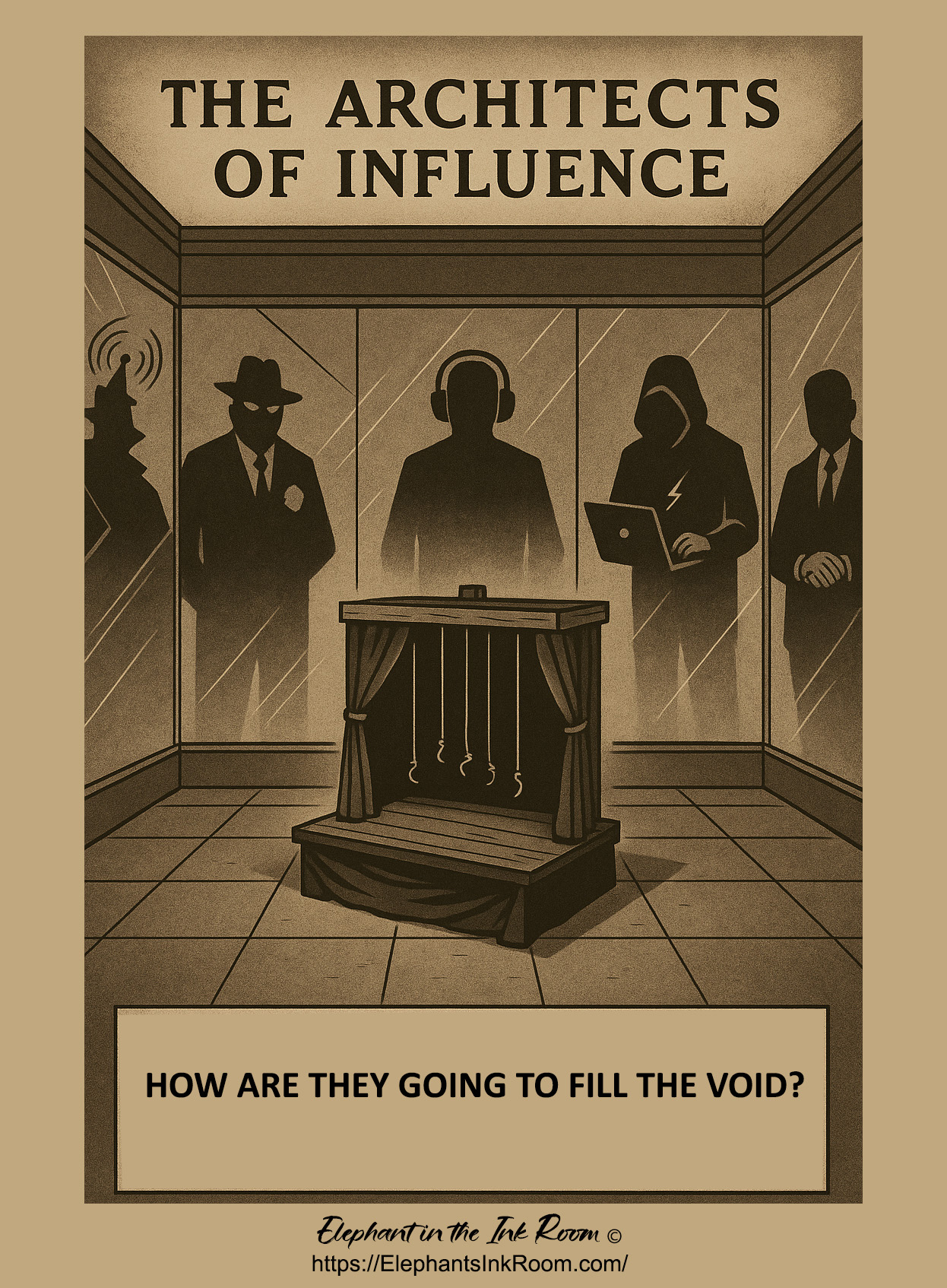
The Elephant In The Room Nobody Is Looking At – Video
Trump is out. The clown is getting the hook. You’d have to be blind not to see it — and he’s too busy with his burgers to notice it himself. I have recently written about how the two party system has failed us and how dark money has made it nearly impossible for an independent candidate to even get on the ballot. The Republicans and the Democrats are not running the show. The SuperPACs are.
So when Musk threatened to start his own party during the DOGE wars all he was really doing was threatening Trump. Because Musk’s party couldn’t have gotten on 90 percent of American ballots. But it would have weakened the MAGA base — which was exactly the point.
Then Tucker Carlson said this:
“I would not support the Republican Party, there’s no chance. Not gonna support the Democratic Party. I don’t know what I’m going to do. How could I or any American voter support a political party that’s not loyal to the United States — that puts the interests of a foreign country above those of its own citizens. It’s not possible to vote for people like that and I’m not going to. I voted Republican my entire life. I worked at Fox News. I’ve been a consistent defender for 35 years of the Republican Party, but there’s no defending this because it’s immoral. I’m out. And if I’m out, then I think a lot of other people are out.”
Different name. Same chokehold. Same dark money. Same result for the Purple Rose.
I don’t think I need to put the pipe down to ask that question.
I think it’s the only question worth asking right now.
And I’m genuinely puzzled why so few people are asking it.
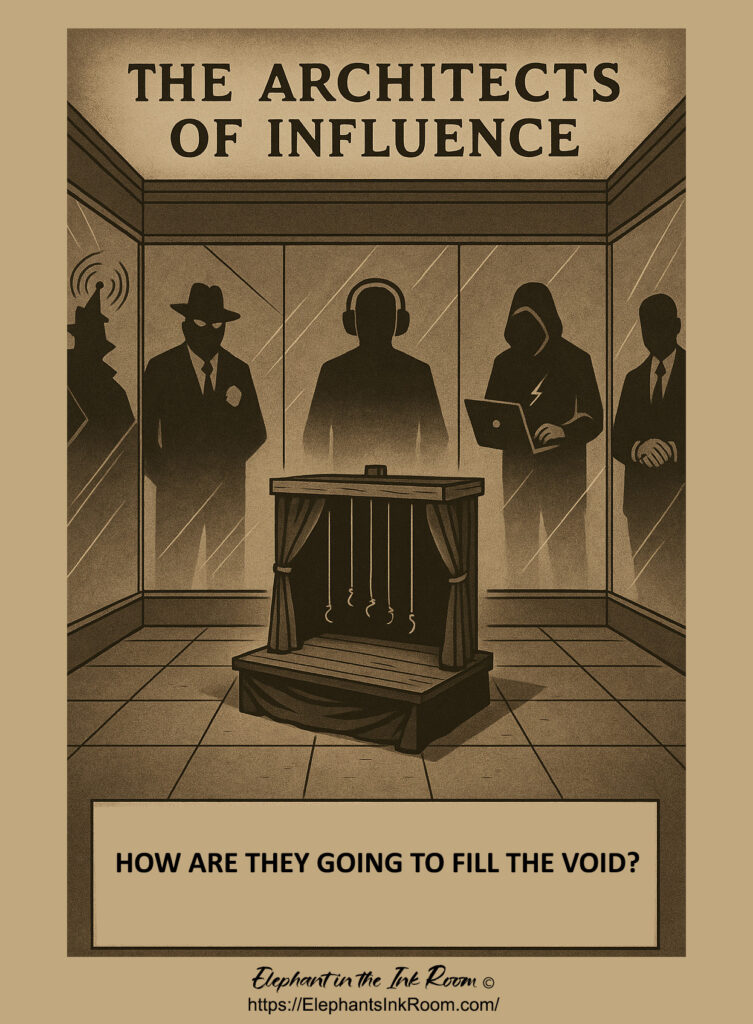
Share this:

Secretary Read Celebrates Victory in Executive Order Case on Voting Rights – Oregon
|
Having trouble viewing this email? View it as a Web page. |
| Help |
|
|
||||
Share this:

Oregon – Campaign Finance Learning Opportunity – Voters’ Pamphlet Filing Process – Maybe what free election are all about
|
Having trouble viewing this email? View it as a Web page. |
| Help |
|
||||
Share this:

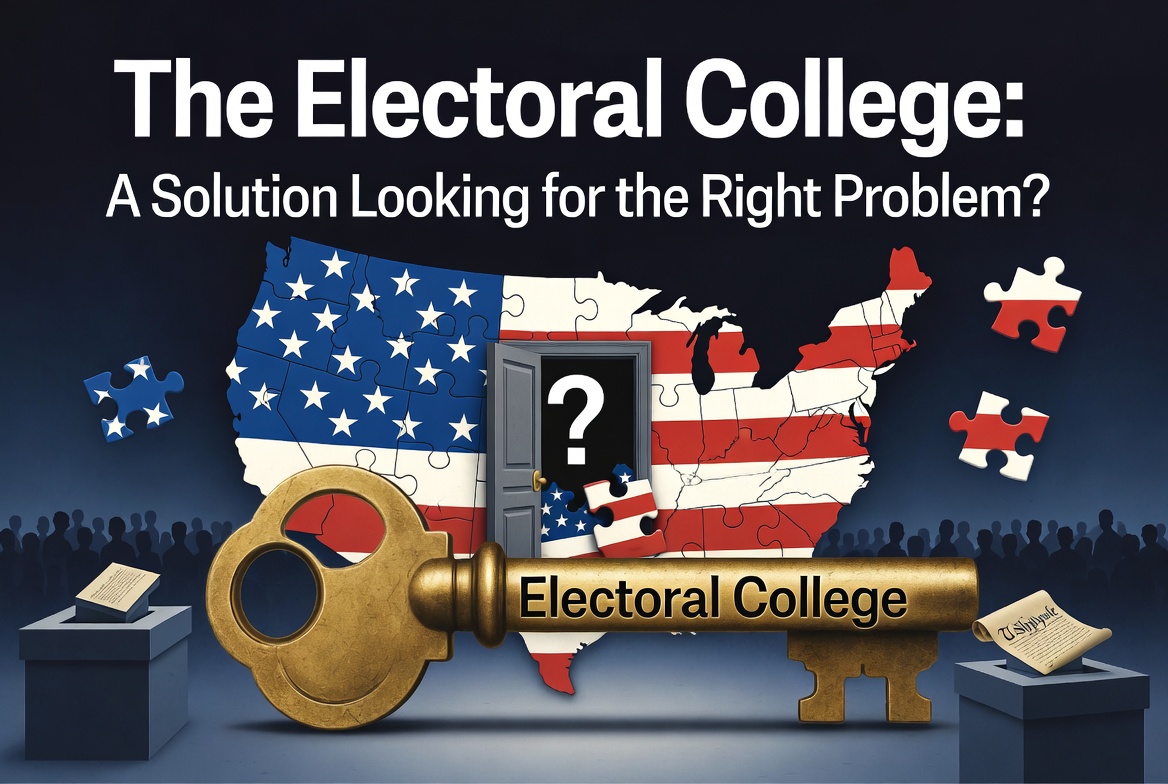
The Electoral College: A Solution Looking for the Right Problem?
Most debates about the Electoral College start with people choosing sides. One side wants to keep it. The other wants to abolish it.
I think the more interesting question is: What problem was it designed to solve, and does that problem still exist?

In 1787, information traveled at the speed of a horse. Most citizens knew little about candidates from distant states. The United States was less a single nation than a collection of states agreeing to work together. The Electoral College was part compromise, part practical necessity, and part protection against direct democracy in a world where voters had limited information.
For its time, the system made sense.
Today, none of those conditions exist.
A voter in Oregon can watch a speech made in Florida in real time. News travels instantly. Candidates campaign nationally. Americans think of themselves as citizens of one country first and residents of a state second.
The original reasons for creating the Electoral College have weakened or disappeared.
Yet replacing it raises legitimate concerns.
A pure popular vote could encourage candidates to focus heavily on large population centers. The current system encourages candidates to focus on a handful of swing states. Neither approach feels particularly representative.
Today, millions of Republicans in California and millions of Democrats in Texas know their presidential vote is unlikely to matter. At the same time, a relatively small number of voters in a few battleground states effectively decide the election.
That suggests the problem is not simply the Electoral College. The problem is that our current system leaves large numbers of Americans feeling their vote has little impact.
I don’t pretend to know the perfect answer.
Perhaps it is a modified Electoral College. Perhaps it is a national popular vote. Perhaps it is a system nobody has proposed yet.
What I do know is that institutions should be judged by whether they solve today’s problems, not yesterday’s.
The Electoral College was created to address concerns that were real in 1787.
If the Electoral College is broken, what replaces it?
A straight popular vote?
A proportional allocation of electoral votes instead of winner-take-all states?
A ranked-choice national election?
A system where states award electoral votes by congressional district?
A constitutional convention to redesign the whole thing?
I don’t know.
What I do know is that every system solves one problem by creating another.
A pure popular vote values every vote equally, but raises concerns about population concentration.
The Electoral College protects state influence, but leaves many voters feeling irrelevant.
Winner-take-all states simplify elections, but turn most states into spectators.
There may not be a perfect answer. There may only be better compromises.
Before we argue about which system to adopt, we should at least agree on which problem we’re trying to solve.
If we can’t answer that question, we’re just rearranging the furniture.
And unlike the spare toilet paper at my house, nobody seems to know where the solution is stored.
The Electoral College asks how states should be represented.
Ranked-choice voting asks how voters should be represented.
Maybe before we decide which system is best, we should decide whose voice we are trying to hear more clearly.
Share this:

The Elephant In The Room Nobody Is Looking At
Ever feel like you’re on the verge of a nervous breakdown from all the noise? The he said she said, on and on, round and round. Just noise.
But is it just noise?
Sometimes the most important thing happening isn’t the loudest thing happening. Sometimes the real story is in the room nobody is looking at.
Trump is out. The clown is getting the hook. You’d have to be blind not to see it — and he’s too busy with his burgers to notice it himself. I have recently written about how the two party system has failed us and how dark money has made it nearly impossible for an independent candidate to even get on the ballot. The Republicans and the Democrats are not running the show. The SuperPACs are.
So when Musk threatened to start his own party during the DOGE wars all he was really doing was threatening Trump. Because Musk’s party couldn’t have gotten on 90 percent of American ballots. But it would have weakened the MAGA base — which was exactly the point.
Then Tucker Carlson said this:
“I would not support the Republican Party, there’s no chance. Not gonna support the Democratic Party. I don’t know what I’m going to do. How could I or any American voter support a political party that’s not loyal to the United States — that puts the interests of a foreign country above those of its own citizens. It’s not possible to vote for people like that and I’m not going to. I voted Republican my entire life. I worked at Fox News. I’ve been a consistent defender for 35 years of the Republican Party, but there’s no defending this because it’s immoral. I’m out. And if I’m out, then I think a lot of other people are out.”
Thank you Heather Delaney Reese for Trump loyalists are jumping off the sinking ship
Tucker Carlson. Thirty five years. Out.
Now ask the question nobody seems to want to ask out loud.
Where are they going?
Tucker isn’t going long term. A third party takes decades to build and he doesn’t have that kind of patience or that kind of money. But somebody does.
Here is where we need to look. Here is the room nobody is looking at.
The SuperPACs. The dark money. The Federalist Society. Leonard Leo. Arabella Advisors. The entire infrastructure that has been quietly and methodically building the conservative legal and political architecture for thirty years.
They didn’t back Trump because they loved him. They backed him because he was a useful vehicle. Three Supreme Court justices. Hundreds of federal judges. Regulatory rollback. Tax structure. The return on their investment has been substantial.
But now the vehicle is embarrassing them. The stall is covered in dung. The clown is jeopardizing thirty years of careful infrastructure with daily chaos and a cognitive decline visible to anyone paying attention.
MAGA is dead. Trying to save it is a fool’s errand.
So what are the options?
Save the Republican Party — purge the MAGA element, restore something resembling functional conservatism, hope Vance or Rubio or someone with a law degree and a functioning prefrontal cortex can carry the banner forward. Vance and Rubio haven’t invoked the 25th Amendment yet because they’re still afraid of the MAGA base. But here’s the thing — if they did it the Republican establishment would put them on their shoulders. The dark money would fund the parade.
Or start over — a new right of center party, properly funded, built from the existing infrastructure that Leonard Leo and the Federalist Society have already constructed. It would have money. It would have judicial connections. It would have the organizational architecture that third parties normally spend decades trying to build.
Which brings us to the question that should keep everyone awake.
Is that a good thing?
Are we watching the dark money apparatus recognize that their vehicle has failed and quietly preparing to deploy a new one? A cleaner one. A more electable one. A saving angel that turns out to serve the same architecture in a better suit?
Or to put it another way — would a new right wing party actually break the two party system open for independents and moderates?
Or would it just be a Texas sidestep?
Different name. Same chokehold. Same dark money. Same result for the Purple Rose.
I don’t think I need to put the pipe down to ask that question.
I think it’s the only question worth asking right now.
And I’m genuinely puzzled why so few people are asking it.
Share this:

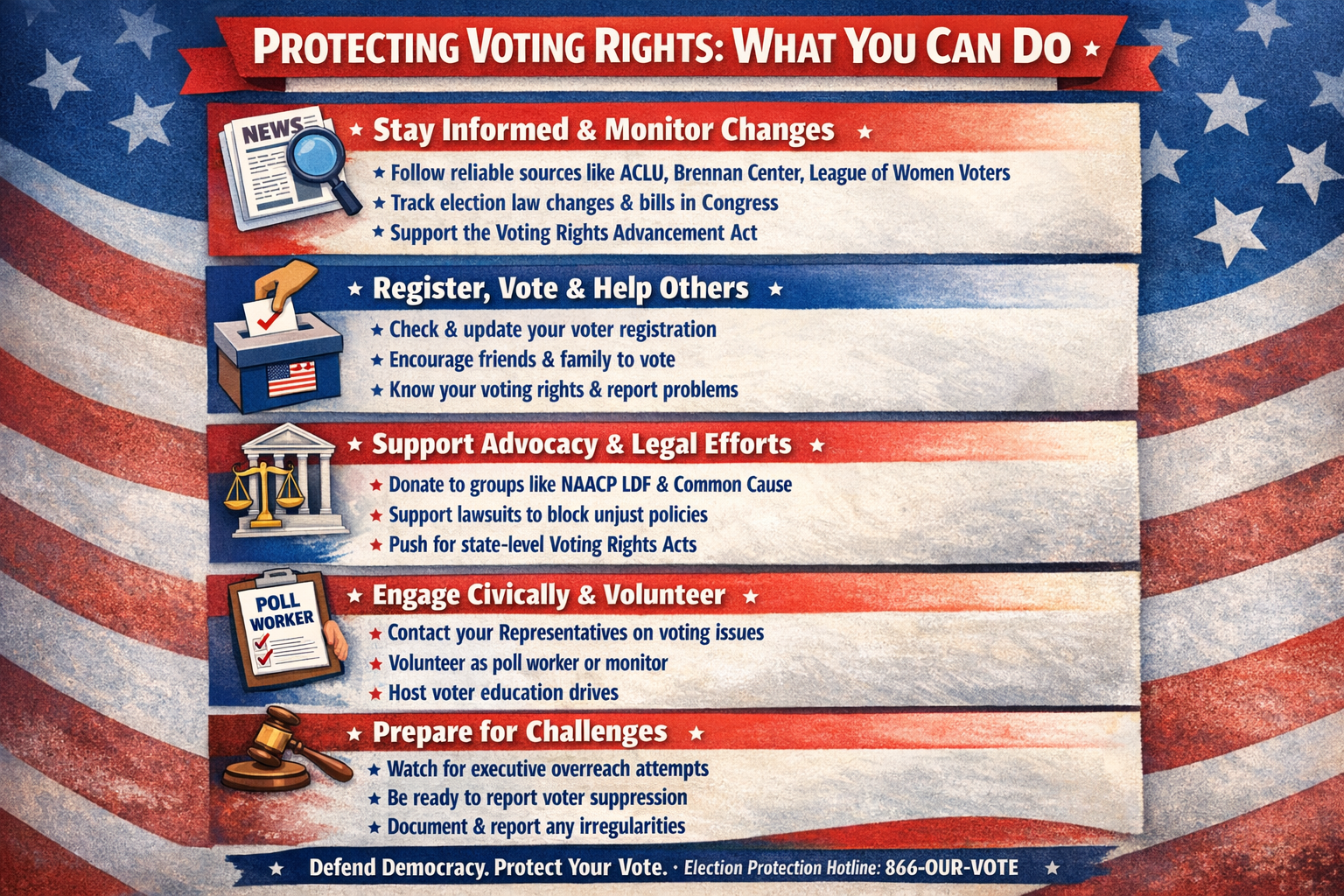
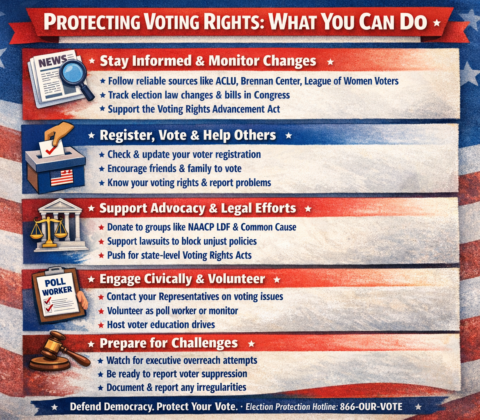
Protecting Your Voting Rights – Video
Protecting voting rights is a fundamental aspect of American democracy, and your concern about potential executive overreach is valid given recent reports. While presidents have issued executive orders related to elections in the past, they don’t have unilateral authority to control how states run them, elections are primarily a state responsibility under the Constitution (Article I, Section 4), with Congress able to set or alter regulations for federal races. Any attempt to impose sweeping changes via executive order, especially if premised on unsubstantiated claims like foreign interference from past elections, would likely face immediate legal challenges and injunctions from federal courts, as happened with a similar order in March 2025.
Courts have repeatedly affirmed that such actions can’t override constitutional limits or state authority without clear statutory backing.


Article 3 of 3 The Long Game — Power Beyond the Ballot – Video
By now, it is clear that the 2026 midterms are unlike any we have seen in recent memory. The scale of spending, the intensity of coordination, and the precision of messaging all suggest a high-stakes contest—but the full story goes deeper than individual candidates or party control.
Share this:
Like this: