















Posts in Category: Politics

If It Isn’t Trump, Who Is Running The Show?

Let’s step back from the daily noise for a moment and ask a simple question.

Running the United States government is not a one man show. Any smart leader knows they need help. The machinery of the executive branch — the decisions, the policies, the daily operation of the most powerful government on earth — requires constant attention, competence, and coordination.

So why do we spend all our time watching the one person in the room least capable of doing any of that?

Obviously he isn’t running everything. He couldn’t. Any more than you or I could. All of his attention — what remains of it — is funneled into running the Trump Show. The rallies. The Truth Social posts. The grievances. The performance.

Which begs the question nobody is asking loudly enough.

YouTube player

Who is running everything else?

Now step back again and look at what Trump actually is today. An old man with failing health making undisclosed medical visits that nobody in the press is pressing hard enough on. His mental state and capacity don’t require my description — just open your eyes and ears and observe.

So who is filling the vacuum? That I don’t know and the following are only suggestions, but it does give us food for thought?

Susie Wiles — Chief of Staff and the one nobody talks about. The least visible senior figure which almost always means the most operationally powerful. She controls access. She controls the schedule. She controls what reaches his desk and what doesn’t. It was suggested that Nancy Reagan was behind the steering wheel toward the end of Reagan’s last term. That’s not an unreasonable template.

Stephen Miller — Chief Extremist. His fingerprints are all over immigration and ICE. The ideological engine that runs consistently regardless of whatever Trump said this morning. He has the ruthlessness to grab control — probably in much the same way Hoover did. The dirt. The threats. The leverage that keeps people in line.

Steve Cheung — controls the narrative. He decides what can be said and what can’t. What gets amplified and what gets buried. The communications director as gatekeeper.

The puppet masters in a road show can be seen — but you spend most of your time following the puppets. We see the strings. We hear the voices. But a good master makes you believe it’s really the puppet saying the lines.

J.D. Vance — I saved him for last but not because he’s the least concerning. He has the most to gain. He is smart in a what’s best for Vance sort of way and will say whatever lines he calculates will benefit him most. He may be the scariest one of all — because he shares too many of Trump’s narcissistic personality traits to ever be trusted, but unlike Trump he has the patience and the ideology to use them methodically.

This isn’t about the real puppet masters behind the big show. The dark money, the think tanks, the architects of Project 2025 — that’s another story and another piece.

This is about today. Right now. With a sick old man spending his remaining energy screaming at everything he doesn’t like on his own little social media platform — there is not a chance in hell he is simultaneously running the most powerful government on earth.

So who is?  This is a question we should have answers to.

Inquiring minds want to know.

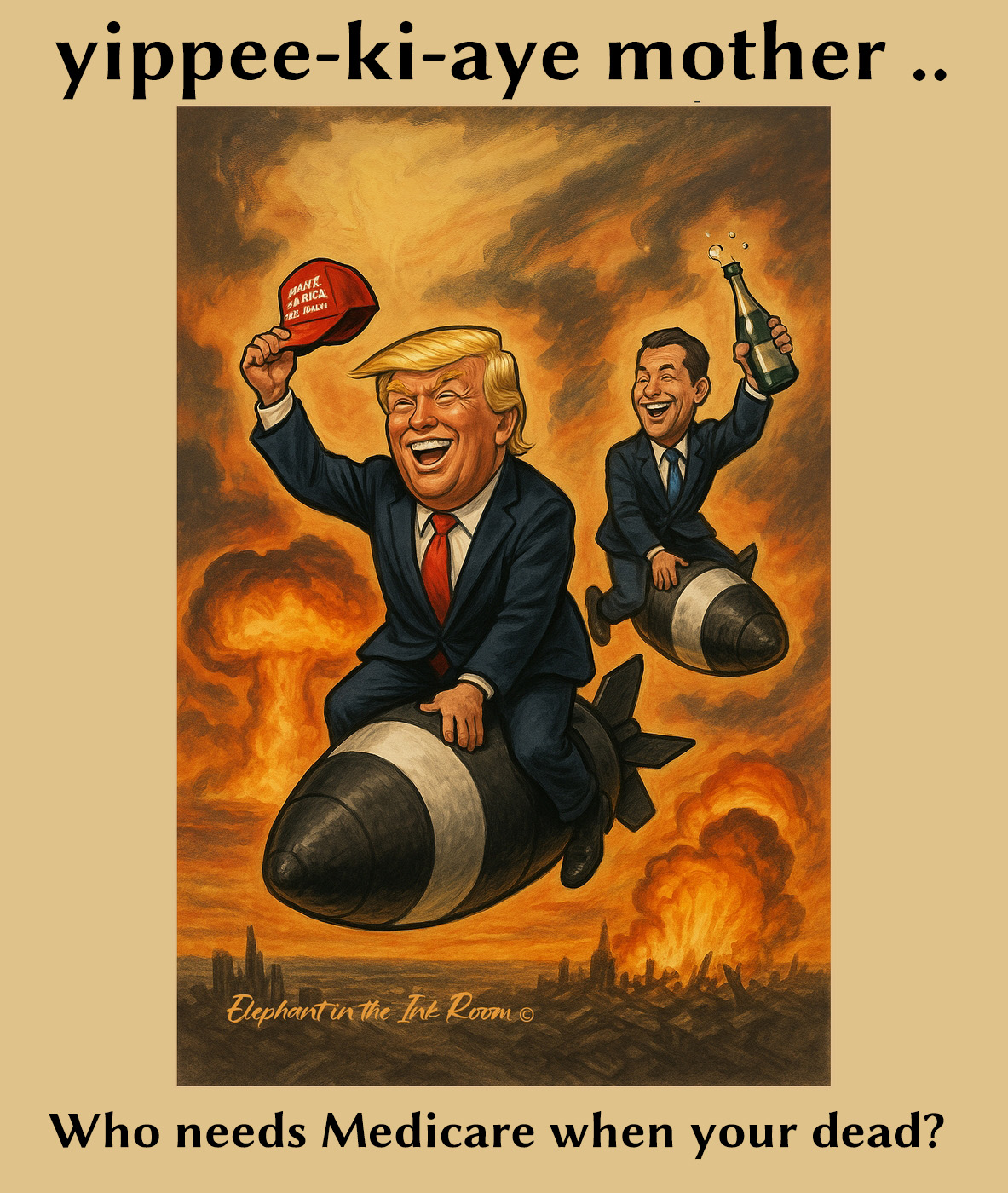
Puppets

They Opened the Door. They Can Close It.

They Opened the Door. They Can Close It.

An op-ed on the Supreme Court, presidential immunity, and the precedent they set themselves

YouTube player

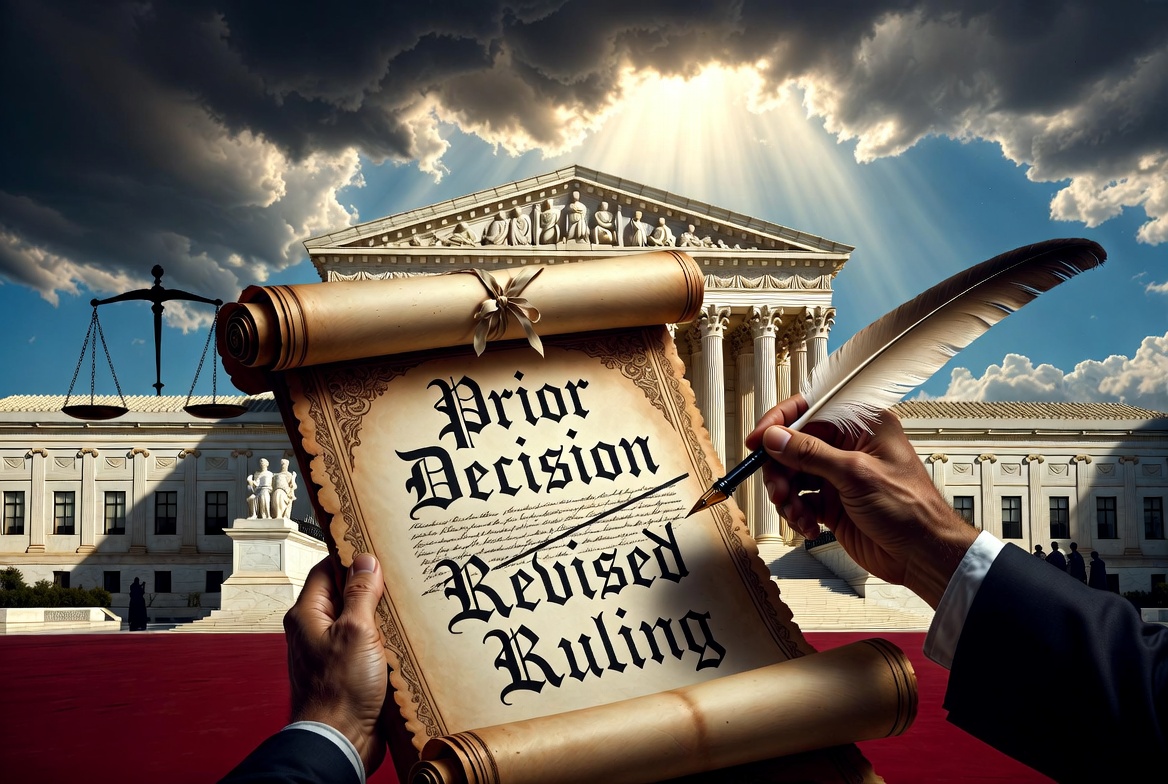
In 2022, the Supreme Court did something many legal scholars had considered unthinkable. It overturned Roe v. Wade — a precedent that had stood for nearly fifty years — and told millions of Americans that what they had built their lives around was, in the Court’s revised opinion, simply wrong. The majority didn’t apologize. They said the previous Court had erred, that the Constitution had been misread, and that it was time to correct the record.

Fine. That is their right. The Supreme Court is not a museum. It can revisit its decisions.

So here is a question nobody in power seems eager to answer: if the Court can overturn fifty years of abortion precedent in the name of correcting a constitutional error, why can’t it revisit — or at minimum, clarify — its 2024 ruling in Trump v. United States? The one that handed a former president sweeping immunity from criminal prosecution for acts committed while in office?

The argument that precedent is sacred no longer holds. The Court itself buried that argument in Dobbs. You cannot spend two years defending the Dobbs decision as a necessary correction to constitutional overreach and then turn around and say the immunity ruling is untouchable. Either precedents can be wrong and should be fixed, or they can’t. Pick one.

What the immunity ruling actually created

Trump v. United States didn’t interpret an existing constitutional protection. It invented one. No prior Court had ever held that a president carries presumptive immunity from criminal prosecution for official acts. The Constitution does not say this. The Founders, who were exquisitely sensitive to the dangers of unchecked executive power, did not write this. Six justices decided it, in 2024, under circumstances that a large portion of the country — and a significant portion of the legal community — viewed as nakedly political.

The practical result is a legal framework in which a president can commit crimes in the performance of official duties and face no criminal consequences. Legal scholars have noted, with some alarm, that the ruling’s logic is difficult to cabin. If official acts are immune, and the definition of official acts is broad, the immunity becomes nearly total.

This is the thing the Court could fix. Not by staging a dramatic reversal, but by doing what courts do: issuing a clarifying ruling that says, in effect, “We were misread. Presidential immunity was never meant to shield acts that undermine the constitutional order itself. We are clarifying the standard.”

The self-interest argument

Let’s set aside principle for a moment and talk about survival — institutional survival.

The Supreme Court’s authority rests entirely on public trust. It has no army. It cannot enforce its own decisions. What it has is legitimacy — the broadly shared belief that its rulings reflect something more than the political preferences of whoever happened to appoint the majority. That legitimacy is eroding in ways that should frighten anyone who cares about functional government, regardless of party.

After Dobbs, the Court’s approval ratings fell to historic lows. After Trump v. United States, a new wave of Americans concluded that the institution had been captured. Justices now require round-the-clock security details. The social compact that once protected them — the idea that they were above the fray — is fraying in real time.

A narrowing clarification on presidential immunity would cost the Court’s conservative majority very little jurisprudentially. They could frame it as precision, not retreat. What it would buy them is something far more valuable: the argument that they are still capable of self-correction. That they are not simply an extension of a political movement. That the institution still works.

The question they have to answer

The Founders feared two things above almost everything else: a standing army loyal to one man, and an executive who could act without legal consequence. They built a system of separated powers precisely to prevent either. The immunity ruling does not merely strain that system. It carves a hole in it.

The justices who authored and joined that ruling are not stupid people. They know what they wrote. They also know — because they are lawyers and students of history — what unchecked executive power has produced in every society that has tried it.

So the question before them is not really a legal one. It’s a simpler one: Do they believe their own stated reasoning — that no one is above the law, that the Constitution constrains even the most powerful office in the land — or don’t they?

They opened this door. They know how to close it. The only thing stopping them is the willingness to admit that the Constitution they swore to protect does not, in fact, make any person a king.

Not even one who used to live at 1600 Pennsylvania Avenue.

—Changed ruling

The Long View From 1964 – Where is Anywhere

I roast my own coffee.

This morning my latest order arrived — green beans, just waiting for the roaster. Nicaraguan Selva Negra, Guatemalan Antigua Los Volcanes Washed, Brazil Mogiana Guaxupé, Indonesian Sumatra Mandheling and six others. I can see you are thrilled that you asked.

YouTube player

Roasting coffee sounds wonderful. I have a secret for you. It stinks. The aroma of freshly brewed coffee is heaven on earth. Coffee beans going into a dark roast after the second crack — well. You only do that inside the house once.

Everyone who hears I roast my own coffee asks the same question. What’s your favorite? What do you roast? As if there is a simple answer to either question and as if they actually want to hear it.

Here is the thing about roasting your own coffee at 79. I am losing my sense of taste. Too many good bourbons. Too many excellent cigars. If I am being completely honest I might as well buy French Roast from Costco and be done with it.

But then I couldn’t sit in my two thirds enclosed BBQ smoker’s paradise and roast coffee, could I?

And that matters. Not because of the coffee. Because of the sitting. Because of the practice. Because some things retain their value after the practical justification has quietly slipped away and you do them anyway because the doing itself is the point.

Which, it turns out, has everything to do with politics today.

Or rather — it all tastes the same.

Red. Blue. I brew it carefully, I tend it with genuine attention, and what comes out is noise. It’s the evil Democrats, they ruined everything. Blame the Republicans, they tore it all down. The Democrats want this. The Republicans are taking that. For whoever’s sake — insert deity of choice — just stop.

We don’t even know what a Republican or a Democrat is anymore. I asked that question at the beginning of this series and I am no closer to an answer. I suspect you aren’t either.

Maybe that’s the beginning of something.

Because what we have is broken. The two party system that limits our choices to two flavors of the same noise, backed by dark money from both directions that you mostly never hear about. Citizens United didn’t just open the door — it took the door off the hinges. The Federalist Society on one side, the Tides Foundation and Priorities USA on the other, and the rest of us standing in the room where the door used to be wondering why it’s so cold.

Here is a what if. Offered with open hands, no god complex, no manifesto.

What if we dropped the party labels altogether? Not reformed them. Not rebranded them. Just — dropped them. Watch the dark money groups scramble for a target. Watch Citizens United try to decide who to back when the teams dissolve. It would give them fits and I confess that brings me more satisfaction than it probably should.

And while we are at it — what if the Supreme Court had fifteen justices? Twenty one? Enough that no single president could stack the deck in a term or two. Enough that the Constitution might once again be interpreted rather than used as a party tool. Enough that the word justice recovered some of its original meaning.

These are seeds. I know that. Nothing on the next ballot. Nothing in the next cycle. Maybe nothing in my lifetime.

But I still roast the coffee.

Not because my palate is what it was. Not because I can reliably taste the difference between the Nicaraguan and the Sumatran on any given morning. But because I sit in my smoker’s paradise and tend something carefully and the practice itself is worth preserving even when the justification has gotten complicated.

That’s what this series has been. Not solutions. Not a platform. Not a party. Just someone who has been paying attention since 1964 sitting with the question honestly and refusing the checkboxes that don’t fit.

Harry Chapin understood it. His little man said it best.

‘Cause I know I’m goin’ nowhere. And anywhere’s a better place to be.

We may not know what we’re building yet.

But anywhere is a better place to be than where we are standing.

That’s enough to start.

ChatGPT Image Apr 26, 2026, 10 43 23 AM

The Long View From 1964 – The Road and The Ground Beneath It

The Road and The Ground Beneath It

We didn’t just appear here.

YouTube player

That sounds obvious until you watch a government systematically dismantle the evidence of how we arrived. Then it becomes the most urgent thing anyone could say.

You cannot navigate a broken road if you don’t understand how the road was built. Not the mythology of it. Not the sanitized version that fits a current political narrative. The actual road — the compromises, the failures, the corrections, the moments we got it wrong and the generations it took to get it less wrong. That’s not weakness. That’s the only honest map we have.

America’s history is short. Embarrassingly short by the standards of civilization. Europe measures itself in centuries stacked on centuries. Asia and the Middle East reach back to the beginning of recorded human organization. We are a snap of the fingers by comparison.

And yet.

In that brief moment we accomplished things that took the rest of human history combined to make possible. Not because we were exceptional in the way the mythology claims — chosen, destined, superior. But because we inherited every road every previous civilization had built and had the specific historical moment to run further down it than anyone before us. Science. Medicine. Communication. The accumulated knowledge of every civilization that preserved its history honestly enough to pass it forward.

We built on what was kept.

The Europeans understood something we never quite learned. You preserve the castle not because you miss the king but because the castle tells you what you were capable of — the beauty and the brutality equally. Auschwitz stands deliberately. The Tower of London gives tours. The Bastille is gone but its memory is written into French identity so deeply that a nation still organizes itself around it. This is where we came from. This is what we were. We keep it so we never mistake ourselves for something we aren’t.

America tears things down when they become inconvenient.

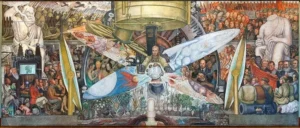
The Rivera mural at Rockefeller Center. Commissioned by the capitalist establishment, destroyed by the capitalist establishment the moment it included Lenin. The artist recreated it in Mexico where it still stands. The original is rubble. That was 1933 and we apparently learned nothing from it because here we are watching exhibits get quietly edited at the Smithsonian to fit a political narrative that will be irrelevant in a decade and dead in a generation.

Rivera Diego finished mural in Mexico City to show details and color

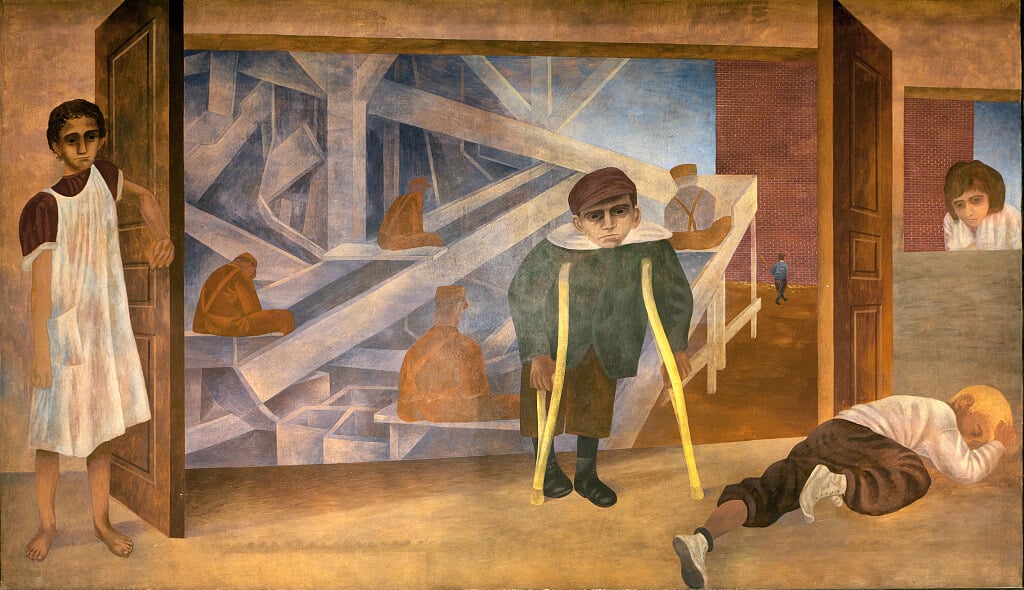
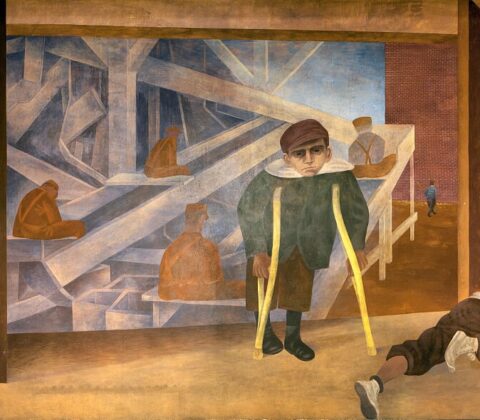
The WPA murals in federal buildings — painted by artists who lived the Depression, who rendered the New Deal in pigment on plaster as primary sources of a specific American moment — are being treated as inconvenient decoration. You cannot tear them off the walls. They are the walls. But the impulse to try tells you everything about what this administration understands about history. Which is nothing. Or worse — enough to know that an honest history is dangerous to a dishonest present.

Service pnp highsm 24800 24811v

The Wealth of the Nation Seymour Fogel

Service pnp highsm 24800 24817v

Here is the thing about salting the earth. Nothing grows. Not their seeds. Not yours. Not anyone’s.

And here is the thing about manufactured hate — because it is manufactured, most of it. People are not born hating their neighbors. Love comes naturally when you are loved. You kick back when you are kicked. The cattle prod of algorithmic rage, the deliberate cultivation of an enemy to look down at instead of a mirror to look into — that is not human nature expressing itself. That is human nature being weaponized by people who need you angry and need you certain and above all need you not paying attention to the road and how it was built.

We have a short history. Painfully, precariously short.

And we are letting it be rewritten to fit a narrative that is popular today and will be dust tomorrow.

What will we have left to learn from.

That is not a rhetorical question. It is the most practical question anyone can ask right now.

Seeds need ground. Ground needs memory. Memory needs honesty.

We are running out of all three.

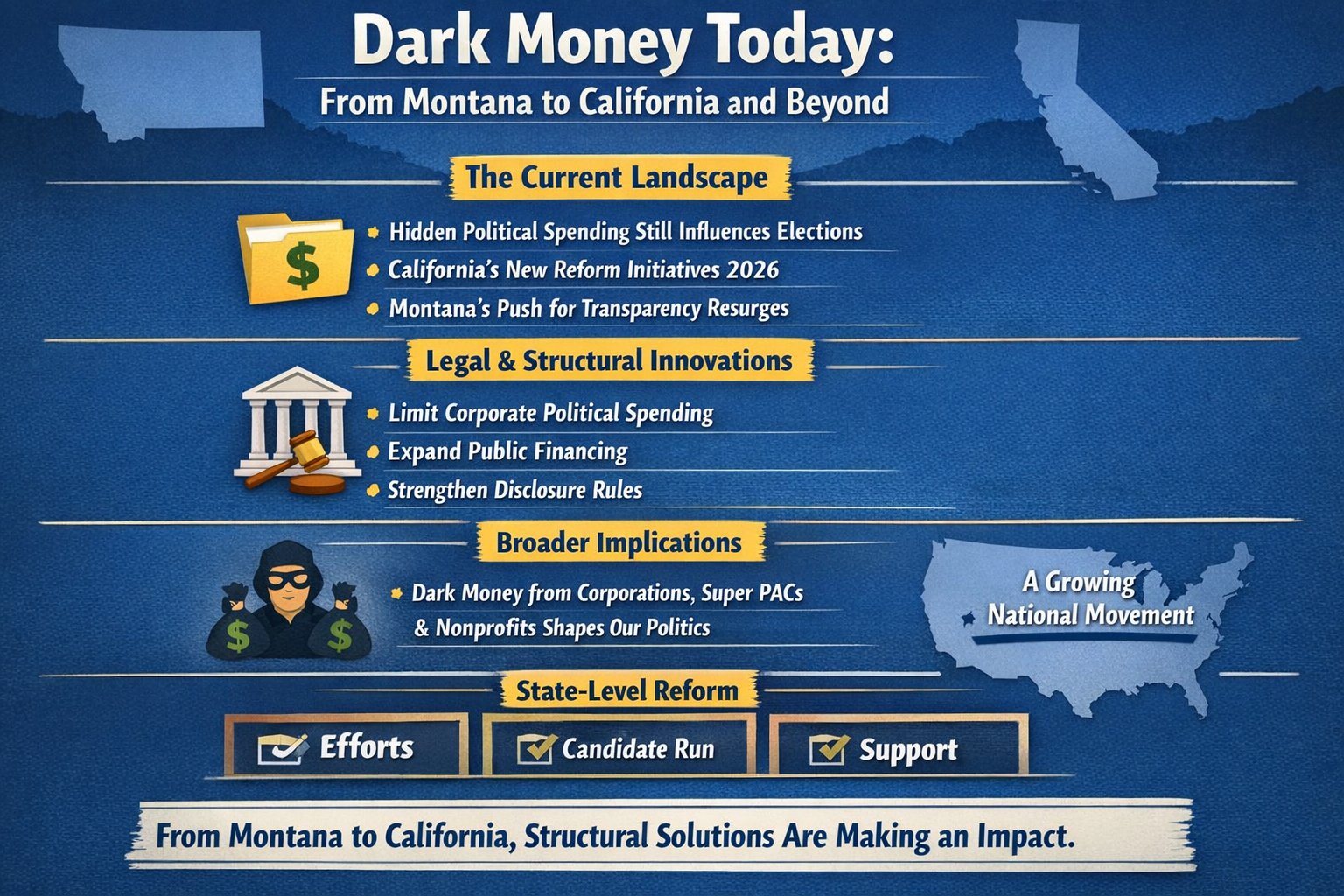
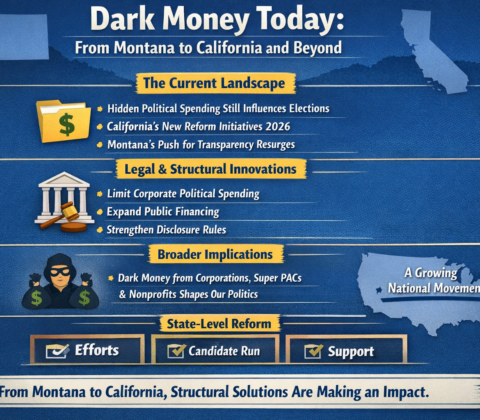
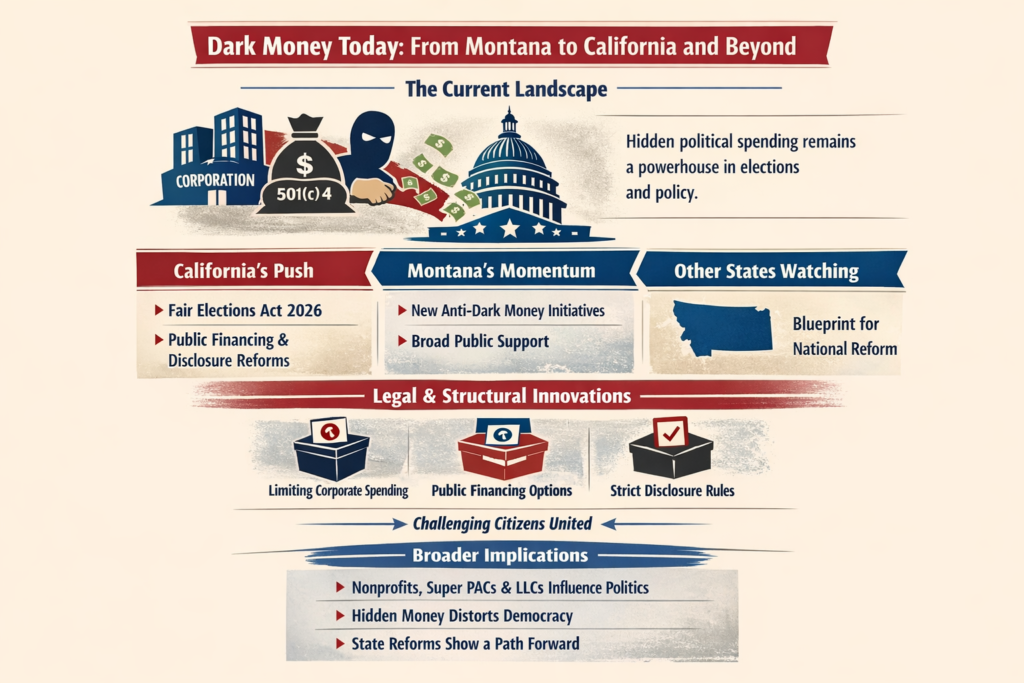
On May 14, 2026, Josh Green signed Senate Bill 2471 into law, now known as Act 011

On May 14, 2026, Josh Green signed Senate Bill 2471 into law, now known as Act 011 — a move that may become one of the most significant state-level challenges to “dark money” and corporate political influence since the Supreme Court’s 2010 Citizens United decision.

At its core, Act 011 is not just another campaign finance reform bill. It is something far more aggressive and structurally important. Instead of trying to regulate political spending directly — a path repeatedly blocked by courts after Citizens United — Hawaii chose a different route entirely: redefining the powers granted to corporations by the state itself.

The legal theory behind the law is deceptively simple:

Corporations are creations of the state. If the state creates them, the state can define what powers they do and do not possess.

Under Act 011, Hawaii essentially states that corporations and other “artificial persons” were never intended to possess the power to spend money influencing elections or ballot initiatives. The law removes that authority from entities organized under Hawaii law.

Supporters view the measure as a direct response to the explosion of outside political spending unleashed after Citizens United v. Federal Election Commission. Since that ruling, corporate spending and opaque “dark money” networks have flooded American politics with billions of dollars, much of it impossible for ordinary voters to trace. OpenSecrets estimated more than $4 billion in outside spending during the 2024 federal election cycle alone, including nearly $2 billion in undisclosed “dark money” activity.

That is where this story ties directly into any broader dark money series.

Act 011 represents a growing realization among both conservatives and liberals that modern elections are increasingly shaped not by citizens, but by large financial networks operating above public visibility. The issue is no longer simply campaign donations. It is systemic influence — influence routed through nonprofits, shell organizations, Super PACs, and corporate structures that often obscure who is actually funding political narratives. Hawaii’s law attempts to strike at the foundation itself rather than merely treating the symptoms.

Critics, including Hawaii’s own Attorney General, argue the law is likely unconstitutional and destined for immediate court challenges. Opponents say the law is essentially an indirect attempt to overturn Citizens United by denying corporations rights the Supreme Court has already recognized. Legal analysts expect First Amendment lawsuits almost immediately once the law takes effect on July 1, 2027.

But whether the law survives may be only part of the story.

The larger significance is symbolic and political.

For the first time in years, a state government openly challenged the assumption that unlimited corporate political spending is untouchable. Hawaii’s action signals that frustration with dark money is no longer confined to activist circles or campaign reform organizations. It is beginning to evolve into institutional resistance.

What makes this especially important for a dark money series is that Act 011 exposes a deeper question many Americans across the political spectrum are beginning to ask:

Who actually governs modern America — voters, or the financial systems surrounding them?

Because dark money is rarely ideological at its core. It moves fluidly through both parties, funds competing narratives simultaneously, and often benefits from division itself. The more polarized the public becomes, the easier it is for massive financial interests to operate behind the curtain while citizens fight one another in front of it.

Hawaii’s law may ultimately fail in court. It may be narrowed, delayed, or overturned entirely. But its existence alone marks an escalation in the national conversation. It suggests that some states are no longer satisfied with merely complaining about dark money — they are beginning to experiment with ways to structurally confront it.

And that may be the real story.Dark money (1)

Young Americans and the Future of Work 5/21/26

Young Americans have always believed the future would offer more opportunity than the past. That optimism has long been one of the country’s defining strengths. But new polling suggests that confidence is starting to crack and policymakers should pay attention.

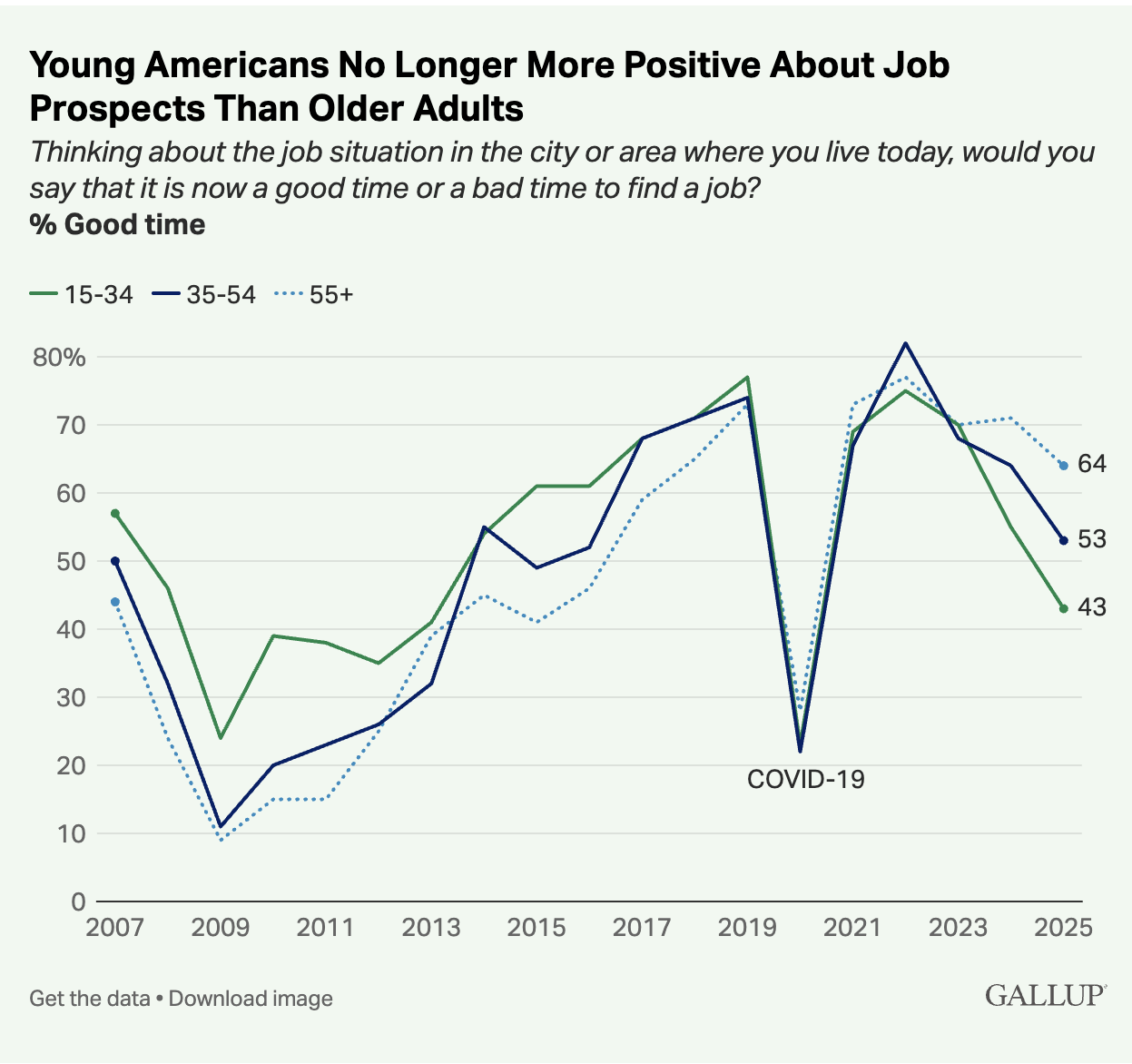
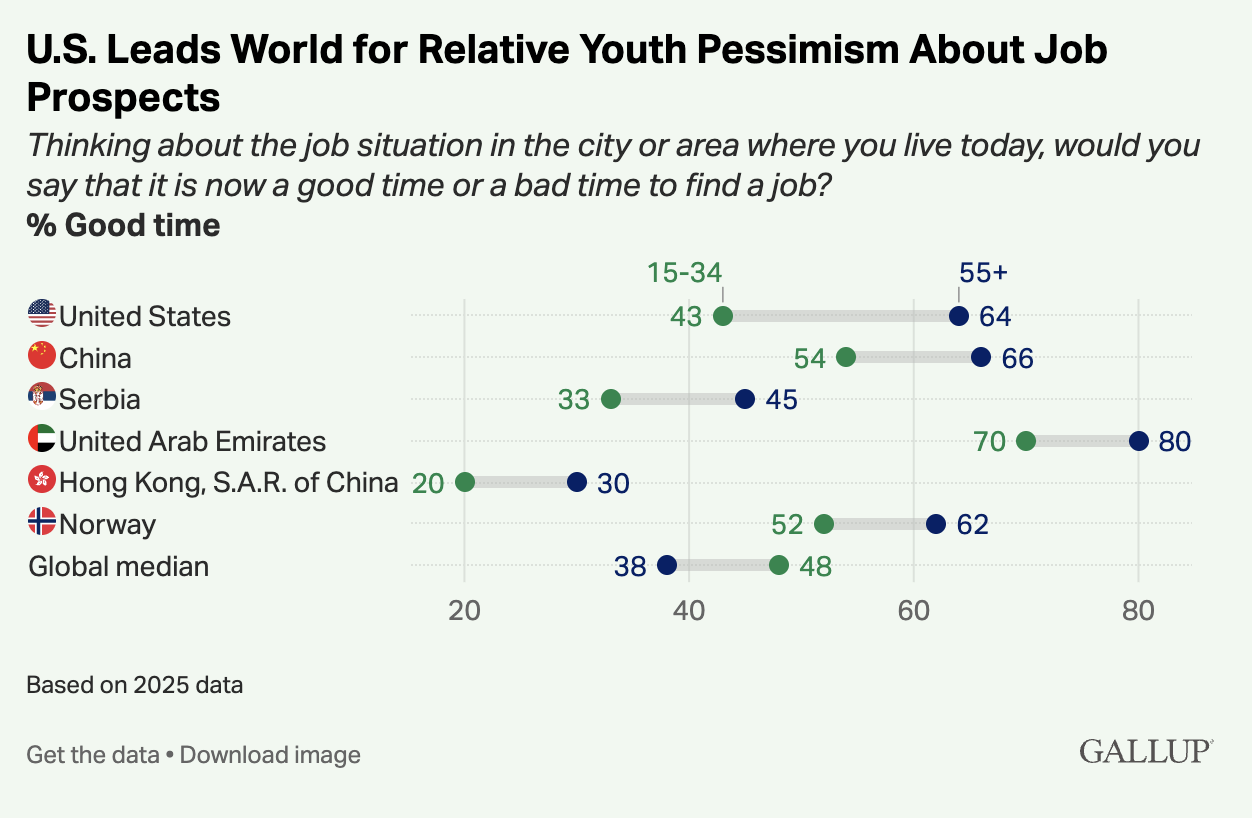
A recent Gallup survey found that just 43% of Americans ages 15 to 34 believe now is a good time to find a job where they live, a stunning reversal from historic trends.

It’s not surprising. They are entering adulthood during a period of economic whiplash: pandemic disruption, inflation, housing costs that feel permanently out of reach, rising student debt, and growing uncertainty around artificial intelligence and the future of white-collar work. Axios recently reported that unemployment among recent college graduates has climbed above the national average and underemployment remains high.

Many did what society told them to do: work hard, get educated, build skills, and prepare for the future. Now,  too many feel like they are walking into a system that no longer guarantees stability, affordability, or even a clear path forward. That frustration is real. But it is also a warning sign for a country that depends on innovation, entrepreneurship, and upward mobility to thrive.

The answer cannot simply be nostalgia for an older economy that is not coming back. AI is real. Automation is real. Global competition is real. The world is changing quickly, whether our political system is prepared for it or not.

That is where the Forward Party believes a different kind of politics matters.

Forward’s approach starts with a simple idea: government should focus less on ideological warfare and more on helping people successfully navigate a changing future. That means investing in workforce development, apprenticeships, modern career training, entrepreneurship, technical education, and AI literacy. It means preparing students not just for the jobs that existed 20 years ago, but for the industries and technologies that will define the next 20. It also means recognizing that dignity and purpose matter just as much as economic statistics.

The good news is that pessimism is not destiny.

The same generation expressing anxiety about the job market is also the most adaptive, technologically fluent, and entrepreneurial generation in modern history. Young Americans are already building businesses online, creating entirely new industries, using AI tools creatively, and reshaping what work looks like in real time. Even leaders in the AI sector argue this technological transformation can create enormous opportunity if the country embraces it thoughtfully and prepares people for it.

America has reinvented its economy before. We can do it again. But it will require leaders willing to stop treating every issue as a partisan fight and start treating it as a practical challenge to solve together.

Young Americans do not need empty promises. They need leaders willing to level with them about change, invest in their future, and build an economy where hard work still creates opportunity.

That is the kind of future Forward believes is still possible.

Please forward this to your friends, family, and coworkers. It helps us introduce them to Forward and to what we are building. Also consider inviting them to one of our upcoming events listed below. We’d love to meet them.

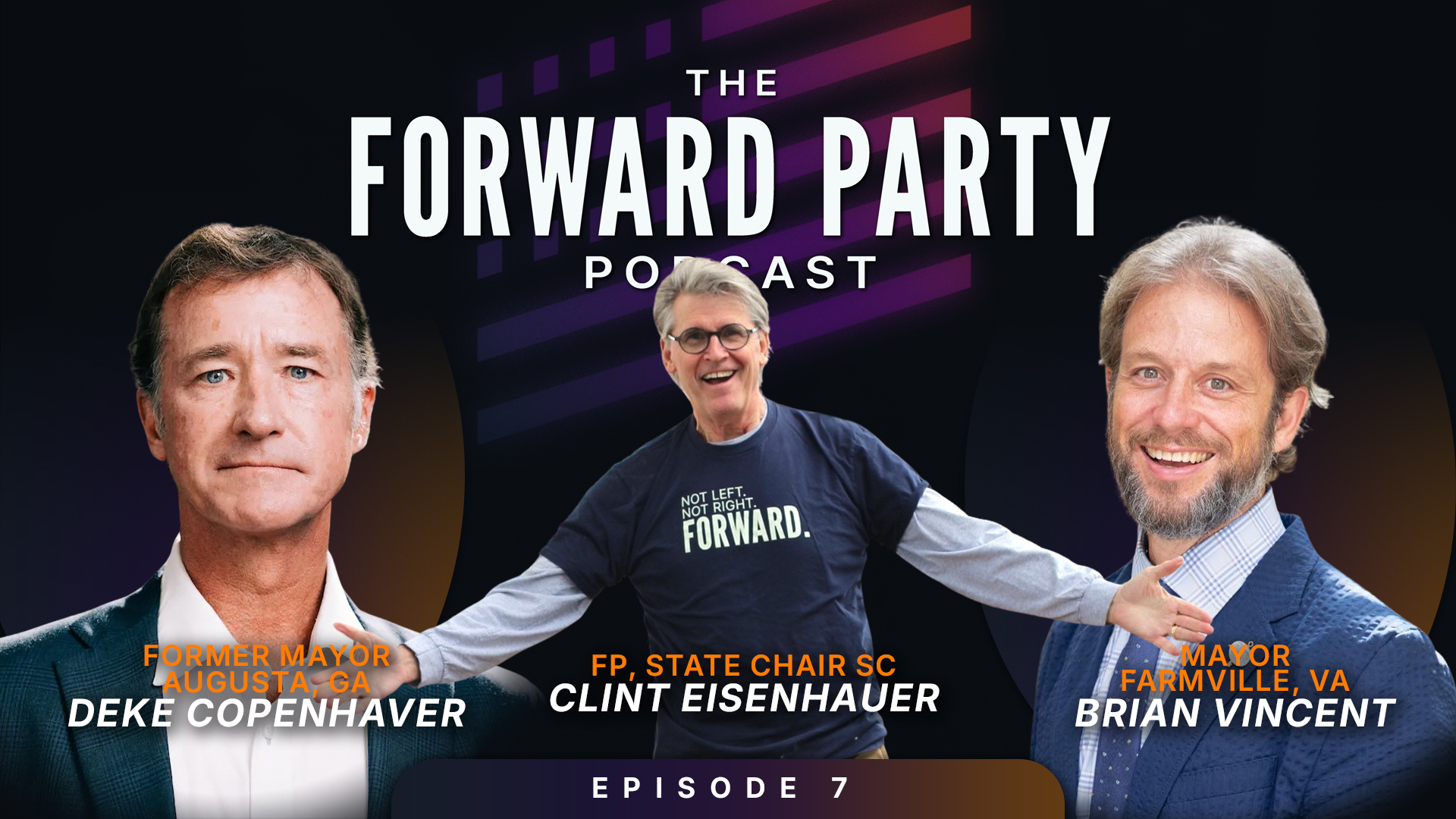
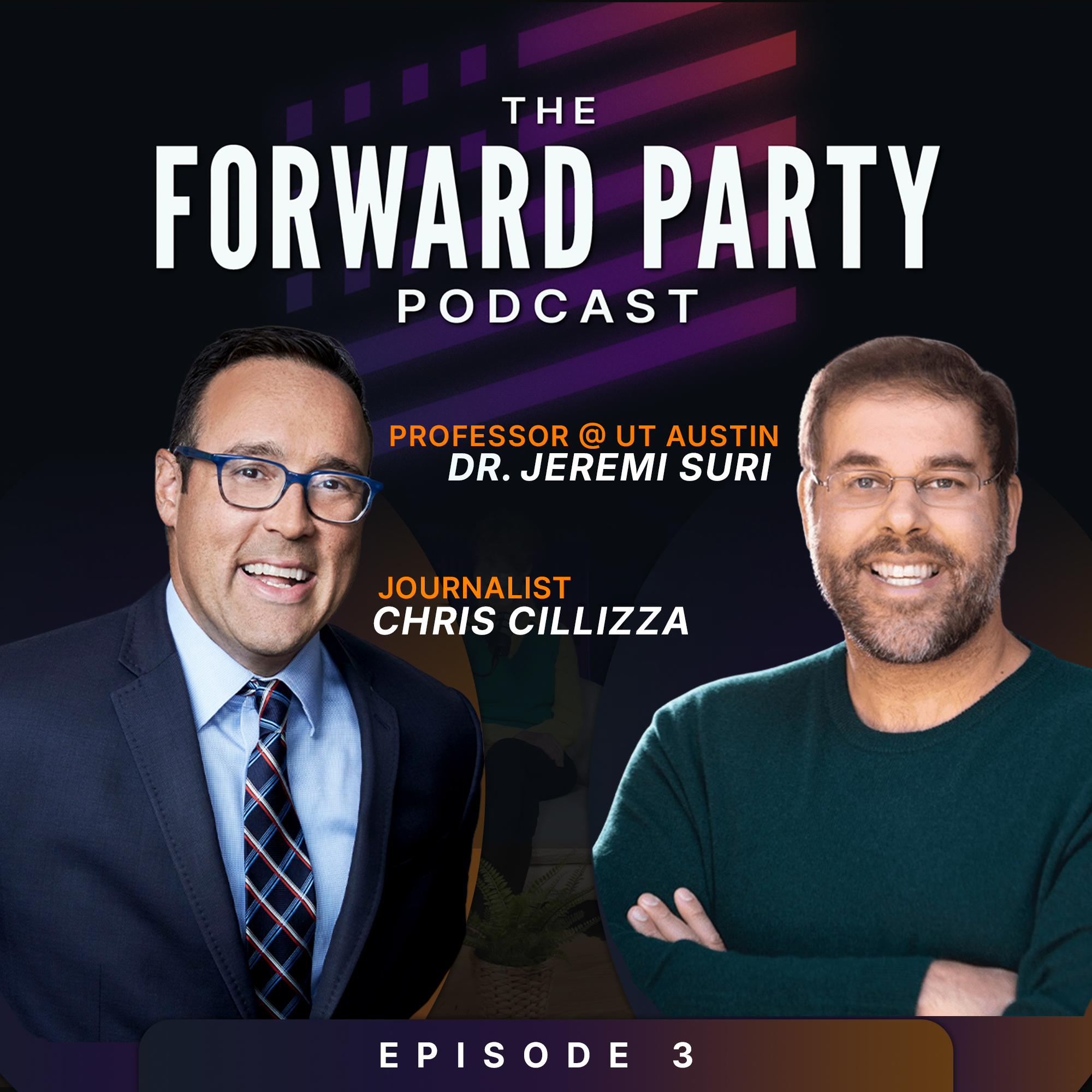
The Forward Party Podcast
The next episode of The Forward Party Podcast is live!

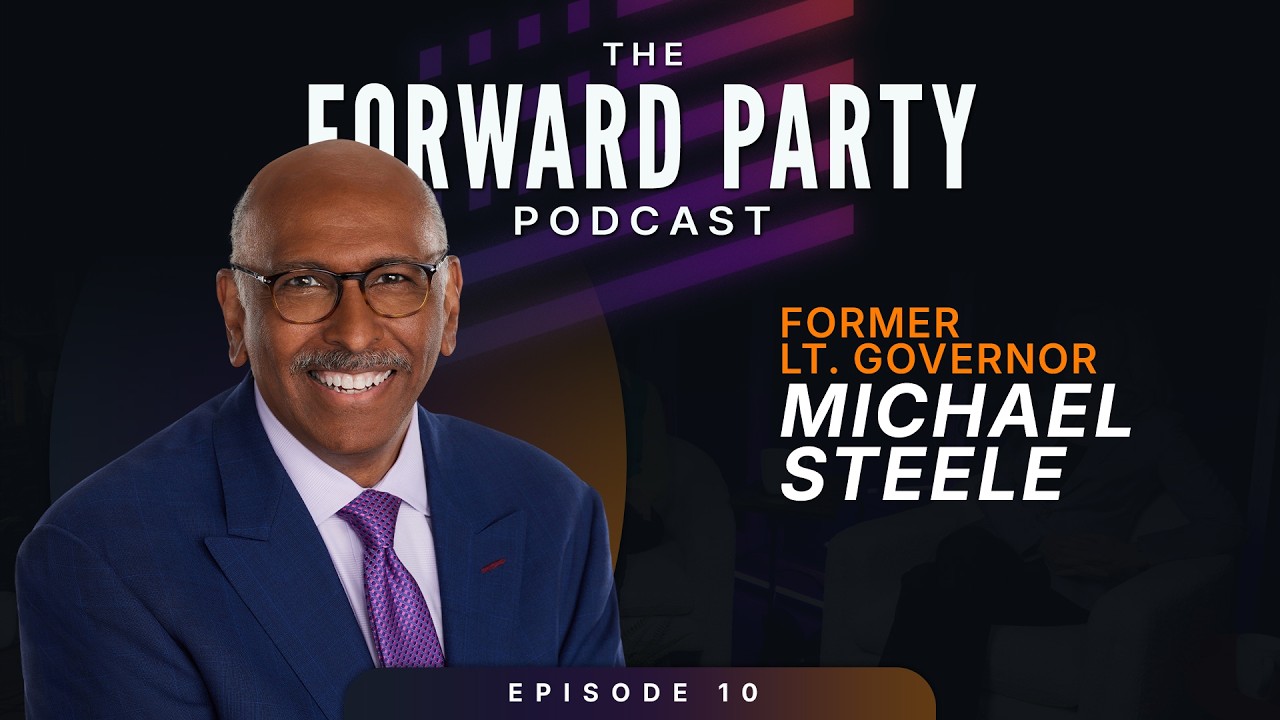
In Episode 10 of The Forward Party Podcast, the conversation turns toward one of the biggest questions in American politics right now: Can independent leaders actually reshape Congress from the inside? Hosts Lindsey Williams Drath, Governor Christine Todd Whitman, and Lieutenant Governor Kerry Healey sit down with former Republican National Committee Chairman Michael Steele for a candid discussion about party loyalty, election reform, voter frustration, and the growing demand for independent leadership across the country.

We hope you enjoy! Don’t forget to let us know what you think.

Click the image below to watch.TFPP E09 Thumbnail

ICYMI: The Forward Party Podcast – Behind the Scenes reel

Get Involved

NY Monthly Virtual Town Hall

Each month, NY Forwardists across the state meet on Google Meets to hear from a partner organization or potential endorsed candidate or to discuss a relevant topic. Open discussion follows. Email maverick@gmail.com to join!

Michigan Forward – May State Meeting

Come join us at our May state meeting for a quick discussion about what our plans for Michigan Forward are and what we can work on this summer.

Georgia Virtual May Meeting

We are excited to welcome Jerry Ramos, who is running for Sheriff in Hall County in the 2028 election. Jerry has a truly unique perspective shaped by his time in the Army, his work in security and law enforcement, and his experience raising 8 kids (!!). After seeing opportunities for improvement in the system, he decided to step up and run for office himself.


If you’re tired of waiting for the system to fix itself — this is your moment.
👥 Volunteer | 🗳️ Run for Office | 💸 Donate | 🌐 forwardparty.com

What we're reading
Contrary to what our detractors on social media say, YES, we read!

NYC shuts out half its voters. The Forward Party supports a new bill to change that

The polarization we see in our politics is not a mystery. It is the predictable output of a system designed to produce it. Nothing meaningful can change until we fix the structure that keeps producing these outcomes.

New Mexico Forward Party officially approved as minor party

New Mexico’s Forward Party was officially approved as a minor party that can field candidates in elections. The party on Monday released the names of five candidates who plan to run in the November general election.

Independent Rick Bennett qualifies for November election for governor

Independent gubernatorial candidate Rick Bennett submitted more than 5,000 signatures to the Maine Secretary of State’s Office Wednesday in his bid to appear on the November ballot alongside Republican and Democratic party nominees.

X / Twitter Bluesky Instagram LinkedIn Facebook YouTube

Copyright © 2026 Forward Party, all rights reserved.

Our mailing address is:
1701 Rhode Island Ave NW, Washington, DC 20036, United States

Paid for by Forward Party and not authorized by any candidate or candidate’s committee.
ForwardParty.com


The Fastest Gun Alive — A Case for the Second Amendment

Christmas morning. There I stand dressed in my finest — my Christmas cowboy outfit, six shooter hung low. Maybe a Hopalong Cassidy rig. Roy Rogers. Red Ryder. Doesn’t matter. There I am, the fastest gun alive. Darn tootin. Six years old and nobody faster.

YouTube player

Fast forward to 1964. Too many westerns under my belt and James Bond takes on Dr. No. I sit in a theater in St. Louis Missouri waiting for the bus to Fort Leonard Wood and advanced training. First chance at the PX I buy my first James Bond book. By Christmas I have read them all and can field strip a Walther PPK in my sleep.

A couple of years later I order my first pistol from the big hardware catalog at the local hardware store , a Bernardelli Model 60. Looks and feels just like James’s Walther. Just costs a whole lot less. I am officially hooked.

More years go by. More firearms. Smith and Wesson Model 19s, K38s, Browning Challengers, and finally Dirty Harry’s S&W Model 29 a 44 Magnum. I join the Corvallis Sheriff’s Department and can’t resist competitive shooting. Back in the seventies it was PPC and revolvers. I took home trophies, even a few first places for the 2½ inch revolver category.

The fastest gun alive.

50 years later, I still go to the range. Speed drills now with 10mm competition Tanfoglios and Nighthawks. Always felt you should stay a step ahead.

Which brings me to a film, The Fastest Gun Alive, an old western starring Glenn Ford. He plays George Kelby, a quiet storekeeper in a small town. He proves his skill to the townspeople by shooting two silver dollars tossed simultaneously into the air. Now they know who the storekeeper really is. More than a merchant. A man with six notches on his father’s gun.

But here is the thing about George Kelby. He is the fastest gun alive, and he has never once drawn against another man. The notches aren’t his. He has the skill, the nerve, the weapon. What he has never had to do is use it against another human being.

In six years in the Army and my time with the Sheriff’s Department I never once drew my weapon and pointed it at another person. Let alone fired it at one.

That is not a confession of weakness. That is the point.

The Second Amendment was never about Vinney the desperado riding into town looking for a fight. It was never about bravado or immunity or masks or the performance of toughness by people who have never actually been tested.

It was about George Kelby. The storekeeper. The neighbor. The man who can shoot two silver dollars out of the air and hopes he never has to prove it to anything other than a paper target.

I still go to the range.

I still stay a step ahead.

And I still hope, genuinely, completely hope, that the cap gun stays on the shelf where it belongs.

But I know what I’m doing if it doesn’t.

Vinney may not.

In today’s uncertain world, the Second Amendment to the United States Constitution affirms a simple principle: responsible, law-abiding citizens have the right to protect themselves and their families.

Christmas in Atascadero, probably 1951.

Christmas in Atascadero, probably 1951.

The Long View From 1964 – The Land Moved While You Slept

The Land Moved While You Slept

I didn’t leave the Republican Party.

I didn’t leave the Democratic Party either.

YouTube player

They left. Both of them. While I was paying attention to other things — raising a family, building a life, watching the news with a growing sense that something wasn’t adding up — the ground shifted underneath the labels and nobody announced it.

It’s like waking up and finding yourself a stranger in a strange land. Except you never went anywhere. The land moved. You just didn’t notice until you tried to take a step in the direction you always walked and found nothing there.

So I looked left. If I couldn’t call myself a Republican by the standards of what that word means today, maybe I was a Democrat. Except that didn’t fit either. The Democratic Party of the New Deal built the American middle class. It passed labor protections, created social infrastructure, and pointed at the people standing beside you and said — here is what you share, here is what you can build together. The Democratic Party of JFK spoke of sacrifice and responsibility and American strength without apology.

I don’t know what the Democratic Party of today is. And I don’t think it does either.

So I’m back to independent. Which has the numbers — somewhere between 40 and 45 percent of the American electorate by most honest measures — but not the official label, not the infrastructure, not the primary, not the power.

It’s like being a marionette with two sets of strings pulled from opposite sides of the stage. And if you cut the strings you have free movement but nowhere to go.

Here is what I think happened.

The wealthy have always used the rest of us. That’s not a new observation and it’s not a simple condemnation. The Carnegies and the Vanderbilts exploited labor — no unions, poor wages, dangerous conditions. We had to fight for every right we eventually won. But here is the difference that doesn’t get said clearly enough — they were building something. Railroads. Steel. Infrastructure. A physical nation that everyone eventually lived inside. We got something for our sacrifice, even if we had to bleed for it.

What does the new generation of concentrated wealth build? Platforms. Delivery systems. Social media that monetizes your attention and sells it back to you as connection. Electric cars for people who can afford them. The byproduct this time isn’t a nation. It’s a customer base.

We got something for our sacrifice. Now we want something for our tolerance. And nothing is being offered.

But here is the part that keeps me up at night. Most people didn’t notice. They bought stock. They got a 401k. They watched the Dow. The system handed them a small thread connecting their personal security to its performance and somewhere along the way they stopped identifying with the people beside them and started identifying with the people above them.

It was the most elegant capture imaginable. You don’t silence dissent by force. You give people a small piece of the thing they might otherwise resent and watch them defend it like it’s their own.

I have a brother. Smarter than me by any standard measure. He can’t see it. He watches his portfolio.

He’s not foolish. He’s captured. There’s a difference. And the system that captured him is the same system that pulled the strings on both parties until neither one represents the people who are actually holding them up.

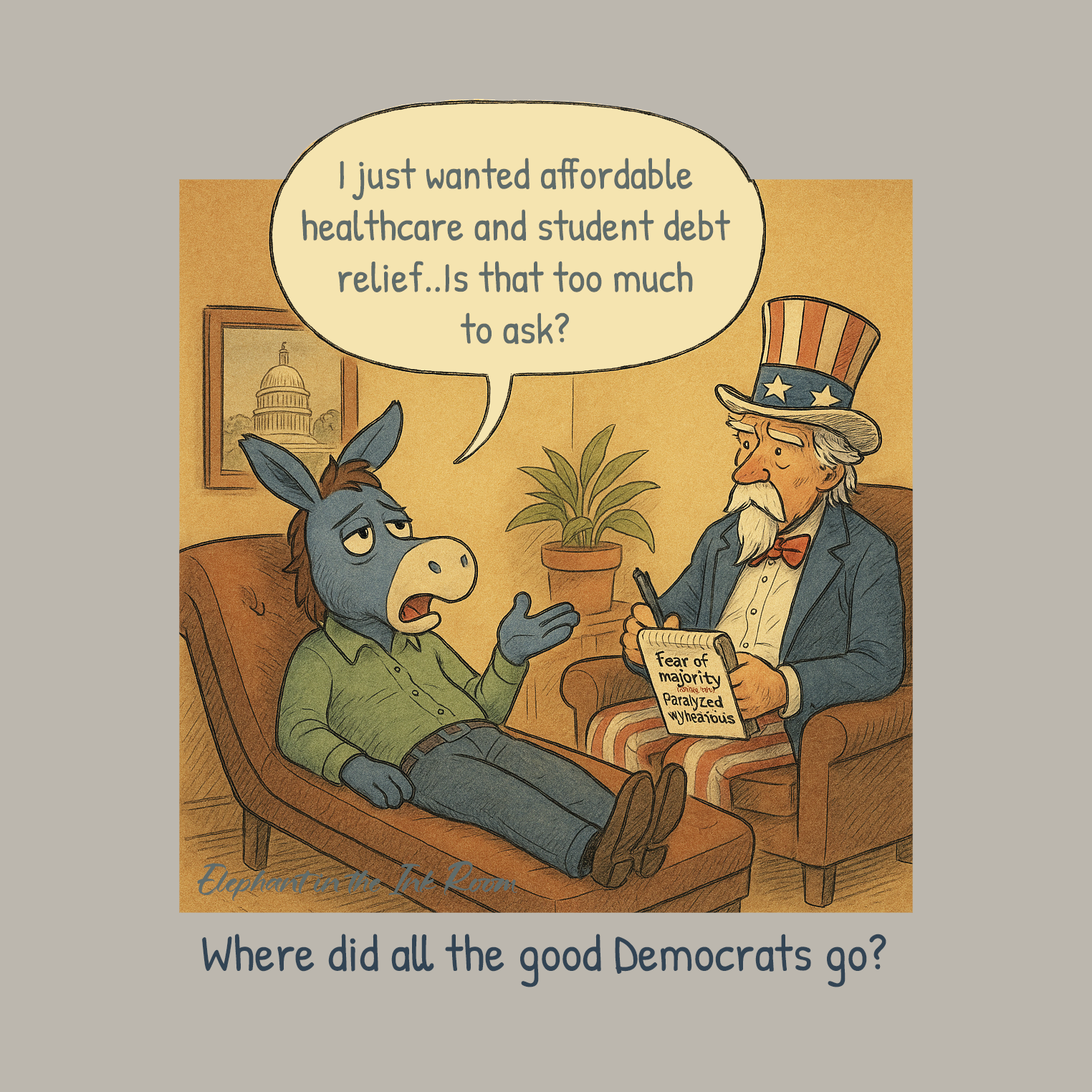
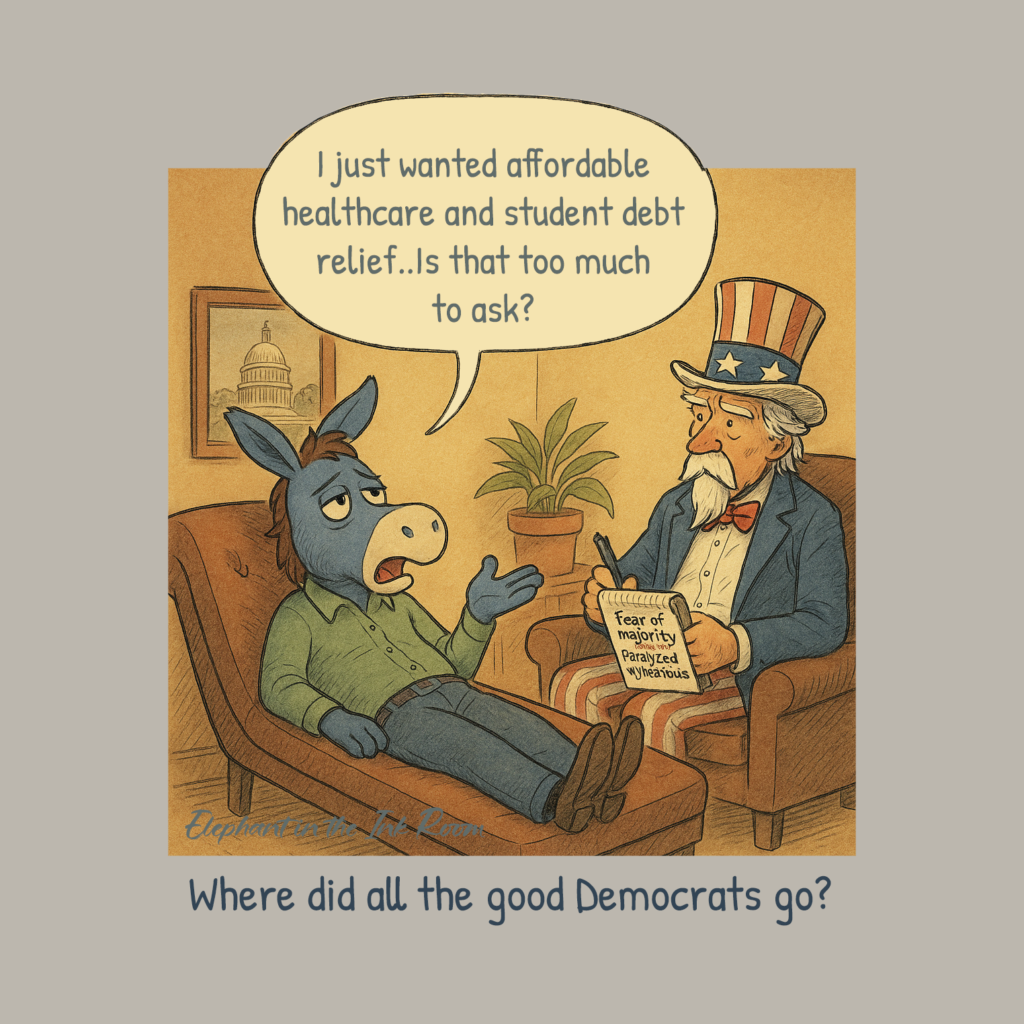
The donkey and the elephant. I’m not sure either animal still exists in any form I recognize.

What replaced them nobody has named yet.

That’s what we’re here to figure out.

Democratsgone

1776 — The Number That Tells You Everything

( I Don’t Trust Blanche )

Let’s start with the number.

YouTube player

Not the policy. Not the legal arguments. Not the court battles that were always going to happen and were always going to produce the same result.

The number.

$1.776 billion.

In a country where political messaging is tested and retested before it reaches the public, nothing that specific is accidental. The amount could have been $2 billion. It could have been $1.5 billion. It could have been any number that accomplished the stated policy goal.

It wasn’t. It was $1.776 billion.

To most Americans 1776 means one thing. The founding. The declaration. The birth of the republic.

To a specific and carefully cultivated audience it means something additional. It means the patriots. It means the people who showed up on January 6th because they believed the republic was being stolen from them. It means the people who have been told repeatedly that their country is being taken away and that only one man is fighting to give it back.

The number was a message. Delivered in plain sight.

Now ask the question that Captain Renault never quite got around to asking before he rounded up the usual suspects.

Why propose something you know will be rejected?

Because the rejection is the point.

Here is how the playbook reads when you step back far enough to see the whole page.

Propose something dramatic and specifically coded for your base. Watch it get challenged in court. Watch it get rejected by the institutions designed to reject exactly this kind of unconstitutional overreach. Then turn to your base and say — you see? They stole it. Not just the election. Not just the country. Now they stole the $1.776 billion I was trying to give you. The money with your founding fathers’ number on it. The money that was yours.

Who stole it?

The rest of us. Of course.

This is not a new play. It is the same play run repeatedly with different props. The stolen election narrative wasn’t born on January 6th. It was constructed methodically for months before that day so that when the result arrived the audience was already primed to reject it. The architecture of grievance is always built before the grievance is needed.

What concerns me — and I want to be precise here because this is pattern recognition not accusation — is that the structural fingerprints look familiar.

Unless something dramatically changes the electoral landscape the midterms should produce significant Democratic gains. The math of an unpopular administration historically produces that result. Fair elections should deliver it.

But we have already established in this country that fair elections and accepted elections are not always the same thing.

I have a sinking feeling we will find ourselves watching Second String Donny screaming foul again. Not just about the midterms. About the $1.776 billion that was stolen from his patriots along with everything else.

Is this proof of intent? No.

Is this a history of behavior that gives us every reason to watch carefully and prepare honestly?

Oh hell yes.

The number told us. Right there in plain sight.

1776

Round up the usual suspects.

The Long View From 1964 – The Checkbox Problem

The Checkbox Problem

YouTube player

I am not a Democrat.

I am not a Republican.

I am not whatever “Independent” means on a form that was designed to make that choice feel like surrender.

I grew up with a Republican Party that meant something specific, a set of principles, a temperament, a way of approaching governance that I could argue with or agree with but at least recognize. That party is gone. What carries the label today bears no resemblance to what the label used to mean. Calling yourself a Republican in 2026 means something that would have been unrecognizable,  and I think deeply alarming,  to most of the people who built that party.

So I am not that either.

What I am is a moderate. A person who believes in making decisions carefully, in recognizing complexity, in not burning the house down because you’re angry at the neighbors. A person who wants others to make their own informed choices rather than be handed a script.

There is no checkbox for that.

There is no party infrastructure, no primary, no institutional home for the person who looks at both options and says,  honestly, clearly, without drama, neither of these fits.

The labels don’t fit anymore. And the system was not built for the moment when the labels stop fitting.

I am 79 years old. I have been voting since 1968. And this is the first time I have felt genuinely politically homeless.

But here is the thing about being lost, recognizing it is not the end. It is actually the beginning. Before you can define where you are going, you have to be honest about where you are. That is what this is. The first step in figuring out what a political identity looks like when the old labels have stopped telling the truth.

This is the beginning of that conversation. Not answers. Just honest questions from someone who has been paying attention for a long time and is tired of being handed choices that don’t fit.

More to follow.

Republicansgone

MEDIA ADVISORY: Oregon Secretary of State Tobias Read and Oregon Attorney General Dan Rayfield to Hold Election Protection Press Conference 05/18/26

May 19 Primary is the first major Oregon election since the string of unprecedented attacks on elections from the Trump administration began
MEDIA ADVISORY
Date: May 18, 2026
Oregon Secretary of State Contact: Connor Radnovich | connor.radnovich@sos.oregon.gov

Oregon Department of Justice Contact: Jenny Hansson | jenny.hansson@doj.oregon.gov

Oregon Secretary of State Tobias Read and Oregon Attorney General Dan Rayfield to Hold Election Protection Press Conference

May 19 Primary is the first major Oregon election since the string of unprecedented attacks on elections from the Trump administration began

SALEM, OR — Tomorrow, Oregon Secretary of State Tobias Read and Oregon Attorney General Dan Rayfield will hold a press conference to brief Oregon voters on the steps being taken to keep Oregon elections secure, fair, and accurate.

Secretary Read will detail the physical security measures and processes in place to ensure every legal ballot is counted and protect elections infrastructure. Attorney General Rayfield will provide an overview of the state’s election-related legal battles and response plan should the federal government continue to escalate its attempts to interfere with Oregonians’ right to vote.

EVENT INFORMATION

WHO: Oregon Secretary of State Tobias Read, Oregon Attorney General Dan Rayfield

WHAT: Election Protection Press Conference

WHERE: Oregon State Capitol Building Press Conference Room, 900 Court St NE, Salem | Livestream link available via RSVP

WHEN: Tuesday, May 19, 2026, at 12:30 PM

RSVP: To reserve your spot in the press conference room or receive a link to the livestream, email connor.radnovich@sos.oregon.gov.

###

 Having trouble viewing this email? View it as a Web page.
  |  Help

The 20th century begins on a midnight ride by Steve Schmidt

My series looks at the world through the eyes of one young, and naive man who was first eligible to vote in 1964. The Long View From 1964.

Steve Steve Schmidt takes us on journey of American Politics from day one, an excellent piece that could replace volumes of rhetoric in classroom texts. I am bringing you into his series with segment seven, but links to the previous 6 segments are prominent in the beginning. This isn’t a dry reading of the facts, but engaging and well worth the read if you interested in more than just outrage at our current predicament. You can’t fix it, if you done’ understand the mechanics.. I encourage you to engage. I believe it is worth it.

The 20th century begins on a midnight ride by Steve Schmidt

PLUS: Watch “Bad Faith” as counter-programming to Trump’s “National Jubilee of Prayer” from 4 – 6 pm ET TODAY

Read on Substack

The Primary Election is Only 4 Days Away! 5/15/26

Date: May 15, 2026

Follow for elections updates: Facebook, Instagram, X, Bluesky, and Youtube


Oregonians,

The big Primary Election is right around the corner: Tuesday, May 19.

Make sure to fill out your ballot, sign it, and return it, if you have not already.

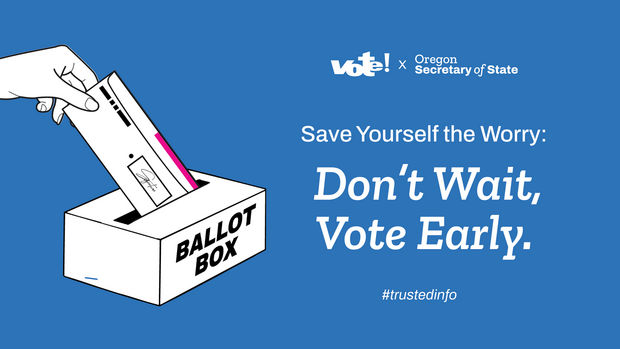
With the election just four days away, your best option is to return your ballot to an official ballot drop box – there are 321 official drop boxes across the state.

All ballots returned to these boxes are collected directly by your county’s elections officials. No mailing delays. No worrying about your vote not getting counted. Just make sure to drop it in a box by 8 p.m. on Election Day.

I dropped mine off this week, and it was great to see some fellow voters there with me!

With recent service changes at USPS, mailing your ballot this close to Election Day is not recommended. Ballots now have to go all the way to Portland before they are postmarked; so, if you live more than 50 miles away from Portland, your ballot may not be postmarked or delivered on time.

So please, use an official ballot drop box! You can find the closest one to you by going to oregonvotes.gov/dropbox.

If you’re an eligible voter and have not received your ballot, call your county elections office as soon as possible. It’s not too late.

Now, I want to leave you all with one very important message:

No one, and I mean no one, can intimidate, pressure, or interfere with your right to vote.

In Oregon, the law protects you from harassment, threats, misleading statements, and any attempt to block or obstruct your vote, at every step of the process. You can learn more about your rights as an Oregon voter on our website or in the video linked down below.

Sincerely,

Tobias Read
Oregon Secretary of State

Make sure your ballot is returned on time.

Use an official ballot drop box near you!

Do you know your rights as an Oregon voter?

Learn what intimidation can look like and what you can do if you believe your rights have been violated in this video.

Calling all Oregon photographers!

Your photo could be selected to be on the front or back cover of the next Oregon Blue Book, the state’s official almanac and factbook!

To learn more about the Oregon Blue Book, read the contest guidelines, and submit your images, click the button below! Entries welcome until Sunday, October 31 at 11:59 p.m.

Click Here to Learn More
 Having trouble viewing this email? View it as a Web page.
  |  Help

Second String Donny – Video

YouTube player

Competent people require a competent environment. They need their judgment respected, their expertise valued, their honest assessments welcomed rather than punished. The moment a genuinely capable person walks into a room and realizes the man at the top is threatened by competence rather than energized by it — they leave. Or they get fired for exactly that reason.

Which brings us to a new name. Not a nickname born of malice. A descriptor earned by résumé.

Second String Donny.

‘Second String Donny’ Feel free to use it. Johnny Appleseed didn’t trademark the seeds.

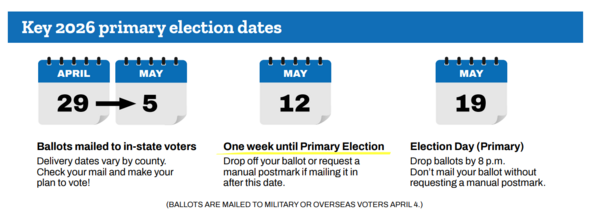
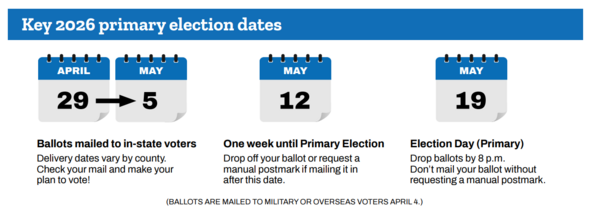
It’s time to mail back your ballot! The May 19th election is 1 week away. 6/12/26

Oregon Secretary of State color logo

Date: May 12, 2026

Follow for elections updates: Facebook, Instagram, X, Bluesky, and Youtube 

Three ways to return your ballot: drop it off, mail it, return it to your county elections office

Oregonians,

The May 19th election is one week away!

If you are planning to return your ballot by mail, make sure to put it in the mail today. 

Due to service changes at the United States Postal Service (USPS), it will likely take more time for your ballot to be postmarked and received by your county elections office — most ballots have to go all the way to Portland before they are postmarked and delivered back to your local elections official.

For your vote to be counted, your ballot must be postmarked by Election Day and received by your county elections office within seven days of the Election.

So please, don’t wait until the last minute: Mail your ballot today! 

If you can’t mail your ballot today, don’t worry. You have options:

Your best option to return your ballot to any official county ballot drop box before 8:00 p.m. on May 19th. Ballots returned to these boxes are collected directly by county elections officials, so there’s no need to worry about the mail.

If you still want to use the mail, go to the post office nearest you, walk up to the counter, and ask for a manual postmark — free of charge.

You can also take your ballot directly to your county elections office and return it in a drop box there. Every county elections office has a drop box on site, so you can feel confident your ballot will be received on time.

Remember: your voice matters, and voting early makes sure it’s heard.

Sincerely,

Tobias Read signatureTobias Read
Oregon Secretary of State

GovDelivery logo

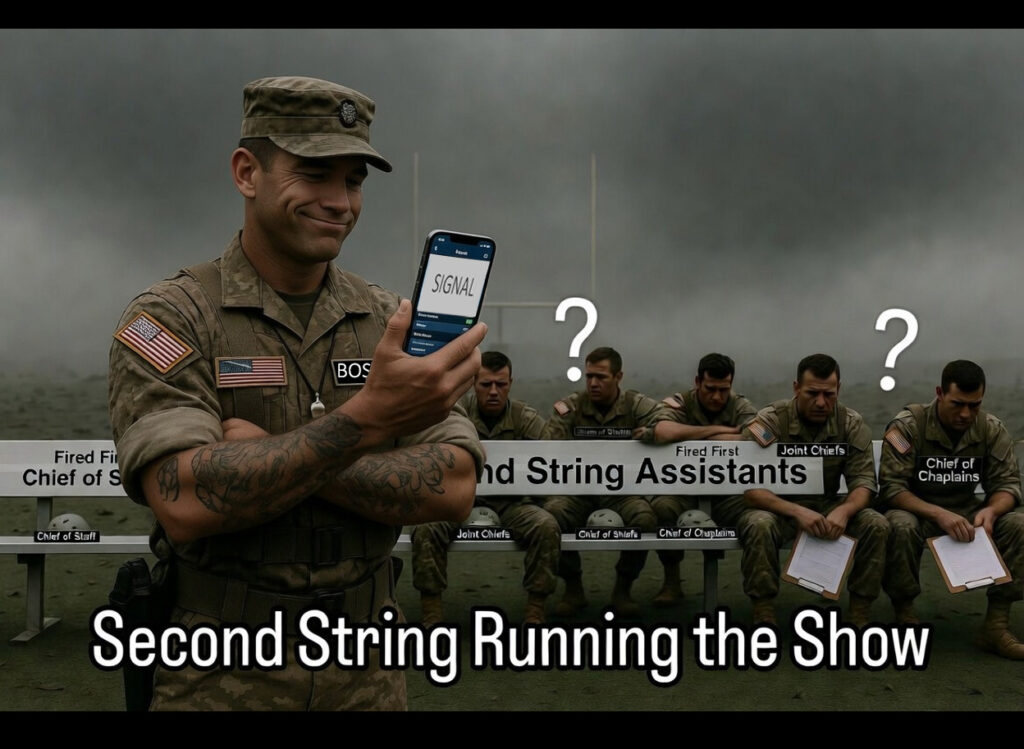
Second String Donny

Here is the simplest explanation for everything you have been watching.

The first string doesn’t work for second string management. Never has. Never will.

Competent people require a competent environment. They need their judgment respected, their expertise valued, their honest assessments welcomed rather than punished. The moment a genuinely capable person walks into a room and realizes the man at the top is threatened by competence rather than energized by it — they leave. Or they get fired for exactly that reason.

So you get what you get.

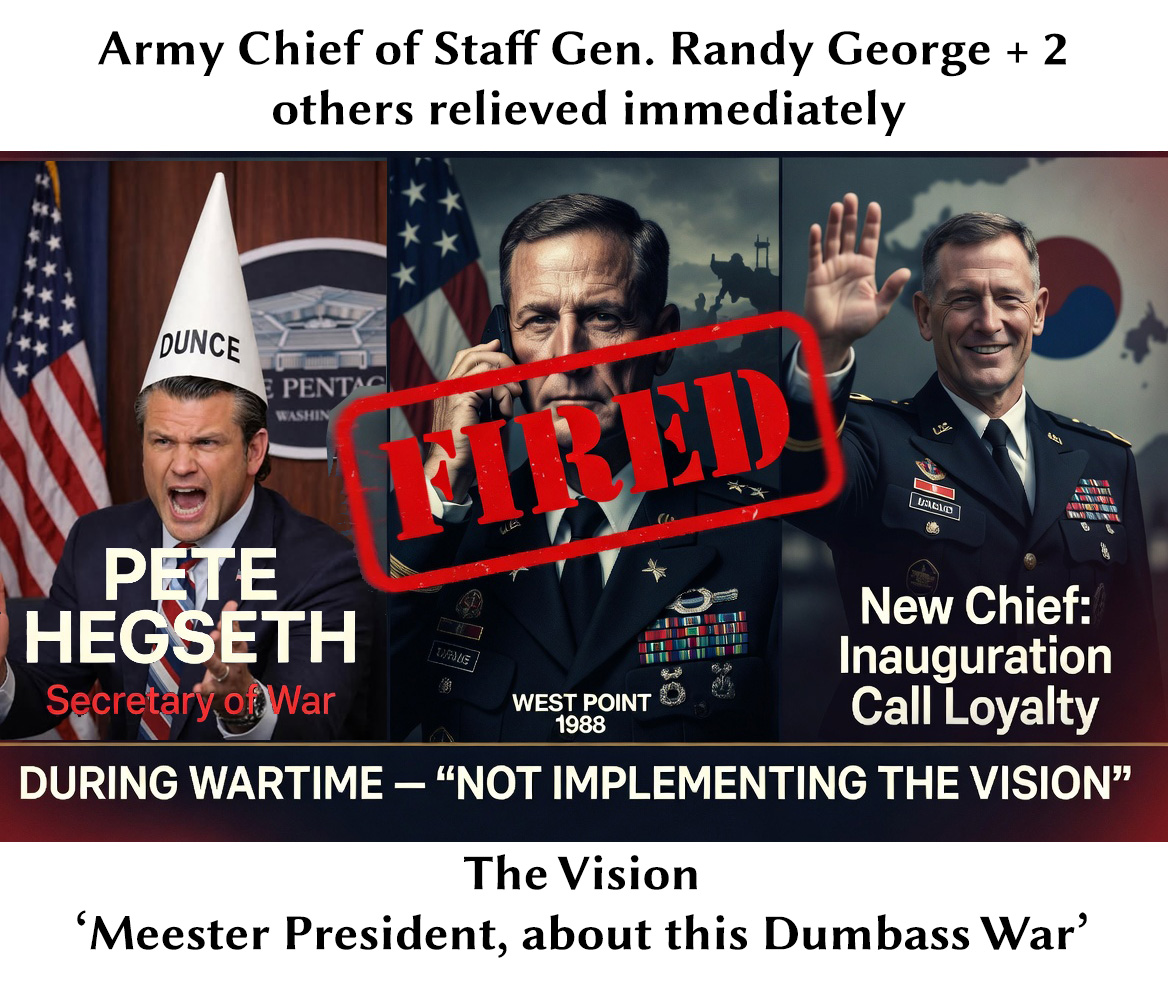
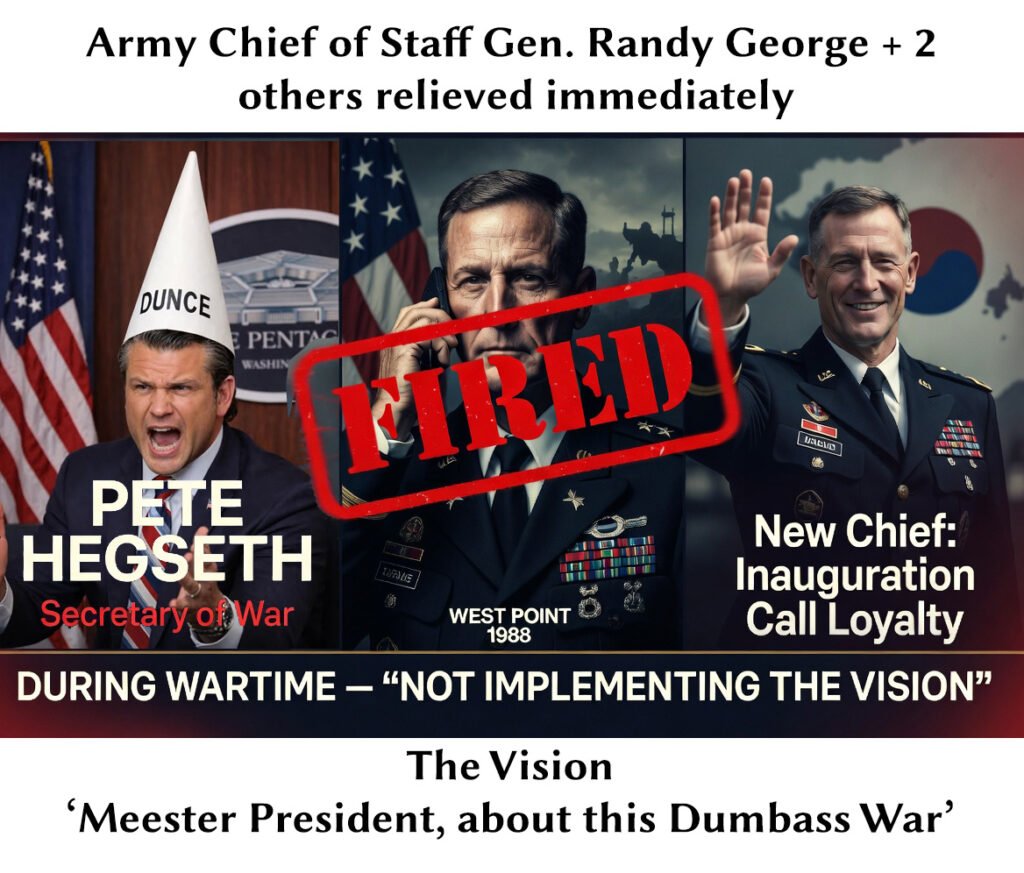
Hegseth plagiarizing Tarantino movies for spiritual guidance. Loyalists whose primary qualification is willingness to pour the coffee and butter the bagel without asking uncomfortable questions. ICE with presidential immunity instead of military professionals with a conscience and a code. A chain of command built entirely on loyalty to one man rather than to the Constitution those officers swore to defend.

The entire administration is a mirror of the man at the top.

Which brings us to a new name. Not a nickname born of malice. A descriptor earned by résumé.

Second String Donny.

The man who fired the first string because the first string made him look exactly like what he is.

There is only one problem with that explanation.

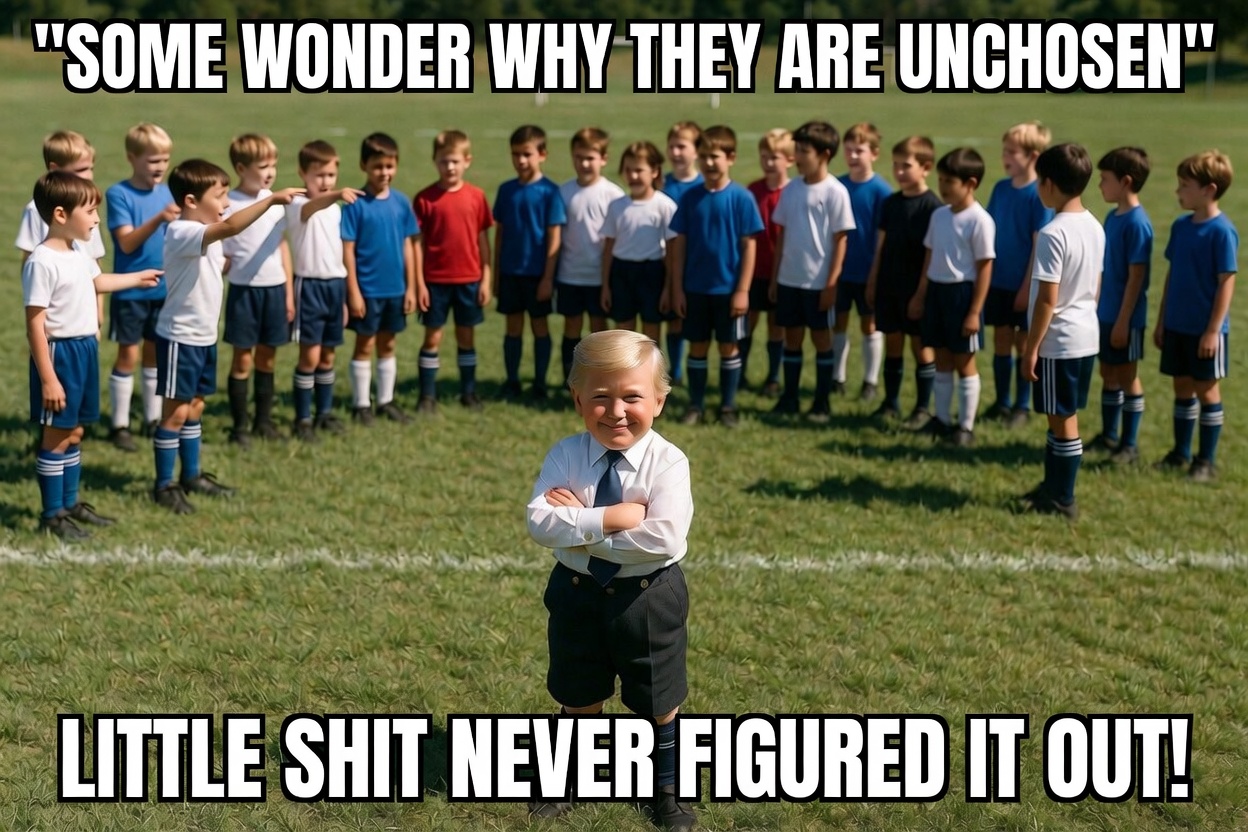
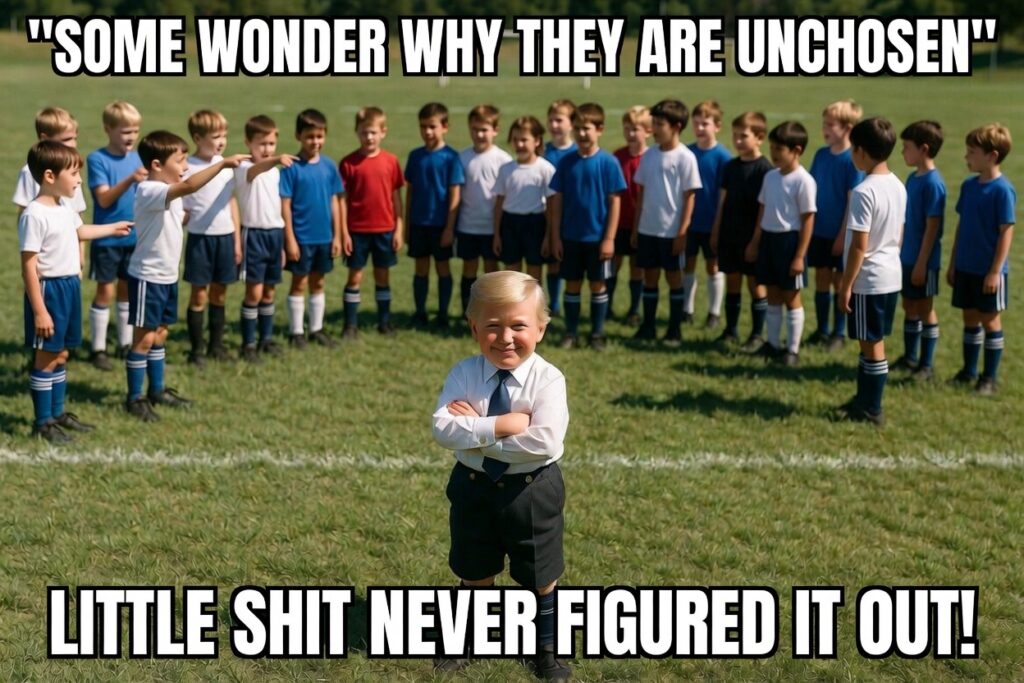
To be second string you have to have been picked for a team at some point.

I am not sure that ever happened.

The obvious question is,

If he’s second string, how did he get elected twice?

Because there is one thing Second String Donny is genuinely first string at. The con. Identifying what frightened and ignored people want to hear and saying it without hesitation or conscience. That’s not leadership. That’s salesmanship.

P.T. Barnum was first string at the circus too.

You still wouldn’t hand him the Pentagon.

‘Second String Donny’ Feel free to use it. Johnny Appleseed didn’t trademark the seeds.

Image (23)

The Long View From 1964 – Maybe Just Listen

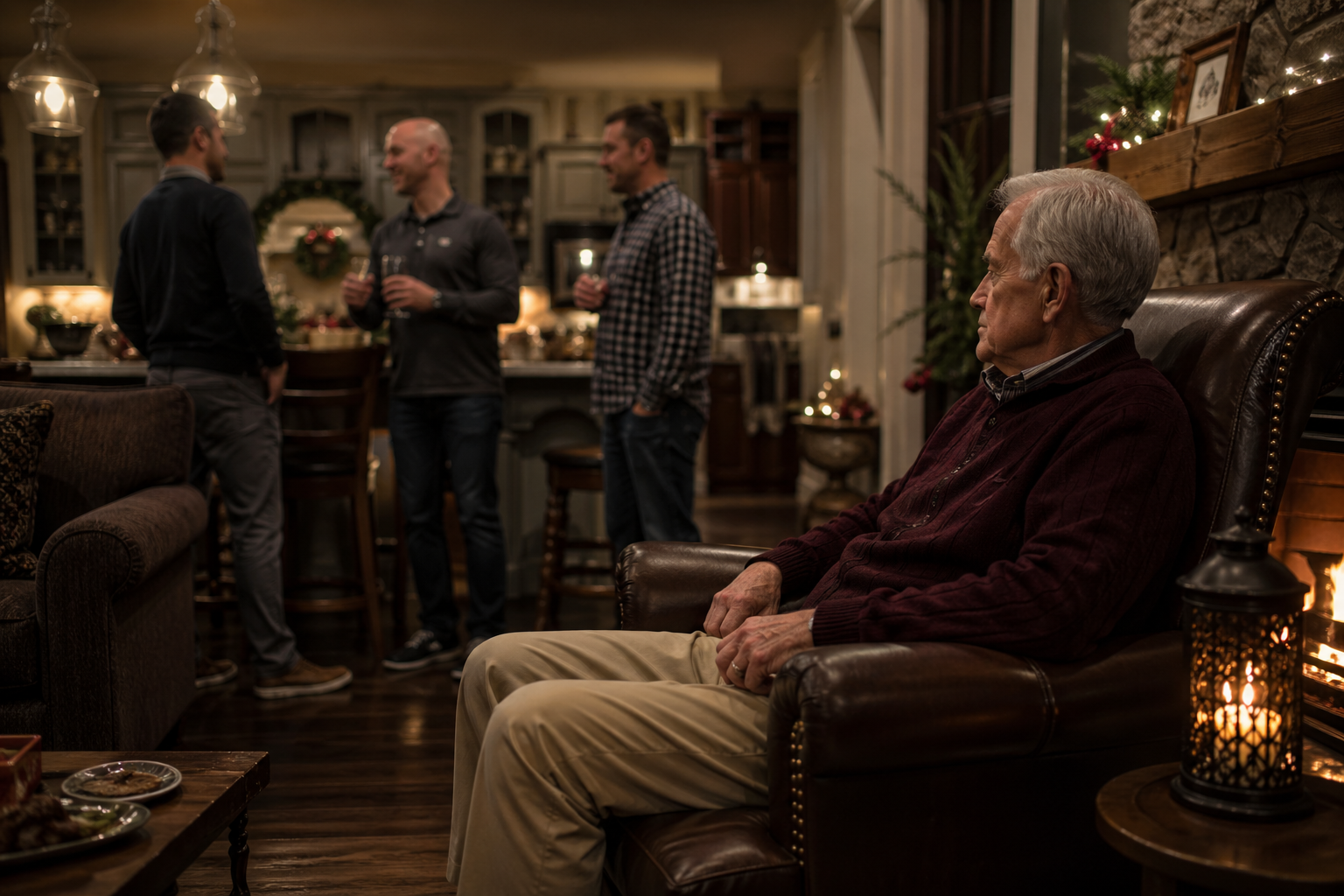
So often we sit there and tune him out.

YouTube player

Not another war story. I have heard it before. I know, I know. Dad, Reagan isn’t President anymore and I don’t know who he is anyway except some cowboy on TV.

Everything is moving so fast today. We have AI. We have instant everything. And somewhere in that acceleration we forgot that Dad — and Mom, I’m just shortening the typing process — are the ones who actually built the infrastructure we are all living inside.

Our children forget that Dads started Intel. Built Tektronix. Worked at Texas Instruments. That the company that became Texas Instruments was created by GSI — Geophysical Services Incorporated — because analog computing wasn’t getting the job done. That Dads spent years in Southern California discovering the oil that Standard Oil and Chevron pumped out of the LA Basin and the Santa Barbara Channel. That these things did not build themselves.

The grandchildren watch Saving Private Ryan. But they forget that Great Grandpa was the one bleeding in Europe and the Philippines. They just see old people without opinions worth hearing.

Maybe we rant because nobody will listen.

But here is what I think the real problem is. They can’t see what politics is anymore. All they see is TikTok. All they see is YouTube. All they see is one outlet calling another outlet fake news while being called fake news in return. And then they watch it all falling down and they can’t even find the question to ask, let alone the answer.

Maybe if Grandpa and Dad had stopped ranting and started explaining. And maybe if Johnny and Jane had stopped scrolling and started listening. Maybe some of this could have been avoided.

Maybe. Just maybe.

I don’t have all the answers. I want to be clear about that. This entire series has been questions more than answers and that is entirely intentional. But there is one truth I know from experience — and I have the scars on my shoulder and chest to prove it is experience and not theory.

When you pull a boiling coffee pot off the stove and it comes down on you, you get burned. You don’t do it a second time. You learned something real in a way that no amount of telling could have taught you.

So yes. You have to make mistakes to learn. You have to touch something hot to understand burns. You have to get things wrong before you understand what right costs.

But the secret — the thing the scars actually teach you if you pay attention — is to get a small burn and learn your lesson. Not go down in the flames.

And right now it looks very much like we are headed for the flames.

Grandpa is not ranting.

Grandpa is pointing at the stove.

ChatGPT Image Apr 26, 2026, 01 59 02 PM

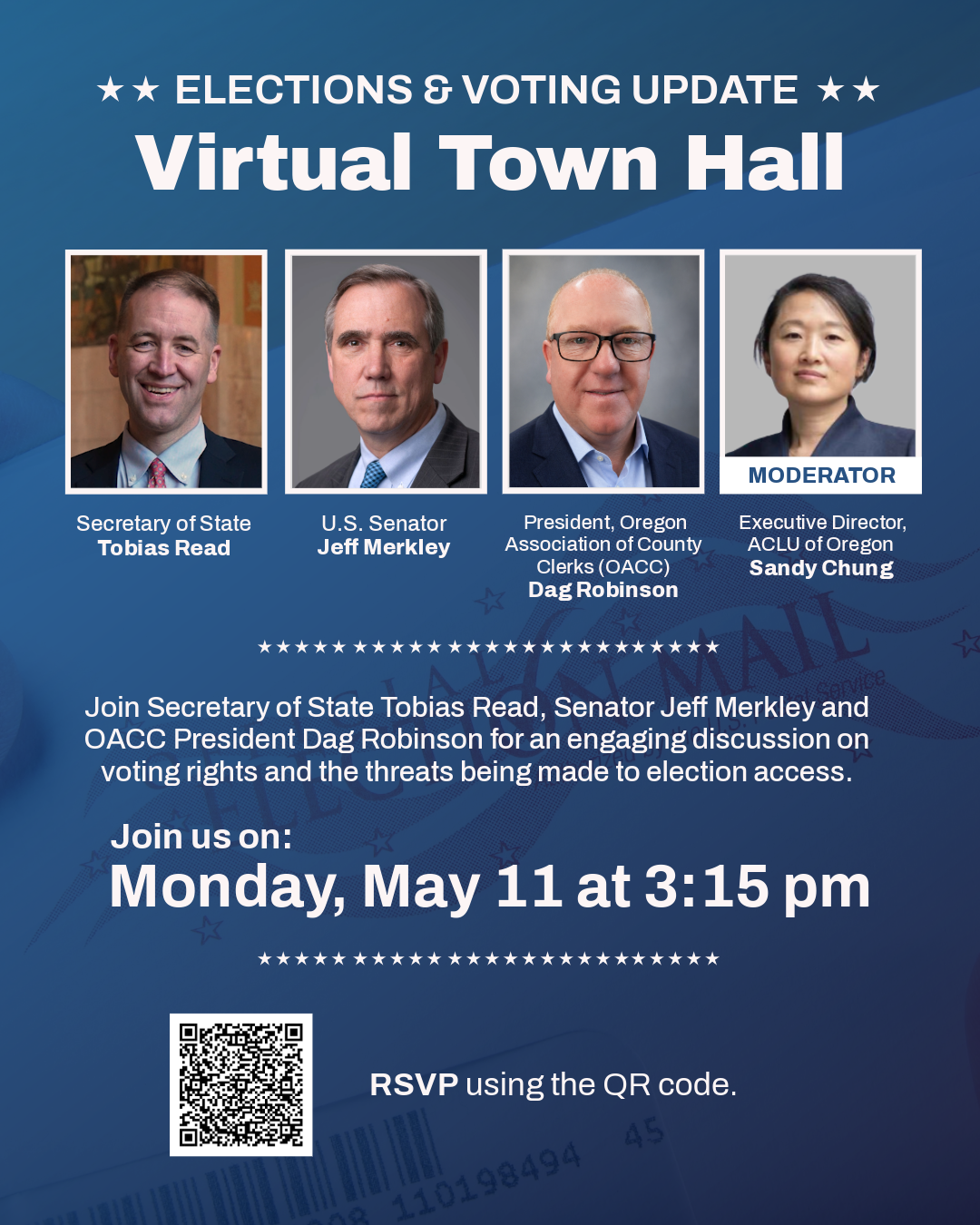
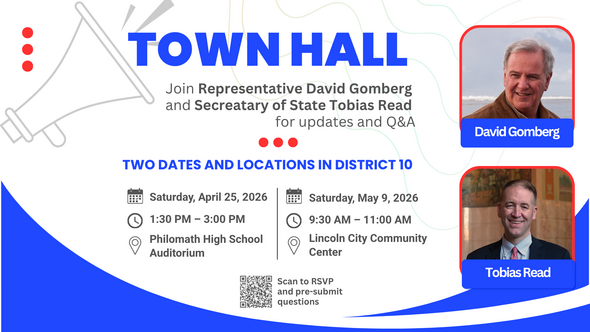
TODAY: Virtual Town Hall on Elections & Voting with Oregon Secretary of State Tobias Read, U.S. Senator Jeff Merkley, OACC President Dag Robinson 5/11/26

Town hall will be moderated by Sandy Chung, Executive Director of ACLU of Oregon

Oregon Secretary of State color logo

GovDelivery logo

Fifty Ways to Lose Your Congressman

This isn’t about the Democrats winning.

This isn’t about a party label.

This is about healthcare. This is about the price of gasoline, and diesel. I bought my 1999 Dodge Ram with a Cummins because diesel was cheaper than regular. I’m glad I’m back to gasoline now. This is about the price of hot dogs and three dollar candy bars.

Coffee, well. I have years worth of green unroasted beans stocked up. But most people don’t.

Here is my very partisan advice. Something I try very hard not to give.

If you are from a district where your congressional representative votes for everything the current administration puts in front of them, go to their town hall meetings. If they are still brave enough to hold them. Write letters. Make calls. Send emails. Be polite. Vulgarity and profanity is the fast lane to the trash, physical and digital alike.

Don’t bother asking them to change their tune.

Just tell them to go home. Have a cigar. Get a drink. And start looking for another job.

Because they are done. Fired. Relieved of duty. No longer trusted. No longer wanted.

There are fifty ways to leave your lover. Pick one.

If you are a Republican who wants a Republican, fine. Find a conservative who doesn’t bow. Find someone honest enough to represent you rather than perform for an audience of one in Washington. Find someone who remembers that their job is the kitchen table not the gold curtains.

Maybe they wear an Independent label. Maybe they sound a little more middle of the road. Maybe they look a little more purple.

Midterms are coming.

The only message that matters between now and then is simple.

You work for us. And you’re fired.

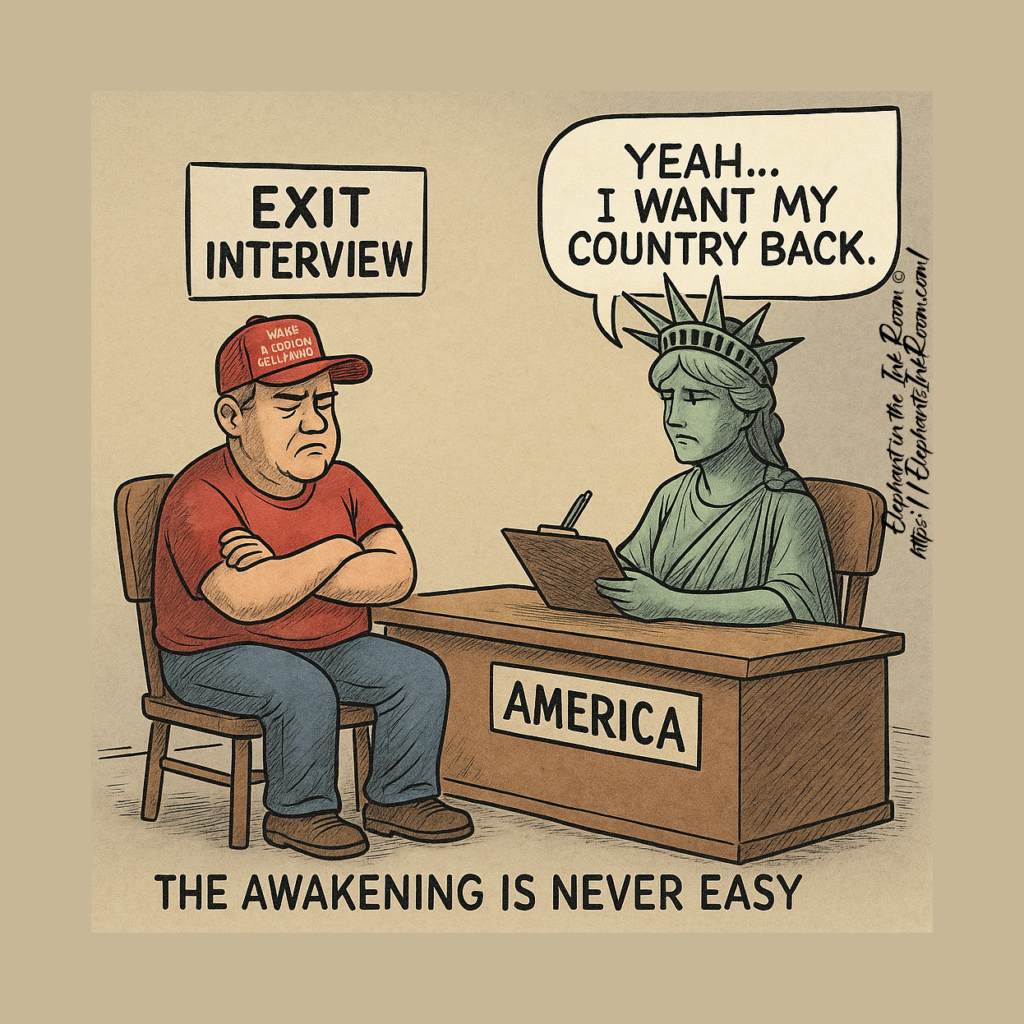
Maga regret

Americans Are Feeling the Squeeze. Washington Must Do Better. 05/08/2026

Americans are anxious about the economy.  People feel it every time they buy groceries, fill up their gas tank, pay rent, or open a credit card bill. Across the country, families are asking the same question: why does it feel harder and harder to get ahead, even when they are working harder than ever?

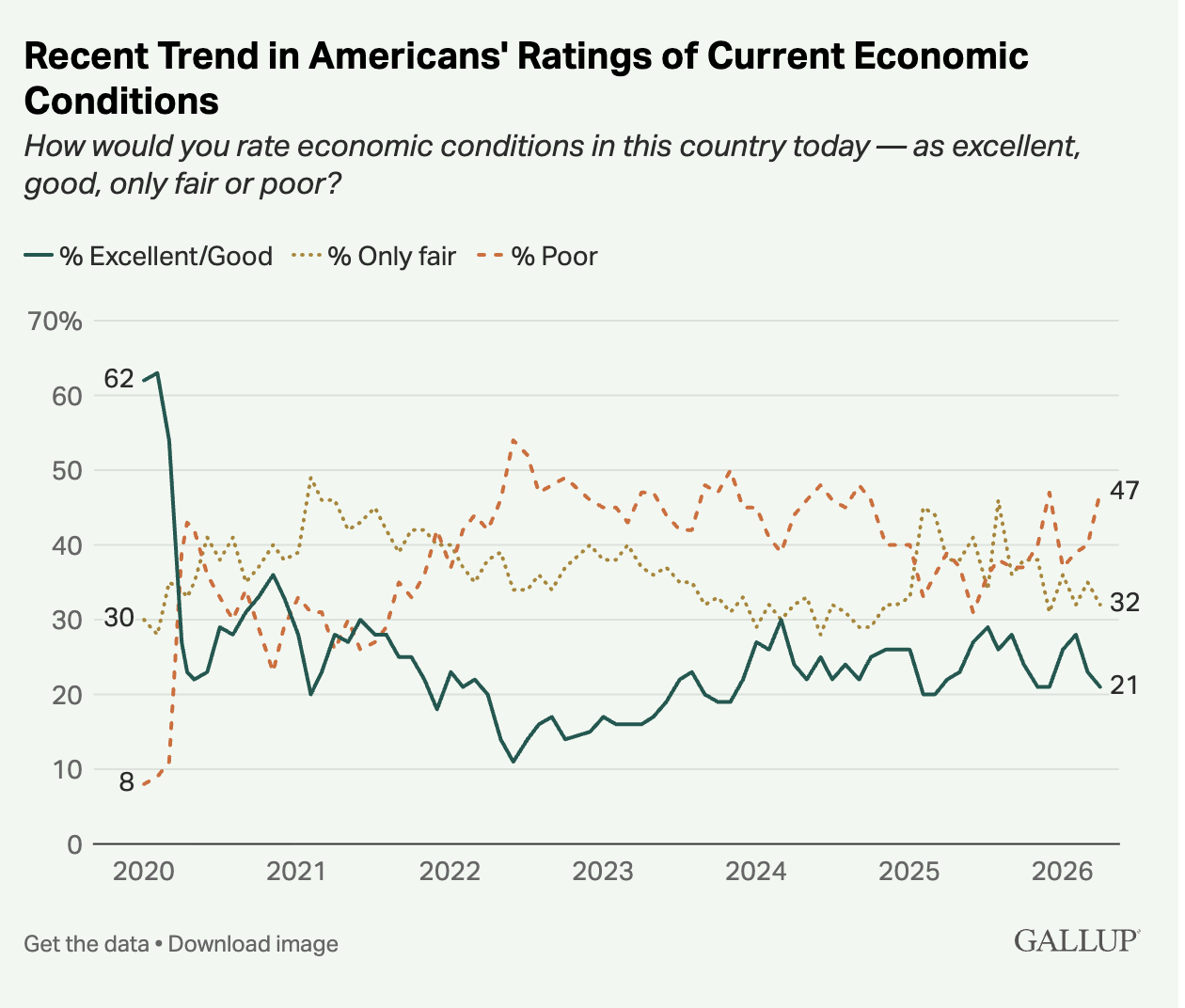
New polling from Gallup shows affordability now dominates Americans’ financial worries. Inflation and high prices remain the top concern for families, while a record 55% of Americans say their financial situation is getting worse. Energy costs, housing costs, healthcare expenses, transportation, and childcare are all rising faster than many household budgets can keep up with.

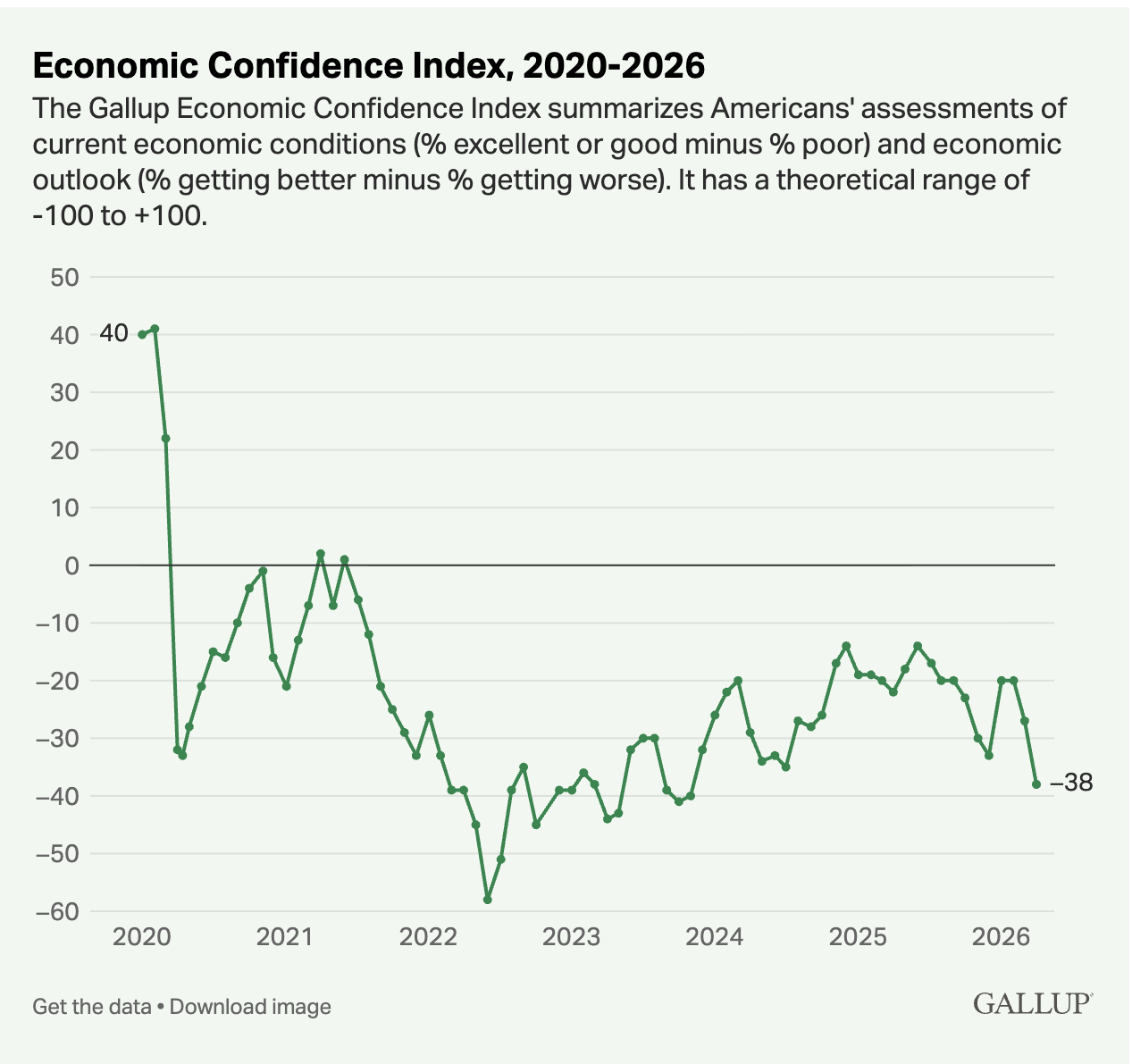
At the same time, confidence in the broader economy is falling sharply. Gallup’s Economic Confidence Index dropped to -38 in April, one of the lowest readings in recent years and a sign that Americans are increasingly pessimistic about both current conditions and where the economy is heading. Even among people who are still employed and financially stable, anxiety about the future is growing. Americans are worried about layoffs, AI, inflation, debt, and whether the next generation will have the same opportunities they had.

There are warning signs at the national level as well. This week, America’s debt burden surpassed the country’s annual economic output for the first time since World War II, with public debt reaching more than $31 trillion. Economists across the political spectrum increasingly warn that long-term fiscal dysfunction in Washington is making it harder to invest in the future while also increasing pressure on interest rates and the cost of living.

And yet, despite these very real concerns, too much of our political system remains trapped in partisan theater instead of focused on practical solutions. Americans are looking for leadership willing to address affordability, energy costs, housing supply, workforce development, healthcare expenses, and the national debt with seriousness and honesty. Instead, many see constant political warfare, performative outrage, and a system designed more around scoring points than solving problems.

This is where Forward’s values matter.

The Forward Party was built around the belief that Americans are exhausted by a politics that rewards division and punishes problem solving. Most voters are not asking for ideological purity. They are asking for leaders who will listen, work together, use facts and data, and focus on outcomes that improve everyday life.

Forward believes affordability should not be a partisan issue. Making it easier to build housing, supporting energy innovation, investing in workforce training for a changing economy, modernizing infrastructure, and bringing down healthcare costs are not red or blue ideas. They are practical challenges that require serious leadership.

Forward also believes the country cannot solve long-term economic problems if elected officials are more focused on protecting political power than building public trust. Gerrymandered districts, hyper-partisan primaries, and a political culture driven by outrage make compromise politically risky even when compromise is what the country needs most.

But there is reason for optimism.

Across the country, more independent and solutions-focused leaders are stepping forward to run for office, build coalitions, and challenge the idea that Americans are permanently stuck choosing between dysfunction and extremism. Voters are increasingly open to candidates who prioritize collaboration, accountability, and results over partisan loyalty.

The economic challenges facing the country are real. Americans feel them every day. But this moment also creates an opportunity to rethink how we govern and what we reward in politics.

The future does not have to be defined by gridlock, economic anxiety, and political exhaustion. With better leadership, more accountability, and a political system that rewards solving problems instead of escalating conflict, the country can build an economy that is more affordable, more resilient, and more hopeful for the next generation.

Please forward this to your friends, family, and coworkers. It helps us introduce them to Forward and to what we are building. Also consider inviting them to one of our upcoming events listed below. We’d love to meet them.

The Forward Party Podcast
REMINDER: The next episode of The Forward Party Podcast is live!

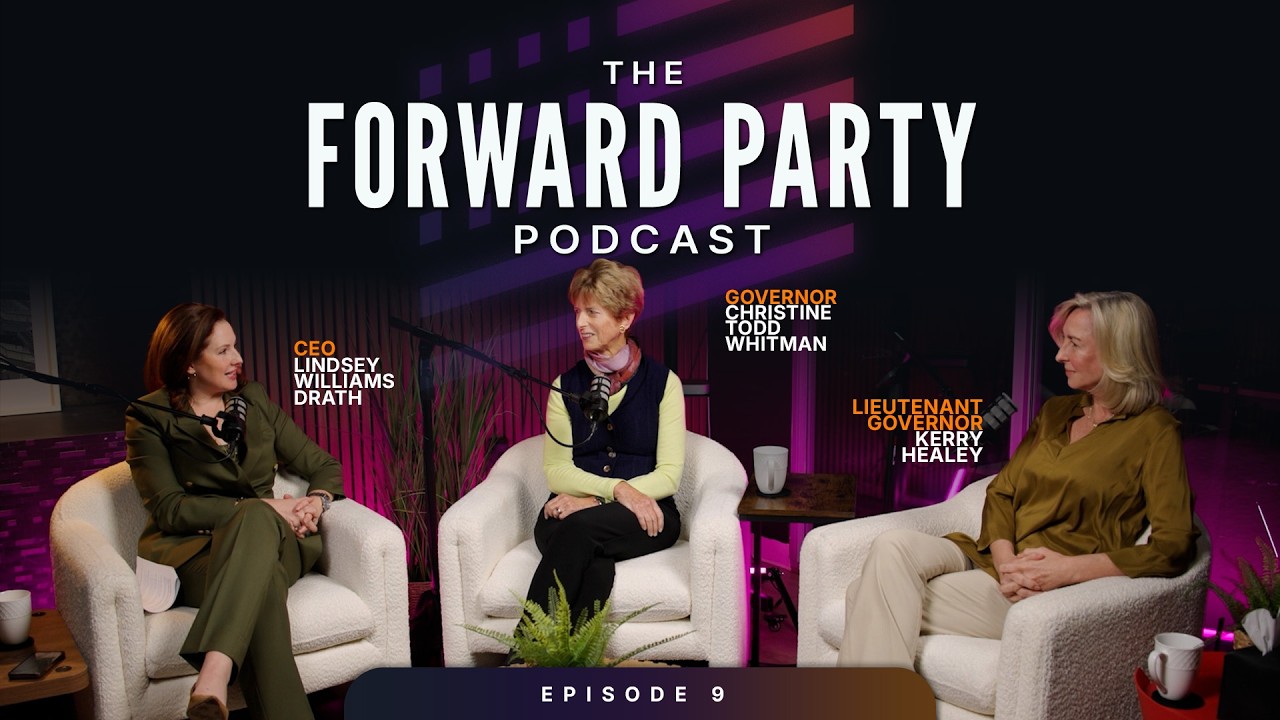
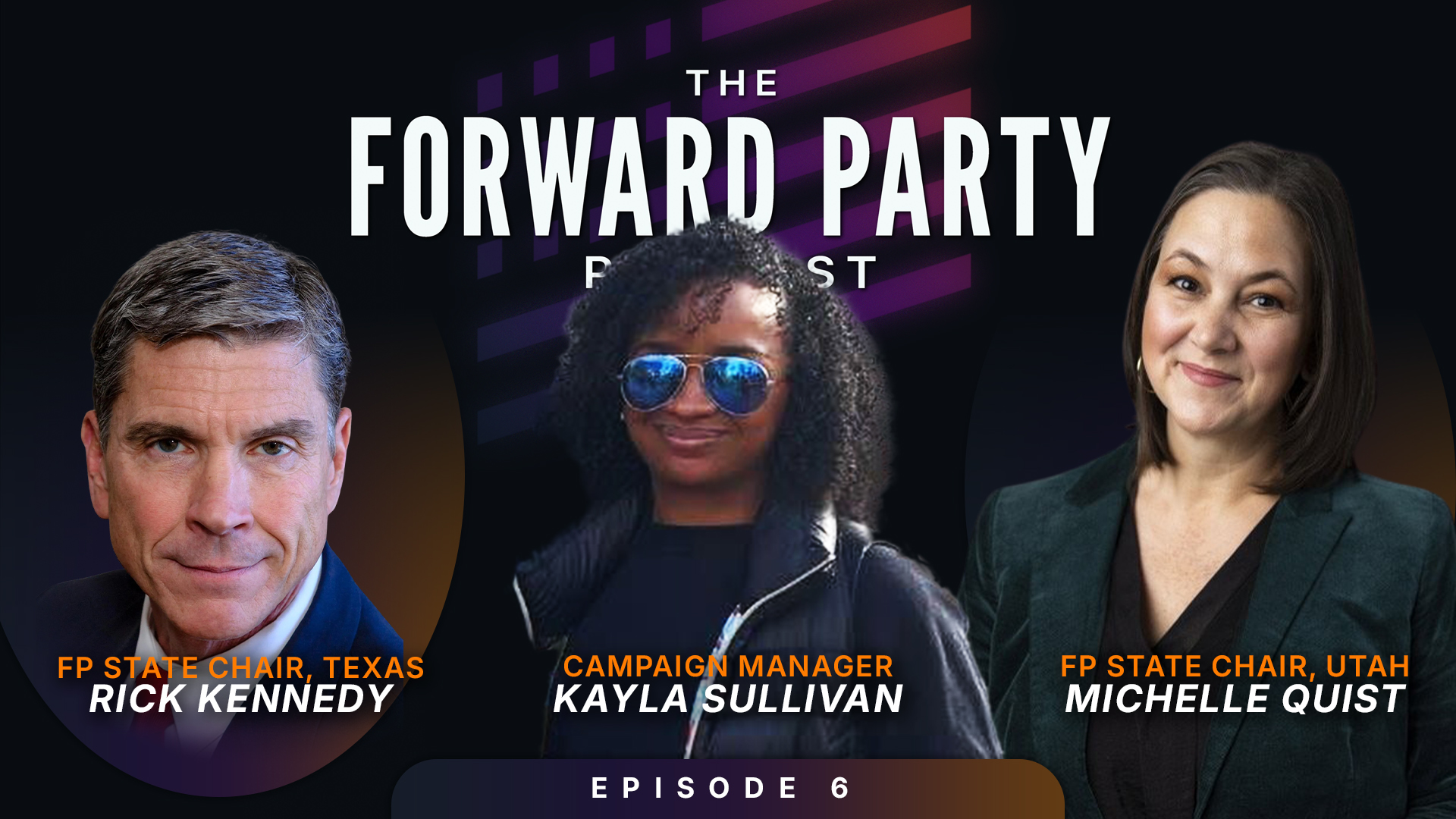
Episode 9  – Lindsey Drath, Lieutenant Governor Kerry Healey, and Governor Whitman hold a grounded and timely conversation about the future of American politics. At the center of the discussion is a pressing question: Can the system be recalibrated without starting from scratch?

We hope you enjoy! Don’t forget to let us know what you think.

Click the image below to watch.TFPP E09 Thumbnail

ICYMI: The Forward Party Podcast – Behind the Scenes reel

Get Involved

May 14 – Women’s Committee Event – Commanding Change: From the Marine Corps to the Movement

Join the Forward Party Women’s Committee in a frank discussion about the current situation of women in the military with Forward Woman Sarah Czech, who co-chairs the Veterans & Military Families Committee.  For more information and to RSVP, click here. 

May 20 – AAPI Committee Launch

May is AAPI Heritage Month

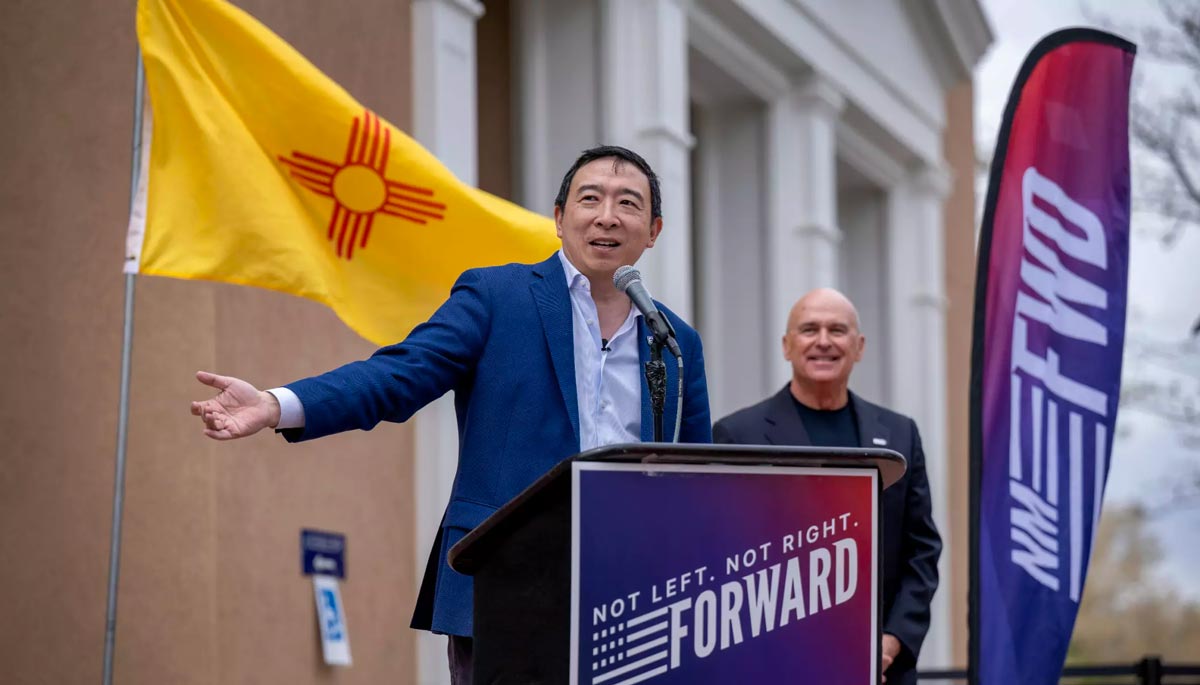
Join us as we officially launch the AAPI Committee on May 20th.We will be joined by Andrew Yang and other special guests  For more information and to RSVP, click here.


If you’re tired of waiting for the system to fix itself — this is your moment.
👥 Volunteer | 🗳️ Run for Office | 💸 Donate | 🌐 forwardparty.com

What we're reading
Contrary to what our detractors on social media say, YES, we read!

Virginia’s high court strikes down voter-passed House map favoring Democrats

The finding is a major setback for Democrats in their effort to counter GOP-led redistricting in other states. The measure approved April 21 gave Democrats an edge in four districts.

U.S. debt exceeds 100 percent of GDP

The U.S. national debt crossed 100 percent of gross domestic product (GDP) at the end of March, with signs that it might cross the record of 106 percent of GDP reached immediately after World War II.


X / Twitter Bluesky Instagram LinkedIn Facebook YouTube

Copyright © 2026 Forward Party, all rights reserved.

Our mailing address is:
1701 Rhode Island Ave NW, Washington, DC 20036, United States

Paid for by Forward Party and not authorized by any candidate or candidate’s committee.
ForwardParty.com


Do Not Get Into Political Arguments. It’s Not Worth It.

Do Not Get Into Political Arguments. It’s Not Worth It.

Yes, that is easy to say. And no, I am not saying that having an opinion is wrong or that sharing it is off limits.

But there is always someone who will argue with you. And the sad truth is that no matter how wrong they may be, there will be a ten percent truth buried in their argument that they will throw out as an anchor. And that will get you every time.

This is a lose lose situation.

YouTube player

Learn from MAGA. No matter what argument you make — and yes, that is an absolute — they always come back with “Well, Biden.” And somewhere in that response there is that ten percent truth.

If you counter it they have their one fact and you lose. If you throw your hands up you lose. If you say something considerably less polite you lose.

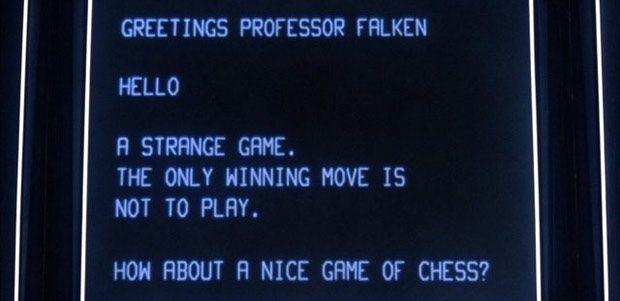
In the film WarGames, the computer WOPR — also known as Joshua — was asked to play tic-tac-toe after nearly launching a nuclear war. Running through every possible scenario it reached the only honest conclusion available.

WINNER: NONE.

That is the conclusion you should reach before ever getting into a political argument.

The game was designed so that nobody wins.

Stop playing.

F44f0f2e96b33233c8a9615cb0f3ce6c

The Dirt On Everybody

Everyone knows what is happening in Washington right now.

And no one will do anything about it.

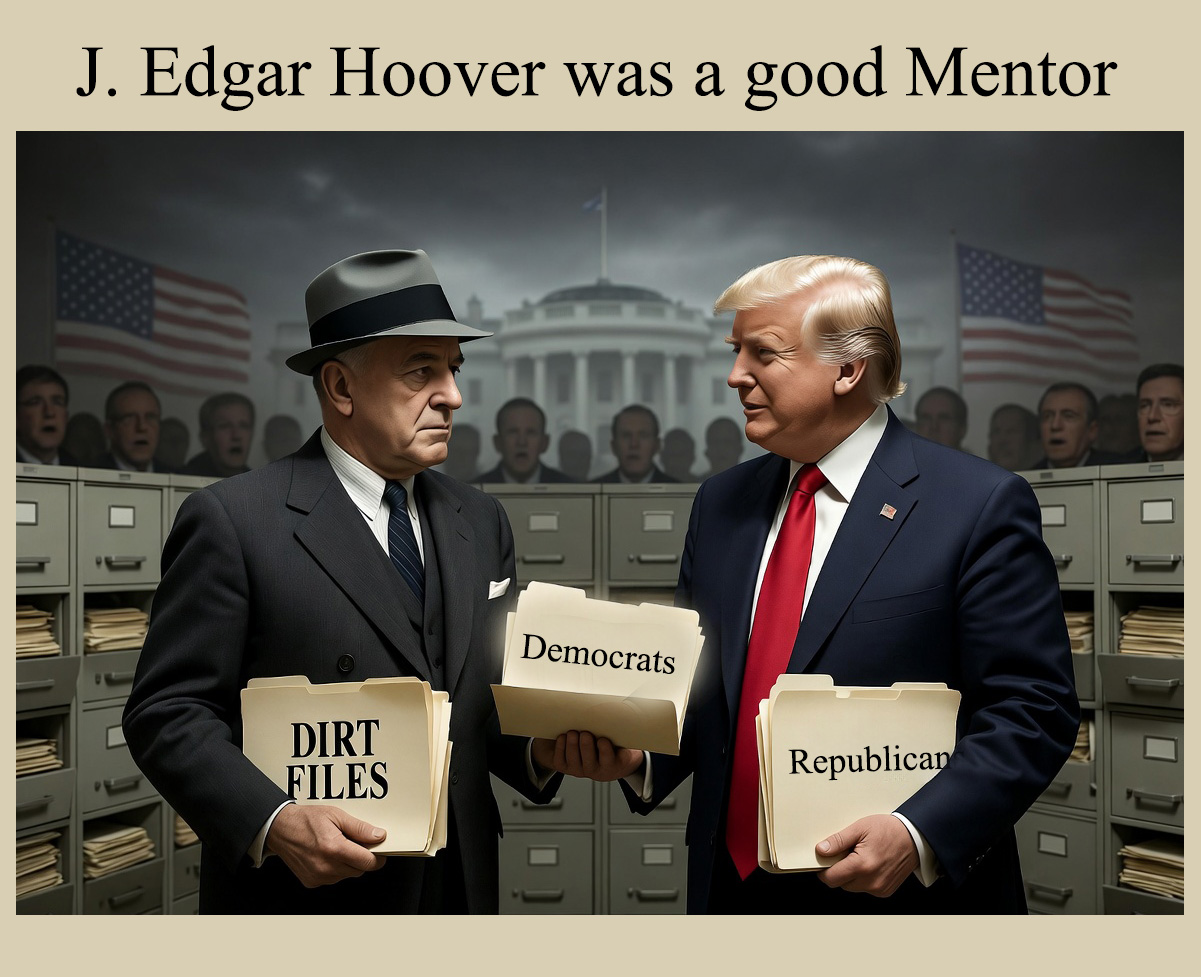
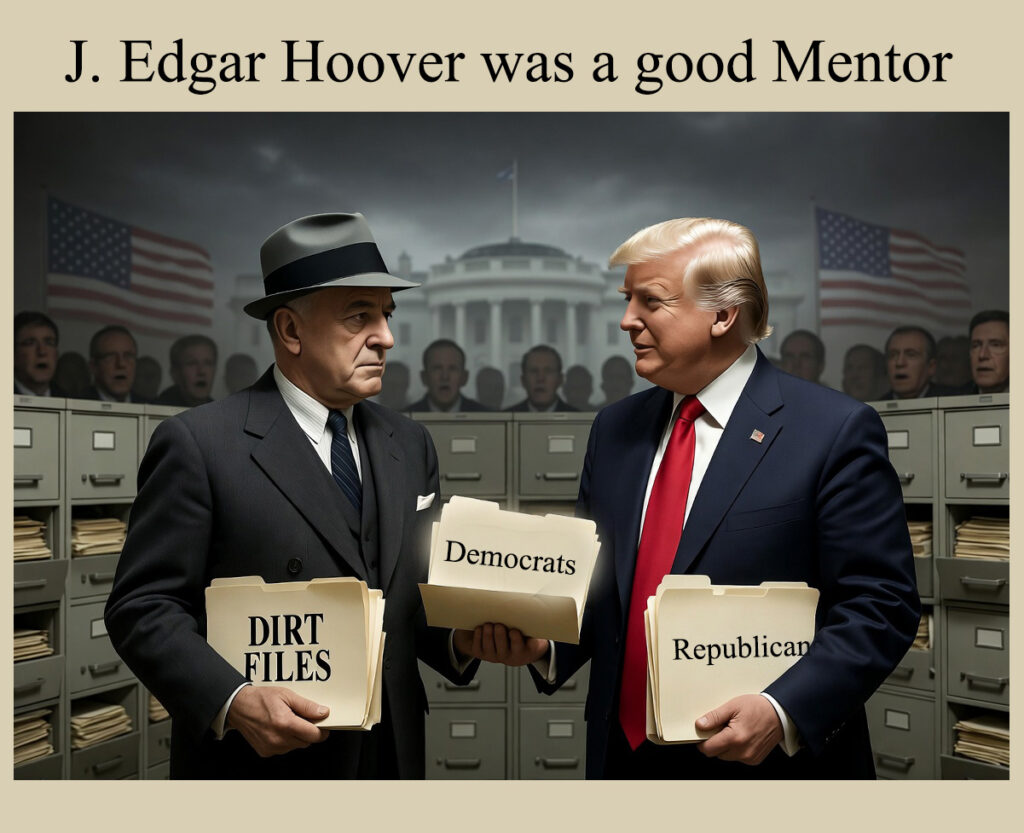
A generation ago there was one individual nobody messed with. His name was J. Edgar Hoover. We even named a Federal Building after him. He was the first director and founder of what became the FBI. The reason nobody touched him was simple and widely understood — he had the dirt on everybody. Republican. Democrat. It didn’t matter. You didn’t cross Hoover because Hoover knew things about you that you preferred stayed quiet.

I am starting to think history has a familiar shape right now.

The Democrats are a minority — that’s real. But all they are doing is making noise when they could be doing more. The Republicans are something else entirely. Not a lost cause in the traditional sense. Something quieter and more troubling than that. They are covering themselves. Carefully. Deliberately. One vote at a time.

Ask yourself a simple question.

Why hasn’t Congress invoked the War Powers Act?

Not because they don’t know how. Not because they lack the constitutional authority. Because a vote on the record is a vote that lives forever. And the Republicans in Congress do not want their names attached to anything visible before midterms — as if they still believe they’ll have jobs when the smoke clears.

That’s not principle. That’s not governance.

That’s a room full of people who know exactly where the dirt is kept.

Hoover

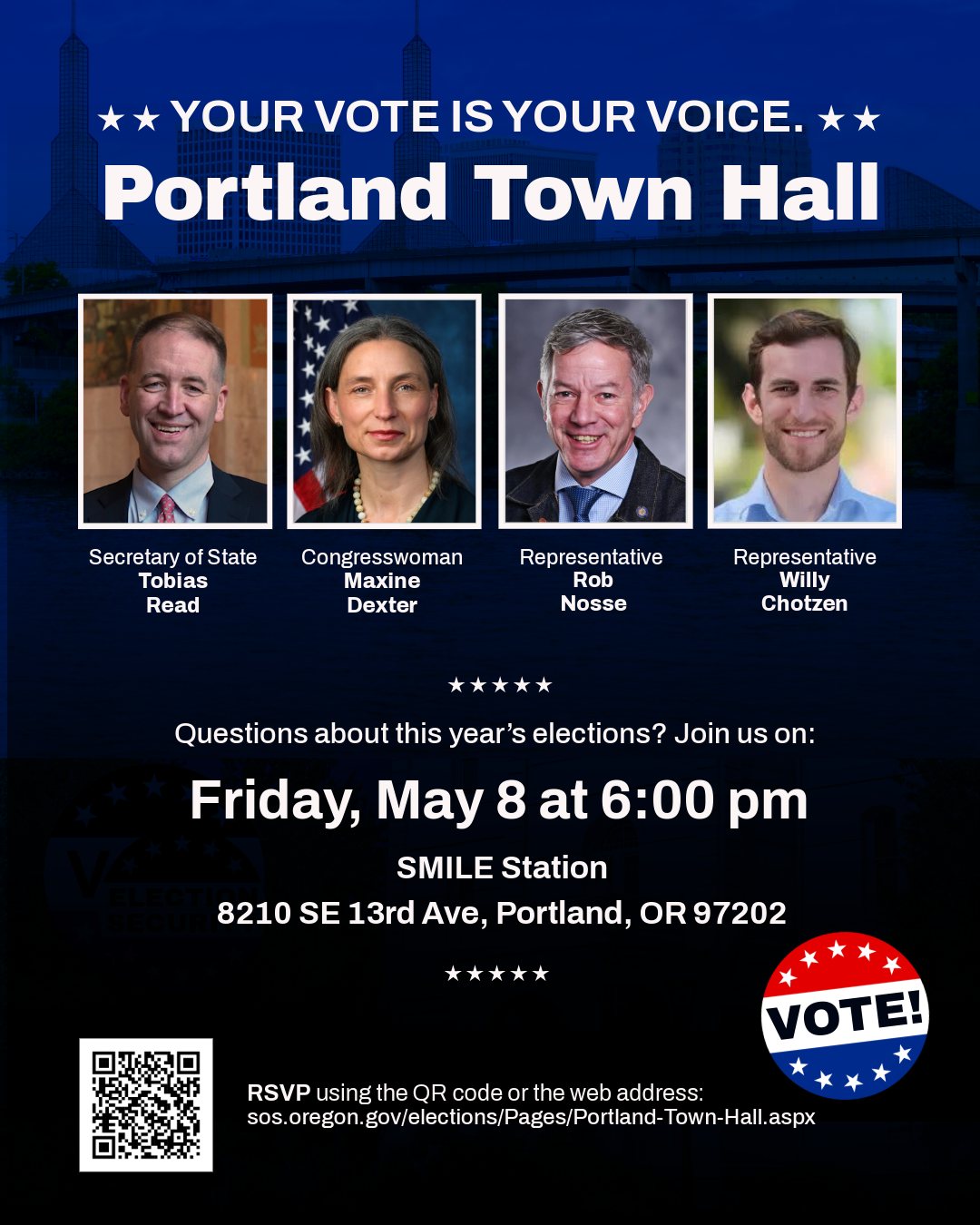
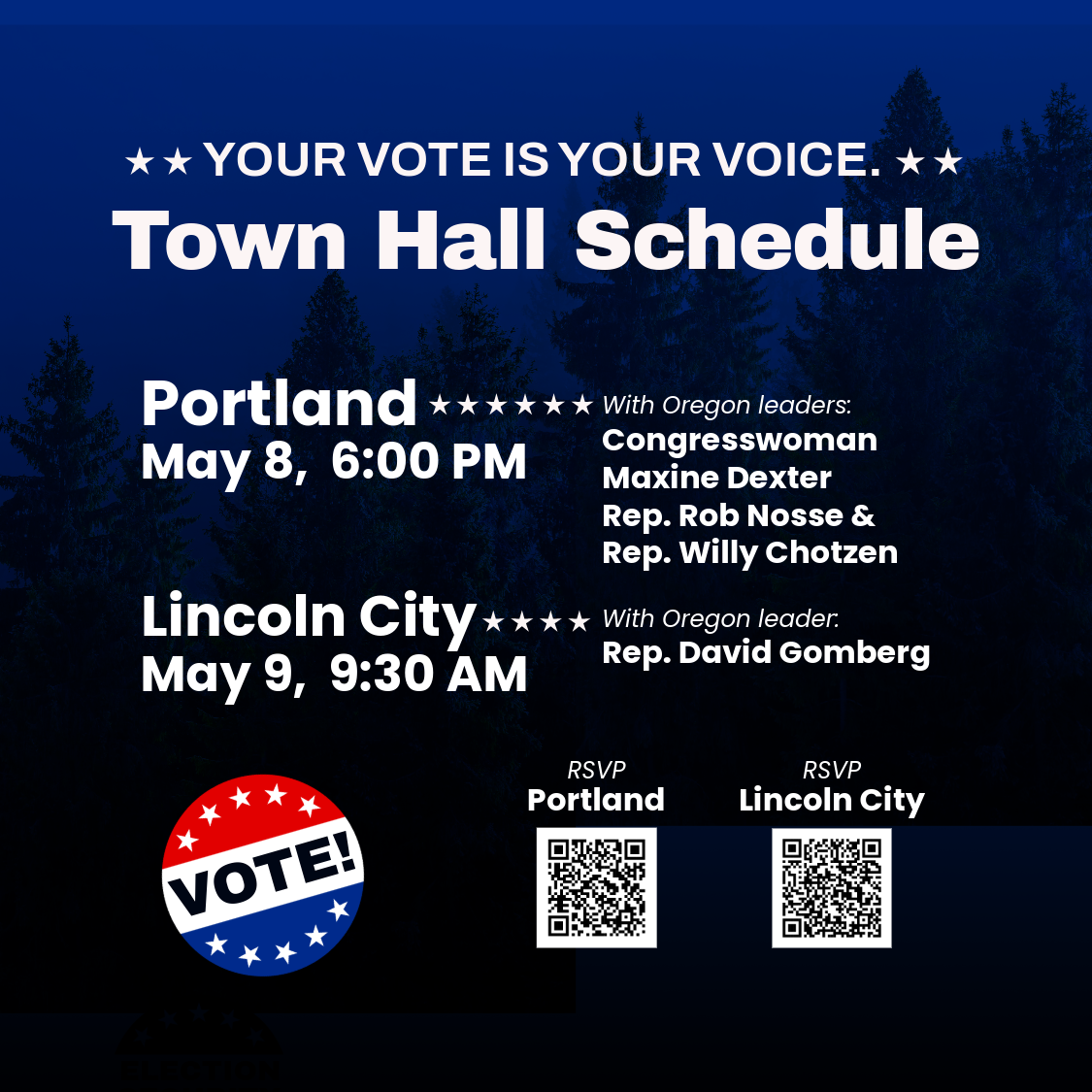
EVENT ALERT: Portland Election Info Town Hall with Congresswoman Dexter, Representatives Nosse & Chotzen

RSVP today!

Oregon Secretary of State color logo

GovDelivery logo

Fill Out Your Ballot with Confidence this Primary Election – Oregon

Oregon Secretary of State color logo

Date: May 5, 2026


Follow for elections updates: Facebook, Instagram, X, Bluesky, and Youtube

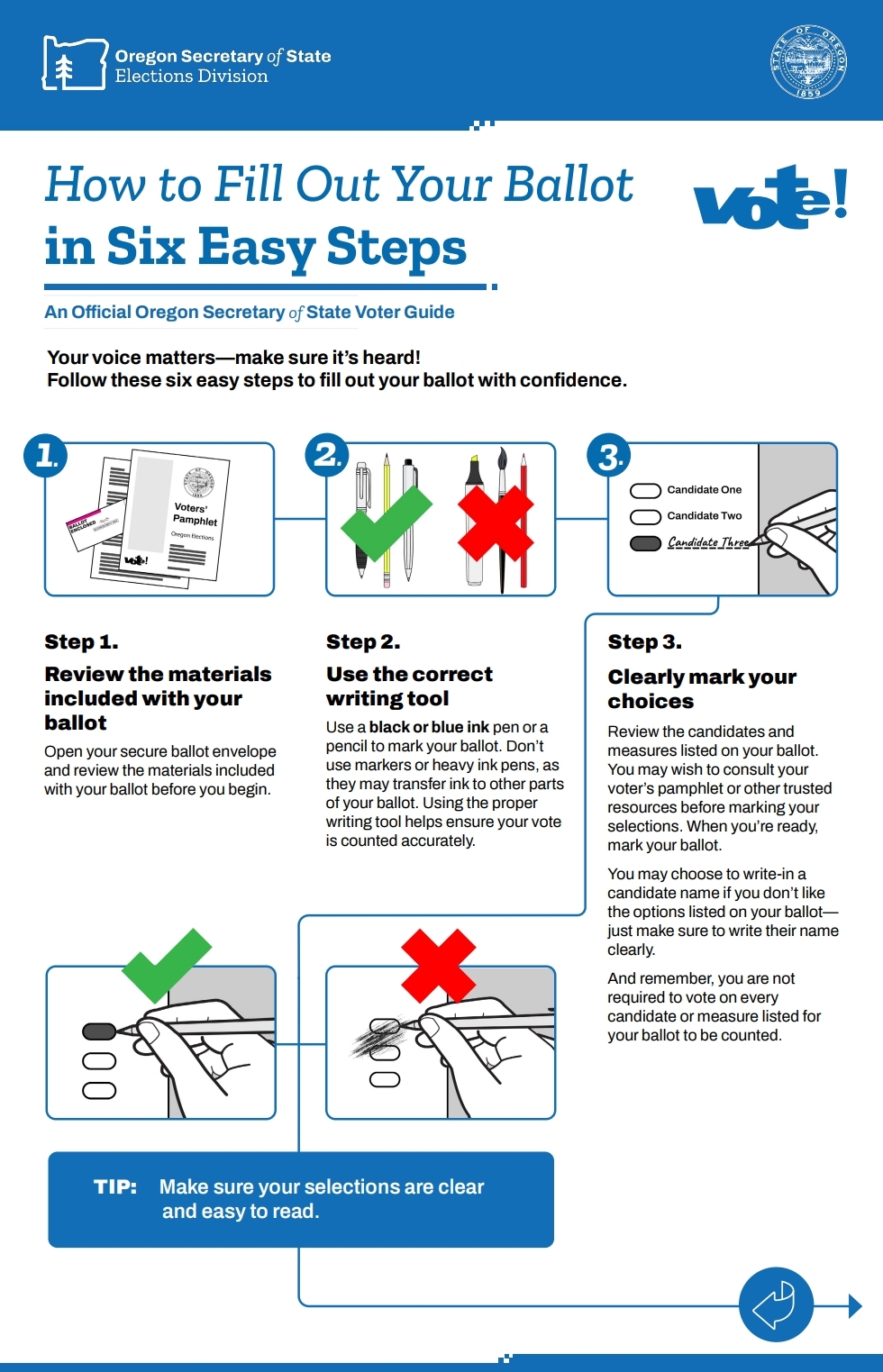
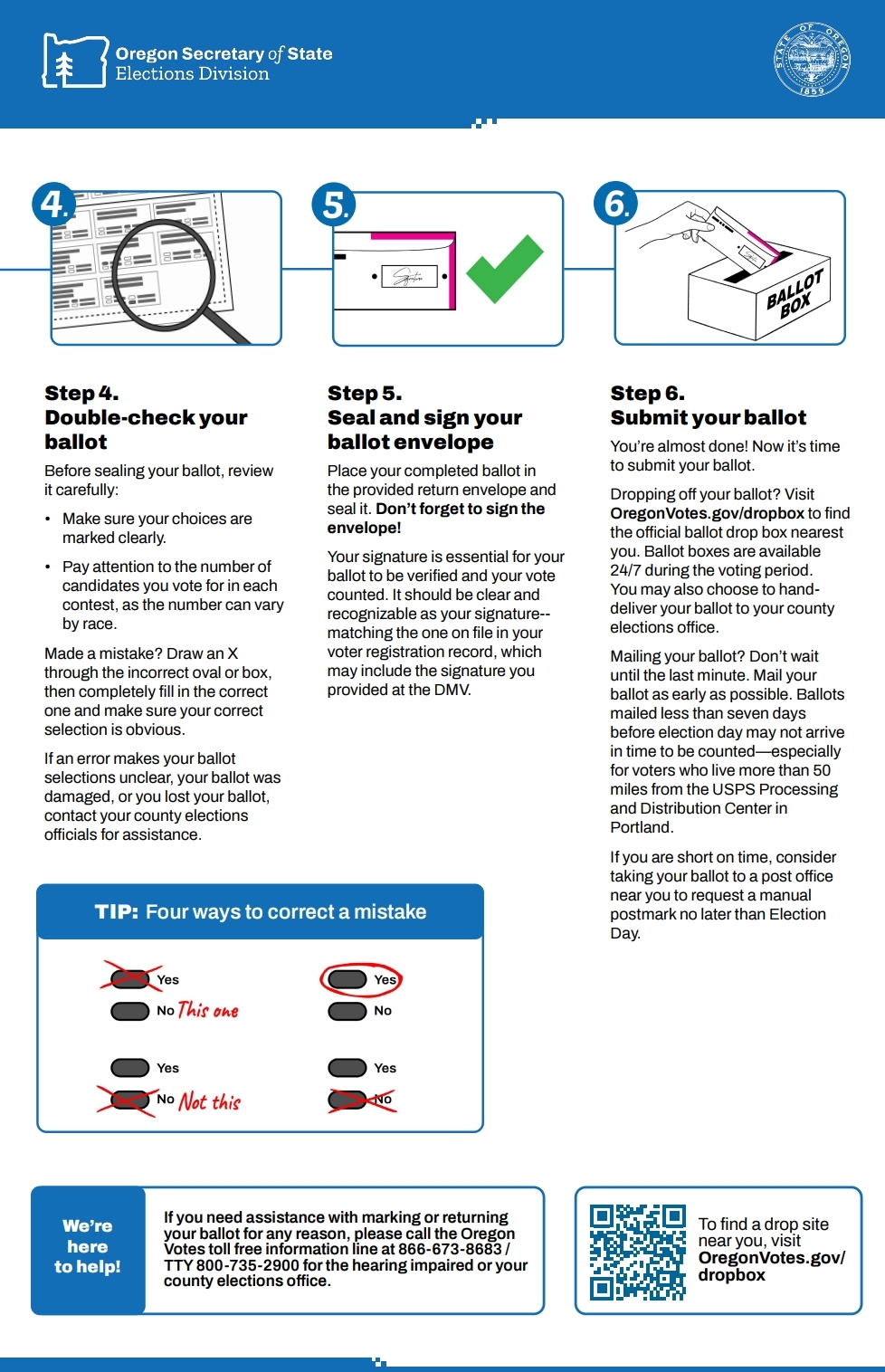
How to fill out your ballot in six easy steps #trustedinfoOregonians,

The big May Primary Election is exactly two weeks away (Tuesday, May 19).

County clerks started sending out ballots last week, so you should be getting yours soon – if you haven’t already.

If you need to update your address, it’s not too late to make that change. You can do so online at OregonVotes.gov/myvote. If you need to update your name or signature, you can still do that to by submitting a paper registration form. If you have any questions or concerns, don’t hesitate to give your county elections office a call.

The best part about our vote-by-mail system is that you have time. Time to make a plan. Time to talk with your friends, family, and neighbors. Time to do your research before making your selections.

You should have received your Voters’ Pamphlet in the mail to help you start your research too, which you can also access online.

When you’re ready to fill out your ballot, reference our six-step guide below. It has all the information you need to fill out your ballot clearly, correctly, and confidently.

Sincerely,

Tobias Read signatureTobias Read
Oregon Secretary of State

GovDelivery logo

The Long View From 1964 – Superman

I grew up watching a small black and white television in the living room. Not the family room, because we didn’t have family rooms in 1,300 square foot ranches in 1955. My older brother and I would watch the Mickey Mouse Club, heart throbbing as Annette would grace the screen — all 1.5 inches of grainy image of her. That was high tech back then.

YouTube player

Lassie would dash back into the one room farmhouse and announce that Timmy had fallen in the well again, and Superman would boldly declare that he stood for Truth, Justice and the American Way. Oh, the patriotic pride we would feel — young army brats, freshly back from Germany where our father had been stationed for three years. But that’s another story of concentration camps and sausage restaurants on the Danube.

Back to Superman, because that’s what this is all about. Truth, Justice and the American Way. Straight from the 1940’s comic books — not graphic novels. They were comic books. A graphic novel was Classics Illustrated doing The Last of the Mohicans.

Truth was the TRUTH. It was telling the truth. Real truth. What do we have today? We have Truth Social, and we are told to believe it. But what is it? It is whatever Donald Trump and the MAGA movement wants you to believe. I’m not saying it’s all lies, because everything has to have an element of truth to stand. But believe at your own peril.

How about X.com? Look at the bots. Look at how many times posts have been reposted — not 5 or 6 times, but hundreds. That’s a machine. Posted by Betsy, a housewife from Atlanta. Check her profile — courtesy of Elon, finally — and you find that Betsy has changed her name 83 times and is posting from Asia or Eastern Europe.

Get a clue.

Justice. That’s a good one. Look at what our courts have become. We have so much partisan influence that the very word has little meaning anymore. I learned the hard way fifty years ago that all you can reasonably expect is a decision. But fifty years ago it was a mostly unbiased and impartial one.

Today at the federal level that’s an ongoing war. A war because we do still have honorable people in power — but they are outnumbered and outfunded, all the way to the very top. It’s a stacked deck.

And lastly, perhaps the most ambiguous but most important — The American Way.

When you’re ten years old watching the Mickey Mouse Club, Superman, Zorro, Father Knows Best and the rest, the American Way seems perfectly clear. We were strong. We were proud. We had clear cut enemies. At school we were told to stand and recite the Pledge of Allegiance with pride, and when the air raid sirens went off we got under our desks — as if that would actually do any good. But it made us feel safe.

We had presidents who built America. Eisenhower chose highways over rail because he saw how disabling rail lines stopped troop movements. He should have prioritized both. JFK, with all his faults, still told us that our strength was to stand together and build a great nation. Not a monument.

Sometime after that I took a break. I married, I divorced, I had children — not necessarily in that order. I raised families. I now have grandchildren. I learned how to build businesses and was part of the great technological revolution — time spent at gin joints like Tektronix, Intel, my own consulting and more.

And when I stopped and took a breath, I looked around and saw an America that had become super wealthy and gone to hell at the same time.

So I ask you — by today’s standards, what is the American Way?

The Long View From 1964

YouTube player

Adventures of superman

Are Our Leaders Focused on What Actually Matters? 05/01/2026

If you ask most Americans what is on their mind right now, the answer is simple: affordability. The cost of everyday life, from groceries and gas to housing and healthcare, has become the defining issue for families across the country. Inflation may have cooled from its peak, but prices are still significantly higher than they were just a few years ago. Home prices remain near record highs, putting ownership out of reach for many, while rent continues to strain household budgets. According to Gallup, inflation and the cost of living consistently rank among the top concerns for Americans, with a majority saying they are worried about their personal financial situation. Data from Pew Research Center shows similar trends, with many Americans saying their incomes are not keeping up with rising costs.

At the same time, confidence in leadership is near historic lows. Congressional approval is around 10 percent in recent Gallup tracking, President Trump’s approval rating has dropped to 34 percent, and trust in government more broadly remains deeply eroded. Yet despite that dissatisfaction, incumbents continue to win reelection at rates exceeding 90 percent. That disconnect tells you something important. The system is not responding to what people are actually experiencing. While affordability tops the list of concerns, Washington often appears focused elsewhere. That includes partisan maneuvering like gerrymandering, political investigations and prosecutions, and internal power struggles that have little to do with lowering costs or improving economic opportunity.

The results speak for themselves. Congress has passed relatively few major pieces of legislation that directly address the core drivers of affordability. Conversations about long term economic challenges, like preparing workers for technological change, strengthening local economies, and expanding access to good paying jobs, are not getting the attention they deserve. Meanwhile, approval ratings for both Congress and national leadership remain deeply underwater, reinforcing the sense that the system is not delivering.

This is exactly why the Forward Party is focused on building something different. We are recruiting and supporting candidates who are solutions focused, grounded in their communities, and committed to listening to what voters are actually saying. That means using data, evidence, and real world experience to shape policy, not ideology or party talking points. It means prioritizing affordability, economic opportunity, and long term stability over short term political wins.

There is a better path forward, and more Americans are starting to see it. Across the country, people are stepping up to run for office, engage in their communities, and demand a system that actually reflects their lives and priorities. Change will not happen overnight, but it is already beginning. With leaders who are willing to listen, focus on real problems, and work toward practical solutions, we can build a system that delivers again. One that makes life more affordable, expands opportunity, and gives people confidence in their future.

Please forward this to your friends, family, and coworkers. It helps us introduce them to Forward and to what we are building. Also consider inviting them to one of our upcoming events listed below. We’d love to meet them.

The Forward Party Podcast
REMINDER: The next episode of The Forward Party Podcast is live!

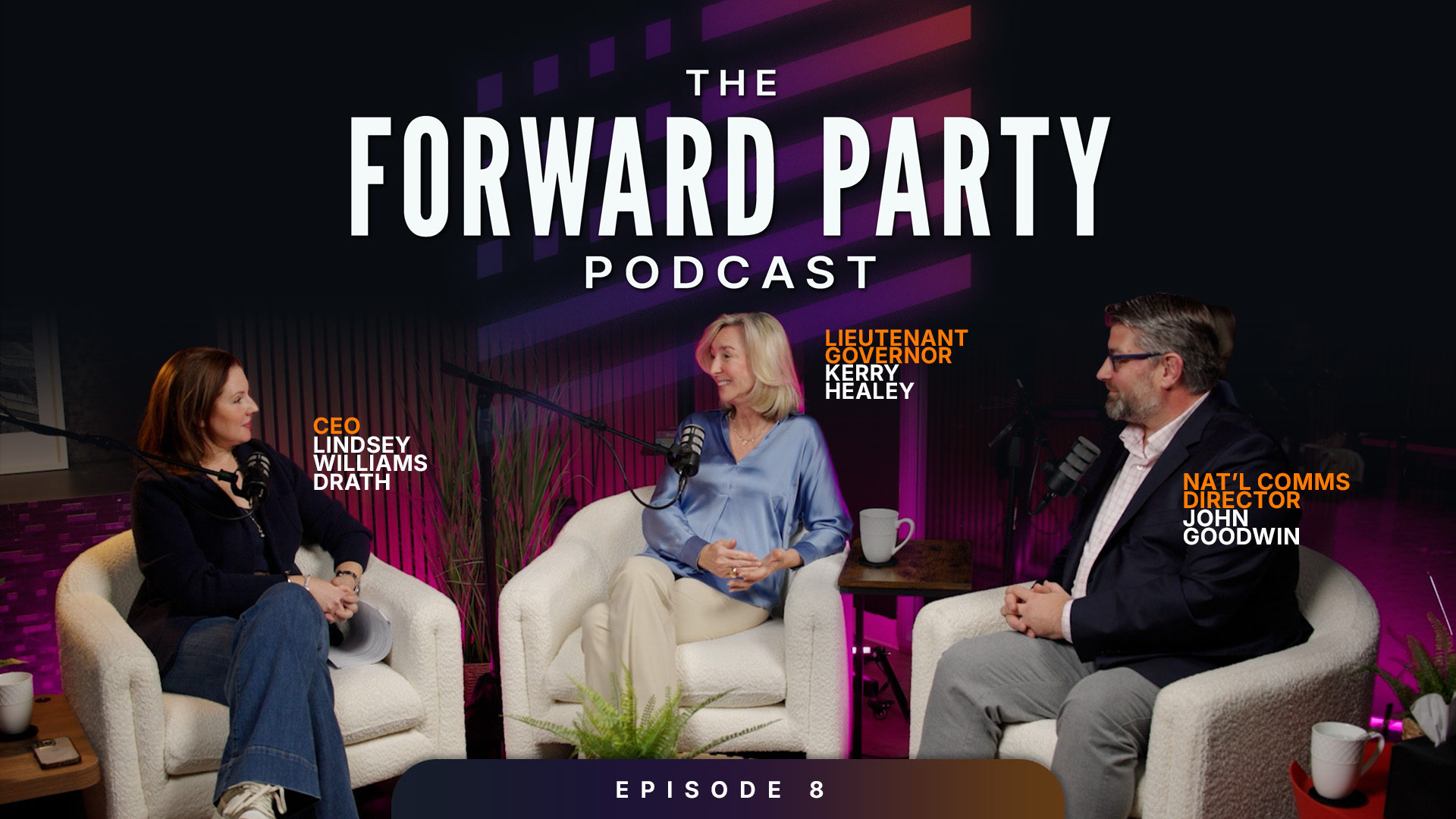
Episode 8  – Lindsey Drath and Lieutenant Governor Kerry Healey are joined by Forward National Communications Director John Goodwin for a thoughtful conversation on the growing momentum behind independent voters and what it really takes to challenge America’s entrenched two-party system. What starts as a discussion on political identity quickly expands into a deeper look at structural barriers, voter frustration, and the untapped potential sitting in plain sight across the country. At the center of the conversation is a striking reality: nearly half of Americans now identify as independents, yet the system itself makes it incredibly difficult for those voices to translate into representation. From closed primaries to limited ballot access, the episode breaks down how the current structure favors party insiders while leaving everyday voters on the outside.

We hope you enjoy! Don’t forget to let us know what you think.

Click the image below to watch.

ICYMI: The Forward Party Podcast – Behind the Scenes reel

Get Involved

May 20 – AAPI Committee Launch

May is AAPI Heritage Month

Join us as we officially launch the AAPI Committee on May 20th.We will be joined by Andrew Yang and other special guests  For more information and to RSVP, click here.


If you’re tired of waiting for the system to fix itself — this is your moment.
👥 Volunteer | 🗳️ Run for Office | 💸 Donate | 🌐 forwardparty.com

What we're reading
Contrary to what our detractors on social media say, YES, we read!

Supreme Court decision sets off gerrymandering scramble 

A day after the Supreme Court further gutted the Voting Rights Act, Republican-led states are eying changes to boost the GOP’s gerrymandering effort at the expense of voters of color, while voting rights groups are trying to limit the impact of the ruling on this year’s midterms.

U.S. debt exceeds 100 percent of GDP

The U.S. national debt crossed 100 percent of gross domestic product (GDP) at the end of March, with signs that it might cross the record of 106 percent of GDP reached immediately after World War II.

X / Twitter Bluesky Instagram LinkedIn Facebook YouTube

Copyright © 2026 Forward Party, all rights reserved.

Our mailing address is:
1701 Rhode Island Ave NW, Washington, DC 20036, United States

Paid for by Forward Party and not authorized by any candidate or candidate’s committee.
ForwardParty.com

A War Being Run By the Second String

I was in the Army Corps of Engineers for six years. Sounds impressive. I must know my stuff.

YouTube player

Let me tell you war stories. Let me show you my tattoos. Let me regale you with heroics that will make you swoon. I will lead into battle and command troops like no other. Just look at me — a true American hero. All you have to do is be stupid enough to believe me.

Now for the truth.

Yes, I was in the Army for six years. Yes, I was trained as a Pioneer Combat Engineer. Yes, I was taught to clear minefields with a bayonet, build bridges between our infantry and theirs, and duck when the bullets screamed by.

But what wasn’t said — what never gets said by people like me — is that I enlisted right after my 17th birthday, still in high school, in the California National Guard. November 1963. Monthly Guard meetings until graduation, then off to basic training at Fort Ord.

For anyone who went through basic training, you know the first thing they try to do is intimidate, confuse, and disorient you. That’s a pretty hard thing to accomplish when you and your brother had the run of the base because your father had been the East Garrison Commander — but that’s another story.

Basic done. Off to Fort Leonard Wood for advanced training. Back by Christmas. Monthly meetings. First summer camp and we had the Watts Riots — not nice, but afterwards a walk in the park.

Why? Because I did the worst thing you can do in the military. I volunteered.

During monthly meetings there isn’t much to do except clean things. So when they needed a cook I raised my hand. I like to cook. Every summer camp afterward, instead of going to the desert and sleeping in the dirt, I went to Camp San Luis Obispo and cooked for the California Military Academy. Didn’t ride in a deuce and a half for 200 miles — I drove my ’48 MG TC and later my ’68 Plymouth GTX. Rough six years. Great war stories — catching flies and drag racing up the main entrance.

I tell you all of this for one reason.

The people who tell you heroic war stories are liars. The people who actually saw the horrors of war keep it to themselves. My father served in the Pacific, was stationed in Japan, served in Korea, was stationed in Germany. My brother’s National Guard unit was one of the very few activated and sent to Vietnam. I had close friends drafted who went. None of them ever told me war stories. And I never asked.

I also tell you this because I know what I am talking about. I am an Army brat — born and bred. And I know BS when I smell it.

You don’t have to be Rambo. You just have to be honest with and about yourself.

Which is why I am bothered — genuinely, deeply bothered — when a Fox News broadcaster covered in tattoos has the unmitigated gall to believe he has the experience and wisdom to lead our fine service personnel into battle.

He is such a leader that his spiritual pep talks are plagiarized from Tarantino movies.

Perhaps that explains why Major General William Green Jr., Army Chief of Chaplains, was fired in April 2026. He may have thought the Bible was a better source for scripture than Pulp Fiction.

He wasn’t alone. Here is what the first string looks like after the second string finished with it:

General Randy George, Army Chief of Staff — removed and asked to retire, April 2026, following disputes with Hegseth. Major General William Green Jr., Army Chief of Chaplains — fired — the first time in history this role was terminated by the Secretary of Defense. General David Hodne — removed from command of the Transformation and Training Command. General C.Q. Brown, Chairman of the Joint Chiefs — fired. General James Slife, Air Force Vice Chief of Staff — removed. Admiral Lisa Franchetti, Chief of Naval Operations — fired. Lieutenant General Jeffrey Kruse, Defense Intelligence Agency — fired.

The first string was either fired or asked to resign. What we have left is the second string. At best.

And at the very top — bone spurs and all — a man now talking about bringing back firing squads because he finds other people’s free speech inconvenient. Only his own has value.

Pete’s Crusader Cross tattoo is going to look real interesting sagging off an eighty year old man’s bitch tits in about twenty years. But that’s the least of our problems right now.

We have the second string running the show.

Makes you proud to be an American, doesn’t it?

A clarification worth making. Every incoming president replaces cabinet members. That is normal, expected, and appropriate. The president’s political appointees serve at the president’s pleasure and a new administration brings new priorities.

What is not normal — what career military officers and national security experts have described as unprecedented — is the systematic purge of decorated senior military leadership based on personal loyalty rather than performance or strategic need. Previous presidents fired specific generals for specific cause. Truman fired MacArthur for public insubordination. Bush replaced commanders in Iraq as part of a documented strategic shift.

Firing more than a dozen four star generals and admirals — including the first woman to lead the Navy, the second Black chairman of the Joint Chiefs, and the head of the Defense Intelligence Agency days after his agency contradicted the president’s claims — is a different thing entirely.

That is not transition. That is the second string replacing the first string because the first string wouldn’t salute the right person.

Signal

The Spade that Killed

Secretary Read Responds to Supreme Court Voting Rights: ‘Another Loophole Politicians Will Use to Rig the System Against the American People’

PRESS RELEASE
Date: April 29, 2026
Contact: Tess Seger | tess.seger@sos.oregon.gov

Secretary Read Responds to Supreme Court Voting Rights Act Decision: ‘Another Loophole Politicians Will Use to Rig the System Against the American People’

SALEM, OR — Today, in response to the Supreme Court’s decision in Louisiana v. Callais, which guts a key provision of the Voting Rights Act, Oregon Secretary of State Tobias Read issued the following statement:

“The whole point of the Voting Rights Act was to make our democracy better reflect the will of the people. Any attempt to undermine the VRA is an attempt to make the powerful less accountable to the public. The decision out of the Supreme Court today creates yet another loophole that politicians will use to rig the system against the American people.

“I will continue to do everything I can to keep Oregon a place where every eligible citizen can vote and those votes matter.”

###

Today’s Your Last Day to Register to Vote for the Big Primary Election!

Date: April 28, 2026

Follow for elections updates: Facebook, Instagram, X, Bluesky, and Youtube 

Dear Oregonians,

It’s not too late to register to vote in the big May Primary Election!

You have until 11:59 p.m. TONIGHT to register or make any changes to your registration.

Here in Oregon, we make it quick and convenient for eligible citizens. You can register online, and it takes less than five minutes, just visit OregonVotes.gov/register.

If you’ve moved recently or can’t remember the last time you checked your voter registration information, you’ll want to make sure everything is up to date to avoid delays in getting your ballot.

You can check or make a change to your registration on OregonVotes.gov/myvote.

There are some key candidate races and measures on this ballot, so you won’t want to miss out!

I do want to remind you that we have closed primary elections in Oregon. 

Major political parties nominate their party candidates during the Primary Election, and because we have closed primaries, only voters registered with a party can vote for that party’s candidates.

That means if you’re not registered as a Republican or Democrat, your ballot won’t list the candidate races for those parties.

If you’re not affiliated with any party, don’t worry: you’ll still get a ballot for the May primary, but it will only list nonpartisan races, like those for our state’s judges or state measures.

If you’d like to affiliate with a party, you can also make that change on OregonVotes.gov/myvote, just make sure you do it before 11:59 p.m. tonight to get the correct ballot!

Your vote is your voice, and registering to vote is the first step to making it heard. 

Sincerely,

Tobias Read
Oregon Secretary of State

Click to Register Online

To download this guide visit OregonVotes.gov/toolkit.

DID YOU KNOW…

Oregon’s 36 county elections offices are responsible for maintaining our voter rolls and mailing ballots and registering voters.

If you have questions, comments, or concerns regarding your registration or your ballot please contact your county elections office as soon as possible!

Click here to find the contact information for your local county elections office.

Questions about voting in Oregon?

FIND A TOWN HALL WITH SECRETARY READ NEAR YOU!

Join Secretary Read and get answers to your questions at upcoming town halls in Corvallis, Portland, and Lincoln City! More town halls to be announced soon. 

Join Secretary Read in Corvallis on May 6 at 6:00 p.m. with Senator Gelser Blouin and Rep. Finger Mcdonald; in Portland on May 8 at 6:00 p.m. with Rep. Nosse and Rep. Chotzen; in Lincoln City on May 9 at 9:30 a.m. with Rep. Gomberg.

| CORVALLIS RSVP | PORTLAND RSVP | LINCOLN CITY RSVP |

 Having trouble viewing this email? View it as a Web page.
|  Help

The Ash Didn’t Disappear

I was seven years old, an American officer’s son, when I walked through Dachau.

YouTube player

I remember the ovens. I remember the showers. I remember the stains still on the walls. I remember the ash piles,  this was 1954, nine years after liberation, and the ash still hadn’t disappeared. It had not yet soaked completely into the dirt.

If you think seven years old is too young to remember something like that, you don’t know a child whose memory is a video recorder without an erase feature.

As I grew older I could never understand how the German people had allowed it to happen. How ordinary men and women watched it unfold and did nothing. How a civilization that produced Beethoven and Goethe looked away while the ovens ran.

I am getting a better understanding these days.

Ignorance and apathy go a long way. Distance from history plays a large role as well. And the road has to stretch far enough that the people who remember are gone before the circle closes.

But not all of us are gone.

My father was stationed in postwar Germany, Army Corps of Engineers officially. When you read through his documents as an adult he appears to have played larger roles — why else would his pancreatic cancer have been attributed to White Sands testing? He was 6’2″, quiet, decorated. Purple Hearts. Bronze Star. Never talked about any of it.

Dachau was probably a Saturday or Sunday outing. Dad, Mom, my brother and I. Before the monuments, before the cleanup, before the ash was removed or fully absorbed. Just the ovens and the showers and the stains and the silence of a place where the horror was still present enough to touch.

We went home afterward. I honestly don’t remember if we were still driving the 1951 red Ford convertible my mother had bought when my father turned his back and left for Germany, or the new 1955 Austin Healey,  all red, red leather, red top. Either way there were four of us, none of us small, a full sized long haired dachshund, and a very little car touring a lot of postwar Germany. One of us boys on the padded hump, the other between Mom’s legs, the dog on the floorboard. I don’t remember any of us complaining much.

But I am drifting from what brought me here.

A brief history is in order.

On February 27, 1933, the German Reichstag building burned. Within hours Hitler’s government blamed the Communists. The following day the Reichstag Fire Decree suspended civil liberties across Germany. Within weeks political opponents were being arrested for using their voices to warn about the man in power.

Whether the fire was set by the Nazis themselves remains disputed. What is not disputed is what they did with it. The crisis,  real or manufactured,  became the mechanism. The emergency became the justification. And by the time people understood what was happening the machinery was already running.

We don’t need to know who fired the shots at the White House Correspondents Dinner. What matters is what came immediately after.

The White House Press Secretary,  who by any reasonable standard should have been on maternity leave,  delivered remarks that directly attacked the First Amendment. What we say going forward will not be treated as political commentary. It will be treated as slander. As sedition.

This was delivered shortly after the Department of Justice had been instructed to explore reinstating firing squads as a form of capital punishment.

I am not speculating about the shooting. I am not attributing motive. I am simply observing the sequence. Crisis. Immediate response. Threats against speech. Escalating consequences for dissent.

I have seen this sequence before.

Not in a textbook. In the dirt. In the ash that hadn’t yet disappeared nine years after the fact.

We look at history as a linear line. We open the textbook at the beginning and work forward to where we are standing. But I cannot help feeling, standing on this hill in time and looking at that line from the side, that it has taken a detour and made a circle back onto itself.

The problem is that the road stretched far enough that most of the people who would recognize the circle have died.

But not all of us.

I walked through Dachau at eight years old. The ash was still there.

I am still here too.

And I remember everything.

Image (18)

Is This the End of the Road for the Heritage Foundation? by A. Eevie Bateman

I found this interesting, but I want to make one thing clear. I have not vetted any of it. Read it, draw your own concusions, better yet, vet it. As always, Think For Yourself.

Is This the End of the Road for the Heritage Foundation? by A. Eevie Bateman

Péter Magyar Has the Receipts. Russian Oil. Hungarian Taxpayers. American Policy. Follow the Money.

Read on Substack

Your Grandchildren Will Search Your Name

A plea to those who still have a choice

YouTube player

I want to be honest with you about something.

When I watch the bulldozer move through what took three hundred years to build, my first response is physical. Not political. Physical. The kind of nausea that arrives when you watch something irreplaceable disappear and understand with complete clarity that it is not coming back.

I am not writing this to attack you. I am writing this because I think you may not have fully considered what you are standing in the middle of.

The Oval Office is not his. The Smithsonian is not his. The murals on the walls of federal buildings painted by artists who lived through the Depression and rendered that American moment in pigment on plaster — not his. He is a temporary tenant. You are helping him renovate a historic property he does not own and cannot replace.

Ask yourself a simple question. What has he actually built?

Hotels. Golf courses. And a long list of ventures driven into bankruptcy. Contractors unpaid. Partners abandoned. Institutions that trusted him left holding the debt while he moved to the next project.

We are the next project.

But here is what I really want you to consider this morning over your coffee.

It is not only our heritage being dismantled. It is yours. Your children’s. Your grandchildren’s. The America being hollowed out and redecorated as a monument to a man who has never successfully monumentalized anything — that is the America your family lives in too. The portfolio may grow. But you will not be able to spend it in the country that remains when this is finished.

And look to your right. Not politics — direction.

Look at Bondi. Look at what she has become. Look at Patel. Look at Hegseth — a man who had every opportunity to be taken seriously and is now a cautionary footnote. Look at what proximity to this man does to the people who believed they were using him and discovered the arrangement only works one direction.

Do you believe you are different? Do you believe you are smarter than they were? More careful? Better positioned to emerge intact?

History is not waiting to render its verdict. It is writing right now. Your name is going into it in real time. Your grandchildren will search for you and find exactly what you are doing today preserved perfectly and permanently.

No bankruptcy protection covers that.

Here is the thing about three hundred years of American political heritage. It is embarrassingly short by the standards of human civilization. Europe has a thousand years of preserved darkness and beauty both — they kept it not because it was comfortable but because they understood you cannot know where you are going without knowing where you came from. We have a fraction of that. A snap of the fingers. And in that brief moment we built something that the world used as a model even when it disagreed with us.

That is what is being bulldozed.

Not to build something better. To build a monument to a man whose monuments have a consistent history of ending in court.

You are in the room. You still have a choice that most of us don’t have. We can vote, we can write, we can refuse the checkbox that no longer fits — and we will. But you can do something more immediate.

You can slow the bulldozer.

Not for us. For yourself. For the verdict already being written. For the grandchildren who will search your name and find today staring back at them.

Is the portfolio worth that?

I am asking honestly. Not as your enemy. As someone who has been paying attention for a very long time and has watched enough history to know how these particular stories end.

The gold can be removed from the walls. The statesman’s office can be restored. Exhibits can be returned. Murals can be uncovered if they are not first destroyed.

But only if someone in the room decides that their own legacy matters more than their current proximity to his.

You know who you are.

Assholegrandpa

The Longest Con: Why Trump Needs to Lose

‘Only I can fix it, and they won’t let me. I need your help’ Sound familiar?

We have watched this administration mount one failed initiative after another. Not occasionally. Not accidentally. Relentlessly, and with a consistency that, if you look at it with a sober eye, stops making sense as incompetence and starts looking like something else entirely.

Take the removal of the gay pride flag from federal buildings. Did he really not know that would be challenged in court? Did he genuinely not see that coming? The judges who struck it down weren’t making novel law. They were doing exactly what any first-year law student could have predicted. So either the most powerful man in the world has no one around him capable of that analysis, or the loss was never the problem.

You could fill an hour listing the initiatives, the executive orders, the sweeping declarations, each one rolled out with fanfare, each one shot down with a predictability that borders on performance art.

So what’s going on?

Senility? We won’t go there.

Maybe, just maybe, he already knew the answer. Because at the Turning Point USA “Build the Red Wall” rally in Phoenix on April 17th, he said the quiet part out loud: “We have to win the midterms if all of these things will stay with us forever.”

Read that again. Everything he’s done, every promise, every order, every purge, is temporary. He said so himself. It all evaporates without the midterms.

And here’s the thing about midterms: presidents almost always lose them. Not sometimes. Not usually. Always. Since 1946, the president’s party has lost House seats in 18 out of 20 midterm elections, 90% of the time. And when a president’s approval rating is below 50%? Every single one of them lost seats. Every one. The average loss when a president is underwater: 37 House seats.

Trump knows this. He’s known it from the beginning.

So here’s the thesis, the one that keeps nagging on a quiet Saturday morning:

What if the failures aren’t failures?

What if every court loss, every struck-down order, every piece of legislation that died in a hallway, what if they were never meant to succeed? What if they were meant to build a wall of grievance so high that by November 2026, his base is not just motivated, they’re furious? Furious at the judges. Furious at the Democrats. Furious at the system that kept their man from delivering what he promised.

He is the victim. He has done everything he could. The corrupt courts stopped him. The evil opposition blocked him. The rigged system failed the people again.

And the only solution, the only way to finally, truly deliver, is to give him absolute power to finish the job.

Forever.

Back in 2024, at another Turning Point rally, he told the crowd something that should have ended the conversation right there: “You won’t have to vote anymore, my beautiful Christians. You won’t have to vote anymore.”

He wasn’t joking. He was telling them the plan.

The midterm “curse” isn’t a threat to Donald Trump. It’s the foundation of his next move. Lose the midterms, or better yet, make sure the results can be contested, and you have your stolen election, your corrupt system, your mandate to burn it all down and start over.

Oh, and he’ll need another 1.5 trillion dollars to do it.

ChatGPT Image Apr 25, 2026, 10 00 32 AM

Fast Forward 04/24/2026

Bill —

Just a few years ago, Virginia voters took an important step toward fairer elections. In 2020, they approved a redistricting reform that created a bipartisan citizen-legislator commission to draw political maps, with the goal of reducing partisan influence and increasing transparency.

Tuesday’s election results show how fragile that progress can be.

Voters approved a new measure that will once again change how congressional maps are drawn in Virginia ahead of the 2026 election. That opens the door for lawmakers to redraw district lines in ways that could significantly reshape the state’s congressional delegation. Some projections suggest the current 6–5 split could shift dramatically, with Democrats potentially holding as many as 10 of Virginia’s 11 seats.

Those kinds of outcomes are driven by how the lines are drawn. In some scenarios, densely populated urban and suburban areas in Northern Virginia could be combined with more rural regions in western and southwestern parts of the state, diluting competitive districts and making results more predictable.

We have seen this pattern before. In states like Texas, Republicans have drawn maps that strongly favor their party, locking in advantages for years at a time. Moves like this have led Democrats in other states to respond in kind, creating a cycle where each side redraws maps to counter the other rather than competing for voters.

At Forward, we oppose that, no matter who is doing it.

At the same time, it is important to acknowledge that not all of these situations are identical. In states like Virginia and California, voters were consulted and approved these changes. While we respectfully disagree with the outcome, we recognize that this approach is meaningfully different from situations in states like Texas, where maps have been imposed without that same level of voter input.

The real problem is not one party. It is the system itself. What is happening in Virginia reflects a broader cycle where redistricting is used to protect incumbents and lock in advantage. The result is a system with far too little competition. In recent election cycles, only about 30 to 40 out of 435 U.S. House races are considered truly competitive. Most districts are effectively safe seats where one party is overwhelmingly favored, and incumbents rarely lose, with reelection rates typically above 90 percent.

When elections are not competitive, accountability breaks down. And voters are noticing. According to the latest Gallup poll released this week, just 10 percent of Americans approve of Congress, while 86 percent disapprove, the lowest approval rating Gallup has ever recorded.

This is not a coincidence. When politicians pick their voters, general elections become predictable, independent voices struggle to compete, and incentives shift toward appealing to a narrow base instead of the broader public. That is not a healthy democracy. It is a closed system.

Forward has been clear from the beginning. We oppose partisan gerrymandering by anyone, anywhere. It does not matter whether it benefits Democrats in Virginia or Republicans in another state. The outcome is the same. Voters are left with fewer choices and a system that becomes less representative over time. That is why we support independent redistricting commissions that put voters first.

A better system would create more competitive districts, encourage candidates to speak to a broader range of voters, and reward problem solving instead of partisanship.

Virginia’s result is a reminder of what is at stake. Voters should choose their representatives. Elections should be competitive. Politicians should have to earn support, not engineer it.

Please forward this to your friends, family, and coworkers. It helps us introduce them to Forward and to what we are building. Also consider inviting them to one of our upcoming events listed below. We’d love to meet them.

The Forward Party Podcast

REMINDER: The next episode of The Forward Party Podcast is live!

Episode 8  – Lindsey Drath and Lieutenant Governor Kerry Healey are joined by Forward National Communications Director John Goodwin for a thoughtful conversation on the growing momentum behind independent voters and what it really takes to challenge America’s entrenched two-party system. What starts as a discussion on political identity quickly expands into a deeper look at structural barriers, voter frustration, and the untapped potential sitting in plain sight across the country. At the center of the conversation is a striking reality: nearly half of Americans now identify as independents, yet the system itself makes it incredibly difficult for those voices to translate into representation. From closed primaries to limited ballot access, the episode breaks down how the current structure favors party insiders while leaving everyday voters on the outside.

We hope you enjoy! Don’t forget to let us know what you think.

Click the image below to watch.

ICYMI: The Forward Party Podcast – Behind the Scenes reel

Get Involved

May 20 – AAPI Committee Launch

May is AAPI Heritage Month

Join us as we officially launch the AAPI Committee on May 20th.We will be joined by Andrew Yang and other special guests  For more information and to RSVP, click here.


If you’re tired of waiting for the system to fix itself — this is your moment.
👥 Volunteer | 🗳️ Run for Office | 💸 Donate | 🌐 forwardparty.com

What we're reading

Contrary to what our detractors on social media say, YES, we read!

As political divides deepen, a new party eyes local change in Horry County

As political divisions deepen across the United States, more Americans than ever are looking for an alternative to the traditional two-party system. One group prioritizing local races and running candidates in the Grand Strand believes it has the answer. Nationally organized in 2021 by Democratic former presidential candidate Andrew Yang and Republican former New Jersey Governor and EPA Administrator Christine Todd Whitman, the Forward Party is recognized on ballots in six states, including South Carolina.

Op-Ed: In Arizona, Democrats and Republicans are banding together for one reason (possible paywall)

In Arizona, the two legacy political parties are in a panic. From the intensity of their response, you would think the recently renamed Arizona Independent Party (AIP), with a modest footprint and a broad vision, represents an existential threat. The reaction was so strong that Democrats and Republicans banded together to prevent the AIP’s name change from the No Labels Party of Arizona.

X / Twitter Bluesky Instagram LinkedIn Facebook YouTube

Copyright © 2026 Forward Party, all rights reserved.

Our mailing address is:
1701 Rhode Island Ave NW, Washington, DC 20036, United States

Paid for by Forward Party and not authorized by any candidate or candidate’s committee.
ForwardParty.com

The Chaos Candidate Part 2 of 2

The Chaos Candidate

Part Two: Nobody Gets to Succeed Him

The Heir Problem

Every president, even those who serve two full terms, eventually hands power to someone. The American system is built on this assumption. Parties groom successors. Vice presidents position themselves. Cabinets members quietly build their own profiles. This is normal. This is healthy. This is how democracies renew themselves.

Look at what is happening to JD Vance. He was selected as the heir apparent, young, ideologically aligned, capable of carrying the movement forward. Watch how that has evolved. Watch how often he is sent to deliver messages that put him in impossible positions. Watch how the credit for anything successful flows upward while the exposure for anything uncomfortable flows toward him. This is not accidental staff management. This is deliberate political neutering.

Marco Rubio came into this administration with more foreign policy credibility than almost anyone in the Republican Party. He is a serious man who knows the world. Watch what has happened to his role. Watch the negotiations he is sent to conduct with insufficient authority to deliver results. Watch the sidelines he increasingly occupies on decisions that should be his by portfolio. The diminishment is quiet but it is consistent.

The pattern is not hard to see once you are looking for it. Nobody around this president is allowed to accumulate enough independent political gravity to pose a succession question. Not because he is term-limited out in 2028 and succession is therefore theoretical. Because the movement itself cannot have a face other than his face. The chaos requires a singular author.

Nobody around this president is allowed to accumulate enough independent political gravity to pose a succession question. The chaos requires a singular author.

The Trap Voters Built

Here is the part that requires the most intellectual honesty, because it does not flatter anyone, including people who consider themselves politically sophisticated.

The trap was not set by Donald Trump. It was set by voters, over many election cycles, as American political culture made a series of choices that seemed reasonable one at a time and catastrophic in aggregate.

We chose entertainment over information. Not all at once. Gradually, across decades, as the media ecosystem fractured and attention became the currency that determined what survived. A political system fed by attention gradually selects for performers over governors.

We chose emotion over policy. Again, not all at once. But somewhere along the way, the question voters asked shifted from “what will this person actually do” to “how does this person make me feel.” Feeling is immediate. Policy is slow. In a media environment built for immediacy, feeling wins every time.

We chose personality over institution. Parties became vehicles for individuals rather than individuals being accountable to parties. Checks and balances depend on people being more loyal to the institution than to the person, and that loyalty has been systematically eroded, on both sides, for thirty years.

The result is a political environment where chaos is not just tolerated but rewarded. Where accountability mechanisms, elections, oversight, the press, the courts, have all been either captured, discredited, or simply overwhelmed by the volume of events requiring response. You cannot hold anyone accountable for yesterday’s crisis when today’s crisis has already replaced it in the news cycle.

The Exit Is Slow

I want to be honest about what I am not saying. I am not saying this is hopeless. I am not saying the system is broken beyond repair. I have lived through enough political cycles, in California, in Oregon, across fifty years of paying close attention, to know that pendulums move. They move slowly. They move unevenly. But they move.

Oregon hasn’t elected a Republican governor since the 1980s. That may change in 2026, not because the state has transformed overnight but because enough voters have grown tired of one-party governance and its particular flavor of unresponsiveness to the full breadth of the state’s needs. That is the pendulum moving. Slow, grinding, real.

The exit from the national trap is the same kind of movement. It does not come from a single election or a single candidate or a single revelation. It comes from voters, gradually, reclaiming the habit of asking what a person will actually do instead of how they make us feel. It comes from demanding resolution instead of rewarding perpetual crisis. It comes from accepting that stability, while less dramatic than chaos, is what governance is actually for.

The chaos candidate understood something about this moment that his opponents repeatedly failed to grasp: that a significant portion of the electorate had become so accustomed to dysfunction that they stopped expecting anything else. He did not create that condition. He simply recognized it and made it work for him.

Understanding that is not defeatism. It is the beginning of the only kind of response that actually works, patient, structural, generational, and stubbornly focused on the long game rather than the next news cycle.

The pendulum is heavy. But it moves.

Trumptheone

2026 Elections Toolkit & Voter Registration Deadline- Oregon

Oregon Secretary of State color logo

Date: April 21, 2026

Follow for elections updates: Facebook, Instagram, X, Bluesky, and Youtube

Dear Oregonians,

The next big statewide election is coming up quick: Tuesday, May 19th! That’s less than one month away.

Our office just released the official 2026 Elections Toolkit, a collection of nonpartisan voter education materials designed to help you, your friends, neighbors, and every eligible voter vote with confidence in this year’s elections.

Visit OregonVotes.gov/toolkit to find everything you need to know about…

  • Registering to vote
  • Filling out your ballot
  • Making a plan to vote
  • Signing your ballot
  • Knowing your rights as an Oregon voter

…all in one place.

Take a look and share these toolkits with your community, and do it soon because there are important dates coming up!

Tuesday, April 28th is the deadline to register to vote in the big May election.

Need to register, check, or make a change to your registration? Visit OregonVotes.gov/myvote.

Registering to vote is quick and convenient. To learn where you can register, what documents you’ll need to register, and when you need to register by to take part in this year’s elections, I encourage you to check out our guide below.

Your vote is your voice, and registering to vote is the first step to making it heard. 

Sincerely,

Tobias Read signature


This email was sent to ***** using GovDelivery Communications Cloud on behalf of: Oregon Secretary of State · 900 Court Street NE · Capitol Room 136 · Salem OR 97310-0722 GovDelivery logo

The Chaos Candidate Part 1 of 2

The Chaos Candidate

How disorder became the product, succession became the threat, and voters built the trap themselves

I want to start with something simple, something you can observe without any particular political leaning, and see if you end up where I did.

Venezuela got loud, then it quieted down. Iran got loud. Now Cuba is warming up. At some point, one of these will quiet down too, and something else will heat up. There is always something heating up. There is never a moment where the temperature drops across the board and stays down. If you step back far enough to see the whole map at once, a pattern emerges that is difficult to explain as coincidence, incompetence, or even ideology.

What if the chaos isn’t the failure? What if the chaos is the point?

I am not a conspiracy theorist. I am a man who has been watching American politics since Eisenhower, who moved from California to Oregon in 1975 and watched two states make similar mistakes on slightly different timelines, and who spent a sleepless night recently, courtesy of bad scallops and an overactive mind, turning this question over until it had an answer I could not easily dismiss.

This piece has two movements. The first is about chaos as a governing strategy. The second is about why that strategy is self-sealing, and who pays the price when it is.

What if the chaos isn’t the failure? What if the chaos is the point?

Part One: The Chaos Is the Product

What Normal Turbulence Looks Like

Every presidency generates turbulence. Foreign policy crises flare and subside. Domestic controversies rise and fall. This is the normal metabolism of governing a large, complicated country in a complicated world. Nobody reasonable expects calm.

But normal turbulence has a rhythm. Problems are identified, addressed, resolved or managed, and attention moves on. The temperature rises and falls. There is a discernible arc: crisis, response, resolution, or at minimum, honest failure followed by correction.

What we are watching now has a different rhythm entirely. The temperature does not fall. The resolution never quite arrives. Each crisis is replaced not by calm but by the next crisis, on a rotation that feels less like the unpredictable nature of world events and more like a programming schedule.

The Rotation

Venezuela became the focus. Military posturing, deportation flights, diplomatic brinksmanship. Then it subsided, not resolved, just deprioritized. Iran filled the space almost immediately. The language escalated. Negotiations were announced with negotiators who, by any serious diplomatic assessment, were not equipped to deliver results. The war drums are audible but the path to resolution is deliberately obscured.

Cuba is next. The signals are already there for anyone paying attention.

Now ask yourself a straightforward question: what does a president gain from resolution? A resolved crisis is yesterday’s news. A resolved crisis means the cameras move on. A resolved crisis means the public starts paying attention to other things, grocery prices, healthcare costs, whether their VA claim has been processed.

A ongoing crisis, on the other hand, is a spotlight. And the spotlight, in this administration, is not a tool of governance. It is the objective of governance.

A resolved crisis is yesterday’s news. An ongoing crisis is a spotlight. And the spotlight is not a tool of governance. It is the objective.

More Than Narcissism

The easy diagnosis is narcissism, and it is not wrong as far as it goes. But narcissism alone does not fully explain the pattern, because narcissism is ultimately reactive. It seeks approval, validation, the crowd’s energy. What we are observing has a more active quality. It is not just craving the spotlight. It is engineering the conditions that make the spotlight permanent.

Some political psychologists have reached for the term malignant narcissism, a combination of narcissistic personality, antisocial behavior, paranoia, and a willingness to cause harm without remorse. Others simply describe an autocratic personality type. Neither quite captures it.

What I keep coming back to is this: chaos is this man’s life support system. Not metaphorically. Functionally. Remove the crisis and you remove the reason for the rally, the reason for the emergency declaration, the reason the cameras are in the room. Stability is not just boring to him. Stability is existentially threatening.

That is not a medical diagnosis. It is a political observation. And it matters, because it changes how you evaluate everything that follows.

Image (2)

When it’s all about me

Ungrateful Bastards

I call them names, I belittle them, I tariff them till they bleed, I steal from them, I refuse them aid, I mock their leaders as weak and two-faced, I slap steel and aluminum tariffs on their trade, I demand they pay up for NATO or else I walk away, I trash the Paris Accord and pull out of the Iran deal they made, I threaten to buy Greenland or tariff Denmark into submission, I call Trudeau “Governor” of the 51st state, I insult Macron as “very nasty” and Merkel as done, I berate them for not spending enough while our troops guard their run, I pull troops from Germany and Syria without a word, I cozy up to adversaries while calling allies absurd,

Trumpy (2)

I hit the EU and Canada with surprise trade blows, I complain they freeload on our defense while reaping what we sow, I demand they buy our LNG and farm goods or face the pain, I publicly humiliate them at summits again and again, I freeze or slow aid when it suits my grudge or mood, I lecture them on borders while building walls of attitude… And then I ask them for one little favor, and they refuse, ungrateful bastards.

He’s At It Again. He Never Really Stopped.

There is one political maneuver that has outlasted every empire, every demagogue, and every failed democracy in recorded history. It requires no particular intelligence to execute. It requires only a crowd of people who have been genuinely hurt by a system they don’t fully understand, and a voice willing to point in the wrong direction with enough confidence that nobody looks where the finger is actually coming from.

Donald Trump used it to get elected. He is using it again right now, aimed at a new audience, ahead of the midterms.

Here is how it works. You find people who have real grievances, and in America in 2026 there is no shortage of them. Wages that haven’t kept pace with the cost of living. Unions that were dismantled. Housing that became unaffordable. Debt that was engineered to be inescapable. These are real injuries, caused by identifiable decisions made by identifiable people with identifiable financial interests. The billionaires who took the wages. The corporations that crushed the unions. The politicians who deregulated the housing market. The financial system that built the debt trap.

You don’t point there. That’s the move. You point down instead. You tell the people who were robbed that the theft was committed by the people below them on the economic ladder. The immigrants, the minorities, the ones who have even less power than they do. You make them feel powerful by giving them someone they can still step on. And it works, because anger needs a target, and the real targets are harder to reach and better protected.

Trump did this in 2016 and 2024 with devastating effectiveness. Your jobs didn’t go to billionaires who lobbied for trade deals. They went to those people crossing the border. Your neighborhood didn’t get hollowed out by financial policy. It got hollowed out by those people getting handouts. Your children’s futures aren’t being sold by the donor class. They’re being taken by those people getting what should be yours.

It was a lie then. It is the same lie now, repackaged for a younger audience at a megachurch in Phoenix, dressed up in pyrotechnics and Lee Greenwood, aimed at voters who are still forming their understanding of how power actually works.

What has changed is the urgency. He said it himself at the Turning Point rally this week, almost accidentally. He knows the historical pattern, that the president’s party typically loses ground in midterm elections. He said he can’t figure out why. He can. He just can’t say it out loud. So instead he is doing what he has always done when the ground shifts under him. He is pointing downward harder, faster, and at a younger audience that hasn’t yet learned to check where the finger is actually aimed.

He told those young voters at the Dream City Church in North Phoenix, the midterms are existential. He is right about that. He just has the direction exactly backward. The threat is not the Democrats. The threat is the consolidation of power by a man who has spent his entire political career making sure you are angry at the person next to you instead of the one above you.

The oldest trick in the authoritarian playbook is not complicated. It just requires that nobody stops to look up.

Look up.

Savour

Fast Forward 04/17/2026

Bill —

Viktor Orbán, long a symbol of democratic backsliding and the self-proclaimed creator of “illiberal democracy,” was defeated by the very force he worked so hard to bend: the will of the voters. In Hungary, citizens were given a chance to speak clearly, and they did. Their message was bigger than one man. It was a reminder that even leaders who spend years weakening institutions, centralizing power, and putting themselves above the public are still vulnerable when people decide enough is enough.

This was not only a vote about ideology. It was also a vote about accountability. Orbán’s defeat reflected something basic but powerful: people expect leaders to serve the public, not themselves. When governments become arrogant, insulated, corrupt, or indifferent to the daily struggles of ordinary families, voters notice. And when democracy is still strong enough to give them a voice, they can use it to demand something better.

That is why Hungary’s election matters far beyond Hungary. It stands as a warning to leaders everywhere, including here in the United States, that public office is not personal property. It is a temporary trust. Leaders are sent to their capitals to solve problems, uphold democratic norms, and improve people’s lives. When they fail in that responsibility, voters not only can replace them; they should replace them.

At Forward, we believe politics should be rooted in service, responsibility, and results. We are working to support leaders who understand that holding office means stewardship, not self-preservation. Hungary may be the latest example of voters insisting on that standard, but it cannot be the last. In this election year, we will keep fighting to make sure more leaders are chosen not for their ambition but for their willingness to serve.

Please forward this to your friends, family, and coworkers. It helps us introduce them to Forward and to what we are building. Also consider inviting them to one of our upcoming events listed below. We’d love to meet them.

The Forward Party Podcast

REMINDER: The next episode of The Forward Party Podcast is live!

Episode 7 brings the conversation back to where politics has the most immediate impact: local leadership. While national headlines tend to dominate attention, this discussion highlights how mayors and community leaders are quietly solving real problems every day without the noise of partisan division. Featuring Deke Copenhaver, former mayor of Augusta, Georgia, Brian Vincent, current mayor of Farmville, Virginia, and Clint Eisenhauer, South Carolina Forward Party Chair, the episode explores what it looks like to lead with service, accountability, and community-first thinking. These leaders share firsthand experiences navigating political pressure, earning trust at the grassroots level, and making decisions that directly shape the lives of their constituents.

We hope you enjoy! Don’t forget to let us know what you think.

Click the image below to watch.

ICYMI: The Forward Party Podcast – Behind the Scenes reel

Get Involved

April 22 – Candidate Outreach Training

With such an impactful election year upon us, it’s important we find the right candidates to support! Join Carrie Anne and Jake Mellen, National Forward staff members, to learn what to look for in candidates and race in your area and best practices for outreach.


If you’re tired of waiting for the system to fix itself — this is your moment.
👥 Volunteer | 🗳️ Run for Office | 💸 Donate | 🌐 forwardparty.com

What we're reading

Contrary to what our detractors on social media say, YES, we read!

Forward Party Announces First Round of 2026 Congressional Endorsements

The Forward Party has announced its first round of congressional endorsements for the 2026 election cycle, backing a slate of six candidates across multiple states. Additional endorsements are expected in the coming months.

New Mexico Forward Party aims for recognition as Andrew Yang visits Santa Fe

Andrew Yang at a podium speaking in NMA former presidential candidate came to the New Mexico state Capitol on Friday to announce a new home for voters who are tired of the strife between Republicans and Democrats. “Politics in the state will never be the same,” Andrew Yang proclaimed to about two dozen people at a news conference where he announced the arrival of the Forward Party.

Andrew Yang Urges Action at Forward Party Utah Convention

If you’ve spent any time watching the American political landscape lately, you know the feeling of staring at a ballot and feeling like you’re being asked to choose between two versions of the same headache. For a lot of voters in the Beehive State, that frustration has moved past a quiet grumble and into a full-blown movement. We’re seeing it play out in Utah, where the Forward Party isn’t just knocking on doors—they’re attempting to rewrite the rules of engagement in a state traditionally known as a Republican stronghold.

X / Twitter Bluesky Instagram LinkedIn Facebook YouTube

Copyright © 2026 Forward Party, all rights reserved.

Our mailing address is:
1701 Rhode Island Ave NW, Washington, DC 20036, United States

Paid for by Forward Party and not authorized by any candidate or candidate’s committee.
ForwardParty.com

If There Are No Records, There Is No Legacy

There is a quiet contradiction taking shape—one that deserves more attention than it’s getting.

In recent statements and reporting, Donald Trump has suggested, directly or indirectly, that presidential records are his to control—perhaps even to destroy. Whether that claim holds up legally is almost beside the point.

Because if it’s true in spirit, it collapses something much bigger.

Under the Presidential Records Act, presidential records are not personal belongings. They are the property of the American people. They exist not for vanity, but for accountability—for historians, for oversight, for future generations trying to understand what was done in their name.

That is the entire reason presidential libraries exist.

They are not monuments to ego. They are archives of record.

They are entrusted to the National Archives and Records Administration because history, in this country, is not supposed to be curated by the people who made it.

So here is the simple question:

If the records are disposable… what exactly are we preserving?

If a president can treat official documents as personal property—something to be kept, hidden, or destroyed at will—then the very foundation of a presidential library disappears. You cannot build a monument to history while simultaneously erasing the evidence of it.

And if that is the posture being taken, then the conclusion is unavoidable:

There is no justification for a presidential library.

No justification for public land transfers.
No justification for taxpayer-supported infrastructure.
No justification for the quiet reshaping of public resources into private legacy projects.

If the records have no enduring value, then neither does the archive meant to hold them.

Return the land.
Cancel the project.
Call it what it is.

Because a library without records is not a library at all.

It is a stage set.

And the American people deserve more than a carefully constructed empty room where history used to be.

Trumpslibrary

Fast Forward 04/09/2026

Bill —

We’ve officially kicked off our 2026 congressional endorsements, and this first slate says a lot about where this movement is headed. These are not typical candidates. They are leaders who have built careers solving real problems, working in their communities, and stepping up because they believe the system should work better than it does today. They come from different backgrounds and different regions, but they share a commitment to practical leadership, accountability, and getting things done.

Looking across this first group of endorsed congressional candidates, a few things stand out. These are problem solvers first. They have spent their careers in service, whether in business, public service, or their local communities, focused on outcomes instead of ideology. They are also stepping forward at a moment when most Americans feel like the system is not listening. Nearly half the country identifies as independent, yet the system still forces binary choices between the legacy parties. Just as important, they are willing to run anyway. One of the biggest challenges in our politics today is not just who wins, but who never runs in the first place. Too many capable leaders look at the current system and opt out. These candidates are choosing to step up.

Click the image for more information on each of our 2026 endorsed candidates so far. 

This election is bigger than any single race. We are operating in a system where trust in government is low, competition is limited, and outcomes are too often driven by small, partisan primaries instead of the broader public. That combination produces exactly what voters are tired of: more division, less problem solving, and fewer real choices. At the same time, there is a clear opportunity. Most Americans are not asking for more extremes. They are asking for leaders who can work across differences, focus on solutions, and represent the full community, not just one side of it.

This first slate also reflects something bigger about how change can actually happen. It does not take a majority to shift how Congress works. A small group of independent minded leaders who are focused on solutions instead of party can become a deciding force and help bridge divides. That is how incentives begin to shift toward cooperation instead of conflict and negotiation instead of gridlock.

This is just the beginning. This first group of congressional endorsements is one step in a much broader effort, with many more endorsements to come across federal, statewide, and local elections. The goal is to build a durable pipeline of leaders who reflect the country as it actually is and give voters more credible choices at every level.

That work is already underway. Earlier in the cycle, we made our first endorsement of the year with gubernatorial candidate Rick Bennett in Maine, a leader who has consistently demonstrated what it looks like to put voters ahead of party and govern with integrity. That endorsement helped set the tone for what we are building, and this first congressional slate continues that momentum.

At its core, this effort is about something simple. American politics should reflect the American people. Right now, it does not, but it can. By supporting candidates like these, leaders who are independent minded, solutions oriented, and accountable, we are helping create a system where voters have real choices again. This is an important step forward, and there is much more to come.

Please forward this to your friends, family, and coworkers. It helps us introduce them to Forward and to what we are building. Also consider inviting them to one of our upcoming events listed below. We’d love to meet them.

The Forward Party Podcast
The next episode of The Forward Party Podcast is now live!

Episode 7 brings the conversation back to where politics has the most immediate impact: local leadership. While national headlines tend to dominate attention, this discussion highlights how mayors and community leaders are quietly solving real problems every day without the noise of partisan division. Featuring Deke Copenhaver, former mayor of Augusta, Georgia, Brian Vincent, current mayor of Farmville, Virginia, and Clint Eisenhauer, South Carolina Forward Party Chair, the episode explores what it looks like to lead with service, accountability, and community-first thinking. These leaders share firsthand experiences navigating political pressure, earning trust at the grassroots level, and making decisions that directly shape the lives of their constituents.

We hope you enjoy! Don’t forget to let us know what you think.

Click the image below to watch.

ICYMI: The Forward Party Podcast – Behind the Scenes reel

Get Involved
 

April 10 – New Mexico Press Event with Andrew Yang

Andrew Yang has a big announcement for New Mexico! Meet us on the steps of the Capitol in Santa Fe to hear from Forward Party co-founder, Andrew Yang. Then, join us for a special evening celebration event in Downtown Albuquerque to meet Andrew in-person for a live Q&A, connect with New Mexico Forward leadership, mingle and meet fellow reform-minded New Mexicans, and learn how to get involved to help grow ballot access and voter choice statewide. Click here for more information and to RSVP.

April 11 – Texas Inaugural State Convention

Join a coalition of independent thinkers for the Texas Forward Party’s Inaugural State Convention—a historic weekend of action, training, and connection in Austin. We are bringing together community leaders from across the state to lower the temperature, break the gridlock, and put power back in the hands of voters.

April 11 – Colorado Forward Party Nominating Convention

On April 11th, the Colorado Forward Party is holding a virtual assembly to nominate candidates for the November ballot and conduct other party business.

April 11 – Forward Party of Utah State Convention

Join Forwardists from across the state and Forward Party Cofounder Andrew Yang for the Forward Party of Utah’s annual State Convention—our biggest gathering of the year. At the convention, attendees will meet and nominate Forward candidates, vote on party priorities, and help shape the direction of the Forward Party of Utah for the year ahead. The program will feature a strong lineup of speakers, thoughtful discussion, and meaningful opportunities for members and supporters to share ideas and perspectives on Utah’s political future.


If you’re tired of waiting for the system to fix itself — this is your moment.
👥 Volunteer | 🗳️ Run for Office | 💸 Donate | 🌐 forwardparty.com

What we're reading
Contrary to what our detractors on social media say, YES, we read!

Gavin Newsom, Ben Shapiro, and Donald Trump Finally Agree on a Major Voting rights Issue

When the conversation came to gerrymandering, both Newsom and Shapiro agreed that allowing political parties to diminish the voting power of voters who don’t join their party is an acceptable thing to do.

X / Twitter Bluesky Instagram LinkedIn Facebook YouTube

Copyright © 2026 Forward Party, all rights reserved.

Our mailing address is:
1701 Rhode Island Ave NW, Washington, DC 20036, United States

Paid for by Forward Party and not authorized by any candidate or candidate’s committee.
ForwardParty.com

Perp Walk Anyone?

Time to Become a Non-Believer

YouTube player
Not in faith. In blind political trust.

Politics is 10% feel-good, 10% token bones thrown your way, and 80% whatever lie makes you open your wallet or pull their lever. “I’ll lower your taxes.” “I’ll fix it all.” Give me a topic — I’ll craft a gullible lie that feels like hope, and you’ll vote for me. That’s not cynicism, that’s the playbook.

And the people around power? I just read how many of Trump’s own inner circle called him a con artist, a loser — now watch them lick his shoes at cabinet meetings. You think those same people have your back? That’s like trusting a vampire who swears he’s switched to milk.

Meanwhile, we’re paying more for gas, skipping meals because groceries are out of reach, and somehow in a war nobody voted for and Congress never approved. The Kennedy Center is next on the demolition list if nobody stands up.

How did we get here? We believed what we were told instead of what we could see with our own eyes.

So keep your party label if you want — I don’t care. But in your heart, become independent. Not the party. The mindset. Someone who finds their own answers instead of being handed them.

Don’t even trust me. That’s exactly the point.

ChatGPT Image Apr 1, 2026, 03 58 42 PM

They Are Soldiers

YouTube player

What If?

There’s always a “what if.”
That’s what keeps us looking up… or looking out.

Lately though, it feels like we go to bed wondering which version of reality we’ll wake up to.
War. Threats. Promises to end civilizations like it’s a negotiating tactic.

And somehow… it starts to feel normal.

Better that, I guess, than the usual noise—imaginary invasions, cartoon villains rigging elections.
Absurdity has become a kind of background hum.

But then the tone shifts.

Real consequences creep in.
You start thinking about things we haven’t thought about in decades.
And suddenly you realize—our old instincts don’t even apply anymore.

And just when it feels like the edge is coming…
it stops.

Silence.

No victory speech that makes sense.
No outcome that quite lines up.
Just… quiet.

And in that quiet, if you listen closely, something else comes through.

Not the noise. Not the bluster.

Something steadier.

The outline of people who didn’t bend.
Who didn’t follow the script.
Who understood the difference between power and responsibility.

And maybe—just maybe—
what you’re hearing in that silence is the sound of a line being held.

Not by politicians.

By professionals.

By people who understood that some orders aren’t just commands…
they’re choices with consequences that don’t come back.

People who knew where the line was—
and what it meant if it disappeared.

And when it mattered…
they said no.

Not because it was easy.
Not because it was safe.

Because it was right.

They were soldiers.

Not pawns.

At least, I hope so.

Image (7)

Ballrooms and BombShelters Part 4 The Bill Always Comes To The Same Table

YouTube player
So let’s add this up. Not politically. Mathematically.

$1.5 trillion for defense. A secret command center with no price tag. A ballroom funded by the same defense contractors cashing the defense checks. An entire generation of experienced military leadership replaced by people who know how to applaud on cue.

And on the other side of that ledger?

  • Daycare — gone. Your state’s problem now.

  • Medicaid — being gutted. Your state’s problem now.

  • Medicare — on the table. Your state’s problem now.

Your state, by the way, is already broke. But details.

The people making these decisions will never need daycare. They have people for that. They will never worry about Medicare. They have coverage you’ll never see. Their kids aren’t going to be sent to whatever comes next after Iran.

But you’ll pay for the bunker. You’ll pay for the bombs. You’ll pay for the generals who got replaced by yes-men to then have to be replaced again when the yes-men prove they don’t actually know how to fight a war.

You’ll pay for all of it. You always do.

And when it goes sideways — and history suggests it will — the same people who built this house of cards will stand in front of a camera and explain why it’s somebody else’s fault. The generals who got fired. The previous administration. The media. The lawsuit that made the secret unsecret.

Anybody but the man under the ballroom.

Here’s what nobody’s saying out loud: this isn’t about protecting America. A country that can’t afford to feed its grandmothers or mind its children isn’t being protected. It’s being harvested.

The bill always comes to the same table.

Yours.

Bomb

The Illusion of Control: From Vietnam to Iran

1963.

At the time, Vietnam wasn’t “the war”—not yet. It was something smaller, something contained. Advisors. Strategy. A situation we believed we understood.

Looking back, that belief may have been the most dangerous part.

Because by 1963, the United States was already working from a playbook it had used before—most notably in Iran just ten years earlier.

In 1953, the U.S., alongside Britain, helped remove Iran’s democratically elected leader,
Mohammad Mossadegh, after he nationalized the country’s oil industry. In his place, we reinforced the rule of
Mohammad Reza Pahlavi—a leader more aligned with Western interests.

At the time, it looked like a clean success.

No drawn-out conflict. No troop buildup. Just decisive action in the name of stability and Cold War necessity.

But what we couldn’t see—or perhaps didn’t want to see—was what we had set in motion.

Vietnam unfolded differently, but the thinking behind it felt familiar.

We didn’t begin with war. We began with confidence.

Confidence that we understood the threat.
Confidence that we could shape the outcome.
Confidence that backing the “right” leadership would bring stability.

So we supported governments in South Vietnam, including leaders like
Ngo Dinh Diem, even as their footing at home became more uncertain.

We believed we were preventing something—communism spreading across Southeast Asia.

What we didn’t fully recognize was what we were creating in the process: instability, resistance, and a conflict that could not be managed from the outside.

Iran and Vietnam were not the same.

But the pattern was.

In both cases, American policy was driven by a mix of real strategic concern and a powerful assumption—that we could influence events inside countries we did not fully understand.

In Iran, that assumption produced short-term stability and long-term resentment, culminating in the
Iranian Revolution.

In Vietnam, it led to gradual escalation, a prolonged war, and a divided country at home.

Different circumstances. Same blind spot.

The illusion wasn’t that we acted without reason.

The illusion was that we were in control.

That belief—that with enough planning, pressure, or precision we could shape another nation’s future—has echoed through decades of American foreign policy.

Sometimes quietly. Sometimes with consequences that take years to fully reveal themselves.

Today, the names and places have changed, but the instincts can feel familiar.

We still face moments where distant conflicts are framed in simple terms. Where intervention is presented as measured, necessary, and under control. Where the complexities on the ground are compressed into something easier to act on—and easier to explain.

And once again, the question isn’t whether the concerns are real.

It’s whether our confidence matches our understanding.

For those of us who remember Vietnam, this isn’t abstract history.

It’s personal.

It’s the distance between what we were told and what we later came to understand.

And it leaves us with a question that still matters:

Have we learned to recognize that pattern when it appears?

Or do we still mistake influence for understanding—and action for control?

History doesn’t repeat itself exactly.

But it does repeat its assumptions.

And if there’s one lesson that connects Iran in 1953 and Vietnam in 1963, it’s this:

We are far better at shaping events in the moment
than we are at living with what follows.

Who Is JD Vance?

So here we are, one crisis bleeding into the next. Donald Trump is so far off the rails that even Republicans are quietly mouthing the words “impeachment” and “25th Amendment.”

Fine. Let’s say it happens. We get him out. Then what?

Nothing. And I mean nothing — because it sure doesn’t look like there’s anyone waiting in the wings ready to take the helm and set things right.

Vance? Did someone say Vance? The Vice President? Really? Because you’d be forgiven for forgetting we had one. He has been so absent, so invisible, so perfectly silent during one of the most dangerous moments in modern American history that his own title feels like a rumor.

A Vice President is supposed to be a leader. A backstop. The person the Constitution trusts to step up when things go sideways. Instead we have a man who appears to be doing one of two things — either loyally holding his tongue for a president he knows has lost the plot, or quietly waiting for the dust to settle so he can pop up and say “surprise, I’m the reasonable one.”

Either way, that’s not leadership. That’s cowardice with a title.

Come on Mr. Vice President — whoever you are — now would be the time. Before all that’s left to govern is a hidden bunker underneath an unwanted ballroom.

Tellthetruth

Ballrooms and BombShelters Part 3 Clap Loud Enough and You Get A Star

YouTube player
So we’ve got a $1.5 trillion defense budget and a secret command center under a ballroom. Naturally the next question is — who’s running this operation?

Not the generals who spent thirty years earning the right to have an opinion. They’re gone.

Pete Hegseth — former Fox News host, current Secretary of what he now proudly calls the “Department of War” — just fired the Army Chief of Staff. During wartime. Nearly without precedent in American history. General Randy George. West Point 1988. Desert Storm. Iraq. Afghanistan. Purple Heart recipient. Decades of actual warfare.

Gone. Phone call on a Thursday. Effective immediately.

Two others went with him. The head of Army Training and Transformation. And the Chief of Army Chaplains — apparently even the guy responsible for soldiers’ spiritual welfare had to go.

The official reason? There wasn’t one. “We are grateful for his service.” Door’s that way.

The real reason? He wasn’t implementing “the vision.” That’s the actual word they used. The vision.

So who gets the job? The guy who called into Trump’s inauguration ball from South Korea to personally congratulate him on television. That’s the new qualification. Not combat experience. Not strategic expertise. Enthusiasm. Visible, documented, on-camera enthusiasm.

Hegseth has now cleared out nearly the entire Joint Chiefs. The people left standing are the ones who’ve figured out that the shoe-licking is load bearing.

So let’s recap. $1.5 trillion budget. Secret bunker. Fired generals replaced by loyalists. Defense contractors funding the ballroom writing the checks.

This isn’t a military. It’s a casting call.

And somewhere under that ballroom, someone’s planning the next act.

Part 4 coming — who’s paying for all of this, and no, the answer is not going to make you feel better.

Dumbass

sorry, I just couldn’t help myself.

Who’s Calling the Shots — and Whose Finger is on the Button?

Who’s Calling the Shots — and Whose Finger is on the Button?

Trump hasn’t been in the spotlight for a couple of days, and given his usual need to dominate every news cycle, the silence is more unnerving than reassuring. Like putting a toddler down for a nap — peaceful on the surface, but the trouble hasn’t gone anywhere. In fact, the hostilities continue to escalate.

During Trump’s downtime, some deeply troubling posts have been emerging from Truth Social. The tone and content raise a serious question: is he writing them, or has someone else picked up the keyboard? Hegseth and Miller come to mind. Both men carry a zealot’s conviction, and the rhetoric coming out has begun to take on a distinctly religious edge — the kind of language that doesn’t just target Iran’s theocratic regime or the specific threat of Shi’a militant networks, but paints with a much broader brush.

That distinction matters enormously. There is a significant difference between opposing Shi’a extremism and declaring a posture that reads as a war against Islam itself. The former is a defensible strategic position. The latter alienates the Sunni allies, the moderate Muslim states, and the ordinary Muslim populations around the world that any coherent foreign policy depends on. It hands recruitment propaganda to the very extremists we’re trying to isolate.

Trump’s turbulence has always carried a certain recklessness we’ve learned to weather — disruptive, exhausting, but readable. True ideological fanatics operating from the shadows are a different problem entirely. A zealot who frames geopolitical conflict as a holy war doesn’t leave much room for the diplomacy, alliances, or off-ramps that prevent things from spiraling beyond anyone’s control.

Hegseth has been methodically purging military leadership that dares to push back. Miller, arguably unsettled by recent departures, may be digging his ideological heels in deeper rather than pulling back. And somewhere in the middle of all this, Trump appears either unaware or unconcerned about what is being done in his name.

So the question stands: is anyone actually minding the store, or have they all been promised a bunk in the new Ballroom Command Center?

Show time (2)

Ballrooms and BombShelters Part 2 The Most Expensive Shed In History

YouTube player
Part 2: The Most Expensive Shed In History

So we left off asking who exactly we’re planning to bomb with that $1.5 trillion defense budget.

Turns out there’s a clue buried under a ballroom.

Trump’s building a $400 million ballroom at the White House. Don’t worry — defense contractors like Lockheed Martin and Palantir picked up the tab. You know, the same companies that just got a very nice $1.5 trillion Christmas present called the defense budget. Funny how that works.

But here’s where it gets interesting. Trump called the ballroom — and I’m quoting him directly here — “a shed for what’s being built underneath.”

Underneath is a massive military command center. Bulletproof glass. Drone-proof ceilings. Hospital. Communications. Everything a man needs to run his wars. Personally. From underneath a ballroom.

It was supposed to be secret. He said that too. Then spent ten minutes describing it on Air Force One because a lawsuit made him cranky.

So let’s connect the dots your calculator already figured out.

We can’t afford daycare. Can’t afford Medicaid. States are on their own. But somewhere under the most expensive dance floor in American history, we’re building a personal war room for a man who just fired every general who might have told him no.

And the underground portion? Nobody knows what that costs. Experts have literally said we’ll “never get the line of sight on that number.”

So the next time someone asks where the money went — it went into a hole in the ground under a ballroom that a defense contractor paid for, in a city that can’t get a straight answer about any of it.

That’s not a conspiracy theory. That’s just Tuesday.

Part 3 coming — who got fired for knowing too much, and who got hired for clapping loud enough.

20251026 1104 Opulent Ballroom Absurdity simple compose 01k8gtywjke0mr692agrafsjvr

Ballrooms and BombShelters Part 1 Who The Hell Does He Plan On Bombing Next?

Who The Hell Does He Plan On Bombing Next?

Trump says we can’t afford daycare. Can’t afford Medicaid. Can’t afford Medicare. States can handle it. He’s got one priority: “military protection.”

$1.5 trillion for defense in FY2027. Let that sink in. That’s a 40% jump from last year, which was already over a trillion. One of the largest single year military budget increases in American history.

So the question isn’t political. It’s mathematical. You don’t spend $1.5 trillion on defense to sit in a lawn chair. That’s not a defense budget, that’s a shopping list.

Meanwhile grandma can’t afford her medication, your kid can’t get into daycare, and your state — which last time you checked is already broke — is supposed to pick up the slack.

And the kicker? He’s “rebuilding a depleted military.” The same military that was just fine before he started playing with it.

So yeah. Who exactly are we planning to bomb? Because somebody’s got a very expensive answer to a question nobody asked.

Iran’s already on the list apparently. Who’s next, and more importantly — who’s paying for it?

Spoiler: You are. Just not your kids’ daycare. That’s on you.

Dead

Fast Forward 04/02/2026

Bill —

Americans want elections that are secure and easy to participate in. Mail-in voting is one of the ways we make that possible.

It’s back in the spotlight right now because of a new executive order from President Trump that would limit how states use mail-in voting and add new federal requirements around who can receive a ballot. That kind of top-down change raises real questions, both legal and practical, for states that are responsible for running elections and for voters who rely on these systems.

Before getting lost in the politics of the moment, it’s worth stepping back and looking at how mail-in works, and why so many Americans use it.

Mail-in voting is not new. Americans have been voting by mail for generations, starting with military members serving overseas and expanding over time to include seniors, rural voters, and anyone who needs more flexibility. Today, it is a part of how elections are run across the country. In states like Colorado, Oregon, Washington, Utah, and Hawaii, elections are conducted almost entirely by mail. Across the country, millions of voters use it every cycle, regardless of party.

In fact, about one in three Americans has voted by mail in recent national elections – including the President himself. That alone tells you something important: this is not a niche system. It is a normal, widely used way Americans participate in democracy.

Security is often where the conversation turns around mail-in ballots. A system only works if people trust it. Mail-in voting includes multiple layers of protection. Ballots are tied to registered voters, signatures are verified, and many states use tracking systems so voters can see when their ballot is sent, received, and counted. Like any system, it is not perfect, but there is no evidence of widespread fraud. What there is, instead, is a system that has been tested at scale and continues to work.

For many people, mail-in voting is not about convenience. It is about access. It allows a parent working two jobs, a senior who cannot stand in line, or a voter living miles from the nearest polling place to still have a voice. For military families and Americans overseas, it is often the only realistic option.

That is why sudden, nationwide changes to the system could cause confusion, disenfranchisement, and barriers to voting. The current proposal would require states to adjust how they administer mail-in voting and who qualifies for it. Even setting aside the legal questions about whether a president can direct those changes, the practical impact could be significant. States would need to rework systems quickly. Voters could face confusion about eligibility. Ballots could be delayed or rejected under new rules.

That is not how you build confidence in elections. It is how you create uncertainty.

At Forward, we believe this should not be an either-or debate. Americans want elections that are both secure and accessible. Those goals are not in conflict. In fact, the best systems do both well. The answer is not to restrict access or to ignore concerns about integrity. It is to improve the system in ways that are transparent, consistent, and based on what actually works.

The bigger issue here is not just mail-in voting. It is whether our political system is focused on serving voters or fighting over the rules of the game. Too often, the conversation is about control instead of outcomes, about process instead of people.

Americans are looking for something different. They want a system that works. They want to know their vote counts and that they have a real voice in the outcome.

That means making it easier for eligible voters to participate while strengthening trust in how elections are run. It means working with states, not around them. And it means focusing on solutions that bring people in, not push them out.

That is how we move forward.

Please forward this to your friends, family, and coworkers. It helps us introduce them to Forward and to what we are building. Also consider inviting them to one of our upcoming events listed below. We’d love to meet them.

The Forward Party Podcast
The next episode of The Forward Party Podcast is now live! In Episode 6, the conversation moves beyond national headlines and into the places where real political change is quietly taking shape. State and local communities are becoming the proving ground for new ideas, fresh leadership, and a growing demand for alternatives to the traditional two-party system. The episode features three voices working at the front lines of that shift: Michelle Quist in Utah, Kayla Sullivan in South Carolina, and Rick Kennedy in Texas. Each brings a different perspective, but together they paint a clear picture of what modern political reform looks like when it starts from the ground up.

We hope you enjoy! Don’t forget to let us know what you think.

Click the image below to watch.

ICYMI: The Forward Party Podcast – Behind the Scenes reel

Get Involved

April 8 – Recruiting New Forwardists

The midterm year is upon us and we need as many voters and volunteers as possible to support the incredible candidates we endorse this year! Join Carrie Anne our Head of Volunteer Programs to learn how to help us recruit more supporters. We will go over how to talk about Forward with your friends and family, and how to share your recruitment link so you can earn points that are redeemable for items in our merch shop! Click here for more information and to RSVP.

April 10 – New Mexico Press Event with Andrew Yang

Andrew Yang has a big announcement for New Mexico! Meet us on the steps of the Capitol in Santa Fe to hear from Forward Party co-founder, Andrew Yang. Then, join us for a special evening celebration event in Downtown Albuquerque to meet Andrew in-person for a live Q&A, connect with New Mexico Forward leadership, mingle and meet fellow reform-minded New Mexicans, and learn how to get involved to help grow ballot access and voter choice statewide. Click here for more information and to RSVP.

April 11 – Texas Inaugural State Convention

Join a coalition of independent thinkers for the Texas Forward Party’s Inaugural State Convention—a historic weekend of action, training, and connection in Austin. We are bringing together community leaders from across the state to lower the temperature, break the gridlock, and put power back in the hands of voters.

April 11 – Colorado Forward Party Nominating Convention

On April 11th, the Colorado Forward Party is holding a virtual assembly to nominate candidates for the November ballot and conduct other party business.

April 11 – Forward Party of Utah State Convention

Join Forwardists from across the state and Forward Party Cofounder Andrew Yang for the Forward Party of Utah’s annual State Convention—our biggest gathering of the year. At the convention, attendees will meet and nominate Forward candidates, vote on party priorities, and help shape the direction of the Forward Party of Utah for the year ahead. The program will feature a strong lineup of speakers, thoughtful discussion, and meaningful opportunities for members and supporters to share ideas and perspectives on Utah’s political future.


If you’re tired of waiting for the system to fix itself — this is your moment.
👥 Volunteer | 🗳️ Run for Office | 💸 Donate | 🌐 forwardparty.com

What we're reading
Contrary to what our detractors on social media say, YES, we read!

Kevin Kiley Leaves GOP, Bets on Independent Voters in California’s 6th District

Kevin Kiley spent nine years in California politics as a Republican. He won an election to the State Assembly as a Republican. He ran in the Gavin Newsom recall as a Republican. He won a coveted congressional seat as a Republican and won it again two years later.

But on March 9, 2026, he held a press conference and announced he was breaking up with the GOP.

Bringing Power Back to the American Voter

The American political landscape is often described as a choice between two sides, but our guest today argues it is actually a closed loop. It is a duopoly designed to protect itself, reward office retention, and keep new ideas off the ballot through complex legal hurdles and massive financial barriers. In this episode, Kevin and John sit down with John Goodwin, Communications Director for the Forward Party. third option than they are of each other.

Colorado’s growing share of unaffiliated voters is making it harder for candidates to get on the ballot

Democratic and Republican candidates collecting signatures to make their party’s primary ballot can only collect signatures from voters in their party. With unaffiliated voters now making up half of the statewide electorate, partisans are harder to find.

X / Twitter Bluesky Instagram LinkedIn Facebook YouTube

Copyright © 2026 Forward Party, all rights reserved.

Our mailing address is:
1701 Rhode Island Ave NW, Washington, DC 20036, United States

Paid for by Forward Party and not authorized by any candidate or candidate’s committee.
ForwardParty.com

Fast Forward 03/27/2026

Bill —

Right now, people across the country are watching the same thing play out again in Washington, and a lot of them are asking a simple question: why does it always have to be like this?

A fight over funding for the Department of Homeland Security has turned into another standoff. Tens of thousands of workers are not getting paid. Travelers are stuck in long airport lines. Things that should just work are not working. This is not complicated. It is a breakdown, and people can see it clearly in their daily lives. But it is also a reminder that we can do better.

The DHS shutdown started in mid-February and is still going because lawmakers cannot agree on a funding deal. The impact is not abstract. More than 50,000 TSA workers are working without pay. Hundreds of officers have already quit, and more are calling out. At airports across the country, people are waiting hours just to get through security, and some airports are warning they may have to shut down parts of their operations if this continues.

Airport leaders are warning Congress that the situation is getting worse and could have lasting effects. Behind all of this are real people trying to get by. Some TSA workers are sleeping in their cars. Some are picking up second jobs. Some are donating plasma just to make it through. Families are missing flights, and workers are missing paychecks. This is what a broken system looks like.

This did not have to happen. This is not some unavoidable crisis. It is a political fight. Lawmakers are arguing over immigration policy and trying to attach other demands to a basic funding bill. Talks have stalled, and each side is blaming the other. On top of that, the White House has pushed to tie this funding fight to the SAVE Act, a controversial voting bill. As a result, funding for airport security and paychecks for workers has been pulled into a much larger political battle.

The frustrating part is that this is not what most Americans are asking for. People are not looking for political wins. They are looking for things to work. They want leaders who solve problems, work with others, and get things done. A majority of Americans now say they are independent, not strongly tied to either party, yet our system keeps producing the same kind of gridlock.

It does not have to be this way. If there were more independent minded members in Congress, you would likely see deals happen sooner, more focus on real people, and a clearer path out of standoffs like this. Even a small group can make a difference in close votes and help move both sides toward a solution.

That is exactly why the Forward Party is recruiting and running candidates for Congress across the country. The goal is not to add more noise, but to change how things work. We are supporting leaders who care more about solving problems than picking sides, leaders who reflect their communities and are willing to work with anyone to get results. Even a handful of leaders like this can break up political standoffs, push for real debate, and represent the millions of Americans who feel stuck between the two parties.

This shutdown will end. Funding will get passed, and people will get paid. But the bigger question is what happens next. Do we keep going through this over and over again, or do we send people to Washington who will do things differently?

More Americans are ready for that change than ever before, and Forward is working to make it happen.

Please forward this to your friends, family, and coworkers. It helps us introduce them to Forward and to what we are building. Also consider inviting them to one of our upcoming events listed below. We’d love to meet them.

The Forward Party Podcast
The next episode of The Forward Party Podcast is now live! In Episode 6, the conversation moves beyond national headlines and into the places where real political change is quietly taking shape. State and local communities are becoming the proving ground for new ideas, fresh leadership, and a growing demand for alternatives to the traditional two-party system. The episode features three voices working at the front lines of that shift: Michelle Quist in Utah, Kayla Sullivan in South Carolina, and Rick Kennedy in Texas. Each brings a different perspective, but together they paint a clear picture of what modern political reform looks like when it starts from the ground up.

We hope you enjoy! Don’t forget to let us know what you think.

Click the image below to watch.

ICYMI: The Forward Party Podcast – Behind the Scenes reel

Get Involved

April 8 – Recruiting New Forwardists

The midterm year is upon us and we need as many voters and volunteers as possible to support the incredible candidates we endorse this year! Join Carrie Anne, our Head of Volunteer Programs, to learn how to help us recruit more supporters. Click here for more information and to RSVP.

April 11 – Texas Inaugural State Convention

Join a coalition of independent thinkers for the Texas Forward Party’s Inaugural State Convention—a historic weekend of action, training, and connection in Austin. We are bringing together community leaders from across the state to lower the temperature, break the gridlock, and put power back in the hands of voters.


If you’re tired of waiting for the system to fix itself — this is your moment.
👥 Volunteer | 🗳️ Run for Office | 💸 Donate | 🌐 forwardparty.com

What we're reading
Contrary to what our detractors on social media say, YES, we read!

A Home for independents: Why I Joined the forward Party

Today, more Americans identify as independent than either political party. Voters are exhausted by division and hungry for practical solutions. And yet, the structure of our system still limits competition, filters out capable leaders, and rewards ideological extremes.

We are producing outcomes that don’t reflect how most Americans actually think.

For a long time, I believed we could fix that from the outside.

I no longer believe that’s enough.

Independent candidate for Maine governor Rick Bennet offers healthcare affordability plan 

State Senator Rick Bennett proposed a broad health care affordability plan on Monday, intended to lower costs and help Mainers get healthier.

Speaking at the Skowhegan Free Public Library, Bennett espoused a “prevention first” approach, with greater access to primary and behavioral care that too many Mainers lack.

The national Forward Party, which backs independent candidates, has endorsed Bennett’s campaign.


X / Twitter Bluesky Instagram LinkedIn Facebook YouTube

Copyright © 2026 Forward Party, all rights reserved.

Our mailing address is:
1701 Rhode Island Ave NW, Washington, DC 20036, United States

Paid for by Forward Party and not authorized by any candidate or candidate’s committee.
ForwardParty.com

Healthcare in America vs Socialized Medicine Today- End of Series

Healthcare in America vs Socialized Medicine Today

1. What We Have Now (U.S. Model)

The U.S. system is a hybrid, multi-payer system:

  • Private insurance (employer-based and individual market)

  • Public insurance:

    • Medicare

    • Medicaid

    • TRICARE

    • Veterans Health Administration

  • Private hospitals (mostly nonprofit, some for-profit)

  • Private physician practices (increasingly consolidated)

Important reality:

Roughly half or more of U.S. healthcare spending already flows through government programs. We are not a pure market system. We are a complex blend.

2. What “Socialized Medicine” Actually Means

People often use “socialized” loosely. There are actually three different models internationally:

A. Fully Socialized (Government Owns & Employs)

Example: National Health Service in the UK

  • Government owns hospitals

  • Doctors are government employees

  • Government sets budgets directly

  • Care funded through taxes

That’s true “socialized medicine.”

B. Single-Payer (Government Pays, Private Providers Deliver)

Example: Medicare (Canada’s system)

  • Private hospitals & doctors

  • Government is the main insurer

  • One public payment system

  • Funded via taxes

This is not government-run hospitals — it’s government-run insurance.

C. Multi-Payer Regulated System

Example: Statutory Health Insurance

  • Private and nonprofit insurers

  • Strict national rules

  • Price controls

  • Universal coverage mandate

3. So How Different Are We?

Structurally:

  • We already have heavy government financing.

  • We already regulate pricing in public programs.

  • We already operate large government-run care systems (VA hospitals).

  • We already subsidize private insurance through tax exclusions.

What we don’t have:

  • A unified payment structure

  • National price controls across the board

  • Universal automatic coverage

  • Simplified billing

The biggest structural difference isn’t just “who pays.”

It’s:

  • Fragmentation

  • Administrative layering

  • Pricing freedom in private markets

  • Employment-tied insurance

4. Where the Real Divide Is

The debate isn’t simply:

Private vs Socialized.

It’s about:

  • Who controls pricing?

  • How risk is pooled?

  • How incentives are aligned?

  • How much administrative complexity is tolerated?

Even a “socialized” system still rations care — just differently (wait times vs cost-sharing).

Even our current system has price controls — just unevenly applied.

5. If the U.S. “Moved Toward Socialized” — What Would Actually Change?

Not necessarily hospital ownership.

More likely changes would include:

  • Centralized bargaining power

  • Uniform reimbursement rates

  • Elimination of employer-based insurance

  • Tax-based funding instead of premium-based funding

  • Dramatically reduced administrative overhead

  • Reduced insurer role

The money flow changes.
The power centers shift.
Administrative structure simplifies.

But doctors would still practice medicine.
Hospitals would still exist.
Care would still be rationed — just through different mechanisms.

6. The Quiet Truth

We are already halfway between models.

The U.S. system is not a free market.
It is not socialized.
It is a layered hybrid with competing incentives.

The question isn’t:

“Would we become socialized?”

The real question is:

“How centralized do we want payment and pricing authority to be?”

That’s a structural debate — not just a funding debate.


To go deeper, we have to explore:

  • What would actually happen to costs?

  • What happens to innovation?

  • What happens to wait times?

  • Or what a realistic transition would look like?

The real questions aren’t ideological. They’re mechanical:
  • How do you unwind employer-based insurance?

  • What happens to 150+ million people currently covered through work?

  • How do you transition provider payment rates?

  • What happens to hospital revenue if Medicare rates become universal?

  • How do you fund it — payroll tax? VAT? income tax?

  • What happens to innovation incentives?

  • What happens to wait-time management?

  • What happens to administrative jobs?

  • How long would the transition take? 5 years? 10?

  • Healthcare In America – The Nuts and Bolts – The Series

20260227 0847 Healthcare Systems Comparison simple compose 01kjfzx2nmeqjrt1pbawk9ew5r

Healthcare in America Structural Reform Playbook Part 6 Technology & Telehealth Optimization

YouTube player

Healthcare in America Structural Reform Playbook Part 6 Technology & Telehealth Optimization

Technology in healthcare is often talked about as the next big fix. But without careful design, it can add complexity instead of reducing it. When implemented thoughtfully, tech and telehealth can improve access, coordination, and outcomes, completing the reforms outlined in this playbook.

Why Technology Matters

  • Electronic Health Records (EHRs) and data integration reduce duplication and improve continuity

  • Telehealth expands access for rural and underserved communities

  • Remote monitoring supports chronic disease management and preventive care

Technology is a tool, not a solution in itself. Used strategically, it amplifies other structural reforms: integration, transparency, and incentive alignment.

Key Levers

  1. Streamlined Telehealth Platforms

    • Simple, user-friendly interfaces for patients and providers

    • Integration with EHRs to ensure continuity and data flow

    • Focused use for follow-ups, consultations, and chronic disease monitoring

  2. Remote Patient Monitoring

    • Devices track blood pressure, glucose, heart rate, and more

    • Data feeds into provider dashboards for timely interventions

    • Reduces preventable hospitalizations and complications

  3. Data Integration & Analytics

    • Unified patient records improve care coordination

    • Analytics identify high-risk patients and resource gaps

    • Supports evidence-based decision making and oversight

Why This Matters for Patients

  • More convenient access to care, especially in rural or underserved areas

  • Reduced travel and wait times

  • Better tracking of chronic conditions and preventive measures

  • Fewer surprises in billing or treatment, thanks to integrated systems

Structural Insight

Technology alone won’t fix systemic inefficiencies, but it enhances the levers already discussed:

  • Integration becomes more effective

  • Administrative burden is reduced

  • Incentive alignment and preventive care are easier to track

When combined with oversight, transparency, and coordinated care, technology turns abstract reforms into real-world improvements that patients can see and feel.

Closing the Playbook

This concludes the Structural Reform Playbook:

  1. Administrative Oversight & Waste Reduction

  2. Price Transparency & Negotiation

  3. Integrated Care & Coordination

  4. Incentive Alignment for Prevention & Chronic Disease

  5. Rural & Underserved Access

  6. Technology & Telehealth Optimization

The series shows that practical, achievable reforms exist, even without overhauling the entire system. Small, structural changes — applied thoughtfully — can reduce friction, preserve access, and improve outcomes.

Healthcare In America – The Nuts and Bolts – The Series

20260227 1223 Image Generation simple compose 01kjgc8bsafknb8gxsdsf71bfm

Healthcare in America Structural Reform Playbook Part 5 Rural & Underserved Access

YouTube player

Healthcare in America Structural Reform Playbook Part 5 Rural & Underserved Access

The healthcare system functions differently depending on geography. Rural and underserved communities often face the highest friction and the least margin for error. Structural reforms here can make a real, tangible difference.

Why Rural Access Matters

  • Rural hospitals are smaller and see fewer patients, making them financially vulnerable.

  • Administrative complexity, rising costs, and low volumes can force closures.

  • Residents face long travel times for basic care, emergencies, or specialty services.

Even small structural adjustments can preserve access and prevent critical gaps.

Key Levers

  1. Support Small Hospitals & Clinics

    • Scalable administrative support reduces overhead

    • Shared billing, coding, and claims systems lighten the burden

    • Focus resources on essential services like emergency care and maternity

  2. Expand Telehealth Thoughtfully

    • Remote visits, monitoring, and virtual coaching extend care

    • Requires investment in broadband, training, and user-friendly platforms

    • Not a replacement for in-person care but a critical supplement

  3. Regional Collaboration Networks

    • Hospitals and providers pool resources for staffing, equipment, and specialty coverage

    • Shared protocols and coordination reduce redundancy and improve efficiency

Why This Matters for Patients

  • Local access is preserved, reducing travel and treatment delays

  • Care is more coordinated and consistent

  • Chronic disease management and preventive care remain accessible

  • Rural communities gain stability without requiring massive system changes

Structural Insight

Rural and underserved populations are canaries in the coal mine for healthcare stress. Structural interventions — not political promises — determine whether access is preserved.

  • Centralized support, telehealth, and collaboration provide practical, achievable levers.

  • Protecting care in these areas also reduces systemic costs: fewer preventable hospitalizations, emergencies, and complications.

Transition

Next, we’ll close the playbook with Post 6 — Technology & Telehealth Optimization, showing how thoughtful tech can further enhance care without adding unnecessary complexity or cost.

Healthcare In America – The Nuts and Bolts – The Series

20260227 1220 Image Generation simple compose 01kjgc2b26fbqvr3ewkd2r42xe

Thank You, Mr. Trump: How Media Consolidation Is Accidentally Saving Journalism

There is something almost poetic about what is happening to the American media landscape right now. The more Donald Trump and his circle of oligarchs tighten their grip on mainstream media — CBS, NBC, ABC, Fox News, Newsmax, TikTok, X, Truth Social — the clearer the picture actually becomes. Not because the propaganda gets better. Because it gets easier to spot.

When everything runs through the same hands, when the same interests control the message, the narrative becomes so uniform, so coordinated, that a simple rule of thumb starts to apply: if they say up, look down. Consolidation, ironically, is doing the work that media criticism has failed to do for decades. It is teaching people to read between the lines.

The Migration Is Already Happening

Here is what you may not have noticed yet: the journalists you trusted are leaving.

They are not retiring. They are not giving up. They are moving to the internet — to podcasts, to Substack, to independent platforms where no one can call them into an office and tell them what story to kill. Think of voices like Dan Rather or Robert Reich, commentators with decades of credibility who no longer need a network’s permission to speak.

What you find when you go looking for them is something mainstream media stopped offering a long time ago: honest commentary from people who no longer have to answer to Jeff Bezos, Larry Ellison, or Donald Trump.

The Money Problem Nobody Wants to Talk About

There is a catch, and it would be dishonest to pretend otherwise. The internet does not come with a paycheck.

I know this firsthand. For over a year now, I have been doing this work — nearly full time. I am my own web designer. My graphic artist is AI and me. My research assistant is AI and me. And I have funded every bit of it out of my own pocket. I am not telling you this to ask for anything. I am telling you this because it is the reality facing most of the independent journalists you will find on platforms like Substack. They are doing it on their own dime, because they are journalists, and because they believe the work matters.

The lack of money is a problem without an easy answer. But it is also, in a strange way, a kind of protection. With money comes control. The moment someone else starts paying the bills, they start having opinions about the content.

How to Find the Truth — On Your Own Terms

I have not written off mainstream media entirely. I still check the headlines. I still scan the aggregators. And I have found that European media, in particular, often gives a clearer picture of what is actually happening here in the United States than our own outlets do. Distance has a way of sharpening perspective.

But if you want journalism that is working for you rather than for its owners, start looking around. Search out the independent voices. Find the podcasts. Read the Substacks. You will recognize good journalism when you find it — it will make you think, not just confirm what you already believe.

I will not tell you who to read or who to trust. That is your call to make.

Though obviously, you should start here. 😉

Images

Healthcare in America Structural Reform Playbook Part 4 Incentive Alignment for Prevention & Chronic Disease

YouTube player

Healthcare in America Structural Reform Playbook Part 4 Incentive Alignment for Prevention & Chronic Disease

Chronic disease drives the majority of U.S. healthcare costs. Managing it is not just a clinical challenge — it’s also a matter of incentives. Even small changes in how care is reimbursed or structured can produce better outcomes and lower costs.

Why Incentives Matter

  • Fee-for-service models reward volume, not long-term health.

  • Preventive care, counseling, and lifestyle support are often undervalued financially.

  • Patients may delay care or skip follow-ups because short-term costs are unclear.

The result: high spending, fragmented management, and preventable complications.

Key Levers

  1. Reward Preventive Care

    • Screenings, vaccinations, counseling, and early intervention

    • Payments tied to outcomes, not just visits or procedures

  2. Support Chronic Disease Management

    • Encourage care teams to coordinate long-term plans

    • Incentivize adherence to treatment and monitoring programs

  3. Align Patient Behavior with Health Goals

    • Use tools like health coaching, reminders, and education

    • Reduce barriers to preventive visits and healthy lifestyle adoption

Why This Matters for Patients

  • More attention on prevention and long-term management

  • Reduced complications and hospitalizations

  • Lower out-of-pocket costs over time

  • Greater clarity and consistency in care

Structural Insight

  • Incentive alignment does not require a system overhaul.

  • Shifting focus from procedure volume to health outcomes produces measurable improvements.

  • When paired with integration and transparency, it closes the loop between dollars spent and health achieved.

Transition

Next in the playbook: Rural & Underserved Access, a deep dive showing how structural levers can protect vulnerable communities and preserve essential services.

Healthcare In America – The Nuts and Bolts – The Series

20260227 1216 Image Generation simple compose 01kjgbwhdyfqsabab4dg5qf658

Healthcare in America Structural Reform Playbook Part 3 Integrated Care & Coordination

YouTube player

Healthcare in America Structural Reform Playbook Part 3 Integrated Care & Coordination

The U.S. healthcare system works, but often in fragments. Patients move between hospitals, clinics, specialists, and pharmacies — and each transition creates duplication, delays, and cost. Integrated care offers a structural solution: connecting services under one system or coordinated network.

Why Integration Matters

  • Fragmented care drives redundant tests, inconsistent records, and delays.

  • Chronic disease management suffers when providers don’t share information.

  • Rural or smaller hospitals struggle to provide comprehensive care without support.

Integrated models — like Kaiser Permanente or other vertically coordinated systems — reduce these frictions by aligning care delivery, records, and financial flows.

Key Features of Integrated Care

  1. Shared Electronic Health Records (EHRs)

    • All providers within the network can access patient history

    • Reduces repeated tests and improves treatment consistency

  2. Coordinated Care Teams

    • Physicians, nurses, pharmacists, and specialists collaborate

    • Focus on patient outcomes rather than billable procedures

  3. Streamlined Financial Flows

    • Centralized billing and contracting reduces administrative burden

    • Clearer incentives for prevention and long-term management

  4. Monitoring & Accountability

    • Data-driven tracking of outcomes and efficiency

    • Encourages continuous improvement without adding complexity

Why This Matters for Patients

  • Fewer redundant tests and appointments

  • Smoother navigation through the system

  • Better management of chronic conditions and preventive care

  • Potentially lower overall costs, even within existing insurance structures

Structural Insight

Integration is not a cure-all, and scale can create new challenges (like monopolistic pricing). But when paired with oversight, transparency, and incentive alignment, integrated care provides a measurable path to efficiency and better outcomes.

Transition

Next, we’ll examine Incentive Alignment for Prevention & Chronic Disease, a tight post showing how small shifts in payment models can improve health outcomes while controlling costs.

Healthcare In America – The Nuts and Bolts – The Series

20260227 1213 Image Generation simple compose 01kjgbpqzcerqr31479p2hhsz0

Fast Forward 3/19/2026

Bill —

Virginia State Flag and US flag

Early voting is now underway in Virginia. On April 21, voters will decide whether to allow a mid-decade redraw of congressional maps, revisiting a system designed to limit direct political control.

In 2020, Virginia adopted a redistricting commission made up of legislators and citizens, evenly split between Republicans and Democrats. The maps drawn after the last census were intended to last through 2031, providing consistency and predictability for voters.

The current measure would temporarily change that system. It would allow the General Assembly to redraw congressional districts before the next census, with a new map already approved that would take effect for the 2026 elections if voters agree.

Supporters say this allows Virginia to respond to similar moves in other states. Opponents, including the Forward Party, are concerned it could reintroduce more direct political influence into a process voters intended to make more independent.

Below is our official statement

VA Gerrymandering Statement

This moment in Virginia reflects a broader national challenge. Across the country, both parties have increasingly looked to redraw maps in ways that strengthen their position, raising questions about consistency and trust in the rules that govern elections.

As Brian Vincent, Forward-aligned independent mayor of Farmville, Virginia, recently wrote, stable rules and clear standards are essential to building public confidence. You can read his full perspective here.

That same principle was echoed by Lindsey Drath, CEO of the Forward Party, in a recent Fox 5 DC interview, where she emphasized that voters want a system that is fair, transparent, and consistent over time.

How districts are drawn shapes how elections function, from how competitive races are to how responsive leaders are to the people they represent.

At Forward, we believe the goal should be simple: fair processes, consistent rules, and elections where voters feel their voices truly matter.

Virginia voters will make their decision soon, but this issue goes well beyond one state.

Across the country, rules like gerrymandering, closed primaries, and complicated ballot access requirements often shape who gets to run and who voters actually get to choose from. Too often, they narrow the field instead of opening it up.

That can leave independent voters with fewer real options and make it harder to support leaders who truly reflect their values or make them feel proud to cast a ballot.

It also keeps a lot of strong civic leaders on the sidelines. Many people who have led in their communities, businesses, or public service simply do not want to sign up for strict party labels or ideological lines just to run for office.

If we want a healthier democracy, it starts with making sure the system invites more people in, not keeps them out, and gives voters real choices they can believe in.

Please forward this to your friends, family, and coworkers. It helps us introduce them to Forward and to what we are building. Also consider inviting them to one of our upcoming events listed below. We’d love to meet them.

The Forward Party Podcast
REMINDER: The next episode of The Forward Party Podcast is now live! In Episode 5, Lindsey Williams Drath, Kerry Healey, and Christine Todd Whitman talk with Bob Perls, chair of Forward Party New Mexico and a former state legislator, and Sarah Czech, a U.S. military veteran and leader of the Forward Party Veterans and Military Families Committee, about the role of service in strengthening democracy. Drawing on Bob’s experience in public office and grassroots organizing and Sarah’s leadership advocating for veterans and military families, the conversation explores how civic engagement, nonpartisan leadership, and a commitment to community can help rebuild trust in American politics.

We hope you enjoy! Don’t forget to let us know what you think.

Click the image below to watch.

Promo Shot forThe Forward Party Podcast E05

ICYMI: The Forward Party Podcast – Behind the Scenes reel

Get Involved

March 25 – Virginia Statewide Virtual Meeting

Politicians should not choose their voters.

Yet Virginia is facing a renewed redistricting effort that risks undoing the will of voters who approved reform in 2020.

The Forward Party in Virginia is hosting a statewide virtual meeting to discuss what this means and what we can do about it. Click here for more information and to RSVP.

April 8 – Recruiting New Forwardists

The midterm year is upon us and we need as many voters and volunteers as possible to support the incredible candidates we endorse this year! Join Carrie Anne our Head of Volunteer Programs to learn how to help us recruit more supporters.  Click here for more information and to RSVP.


If you’re tired of waiting for the system to fix itself — this is your moment.
👥 Volunteer | 🗳️ Run for Office | 💸 Donate | 🌐 forwardparty.com

What we're reading
Contrary to what our detractors on social media say, YES, we read!

Wisconsin Lawmakers Propose Ranked Choice Voting for All Elections

State Senator Mark Spreitzer (D-Beloit) and Representative Clinton Anderson (D-Beloit) introduced LRB-5709 on March 5, legislation that would implement ranked choice voting for state, federal, and local elections in Wisconsin.

The Wisconsin legislation would also eliminate the need for February primaries in nonpartisan elections.


X / Twitter Bluesky Instagram LinkedIn Facebook YouTube

Copyright © 2026 Forward Party, all rights reserved.

Our mailing address is:
1701 Rhode Island Ave NW, Washington, DC 20036, United States

Paid for by Forward Party and not authorized by any candidate or candidate’s committee.
ForwardParty.com

Tulsi Gabbard’s top deputy Joe Kent resigned to protest Trump’s Iran War. His resignation letter to Trump:

Tulsi Gabbard’s top deputy Joe Kent resigned to protest Trump’s Iran War. His resignation letter to Trump:

“After much reflection, I have decided to resign from my position as Director of the National Counterterrorism Center, effective today. I cannot in good conscience support the ongoing war in Iran. Iran posed no imminent threat to our nation, and it is clear that we started this war due to pressure from Israel and its powerful American lobby.

I support the foreign policy values you campaigned on. Until June of 2025, you understood that the wars in the Middle East were a trap the robbed America of the precious lives of our patriots and depleted the wealth and prosperity of our nation.

Early in this admin, high-ranking Israeli officials and influential members of the American media deployed a misinformation campaign that wholly undermined your America First platform and sowed pro-war sentiments to encourage a war with Iran. This is the same tactic the Israelis used to draw us into the disastrous Iraq War.

As a veteran who deployed to combat 11 times and as a Gold Star husband who lost my beloved wife Shannon is a war manufactured by Israel, I cannot support sending the next generation to fight and die in a war that serves no benefit to the American people.”

Healthcare in America Structural Reform Playbook Part 2 Price Transparency & Negotiation

YouTube player

Healthcare in America Structural Reform Playbook Part 2 Price Transparency & Negotiation

Even with insurance, many Americans are surprised by healthcare bills. One visit, one test, one procedure — and the costs can feel like a mystery. Price transparency and negotiation are levers that can fix that without upending the system.

Why Transparency Matters

  • Patients rarely know the true cost of care until after the service.

  • Insurers, providers, and pharmacy benefit managers negotiate complex contracts that are invisible to patients.

  • Confusing bills reduce trust and make it harder to choose cost-effective care.

Making costs visible empowers decision-making — for patients, employers, and even smaller providers.

Key Levers

  1. Publish Standardized Prices

    • Hospitals and providers should clearly list costs for common procedures and services.

    • Patients can compare in-network and out-of-network pricing before care.

  2. Simplify Insurance Coverage Explanations

    • Standard summaries of deductibles, co-pays, coinsurance, and coverage rules.

    • Easy-to-read formats reduce mistakes and surprise bills.

  3. Encourage Negotiation & Bundled Payments

    • Regional or employer-level negotiations can lower costs for common procedures.

    • Bundled payments align provider incentives with outcomes, not volume.

Why This Matters for Patients

  • Fewer surprise bills and unexpected out-of-pocket costs

  • Clearer choices when selecting providers or treatments

  • Stronger leverage to choose value over volume

Price transparency is not about “free market” ideology; it’s about clarity, fairness, and predictability. When patients see costs clearly, the system becomes easier to navigate — and wasteful practices are exposed.

Transition

Next in the playbook is Integrated Care & Coordination, a deep dive showing how putting services under one roof (or at least in a coordinated network) can improve outcomes and reduce duplication.

Healthcare In America – The Nuts and Bolts – The Series

20260227 1209 Image Generation simple compose 01kjgbfvzqe4f9w53w2eyt9thx

Healthcare in America Structural Reform Playbook Part 1 Administrative Oversight & Waste Reduction

YouTube player

Healthcare in America Structural Reform Playbook Part 1 Administrative Oversight & Waste Reduction

Structural Reform Playbook — Visual Map

Post Type Focus / Reform Lever Key Takeaway
1 — Administrative Oversight & Waste Reduction Tight Reduce friction and unnecessary costs Streamline billing, claims, coding — more dollars toward care
2 — Price Transparency & Negotiation Tight Clear costs for patients and payers Publish prices, simplify insurance explanations, negotiate bundled payments
3 — Integrated Care & Coordination Deep Dive Connect services for efficiency Shared EHRs, care teams, centralized flows — reduce duplication
4 — Incentive Alignment for Prevention & Chronic Disease Tight Align payments with health outcomes Reward preventive care and long-term management, not volume
5 — Rural & Underserved Access Deep Dive Preserve essential care Support small hospitals, telehealth, regional networks
6 — Technology & Telehealth Optimization Tight Amplify reforms with tech Streamlined telehealth, remote monitoring, integrated data

Healthcare in America Structural Reform Playbook Post 1 Administrative Oversight & Waste Reduction

The U.S. healthcare system is enormous. It works, but it also carries layers of administrative complexity that drive cost, slow care, and frustrate patients. The good news: some of this friction can be addressed without overhauling the entire system.

Why Oversight Matters

Administrative tasks — billing, claims processing, coding, approvals — are necessary, but studies show U.S. administrative costs are roughly double those of comparable countries. That’s hundreds of billions of dollars each year that could be redirected toward actual care.

Even small improvements in oversight and efficiency can have immediate, measurable impact.

Key Levers

  1. Streamline Claims and Billing

    • Standardize forms and electronic submissions

    • Reduce redundant approvals and prior authorization bottlenecks

    • Encourage faster reconciliation of payments

  2. Audit Administrative Waste

    • Identify duplicated services, double billing, or unnecessary bureaucracy

    • Focus on high-cost providers and high-volume claims

    • Track savings and reinvest them in patient care

  3. Simplify Coding & Reporting

    • Standardized medical codes reduce errors and denials

    • Training and technology investments can cut hours of administrative work

    • Clearer documentation improves patient experience and staff efficiency

Why This Matters for Patients

  • Faster claims and billing reduce confusion

  • Less paperwork for providers frees up time for patient care

  • Savings can improve access, staffing, and resources

Administrative reform is not flashy. It won’t make headlines. But it works quietly, and it works fast. It’s a foundational step toward reducing cost and improving care, without needing politics to change overnight.

Transition

Next in the playbook: Price Transparency & Negotiation, where we tackle one of the most visible frustrations for patients — confusing costs and unpredictable bills.

Healthcare In America – The Nuts and Bolts – The Series

Healthcare in America, Follow the Money Part 10 Reform Principles: Aligning the System

Healthcare in America, Follow the Money Part 10 Reform Principles: Aligning the System

We’ve traced the U.S. healthcare system from dollars to delivery, explored administrative complexity, chronic disease, and rural pressures, and analyzed incentives. Now the question becomes: what would a system look like if it aligned with outcomes rather than complexity?

This is not about ideology or politics. It’s about structure and function.

1. Simplification

  • Reduce unnecessary administrative layers.

  • Streamline claims, billing, and prior authorization processes.

  • Standardize coding and reporting where possible.

Goal: Money and effort should flow toward care, not paperwork.

2. Transparent Pricing

  • Make costs clear for patients, employers, and payers.

  • Standardize pricing across hospitals and providers where feasible.

  • Ensure out-of-network and surprise bills are minimized.

Goal: Reduce confusion, improve decision-making, and empower patients.

3. Incentive Alignment

  • Reward preventive care and long-term health outcomes rather than volume of procedures.

  • Align provider reimbursement with patient health metrics and chronic disease management.

  • Encourage insurers to focus on outcomes and accessibility rather than purely risk mitigation.

Goal: Make the system work for health, not just billing.

4. Rural Stabilization

  • Support small hospitals and critical access facilities with scalable administrative support.

  • Consider alternative models for staffing, telehealth, and regional collaboration.

  • Protect essential services even in low-volume communities.

Goal: Ensure equitable access regardless of geography.

5. Data-Driven Oversight

  • Use data to identify inefficiencies, high-cost drivers, and gaps in access.

  • Encourage transparency in spending and outcomes across all layers.

  • Support continuous improvement rather than static regulation.

Goal: Make evidence the foundation for policy and operational decisions.

6. Patient-Centered Design

  • Simplify insurance interactions.

  • Educate patients on coverage, preventive care, and cost implications.

  • Make navigation of care intuitive and friction-free.

Goal: Ensure patients experience the system as a service, not a puzzle.

Closing Insight

The U.S. healthcare system is enormous, expensive, and complex. But it is not irredeemable. By focusing on structure, transparency, and incentives, it is possible to reduce waste, improve access, and align resources with actual care.

The principles outlined here are nonpartisan and structural: they do not depend on ideology, politics, or personalities. They depend on understanding the machine and reshaping it to serve the people it was meant to help.

This completes the Follow the Money series:

  • Post 1: $4.5 Trillion Machine

  • Post 2: Who Actually Funds the Machine?

  • Post 3: Where the Money Goes

  • Post 4: Following the Dollar

  • Post 5: Administrative Complexity

  • Post 6: Insurance Design

  • Post 7: Chronic Disease

  • Post 8: Rural Healthcare & Consolidation

  • Post 9: Incentive Audit

  • Post 10: Reform Principles

Healthcare In America – The Nuts and Bolts – The Series

20260227 0936 Image Generation simple compose 01kjg2pg1vf7hs80ej6yaxjkyd

Does you vote count, Damn Right it Does

This is a repost from Substack from the MeidasTouch Network  1 VOTE

🚨NEWS: Democrat Andy Thomson has won the Boca Raton mayoral race by just ONE vote.

🔵 Thomson — 7,568

🔴 Liebelson — 7,567

With 100% of votes in, Thomson becomes the first Democratic mayor of Boca Raton in over 30 years.

One vote decided the election.

Sunday Update, after a slow recount, Thomson won by 5 votes, that doesn’t change the fact that we can’t sit by and assume our vote will not matter.


Christian nationalism isn’t really about Christianity at al

Alisa Valdes-Rodriguez recently argued on her Substack that Democrats chasing religious voters are missing the point entirely. She’s right, and the reasons go deeper than most people realize.

Christian nationalism isn’t really about Christianity at all. At its root, it’s about tribe: white, native-born, conservative Protestant identity under siege. The scholars who study it (people like Philip Gorski and Samuel Perry) are clear: this isn’t a theological movement you can talk or preach someone out of. It’s loyalty to a group defined by race, grievance, and the feeling that their way of life is being erased. Social science has shown for decades that when a group feels attacked, waving their symbols back at them doesn’t convert anyone. It just feels like invasion. They dig in harder.

That’s why the old Democratic playbook of trying to out-Jesus the right in places like Texas keeps failing. The consultants are still chasing an older, whiter, more church-going version of the state that is literally shrinking every year. Meanwhile the actual Texas, younger, browner, more urban, more secular, is being ignored. Religiosity is dropping fast nationwide, especially among the generations driving Texas’s growth. One in four Texans is under 18. The future isn’t waiting for a moderate white candidate to sound more pious.

And here’s the tell: if Republicans truly owned Texas the way the maps pretend, they wouldn’t have had to redraw congressional districts mid-decade in 2025, surgically cracking Latino and Black neighborhoods and packing them into as few seats as possible. You only gerrymander that aggressively when you’re terrified the real electorate is slipping away. Real Texas, majority nonwhite, increasingly independent, tired of a rigged system, doesn’t need pandering. It needs policies that treat its existence as fact, not a problem to be diluted. The GOP knows exactly who that Texas is. That’s why they keep changing the rules.

Georgia just showed what happens when Democrats stop chasing ghosts and start talking to the people actually in front of them. In November 2025, two Democrats swept statewide elections to Georgia’s Public Service Commission, flipping seats Republicans had held for nearly two decades and winning nearly 63% of the vote. They didn’t run on culture war counterattacks or carefully triangulated faith messaging. They ran on electricity bills. On the audacity of a utility company raising rates while its shareholders cashed in. On the basic idea that a regulatory body should regulate for people, not for Georgia Power.

And an even bigger upset is Democrat Shawn Harris’s lead to take Marjorie Taylor Greene’s seat, Harris who is leading the GOP candidate’ Fuller could very well add one more Democrat prior to the 2026 Midterms.

The results were read, even by Republican strategists on the ground, as less anti-Republican than anti-incumbent, a signal that voters are furious about grocery prices, housing costs, and energy bills, and will vote for whoever seems to take that fury seriously. That’s not a narrow opening. That’s a door standing wide open.

The Democrats flipped 22 counties that had voted for Donald Trump in 2024, not by persuading those voters to abandon their cultural identity, but by giving them something concrete to vote for. The tribe instinct is real, but it has a threshold. When the lights cost too much and nobody in power seems to care, people will cross it.

This is the playbook Democrats keep forgetting they have. Not the one written around finding the right white moderate who can quote scripture without wincing. The one built around material conditions, the cost of staying alive in the place you live. It doesn’t require anyone to abandon their identity. It just requires a party to show up and say: the people running this system are getting rich while you fall behind, and we’re going to make that stop.

Texas is the long game. The demographics are real, the gerrymandering proves the GOP knows it, and the question is whether Democrats will organize around the electorate that exists rather than the one their consultants remember. Georgia is the proof of concept: a red state, a low-turnout race, a utilitarian message, and a landslide.

But templates only travel if someone picks them up. And that’s where the Democratic Party keeps losing the thread. The Georgia win didn’t happen because a national committee handed down a strategy. It happened because two candidates decided to talk about something real and voters responded. The problem isn’t that Democrats lack a message. It’s that no one seems authorized to carry it everywhere, not just in the districts where winning already feels possible.

The GOP has a unified voice. You can agree with it or despise it, but you always know what it is. Democrats keep waiting for permission to find theirs. That’s not a messaging problem. That’s a leadership problem, and until the party decides to solve it, Georgia stays an asterisk instead of becoming a blueprint.

The party doesn’t need a new theology. It needs someone willing to say the same true thing in everywhere and mean it every time.

This piece was inspired by Alisa Valdes-Rodriguez’s essay “No, Jesus Won’t Save the Democratic Party” on her Substack, Alisa Writes.

20260312 1124 Image Generation simple compose 01kkhmmt6ef669v4cda5s3hp71

Healthcare in America, Follow the Money Part 9 Incentive Audit: Who Really Benefits?

Healthcare in America, Follow the Money Part 9 Incentive Audit: Who Really Benefits?

Fast Forward 03/12/2026

Bill —

For generations, Americans have relied on a simple principle to protect our democracy: no branch of government should hold too much power.

But in recent years, that balance has been shifting.

This week we’re highlighting an important new piece from members of Forward’s Veterans and Military Families Committee: “The Two‑Party Drift Toward Executive Power.”

The article looks at how presidents from both parties have increasingly used military force without meaningful congressional oversight – a trend that raises serious questions about the erosion of constitutional checks and balances.


Click the image to read the blog post

The U.S. Constitution gives Congress the authority to declare war, reflecting the founders’ belief that decisions about military force should involve democratic accountability.

But over time, presidents from both parties have increasingly acted without formal congressional approval. The Forward blog argues that the erosion of oversight has made it easier for the executive branch to wield military power with limited restraint.

This isn’t just about one president or one party.

It reflects a broader pattern in American politics where the two‑party system has allowed power to consolidate in the executive branch while Congress struggles to assert its role.

When those checks weaken, so does public confidence in the system. When institutions work properly, power is balanced and decisions carry broader legitimacy.

When those guardrails erode, it becomes easier for any administration — Republican or Democrat — to expand executive authority without sufficient accountability.

One of the core ideas behind the Forward movement is that political incentives shape political outcomes. If the system rewards partisan loyalty and discourages independent oversight, we should not be surprised when institutions weaken. That is why Forward supports reforms that strengthen democratic accountability and encourage leaders who are willing to work across differences.

Healthy competition in politics leads to stronger institutions. Stronger institutions help preserve the constitutional balance that protects our freedoms.

Please forward this to your friends, family, and coworkers. It helps us introduce them to Forward and to what we are building. Also consider inviting them to one of our upcoming events listed below. We’d love to meet them.

The Forward Party Podcast
REMINDER: The next episode of The Forward Party Podcast is now live! In Episode 5, Lindsey Williams Drath, Kerry Healey, and Christine Todd Whitman talk with Bob Perls, chair of Forward Party New Mexico and a former state legislator, and Sarah Czech, a U.S. military veteran and leader of the Forward Party Veterans and Military Families Committee, about the role of service in strengthening democracy. Drawing on Bob’s experience in public office and grassroots organizing and Sarah’s leadership advocating for veterans and military families, the conversation explores how civic engagement, nonpartisan leadership, and a commitment to community can help rebuild trust in American politics.

We hope you enjoy! Don’t forget to let us know what you think.

Click the image below to watch.

Promo Shot forThe Forward Party Podcast E05

ICYMI: The Forward Party Podcast – Behind the Scenes reel

Get Involved
 

RECAP: Forward Voices: ICE and the Rule of Law

At a recent Forward Voices event, speakers discussed the importance of upholding the rule of law and protecting constitutional rights in federal law enforcement, with a focus on ICE practices and due process protections. The conversation reflected Forward’s core values of respecting the Constitution and strengthening democratic accountability. Speakers highlighted the need for clearer oversight, accountability, and thoughtful immigration reform that puts people and constitutional principles first. Click here to watch a recording of the event.

Tonight – Gulf Coast Regional Call

Join other Forward supporters in the states of Mississippi, Alabama, and Louisiana on a Gulf Coast Regional Call. Hear national party updates and brainstorm ways to spread the Forward message in your area. Click here for more information and to RSVP.

March 16 – NY Monthly Virtual Townhall

Each month, NY Forwardists across the state meet on Google Meets to hear from a partner organization or potental endorsed candidate or to discuss a relevant topic.

March 25 – Virginia Statewide Virtual Meeting

Politicians should not choose their voters.

Yet Virginia is facing a renewed redistricting effort that risks undoing the will of voters who approved reform in 2020.

The Forward Party in Virginia is hosting a statewide virtual meeting to discuss what this means and what we can do about it. Click here for more information and to RSVP.


If you’re tired of waiting for the system to fix itself — this is your moment.
👥 Volunteer | 🗳️ Run for Office | 💸 Donate | 🌐 forwardparty.com

What we're reading
Contrary to what our detractors on social media say, YES, we read!

Forward Veterans and Military Families Chair Sarah Czech on News Nation 

Forward Veterans and Military Families Chair Sarah Czech discusses how the public deserves answers and transparency around the conflict with Iran.

Empowering Independent Voters Can Fix Primary Elections

Today, there is a growing recognition that the way we run primary elections isn’t working. They’re too partisan. Too low turnout. Too dominated by ideological activists.

X / Twitter Bluesky Instagram LinkedIn Facebook YouTube

Copyright © 2026 Forward Party, all rights reserved.

Our mailing address is:
1701 Rhode Island Ave NW, Washington, DC 20036, United States

Paid for by Forward Party and not authorized by any candidate or candidate’s committee.
ForwardParty.com

Healthcare in America, Follow the Money Part 8 Rural Healthcare & Consolidation: When the Machine Strains

YouTube player

Healthcare in America, Follow the Money Part 8 Rural Healthcare & Consolidation: When the Machine Strains

So far, we’ve mapped who pays, where money flows, how a dollar moves, and explored administrative complexity and chronic disease. Now we see how these forces converge in rural America — where hospitals are small, margins are thin, and system complexity hits hardest.

1. Hospital Closures

  • Over the past two decades, hundreds of rural hospitals have closed.

  • Causes include low patient volumes, high uncompensated care, and increasing administrative burdens.

  • When a local hospital closes, patients must travel farther for care — sometimes hundreds of miles for emergencies or maternity services.

This is where the structural cost of complexity becomes tangible: every layer of administration, insurance negotiation, and provider reimbursement adds to the financial pressure, threatening the survival of small facilities.

2. Consolidation and Private Equity

  • Many rural hospitals are acquired by larger health systems or private equity firms.

  • Consolidation can bring resources and standardized care, but also centralized decision-making that prioritizes financial performance over local needs.

  • Private equity ownership often emphasizes cost-cutting and profit margins, which can reduce staffing or eliminate underused services.

The result: communities lose local services, and residents experience less access — all while the total dollars flowing through the system continue to grow.

3. Limited Access & Telehealth

  • Telehealth promises expanded access, but it cannot replace all in-person care.

  • Broadband limitations, staffing shortages, and technology adoption challenges reduce effectiveness in many rural areas.

Even when care is “available” virtually, the real-world friction remains: long travel times, delayed treatment, and fragmented services.

4. Structural Insight

Rural healthcare exposes the tension at the heart of the system:

  • Complexity and consolidation allow the machine to operate efficiently at scale.

  • But small, low-volume communities lack the buffer to absorb costs and friction.

  • High spending doesn’t guarantee access — in fact, it can coincide with service loss.

The system is not uniformly broken — it is stressed where scale, demand, and resources collide.

Transition

With rural pressures laid bare, the next step is to examine incentives across the system: who benefits from complexity, chronic disease, and consolidation? This sets up the final discussion on reform principles, where we start talking about solutions grounded in structure rather than ideology.

Healthcare In America – The Nuts and Bolts – The Series

20260226 1141 Rural Healthcare Challenges simple compose 01kjdqe2zxe1a89qcy40p2hfrb

Protecting Your Voting Rights

Protecting voting rights is a fundamental aspect of American democracy, and your concern about potential executive overreach is valid given recent reports. While presidents have issued executive orders related to elections in the past, they don’t have unilateral authority to control how states run them, elections are primarily a state responsibility under the Constitution (Article I, Section 4), with Congress able to set or alter regulations for federal races. Any attempt to impose sweeping changes via executive order, especially if premised on unsubstantiated claims like foreign interference from past elections, would likely face immediate legal challenges and injunctions from federal courts, as happened with a similar order in March 2025.

Courts have repeatedly affirmed that such actions can’t override constitutional limits or state authority without clear statutory backing.

That said, litigation can take time, so proactive steps are key to safeguarding access to the ballot. Here’s what individuals and communities can do, based on established strategies from voting rights organizations:1. Stay Informed and Monitor Changes

Follow reliable sources for updates on election laws and any proposed executive actions. Organizations like the ACLU, Brennan Center for Justice, and League of Women Voters track voter suppression efforts and provide alerts.
Sign up for their newsletters or use tools like the Election Assistance Commission’s (EAC) website to check your state’s rules.

Track bills in Congress, such as efforts to restore the full protections of the Voting Rights Act of 1965 (e.g., the John R. Lewis Voting Rights Advancement Act), which could counter discriminatory changes.

The Act’s preclearance provision historically required federal approval for changes in states with discrimination histories, though it was weakened by the Supreme Court in 2013.

2. Register, Vote, and Help Others Do the Same

Ensure you’re registered and update your information if needed—use the National Voter Registration Act (NVRA) provisions, which allow registration at DMVs or online in many states.
Encourage friends, family, and neighbors to register early to avoid last-minute barriers.
Vote in every election, including primaries and locals, where turnout can influence who shapes voting rules. If mail voting or early voting is available in your state, use it to reduce reliance on Election Day logistics that could be disrupted.

Know your rights: Federal laws like the Voting Rights Act prohibit discrimination based on race, color, or language, and the Help America Vote Act (HAVA) ensures provisional ballots if your eligibility is questioned. If you face issues at the polls (e.g., intimidation or denial), report them immediately to the DOJ’s Voting Section or the Election Protection Hotline (866-OUR-VOTE).

3. Support Advocacy and Legal Efforts
Donate to or volunteer with groups fighting voter suppression, such as the NAACP Legal Defense Fund, Common Cause, or the Brennan Center. They file lawsuits to block unlawful changes and have successfully challenged past executive orders.

For instance, multiple courts blocked key parts of the 2025 election integrity order.

Push for state-level Voting Rights Acts, which some states have adopted to fill gaps left by federal weakenings.

Contact your state legislators to advocate for expansions like automatic voter registration or protections against purges.

4. Engage Civically and Build Community

Contact your members of Congress to oppose bills like the SAVE America Act if they create unnecessary barriers (e.g., strict proof-of-citizenship requirements), and support reforms like the Freedom to Vote Act for national standards on early voting and mail ballots.

Volunteer as a poll worker, watcher, or nonpartisan monitor through groups like the EAC or local election boards. This helps ensure transparency and can deter irregularities.
Join or form community groups to educate others—host voter registration drives or workshops on recognizing misinformation about elections.

5. Prepare for Potential Challenges
If an executive order is issued attempting to mandate things like nationwide voter ID, bans on mail voting, or federal oversight of state systems, expect rapid court action.

Advocacy groups are already poised to challenge them, arguing they exceed presidential authority and violate states’ rights.

In the meantime, focus on state-level protections, as federal overreach often gets enjoined quickly.

Document and report any suspicious activity, like voter purges or intimidation, to the FBI or state attorneys general.
Ultimately, the strongest defense is high participation and collective action—history shows that when voters mobilize, attempts to restrict access often fail. If things escalate, resources like the DOJ’s Civil Rights Division can provide enforcement.

Stay engaged, and remember that protections like the 14th, 15th, and 19th Amendments provide a solid foundation against discrimination.

20260227 1538 Image Generation simple compose 01kjgqdwssfdtrr9cs1f1w4ghs

Healthcare in America, Follow the Money Part 7 Chronic Disease: The Real Cost Driver

YouTube player
Healthcare in America, Follow the Money Part 7 Chronic Disease: The Real Cost Driver

We’ve traced who pays, where the money goes, how a dollar moves, and insurance mechanics. Now we turn to the factor that drives most healthcare spending: chronic disease.

1. The Scale of the Problem

Chronic diseases — including diabetes, heart disease, obesity, and autoimmune conditions — account for roughly 70–80% of healthcare costs in the United States.

  • Millions of Americans live with multiple chronic conditions.

  • Treatment is ongoing: doctor visits, tests, medications, hospitalizations.

  • Costs compound over time, often creating financial stress for patients and strain on insurers and providers alike.

The system is designed to manage acute events well, but chronic conditions create persistent demand, exposing structural inefficiencies.

2. Incentives and Misalignment

  • Fee-for-service care: Providers are reimbursed for procedures, tests, and visits rather than long-term outcomes.

  • Preventive care under-incentivized: Counseling, lifestyle support, and early intervention are often undervalued financially.

  • Patient behavior vs system support: Access, food systems, socioeconomic factors, and education all influence health outcomes, but the system primarily reacts to illness rather than preventing it.

The result: the machine is built to treat disease efficiently — not necessarily to prevent it.

3. Chronic Disease and Costs

  • Hospitalizations: recurring admissions for complications

  • Medication: often lifelong, especially for diabetes, hypertension, and heart disease

  • Long-term care: as patients age, care needs increase

  • Lost productivity: societal costs from absenteeism and disability

Even when the system works “as intended,” costs escalate because chronic disease requires ongoing resources.

4. Why This Matters

Understanding chronic disease as a cost driver changes the conversation:

  • It is not about villainizing providers, insurers, or patients.

  • It is about structural incentives and the mismatch between treatment and prevention.

  • It shows that high spending is not random — it reflects the persistent demand created by population health trends and system design.

Do you begin to see a pattern:?

“The machine isn’t broken because of greed. It’s stressed because of chronic demand and misaligned incentives.”

Transition

Next, we will examine rural healthcare and consolidation, showing how the same structural pressures hit small communities even harder. Hospitals close, services disappear, and the machine’s complexity has real, tangible consequences for everyday Americans.

Healthcare In America – The Nuts and Bolts – The Series

20260226 1134 Image Generation simple compose 01kjdq1er0e8gvvn6mx8z4adcn

Healthcare in America, Follow the Money Part 6 Insurance Design: Why It Feels Complicated

YouTube player

Healthcare in America, Follow the Money Part 6 Insurance Design: Why It Feels Complicated

We’ve traced who pays, seen where the money goes, and explored administrative complexity. Now let’s look at the layer everyone touches directly: insurance design.

Even the simplest plan can feel confusing. Deductibles, co-pays, coinsurance, in-network vs. out-of-network — it’s easy to feel like the system is rigged. But most of this complexity is built into the way insurance is designed.

1. Deductibles and Co-Pays

  • Deductible: The amount you pay before insurance begins to cover care.

  • Co-pay: A fixed fee for specific services, like a doctor visit.

  • Coinsurance: A percentage of costs you pay after the deductible.

These mechanisms aren’t arbitrary. They’re designed to share cost between the patient and the insurer and to limit unnecessary use of services.

Yet, they also create confusion. Patients may not know what counts toward the deductible or which services trigger co-pays.

2. Networks

Insurance plans contract with providers to create a network.

  • In-network providers: The insurer has negotiated rates.

  • Out-of-network providers: No negotiated rate; patients often pay more.

Network design can be narrow, meaning that not every local provider is covered. This protects insurers from excessive risk but can frustrate patients who assume all doctors are treated equally under their plan.

3. Prior Authorizations

Before certain services or procedures, insurers may require approval.

  • Designed to prevent unnecessary or unsafe procedures.

  • Adds friction to care delivery.

  • Can delay treatment even when clinically justified.

This is another invisible layer that increases both time and cost — often unseen by the patient until the delay occurs.

4. Surprise Costs

Even insured patients can face unexpected expenses:

  • Out-of-network bills

  • Balance billing

  • Specialty drug costs

These aren’t “gotcha” moments. They’re consequences of multiple layers of negotiation and reimbursement flowing through complex contracts.

Structural Insight

Insurance is financial engineering in action. It shapes behavior, distributes risk, and manages cost — but it also produces friction, confusion, and unpredictability for the patient.

  • The patient experiences only the tip of the iceberg.

  • Premiums, deductibles, and bills are the visible outcomes of a multi-layered system.

  • Understanding this prepares readers for why chronic disease and cost escalation become the next major challenge.

Transition

Next, we move into chronic disease as a cost driver. This is where personal behavior, population health, and system incentives intersect — and where the machine’s structure starts producing real-world consequences for everyone.

Healthcare In America – The Nuts and Bolts – The Series

20260226 1124 Image Generation simple compose 01kjdpfs6pfmcbeaw0t1d58hy0

Healthcare in America, Follow the Money Part 5 Administrative Complexity: The Invisible Cost

Healthcare in America, Follow the Money Part 5 Administrative Complexity: The Invisible Cost

American healthcare is enormous. We’ve seen who pays and where the money goes, and even traced a single dollar through the system. Now let’s examine one of the largest, least visible drivers of cost: administration.

Why Administration Exists

No single entity is “to blame.” Administrative layers exist because:

  • Compliance requirements: Hospitals and insurers must follow federal, state, and local regulations.

  • Revenue protection: Providers need billing, coding, and collections departments.

  • Risk management: Insurers need claims review, denials, and appeals processing.

  • Coordination: Multiple payers, network contracts, and patient eligibility require staff to manage flow.

Each of these layers solves a problem — but each also adds cost.

How It Breaks Down

Consider a typical hospital:

  • Clinical staff: Doctors, nurses, therapists — directly delivering care

  • Administrative staff: Billing, coding, claims review, human resources, IT, compliance, legal

  • Revenue cycle management: Collecting, processing, and reconciling payments from insurers and patients

In the United States, administrative costs account for roughly 8–12% of total healthcare spending. That’s hundreds of billions of dollars annually — roughly double what similar countries spend.

Doctors spend more time on paperwork than in almost any other system. Nurses and support staff spend hours on documentation and prior authorizations.

This is why physicians burn out and hospitals struggle with margins, even when they are busy providing care.

Administrative Complexity vs. Clinical Care

The problem isn’t just cost. It’s friction.

  • Prior authorizations delay treatment.

  • Coding errors trigger denials.

  • Complex claims systems confuse patients.

Every layer of administration increases time, effort, and uncertainty for everyone: providers, payers, and patients.

In other words, money spent on administration doesn’t directly improve outcomes, yet it is essential to keep the machine functioning.

Why You Should Care

Administrative complexity is invisible to most patients. You see your bills, your deductible, your co-pay — but rarely the thousands of small interactions behind them.

Following the dollar in the previous post, you now understand: a significant portion of each premium and tax dollar never touches clinical care. It’s diverted to manage, track, and control the system.

This is the first clear point where incentives collide with outcomes: the machine works, but it also imposes invisible costs that no one directly sees.

Transition
Next, we’ll examine insurance design, where financial engineering meets patient experience. This is where the system’s complexity begins to influence behavior, choices, and ultimately, cost.

Healthcare In America – The Nuts and Bolts – The Series

20260226 1110 Invisible Healthcare Costs simple compose 01kjdnpxmve0hv1j5e0xhaw2nq

Voting Rights under Attack

Trump signed an executive order in March 2025 that would add proof of citizenship to voter registration forms, prompting multiple lawsuits that are working their way through the courts.  Beyond that, a draft executive order to declare a national emergency to allow Trump to take unprecedented control over voting is being circulated by anti-voting activists who say they are in coordination with the White House. The White House has denied it. Who are you going to believe?

Trump raised alarms by suggesting Republicans should “nationalize” elections and wrote on social media: “There will be Voter I.D. for the Midterm Elections, whether approved by Congress or not!”

The constitutional firewall

The good news is that the U.S. Constitution gives both states and Congress responsibility for regulating federal elections — the president has no constitutional authority over federal election administration. State and local officials are charged with administering elections, serving voters, and counting ballots. Courts have been actively enforcing this. A 2025 executive order from Trump, which sought to require proof of citizenship for voter registration, has been halted by federal judges who say the order’s provisions exceed a president’s authority.

What you can do

Here are concrete actions, from individual to collective:

  1. Make sure you’re registered and stay registered. Check your registration status regularly at vote.gov, especially if new rules take effect. Don’t assume your registration carries over automatically.

  2. Vote in person if you can. With mail-in voting under pressure, in-person voting is harder to block. If you do vote by mail, return it as early as possible — don’t wait until close to Election Day.

  3. Support and donate to voting rights organizations that are actively litigating these issues: the Brennan Center for Justice, Democracy Docket (which tracks every voting rights lawsuit in real time), the ACLU, and the NAACP Legal Defense Fund. These groups are the ones actually blocking the illegal orders in court.

  4. Contact your state officials. State and local election officials have vowed to protect voters’ rights, with Maine’s Secretary of State saying “I am confident we will have safe, free and secure elections in 2026, but it is going to be up to state and local election officials.”  Your state attorney general and secretary of state matter enormously here — let them know you’re watching and want them to push back.

  5. Sign up to be a poll worker. Election administration happens at the local level, and having engaged, trained citizens involved is a direct form of protection.

  6. Stay informed through Democracy Docket (democracydocket.com), which tracks every legal challenge to voting restrictions in real-time. It’s the best resource for understanding what’s being blocked and what isn’t.

  7. Push your U.S. Senators to block the SAVE America Act. The SAVE America Act narrowly passed the House but faces an uphill battle in the Senate due to Democratic opposition and the 60-vote threshold to clear the filibuster.  Senate opposition is the legislative choke point right now.

Trumps strategy of issuing orders and letting courts sort them out creates real harm in the delay, but courts have been moving quickly on this, and the constitutional structure genuinely does limit presidential power over elections more than in most areas of policy.

Do not believe what you hear on the news, after all TRump does say it’s Fake News. So keep up to date on what is happening.

20260228 1838 Image Generation simple compose 01kjkm3z4te2ftx3mkcwzgwcvt

Healthcare in America, Follow the Money Part 4 Following the Dollar

YouTube player

Healthcare in America, Follow the Money, Part 4 Following the Dollar

Step 1 — The Employer Layer

The $100 is collected as part of payroll. The employer passes it along to an insurer.

Even here, the dollar is split: part covers the premium contribution from the employee, part comes from the employer’s share. Often, employees never see this money — it’s folded into total compensation.

Step 2 — The Insurer Layer

The insurer receives the full $100. What happens next?

  • Provider network contracts: A portion is reserved to pay hospitals, clinics, and doctors who treat the plan’s members.

  • Pharmacy Benefit Managers (PBMs): Another slice goes to manage prescriptions, negotiate drug prices, and administer formularies.

  • Administrative costs: Claims processing, billing support, compliance, and IT systems take their share.

  • Reserves & profit: Insurers keep a portion in reserve or as profit.

At this stage, the dollar has already been carved up multiple times before it reaches clinical care.

Step 3 — The Provider Layer

When a patient visits a clinic or hospital, the dollar arrives in pieces.

  • The clinic receives its payment based on negotiated rates, not the sticker price.

  • Some funds are deducted for administrative overhead, billing, or staffing costs.

  • Denied claims or rejected charges may reduce the effective payment even further.

By the time the provider gets the money, a substantial portion has been diverted to administrative friction rather than patient care.

Step 4 — The Patient Layer

Even after this, the patient often pays out-of-pocket:

  • Deductibles

  • Co-pays

  • Coinsurance

  • Out-of-network charges

This means the same dollar has been contributed multiple times: first through the paycheck, then through taxes (if federal programs subsidize care), and again at the point of service.

Structural Insight

Following the dollar exposes a simple truth: complexity drives cost.

  • Each layer exists for a reason — regulation, risk management, negotiation, or compliance.

  • But layering creates inefficiency.

  • Patients, employers, and taxpayers see only fragments of the total flow.

And yet, the system appears opaque, expensive, and unpredictable — not because someone is “hiding” money, but because the machine is built to operate through multiple intermediaries.


Next Step:

Now that we’ve traced the dollar, we can examine administrative bloat and its effect on clinical care. This is where the incentives of the system meet reality, and where we start to see why costs escalate without necessarily improving outcomes.

Healthcare In America – The Nuts and Bolts – The Series

20260226 1039 Image Generation simple compose 01kjdkx1pte0j97k5zqrwz13kj

Fast Forward 03/05/2026

Bill —

With Operation Epic Fury, the United States is now engaged in a serious military confrontation with Iran. The situation is dangerous and still unfolding. Six American service members have already been killed, and others wounded. Civilians in the region are also paying a heavy price.

First and foremost, we mourn the Americans who have lost their lives in service to this country, and we hold their families in our thoughts. We hope for the speedy recovery of those injured and for the safe return of every American in harm’s way. War also brings suffering to innocent people. Civilians often bear the cost of decisions made far from their homes. Our hearts are with those families as well.

Iran’s government has long supported terrorism and destabilized the region. At the same time, the Iranian people themselves have repeatedly shown courage in demanding freedom, dignity, and opportunity. The Forward Party stands with the Iranian people and hopes for a future where they can determine their own destiny free from repression.

Link to Official Statement on Operation Epic Fury

Click the image for our official statement on Operation Epic Fury

But moments like this also raise serious questions about the health of our own democracy and the checks and balances that were installed by the founders.

The Constitution is clear. The power to declare war belongs to Congress. The founders put that responsibility in the legislative branch so decisions about war would be debated openly and decided collectively by the representatives of the American people.

Over time, that system has eroded. Presidents of both parties have increasingly used military force without clear authorization from Congress. Meanwhile, Congress has too often avoided the responsibility the Constitution assigns to it. When members of Congress fail to debate and vote on war, they are not only avoiding politics; they are avoiding accountability.

This is exactly why the War Powers Resolution was passed in 1973. The law was meant to ensure that Congress had a clear role in approving and overseeing military action. Yet again and again, Washington finds ways to sidestep it.

The Forward Party believes that America can be strong and responsive to world events and national security threats while still faithful to the Constitution. Supporting our troops and defending the rule of law are not competing values. They reinforce each other.

This moment also shows why our political system needs more voices at the table.

Today, the two major parties often treat national security debates as partisan battles instead of constitutional responsibilities. Members of Congress frequently line up behind or against a president based on party loyalty rather than institutional duty. That leaves the branch of government responsible for declaring war acting more like a spectator than a decision maker.

This is why the Forward Party exists. When independent and third-party lawmakers hold seats in Congress, they can act as a forcing function for accountability. They are less tied to the incentives of the two-party system and more able to insist that Congress actually vote on the most important questions the country faces. War should never be decided by default or drift. It should be decided by debate and by votes.

That is what checks and balances are supposed to look like.

America is strongest when our institutions work as the Constitution intended. That means a president who leads, a Congress that does its job, and a political system that rewards courage instead of silence.

Our troops deserve nothing less. The American people deserve nothing less. And the future of our democracy depends on it.

Please forward this to your friends, family, and coworkers. It helps us introduce them to Forward and to what we are building. Also consider inviting them to one of our upcoming events listed below. We’d love to meet them.

The Forward Party Podcast
REMINDER: The next episode of The Forward Party Podcast is now live! In Episode 4, Lindsey Williams Drath, Kerry Healey, and Christine Todd Whitman go deeper on the question they hear everywhere: What can I do that actually matters? The answer is bigger than a single election cycle and bigger than any one candidate.

This episode makes the case for building a durable political movement that restores voter choice, rewards problem-solving, and helps everyday Americans step into leadership where it counts.

We hope you enjoy! Don’t forget to let us know what you think.

Click the image below to watch.

Promo Shot forThe Forward Party Podcast

ICYMI: The Forward Party Podcast – Behind the Scenes reel

Get Involved
 

Forward Voices: ICE and the Rule of Law – March 11

This virtual discussion, hosted by the Veterans and Military Families Committee and the Hispanic and Latino Committee of the Forward Party, centers on Forward’s core value of the Rule of Law and examines recent cases in which American citizens, including veterans and their family members, have been unlawfully detained or deported by ICE, raising serious concerns about due process, accountability, and government overreach. The conversation will focus on what the Rule of Law means in practice: holding government agencies accountable when they exceed their legal authority, while also respecting and enforcing immigration law in a lawful, transparent, and constitutional manner rooted in human dignity.


What we're reading
Contrary to what our detractors on social media say, YES, we read!

Virginia court allows a referendum on Democratic-led redistricting that could flip 4 US House seats

For the second time, Virginia’s Supreme Court ruled Wednesday that voters can cast ballots on a Democratic-led congressional redistricting plan that could help the party win four more U.S. House seats, as the justices review legal challenges to the effort.

GOP Sen. Steve Daines last-minute withdrawal from Senate race was meant to block Democrats from fielding a top-tier recruit

Daines was aware that if he withdrew too soon then Democrats would have a chance at fielding one of several potential Democrats — namely former Sen. Jon Tester or former Govs. Brian Schweitzer or Steve Bullock.

X / Twitter Bluesky Instagram LinkedIn Facebook YouTube

Copyright © 2026 Forward Party, all rights reserved.

Our mailing address is:
1701 Rhode Island Ave NW, Washington, DC 20036, United States

Paid for by Forward Party and not authorized by any candidate or candidate’s committee.
ForwardParty.com

Healthcare in America, Follow the Money Part 3 Where the Money Goes

YouTube player
althcare in America, Follow the Money, Part 3, Where the Money Goes

Knowing who pays is only the start. To understand the system, we need to see where those dollars actually land.

The $4.5 trillion flowing into healthcare doesn’t go to one place. It is split across several major buckets, each with its own dynamics and incentives.

1. Hospitals — Roughly 30–35% of Spending

Hospitals are the single largest cost center.

  • Inpatient care: surgeries, ICU, long stays

  • Outpatient care: ER visits, imaging, labs, procedures

  • Facility costs: building, equipment, administration

Hospitals are complex organizations:

  • Clinical staff

  • Administrative staff

  • Compliance, IT, revenue cycle management

Every additional layer adds cost, even if it doesn’t touch patient care directly.

2. Physicians & Clinicians — About 20%

Doctors, nurses, and other clinicians account for roughly one-fifth of total spending.

  • Compensation varies widely by specialty

  • Fee-for-service models often reward procedures over preventive care

Here, incentives shape behavior: more complex, billable procedures generate revenue, while counseling or preventive care may not.

3. Prescription Drugs — 10–15%

Prescription spending includes:

  • Branded drugs

  • Generics

  • Specialty medications

Price negotiation occurs through insurers and pharmacy benefit managers, but patients often experience unpredictability in costs, especially for high-cost or specialty medications.

4. Administrative & Billing Costs — 8–12%

One of the largest invisible drivers of cost:

  • Claims processing

  • Coding

  • Prior authorizations

  • Billing disputes

Studies show U.S. administrative costs are twice those of comparable countries, yet they do not directly improve patient care.

5. Long-Term & Post-Acute Care — 5–10%

Includes:

  • Nursing homes

  • Rehab facilities

  • Home health care

Population aging and chronic disease prevalence drive spending in this area.

6. Other Services & Public Health

The remainder covers:

  • Preventive care

  • Public health initiatives

  • Mental health services

  • Emergency preparedness

Small individually, but collectively essential.

Structural Insight

Looking at the buckets, one pattern emerges: complexity drives cost.

  • Hospitals and physician care dominate, but are themselves entangled with administrative and billing layers.

  • Drugs and specialized services add unpredictability.

  • Individuals and payers have little visibility into total flow.

The next step is tracing the flow of a single dollar — from paycheck to provider — to make the system tangible. That’s where things get almost counterintuitive, and where the first real tension appears between intention and outcome.

Healthcare In America – The Nuts and Bolts – The Series

20260226 0959 Healthcare Spending Breakdown simple compose 01kjdhn1xdf4w9qcxt49df0x56

Nothing Goes Away, the list just gets longer.

Starting a new diversion doesn’t make anything go away—it just adds to the list.

A war in Iran doesn’t make Epstein go away.

  • It doesn’t make pedophiles innocent.

  • It doesn’t make 34 felony counts go away.

  • It doesn’t stop elections.

  • It doesn’t create tariffs.

  • It doesn’t prevent tariff refunds.

  • It doesn’t take the focus off ICE and the brutality.

  • It doesn’t take the focus off the extreme excess of this regime’s spending (ICE luxury airplanes).

  • It doesn’t erase the ongoing fallout from January 6th investigations.

  • It doesn’t fix the skyrocketing national debt from tax cuts for the ultra-wealthy.

  • It doesn’t heal the divisions sown by election denialism.

  • It doesn’t address climate crises or extreme weather disasters hitting home.

  • It doesn’t resolve the Supreme Court ethics scandals or judicial overreach.

  • It doesn’t make supply chain vulnerabilities disappear amid global trade wars.

  • It doesn’t cover up the mishandling of public health threats, like lingering pandemic aftershocks.


  • It does add one more illegal action.

  • It does cost American taxpayers billions of dollars.

  • It does make American protests even more intense.

  • It does embolden adversaries like Russia and China to test U.S. resolve further.

  • It does strain military resources already stretched thin.

  • It does risk escalating regional conflicts into something far deadlier.

  • And it does get Americans Killed, why? because he had a feeling.

20260304 0831 Image Generation simple compose 01kjwtza98e4jtqsfkedbcrhw9

Healthcare in America, Follow the Money Part 2 Who Actually Funds the Machine?

Healthcare in America, Follow the Money, Part 2, Who Actually Funds the Machine?

Before we trace how money moves, we need to answer a simpler question:

Who is paying for the $4.5 trillion?

The answer is not “the government.”
It is not “insurance companies.”
And it is not “other people.”

It is a layered mix of employers, taxpayers, and individuals — often the same people wearing different hats.

1. Employer-Sponsored Insurance

Roughly half of Americans receive health coverage through an employer.

That coverage is not free.

YouTube player

So when we talk about employer-based insurance, we’re really talking about compensation being routed through a benefits system instead of directly into paychecks.

2. Federal Government Programs

The federal government funds several major programs:

  • Medicare (primarily for seniors and certain disabled individuals)

  • Medicaid (jointly funded with states)

  • ACA exchange subsidies

  • Veterans’ health programs

  • Federal employee plans

These are financed through payroll taxes, general tax revenue, borrowing, and state contributions.

Again, the payer is not abstract. It is the tax base.

3. State Governments

States share Medicaid costs and fund public health systems, university hospitals, and safety-net services.

That money comes from state taxes — income, sales, property — depending on the state.

4. Individuals

Even with insurance, individuals pay:

  • Premium contributions

  • Deductibles

  • Co-pays

  • Coinsurance

  • Out-of-network charges

Out-of-pocket spending remains a substantial portion of total health expenditures.

The First Structural Insight

Almost every American is paying into the system in more than one way:

As an employee.
As a taxpayer.
As a patient.

The same dollar may leave your paycheck as a premium contribution, leave your income as a tax payment, and leave your wallet again at the pharmacy counter.

The system feels expensive because it is funded through overlapping streams.

And we haven’t even discussed where the money goes yet.

That’s next.

Healthcare In America – The Nuts and Bolts – The Series

20260226 0951 Image Generation simple compose 01kjdh501qetd8x3gav8sejehm

Healthcare in America, Follow the Money Part 1 The $4.5 Trillion Machine

YouTube player

Healthcare in America, Follow the Money, Part 1, The $4.5 Trillion Machine

The United States spends more than $4.5 trillion a year on healthcare.

That’s nearly one out of every five dollars produced in the American economy. It’s more than the GDP of most nations. It is, by scale alone, one of the largest financial systems in the world.

And yet Americans routinely report confusion, frustration, and distrust when they try to use it.

We pay more than any developed country.
We fill out more paperwork than anyone.
We argue about it constantly.
And still, almost no one can explain — in plain terms — how the money actually moves.

Ask a simple question:

When you pay your premium, where does that dollar go?

How much reaches a nurse?
How much goes to administration?
How much is negotiated away before a bill ever reaches you?
How many entities touch a single claim before it’s paid?

The debate we usually hear is political.
The structure underneath it is financial.

American healthcare is not a single program. It is a layered payment network built over decades — employers, insurers, federal programs, state programs, hospital systems, physician groups, pharmacy benefit managers, pharmaceutical manufacturers, compliance divisions, coding departments, billing contractors, and regulators — all interacting at once.

Each layer was added for a reason.
Each layer solved a problem.
Each layer also introduced cost.

Over time, the layers became the system.

If we are going to talk about reform — or even fairness — we need to start here. Not with ideology. Not with outrage. But with mechanics.

Because until we understand how the machine works, we will keep diagnosing the wrong disease.

Healthcare In America – The Nuts and Bolts – The Series

20260226 0949 Healthcare Financial Complexity simple compose 01kjdh26s5ee3va20yzcxrttbs

Dark Money Today: From Montana to California and Beyond

Dark Money Today: From Montana to California and Beyond

Two months ago, we explored the Montana initiative as a test case for curbing dark money. The story didn’t end there. Today, states like California are building on that example, showing that structural solutions — not just outrage — can reshape the rules of political influence.

The Current Landscape

Hidden political spending remains a major driver of elections and policy. Corporations, nonprofits, and 501(c)(4)s continue to funnel large sums into campaigns with little transparency. But now, state-level reforms are gaining traction:

  • California is preparing ballot initiatives and legislation aimed at limiting corporate influence, expanding public financing, and enforcing stricter disclosure rules. Voters could see the California Fair Elections Act in November 2026, giving candidates alternatives to reliance on big donors.

  • Montana remains a test case. After a legal challenge stalled an earlier initiative, new filings are moving forward, backed by strong public support. These efforts focus on restricting corporate spending and making dark money sources visible.

  • Other states are watching. Models from Montana and California are providing a blueprint for structural reform nationwide.

Legal & Structural Innovations

States are exploring ways to sidestep Citizens United without waiting for a federal reversal:

  • Some leverage state corporate charters to limit corporations’ political spending at the source.

  • Public financing programs allow candidates to run competitive campaigns without large outside contributions.

  • Disclosure rules ensure voters see who is influencing elections, making money less “invisible.”

These approaches shift the focus from partisan debate to structural solutions, changing the incentives in the system itself.

Broader Implications

Dark money isn’t only about corporations. Nonprofit groups, super PACs, and LLCs contribute heavily to elections while keeping donors hidden. This creates outsized influence on local and national politics, often at odds with public interest.

Structural reforms like Montana’s and California’s tackle this from the ground up, offering practical paths forward rather than relying on idealistic federal solutions.

Connecting Back

As we discussed in the previous Montana series, states can push back against big money in meaningful ways. California’s emerging initiatives show that these strategies are not isolated — they’re part of a growing national movement. Readers following that series can now see how lessons learned in Montana are spreading and evolving.

Takeaways

  • Progress is possible through state-level reforms, disclosure requirements, and public financing.

  • Structural changes can reduce hidden influence and increase accountability.

  • Like in healthcare, small, practical reforms can create measurable improvements, even in complex systems.

20260225 1126 Dark Money Reforms simple compose 01kjb46x14fr796c36z7jasmmb

How to Protect your Voting Rights

In the coming months we will told up is down, right is wrong and a myriad of lies designed to confuse and intimidate the way you vote in the 2026 Midterm Elections.

Question what you are being told, check with your State, The State controls voting, not the Federal Government and especially not the current administration.  You will lied to and you will be threatened.

Follow these common sense guidelines to insure your vote will count and above ALL. vote early, do not wait until the last day to be heard as that will be when most efforts to disrupt the voting process will be.

Register, Vote, and Help Others Do the Same

  • Ensure you’re registered and update your information if needed—use the National Voter Registration Act (NVRA) provisions, which allow registration at DMVs or online in many states. Encourage friends, family, and neighbors to register early to avoid last-minute barriers.

  • Vote in every election, including primaries and locals, where turnout can influence who shapes voting rules. If mail voting or early voting is available in your state, use it to reduce reliance on Election Day logistics that could be disrupted.

  • Know your rights: Federal laws like the Voting Rights Act prohibit discrimination based on race, color, or language, and the Help America Vote Act (HAVA) ensures provisional ballots if your eligibility is questioned. If you face issues at the polls (e.g., intimidation or denial), report them immediately to the DOJ’s Voting Section or the Election Protection Hotline (866-OUR-VOTE).

20260227 1517 Secure Your Vote simple compose 01kjgp7wsbevt8tw3nmkczqs93

Healthcare in America Series III – Kicker: Security Is a Feeling. Risk Is a Structure

YouTube player
Security Is a Feeling. Risk Is a Structure.

“Over the past three episodes, we’ve looked at something that rarely headlines discussions about healthcare.

Risk.

We’ve said that risk does not disappear — it moves.
We’ve looked at where it settles: patients, families, providers, institutions.
And we’ve considered what happens when that transferred exposure accumulates over time.

Now we step back.

Healthcare debates often center on security. People want to feel protected — protected from catastrophic illness, from unexpected bills, from system failure. That desire is reasonable. It is human.

But security is a feeling.

Risk is a structure.

A system can create a sense of security while quietly relocating exposure. It can maintain surface stability while shifting volatility outward. It can operate smoothly at one layer while fragility builds at another.

Understanding this difference does not require choosing a political position. It requires recognizing that distribution determines durability.

If urgency reveals pressure in the moment, and if accumulation reveals fragility over time, then risk reveals something deeper: where uncertainty ultimately resides.

This series has not offered solutions. It has not ranked models. It has not declared winners or losers. Instead, it has tried to make one structural reality visible.

Exposure exists.
Uncertainty exists.
The question is not whether risk is present — but who carries it, and for how long.

In the next chapter of this conversation, we will begin to look more directly at one of the mechanisms through which risk moves — money.

But for now, we pause with this:

Security can be promised.
Risk must be structured.

And structure determines what endures.”

Healthcare In America – The Nuts and Bolts – The Series

20260215 1533 Image Generation simple compose 01khhtbgncf1xr2ab8nx020ds7

Healthcare in America Series III – Part 3 When Risk Accumulates

YouTube player

Healthcare in America Series III – Part 3 When Risk Accumulates

“Welcome back to Healthcare in America.

In this series, we’ve said that risk does not disappear — it moves. We’ve looked at where it settles: patients, families, providers, institutions.

Now we need to ask a harder question.

What happens when transferred risk accumulates?

Risk is manageable in small amounts. Systems are designed to tolerate variability. Individuals can absorb limited uncertainty. Institutions can adjust to periodic strain.

But accumulation changes behavior.

When financial exposure increases year after year, patients delay care. Preventive visits are postponed. Prescriptions are stretched. Small conditions become larger ones — not because people are irresponsible, but because uncertainty has weight.

When navigational complexity increases, administrative errors multiply. Missed authorizations, delayed referrals, incomplete follow-ups — these are not moral failures. They are predictable outcomes when informational risk exceeds capacity.

When families carry prolonged coordination burdens, fatigue sets in. Care becomes harder to sustain. Emotional strain compounds physical illness.

Providers absorb accumulated exposure differently. Staffing shortages stretch shifts longer. Documentation expands. Professional judgment operates within narrowing margins. Burnout becomes structural rather than episodic.

Institutions respond to accumulated volatility with contraction. Service lines close. Mergers increase. Rural facilities shut down. Stability is preserved by reducing scope — but reduction has geographic and community consequences.

At the community level, accumulation can reshape access entirely. When a hospital closes, travel times increase. Emergency response lengthens. Recruitment of clinicians becomes more difficult. Economic stability shifts. Healthcare infrastructure is not separate from community infrastructure — it is intertwined with it.

None of this happens overnight.

Accumulation is gradual. It often appears manageable until a threshold is crossed. And thresholds are rarely visible in advance.

This is the nature of structural risk. It does not announce itself dramatically. It builds quietly until fragility becomes apparent.

Again, this is not an argument for a particular reform or political direction. It is an observation about stability.

Systems that continuously relocate exposure outward may maintain surface balance — but relocation has limits. Eventually, someone or something cannot absorb more.

In our final reflection for this series, we’ll step back and consider the difference between feeling secure and being structurally stable.

For now, the recognition is simple:

Risk can be transferred.
It can be managed.
It can be delayed.

But when it accumulates, it changes the shape of the system itself.”

Healthcare In America – The Nuts and Bolts – The Series

20260215 1557 Image Generation simple compose 01khhvqs4kf1xafgg8rh2g68fj

Fast Forward 02/26/2026

Bill —

Tuesday’s State of the Union was another reminder of how divided Washington has become. Instead of laying out a vision that spoke to the whole country, the President spent much of the speech framing the moment as Republicans versus Democrats. (Independents anyone?) At times he talked down to Democrats and suggested they were the problem rather than partners in governing. That kind of language may excite partisans, but it does not lower costs, secure the border, strengthen families, or rebuild trust. Many Americans already feel the country is on the wrong track, and they are tired of politics that puts winning over working together.

The President also outlined some of his legislative agenda for the year ahead. He urged Congress to codify his plans to reduce prescription drug prices, fully fund DHS, enact election reforms, ban Congressional stock trading and pursue other major policy changes. Forward believes these ideas should be aired openly with honest debate and real cost estimates, not used as partisan talking points. Important changes to taxes, spending, elections, and immigration policy affect every American. Congress should treat these issues with seriousness and work across party lines to find solutions.

There were parts of the speech we welcomed. The President’s proposal to expand retirement savings accounts could help more workers build long-term financial security. People deserve better tools to save and invest for their future. We also support the idea of restricting members of Congress from trading individual stocks so that public service is not a path to personal profit. Forward will push lawmakers in both parties to build upon good ideas such as these and make them a reality.

The speech included a number of claims that were exaggerated or did not hold up to scrutiny. Independent fact-checkers found that the President’s statements about economic growth, investment figures, jobs, and border security did not match the available data. For example, his claim that he had secured more than $18 trillion in new investment was far higher than the actual numbers reported by the White House and analysts. Other claims about record-low crime, instantly falling gas prices, or ending multiple wars were either misleading or overstated when checked against official data and outside reporting. These kinds of broad, unsupported statements make it harder for the public to have an honest conversation about how well policies are working and what should come next.

On the ceremonial side, the President honored several Americans for service and sacrifice, and those moments deserve recognition. He awarded the Medal of Honor to Captain Royce Williams, a 100-year-old Navy veteran, and to Chief Warrant Officer Eric Slover, a wounded Army helicopter pilot. He announced the Presidential Medal of Freedom for Olympic hockey goaltender Connor Hellebuyck for helping bring home gold. He presented the Legion of Merit to Coast Guard rescue swimmer Scott Ruskan for saving lives during devastating floods in Texas. And he recognized Staff Sergeant Andrew Wolfe and Specialist Sarah Beckstrom with Purple Hearts for their service after Specialist Beckstrom was killed and Staff Sergeant Wolfe severely injured in an attack on the streets of Washington, D.C. These individuals represent courage and sacrifice that all Americans can respect.

But most families are focused on everyday costs that keep going up. Groceries cost more. Housing costs more. Some types of Energy cost more. People feel squeezed and are looking for real relief. Respected voices across the political spectrum have warned that dismissing concerns about affordability is out of touch with reality. Forward believes affordability is not a talking point. It is the daily reality for millions of Americans. Congress needs to stop ceding its authority to the WH or trying to score points and start working together on real solutions that lower costs and expand opportunity.

There were uplifting moments, like honoring our brave troops and celebrating Americans’ achievements. But unity requires leaders who respect differences and refuse to treat political opponents as enemies. Forward will continue to call for calm, practical leadership from our officials and recruit candidates focused on solving problems and strengthening trust. Americans deserve a government that isn’t so at odds with itself that it can’t solve problems.

Please forward this to your friends, family, and coworkers. It helps us introduce them to Forward and to what we are building. Also consider inviting them to one of our upcoming events listed below. We’d love to meet them.

The Forward Party Podcast
REMINDER: The next episode of The Forward Party Podcast is now live! In Episode 4, Lindsey Williams Drath, Kerry Healey, and Christine Todd Whitman go deeper on the question they hear everywhere: What can I do that actually matters? The answer is bigger than a single election cycle and bigger than any one candidate.

This episode makes the case for building a durable political movement that restores voter choice, rewards problem-solving, and helps everyday Americans step into leadership where it counts.

We hope you enjoy! Don’t forget to let us know what you think.

Click the image below to watch.

Promo Shot forThe Forward Party Podcast

ICYMI: The Forward Party Podcast – Behind the Scenes reel

Get Involved
 

Welcome Team Training – March 2

A quick training and show of resources for new members of the Welcome Team! Welcome Team participants will call new supporters in their state and welcome them to the Forward Party. A suggested script for conversations and an email template for follow up will be provided.

FWD TN Statewide Call w/ Khalil Ekulona – March 2

Forward Tennessee needs YOU! With our endorsement of Lauren Pinkston for governor and other exciting developments in the state, it’s time to put a team together. Please join us for a statewide call to discuss all things Forward Tennessee.

AAPI Committee Meeting – March 4

You are invited to the first meeting of the Forward Party AAPI Committee. This meeting brings together members and supporters who want to ensure Asian American and Pacific Islander communities are seen, heard, and represented in shaping the future of our democracy. 

This first meeting will focus on connection, listening, and alignment. We’ll introduce the committee’s mission and values, hear from participants about the issues and opportunities facing our communities, and begin identifying priorities for the months ahead.

Forward Voice: ICE and the Rule of Law – March 11

This virtual discussion, hosted by the Veterans and Military Families Committee and the Hispanic and Latino Committee of the Forward Party, centers on Forward’s core value of the Rule of Law and examines recent cases in which American citizens, including veterans and their family members, have been unlawfully detained or deported by ICE, raising serious concerns about due process, accountability, and government overreach. The conversation will focus on what the Rule of Law means in practice: holding government agencies accountable when they exceed their legal authority, while also respecting and enforcing immigration law in a lawful, transparent, and constitutional manner rooted in human dignity.

What we're reading
Contrary to what our detractors on social media say, YES, we read!

Joe Manchin, Andrew Yang, & Justin Amash: The Two-Party Problem 

On Saturday, February 21, Forward Party co-founder Andrew Yang joined former West Virginia Governor and Senator Joe Manchin, and former Michigan Congressman Justin Amash on America’s largest nonprofit speaker series, The Richmond Forum, for a conversation called The Two-party Problem. The leaders discussed how “political tribalism stifles innovation and consensus” and  explored “alternative voting systems, the rise of independents, and whether a post-partisan future is possible.” They also “challenged the audience to rethink the foundations of American democracy in a time when the old rules are not working.” A clip of Andrew speaking can be viewed here and a write up of the event is featured at this link.

X / Twitter Bluesky Instagram LinkedIn Facebook YouTube

Copyright © 2026 Forward Party, all rights reserved.

Our mailing address is:
1701 Rhode Island Ave NW, Washington, DC 20036, United States

Paid for by Forward Party and not authorized by any candidate or candidate’s committee.
ForwardParty.com

Healthcare in America Series III – Part 2 Invisible Risk Carriers

YouTube player

Healthcare in America Series III – Part 2 Invisible Risk Carriers

“Welcome back to Healthcare in America.

In the last episode, we said something simple but important: risk in healthcare does not disappear. It moves.

Today, we’re going to look at where it lands.

Risk is rarely distributed evenly. Exposure tends to accumulate where buffers are weakest. Some individuals and institutions are better positioned to absorb volatility. Others are not. And the distribution is often quiet — not announced, not debated — just experienced.

Patients are often the first visible absorbers of risk.

Financial exposure can begin long before insurance activates. Deductibles, copayments, and uncovered services create uncertainty before treatment even starts. But financial risk is only part of it.

There is navigational risk — referrals, approvals, coverage rules, and paperwork that must be managed correctly. A missed form or misunderstood instruction can delay care. Informational risk compounds this: patients frequently operate without full clarity about what is covered, what is authorized, or what will happen next.

There is also time risk. Waiting for appointments, coordinating schedules, losing wages during illness — these pressures rarely appear in formal accounting, but they are real exposures.

Families absorb risk as well.

When care transitions from hospital to home, coordination becomes informal. Someone manages medications. Someone schedules follow-ups. Someone interprets discharge instructions under stress. This labor is unpaid, often unrecognized, and structurally necessary. Without it, outcomes decline.

Families also absorb emotional uncertainty. They stabilize environments while waiting for results, while watching for symptoms, while navigating systems that were not designed for clarity.

Providers carry a different kind of exposure.

Clinical risk is inherent in medicine. But modern practice also carries moral and structural risk. Practicing under constraint — limited time, limited staffing, insurance limitations, documentation demands — forces tradeoffs. Liability exposure exists alongside ethical strain. Burnout, in this context, is not simply fatigue. It is accumulated tension between professional obligation and structural limitation.

Institutions absorb risk too.

Hospitals manage volume volatility — unpredictable surges and declines. Rural facilities operate with thin margins and limited redundancy. Workforce shortages increase fragility. Service lines close not necessarily because care is unneeded, but because stability requires contraction somewhere.

On paper, systems can appear stable. Metrics may show balance. But stability at one layer can conceal fragility at another.

This episode does not rank these exposures. It does not assign blame or prescribe reform. It simply observes distribution.

Risk pools where protection is thin.

In the next episode, we’ll look at what happens when that pooled exposure accumulates over time — and how quiet redistribution can eventually reshape entire communities.

For now, the important recognition is this:

When risk moves, it does not vanish.
It settles somewhere.
Often quietly.”

Healthcare In America – The Nuts and Bolts – The Series

20260215 1553 Image Generation simple compose 01khhvgydbfrpr7ffr4c129f4v

Healthcare in America Series III – Part 1 Risk Doesn’t Disappear. It Moves

YouTube player

Risk Doesn’t Disappear. It Moves.

“Welcome back to Healthcare in America.

In our last series, we looked at urgency — what happens when care can’t wait, when decisions compress, and when someone must act before clarity arrives.

Now we’re going to step back from the moment of crisis and look at something quieter, but just as powerful: risk.

Before we talk about money, before we talk about policy, before we debate systems — we need to understand something fundamental.

Healthcare risk does not disappear.
It moves.

Risk is not the same thing as cost. Cost is what shows up after something happens. Risk is the exposure that exists before it happens. It is uncertainty — about illness, about timing, about outcome, about complication.

No healthcare system eliminates uncertainty. At best, it redistributes it.

Illness is inherently unpredictable. Some conditions are manageable. Others escalate. Some recoveries are smooth. Others are not. Systems exist to absorb and manage that unpredictability — but they do not erase it.

So the question becomes: who holds the uncertainty?

Historically, risk has sat in different places. Hospitals once absorbed more uncompensated variability. Employers buffered insurance volatility. Communities bore collective responsibility for certain types of care. That arrangement was never perfect, and we don’t romanticize it. But distribution has always shifted over time.

Today, risk often moves quietly.

It can move through higher deductibles — increasing the financial exposure before insurance begins to absorb cost.
It can move through narrower provider networks — limiting flexibility when care is needed.
It can move through administrative complexity — preauthorizations, coverage rules, and paperwork that shift informational burden outward.
It can move through time — waiting, navigating, coordinating.

None of these mechanisms are inherently malicious. They are structural adjustments designed to stabilize institutions. But when systems stabilize themselves, exposure does not vanish. It relocates.

And risk is not singular. It takes multiple forms.

There is financial risk — the possibility of unexpected bills or gaps in coverage.
There is informational risk — not knowing what is covered, what is approved, or what is required.
There is time risk — delays that affect work, income, or progression of illness.
There is clinical risk — the uncertainty of outcome itself.
And there is moral risk — borne by providers who must practice within constraints that limit what they can offer.

When risk moves to individuals, it is often described in the language of responsibility. We hear phrases like “consumer engagement” or “skin in the game.” But exposure and empowerment are not the same thing. Responsibility can feel like choice — but sometimes it is simply proximity to uncertainty.

This is not a debate about political models. It is not an argument for or against any specific reform. It is an observation.

Risk in healthcare is structural.
And structure determines stability.

In the next episode, we’ll look more closely at who absorbs that risk most quietly — and what happens when exposure accumulates beneath the surface.

For now, the key idea is simple:

Risk does not disappear.
It moves.”

Healthcare In America – The Nuts and Bolts – The Series

20260215 1520 Image Generation simple compose 01khhsk4twejg8hpp85yyq26rp

Who’s your daddy?

Good morning. Steam rising from my cup of home-roasted Ethiopian Yirgacheffe Washed Gr. 2 – Banko Chelchele, pushed dark right to the edge of second crack—robust, semi-sweet, heavy on that baker’s chocolate bite with a lingering tea-spice finish that cuts through the fog like a clean shot.

Meanwhile, over in the political jungle, it looks like Trump just took one clean, decisive shot at the old Republican Party elephant—dropped it cold. The party’s still twitching, but the carcass is there for everyone to see: fractured unity, stalled agendas, midterm doom clouds gathering, and a base that’s equal parts furious and exhausted.

Act 2? Could be chaos, reinvention, or just the slow bleed-out of an era. Either way, this brew’s strong enough to face whatever comes next. Cheers to dark roasts and darker days—what’s your take on the fallout?

20260221 1153 Elephant Triumph Illustration remix 01kj0w5zfrfd8r7y71mexn13rr

The Supreme Court’s tariff decision extends far beyond tariffs

The Supreme Court’s tariff decision extends far beyond tariffs by Robert Reich

It stops Trump from deciding not to spend money Congress appropriated, and from going to war without Congress’s approval

Read on Substack

Healthcare in America Series II, Part 8 – What Patients Are Expected to Know (But Don’t)

YouTube player

By the time someone interacts with the healthcare system, they’re often expected to make decisions that would be difficult even with training.

Which setting is appropriate?
How urgent is urgent?
Who coordinates what happens next?

These expectations exist — but the instruction rarely does.

Decisions Patients Are Quietly Asked to Make

Without formal guidance, patients are expected to know:

  • When primary care is appropriate

  • When urgent care makes sense

  • When the emergency room is necessary

  • How referrals work

  • Why timelines feel slow

  • Why follow-up can be fragmented

Most people learn these rules only by experiencing them — often during stressful or painful moments.

Why the Boundaries Aren’t Intuitive

Symptoms don’t arrive labeled.

Pain, swelling, fever, shortness of breath, or sudden changes can feel alarming even when they aren’t life-threatening — and sometimes they are serious.

From the patient’s perspective:

  • The cause is unclear

  • The risk feels personal

  • Waiting feels irresponsible

In that context, choosing the most comprehensive option available often feels like the safest decision.

The Hidden Expectation

Healthcare systems often assume patients will:

  • Navigate access points correctly

  • Understand which services are limited

  • Know when to escalate care

  • Interpret delays accurately

But those expectations are rarely communicated clearly, consistently, or at all.

That gap isn’t a personal failure.
It’s a design problem.

When “I’m Not Sure” Is the Honest Answer

There are times when the right response truly is uncertainty.

Symptoms evolve. Conditions change. Risk isn’t always obvious in the moment.

Acknowledging that reality doesn’t weaken the system — it humanizes it.

A system that relies on perfect decision-making from untrained users will always struggle.

Why This Matters

When patients are expected to navigate complexity without guidance:

  • Emergency rooms absorb uncertainty

  • Frustration grows

  • Trust erodes

  • Blame replaces understanding

Clarifying roles and expectations doesn’t solve every problem — but it reduces unnecessary friction throughout the system.

Closing the Week

This week wasn’t about solutions.
It was about structure.

Understanding how healthcare is organized — and where expectations break down — is the foundation for any meaningful discussion about cost, access, or reform.

Next, we’ll move forward carefully.

Healthcare In America – The Nuts and Bolts – The Series

20260209 1459 Image Generation simple compose 01kh2a0yhdf00bsjp0s62sdbh6

Is This You?

I must say terms like RINO are offensive and inaccurate. It should also be noted that the largest percentage of voters, over 45% align themselves as independents, maybe that’s why both parties fight so hard to keep this a two party system and are against ranked choice voting. If given the opportunity, both sides would lose.

Rank them in the order you prefer 🙂

  • “I’ve always thought of myself as a [Republican/Democrat], but it feels like the party has moved in a direction that doesn’t quite match where I’ve always stood. I haven’t really changed—it’s more that things have shifted around me.”

  • “I’m still the same [Republican/Democrat] I’ve always been, but lately the party seems to have gone in a different direction from the values I first signed up for.”

  • “I get why people might think I’ve switched sides, but honestly, I haven’t left the party—it just feels like the party’s priorities have drifted away from what drew me to it in the first place.”

  • “My views haven’t really changed over the years, but I do feel like the party as a whole has evolved in ways that don’t line up with mine anymore.”

20260219 1243 Image Generation simple compose 01khvt8q6afjyt3rs040p8rsyk

Fast Forward 02/19/2026

Bill —

As we read the news and see Americans concerned about the costs imposed on them by tariffs, Presidential and Congressional approval ratings exploring new lows, continuously swirling questions about accountability and association with Jeffrey Epstein among U.S. officials, and more, we are reminded of our roots. Why does Forward exist?

Forward Party was born of the simple but profound idea that what ails our competitive American democracy is “lack thereof”: competition. Real, healthy competition. The current political system rewards division, stifles competition, and has literally devolved into one-party rule in several states. It is a system meant to preserve power and status quo, not one meant to lead Americans into and solve the problems of the future.

Americans want a system that hears them. Hearing implies active listening. Care. Concern. A genuine desire to touch the lives of many in a positive, intentional manner. To do this, a certain type of candidate–a certain type of person–must be able to win elections. This requires a system that draws people of high integrity into politics and builds electoral systems that allow them to fairly compete and win on the basis of their accomplishments and merits.

This is what we at Forward, with your help, seek to build. And we are. You are.

This is an election year and a very critical one. (As they all are, really.) We encourage you to be engaged, involved, and informed. We encourage you contact your elected leadership and to vote. And we thank you for your support of our mission and ask for your continued help getting our message out. Tell your friends about us: Together, stronger. Let us build a future on the lessons of the past and present.

Please forward this to your friends, family, and coworkers. It helps us introduce them to Forward and to what we are building. Also consider inviting them to one of our upcoming events listed below. We’d love to meet them.

The Forward Party Podcast
REMINDER: The next episode of The Forward Party Podcast is now live! In Episode 3 of The Forward Party Podcast*, Gov. Christine Todd Whitman, Lt. Gov. Kerry Healey, and Lindsey Williams Drath take a wide-angle look at one of the most important shifts in American politics: the rise of independent voters and the growing demand for a new political approach.

Joined by veteran political journalist Chris Cillizza and professor and historian Dr. Jeremi Suri, the conversation explores what this moment means for the future of democracy and whether a new party can move the country forward. With nearly half of Americans now identifying as independent, the hosts dig into what that really signals. Is it frustration with polarization? A rejection of party loyalty? Or a deeper desire for common-sense solutions that neither major party seems willing to prioritize?

Chris Cillizza offers an unfiltered look at today’s political climate, arguing that while the appetite for change is real, building a successful third party requires more than a headline-grabbing announcement. It takes grassroots organizing, credible candidates, and proof that independent leaders can win and govern.

Dr. Jeremi Suri, chair of Leadership in Global Affairs at the University of Texas at Austin, places this political moment in context. He draws parallels to the 1850’s and the Progressive Era, times when economic upheaval and social change disrupted existing party systems and opened space for new movements.

According to Dr. Suri, when major parties fail to address pressing concerns, voters eventually realign around leaders and ideas that better reflect their lived realities. Together, the guests explore how today’s transformations, from artificial intelligence and workforce disruption to health care affordability and political disengagement, are reshaping expectations of government. The conversation challenges the idea that Americans are divided on everything. In reality, there is broad agreement on many core issues, but the current system amplifies the smallest points of conflict.

We hope you enjoy! Don’t forget to let us know what you think.

Click the image below to watch.

Promo Shot forThe Forward Party Podcast

ICYMI: The Forward Party Podcast – Behind the Scenes reel

FWD Headlines

Forward Party’s Schultz, independent Sweet join crowded race for county treasurer

Christina Schultz, a financial professional, and Andy Sweet, a Main Street business owner, are also running for the position. Schultz, endorsed by former U.S. Presidential candidate and businessman Andrew Yang’s Forward Party, announced her candidacy Wednesday. Sweet, running with no affiliation, launched his campaign early in the year.

Get Involved

Georgia FWD Statewide Call with Former Mayor Copenhaver

Join us Monday, February 23 at 7:00 PM for what might be the most inspiring (and entertaining) 45 minutes of your month. Former Augusta Mayor Deke Copenhaver is dropping by to share how Forward can bring collaborative leadership to Georgia.

Minnesota Special State Convention Feb26

Join FWD-MN for an ad hoc state convention to address a plethora of party building and election year issues on February 25!

Welcome Team Training

A quick training and show of resources for new members of the Welcome Team! Welcome Team participants will call new supporters in their state and welcome them to the Forward Party. A suggested script for conversations and an email template for follow up will be provided.

FWD TN Statewide Call w/ Khalil Ekulona

Forward Tennessee needs YOU! With our endorsement of Lauren Pinkston for governor and other exciting developments in the state, it’s time to put a team together. Please join us for a statewide call to discuss all things Forward Tennessee.

What we're reading
Contrary to what our detractors on social media say, YES, we read!

Bill takes aim at Arizona Independent Party name change

What’s in a name? For new political parties in Arizona, it won’t be terms like “independent” if a recently proposed bill gets through the Legislature.

Virginia House of Delegates Passes Ranked Choice Voting Expansion

A bill that expands ranked choice voting in Virginia has passed the state House of Delegates not long after it was referred out of committee. If signed into law, the bill will allow cities and counties to adopt the reform for all elections.

Chat: What lies ahead for redistricting and the Voting Rights Act?

Six states have drawn new congressional maps this cycle — but experts say a Supreme Court case could kick mid-decade redistricting into overdrive.

X / Twitter Bluesky Instagram LinkedIn Facebook YouTube

Copyright © 2026 Forward Party, all rights reserved.

Our mailing address is:
1701 Rhode Island Ave NW, Washington, DC 20036, United States

Paid for by Forward Party and not authorized by any candidate or candidate’s committee.
ForwardParty.com

Healthcare in America Series II, Part 7 – The Invisible Layer — Administration

YouTube player

Most people experience healthcare through exam rooms, waiting areas, and conversations with clinicians. What they don’t see is the layer that sits between care and payment — the administrative machinery that keeps the system running.

This layer is largely invisible to patients, but it shapes cost, access, and workload in ways that are hard to overstate.

What “Administration” Actually Means

Healthcare administration isn’t a single office or department. It’s a web of functions required to make modern healthcare operable:

  • Billing and coding

  • Insurance verification

  • Compliance with federal and state regulations

  • Documentation requirements

  • Quality reporting

  • Audit preparation

  • Contract management

None of these activities deliver care directly — but nearly all are mandatory.

Why So Much Paperwork Exists

Healthcare is one of the most regulated industries in the country, and for understandable reasons: safety, fraud prevention, privacy, and accountability all matter.

Over time, however, layers of rules, reporting requirements, and payer-specific processes have accumulated — often without coordination.

The result is a system where:

  • The same information is entered multiple times

  • Different insurers require different formats

  • Documentation is written for billing as much as for care

This complexity doesn’t disappear just because patients don’t see it.

The Staffing Reality Most People Don’t Know

It’s common for a single physician to require multiple non-clinical staff members to support their work.

These roles may include:

  • Billing specialists

  • Coding experts

  • Authorization coordinators

  • Compliance staff

  • Administrative support

This isn’t inefficiency in the casual sense. It’s the operational cost of navigating a fragmented system.

How This Affects the Exam Room

Administrative demands shape clinical care indirectly:

  • Less time per patient

  • More time spent on documentation

  • Delays caused by approvals and verifications

  • Burnout among clinicians who trained to practice medicine, not paperwork

Patients feel the effects even if they never see the cause.

A Quiet but Important Point

When healthcare costs rise, it’s tempting to assume the increase comes from tests, treatments, or clinician salaries.

Often, it doesn’t.

A significant share of growth occurs outside the exam room, in the systems required to document, justify, process, and pay for care.

That reality doesn’t assign blame — but it does challenge assumptions.

In the final post of this week, we’ll step back and look at the system from the patient’s perspective: what people are implicitly expected to know — but are almost never taught — when navigating healthcare.

Healthcare In America – The Nuts and Bolts – The Series

20260209 1451 Image Generation simple compose 01kh29jg36e2ktzvhssw8j569r

Healthcare in America Series II, Part 6 – Insurance Is Not Healthcare

YouTube player

One of the most persistent misunderstandings in healthcare is the idea that insurance and care are the same thing.

They’re related — but they are not interchangeable.

This confusion shapes expectations, frustration, and even how people judge their own experiences inside the system.

What Healthcare Actually Is

Healthcare is delivered by:

  • Clinicians

  • Facilities

  • Equipment

  • Time

  • Coordination

It exists where people practice medicine, provide treatment, and manage illness.

None of that is created by an insurance card.

What Insurance Actually Does

Insurance is a financial tool.

Its purpose is to:

  • Spread risk

  • Manage costs

  • Decide how and when payments occur

Insurance does not diagnose, treat, or heal. It determines coverage, not care.

That distinction matters more than most people realize.

Why Coverage Doesn’t Equal Access

Having insurance does not guarantee:

  • Timely appointments

  • Available specialists

  • Nearby providers

  • Approval for recommended care

This is why someone can be “insured” and still struggle to receive treatment — or wait weeks or months for services that feel urgent to them.

The system is working as designed, even when it feels broken.

Prior Authorization and Delays

Prior authorization is often described as interference in medical decisions. In reality, it is a cost-control mechanism built into insurance design.

It exists to answer one question:

“Will we pay for this?”

That question may align with clinical judgment — or it may not. But it is fundamentally financial, not medical.

Understanding that difference doesn’t make delays less frustrating.
It does make them less confusing.

Why This Confusion Persists

Insurance became tightly coupled to healthcare access over decades, especially through employers. Over time, the two concepts blurred in the public mind.

As a result:

  • Denials feel personal

  • Delays feel arbitrary

  • Frustration is aimed at clinicians who don’t control the process

This misdirection erodes trust on all sides.

A Clearer Way to Think About It

Healthcare delivers care.
Insurance controls when and under what conditions that care is paid for.

They interact constantly — but they are not the same system.

Recognizing that difference is essential before we talk about costs, efficiency, or reform.

In the next post, we’ll look at a layer of healthcare most patients never see — but pay for every day: the administrative machinery that operates between care and payment.

Healthcare In America – The Nuts and Bolts – The Series

20260209 1456 Image Generation simple compose 01kh29wdnbf04vfsbt3sr8ctd1

Healthcare in America Series II, Part 5 – Why Emergency Rooms Are Overwhelmed (And It’s Not “Abuse”)

YouTube player

Emergency rooms are often described as being “overused” or “abused.”
It’s a familiar claim — and an easy one.

But it’s also an incomplete explanation that misses how people actually experience healthcare when something feels wrong.

To understand why emergency departments are overwhelmed, we need to look at how decisions are made in real time, not how they look in hindsight.

The Decision Most People Are Asked to Make

Imagine a sudden health issue:

  • Pain is increasingAll Episodes

  • Swelling is obvious

  • The cause isn’t clear

  • It’s happening now, not next week

Is this urgent care?
Is it the emergency room?
Is it safe to wait?

Most people were never taught how to answer those questions.

Take something as simple — and as ambiguous — as a spider bite. It’s swelling. It looks alarming. It hurts more than expected. Infection is a possibility, but not a certainty. Is that urgent care? Or the ER?

For most people, the safest choice feels obvious: go where help is guaranteed.

That instinct isn’t misuse. It’s risk avoidance.

What Emergency Rooms Are Required to Do

Under federal law (EMTALA), emergency departments cannot turn people away based on ability to pay or perceived severity. If someone shows up, they must be evaluated and stabilized if necessary.


That obligation is essential — but it also means ERs become the default safety net when other options are unclear, unavailable, or delayed.

Why the ER Becomes the Catch-All

Several structural factors push people toward emergency care:
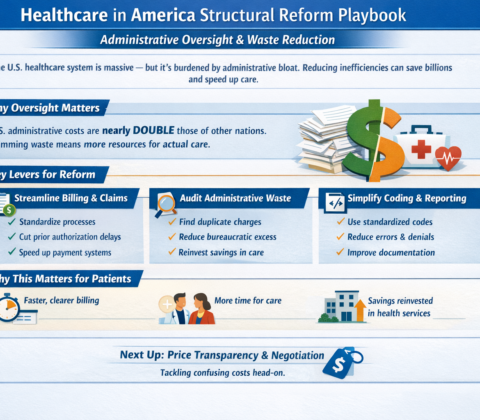
  • Limited primary care access, especially after hours or in rural areas

  • Urgent care boundaries that aren’t well explained or intuitive

  • Insurance rules that complicate same-day care elsewhere

  • Fear of “missing something serious” when symptoms escalate quickly

In those moments, people aren’t choosing the ER because it’s convenient. They’re choosing it because it feels responsible.

The Mismatch No One Talks About

Emergency medicine is designed for stabilization, not continuity.

That means:

  • The problem is addressed, not managed long-term

  • Follow-up happens elsewhere — if it happens at all

  • The ER absorbs pressure created upstream in the system

When primary care access shrinks or urgent care becomes ambiguous, emergency departments feel the strain.

This isn’t random. It’s predictable.

Reframing the Conversation

Blaming patients for showing up doesn’t fix overcrowding.
It just ignores why they came in the first place.

Most ER visits that later get labeled “non-emergent” only look that way after a clinician has evaluated them. Before that evaluation, uncertainty is real — and fear is rational.

Understanding this doesn’t excuse system inefficiencies.
It explains them.

In the next post, we’ll untangle another common source of confusion: the assumption that insurance is the same thing as healthcare — and why that belief quietly shapes access, delays, and frustration throughout the system.

Healthcare In America – The Nuts and Bolts – The Series

20260209 1451 Image Generation simple compose 01kh29jg37feytxzm554bgsaxz

Healthcare in America Series II – Kicker: Why We Struggle to Talk About the Unavoidable

YouTube player

“Welcome to the final moment in this mini-series, Healthcare in America: When Care Can’t Wait. Parts 1, 2, 3, and 4.

What we’ve just seen — urgent care, strained systems, and the people who bear the consequences — is uncomfortable. It’s uncomfortable because it is real, unavoidable, and profoundly human.

Most conversations about healthcare skip this moment. We jump to policy, budgets, and blame. We treat crises as exceptions rather than as signals. But the truth is that someone always absorbs the weight when care can’t wait. Patients, families, frontline providers, and entire communities share the burden — quietly, unevenly, and often invisibly.

This series isn’t here to solve the system in three episodes. It’s here to notice it, to observe it, and to name what exists. By doing so, we give ourselves a chance to engage with it honestly — without illusions, without slogans, and without pretending the weight disappears.

Sometimes, the first step toward understanding is simply acknowledging reality. That is what this series hopes to do: hold a mirror, pause, and recognize the unavoidable.”


Kicker: Why We Struggle to Talk About the Unavoidable – outline

Healthcare is easiest to discuss when it’s optional, scheduled, or abstract.

But urgent care does not wait for comfort, familiarity, or convenience. It arrives whether systems are ready or not. It exposes where efficiency falters, where responsibility is invisible, and where human effort quietly fills the gaps.

This is why the subject is hard to discuss honestly. It carries no simple solution, no tidy numbers, no clear hero or villain. It’s uncomfortable because it is real, unavoidable, and profoundly human.

The point of this series is not to fix healthcare in three weeks or six episodes. It is to notice, to observe, and to respect what exists when care can’t wait.

By naming this reality clearly, we give ourselves the chance to approach the next questions with eyes open — not blindsided by ideology, not distracted by slogans, but aware of the pressures, the tradeoffs, and the human work the system requires.

Healthcare In America – The Nuts and Bolts – The Series

20260204 2209 Image Generation simple compose 01kgp6nazpfhcrxdsk1vw8wt76

Healthcare in America Series II, Part 4 – How the System Is Actually Structured

YouTube player

Before we talk about costs, delays, frustration, or reform, we need to pause and do something that rarely happens in public conversations about healthcare:

Define the system.

Most of the anger and confusion people feel about healthcare doesn’t come from bad intentions or unreasonable expectations. It comes from assuming that healthcare is a single thing — a place, a person, or a service — when in reality it’s a collection of distinct parts, each designed for a specific role.

When those roles blur, frustration follows.

This week is not about blame. It’s about understanding how the pieces fit together — and just as importantly, where they don’t.

Primary Care: Continuity and Coordination

Primary care is designed to be the foundation of the system.

Its role is not urgency. It is continuity:

        • Preventive care

        • Managing chronic conditions

        • Tracking changes over time

        • Coordinating referrals and follow-ups

Primary care works best when it knows you — your history, patterns, risks, and medications. It is the long view of healthcare.
When primary care access is limited or delayed, pressure builds elsewhere in the system.

Urgent Care: Episodic and Limited by Design

Urgent care exists to handle non-life-threatening issues that can’t wait, but don’t require hospital-level resources.

Examples include:

        • Minor fractures

        • Infections

        • Wounds requiring stitches

        • Sudden but stable symptoms

Urgent care is intentionally narrow. It is not meant to replace primary care, and it is not designed to manage complex or escalating conditions. Its value is speed and accessibility — not depth.

Because its boundaries aren’t intuitive, urgent care is often misunderstood.

Emergency Departments: Stabilization, Not Ongoing Care

Emergency departments are built for one purpose: stabilization.

They exist to address:

        • Life-threatening conditions

        • Severe trauma

        • Rapidly deteriorating symptoms

        • Situations where delay could cause permanent harm

Emergency medicine is about minutes and hours, not weeks or months. It is not designed for continuity, follow-up, or long-term management — even though it is often asked to fill those gaps.

This distinction matters more than most people realize.

Specialists: Depth Without Context

Specialists focus deeply on specific systems or conditions.

They provide expertise, not oversight.

        • Narrow scope

        • Referral-driven access

        • High value in defined situations

Specialists are essential — but they rely on other parts of the system to provide coordination and context.

Hospitals, Systems, and Networks (Not the Same Thing)

One final distinction that often gets overlooked:

        • Hospitals are places where care is delivered

        • Health systems manage multiple facilities and services

        • Networks manage contracts and access

These are operational and organizational layers — not clinical ones — but they shape how care is delivered and accessed.

We’ll come back to why that matters later.

Why This Structure Matters

When one part of the system is missing, overloaded, or inaccessible, pressure shifts to another part — often one that was never designed to handle it.

That’s not chaos.

That’s predictable behavior in a complex system.

In the next post, we’ll look at one of the most visible consequences of this mismatch: why emergency rooms are overwhelmed — and why it’s not as simple as blaming patients.

Healthcare In America – The Nuts and Bolts – The Series

20260209 1450 Image Generation simple compose 01kh29fyr4emx9gyd9wnwt80y5

Healthcare in America Series II, Part 3 – Who Absorbs the Consequences When Waiting Isn’t an Option

YouTube player

“Welcome back to Healthcare in America: When Care Can’t Wait. So far, we’ve looked at what urgent care actually is, and how systems designed for efficiency respond under pressure. In this episode, we turn to the people — the ones who carry the weight when care can’t wait.

Urgency does not distribute impact evenly. Some patients are more vulnerable than others. Some families are better equipped to navigate complexity. And some communities have far fewer resources. The system doesn’t decide this intentionally. It just happens, quietly, invisibly, and sometimes tragically.

Patients absorb uncertainty. Decisions are made with incomplete information. Recovery doesn’t end at discharge — it continues at home, often with guidance that is partial, confusing, or hard to follow. Financial exposure, where it exists, is deferred but rarely avoided. Patients bear responsibility for a system that cannot fully hold them.

Families become care coordinators by default. They manage transitions between facilities, interpret medical instructions under stress, and fill gaps the system cannot or will not cover. This work is essential, unpaid, and largely invisible — yet it is critical to outcomes.

Frontline providers absorb moral and emotional load. Triage decisions, long hours, and high-stakes judgment fall on individuals with limited authority to change the system itself. Burnout, moral injury, and fatigue are structural consequences, not personal failings.

Communities absorb strain too. Rural hospitals operate with thin staffing and limited capacity. Urban safety-net hospitals serve the most complex populations with the fewest resources. When one facility closes or reaches capacity, pressure is simply shifted elsewhere, often without public recognition.

And yet, over time, this strain becomes normalized. Hallways fill, delays become routine, and improvisation becomes standard operating procedure. What begins as crisis quietly becomes baseline.

We’re not here to assign blame, propose fixes, or debate policy. Our goal is to observe and understand. By recognizing who carries the consequences, we can begin to see the human cost of urgency — the weight borne by those least able to absorb it, and often, the weight that goes unnoticed entirely.

In the next and final piece of this mini-series, we’ll step back in the kicker, to reflect on why these realities are so difficult to talk about honestly. Stay with us.”

20260204 1731 Image Generation simple compose 01kgnpr3h2ewcbt4cff45za6cf

Part 3: Who Absorbs the Consequences When Waiting Isn’t an Option – outline

Purpose of Part 3

To identify where the strain goes when urgent care collides with limited capacity — without assigning villains or prescribing solutions.

This part answers:

When the system can’t flex enough, who bends instead?


I. Urgency does not distribute impact evenly

  • Time pressure forces prioritization

  • Not all delays carry the same risk

  • Vulnerability compounds urgency

Key idea: Urgency magnifies existing inequities without intent.


II. Patients absorb uncertainty

  • Decisions made with incomplete information

  • Financial exposure deferred, not avoided

  • Recovery includes administrative burden

Care continues after discharge — often alone.


III. Families become care coordinators by default

  • Managing transitions without training

  • Interpreting instructions under stress

  • Filling gaps between institutions

This labor is invisible, unpaid, and assumed.


IV. Frontline providers absorb moral and emotional load

  • Triage decisions under constraint

  • Working beyond sustainable limits

  • Bearing responsibility without authority

Burnout here is not personal failure — it is structural.


V. Communities absorb institutional strain

  • Rural facilities stretched thin

  • Urban safety-net hospitals overburdened

  • Closures shift pressure elsewhere, not away

Capacity lost in one place reappears as urgency in another.


VI. The quiet normalization of strain

  • “This is just how it is”

  • Temporary measures become permanent

  • Crisis becomes baseline

Normalization masks risk until it doesn’t.


VII. What this part intentionally leaves open

  • No policy answers

  • No budget math

  • No ideological framing

Only the question of who is carrying what.