An op-ed on the Supreme Court, presidential immunity, and the precedent they set themselves
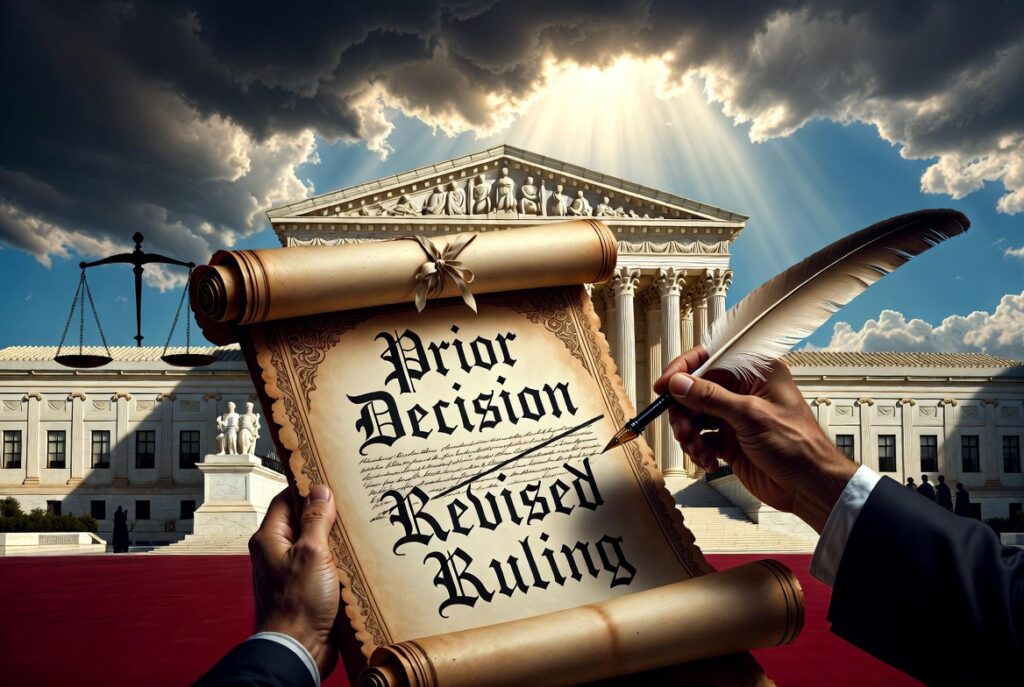
In 2022, the Supreme Court did something many legal scholars had considered unthinkable. It overturned Roe v. Wade — a precedent that had stood for nearly fifty years — and told millions of Americans that what they had built their lives around was, in the Court’s revised opinion, simply wrong. The majority didn’t apologize. They said the previous Court had erred, that the Constitution had been misread, and that it was time to correct the record.
Fine. That is their right. The Supreme Court is not a museum. It can revisit its decisions.
So here is a question nobody in power seems eager to answer: if the Court can overturn fifty years of abortion precedent in the name of correcting a constitutional error, why can’t it revisit — or at minimum, clarify — its 2024 ruling in Trump v. United States? The one that handed a former president sweeping immunity from criminal prosecution for acts committed while in office?
The argument that precedent is sacred no longer holds. The Court itself buried that argument in Dobbs. You cannot spend two years defending the Dobbs decision as a necessary correction to constitutional overreach and then turn around and say the immunity ruling is untouchable. Either precedents can be wrong and should be fixed, or they can’t. Pick one.
What the immunity ruling actually created
Trump v. United States didn’t interpret an existing constitutional protection. It invented one. No prior Court had ever held that a president carries presumptive immunity from criminal prosecution for official acts. The Constitution does not say this. The Founders, who were exquisitely sensitive to the dangers of unchecked executive power, did not write this. Six justices decided it, in 2024, under circumstances that a large portion of the country — and a significant portion of the legal community — viewed as nakedly political.
The practical result is a legal framework in which a president can commit crimes in the performance of official duties and face no criminal consequences. Legal scholars have noted, with some alarm, that the ruling’s logic is difficult to cabin. If official acts are immune, and the definition of official acts is broad, the immunity becomes nearly total.
This is the thing the Court could fix. Not by staging a dramatic reversal, but by doing what courts do: issuing a clarifying ruling that says, in effect, “We were misread. Presidential immunity was never meant to shield acts that undermine the constitutional order itself. We are clarifying the standard.”
The self-interest argument
Let’s set aside principle for a moment and talk about survival — institutional survival.
The Supreme Court’s authority rests entirely on public trust. It has no army. It cannot enforce its own decisions. What it has is legitimacy — the broadly shared belief that its rulings reflect something more than the political preferences of whoever happened to appoint the majority. That legitimacy is eroding in ways that should frighten anyone who cares about functional government, regardless of party.
After Dobbs, the Court’s approval ratings fell to historic lows. After Trump v. United States, a new wave of Americans concluded that the institution had been captured. Justices now require round-the-clock security details. The social compact that once protected them — the idea that they were above the fray — is fraying in real time.
A narrowing clarification on presidential immunity would cost the Court’s conservative majority very little jurisprudentially. They could frame it as precision, not retreat. What it would buy them is something far more valuable: the argument that they are still capable of self-correction. That they are not simply an extension of a political movement. That the institution still works.
The question they have to answer
The Founders feared two things above almost everything else: a standing army loyal to one man, and an executive who could act without legal consequence. They built a system of separated powers precisely to prevent either. The immunity ruling does not merely strain that system. It carves a hole in it.
The justices who authored and joined that ruling are not stupid people. They know what they wrote. They also know — because they are lawyers and students of history — what unchecked executive power has produced in every society that has tried it.
So the question before them is not really a legal one. It’s a simpler one: Do they believe their own stated reasoning — that no one is above the law, that the Constitution constrains even the most powerful office in the land — or don’t they?
They opened this door. They know how to close it. The only thing stopping them is the willingness to admit that the Constitution they swore to protect does not, in fact, make any person a king.
Not even one who used to live at 1600 Pennsylvania Avenue.

Comments are Disabled