Healthcare in America Structural Reform Playbook Part 4 Incentive Alignment for Prevention & Chronic Disease
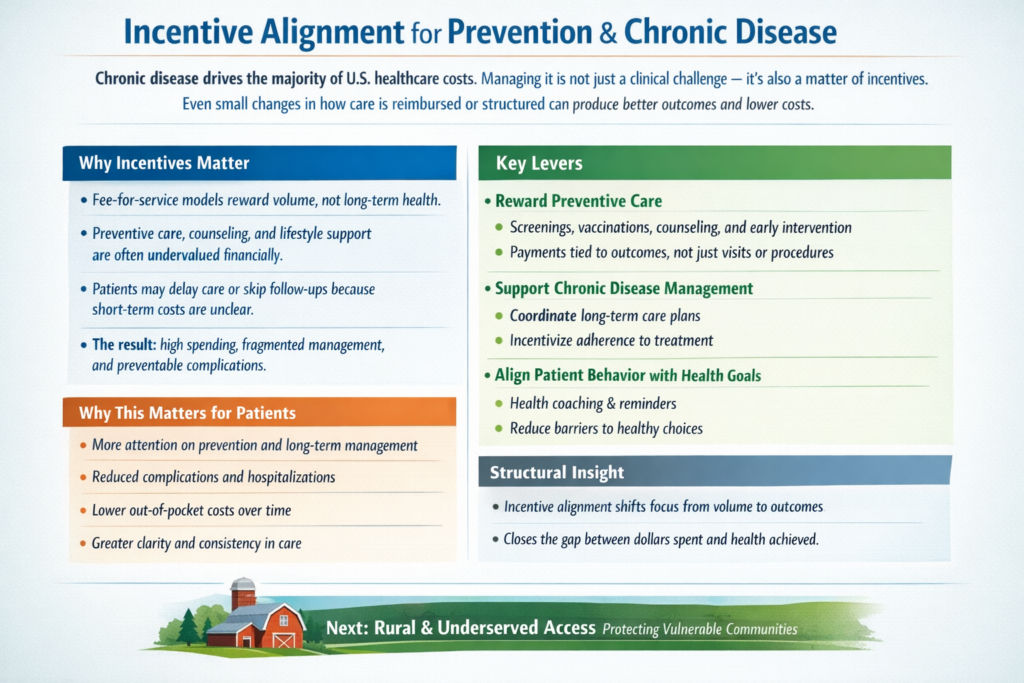
Chronic disease drives the majority of U.S. healthcare costs. Managing it is not just a clinical challenge — it’s also a matter of incentives. Even small changes in how care is reimbursed or structured can produce better outcomes and lower costs.
Why Incentives Matter
Fee-for-service models reward volume, not long-term health.
Preventive care, counseling, and lifestyle support are often undervalued financially.
Patients may delay care or skip follow-ups because short-term costs are unclear.
The result: high spending, fragmented management, and preventable complications.
Key Levers
Reward Preventive Care
Screenings, vaccinations, counseling, and early intervention
Payments tied to outcomes, not just visits or procedures
Support Chronic Disease Management
Encourage care teams to coordinate long-term plans
Incentivize adherence to treatment and monitoring programs
Align Patient Behavior with Health Goals
Use tools like health coaching, reminders, and education
Reduce barriers to preventive visits and healthy lifestyle adoption
Why This Matters for Patients
More attention on prevention and long-term management
Reduced complications and hospitalizations
Lower out-of-pocket costs over time
Greater clarity and consistency in care
Structural Insight
Incentive alignment does not require a system overhaul.
Shifting focus from procedure volume to health outcomes produces measurable improvements.
When paired with integration and transparency, it closes the loop between dollars spent and health achieved.
Transition
Next in the playbook: Rural & Underserved Access, a deep dive showing how structural levers can protect vulnerable communities and preserve essential services.



Comments are Disabled