
Everything in Published Order, Easist Way To Stay Up To Date Contact Us Or Have a Suggestion?
A note on appearances: this site reads as left-leaning, and I understand why. But what I am actually fighting against is a current administration so far to the radical right that it can no longer honestly be called conservative.
Traditional conservatism, fiscal responsibility, limited government, rule of law, respect for institutions, has been abandoned by the very party that once claimed to own it. Opposing what is happening right now doesn’t make you a liberal. It makes you someone paying attention. I’d like to think there are honest conservatives out there who feel the same way, and this page is partly an olive branch to them.
AI Disclaimer, Our Video’s are created with Heygen with an avatar, you don’t want to watch me stutter and restart. A lot of what I write is checked for major errors and grammar, sometimes Claude will insert dash ems. sorry, but the article is mine or credited. The graphics are built off my prompts.

The Price Of Freedom
Do so by canceling your account. Hurt them in the their wallets because that is all they care about anyway.
Matthew McConaughey Said It Out Loud
This weekend, Matthew McConaughey posted a video making the case for independents. One line stuck with us: “Independents aren't middle of the road. Independent is the original road. Before there was ever a Republican or

Ballot Tracking Alerts Now Available for All Oregon Voters
“Every voter in Oregon, no matter where they live, deserves the same access to their ballot and the same confidence that their vote counts,” Oregon Secretary of State Tobias Read said. “This tool gives voters
Independent Movement in South Dakota and Idaho Gaining Real Traction
Chickens in the state of South Dakota may be coming home to roost. FOX News is reporting on the removal of the President’s name from Mike Rounds’ campaign website, a trend seen across Republican candidates

Local vs. National – Vote accordingly.
So, vote for your community and your state's needs. Local government is NOT national government. We can balance both. National politics and state politics may look like the same thing, but they are really two
Ballot tracking now available statewide!
Date: October 15, 2026 Follow for updates: Facebook, Instagram, X, Bluesky, and YouTube It’s a big week, Oregon! Let’s get right into it. Ballots are in the mail, and now every voter in Oregon can sign up to
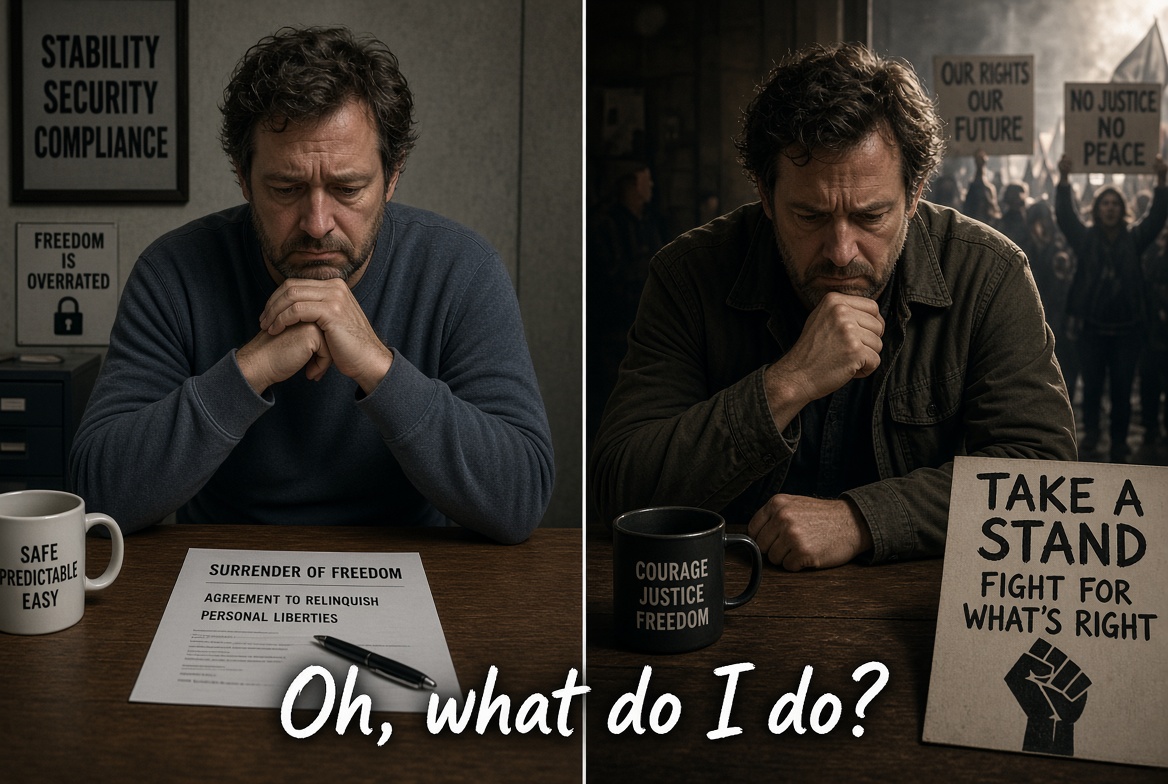
Well, Have you decided yet?
Wake up now and decide what your going to do because if you wait to long, it will be to late. That doesn’t mean give up on voting, Oh hell no. That is still our
Secretary Read: ‘It’s Time to Get Ready to Vote’ – Ballots In The Mail
PRESS RELEASE Date: October 13, 2026 Contact: Connor Radnovich | connor.radnovich@sos.oregon.gov Secretary Read: ‘It’s Time to Get Ready to Vote’ SALEM, OR — Today, October 13, is the deadline for eligible Oregonians to register to vote

It Was a Gift, What Are We Going To Do?
The only question I have now is what we're going to do with what we were handed. What are we going to do? Are we going to get what we deserve? It's up to you.
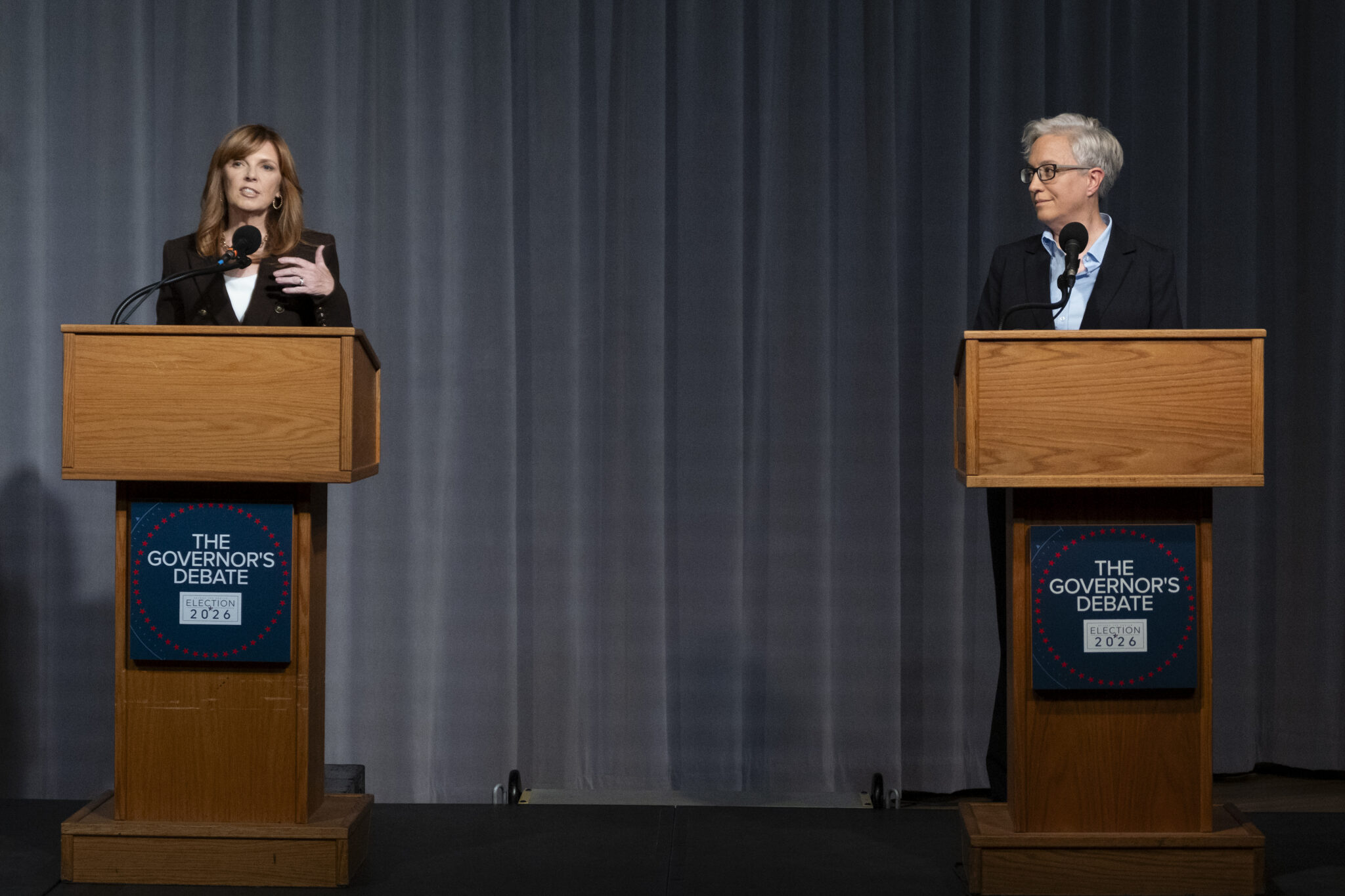
Oregon Governor – I am going to Gamble – Video
Governor. Not senator. That distinction matters to me. I am not suddenly becoming a Republican. I am not voting for Trump. I am not endorsing MAGA. I am making a decision about who I think
MEDIA ADVISORY: Secretary Read to Hold Press Conference as Counties Prepare to Mail Ballots
The voter registration deadline is October 13 and county elections officials will begin sending ballots to Oregon voters on October 14
Oregon Governor – I am going to Gamble
Governor. Not senator. That distinction matters to me. I am not suddenly becoming a Republican. I am not voting for Trump. I am not endorsing MAGA. I am making a decision about who I think
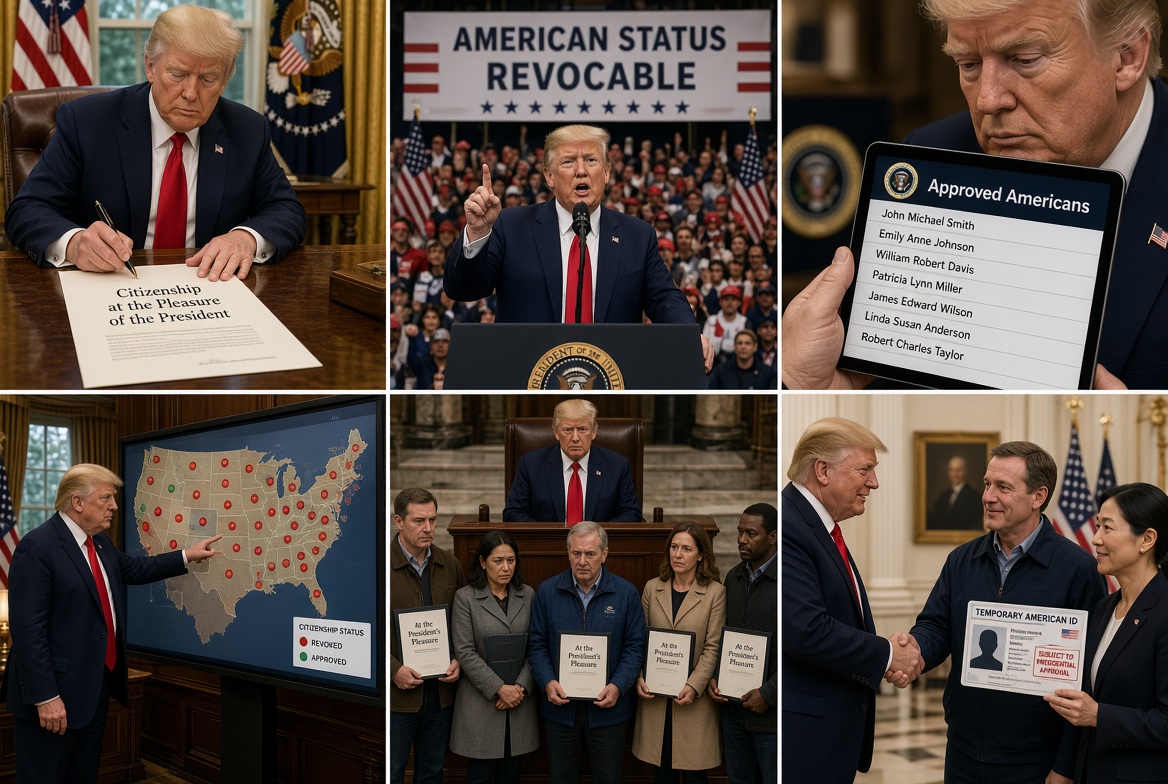
Just being an American will be defined as being at the pleasure of the President – Video
if this isn't stopped, just being an American will be defined as being at the pleasure of the President.

NEWSFLASH: Trump makes diesel deal with Putin
I'm a conservative, a true Republican, not a RINO, like Trump.
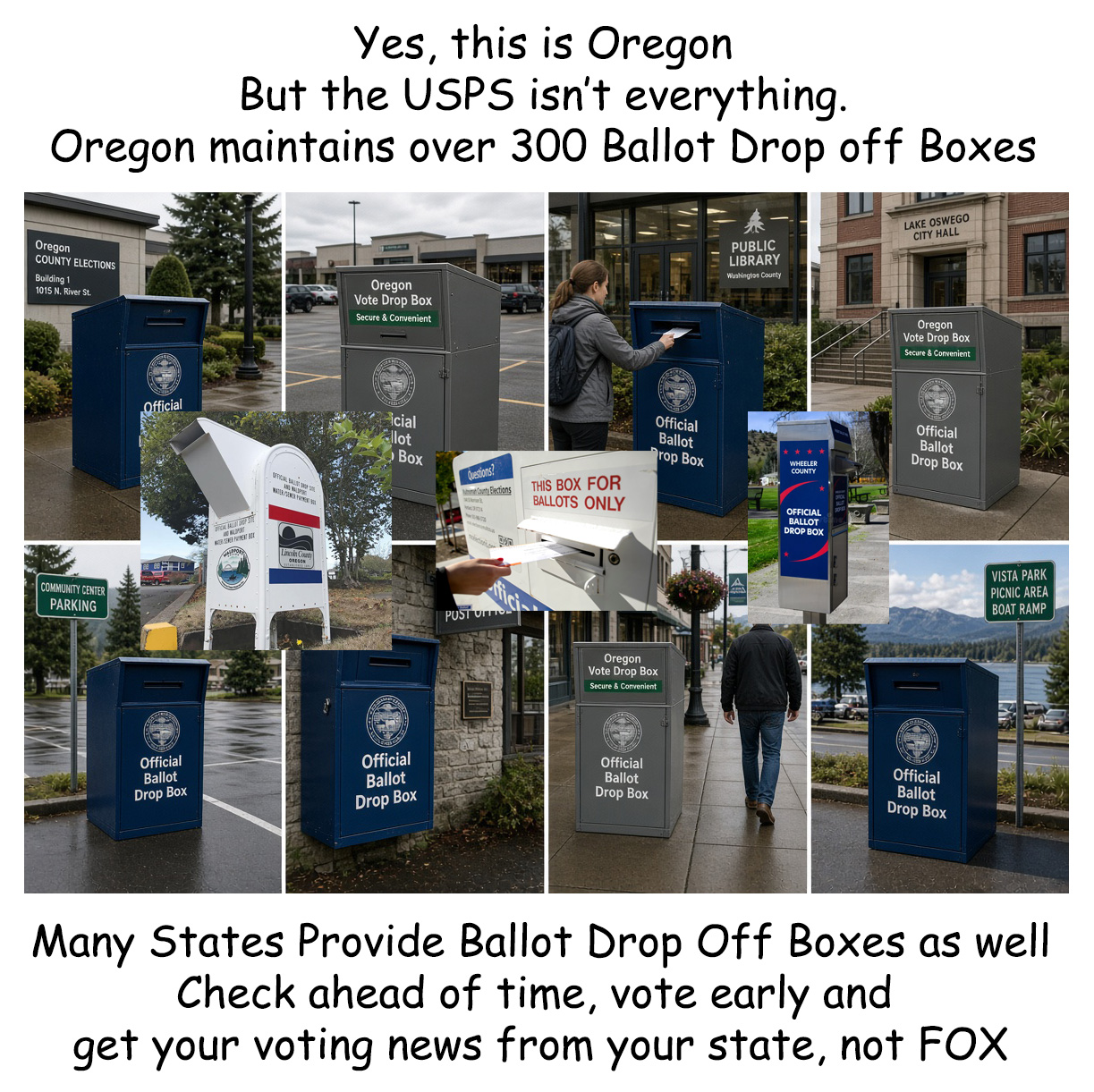
Ballot Drop Off Boxes
In May 2026 (around the primary election), officials noted that Oregon has 321 official drop boxes (also called drop sites). These are available until 8 p.m. on Election Day, are monitored, and include fire-suppression features.

Midterms are coming up fast. Faster than you can kiss Freedom Goodbye.
My memes can be stand alone, the message adds to them, share them, pass them around, post them where I can’t get to. (Right click on an image, copy then paste) Those with Truth Social

OH My God We Are In Power! – Video
Maybe that’s the question we should be asking before we decide that simply changing who holds the gavels means we have changed the system. Because making that decision tomorrow may be too late.
One Week Left to Register to Vote – Oregon, but probably most States
The voter registration deadline is October 13, so now’s a perfect time to double‑check that your information is up to date. Whether you’re registering for the first time, updating your address, or just making sure everything

Elections and Media in the Modern Era – Part 3 of 3 Dark Money Influence: Who Shapes What You See? – Video
Elections are no longer a simple choice between candidates. They are shaped by networks of funding, media channels, and targeted messaging. Awareness of how information flows—and who is paying to shape it—helps voters make decisions

Who Pays for American Politics? Citizens United and the Rise of Big Money by John Turley MD
In January 2010, the U.S. Supreme Court issued one of the most consequential and controversial campaign-finance decisions in modern American history: Citizens United v. Federal Election Commission. The 5–4 ruling dramatically altered the regulatory restrictions

Elections and Media in the Modern Era – Part 3 of 3 Dark Money Influence: Who Shapes What You See?
Elections are no longer a simple choice between candidates. They are shaped by networks of funding, media channels, and targeted messaging. Awareness of how information flows—and who is paying to shape it—helps voters make decisions
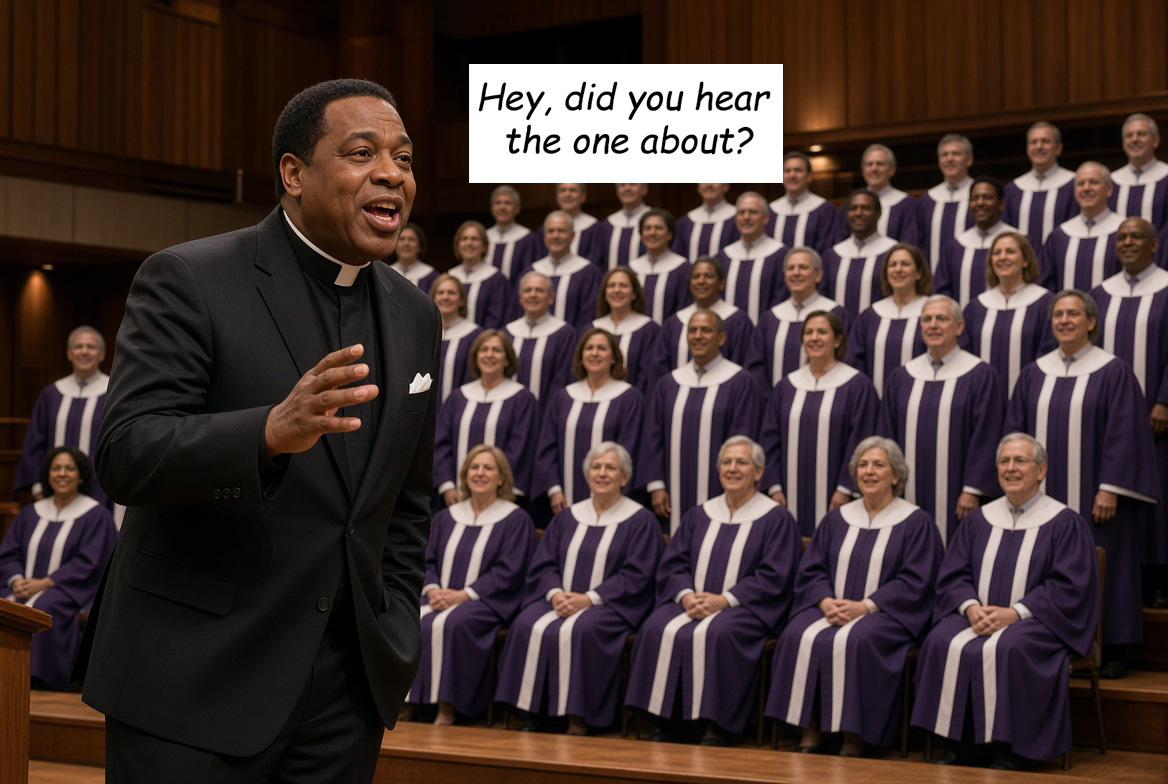
The Choir – Video
The point isn't to win. The point is that they now know something happened that they didn't know happened five minutes earlier. That is more useful than winning an argument with somebody who already agrees
Just being an American will be defined as being at the pleasure of the President.
if this isn't stopped, just being an American will be defined as being at the pleasure of the President.
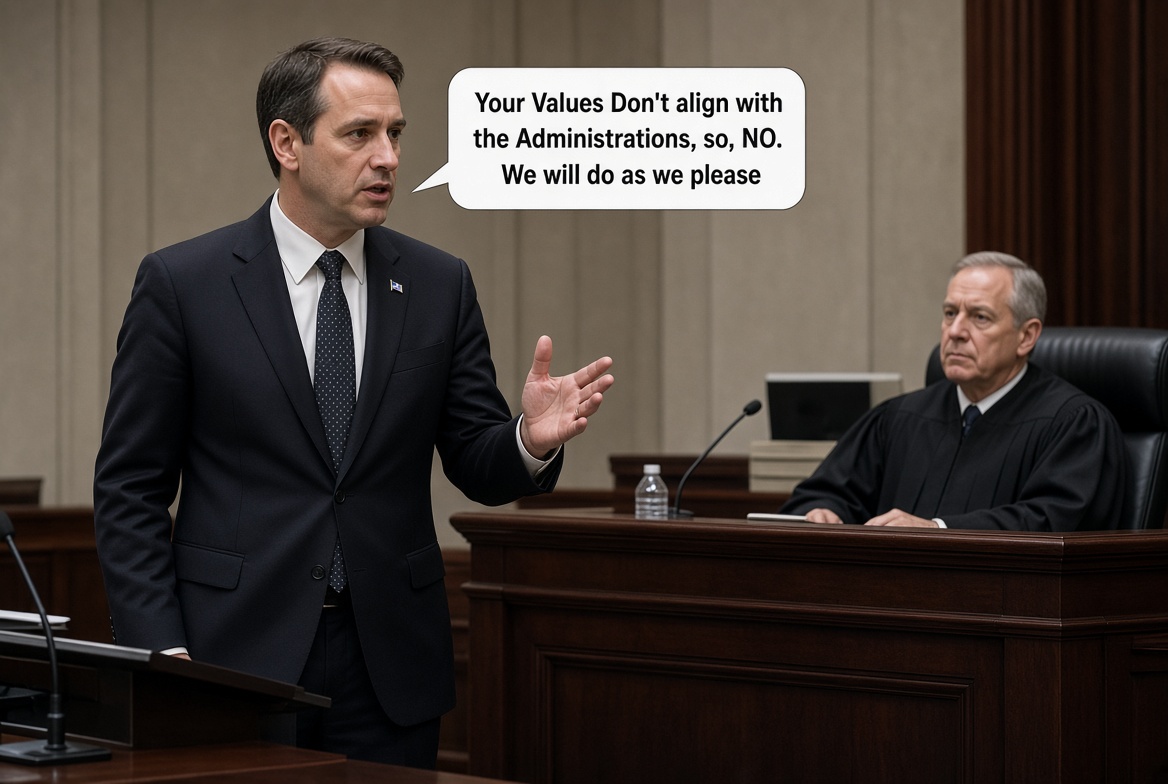
Is There Still a Rule of Law? – Video
A lot of Americans don't even know this is happening. I found that out in a store a couple of days ago. I mentioned the ICE shootings and got the immediate response: “Well, we have

I Voted For The Devil
when will misery will end?
Is There Still a Rule of Law?
A lot of Americans don't even know this is happening. I found that out in a store a couple of days ago. I mentioned the ICE shootings and got the immediate response: “Well, we have
The Forward Party Message is Catching 🔥🔥🔥
U.S. Senate Candidate (South Dakota) Brian Bengs on MSNOW: “I’m going to caucus with the independents. Period.”

The Outrage Is Not an Accident – Video
Nobody's asking you to switch teams forever. Nobody's asking you to feel bad for the values you hold. The ask is smaller and harder than that: notice when you're being fed fear instead of information,
One month to go! What is Forward doing, and how can you help?
We still have one more month to go all in and get some Forwardists elected. But before I fill you in on all the upcoming opportunities, first I need to say a huge THANK YOU
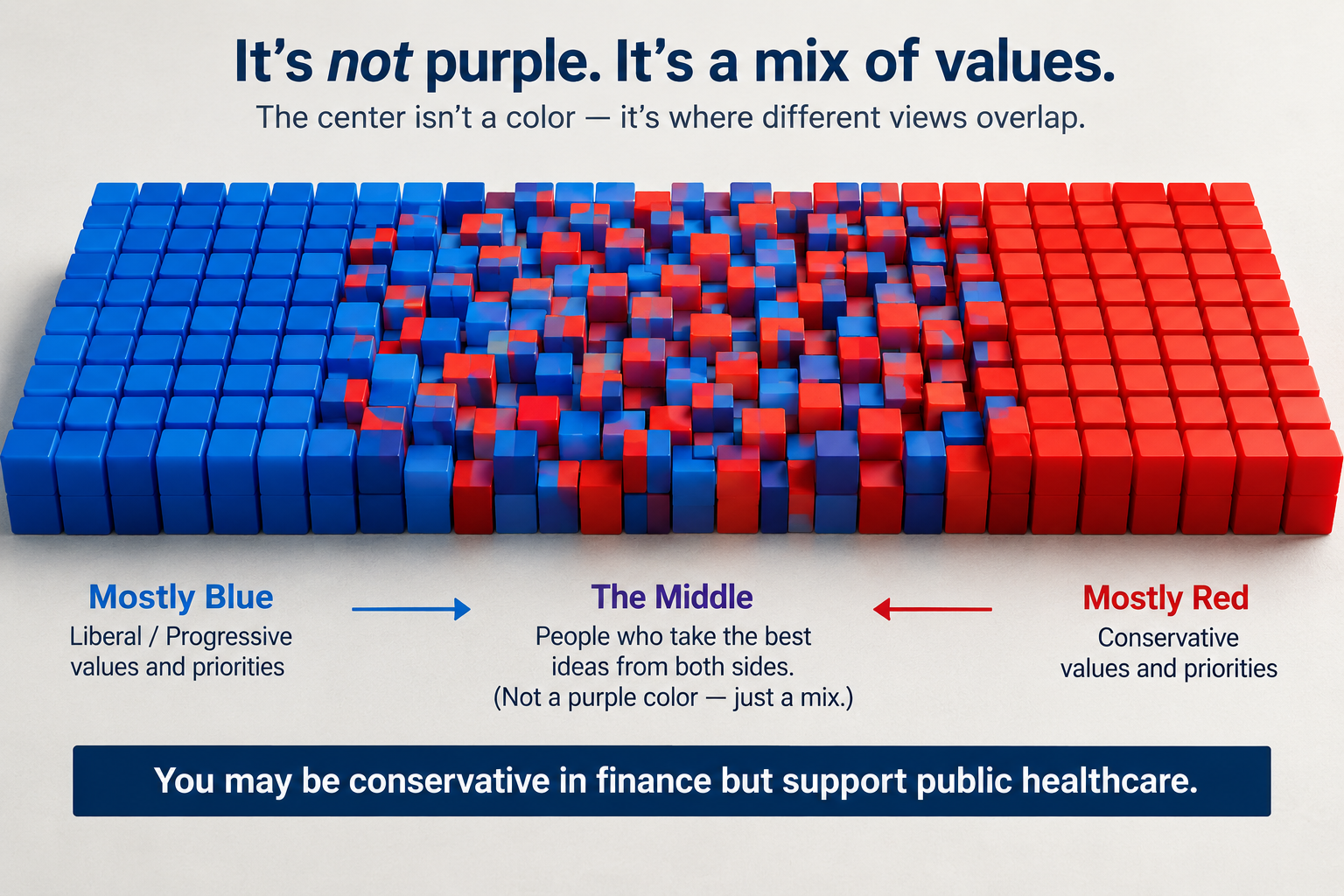
The Color Purple and Independents Are Not a COLOR
The difference between us is which side we started on and where our crossovers are located. One person may have the Conservative view of smaller government and yet support the idea of universal healthcare. This
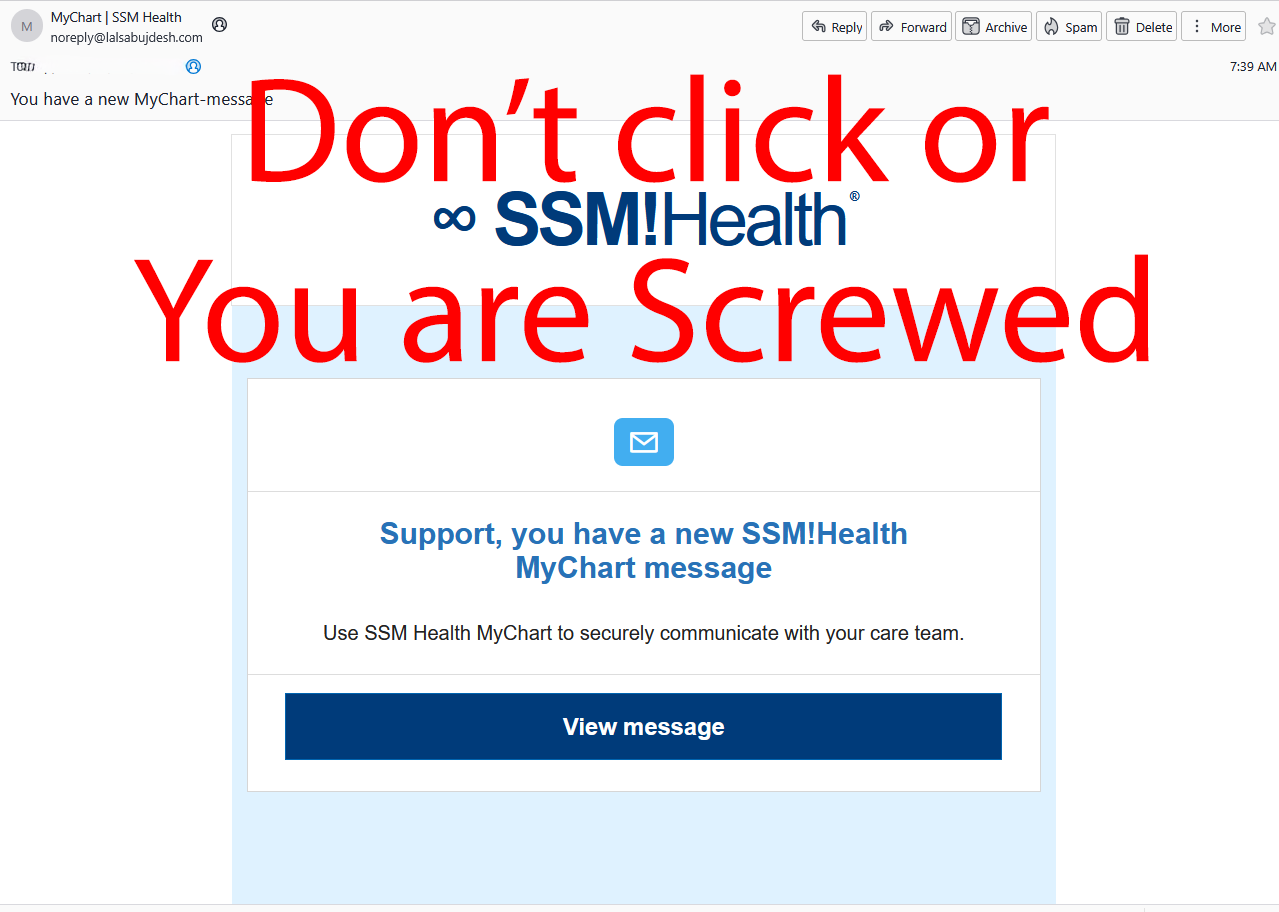
Public Announcement – Not Politics but $$
Long story short: I thought my cash cards had been skimmed. Oh no—nothing that simple. I activated a credit card on Saturday at 1 pm; it was declined at 2 pm. Wells Fargo caught the

Elections and Media in the Modern Era – Part 2 of 3 Media: Gatekeepers No More – Video
The result is clear: voters now navigate a complex, fragmented media environment long before they step into a booth. Traditional gatekeepers no longer hold a monopoly on political information. And that leads directly to the
Get Ready to Vote
The Supreme Court, on September 25th, lifted restrictions on a federal voters database system called Systematic Alien Verification for Entitlements, or SAVE, in their efforts to verify the eligibility of voters on their rolls. US
California Endorsement and a Warm Embrace of Independence 09/29/2026
Forward Party Endorses Independent Congressional Candidate Rep. Kevin Kiley in California's Newly Drawn 6th DistrictWashington D.C. – September 29, 2026 – The Forward Party recently announced its endorsement of Independent Rep. Kevin Kiley, who is

The MAGA Fracture – The MAGA CON
Well, waste your time, because this dude is just running another con on you. The only thing you can do is call his bluff. You have the cards, but you can’t win the game if

Elections and Media in the Modern Era – Part 2 of 3 Media: Gatekeepers No More
The result is clear: voters now navigate a complex, fragmented media environment long before they step into a booth. Traditional gatekeepers no longer hold a monopoly on political information. And that leads directly to the
Notice of Temporary Administrative Order OAR 165-007-0550
For statewide elections, including the upcoming general election in November 2026, counties are required to report results on a designated state website. But one or more Oregon counties will have one or more local contests

10 Steps To Fix What Trump Has Broken And mend everything thereafter by Robert Reich
If we want to clean up the mayhem Trump and his regime have created — and prevent anything like this from happening again — here are the 10 big reforms every political candidate should support.
Secretary Read: Supreme Court Ruling Will Have No Impact on Oregon’s Election
“Today's ruling by the Supreme Court will have no impact on Oregon's upcoming election. Oregon will not participate in a flawed system that will likely result in eligible voters losing their right to vote. However,
OH My God We Are In Power!
Maybe that’s the question we should be asking before we decide that simply changing who holds the gavels means we have changed the system. Because making that decision tomorrow may be too late.

Screwed, Blued, and Tattooed – Video
And it's the same when the far left keeps referring to all Republicans as MAGAs. You don't need to apologize, but if you're not a card-carrying MAGA, tell someone that. Hey, I'm a Republican, I'm
Forward Party Endorses Diana DiZoglio + Friends at MAF in South Dakota!
The Forward Party recently announced its endorsement of Massachusetts State Auditor Diana DiZoglio, who is running for re-election in November, continuing the party's commitment to supporting officials who fight for transparency and accountability regardless of
The Outrage Is Not an Accident
Nobody's asking you to switch teams forever. Nobody's asking you to feel bad for the values you hold. The ask is smaller and harder than that: notice when you're being fed fear instead of information,
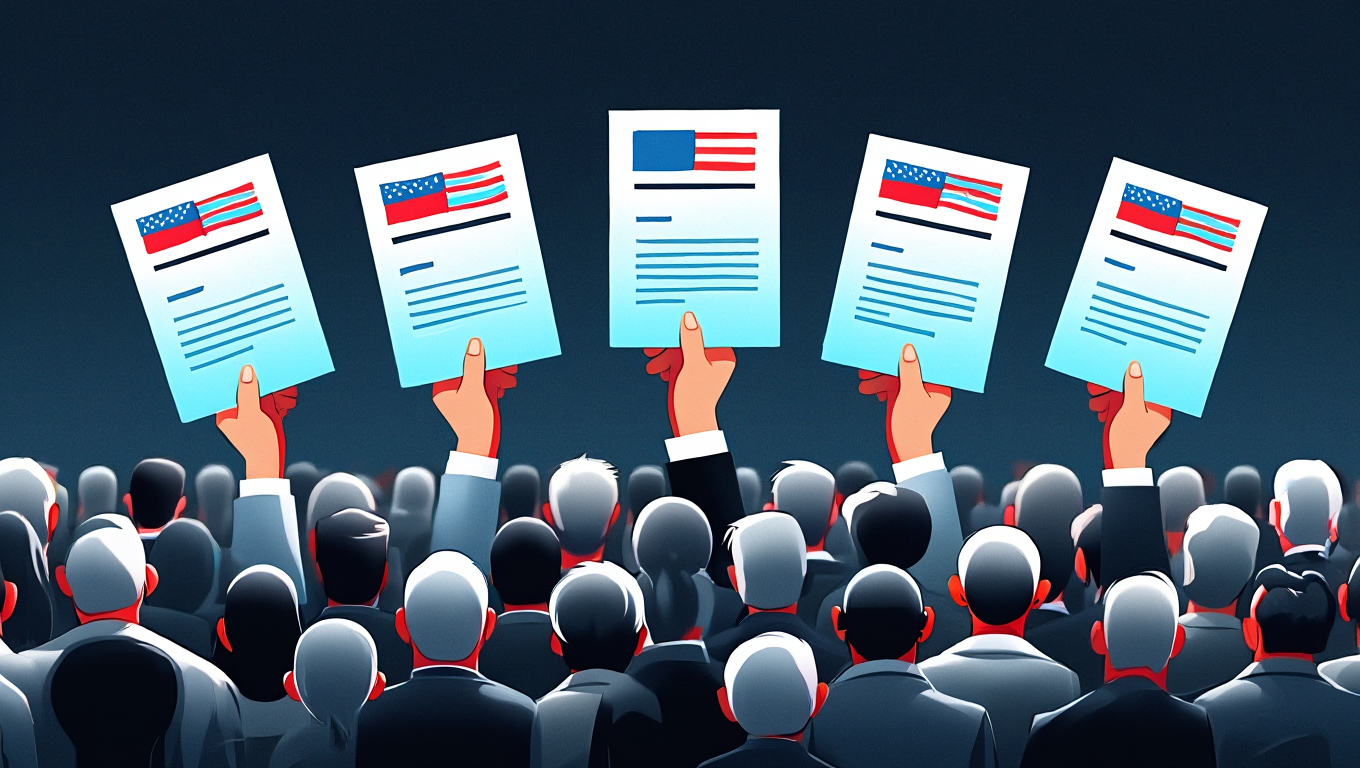
Elections and Media in the Modern Era – Part 1 of 3: Elections – Behind the Ballot Box – Video
Understanding why every vote matters is only the first part of the story. Equally important is how the information voters receive before Election Day is shaped and delivered. From traditional network broadcasts to social media,

Different Strokes — How Many Chips Do You Want? – Video
How many chips do you want? And while I'm telling you what I'm looking for in the next president, there's one more thing. I want a team from day one. Not a successor chosen in
Oregon Ballot Drop Off Boxes
In May 2026 (around the primary election), officials noted that Oregon has 321 official drop boxes (also called drop sites). These are available until 8 p.m. on Election Day, are monitored, and include fire-suppression features.
Different Strokes — How Many Chips Do You Want?
How many chips do you want? And while I'm telling you what I'm looking for in the next president, there's one more thing. I want a team from day one. Not a successor chosen in

Healthcare in America — On the Sidelines – Retirement and That Piggy Bank, Your Home – Video
So if you are approaching retirement, or already retired, and you are thinking about selling a home that has appreciated substantially, don't look only at the sale price and the capital-gains tax. Look at what

Elections and Media in the Modern Era – Part 1 of 3: Elections – Behind the Ballot Box
Understanding why every vote matters is only the first part of the story. Equally important is how the information voters receive before Election Day is shaped and delivered. From traditional network broadcasts to social media,
Voting Guidance TV PSA Launched by Oregon Secretary of State
PRESS RELEASE Date: September 21, 2026 Contact: Tess Seger | tess.seger@sos.oregon.gov Voting Guidance TV PSA Launched by Oregon Secretary of State SALEM, OR — Oregon Secretary of State Tobias Read is broadcasting new public service
Healthcare in America — On the Sidelines – Retirement and That Piggy Bank, Your Home
So if you are approaching retirement, or already retired, and you are thinking about selling a home that has appreciated substantially, don't look only at the sale price and the capital-gains tax. Look at what

Healthcare in America — On the Sidelines – Medicare for All Sounds Simple – Video
Ask how. Where does the money come from? Who pays? Who gets paid? What happens to the people and businesses already in the system? How long does it take? What happens during the transition? What
Healthcare in America — On the Sidelines – Medicare for All Sounds Simple
Ask how. Where does the money come from? Who pays? Who gets paid? What happens to the people and businesses already in the system? How long does it take? What happens during the transition? What
The Outrage Is Not an Accident – Video
Nobody's asking you to switch teams forever. Nobody's asking you to feel bad for the values you hold. The ask is smaller and harder than that: notice when you're being fed fear instead of information,

Uh, Hey Canada, busy Friday?
Maybe a nice king crab and salmon dinner and a bottle of Pinot Noir from one of my Willamette Valley wineries. Not commitments, maybe just some nice conversation away from the noise. After all, we
Is it Official Election Mail? A PSA from Secretary of State Tobias Read
The Official Election Mail logo is a trademarked design that can only be used on mail pieces created by, or on behalf of, an election official that is mailed to or from a U.S. citizen
Healthcare in America — The Next Conversation Part 8 – Where Do We Go From Here? – Video
It doesn't belong to Democrats. It doesn't belong to Republicans. It doesn't belong to any political label. It belongs to the people who would have to live with whatever we eventually build.
Don’t Check Just the Box
Sometimes that may mean voting for a Republican. Sometimes a Democrat. Sometimes someone outside the two major parties. And sometimes it may mean leaving a box unchecked. The point is simple: don’t vote for the
Forward Party CEO Weighs in After US Supreme Court Denial 09/17/2026
I generally don't weight in on Shared Posts, but if you think it's time to weaken the 2 party stranglehold on today's politics and Superpac money that controls the candidates and the elections, then you
Healthcare in America — The Next Conversation Part 8 – Where Do We Go From Here?
It doesn't belong to Democrats. It doesn't belong to Republicans. It doesn't belong to any political label. It belongs to the people who would have to live with whatever we eventually build.
The Moment We’ve Been Building Toward
The Forward Party is bringing moderates, conservatives, and progressives together to heal our political divisions, find our shared ground, and create a brighter future for America. Forward Party candidates are accountable to the voters, and

Audit: To Preserve Federal Funding, OHA Must Do More to Prevent Duplicate Medicaid IDs
Auditors made five recommendations to improve the detection and prevention of duplicate IDs, and, if incorrect payments do occur because of duplicate IDs, to quickly correct overpayments. As part of Secretary Read’s new audit follow-up
Healthcare in America — The Next Conversation Part 7 – The Elephant in the Room – Video
What should be covered? Who should administer it? Who should pay for it? What happens to the systems we already have? What happens to the people who work in the existing system? What happens to
Screwed, Blued, and Tattooed
And it's the same when the far left keeps referring to all Republicans as MAGAs. You don't need to apologize, but if you're not a card-carrying MAGA, tell someone that. Hey, I'm a Republican, I'm
Less than 50 days left to help Forward Party win! 09/15/2026
Hello Forward Friends- Hope your September is going well. We had an incredible Meet the Forwardists event with NBC's Chuck Todd last week, thank you so much to everyone who was able to join!
Healthcare in America — The Next Conversation Part 7 – The Elephant in the Room
What should be covered? Who should administer it? Who should pay for it? What happens to the systems we already have? What happens to the people who work in the existing system? What happens to
Supreme Court Decision: Oregon Will Vote-By-Mail in Upcoming Election
Tonight, the U.S. Supreme Court rejected President Donald Trump’s attempt to restrict mail-in voting ahead of the 2026 midterm elections, blocking changes that would have caused major disruption just days before the first ballots are
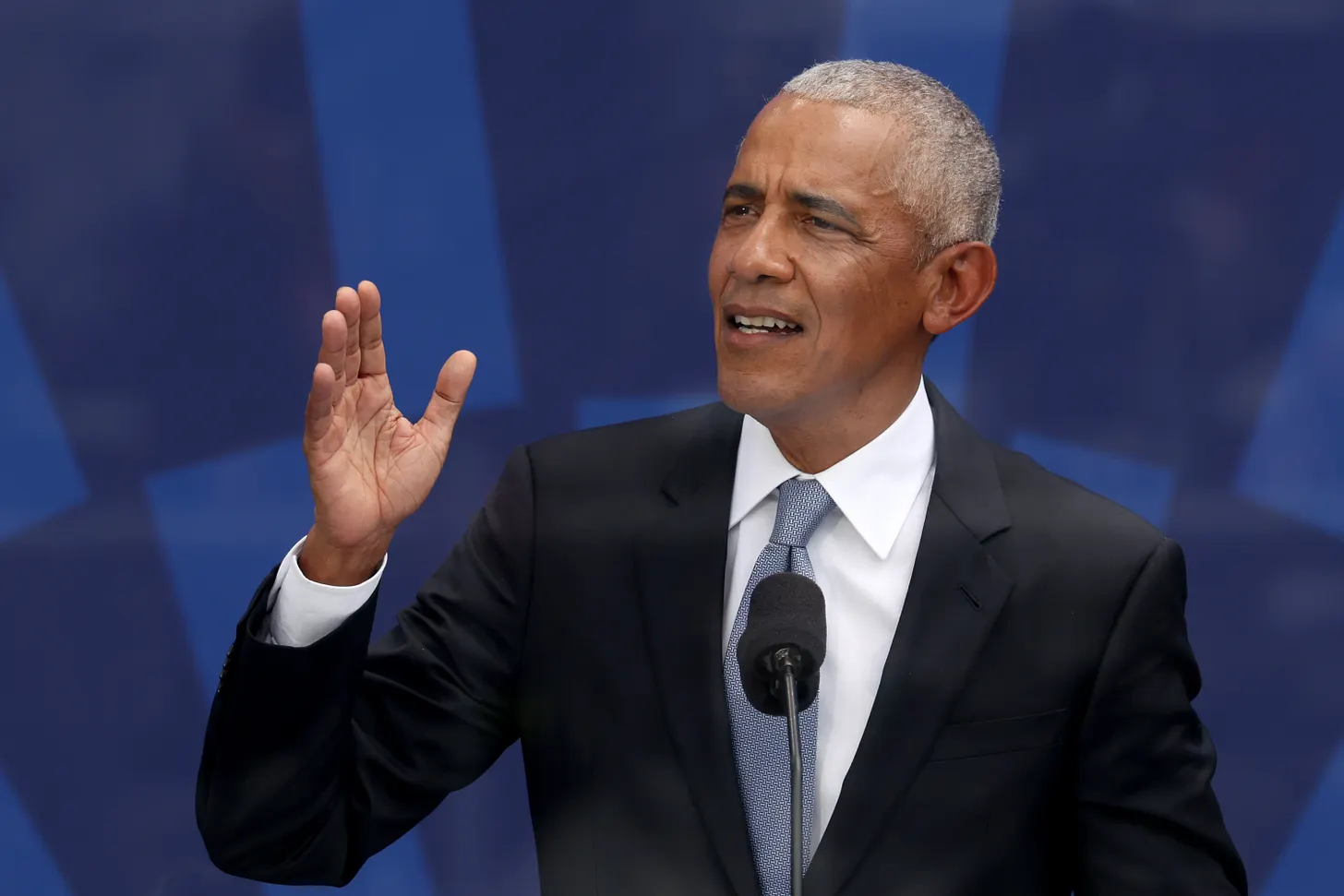
Obama, Trump and the Age of AI by Dan Rather and Team Steady Sep 14, 2026
Then along comes artificial intelligence (AI). The new technology has stormed into our lives whether we like it or not, and suddenly it doesn’t matter for whom you voted.
Forward Party CEO Agrees with New Mexico Attorney General
“Simply put, New Mexico’s attorney general — a Democrat — agrees that asking minor party candidates in the state to achieve many multiples of what is required of legacy party candidates is unfair, prevents reasonable

Registered Republican found the Vaccine – Video
Pay attention to your local politics more than the national hoopla. What works in New York isn't what works in Mayberry, and decent national leadership will support that difference instead of forcing everyone to bend
Healthcare in America — The Next Conversation Part 6 – Wait a Minute – Video
That matters because healthcare isn’t just doctors and hospitals. It is an enormous ecosystem of people, businesses and institutions that depend upon one another. There are rural hospitals that are already struggling, private clinics, specialists,

The Devil Went to D.C.
The Devil Went to D.C.

The Greatest Firsts of All Time
Elephant's Ink Room Believe It or Not
Healthcare in America — The Next Conversation Part 6 – Wait a Minute
That matters because healthcare isn’t just doctors and hospitals. It is an enormous ecosystem of people, businesses and institutions that depend upon one another. There are rural hospitals that are already struggling, private clinics, specialists,

Healthcare in America — The Next Conversation Part 5 – Where Does the Money Come From? – Video
And if we are serious about healthcare for all, then eventually we have to be willing to sit down, put all the numbers on the table and figure it out. It won't be easy. But
Registered Republican found the Vaccine
Pay attention to your local politics more than the national hoopla. What works in New York isn't what works in Mayberry, and decent national leadership will support that difference instead of forcing everyone to bend

Is There No Decency
Donald J. Trump. You have insulted and offended me and my family. And I would imagine you have insulted and offended just about every person who has ever served in the military, and every first
Healthcare in America — The Next Conversation Part 5 – Where Does the Money Come From?
And if we are serious about healthcare for all, then eventually we have to be willing to sit down, put all the numbers on the table and figure it out. It won't be easy. But
Legislature Passes Emergency Funding for Drop Boxes, Improved Ballot Tracking for Voters
Emergency funding of $618,000 will pay for additional drop box locations and expenses related to an anticipated increase in drop box usage. Implementation will require county support, site preparation, and procurement.

Would I Lie To You?
I'm going to give every adult $5,000.00 if I stay in POWER, oops, there it went again, in office. Yes, $5,000.00. Just don't think about the issues, don't think about wars, don't think about healthcare,
Healthcare in America — The Next Conversation Part 4 – So What Would Healthcare for All Actually Look Like? – Video
The point I am trying to make is that there isn't going to be an easy answer. We can talk about healthcare for all as a wonderful goal, and perhaps it is. But eventually somebody

Your Government at Work? Or How to Limit Free Speech
When the FCC can strong-arm a network into yanking a Senate candidate’s interview off the air—and it happens twice, to two different hosts covering the exact same race—that’s not some random regulatory hiccup. That’s a

“The Power of a Trump Endorsement”
The Republican view it as the mark of Cain, the albatross around the neck that will surely drag them down.
Healthcare in America — The Next Conversation Part 4 – So What Would Healthcare for All Actually Look Like?
The point I am trying to make is that there isn't going to be an easy answer. We can talk about healthcare for all as a wonderful goal, and perhaps it is. But eventually somebody

The Greatest Show On Earth — Sorry Trump, Your Flatulence Still Stinks – Video
Make your decisions with thought. Because whoever walks into the White House next walks in carrying way too much inherited power, and must be honestly, genuinely willing to give a lot of it back for
Oregon Leaders Stand United in Protecting Vote-By-Mail Elections
7,314 ballots received during the 7-day post-election grace period in the May 2026 primary were rejected for having a late postmark. This represents an increase of 35% compared to 5,404 ballots rejected for late postmarks
Secretary Read Requests Emergency Funding for Election Security
PRESS RELEASE Date: September 8, 2026 Contact: Connor Radnovich | connor.radnovich@sos.oregon.gov Secretary Read Requests Emergency Funding for Election Security Additional resources would provide voters with greater confidence and transparency amid federal attacks on elections SALEM, OR
Healthcare in America — The Next Conversation – Before We Go Any Further – Video
Because if we aren't willing to make that commitment up front—if we're only willing to support healthcare for all as long as it is easy, inexpensive and politically convenient—then there isn't much reason to continue

It’s Up to You.
Trump is not a Republican. He is the original RINO. And too many of us let him get away with it.
The Greatest Show On Earth — Sorry Trump, Your Flatulence Still Stinks
Make your decisions with thought. Because whoever walks into the White House next walks in carrying way too much inherited power, and must be honestly, genuinely willing to give a lot of it back for

Scalloped Potatoes
18 dead. Most of our missiles depleted. The Aircraft Carrier Abraham Lincoln — a bit rusty and overworked, her sailors thinking about swimming home, every last one of them dreaming of a nice warm plate
Healthcare in America — The Next Conversation – Before We Go Any Further
Because if we aren't willing to make that commitment up front—if we're only willing to support healthcare for all as long as it is easy, inexpensive and politically convenient—then there isn't much reason to continue

The Only War Story He Ever Told, From The Long View From 1964 – Video
After he passed away, going through everything — laying out the Colonel's uniform, coming across the Bronze Star, the Purple Hearts, the commendations — having died from being Army Intelligence and White Sands Testing. It
Healthcare in America — The Next Conversation – Veterans and Medicare: Why You Probably Need Both – Video
"If I already have VA healthcare, do I really need Medicare?" Many veterans assume the answer is no. The VA itself says otherwise. In fact, the Department of Veterans Affairs strongly encourages eligible veterans to
Healthcare in America — The Next Conversation – Veterans and Medicare: Why You Probably Need Both
"If I already have VA healthcare, do I really need Medicare?" Many veterans assume the answer is no. The VA itself says otherwise. In fact, the Department of Veterans Affairs strongly encourages eligible veterans to

The 75 Most Corrupt Things Trump Did in 2026 by Ron Filipkowski
These examples are limited to instances where Trump used the presidency to enrich himself, family members and/or wrangle or extort donations to his PAC
Rebuilding How We Choose Leaders – Video
Not just a candidate. A governing team. Two people who complement each other, who can genuinely work together, and who both understand the responsibility of the presidency. Two people where, if one had to step
MEDIA ADVISORY: Vote-by-Mail Press Conference with Oregon Secretary of State Tobias Read, U.S. Senators Ron Wyden and Jeff Merkley
PUBLIC ACCESS: The press conference will stream in-full on the Oregon Secretary of State YouTube page and oregonlegislature.gov
Secretary Read: Ruling Reaffirms Oregon’s Vote-by-Mail Elections Will Proceed As Planned
SALEM, OR — Today, a federal judge extended a legal block against the U.S. Postal Service from implementing its rules that would illegally restrict vote-by-mail in the upcoming general election.
