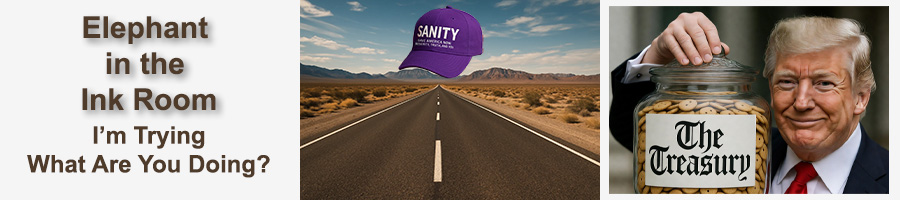
Here’s something you can test yourself, no research degree required. Open your inbox. Count how many fundraising emails from either party mention a policy detail versus how many mention a villain. Scroll your social feed for five minutes. Count how many posts from either side describe the other as “evil” versus how many describe a disagreement.
I’ll save you the counting. It won’t be close.
That’s not because one side is worse than the other. It’s because both sides are being run through the same machine, and the machine doesn’t care who wins. It only cares whether you open, click, share, and donate.
Political fundraising emails are A/B tested the same way a shoe company tests two versions of an ad. Somebody writes version A, calm and detailed. Somebody writes version B, urgent and scary. They send both to a slice of the list, measure which one gets opened and which one gets money, and then everybody gets version B. Every cycle, every party, this has been true since direct mail. Fear and urgency outperform nuance. Not sometimes, reliably, across decades, regardless of which side is running the campaign. “The commies are coming for your guns” and “democracy dies if you don’t give $5 right now” are the same product with different labels on the bottle.
======================================
So here’s the ask, and it isn’t complicated: stop voting the party line because it’s your team, and start voting for the candidate who actually earns it. That might mean sticking with your party most years and breaking from it some years. It might mean voting in a primary specifically to weaken a candidate you can’t stand, even in your own party. It costs you nothing but the discomfort of not being predictable to the machine that’s counting on you to be.
Nobody’s asking you to switch teams forever. Nobody’s asking you to feel bad for the values you hold. The ask is smaller and harder than that: notice when you’re being fed fear instead of information, on either side, and vote like you noticed.