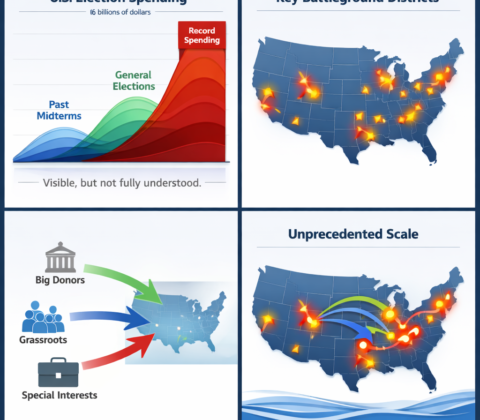
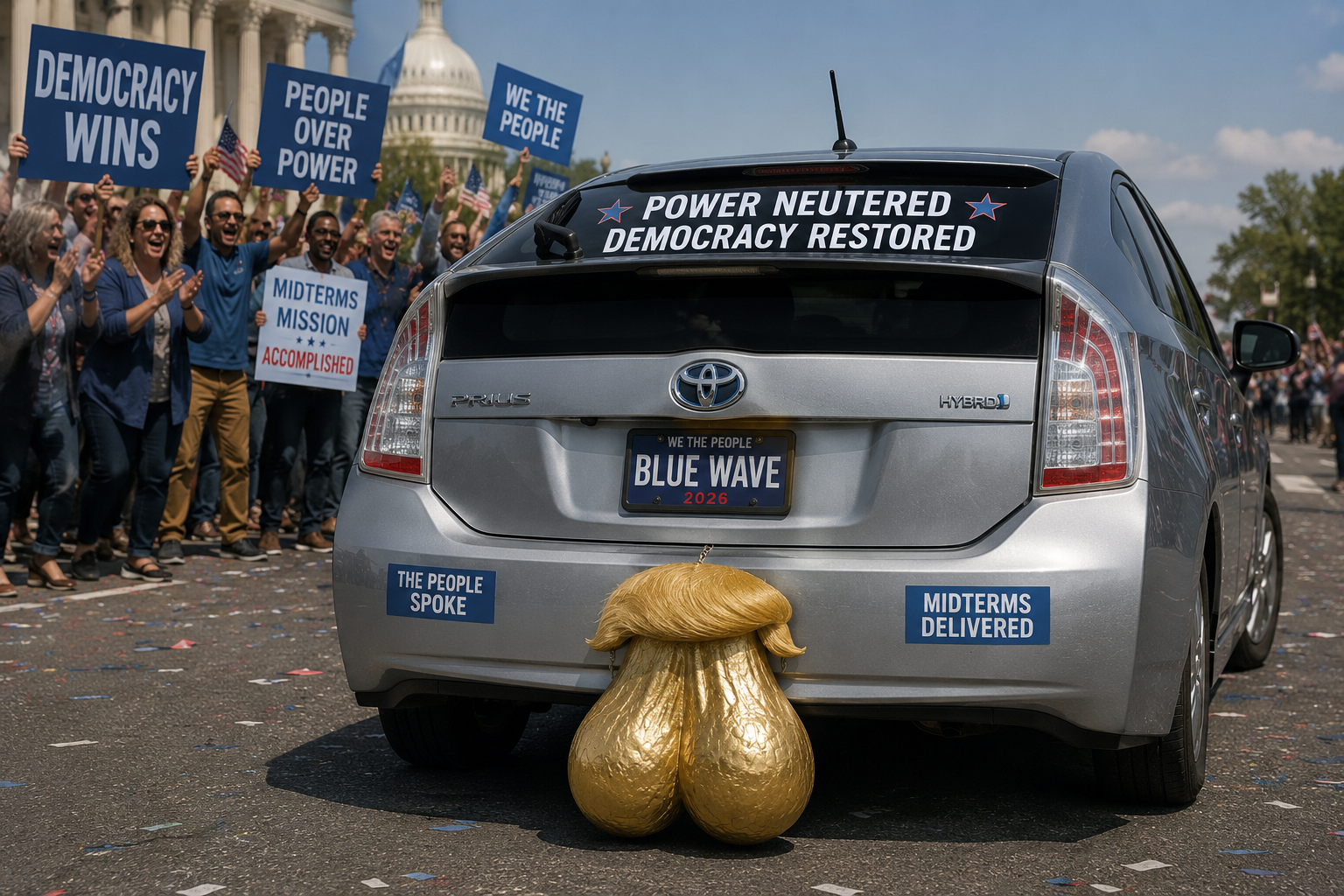

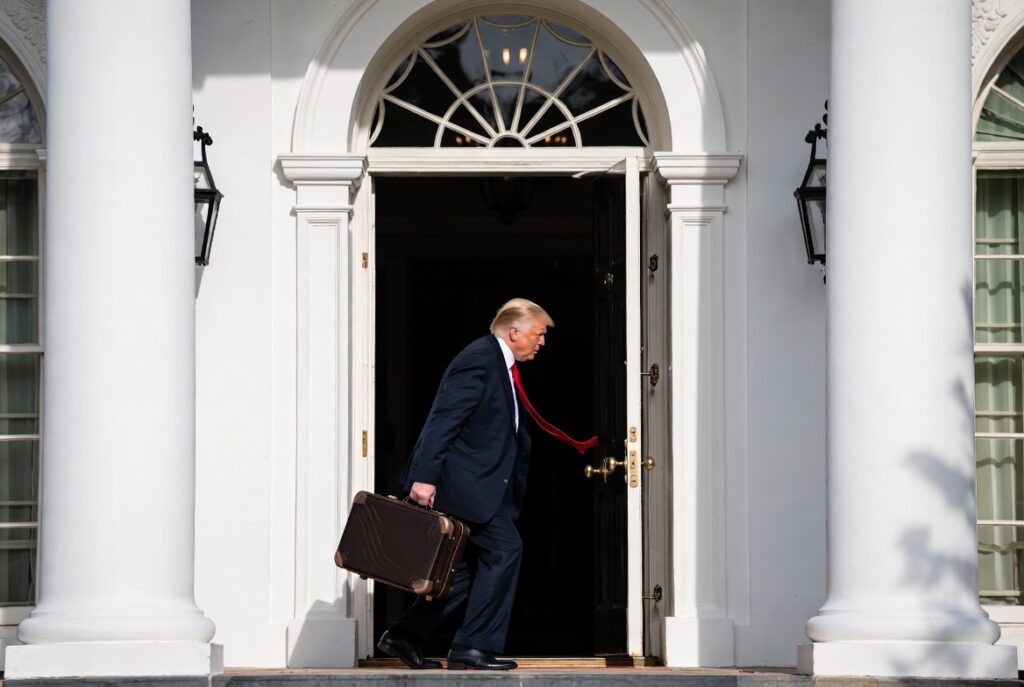



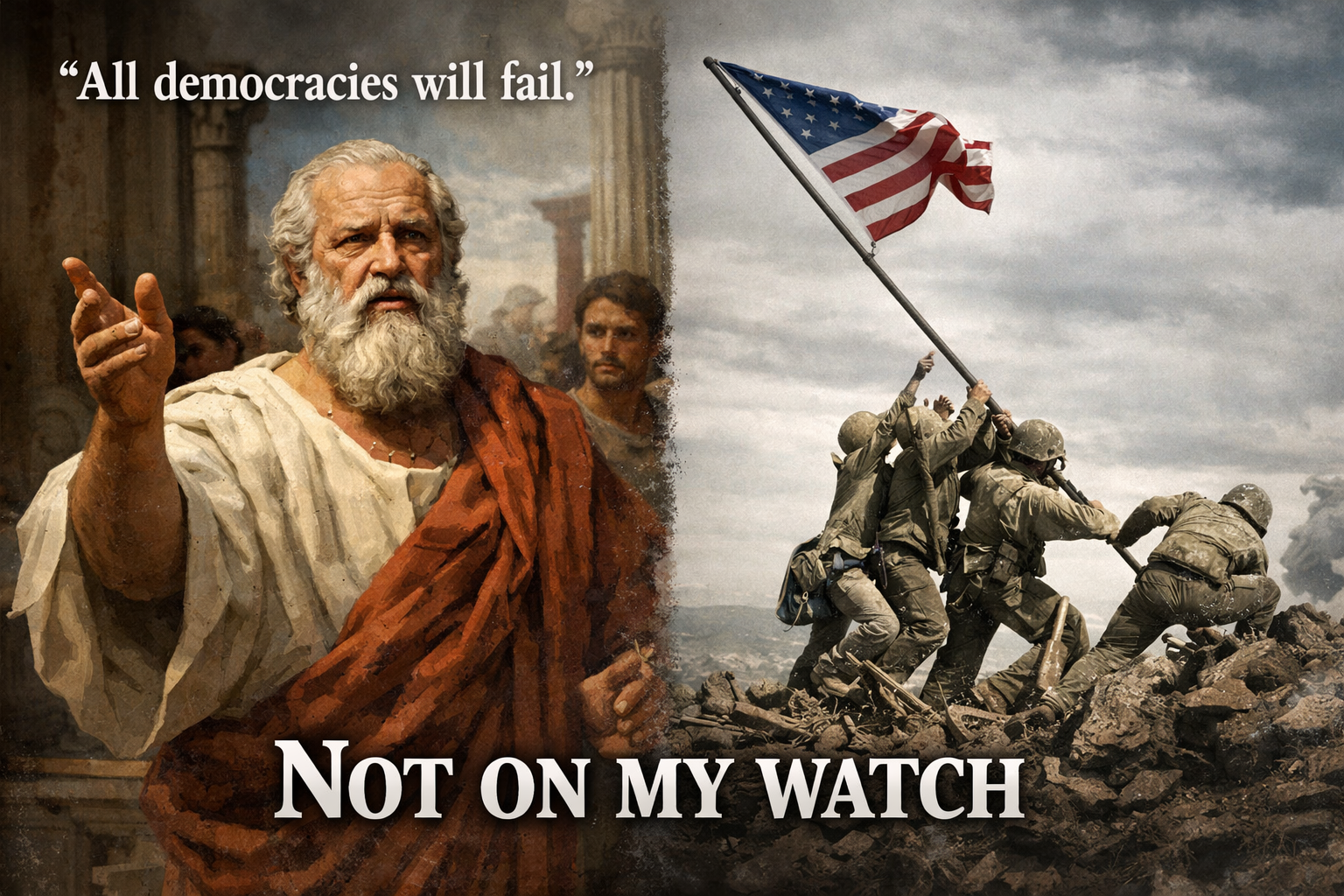
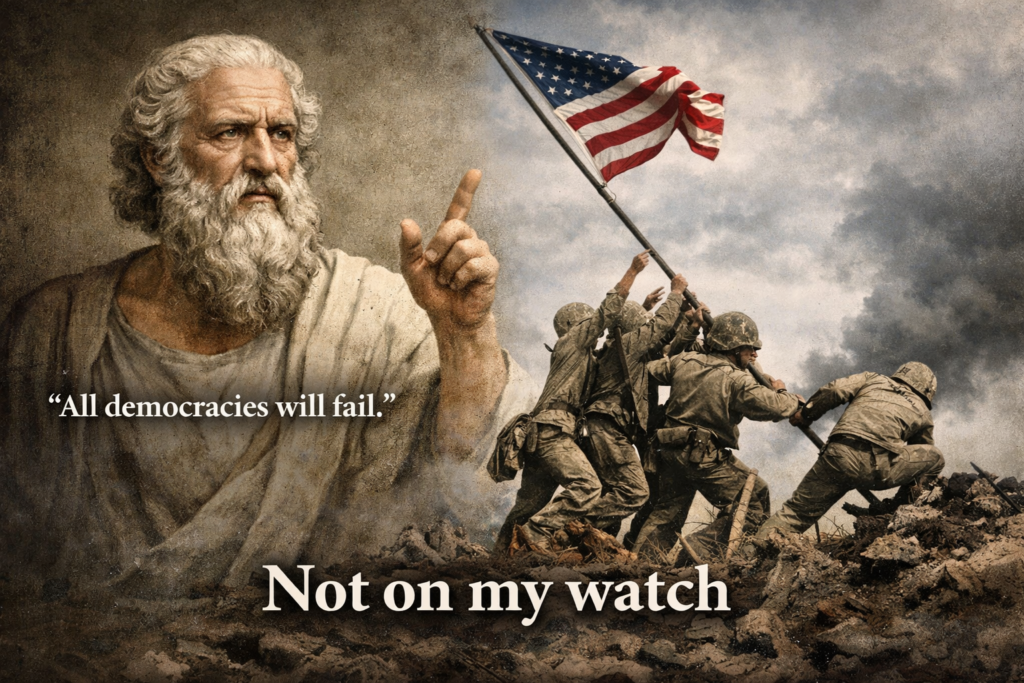






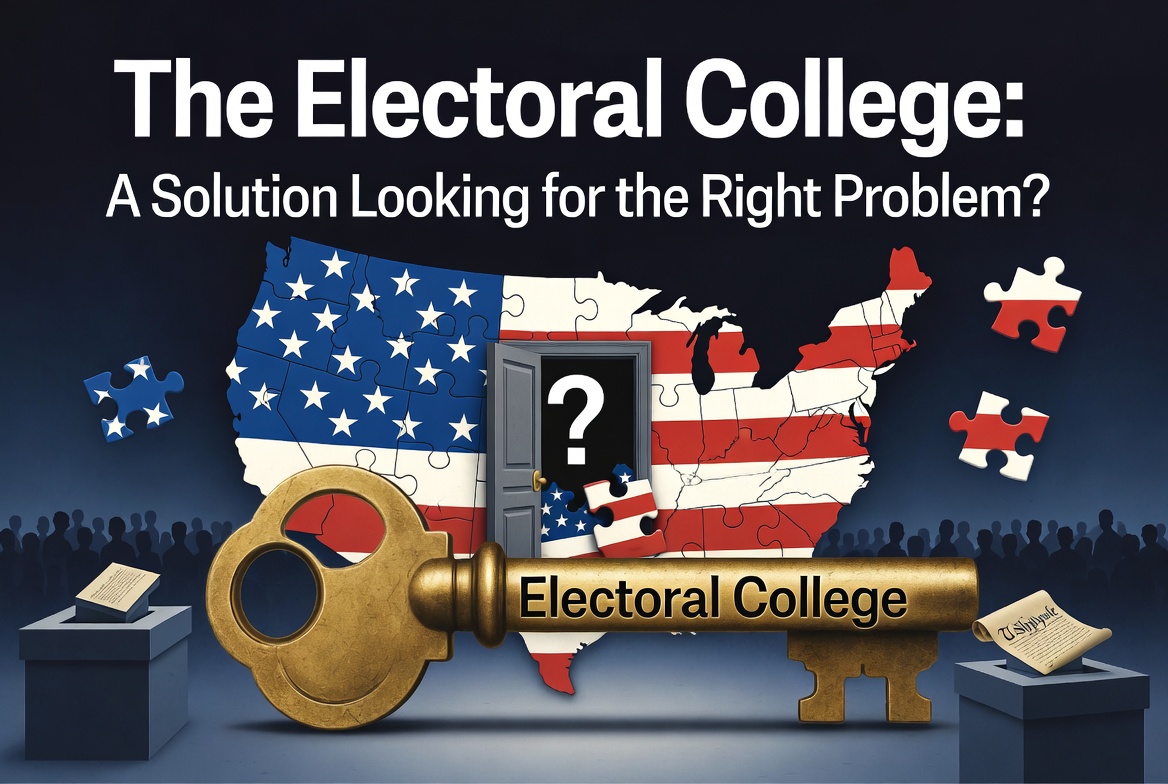
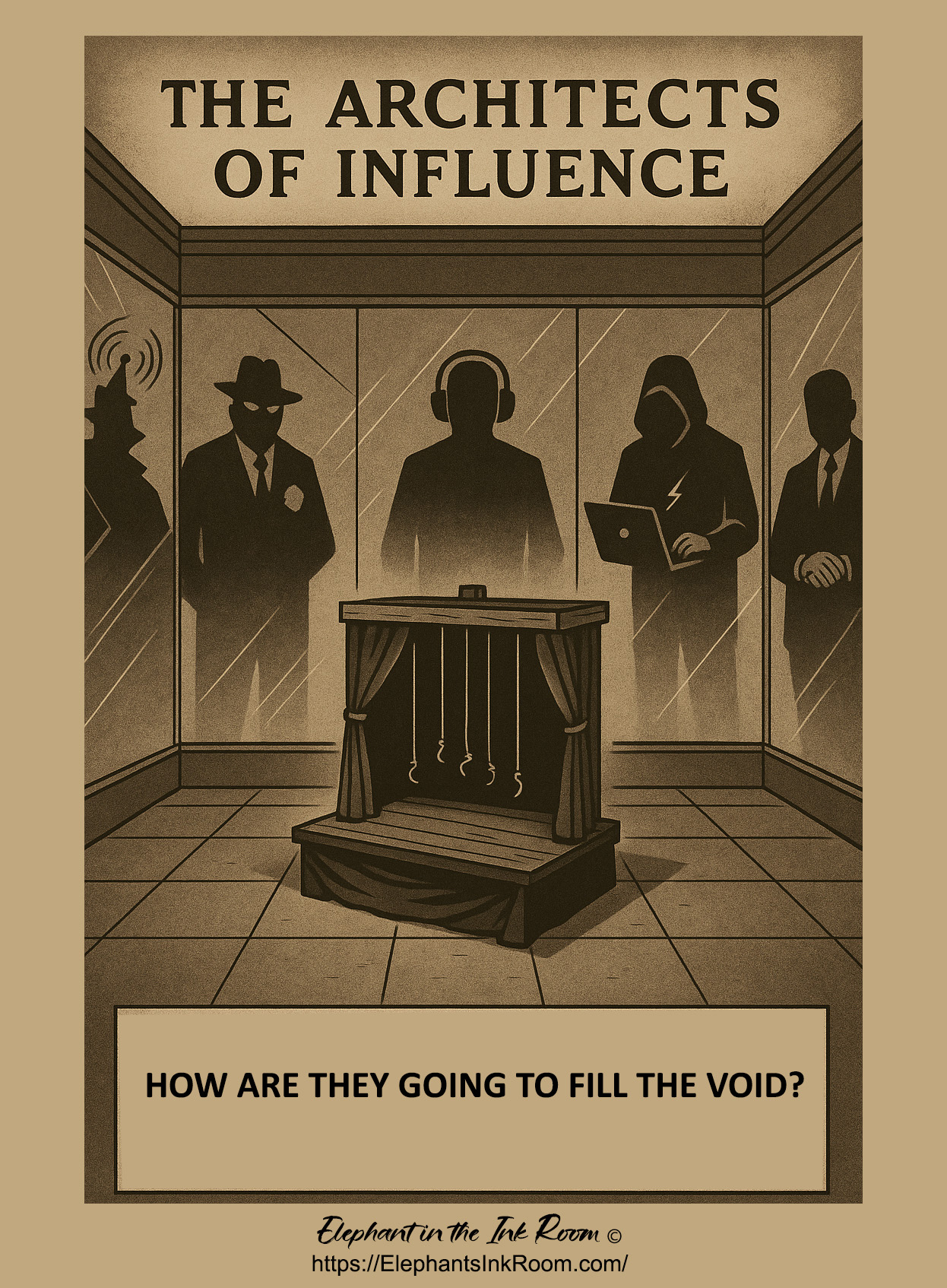












































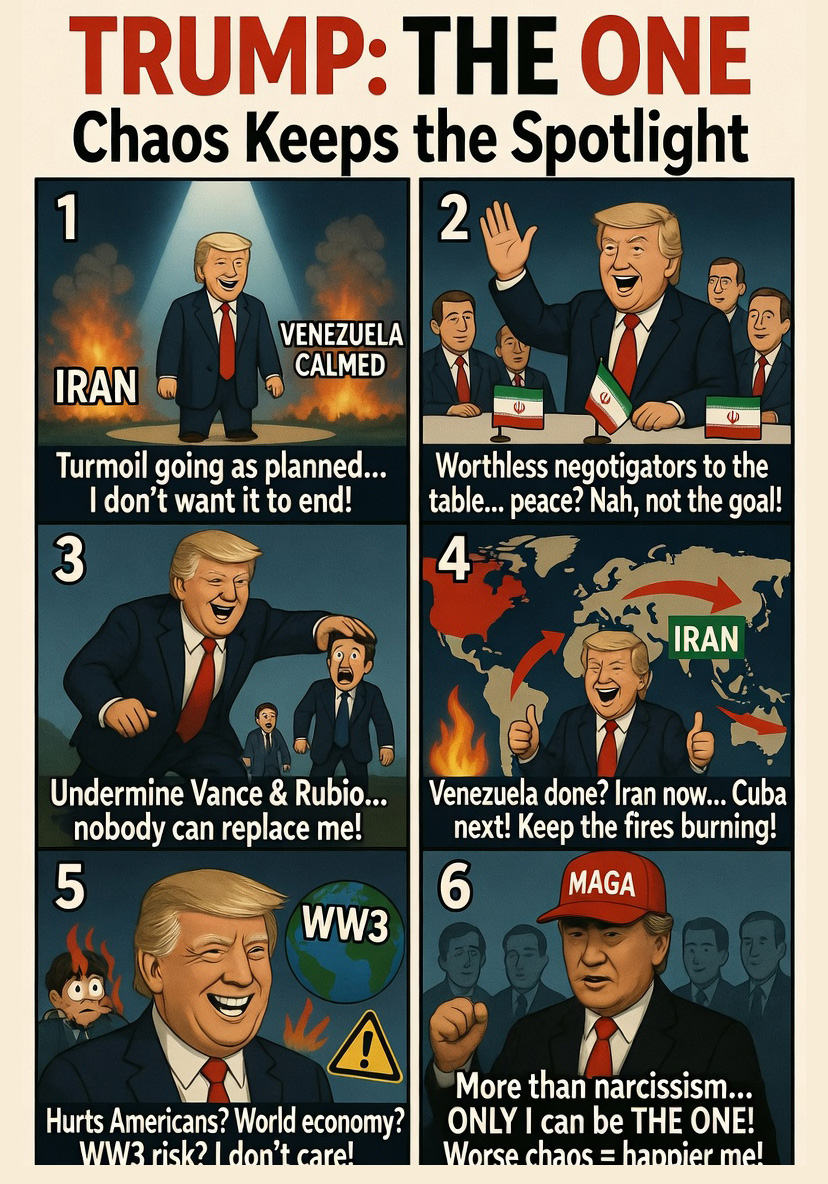






In my view, this is a long-game ecosystem (think tanks, donors, state parties) that’s survived presidents before. Trump’s a catalyst, but removal would force a tactical reset—not abandonment. The midterms are the pivot point; if GOP holds, it accelerates. If not, it decentralizes.
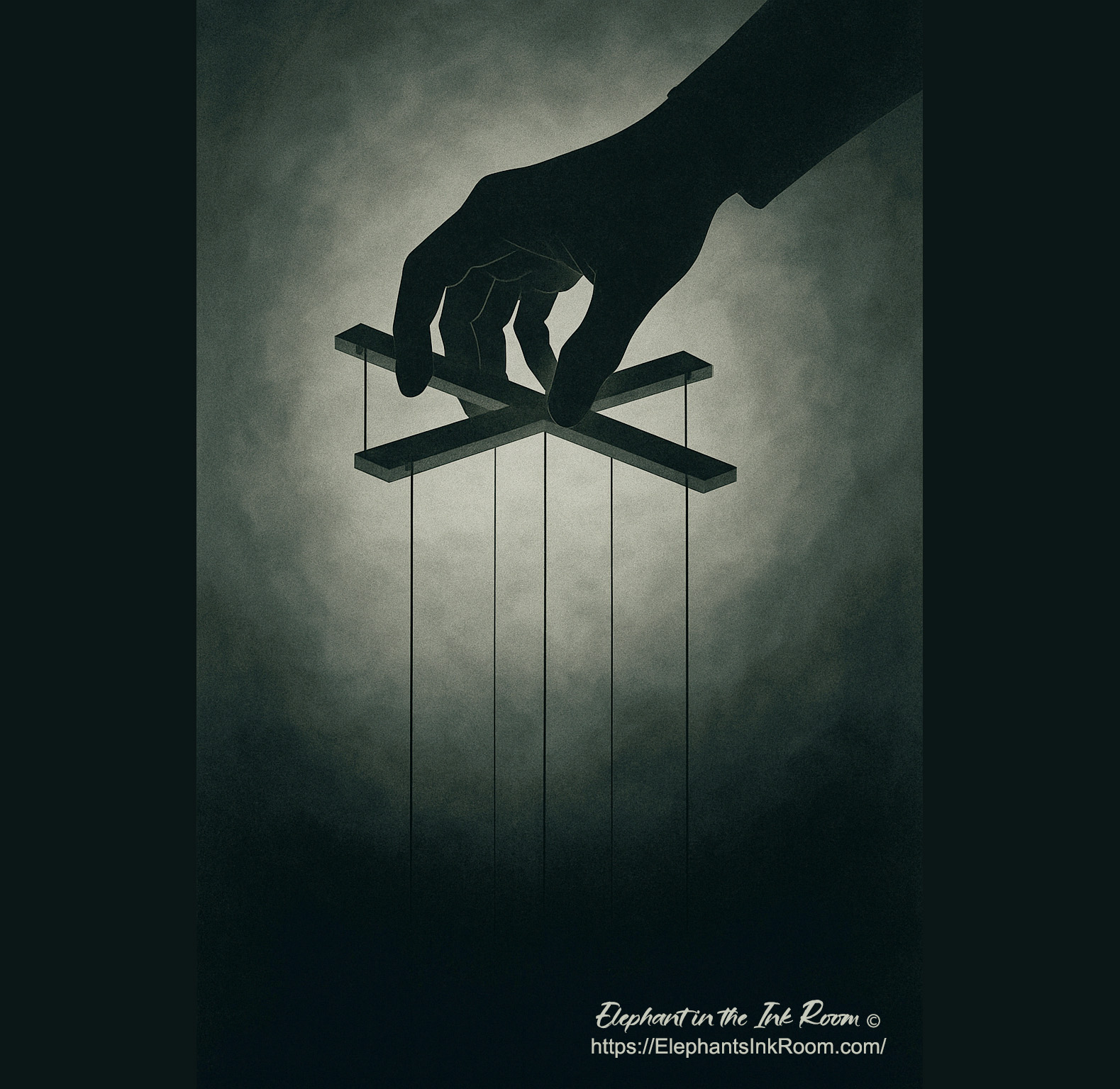
My question is who is actually the architect? I don’t believe Trump ever had the smarts to do this on his own and certainly not now. Someone or some organization is orchestrating everything behind the scenes

Public trust in mainstream media has collapsed — and for good reason. High-profile events like the Washington Post’s massive layoffs are not isolated incidents; they are symptoms of a deeper problem. Much of today’s media ecosystem is owned by billionaires, driven by shareholders, and shaped by advertising revenue and algorithmic incentives. Truth is no longer the priority. Profit is.
This isn’t accidental. Corporate news outlets — including social platforms that quietly manipulate what we see — are constrained by the same financial forces that keep them alive: advertisers, institutional investors, and elite ownership. Editorial independence becomes impossible when the bottom line comes first.
If we want real change, we need to respond in the only language that system understands: money.
Cancel subscriptions. Unsubscribe. Withdraw your support. Defund them.
Yes, that may mean giving up a favorite show or streaming service owned by a publicly traded media conglomerate — entities deeply entangled with institutional investors like Vanguard and BlackRock. So be it. Let them eat cake while we redirect our resources toward journalism that actually serves the public.
Rather than feeding corporate media, seek out independent creators — journalists and podcasters who prioritize truth over ideology and are funded directly by listeners, not advertisers or conglomerates.
Support voices across the political spectrum — left, right, and center — as long as they are genuinely independent and not beholden to corporate overlords. You don’t have to agree with everything they say. In fact, you probably shouldn’t. What matters is that you are allowed to hear it.
What mainstream media pushes today is often predetermined at levels far above our pay grades. The antidote is decentralization: many independent voices instead of a single manufactured narrative.
Below is a curated list of independent podcasts, grouped by general leaning for clarity. These recommendations are based on podcast directories, media reviews, and user feedback, and focus on shows that:
Are not owned by major media corporations
Emphasize factual reporting and honest analysis
Are funded primarily by listeners
These shows often critique corporate power, neoliberalism, and systemic inequality while remaining listener-supported.
Best of the Left
A long-running podcast curating progressive commentary on politics, culture, and economics. Produced by a small independent team, free of algorithmic manipulation or corporate backing. Funded through donations and memberships.
Rev Left Radio
An independently hosted show exploring leftist history, theory, and current events from a working-class perspective. Ad-free and supported by Patreon.
Secular Talk (Kyle Kulinski)
A fact-focused progressive commentary podcast emphasizing anti-establishment politics. Funded directly by viewers without corporate ownership.
The Humanist Report (Mike Figueredo)
Independent political commentary with a humanist and social justice lens. Fully listener-funded and unapologetically critical of media accountability failures.
These emphasize conservative values such as limited government and free expression while operating outside corporate media structures.
The Tucker Carlson Podcast
Independently produced following Carlson’s departure from Fox News. Features long-form interviews and commentary without network constraints, supported through subscriptions.
The Canadian Conservative
A solo-hosted, listener-supported podcast offering conservative commentary on Canadian and global political issues.
Relatable with Allie Beth Stuckey
An independent podcast blending conservative Christian perspectives with news analysis. Funded through ads and listener support, not corporate media ownership.
These shows aim to challenge narratives on both sides and prioritize context, evidence, and accountability.
On the Media
Produced by WNYC, a public radio outlet rather than a corporate media conglomerate. Focuses on media ethics, journalism practices, and narrative framing. Funded primarily by public donations.
The Purple Principle
An independent podcast seeking common ground by interviewing voices across the political spectrum. Fully listener-supported.
Left, Right & Center
A structured debate format featuring progressive, conservative, and moderate perspectives. Originally public radio, now widely distributed but still focused on civil, fact-based dialogue.
UNBIASED (Jordan Berman)
A daily, ad-free recap of U.S. news focused on facts rather than spin. Entirely listener-funded.
MeidasTouch Network
A lawyer-run independent media network offering fact-checked political analysis. Often left-leaning, but structured outside traditional corporate media.
Independent journalism survives only if people are willing to support it directly. This shift isn’t easy — but it is powerful. Every canceled subscription and every dollar redirected helps weaken a system that no longer serves the public and strengthens one that still might.
If we want accountability, transparency, and honest debate, this is how we build it.
And yes — we could use a little help as well.
Not all dark money is a conspiracy and not all conspiracies use dark money.

After responsibility shifts to individuals, the system offers something in return.
It offers choice.
At first glance, this feels like a fair trade. More options suggest more control. More plans suggest better fit. More flexibility suggests empowerment.
But choice and coverage are not the same thing.
Confusing the two is one of the most common — and costly — misunderstandings in modern healthcare.
When health policy stalls, something important happens that is easy to miss.
Responsibility doesn’t disappear.
It moves.
And almost always, it moves away from systems and toward individuals.
This shift rarely arrives with an announcement. There is no press conference declaring that people are now on their own. Instead, the change shows up gradually, wrapped in reasonable language.
I grew up with big screen HEROS, John Wayne, Eddie Murphy, and way to many more saving America from the Evils of tyranny during WW II, and still enjoyed Gary Cooper as SGT York saving us during WW I, but none of that would have been possible if James Cagney hadn’t played George Cohan and given us music like OVER THERE.
Find it, listen to it, let the goose bumbs rise, remember what your grand fathers and your great gran fathers sacrificed so you could live in America.
This is MY version, sing it, use it, it’s ours, it’s mine and it’s yours.
“Over Here” – sing it to the same tune:
Verse 1
Folks, get your voice, get your voice, get your voice,
Raise it up high, up high, up high.
Hear them calling, you and me,
Every son and daughter free.
Hurry right away, no delay, stand today,
Make your fathers proud, to have raised such a crowd.
Tell your children not to fear,
Be proud we’re standing here.
Chorus
Over here, over here,
Send the word, send the word over here—
That the people are waking, the people are waking,
The truth is thundering everywhere.
So beware, say a prayer,
Send the word, send the word to beware—
We’re stronger than you, we’re coming through,
And we won’t back down till it’s over, over here!
Verse 2
Folks, see the game, see the game, see the game,
We see through the lies, the lies, the lies.
No more chains, no more chains, break away,
Liberty’s call won’t fade today.
From the farms to the streets we rise,
Grit in our hearts, fire in our eyes.
We’ve buried too many for this land,
Now we take back what’s in our hand.
Chorus repeat
Over here, over here,
Send the word, send the word over here—
That the resilient are rising, the resilient are rising,
The spirit is rumbling everywhere.
So prepare, have a care,
Send the word, send the word to beware—
We’re tougher than steel, we see what you conceal,
And we’re coming for freedom, over here!
Industry groups warn of potential disruptions when 2027 coverage renews in late 2026, though final rates will not be set until April. This adds pressure to an already challenging Medicare Advantage landscape, where many plans have recently faced premium increases, benefit adjustments, or network changes.
On the surface, what we might see would be more honest campaign promises as the backroom financing would become more transparent. This would be more obvious on the local level but would migrate up the National Ladder.
No bombastic rallies, no orange spray tan, no obvious cult of personality.
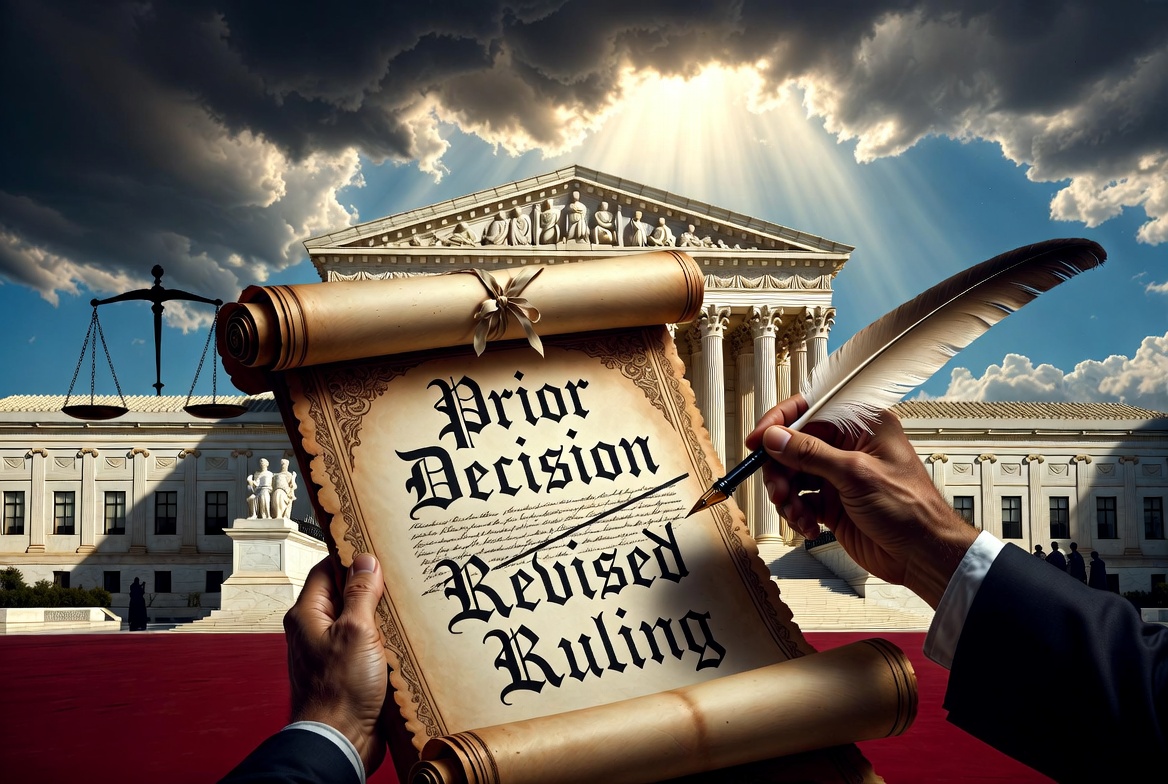
The media mostly sees him as “that judicial guy from the Federalist Society.”
But under the radar, he’s weaponizing legal legitimacy, which is far more enduring than any single politician’s charisma.
If Trump is the actor, Leonard Leo is the playwright, and the stage manager, and the guy who installed the trapdoor under the audience.
Distance from local impact
National funding routed through professionalized networks can shape outcomes in local or state-level debates without local communities fully understanding where the support originated.
Influence:
Huge impact on the judiciary. Many federal judges (including 6 current Supreme Court Justices with ties) are members or recommended by the group.
Helped shape conservative legal thinking on issues like gun rights, free speech, abortion, and regulation.
Often called the “conservative pipeline” to the courts.
“More research is needed.”
“The science isn’t settled.”
“Correlation isn’t causation.”
When these phrases appear once, they may reflect genuine uncertainty. When they appear repeatedly, over weeks or months, they become signals.
The tobacco era showed this clearly. For years, the same reassurances were offered while evidence mounted. No new information was added—only the same language, restated. The repetition was not meant to inform; it was meant to delay.
Smoking-related illnesses rose predictably. Generations adopted a habit already known to be dangerous. The burden fell disproportionately on working-class families, veterans, and rural communities — long before those terms became political shorthand.
By the time policy finally caught up, millions of lives had already been affected.
No one could point to a single decision that caused the harm. That, too, was part of the design.
Public health expertise was not always controversial. For decades, it functioned largely in the background—technical, imperfect, and mostly invisible. When it worked, few noticed. When it failed, corrections were usually quiet and procedural.
That changed when expertise became personal.
As trust in institutions weakened, authority began to migrate away from systems and toward individuals. Complex guidance was no longer evaluated primarily on evidence or process, but on who was delivering it—and how consistently.
This shift did not require a coordinated effort. It was a natural response to confusion. When institutions struggle to communicate clearly, people look for human proxies they can assess intuitively.
As systems grew more complex, institutional communication often became more defensive. Language shifted toward legal precision and risk avoidance, rather than clarity.
Explanations became longer but less informative. Mistakes were corrected quietly, if at all. Accountability was diffused across agencies, insurers, providers, and administrators—each technically accurate, but collectively unhelpful.
Over time, this creates a vacuum.
When institutions struggle to explain themselves, others step in to explain for them.
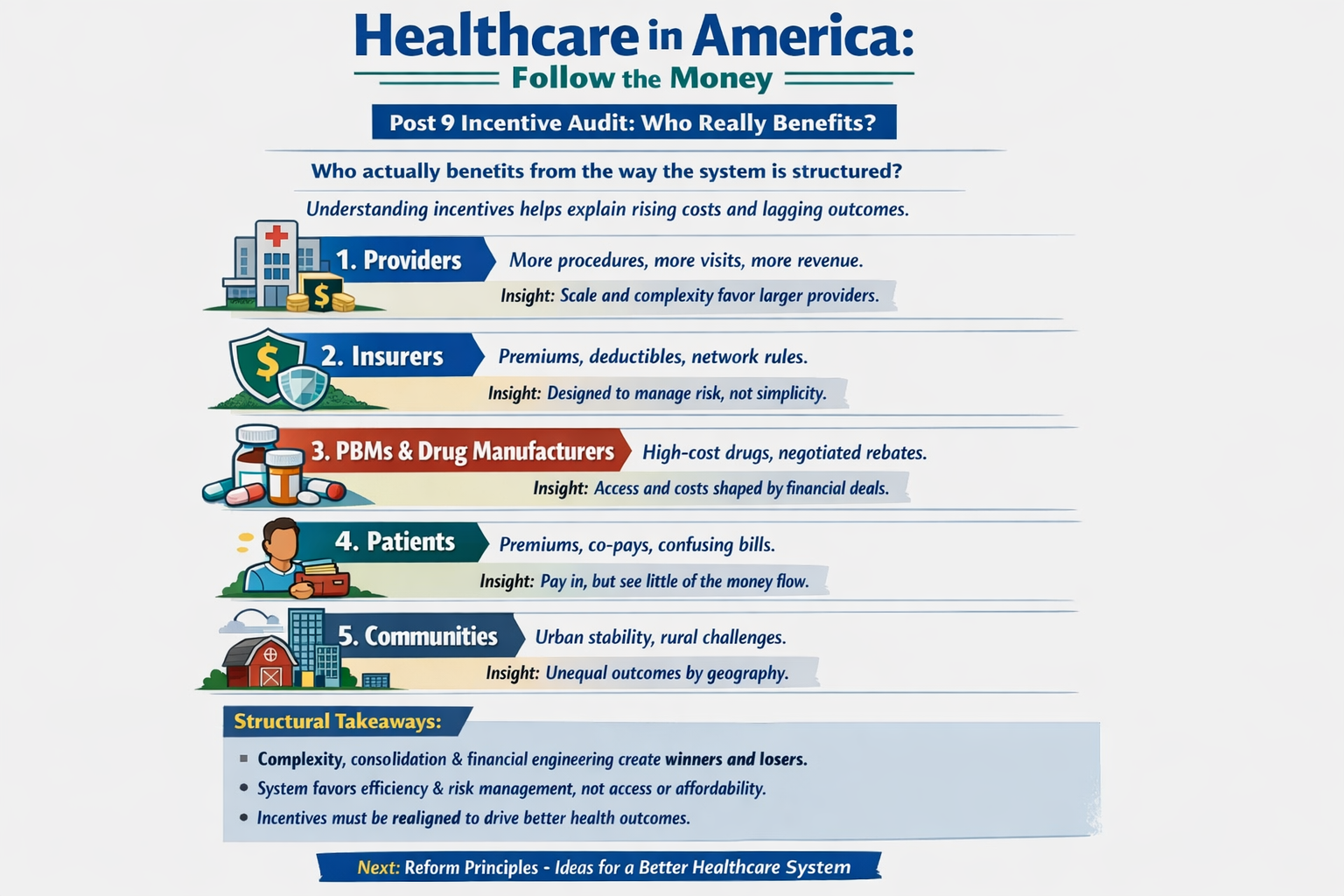
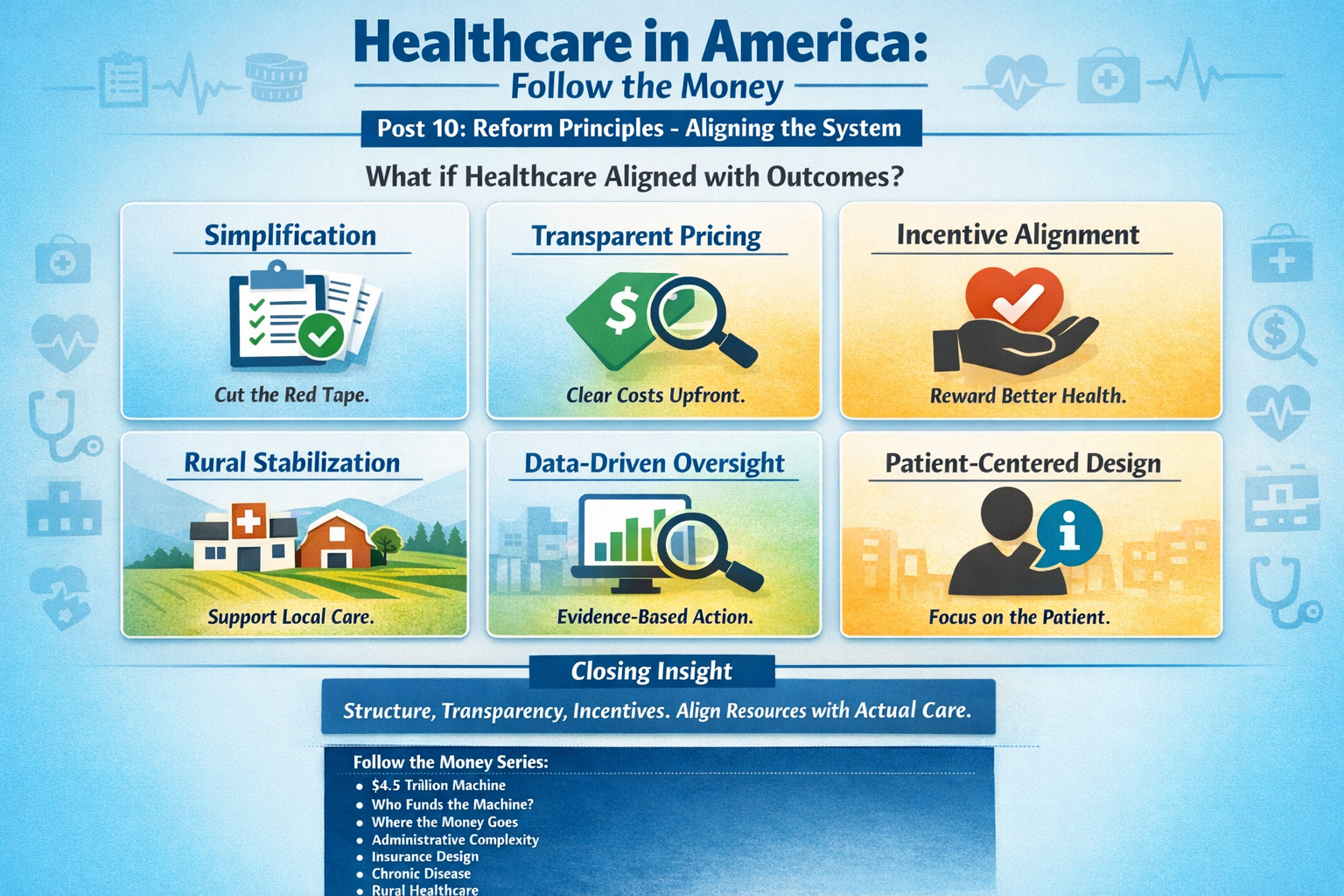
. Not conspiracy theories, just a better understanding of the how and why. My goal wasn’t to be partisan — it was to help readers better grasp the mechanics behind the curtain and make better, self-informed decisions.Next up: a ~15-part series on institutional healthcare. Not the latest premium hikes, Trump tweets, or partisan talking points. Instead:
Examine policy outcomes without assigning personal motive
Use real examples to illustrate structural dynamics
Move deliberately, one concept at a time
Include guidance on what signals matter and where influence exists
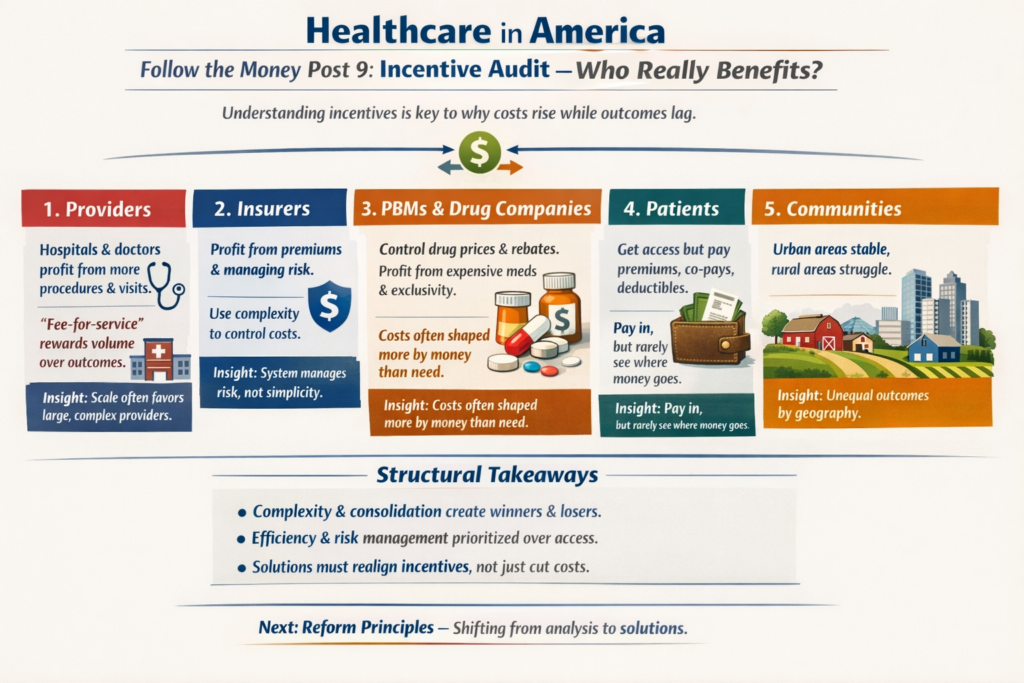
Decisions about healthcare in the United States are often discussed as political abstractions—talking points, slogans, and personalities. But their consequences are not abstract. They show up in emergency rooms, schools, workplaces, and kitchens. They show up in who gets care, when they get it, and at what cost.
It tests something narrower:
Whether a state can limit certain forms of outside influence
Whether local accountability can be strengthened structurally
Whether reducing scale changes behavior
Accountability is stronger closer to home
When decisions are made locally:
The people affected are easier to identify
The consequences are harder to ignore
The distance between influence and impact is shorter
The difficulty arises when:
Money becomes scalable
Influence becomes detached from consequences
The people paying don’t live with the outcomes
Banning money outright isn’t realistic. Limiting it too tightly just pushes it into new, often less visible channels.
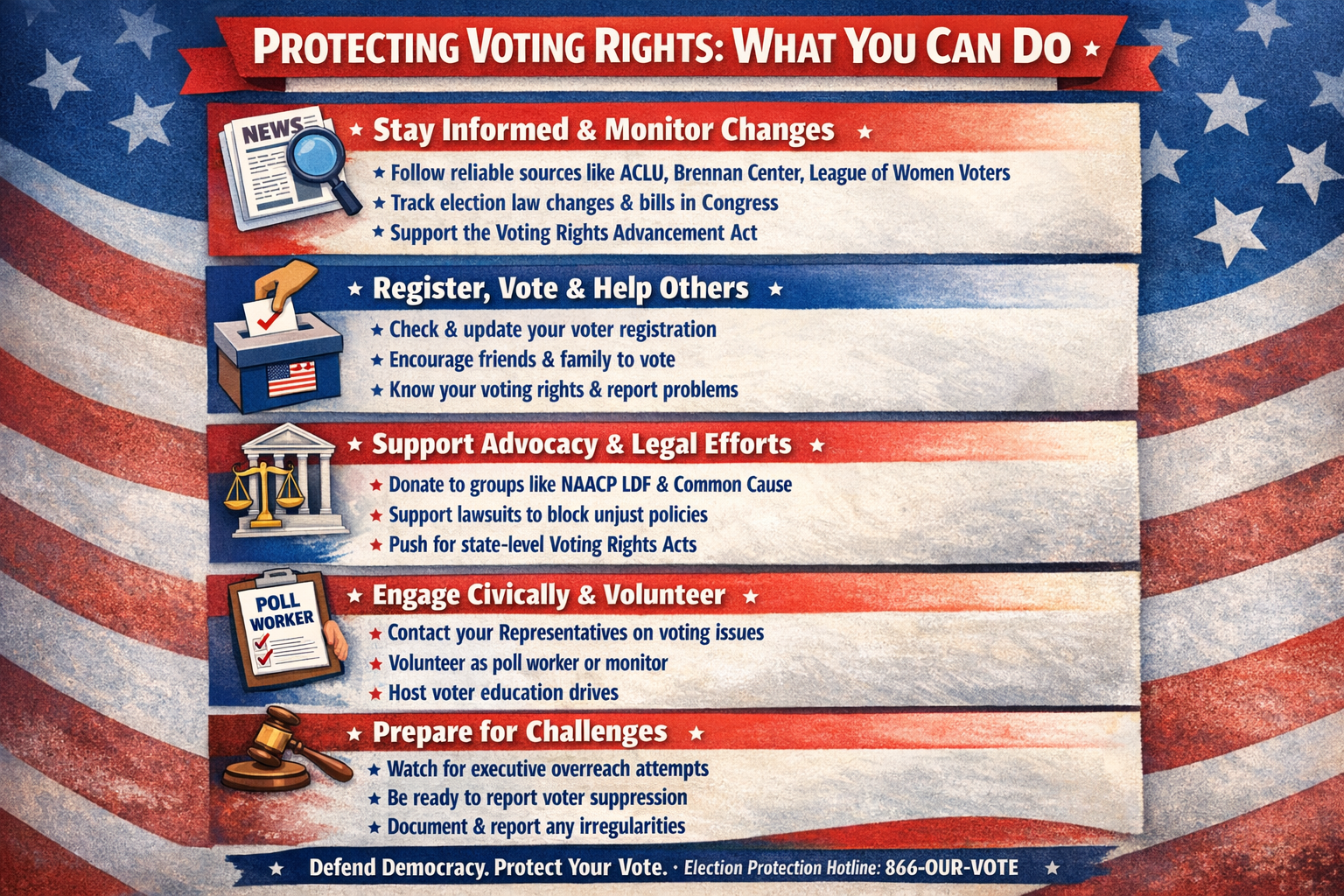
Major reform in campaign finance / donation transparency — if laws tighten, anonymity and dark-money flows shrink.
|
Name / Network |
Why They Endure /What Makes Them Resilient |
|---|---|
|
Sixteen Thirty Fund (and affiliated Arabella Advisors funds) |
Long-standing “dark money” powerhouse for the left. Provides fiscal-sponsorship and funding to many progressive causes and campaigns. As a 501(c)(4) nonprofit, it can channel money — often anonymously — into activism, ballot initiatives, and elections. Wikipedia+1 |
|
Berger Action Fund (network tied to Swiss billionaire support of progressive causes) |
Serves as a major donor funnel for progressive policy agendas. Its role shows how international money and large-scale philanthropy can influence U.S. politics regardless of which party is in charge. Wikipedia+1 |
|
Priorities USA Action |
One of the largest Democratic-leaning super PACs. Has shown flexibility in shifting strategy (e.g. moving toward digital campaigning rather than just TV ads), which suggests institutional agility in changing political climates. Wikipedia |
|
American Bridge 21st Century |
A major liberal opposition-research and election campaign group—effective at media and messaging work. Such infrastructures are portable: no matter who’s in power, they can redirect resources toward oversight, opposition, or new causes. Wikipedia |
|
Tides Foundation / Tides Network |
A long-standing donor-advised fund and fiscal-sponsorship network. Its versatile structure lets wealthy donors fund causes under the radar — meaning it can remain influential regardless of which party holds power. Wikipedia+1 |
|
Major Conservative Mega-Donors (e.g. Richard Uihlein & family, Scaife-linked foundations, etc.) |
These “big-money backers” have deep pockets and substantial influence on think tanks, policy-planning networks, and regulatory lobbying. Their funds tend to follow structural interests (tax law, business regulation, corporate incentives) — which can often survive major party shifts. DeSmog+2The Good Men Project+2 |
|
Embedded Think Tanks and Policy Networks (e.g. Heritage Foundation, Intercollegiate Studies Institute (ISI), and other longtime policy infrastructure) |
These institutions provide long-term ideological frameworks, produce research, influence judiciary nominations, shape legislation drafts — and have memberships, staffs, and networks that outlast electoral cycles. DeSmog+1 |
|
Financial-industry donors and Super-PAC backers (e.g. Kenneth C. Griffin, other hedge-fund and Wall Street funders) |
Money from big finance often plays both ends: campaign donations, policy lobbying, influence over regulation. Because their interest is often stability, deregulation, and favorable economic policy — not always party ideology — they can pivot if a left administration offers similar benefits. Fiscal Report+1 |
| Leonard Leo | Arabella Advisors |
|---|---|
| Builds and steers a network | Builds and steers a network |
| Operates mostly out of public view | Operates mostly out of public view |
| Uses nonprofits and fiscal vehicles | Uses nonprofits and fiscal vehicles |
| Focuses on long-term institutional outcomes | Focuses on long-term institutional outcomes |
| Rarely the public face of campaigns | Rarely the public face of campaigns |
Arabella Advisors dissolved in late 2025 and transferred its services to Sunflower Services. That organizational change does not alter the relevance of what follows. This discussion focuses on the methods, structures, and influence models that operated under Arabella’s umbrella—models that continue to exist across the political spectrum regardless of name or branding.
If you’ve read about Leonard Leo and wondered whether there’s an equivalent force operating on the other side of the political spectrum, the short answer is: yes — but it looks different.
If you are unfamiliar with Leonard Leo then I suggest you read our brief on him, it will make my cross references here clearer.
Rather than centering on one highly visible figure, progressive influence has tended to operate through organizational networks. One of the most significant of those is Arabella Advisors.
This is not a critique or an endorsement. It’s an attempt to understand how modern political influence actually works.
Arabella Advisors is a for-profit consulting firm that specializes in managing and supporting nonprofit organizations and advocacy efforts. Its influence comes less from public messaging and more from infrastructure.
Arabella administers several large nonprofit funds, including:
The Sixteen Thirty Fund
The New Venture Fund
The Hopewell Fund
The Windward Fund
These funds act as fiscal sponsors, meaning they legally host and manage hundreds of projects that may not have their own independent nonprofit status.
In practical terms, this allows advocacy campaigns to:
Launch quickly
Share administrative resources
Receive funding efficiently
Operate under existing legal umbrellas
This structure is entirely legal and widely used across the nonprofit world.
Unlike traditional nonprofits with a single mission and brand, Arabella’s model supports many separate initiatives at once, often focused on:
Voting and election policy
Climate and environmental advocacy
Healthcare access
Judicial and legal reform
Democracy and governance issues
Most people encountering these efforts don’t see “Arabella” at all. They see:
A campaign name
A policy group
A ballot-issue committee
An issue-specific advocacy organization
That’s not secrecy — it’s organizational design.
Criticism of Arabella’s network usually centers on three issues:
1. Donor opacity
Some of the funds administered through the network do not publicly disclose individual donors, which raises concerns similar to those voiced about conservative dark-money groups.
2. Scale and coordination
Because many projects are housed under a small number of fiscal sponsors, critics argue this can concentrate influence in ways that are hard for the public to track.
3. Distance from local impact
National funding routed through professionalized networks can shape outcomes in local or state-level debates without local communities fully understanding where the support originated.
These concerns mirror critiques made of conservative influence networks — which is precisely why Arabella is worth understanding.
Supporters argue that Arabella’s structure:
Improves efficiency
Reduces administrative duplication
Allows rapid response to emerging issues
Helps smaller or newer causes compete in an expensive political environment
They also point out that conservative networks have used similar structures for decades — often more visibly and more successfully — and that progressive donors were slow to build comparable infrastructure.
Arabella Advisors isn’t the progressive version of a political party, a campaign, or a single leader.
It’s something subtler:
An influence platform — not for persuasion, but for coordination.
That makes it powerful, and it also makes it easy to misunderstand.
Just as Leonard Leo represents how conservative legal influence became institutionalized, Arabella represents how progressive advocacy adapted to a landscape where money, law, and organization matter as much as ideas.
Seeing Arabella Advisors clearly helps avoid two common mistakes:
Believing influence only flows from one side
Confusing infrastructure with ideology
Modern politics is less about speeches and more about systems — systems that decide which ideas get sustained, funded, and repeated over time.
Understanding those systems doesn’t require agreement.
It requires attention.
The Federalist Society for Law and Public Policy Studies (often called “FedSoc”) is a major American organization of conservative and libertarian lawyers, judges, law students, and scholars. Founded in 1982 by law students at Yale, Harvard, and the University of Chicago, it started as a way to challenge what its founders saw as dominant liberal ideas in law schools.Key Principles (straight from their mission):
It’s not a lobbying group or political party — it claims to be non-partisan and focuses on open debate. They host events, panels, and speeches with speakers from all sides (though most align conservative/libertarian).Structure:
Influence:
Critics say it’s too partisan and has shifted the courts rightward. Supporters say it promotes intellectual diversity and constitutional fidelity.The James Madison ConnectionThe society’s logo is a silhouette of James Madison (4th U.S. President, “Father of the Constitution,” co-author of The Federalist Papers). They see themselves as heirs to Madison’s ideas on limited government and checks and balances.
There is no separate major organization called the “Madison Society” directly paired with the Federalist Society. “Madison Society” refers to various unrelated groups (e.g., Second Amendment advocacy, university alumni clubs, or progressive counterparts like the American Constitution Society). The “Federalist and Madison Societies” likely refers to the Federalist Society’s strong ties to James Madison’s legacy.In short: The Federalist Society is the big player in conservative legal circles, proudly Madison-inspired. It’s all about debating ideas to keep government limited and judges neutral.For more: Visit fedsoc.org or read The Federalist Papers for the original inspiration!
Most people outside of Montana don’t think about Montana much — and that’s exactly the point.
Montana matters here not because it has all the answers, but because it raises a question many places are quietly facing:
What happens when a community tries to limit outside influence structurally instead of just complaining about it?
To ground that question in reality, here are two useful references:
Official proposed ballot text and description (Montana Secretary of State) — this is the government’s own page listing what the initiative says it would do. Montana Proposed 2026 Ballot Issues Page (Official Text & Summary)
Plain-language summary of the initiative statement — a concise version of what the amendment would change. Group Releases Text of Proposed Montana Constitutional Amendment to Curb Dark Money (Summary)
With those in hand, you can always look at the source language while reading this section.
The change in Montana law would simply not grant the corporations the power to give to candidates or causes, but would allow individuals to give, but those donations would be tracked.
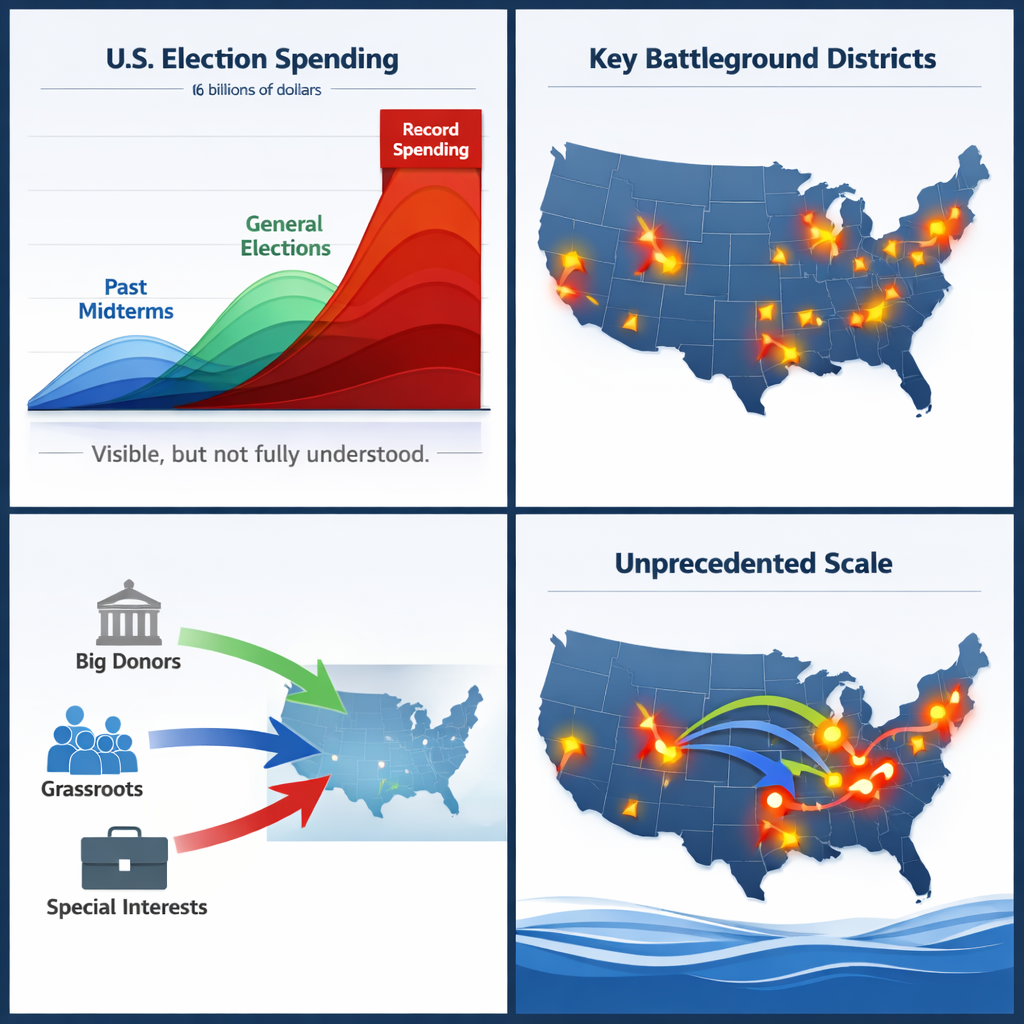
The proposed legislation is the first-of-its-kind and takes a different approach to the problem of campaign finance in spending. For example, last year’s U.S. Senate race in Montana, which saw Republican Tim Sheehy beat incumbent Democrat Jon Tester, had more than $275 million spent in a state of roughly 1.2 million people.
“Basically, the only difference is that corporations won’t be able to spend in our elections,” Mangan said.
The specifics of the proposed constitutional amendment would carve out exceptions for organizations like political parties and even media organizations whose coverage could possibly run afoul of the amendment’s language.
“If a person wants to spend money, then they have to put their name on it. It’s full disclosure. That’s what this is all about,” Mangan said.
The Montana proposal — often referred to as the Montana Plan or the Transparent Election Initiative — is fundamentally different from traditional campaign finance reforms.
Instead of regulating spending directly, it would change the basic definition of what corporations and similar entities (“artificial persons”) are allowed to do in elections. In effect, it would:
Amend the state constitution to say corporations and other artificial entities have only the powers the constitution explicitly grants them.
Specifically ensure that corporations have no authority to spend money or anything of value on elections or ballot issues.
Leave open the possibility for political committees (not corporations) to spend money on elections.
Include enforcement provisions and severability clauses to protect parts of the law if others are ruled invalid. Montana Secretary of State+1
This isn’t the typical approach of saying “limit X amount” or “disclose Y.” It says, in essence:
If the state never gave a corporate entity the power to spend in politics in the first place, then it can’t do so now. Harvard Law Corporate Governance Forum
That’s why proponents describe it as a doctrine-based challenge to the framework established by Citizens United — not a straightforward campaign finance rule. Harvard Law Corporate Governance Forum
There are four big implications worth noting:
1. It reframes power, not just spending.
Instead of capping or reporting spending, it redefines who gets that power at all. That’s a deeper structural shift in how the political system treats corporations. Harvard Law Corporate Governance Forum
2. It acts at the level where consequences are visible.
When outside groups spend in small races or ballot campaigns, local voters often never see the circuit of influence. This initiative aims to shorten that circuit — even if imperfectly. Truthout
3. It shows how local contexts shape responses to national problems.
Dark money isn’t a national phenomenon only — it’s a distributed one, especially in low-attention environments like state and local elections. Montana’s approach reflects that reality. NonStop Local Montana
4. It illustrates why there’s “no one best fix.”
You’ll notice this proposal doesn’t:
Ban all political spending by wealthy individuals
Eliminate all influence from outside actors
End lobbying
And, according to some critics, may raise free speech or legal concerns if adopted wholesale Montana Free Press
What it does is test a structural lever that hasn’t been widely tried before: the state’s sovereign authority to grant or withhold corporate powers.
As of late 2025:
The Montana Attorney General has ruled the proposed initiative legally insufficient, arguing it combines multiple constitutional changes into one item and may affect more than a single subject. Montana Free Press
The organizers are planning to challenge that ruling and pursue placement on the 2026 ballot. Montana Free Press
This process — review, challenge, signature gathering — is itself part of what makes Montana a useful test case. It isn’t a finished story yet.
When you look at the initiative text and the summary together with your understanding of dark money and influence, here’s the clean takeaway:
Montana isn’t offering a pre-packaged solution.
It’s testing whether changing who can spend at all alters the dynamics of influence.
The state’s unique legal authority provides a laboratory for ideas that might be adapted elsewhere in different forms.
In other words:
Montana’s initiative isn’t the answer — it’s an experiment. Good data from experimentation — success or failure — gives other states something concrete to think with.
If you want to understand dark money’s real power, don’t look first at presidential elections. Look at small states, local races, and low-visibility decisions.
That’s where the leverage is highest.
Influencing a national election is expensive and unpredictable.
Influencing a state legislature, regulatory board, court election, or ballot initiative is often:
Far cheaper
Less crowded with competing messages
Less scrutinized by media
More consequential per dollar spent
In smaller political ecosystems, a relatively modest amount of money can:
Shape the debate
Deter opposition
Make outcomes feel pre-decided
This isn’t because voters are uninformed. It’s because the volume of influence overwhelms the scale of the system.
Many of the most important decisions affecting national industries are made locally:
Resource extraction permits
Environmental standards
Tax structures
Judicial interpretations
Regulatory enforcement
Winning a single state-level fight can:
Set precedent
Reduce compliance costs elsewhere
Protect billions in downstream revenue
From that perspective, local politics isn’t small at all. It’s strategic.
If an organization openly said:
“We’re here to protect a distant financial interest that won’t bear the local costs”
…it would fail immediately.
So messaging focuses on:
Jobs
Growth
Stability
Freedom
Tradition
Safety
These themes are not fake. They resonate because they matter to people’s lives. The issue isn’t that they’re false — it’s that they’re partial.
What’s usually missing is:
Who benefits most
Who absorbs long-term costs
Who leaves when the damage is done
That information gap isn’t accidental. It’s essential to the strategy.
Over time, this kind of influence can:
Narrow the range of acceptable debate
Make opposition feel futile or extreme
Shift policy without visible public consent
The most important outcome often isn’t a single law or election result. It’s the normalization of decisions made with local consequences but remote beneficiaries.
That’s the point where influence becomes detached from accountability.
By now, three things should be clear:
Dark money is usually legal
It works best where attention is lowest
Its power comes from distance — not secrecy
The remaining question isn’t whether this system exists.
It’s whether communities should have the ability to limit how much invisible, outside influence their political systems can absorb.
Once people understand what dark money is, the next question is obvious:
If this creates so many problems, why does it exist at all?
The short answer is not corruption or conspiracy.
The longer answer is classification.
U.S. election law draws a sharp line between:
Campaign activity (which is regulated and disclosed)
Issue advocacy (which is far less regulated)
If an organization explicitly tells you to:
“Vote for” or “Vote against” a candidate
…it is treated as a campaign and must disclose donors.
If it instead says:
“Support energy independence”
“Protect public safety”
“Stand up for local jobs”
“Defend parental rights”
…it may be classified as issue advocacy, even if the timing, targeting, and messaging clearly benefit one candidate or policy outcome.
That distinction is the foundation dark money is built on.
Many dark money organizations are nonprofits because nonprofits were never designed to function like political campaigns. They were meant to:
Promote causes
Educate the public
Advocate broadly for values
Over time, those purposes expanded — legally — to include political messaging that stops just short of explicit campaigning.
Once that door opened, the incentives became obvious:
Donors could influence politics without public scrutiny
Organizations could spend heavily without disclosure
Voters would see the message, but not the full context
Nothing about this requires bad actors. It works even when everyone is technically following the rules.
It’s tempting to think the solution is simple: require more disclosure.
The problem is that disclosure alone often fails in practice because:
Information is scattered across filings few people read
Money moves through multiple layers of organizations
The source may be technically disclosed but practically untraceable
Voters encounter the message long before they encounter the data
By the time transparency arrives, the influence has already done its work.
Dark money doesn’t rely on secrecy so much as opacity through complexity.
Courts have consistently protected issue advocacy because:
Political speech is broadly protected
The line between ideas and elections is hard to police
Over-regulation risks suppressing legitimate civic activity
In other words, the system tolerates dark money not because it’s admired, but because the alternative risks collateral damage to free expression.
This creates a tradeoff:
Protect speech broadly
Accept influence that is difficult to see
That tradeoff becomes more consequential the smaller and quieter the political arena is.
Which brings us to the next question.
If dark money is everywhere, why does it seem to concentrate so heavily in state and local politics?
“Dark money” sounds dramatic, like something illegal or conspiratorial.
Most of the time, it’s neither.
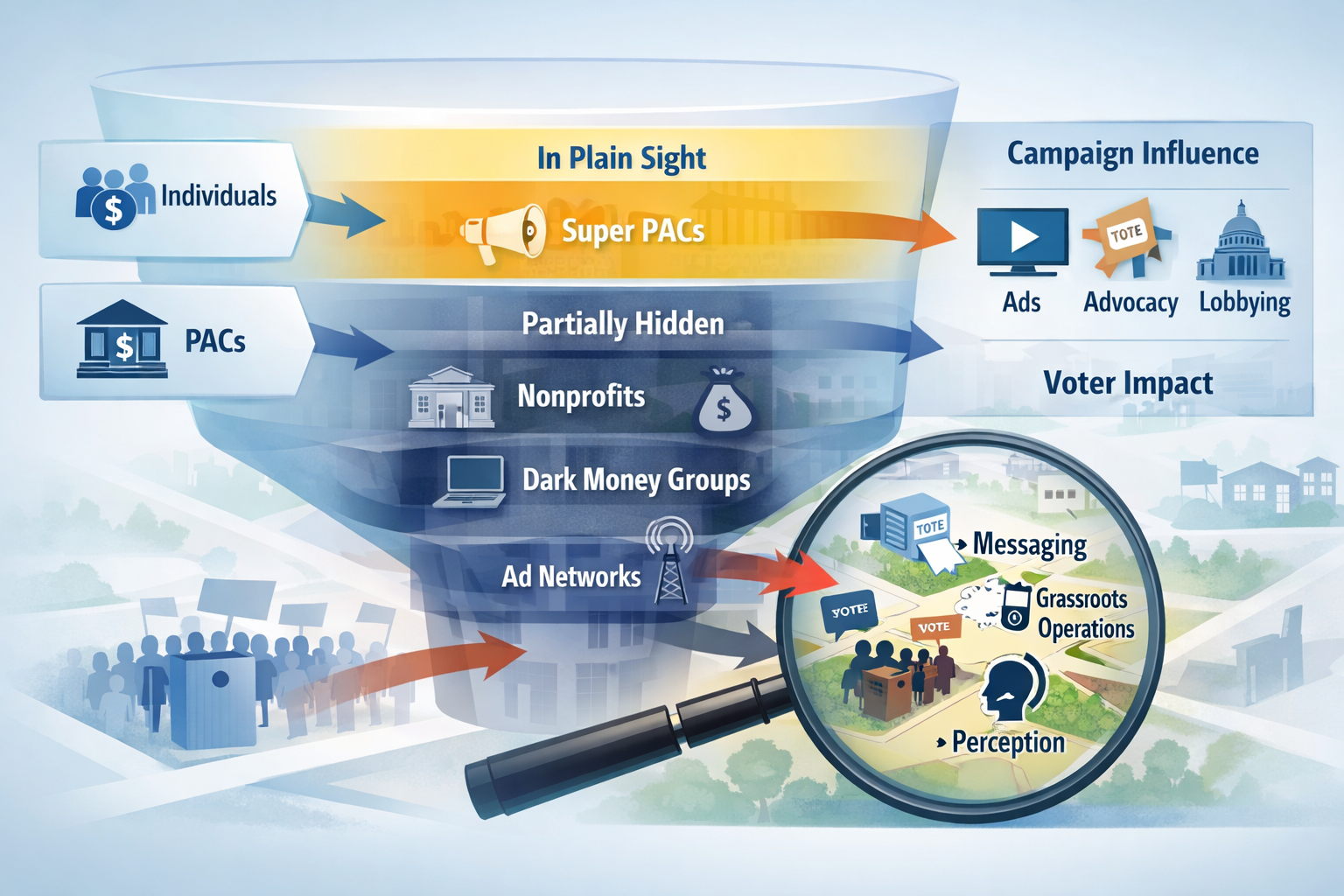
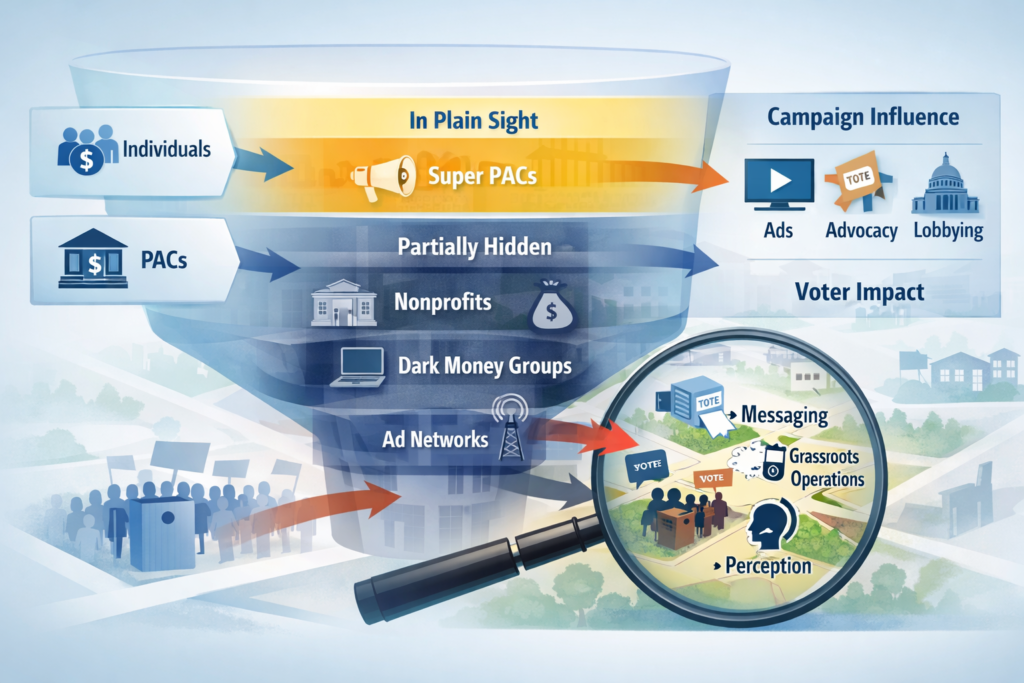
At its simplest, dark money is political spending where the true source of the money is hidden from the public. The spending itself is usually legal. What’s obscured is who is really behind it.
That distinction matters.
Dark money typically flows through organizations that are allowed to spend money on political causes without publicly disclosing their donors. These are often nonprofits or issue-advocacy groups rather than campaigns themselves.
The money can be used for:
Ads supporting or opposing candidates
Messaging around ballot initiatives
“Issue advocacy” that clearly benefits one side without explicitly saying “vote for” or “vote against”
By the time a voter sees the message, they often have no practical way of knowing:
Who paid for it
What larger interests might be involved
Whether the message is local, national, or purely financial in motivation
The money is “dark” not because it’s criminal, but because the light stops short of the original source.
Dark money is not:
A suitcase of cash changing hands in a back room
A single billionaire pulling puppet strings in secret
Always tied to one political party or ideology
It’s also not limited to federal elections. In fact, it often shows up more clearly in state and local politics, where disclosure rules are looser and attention is lower.
Importantly, dark money does not usually persuade people by lying outright. It persuades by selecting which truths get amplified and which questions never get asked.
Political campaigns have long been required to disclose donors. The idea is simple: if voters know who is funding a campaign, they can better judge motives and credibility.
Dark money exists because not all political spending is classified as campaign spending.
If an organization says it is:
Educating the public
Advocating on issues
Promoting values rather than candidates
…it may not be required to disclose its donors, even if the practical effect is the same as campaigning.
That gap — between influence and disclosure — is where dark money lives.
Imagine seeing an ad that says:
“Protect local jobs. Support responsible energy development.”
The ad doesn’t tell you:
Who funded it
Whether the group is local or national
Whether the real goal is jobs, regulatory relief, tax advantages, or something else
The message might be true in part. It might even be well intentioned. But without knowing who paid for it, you can’t fully evaluate why you’re seeing it, or why now.
That’s the core issue.
Dark money doesn’t usually change minds overnight. Its real power is quieter.
It can:
Shape which issues feel “normal” to discuss
Make certain outcomes feel inevitable
Discourage opposition by signaling overwhelming backing
Most importantly, it allows people who won’t live with the consequences of a decision to influence that decision anyway.
This isn’t about corruption in the movie sense. It’s about detachment — influence without accountability.
If this already feels a little murky, that’s not because you’re missing something. Complexity is not an accident here; it’s part of the design.
In the next part, we’ll look at why dark money exists at all, why it’s legal, and why simply “disclosing more” hasn’t solved the problem.
For now, the takeaway is just this:
Dark money isn’t hidden because it’s illegal.
It’s hidden because hiding works.
The conspiracy’s that aren’t.
Far cheaper
Less crowded with competing messages
Less scrutinized by media
More consequential per dollar spent
Once people understand what dark money is, the next question is obvious:
If this creates so many problems, why does it exist at all?
The short answer is not corruption or conspiracy.
“Dark money” sounds dramatic, like something illegal or conspiratorial.
Most of the time, it’s neither.
At its simplest, dark money is political spending where the true source of the money is hidden from the public. The spending itself is usually legal. What’s obscured is who is really behind it.
That distinction matters.


| Property | Value in Space / Defense Context |
|---|---|
| Strength-to-Weight Ratio | Lightweight tethers, parachutes, and suit fibers that outperform Kevlar. |
| Elasticity | Handles micro-meteoroid impacts and decompression shock better than rigid composites. |
| Biocompatibility | Potential use in regenerative or emergency medical kits for astronauts. |
| Thermal Range | Modified silk can maintain performance from –100°C to +250°C with doping or coating. |


They flew us in at sunrise, to a city under siege,
We marched into the crossfire — of a vegan grilled cheese.
The air was thick with danger, or maybe just the steam,
From cappuccino cannons in this grande battle scene.
Mollie Strickland, brings her southern roots to the midwest, weaving songs of freedom, love and longing. A bit of torch and empty roads. Let her set the mood for a cold beer or glass of Chardonnay and maybe juicy burger and fries.
Seize Control of Voting, Who is Behind the Curtain
Feb 11, 2026, I read this informative article about the FBI seizing the voting records in Georgia.
“The Silent Coup Is Already Underway: How Trump is moving to seize control of voting — starting in Georgia” by Glenn Kessler (published on his Substack: glennkessler.substack.com).
It discusses concerns over Donald Trump’s statements and actions aimed at influencing or “nationalizing” election processes, with a focus on Georgia as an early example. The article opens with a quote from Trump in a February 2 interview with Dan Bongino: “The Republicans ought to nationalize the voting.” It revisits Trump’s past claims of election fraud and frames current moves (like potential federal involvement in state voting systems, ballot handling, or oversight) as steps toward greater control ahead of future elections, such as the 2026 midterms.
My question is who is actually the architect? I don’t believe Trump ever had the smarts to do this on his own and certainly not now. Someone or some organization is orchestrating everything behind the scenes
Key Players and Enablers from the Article and Related Context
The Kessler article doesn’t name an overarching “architect” but points to several individuals and groups actively involved in pushing this agenda, particularly in Georgia as a testing ground:
Cleta Mitchell: She’s a prominent conservative lawyer who was on the infamous 2021 call where Trump pressured Georgia’s Secretary of State Brad Raffensperger to “find” votes. Mitchell now leads the Election Integrity Network, a group focused on challenging election processes and training poll watchers. The article notes her influence through appointees like Heather Honey (Deputy Assistant Secretary for Election Integrity), who has ties to Mitchell’s network and has floated ideas like declaring a “national emergency” to override state voting rules.
Kurt Olsen: Appointed by Trump as Director of Election Security and Integrity, he’s been sanctioned in the past for baseless election fraud claims. He referred the warrant that led to the FBI seizing Fulton County ballots in January 2026, reviving old 2020 conspiracies.
Tulsi Gabbard: As Director of National Intelligence, she oversaw the FBI raid on Fulton County for a vague “national security issue,” which the article suggests is a pretext for federal overreach.
These folks aren’t new; they’ve been part of Trump’s orbit since his first term or the 2020 challenges. The Georgia focus—using a Trump-friendly state election board to potentially seize county boards—seems designed as a blueprint for scaling up nationally, per the article.
Broader Influences and Organizations
Looking beyond the piece, reporting ties this to a more structured conservative playbook that’s been in development since at least 2024-2025:
Heritage Foundation and Project 2025: This stands out as the most likely “organizational architect.” Project 2025, a detailed policy roadmap from the Heritage Foundation (a major conservative think tank), explicitly calls for using the Department of Justice (DOJ) to investigate and prosecute alleged voter fraud, even based on debunked claims. It proposes federal interventions like proof-of-citizenship requirements for voting and empowering agencies to audit state elections. Trump’s administration has implemented parts of this, such as shifting the DOJ’s Civil Rights Division toward “fraud” probes under appointees like Harmeet Dhillon (a 2020 election denier) and Kash Patel (FBI pick who’s vowed to go after perceived election riggers).
Critics from groups like the Brennan Center have called it a “MAGA fever dream” for nationalizing voter suppression tactics, like banning mail ballots or overhauling voter registration.
Other Advisors and Networks: Figures like Stephen Miller (Trump’s policy whisperer on immigration and now broader issues) or Steve Bannon (who’s pushed election denialism via his “War Room” podcast) often get credited in analyses for strategizing these moves. There’s also overlap with groups like the Center for Internet Security (CIS), which handles election cybersecurity and has DHS ties—some X discussions speculate it’s part of a deeper infrastructure for monitoring elections.
In Georgia specifically, the push involves embedding federal observers and audits, which echoes tactics from Project 2025.
As for the Federalist Society: They’re hugely influential in judicial appointments (shaping courts that could rule on election cases), and their co-founder Leonard Leo has funneled big money into conservative causes, including election-related litigation through networks like the Honest Elections Project. But they’re not the primary driver here—that seems more Heritage’s lane for policy blueprints. Federalist Society folks might advise on legal strategies to make this stick, though.
Trump isn’t devising this solo; his style is more improvisational and grievance-driven than master-planner. In my view, the real “architecture” is a decentralized but aligned network of conservative think tanks (led by Heritage via Project 2025) and loyalists like Mitchell, Olsen, and Patel, who’ve been gaming out ways to centralize election oversight under the guise of “integrity.” It’s not a conspiracy in the tin-foil sense—it’s out in the open, rooted in post-2020 frustrations and amplified by Trump’s platform.
The goal appears to be tilting the system toward Republicans by federalizing controls that states have historically managed, which raises constitutional red flags (elections are state-run per the Constitution, as even some GOP allies like Gov. Greg Abbott have pushed back on).
Whether this succeeds depends on courts, Congress, and public push back—it’s already facing bipartisan criticism and could backfire if it erodes trust further.
Share this:
Like this: