Blog Archives
“Dark money” sounds dramatic, like something illegal or conspiratorial.
Most of the time, it’s neither.
At its simplest, dark money is political spending where the true source of the money is hidden from the public. The spending itself is usually legal. What’s obscured is who is really behind it.
That distinction matters.
The Elephant In The Room Nobody Is Looking At – Video
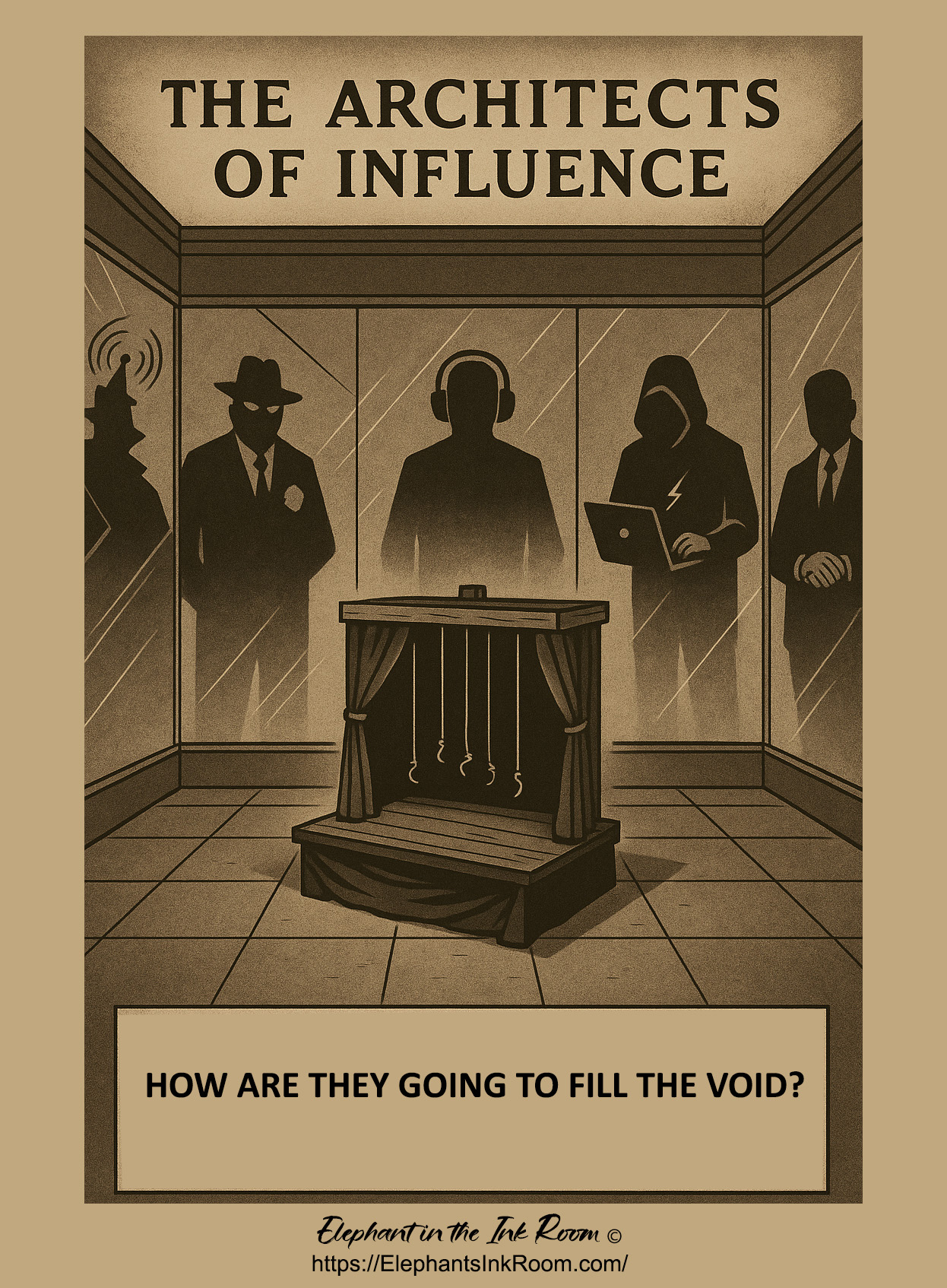
Trump is out. The clown is getting the hook. You’d have to be blind not to see it — and he’s too busy with his burgers to notice it himself. I have recently written about how the two party system has failed us and how dark money has made it nearly impossible for an independent candidate to even get on the ballot. The Republicans and the Democrats are not running the show. The SuperPACs are.
So when Musk threatened to start his own party during the DOGE wars all he was really doing was threatening Trump. Because Musk’s party couldn’t have gotten on 90 percent of American ballots. But it would have weakened the MAGA base — which was exactly the point.
Then Tucker Carlson said this:
“I would not support the Republican Party, there’s no chance. Not gonna support the Democratic Party. I don’t know what I’m going to do. How could I or any American voter support a political party that’s not loyal to the United States — that puts the interests of a foreign country above those of its own citizens. It’s not possible to vote for people like that and I’m not going to. I voted Republican my entire life. I worked at Fox News. I’ve been a consistent defender for 35 years of the Republican Party, but there’s no defending this because it’s immoral. I’m out. And if I’m out, then I think a lot of other people are out.”
Different name. Same chokehold. Same dark money. Same result for the Purple Rose.
I don’t think I need to put the pipe down to ask that question.
I think it’s the only question worth asking right now.
And I’m genuinely puzzled why so few people are asking it.
Share this:

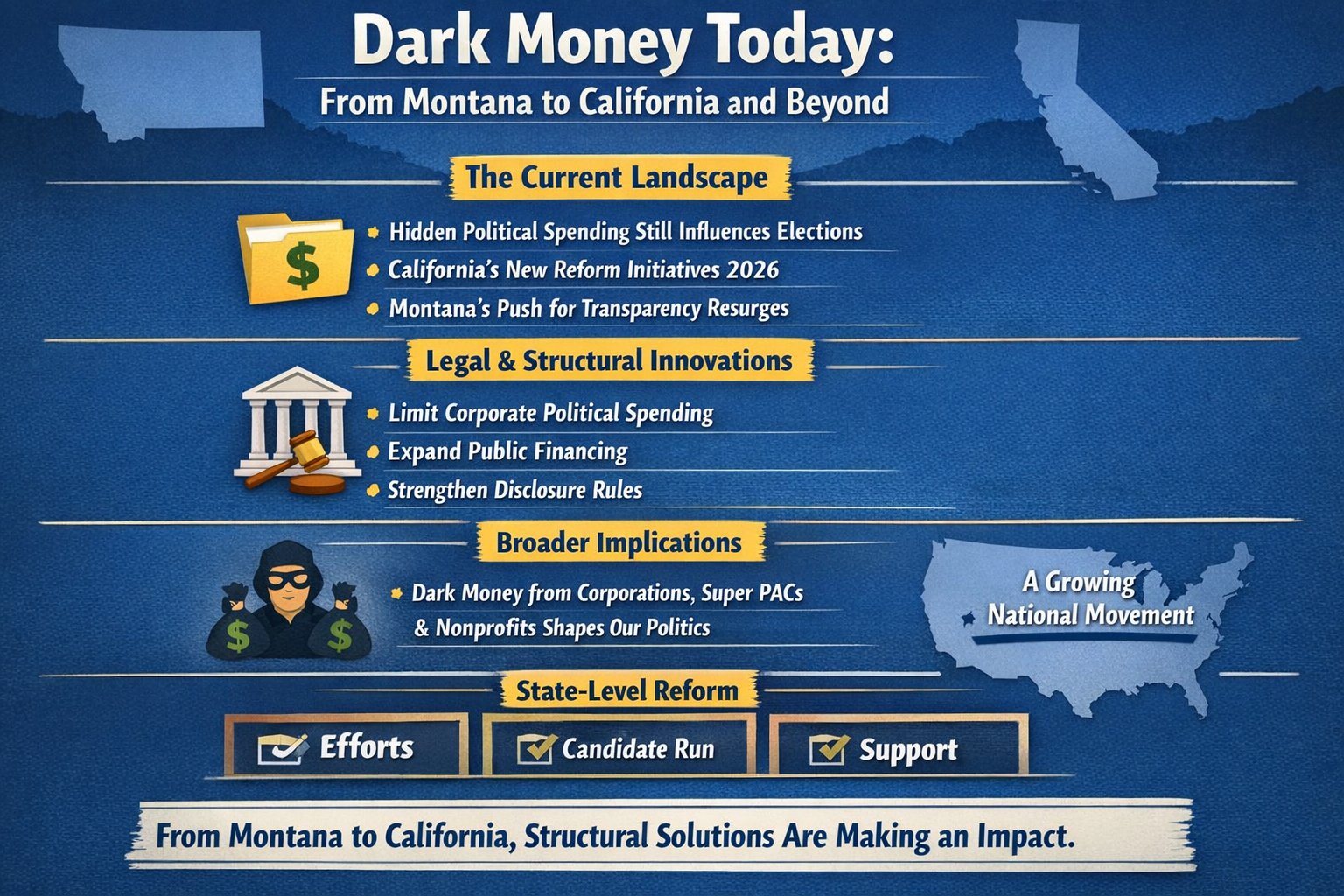
Dark Money Today: From Montana to California and Beyond
Dark Money Today: From Montana to California and Beyond
Two months ago, we explored the Montana initiative as a test case for curbing dark money. The story didn’t end there. Today, states like California are building on that example, showing that structural solutions — not just outrage — can reshape the rules of political influence.
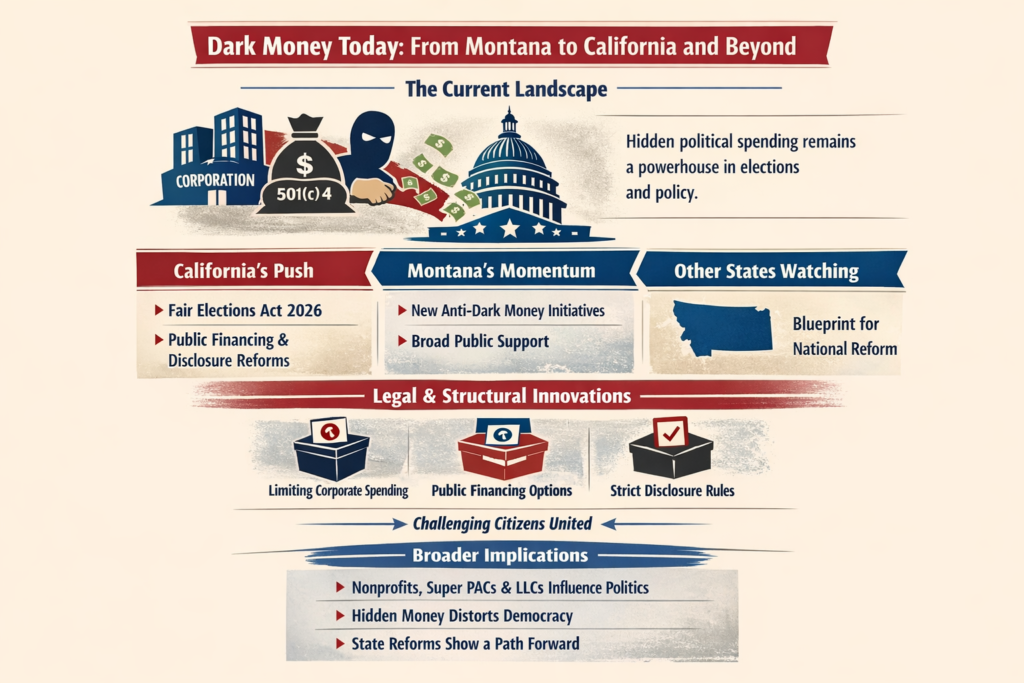
The Current Landscape
Hidden political spending remains a major driver of elections and policy. Corporations, nonprofits, and 501(c)(4)s continue to funnel large sums into campaigns with little transparency. But now, state-level reforms are gaining traction:
-
California is preparing ballot initiatives and legislation aimed at limiting corporate influence, expanding public financing, and enforcing stricter disclosure rules. Voters could see the California Fair Elections Act in November 2026, giving candidates alternatives to reliance on big donors.
-
Montana remains a test case. After a legal challenge stalled an earlier initiative, new filings are moving forward, backed by strong public support. These efforts focus on restricting corporate spending and making dark money sources visible.
-
Other states are watching. Models from Montana and California are providing a blueprint for structural reform nationwide.
Legal & Structural Innovations
States are exploring ways to sidestep Citizens United without waiting for a federal reversal:
-
Some leverage state corporate charters to limit corporations’ political spending at the source.
-
Public financing programs allow candidates to run competitive campaigns without large outside contributions.
-
Disclosure rules ensure voters see who is influencing elections, making money less “invisible.”
These approaches shift the focus from partisan debate to structural solutions, changing the incentives in the system itself.
Broader Implications
Dark money isn’t only about corporations. Nonprofit groups, super PACs, and LLCs contribute heavily to elections while keeping donors hidden. This creates outsized influence on local and national politics, often at odds with public interest.
Structural reforms like Montana’s and California’s tackle this from the ground up, offering practical paths forward rather than relying on idealistic federal solutions.
Connecting Back
As we discussed in the previous Montana series, states can push back against big money in meaningful ways. California’s emerging initiatives show that these strategies are not isolated — they’re part of a growing national movement. Readers following that series can now see how lessons learned in Montana are spreading and evolving.
Takeaways
-
Progress is possible through state-level reforms, disclosure requirements, and public financing.
-
Structural changes can reduce hidden influence and increase accountability.
-
Like in healthcare, small, practical reforms can create measurable improvements, even in complex systems.
Share this:

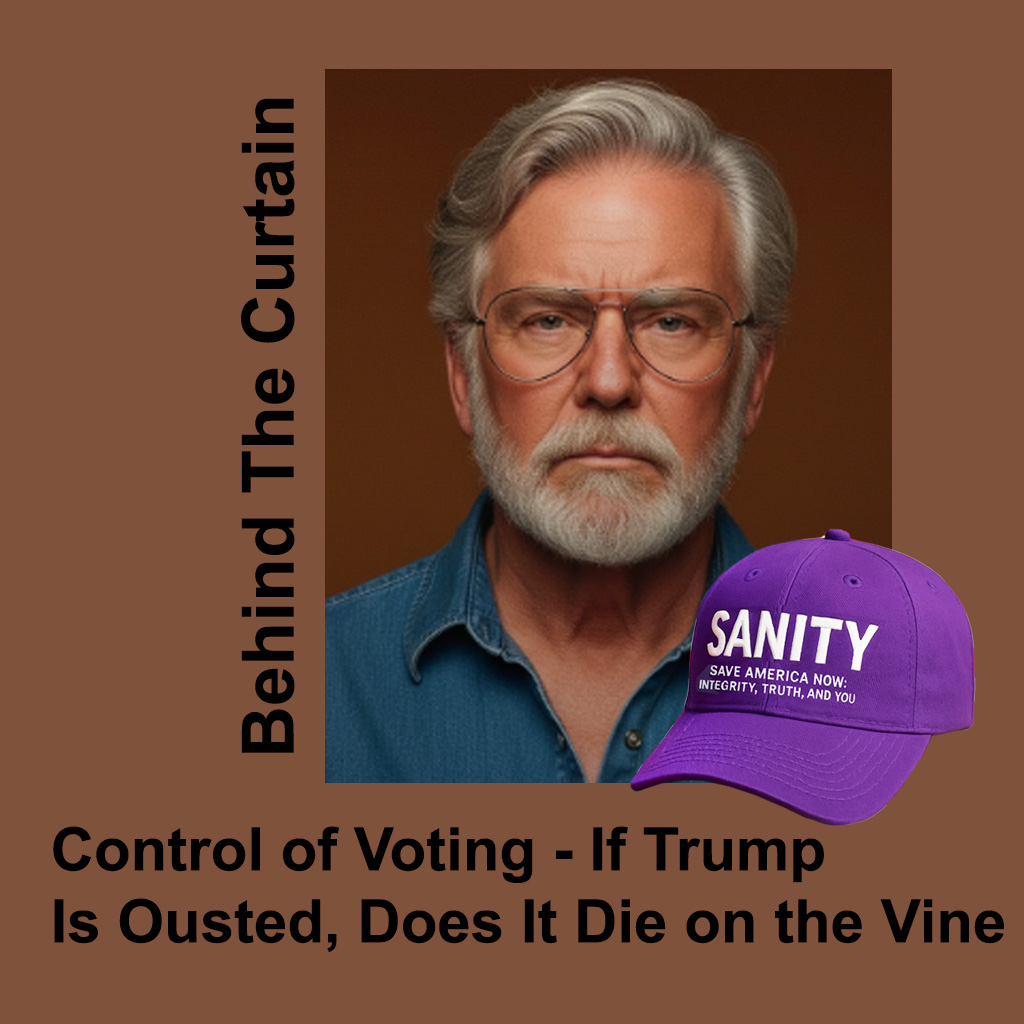
Control of Voting – If Trump Is Ousted: Does It Die on the Vine?

In my view, this is a long-game ecosystem (think tanks, donors, state parties) that’s survived presidents before. Trump’s a catalyst, but removal would force a tactical reset—not abandonment. The midterms are the pivot point; if GOP holds, it accelerates. If not, it decentralizes.
Youtube Playlist for Dark Money
Share this:


Seize Control of Voting, Who is Behind the Curtain
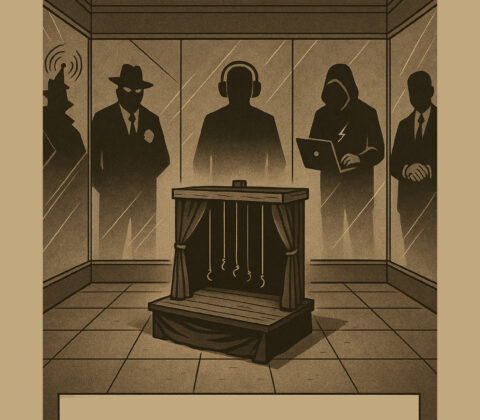
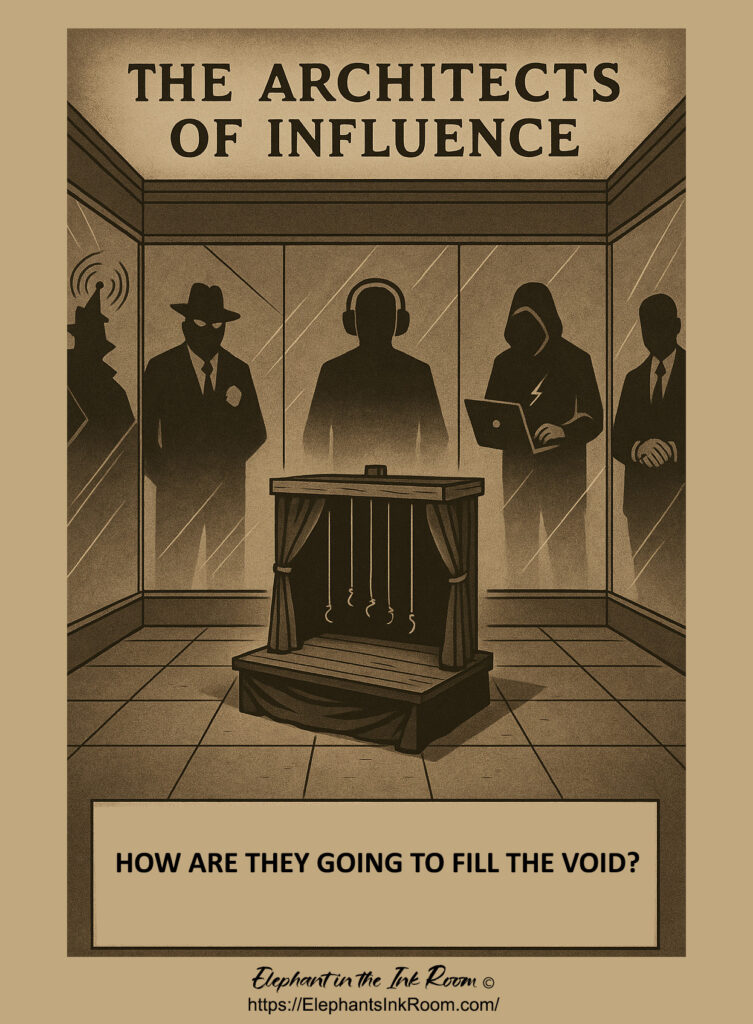
My question is who is actually the architect? I don’t believe Trump ever had the smarts to do this on his own and certainly not now. Someone or some organization is orchestrating everything behind the scenes
Youtube Playlist for Dark Money
Share this:

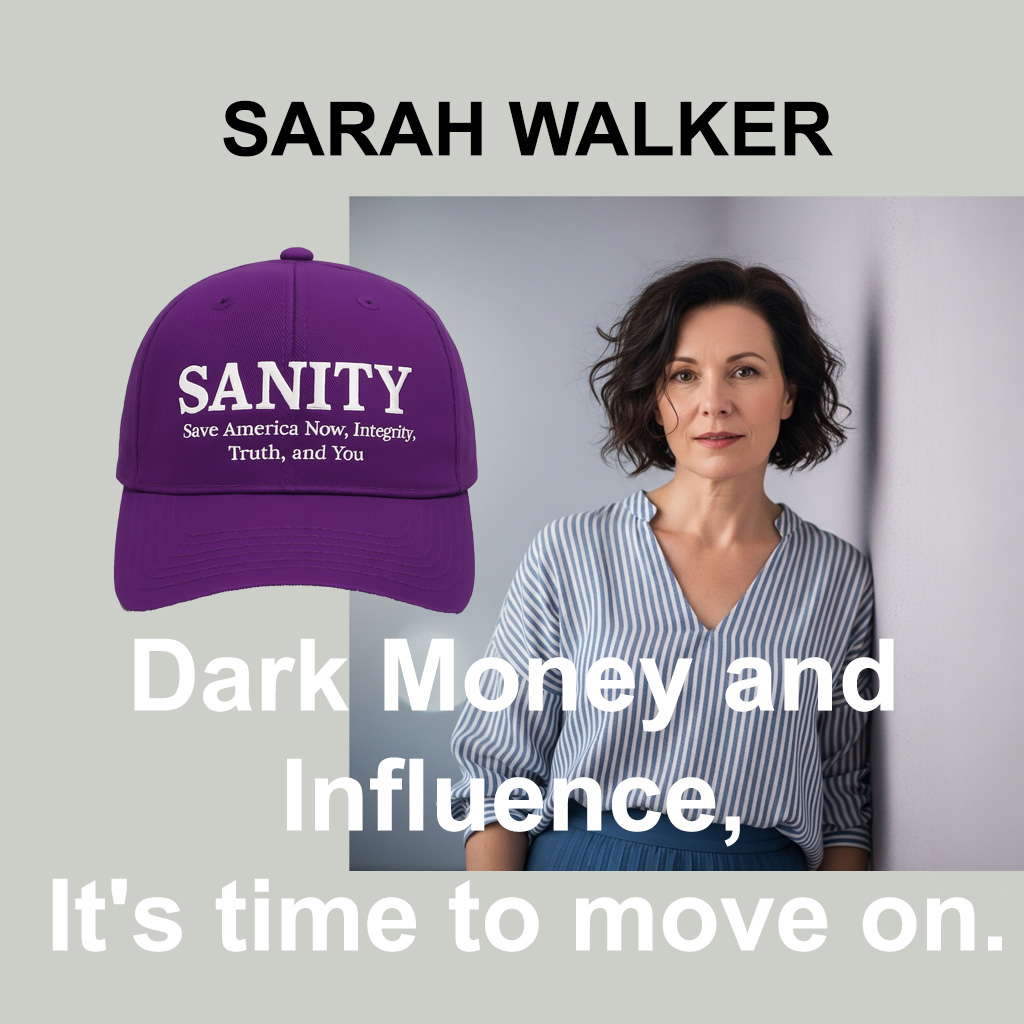
Dark Money and Influence, It’s time to move on.

Not all dark money is a conspiracy and not all conspiracies use dark money.
Youtube Playlist for Dark Money
Share this:

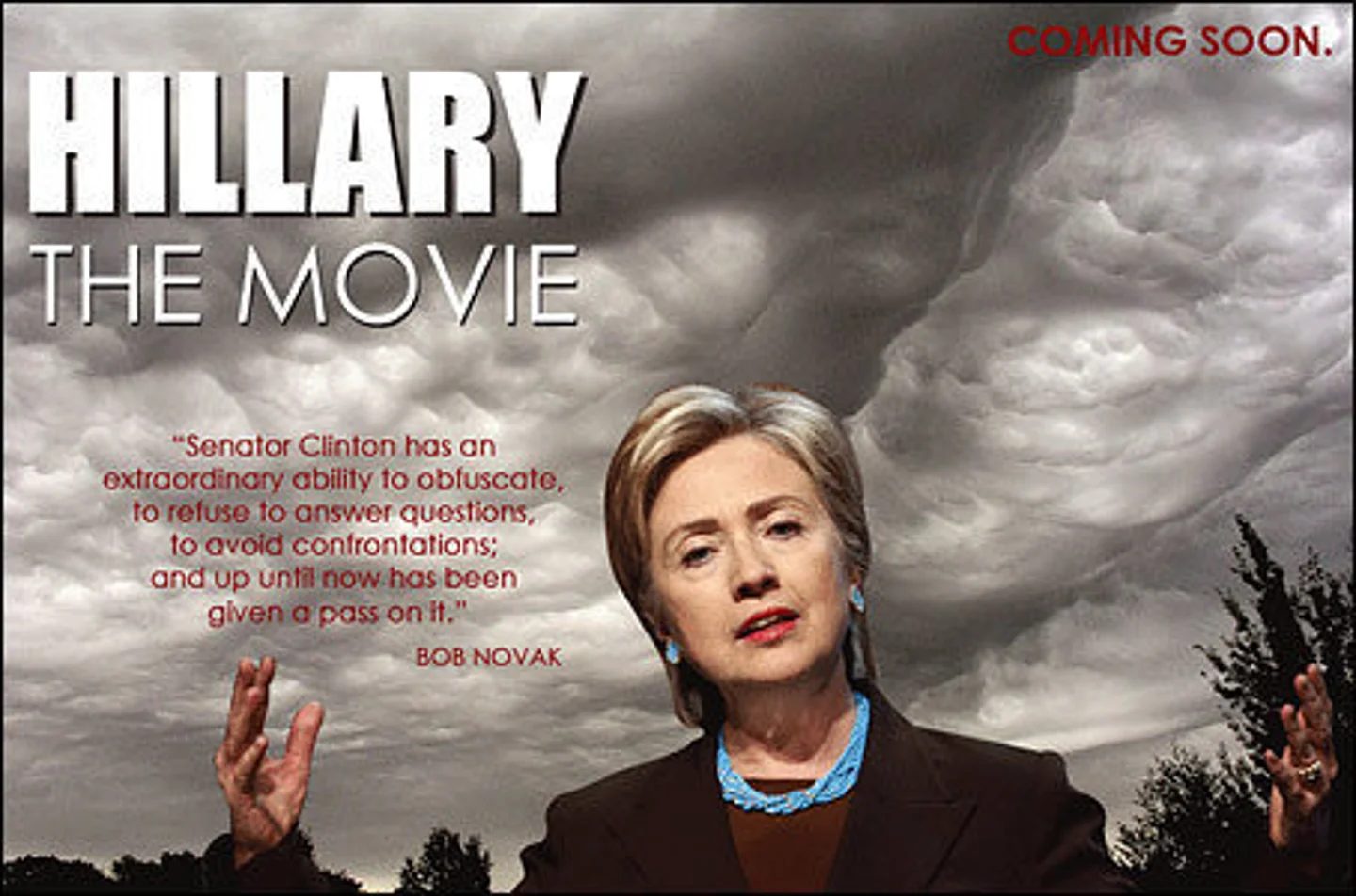
How Citizens United Came to Be: From a Hillary Hit Piece to Unlimited Corporate Cash in Elections – Dark Money
The 2010 Supreme Court decision in Citizens United v. FEC remains one of the most divisive rulings in modern American history. It didn’t just tweak campaign finance rules—it blew the doors off them, allowing corporations, unions, and wealthy donors to pour unlimited money into elections through “independent” spending. Super PACs, dark money groups, and billionaire influence? Thank (or blame) this case.
But how did we get here? It all started with a conservative nonprofit, a scathing documentary about Hillary Clinton, and a bold challenge to longstanding restrictions on political speech.
The Origins: Citizens United and “Hillary: The Movie”
Citizens United, a conservative advocacy group founded in 1988 by Floyd Brown (known for attack ads like the infamous Willie Horton spot in 1988), positioned itself as a producer of political documentaries. In 2007–2008, during Hillary Clinton’s run for the Democratic presidential nomination, the group created Hillary: The Movie—a 90-minute film portraying Clinton as power-hungry, untrustworthy, and unfit for office.
They planned to air it on DirecTV and promote it with TV ads right before primaries. But they hit a wall: the Bipartisan Campaign Reform Act (BCRA) of 2002—better known as the McCain-Feingold law—banned corporations and unions from funding “electioneering communications” (ads naming candidates) within 30 days of a primary or 60 days of a general election if those ads reached a broad audience.
Citizens United wasn’t just any corporation; as a nonprofit, it argued the rules violated its First Amendment rights to free speech. They sued the Federal Election Commission (FEC) in December 2007, seeking to declare parts of BCRA unconstitutional, both on their face and as applied to the film and its ads.
A federal district court mostly sided with the FEC: the film was basically election advocacy, not a neutral documentary, so the ban applied. Citizens United appealed directly to the Supreme Court.
The Supreme Court Showdown
The case was argued in March 2009, but the Court surprised everyone by ordering a rare reargument in September 2009, expanding the question to whether prior precedents like Austin v. Michigan Chamber of Commerce (1990)—which allowed bans on corporate independent expenditures—should be overruled.
On January 21, 2010, the Court ruled 5-4 in favor of Citizens United, going far beyond the narrow issue of the movie.
Majority (5 justices):
Anthony Kennedy (wrote the main opinion): Argued that spending money on political speech is protected expression. Banning corporate independent expenditures based on the speaker’s identity (corporation vs. person) violates the First Amendment. “If the First Amendment has any force, it prohibits Congress from fining or jailing citizens, or associations of citizens, for simply engaging in political speech.”
Joined by: Chief Justice John Roberts, Antonin Scalia, Samuel Alito, and Clarence Thomas (Thomas concurred separately, dissenting on disclosure rules).
Dissent (4 justices):
John Paul Stevens (wrote a blistering 90-page dissent): Called the ruling a “radical departure” that threatens democracy by allowing corporate wealth to drown out ordinary voices. Corporations aren’t “We the People,” he argued, and unlimited spending risks corruption and erodes public trust.
Joined by: Ruth Bader Ginsburg, Stephen Breyer, and Sonia Sotomayor.
The Court struck down the corporate spending ban, overturned Austin, and opened the floodgates for unlimited independent expenditures—as long as they weren’t coordinated with candidates.
The Controversy: Free Speech Victory or Corporate Takeover?
The decision ignited immediate firestorms.
President Obama blasted it in his 2010 State of the Union address:
“Last week, the Supreme Court reversed a century of law to open the floodgates for special interests—including foreign corporations—to spend without limit.” (That line drew a viral “not true” mouthed response from Justice Alito.)
Supporters hailed it as a triumph for the First Amendment, preventing government censorship of political views just because they’re from corporations (seen as groups of individuals). Critics decried it for equating money with speech, amplifying megadonors, and enabling “dark money” nonprofits to hide sources—leading to billions in outside spending that many say distorts democracy.
Fifteen years later (and counting), the ruling birthed super PACs, record-shattering election spending, and ongoing calls for a constitutional amendment to overturn it. Polls show overwhelming public opposition across party lines.
Was Citizens United a principled defense of free expression, or did it hand elections to the highest bidders? In the elephant in the room: the money keeps flowing, and ordinary voices often get shouted down.
What do you think—time to amend the Constitution, or is this just how free speech works in a capitalist democracy? Drop your thoughts in the comments.
Sources: Supreme Court opinion, Brennan Center for Justice, FEC records, Wikipedia summary (cross-verified).
Share this:

What we could expect with Major reform in campaign finance / donation transparency
On the surface, what we might see would be more honest campaign promises as the backroom financing would become more transparent. This would be more obvious on the local level but would migrate up the National Ladder.
Youtube Playlist for Dark Money
Share this:

Leonard Leo has done more to reshape the American legal landscape than many senators, presidents, or judges.
No bombastic rallies, no orange spray tan, no obvious cult of personality.
The media mostly sees him as “that judicial guy from the Federalist Society.”
But under the radar, he’s weaponizing legal legitimacy, which is far more enduring than any single politician’s charisma.
If Trump is the actor, Leonard Leo is the playwright, and the stage manager, and the guy who installed the trapdoor under the audience.
Youtube Playlist for Dark Money
Share this:

Arabella Advisors (via the Sixteen Thirty Fund)

Distance from local impact
National funding routed through professionalized networks can shape outcomes in local or state-level debates without local communities fully understanding where the support originated.
Youtube Playlist for Dark Money
Share this:


A Beginner’s Guide to the Federalist Society
Influence:
Huge impact on the judiciary. Many federal judges (including 6 current Supreme Court Justices with ties) are members or recommended by the group.
Helped shape conservative legal thinking on issues like gun rights, free speech, abortion, and regulation.
Often called the “conservative pipeline” to the courts.
Youtube Playlist for Dark Money
Share this:

Part 3b – Repetition As Policy Signal – Healthcare in America
When these phrases appear once, they may reflect genuine uncertainty. When they appear repeatedly, over weeks or months, they become signals.
The tobacco era showed this clearly. For years, the same reassurances were offered while evidence mounted. No new information was added—only the same language, restated. The repetition was not meant to inform; it was meant to delay.
Youtube Playlist for Our Healthcare Series
Share this:

Part 3a – When This Happened Before – Healthcare in America

Smoking-related illnesses rose predictably. Generations adopted a habit already known to be dangerous. The burden fell disproportionately on working-class families, veterans, and rural communities — long before those terms became political shorthand.
By the time policy finally caught up, millions of lives had already been affected.
No one could point to a single decision that caused the harm. That, too, was part of the design.
Youtube Playlist for Our Healthcare Series
Share this:

No One Best Fix, Part 3 Dark Money Continued – Montana as a Test Case, Not a Template

It tests something narrower:
Whether a state can limit certain forms of outside influence
Whether local accountability can be strengthened structurally
Whether reducing scale changes behavior
Youtube Playlist for Dark Money
Share this:

No One Best Fix, Part 2 Dark Money Continued – Why Local Answers Matter More Than National Ones
Accountability is stronger closer to home
When decisions are made locally:
The people affected are easier to identify
The consequences are harder to ignore
The distance between influence and impact is shorter
Youtube Playlist for Dark Money
Share this:

No One Best Fix, Part 1 Dark Money Continued – Why Simple Solutions Fail

The difficulty arises when:
Money becomes scalable
Influence becomes detached from consequences
The people paying don’t live with the outcomes
Banning money outright isn’t realistic. Limiting it too tightly just pushes it into new, often less visible channels.
Youtube Playlist for Dark Money
Share this:

Dark Money for Dummies — Part 3
The conspiracy’s that aren’t.
Far cheaper
Less crowded with competing messages
Less scrutinized by media
More consequential per dollar spent
Youtube Playlist for Dark Money
Share this:

Dark Money for Dummies — Part 2
Once people understand what dark money is, the next question is obvious:
If this creates so many problems, why does it exist at all?
The short answer is not corruption or conspiracy.
Youtube Playlist for Dark Money
Share this:

Dark Money for Dummies — Part 1
“Dark money” sounds dramatic, like something illegal or conspiratorial.
Most of the time, it’s neither.
At its simplest, dark money is political spending where the true source of the money is hidden from the public. The spending itself is usually legal. What’s obscured is who is really behind it.
That distinction matters.

The Hypocrisy of Insider Advantages: From Bolton’s Guilty Plea to Trump Family Fortunes – Video
In June 2026, John Bolton, Donald Trump’s former National Security Adviser and later one of his most prominent critics, pleaded guilty to one count of unlawfully retaining national defense information. Prosecutors alleged that Bolton removed handwritten notes containing sensitive national defense information from government custody, kept them after leaving office, and shared more than 1,000 pages of those notes with family members while preparing a memoir. Bolton admitted the conduct in court and accepted a plea agreement that included substantial financial penalties.
The Bolton case raises broader questions about how accountability is applied to different forms of access, influence, and responsibility connected to public office. While Bolton faced criminal prosecution for mishandling information obtained through government service, President Trump has portrayed his own family’s business position as being complicated rather than enriched by his presidency.
=================================================
Responsibility, if one concludes there is a problem, does not rest with a single individual. Trump chose not to fully separate himself from his family’s business interests and publicly defended arrangements that critics viewed as creating conflicts. His sons and Jared Kushner pursued business opportunities made possible, at least in part, by their proximity to political power. Congress, executive branch ethics systems, and federal regulators have all been criticized for inconsistent oversight. Ultimately, voters also bear responsibility for deciding what standards they expect from elected officials and their families.
The Bolton case ultimately raises a broader question about equal accountability. If unlawfully retaining and sharing sensitive government information warrants criminal prosecution, then the use of political access, family relationships, and governmental influence to generate extraordinary private wealth invites equal public scrutiny. Whether those activities constitute unlawful conflicts of interest, unethical self-dealing, aggressive but lawful business practices, or something else entirely remains a matter for investigators, regulators, courts, and ultimately the American public. In a nation committed to equal justice under law, the contrast between Bolton’s prosecution and the continuing questions surrounding the Trump family’s financial and legal advantages is difficult to ignore.
Share this:
Like this: