We See It Every Day. So Why Isn’t Anything Changing?
You don’t have to go looking for it anymore.
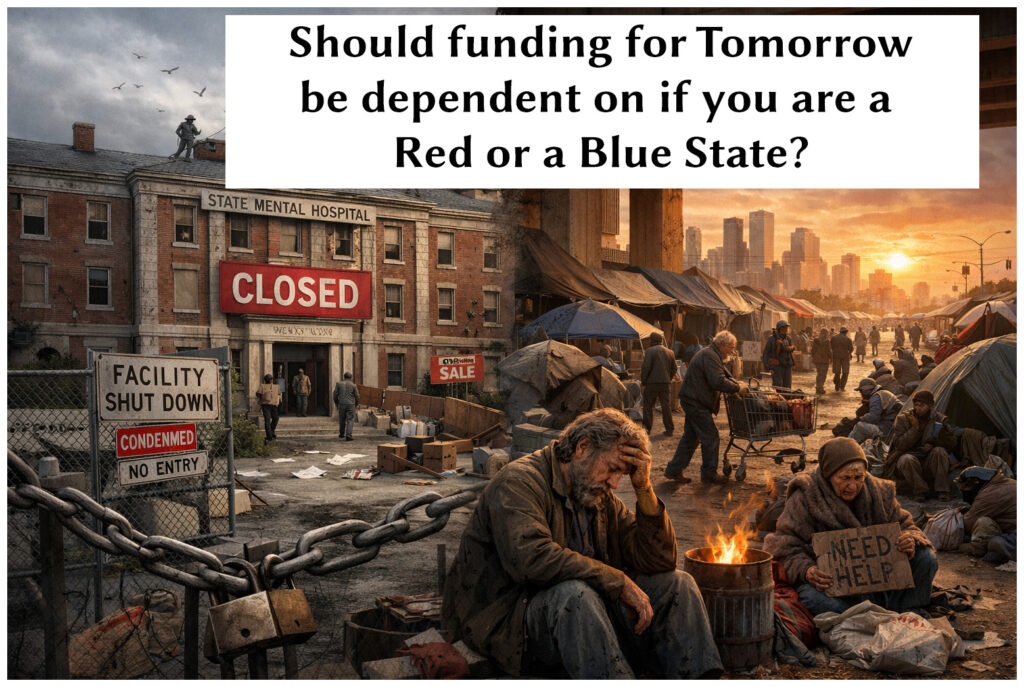
It’s under overpasses.
Along sidewalks.
In places that used to feel like part of the normal rhythm of a city.
Tents. Makeshift shelters. People existing in plain sight, but somehow outside of everything around them.
We see it enough now that it’s become background.
And when something becomes background, it stops demanding answers.
There are responses, of course.
Cities clear areas and call it progress.
Organizations step in where they can.
Churches open kitchens, shelters rotate beds, volunteers show up with good intentions.
None of it is wrong.
But none of it is changing the direction of the problem.
We’ve settled into a pattern:
Address what’s immediately visible.
Move it. Manage it. Contain it.
Then repeat.
Over and over.
There’s also an assumption sitting underneath all of this:
That if the problem is big enough, government will eventually organize around it.
But this isn’t something that fits cleanly into a single department, a single budget, or a single political cycle.
So it gets divided, delayed, and debated.
And while that happens, the visible part keeps growing.
On the other side, there’s charity.
And there is a lot of it.
People care. They show up. They give time, food, money.
But most of it exists in small, isolated pockets.
A meal here. A bed for the night. A temporary service.
It helps—but it doesn’t carry forward.
It resets every day.
So we end up in between two things that aren’t built to solve it:
A system that moves slowly.
And efforts that don’t scale.
That leaves something missing.
Not compassion.
Not awareness.
Something more basic than that.
Nothing we’re doing is designed to grow into a solution.
Nothing connects.
Nothing compounds.
Nothing builds on itself.
And that’s the part that’s easy to miss, because everything we are doing looks like action.
It just doesn’t add up to progress.
At some point, the question changes.
Not:
Why is this happening?
But:
Why isn’t anything we’re doing capable of getting ahead of it?


Comments are Disabled