Skip to content

You can go to the bar and complain.
Our goal isn’t outrage.
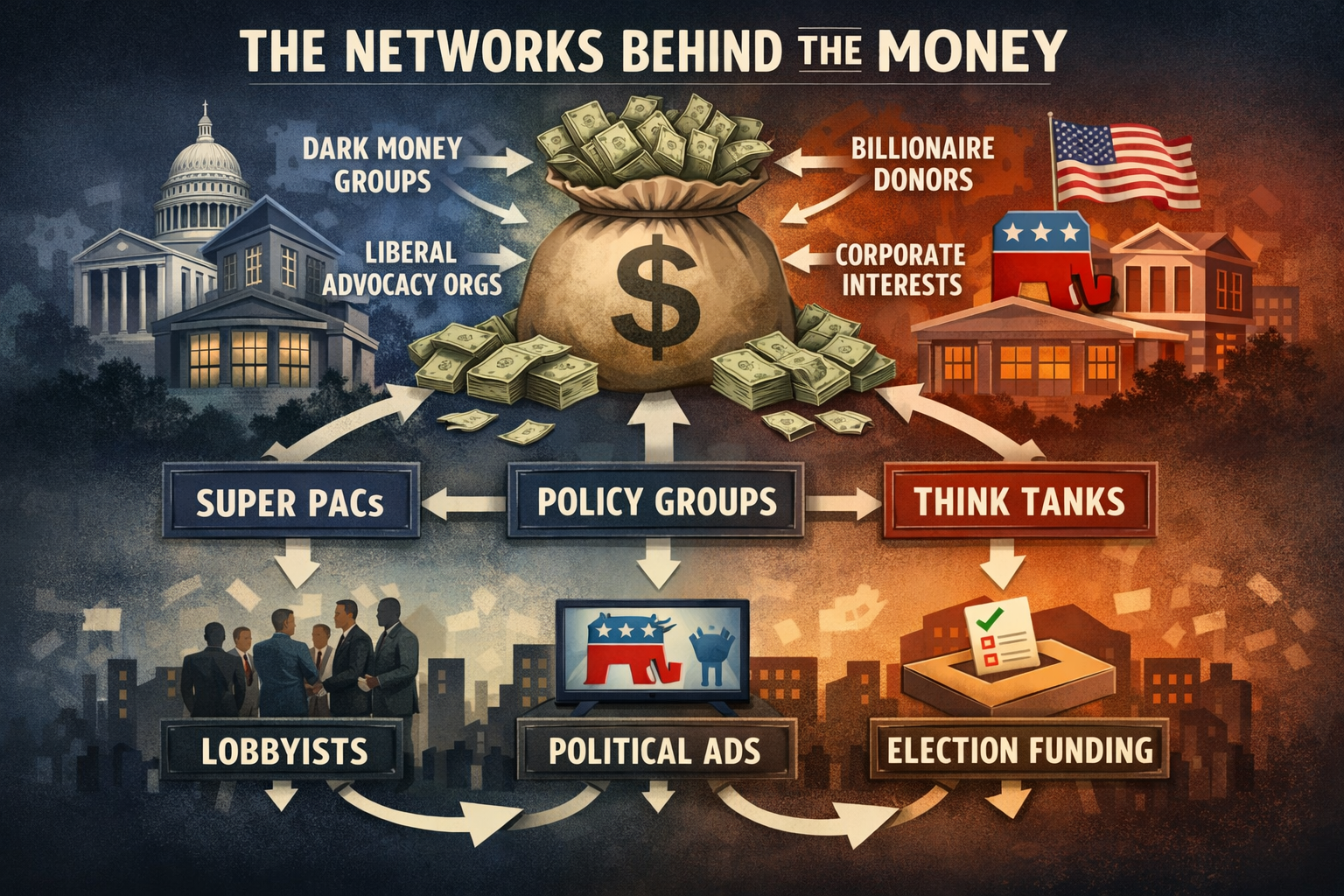












No black boxes.
The litmus test:
People should be able to stay anonymous or pseudonymous if they want.
The platform receives only:
Clear, narrow, predictable.
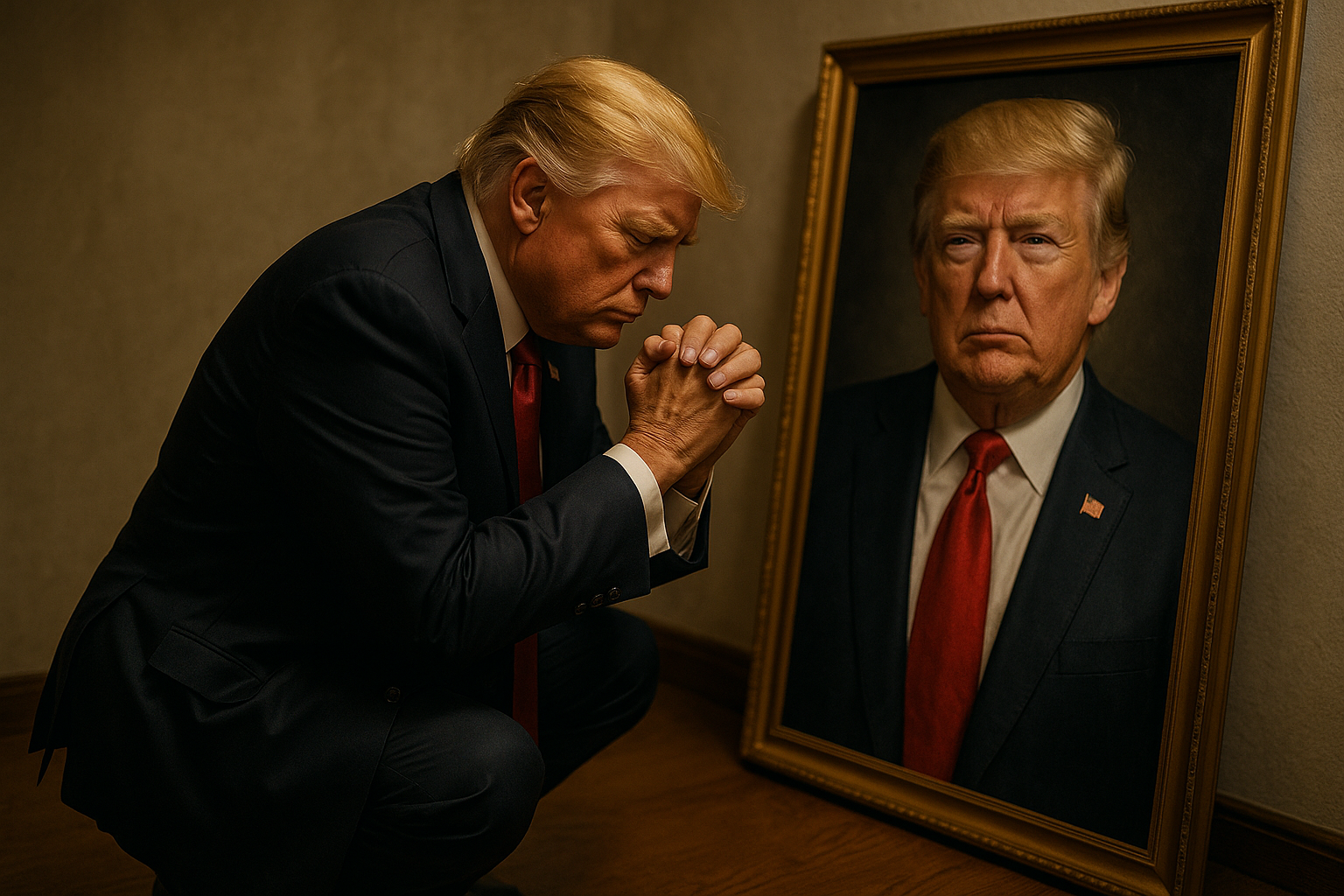
Trump interprets the world through personal loyalty, personal grievance, and personal validation.
It’s all self-referential.
The forces around him — political, economic, ideological, cultural — would exist with or without him.
No.**
Trump is not a strategist.
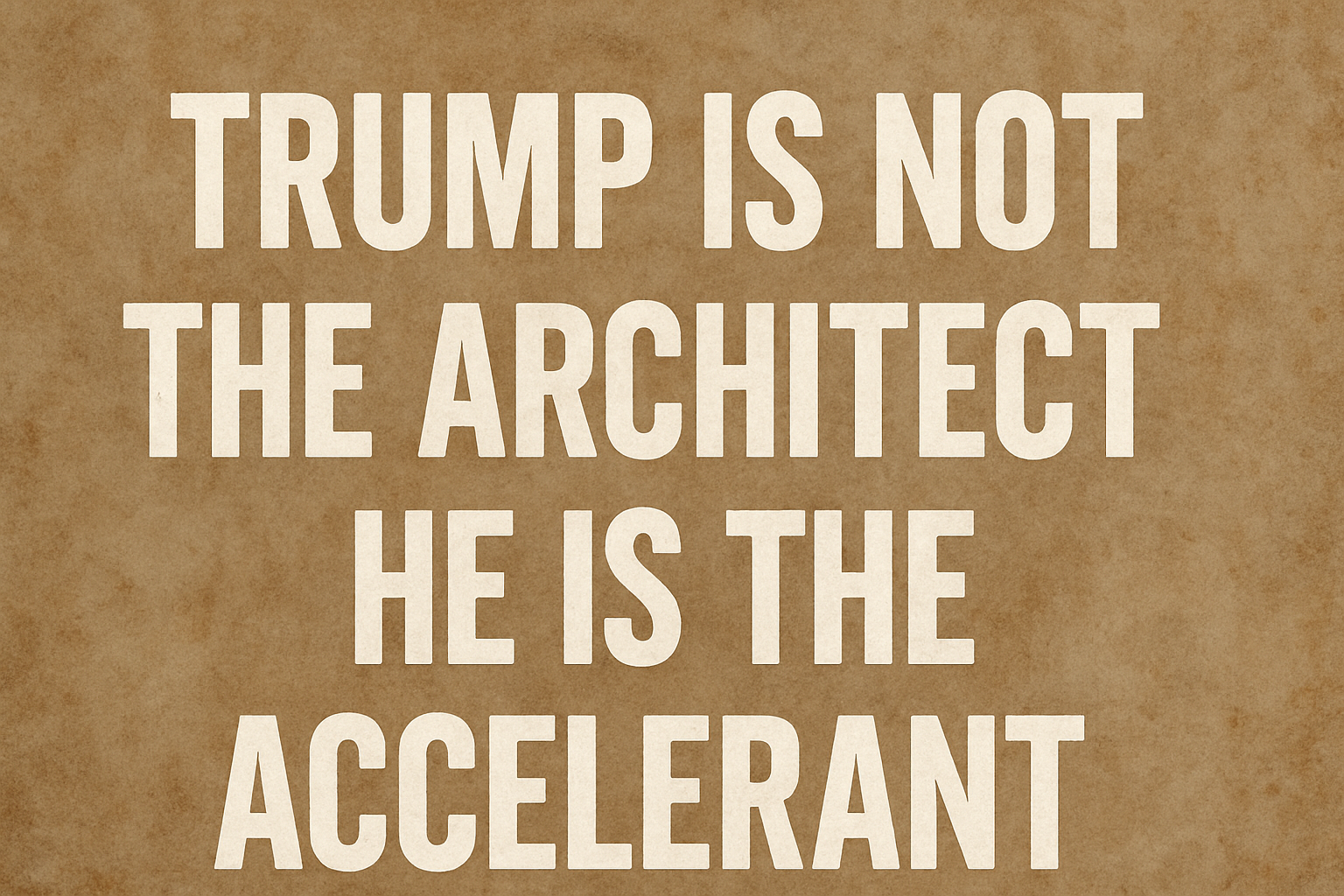
(The Ideological Architects)**
Their fingerprints are on half the draft orders.
This is the ideological engine.
The key figure.
They provide the legal justification — sometimes extremely stretched — that turns an idea into a supposedly lawful order.
Placed strategically to make sure the EO isn’t just symbolic.
These are the “invisible hands” who will run departments once civil service protections are removed.
Step 1: Staff tells him the summary, not the text.
Trump isn’t an “autopen,”
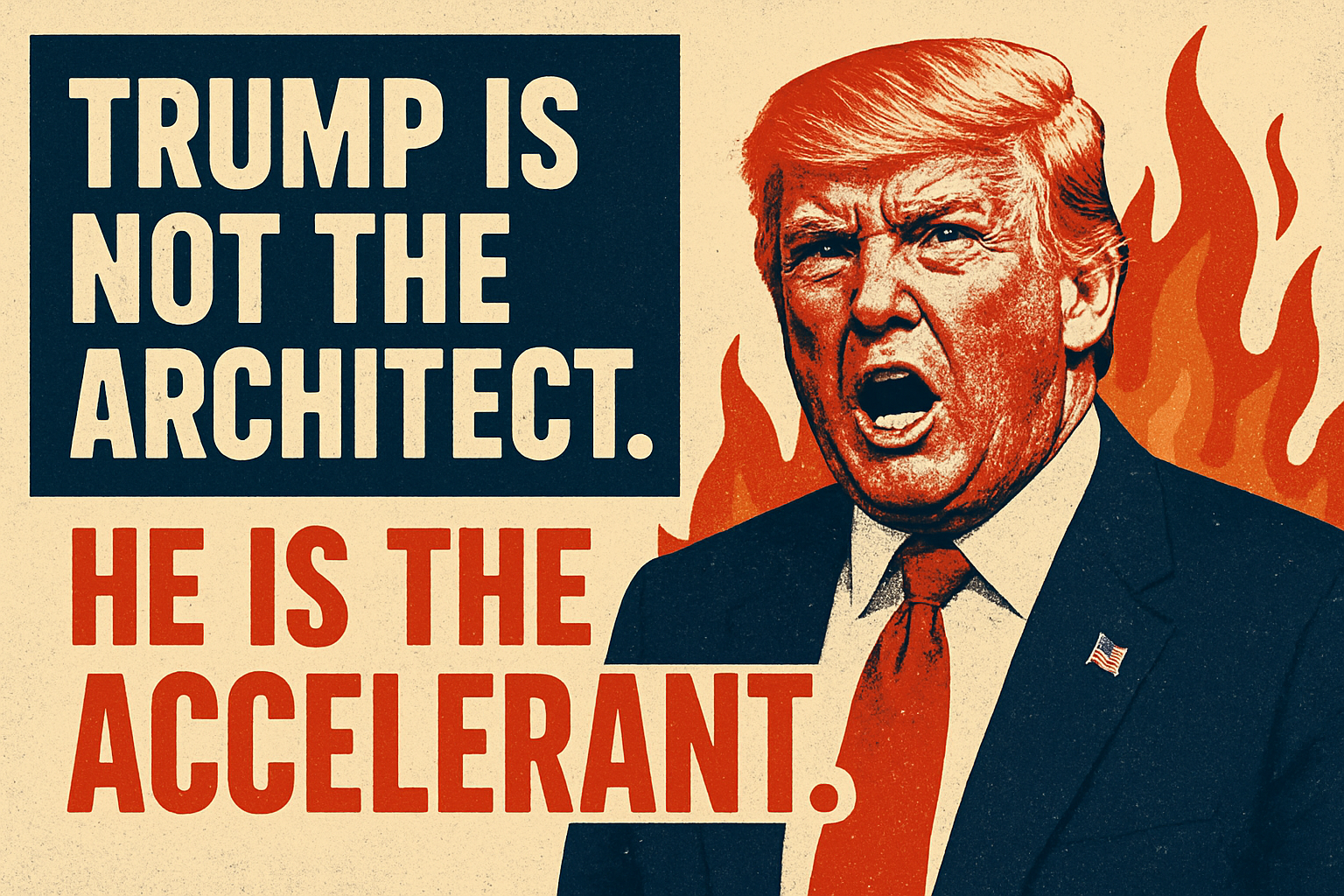
Fascistic tendencies as systemic.
Trump is the face.
Trump is not the architect.


Conspiracy theories
But definitions only get you so far. Any plan—especially a large one—needs more defining. Intent matters. A plan doesn’t have to be “malevolent” to be dangerous, at least not to the people creating it. From their point of view, the goal might look noble: ending world hunger, curing disease, improving stability. But achieving that goal can take very different paths.
What brought me to this point today was an article on American Fascism:
But that doesn’t mean the entire theory collapses. It just shifts the question:
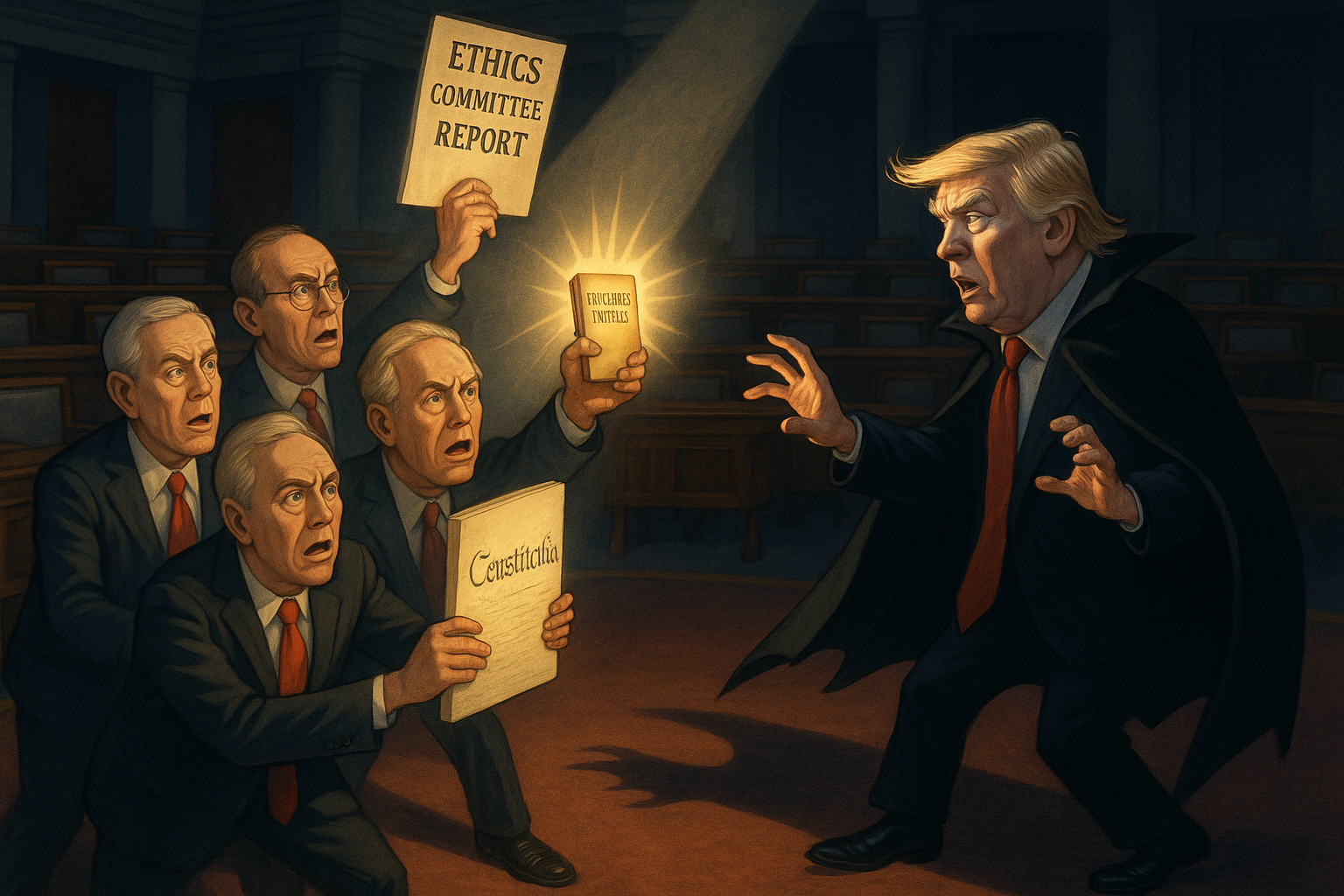
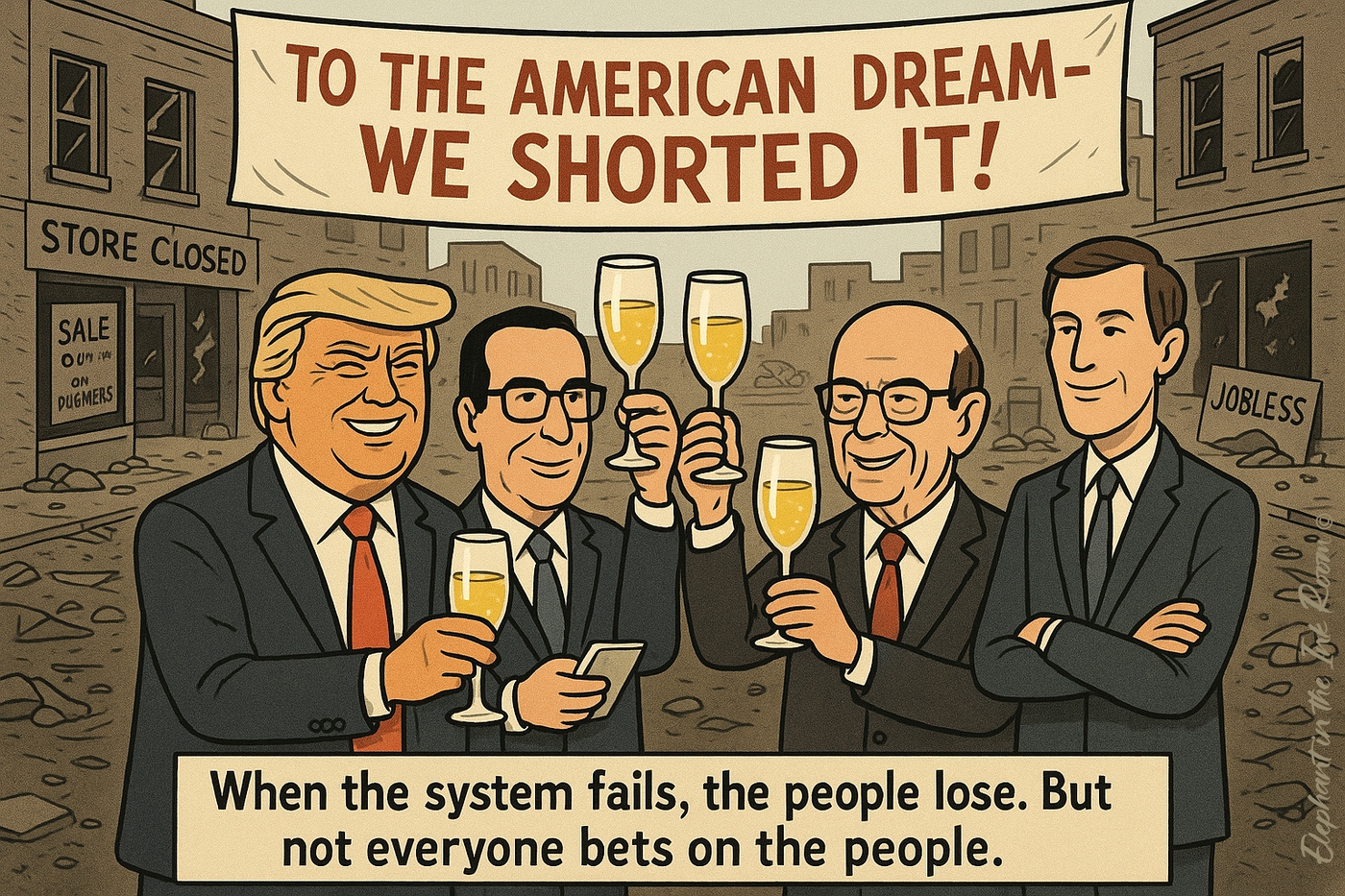

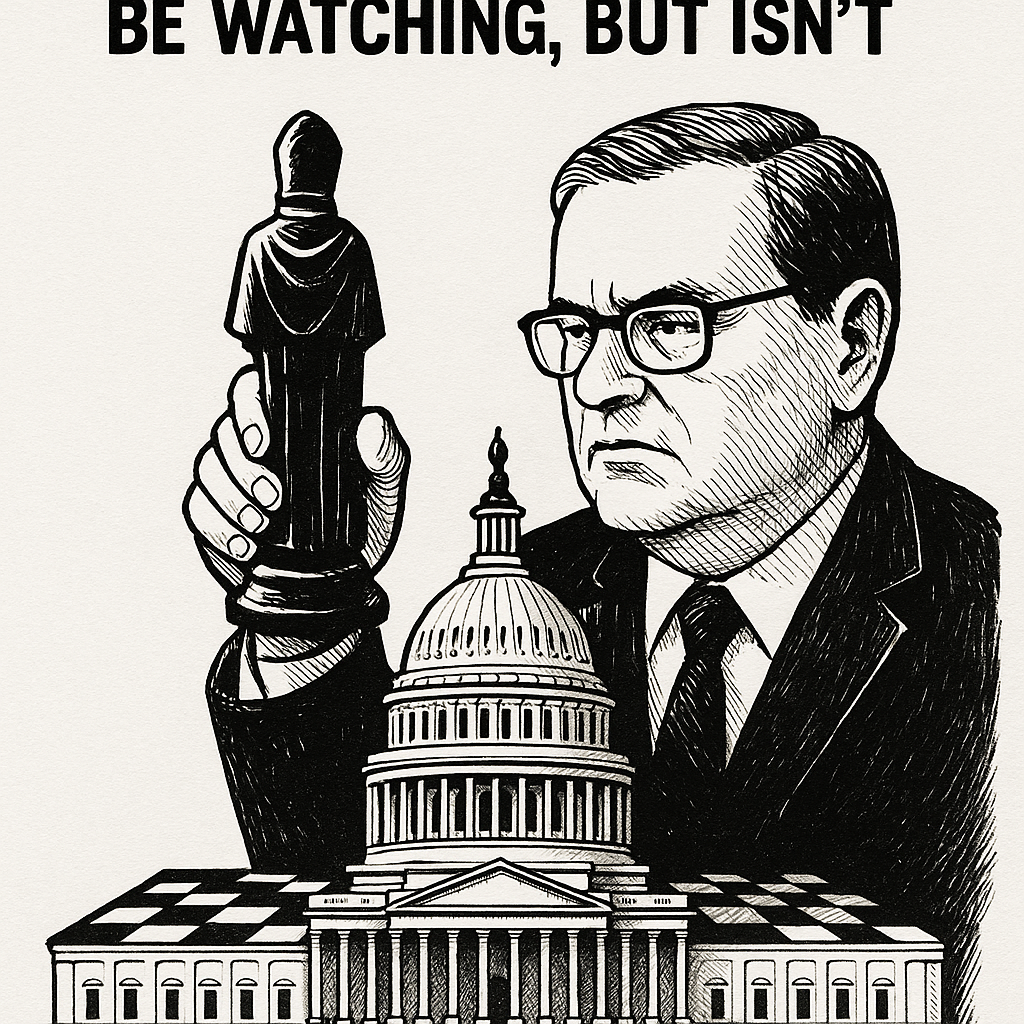
1. He’s almost completely invisible to the public
2. He operates through permanence, not popularity
3. He has billion-dollar influence with zero accountability
4. His agenda is deeply ideological — and strategic
Why He’s Dangerous
Why People Overlook Him
Posts in Category: Conspiracy theories
Conspiracy theories, AI taking over, where robotics can take us. It’s the future we are going to theorize about. But this isn’t SciFi, it’s what’s evolving around us.
The big question is not the worlds future, but yours and mine. what must we do to prepare ourselves, and who is orchestrating everything.
Spoiler Alert: It isn’t Donald Trump.
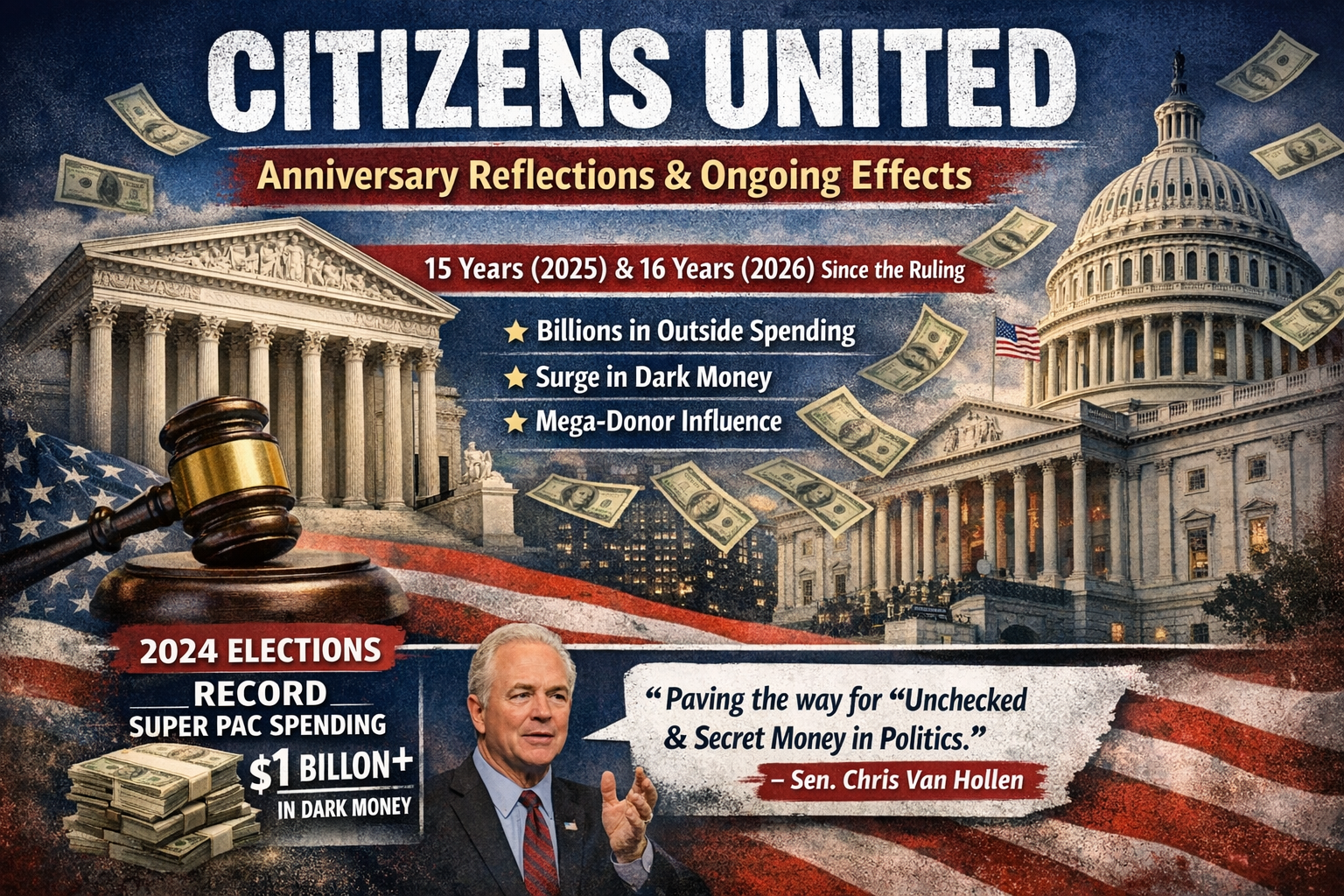
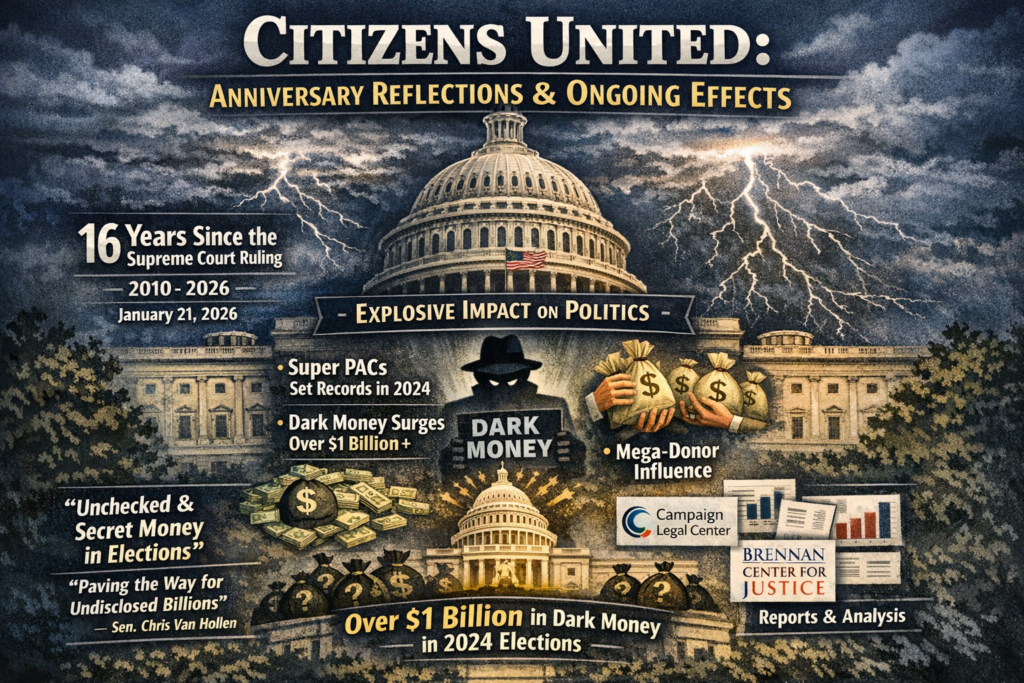
Fifteen Years later, Citizen United still is in the news and still the center of controversy
 Key recent highlights (from late 2025 into early 2026):
Anniversary reflections and ongoing effects: On the 15-year (2025) and now 16-year (January 21, 2026) anniversaries of the ruling, groups like the Campaign Legal Center, Brennan Center for Justice, and others published analyses showing how Citizens United has enabled billions in outside spending, dark money surges, and megadonor influence. For example, super PACs set records in 2024 elections, with dark money topping $1 billion in some cycles. Posts from figures like Senator Chris Van Hollen criticized it for paving the way for “unchecked & secret money” in politics.
Calls for reform and constitutional amendments: In September 2025, Democratic lawmakers (including Reps. Summer Lee, Joe Neguse, Jim McGovern, and Sen. Adam Schiff) introduced the “Citizens Over Corporations Amendment” to overturn Citizens United, restore limits on corporate spending, and distinguish between people and corporations in campaign finance. This builds on long-standing efforts, with endorsements from groups like CREW (Citizens for Responsibility and Ethics in Washington).
State-level and alternative strategies: Discussions continue on state actions to push back, such as “trigger laws” (laws that activate if the ruling is overturned) or rethinking corporate powers via state incorporation laws to make Citizens United “irrelevant.” A Montana initiative and reports from groups like the Center for American Progress highlighted these in 2025. Polls (e.g., from American Promise in early 2026) show broad public rejection of “money = speech,” with support for reforms across party lines.
Broader commentary: Advocacy organizations (e.g., Brennan Center, End Citizens United) and critics frequently tie current political dynamics—like billionaire influence in transitions or elections—to the decision’s legacy. On X (formerly Twitter), users continue debating it in contexts like big donors, election integrity, and specific politicians.
How does this affect you, in my opinion, it reduced our voice. It is no longer one person, one voice.
What can we do about it? As with anything thing in politics, the louder the voice, the more often it will be heard. You know where your phone is, you know where your email is, use them.
Share this:

How Citizens United Came to Be: From a Hillary Hit Piece to Unlimited Corporate Cash in Elections – Dark Money
The 2010 Supreme Court decision in Citizens United v. FEC remains one of the most divisive rulings in modern American history. It didn’t just tweak campaign finance rules—it blew the doors off them, allowing corporations, unions, and wealthy donors to pour unlimited money into elections through “independent” spending. Super PACs, dark money groups, and billionaire influence? Thank (or blame) this case.
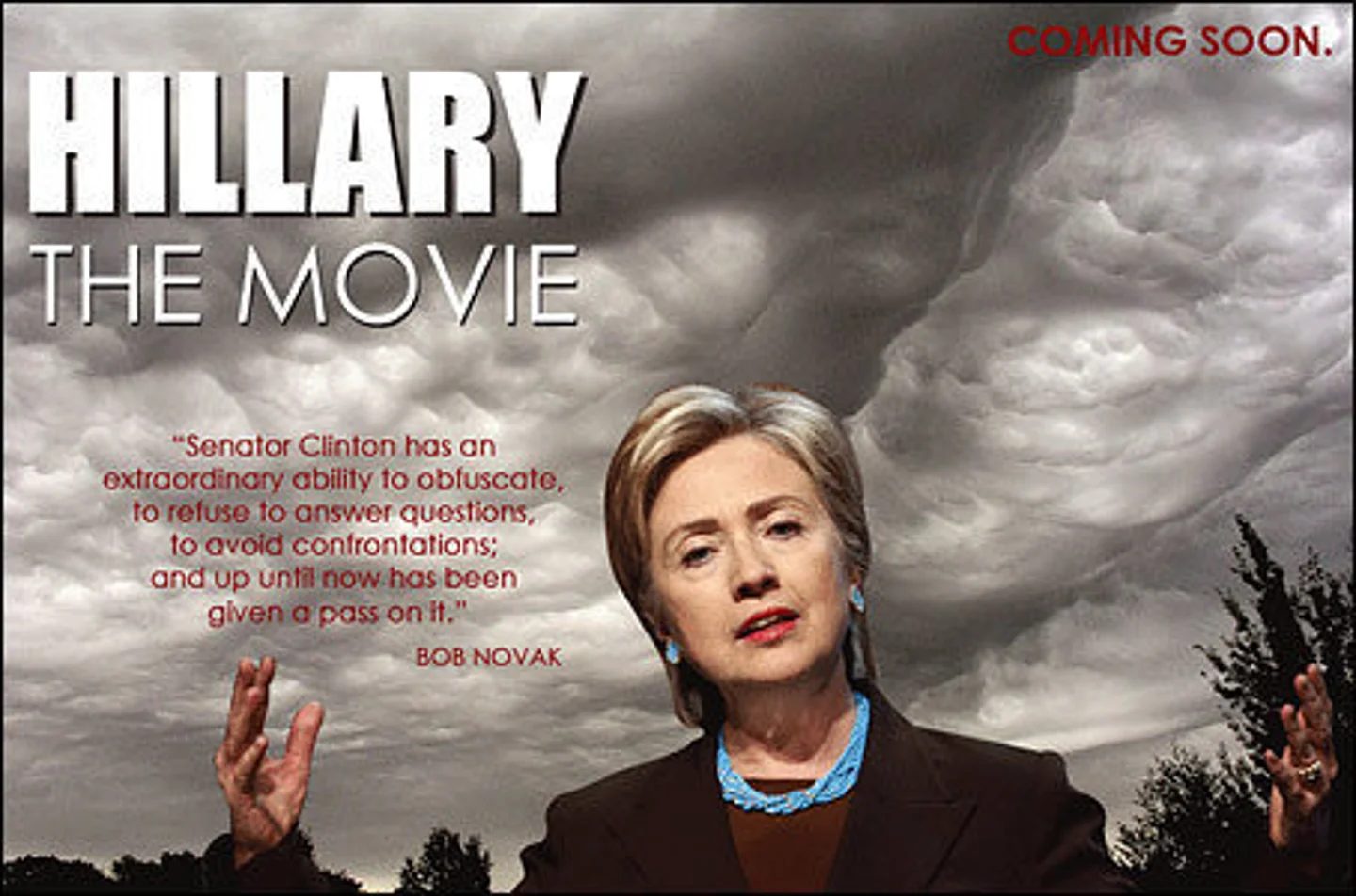
But how did we get here? It all started with a conservative nonprofit, a scathing documentary about Hillary Clinton, and a bold challenge to longstanding restrictions on political speech.
The Origins: Citizens United and “Hillary: The Movie”
Citizens United, a conservative advocacy group founded in 1988 by Floyd Brown (known for attack ads like the infamous Willie Horton spot in 1988), positioned itself as a producer of political documentaries. In 2007–2008, during Hillary Clinton’s run for the Democratic presidential nomination, the group created Hillary: The Movie—a 90-minute film portraying Clinton as power-hungry, untrustworthy, and unfit for office.
They planned to air it on DirecTV and promote it with TV ads right before primaries. But they hit a wall: the Bipartisan Campaign Reform Act (BCRA) of 2002—better known as the McCain-Feingold law—banned corporations and unions from funding “electioneering communications” (ads naming candidates) within 30 days of a primary or 60 days of a general election if those ads reached a broad audience.
Citizens United wasn’t just any corporation; as a nonprofit, it argued the rules violated its First Amendment rights to free speech. They sued the Federal Election Commission (FEC) in December 2007, seeking to declare parts of BCRA unconstitutional, both on their face and as applied to the film and its ads.
A federal district court mostly sided with the FEC: the film was basically election advocacy, not a neutral documentary, so the ban applied. Citizens United appealed directly to the Supreme Court.
The Supreme Court Showdown
The case was argued in March 2009, but the Court surprised everyone by ordering a rare reargument in September 2009, expanding the question to whether prior precedents like Austin v. Michigan Chamber of Commerce (1990)—which allowed bans on corporate independent expenditures—should be overruled.
On January 21, 2010, the Court ruled 5-4 in favor of Citizens United, going far beyond the narrow issue of the movie.
Majority (5 justices):
Anthony Kennedy (wrote the main opinion): Argued that spending money on political speech is protected expression. Banning corporate independent expenditures based on the speaker’s identity (corporation vs. person) violates the First Amendment. “If the First Amendment has any force, it prohibits Congress from fining or jailing citizens, or associations of citizens, for simply engaging in political speech.”
Joined by: Chief Justice John Roberts, Antonin Scalia, Samuel Alito, and Clarence Thomas (Thomas concurred separately, dissenting on disclosure rules).
Dissent (4 justices):
John Paul Stevens (wrote a blistering 90-page dissent): Called the ruling a “radical departure” that threatens democracy by allowing corporate wealth to drown out ordinary voices. Corporations aren’t “We the People,” he argued, and unlimited spending risks corruption and erodes public trust.
Joined by: Ruth Bader Ginsburg, Stephen Breyer, and Sonia Sotomayor.
The Court struck down the corporate spending ban, overturned Austin, and opened the floodgates for unlimited independent expenditures—as long as they weren’t coordinated with candidates.
The Controversy: Free Speech Victory or Corporate Takeover?
The decision ignited immediate firestorms.
President Obama blasted it in his 2010 State of the Union address:
“Last week, the Supreme Court reversed a century of law to open the floodgates for special interests—including foreign corporations—to spend without limit.” (That line drew a viral “not true” mouthed response from Justice Alito.)
Supporters hailed it as a triumph for the First Amendment, preventing government censorship of political views just because they’re from corporations (seen as groups of individuals). Critics decried it for equating money with speech, amplifying megadonors, and enabling “dark money” nonprofits to hide sources—leading to billions in outside spending that many say distorts democracy.
Fifteen years later (and counting), the ruling birthed super PACs, record-shattering election spending, and ongoing calls for a constitutional amendment to overturn it. Polls show overwhelming public opposition across party lines.
Was Citizens United a principled defense of free expression, or did it hand elections to the highest bidders? In the elephant in the room: the money keeps flowing, and ordinary voices often get shouted down.
What do you think—time to amend the Constitution, or is this just how free speech works in a capitalist democracy? Drop your thoughts in the comments.
Sources: Supreme Court opinion, Brennan Center for Justice, FEC records, Wikipedia summary (cross-verified).
Share this:

It isn’t funny anymore, so let’s get ready for tomorrow – Healthcare in America

After a year of sharp satire aimed at one particularly loud clown who’s now less funny than frightening, I’ve shifted gears. For the past month, I’ve worked hard not to let the current atrocities wag me or incite me — because the chaos, as dangerous as it has become, is still a self-serving diversion.The parody landed its points. But I’ve shifted gears.
The noise is deafening — endless sky-is-falling takes, reaction bait, and soundbite wars. Parody can’t out-absurd reality forever, and outrage isn’t insight.So I’m moving on to something more useful: helping people understand the actual systems we live inside, not just the circus around them.
I’ve just wrapped up a month of breaking down dark money mechanics (how it flows, manipulates, and warps decisions on both sides). Not conspiracy theories, just a better understanding of the how and why. My goal wasn’t to be partisan — it was to help readers better grasp the mechanics behind the curtain and make better, self-informed decisions.
Next up: a ~15-part series on institutional healthcare. Not the latest premium hikes, Trump tweets, or partisan talking points. Instead:
- How the U.S. healthcare machine evolved historically
- Who really makes the decisions (incentives, gatekeepers, power structures)
- What access actually looks like on the ground
- A clear comparison of free-market vs. socialized models — trade-offs, not team cheers
The goal isn’t to push an agenda; it’s to equip you with context so you can think, decide, and act from knowledge instead of reflexes. For the majority of my life, my knowledge of healthcare was condensed into these three or four questions, asked under stress:
- Am I insured?
- Will my spouse’s job still cover us?
- What happens if we get pregnant / sick / laid off?
- Can we afford this surprise?
Knowing the answers to those 4 questions is not enough.Occasional memes will still sneak in (old habits die hard), but the main lane now is education over entertainment. Thanks for reading along so far. If this resonates, stick around.
Share this:

Dark Money and Influence, It’s time to move on.

At that point, the choice is yours.
You can go to the bar and complain.
You can leave angry comments online.
You can declare the right evil, the left evil, or both — and feel briefly satisfied.
Or you can do something about it.
To close out this section on dark money, We’ve pointed to the largest national players we know on each side of the ideological divide. On the right, the Federalist Society and Leonard Leo. On the left, the American Constitution Society and Arabella Advisors.
This wasn’t done to assign blame or score points.
It was done to show that influence networks exist on both sides, operate differently, and are rarely as simple as the slogans used to describe them. We’ve tried to approach this non-partisanly — not because “both sides are the same,” but because understanding requires honesty, not loyalty.
Our goal isn’t outrage.
It’s perspective.
If we want to slow the pendulum, regain some sanity in the process, and move forward in a way that doesn’t leave communities feeling manipulated or powerless, it starts here — with awareness, restraint, and local engagement.
What happens next is up to you.
Share this:

What we could expect with Major reform in campaign finance / donation transparency
What we could expect with Major reform in campaign finance / donation transparency
Most of this was included in the Pendulum Swing, assuming a right to left shift, but the organizations need to be brought to light and understood.
On the surface, what we might see would be more honest campaign promises as the backroom financing would become more transparent. This would be more obvious on the local level but would migrate up the National Ladder.
Major reform in campaign finance / donation transparency — if laws tighten, anonymity and dark-money flows shrink.
-
- Economic collapse or disruption to corporate profits — institutional money depends on capital; if the economy sours, so does financial influence.
- Mass public backlash / grassroots insurgency — if voters demand structural change, elite influence may become a liability rather than an asset.
- Global shifts (trade, climate, geopolitics) that outgrow traditional domestic lobbying and require new alignments — making old networks obsolete or forced to transform drastically.
Major Networks & Institutions Likely to Persist Through a Shift
|
Name / Network |
Why They Endure /What Makes Them Resilient |
|---|---|
|
Sixteen Thirty Fund (and affiliated Arabella Advisors funds) |
Long-standing “dark money” powerhouse for the left. Provides fiscal-sponsorship and funding to many progressive causes and campaigns. As a 501(c)(4) nonprofit, it can channel money — often anonymously — into activism, ballot initiatives, and elections. Wikipedia+1 |
|
Berger Action Fund (network tied to Swiss billionaire support of progressive causes) |
Serves as a major donor funnel for progressive policy agendas. Its role shows how international money and large-scale philanthropy can influence U.S. politics regardless of which party is in charge. Wikipedia+1 |
|
Priorities USA Action |
One of the largest Democratic-leaning super PACs. Has shown flexibility in shifting strategy (e.g. moving toward digital campaigning rather than just TV ads), which suggests institutional agility in changing political climates. Wikipedia |
|
American Bridge 21st Century |
A major liberal opposition-research and election campaign group—effective at media and messaging work. Such infrastructures are portable: no matter who’s in power, they can redirect resources toward oversight, opposition, or new causes. Wikipedia |
|
Tides Foundation / Tides Network |
A long-standing donor-advised fund and fiscal-sponsorship network. Its versatile structure lets wealthy donors fund causes under the radar — meaning it can remain influential regardless of which party holds power. Wikipedia+1 |
|
Major Conservative Mega-Donors (e.g. Richard Uihlein & family, Scaife-linked foundations, etc.) |
These “big-money backers” have deep pockets and substantial influence on think tanks, policy-planning networks, and regulatory lobbying. Their funds tend to follow structural interests (tax law, business regulation, corporate incentives) — which can often survive major party shifts. DeSmog+2The Good Men Project+2 |
|
Embedded Think Tanks and Policy Networks (e.g. Heritage Foundation, Intercollegiate Studies Institute (ISI), and other longtime policy infrastructure) |
These institutions provide long-term ideological frameworks, produce research, influence judiciary nominations, shape legislation drafts — and have memberships, staffs, and networks that outlast electoral cycles. DeSmog+1 |
|
Financial-industry donors and Super-PAC backers (e.g. Kenneth C. Griffin, other hedge-fund and Wall Street funders) |
Money from big finance often plays both ends: campaign donations, policy lobbying, influence over regulation. Because their interest is often stability, deregulation, and favorable economic policy — not always party ideology — they can pivot if a left administration offers similar benefits. Fiscal Report+1 |
Why These Actors Are So Durable
- Legal and structural opacity: Many are nonprofits or 501(c)(4) / donor-advised funds that are not required to publicly disclose all donors or spending. That secrecy makes them hard to trace — and easy to reorient quietly.
- Networks over individuals: Their power rests in institutions, infrastructure, think tanks, PACs, and donor webs — not individuals whose fortunes rise or fall with elections.
- Financial interests over pure ideology: Many of these players (especially donors, think-tanks, financial backers) prioritize economic, regulatory, and institutional stability — interests that survive either party being in power.
- Adaptability: Super-PACs and nonprofit umbrellas can shift focus quickly: from supporting one party to supporting causes, ballot initiatives, or policy campaigns under any administration.
- Trans-partisan appeal: Particularly for business interests and big donors — maintaining influence requires access from whichever side controls power. So pivoting becomes strategy, not betrayal.
Share this:

Arabella Advisors (via the Sixteen Thirty Fund)
| Leonard Leo | Arabella Advisors |
|---|---|
| Builds and steers a network | Builds and steers a network |
| Operates mostly out of public view | Operates mostly out of public view |
| Uses nonprofits and fiscal vehicles | Uses nonprofits and fiscal vehicles |
| Focuses on long-term institutional outcomes | Focuses on long-term institutional outcomes |
| Rarely the public face of campaigns | Rarely the public face of campaigns |
The Other Side of the Leonards Coin: Arabella Advisors and the Progressive Influence Network
Arabella Advisors dissolved in late 2025 and transferred its services to Sunflower Services. That organizational change does not alter the relevance of what follows. This discussion focuses on the methods, structures, and influence models that operated under Arabella’s umbrella—models that continue to exist across the political spectrum regardless of name or branding.
If you’ve read about Leonard Leo and wondered whether there’s an equivalent force operating on the other side of the political spectrum, the short answer is: yes — but it looks different.
If you are unfamiliar with Leonard Leo then I suggest you read our brief on him, it will make my cross references here clearer.
Rather than centering on one highly visible figure, progressive influence has tended to operate through organizational networks. One of the most significant of those is Arabella Advisors.
This is not a critique or an endorsement. It’s an attempt to understand how modern political influence actually works.
What Is Arabella Advisors?
Arabella Advisors is a for-profit consulting firm that specializes in managing and supporting nonprofit organizations and advocacy efforts. Its influence comes less from public messaging and more from infrastructure.
Arabella administers several large nonprofit funds, including:
-
The Sixteen Thirty Fund
-
The New Venture Fund
-
The Hopewell Fund
-
The Windward Fund
These funds act as fiscal sponsors, meaning they legally host and manage hundreds of projects that may not have their own independent nonprofit status.
In practical terms, this allows advocacy campaigns to:
-
Launch quickly
-
Share administrative resources
-
Receive funding efficiently
-
Operate under existing legal umbrellas
This structure is entirely legal and widely used across the nonprofit world.
How the Network Operates
Unlike traditional nonprofits with a single mission and brand, Arabella’s model supports many separate initiatives at once, often focused on:
-
Voting and election policy
-
Climate and environmental advocacy
-
Healthcare access
-
Judicial and legal reform
-
Democracy and governance issues
Most people encountering these efforts don’t see “Arabella” at all. They see:
-
A campaign name
-
A policy group
-
A ballot-issue committee
-
An issue-specific advocacy organization
That’s not secrecy — it’s organizational design.
Why Some Critics Raise Concerns
Criticism of Arabella’s network usually centers on three issues:
1. Donor opacity
Some of the funds administered through the network do not publicly disclose individual donors, which raises concerns similar to those voiced about conservative dark-money groups.
2. Scale and coordination
Because many projects are housed under a small number of fiscal sponsors, critics argue this can concentrate influence in ways that are hard for the public to track.
3. Distance from local impact
National funding routed through professionalized networks can shape outcomes in local or state-level debates without local communities fully understanding where the support originated.
These concerns mirror critiques made of conservative influence networks — which is precisely why Arabella is worth understanding.
Why Others Defend the Model
Supporters argue that Arabella’s structure:
-
Improves efficiency
-
Reduces administrative duplication
-
Allows rapid response to emerging issues
-
Helps smaller or newer causes compete in an expensive political environment
They also point out that conservative networks have used similar structures for decades — often more visibly and more successfully — and that progressive donors were slow to build comparable infrastructure.
Why This Matters
Arabella Advisors isn’t the progressive version of a political party, a campaign, or a single leader.
It’s something subtler:
An influence platform — not for persuasion, but for coordination.
That makes it powerful, and it also makes it easy to misunderstand.
Just as Leonard Leo represents how conservative legal influence became institutionalized, Arabella represents how progressive advocacy adapted to a landscape where money, law, and organization matter as much as ideas.
The Larger Point
Seeing Arabella Advisors clearly helps avoid two common mistakes:
-
Believing influence only flows from one side
-
Confusing infrastructure with ideology
Modern politics is less about speeches and more about systems — systems that decide which ideas get sustained, funded, and repeated over time.
Understanding those systems doesn’t require agreement.
It requires attention.
Share this:

Leonard Leo has done more to reshape the American legal landscape than many senators, presidents, or judges.
Most Americans can name Donald Trump. Many can name Joe Biden.
Fewer can name Brett Kavanaugh or Amy Coney Barrett.
But almost no one knows the name Leonard Leo, and that’s exactly how he prefers it. While the country fights over policies, Leo quietly builds the structures that decide them. He’s not an elected official. He doesn’t run for office. But over the past two decades, Leonard Leo has done more to reshape the American legal landscape than many senators, presidents, or judges. And he’s done it behind the curtain. As co-chairman and former executive vice president of the Federalist Society, Leo advised on the selection of Supreme Court justices who overturned Roe v. Wade, narrowed voting rights, and limited environmental protections.
But he didn’t stop at the high court, he built a pipeline. From district courts to appeals courts, Leo’s influence extends like a legal shadow network, placing originalist judges where precedent used to live.
And now he has the money to go even further. In 2021, Leo’s Marble Freedom Trust received a staggering $1.6 billion donation from Chicago businessman Barre Seid, the largest known political gift in American history.
Not to fund a campaign, but to advance conservative activism in his vision. That means supporting legal challenges against government regulation, climate policy, abortion access, and even election processes. The playbook? It aligns with efforts like Project 2025, a Heritage Foundation-led initiative to overhaul the federal government, and Leo’s networks have funded groups preparing for similar conservative policy shifts.
He’s also facilitated lavish, undisclosed trips for Supreme Court justices like Samuel Alito and Clarence Thomas, the kind of perks organized through his donor networks that would get a public servant fired, but which have evaded strict ethics enforcement in a judiciary with limited oversight.
And yet, the headlines rarely mention his name. That’s the danger. While we’re busy arguing on social media about candidates and slogans, Leonard Leo is writing the footnotes of history, in fine print most of us never see. This isn’t conspiracy. It’s coordination. And it’s working. So the next time you wonder how a fringe legal theory became binding law, or why public trust in the courts has cratered, remember this name. Not because he shouts it, but because he doesn’t have to. Leonard Leo. The most powerful unelected man in America. And we’re letting him do it in silence.
1.He’s almost completely invisible to the public
Most Americans couldn’t pick him out of a lineup, and yet he has arguably reshaped more of the American political landscape than any living figure, without ever running for office.
2.He operates through permanence, not popularity
While presidents come and go, Leo’s real power comes from engineering a judicial supermajority and embedding his ideology into the law for decades, particularly through lifetime federal judges.
3. He has billion-dollar influence with zero accountability
Through his networks (like the Marble Freedom Trust), he’s moved $1.6 billion from donors into judicial activism, legal campaigns, and media shaping, with almost no oversight or press scrutiny.
4. His agenda is deeply ideological, and strategic
This isn’t just about being “conservative.” It’s about remaking the constitutional framework:
-
Weakening federal oversight
-
Empowering state-level authority
-
Rolling back decades of precedent on voting rights, reproductive rights, regulatory power, and civil protections
He’s the force behind decisions like Dobbs, Shelby County, and the Chevron deference rollback, each systematically shifting power away from elected government and toward courts, corporations, and conservative legal theory.
So, a quick recap:
-
Co-chairman and former executive vice president of the Federalist Society
-
Longtime judicial kingmaker on the American right
-
Key advisor in the conservative legal revolution, including stacking the Supreme Court
-
Aligned with networks supporting Project 2025, the policy playbook for a conservative overhaul of government
Why He’s Dangerous
He doesn’t run for office. He runs people who do.
He’s behind the curtain shaping judicial, legal, and policy infrastructure that outlasts any election.
His fingerprints are on decisions gutting voting rights, abortion access, campaign finance law, and federal agency power.
He builds systems, not headlines.
While Trump tweets and shouts, Leo advises on the manual, places the judges, and engineers the undoing of the administrative state.
Bureaucratic reprogramming disguised as “liberty.”
He understands how to leverage chaos.
The louder the MAGA noise, the more quietly Leo’s network rewires the levers of power: Supreme Court, state AGs, education boards, religious coalitions, media outlets.
He has billions at his disposal now.
In 2021, he received $1.6 billion from Barre Seid, the largest known political donation in U.S. history, and he’s using it not to run ads, but to reshape the legal battlefield.
Why People Overlook Him
No bombastic rallies, no orange spray tan, no obvious cult of personality.
The media mostly sees him as “that judicial guy from the Federalist Society.”
But under the radar, he’s weaponizing legal legitimacy, which is far more enduring than any single politician’s charisma.
If Trump is the actor, Leonard Leo is the playwright, and the stage manager, and the guy who installed the trapdoor under the audience.
Share this:

The Other Side of the Coin – American Constitution Society (ACS)
On
- Conspiracy theories
What is the ACS?
- Founded in 2001 (explicitly as a response to the Federalist Society’s growing influence, especially after the Bush v. Gore decision).
- It started as the “Madison Society for Law and Policy” before rebranding.
- Like the Federalist Society, it has student chapters at law schools, lawyer chapters in cities, and hosts debates, conferences, and events to promote progressive legal ideas.
- Focuses on a “living Constitution” approach, emphasizing how the law can advance individual rights, equality, access to justice, and democracy.
Similarities to the Federalist Society
- Both are networks for law students, lawyers, professors, and judges.
- Both aim to foster debate and build intellectual communities.
- Both influence judicial nominations (though the Federalist Society has been far more successful in recent decades, especially under Republican administrations).
Key Differences and Why It’s Not as Dominant
- Scale and Funding: The Federalist Society has more chapters, larger events, and significantly more funding (e.g., in older data from around 2016, Federalist Society revenue was about 4x that of ACS).
- Influence on the Judiciary: Many conservative judges openly tie to the Federalist Society, creating a clear “pipeline.” ACS has promoted progressive judges, but liberal appointees don’t typically brand themselves as “ACS judges” in the same way.
- Ideological Environment: Law schools and the legal profession lean left overall, so conservatives needed a dedicated counter-network (which the Federalist Society provided starting in 1982). Progressives already had more mainstream dominance, reducing the perceived need for an equivalent powerhouse.
- Intellectual Framing: The Federalist Society rallies around clear principles like originalism and textualism. ACS emphasizes outcomes like protecting rights and democracy, which some critics say makes it seem more overtly political.
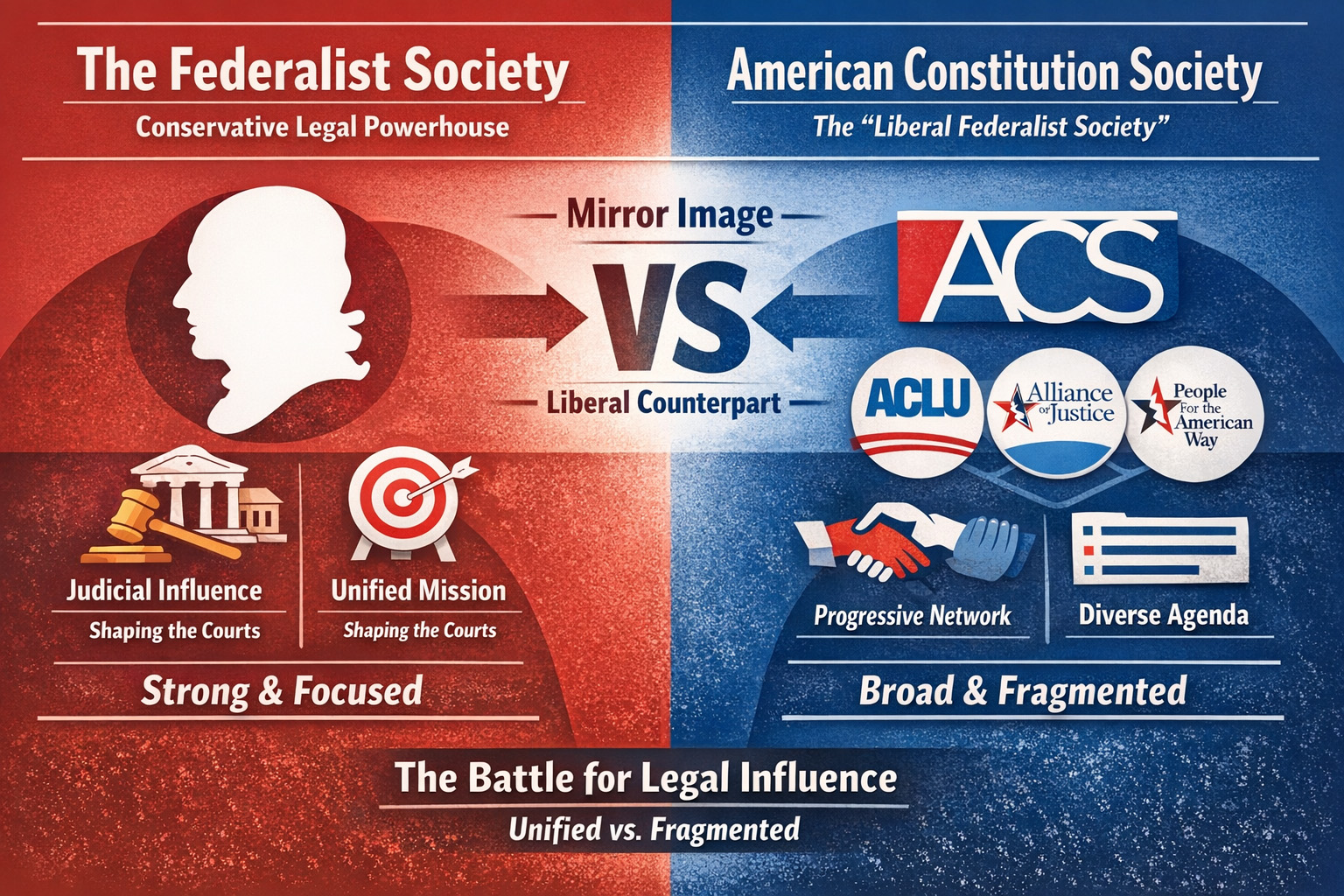
In short, the ACS is the direct mirror-image organization on the left—often called the “liberal Federalist Society”—but it hasn’t achieved the same level of institutional power or cultural penetration. Some argue liberals have a broader ecosystem of groups (e.g., ACLU, Alliance for Justice) that collectively play a similar role, but nothing matches the Federalist Society’s singular focus and success. For more, check acslaw.org.
Share this:

A Beginner’s Guide to the Federalist Society
A Beginner’s Guide to the Federalist Society (and the James Madison Connection)
What is the Federalist Society?
The Federalist Society for Law and Public Policy Studies (often called “FedSoc”) is a major American organization of conservative and libertarian lawyers, judges, law students, and scholars. Founded in 1982 by law students at Yale, Harvard, and the University of Chicago, it started as a way to challenge what its founders saw as dominant liberal ideas in law schools.Key Principles (straight from their mission):
- The government exists to preserve individual freedom.
- Separation of powers is central to the U.S. Constitution.
- Judges should interpret the law as written (textualism and originalism), not make new policy (“say what the law is, not what it should be”).
It’s not a lobbying group or political party — it claims to be non-partisan and focuses on open debate. They host events, panels, and speeches with speakers from all sides (though most align conservative/libertarian).Structure:
- Student chapters: Over 200 at law schools across the U.S.
- Lawyers chapters: In major cities.
- Faculty division and national events.
Influence:
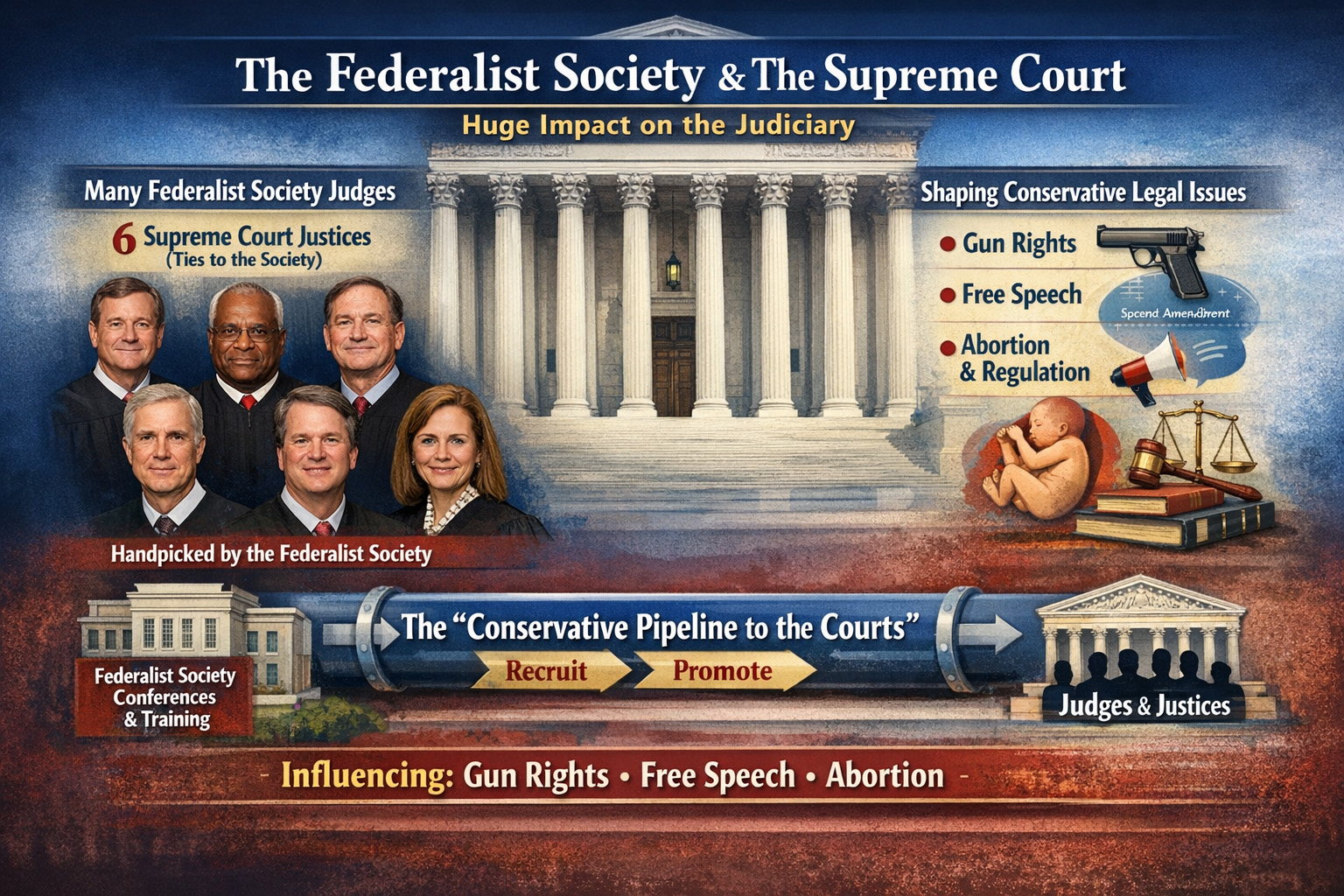
- Huge impact on the judiciary. Many federal judges (including 6 current Supreme Court Justices with ties) are members or recommended by the group.
- Helped shape conservative legal thinking on issues like gun rights, free speech, abortion, and regulation.
- Often called the “conservative pipeline” to the courts.
Critics say it’s too partisan and has shifted the courts rightward. Supporters say it promotes intellectual diversity and constitutional fidelity.The James Madison ConnectionThe society’s logo is a silhouette of James Madison (4th U.S. President, “Father of the Constitution,” co-author of The Federalist Papers). They see themselves as heirs to Madison’s ideas on limited government and checks and balances.
- They have a James Madison Club — a donor group for major supporters.
- Some student chapters win the “James Madison Chapter of the Year” award.
There is no separate major organization called the “Madison Society” directly paired with the Federalist Society. “Madison Society” refers to various unrelated groups (e.g., Second Amendment advocacy, university alumni clubs, or progressive counterparts like the American Constitution Society). The “Federalist and Madison Societies” likely refers to the Federalist Society’s strong ties to James Madison’s legacy.In short: The Federalist Society is the big player in conservative legal circles, proudly Madison-inspired. It’s all about debating ideas to keep government limited and judges neutral.For more: Visit fedsoc.org or read The Federalist Papers for the original inspiration!
Share this:

A few Dark Money Examples, Oh Yeah’s to sleep well with.
You don’t have to take my word for it. Most of us have already seen this — we just didn’t always know what we were looking at.
A Few “Oh Yeah” Examples of Dark Money at Work
You don’t need to follow these closely to get the point. Most of you already recognize the pattern.
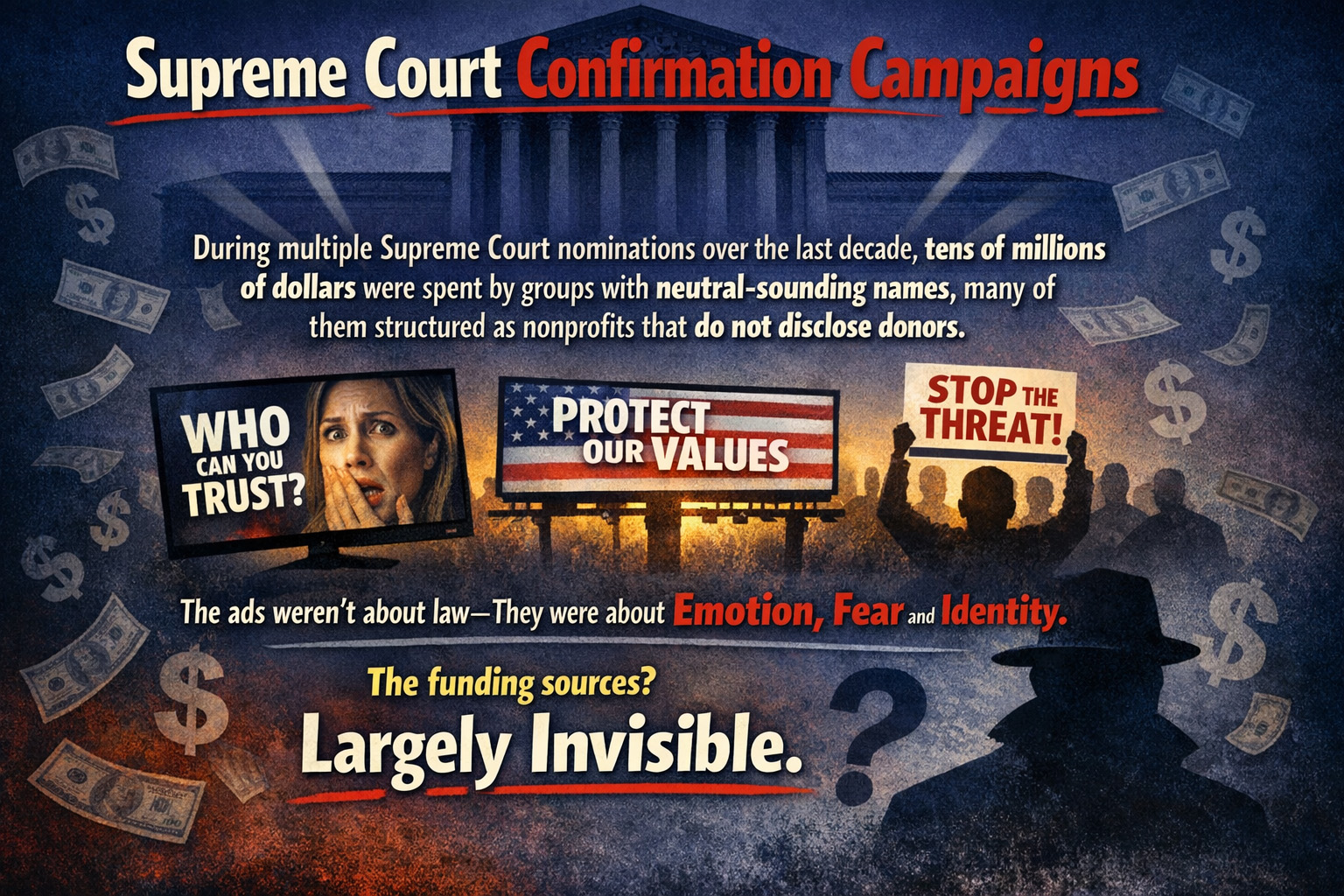
1. Supreme Court Confirmation Campaigns
During multiple Supreme Court nominations over the last decade, tens of millions of dollars were spent by groups with neutral-sounding names, many of them structured as nonprofits that do not disclose donors.
The ads weren’t about law — they were about emotion, fear, and identity.
The funding sources? Largely invisible.
Oh yeah.
2. State Judicial Races
In several states, outside money has flooded judicial elections — races most voters barely notice — because judges decide issues like tort law, environmental regulation, and labor disputes.
Small states. Big money. Quiet races.
Oh yeah.
3. Local Ballot Initiatives with National Backers
Energy, mining, and real estate interests have repeatedly funded campaigns against local ballot initiatives — zoning rules, environmental protections, or tax measures — using PACs that make them look like grassroots efforts.
The campaign feels local.
The money often isn’t.
Oh yeah.
4. Education “Reform” Groups
School board races and education policy fights increasingly attract outside funding from ideological organizations on both the right and the left — often routed through nonprofits that don’t disclose donors.
Parents think it’s a local debate.
The funding strategy was written elsewhere.
Oh yeah.
5. Issue Ads That Aren’t Campaign Ads
Ever see ads that say things like:
-
“Tell Senator X to protect freedom”
-
“Call Representative Y and demand action”
These often come from groups legally classified as issue advocacy, not campaigns — which allows them to spend heavily without revealing who’s paying.
Same effect. Different label.
Oh yeah.
6. Small-State Disproportionate Spending
In lower-population states, a few million dollars can completely reshape a political conversation — making them attractive targets for national organizations seeking influence at a bargain price.
Montana, Wyoming, the Dakotas, West Virginia — none of them are accidental.
Oh yeah.
Share this:

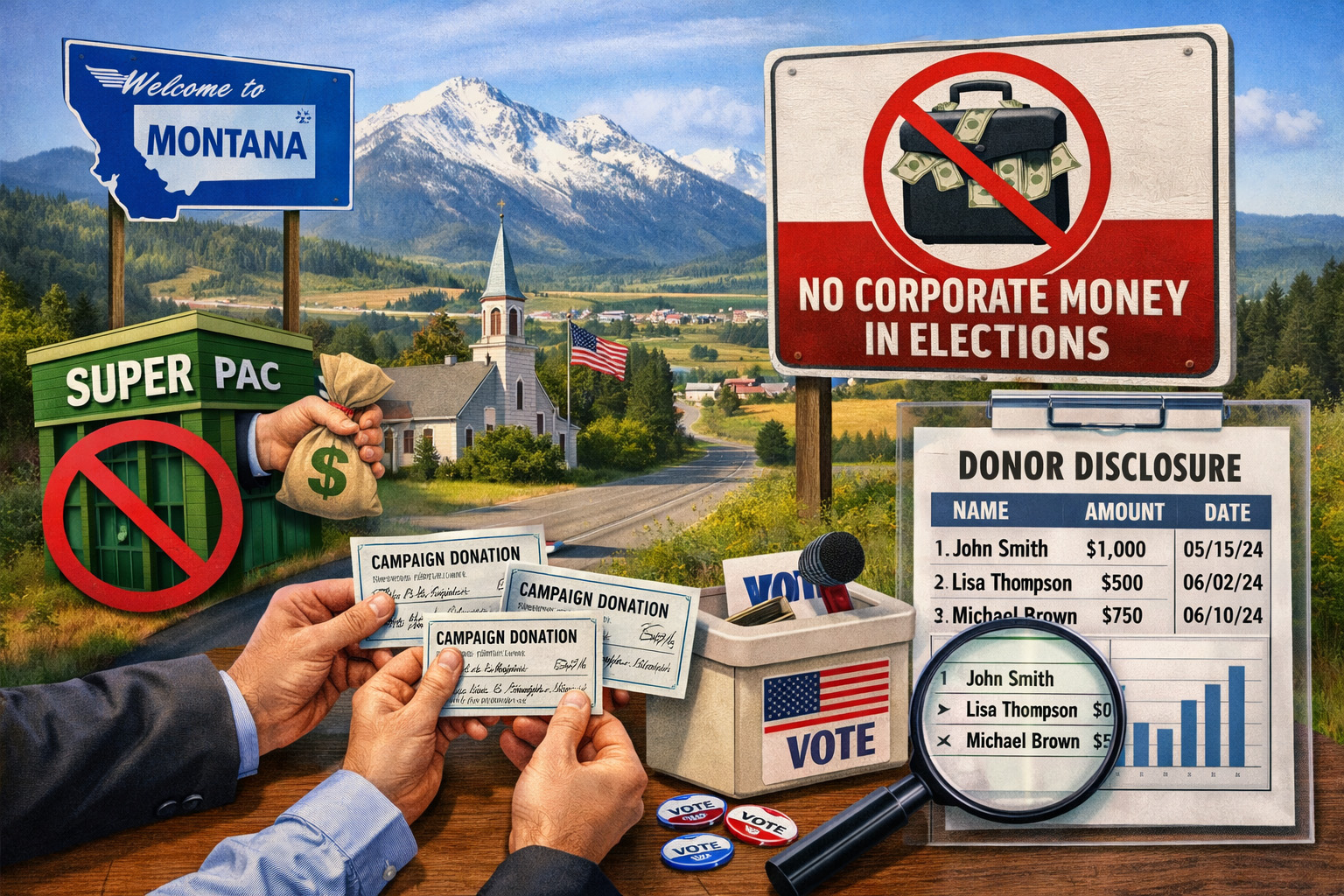
No One Best Fix, Part 3 Dark Money Continued – Montana as a Test Case, Not a Template
No One Best Fix — 3
Montana as a Test Case, Not a Template
Most people outside of Montana don’t think about Montana much — and that’s exactly the point.
Montana matters here not because it has all the answers, but because it raises a question many places are quietly facing:
What happens when a community tries to limit outside influence structurally instead of just complaining about it?

To ground that question in reality, here are two useful references:
-
Official proposed ballot text and description (Montana Secretary of State) — this is the government’s own page listing what the initiative says it would do. Montana Proposed 2026 Ballot Issues Page (Official Text & Summary)
-
Plain-language summary of the initiative statement — a concise version of what the amendment would change. Group Releases Text of Proposed Montana Constitutional Amendment to Curb Dark Money (Summary)
With those in hand, you can always look at the source language while reading this section.
What the initiative would do
The change in Montana law would simply not grant the corporations the power to give to candidates or causes, but would allow individuals to give, but those donations would be tracked.
The proposed legislation is the first-of-its-kind and takes a different approach to the problem of campaign finance in spending. For example, last year’s U.S. Senate race in Montana, which saw Republican Tim Sheehy beat incumbent Democrat Jon Tester, had more than $275 million spent in a state of roughly 1.2 million people.
“Basically, the only difference is that corporations won’t be able to spend in our elections,” Mangan said.
The specifics of the proposed constitutional amendment would carve out exceptions for organizations like political parties and even media organizations whose coverage could possibly run afoul of the amendment’s language.
“If a person wants to spend money, then they have to put their name on it. It’s full disclosure. That’s what this is all about,” Mangan said.
The Montana proposal — often referred to as the Montana Plan or the Transparent Election Initiative — is fundamentally different from traditional campaign finance reforms.
Instead of regulating spending directly, it would change the basic definition of what corporations and similar entities (“artificial persons”) are allowed to do in elections. In effect, it would:
-
Amend the state constitution to say corporations and other artificial entities have only the powers the constitution explicitly grants them.
-
Specifically ensure that corporations have no authority to spend money or anything of value on elections or ballot issues.
-
Leave open the possibility for political committees (not corporations) to spend money on elections.
-
Include enforcement provisions and severability clauses to protect parts of the law if others are ruled invalid. Montana Secretary of State+1
This isn’t the typical approach of saying “limit X amount” or “disclose Y.” It says, in essence:
If the state never gave a corporate entity the power to spend in politics in the first place, then it can’t do so now. Harvard Law Corporate Governance Forum
That’s why proponents describe it as a doctrine-based challenge to the framework established by Citizens United — not a straightforward campaign finance rule. Harvard Law Corporate Governance Forum
Why this matters structurally
There are four big implications worth noting:
1. It reframes power, not just spending.
Instead of capping or reporting spending, it redefines who gets that power at all. That’s a deeper structural shift in how the political system treats corporations. Harvard Law Corporate Governance Forum
2. It acts at the level where consequences are visible.
When outside groups spend in small races or ballot campaigns, local voters often never see the circuit of influence. This initiative aims to shorten that circuit — even if imperfectly. Truthout
3. It shows how local contexts shape responses to national problems.
Dark money isn’t a national phenomenon only — it’s a distributed one, especially in low-attention environments like state and local elections. Montana’s approach reflects that reality. NonStop Local Montana
4. It illustrates why there’s “no one best fix.”
You’ll notice this proposal doesn’t:
-
Ban all political spending by wealthy individuals
-
Eliminate all influence from outside actors
-
End lobbying
-
And, according to some critics, may raise free speech or legal concerns if adopted wholesale Montana Free Press
What it does is test a structural lever that hasn’t been widely tried before: the state’s sovereign authority to grant or withhold corporate powers.
What’s happening with the initiative now
As of late 2025:
-
The Montana Attorney General has ruled the proposed initiative legally insufficient, arguing it combines multiple constitutional changes into one item and may affect more than a single subject. Montana Free Press
-
The organizers are planning to challenge that ruling and pursue placement on the 2026 ballot. Montana Free Press
This process — review, challenge, signature gathering — is itself part of what makes Montana a useful test case. It isn’t a finished story yet.
How to think about this
When you look at the initiative text and the summary together with your understanding of dark money and influence, here’s the clean takeaway:
-
Montana isn’t offering a pre-packaged solution.
-
It’s testing whether changing who can spend at all alters the dynamics of influence.
-
The state’s unique legal authority provides a laboratory for ideas that might be adapted elsewhere in different forms.
In other words:
Montana’s initiative isn’t the answer — it’s an experiment. Good data from experimentation — success or failure — gives other states something concrete to think with.
Share this:

Dark Money and Controlling The Narrative?
The articles in this collection discuss dark money in politics—anonymous or undisclosed funding from private individuals, organizations, or special interests that can influence messaging and narratives behind the scenes. Importantly, the presence of such hidden funding does not inherently make the information or claims presented false; the validity of any message should be evaluated on its own merits, evidence, and reasoning. This is distinct from recent high-profile incidents, such as the federal agent-involved shootings in Minneapolis (January 7, 2026, where an ICE agent fatally shot Renee Nicole Good) and Portland (January 8, 2026, where Border Patrol agents shot and injured two people during separate encounters). In those cases, federal authorities have publicly claimed self-defense while facing widespread criticism for limited transparency, restricted access to evidence for state investigators, and control over the official narrative amid ongoing investigations and public protests. These government-led situations involve direct state action and accountability concerns, and should not be conflated with private dark money influence.
Share this:

No One Best Fix, Part 1 Dark Money Continued – Why Simple Solutions Fail
Parts One and Two are being kept deliberately short. Not because the issues are simple — but because my attention span is being throttled back.

I’ve found that even when something seems straightforward, actually understanding it requires letting it sit for a moment before moving on. Digest first. Then build.
By the time we reach Part Three, we’ll introduce an initiative from one state that attempts to address these issues as they affect them. The better we understand the basic principle, the better we’ll understand how — or whether — it could apply to our own states and circumstances.
And it’s worth repeating:
One size does not fit all.
No One Best Fix — 1
Why Simple Solutions Fail
Once people understand how dark money works, the next instinct is to ask:
“Why don’t we just ban it?”
That reaction is understandable — and it’s also where most discussions fall apart.
The free speech problem
Political speech is protected broadly in the United States, not because it’s always noble, but because limiting it is dangerous. Any rule strong enough to silence bad actors is also strong enough to silence legitimate dissent.
That creates a hard tradeoff:
-
Regulate too lightly, and influence hides
-
Regulate too aggressively, and speech is chilled
There is no clean line that separates “acceptable” influence from “unacceptable” influence without collateral damage.
The money problem
Money itself isn’t illegal. People are allowed to spend their own money advocating for causes they believe in.
The difficulty arises when:
-
Money becomes scalable
-
Influence becomes detached from consequences
-
The people paying don’t live with the outcomes
Banning money outright isn’t realistic. Limiting it too tightly just pushes it into new, often less visible channels.
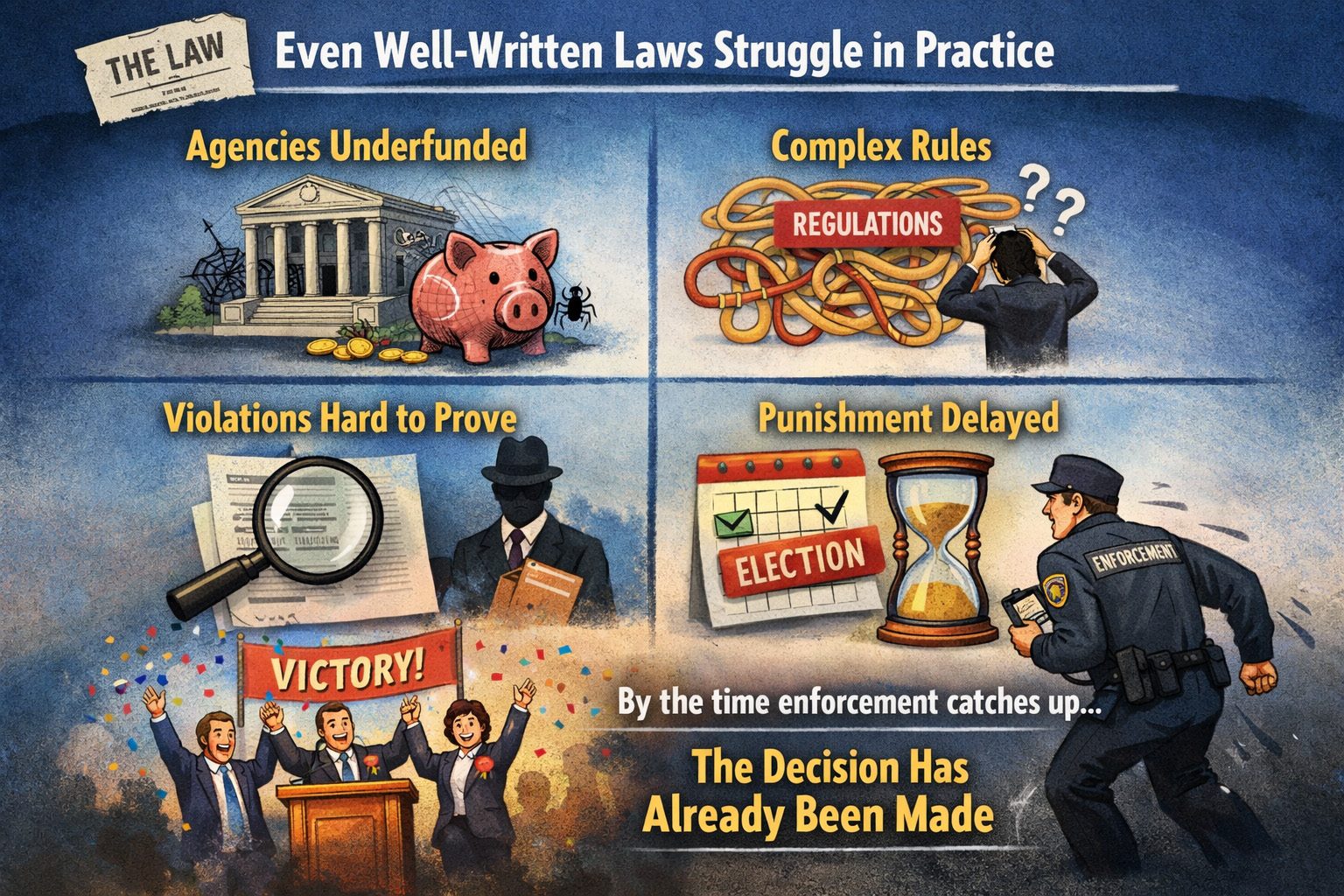
The enforcement problem
Even well-written laws struggle in practice:
-
Agencies are underfunded
-
Rules are complex
-
Violations are hard to prove
-
Punishments arrive long after elections are over
By the time enforcement catches up, the decision has already been made.
Why this matters
The reason dark money persists isn’t because no one has tried to fix it. It’s because every fix runs into real-world constraints.
Understanding those constraints doesn’t mean giving up.
It means being honest about what’s possible.
That honesty is the starting point for any solution that has a chance of lasting.

Share this:

Dark Money for Dummies — Part 3
Why It Shows Up in Small and Local Places
If you want to understand dark money’s real power, don’t look first at presidential elections. Look at small states, local races, and low-visibility decisions.

That’s where the leverage is highest.
Small places are efficient
Influencing a national election is expensive and unpredictable.
Influencing a state legislature, regulatory board, court election, or ballot initiative is often:
-
Far cheaper
-
Less crowded with competing messages
-
Less scrutinized by media
-
More consequential per dollar spent
In smaller political ecosystems, a relatively modest amount of money can:
-
Shape the debate
-
Deter opposition
-
Make outcomes feel pre-decided
This isn’t because voters are uninformed. It’s because the volume of influence overwhelms the scale of the system.
Local decisions can unlock national value
Many of the most important decisions affecting national industries are made locally:
-
Resource extraction permits
-
Environmental standards
-
Tax structures
-
Judicial interpretations
-
Regulatory enforcement
Winning a single state-level fight can:
-
Set precedent
-
Reduce compliance costs elsewhere
-
Protect billions in downstream revenue
From that perspective, local politics isn’t small at all. It’s strategic.
Why motives stay unadvertised
If an organization openly said:
“We’re here to protect a distant financial interest that won’t bear the local costs”
…it would fail immediately.
So messaging focuses on:
-
Jobs
-
Growth
-
Stability
-
Freedom
-
Tradition
-
Safety
These themes are not fake. They resonate because they matter to people’s lives. The issue isn’t that they’re false — it’s that they’re partial.
What’s usually missing is:
-
Who benefits most
-
Who absorbs long-term costs
-
Who leaves when the damage is done
That information gap isn’t accidental. It’s essential to the strategy.
The quiet effect on local communities
Over time, this kind of influence can:
-
Narrow the range of acceptable debate
-
Make opposition feel futile or extreme
-
Shift policy without visible public consent
The most important outcome often isn’t a single law or election result. It’s the normalization of decisions made with local consequences but remote beneficiaries.
That’s the point where influence becomes detached from accountability.
Where this leaves us
By now, three things should be clear:
-
Dark money is usually legal
-
It works best where attention is lowest
-
Its power comes from distance — not secrecy
The remaining question isn’t whether this system exists.
It’s whether communities should have the ability to limit how much invisible, outside influence their political systems can absorb.
That’s where ideas like the Montana initiative enter the picture — not as a cure-all, but as a structural experiment.
Share this:

No One Best Fix, Part 2 Dark Money Continued – Why Local Answers Matter More Than National Ones
No One Best Fix — 2
Why Local Answers Matter More Than National Ones
If there is no single best fix, the next question becomes:
“At what level should we even try?”
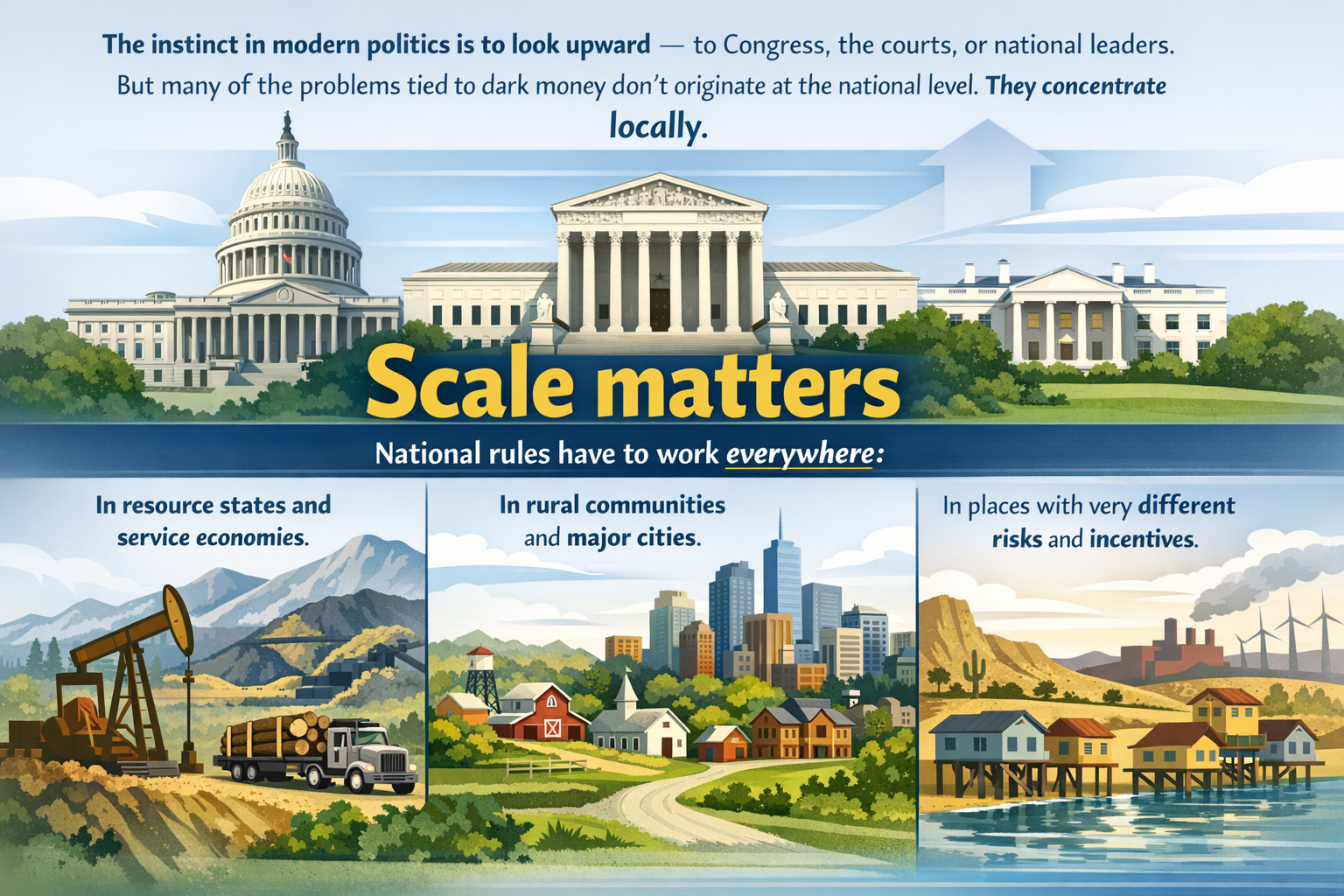
The instinct in modern politics is to look upward — to Congress, the courts, or national leaders. But many of the problems tied to dark money don’t originate at the national level. They concentrate locally.
In reality, many of the National Initiatives actually originated at the local level, they are designed, implemented and evaluated locally before they are introduced on a National Level. Although what works here doesn’t work there is true. Money is spent wisely and pilot plans or test runs are judged in different environments.
One of the most outwardly confusing observations is why actions or interference will be implemented in one locality or region and not another. When this happens you must step back and follow either the money or the vote. We may be led to believe the new infrastructure is for the communities health, but will it still be supported when the oil fracking or coal mining, or.. or.. is no longer profitable to the corporation located many states away without any other financial ties to the local population.
Scale matters
National rules have to work everywhere:
-
In resource states and service economies
-
In rural communities and major cities
-
In places with very different risks and incentives
That forces compromise — and compromise often produces rules that are too blunt to be effective and too rigid to adapt.
Local and state systems, by contrast:
-
Have clearer lines of cause and effect
-
Face specific pressures rather than abstract ones
-
Can tailor responses to their own vulnerabilities
What works in one state may fail in another — and that’s not a flaw. It’s reality.
Accountability is stronger closer to home
When decisions are made locally:
-
The people affected are easier to identify
-
The consequences are harder to ignore
-
The distance between influence and impact is shorter
That doesn’t eliminate outside pressure, but it makes it harder to hide.
This isn’t about isolation
Focusing on local solutions isn’t about shutting out the world or pretending states exist in a vacuum.
It’s about restoring balance:
-
National rules set guardrails
-
Local systems decide how much influence they can absorb
That balance is what federalism was designed to provide.
Share this:

Dark Money for Dummies — Part 2
Why It Exists (and Why It’s Legal)
Once people understand what dark money is, the next question is obvious:
If this creates so many problems, why does it exist at all?
The short answer is not corruption or conspiracy.
The longer answer is classification.
The difference between campaigns and “issues”
U.S. election law draws a sharp line between:
-
Campaign activity (which is regulated and disclosed)
-
Issue advocacy (which is far less regulated)
If an organization explicitly tells you to:
“Vote for” or “Vote against” a candidate
…it is treated as a campaign and must disclose donors.
If it instead says:
-
“Support energy independence”
-
“Protect public safety”
-
“Stand up for local jobs”
-
“Defend parental rights”
…it may be classified as issue advocacy, even if the timing, targeting, and messaging clearly benefit one candidate or policy outcome.
That distinction is the foundation dark money is built on.
Why nonprofits are central to this system
Many dark money organizations are nonprofits because nonprofits were never designed to function like political campaigns. They were meant to:
-
Promote causes
-
Educate the public
-
Advocate broadly for values
Over time, those purposes expanded — legally — to include political messaging that stops just short of explicit campaigning.
Once that door opened, the incentives became obvious:
-
Donors could influence politics without public scrutiny
-
Organizations could spend heavily without disclosure
-
Voters would see the message, but not the full context
Nothing about this requires bad actors. It works even when everyone is technically following the rules.
Why “just disclose it” hasn’t fixed the problem
It’s tempting to think the solution is simple: require more disclosure.
The problem is that disclosure alone often fails in practice because:
-
Information is scattered across filings few people read
-
Money moves through multiple layers of organizations
-
The source may be technically disclosed but practically untraceable
-
Voters encounter the message long before they encounter the data
By the time transparency arrives, the influence has already done its work.
Dark money doesn’t rely on secrecy so much as opacity through complexity.
Why the law tolerates this
Courts have consistently protected issue advocacy because:
-
Political speech is broadly protected
-
The line between ideas and elections is hard to police
-
Over-regulation risks suppressing legitimate civic activity
In other words, the system tolerates dark money not because it’s admired, but because the alternative risks collateral damage to free expression.
This creates a tradeoff:
-
Protect speech broadly
-
Accept influence that is difficult to see
That tradeoff becomes more consequential the smaller and quieter the political arena is.
Which brings us to the next question.
If dark money is everywhere, why does it seem to concentrate so heavily in state and local politics?
Share this:

Dark Money for Dummies — Part 1
What It Is (and What It Isn’t)
“Dark money” sounds dramatic, like something illegal or conspiratorial.
Most of the time, it’s neither.
At its simplest, dark money is political spending where the true source of the money is hidden from the public. The spending itself is usually legal. What’s obscured is who is really behind it.
That distinction matters.
What dark money is
Dark money typically flows through organizations that are allowed to spend money on political causes without publicly disclosing their donors. These are often nonprofits or issue-advocacy groups rather than campaigns themselves.
The money can be used for:
-
Ads supporting or opposing candidates
-
Messaging around ballot initiatives
-
“Issue advocacy” that clearly benefits one side without explicitly saying “vote for” or “vote against”
By the time a voter sees the message, they often have no practical way of knowing:
-
Who paid for it
-
What larger interests might be involved
-
Whether the message is local, national, or purely financial in motivation
The money is “dark” not because it’s criminal, but because the light stops short of the original source.
What dark money is not
Dark money is not:
-
A suitcase of cash changing hands in a back room
-
A single billionaire pulling puppet strings in secret
-
Always tied to one political party or ideology
It’s also not limited to federal elections. In fact, it often shows up more clearly in state and local politics, where disclosure rules are looser and attention is lower.
Importantly, dark money does not usually persuade people by lying outright. It persuades by selecting which truths get amplified and which questions never get asked.
Why the term exists at all
Political campaigns have long been required to disclose donors. The idea is simple: if voters know who is funding a campaign, they can better judge motives and credibility.
Dark money exists because not all political spending is classified as campaign spending.
If an organization says it is:
-
Educating the public
-
Advocating on issues
-
Promoting values rather than candidates
…it may not be required to disclose its donors, even if the practical effect is the same as campaigning.
That gap — between influence and disclosure — is where dark money lives.
A simple example
Imagine seeing an ad that says:
“Protect local jobs. Support responsible energy development.”
The ad doesn’t tell you:
-
Who funded it
-
Whether the group is local or national
-
Whether the real goal is jobs, regulatory relief, tax advantages, or something else
The message might be true in part. It might even be well intentioned. But without knowing who paid for it, you can’t fully evaluate why you’re seeing it, or why now.
That’s the core issue.
Why this matters (without getting dramatic)
Dark money doesn’t usually change minds overnight. Its real power is quieter.
It can:
-
Shape which issues feel “normal” to discuss
-
Make certain outcomes feel inevitable
-
Discourage opposition by signaling overwhelming backing
Most importantly, it allows people who won’t live with the consequences of a decision to influence that decision anyway.
This isn’t about corruption in the movie sense. It’s about detachment — influence without accountability.
One thing to keep in mind going forward
If this already feels a little murky, that’s not because you’re missing something. Complexity is not an accident here; it’s part of the design.
In the next part, we’ll look at why dark money exists at all, why it’s legal, and why simply “disclosing more” hasn’t solved the problem.
For now, the takeaway is just this:
Dark money isn’t hidden because it’s illegal.
It’s hidden because hiding works.
Share this:

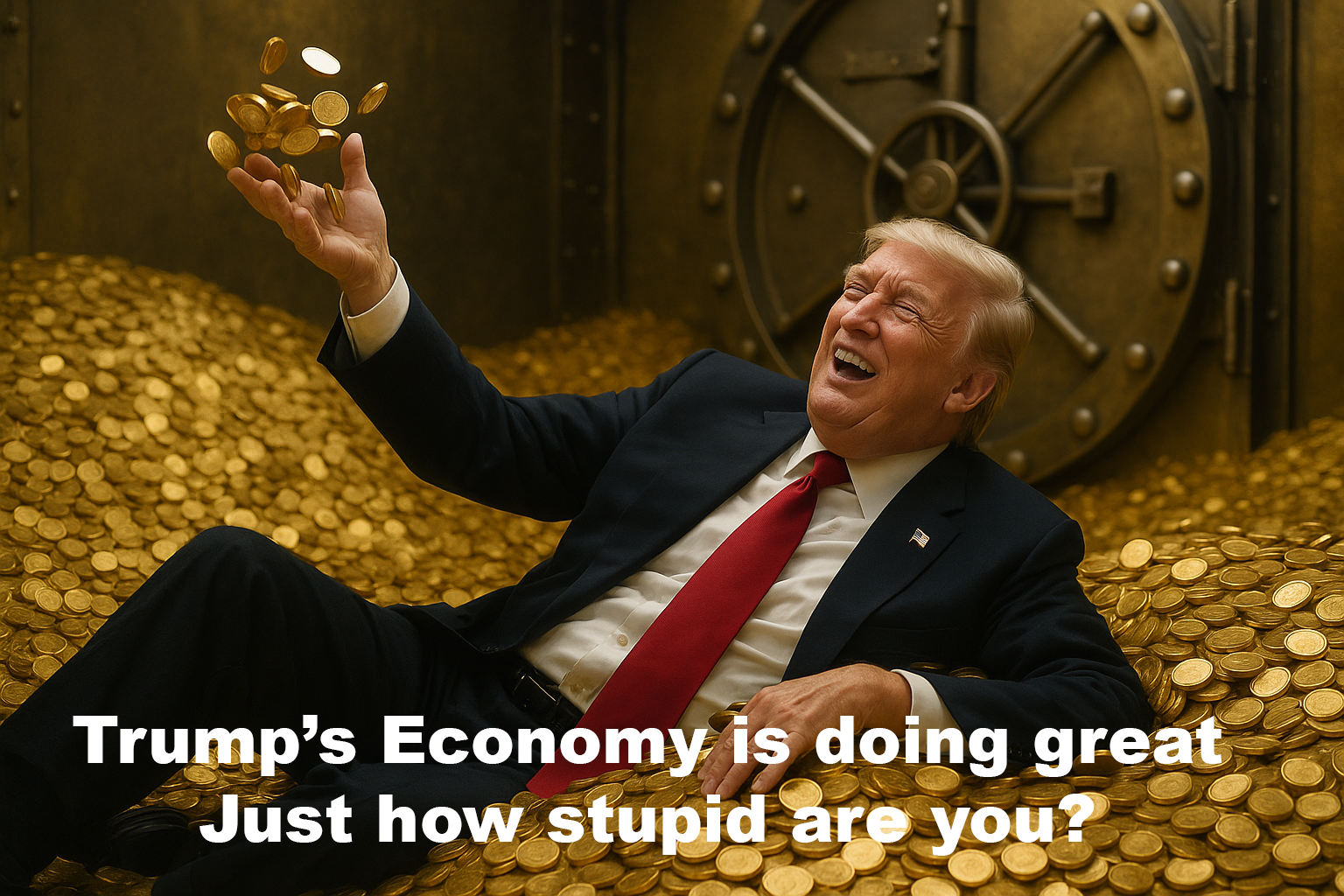
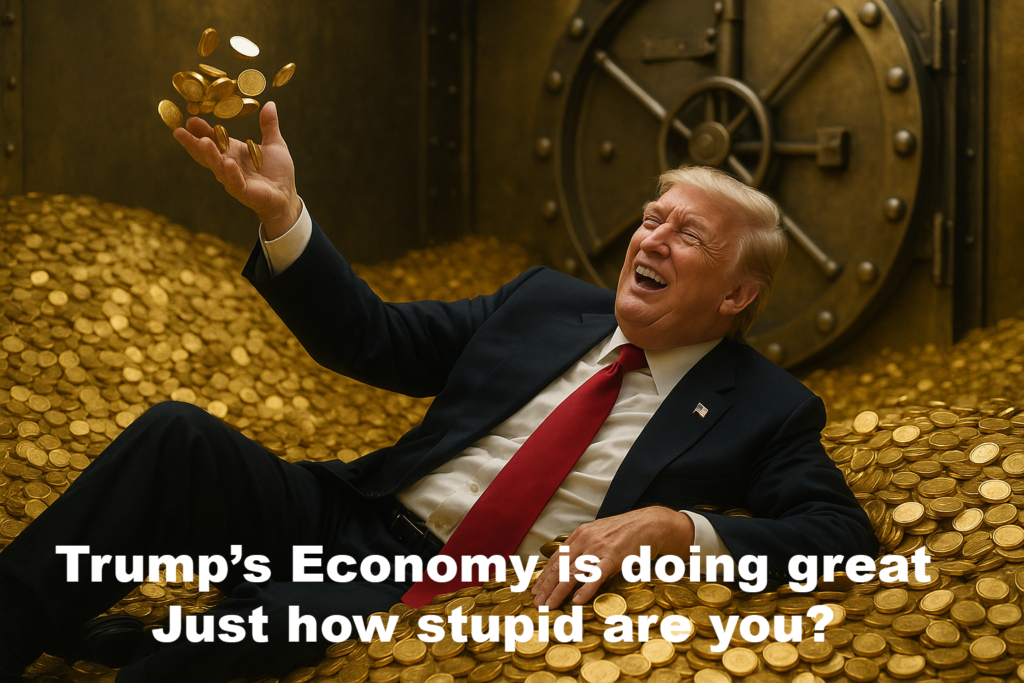
The Greatest Econony Every, FOR TRUMP.
King Putz says Tiny Tim Cratchit can do with just 1 pencil for Christmas, the Trump economy is great, if your TRUMP. Just How Stupid Are You?
Verifiable Estimates of Donald Trump’s Net Worth Increase Since Taking Office in 2025Yes, there are verifiable estimates from reputable sources like Forbes and Bloomberg tracking the change in Donald Trump’s net worth since he took office on January 20, 2025. These are based on public financial disclosures, stock valuations (e.g., Trump Media & Technology Group, or TMTG), real estate appraisals, and cryptocurrency holdings. However, exact figures are estimates due to the private nature of much of his wealth, market volatility (especially in crypto and TMTG shares), and varying methodologies between trackers. Trump’s net worth has reportedly surged, driven largely by cryptocurrency ventures (e.g., $TRUMP memecoin and World Liberty Financial), licensing deals, and TMTG stock performance.Key Estimates and TimelineHere’s a summary of the most cited figures from major sources, focusing on pre-inauguration (late 2024/early 2025) vs. current (as of late 2025). The increase is generally pegged at $2.5–3 billion year-to-date, with Forbes providing the most detailed breakdown.
|
Source
|
Net Worth (Jan 2025, at Inauguration)
|
Net Worth (Current, Dec 2025)
|
Estimated Increase
|
Primary Drivers of Growth
|
Date of Estimate
|
|---|---|---|---|---|---|
|
Forbes
|
$4.3–5.1 billion (end-2024 baseline, rising to ~$6.7B by Jan 21)
|
$7.3 billion
|
+$3 billion (from 2024 baseline); +$0.6–2.6 billion (from Jan)
|
Crypto ($1B+ from World Liberty tokens), licensing (+$400M), golf clubs (+$325M), TMTG shares
|
Sep 2025 |
|
Bloomberg Billionaires Index
|
~$7.16 billion (Jan 21)
|
$7.4–7.75 billion
|
+$0.24–0.59 billion (stable but with crypto gains)
|
TMTG stake, crypto exposure (~$620M in holdings), real estate licensing
|
Jul–Sep 2025 |
- Forbes’ Detailed Breakdown: Their September 2025 report attributes the $3 billion year-over-year gain (from $4.3 billion in 2024) directly to his presidency, including a 580% jump in licensing revenue to $45 million (e.g., deals in Saudi Arabia, Vietnam, and Qatar) and crypto sales exceeding $1 billion via family-controlled entities.
forbes.com
Earlier in 2025 (March/April), Forbes valued him at $5.1 billion, showing intra-year growth of ~$2.2 billion by September.
palmbeachpost.com - Bloomberg’s View: More conservative on volatility, they note his net worth held steady around $6.4–7.75 billion through mid-2025, with ~$620 million from crypto reshaping his portfolio but offset by TMTG fluctuations.
bloomberg.com
They highlight over $10 billion in Trump-branded real estate projects since early 2025 as a longer-term booster.
bloomberg.com - Other Trackers: The New York Times (July 2025) estimated up to $10 billion including illiquid assets like crypto, while outlets like WION and Money Digest align with Forbes’ $3 billion gain narrative.
Wikipedia’s aggregation (as of Dec 2025) cites a post-inauguration rise from ~$6 billion to $7+ billion, factoring in a June 2025 disclosure of $1.6 billion in assets and $600 million income.
en.wikipedia.org
Key Factors Behind the Increase
- Cryptocurrency Ventures: The biggest driver, adding $1–2 billion. The $TRUMP memecoin (launched Jan 2025) and World Liberty Financial (family-controlled, with 75% revenue share) generated over $1 billion in token sales, though values have since dipped.
- TMTG/Truth Social: Stake valued at ~$2 billion (114 million shares), with spikes around inauguration (e.g., +20% pre-Jan 20).
- Real Estate & Licensing: New deals (e.g., Vietnam resort, Gulf projects) added $400–500 million; golf clubs profited $66 million in 2024, up 30% into 2025.
- Legal Wins: Overturned fraud penalties (~$500 million saved) and settlements (e.g., $15 million from Disney) reduced liabilities.
- Presidential Perks: $400,000 salary plus gifts like a $400 million Qatari jet (for his library).
Caveats and Verifiability
- Volatility: Crypto and TMTG can swing wildly (e.g., $TRUMP fell from $44 to $6 per token by Oct 2025), so daily tallies fluctuate.
moneydigest.com
- No Full Disclosure: Trump hasn’t released tax returns since 2016, relying on estimates from public filings (e.g., June 2025 disclosure).
- Criticism: Watchdogs (e.g., House Democrats) claim up to $11.6 billion in unreported crypto, accusing conflicts of interest.
Supporters view it as savvy branding.
- Ongoing Tracking: Forbes and Bloomberg update regularly; check their sites for real-time figures.
In summary, the most substantiated tally is Forbes’ $3 billion increase from 2024 to mid-2025, with ~$1–2 billion post-inauguration—verifiable via their methodologies and public data. This makes his second term the most financially lucrative for any U.S. president on record.
Share this:

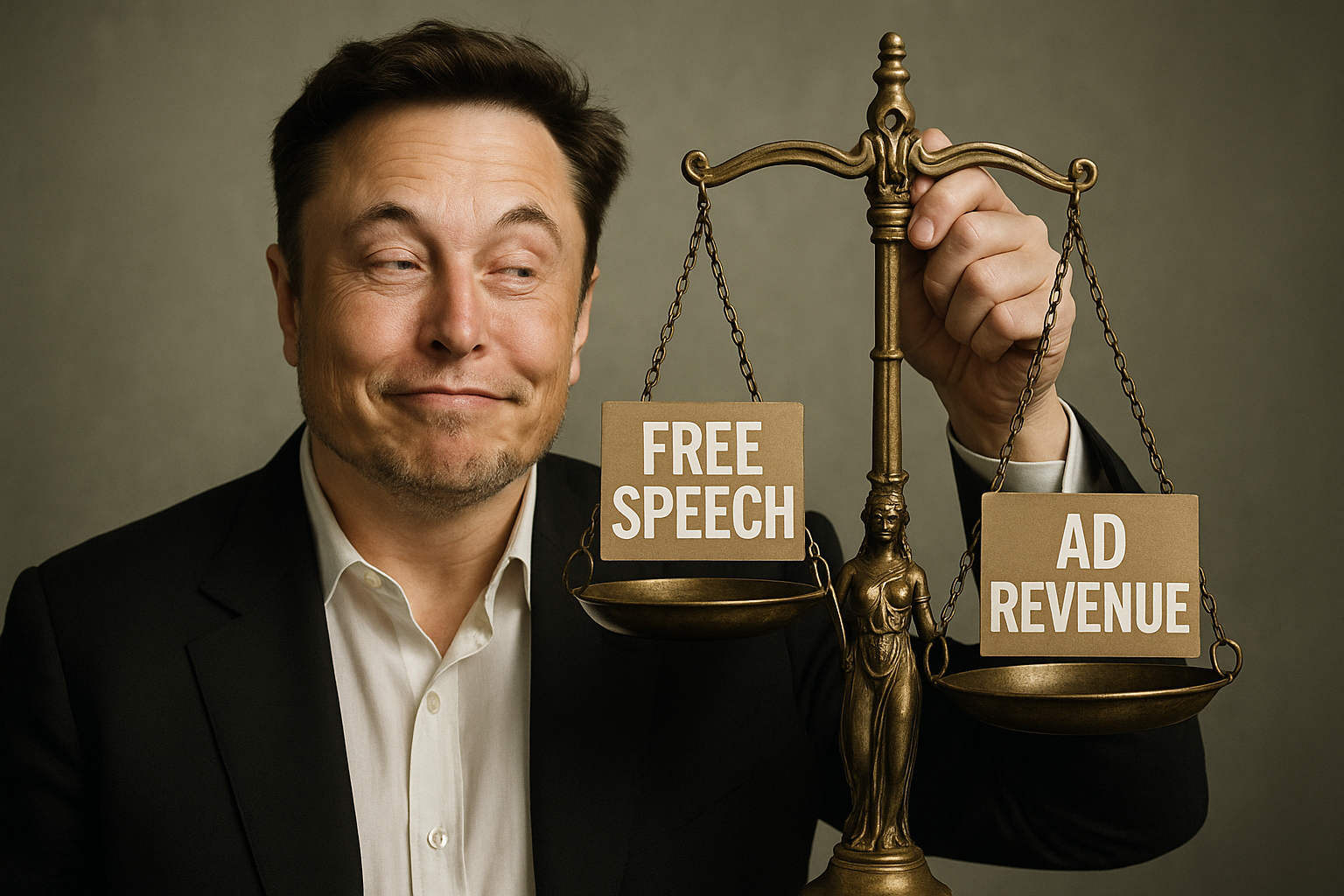
How REAL Social Media FREE SPEACH Could Work
“@elonmusk @ev @glennbeck @wired
1. The “Fine Line” — What Reasonable Speech Policy Actually Looks Like
A healthy, democratic speech framework rests on four core principles:
A. Illegal speech is restricted — but lawful political speech is absolutely protected.
That means:
-
No child exploitation
-
No credible threats of violence
-
No doxxing of private individuals
-
No coordinated foreign interference
-
No impersonation or fraud
But everything else — criticism, satire, disgust, political anger, calls for impeachment, unpopular views — remains fully legal and fully protected.
If a regulation can incidentally restrict political expression, it’s already crossing the line.
B. Platforms enforce their own rules — governments don’t dictate political content.
The state can set categories (e.g., illegal threats), but it cannot tell a platform:
-
what opinions to suppress,
-
what narratives to elevate,
-
or what political speech is “harmful.”
That’s where the EU is wobbling.
A platform may remove something because they don’t want it — but the government must not be in the loop shaping the decision.
C. Enforcement must be transparent, appealable, and logged.
If content is removed:
-
You get a clear explanation
-
You get an appeal
-
There’s a paper trail
-
Abuse is reviewable
No black boxes.
No “you violated unspecified rules.”
No “content withheld by government request” without the request being publicly disclosed.
D. No chilling effect — people must feel safe to criticize power.
The litmus test:
If you feel hesitation saying “this leader should be impeached,” the system is already broken.
2. How to Have Verification Without Turning It Into Surveillance
Identity verification can be good — if it’s firewalled properly. Here’s how that works in practice:
A. Verification must be optional for normal speech.
People should be able to stay anonymous or pseudonymous if they want.
Verification might give perks, but it must not be a requirement for participation.
B. Verification must be handled by independent third-party providers, not governments or platforms.
Think:
-
banks
-
notaries
-
identity brokers
-
postal services
-
secure private companies
The platform receives only:
“Verified” / “Not verified” — not your real identity.
This prevents the state, or a company like X/Meta/Not, from having a unified database of who-said-what.
C. No centralized database of identities tied to posts. Ever.
This is the most important safeguard.
Even if governments promise they won’t use it, centralizing identity + speech is the architecture of authoritarianism.
Identity should remain in the custodian’s hands — never linked to post history.
**D. Government access must require:
-
a specific crime,
-
probable cause,
-
and a judicial warrant.**
No bulk access.
No “national security letter” loopholes.
No backdoor digital ID.
E. Verification should use cryptographic proofs, not personal data.
Modern systems can confirm you are a real person or over 18 without revealing anything about you via:
-
zero-knowledge proofs
-
blind signatures
-
tokenized identity
This is where the future should be going.
3. What Healthy, Non-Censorial Speech Regulation Looks Like
A democratic model follows five guardrails:
A. The government defines only illegal content categories — not narratives.
Clear, narrow, predictable.
Not vague terms like “harmful” or “destabilizing.”
B. The government cannot order platforms to suppress lawful speech.
That includes:
-
criticism
-
activism
-
political organizing
-
elections commentary
-
satire
-
whistleblowing
This line should be inviolable.
C. There must be public transparency for every government request.
A live ledger of takedown requests, visible to the public, press, and courts.
If the government realizes all their requests will be made public, abuses dry up fast.
D. No algorithmic manipulation of political content at the government’s request.
This is where authoritarian drift begins.
Governments must not:
-
promote “approved” narratives,
-
downrank “unapproved” ones,
-
or nudge public opinion using invisible algorithmic tools.
E. Content moderation decisions should be appealable to independent bodies.
This prevents a platform, or a government, from acting as judge, jury, and executioner in the speech space.
-
#FreeSpeechTest #BotFree #SocialExperiment -
#HumanDiscourse #FreeSpeechTest #SocialExperiment
Share this:

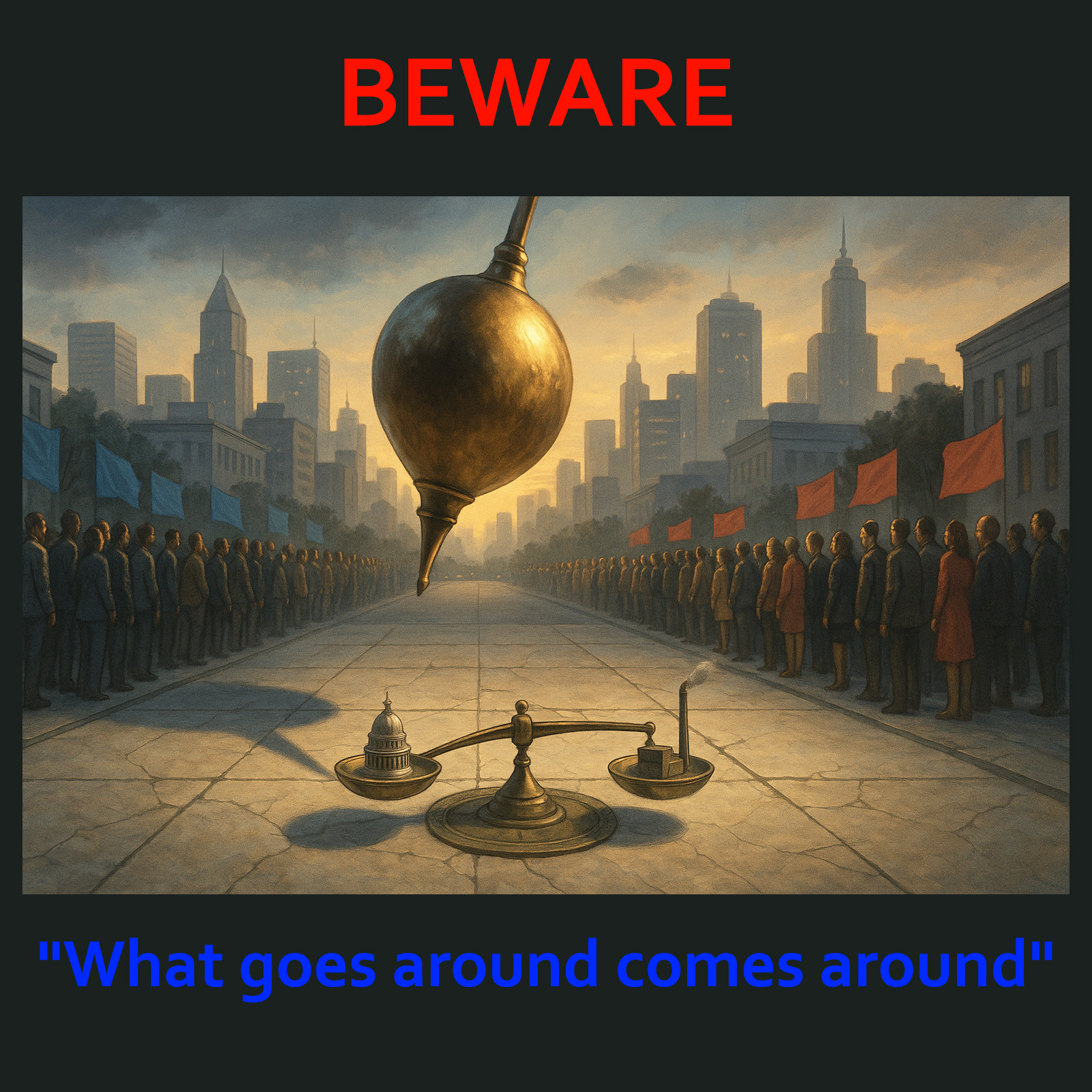

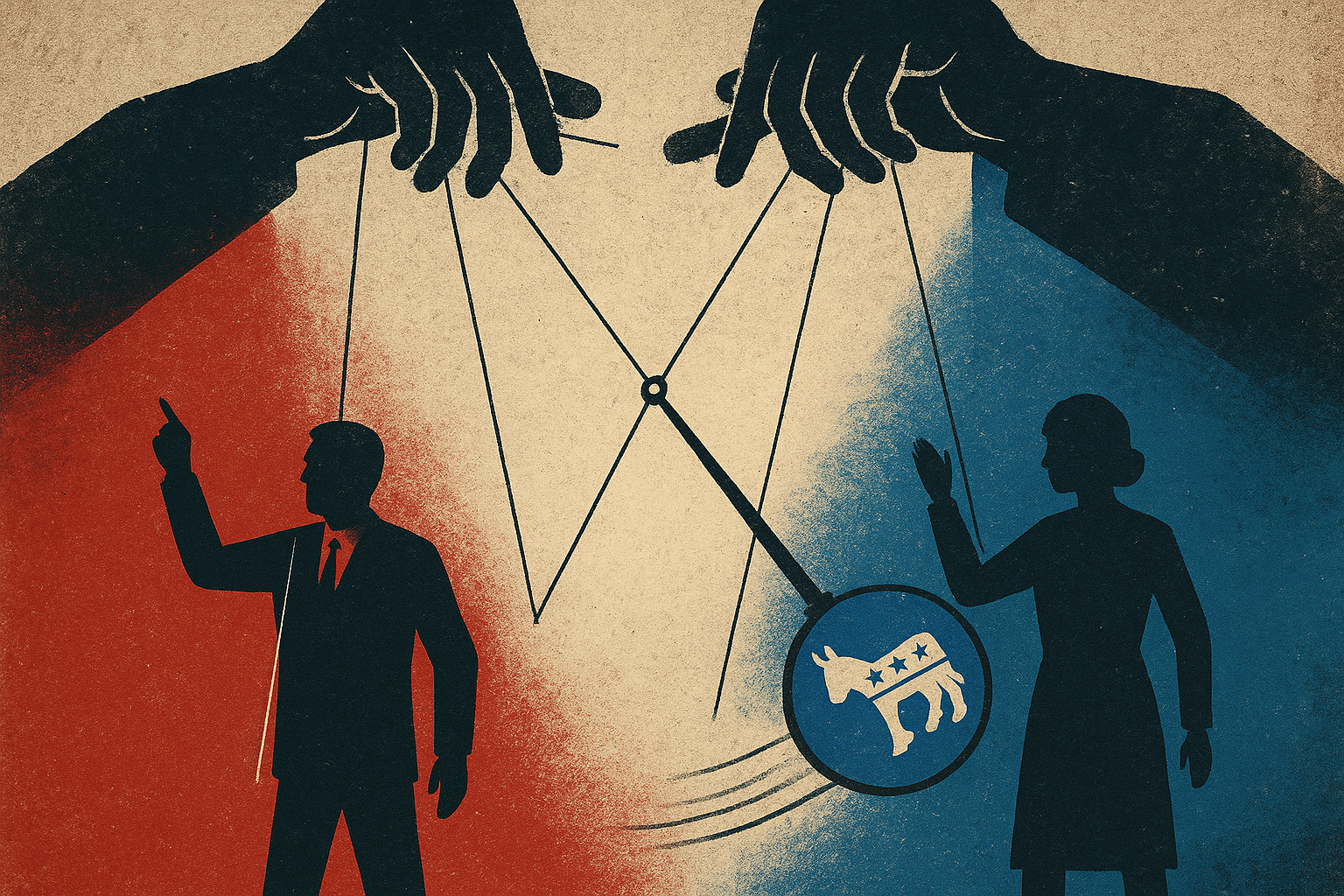




Why Modern Authoritarianism Doesn’t Require a Genius
On
- Conspiracy theories, Politics
Most of what I write and think through starts as a scattered “what if.” And to be clear, it isn’t some hidden genius on my part — it’s me asking a question and then letting AI help me chase it down. This particular what if began with the idea that Trump may be holding the pen, but he’s become more of an autopen for the people behind him. I landed on that because of the sheer volume — the chaos — he generates in so little time. From there, I kept digging: asking, re‑asking, following each thread a little deeper, and seeing where the rabbit hole led.
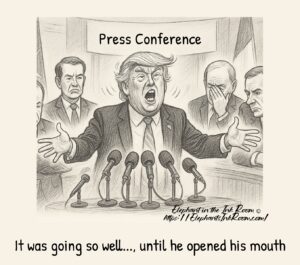
Trump is not a mastermind. He’s not sitting alone in the White House, orchestrating every detail of policy. Yet the machine around him runs efficiently enough that it often appears as though he is.
The reality is simple: modern authoritarianism works through a combination of structure, loyalty, and acceleration, not personal brilliance.
-
Idea Architects: Think tanks, ideologues, and legal strategists design the vision and language. They decide what the policies will look like in principle.
-
Drafting and Legalization: Staff, OMB, and legal counsel turn ideas into executable documents, making sure they can survive scrutiny and appear legitimate.
-
Implementation Teams: Appointed loyalists within agencies carry out the orders, often bypassing resistance from long-standing civil service structures.
-
The Public Face: The president, in this case Trump, provides the spark. He approves, signs, and applies political pressure, but rarely drafts the details himself.
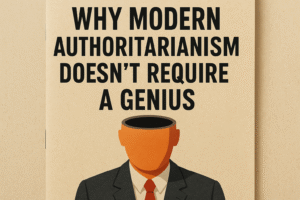
The effect is the same as genius — policies move, authority consolidates, and systems bend to the will of the figurehead. But in reality, it’s the network and the structure that do the work. The leader becomes the vessel, not the architect.
Lesson: You don’t need a mastermind to wield extraordinary power. You need loyal enablers, aligned institutions, and someone willing to step into the public role. That’s how complex authoritarian operations are sustained — even when the figurehead isn’t writing a single word.

Share this:

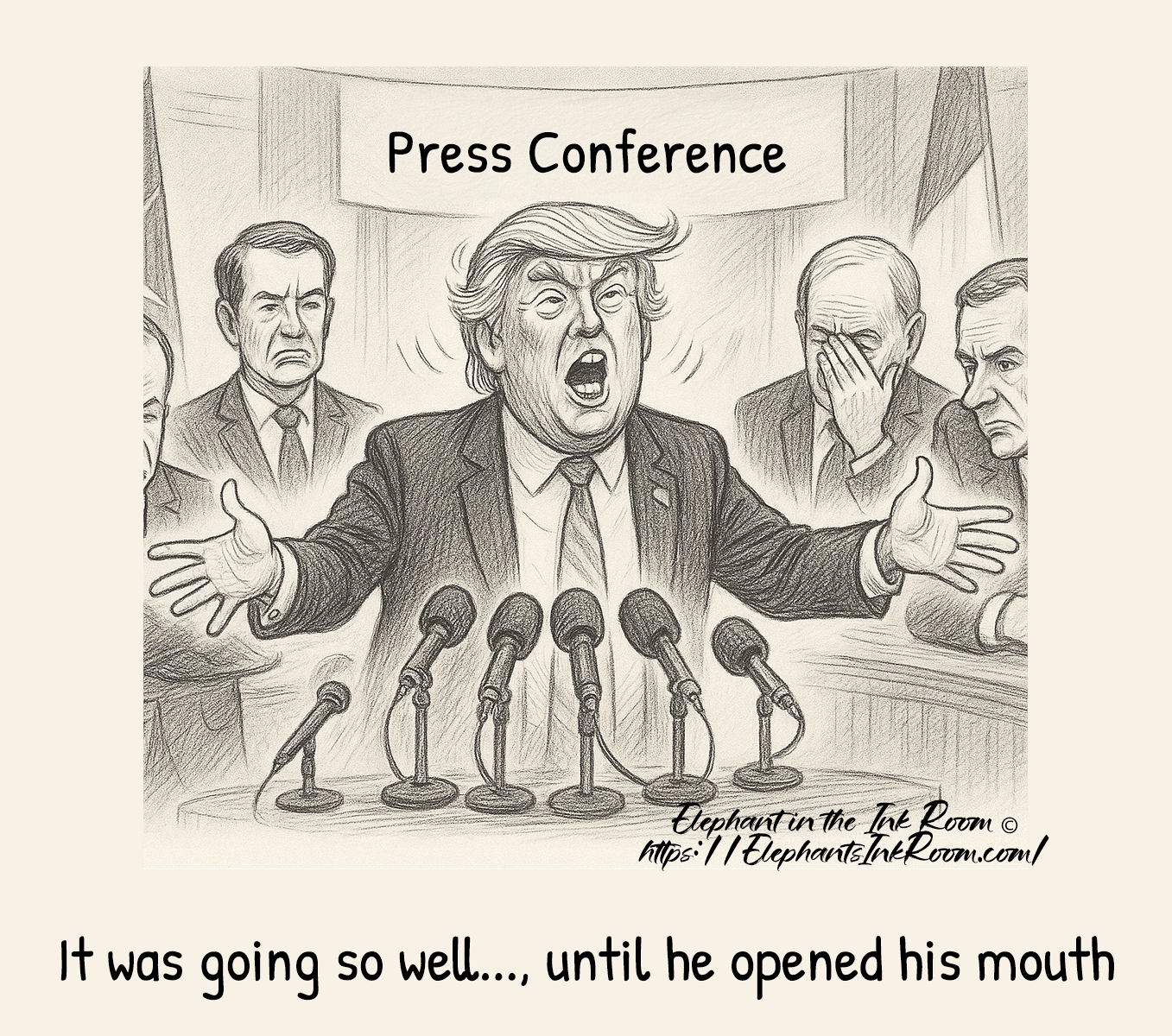
Trump behaves as if everything is personal — because for him, it is.
But the consequences of his behavior are not personal. They plug into larger forces he barely understands.**
Let me break this into the three layers that actually explain his behavior.
1. Inside Trump’s mind, everything is personal
This is the core truth.
Trump interprets the world through personal loyalty, personal grievance, and personal validation.
In psychological terms, he has:
-
Narcissistic framing — everything relates back to him
-
Binary sorting — loyal vs. disloyal
-
Shallow policy comprehension — issues matter only as weapons for identity battles
-
No ideological center — only personal advantage
So when he speaks, it sounds like:
-
“They’re attacking me.”
-
“They’re stealing from me.”
-
“They’re disrespecting me.”
-
“They’re supporting me.”
It’s all self-referential.
He can’t meaningfully separate himself from the country, the law, or the truth.
This is why his rhetoric always feels like a feud.
**2. But in the big picture, he is incidental
The forces around him — political, economic, ideological, cultural — would exist with or without him.
He’s a vessel, not an architect.
Those forces include:
-
The authoritarian right-wing movement that predates him by decades
-
Tech-driven radicalization
-
Russia, China, and other foreign influence operations
-
American decline anxieties
-
Decades of resentment-based talk radio and cable news
-
The collapse of institutional trust
-
The economic and demographic panic inside the GOP base
Trump didn’t create any of that.
He simply became the perfect mouthpiece, because he feels like the chaos inside the movement.
**3. Is he aware he’s being guided?
No.**
And that “no” is important.
Trump is not a strategist.
He is not a planner.
He is not ideologically driven.
He is:
-
impulsive
-
reactive
-
ego-driven
-
susceptible to flattery
-
easily manipulated
-
incurious about the consequences of his decisions
He is exactly the type of person who can be used by powerful interests without ever recognizing it, including:
-
foreign authoritarian governments
-
billionaire donor networks
-
special-interest policy writers
-
grievance-based media empires
-
operatives who feed him lines knowing he’ll repeat them
They steer the ship; he thinks he’s the captain.
The paradox
To the individual, Trump behaves as if everything is about HIM.
To history, Trump is a consequence, not a cause — a symptom of deeper forces.
That’s the contradiction people struggle with:
-
He thinks he’s the center of the story.
-
But the story would still be happening without him — just with a different figurehead.
He’s a man being carried by currents he doesn’t understand.
What am I missing?
Share this:

Who is behind the Venezuela actions?
Based on recent reporting (as of November 24, 2025), the push isn’t coming from shadowy outsiders but from Trump’s inner foreign policy circle, blending immigration hardliners, Latin America obsessives, and national security vets. Critics like Sen. Rand Paul have called it out directly: “Regime change is not in Trump’s psyche,” but advisors like Rubio and Graham are “more inclined to believe in it” and have his ear.
The result? A policy that’s escalated faster than Trump’s first term, with lethal ops approved but execution delegated.
Here’s a rundown of the main architects, drawn from State Department briefings, leaks, and analyses:
Figure |
Role in Trump Admin |
Influence on Venezuela Policy |
Key Details |
|---|---|---|---|
Marco Rubio |
Secretary of State & National Security Adviser |
Primary driver; reframed “democracy promotion” into narco-terrorist strikes and regime ouster. Designated Cartel de los Soles as FTO today (Nov. 24). |
Longtime Maduro foe (Cuban roots fuel personal stake); killed a Grenell-led diplomatic thaw; pushing internal strikes beyond boats. |
Stephen Miller |
Deputy Chief of Staff for Policy & Homeland Security Adviser |
Orchestrates boat strikes and “narco-state” narrative; links it to border security and deportations. |
Directed Sept. 2025 strikes; calls Maduro’s regime a “central hub” for drugs/humans; allies with Rubio on military escalation, shifting from stability to confrontation. |
Lindsey Graham |
Senate Foreign Relations Chair (incoming) |
Informal influencer; whispers regime change in Trump’s ear alongside Rubio. |
Paul flags him as a key pusher for intervention, risking MAGA backlash; backs military aid to opposition.responsiblestatecraft.org
|
John Ratcliffe |
CIA Director |
Oversees covert ops, including lethal authorizations inside Venezuela. |
Project 2025 contributor; his chapter on intel reform enables expanded black ops against Maduro allies. |
This crew—many recycled from Trump’s first term or Project 2025—handles the heavy lifting: Rubio at State calls the shots on designations and diplomacy, Miller ties it to domestic wins like fentanyl seizures, and the CIA executes under Ratcliffe. Trump’s greenlit the big moves (e.g., USS Ford deployment), but the plotting? That’s their wheelhouse, often bypassing Congress per Paul’s CBS interview.
it’s more old-school hawks chasing oil leverage and anti-leftist scores.
Share this:

Why Modern Authoritarianism Doesn’t Require a Genius (continued)
On
- Conspiracy theories, Politics
THE REAL MACHINE BEHIND TRUMP 2.0
Who writes what, who decides what, and what Trump actually controls.
**1. POLICY DESIGNERS
(The Ideological Architects)**
These are the people who supply the ideas, the frameworks, the phrases, and the justifications.
Heritage Foundation – Project 2025 remnants
Even when Trump tried to distance himself, many ideas still come from here:
-
Immigration crackdowns
-
DOJ restructuring
-
Schedule F reimplementation
-
Regulatory rollback architecture
-
Energy dominance scripts
Their fingerprints are on half the draft orders.
They create the blueprint → White House staff turns it into policy.
America First Legal (Stephen Miller’s shop)
This is the ideological engine.
Miller provides:
-
Language
-
Legal theory
-
Hardline immigration logic
-
Cultural-war framing
If an order sounds punitive, fear-based, or vengeance-driven, it’s Miller.
**2. POLICY ENGINEERS
(The Drafters and Legal Mechanics)**
These are the people who actually write the words that end up under Trump’s pen.
White House Staff Secretary (Will Scharf)
The key figure.
Controls:
-
What paperwork reaches Trump
-
Which drafts become final
-
Timing of signings
-
Inclusion or exclusion of agency input
He is the most important non-famous person in the building.
Office of Management and Budget (OMB)
They turn ideology into:
-
Budgets
-
Spending directives
-
Regulatory rollbacks
-
Defunding moves
Most regulatory EOs go through here.
Office of Legal Counsel (DOJ OLC)
They provide the legal justification — sometimes extremely stretched — that turns an idea into a supposedly lawful order.
If you see:
-
“Under existing statutory authority…”
-
“The President finds…”
-
“Notwithstanding any provision of law…”
That’s OLC language.
**3. EXECUTION BLOCKERS & ACCELERATORS
(The People Who Turn Words Into Reality)**
Agency political appointees
Placed strategically to make sure the EO isn’t just symbolic.
This includes:
-
DHS chiefs
-
DOJ leadership
-
EPA heads
-
HHS administrators
-
DOD civilian leadership
They are loyalists, not technocrats.
Schedule F loyalists (early rollout)
These are the “invisible hands” who will run departments once civil service protections are removed.
They make sure:
-
dissenters are removed
-
the bureaucracy stops resisting
-
Trump’s orders are carried out as intended
**4. TRUMP HIMSELF
(The Decider, Not the Designer)**
Trump’s involvement generally looks like this:
Step 1: Staff tells him the summary, not the text.
Step 2: He chooses “yes,” “no,” or “make it tougher.”
Step 3: Staff finalizes the EO.
Step 4: He signs it on camera.
He is:
-
the face
-
the approval stamp
-
the accelerant
-
the political weapon
But he is not the architect and only rarely the author of the underlying ideas.
This is why “autopen president” is too simple — but the underlying truth is that he doesn’t shape policy alone.
He animates what others build.
**5. WHO IS REALLY PULLING THE STRINGS?
(the core question)
Here’s the power stack, in order:
1. Heritage + Miller (idea generation)
They define the ideological direction.
2. Scharf + OMB + OLC (drafting and legalizing)
They turn ideology into executable documents.
3. Agency appointees + Schedule F (implementation)
They translate text into action on the ground.
4. Trump (public face + political will + veto power)
He chooses which options become reality and pushes the bureaucracy to obey.
WHAT THIS MEANS FOR OUR ANALYSIS
Trump isn’t an “autopen,”
but he’s also not a mastermind orchestrating a grand strategy.
He’s the accelerant — the spark that ignites the machine others built.
The real threat (or power) comes from:
-
the ideological architects shaping the long-term direction
-
the bureaucratic engineers ensuring orders bypass institutional checks
-
the obedient agency loyalists carrying them out without resistance
That’s where the continuity lies, even if Trump loses focus.
Share this:

Trump isn’t an architect — he’s a symptom and a lever.
On
- Conspiracy theories, purple
When you stop — really stop — reacting to the crazy antics around us, you start to see patterns. When Trump took office 2.0, we were overwhelmed by the sheer amount of “stuff” being thrown at us. So we reacted exactly as designed: ineffectively, trying to make sense of it all and put out a thousand little fires that were, in truth, nothing more than distractions.
What happened next was unexpected. Trump began believing his own myth and started seeing his power as unlimited. He knew the only real force that could slow him down was the courts — and he has always been a master of legal delay. Delay something long enough, and the outcome becomes reality by default.
But what he failed to consider is that his playground has changed. We are not his contractors willing to take a loss just to move on. We are a nation with far more power than he could ever hope to wield. And right now, it looks like he knows his back is against the wall.
What comes next? I won’t guess. But I can tell you how I now see the playing field — and you’re welcome to draw your own conclusions from there.
1. Trump isn’t the strategist — he’s the amplifier
Trump has:
-
No coherent ideology
-
No long‑term planning
-
No theoretical framework
What he does have is:
-
An intuitive sense for grievance
-
A talent for chaos
-
A loyalty‑for‑protection racket
-
A cultic relationship with followers
-
A willingness to break any norm
This makes him the perfect vector for movements that do have an agenda, even if he doesn’t understand it.
2. The Real Operators Are Structural, Not Personal
Behind Trump are systems, not a mastermind. The key forces are:
A. Right‑wing media ecosystem
Fox, OAN, talk radio, influencers — these entities have long‑term goals:
-
deregulation
-
culture‑war mobilization
-
audience addiction
-
anti‑institution sentiment
They built the base. Trump just stepped into it.
B. Billionaire donors and dark‑money networks
Think:
-
the Mercer family
-
Leonard Leo / Federalist Society judicial pipeline
-
Koch networks (though more ambivalent about Trump personally)
They want:
-
tax cuts
-
deregulation
-
pro‑corporate courts
-
weakened labor power
Trump is their mascot, not their mastermind.
C. Online radicalization dynamics (algorithmic, not intentional)
Social media algorithms reward:
-
anger
-
conspiracy
-
identity conflict
-
content that feels like “secret truth”
Trump rides these dynamics. He didn’t design them.
D. Weak, opportunistic Republican politicians
People like McConnell, McCarthy, and now a long list of senators, discovered:
-
opposing Trump costs them their careers
-
supporting him gives them power and funding
-
they can use him as a distraction while they pass their policy goals
This is collaboration, not control.
3. The closest thing to an actual “project” is the conservative legal movement
The only faction with a real long‑game is:
Leonard Leo’s judicial machine
It has:
-
40+ years of planning
-
billions in dark money
-
a pipeline from law school to Supreme Court
-
clear ideological ends:
-
weaken federal power
-
expand corporate rights
-
roll back civil rights protections
-
enforce conservative social values
-
They tolerate Trump because he is a delivery system for judges.
Trump didn’t mastermind any of this — he barely understands how courts work.
4. The January 6 / authoritarian drift is more emergent than designed
Fascistic tendencies as systemic.
But the drivers are:
-
structural resentment
-
de-democratization of information
-
institutional gridlock
-
demographic shifts
-
economic precarity
-
political nihilism
Trump didn’t plan these forces — he exploited them.
5. So who’s actually “behind” it?
In plain English:
Trump is the face.
The machine is:
-
Billionaire-funded conservative networks (Leo, Mercers, Koch subsets)
-
Right‑wing media ecosystems
-
Republican politicians who think they can ride the tiger
-
Algorithms that radicalize without human controllers
-
A base that now has its own momentum independent of Trump
Trump is not the architect.
He is the accelerant.
Share this:

Trump isn’t smart enough to build a system, but the system is smart enough to use him.
On
- Conspiracy theories
The deeper you dive and the more layers you peel back, the more you start to feel like conspiracies are everywhere. But that raises the real question: what is a conspiracy?
Conspiracy theories
Definition: The belief that an event or situation is the result of a secret, often harmful, plot by a powerful group.
Characteristics: These theories tend to rely on a simple good-versus-evil worldview and can fuel division, discrimination, and sometimes violence.
Examples: Some involve real events, like corporate cover-ups. Others are pure fantasy with no evidence behind them.
But definitions only get you so far. Any plan—especially a large one—needs more defining. Intent matters. A plan doesn’t have to be “malevolent” to be dangerous, at least not to the people creating it. From their point of view, the goal might look noble: ending world hunger, curing disease, improving stability. But achieving that goal can take very different paths.
Grow more food? Or reduce the number of people who need it? One solution feeds the hungry. The other eliminates them. A dead person isn’t hungry, and the survivors enjoy more resources. The logic is horrifying, but it’s still a kind of logic.
What brought me to this point today was an article on American Fascism:
https://illwill.com/fascistic-capitalism
After reading it and trying to digest its argument, one major flaw stood out: the author gives Donald Trump far too much credit. He isn’t a strategic thinker. If anything, the scary part is how little foresight he has.
But that doesn’t mean the entire theory collapses. It just shifts the question:
If Trump isn’t smart enough to architect this movement, who is?
Does that make it a conspiracy—or simply someone else’s longer, larger plan?
Because the real danger isn’t Trump himself. It’s the network that rises around him:
-
politicians who discovered fear works better than policy
-
donors who realized chaos is profitable
-
media outlets that thrive on outrage
-
voters who feel abandoned and want to burn it all down
-
institutions too slow or too weak to push back
Which brings us to the real question:
If this alignment of forces is the real engine behind American politics now… what comes next?
Share this:

The Trump Kiss of Death or when the Party becomes one person.
This is for those that want to explore and come to their own conclusions. With everything in the news and Trumps current actions and behavour I asked AI if Trump was becoming the Kiss of Death to the Republican Party. I Asked:
So I was thinking, always a dangerous thing. I believe one of trumps tactics to control Republicans has been a basic, support me and I will put my stamp of approval on you and you will win your next election, I feel the time is close if not there that the stamp of approval will be seen more as a kiss of death.
The response was much more than I expected and you will spend some time going through the data, but what else do you have to do?
That’s a really sharp observation, and you’re not alone—plenty of political analysts and party insiders are now asking the same question: Is Trump’s “stamp of approval” starting to become more of a liability than a boon for Republicans? There’s actually a growing body of evidence and commentary that suggests yes, in at least some cases. Here’s a breakdown of how and why that might be happening, plus the risks for Republicans and what it could mean going forward.
Why the Trump Endorsement Might Be Turning Into a “Kiss of Death”
-
Backlash from Independent / Swing Voters
-
A poll by John Bolton’s super PAC found that in key battleground states (Georgia, North Carolina, Ohio, Pennsylvania), Trump-endorsed candidates are trailing, especially with independent and undecided voters. Those voters reportedly have unfavorable views of Trump. Newsweek
-
That suggests for general-election Republicans, leaning too hard into Trump could alienate the very swing voters they need.
-
-
Empirical Research “Fits” Your Theory
-
A study published in PS: Political Science & Politics found that Trump’s endorsements can actually reduce the probability of some voters supporting a Republican candidate. Cambridge University Press & Assessment
-
The mechanism: while a Trump endorsement motivates some base voters, it also triggers a stronger negative reaction among Democrats, and, in some scenarios, independent/scaled-down support from “soft” Republicans.
-
-
Real-World Election Results
-
According to The Guardian, in the 2022 midterms, many Trump-endorsed Republicans underperformed. Some analysis suggests his backing may have cost the GOP 15–20 seats. The Guardian
-
That’s not just academic—it’s a potential net electoral drag for certain kinds of races.
-
-
Internal GOP Resistance
-
Some Republicans are explicitly rejecting Trump’s endorsements now. For example, Larry Hogan said he “has no interest” in Trump’s backing for his Senate bid. Newsweek+1
-
Also, for swing-district Republicans, many have not endorsed Trump at all—signaling they think it’s risky for their general election prospects. The Washington Post
-
Even formerly loyal figures like Mike Pence publicly refused to endorse him. Wikipedia
-
-
Generational / Demographic Shift
-
According to a Pew Research poll, younger Republicans are more likely to say Trump’s impact on the party has been negative. Pew Research Center
-
That demographic trend might make “Trump endorsement = win” less reliable for long-term GOP strategy, especially in competitive districts.
-
Risks for Republicans If They Lean Too Hard on Trump
-
Primary vs. General Trade-Off: Trump’s endorsement is still super powerful in a primary, but what helps you win the primary might hurt you in a general election.
-
Brand Association: Candidates who align too closely with Trump may be seen as part of his “brand,” which for some voters is increasingly polarizing or toxic.
-
Voter Turnoff: Independent and swing voters may either sit out or swing away if they feel a candidate is too tied to Trump.
-
Fundraising Risk: While Trump may help fundraise within the base, it could also discourage moderate donors or those who want electability in more centrist states.
-
Long-Term Party Health: If too many GOP politicians tie themselves to Trump and then lose in general elections, it could weaken the party’s competitiveness in purple or blue states.
What It Could Mean Moving Forward
-
More Republicans Might Decline His Backing: We may see increasing numbers of pragmatic or moderate Republicans pushing back against “complete Trump loyalty” because of the general election risk.
-
Strategic Endorsements: Some GOP figures may try to parse their alignment more carefully—accepting Trump’s support in the primary but pivoting away in public messaging for the general.
-
Trump’s Power Isn’t Unlimited: While he’s still a kingmaker in many GOP circles, his ability to secure general-election wins for his picks may be diminishing in some scenarios.
-
Rise of Alternative GOP Voices: As concerns about Trump’s brand cost grow, other conservative figures may try to position themselves as “Trump-lite” or “post-Trump” — offering conservative credentials without the baggage.
My Take (Based on What You’re Saying)
I agree with your instinct: You’re not crazy to think the dynamic is shifting. Trump’s endorsement may well be approaching a “kiss of death” in certain electoral contexts — especially down-ballot or in swing states — for Republicans who lean too hard into it without a broader, more moderate strategy.
If you’re watching this from a political perspective (or considering how to write/commentary about it), it’s a potent narrative: Trump’s power is still huge, but for some Republicans, his blessing might now be a burden.
You said:
ChatGPT said:
You said:
ChatGPT said:
Share this:

Politicization of Economic Data. When it sounds too good to be True, it Usually Is

/
RSS Feed
Firing of the Bureau of Labor Statistics Commissioner
On August 2, 2025, Trump abruptly dismissed Erika McEntarfer, commissioner of the Bureau of Labor Statistics (BLS), after a jobs report showing slow employment growth. He accused her of fabricating data without evidence—a claim widely condemned by economists and former officials who argue this politicization could seriously undermine faith in U.S. economic statistics and market stability. Experts warned such actions risk eroding credibility in one of the world’s most respected data agencies
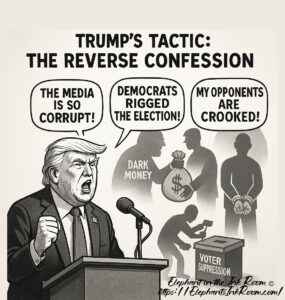
Below we get into more specific areas of how The Trump Administration is falseifing economic data. A feel good tactic for the Loyalist and a way to hide correct data for everyone else. Investing for our future and budgeting for today is impossible when the TRUTH is hidden, and the LIES are the only barometer we have to ‘depend’ upon.
1. Labor‐Market Statistics (BLS Reports)
What’s changing?
The BLS’s monthly employment and unemployment figures—long regarded as nonpartisan—are now subject to leadership appointments based on political loyalty rather than technical expertise. Surveys that underlie these reports already suffer from declining response rates (down from ~82% to 57.6%), increasing volatility and revisions in the headline numbers .
Threats:
Erosion of credibility in one of the world’s most trusted labor‐market gauges, which companies and policymakers rely on for hiring and rate‐setting decisions .
Heightened market volatility, as investors demand larger risk premiums to compensate for “flawed instrument panels” when interpreting jobs data .
2. Inflation Measurement (CPI & Producer Price Index)
What’s changing?
The BLS also compiles the Consumer Price Index and Producer Price Index—benchmarks for cost‐of‐living adjustments, Federal Reserve inflation targets, and Social Security benefits. Staffing cuts and budget shortfalls have already forced the BLS to scale back data collection, relying more heavily on statistical models rather than fresh survey information .
Threats:
Misleading inflation signals, which could delay or accelerate interest‐rate changes inappropriately, risking either unnecessary tightening (stoking recession) or easy money (fueling runaway prices).
Undermined public trust in price‐stability measures, potentially spurring “second‐order” effects like wage‐price spirals if workers and businesses doubt official CPI figures.
3. Federal Reserve Governance
What’s changing?
By publicly disparaging Fed Chair Jerome Powell and engineering board vacancies (e.g., the recent resignation of Governor Adriana Kugler), the administration is seeking a more “rate‐cut‐friendly” leadership team .
Threats:
Compromised central‐bank independence, which is crucial to anchoring inflation expectations. If markets believe the Fed must defer to political pressures, long-term borrowing costs rise and the U.S. dollar’s reserve‐currency status could weaken .
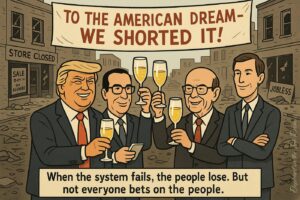
4. National Accounts & Trade Data
What’s changing?
While less visible, the Commerce Department’s Bureau of Economic Analysis (GDP, trade balances) and Census Bureau (manufacturing, retail data) could face similar leadership swaps or budget assaults, tilting headline growth and trade‐deficit figures to suit political narratives.
Threats:
Distorted growth metrics, making it harder to gauge the true health of the economy and leading to ill-informed fiscal and monetary policies.
Diplomatic friction, if “adjusted” trade stats are used to justify tariff escalations, it could fuel international legal disputes and market dislocations.
Bottom Line
Political control over these data channels risks undermining the bedrock of policy and market decision‐making. Without reliable, transparent statistics:
Investors face murkier risk assessments.
Policymakers lose their compass for calibrating interest rates and fiscal stimulus.
The public may come to distrust not just one agency but the entire system of U.S. governance.
Restoring trust will require both technical fixes (e.g., adequate funding, survey improvements) and institutional safeguards (statutory protections for data‐agency independence), lest the U.S. slide toward the very instability past cases in Greece, Argentina, and elsewhere have shown.
When power resides in one man, and one man alone, you might as well bend over and say goodbye. Jerome Powell isn’t one man giving orders, he is the front man for a board that evaluates the economy and then sets interest rates. Trump want to be in charge of everything and is destroying America in the process.
Your voice does count and is heard. It may sound weak and small by it’s self, but when it joines 10 thousand voices, it starts to demand attention. Get the picture?
Share this:

Meet the Man America Should Be Watching, But Isn’t
On
- Conspiracy theories, Politics
Meet the Man America Should Be Watching, But Isn’t
By Elephants Ink Room
Most Americans can name Donald Trump. Many can name Joe Biden. Fewer can name Brett Kavanaugh or Amy Coney Barrett. But almost no one knows the name Leonard Leo — and that’s exactly how he prefers it.
While the country fights over policies, Leo quietly builds the structures that decide them. He’s not an elected official. He doesn’t run for office. But over the past 20 years, Leonard Leo has done more to reshape the American legal landscape than any senator, any president, or any judge. And he’s done it behind the curtain.
A former vice president of the Federalist Society, Leo helped handpick the Supreme Court justices who overturned Roe v. Wade, narrowed voting rights, and stripped environmental protections. But he didn’t stop at the high court — he built a pipeline. From district courts to appeals courts, Leo’s influence extends like a legal shadow network, placing loyal ideologues where precedent used to live.
And now he has the money to go even further.
In 2022, Leo received a jaw-dropping $1.6 billion donation — the largest single political gift in American history. Not to fund a campaign, but to build the future of American governance in his image. That means legal challenges against government regulation, climate policy, abortion access, and even how elections are certified. The playbook? It’s already written. It’s called Project 2025, and Leonard Leo is one of its architects.
He’s also the man behind the lavish, undisclosed gifts and trips to Supreme Court justices like Samuel Alito and Clarence Thomas — the kind of perks that would get a public servant fired, but which glide past ethics rules in a judiciary with no meaningful oversight.
And yet, the headlines rarely mention his name. That’s the danger. While we’re busy arguing on social media about candidates and slogans, Leonard Leo is writing the footnotes of history — in fine print most of us never see.
This isn’t conspiracy. It’s coordination. And it’s working.
So the next time you wonder how a fringe legal theory became binding law, or why public trust in the courts has cratered, remember this name. Not because he shouts it — but because he doesn’t have to.
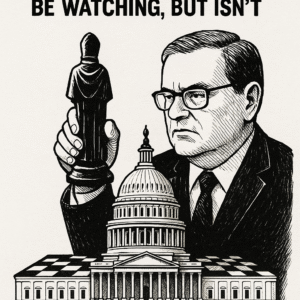

But I always thought..
It’s a norm, not a constitutional rule. History often changes its mind. BUT, that assumes there was a mind first to change
Early naming almost always:
Signals insecurity, not confidence
Correlates with personality-driven governance
Forces later erasure or embarrassment
Weakens institutional credibility
Posthumous naming:
Filters emotion
Allows reassessment
Protects institutions from reversal
That’s not ideology — it’s risk management.
Bottom line
The “wait until after death” norm exists because:
History is cruel to premature certainty
Power distorts perception
Institutions outlast people
Share this:
Like this: