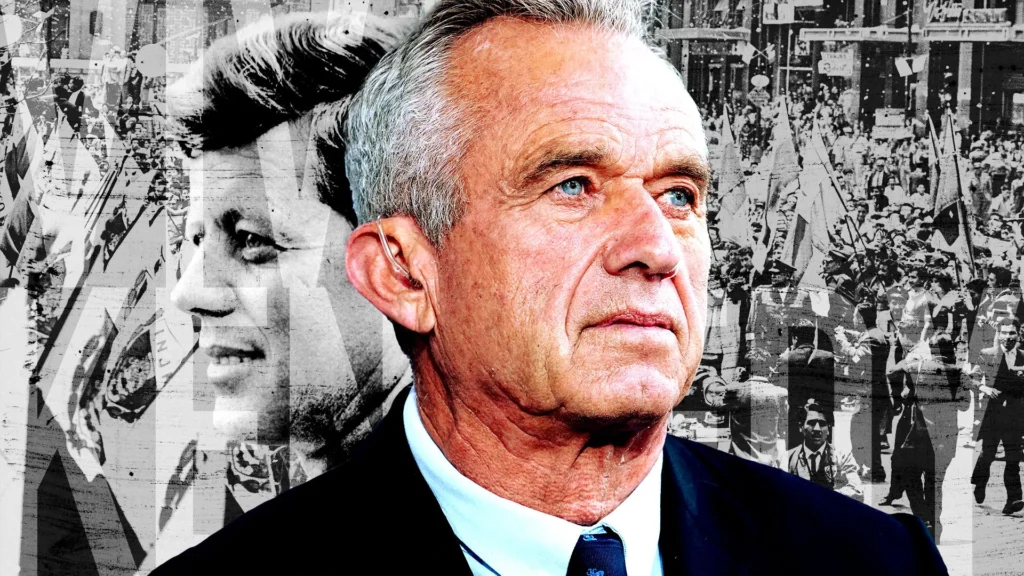
There is a version of Robert F. Kennedy Jr. that history should remember favorably.
As an environmental attorney in the 1980s and 90s, Kennedy was the real thing. He sued polluters, won, and made them pay. He fought corporations that dumped toxins into waterways serving poor communities who had no other advocate. He understood science, used it rigorously, and trusted it when it supported the case he was making, which it usually did, because the science on industrial pollution is not complicated. Corporations were poisoning people, Kennedy proved it, and he made them stop. That is not the biography of a crank. That is the biography of someone who understood exactly how institutions can be corrupted by money and power, and fought back effectively.
That understanding, that institutions lie when money is involved, is important. Because it wasn’t wrong. It was the seed of everything that came later, and like a lot of things that start from a kernel of truth, it eventually grew into something that consumed the original plant entirely.
Somewhere between the courtroom victories and the podcast appearances, Kennedy’s working theory shifted. Institutions sometimes lie became institutions always lie. Follow the money when evaluating a specific claim became follow the money as a substitute for evaluating evidence at all. The man who once used science as a sword against corporate corruption began using corporate corruption as a reason to reject science itself.
The drug years almost certainly played a role. Kennedy has spoken openly about his heroin addiction and recovery, and deserves credit for that honesty. But what he has never fully reckoned with publicly, and what anyone who has worked in addiction and mental health will recognize immediately, is that sustained substance use doesn’t just damage the body. It rewires the framework through which a person processes trust, authority, and risk. It can leave someone genuinely intelligent operating from a threat-assessment system that is permanently calibrated too high. Everything becomes suspect. Every institution becomes an enemy. Every simple answer becomes more trustworthy than a complex one, because complexity itself starts to feel like manipulation.
This is not a diagnosis. It is a pattern that professionals in mental health and addiction recognize, and it matters here because it explains something important: Kennedy is not stupid. He is not simply corrupt. He is a genuinely intelligent person operating from a framework that was damaged long before he ever set foot in the Department of Health and Human Services, and that framework is now being applied to the health of 330 million Americans.
He was confirmed as Secretary of Health and Human Services in February 2025, after a Senate process in which he promised, repeatedly, that he would not dismantle vaccine policy, would not politicize public health, and would bring transparency and accountability to institutions that had lost public trust during the pandemic. Those were not unreasonable promises. Some of them were even things his critics could agree were worth doing.
He has broken nearly all of them.
What is less often discussed is how he got there. Kennedy’s path to confirmation ran directly through his decision to drop his independent presidential campaign and deliver his followers to Trump. The job was, by most credible accounts, the arrangement. Not a reward for expertise in public health. Not a record of administrative competence. A political transaction between two men who had spent years distrusting the same institutions, for very different reasons, and who each believed they were the one doing the using.

Comments are Disabled