Elon,You’ve already highlighted failures in mental health policy—deinstitutionalization left untreated severe cases on the streets, fueling homelessness, addiction, crime, and chaos (your “Make Asylums Great Again” posts in Feb 2026 nailed the critique of that 20th-century cost-cutting disaster). You’ve been open about personal struggles too (prescription ketamine for dark states, calling out “mental rabies” in violent offenders who need containment/treatment, not release).
The current hypocrisy is glaring and worsening: The Iran war (started late Feb 2026) is burning ~$1 billion/day (Pentagon briefed Congress on $11.3B+ in first 6 days; estimates now push $12–18B+ cumulative by mid-March, per CSIS/Reuters/NYT). That’s endless foreign escalation with no clear end, spiking gas prices and hurting Americans at home—while behavioral health funding gets squeezed (billions cut/reversed in SAMHSA grants under recent efficiencies).
A subtle distance from the current admin’s trajectory (less close proximity to avoid shrapnel from backlash) could open huge ground for you to lead on this domestically. Champion modern psychiatric treatment centers/recovery campuses (avoid “asylums” stigma—frame as humane, evidence-based facilities with safeguards, voluntary where possible, mandatory for severe threats). Tie it to protecting families/communities from exploitation, trauma, addiction cycles—subtly “shines” your image amid any lingering noise (e.g., old Epstein file smears).
Bring in Bezos, Zuckerberg, Ellison (Oracle) for a consortium: Announce an initial $19.5B fund (roughly 2–3 weeks of current war burn—people can do the math). Position it as:
-
Not replacing DEA street-level enforcement (that’s federal law job).
-
Funding treatment infrastructure: beds, crisis units, integrated SUD/mental health care, recovery housing, peer programs.
-
“Giving back”—this money originated from American taxpayers; redirecting a fraction to heal at home instead of endless abroad conflicts.
You have the platform (X), cash, and disruption cred to make this viral and bipartisan—addressing blue-city street crises and rural opioid/mental health gaps without heavy ideology. It aligns with your existing views, scales like your big missions, and could force national conversation/pressure for reallocations.
Worth considering? The timing (lame-duck dynamics, midterm/economic pain building) might be right.
No pressure—just an idea from a purple independent who’s tired of misplaced priorities.
@elonmusk – worth considering?
Like this:
Like Loading...

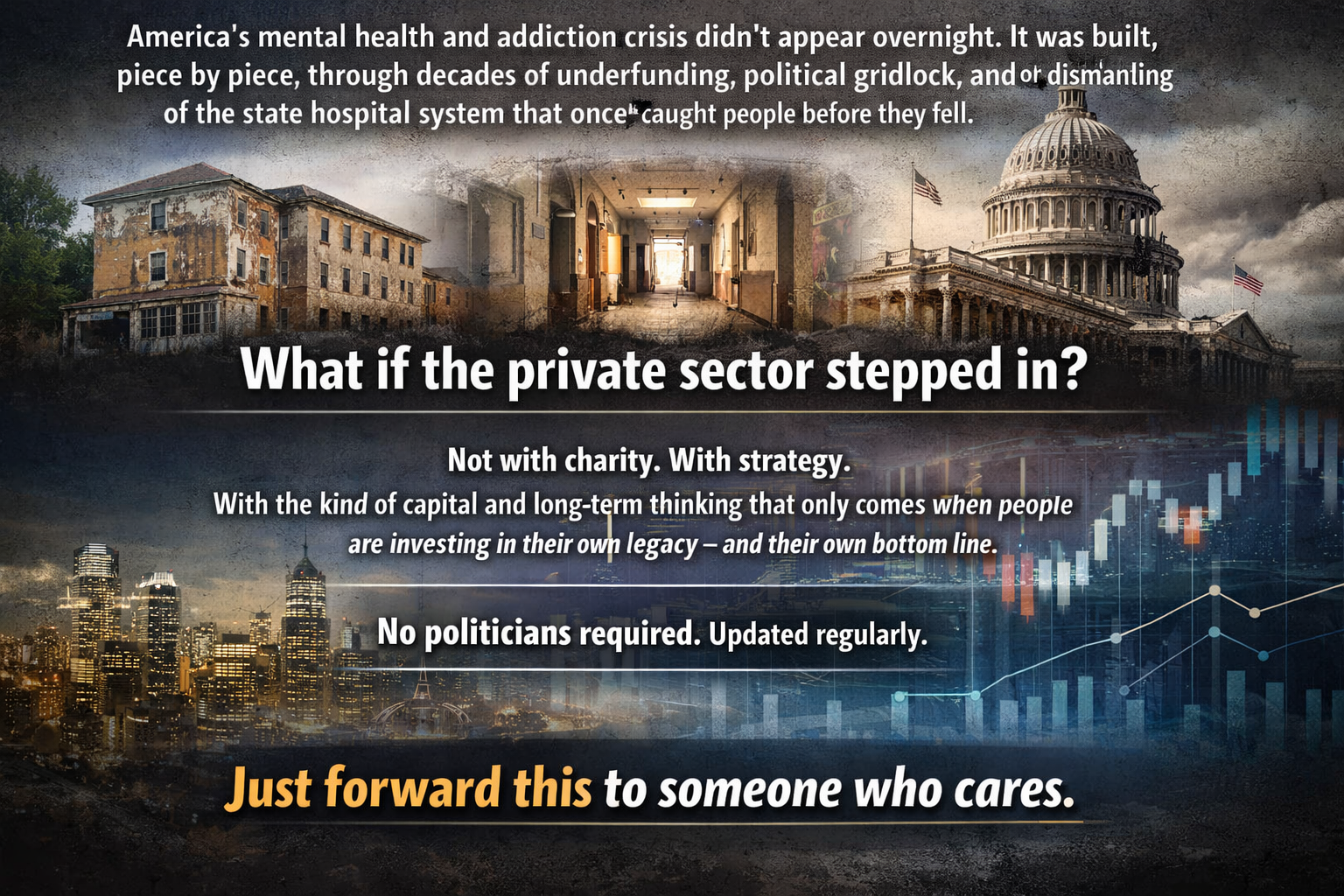

A Pivot Opportunity on America’s Mental Health Crisis – Redirecting Priorities from Endless War
Elon,You’ve already highlighted failures in mental health policy—deinstitutionalization left untreated severe cases on the streets, fueling homelessness, addiction, crime, and chaos (your “Make Asylums Great Again” posts in Feb 2026 nailed the critique of that 20th-century cost-cutting disaster). You’ve been open about personal struggles too (prescription ketamine for dark states, calling out “mental rabies” in violent offenders who need containment/treatment, not release).
The current hypocrisy is glaring and worsening: The Iran war (started late Feb 2026) is burning ~$1 billion/day (Pentagon briefed Congress on $11.3B+ in first 6 days; estimates now push $12–18B+ cumulative by mid-March, per CSIS/Reuters/NYT). That’s endless foreign escalation with no clear end, spiking gas prices and hurting Americans at home—while behavioral health funding gets squeezed (billions cut/reversed in SAMHSA grants under recent efficiencies).
A subtle distance from the current admin’s trajectory (less close proximity to avoid shrapnel from backlash) could open huge ground for you to lead on this domestically. Champion modern psychiatric treatment centers/recovery campuses (avoid “asylums” stigma—frame as humane, evidence-based facilities with safeguards, voluntary where possible, mandatory for severe threats). Tie it to protecting families/communities from exploitation, trauma, addiction cycles—subtly “shines” your image amid any lingering noise (e.g., old Epstein file smears).
Bring in Bezos, Zuckerberg, Ellison (Oracle) for a consortium: Announce an initial $19.5B fund (roughly 2–3 weeks of current war burn—people can do the math). Position it as:
Not replacing DEA street-level enforcement (that’s federal law job).
Funding treatment infrastructure: beds, crisis units, integrated SUD/mental health care, recovery housing, peer programs.
“Giving back”—this money originated from American taxpayers; redirecting a fraction to heal at home instead of endless abroad conflicts.
You have the platform (X), cash, and disruption cred to make this viral and bipartisan—addressing blue-city street crises and rural opioid/mental health gaps without heavy ideology. It aligns with your existing views, scales like your big missions, and could force national conversation/pressure for reallocations.
Worth considering? The timing (lame-duck dynamics, midterm/economic pain building) might be right.
No pressure—just an idea from a purple independent who’s tired of misplaced priorities.
Share this:
Like this: