
Everything in Published Order, Easist Way To Stay Up To Date Contact Us Or Have a Suggestion?
A note on appearances: this site reads as left-leaning, and I understand why. But what I am actually fighting against is a current administration so far to the radical right that it can no longer honestly be called conservative.
Traditional conservatism, fiscal responsibility, limited government, rule of law, respect for institutions, has been abandoned by the very party that once claimed to own it. Opposing what is happening right now doesn’t make you a liberal. It makes you someone paying attention. I’d like to think there are honest conservatives out there who feel the same way, and this page is partly an olive branch to them.
AI Disclaimer, Our Video’s are created with Heygen with an avatar, you don’t want to watch me stutter and restart. A lot of what I write is checked for major errors and grammar, sometimes Claude will insert dash ems. sorry, but the article is mine or credited. The graphics are built off my prompts.
Public Announcement – Not Politics but $$
Long story short: I thought my cash cards had been skimmed. Oh no—nothing that simple. I activated a credit card on Saturday at 1 pm; it was declined at 2 pm. Wells Fargo caught the

Elections and Media in the Modern Era – Part 2 of 3 Media: Gatekeepers No More – Video
The result is clear: voters now navigate a complex, fragmented media environment long before they step into a booth. Traditional gatekeepers no longer hold a monopoly on political information. And that leads directly to the
Get Ready to Vote
The Supreme Court, on September 25th, lifted restrictions on a federal voters database system called Systematic Alien Verification for Entitlements, or SAVE, in their efforts to verify the eligibility of voters on their rolls. US
California Endorsement and a Warm Embrace of Independence 09/29/2026
Forward Party Endorses Independent Congressional Candidate Rep. Kevin Kiley in California's Newly Drawn 6th DistrictWashington D.C. – September 29, 2026 – The Forward Party recently announced its endorsement of Independent Rep. Kevin Kiley, who is

The MAGA Fracture – The MAGA CON
Well, waste your time, because this dude is just running another con on you. The only thing you can do is call his bluff. You have the cards, but you can’t win the game if

Elections and Media in the Modern Era – Part 2 of 3 Media: Gatekeepers No More
The result is clear: voters now navigate a complex, fragmented media environment long before they step into a booth. Traditional gatekeepers no longer hold a monopoly on political information. And that leads directly to the
Notice of Temporary Administrative Order OAR 165-007-0550
For statewide elections, including the upcoming general election in November 2026, counties are required to report results on a designated state website. But one or more Oregon counties will have one or more local contests

10 Steps To Fix What Trump Has Broken And mend everything thereafter by Robert Reich
If we want to clean up the mayhem Trump and his regime have created — and prevent anything like this from happening again — here are the 10 big reforms every political candidate should support.
Secretary Read: Supreme Court Ruling Will Have No Impact on Oregon’s Election
“Today's ruling by the Supreme Court will have no impact on Oregon's upcoming election. Oregon will not participate in a flawed system that will likely result in eligible voters losing their right to vote. However,

OH My God We Are In Power!
Maybe that’s the question we should be asking before we decide that simply changing who holds the gavels means we have changed the system. Because making that decision tomorrow may be too late.

Screwed, Blued, and Tattooed – Video
And it's the same when the far left keeps referring to all Republicans as MAGAs. You don't need to apologize, but if you're not a card-carrying MAGA, tell someone that. Hey, I'm a Republican, I'm
Forward Party Endorses Diana DiZoglio + Friends at MAF in South Dakota!
The Forward Party recently announced its endorsement of Massachusetts State Auditor Diana DiZoglio, who is running for re-election in November, continuing the party's commitment to supporting officials who fight for transparency and accountability regardless of

The Outrage Is Not an Accident
Nobody's asking you to switch teams forever. Nobody's asking you to feel bad for the values you hold. The ask is smaller and harder than that: notice when you're being fed fear instead of information,

Elections and Media in the Modern Era – Part 1 of 3: Elections – Behind the Ballot Box – Video
Understanding why every vote matters is only the first part of the story. Equally important is how the information voters receive before Election Day is shaped and delivered. From traditional network broadcasts to social media,

Different Strokes — How Many Chips Do You Want? – Video
How many chips do you want? And while I'm telling you what I'm looking for in the next president, there's one more thing. I want a team from day one. Not a successor chosen in
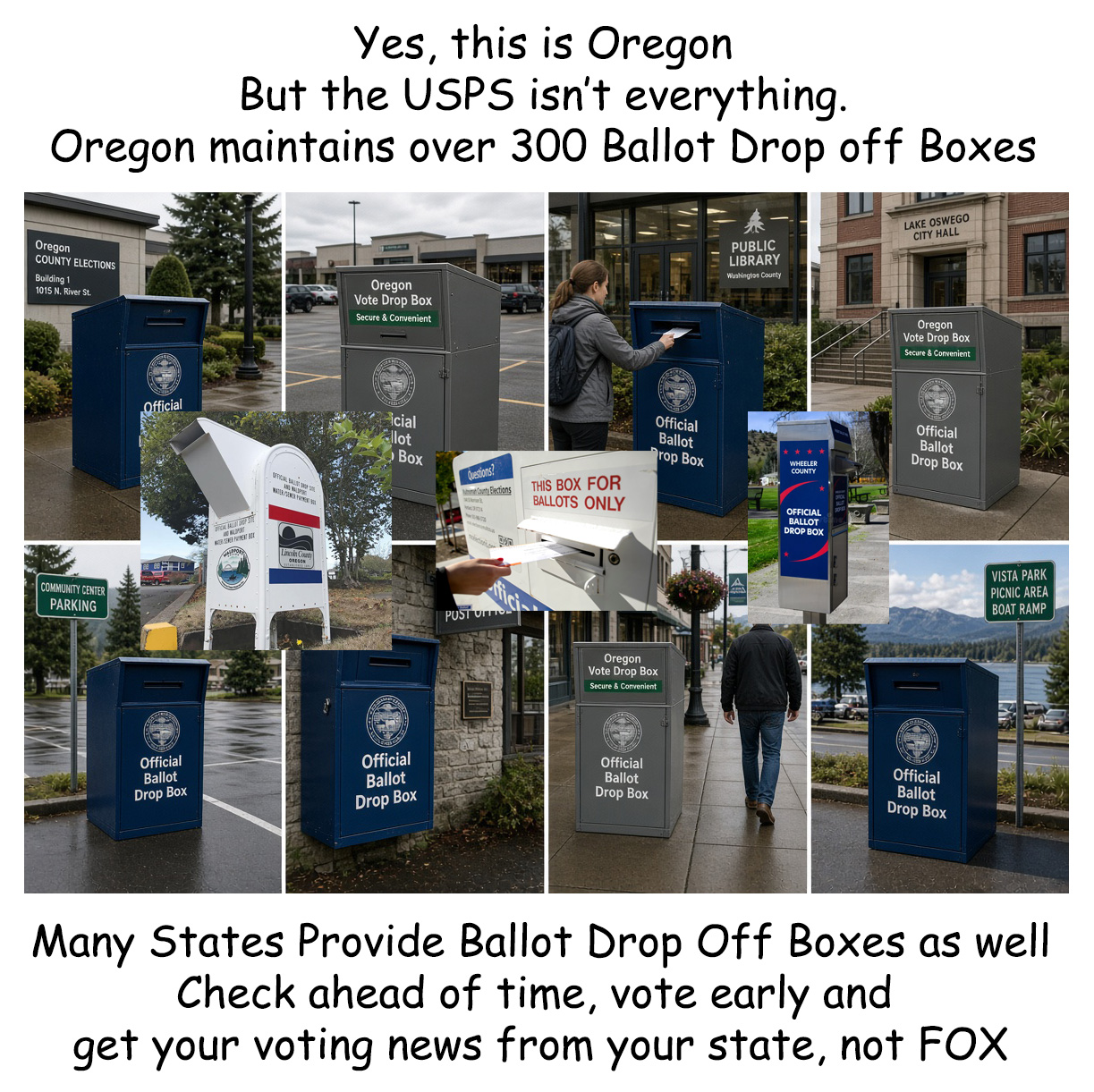
Oregon Ballot Drop Off Boxes
In May 2026 (around the primary election), officials noted that Oregon has 321 official drop boxes (also called drop sites). These are available until 8 p.m. on Election Day, are monitored, and include fire-suppression features.
Different Strokes — How Many Chips Do You Want?
How many chips do you want? And while I'm telling you what I'm looking for in the next president, there's one more thing. I want a team from day one. Not a successor chosen in

Healthcare in America — On the Sidelines – Retirement and That Piggy Bank, Your Home – Video
So if you are approaching retirement, or already retired, and you are thinking about selling a home that has appreciated substantially, don't look only at the sale price and the capital-gains tax. Look at what

Elections and Media in the Modern Era – Part 1 of 3: Elections – Behind the Ballot Box
Understanding why every vote matters is only the first part of the story. Equally important is how the information voters receive before Election Day is shaped and delivered. From traditional network broadcasts to social media,
Voting Guidance TV PSA Launched by Oregon Secretary of State
PRESS RELEASE Date: September 21, 2026 Contact: Tess Seger | tess.seger@sos.oregon.gov Voting Guidance TV PSA Launched by Oregon Secretary of State SALEM, OR — Oregon Secretary of State Tobias Read is broadcasting new public service
Healthcare in America — On the Sidelines – Retirement and That Piggy Bank, Your Home
So if you are approaching retirement, or already retired, and you are thinking about selling a home that has appreciated substantially, don't look only at the sale price and the capital-gains tax. Look at what

Healthcare in America — On the Sidelines – Medicare for All Sounds Simple – Video
Ask how. Where does the money come from? Who pays? Who gets paid? What happens to the people and businesses already in the system? How long does it take? What happens during the transition? What
Healthcare in America — On the Sidelines – Medicare for All Sounds Simple
Ask how. Where does the money come from? Who pays? Who gets paid? What happens to the people and businesses already in the system? How long does it take? What happens during the transition? What
The Outrage Is Not an Accident – Video
Nobody's asking you to switch teams forever. Nobody's asking you to feel bad for the values you hold. The ask is smaller and harder than that: notice when you're being fed fear instead of information,

Uh, Hey Canada, busy Friday?
Maybe a nice king crab and salmon dinner and a bottle of Pinot Noir from one of my Willamette Valley wineries. Not commitments, maybe just some nice conversation away from the noise. After all, we
Is it Official Election Mail? A PSA from Secretary of State Tobias Read
The Official Election Mail logo is a trademarked design that can only be used on mail pieces created by, or on behalf of, an election official that is mailed to or from a U.S. citizen

Healthcare in America — The Next Conversation Part 8 – Where Do We Go From Here? – Video
It doesn't belong to Democrats. It doesn't belong to Republicans. It doesn't belong to any political label. It belongs to the people who would have to live with whatever we eventually build.
Don’t Check Just the Box
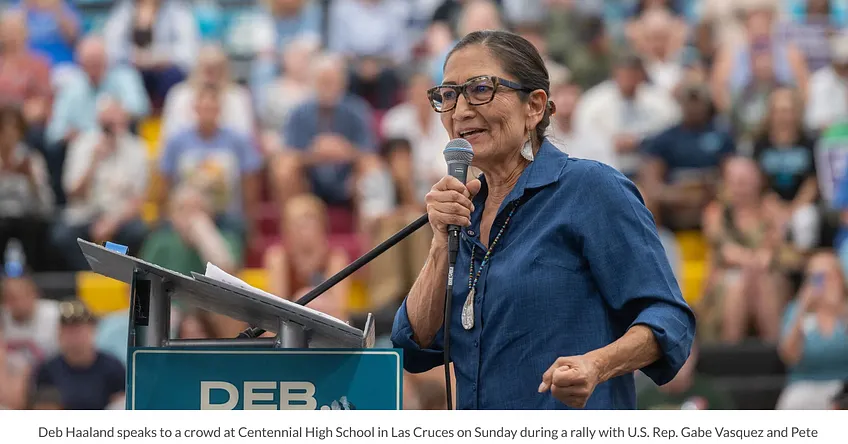
Sometimes that may mean voting for a Republican. Sometimes a Democrat. Sometimes someone outside the two major parties. And sometimes it may mean leaving a box unchecked. The point is simple: don’t vote for the
Forward Party CEO Weighs in After US Supreme Court Denial 09/17/2026
I generally don't weight in on Shared Posts, but if you think it's time to weaken the 2 party stranglehold on today's politics and Superpac money that controls the candidates and the elections, then you
