Here they come to save the day! Independents are on their way!Flipping seats left and right, Upsetting the majority overnight— No party line can hold them back, They’re breaking the gridlock and tipping the stack! Here they come to save the day… Independents are on their way!
The Democrats and Republicans, the war of the TITANS. Onward they march, threats made, slander cast, mud never left to dry.
MAGA turned the non-MAGA Republicans into RINOs. The Wokes are now Democratic Socialists. My head hurts. Must be my silver locks waving in the wind — no, that can’t be it, too old for the motorcycle, and the last convertible left the stable a while back. Must just be all the BS flying by.
But wait, the day is saved. The moderates to the rescue. The independents may save the day, those of us who aren’t out there slinging that brown stuff, take your pick on which kind.
How can that be? Yes, the House and Senate are almost 50/50, Republicans and Democrats. How can independents save the day, you ask? I’m glad you asked. But now I have to decide if I’ll bother telling you why. Smiley face, sitting here drinking my own coffee.
Well, I subscribe to the Forward Party newsletter. You know, that party started by Andrew Yang, the guy who ran for President that nobody voted for.
He started the Forward Party, and I won’t waste your time or risk explaining it wrong, look it up yourself, you might be impressed.
But their latest newsletter, dated 8/7/2026, titled “South Dakota is the Latest Domino to Fall,” has a piece about how South Dakota’s Democratic Senate nominee dropped out of the race last week. Same thing happened in Idaho’s Senate race the week before that. And before either of those, Nebraska’s Democratic nominee did the exact same thing back in July, clearing the way for independent Dan Osborn to run against Pete Ricketts. That’s three states now, not two, and three is a lot harder to wave off as a coincidence.
Oh no, three Democratic Senate candidates stepping aside, what will we do now? Probably rejoice, since none of those were exactly Blue states to begin with.
Now, I’ll be honest, it’s not all clean and tidy behind the scenes, when has politics ever been. Beaudion, the guy who dropped out in South Dakota, says he and his family got hit with “intimidating threats” to get out of the race, and he’s refused to endorse the independent, Bengs, or the Republican. He’s even said publicly that Bengs will “stoop to whatever level” it takes to win. And Rounds, the Republican incumbent, is calling Bengs a “fake independent” quietly backed by the Democratic Party the whole time. Take all of that with the grain of salt it deserves, politics doesn’t hand you a clean story, and I’m not going to pretend this one is spotless just because it helps my point.
Where this gets good is that in all three states, the independent candidates have real, measurable support. All three states seem to want a change. All three seem to want something other than MAGA leadership. And the polling in each of them looks genuinely favorable for these independents actually winning.
Now, to quote rather than paraphrase, so you can see why you just might want to start looking more toward the middle and watch that old pendulum swing a little less wildly:
“We previously noted that Bengs submitted the highest-validity petition of any statewide South Dakota candidate in 2026, which was 93.85% validity, beating both major party candidates in the quality of signatures gathered. This decision by a major party nominee to drop out is becoming an emerging pattern in one-party-rule states, with similar developments possible in additional districts and states. With under 100 days to go until midterms, this election cycle is seeing independent thinking taking root. Our strategy at Forward has always been about math. You don’t need 51 independent senators to change the United States Senate. You need enough to hold the balance of power: three or four members who answer only to their constituents, who can’t be controlled by either party, and who will vote on the merits of what’s in front of them. That math is now closer to real than it has ever been.”
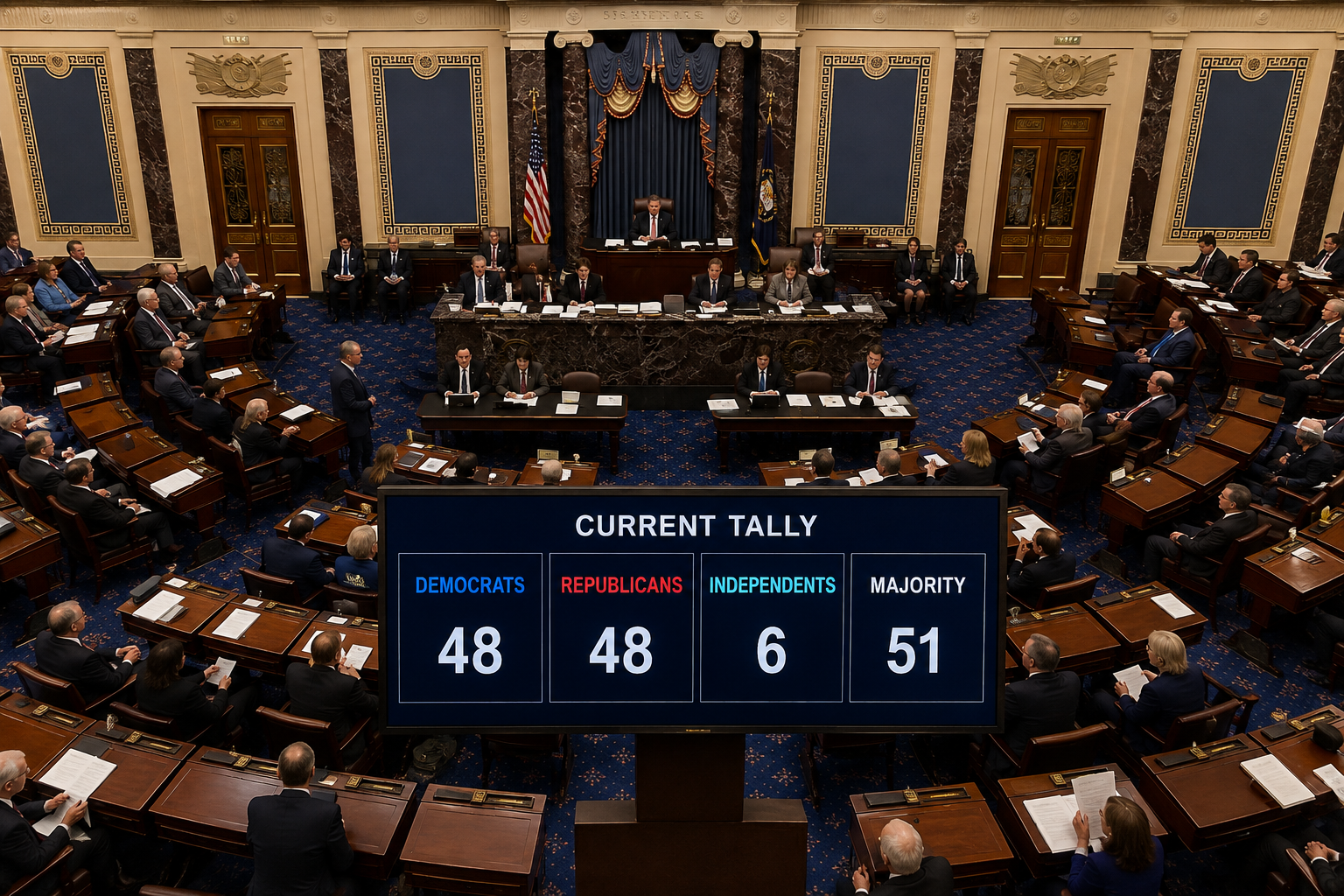
And that’s really the main thrust of the whole thing. We keep thinking about Congress as 50/51 or 51/50, one party’s razor-thin majority against the other’s. But that framing only holds if every single vote lines up straight down party lines, every time, no exceptions. Add three or four senators who don’t answer to either party, who can’t be whipped into line by leadership, and 50/51 stops meaning what everybody assumes it means. Suddenly the majority doesn’t get to just push a bill through on party discipline alone, they have to actually make the case, to people who have no reason to owe them anything.
It may be time to realize you don’t need a majority of a single party to guide the decisions. In fact, consider this: the more independents in the mix, with genuinely different views and different constituents to answer to, the harder it becomes to ram through something like the Big Beautiful Bill on party-line muscle alone. If they’re not bought by any Super PAC, they’re not beholden to anyone either.
Wouldn’t it be something if no party held all the power?


Comments are Disabled