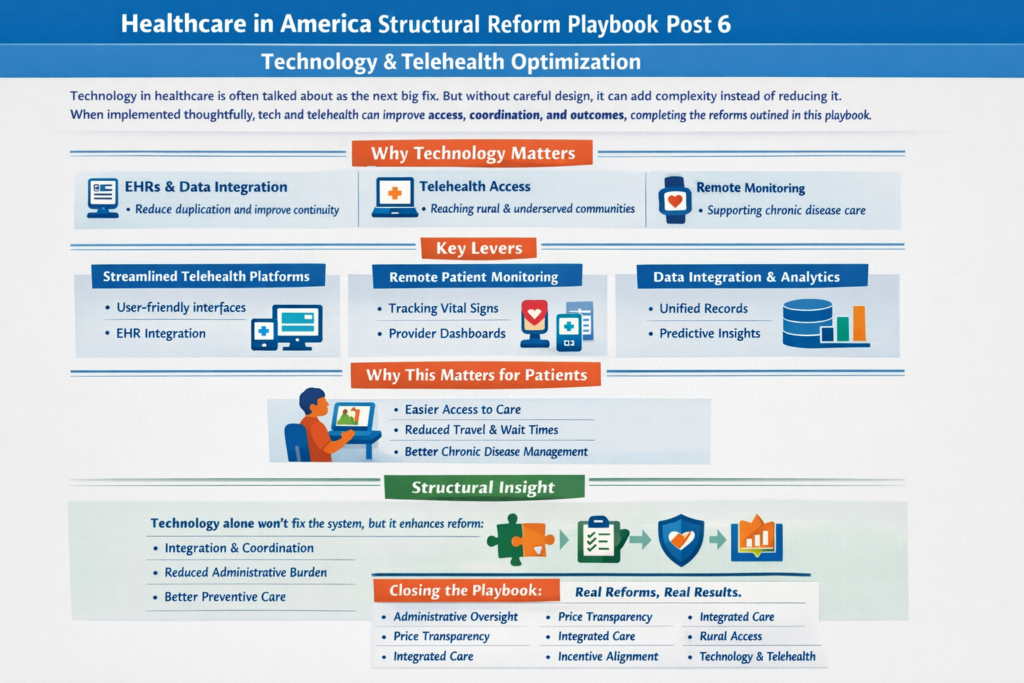
Healthcare in America Structural Reform Playbook Post 6 Technology & Telehealth Optimization
Technology in healthcare is often talked about as the next big fix. But without careful design, it can add complexity instead of reducing it. When implemented thoughtfully, tech and telehealth can improve access, coordination, and outcomes, completing the reforms outlined in this playbook.
Why Technology Matters
Electronic Health Records (EHRs) and data integration reduce duplication and improve continuity
Telehealth expands access for rural and underserved communities
Remote monitoring supports chronic disease management and preventive care
Technology is a tool, not a solution in itself. Used strategically, it amplifies other structural reforms: integration, transparency, and incentive alignment.
Key Levers
Streamlined Telehealth Platforms
Simple, user-friendly interfaces for patients and providers
Integration with EHRs to ensure continuity and data flow
Focused use for follow-ups, consultations, and chronic disease monitoring
Remote Patient Monitoring
Devices track blood pressure, glucose, heart rate, and more
Data feeds into provider dashboards for timely interventions
Reduces preventable hospitalizations and complications
Data Integration & Analytics
Unified patient records improve care coordination
Analytics identify high-risk patients and resource gaps
Supports evidence-based decision making and oversight
Why This Matters for Patients
More convenient access to care, especially in rural or underserved areas
Reduced travel and wait times
Better tracking of chronic conditions and preventive measures
Fewer surprises in billing or treatment, thanks to integrated systems
Structural Insight
Technology alone won’t fix systemic inefficiencies, but it enhances the levers already discussed:
Integration becomes more effective
Administrative burden is reduced
Incentive alignment and preventive care are easier to track
When combined with oversight, transparency, and coordinated care, technology turns abstract reforms into real-world improvements that patients can see and feel.
Closing the Playbook
This concludes the Structural Reform Playbook:
Administrative Oversight & Waste Reduction
Price Transparency & Negotiation
Integrated Care & Coordination
Incentive Alignment for Prevention & Chronic Disease
Rural & Underserved Access
Technology & Telehealth Optimization
The series shows that practical, achievable reforms exist, even without overhauling the entire system. Small, structural changes — applied thoughtfully — can reduce friction, preserve access, and improve outcomes.