
RVC Part 2 of 3: Where Ranked-Choice Voting Stands Today in the United States
Part 2 of 3: Where Ranked-Choice Voting Stands Today in the United States
Where Ranked-Choice Voting Is Being Used Right Now
Note from the author: I am an Oregonian, so I use Oregon’s 2024 experience with Measure 117 as a detailed real-world example. However, this series is written as a national guide. The information, patterns, and action steps apply to voters in every state.
Current National Picture (April 2026)
-
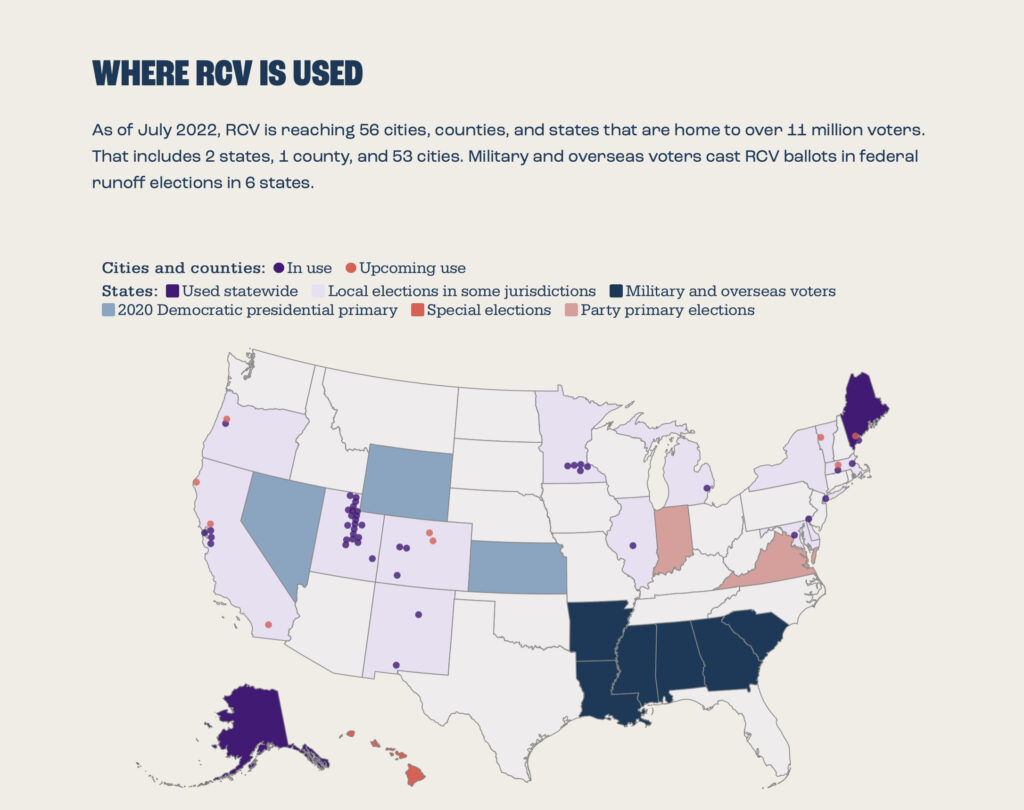
Only two states currently use ranked-choice voting for statewide and federal elections: Maine and Alaska.
-
About 49 cities and counties across 22 states plus D.C. use RCV for local elections, covering roughly 14–17 million voters.
-
19 states have banned or heavily restricted it.
-
In 2024, voters in several states (including Oregon) rejected statewide RCV ballot measures.
What Happened in OregonIn November 2024, Oregon voters decided on Measure 117, which would have brought ranked-choice voting to presidential, congressional, and statewide executive races starting in 2028.Final Result:
-
Yes: 42.3%
-
No: 57.7%
The measure lost by about 15 points.Local use continues to grow:
-
Portland used RCV for the first time in 2024 for mayor and city council.
-
Multnomah County will start using it in 2026.
-
Corvallis and a few other areas already use it locally.
The Urban-Rural Divide in Oregon (and Nationally)
Support for Measure 117 was much stronger in Portland, Eugene, Corvallis, and other college towns, while it was significantly weaker in rural counties, especially in Southern and Eastern Oregon.
This is not mainly about education levels. It reflects deeper political and cultural differences.
Rural Oregon voters often feel the state is governed too much by the three largest urban areas (Portland, Eugene, and Salem), while farms, small towns, and Eastern Oregon have too little voice. Many rural and conservative voters — especially Trump supporters — have developed real mistrust toward changes in how elections are run.
Honest Perspective for Rural Readers
Ranked-choice voting would not automatically “steal” or cancel conservative votes. In Alaska, some Republican and independent candidates have gained from second-choice votes. However, legitimate concerns remain: it can be more complicated, more expensive for small counties to run, and slower to report results. Rural election offices are often understaffed and worry about the added burden.
Many believe the best path is to let local experiments (Portland and Multnomah County) run for a few years so voters across the whole state can see real-world results before another statewide vote.
Screenshot

Comments are Disabled