A Real-Time Example (Why Markets React Faster Than Voters)
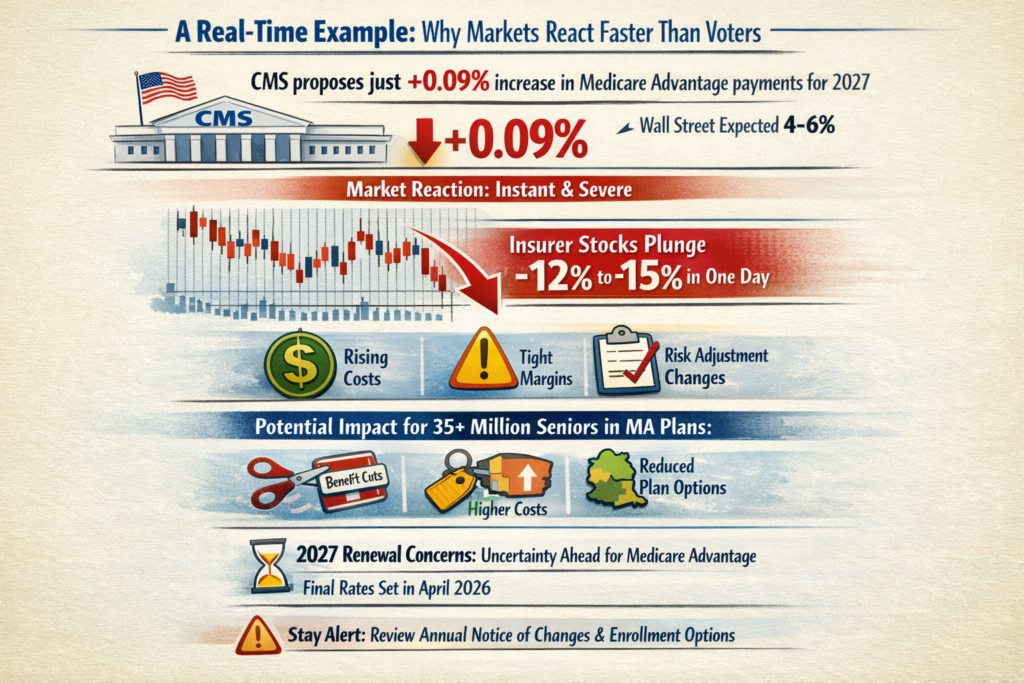
In a surprise move, the Trump administration’s Centers for Medicare & Medicaid Services (CMS) proposed a near-flat 0.09% increase in payment rates to private Medicare Advantage (MA) plans for 2027—far below Wall Street expectations of 4–6% and following a more generous 5.06% boost for 2026.
The announcement triggered an immediate sector sell-off the following day, with major insurers losing double-digit percentages in market value, led by sharp declines across the Medicare Advantage space.
Analysts cite tight insurer margins, rising medical costs, and efforts to curb overbilling (including changes to risk adjustment excluding certain chart reviews) as reasons the minimal increase could force benefit cuts, higher enrollee costs, or plan reductions for the more than 35 million seniors enrolled in MA plans.
Industry groups warn of potential disruptions when 2027 coverage renews in late 2026, though final rates will not be set until April. This adds pressure to an already challenging Medicare Advantage landscape, where many plans have recently faced premium increases, benefit adjustments, or network changes.
What matters here is not the stock reaction itself, but how quickly payment signals translate into market behavior — a dynamic we’ve been examining throughout this series.
For beneficiaries, this is a reminder to pay close attention to Annual Notice of Changes documents and enrollment windows, particularly if plan costs, benefits, or provider access begin to shift.



Comments are Disabled