
Blog Archives
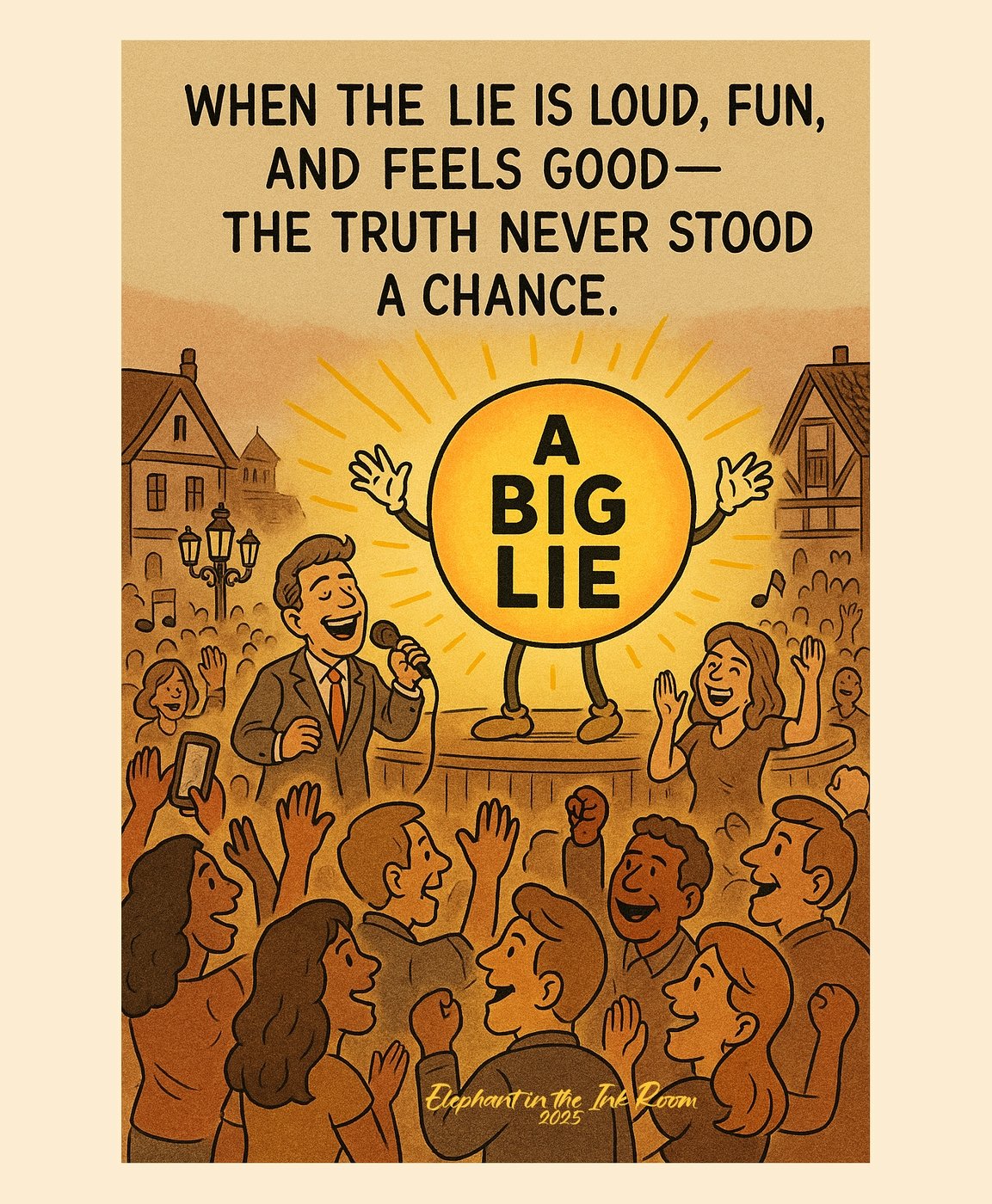
“Admitting I was fooled would mean admitting I was wrong — and I can’t do that.”


It’s one of the most troubling and fascinating questions of our time — and it speaks to the psychology of belief more than just logic or fact.

Here’s a breakdown of why people believe obvious lies:
1. Identity Over Accuracy
People tend to prioritize group identity over objective truth. If a belief signals loyalty to a group they value (political, religious, cultural), they will often defend it — even when it’s demonstrably false.
Example: “If my tribe says the sky is green, then saying it’s blue makes me a traitor.”
2. Repetition Breeds Belief
Even obvious lies, when repeated enough, start to feel true. This is known as the illusory truth effect. The more often we hear something — even if it’s absurd — the more familiar and comfortable it feels.
“I don’t know why I believe it… I’ve just heard it so many times.”
3. Emotion Beats Reason
Lies that appeal to fear, anger, or hope override logic. Emotionally charged stories activate the parts of the brain responsible for survival and intuition — not careful analysis.
“It just feels true. I don’t need proof.”
4. Cognitive Dissonance
People resist facts that contradict their worldview because it creates psychological discomfort. Believing the lie becomes easier than facing the possibility that they were wrong all along.
“Admitting I was fooled would mean admitting I was wrong — and I can’t do that.”
5. Mistrust of Institutions
When trust in media, science, or government erodes, people turn to alternative sources — often unvetted or manipulative ones. Lies seem more credible in a world where nothing seems trustworthy.
“Everyone lies anyway. At least this guy seems honest.”
6. Social Reinforcement
People are heavily influenced by what others around them believe. If everyone in their circle buys the lie, challenging it can mean isolation, ridicule, or conflict.
“I’d rather be wrong with them than right and alone.”
7. The Lie Is Convenient
Sometimes the lie is just easier, simpler, or more emotionally satisfying than the truth. Especially if the truth is complicated, painful, or undermines one’s self-image or worldview.
“It’s not that I believe it… I just like what it lets me believe about myself.”
If you’re seeing this dynamic in politics, media, or personal conversations — you’re not alone. This is where misinformation gains power: not through logic, but through human psychology.
Share this:

The High Cost of Harsh Immigration Enforcement

The High Cost of Harsh Immigration Enforcement
Recent immigration policies have aggressively tightened borders and expanded enforcement efforts, but the human and societal costs are profound. The use of mass raids and detentions — often described as paramilitary operations — has sowed fear and mistrust in immigrant communities. These tactics disrupt families, undermine due process, and raise serious questions about civil rights and humane treatment.
While border security is a legitimate priority, enforcement must be balanced with respect for human dignity and the rule of law. Policies that prioritize harshness over compassion risk alienating vulnerable populations and weakening social cohesion. True security comes not from intimidation and separation, but from thoughtful, fair, and effective immigration reform.
What Trump’s Immigration Policies Have Actually Accomplished

1. Reduced Legal Immigration Levels:
The Trump administration implemented stricter visa restrictions and reduced refugee admissions significantly. Caps on asylum claims and travel bans on several majority-Muslim countries also curtailed legal immigration flows.
2. Tougher Border Enforcement:
There was a strong emphasis on “zero tolerance” policies leading to family separations at the border, increased border wall construction, and heightened use of detention facilities.
3. Expanded ICE Enforcement:
ICE ramped up raids and deportations targeting undocumented immigrants, including those with minor offenses or no criminal records. This aggressive enforcement fueled widespread fear among immigrant communities.
4. Public Backlash and “ICE-Gestapo” Criticism:
Critics and immigrant advocates accused ICE of acting like a paramilitary “Gestapo,” citing reports of harsh raids, lack of due process, and aggressive tactics. This rhetoric highlighted the deep mistrust and fear generated by enforcement methods.
5. Impact on Communities and Economy:
The policies disrupted immigrant families, led to legal challenges, and created uncertainty for workers in industries reliant on immigrant labor. Some industries reported labor shortages and economic strain due to stricter enforcement.
Summary
Trump’s immigration policies effectively tightened borders and reduced immigration numbers but at the cost of humanitarian concerns, legal challenges, and increased social polarization. The aggressive ICE tactics, often described by critics with terms like “Gestapo,” deepened fear and trauma within immigrant communities and sparked intense debate about the balance between enforcement and human rights.
Share this:

The Oracle of Alternate Intelligence

The Oracle of Alternate Intelligence
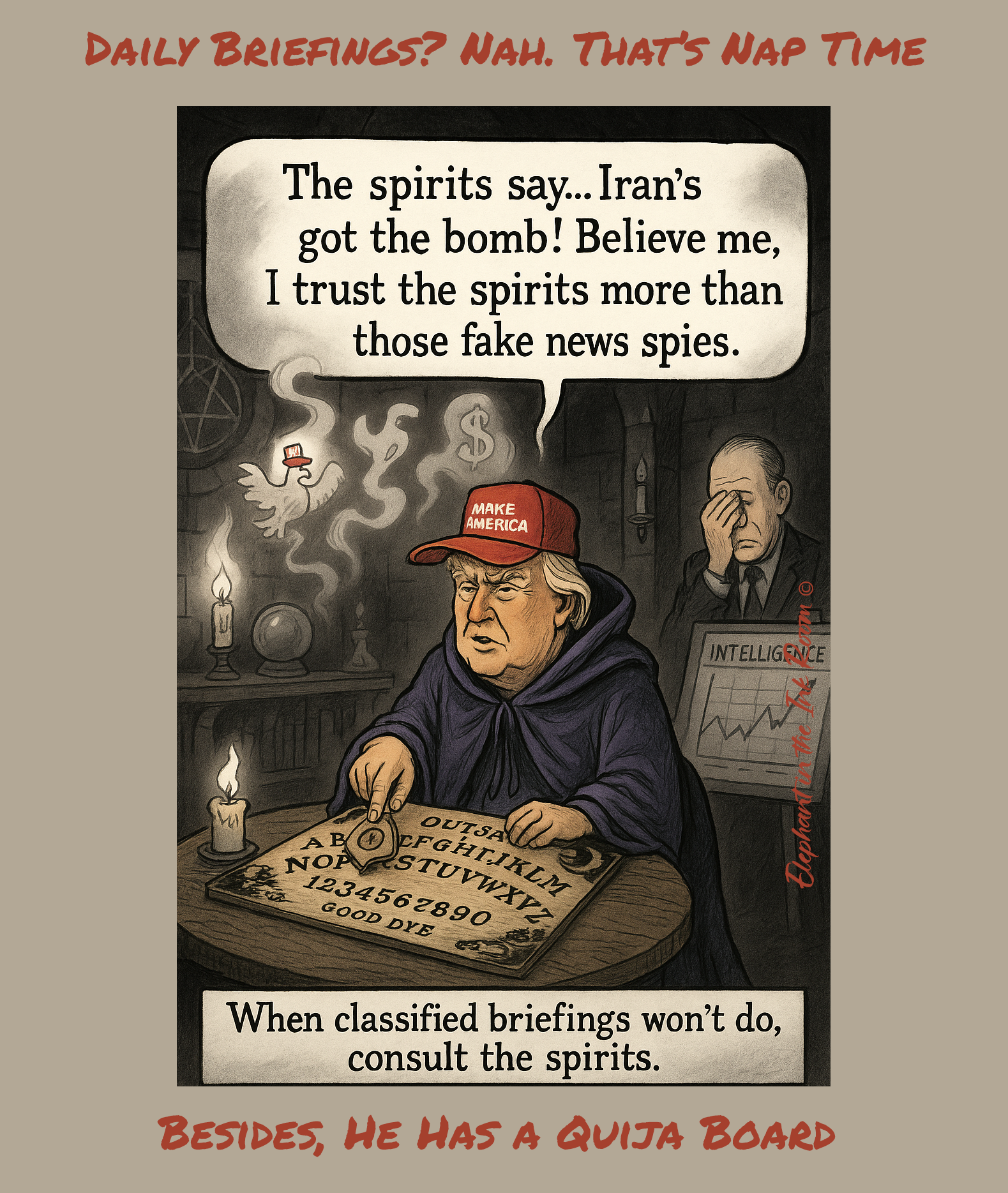
In a time when credible intelligence is vital to the safety and stability of the nation, it is deeply troubling to witness leadership that favors superstition and spectacle over facts and expertise. Instead of placing trust in the dedicated professionals of the intelligence community, we see a disturbing pattern of turning to unreliable sources — from internet influencers to conspiracy theories — for guidance on matters of grave consequence.
This cartoon captures the absurdity of a reality where official briefings and classified reports are cast aside, replaced by a symbolic Ouija board, representing the mystical and ungrounded “intelligence” that some choose to believe. When critical decisions about national security depend more on the whims of viral misinformation and less on verified evidence, the consequences can be catastrophic.
Leadership demands discernment, respect for expertise, and a commitment to truth — qualities that seem increasingly in short supply. The national interest suffers when elected officials prioritize their echo chambers over established facts, fueling confusion and undermining public trust.
The “Oracle of Alternate Intelligence” is more than satire; it is a stark warning. Our security and future depend on the courage to face reality head-on, not to seek answers from shadows and illusions.
Key Agencies within the US Intelligence Community:
Central Intelligence Agency (CIA):
.
Focuses on gathering human intelligence (HUMINT) and conducting covert operations abroad.
National Security Agency (NSA):
.
Primarily responsible for signals intelligence (SIGINT) and cybersecurity, protecting U.S. national security systems.
Defense Intelligence Agency (DIA):
.
Provides military intelligence to the Department of Defense and other government agencies.
National Geospatial-Intelligence Agency (NGA):
.
Manages geospatial intelligence (GEOINT) and provides geographic information for national security and defense.
National Reconnaissance Office (NRO):
.
Develops, acquires, and operates reconnaissance satellites for intelligence gathering.
Federal Bureau of Investigation (FBI):
.
While primarily a law enforcement agency, the FBI also has an intelligence component focused on domestic and international threats.
Office of the Director of National Intelligence (ODNI):
.
Leads and integrates the IC, ensuring coordination and consistency among the various agencies.
Department of Homeland Security (DHS):
.
Has an intelligence component focused on threats to homeland security.
Department of Energy (DOE):
.
Focuses on intelligence related to energy security and nuclear weapons.
Department of State (DoS):
.
Provides intelligence analysis on foreign policy and international relations.
Share this:

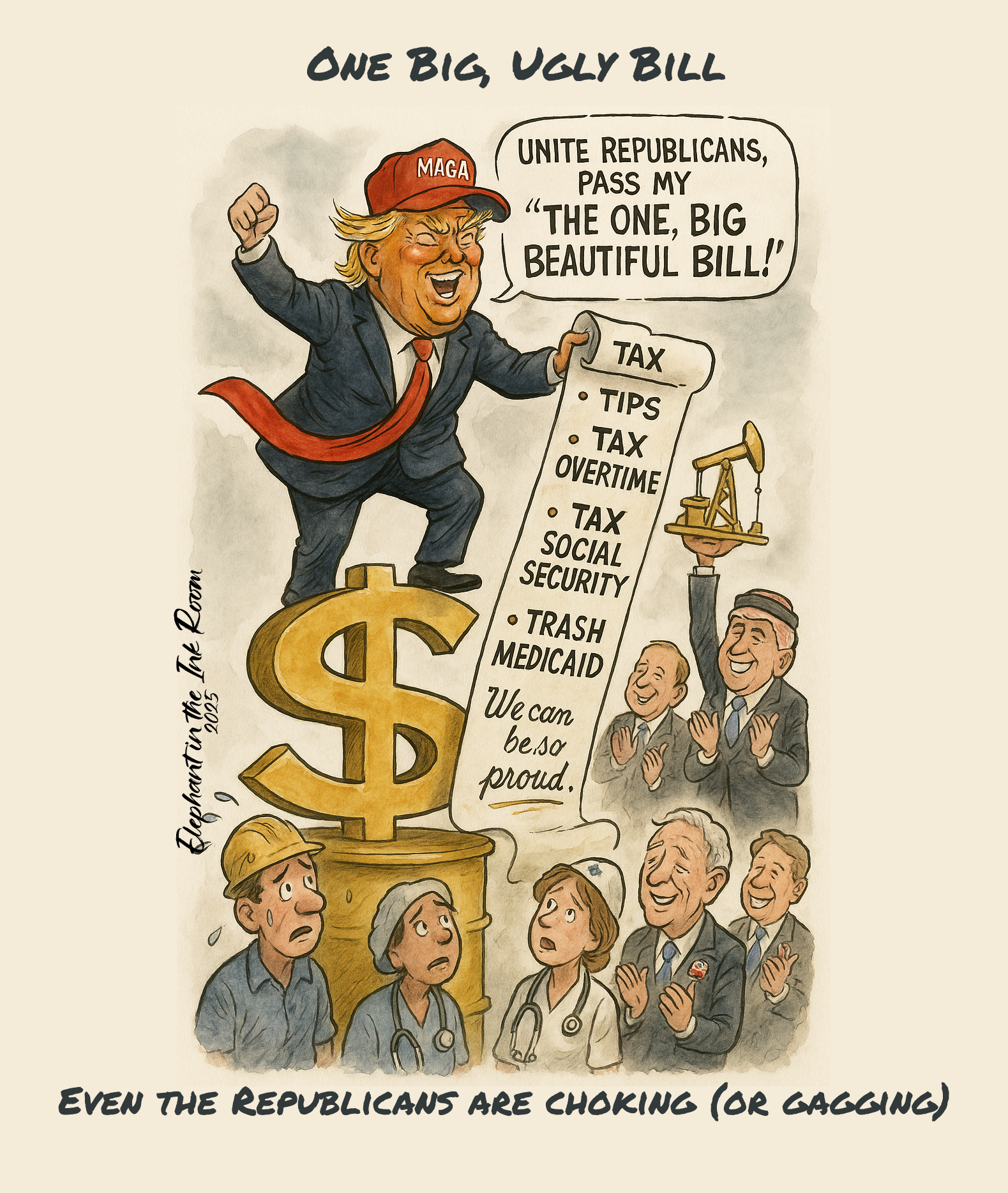
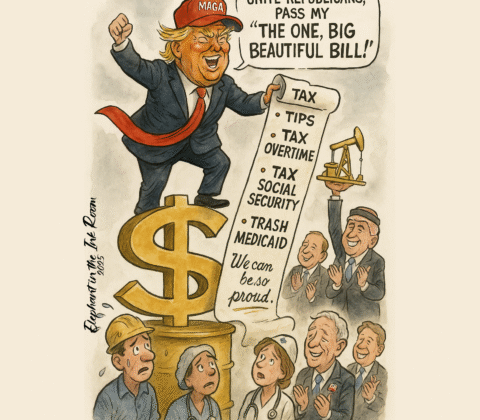
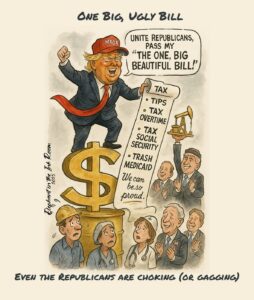
Trump’s “Big, Beautiful” Healthcare Plan Passed — What Happened

My Original what if posting
This is not about all the additional spending and Federal Debt, It’s about how we are going to be affected Healthwise. As of July 15th 2925
Deep Medicaid cuts & new requirements
Roughly $1 trillion in Medicaid budget cuts over the next decade
Work requirements: able-bodied adults must complete 80 hours/month of work, school, or community service
Coverage losses expected: around 7.8 million uninsured by 2034
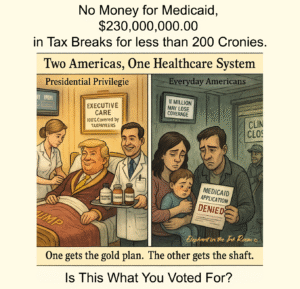
ACA Marketplace changes
Elimination of enhanced premium tax credits, phasing out the COVID-era boosts
Automatic re-enrollment ends; enrollees need annual verification starting 2027
Enrollment window shortened; premiums likely to rise from a smaller risk pool
Rural healthcare impact
Over 300 rural hospitals may close, more than 700 at risk
Includes a $50 billion Rural Health Transformation fund from 2026–2030
Private insurers feel the squeeze
Insurers reliant on Medicaid/Medicare seeing profits drop; some re-plan or exit markets
What It Could Mean for You
Group Likely Impact
Group |
Likely Impact |
|---|---|
Low-income individuals/families |
Reduced Medicaid coverage, higher out-of-pocket costs, risk of losing care |
Marketplace enrollees |
Less subsidy support, tighter enrollment rules, higher rates |
Rural communities |
Potential loss of local hospitals and services |
Insurers |
Margins under pressure—could affect availability and competition |
Why There’s No “Trump Healthcare Plan” in the Bill
Trump campaigned on building a “big, beautiful healthcare plan,” but this legislation is not a substitute healthcare blueprint. Instead, it:
-
Cuts funding and restructures access.
-
Does not detail a replacement model with insurance standards.
-
Lacks cost or coverage analyses tied to a specific proposal.
This mirrors earlier patterns: repeal-focused, low on replace details
Bottom Line
If you’re seeking the supposed “big, beautiful” healthcare plan Trump mentioned — it’s not here. What it does include is a sweeping rollback of coverage and protections, without a clear replacement. The result is more burden on individuals, especially those least able to afford it.

My Original What If Posting
If Trump’s “Big, Beautiful” Healthcare Plan Passes — What Could Actually Happen?
Published June 20th 2025
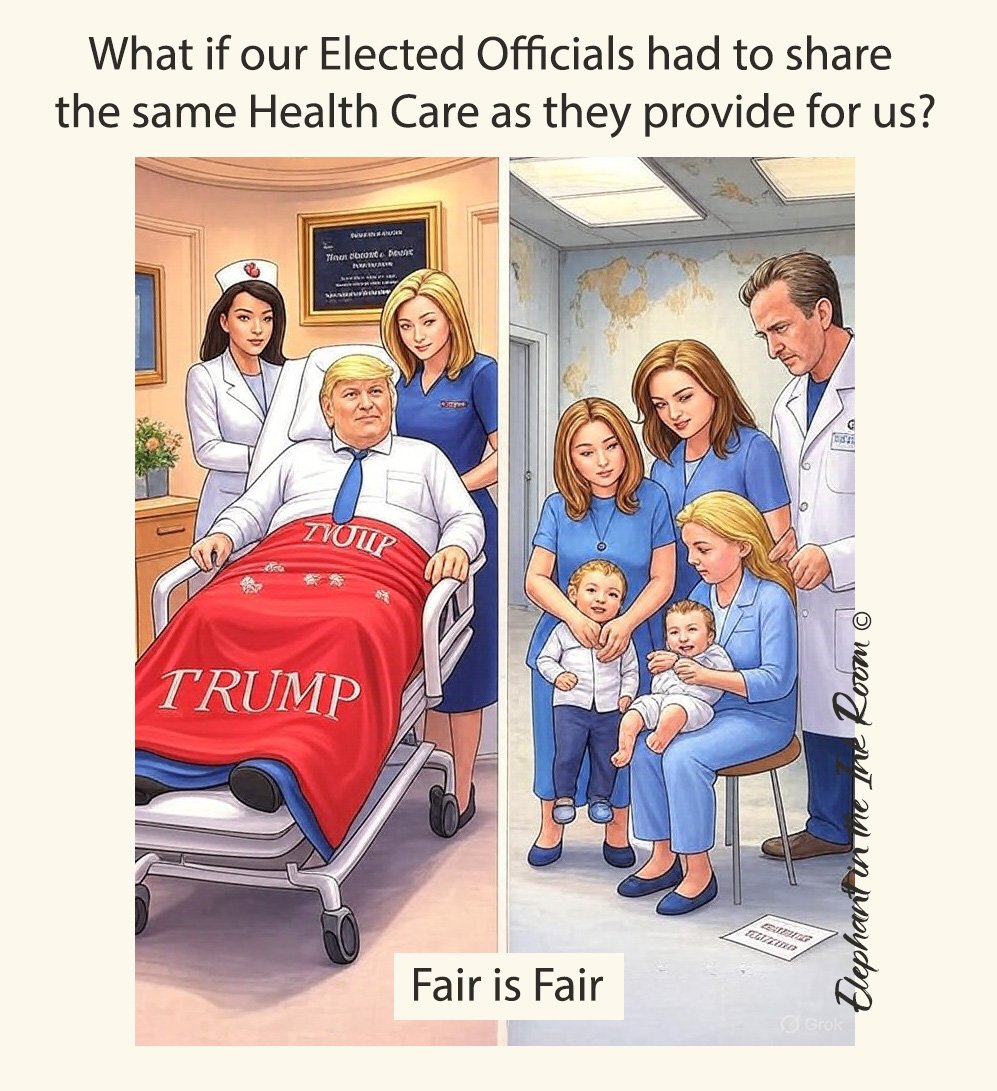
Below is what I published when the Original draft was proposed, you look through it, see how close I was, and where I missed the mark.
Donald Trump is once again promising a “big, beautiful” healthcare plan if he returns to the White House. But after four years in office with no replacement for the Affordable Care Act (ACA) and no detailed proposal even now, Americans are left wondering: What would such a plan actually look like? And more importantly, what would it mean for their health coverage?
Let’s take a realistic look at what could happen — based on his previous policies, campaign statements, and the people advising him.
What We Know So Far (Spoiler: Not Much)
Trump has yet to release a detailed healthcare policy document for 2025. Instead, we’ve heard phrases like:
“We’re going to have the best healthcare system in the world.”
“It’ll be better than Obamacare, and much cheaper.”
“We’ll protect preexisting conditions — much better than the Democrats.”
But there’s no actual bill, framework, or cost analysis — just vague promises.
So let’s break it down based on what we do know.
1. The ACA Would Be Target #1
If Trump regains control with a Republican Congress, repealing what’s left of the Affordable Care Act would likely return to the agenda.
What that could mean:
Loss of Medicaid expansion in many states — affecting millions of low-income Americans.
Elimination of subsidies that help people afford insurance.
Weakened protections for preexisting conditions, unless replaced by something equally strong (which hasn’t been proposed).
Insurance companies could again deny or price out coverage for older or sicker people.
2. “Cheaper Plans” Likely Means Less Coverage
Trump has long promoted short-term health plans as affordable alternatives. These plans often:
Exclude maternity, mental health, and prescription drug coverage.
Don’t protect against surprise medical bills.
Cap coverage or deny claims for preexisting conditions.
If his new plan expands these options even further, many Americans may face a return to “buyer beware” insurance — cheap upfront, expensive when you need it.
3. Medicaid Would Likely Shrink
Trump supports block grants and work requirements for Medicaid — essentially turning it into a state-run welfare program with stricter rules.
That could mean:
Millions of people — especially in rural or low-income areas — losing coverage.
States being forced to ration care when federal funds run out.
Increased bureaucracy and red tape for the most vulnerable.
4. Drug Prices? Still a Big Question Mark
Trump often says he wants to lower drug prices, and he did push some transparency measures while in office.
But without a specific policy, it’s unclear what “lower prices” would actually look like:
Will Medicare negotiate drug prices? (His allies often oppose it.)
Will there be an international pricing index? (His 2020 plan was never implemented.)
Will pharmaceutical lobbyists again steer the final bill?
Odds are, without aggressive regulation, drug prices will remain high.
5. Seniors and Medicare — A Mixed Bag
Trump says he’ll protect Social Security and Medicare, but many of his allies have proposed:
Raising the eligibility age.
Pushing more people into private Medicare Advantage plans.
Cutting long-term costs through privatization.
Depending on how the plan is written, seniors could see:
More options, but also more confusion.
Greater out-of-pocket costs.
Fewer protections under traditional Medicare.
6. Risk of Losing Protections Without a Backup Plan
If Trump successfully repeals ACA provisions without a clear replacement:
Preexisting condition protections could vanish.
Caps on lifetime medical costs could return.
Young adults might lose coverage through parents’ plans.
Essential benefits (like ER visits and maternity care) could once again be optional.
In short: the “repeal” part is always detailed. The “replace” part? Still a mystery.
Bottom Line: What Could Happen If Trump’s Healthcare Plan Becomes Law?
If past is prologue, the likely result of a Trump-led healthcare overhaul is fewer protections, less coverage, and more risk shifted onto individuals.
For healthy, wealthy Americans, premiums might go down. For everyone else — especially those with chronic conditions, disabilities, or limited income — the safety net may get a lot thinner.
What Should Voters Ask?
Before supporting any sweeping healthcare changes, voters should demand:
A written plan with details.
Clear protections for preexisting conditions.
Cost estimates from independent experts.
A guarantee that no one will lose access to care.
Share this:

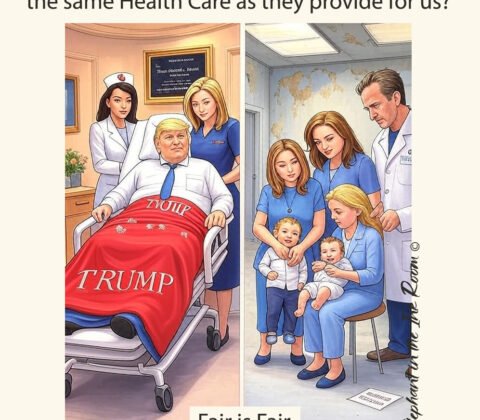
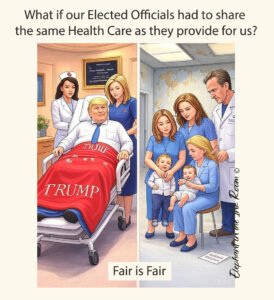
Trump’s Healthcare Record: What Really Changed?

Trump’s Healthcare Record: What Really Changed?
When Donald Trump ran for president in 2016, he promised to fix America’s healthcare system with a bold pledge: “Everybody’s going to be taken care of… better and cheaper.” He said he’d repeal Obamacare and replace it with something “beautiful.”
So what happened after four years in office? What changed — and what didn’t?
Let’s break it down.
What Trump Did Change
1. Got Rid of the Individual Mandate Penalty
The 2017 tax law eliminated the Affordable Care Act’s (ACA) penalty for not having insurance. That meant people no longer had to pay a fine for going uninsured.
-
Supporters saw it as a win for personal freedom.
-
Critics warned it would destabilize the insurance market — and it did increase the number of uninsured Americans.
2. Expanded Cheaper, Short-Term Insurance Plans
Trump allowed short-term health plans to last up to 12 months (renewable), instead of just 3. These plans came with lower premiums — but they also didn’t have to cover things like:
-
Preexisting conditions
-
Mental health
-
Maternity care
They were cheaper because they covered less. Some called them “junk insurance.”
3. Improved Healthcare Access for Veterans
One area where Trump saw bipartisan praise was veterans’ care. He signed the MISSION Act, making it easier for vets to see private doctors if VA care wasn’t available quickly. He also boosted telehealth and pushed for tech upgrades at the VA.
4. Pushed for Price Transparency
Hospitals were ordered to disclose prices for procedures. Drug companies were told to include prices in TV ads (though that rule was blocked in court).
While helpful in theory, these moves didn’t bring major price relief to consumers — but they did push the system toward more transparency.
What Trump Promised but Didn’t Deliver
1. No Replacement for Obamacare
Despite constant promises, Trump never unveiled a full replacement for the ACA.
-
In 2017, Republicans tried to repeal it — but famously failed when Senator John McCain voted no.
-
Trump said a new plan was “coming in two weeks” multiple times. It never came.
2. Didn’t Lower Drug Prices
Trump talked tough on drug companies and announced several plans, like international price indexing. But most were delayed, dropped, or blocked in court.
In the end, prescription drug prices remained a top concern for Americans — with no real relief.
3. Tried to Cut Medicaid Access
Trump pushed states to require Medicaid recipients to work. Some states implemented it, but federal courts blocked most of them.
These changes could have led to millions losing coverage, according to healthcare experts.
The Preexisting Conditions Contradiction
Trump repeatedly claimed he would protect people with preexisting conditions.
But — his administration also backed a lawsuit to strike down the entire ACA, which includes those protections. Critics saw this as a dangerous contradiction. No replacement plan ever guaranteed the same level of coverage.
The “America First Healthcare Plan”?
In 2020, Trump introduced what he called the “America First Healthcare Plan.” It was mostly a summary of past executive orders and ideas — without new funding or legislation.
There were no major new policies. Just more promises.
So, What’s Trump’s Real Legacy on Healthcare?
Trump’s presidency saw:
-
Partial dismantling of the ACA
-
Looser insurance regulations
-
Expanded access for veterans
-
Some transparency reforms
But it did not deliver lower costs, better coverage, or a meaningful replacement plan.
Healthcare — one of the top issues for voters — remained deeply divided and unresolved after four years.
Bottom line:
Trump changed parts of the system, mostly by weakening what was already there. But he never built the “beautiful” new healthcare system he promised.
So what will his second term bring us??
Share this:

The Strangelove Doctrine

The Strangelove Doctrine
When loyalty to destruction replaces duty to democracy
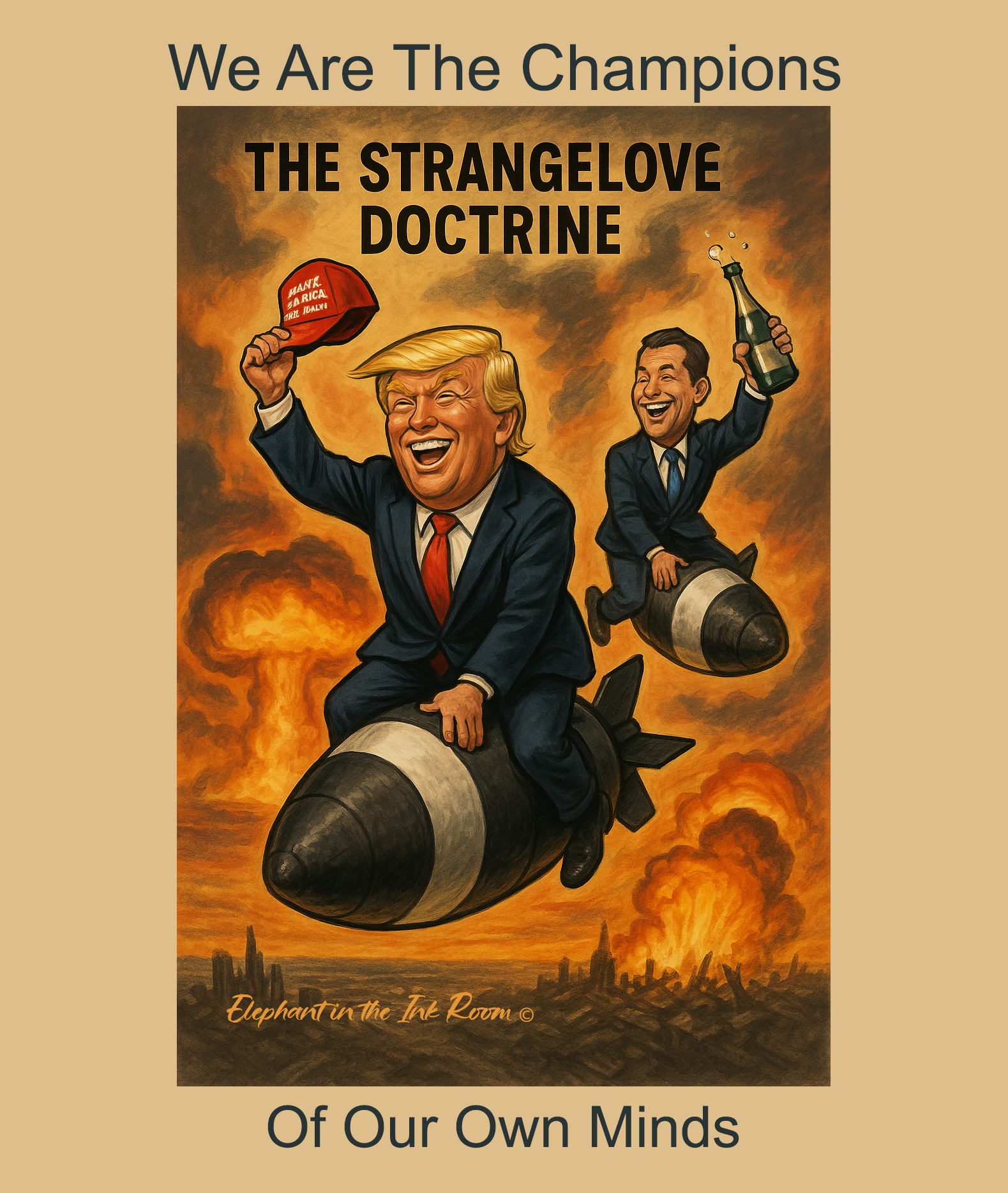
In Stanley Kubrick’s Dr. Strangelove, the most disturbing laugh comes at the very end — a lone cowboy riding a nuclear bomb into oblivion, shouting “Yee-haw!” as the world ends not with a whimper, but with a cheer.
It was satire in 1964. In 2025, it feels like prophecy.
Today’s political cowboys ride their own bunker busters — not in service of security or principle, but in pursuit of vengeance, fame, and ratings. Donald Trump, waving his MAGA cap, doesn’t just court chaos; he glorifies it. With every rally cry of “retribution,” every threat to dismantle the federal bureaucracy, and every vow to jail opponents, he dares the democratic foundations of America to survive the impact.
He’s not alone in the cockpit. Media allies like Pete Hegseth toast the freefall with champagne, cheerleading authoritarianism under the banner of freedom. And the base, numbed by disinformation and conditioned for loyalty, applauds the drop.
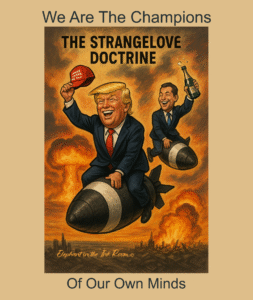
This isn’t the logic of governance. It’s the logic of Dr. Strangelove — where ideology trumps consequence, and the nuclear option is always the first option.
What we’re watching is not just a political movement. It’s a doctrine of destruction. A belief that if you can’t control the system, you’re justified in blowing it up.
The tragic irony? The bomb doesn’t just land on enemies. It lands on all of us. On institutions. On norms. On the fragile trust that holds this diverse nation together.
The Strangelove Doctrine thrives in cynicism. It feeds off apathy. It tells Americans that democracy is too broken to save — so why bother?
But satire, even the darkest kind, contains a warning. And if we’re willing to hear it, we may yet rewrite the ending.
Share this:

Maybe the problem is us



Two Weeks, the Greatest plan will be ready in Two Weeks
Two Weeks, the greatest plan will be ready in Two Weeks.
Well he finally admitted it. He called you stupid. Why stupid? because you keep falling for ‘in two weeks, the greatest plan ever’.
1. Health Care Plan: Throughout his first term and subsequent campaigns, Trump frequently promised to release a comprehensive health care plan to replace the Affordable Care Act (ACA). He often claimed this plan would be unveiled “in two weeks” or shortly after, but no detailed, actionable plan was ever presented.
2. Infrastructure Plan: Trump repeatedly promised a major infrastructure plan or deal to address the nation’s roads, bridges, and other infrastructure needs. Despite claims that details would be revealed soon, often within “two weeks,” no comprehensive infrastructure legislation or plan was delivered during his first term.
3. Tax Returns: Trump promised multiple times to release his income tax returns, often stating they would be made public soon. These promises, some of which were tied to a “two-week” timeline, were never fulfilled, with Trump citing ongoing audits as a reason for the delay.
4. Border Wall Paid for by Mexico: During his 2016 campaign and presidency, Trump promised to build a border wall along the U.S.-Mexico border, with Mexico covering the costs. Despite repeated assurances, including timelines suggesting progress within weeks, Mexico did not fund the wall, and only limited sections were constructed, primarily with U.S. taxpayer money.
5. Trade War with China: Trump claimed a “winnable” trade war with China would yield quick results, with some promises suggesting significant progress within weeks. While tariffs were imposed, the trade war led to mixed economic outcomes, with no clear resolution or victory as promised.
6. Lower Drug Prices: Trump pledged to lower prescription drug prices, with some statements indicating action within a short timeframe. While he signed the Know the Lowest Price Act and the Patient Right to Know Drug Prices Act, no broad, systemic reduction in drug prices materialized as promised.
7. Ending the Russia-Ukraine War: During his 2024 campaign and early second term, Trump claimed he could end the Russia-Ukraine war quickly, including giving Russian President Vladimir Putin “two weeks” to act. As of mid-2025, no concrete actions or resolutions have been reported, and the conflict continues.
8. Ending the War in Gaza: Trump promised swift action to resolve the Israel-Gaza conflict, with some statements suggesting progress within weeks. No significant progress or resolution has been achieved as of the latest updates.
9. TikTok Deal or Ban: Trump mentioned resolving the status of TikTok, either through a deal or a ban, with a timeline suggesting action soon. As of June 2025, no final resolution has been reported.
10. Lower Grocery Prices: Trump promised to address rising grocery prices quickly, but no specific policies or outcomes have been reported to achieve this goal within the promised timeframe.
11. Denuclearization of North Korea: Trump claimed progress on denuclearizing North Korea would be swift, with some timelines suggesting breakthroughs within weeks. Despite high-profile summits, no significant denuclearization occurred.
12. Pandemic Resolution: In 2020, Trump claimed the COVID-19 pandemic would “disappear” soon, including by April 2020, but the pandemic persisted far beyond the promised timeline.
13. Melania Trump’s Immigration Papers: Trump promised to provide documentation regarding Melania Trump’s immigration status within “two weeks,” but these documents were never released. But when they did appear, we discovered that she got fast tracked, Einstein status, that’s debatable, Yes she did marry a Billionaire, But No, she married Donald Trump. You decide.
Is this something your comfortable with? Knowing that you will never know and the only plan that he really has is for himself.
Trump thinks you have an attention span considerably less than two weeks. We have seen him time and time again tell us in ‘two weeks’ .
We can do something about this, yes, we can. Call him on that topic, over and over again, tell him ‘two weeks’ isn’t good enough.
Share this:
Like this: