
Gerrymandering: Why Do Rules Exist If No One Follows Them?


Gerrymandering: Why Do Rules Exist If No One Follows Them?
If no one is playing by the rules, why do the rules exist?
That may sound like a rhetorical jab, but it’s an honest question. The United States was founded on principles designed to safeguard fairness, accountability, and representation. The Constitution and the framework of government were meant to ensure that no group could hoard power unchecked, and that citizens’ voices would shape the course of the nation.
But gerrymandering—when politicians redraw voting districts to give themselves an advantage—cuts against the very heart of those ideals. It is a quiet form of tyranny, a manipulation of the democratic process for partisan gain. Instead of voters choosing their representatives, representatives are choosing their voters.
When either party engages in gerrymandering, they are not just breaking some technical rule of fair play. They are undermining the moral foundation of democracy. The rules of representative government only matter if leaders commit to follow them in good faith. If they don’t, then how are we any better than the monarchs, oligarchs, and tyrants we once rejected?
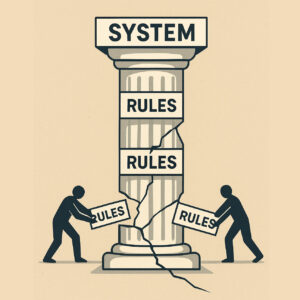
Some defend the practice as just “part of the game.” But democracy is not a game. The purpose of elections is to reflect the will of the people—not to manipulate it. When politicians normalize bending or breaking the rules for personal advantage, they don’t just weaken their opponents; they weaken faith in the entire system. And once that faith is gone, it’s far harder to restore than it is to destroy.
The danger of gerrymandering is not only unfair maps. It’s the message it sends: that rules are optional, that power is the only goal, and that principles can be cast aside when inconvenient. If that’s the lesson, then the ideals written into our founding documents become nothing more than decorative words on old parchment.
So the question remains: if no one is playing by the rules, why do the rules exist? Perhaps the answer is that the rules are waiting—for us. They are waiting for citizens to demand better, for courts to enforce standards of fairness, and for leaders to rediscover the humility that comes with serving rather than ruling.
The rules still exist because they are the difference between democracy and tyranny. But they will only matter if we decide to make them matter.

Comments are Disabled