Everything in Published Order, Easist Way To Stay Up To Date Contact Us Or Have a Suggestion?
A note on appearances: this site reads as left-leaning, and I understand why. But what I am actually fighting against is a current administration so far to the radical right that it can no longer honestly be called conservative.
Traditional conservatism, fiscal responsibility, limited government, rule of law, respect for institutions, has been abandoned by the very party that once claimed to own it. Opposing what is happening right now doesn’t make you a liberal. It makes you someone paying attention. I’d like to think there are honest conservatives out there who feel the same way, and this page is partly an olive branch to them.
AI Disclaimer, Our Video’s are created with Heygen with an avatar, you don’t want to watch me stutter and restart. A lot of what I write is checked for major errors and grammar, sometimes Claude will insert dash ems. sorry, but the article is mine or credited. The graphics are built off my prompts.
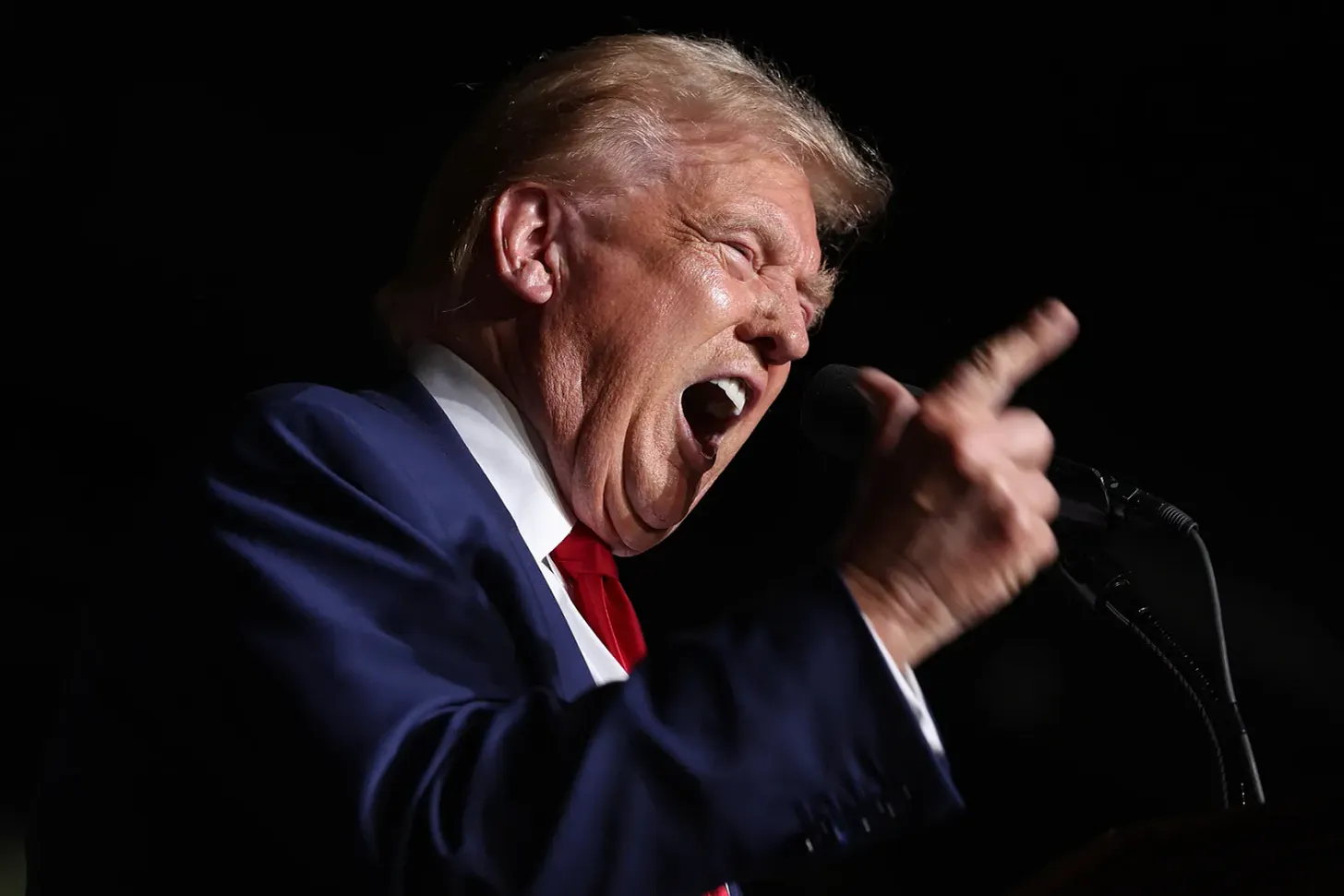
NEWSFLASH: Trump makes diesel deal with Putin
I'm a conservative, a true Republican, not a RINO, like Trump.
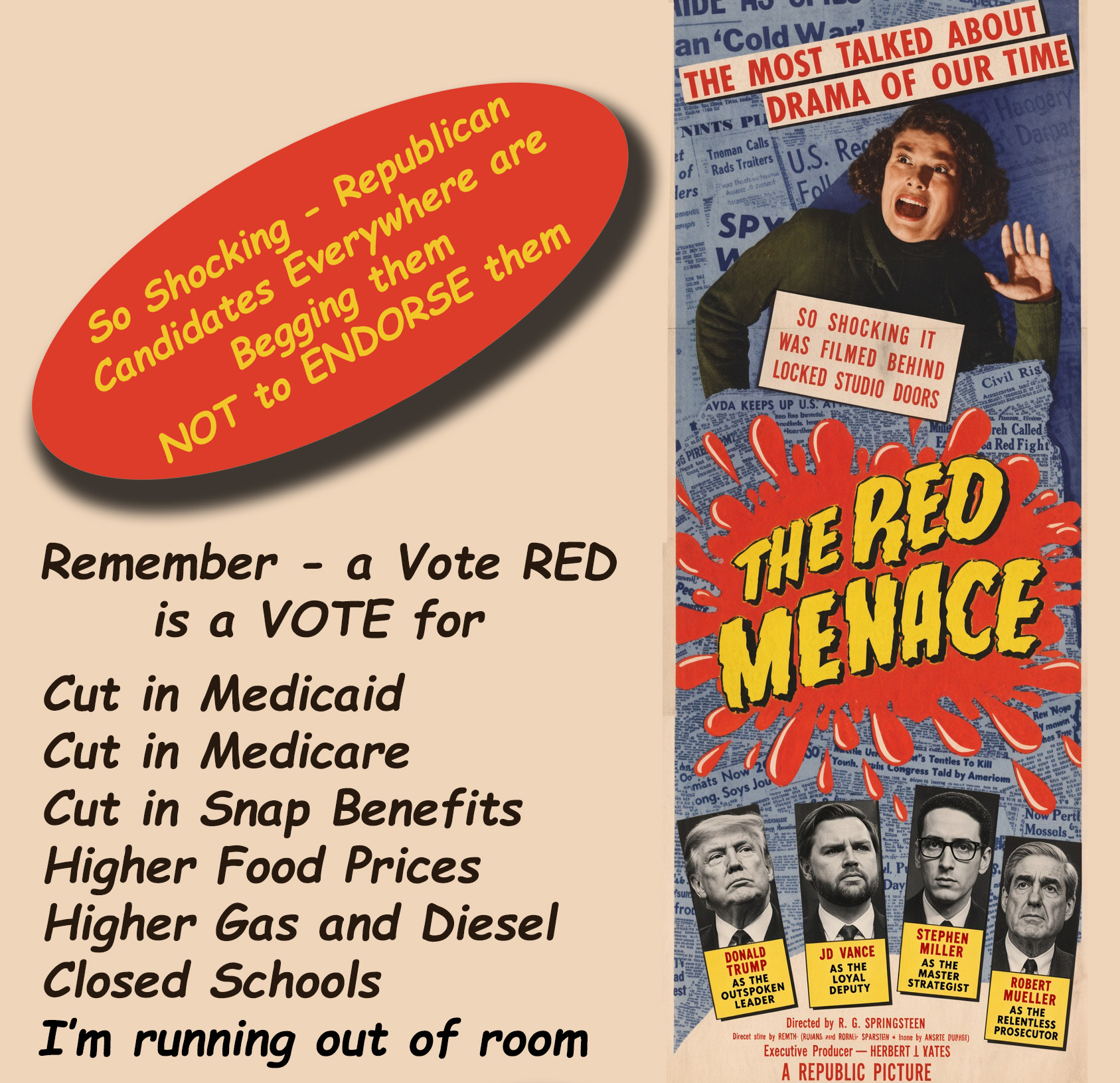
Please Mr President, Don’t ENDORSE me.
Vote Like Trump is on the Ballot
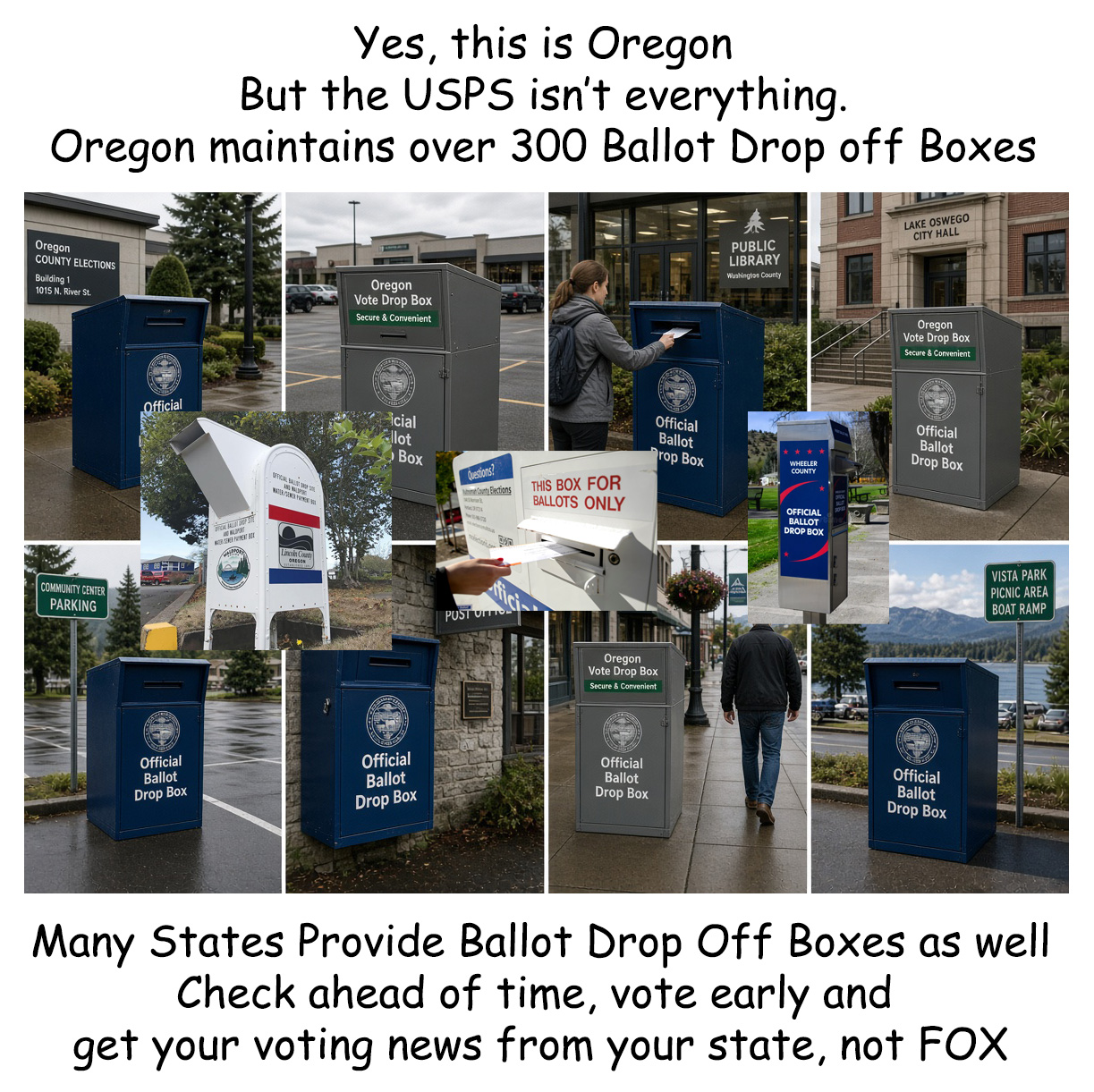
Ballot Drop Off Boxes
In May 2026 (around the primary election), officials noted that Oregon has 321 official drop boxes (also called drop sites). These are available until 8 p.m. on Election Day, are monitored, and include fire-suppression features.
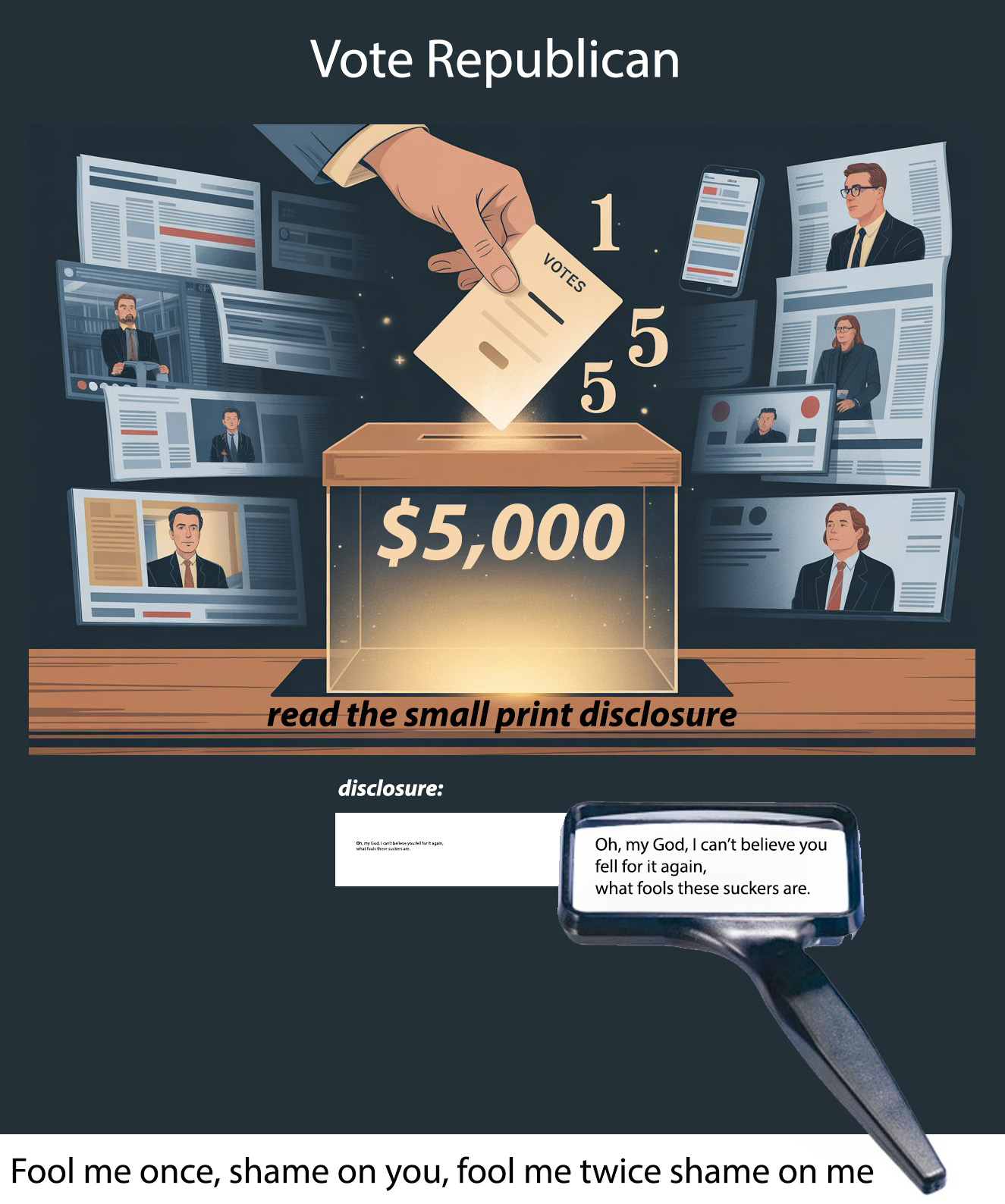
Fool me once shame on me
Well heck, you already voted for him twice, so we know the answer already. But is it to late for a little redemption? After all, the ballot is private, the confession can be made and

Stepford Wife?
When He Promised to Screw Her Brains Out, She never thought this is what he had in mind. More ?

Midterms are coming up fast. Faster than you can kiss Freedom Goodbye.
My memes can be stand alone, the message adds to them, share them, pass them around, post them where I can’t get to. (Right click on an image, copy then paste) Those with Truth Social

Vote RED for the Midterms?
"An image circulated on social media and verified by CBS News shows Katie Wiles, the daughter of White House chief of staff Susie Wiles, recently traveled to Republika Srpska, the Bosnian-controlled territory led by pro-Russian
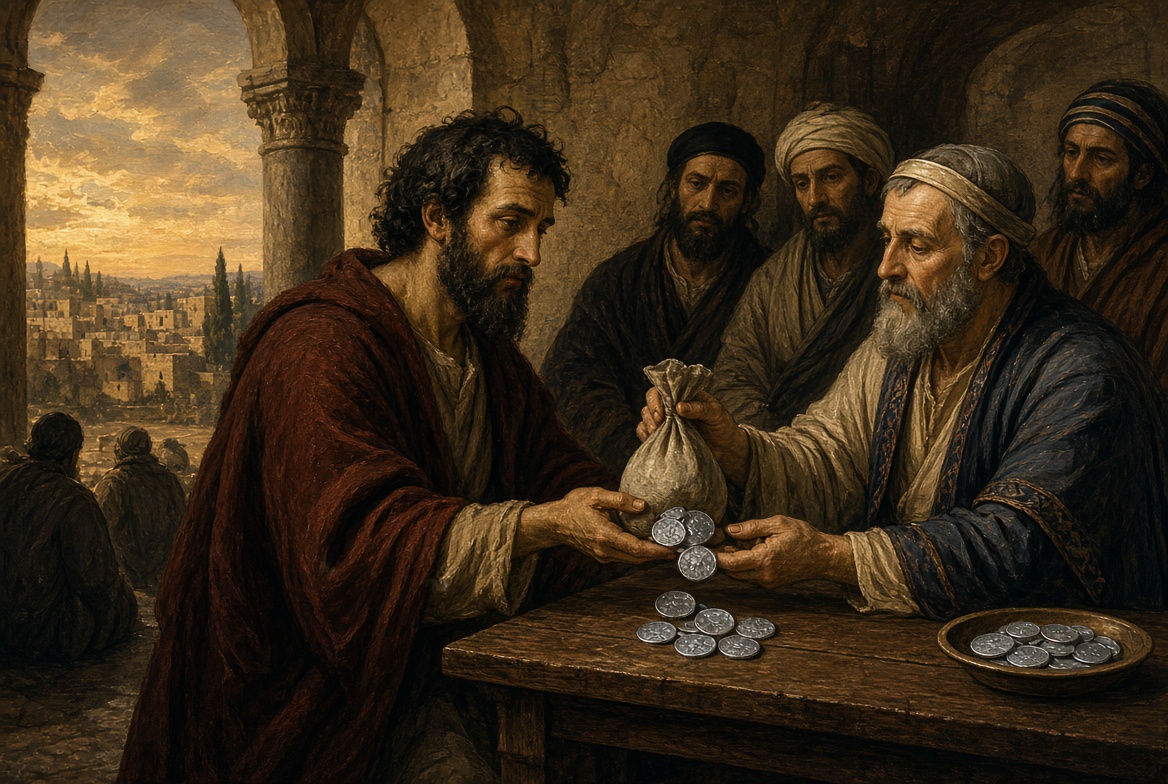
How Much Is Your Vote Worth?
Just something to keep in mind If the promise of this buys the Color of your vote. Don't be in a hurry to spend what isn't in your pocket. At least Judas Got Paid, you
OH My God We Are In Power! – Video
Maybe that’s the question we should be asking before we decide that simply changing who holds the gavels means we have changed the system. Because making that decision tomorrow may be too late.
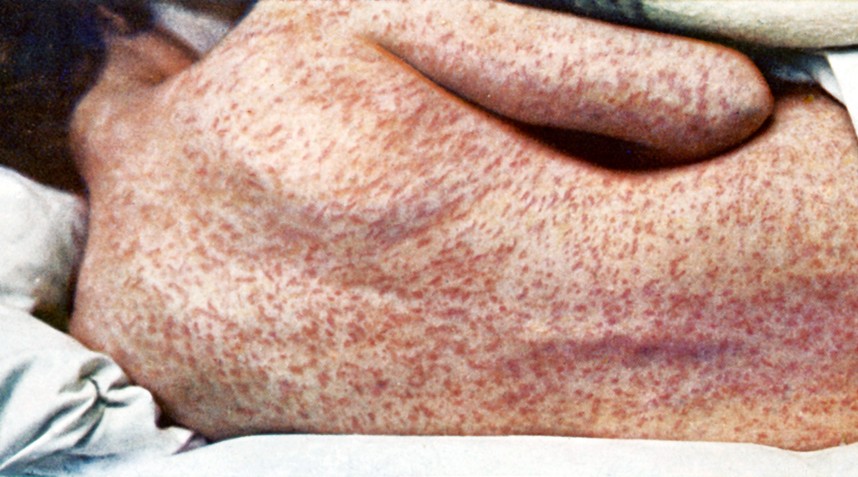
Vote like the Measles Are On The Ballot
Impeachment my ..., It's time to call the cops.

One Week Left to Register to Vote – Oregon, but probably most States
The voter registration deadline is October 13, so now’s a perfect time to double‑check that your information is up to date. Whether you’re registering for the first time, updating your address, or just making sure everything
MAGA, you must be proud. Vote for the liar of your choice,
During a rally in Nebraska, President Trump called higher prices a “small price to pay” to keep the country safe and said Iran could “take out” San Diego and Los Angeles. Of course he didn't

Elections and Media in the Modern Era – Part 3 of 3 Dark Money Influence: Who Shapes What You See? – Video
Elections are no longer a simple choice between candidates. They are shaped by networks of funding, media channels, and targeted messaging. Awareness of how information flows—and who is paying to shape it—helps voters make decisions
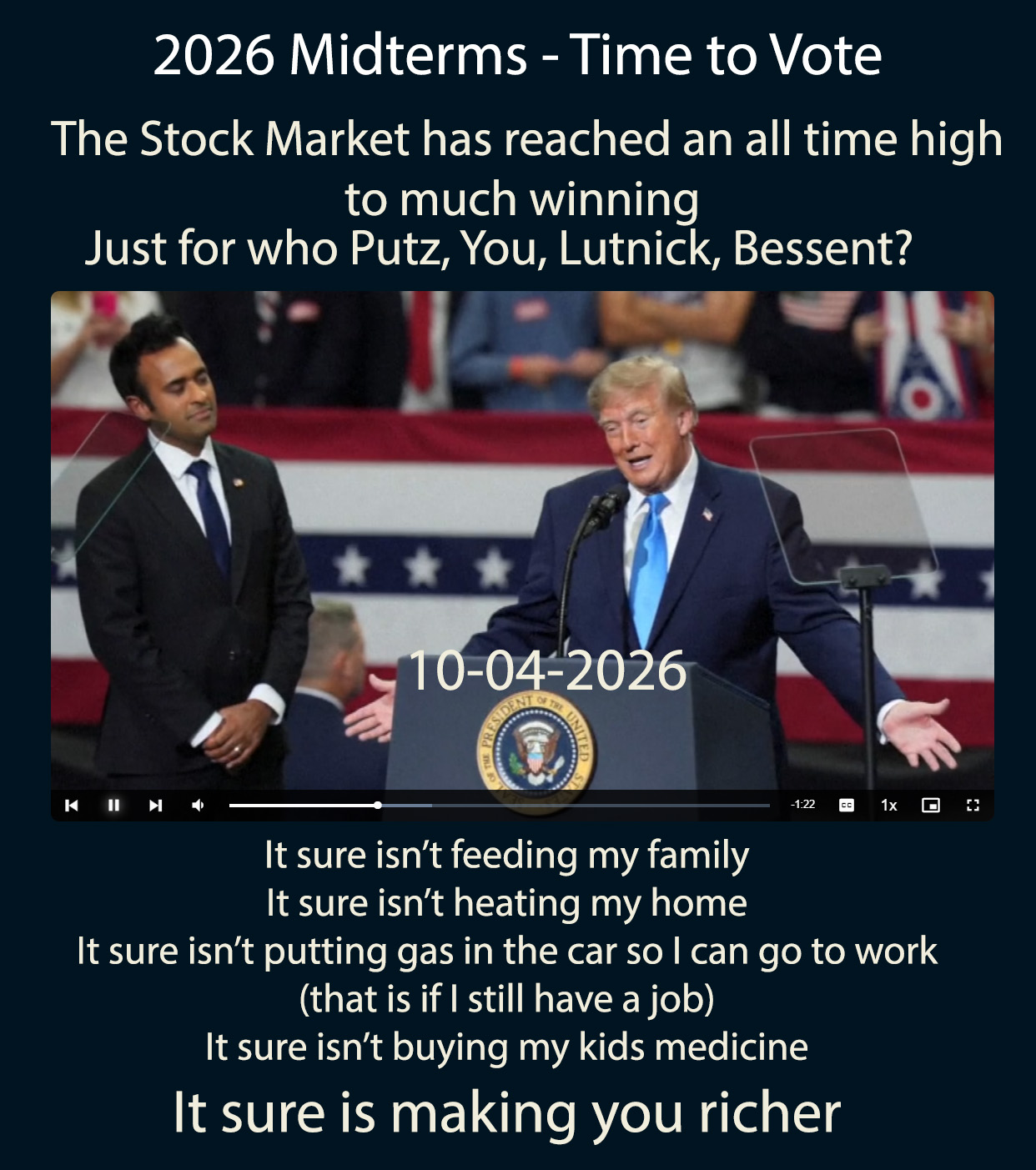
According to Trump, we are just winning to much, Yah, Right.
With a School Auditorium half full but half of them stuffed behind Ronald McDonald we are told the economy has never been better, Better for who? Trump and his War Profiteering Children?, Bezos?, Zuckerberg?, Altman,

When you vote, just think that Trump is on the Ballot
Salsa not included. In fact the meat is getting rather rancid by all accounts. But just remember, that the past record of the Republican candidate doesn't matter, that he cheats on his wife, abuses his
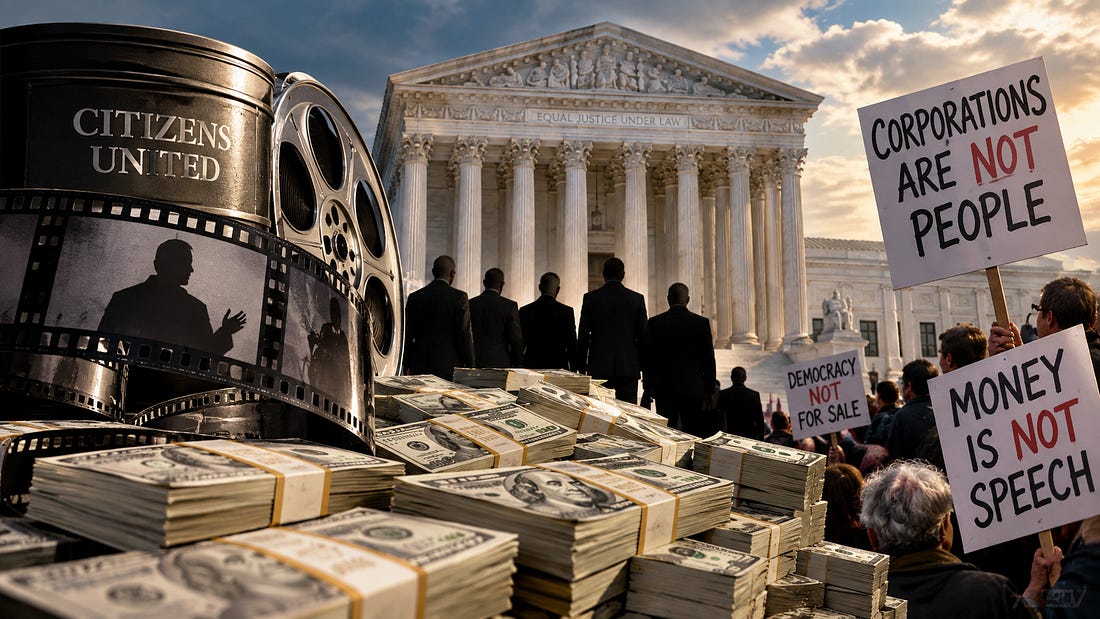
Who Pays for American Politics? Citizens United and the Rise of Big Money by John Turley MD
In January 2010, the U.S. Supreme Court issued one of the most consequential and controversial campaign-finance decisions in modern American history: Citizens United v. Federal Election Commission. The 5–4 ruling dramatically altered the regulatory restrictions

Elections and Media in the Modern Era – Part 3 of 3 Dark Money Influence: Who Shapes What You See?
Elections are no longer a simple choice between candidates. They are shaped by networks of funding, media channels, and targeted messaging. Awareness of how information flows—and who is paying to shape it—helps voters make decisions

This one is for the Christian Nationals
You do know what God did to the tower of babel don't you? Well have you listened to him try to form a coherent sentence lately? More ?
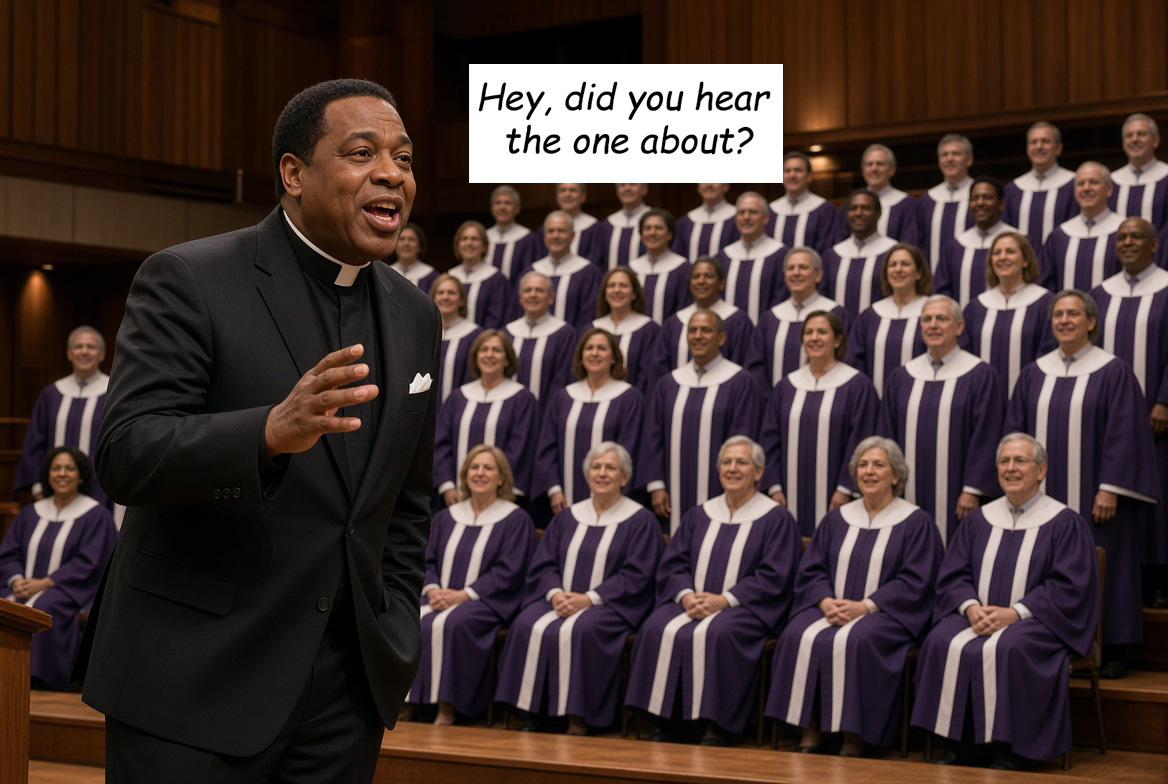
The Choir – Video
The point isn't to win. The point is that they now know something happened that they didn't know happened five minutes earlier. That is more useful than winning an argument with somebody who already agrees
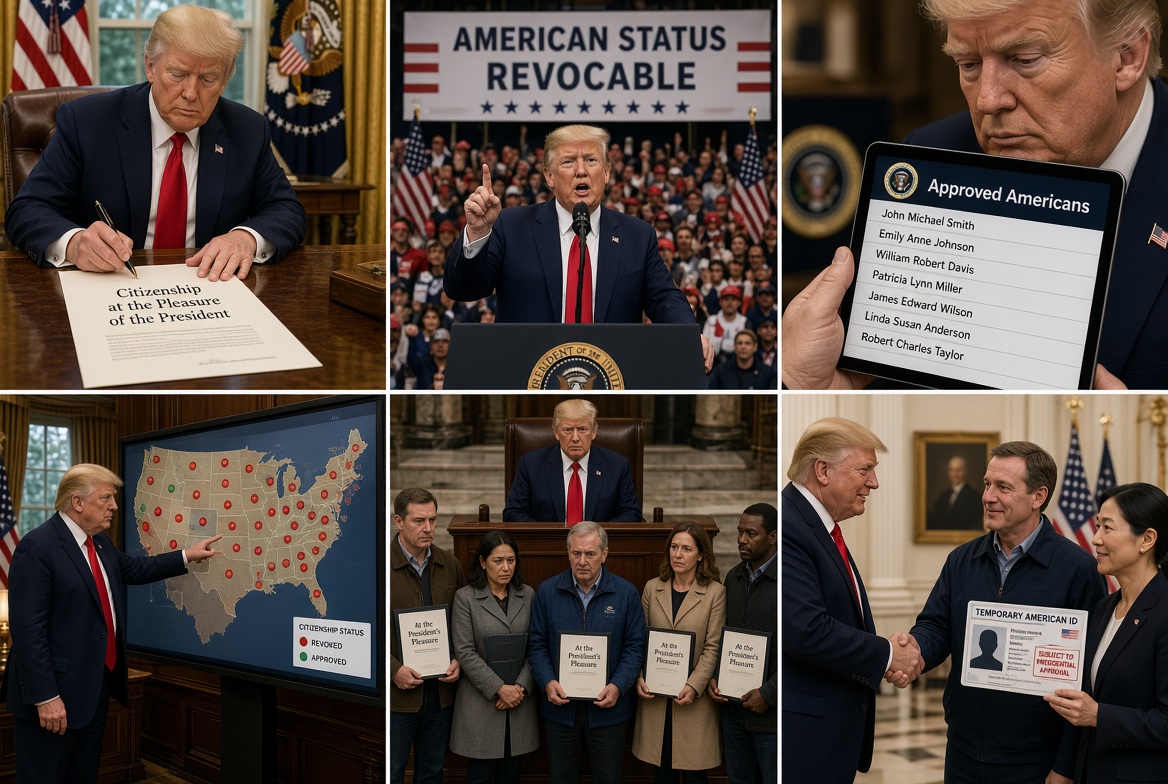
Just being an American will be defined as being at the pleasure of the President.
if this isn't stopped, just being an American will be defined as being at the pleasure of the President.
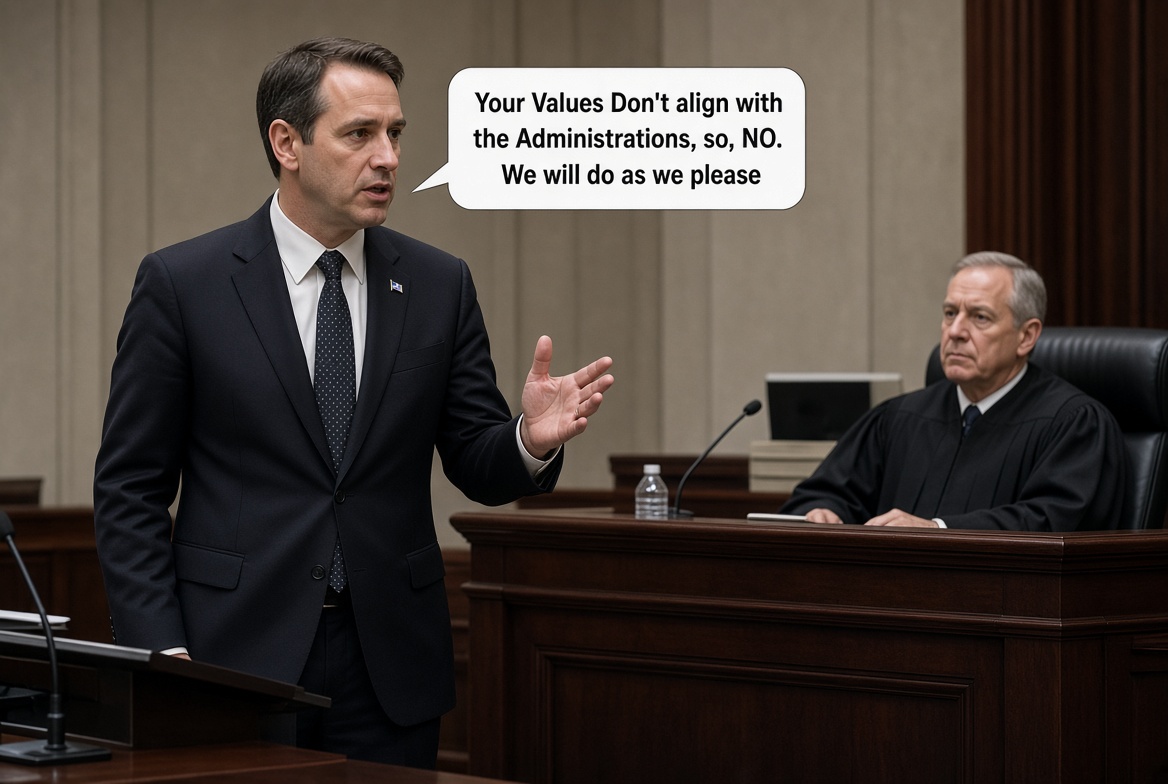
Is There Still a Rule of Law? – Video
A lot of Americans don't even know this is happening. I found that out in a store a couple of days ago. I mentioned the ICE shootings and got the immediate response: “Well, we have

I Voted For The Devil
when will misery will end?
Is There Still a Rule of Law?
A lot of Americans don't even know this is happening. I found that out in a store a couple of days ago. I mentioned the ICE shootings and got the immediate response: “Well, we have
The Forward Party Message is Catching 🔥🔥🔥
U.S. Senate Candidate (South Dakota) Brian Bengs on MSNOW: “I’m going to caucus with the independents. Period.”

The Outrage Is Not an Accident – Video
Nobody's asking you to switch teams forever. Nobody's asking you to feel bad for the values you hold. The ask is smaller and harder than that: notice when you're being fed fear instead of information,
One month to go! What is Forward doing, and how can you help?
We still have one more month to go all in and get some Forwardists elected. But before I fill you in on all the upcoming opportunities, first I need to say a huge THANK YOU
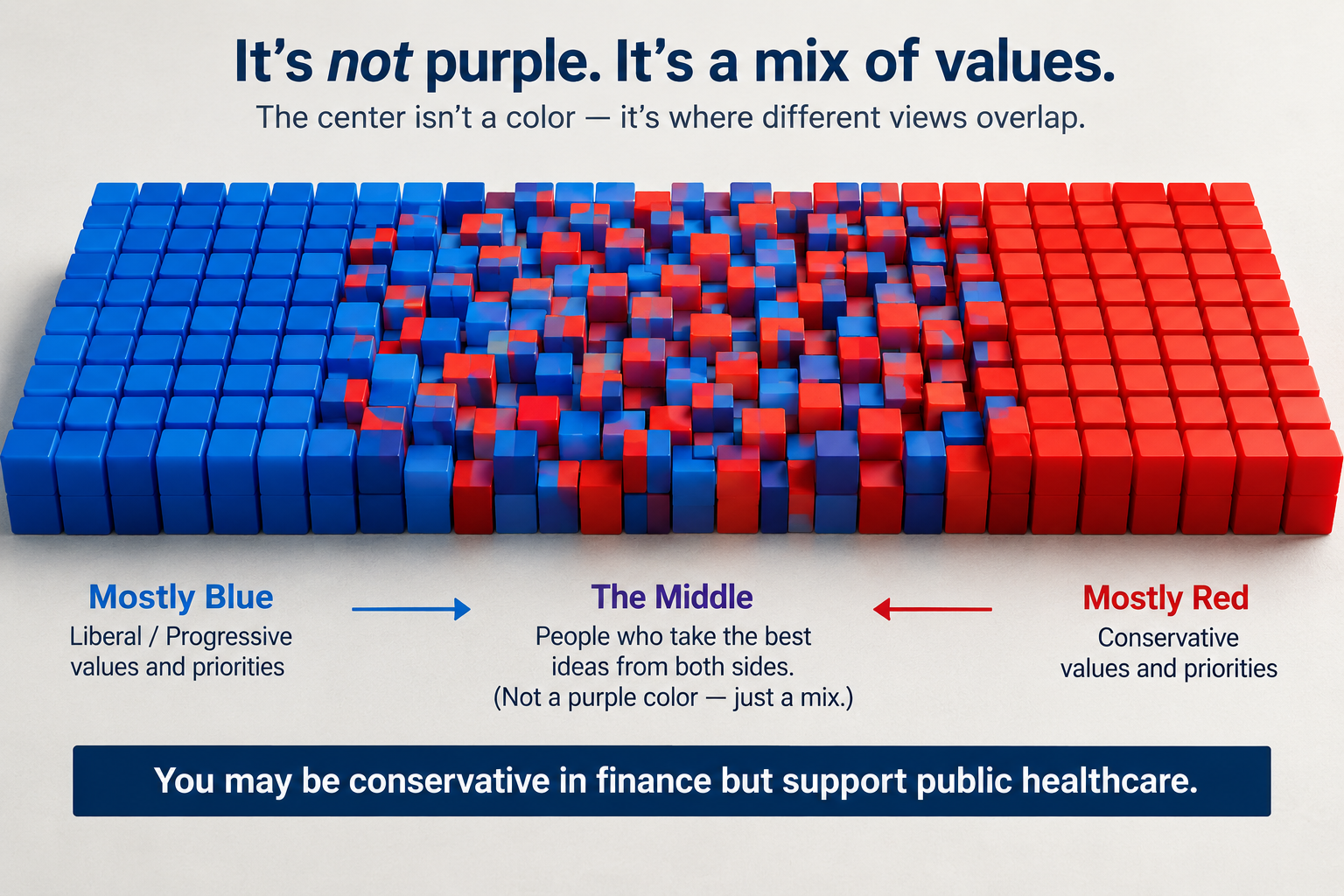
The Color Purple and Independents Are Not a COLOR
The difference between us is which side we started on and where our crossovers are located. One person may have the Conservative view of smaller government and yet support the idea of universal healthcare. This
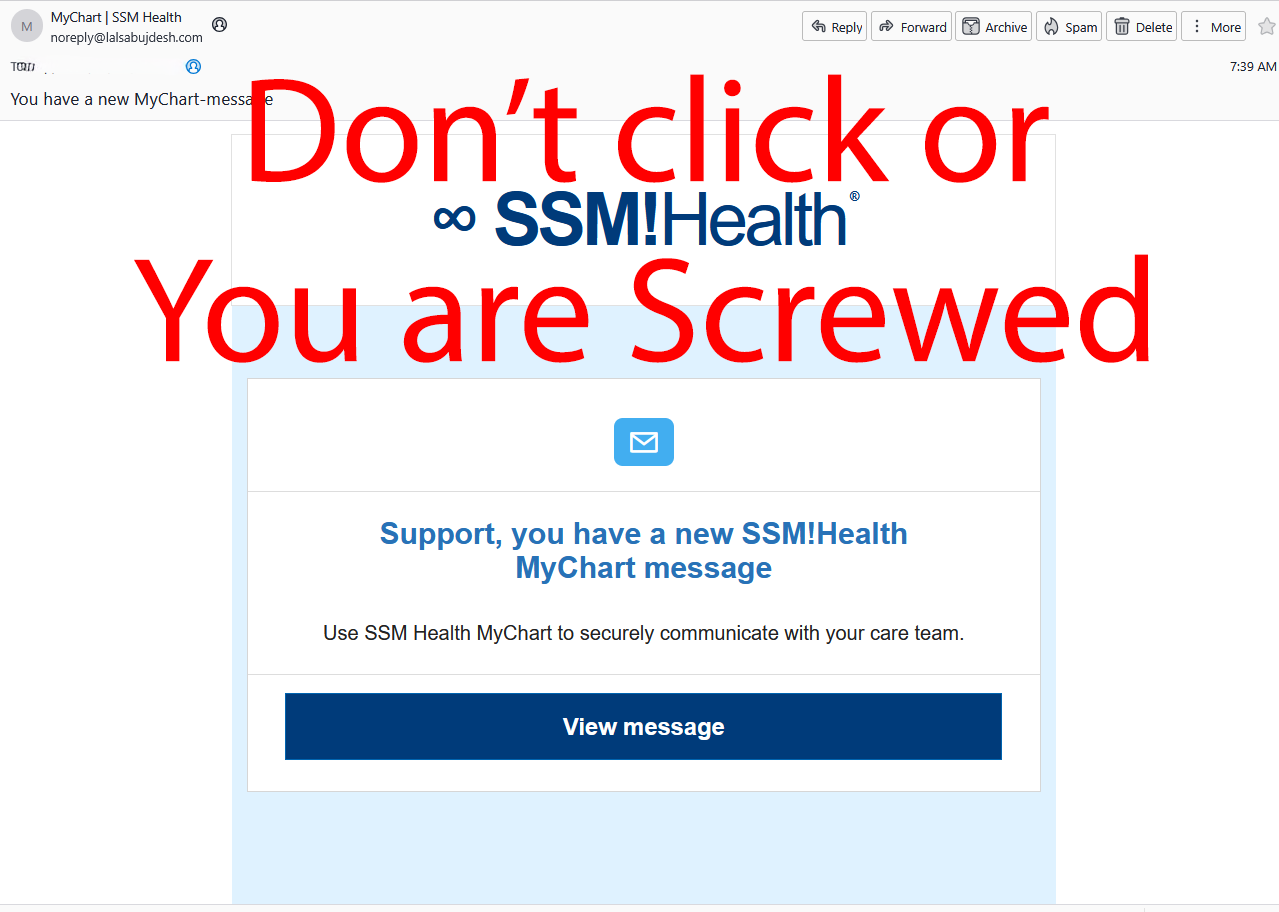
Public Announcement – Not Politics but $$
Long story short: I thought my cash cards had been skimmed. Oh no—nothing that simple. I activated a credit card on Saturday at 1 pm; it was declined at 2 pm. Wells Fargo caught the

Elections and Media in the Modern Era – Part 2 of 3 Media: Gatekeepers No More – Video
The result is clear: voters now navigate a complex, fragmented media environment long before they step into a booth. Traditional gatekeepers no longer hold a monopoly on political information. And that leads directly to the
Get Ready to Vote
The Supreme Court, on September 25th, lifted restrictions on a federal voters database system called Systematic Alien Verification for Entitlements, or SAVE, in their efforts to verify the eligibility of voters on their rolls. US
