
When Power Serves Itself: The Case for Impeaching Donald Trump
/
RSS Feed
Share
Link
Embed
When Power Serves Itself: The Case for Impeaching Donald Trump
Impeachment isn’t meant to settle political scores. It’s a constitutional safeguard for when a public official—especially the president—uses the power of office not to serve the nation, but to protect and advance themselves.
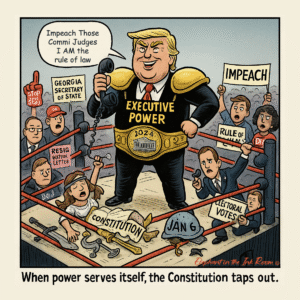
In the case of Donald J. Trump, the most applicable and alarming justification for impeachment is abuse of power.
This isn’t about disagreeing with his policies or personality. It’s about a pattern of conduct that shows a willingness—time and again—to bend the instruments of government toward personal interest, rather than public duty.
Key Examples of Abuse
1. Pressuring Election Officials
After losing the 2020 election, Trump pressured Georgia Secretary of State Brad Raffensperger to “find 11,780 votes”—exactly enough to overturn the state’s results. This wasn’t an inquiry; it was an attempt to weaponize state power to reverse the outcome of a free election.
2. Orchestrating Fake Electors
Trump and his allies helped promote slates of fraudulent electors in multiple states—people who falsely claimed to represent the will of voters. This plan was designed to disrupt the Electoral College and keep Trump in office regardless of the vote.
3. Undermining the DOJ
He repeatedly leaned on the Department of Justice to validate baseless claims of voter fraud and later considered replacing leadership with loyalists willing to do so. The DOJ is supposed to serve the law, not the president’s political goals.
4. Inciting the Capitol Insurrection
On January 6, 2021, Trump urged a crowd to march on the Capitol, insisting they “fight like hell” to stop the certification of the election. When violence erupted, he delayed taking any meaningful action to stop it—watching as lawmakers fled for their safety.
5. Retaliation Against Critics
From career civil servants to whistleblowers, Trump repeatedly fired or attacked individuals who challenged him, including ambassadors and inspectors general—gutting internal accountability structures meant to protect democratic norms.
Why It Matters
These aren’t isolated incidents. They form a consistent pattern of using presidential power to remain in power, avoid consequences, and punish dissent. That’s the textbook definition of abuse.
Trump has already been impeached twice—once for soliciting foreign interference in a U.S. election, and once for inciting insurrection. That he remains a political contender, and possibly a future president, makes accountability not just relevant, but essential.
Impeachment isn’t a partisan weapon. It’s the last-resort tool the Constitution provides to defend democracy from those who treat public power as a private shield.
The bar is high—but Trump cleared it, more than once.
When Power Serves Itself: The Case for Impeaching Donald Trump
Impeachment isn’t meant to settle political scores. It’s a constitutional safeguard for when a public official—especially the president—uses the power of office not to serve the nation, but to protect and advance themselves.
In the case of Donald J. Trump, the most applicable and alarming justification for impeachment is abuse of power.
This isn’t about disagreeing with his policies or personality. It’s about a pattern of conduct that shows a willingness—time and again—to bend the instruments of government toward personal interest, rather than public duty.
Key Examples of Abuse
1. Pressuring Election Officials
After losing the 2020 election, Trump pressured Georgia Secretary of State Brad Raffensperger to “find 11,780 votes”—exactly enough to overturn the state’s results. This wasn’t an inquiry; it was an attempt to weaponize state power to reverse the outcome of a free election.
2. Orchestrating Fake Electors
Trump and his allies helped promote slates of fraudulent electors in multiple states—people who falsely claimed to represent the will of voters. This plan was designed to disrupt the Electoral College and keep Trump in office regardless of the vote.
3. Undermining the DOJ
He repeatedly leaned on the Department of Justice to validate baseless claims of voter fraud and later considered replacing leadership with loyalists willing to do so. The DOJ is supposed to serve the law, not the president’s political goals.
4. Inciting the Capitol Insurrection
On January 6, 2021, Trump urged a crowd to march on the Capitol, insisting they “fight like hell” to stop the certification of the election. When violence erupted, he delayed taking any meaningful action to stop it—watching as lawmakers fled for their safety.
5. Retaliation Against Critics
From career civil servants to whistleblowers, Trump repeatedly fired or attacked individuals who challenged him, including ambassadors and inspectors general—gutting internal accountability structures meant to protect democratic norms.
Why It Matters
These aren’t isolated incidents. They form a consistent pattern of using presidential power to remain in power, avoid consequences, and punish dissent. That’s the textbook definition of abuse.
Trump has already been impeached twice—once for soliciting foreign interference in a U.S. election, and once for inciting insurrection. That he remains a political contender, and possibly a future president, makes accountability not just relevant, but essential.
Impeachment isn’t a partisan weapon. It’s the last-resort tool the Constitution provides to defend democracy from those who treat public power as a private shield.
The bar is high—but Trump cleared it, more than once.
Share this:
Like this: