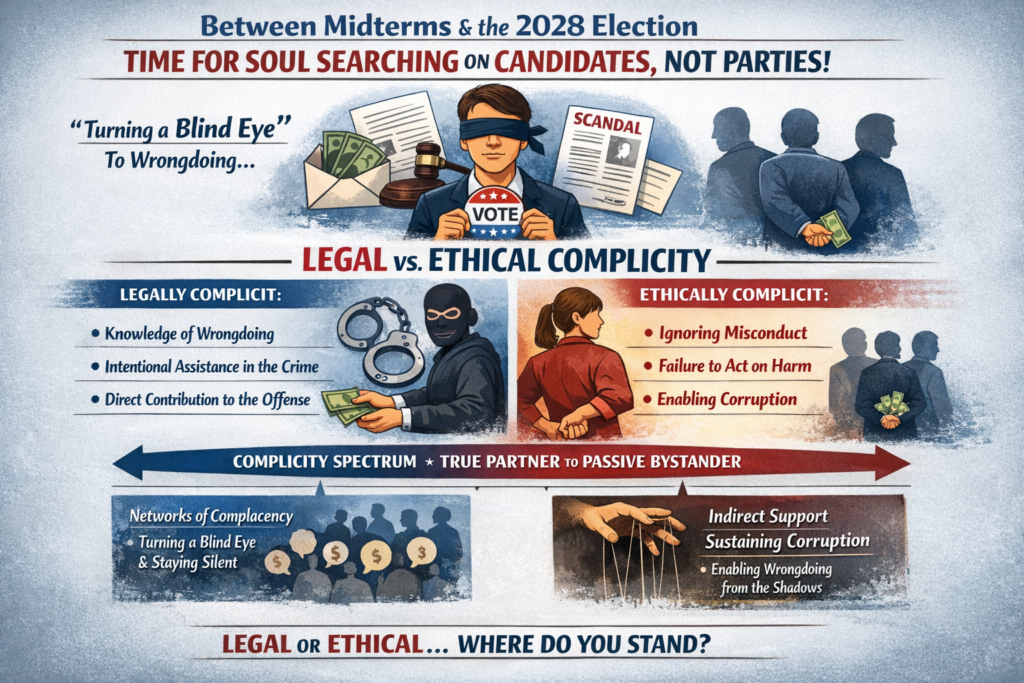
All you hear is Midterms, but what about after that. Between midterms and the 2028 General Election every voter in the United States should do a little soul searching about the candidates they are voting for. This is about the candidate, not the party.
“turn a blind eye” to credible evidence of wrongdoing, this might be seen as ethically complicit by enabling or normalizing it through their loyalty.
Legal vs. Ethical Complicity
Legally, complicity (also called accomplice liability or aiding and abetting) requires:
• Knowledge of the wrongdoing.
• Intentional assistance, encouragement, or participation in it.
• A direct contribution to the crime (e.g., providing resources, advice, or cover).
Ethically, the concept is broader and can include:
• Passive involvement, such as failing to act when one has a moral or professional duty to intervene (e.g., “networks of complacency” where bystanders know of harm but do nothing).
• Enabling harm indirectly, like through support that sustains a system of wrongdoing, even without direct action.
This can apply on a spectrum: from “true partners” who share values and actively collaborate, to ordinary bystanders who overlook issues for personal gain or loyalty.


Comments are Disabled