And the Beat Goes On
On
- Dark Money
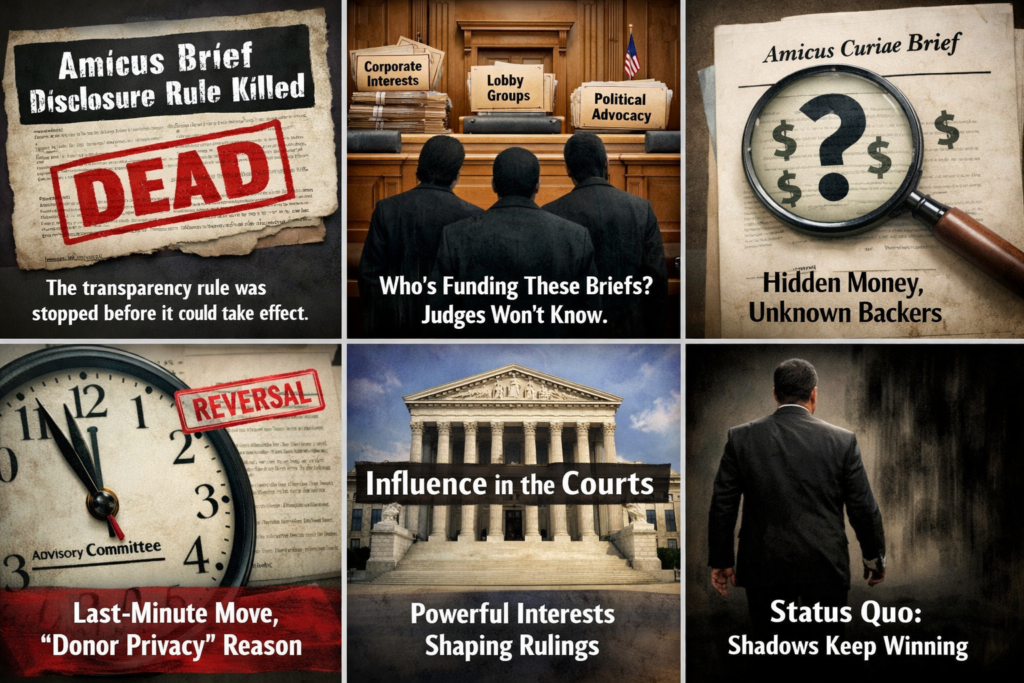
A rule change that would have required disclosure of who funds amicus curiae (“friend of the court”) briefs was killed before it ever went anywhere. Things go back to exactly the way they were.
In practical terms that means well-funded interest groups — corporations, political advocacy organizations, ideological networks — can continue to file coordinated briefs influencing federal court decisions while the judges hearing those cases have no reliable way of knowing who is actually behind them. A brief that appears to represent independent expert opinion may in fact be funded by a direct party interest in the outcome, and nobody is required to say so.
The significance of the timing is probably the real story. The advisory body had already done the legal work, found disclosure constitutional, and moved the process forward. The reversal came late, quietly, and the stated reason — donor privacy — is the same argument the groups lobbying against it would make. Whether that’s coincidence is a judgment call, but the sequence is notable.
The broader context is that amicus briefs have grown into a significant influence tool at the federal level, particularly at the Supreme Court, and the funding networks behind them are largely the same ones that have been involved in judicial selection and court-related advocacy for years.
So the short answer: transparency lost, the status quo held, and the people who preferred the shadows got to keep them.