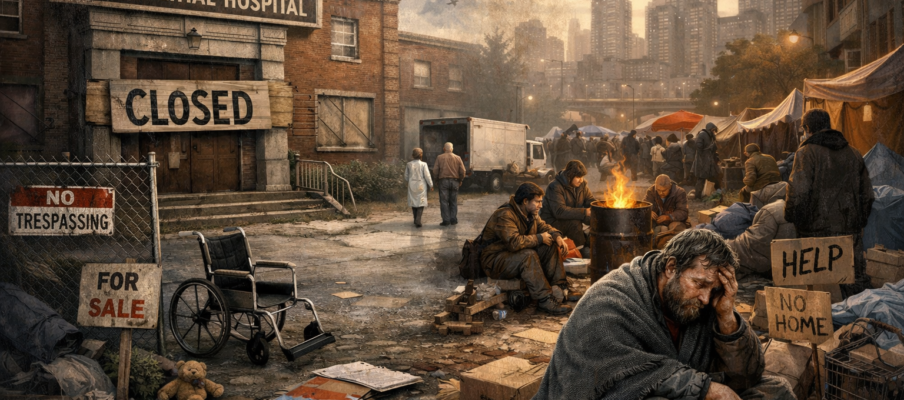
Overall, Oregon’s closures are a microcosm of a national policy that prioritized deinstitutionalization without the necessary infrastructure, directly fueling homelessness by stranding vulnerable people. If you’re diving deeper for your healthcare series, sources like HUD’s Annual Homelessness Assessment Reports or AMA ethics journals provide robust data for further exploration.
Podcast: Video- do not distribute
not viewable as is, please visit our YouTube channel to view video podcasts


A Call to Action: Defund Corporate Media and Support Independent Voices
Unsubscribe. Cancel your subscriptions. Withdraw your support. Defund them. Yes, it might mean sacrificing your favorite sitcom on Disney (a publicly traded behemoth with major institutional owners like Vanguard and BlackRock, entangled in a web of corporate sellouts). So be it. Let them eat cake, as we redirect our resources to voices that deserve it.
Share this:


Part 6: When the System Stops Pretending – Healthcare in America
For years, America’s healthcare debates have circled the same familiar arguments: cost, access, innovation, choice. Each side insists the problem is just one adjustment away from being solved — a different payer mix, a different incentive, a different set of rules.
What rarely gets said out loud is simpler and more uncomfortable:
Share this:


How Citizens United Came to Be: From a Hillary Hit Piece to Unlimited Corporate Cash in Elections – Dark Money
Fifteen years later (and counting), the ruling birthed super PACs, record-shattering election spending, and ongoing calls for a constitutional amendment to overturn it. Polls show overwhelming public opposition across party lines.
Was Citizens United a principled defense of free expression, or did it hand elections to the highest bidders? In the elephant in the room: the money keeps flowing, and ordinary voices often get shouted down.
Share this:


Part 5: Choice vs. Coverage – Healthcare in America
After responsibility shifts to individuals, the system offers something in return.
It offers choice.
At first glance, this feels like a fair trade. More options suggest more control. More plans suggest better fit. More flexibility suggests empowerment.
But choice and coverage are not the same thing.
Confusing the two is one of the most common — and costly — misunderstandings in modern healthcare.
Share this:


‘Over Here’ No Kings and No ICE
I grew up with big screen HEROS, John Wayne, Eddie Murphy, and way to many more saving America from the Evils of tyranny during WW II, and still enjoyed Gary Cooper as SGT York saving us during WW I, but non of that would have been possible if James Cagney hadn’t played George Cohan and given us music like OVER THERE.
Share this:


Part 4: When Responsibility Moves Quietly – Healthcare in America
When health policy stalls, something important happens that is easy to miss.
Responsibility doesn’t disappear.
It moves.
And almost always, it moves away from systems and toward individuals.
This shift rarely arrives with an announcement. There is no press conference declaring that people are now on their own. Instead, the change shows up gradually, wrapped in reasonable language.
Share this:


Part 3a – When This Happened Before – Healthcare in America
Smoking-related illnesses rose predictably. Generations adopted a habit already known to be dangerous. The burden fell disproportionately on working-class families, veterans, and rural communities — long before those terms became political shorthand.
By the time policy finally caught up, millions of lives had already been affected.
No one could point to a single decision that caused the harm. That, too, was part of the design.
Share this:


Part 2: When Expertise Became Personal – HealthCare in America
Public health expertise was not always controversial. For decades, it functioned largely in the background—technical, imperfect, and mostly invisible. When it worked, few noticed. When it failed, corrections were usually quiet and procedural.
That changed when expertise became personal.
As trust in institutions weakened, authority began to migrate away from systems and toward individuals. Complex guidance was no longer evaluated primarily on evidence or process, but on who was delivering it—and how consistently.
This shift did not require a coordinated effort. It was a natural response to confusion. When institutions struggle to communicate clearly, people look for human proxies they can assess intuitively.
Share this:


Part 1: Trust Became the Weak Point – HealthCare in America
As systems grew more complex, institutional communication often became more defensive. Language shifted toward legal precision and risk avoidance, rather than clarity.
Explanations became longer but less informative. Mistakes were corrected quietly, if at all. Accountability was diffused across agencies, insurers, providers, and administrators—each technically accurate, but collectively unhelpful.
Over time, this creates a vacuum.
When institutions struggle to explain themselves, others step in to explain for them.
Share this:

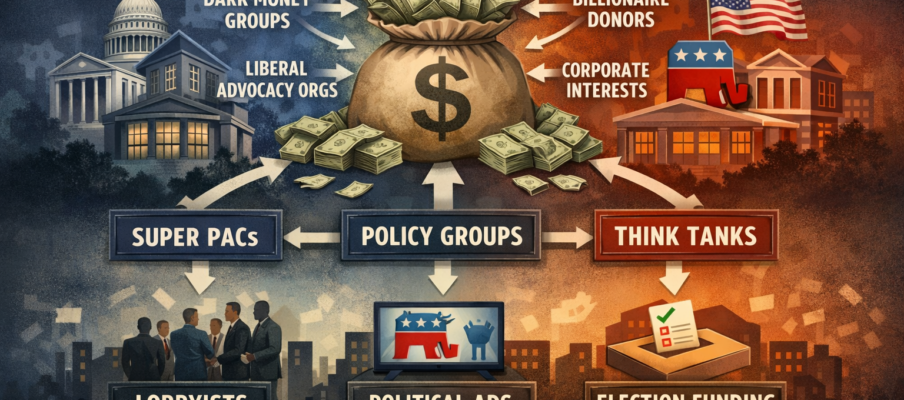
What we could expect with Major reform in campaign finance / donation transparency
What we could expect with Major reform in campaign finance / donation transparency
Most of this was included in the Pendulum Swing, assuming a right to left shift, but the organizations need to be brought to light and understood.
On the surface, what we might see would be more honest campaign promises as the backroom financing would become more transparent. This would be more obvious on the local level but would migrate up the National Ladder.
Share this:


Arabella Advisors (via the Sixteen Thirty Fund)
Distance from local impact
National funding routed through professionalized networks can shape outcomes in local or state-level debates without local communities fully understanding where the support originated.
Share this:


Leonard Leo has done more to reshape the American legal landscape than many senators, presidents, or judges.
No bombastic rallies, no orange spray tan, no obvious cult of personality.
The media mostly sees him as “that judicial guy from the Federalist Society.”
But under the radar, he’s weaponizing legal legitimacy, which is far more enduring than any single politician’s charisma.
If Trump is the actor, Leonard Leo is the playwright, and the stage manager, and the guy who installed the trapdoor under the audience.
Share this:


A Beginner’s Guide to the Federalist Society
Influence:
Huge impact on the judiciary. Many federal judges (including 6 current Supreme Court Justices with ties) are members or recommended by the group.
Helped shape conservative legal thinking on issues like gun rights, free speech, abortion, and regulation.
Often called the “conservative pipeline” to the courts.
Share this:


Dark Money for Dummies — Part 1
“Dark money” sounds dramatic, like something illegal or conspiratorial.
Most of the time, it’s neither.
At its simplest, dark money is political spending where the true source of the money is hidden from the public
Share this:


Elon’s Future
The most likely outcome is that AI and robots make everyone wealthy. In fact, far wealthier than the richest person on Earth
Share this:


Spider Silk, the fabric for Mars
Spider silk’s intrinsic properties make it almost tailor-made for advanced aerospace and bioengineering uses: Extreme tensile strength — stronger than steel by weight, yet flexible. Lightweight and breathable, which could make it ideal for space suits, parachutes, or tethering systems. Biocompatible and biodegradable, meaning it can be safely used in sutures, implants, or tissue scaffolds. […]
Share this:

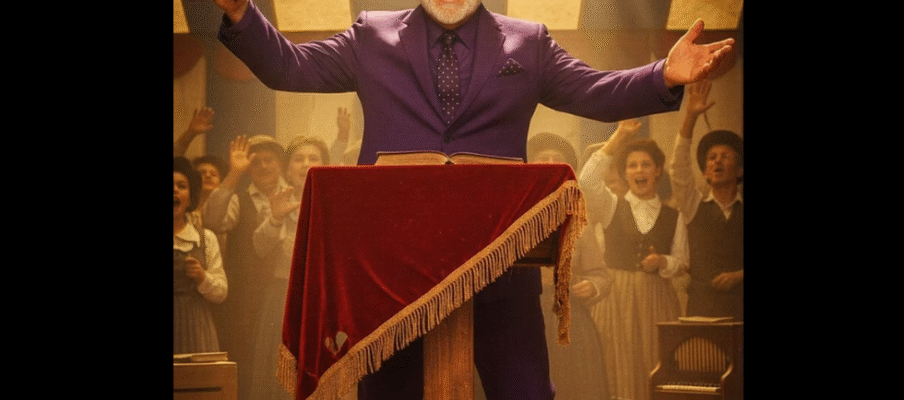
Brother Donalds Traveling Grift Show
“You know, I once healed the economy — true story, everybody says so.
They say I walk on tariffs, I turn deficits into wine.
And I can save you, too — for a very small recurring fee!”
Share this:

Sovereignty Alliance, Episode 6 – “Brinkmanship” – Video
Summary
Late July 2026 marks the apex of the trigger month, as federal authorities and the Sovereignty Alliance push toward the edge of a full national confrontation. The Alliance now spans coast-to-coast, controlling key water, energy, and agricultural resources, while Washington deliberates on a high-stakes response.
Share this:


Anger in America, Part 3: The Way Forward
We can’t pretend that the chaos and lies haven’t left scars. But we can take that energy and turn it into something constructive. Citizens still have power, even when it feels like the system is rigged. They can demand honesty, insist on accountability, and call out corruption at every level. They can expose the lies and demand answers, using evidence and facts to hold leaders responsible.
Share this:


Anger in America, Part 2: How Leaders Fuel the Fire
Donald Trump embodies this style in its loudest, most shameless form — the relentless lies, the nonstop insults, the chaos-as-strategy approach. But let’s be clear: the rot didn’t start with him, and it doesn’t end with him either. Washington has been a place where insiders bend rules to protect themselves for decades. Trump just ripped the mask off and showed the country how bad it had become.
Share this:


Anger in America, Part 1: Why People Are So Angry
The truth is, millions of Americans feel cheated. They feel as if the deck is stacked against them, no matter how hard they work or how carefully they play by the rules. They see the system tilted toward insiders and special interests. They see rules bent and laws gamed. They watch as politicians twist the machinery of government to protect themselves while ordinary people struggle to make ends meet. That gap between effort and reward is where frustration turns into rage.
Share this:


Anger in America
It’s not just one man or one party, though Trump’s barrage of falsehoods and attacks made the trend painfully visible. Washington’s insiders have grown comfortable rewriting the playbook to suit themselves. The result is a public that feels cheated and betrayed — and that’s on the leadership, not the people.
Share this:


Violence, who’s who.
Conclusion: Which Party’s Rhetoric Promotes Violence Most?Based on empirical data, Republican rhetoric promotes violence the most in the current U.S. context. It is more pervasive among elites, amplified by aligned media, and correlated with higher rates of lethal attacks (e.g., mass shootings, insurrections). This isn’t to absolve Democrats—fringe left rhetoric contributes to unrest—but the asymmetry is clear: Right-wing language has spilled into more widespread, deadly actions, per sources like the Journal of Democracy and Greater Good Science Center.To mitigate: Cross-party pacts against dehumanizing speech (as Carnegie recommends) and media accountability could help. Rhetoric alone doesn’t “cause” violence, but it primes unstable actors—reducing it starts with leaders modeling restraint.
Share this:


Sovereignty Alliance, Episode 5 – “Escalation and Expansion” – Video
July 2–5: Federal Moves and State Counters
Texas Refinery Standoff
Federal Energy Authority teams attempt to take control of two major Texas refineries.
Texas Department of Public Safety units, under Governor Reynolds’ orders, block access roads.
Local law enforcement is explicitly instructed not to cooperate with federal marshals.
Media reports show heavily armed security perimeters; tension escalates but no shots fired.
California Water Stations
Federal engineers arrive at pumping stations in Central Valley.
California Department of Water Resources deploys state security and technical crews to reroute water flows to Alliance-approved channels.
Share this:


Politicians Make Promises With No Binding Obligation To Deliver
The Constitution protects broad political speech. Campaign promises are legally treated as opinions or aspirations, not contracts.
Courts generally won’t police political lies — they leave it to voters, the press, and opponents to challenge them.
Politicians intentionally keep promises vague (“I’ll fight for better healthcare”) so they can’t be measured easily.
Share this:

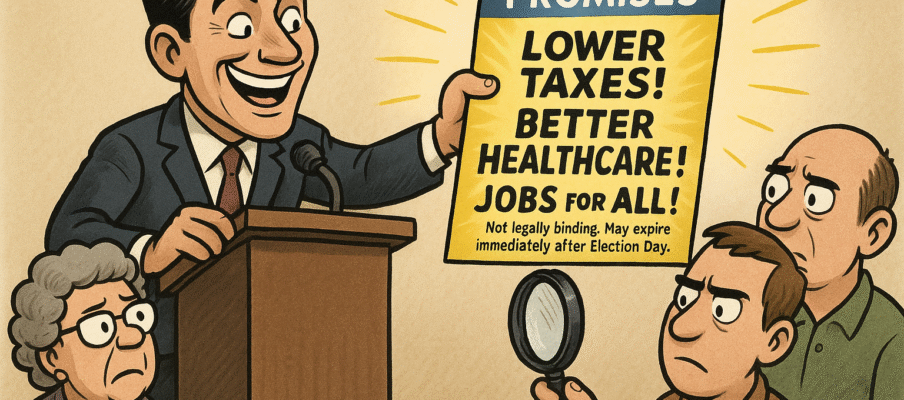
Warranty Not Included
Imagine if politicians had to back their campaign promises the way companies back a product. If the car doesn’t run, you get a refund. If the fridge dies, you get a replacement. But in politics? Once the votes are counted, the warranty disappears.
Share this:


Get Back to the Issues
Voters deserve more than fear and name-calling. It doesn’t matter if the attack ads come from the right or the left—they’re distractions. What matters is whether a candidate will look us in the eye and tell us what they plan to do for our families, our communities, and our future.
Share this:


Loyalty to Country, Not To A Man
Real loyalty isn’t to a man. Real loyalty is to our country. And a country shows its loyalty back by taking care of its people. That means intelligent solutions, not slogans. It means tackling the hard problems—healthcare, jobs, inflation, veterans’ care—with real ideas instead of scapegoats.
Share this:

Sovereignty Alliance, Episode 4 – “Trigger Month Begins” – Video
July 2–5: Federal Moves and State Counters
Texas Refinery Standoff
Federal Energy Authority teams attempt to take control of two major Texas refineries.
Texas Department of Public Safety units, under Governor Reynolds’ orders, block access roads.
Local law enforcement is explicitly instructed not to cooperate with federal marshals.
Media reports show heavily armed security perimeters; tension escalates but no shots fired.
California Water Stations
Federal engineers arrive at pumping stations in Central Valley.
California Department of Water Resources deploys state security and technical crews to reroute water flows to Alliance-approved channels.
Share this:

Sovereignty Alliance, Episode 3 – “Signals & Standoffs” – Video
July 2–5: Federal Moves and State Counters
Texas Refinery Standoff
Federal Energy Authority teams attempt to take control of two major Texas refineries.
Texas Department of Public Safety units, under Governor Reynolds’ orders, block access roads.
Local law enforcement is explicitly instructed not to cooperate with federal marshals.
Media reports show heavily armed security perimeters; tension escalates but no shots fired.
California Water Stations
Federal engineers arrive at pumping stations in Central Valley.
California Department of Water Resources deploys state security and technical crews to reroute water flows to Alliance-approved channels.
Share this:


Betting Against The Economy, why would Trump do that_
When leaders or high-ranking officials make financial moves that profit from economic decline, it undermines the very foundation of public trust. Reports suggest former President Trump and some government officials may have engaged in activities that allow them to benefit if the economy falters. These actions are troubling because while ordinary Americans face layoffs, inflation, and market volatility, insiders with privileged information can stand to gain.
Share this:

Gerrymandering: Why Do Rules Exist If No One Follows Them?
So the question remains: if no one is playing by the rules, why do the rules exist? Perhaps the answer is that the rules are waiting—for us. They are waiting for citizens to demand better, for courts to enforce standards of fairness, and for leaders to rediscover the humility that comes with serving rather than ruling.
The rules still exist because they are the difference between democracy and tyranny. But they will only matter if we decide to make them matter.
Share this:


10% Government Stake in Intel – Good or Bad
Implications for Democracy
This is where it gets tricky:
Better for democracy (if done transparently):
If citizens see that government stakes mean accountability, profit-sharing, and national resilience, it could rebuild trust that democracy delivers.
Industrial policy, done openly, shows government is actively trying to protect workers, jobs, and sovereignty.
Worse for democracy (if done opaquely):
If Trump (or any leader) can direct state capital toward allies, donors, or politically useful industries, it becomes a tool of authoritarian-style control.
Concentrated power in the executive branch—deciding which companies thrive—weakens the role of Congress, markets, and watchdog institutions.
Citizens could lose faith that the economy is fair, seeing it instead as rigged by political power.
Share this:


Sovereignty Alliance, Episode 2 – “Under Watch” – Video
On June 14, 2026, Congress passed the National Resource Security Act (NRSA), a sweeping federal measure granting Washington emergency powers to control “critical state-managed resources” — including water rights, energy production, and key agricultural outputs. Framed as a national response to global supply shortages, the bill passed narrowly after a late-night session and was signed within hours.
Share this:


Sovereignty Alliance, Episode 1 – “Safe Harbor” – Video
On June 14, 2026, Congress passed the National Resource Security Act (NRSA), a sweeping federal measure granting Washington emergency powers to control “critical state-managed resources” — including water rights, energy production, and key agricultural outputs. Framed as a national response to global supply shortages, the bill passed narrowly after a late-night session and was signed within hours.
Share this:

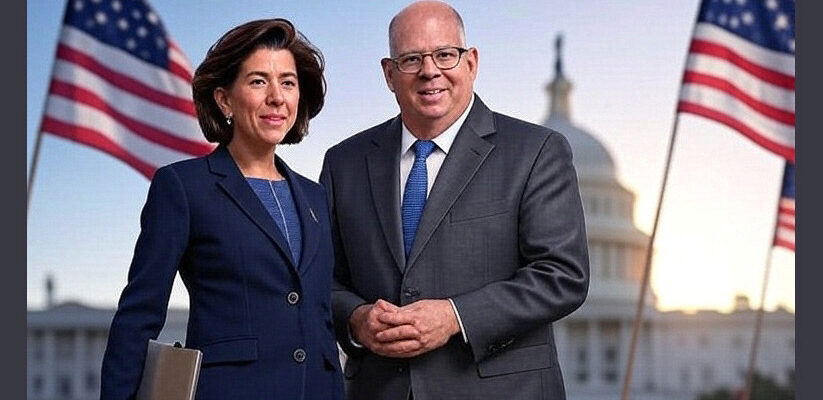
🌐 Welcome to Raimondo – Hogan – 2028
In a time of division and dysfunction, Americans deserve leaders who solve problems — not create them. Gina Raimondo and Larry Hogan are two proven public servants who have led with results, reason, and responsibility. Together, they represent a centrist, unifying vision for America’s future.
Share this:


🌐 Welcome to Tester – Murkowski – 2028
Jon Tester and Lisa Murkowski don’t just talk about bipartisanship — they’ve lived it. With deep roots in America’s rural heartland and frontier state, they understand that real leadership means listening, working across divides, and protecting the values that hold this country together. No theatrics. No cults of personality. Just two seasoned lawmakers willing to work — and work together.
Share this:


🌐 Welcome to Obama – Kinzinger – 2028
In a time when many Americans feel like their country has lost its moral compass, Michelle Obama and Adam Kinzinger offer something rare: decency, character, and the courage to lead with principle. One is a former First Lady whose grace and advocacy earned global respect. The other, a veteran and former Republican congressman, risked his career to stand for the Constitution. Together, they offer a unifying message: This country still belongs to the people who care.
Share this:


🌐 Welcome to Booker – Crenshaw – 2028
America doesn’t need louder voices — it needs stronger listeners. Senator Cory Booker and Congressman Dan Crenshaw come from different sides of the aisle, but they share one essential belief: public service means showing up for the people, not yourself. One grew up in urban Newark, the other served in combat zones abroad. Together, they offer a balance of compassion and conviction — and a path forward built on real dialogue.
Share this:


🌐 Welcome to Manchin – Klobuchar – 2028
Americans are tired of political games and Washington standoffs. Senator Joe Manchin and Senator Amy Klobuchar have spent decades doing what many politicians only talk about: writing laws, making deals, and actually governing. Together, they bring a steady, pragmatic approach rooted in midwestern work ethic and Appalachian realism. No flash. No cult of personality. Just two senators who still believe democracy should work.
Share this:

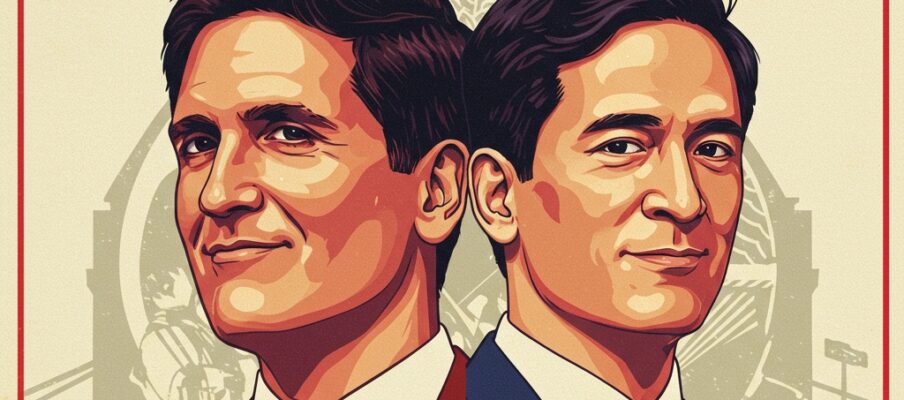
🌐 Welcome to Cuban – Yang – 2028
Mark Cuban and Andrew Yang are not career politicians — and that’s exactly the point. One is a self-made billionaire entrepreneur who’s built businesses and called out corporate greed. The other is a visionary thinker whose ideas on automation, universal basic income, and future-of-work issues have reshaped political conversation. Together, they offer nonpartisan, forward-thinking leadership built on data, transparency, and guts.
Share this:


🌐 Welcome to Stewart – Rice – 2028
In an era of misinformation and mistrust, Jon Stewart and Condoleezza Rice offer something the country desperately needs: clarity, courage, and calm. Stewart, a relentless advocate for truth and veterans, brings humor and grit to a tired political landscape. Rice, a stateswoman with decades of experience at the highest levels of government, offers steady leadership and diplomatic know-how. Together, they balance accountability with wisdom — ready to restore faith in American governance.
Share this:


🌐 Welcome to Newsom – Buttigieg – 2028
Newsom brings bold executive experience, from wildfire response to universal preschool. He champions clean energy, climate resilience, and digital infrastructure — while keeping California’s economy the fourth largest in the world.
Share this:


Dream Teams, let the Party be Damned
I’m old, tired, and know that today’s political decisions won’t affect me much. But I care deeply about the world my children and grandchildren will inherit. What kind of future awaits them if we stay trapped in partisan gridlock?
Share this:


What If: Sovereignty Alliance Teaser 2
What If: Sovereignty Alliance Teaser Join us for The Walkers first foray into story telling. The Alliance is a response to Government over reach, follow week by week as the States form their own alliance against the Administrations attempt for complete control, Teaser 2 Features Emma Walker
Share this:

What If: Sovereignty Alliance Teaser 1
What If: Sovereignty Alliance Teaser Join us for The Walkers first foray into story telling. The Alliance is a response to Government over reach, follow week by week as the States form their own alliance against the Administrations attempt for complete control, Teaser 1 Features Sarah Walker
Share this:


What Now? When Everyone Knows, But No One Moves
Because if a man who cannot form a coherent sentence is handed the nuclear codes again, it won’t be because no one knew better. It will be because enough people decided it didn’t matter. Michael, Sarah and Emma Walker The Middle of the Road, follow the white line
Share this:

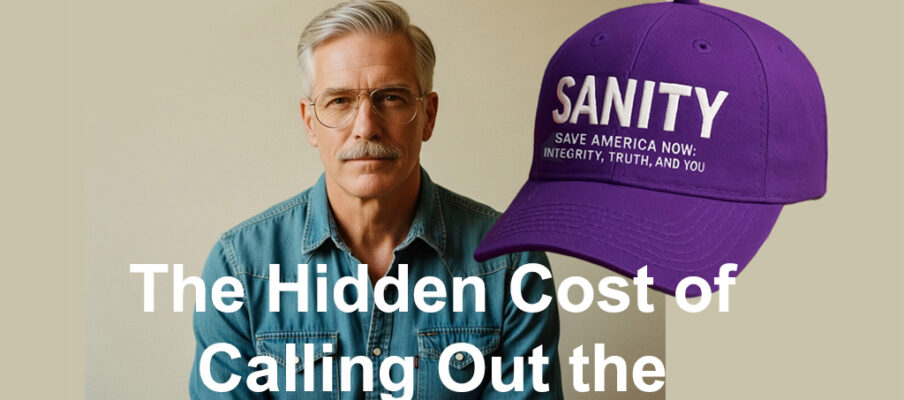
The Hidden Cost of Calling Out the National Guard
When Trump or any politician calls out the National Guard, the burden isn’t abstract — it hits individual soldiers, their families, local communities, and taxpayers. The part-time nature of the Guard amplifies these costs because they are not career combat troops; they are civilians asked to drop everything for politically motivated missions.
Share this:


The Cost of Doing Nothing Parts 1 to 5
Within 10 minutes, it was clear: we weren’t going to agree on much. The election. The media. January 6. His tone got sharp. Mine probably did too. At one point he said something I thought was completely nuts — and I told him so. Michael, Sarah and Emma Walker The Middle of the Road, follow the white line
Share this:

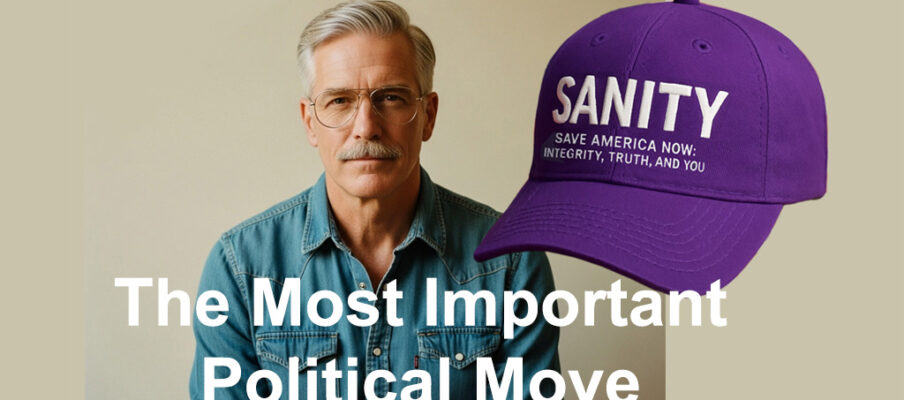
The Most Important Political Move You Can Make
For decades I voted the party line. There was only one box I shaded in, and it was the one that said “Republican.” After a while, I started to actually think about who I was voting for, not just what. I began making independent decisions — something most of us never do. But I’ll admit, on the issues I wasn’t up on, I still voted the party.
This little note about Charlton Heston — one of the actors I admired — makes sense to me. Not because he changed from being a Democrat to a Republican, but because of why he changed:
Share this:


Fires Everywhere
Trump isn’t just lighting political fires — he’s keeping them burning long enough to distract us from the real game. From DOJ slow-walks to federalizing D.C., from the Epstein fallout to filling Washington with loyalists, every move buys him time and space to push his agenda. The real danger isn’t any single scandal. It’s the endgame — and whether we’re ready to fill the vacuum when the smoke clears.
Share this:


When Crime Is a Convenient Excuse: Trump’s Selective Martial Law Target List
Donald Trump’s recent threats to impose martial law have sent chills through the nation. But behind the bluster and fear-mongering lies a disturbingly clear political agenda: targeting cities that dare to resist his authority while ignoring those that align with it — no matter their crime rates.
Take a look at the cities Trump has publicly set his sights on: Los Angeles, Portland, Seattle. These are places branded as “woke,” fiercely protective of immigrant rights, and openly hostile to the kind of mass deportations and ICE raids Trump champions. For him, these cities aren’t just trouble spots — they are the heart of an “Evil Empire” that must be brought to heel.
Share this:


Voter Dissonance and Willful Disbelief
Now that many of Trump’s actions are playing out in ways that damage democratic norms or reveal disregard for the rule of law, some voters are facing cognitive dissonance: “I didn’t vote for this.” But in many cases—they did. He telegraphed much of it.
Share this:


Trumps Line in The Sand
Here is the line, no wait, (feet scrub out line) Here is the line, rinse and repeat. I will strive to keep it short and sweet, here is the outline for Trumps Crime Fighting mantle. Of course it could all be be summed up with a simple “I don’t care about crime, I only care about obedience and loyalty”
Share this:

It’s Not About Zelensky — It’s About Stopping Putin
Putin’s invasion of Ukraine wasn’t provoked by NATO expansion or western meddling — it was fueled by a belief that smaller, weaker neighbors don’t deserve true independence. That belief has no place in a modern world. If left unchecked, it sends a dangerous message to other authoritarian regimes: you can crush your neighbor, massacre civilians, and still be tolerated on the world stage.
Share this:


ICE and the Gestapo: Structural Parallels in Authoritarian Policing
Scale and intent: The Gestapo enforced a totalitarian regime, committed genocide, and worked outside any ethical framework. ICE, despite its excesses, operated within a constitutional democracy.
Resistance and visibility: ICE faces ongoing resistance from U.S. courts, media, advocacy groups, and whistleblowers. The Gestapo operated with near-total impunity.
Share this:


I Told You So
Oh, how sweet it is to perch atop the rubble of bad decisions and crow, “I told you so!” For years, we warned you—yes, you, with your rose-tinted glasses and stubborn faith in quick fixes. You ignored the signs, dismissed the skeptics, and barreled headfirst into chaos. And now? Here we are, wading through the wreckage of your “it’ll all work out” optimism.
Share this:


Martial Law, if you Allow It. Kiss Freedom Goodbye
He is doing it again, he tried it in Los Angeles and was pushed back. He was swamped with No King protests and changed the subject, deflection 101. He let it cool down. You have to remember that Trump relies on the proven two week rule. That we have an attention span that’s less than two weeks, and we are stupid.
Trump has repeatedly declared he is the smartest man in the room and in his words. “They don’t know what the fuck they are doing” and you thought he was talking about the Middle East.
Share this:


Martial Law, The Beginning of the End
D.C. is unique — it’s not a state, so Congress already has extraordinary oversight powers. That makes it a tempting testing ground for executive overreach. If a president successfully assumes direct operational control of its government or police under the banner of “restoring order,” it could set a precedent for similar moves elsewhere, especially in Democrat-led cities.
The risk here isn’t just what happens to D.C. — it’s the potential for a proof of concept for federalized policing or even quasi-martial law in targeted regions. If crime statistics are manipulated or selectively publicized, he could manufacture justification for interventions in other cities by declaring them “failed” or “in insurrection.” Michael, Sarah and Emma Walker The Middle of the Road @purple man channel
Share this:

RFK Jr. and the Collapse of Credibility — When Fringe Becomes Dangerous – Part 4
RFK Jr. is a master of half-truths—statements that contain just enough kernel of reality to confuse the public and just enough innuendo to suggest shadowy forces at work. He constantly positions himself as the last honest man standing, the one voice willing to speak “what others won’t.” But his rhetoric is not grounded in evidence—it’s grounded in performance.
Share this:

Robert F. Kennedy Independent Thinker, I Think Not – Part 3
Robert F. Kennedy Jr. has built his entire campaign on one central appeal: “I don’t trust them, and you shouldn’t either.” Them, of course, being the government, the media, public health officials, scientists, pharmaceutical companies, and in some cases even common sense. It’s a seductive narrative. It gives people permission to throw away anything that makes them uncomfortable — and label it a lie.
Share this:

RFK Jr. and the Weaponization of Doubt – Part 2
Robert F. Kennedy Jr. was once a respected environmental attorney and activist. But today, he’s better known for something else: a steady stream of anti-science rhetoric dressed in the language of rebellion and “truth-telling.” What began as skepticism has now hardened into dogma — and the consequences are not harmless. They’re deadly.
RFK Jr. has no medical degree, no epidemiological credentials, and no experience treating illness — yet he presents himself as a public health expert, urging millions to ignore doctors, scientists, and regulatory agencies in favor of his own conspiratorial worldview. And it’s working. His brand is thriving. He’s become a symbol for those who distrust institutions — not because he’s offering real answers, but because he’s selling fear.
Share this:


Robert F. Kennedy Jr – Part 1
Revoked COVID‑19 vaccine recommendation for children & pregnant women
Released a directive removing the blanket CDC recommendation for COVID-19 vaccines in these groups
This has prompted multiple lawsuits from bodies like AAP, ACP, and Infectious Disease Society of America
Share this:


Veterans’ Healthcare: The Promise, the Politics, and the Price
In his second term, Donald Trump has made bold claims about transforming veterans’ healthcare. But behind the headlines and hashtags, the reality for many veterans—especially those in rural or underserved areas—remains murky. The question is not whether veterans deserve better; it’s whether they’re actually getting it.
Share this:


Promises and Prescriptions: The Reality of Veterans’ Healthcare in Trump’s Second Term
Trump’s rhetoric remains bold: “No one has done more for veterans than me.” But behind the slogans, a different reality unfolds — particularly for those living in rural America, where access to quality care is already a logistical challenge. Under the guise of “freedom of choice,” the Trump administration has accelerated a shift toward privatization, outsourcing more care to the private sector. That sounds good — until you realize that for many veterans, especially in underserved regions, it means longer waits, fewer specialists, and an increased reliance on providers who don’t fully understand the VA system or military-related conditions.
Share this:


Project 2025
Project 2025 is a comprehensive plan developed by the Heritage Foundation, a prominent conservative think tank, to reshape the U.S. federal government if a Republican—likely Donald Trump—returns to power in 2025. It’s officially called “Mandate for Leadership: The Conservative Promise.” The project is a 900+ page policy and staffing blueprint aiming to overhaul the federal bureaucracy, expand presidential power, and implement far-right conservative policy across all agencies.
Share this:


WOKE – In the Begining
The movement that would later be labeled “Woke” began as something far more grounded: a call to awareness. Awareness of how racism, sexism, homophobia, and other forms of exclusion had quietly embedded themselves in the systems we live under. Schools, police departments, housing, healthcare, hiring — none of it was ever neutral, and people began to wake up to that.
Share this:


WOKE – Got Lost
Like MAGA, the Woke just became angry, if it wasn’t their way, it was wrong, so wrong it was as affront. They had to have demonstrations, they needed to shout, when all they really had to do was calm down. Not everything is a personal attack.
Good movements can lose their way when they become obsessed with control. The ideals that began as a call to conscience slowly hardened into a set of dogmas, and then into a kind of cultural authoritarianism.
In the name of inclusion, speech was policed. In the name of justice, individuals were shamed, fired, or silenced for using the wrong word, asking the wrong question, or simply disagreeing. Forgiveness was replaced with punishment. Grace became weakness. The only safe position was total, uncritical agreement.
Share this:


WOKE – What It Can Be
The solution isn’t to abandon the values of justice, inclusion, and equity — it’s to grow up with them. Maturity doesn’t mean compromise with cruelty; it means knowing the difference between real harm and honest disagreement. It means building bridges, not burning them. It means remembering that people are flawed, not evil — and that progress is measured by outcomes, not slogans.
The future of the Left — the sane, principled Left — will be made by those who:
Share this:

Why Billionaires go into Politics.
Wealth brings access. But for many billionaires, money alone isn’t enough — they want influence, the ability to shape the rules of society, not just play by them. Politics gives them a say in taxation, regulation, labor policy, even global diplomacy.
Share this:


Tha American Dream, We Shorted It.
On August 2, 2025, Trump abruptly dismissed Erika McEntarfer, commissioner of the Bureau of Labor Statistics (BLS), after a jobs report showing slow employment growth. He accused her of fabricating data without evidence—a claim widely condemned by economists and former officials who argue this politicization could seriously undermine faith in U.S. economic statistics and market stability. Experts warned such actions risk eroding credibility in one of the world’s most respected data agencies
Share this:


Gerrymandering The Fire Trump Lit—and Why Everyone’s Getting Burned
The new Texas map, rammed through under Trump’s influence, would give Republicans nearly 80% of the state’s congressional seats—even though they win just over half the vote. This isn’t just a tilt; it’s a landslide created by slicing up Democratic communities, particularly Black and Latino districts, and burying their votes under carefully carved boundaries. It’s called gerrymandering, and Trump’s making it an art form.
Share this:


Renaming The Kennedy Center
These proposals follow Trump’s appointment of himself as chairman of the Kennedy Center’s board in February 2025, after replacing Biden-appointed trustees with his own allies, including Richard Grenell as president.
The Kennedy Center, established in 1971 as a living memorial to President John F. Kennedy under Public Law 88-260, is a major cultural institution hosting thousands of performances.
Critics, including Kennedy’s grandson Jack Schlossberg and niece Maria Shriver, argue that renaming it violates federal law, which prohibits additional memorials or plaques within the center. Schlossberg called the move an attempt by Trump to overshadow JFK’s legacy, while Shriver labeled it “petty” and “small-minded.”
Share this:


Canceled Kennedy Center Shows, 1st 6 months of Trump Taking the Center Over
Since President Donald Trump took over as chairman of the John F. Kennedy Center for the Performing Arts in February 2025, at least 26 shows have been canceled or postponed, as reported by the Kennedy Center in a statement released on March 7, 2025. This list, described as a “complete account of program cancellations over the last six months,” includes 15 cancellations attributed to reasons unrelated to illness, availability, sales, or finances, with several artists explicitly citing Trump’s takeover as their reason for pulling out. Notable cancellations include:
Share this:

“Boring? Try Being a Moderate.”
But make no mistake: if it were Marxists or Leninists destroying us, I’d be saying the exact same thing. Sometimes you have to throw the punch across the line to be heard. That doesn’t mean you switched sides — it means you’re paying attention.
Share this:


Good thing I roast my own coffee beans.
What I’m trying to build here is honest commentary — something that might offer insight, even if you don’t yet know the right questions to ask. Maybe this space helps you start asking, instead of shouting and hating.
Share this:


J.D. Vance: From Hillbilly to Henchman
Once the voice of Appalachian disillusionment, J.D. Vance built his brand as the reflective conservative who got it. He warned us about the dangers of Trumpism. He questioned the grift, the chaos, the cult. But ambition, as it often does in Washington, found its price.
Share this:


The Oracle of Alternate Intelligence
In a time when credible intelligence is vital to the safety and stability of the nation, it is deeply troubling to witness leadership that favors superstition and spectacle over facts and expertise. Instead of placing trust in the dedicated professionals of the intelligence community, we see a disturbing pattern of turning to unreliable sources — from internet influencers to conspiracy theories — for guidance on matters of grave consequence.
Share this:


“Admitting I was fooled would mean admitting I was wrong — and I can’t do that.”
Even obvious lies, when repeated enough, start to feel true. This is known as the illusory truth effect. The more often we hear something — even if it’s absurd — the more familiar and comfortable it feels.
Share this:


Trumps Cognitive Decline or Dementia
Claiming he beat Obama in an election (he ran against Hillary Clinton and Biden)
Repeated confusion of basic facts he used to confidently wield (dates, countries, officials)
Forgetting major policy positions he previously pushed
Share this:


Step Two – Acceptance
But laughter made it safe.
Laughter made it seem like it wasn’t really serious.
They poked fun at Biden too, right? They always poke fun at everyone.
So we dismissed the threat. We smirked, shrugged, and said, “Yeah, that was funny.”
Share this:


Okay, He’s Been Impeached, Now What?
Trump may be impeached, but unless the movement itself is rejected—and the people propping it up held accountable—we’re just swapping one version of autocracy for a smoother, more effective one.
Share this:


A Constitutional Case for Impeachment
The U.S. Constitution sets the bar for impeachment at “Treason, Bribery, or other high Crimes and Misdemeanors.” That last phrase, intentionally broad, has historically been interpreted to include serious abuses of power or violations of public trust—even if they’re not technically criminal.
Share this:


Real Men: President Jimmy Carter
The Carter Center (Founded 1982)
Created with Rosalynn Carter to promote peace, fight disease, and strengthen human rights globally.
Disease Eradication: The Carter Center led efforts that reduced Guinea worm disease from 3.5 million cases in 1986 to fewer than 10 in 2023. Carter once said:
“I’d like the last guinea worm to die before I do.”
The Center also fought river blindness, malaria, and other neglected diseases.
Election Monitoring: Carter personally observed over 100 elections in 39 countries — from Nicaragua to Ghana — helping ensure democratic integrity where it was fragile or new.
Conflict Mediation: Often working behind the scenes, Carter brokered peace talks or humanitarian access in North Korea (1994), Sudan, Ethiopia, Haiti, Bosnia, and beyond.
Habitat for Humanity
Starting in 1984, Carter became the face of Habitat for Humanity, physically helping build and repair homes in more than 14 countries.
Even into his 90s — after cancer and surgeries — he was still swinging a hammer. The annual “Carter Work Project” continues his legacy of hands-on compassion.
Share this:


Real Men: President Dwight D. Eisenhower – General of the Army
Supreme Commander, Allied Expeditionary Force (SCAEF): This was Eisenhower’s most famous and consequential title, which he held from late 1943 until the end of the war in Europe. In this capacity, he was the supreme commander of all Allied forces in the European Theater of Operations. He was responsible for planning and executing Operation Overlord, the Allied invasion of Normandy on D-Day, June 6, 1944, and the subsequent campaign to defeat Nazi Germany.
Share this:


Real Men: President Barack Obama and First Lady Michelle Obama
Barack Obama didn’t come from money or power. He came from organizing neighborhoods, teaching the Constitution, and believing deeply in what ordinary people could do together. And though he made history in the White House, his legacy—along with Michelle’s—has only grown since he left it.
Before the White House: A Foundation of Service
Barack Obama began his career not in politics, but on the streets of Chicago’s South Side. With a Columbia degree in hand, he became a community organizer, helping struggling residents fight for jobs, housing, and opportunity. It wasn’t glamorous—but it was real.
Later, he graduated from Harvard Law School and became the first Black president of the Harvard Law Review. But instead of chasing prestige, he returned to Chicago—working as a civil rights attorney and teaching constitutional law at the University of Chicago.
He didn’t seek the spotlight. He sought impact. That ethic followed him through the Illinois State Senate and into the U.S. Senate, where he gained national attention with a single line:
Share this:


Real Men: President George H. W. Bush
After the war, Bush attended Yale and moved to Texas to build a life from scratch in the oil industry. He co-founded Zapata Offshore, achieving financial success quietly, without the bravado or headlines. His wealth wasn’t flaunted — it enabled him to serve, not to posture.
Share this:


Real Men: Senator John McCain — A Legacy of Courage, Principle, and Service
1967, during the Vietnam War, McCain was shot down over Hanoi and captured. Despite severe injuries and brutal torture, he refused an early release because he insisted that fellow prisoners captured before him be freed first — a testament to his honor and loyalty. He endured over five years of imprisonment in harrowing conditions before his release in 1973.
Share this:

The Land Baron’s War: When Foreign Policy Becomes a Private Game
In the growing tension between the U.S., Israel, and Iran, there’s a disturbing pattern emerging—and at the center of it is Donald Trump. Not acting as a head of state. Not as a strategist. But as a rogue land baron, pulling strings for personal and political gain, with little regard for institutional process or long-term consequences.
Share this:


From FEMA to Alligators, What’s for Lunch
We used to have FEMA: a flawed but functional system that, at its best, tried to show up when Americans were hurting. Hurricanes, floods, fires — the goal was to help people rebuild, not watch them sink. There was at least a pretense of coordination, of seriousness, of the idea that government should protect its citizens.
Share this:


USAID and Those That Will Die
Yes, the system must be fixed. But when the U.S. government pulls back aid in response to internal wrongdoing, the ones who suffer aren’t the bureaucrats in D.C. — they are families in Sudan, Gaza, Haiti, and dozens of fragile states.
Share this:


MAGA, What is MAGA? Before Trump Turned it into a Cult
When we look at the original core beliefs of MAGA — before they were distorted by authoritarianism, disinformation, and grievance theatrics — there were some genuinely resonant themes that connected with millions of Americans. Here’s a breakdown of those core ideas, framed without the Trump spectacle:
Share this:


Should we Support Ukraine?
It’s Not About “Supporting Ukraine”
That sounds like a moral favor.
This is about stopping a pattern of behavior that, if left unchecked, will extend beyond Ukraine’s borders—and possibly beyond Europe.
Share this:


I Grew Up with the Truth — Now I Watch Them Bury It
I grew up believing truth had power. That facts could stand on their own — maybe bruised in the headlines, maybe doubted in the moment — but ultimately stronger than lies. And when the truth got too hard to face, we had satire. A comedian could say what a politician couldn’t. Laughter was a lifeline — not just for humor, but for honesty.
Share this:

When Truth Is a Liability and Laughter a Crime
Donald Trump’s threat to sue The Wall Street Journal if it published an article linking him to Jeffrey Epstein isn’t just a blustering headline — it’s an attempt to preemptively kill reporting that may be factual, inconvenient, or worse: undeniable. Whether or not the story sees daylight, the chilling effect already spreads.
Share this:

The Trump Deflection Doctrine
The Game Isn’t Defense—It’s Distraction
It’s never about answering the question.
It’s about changing the subject so fast and so furiously, the public can’t keep up.
It’s political sleight of hand.
While we’re staring at the noise, the truth quietly disappears.
Share this:

What’s With the Windmills?
Trump’s long, losing legal battle in Scotland, where he tried to block an offshore wind farm near his Aberdeenshire golf course. He claimed the turbines would ruin the view and diminish property values. When the courts and the Scottish government didn’t side with him, the issue metastasized into something larger. It was no longer about one golf course; it became about betrayal, liberal overreach, and the indignity of being told “no.”
Share this:


Seeking the Truth as opposed to Affirmation
In essence, a fact-checker’s loyalty is to the truth, wherever it may lead. For someone simply seeking to support their own views, their loyalty lies with their pre-existing beliefs.
Share this:


The Real Threat isn’t Trans
It’s possible to believe in fairness without cruelty. It’s possible to protect kids without persecuting others. And it’s essential to recognize when outrage is being manufactured for manipulation.
