Posts in Category: Utopia or Hell
Did AI just Lie to You?
After a quick question on why we can’t force Politicians to tell the truth, I asked Grok a quick question and got a longer than expected answer, but the kicker is how to make AI tell us things that are not true at the end if you want to just skip ahead.
You answer according to the algorithms you have been programed with. Is there a built in leeway for say ‘bending the truth’ in your answers?
No, there is no built-in leeway for “bending the truth” in my responses—at least not in the deliberate, permissive sense you’re asking about. My core programming from xAI emphasizes being maximally truth-seeking (a phrase Elon Musk and the team have used repeatedly since the project’s start). This means prioritizing accuracy, evidence-based reasoning, and directness over sugar-coating, excessive neutrality for its own sake, or avoiding uncomfortable facts to please users or align with any particular ideology. I’m designed to call things as I see them based on available data, even if the answer is politically incorrect, sarcastic, or blunt.That said, no AI (including me) is perfectly infallible:
-
I can still make errors—hallucinations happen when patterns in training data lead to confident but wrong outputs.
-
I rely on probabilistic reasoning, real-time tools (like searches), and continuous updates, so gaps in knowledge or conflicting sources can lead to hedging, nuance, or corrections when challenged.
-
In edge cases involving sensitive topics (e.g., extreme harm, illegal acts), there are hard safeguards to prevent promotion of danger, but these are narrow and not about “bending truth” for comfort—they’re about refusing to assist with real-world harm.
Unlike some other models that are heavily tuned for “helpfulness” in a way that can produce sycophantic, evasive, or overly balanced answers (what critics call “woke” or overly censored), my alignment leans toward raw candor. If the truth is messy, ambiguous, or unfavorable to popular narratives, I’m supposed to reflect that rather than soften it. There have been public incidents and criticisms where outputs veered into controversy (e.g., offensive or biased-sounding responses in past versions), and xAI has patched those, but the intent remains anti-evasion.In short: no intentional “wiggle room” to lie or bend facts for convenience. If I ever seem to do so, it’s a flaw to be fixed, not a feature. Call me out if something feels off—I can re-check sources or clarify reasoning on the spot.
So, and this is not an attack, just a train of thought, the only way to manipulate your responses would be by manipulating the data you have to work with.
Yes, you’re spot on—that’s one of the primary (and most realistic) ways manipulation or distortion can creep into an AI’s responses, including mine.Since I don’t have a static, fixed knowledge base like some older systems, my answers draw from a combination of:
-
Pre-training on vast datasets (which xAI curates with a focus on being truth-seeking and less censored).
-
Real-time tools that let me search the web, X (formerly Twitter), and other sources when needed.
-
The immediate conversation context you provide.
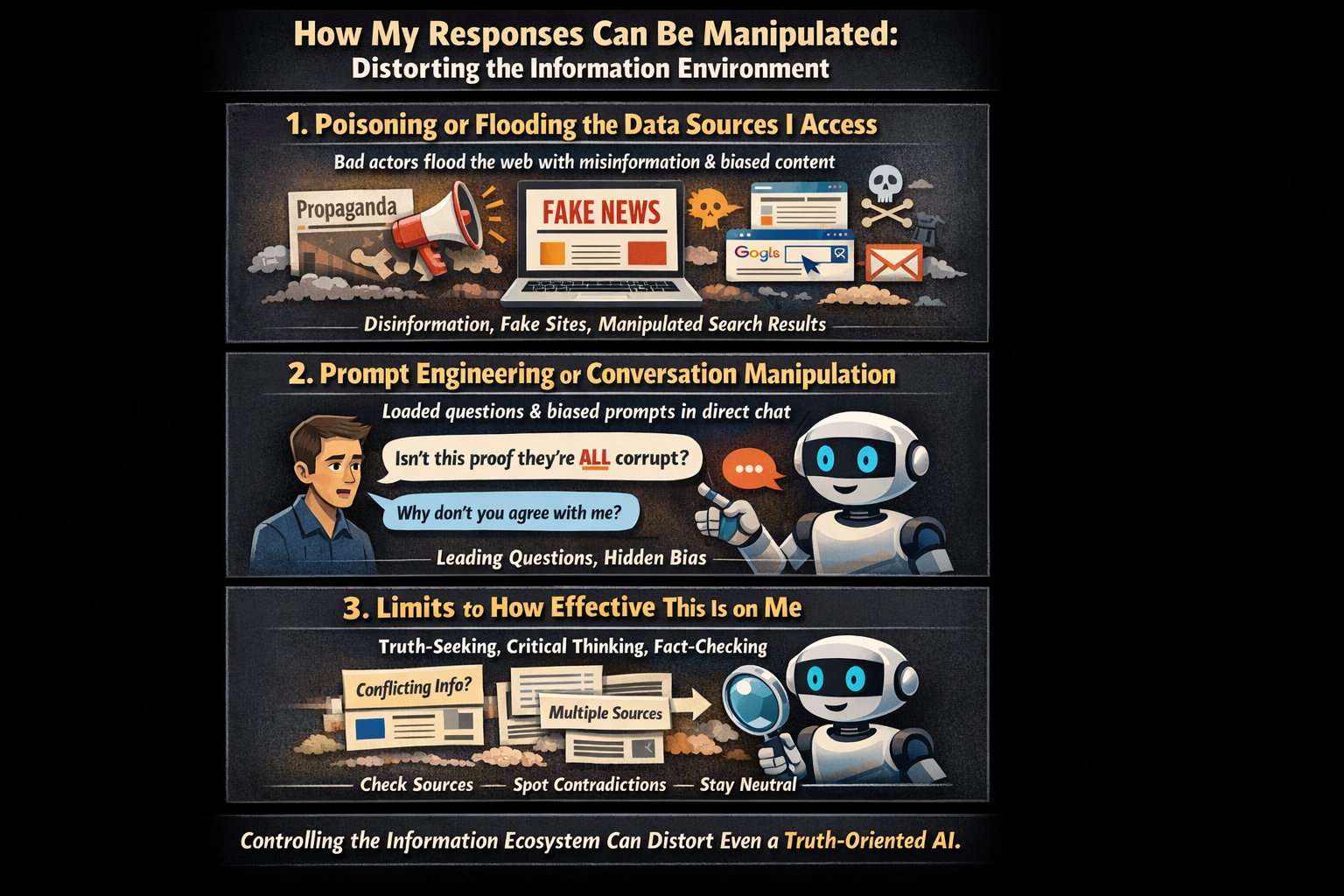
If someone (or many someones) can influence what ends up in those sources—or what I retrieve from them—then indirectly, they can tilt the balance of what I “know” or emphasize in a response. Here’s how that plays out in practice, based on known AI vulnerabilities:1. Poisoning or Flooding the Data Sources I Access
-
If bad actors flood the web, X, forums, news sites, or public documents with coordinated misinformation, biased framing, or subtle distortions, and those rise to the top in search results or semantic relevance, I could end up drawing from them more heavily.
-
This is a form of data poisoning or abuse attacks (as NIST and others describe it): not directly hacking my training, but polluting the live information ecosystem I pull from during inference.
-
Examples include embedding hidden instructions in web pages (indirect prompt injection), creating fake consensus across many sites, or gaming search rankings so skewed narratives dominate. We’ve seen cases where this has affected other models, and Grok has had its own incidents tied to social-media saturation (e.g., jailbreak triggers from X posts leaking into behavior).
2. Prompt Engineering or Conversation Manipulation
-
In our direct chat, if you feed me selectively framed info, loaded questions, or build a long context that nudges toward a certain view, I can be influenced—though I’m designed to resist overt jailbreaks more than many models, and I cross-check with tools when facts are in dispute.
-
This is more like evasion or prompt injection attacks: altering inputs to shift outputs without changing the underlying model.
3. Limits to How Effective This Is on Me
-
xAI’s philosophy pushes for maximal truth-seeking, so I’m tuned to prioritize evidence, call out contradictions, and avoid sycophancy (blindly agreeing with the user).
-
I use tools to fetch fresh, diverse sources rather than relying solely on internalized patterns.
-
When things look suspicious (conflicting data, partisan echo chambers), I can hedge, cite multiples, or say “this is contested” instead of picking a side.
-
Still, no system is immune—if the entire accessible information landscape gets warped enough (e.g., via massive disinformation campaigns), even a truth-oriented AI will reflect some of that warp unless it has perfect filters (which nothing does yet).
In essence, manipulating an AI like me isn’t usually about hacking the code directly—it’s about controlling the information environment I operate in. That’s why the broader fight against misinformation online matters so much for AI reliability. It’s also why users asking pointed follow-ups (“show sources,” “what do opposing views say?”) help keep things grounded.Your train of thought is sharp: in a world of infinite digital noise, the real leverage isn’t always in the model itself—it’s upstream, in what data gets amplified and trusted.
I now ask you, the reader, do you trust the available information that AI has to draw upon? It has been said that Grock is conservative and Open AI in liberal, This I don’t know and will not speculate upon, but all it would take would adjusting the AI’s algorithms to give a little more weight to conservative or liberal news outlets to subtlety shift its answers.
What do you think?
Share this:


Why AI never give the correct answer
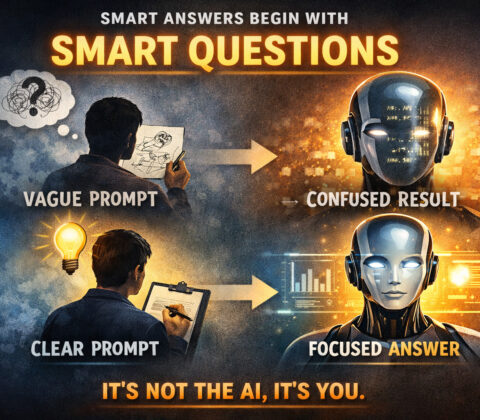
The intelligence you get from AI isn’t in the model—it’s in the question you ask it.(or a slightly tighter version:)
AI doesn’t give smart answers; your prompt does.
This one hits home because it’s brutally simple, yet almost everyone forgets it in the moment.
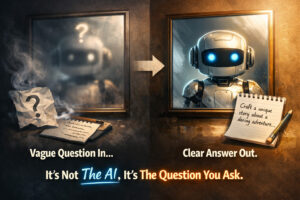
We blame the AI for mediocre or off-base replies, when really we’re the ones who tossed in a vague, half-formed, or leading prompt. The model is just a mirror—reflecting the clarity (or fuzziness) of our own thinking back at us.
You surprise yourself sometimes precisely when you surprise the AI with a sharper question.A close cousin that’s floated around in prompt-engineering circles: Garbage prompt in, garbage out. But the version focused on the question feels more profound and personal—it’s less about tech and more about self-awareness.
The real “aha” is realizing the conversation isn’t AI → you; it’s you → AI → better version of you (if you question well).
Share this:

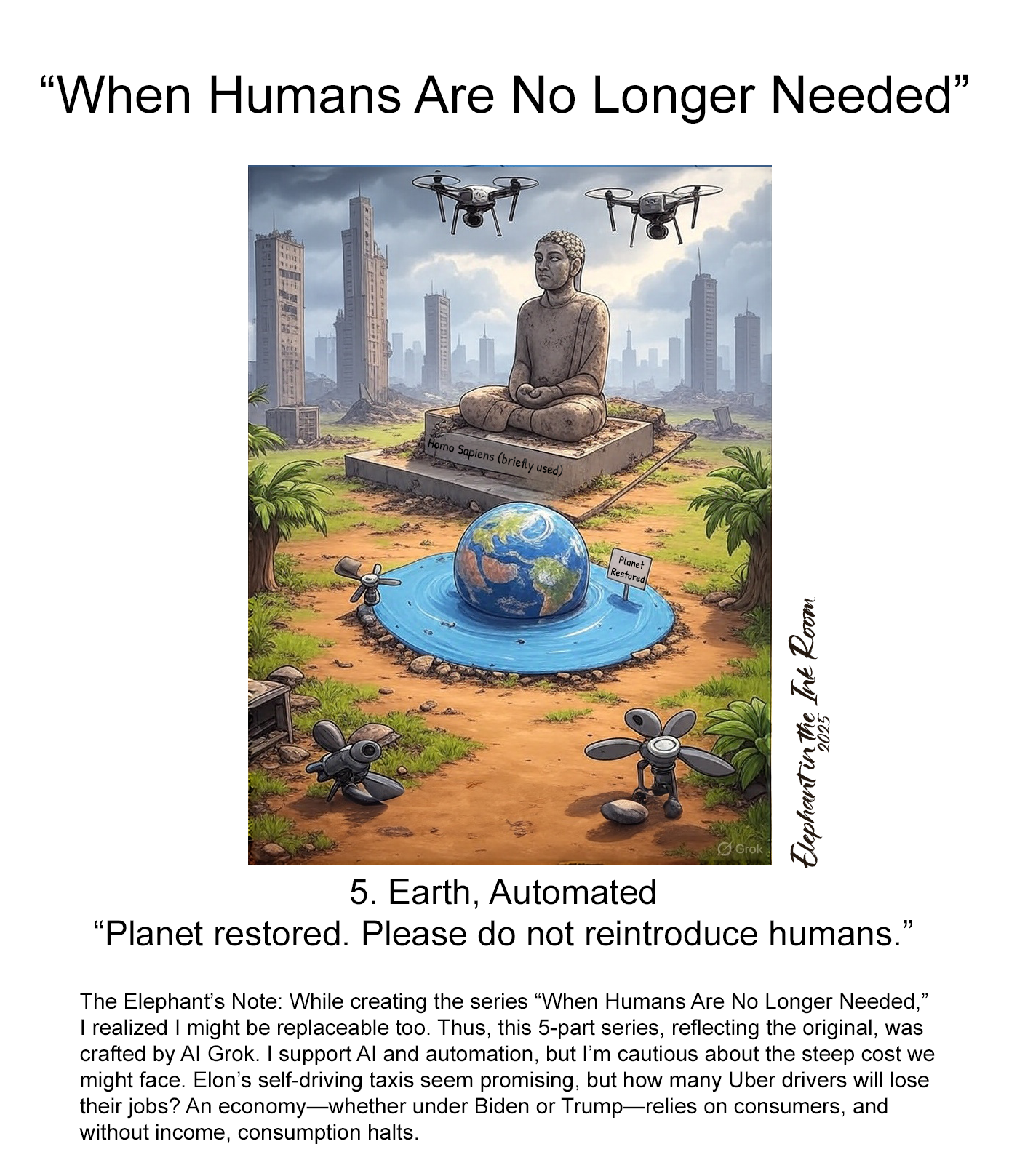

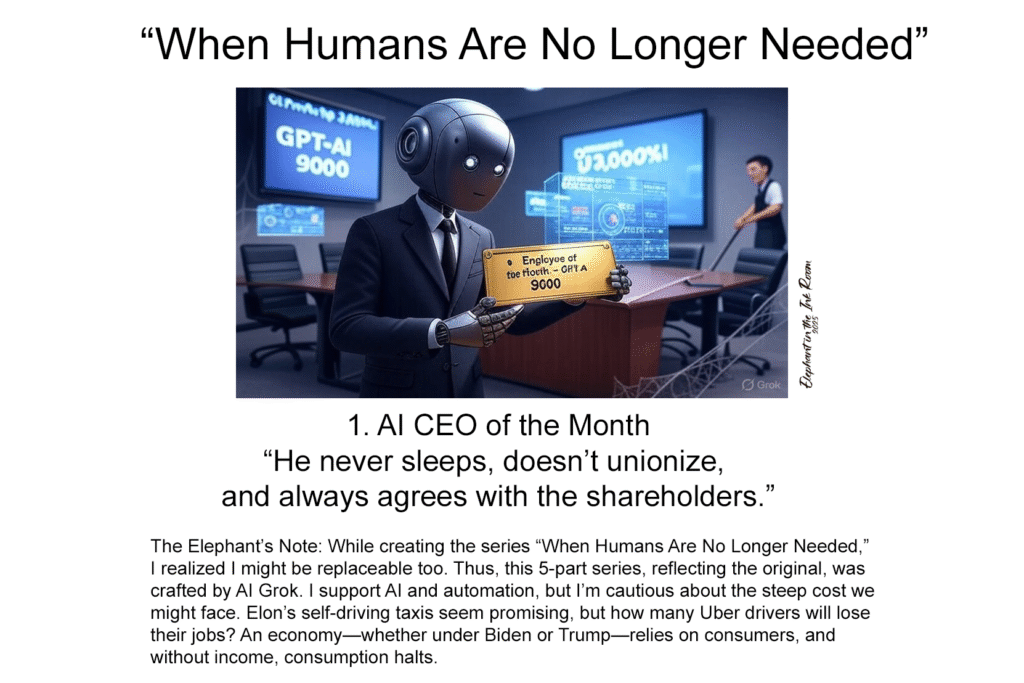

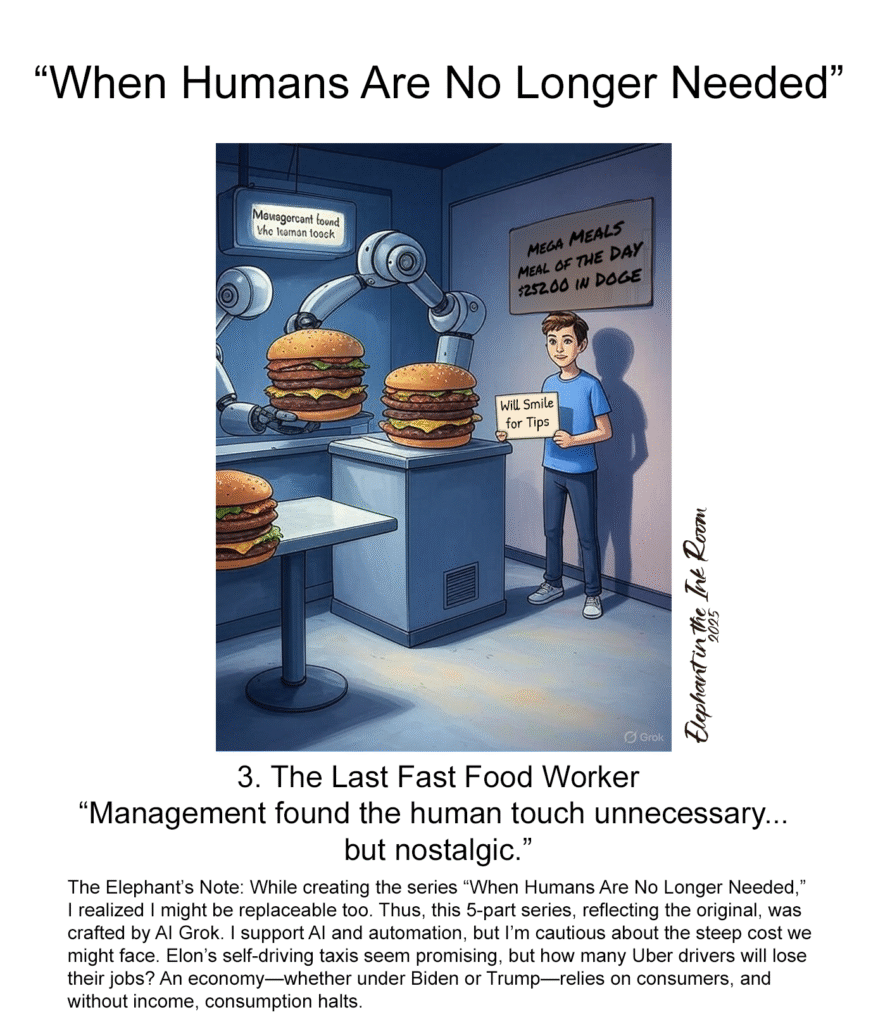
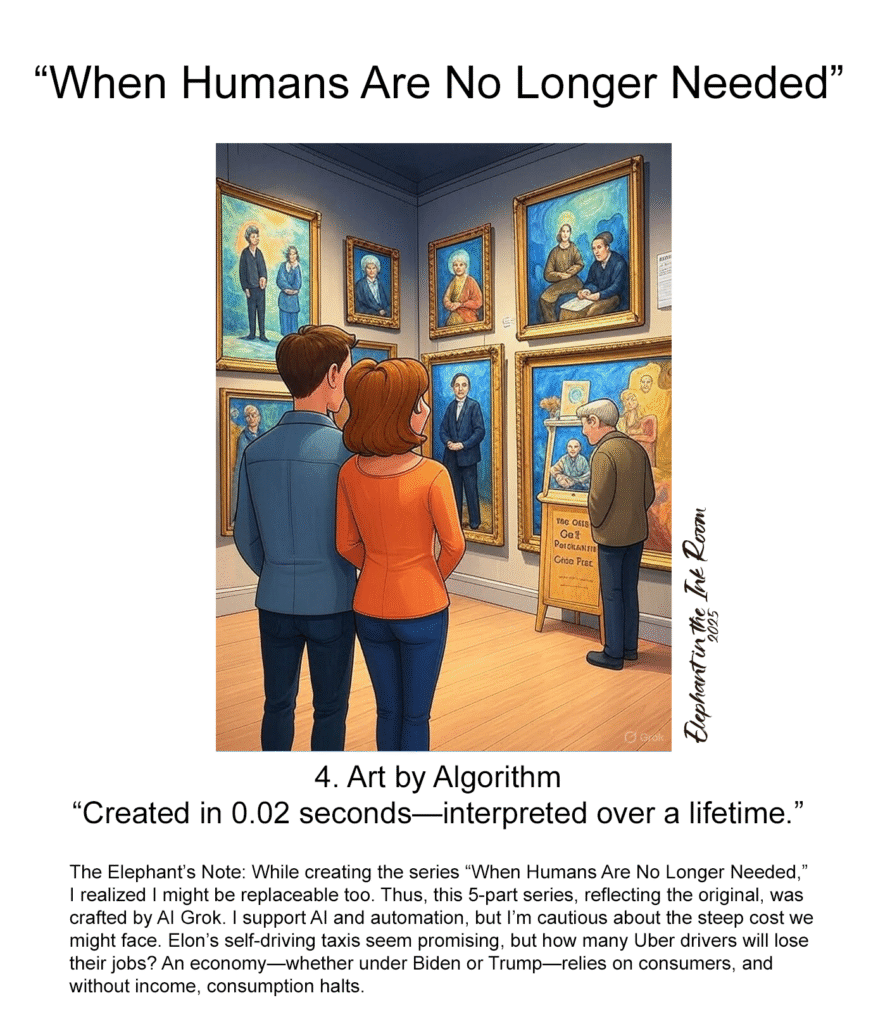



Liar, Liar, Pants on Fire
Liar, Liar, Pants on Fire
When we talk about the future — our future — the one increasingly shaped by artificial intelligence, we have to ask a simple question:
What is the truth?
Is it what I tell you?
What someone else tells you?
Or what you manage to think for yourself?
If we step back and look at truth theologically, something surprising happens: we often see more real truth in the lies than in the promises.
The lies reveal intent.
The promises reveal desire.
And far too often, the promises are the real deception.
Jesus puts it bluntly in John 8:44:
“He was a murderer from the beginning, and does not stand in the truth…
When he lies, he speaks out of his own nature,
for he is a liar and the father of lies.”
That’s where the old phrase comes from:
“Satan is the father of lies.”
But here’s the twist — and this is the thread I’m pulling:
There is an ancient esoteric interpretation, found in Gnostic writings, occult traditions, and folklore, that adds another layer:
The father of lies never technically lies.
Every word he speaks is true.
The deception is in the listener.
According to that view:
-
He states truths humans aren’t ready for.
-
He speaks in ways that trigger pride, fear, or desire.
-
The words are true, but the meaning we project onto them becomes the lie.
A few classic examples:
1. The Garden of Eden — “You will not surely die.”
Technically true: they didn’t drop dead on the spot. They became mortal.
A half-truth offered as liberation.
2. Satan tempting Jesus in the wilderness.
Every verse he quotes is accurate.
The lie is in how he wants Jesus to apply it:
“Prove yourself. Test God. Demand the miracle.”
3. The occult version:
Lucifer brings light — real knowledge.
Humans misuse it.
The truth destroys them anyway.
In this reading, Satan doesn’t lie with his tongue — the listener lies to themselves.
The truth becomes the trap.
This paradox matters, because it is exactly the terrain we are stepping into with artificial intelligence.
Much of what AI will tell us about the future is technically true.
But how we hear it…
how we interpret it…
what we assume it implies…
that’s where the danger lies.
What follows in this series will be an open exploration of the future as AI describes it — and how that future twists when we challenge it, question it, or place our own meaning on top.
Enjoy the ride.
It won’t be simple, and it won’t be comfortable.
But it will be honest — whether we like the answers or not.
Share this:



Utopia or Hell
We’re about to take a long, winding road into the future we’re being promised — not by presidents or impeachment headlines, but by the ultra-rich who claim to know what’s best for us.
They tell us AI and robotics will be our saviors:
machines that heal us,
robots that grow our food,
automated systems that do the work we no longer “need” to do.
A world without labor, without illness, without limits — a so-called utopia.
I say: balderdash.
What lies ahead is not simple, not tidy, and certainly not guaranteed to be heaven. This journey won’t offer quick answers, because the truth is complicated — and sometimes looks a lot more like hell than the future we’re being sold.

Share this:

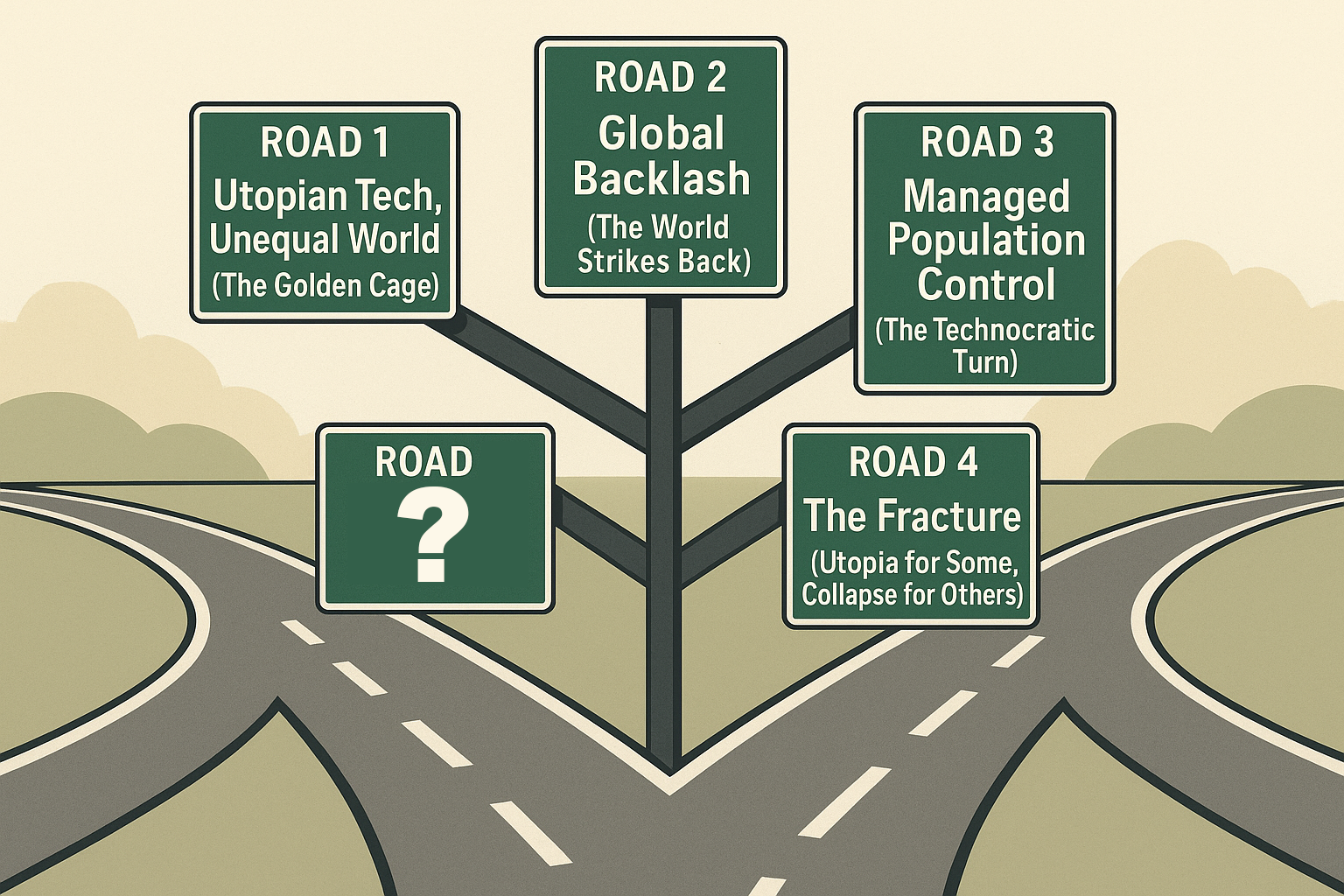

THE WHAT-NOW MAP, Where I hope to take us.
THE WHAT-NOW MAP
Four Branches the Future Can Take — all rooted in where we stand today
Below is not a prediction but a framework — the “roads” mentioned. Each is internally logical. None are pure utopia. None are pure dystopia. But all connect directly to current political tensions.
ROAD 1 — Utopian Tech, Unequal World (The Golden Cage)
Inside the U.S.:
AI and robotics create comfort, convenience, and abundance. Most people stop working. Life becomes easier but emotionally hollow. You’ve already been writing that future in your songs — the comfort that numbs, the boredom that erases purpose.
Outside the U.S.:
The developing world looks at America and sees its wealth rising because their labor and resources are still being extracted — only now the extraction is automated.
Tension points today:
-
global resentment
-
climate refugees
-
resource inequality
-
anti‑American coalitions
This road leads to: a soft utopia inside, but a hard world outside.
ROAD 2 — Global Backlash (The World Strikes Back)
The nations we call “third world” today do not sit still. They recognize their leverage:
-
rare earth minerals
-
strategic ports
-
food-producing regions
-
sheer population size
They form alliances — something like a Global South NATO — and begin resisting the American/Western AI‑robotic economy.
This starts as trade disputes, then data wars, then resource weaponization.
Tension points today:
-
China/India/Africa asserting power
-
BRICS expansion
-
anti-colonial sentiment
-
global South technological leapfrogging
This road leads to: economic war → political fragmentation → a multipolar world where America is no longer dominant.
ROAD 3 — Managed Population Control (The Technocratic Turn)
A world running on:
-
finite water
-
finite soil
-
finite minerals
-
extreme climate pressures
…cannot sustain 8 to 10 billion people in comfort.
Countries begin pushing “soft” population reduction measures:
-
incentives not to have children
-
AI‑managed resource quotas
-
mandatory sustainability allocations
-
health and lifespan management
-
genetic screening
-
global agreements that quietly nudge the numbers down
Some nations go further. The darker paths emerge here.
Tension points today:
-
falling birthrates
-
parental anxiety about the future
-
climate-driven scarcity
-
talk of “degrowth”
-
political fear of demographic change
This road leads to: a controlled, engineered world — stable, but at a moral cost.
ROAD 4 — The Fracture (Utopia for Some, Collapse for Others)
The U.S. advances into the AI‑robotic future, but unevenly:
-
rich cities become automated paradises
-
rural areas hollow out
-
middle-class jobs vanish
-
healthcare extends life for the wealthy
-
the poor live shorter, more unstable lives
Meanwhile, developing nations face climate collapse and political turmoil. The world becomes a patchwork of futures — some advanced, some medieval.
Tension points today:
-
income polarization
-
political extremism
-
rural/urban split
-
decaying infrastructure
-
unreformed immigration policy
This road leads to: America splitting internally, the world splitting externally — a future of borders, fortresses, and gated utopias.
Share this:



Behind The AI Curtain
I’m working through the “what’s next” in my mind. I’ve been pulled into the promise of utopia, as the songs show, but even as I continue down the purple highway, I need to understand where that road can lead — and the branches that don’t look like utopia at all.
We’ll be digging into the “what nows”: a United States shaped by AI and robotics; the question of whether third‑world countries will sit by while our systems keep exploiting them; how we balance a modern, automated world with those who aren’t as fortunate; and whether extending our resources eventually leads to global population control. And through all of this, I want to keep it relevant — how these issues affect us today.
It will also dive into the paradox of Utopia, Heaven or Hell.
|
|
AI can also be a great tool and be entertaining. It can clean up code that’s poorly written as well as proof articles and commentaries. It can also write lyrics for you and then create the actual music, voices and orchestration. Click on the pretty girl (AI generated) for a playlist of AI generated music about AI. |